Senate votes down anti-surveillance amendment, both parties back warrantless spying on Americans’ browser history
RT | May 13, 2020
The US Senate has voted down an amendment that would limit surveillance of Americans’ internet records. Apparently, the true divide in Washington is not between Democrat and Republican, but those for or against the police state.
The US Senate met on Wednesday to debate the reauthorization of some provisions of the USA Freedom Act, an expansive domestic surveillance bill that expired in March. As Majority Leader Mitch McConnell brought the Act to the floor, a bipartisan group of lawmakers introduced an amendment that would explicitly bar law enforcement from snooping on Americans’ internet browsing and search histories without a warrant.
Prior to the vote, McConnell had urged his colleagues to reject the amendment. When votes were cast on Wednesday, ten Democratic senators heeded McConnell’s words, bringing the final vote to 59 Yeas and 37 Nays. One more positive vote would have given the amendment the three-fifths majority it needed to pass.
Former presidential candidate Bernie Sanders (I-Vermont) railed against the reauthorization of the USA Freedom Act in February, yet didn’t cast a vote on Wednesday. Online, commenters raged at the progressive kingpin for his absence.
Yet surveillance is not a partisan issue. As often as Democrats are presented as the party of civil liberties and Republicans as the party of the ‘forever war’, the fault line isn’t between red and blue. While McConnell brought the Freedom Act before the Senate this week, it passed the Democrat-controlled House by 278-136 in March, completely free of any restricting amendments.
Moreover, the reauthorization was sponsored by Reps. Jerry Nadler (New York) and Adam Schiff (California), two Democrats who have disagreed with McConnell on almost everything, except the expansion of the surveillance state.
Among the Democrats who shot down the amendment was Dianne Feinsten (California), who has flip-flopped on surveillance throughout her three decades on Capitol Hill. Feinstein voted to extend the 9/11-era Patriot Act in 2012, and was a staunch defender of the National Security Agency’s warrantless wiretapping program, even after it was exposed by whistleblower Edward Snowden who she described as a “traitor” in 2013.
However, as Feinstein’s Senate Intelligence Committee was compiling a lengthy report into the CIA’s use of torture in 2014, the Californian senator and surveillance enthusiast voiced “grave concerns” that the agency was spying on her committee’s computers. Ironically, Feinstein declared at the time that “the CIA search may also have violated the Fourth Amendment, [and] the Computer Fraud and Abuse Act.”
In fact, all ten Democrats who voted against the amendment on Wednesday voted in favor of the USA Freedom Act back in 2015, helping take it comfortably past one half majority in the Democrat-held Senate of the time.
Back to the present, senators also have two similar amendments to vote on Wednesday. The first, introduced by Mike Lee (R-Utah) and Patrick Leahy (D-Vermont) was passed 77-19. It would strengthen legal protections for suspects under federal surveillance. The second, authored by Rand Paul (R-Kentucky), would prohibit the Foreign Intelligence Surveillance Act (FISA) Court from authorizing spying on US citizens, as it did when the FBI surveilled the Trump campaign in 2016.
In a world gone mad, China must build MORE NUKES to make disarmament possible
By Scott Ritter | RT | May 12, 2020
As the US threatens to withdraw from the New START treaty over Chinese non-participation, domestic pressure from inside China builds for a larger strategic nuclear arsenal. Could this be a good thing?
In an op-ed published in Chinese newspaper Global Times, its editor-in-chief Hu Xijin, argued that China should seek to upgrade its strategic nuclear arsenal from its current level of about 200 antiquated weapons to a modernized force comprising more than 1,000 nuclear weapons, including more than 100 modern mobile DF-41 intercontinental ballistic missiles (ICBMs), each armed with 10-12 nuclear warheads, capable of striking the US mainland.
The deployment of DF-41 missiles, when combined with China’s new JL-3 submarine-launched ballistic missiles and nuclear-armed H-20 strategic bombers, would give China a capable nuclear TRIAD that rivaled those of the US and Russia.
While Hu Xijin’s op-ed received considerable support on Chinese social media, there was some pushback. Zhao Tong, a senior fellow in nuclear policy at the Carnegie-Tsinghua Center for Global Policy, based in Beijing, has argued that even in a climate of deteriorating Sino-American relations, any effort on the part of China to build a viable strategic nuclear arsenal on par with that of the US was counterproductive and dangerous.
This point of view has a logic of de-escalation that is inherently attractive, but when viewed in the larger context of global nuclear posture where the US and Russian nuclear disarmament is held hostage by the current non-participation of China in meaningful disarmament talks, any call for China to maintain the nuclear status quo is in itself destabilizing.
The only way to bring China to the table for any meaningful arms control agreement is for it to build up its nuclear arsenal to a level where reciprocal cuts make sense for all involved parties. In short, nuclear symmetry perversely requires that China in effect adopts an “escalate to de-escalate” approach to arms control if disarmament is to have any political viability.
There is a historical precedent for this kind of madness. When the Soviet Union deployed the SS-20 intermediate-range nuclear missile in the late 1970s, it unhinged the strategic nuclear balance in Europe. Both NATO and the US were alarmed and pushed for arms control agreements that eliminated so-called Intermediate Nuclear Forces (INF) from the arsenals of both the US and the Soviet Union. In 1979 the US threatened to deploy advanced Pershing II missiles and Ground-launched Cruise Missiles (GLCMs) into Europe to offset the threat posed by the SS-20 missiles. The problem, however, was that while the SS-20 missile was a reality, the Pershing II/GLCM weapons were still in development stage and had yet to be deployed. From a purely political perspective, there was no incentive for the Soviets to get rid of the SS-20.
Instead, in November 1983, the US and NATO were compelled to go through with the deployment of Pershing II and GLCM missiles to Europe, triggering social and political unrest in the form of massive protests, and placed the US-NATO alliance under considerable stress. Besides, by deploying these new weapons into Europe, the US changed the very calculus of war — the Pershing II, once launched, was less than 10 minutes flight time from Moscow, reducing the time the Soviet command would have to react in a time of crisis regarding the initiation of a general nuclear war.
In the end, the US and the Soviet Union signed the INF Treaty, eliminating the SS-20, Pershing II, GLCM and other nuclear delivery systems, and in doing so heralded a new age of relations between the two sides that helped bring about the end of the Cold War. But the world had to be led to the edge of a nuclear abyss before reason could prevail.
Today the US and Russian strategic nuclear arsenals are capped at 1,550 nuclear delivery systems each by the limits set forth in the New START Treaty. While both sides recognize the desirability of additional reductions, the insistence on the part of the Trump administration that any future arms control agreement on strategic nuclear weapons must include China has thrown a monkey wrench in an arms control process which for decades has been governed on the basis of US-Soviet/Russian bilateral agreements. Even something as simple as extending the existing New START treaty for five years in order to buy time for the complexities of transitioning bilateral arms control structures into a new trilateral reality is unacceptable to Washington.
As insane as it might appear, the Trump approach might provide the only viable path forward regarding the possibility of meaningful trilateral arms control between the US, Russia, and China. As things currently stand, the failure to extend New START will eliminate constraints on the part of both the US and Russia when it comes to fielding new strategic nuclear weapons. This alone is a destabilizing and dangerous reality which, left to its own devices, could lead to a new nuclear arms race which would make those of the Cold War pale in comparison in terms of capability and lethality. The wild card in this equation is China. As things currently stand, the small size and relative lack of sophistication of China’s existing strategic nuclear arsenal make it a virtual non-player when it comes to discussions of symmetrical disarmament based upon historical TRIAD constructs (where strategic nuclear capability is spread among manned bombers, land-based ICBMs, and submarine-launched ballistic missiles.)
China’s current nuclear force structure is heavily weighted toward intermediate-range missiles. However, any nuclear modernization program that saw China develop a viable TRIAD-based nuclear deterrence capability would not only compel both Russia and the US to take into account a Chinese strategic nuclear threat when building their respective post-New START nuclear force structure, but also create real political incentive on the part of all three nations to take the off-ramp from a path of nuclear posture escalation and instead embrace the de-escalation of trilateral arms control.
This, of course, is not the ideal situation. Trillions of dollars will be expended by all three parties pursuing weapons whose only utility is to create the conditions for their eventual elimination. But nuclear policy historically has not been the purview of sane and rational thinking — one only needs to refer to the deterrence model of “mutually assured destruction (MAD)” to make that point.
In the early 1980s both the US and the Soviet Union knew that to escalate tensions by deploying new INF weapons into Europe was an inherently dangerous gambit. Indeed, on at least one occasion it nearly triggered a general nuclear war. But in the end, it was the only politically viable path toward eventual disarmament and the normalization of relations between the US and the Soviet Union.
In the dangerous waters of a post-New START world, perhaps the only way to navigate clear of the rocks and shoals of nuclear conflict is for China to escalate its development of a viable strategic nuclear force in order to enable the kind of meaningful trilateral strategic nuclear arms control the world needs to survive.
Scott Ritter is a former US Marine Corps intelligence officer. He served in the Soviet Union as an inspector implementing the INF Treaty, in General Schwarzkopf’s staff during the Gulf War, and from 1991-1998 as a UN weapons inspector. Follow him on Twitter @RealScottRitter
New Information: Guaidó Was the “Commander in Chief” of the Failed Mercenary Operation Against Venezuela

This document shows the chain of comand. (Council on Hemispheric Affairs)
By Patricio Zamorano | Council of Hemispheric Affairs | May 13, 2020
New information divulged this week reveals that Juan Guaidó was designated as “commander and chief” of the mercenary operation that completely unraveled on the shores of Venezuela. The 41 page contract that formed the basis of the already known eight page General Services Agreement was published by the Washington Post [1] this week.
This more complete document confirms what the mercenary and head of SilverCorp, Inc., Jordan Goudreau, had already revealed to the media: the agreement was aimed at “planning and executing an operation to capture/detain/remove Nicolas Maduro (heretoafter “Primary Objective”) remove the current Regime and install the recognized Venezuelan President Juan Guaido.”

The document provides complete information about the money that would be invested (212 million dollars), and the payments and commissions that SilverCorp would receive from Guaidó’s team, which includes Juan José Rendón, Sergio Vergara and attorney Manuel Retureta.
The document also explains the promised retainer of 1.5 million dollars that Goudreau has been complaining about publicly since the failed operation last Sunday, May 3.
What has not been said: information about the operation was published two days before the attack
There is an important detail that the world press has not analysed. One AP article[2] which details the preparations for the attack was published Friday May 1, two days before the attempt to invade Venezuela was launched from Colombia. The article provides particulars on the presence of three paramilitary groups (deserters from the Venezuelan armed forces and police) in Colombia and explains how this operation had been foiled and aborted. It clearly names Jordan Goudreau, including a profile on the mercenary and many other details about the planned attack. No Colombian nor US authority mobilized to neutralize the illegal paramilitary camps.
This document also appears to confirm that Goudreau, despite the exposure of the planned incursion by the press, still proceeded with the attack, irresponsibly putting at risk the lives of those involved. It also shows that neither US intelligence agencies, nor the Colombian police, nor even Guaidó’s team took action to stop the attack.
One can extrapolate two possible reasons for this. Allowing the operation to move forward, without directly committing to SilverCorp, would show the actual consequences of the operation (whether a success or failure). The operation could also expose the government of Maduro to world criticism if it produced fatalities on one side or the other. What is certain is that all of these scenarios, “whether above or under the table” in the words of Rendón on CNN, were discussed extensively with Guaidó and his advisors with the aim of illegally overthrowing Maduro. Rendón told CNN in Spanish that “they analysed all of the scenarios; alliances with other countries, their own actions, uprisings of people from within, of the soldiers that are there, the eventual use of actors that are outside, retired soldiers. All these scenarios were produced, as the president said well, we are analysing things above and below the table.”[3]
Guaidó was leader of the operations
The most important theme of this story, which the Washington Post does not even mention in its article, is what is described on page 39 of the contract.
Under the title “ATTACHMENT N: CHAIN OF COMMAND,” the document includes the following:
- Commander in Chief – President Juan Guaidó
- Overall Project Supervisor – Sergio Vergara
- Chief Strategist: Juan Jose Rendon
- On Site Commander – To be determined
The page is signed by Guaidó’s advisors and there is a large black box that surely hides compromising information about SilverCorp.

Denial is followed by selective recognition
The evidence is very clear that Guaidó’s team has decided to change its strategy. The first reaction of Guaidó was to deny that he was involved in the disastrous operation[4] in the face of the cost of lives of eight mercenaries, former Venezuelan soldiers, and the capture of numerous paramilitaries, including two US former soldiers. Guaidó’s team however, publicly acknowledged this week their involvement, but they tried to discredit SilverCorp as if it had acted on its own. Nevertheless Rendón recognized that he had paid 50 thousand dollars to the mercenary company[5] of Florida and that his signature on the document is legitimate.
The big question is what will be the response of the legal authorities in the US and Colombia. So far there has been no arrest, despite the fact that all of the details of the operation and the violations of law committed are clear and irrefutable.
In the coming days it will become evident whether the governments of Trump and Duque in Colombia opt for the strategy of impunity. This scandal without doubt weakens in an important way the illegal policy of sanctions and the dirty campaign supported by the hard-line Venezuelan opposition that has broken with the strategy of dialogue that other more moderate anti-Chavista sectors continue to advance in Caracas.
Translation made from the original Spanish by Fred Mills, academic and Co-Director of COHA
End notes
[1] “From a Miami condo to the Veenzuelan coast, how a plan to ‘capture’ Maduro went rogue”, https://www.washingtonpost.com/world/the_americas/from-a-miami-condo-to-the-venezuelan-coast-how-a-plan-to-capture-maduro-went-rogue/2020/05/06/046222bc-8e4a-11ea-9322-a29e75effc93_story.html
[2] “Ex-Green Beret led failed attempt to oust Venezuela’s Maduro”, https://apnews.com/79346b4e428676424c0e5669c80fc310
[3] “J.J. Rendón habla sobre la Operación Gedeón en Conclusiones de CNN en Español”, https://cnnespanol.cnn.com/2020/05/07/j-j-rendon-habla-sobre-la-operacion-gedeon-en-conclusiones-de-cnn-en-espanol/
[4] “Guaidó niega vínculos con intento de invasión en Venezuela”, https://www.chicagotribune.com/espanol/sns-es-coronavirus-guaido-niega-vinculo-intento-invasion-venezuela-20200505-uiditc4i6nbdda3nyx24n26zee-story.html
[5] “J.J. Rendón habla sobre la Operación Gedeón en Conclusiones de CNN en Español”, https://cnnespanol.cnn.com/2020/05/07/j-j-rendon-habla-sobre-la-operacion-gedeon-en-conclusiones-de-cnn-en-espanol/
Nations Spent $73bn on Nuclear Arms Amid COVID-19, UK in 3rd as US Tops at Half of Global Costs
By Demond Cureton – Sputnik – 13.05.2020
Despite being the global epicentre of COVID-19 cases and deaths, the world’s leading nuclear power accounted for roughly half of total global spending on nuclear arms, a shock report from a major Swiss nonprofit coalition found.
Nuclear armed states spent a record $73bn on nuclear weapons amid the ongoing COVID-19 pandemic, a report from the Geneva-based International Campaign to Abolish Nuclear Weapons (ICAN) revealed.
The report, entitled Enough Is Enough: 2019 Global Nuclear Weapons Spending, found an increase of nuclear weapons spending in 2019, up $7.1bn from 2018.
The findings, which assessed the world’s leading nuclear powers – The United States, United Kingdom, France, China, Russia, Pakistan, India, Israel and North Korea – revealed that top nuclear powers spent $138,699 on over 13,000 nuclear weapons every minute of 2019.
The amount of money the US spent in 2019 alone could pay for 300,000 intensive care unit beds, 150,000 nurses, 75,000 doctors and 35,000 ventilators, the report found.
But the United Kingdom was the third highest spender at $8.9bn after the US and China at $35bn and $10.4bn, respectively, according to the report.
“It is absurd to be spending $138,700 every single minute on weapons that cause catastrophic human harm rather than spending it to protect the health of their citizens. They are abdicating their duty to protect their people,” ICAN executive director, Beatrice Fihn, said in a statement.
Nuclear arms were banned by the Treaty on the Prohibition of Nuclear Weapons (TPNW), which the UN will enforce after all participating 50 nations ratify or accede the document, effectively criminalising such expenditures under international law.
But the figures only included direct spending on nuclear warheads and delivery systems costs for operation and deployment, with real numbers skyrocketing after factoring in costs due to environmental damage and victim compensation, with ICAN calling on governments to remain transparent in disclosing expenses, the statement read.

International Campaign to Abolish Nuclear Weapons (ICAN)
Alicia Sanders-Zakre, author of the report, said: “The figures do not include the massive humanitarian costs and the environmental toll from a legacy of nuclear testing and production. Even in the unlikely chance these weapons are never used, governments are paying massive sums to poison their environments and put their people at grave risk.”
The news comes as British MPs slammed the Ministry of Defence for wasting £1.3bn ($1.6bn) on upgrading the country’s nuclear Trident programme, which is currently six years behind schedule. Costs were estimated at £2.5bn for the three upgrade programmes, which have spiked an additional £1.35bn, according to reports.
Turkey stalls Iran gas imports amid aggressive US efforts to push its LNG
Press TV – May 13, 2020
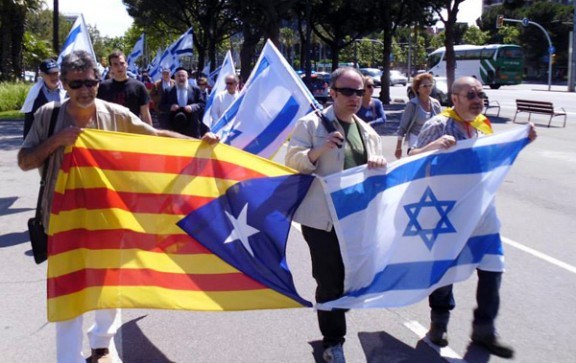
Turkey is dragging its feet on repairing a pipeline which was hit by an explosion in late March, stopping Iran’s gas exports to the country, the Fars news agency says.
Iran sells about 10 billion cubic meters a year of gas to Turkey under a 25-year supply deal signed in 1996. The pipeline has been blown up several times by PKK terrorists, but it has been repaired and the gas flow has continued shortly.
However, after another blast occurred on the pipeline on March 31, an official at the National Iranian Gas Company (NIGC) said the Turkish side was not responding even as Iran had informed it of the incident.
According to Mehdi Jamshidi-Dana, Turkey’s representative at Bazargan gas transmission station had left his post due to the outbreak of the novel coronavirus.
The official said it was not clear when the line would re-open, but he cited past experience which showed “repairing the lines takes three to seven days, depending on the amount of damage done”.
On Wednesday, Fars suggested that the pipeline is still out of service, citing Turkish state energy company Botas’ dilly-dallying and unwillingness to repair it.
The news agency speculated that the situation must be the result of aggressive US efforts to push its liquefied natural gas (LNG) into Turkey.
Heavily dependent on gas imports from Russia, Turkey has already reduced flows from Gazprom significantly, while increasing LNG purchases and gas imports from Azerbaijan.
“In recent months, Turkey has imported as much LNG from the United States as gas imports from Iran,” Ali Nasr, an energy expert, told Fars.
Last November, Turkey marked the completion of the Trans-Anatolian Natural Gas Pipeline (TANAP) to carry gas from Azerbaijan’s Shah Deniz II field to Europe.
In January, the presidents of Turkey and Russia formally launched the TurkStream pipeline to carry Russian natural gas to southern Europe through Turkey.
Fars warned that Iran may lose its biggest gas market to rivals, which could cost the country $150 million-$200 million in lost revenues a month.
The US has the necessary incentive to remove Iranian gas from the Turkish market in order to increase economic pressure on Iran, while Turkey seeks to diversity its energy sources and reduce gas imports from Iran and Russia, the agency said.
The US is currently pushing Trump’s “energy dominance” agenda that seeks to advance diplomatic and policy objectives through rapidly expanding US oil and gas exports.
Iran has already lost its biggest condensate market in South Korea which imported 300,000 barrels per day (bpd) of the ultra light oil from the Middle Eastern country.
The Koreans stopped the shipments under pressure from the United States which is aggressively thrusting its fast-growing condensate into Asia.
According to US officials, Washington has offered to sign a $100 billion trade agreement with Turkey, which their presidents discussed at the Munich Security Conference.
The offer is part of the Trump administration’s main goal to get President Recep Tayyip Erdogan drop plans to use Russia’s S-400 missile defense systems.
“If an agreement is reached, the possibility of replacing Iranian gas with American LNG is quite possible,” Fars warned.
According to the news agency stated, Turkey has expanded its LNG terminals to take in 25 billion cubic meters of cargoes – 2.5 times more than the imported gas from Iran. The terminals are currently operating only at 25 percent of their nominal capacity. … Full article
FBI Claims China Targeting US Organizations Engaged in Coronavirus Research
Sputnik – May 13, 2020
The Federal Bureau of Investigation (FBI) and the Cybersecurity and Infrastructure Security Agency (CISA) have issued a joint statement in which they accuse malicious Chinese actors of trying to steal US coronavirus vaccine research.
“The FBI is investigating the targeting and compromise of US organizations conducting COVID-19-related research by PRC-affiliated cyber actors and non-traditional collectors. These actors have been observed attempting to identify and illicitly obtain valuable intellectual property (IP) and public health data related to vaccines, treatments and testing from networks and personnel affiliated with COVID-19-related research. The potential theft of this information jeopardizes the delivery of secure, effective, and efficient treatment options,” the statement, put out Wednesday, says.
The FBI and CISA urge organizations carrying out research in these fields to “maintain dedicated cybersecurity and insider threat practices” to prevent such thefts, and calls on institutions to watch out for and report any “anomalous” and “unusual” activities and behaviour. The statement also warns that organizations should realize that talking to the press about their COVID-19-related research may result in “increased interest and cyber activity” by possible malicious actors.
The warning comes just days following Sunday’s report by The New York Times citing current and former US security officials indicating that US intelligence was planning to put out an alert about alleged efforts by Chinese spies to access US-based coronavirus research. Officials told the paper that the ‘non-traditional collectors’ involved may include Chinese researchers and students working in the United States who may be interested in ‘infiltrating’ US academic and private laboratories in search of a vaccine. Complementing them are China’s “state-run hacking teams,” the paper claimed.
CISA director Christopher Krebs has alleged that “China’s long history of bad behaviour in cyberspace is well documented, so it shouldn’t surprise anyone they are going after the critical organizations involved in the nation’s response to the COVID-19 pandemic.” Krebs promised that the US would “defend our interests aggressively,” without elaborating.
Strong Claims From ‘Empire of Hackers’
Chinese Foreign Ministry spokesperson Zhao Lijian commented on the claims made by NYT on Monday, saying China already leads global research and development on coronavirus vaccines and therapies, and that the hacking claims were an “immoral” and baseless attempt to “smear” his country.
Chinese biotech companies reported recently that they have four different coronavirus vaccines already undergoing clinical trials, with three of them entering the second stage, with pilot production of an inactivated COVID-19 vaccine expected to begin in July. US President Donald Trump, meanwhile, has previously said he expects the US to have a vaccine available by the end of the year.
An anonymous researcher told the Global Times newspaper Monday that in the US’s core research efforts would be of little value to China, because US efforts are DNA and RNA-based vaccines, while China has chosen to focus on inactivated vaccines (i.e. vaccines made from virulent virus by destroying its infectivity while retaining its immunogenicity). Jonas Salk’s polio vaccine is the most famous example of a major inactivated vaccine.
Earlier this year, China called out the United States for being an “empire of hackers” and “the largest state eavesdropper in international cyberspace” following revelations of the extent of the National Security Agency’s global intelligence-gathering operations going back to the Cold War.
France’s Earlier Detection of COVID-19 Raises Questions on Global Origin
By Finian Cunningham | Strategic Culture Foundation | May 12, 2020
The emergence of Covid-19 was first reported by the authorities in China on December 31, as acknowledged by the World Health Organization. But that emergence does not necessarily mean the pandemic originated in China.
By January 30, 2020, a WHO situation report cited nearly 8,000 cases of the respiratory disease globally in 18 different countries. The vast majority of the infections at that stage were in China. It has since exploded to four million cases in virtually all 194 nations with the United States hosting by far the majority of infections and deaths (80,000 fatalities as of this week).
The early pattern of the disease spreading may suggest that China and its central city of Wuhan was the origin of the pandemic. It is widely speculated that the novel coronavirus residing in bats or some other mammal infected humans.
However, the report this week that a hospital in France detected Covid-19 in a patient as early as December 27, 2019, raises questions about the global origin. The French man, who went on to recover from the disease, was previously thought to have been suffering from pneumonia. The Paris hospital retested biomedical samples of patients and found that the man had in fact contracted Covid-19.
Curiously, the French patient had not travelled from abroad before he became ill at the end of last year. So, how does this finding square with claims that the disease originated in China? It has been speculated that the man’s wife who worked near Charles De Gaulle international airport may have been exposed. But she did not show symptoms of the disease. Her link as an “asymptomatic” disease carrier and her presumed contact with air travelers from China is therefore tenuous speculation.
French doctors are not certain if the case of the cited man represents that country’s “patient zero”, that is, the first case of Covid-19 in France. But the detection of the disease in France on December 27 is a full month before it was officially recorded as having arrived in France. In other words, the suspicion now is that Covid-19 may been circulating undetected in France and perhaps other European countries, as well as the United States, at the end of last year. Many of these infections and accompanying deaths may have been misidentified as due to seasonal flu or pneumonia.
It is understandable why the Chinese authorities are “defensive”, as the New York Times snidely headlines, about China being described as “the origin” of the Covid-19 pandemic.
This week China was accused of “censoring” an article penned by the European Union’s ambassador to the country. The article was published in news outlet China Daily but mention of “the outbreak of the coronavirus in China, and its subsequent spread to the rest of the world over the past three months…” was edited out. That led to recriminations in Western media about the EU pandering to Chinese state “censorship”.
Yes, the disease appears to have first emerged in large numbers in China at the end of December. But it is not yet determined how and where the virus originated. That will require further scientific study. Thus, for China to bridle at assertions about being “the origin” is not necessarily sinister censorship, but rather prudence to not prejudge.
What we have seen is an unseemly haste to politicize the pandemic with a view to blame China for infecting the rest of the world.
U.S. President Donald Trump is the most vocal in blaming China. But Australia, Britain and the EU have also antagonized Beijing by demanding an “independent” investigation into the origin of the disease. The inference is that China is at fault. Given the way, Western so-called “independent” investigations are prone to political bias to achieve preconceived conclusions (the Dutch-led MH17 airliner crash, for example), one can hardly object to China’s wariness about such calls.
Why should China submit to Western demands for “investigation” into Covid-19 when these Western demands are all one-way?
Why limit it to China? Surely international investigations would be merited for determining the actual appearance of Covid-19 in Europe or North America. The French case of Covid-19 in December misidentified as pneumonia suggests the disease was present contemporaneously with cases in China’s Wuhan.
Then there is the case of unidentified and deadly respiratory disease outbreaks in Fairfax, Virginia, in July 2019. Why shouldn’t international investigators be allowed into the U.S. to determine the precise nature of those disease outbreaks. Were they early incidents of Covid-19, a new unknown disease which happened to be first identified in China only months later?
The Trump administration has made unsubstantiated allegations that Covid-19 may have been released by a laboratory in Wuhan. No evidence has been provided by Trump or his bullish secretary of state Mike Pompeo. International scientific consensus has dismissed Trump’s allegations as a “conspiracy theory”. The Wuhan Institute of Virology has a solid reputation for safeguards over its study of infectious diseases.
The same cannot be said for the United States’ top biowarfare laboratory in Fort Detrick, Maryland, which was ordered to close last August by the federal Center for Disease Control due to concerns about substandard safety controls and danger of releasing deadly pathogens. Were U.S. army scientists studying novel coronaviruses?
If China’s Wuhan laboratory can be fingered and smeared for no sound reason, then why can’t a Pentagon biowarfare center that had to be shuttered for lack of safety? Chinese officials have already made an accusatory link to American personnel attending the Military World Games in Wuhan in October 2019 as being a possible cause of infection.
The origin of Covid-19 is far from clear. Trump wants to scapegoat China for obvious cynical reasons of distracting from his own disastrous mishandling of the disease. The same scapegoating instinct applies to other Western states where governments have been derelict in protecting the public from tens of thousands of deaths.
Investigations are indeed due. But determining the origin of Covid-19 will not be made by politicized probes that presume China’s fault for the pandemic.
Six big lies you have been told about ‘Russiagate’
By Nebojsa Malic | RT | May 12, 2020
Russian ‘meddling’ in the 2016 US presidential election has become an article of faith, not just among Democrats but many Republicans as well, thanks to the endless repetition of vague talking points, none of which hold water.
It all began with the Democratic National Committee (DNC) claiming in June 2016 that Russia hacked their computers, after documents were published revealing the party’s rigging of the primaries. This was followed by Hillary Clinton accusing her rival for the presidency Donald Trump that he was “colluding” with Russia by asking Moscow for her emails – the ones she deleted from a private server she used to conduct State Department business, that is.
With a little help of the mainstream media, which overwhelmingly endorsed Clinton and predicted her victory, her efforts to cover up her email scandal turned into Russia “hacking our democracy,” eventually spawning the ‘Russiagate’ investigation led by Special Counsel Robert Mueller and a series of failed attempts to derail Trump’s election and oust him from the White House.
Lie #1: Russia hacked the DNC
The infamous US intelligence community assessment (ICA) of January 2017, and the Senate Intelligence Committee report based on it – as well as ‘analysis’ by actual election meddlers, among others – all claimed that the Russian government and President Vladimir Putin personally were behind the “hack” and publication of DNC documents. These have always been assertions, and no evidence was ever provided.
Last week’s declassification of 50+ interviews in the probe conducted by the House Intelligence Committee revealed that the cybersecurity firm CrowdStrike, brought in by the DNC lawyers to fix the “hack,” did not have evidence either.
CrowdStrike’s president, ex-FBI official Shawn Henry, testified that they “saw activity that we believed was consistent with activity we’d seen previously and had associated with the Russian Government.” [emphasis added]
In the same testimony, Henry also testified that CrowdStrike never had any evidence the data was actually “exfiltrated,” i.e. stolen from the DNC servers.
CrowdStrike’s feelings about the hack remain the only “evidence” so far, since the FBI never asked them or the DNC for the actual server, as Henry also confirmed. Meanwhile, former NSA official and whistleblower William Binney argued back in November 2017 that actual evidence showed a leak from the inside, not a hack.
Lie #2: Russia hacked Podesta’s emails and published them in collusion with WikiLeaks
There is likewise zero proof that the Russian government had anything to do with the private email account of John Podesta, Clinton’s campaign chair, which a staffer admitted had been compromised when someone fell for a phishing scam.
Instead, the key argument that WikiLeaks was somehow ‘colluding’ with Russia over the publication of the emails rests on a conspiracy theory promoted by the Clinton campaign staff, after RT reported on a fresh batch of emails before WikiLeaks got around to tweeting about them – but after they were published on the website and available to anyone willing to do actual journalism.
In fact, the existence of RT has been a major “argument” of Russiagaters; a third of the ICA intended to show ‘Russian meddling’ consisted of a four-year-old appendix about RT that was in no way relevant to the 2016 situation but lamented its coverage of fracking and ‘Occupy Wall Street’ protests, for example.
Lie #3: The Steele ‘pee tape’ dossier was irrelevant
As it later emerged, Clinton’s claims about ‘Russian collusion’ were based on a dodgy dossier her campaign commissioned through the DNC and a firm called Fusion GPS from a British spy named Christopher Steele. It said that the Kremlin was blackmailing Trump with a tape of depraved sex acts in a Moscow hotel, with prostitutes supposedly paid to urinate on a bed President Barack Obama had slept on.
It was clearly ridiculous and entirely evidence-free. Democrats claimed it played no role in Russia investigations. Yet the FBI paid Steele for information from the dossier, and used it to justify a FISA warrant for the surveillance of Trump campaign aide Carter Page – and with him the campaign itself – starting right before the election, and renewed three times.
By January 2020, the DOJ had formally disavowed the dossier and all four FISA warrants, along with any information obtained from them, saying “there was insufficient predication to establish probable cause.”
Lie #4: General Michael Flynn treasonously colluded with Russia and lied about it to the FBI
Trump’s first national security adviser was hounded out of the White House after less than two weeks on the job, after media leaks insinuated he had improperly discussed sanctions with Russian ambassador Sergey Kislyak, violating the Logan Act, and then lied to the FBI about it.
After FBI Director James Comey was fired by Trump in May 2017, he told the media the president had urged him to drop the investigation of Flynn, which was quickly construed as “obstruction” and used as one of the pretexts to appoint Robert Mueller as special counsel into ‘Russiagate.’
When actual evidence was finally coaxed out of prosecutors, however, it showed that the FBI sought to frame Flynn in a perjury trap, and that the people involved were Comey himself, his deputy Andrew McCabe, disgraced lovers Peter Strzok and Lisa Page, and others. All charges against Flynn were dropped.
Flynn didn’t even lie to Strzok and the other agent interviewing him – and the memo of that conversation had been first heavily edited, then destroyed. Basically, everything about the Flynn case has been as false as ABC’s December 2017 bombshell report about his “collusion” with Russia that got Brian Ross fired.
Lie #5: Mueller found collusion, or at least Russian meddling
When Mueller’s final report came out, in the spring of 2019, it found zero evidence of “collusion” but insisted there had been Russian “meddling” in the election. The only trouble was that he had no proof of meddling, basing it entirely on the above-mentioned intelligence “assessments” and his own indictments.
A Russian company named in one of the indictments actually contested it in US court and won. First, a federal judge slapped down Mueller’s prosecutors for violating rules by presenting allegations as “established” and “confirmed” facts and ruling that no link was actually established behind a catering company accused of “sowing discord” on social media – a far cry from hacking the DNC! – and the Russian government.
The DOJ quietly dropped that particular case in March, just as coronavirus shutdowns were starting across the US, using “recent events” and a change in classification of some of its evidence as a face-saving excuse.
Lie #6: Paul Manafort was Trump’s conduit to Russia
Paul Manafort, who ran Trump’s campaign between March and August 2016, was convicted of multiple counts of conspiracy against the US and sentenced to a lengthy prison term. However, despite repeated attempts by the media to present him as some kind of liaison between Trump and Russia, the entirety of things that got him in trouble with the law had to do with tax evasion on money he made lobbying for and in… Ukraine.
During the two trials against Manafort, it emerged that he and his business partner Rick Gates had worked with Podesta’s brother Tony to fleece Ukrainian oligarchs for years, and stash the profits in tax havens.
The Ukrainian officials who leaked the so-called “black ledger” implicating Manafort to the US media were even convicted of election meddling by a court in Kiev, and the whole thing may have been solicited by a Ukrainian-American DNC contractor… The US media have been curiously uninterested in that particular “collusion,” needless to say.
Peel back all these layers of misinformation, like an onion, and what’s left is an empty talking point, endlessly repeated by Democrats like Adam Schiff (D-California), that “Russia hacked our democracy.”
The charge is vague enough that it can mean anything, and deliberately so. No evidence is ever offered, because there isn’t any – as the years of investigations and boxes full of documents have clearly shown.
US anti-ISIS chief says his goal in Syria is to create a ‘quagmire’ for Russia, not battle terrorism
RT | May 13, 2020
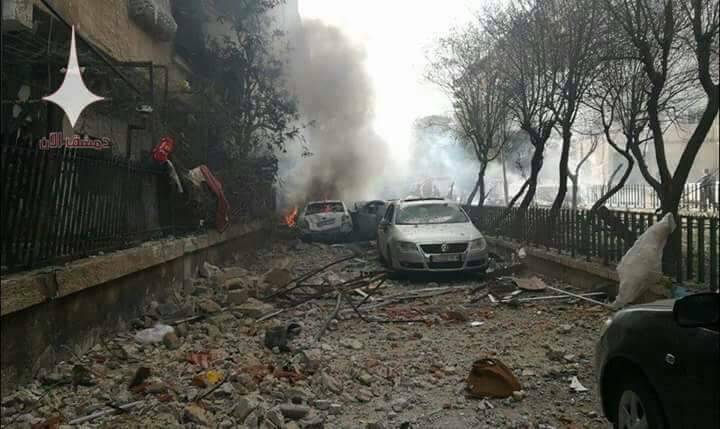
James Jeffrey, the US special envoy for Syria and defeating the Islamic State, has made quite a frank confession of how he sees his job and that of US troops there: to create a new Vietnam or Afghanistan for Moscow.
“Our military presence, while small, is important for overall calculations. So we urge the Congress, the American people, the president to keep these forces on, but again this isn’t Afghanistan, this isn’t Vietnam, this isn’t a quagmire,” Jeffrey said on Tuesday, during a video event hosted by the Hudson Institute. “My job is to make it a quagmire for the Russians.”
The arrival of the Russian expeditionary force in late 2015, following an invitation from Damascus, turned the tide of war in Syria. With their assistance, government forces rolled back both Islamic State (IS, formerly ISIS) terrorists and other militants, including Al-Qaeda affiliates, on multiple fronts – and scuttled US plans for regime change in Damascus.
Jeffrey grudgingly admitted the Russian military has been successful in Syria, but argued “they don’t have a political way out of their problems” with Syrian President Bashar Assad, and the US aims to offer “a way forward” through the UN – presumably referring to Resolution 2254 that Washington has long interpreted as “Assad must go.”
The envoy’s admission on Tuesday is a step beyond his remarks in early March, when he told reporters on a conference call that the US aims to “make it very difficult” for Russia to help the Syrian government achieve a military victory.
While US President Donald Trump repeatedly rejected nation-building interventions in the Middle East and sought to withdraw US troops from Syria, Iraq, and Afghanistan, he has repeatedly faced resistance from the State Department and the Pentagon, still set on the previous administration’s strategy of regime change.
Jeffrey’s mention of a “quagmire” like Afghanistan is particularly ominous, given that’s precisely what the Carter administration did in 1978, covertly supporting Islamic militants in that country in order to provoke a Soviet intervention. According to Carter’s national security adviser Zbigniew Brzezinski, this was done to lure the USSR into their own costly, never-ending war such as the US experienced in Vietnam
Brzezinski boasted of his own role in those efforts, dismissing the fallout of Islamist terrorism that the conflict generated as irrelevant compared to US victory in the Cold War – shortly before the September 11, 2001 attacks triggered a US invasion of Afghanistan that the Trump administration is still struggling to extricate troops from.
Crowdstrike admits ‘no evidence’ Russia stole emails from DNC server
Pushback with Aaron Maté | May 11, 2020
Crowdstrike, the firm that accused Russia of stealing DNC emails in 2016, has made a bombshell admission. In newly released Congressional testimony, Crowdstrike president Shawn Henry said that “we did not have concrete evidence” that alleged Russian hackers actually took the emails from DNC servers. “There’s circumstantial evidence, but no evidence that they were actually exfiltrated,” Henry said.
Aaron Maté breaks down Henry’s testimony and why it adds new doubt about the core allegation at the heart of Russiagate.
Featured Video

Weaponized Journalism: 2021 Sayer Ji Interview with NPR
or go to
Aletho News Archives – Video-Images
From the Archives
How Rothschild Banking Clan Uses Its Vast Wealth to Influence World Events and Control Governments
By Ilya Tsukanov – Sputnik – 15.09.2024
How powerful is the Rothschild banking family? How did they amass their fortune? Just how rich are they? Do they secretly control the world? Sputnik explores. … continue
Blog Roll
 Aletho News
- Dockworkers launch global strike against Israeli and US military shipments
- Europe facing gas price shock – Gazprom chief
- Ukraine continues recruiting people with disabilities
- Weaponized Journalism: 2021 Sayer Ji Interview with NPR
- Beyond Netanyahu: what Israel’s election means for Palestinians
- Lithuania plans universal conscription
- Lies, Damn Lies, and Ukraine News
- Financial Times rejects Nordic demands to correct Putin call story – media
- The Case for Less Unity in Europe
- Ukraine expands minority rights under EU pressure – but Russians remain excluded
- If Americans Knew
- An error has occurred; the feed is probably down. Try again later.
- No Tricks Zone
- Germany’s Green Energy Transition Becoming Increasingly Expensive…Another 6 Trillion Euros!
- Sudden Stratospheric Warming, Powerful El Niño Combination May Lead To Extreme Europe Cold, Energy Crisis!
- Two New Studies Find Thwaites Glacier Melt Cannot Be Driven By Human Activity Or A Warming Ocean
- E-Cars Reduce CO2 Emissions By Only 41% Compared To Internal Combustion Engine Vehicles
- Predictions Made By Renowned Climate Professor Over Past Decades Have Been Proven To Be Poor
- New Study Suggests Large Regions Of The Pacific Ocean Have Been Cooling For The Last 80 Years
- Germany’s Green Energy Debacle: High Energy Costs Force Kahla Porzellan to Close After 182 Years!
- New Study: 50 Years Of The Most Aggressive ‘Net Zero’ Policies Can Only Affect The Global Climate By 0.03°C
- US September “Heat” Was No Record…Many Records Set Decades Ago
- Latest European Green Energy Debacle; Portugal’s Largest Flagship Solar Park Insolvent!

