Modernisation of Nuclear Triad Pentagon’s ‘First Priority’ Amid Virus Outbreak: DoD Official
By Oleg Burunov – Sputnik – 22.04.2020
February 2018 saw the rollout of the US’ new Nuclear Posture Review, which specifically maintained the need for updating its nuclear triad in the country’s defence strategy.
Developing the US nuclear triad remains a key task for the Pentagon amid the ongoing COVID-19 pandemic, Ellen Lord, US under secretary of defence for acquisition and sustainment, told a virtual press briefing on Monday.
“Obviously, our first priority in DOD [Department of Defence] relative to acquisition is the nuclear modernization process of the nuclear triad, [which includes intercontinental ballistic missiles, atomic submarines and strategic bombers]. We look at Missile Defense Agency. We look at those critical capabilities we have”, she pointed out.
Referring to the Pentagon’s “continued efforts to mitigate impacts from COVID-19”, Lord also pointed to the DoD’s main focus on “the greatest pain points”, which she said are “really aviation, shipbuilding, and small space launch.”
Her remarks came as the number of confirmed coronavirus cases in the US military had increased to 3,496 as of 21 April, according to the Defence Department’s latest estimates. The military’s COVID-19 death toll currently stands at two.
US’ New Nuclear Posture Review
In early February 2018, US President Donald Trump presented the country’s new Nuclear Posture Review (NPR), which, in particular, underscored the necessity of developing the American nuclear triad.
The document clarified that Washington “would only consider the employment of nuclear weapons in extreme circumstances to defend the vital interests of the United States, its allies and partners.
The NPR addressed US nuclear capabilities, as well as the challenges allegedly posed by Russia, China, rogue states, and nuclear terrorism.
According to the document, US nuclear forces should contribute to the “deterrence of nuclear and non-nuclear attack”, “achievement of US objectives if deterrence fails”, and “capacity to hedge against an uncertain future.”
Trump says ordered Navy to destroy Iranian boats ‘if they harass’ US ships
Press TV – April 22, 2020
US President Donald Trump is stepping up his anti-Iran threats by claiming that he has instructed the US Navy to destroy Iranian boats “if they harass” US ships in the Persian Gulf.
“I have instructed the United States Navy to shoot down and destroy any and all Iranian gunboats if they harass our ships at sea,” Trump wrote in a tweet posted on Wednesday morning.
The order is Trump’s first reaction to a recent confrontation between US warships and Iranian boats in the Persian Gulf.
Trump posted the tweet as his administration is under unprecedented pressure over its highly criticized response to the coronavirus pandemic, prompting suggestions that his anti-Iran statement is probably meant to divert attentions from his poor handling of the crisis.
A video released by Iran’s Islamic Revolution Guards Corps on Sunday shows the IRGC Navy warning off a flotilla of US warships in the Persian Gulf as they try to approach the Iranian territorial waters.
In the video, a personnel of the IRGC Navy warns the vessels to stop inspecting and detaining Iranian fishing or commercial ships in the Persian Gulf and the Sea of Oman.
He also warns them that they would face consequences according to the laws of the Islamic Republic of Iran if they ignore this notice.
Tensions in the strategic waterway rose significantly last summer after a series of mysterious explosions targeted a number of oil tankers.
The US, quickly blaming Iran for the incidents without providing conclusive evidence along with other countries such as Saudi Arabia, has since deployed thousands of troops and military equipment to the region.
Meanwhile, in a statement released on Sunday, the IRGC refuted the claims by the US that Iranian forces behaved in a dangerous manner when faced with US Navy vessels.
The IRGC further blamed Washington as the main source of insecurity in the in West Asia region and called for the full withdrawal of all American forces.
NYT Blames Maduro for Healthcare Horror, Downplays US Role
By Bryce Greene | FAIR | April 16, 2020
The New York Times (4/10/20) published an article describing the horrendous shape of the Venezuelan healthcare system. The human interest story, written by Julie Turkewitz and Isayen Herrera, followed several women through their nightmarish journey of childbearing in a broken medical system. The piece would be outstanding reporting, had it not fumbled the most important aspect of the story: how and why the system is as bad as it is. In true “manufacturing consent” fashion, the piece downplayed the US role in destabilizing the Venezuelan economy, and instead pointed to President Nicolás Maduro’s “authoritarianism” as the primary cause of the crisis.
The piece appeared on the Times’ front page on Saturday. The section of the piece visible on the front page pointed to Maduro as the cause for Venezuela’s healthcare problem, saying the system had been “crippled by a broken economy overseen by an increasingly authoritarian government.”
The story continued on an inside page, where it finally referenced the US role in creating the desperate conditions. The reporters briefly mentioned that Maduro claimed that US sanctions had some effect, but quickly brushed the claim aside, citing “analysts and critics” who said that Maduro’s charge had “only some weight.”
To back up this dismissal, the authors cited Feliciano Reyna, the founder of a nonprofit known as Action for Solidarity. Reyna blamed the Maduro administration for refusing to accept help from aid organizations. He indicated that despite the sanctions, the country would be able to receive the supplies it needed from those organizations.
However, a few paragraphs later, the piece stated the government had been attempting to receive help through the Red Cross for nearly a year now, throwing Reyes’ criticism into doubt. The contradiction was not addressed by the reporters, and the doublethink was allowed to go unchallenged, even as the piece acknowledged that the Red Cross has been failing to meet Venezuela’s needs, due to a lack of funds, and quoted Venezuela Red Cross leader Louis Farias, who said that their chapter’s call for help “didn’t get the backing [they] had hoped.”
The New York Times omitted other statements from the Red Cross organization that shed more light on the role the US has played. Francesco Rocca, president of the International Federation of the Red Cross, stated publicly last year that he believed that “political will” was behind the lack of funding for Venezuela. He said that there are some who wanted “to use the civilian population, their desperation, as a tool to destabilize the country.” Rocca pointed out that “it is easier to receive funds for Syria and even for Yemen.”
Later in the piece, the reporters cited economist Asdrúbal Oliveros, who claimed that “Mr. Maduro had simply chosen to prioritize the import of oil and food over medicine.” Oliveros believes the calculus was based on the fact that “pregnant women and sick people don’t protest—but that hungry people do.” No explanation was offered for why it’s Maduro’s fault that his administration has been forced to choose between essential resources for his country.
The piece merely calls Oliveros “one economist,” failing to disclose that he has been part of the Venezuelan opposition backing would-be president Juan Guaidó in an ongoing US-backed coup attempt against Maduro. Oliveros was described by the pro-Guaidó publication Americas Quarterly (4/18) as one of the “10 People Who Will (One Day) Rebuild Venezuela.”
The New York Times and other elite media have played an important role in mobilizing the US public against the Maduro government. They have highlighted the very real hardships on the ground, while casting blame for them almost exclusively on the “authoritarian” Maduro government (which, despite media’s constant implications, won an internationally observed election with more than 4 million more votes over the president’s closest rival (FAIR.org, 5/10/19). They consistently downplay the role of US sanctions in contributing to the dire economic situation (FAIR.org, 2/6/19, 6/26/19, 3/25/20).
If the Times were concerned about the fate of the women it profiled, and the state of Venezuelan economy, the paper would direct its readers to the sources of instability for which they bear the most responsibility. US sanctions have decimated the Venezuelan economy, as was predicted by analysts when they were first imposed. One 2019 study from the Center for Economic Policy Research found that the sanctions had indirectly caused the deaths of 40,000. Portraying Maduro as the sole reason for the country’s crisis is factually incorrect and journalistically irresponsible.
South Korean bank submits to US fine over Iran transactions
Press TV – April 21, 2020
South Korea’s Industrial Bank of Korea (IBK) says it has submitted to the US demand to pay $86 million in fine for processing Iranian transactions.
The compromise includes paying $51 million to US prosecutors and $35 million to the New York State Department of Financial Services, the lender said Tuesday.
South Korea’s Yonhap news agency cited Geoffrey S. Berman, the US attorney for the Southern District of New York, as saying that IBK’s branch in New York had failed to detect and report $10 million in US dollar payments from South Korean entities to Iranian banks.
Authorities said IBK entered a two-year deferred prosecution agreement with the US Department of Justice and a nonprosecution agreement with New York Attorney General Letitia James.
South Korea was among Iran’s major trade partners before falling in line with US guidelines after Washington withdrew from an international nuclear deal with Tehran in 2015 and imposed unilateral sanctions on the Islamic Republic.
Iran was South Korea’s third biggest export market in the Middle East and companies such as Samsung and LG Electronics were among popular brands for TV sets, air conditioners, telecommunications equipment and washing machines.
Samsung’s sales also notably covered about half of Iran’s lucrative android phone market, with almost 18 million Iranians having Samsung devices as of February 2018, according to a report published by Iran’s largest app market Café Bazaar.
In February, Iran’s Foreign Ministry warned that foreign companies leaving the country due to the US sanctions would not be able to return to the country’s market easily after Samsung and LG Electronics pulled down their last advertisement banners in Iran.
According to a statement by the Ministry of Trade, Industry and Energy in Seoul, Iran was once the sixth largest market in terms of orders won by South Korean builders before the 2011 sanctions.
South Korea was also the biggest client of Iranian condensate with 300,000 barrels per day (bpd) on top of 100,000 bpd of crude oil, but it stopped shipments two months before the sanctions kicked in.
South Korean companies have mostly even refused to fulfill Iran’s orders for medicine and medical equipment which is supposedly not subject to the US sanctions.
According to Iranian companies, South Korean banks are refusing to process payments related to Iran’s imports of pharmaceuticals for fear of falling foul of the sanctions.
Iran’s Health Ministry said Saturday South Korea had rejected a SWIFT payment request by Tehran for purchase of coronavirus testing kits.
Ministry spokesman Kianoush Jahanpour disclosed an international financial message recently sent by South Korea’s Woori Bank to Iran’s Keshavarzi Bank, noting that it could not take over an import letter of credit for 5.3 billion won issued by the Iranian bank.
As a result Iran was unable to import the kits because the Korean exporter could not receive payment after Woori Bank’s refusal to take over the import letter of credit.
“This shows claims of medicine and medical equipment not being subject to sanctions are lies. The bank has officially stated that the purchase is not possible due to the sanctions,” Jahanpour said.
The US government has intensified its sanctions on Iran despite international calls on Washington to suspend them to allow the Islamic Republic to secure necessary medicine and equipment in the midst of the coronavirus fight.
Washington claims the sanctions do not target medicine for Iran, but they make it all but impossible for importers to obtain letters of credit or conduct international transfers of funds through banks.
Last week, Iran’s Permanent Mission to the United Nations in New York dismissed the Swiss Humanitarian Trade Arrangement (SHTA) which the Europeans belatedly announced with much fanfare to have made operational in coordination with the US to barter medicine and food with Iran.
The mission said the United States has forced SHTA to pursue a very tight and tough procedure, making it practically very difficult for companies to trade with Iran.
According to the mission, several companies that supply the medical equipment required to fight the coronavirus have recently stopped shipping to Iran because the current US sanctions regime makes the shipping of such items to Iran almost impossible.
The only message the US is sending with intensifying its sanctions amid the coronavirus is that companies must avoid doing any business with Iran, even if their work is humanitarian in nature, it said.
American Pravda: Our Coronavirus Catastrophe as Biowarfare Blowback?
By Ron Unz • Unz Review • April 21, 2020
Nearly 30,000 Americans have died from the coronavirus during the last two weeks, and by some estimates this is a substantial under-count, while the death-toll continues to rapidly mount. Meanwhile, measures to control the spread of this deadly infection have already cost 22 million Americans their jobs, an unprecedented economic collapse that has pushed our unemployment rates to Great Depression levels. Our country is facing a crisis as grave as almost any in our national history.
For many weeks President Trump and his political allies had regularly dismissed or minimized this terrible health threat, and suddenly now faced with such a manifest disaster, they have naturally begun seeking other culprits to blame.
The obvious choice is China, where the global outbreak first began in late 2019. Over the last week or two our media has been increasingly filled with accusations that the dishonesty and incompetence of the Chinese government played a major role in producing our own health catastrophe.
Even more serious charges are also being raised, with senior government officials informing the media that they suspect that the Covid-19 virus was developed in a Chinese laboratory in Wuhan and then carelessly released upon a vulnerable world. Such “conspiracy theories” were once confined to the extreme political fringe of the Internet, but they are now found in the respectable pages of my morning New York Times and Wall Street Journal.
Whether plausible or not, such accusations carry the gravest international implications, and there are growing demands that China financially compensate our country for its trillions of dollars in economic losses. A new global Cold War along both political and economic lines may rapidly be approaching.
I have no personal expertise in biowarfare technology, nor access to the secret American intelligence reports that seem to have been taken seriously by our most elite national newspapers. But I do think that a careful exploration of previous Sino-American clashes over the last couple of decades may provide some useful insight into the relative credibility of those two governments as well as that of our own media.
During the late 1990s, America seemed to reach the peak of its global power and prosperity, basking in the aftermath of its historic victory in the long Cold War, while ordinary Americans greatly benefited from the record-long economic expansion of that decade. A huge Tech Boom was at its height, and Islamic terrorism seemed a vague and distant thing, almost entirely confined to Hollywood movies. With the collapse of the Soviet Union, the possibility of large scale war seemed to have dissipated so political leaders boasted of the “peace dividend” that citizens were starting to enjoy as our huge military forces, built up over nearly a half-century, were downsized amid sweeping cuts in the bloated defense budget. America was finally returning to a regular peacetime economy, with the benefits apparent to the everyone.
At the time, I was overwhelmingly focused on domestic political issues, so I only paid slight attention to our one small military operation of those years, the 1999 NATO air war against Serbia, intended to safeguard the Kosovar Muslims from ethnic cleansing and massacre, a Clinton Administration project that I fully endorsed.
Although our limited bombing campaign seemed quite successful and soon forced the Serbs to the bargaining table, the short war did include one very embarrassing episode. The use of old maps had led to a targeting error that caused one of our smart bombs to accidentally strike the Chinese Embassy in Belgrade, killing three members of its delegation and wounding dozens more. The Chinese were outraged by this incident, and their propaganda organs began claiming that the attack had been deliberate, a reckless accusation that obviously made no logical sense.
In those days I watched the PBS Newshour every night, and was I shocked to see their U.S. Ambassador raise those absurd charges with host Jim Lehrer, whose disbelief matched my own. But when I considered that the Chinese government was still stubbornly denying the reality of its massacre of the protesting students in Tiananmen Square a decade earlier, I concluded that unreasonable behavior by PRC officials was only to be expected. Indeed, there was even some speculation that China was cynically milking the unfortunate accident for domestic reasons, hoping to ignite the sort of jingoist anti-Americanism among the Chinese people that would finally help bind the social wounds of that 1989 outrage.
Such at least were my thoughts on that matter more than two decades ago. But in the years that followed, my understanding of the world and of many pivotal events of modern history underwent the sweeping transformations that I have described in my American Pravda series. And some of my 1990s assumptions were among them.
Consider, for example, the Tiananmen Square Massacre, which every June 6th still evokes an annual wave of harsh condemnations in the news and opinion pages of our leading national newspapers. I had never originally doubted those facts, but a year or two ago I happened to come across a short article by journalist Jay Matthews entitled “The Myth of Tiananmen” that completely upended that apparent reality.
According to Matthews the infamous massacre had likely never happened, but was merely a media artifact produced by confused Western reporters and dishonest propaganda, a mistaken belief that had quickly become embedded in our standard media storyline, endlessly repeated by so many ignorant journalists that they all eventually believed it to be true. Instead, as near as could be determined, the protesting students had all left Tiananmen Square peacefully, just as the Chinese government had always maintained. Indeed, leading newspapers such as the New York Times and the Washington Post had occasionally acknowledged these facts over the years, but usually buried those scanty admissions so deep in their stories that few ever noticed. Meanwhile, the bulk of the mainstream media had fallen for an apparent hoax.
Matthews himself had been the Beijing Bureau Chief of the Washington Post, personally covering the protests at the time, and his article appeared in the Columbia Journalism Review, our most prestigious venue for media criticism. This authoritative analysis containing such explosive conclusions was first published in 1998, and I find it difficult to believe that many reporters or editors covering China have remained ignorant of the truth, yet the impact has been absolutely nil. For over twenty years virtually every mainstream media account I have read has continued to promote the Tiananmen Square Massacre Hoax, usually implicitly but sometimes explicitly.
Even more remarkable were the discoveries I made regarding our supposedly accidental bombing of the Chinese Embassy in 1999. Not long after launching this website, I added former Asia Times contributor Peter Lee as a columnist, incorporating his China Matters blogsite archives that stretched back for a decade. He soon published a 7,000 word article on the Belgrade Embassy bombing, representing a compilation of material already contained in a half-dozen previous pieces he’d written on that subject from 2007 onward. To my considerable surprise, he provided a great deal of persuasive evidence that the American attack on the Chinese embassy had indeed been deliberate, just as China had always claimed.
According to Lee, Beijing had allowed its embassy to be used as a site for secure radio transmission facilities by the Serbian military, whose own communications network was a primary target of NATO airstrikes. Meanwhile, Serbian air defenses had shot down an advanced American F-117A fighter, whose top-secret stealth technology was a crucial U.S. military secret. Portions of that enormously valuable wreckage were carefully gathered by the grateful Serbs, who delivered it to the Chinese for temporary storage at their embassy prior to transport back home. This vital technological acquisition later allowed China to deploy its own J20 stealth fighter in early 2011, many years sooner than American military analysts had believed possible.
Based upon this analysis, Lee argued that the Chinese embassy was attacked in order to destroy the Serbian retransmission facilities located there, while punishing the Chinese for allowing such use. There were also widespread rumors in China that another motive had been an unsuccessful attempt to destroy the stealth debris contained there. Later Congressional testimony revealed that the among all the hundreds of NATO airstrikes, the attack on the Chinese embassy was the only one directly ordered by the CIA, a highly-suspicious detail.
I was only slightly familiar with Lee’s work, and under normal circumstances I would have been very cautious in accepting his remarkable claims against the contrary position universally held by all our own elite media outlets. But other sources he cited completely shifted that balance.
Although the American media dominates the English-language world, many British publications also possess a strong global reputation, and since they are often much less in thrall to our own national security state, they have sometimes covered important stories that were ignored here. And in this case, the Sunday Observer published a remarkable expose in October 1999, citing several NATO military and intelligence sources who fully confirmed the deliberate nature of the American bombing of the Chinese embassy, with a US colonel even reportedly boasting that their smartbomb had hit the exact room intended.
This important story was immediately summarized in the Guardian, a sister publication, and also covered by the rival Times of London and many of the world’s other most prestigious publications, but encountered an absolute wall of silence in our own country. Such a bizarre divergence on a story of global strategic importance—a deliberate and deadly US attack against Chinese diplomatic territory—drew the attention of FAIR, a leading American media watchdog group, which published an initial critique and a subsequent follow-up. These two pieces totaled some 3,000 words, and effectively summarized both the overwhelming evidence of the facts and also the heavy international coverage, while reporting the weak excuses made by top American editors to explain their continuing silence. Based upon these articles, I consider the matter settled.
Few Americans remember our 1999 attack upon the Chinese embassy in Belgrade, and if not for the annual waving of a bloody June 6th flag by our ignorant and disingenuous media, the “Tiananmen Square Massacre” would also have long since faded from memory. Neither of these events has much direct importance today, at least for our own citizens. But the broader media implications of these examples do seem quite significant.
These incidents represented two of the most serious flashpoints between the Chinese and American governments during the last thirty-odd years. In both cases the claims of the Chinese government were entirely correct, although they were denied by our own top political leaders and dismissed or ridiculed by virtually our entire mainstream media. Moreover, within a few months or a year the true facts became known to many journalists, even being reported in fully respectable venues. But that reality was still completely ignored and suppressed for decades, so that today almost no American whose information comes from our regular media would even be aware of it. Indeed, since many younger journalists draw their knowledge of the world from these same elite media sources, I suspect that many of them have never learned what their predecessors knew but dared not mention.
Most leading Chinese media outlets are owned or controlled by the Chinese government, and they tend to broadly follow the government line. Leading American media outlets have a corporate ownership structure and often boast of their fierce independence; but on many crucial matters, I think the actual reality is not so very different from that in China.
I tend to doubt that the Chinese leadership has any overwhelming commitment to the truth, and the reasons for their greater veracity are probably practical ones. American news and entertainment completely dominate the global media landscape and they face no significant domestic rival. So China recognizes that it is vastly outmatched in any propaganda conflict, and so as the far weaker party must necessarily try to stick closer to the truth, lest its lies be immediately exposed. Meanwhile, America’s overwhelming control over information may lead to considerable hubris, with the government sometimes promoting the most outrageous and ridiculous falsehoods in the confident belief that a supportive American media will cover for any mistakes.
These considerations should be kept in mind as we attempt to sift the accounts of our often unreliable and dishonest media to extract the true circumstances of the current global coronavirus epidemic. Unlike careful historical analysis, we are working in real-time with our analysis greatly hindered by the ongoing fog of war, so that any conclusions are necessarily very preliminary ones. But given the high stakes, the attempt should be made.
When my morning newspapers first began mentioning the appearance of a mysterious new illness in China during mid-January, I paid little attention, absorbed as I was in the aftermath of our sudden assassination of Iran’s top military leader and the dangerous possibility of a yet another Middle Eastern war. But the reports persisted and grew, with deaths occurring and evidence growing that the viral disease could be transmitted between humans. China seemed unsuccessful in its initial efforts to halt the spread of the disease using convention methods.
Then on Jan. 23rd and after only 17 deaths, the Chinese government took the astonishing step of locking down and quarantining the entire 11 million inhabitants of the city of Wuhan, a story that drew worldwide attention. They soon extended this policy to the 60 million Chinese of Hubei province, and not longer afterward shut down their entire national economy and confined 700 million Chinese to their homes, a public health measure probably a thousand times larger than anything previously undertaken in human history. So either China’s leadership had suddenly gone insane, or they regarded this new virus as an absolutely deadly national threat, which they must take all possible steps to control.
Given these dramatic Chinese actions and the international headlines that they generated, the current accusations by Trump Administration officials that China had attempted to minimize or conceal the serious nature of the disease outbreak is so ludicrous as to defy rationality. In any event, the record shows that on December 31st, the Chinese had already alerted the World Health Organization about the strange new illness, and Chinese scientists published the entire genome of the virus on Jan. 12th, allowing diagnostic tests to be produced worldwide.
Unlike other nations, China had had no advance warning of the nature or existence of the deadly new disease, and therefore faced unique obstacles. But their government implemented public health control measures unprecedented in the history of the world and managed to almost completely eradicate the disease with merely the loss of a few thousand lives. Meanwhile, many other Western countries such as the US, Italy, Spain, France, and Britain dawdled for months and ignored the potential threat, consequently now suffering well over 100,000 dead, with the numbers still rapidly mounting. For any of these nations or their media to criticize China for its ineffectiveness or slow response represents an absolute inversion of reality.
Some governments took full advantage of the early warning and scientific information provided by China. Although nearby East Asian nations such as South Korea, Japan, Taiwan, and Singapore had been at greatest risk and were among the first infected, their competent and energetic responses allowed them to almost completely avoid any major outbreak, and they have suffered minimal fatalities. But America and several European countries largely ignored adopting these same early measures such as widespread testing, quarantine, and contact-tracing, and have paid a terrible price for their insouciance.
A few weeks ago British Prime Minister Boris Johnson boldly declared that his own coronavirus plan for Britain was based upon rapidly achieving “herd immunity”—essentially encouraging the bulk of his citizens to become infected—then quickly backed away after his desperate advisors recognized that the result might entail a million or more British deaths.
By any reasonable measure, the response to this global health crisis by China and most East Asian countries has been absolutely exemplary, while that of many Western countries has been equally disastrous. Maintaining reasonable public health has been a basic requirement of functional governments since the days of the city-states of Sumeria, and the sheer and total incompetence of our own government and those of many of its European vassals has been breathtaking. If the Western media attempts to pretend otherwise, it will permanently forfeit whatever remaining international credibility it still possesses.
I do not think these particular facts are much disputed except among the most blinkered partisans, and the Trump Administration probably recognizes the hopelessness of arguing otherwise. This probably explains their recent shift towards a far more explosive and controversial narrative, namely claiming Covid-19 may have been the product of Chinese research into deadly viruses at a Wuhan laboratory, thereby suggesting that the blood of hundreds of thousands or millions of victims around the world will be on Chinese hands. Dramatic accusations backed by overwhelming international media power may deeply resonate across the globe.
News reports appearing in the Wall Street Journal and the New York Times are reasonably consistent, and cite senior Trump Administration officials pointing to the Wuhan Institute of Virology, a leading Chinese biolab, as the possible source of the infection, with the deadly virus having been accidentally released and then spreading first throughout China and later worldwide. Trump himself has publicly voiced similar suspicions, as did Secretary of State and former CIA Director Mike Pompeo in a FoxNews interview. Private lawsuits against China in the multi-trillion-dollar range have already been filed by rightwing activists and Republican senators Tom Cotton and Lindsey Graham have raised similar governmental demands.
I obviously have no personal access to the classified intelligence reports that have been the basis of these charges by Trump, Pompeo, and other top administration officials. But in reading these recent news accounts, I noticed something rather odd.
Back in January, few Americans were paying much attention to the early reports of a disease outbreak in the Chinese city of Wuhan, which was hardly a household name. Instead, overwhelming political attention was focused upon the battle over Trump’s impeachment and on the aftermath of our dangerous military confrontation with Iran. But towards the end of that month, I discovered that the fringes of the Internet were awash with claims that the disease was caused by a Chinese bioweapon accidentally released from that same Wuhan laboratory, with former Trump advisor Steve Bannon and ZeroHedge, a popular right-wing conspiracy-website, playing leading roles in backing the theory. Indeed, the stories became so widespread in those ideological circles that Sen. Tom Cotton, a leading Neocon, began promoting them on Twitter and FoxNews, thereby provoking an article in the NYT on those “fringe conspiracy theories.”
I suspect that it may be more than purely coincidental that the biowarfare theories which erupted in such concerted fashion on political websites and Social Media accounts back in January so closely match those now publicly advocated by top Trump Administration officials and supposedly based upon our most secure intelligence sources. Perhaps a few intrepid citizen-activists managed to replicate the findings of our multi-billion-dollar intelligence apparatus, and did so in days while the latter required weeks or months. But a more likely scenario is that the wave of January speculation was driven by private leaks and “guidance” provided by exactly the same elements that today are very publicly leveling similar charges in the elite media. Initially promoting controversial theories in less mainstream sources is supposedly a fairly standard intelligence practice.
Regardless of the origins of the idea, does it seem plausible that the coronavirus outbreak might have originated as an accidental leak from that Chinese laboratory? I am not privy to the security procedures of Chinese government facilities, but applying a little common sense may shed some light on that question.
Although the coronavirus is only moderately lethal, apparently having a fatality rate of 1% or less, it is extremely contagious, including during an extended pre-symptomatic period and also among asymptomatic carriers. Thus, portions of the US and Europe are now suffering heavy casualties, while the means taken to control the spread has devastated their national economies. Although the virus is not likely to kill more than a small sliver of the population, we have seen to our dismay how a major outbreak can easily wreck our entire economic life.
During January, the journalists reporting on China’s mushrooming health crisis regularly emphasized that the mysterious new viral outbreak had occurred at the worst possible place and time, in the major transport hub of Wuhan just prior to the Lunar New Year holiday, when hundreds of millions of Chinese usually travel to their homes for the celebration, thereby potentially spreading the disease to all parts of the country and producing a permanent, uncontrollable epidemic. The Chinese government avoided that grim fate by the unprecedented decision to shut down the entire national economy and confine 700 million Chinese to their homes for many weeks. But the outcome seems to have been a very near thing, and if Wuhan had remained open for just a few days longer, China might easily have suffered long-term economic and social devastation.
 The timing of an accidental laboratory release would obviously be entirely random. Yet the outbreak seems to have begun during the precise period of time most likely to damage China, the worst possible ten-day or perhaps thirty-day window. As I noted in January, there seemed no solid evidence that the coronavirus was a bioweapon, but if it were, the timing of the release seemed very unlikely to have been accidental.
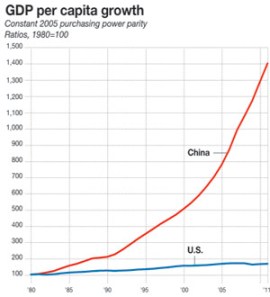
If the virus was released intentionally, the context and motive for such a biowarfare attack against China could not be more obvious. Although our disingenuous media continues to pretend otherwise, China’s economy surpassed our own in size several years ago, and has continued to grow much more rapidly. Chinese companies have also taken the lead in several crucial technologies, with Huawei becoming the world’s leading telecommunications equipment manufacturer and dominating the important 5G market. And China’s sweeping Belt and Road Initiative has threatened to reorient global trade around an interconnected Eurasian landmass, greatly diminishing the leverage of America’s own control over the seas. I have closely followed China for over forty years, and these trend-lines had never been more apparent. Back in 2012, I published an article bearing the provocative title “China’s Rise, America’s Fall?” and I have seen no reason to reassess my verdict.
Which superpower is more threatened by its “extractive elites”?
Ron Unz • The American Conservative, April 17, 2012 • 7,000 Words
For three generations following the end of World War II, America had stood as the world’s supreme economic and technological power, while the collapse of the Soviet Union thirty years ago left us as the world’s sole remaining superpower, with no conceivable military challenger. A growing sense that we were rapidly losing that unchallenged position had certainly inspired the anti-China rhetoric of many senior figures in the Trump Administration, and sparking the major trade war that they launched soon after coming into office. The increasing misery and growing impoverishment of large sections of the American population naturally left these voters searching for a convenient scapegoat, and the prosperous, rising Chinese made a perfect target.
Despite America’s growing economic conflict with China over the last couple of years, I had never considered the possibility that matters might take a military turn. The Chinese had long ago deployed advanced intermediate range missiles that many believed could easily sink our carriers in the region, and they had also generally improved their conventional military deterrent. Moreover, China was on quite good terms with Russia, which itself had been the target of intense American hostility for several years; and Russia’s new suite of revolutionary hypersonic missiles had drastically reduced any American strategic advantage. Thus, a conventional war against China seemed an absolutely hopeless undertaking, while China’s outstanding businessmen and engineers were steadily gaining ground against America’s decaying and heavily-financialized economic system.
Under these difficult circumstances, an American biowarfare attack against China might have seemed the only remaining card to play in hopes of maintaining American supremacy. Plausible deniability would minimize the risk of any direct Chinese retaliation, and if successful, the terrible blow to China’s economy would set it back for many years, perhaps even destabilizing the social and political system. Using alternative media to immediately promote theories that the coronavirus outbreak was the result of a leak from a Chinese biowarfare lab was a natural means of preempting any later Chinese accusations along similar lines, thereby winning the international propaganda war for America before China had even begun to play.
A decision by elements of our national security establishment to wage biological warfare in hopes of maintaining American world power would certainly have been an extremely reckless act, but extreme recklessness had become a consistent American pattern since 2001, especially under the Trump Administration. Just a year earlier we had kidnapped the daughter of Huawei’s founder and chairman, who also served as CFO and ranked as one of China’s most top executives, while at the beginning of January we suddenly assassinated Iran’s top military leader.
These were the thoughts that came to mind during the last week of January once I discovered the widely circulating theories suggesting that China’s massive disease epidemic had been the self-inflicted consequence of its own biowarfare research. I saw no solid evidence that the coronavirus was a bioweapon, but if it were, there seemed an overwhelming likelihood that China was the innocent victim of the attack, presumably carried out by elements of the American national security establishment.
At that point, someone brought to my attention a very long article by an American ex-pat living in China who called himself “Metallicman” and held a wide range of eccentric and implausible beliefs. I have long recognized that flawed individuals can often serve as the vessels of important information otherwise unavailable, and this case constituted a perfect example of that. His piece denounced the outbreak as a likely American biowarfare attack, and provided a great wealth of factual material I had not previously considered. Since he authorized republication elsewhere I did so, and by the end of January his 15,000 word analysis, although somewhat raw and unpolished, was attracting an enormous amount of readership on our website, probably being one of the very first English-language pieces to suggest that the mysterious new disease was an American bioweapon. Many of his arguments appeared doubtful to me or have been obviated by later developments, but several seemed quite telling.
He pointed out that during the previous two years, the Chinese economy had already suffered serious blows from other mysterious new diseases, although these had targeted farm animals rather than people. During 2018 a new Avian Flu virus had swept the country, destroying large portions of China’s poultry industry, and during 2019 the Swine Flu viral epidemic had devastated China’s pig farms, destroying 40% of the nation’s primary domestic source of meat, with widespread claims that the latter disease was being spread by small drones. My morning newspapers had hardly ignored these important business stories, noting that the sudden destruction of China’s domestic food sources might constitute a huge boon to American farm exports at the height of our trade conflict, but I had never considered the obvious implications. So for three years in a row, China had been severely impacted by strange new viral diseases, though only the most recent had been deadly to humans. Although this evidence was merely circumstantial, the pattern seemed highly suspicious.
The writer also noted that shortly before the coronavirus outbreak in Wuhan, that city had hosted 300 visiting American military officers, there to participate in the 2019 Military World Games, an absolutely remarkable coincidence of timing. As I pointed out at the time, how would Americans react if 300 Chinese military officers had paid an extended visit to Chicago, and soon afterward a mysterious and deadly epidemic had suddenly broken out in that city? Once again, the evidence was merely circumstantial but certainly raised dark suspicions.
Scientific investigation of the coronavirus had already pointed to its origins in a bat virus, leading to widespread media speculation that bats sold as food in the Wuhan open markets had been the original disease vector. Meanwhile, the orchestrated waves of anti-China accusations had emphasized Chinese laboratory research on that same viral source. But we soon published a lengthy article by investigative journalist Whitney Webb providing copious evidence of America’s own enormous biowarfare research efforts, which had similarly focused for years on bat viruses. Webb was then associated with MintPress News, but that publication had strangely declined to publish her important piece, perhaps skittish about the grave suspicions it directed towards the US government on so momentous an issue. So without the benefit of our platform, her major contribution to the public debate might have attracted relatively little readership.
Around the same time, I noted another extremely strange coincidence that seemed to attract no interest from our somnolent national media. Although his name had meant nothing to me, in late January my morning newspapers carried major stories on the sudden arrest of Prof. Charles Lieber, one of Harvard University’s top scientists and Chairman of its Chemistry Department, sometimes characterized as a potential future Nobel Laureate.
The circumstances of that case seemed utterly bizarre to me. Like numerous other prominent American academics, Lieber had had decades of close research ties with China, holding joint appointments and receiving substantial funding for his work. But now he was accused of financial reporting violations in the disclosure portions of his government grant applications—the most obscure sort of offense—and on the basis of those accusations, he was seized by the FBI in an early-morning raid on his Cambridge home and dragged off in shackles, potentially facing decades of federal imprisonment.
Such government action against an academic seemed almost without precedent. During the height of the Cold War, numerous American scientists and technicians were rightfully accused of having stolen our nuclear weapons secrets for delivery to Stalin, yet I had never heard of any of them treated in such a manner, let alone a scholar of Prof. Lieber’s stature, who was merely charged with technical disclosure violations. Indeed, his treatment recalled accounts of NKVD raids during the Soviet purges of the 1930s.
Although Lieber was described as a chemistry professor, a few seconds of Googling revealed that some of his most important work had been in virology, including technology for the detection of viruses. So a massive and deadly new viral epidemic had broken out in China and almost simultaneously, a top American scholar with close Chinese ties and expertise in viruses was suddenly arrested by the federal government, yet no one in the media expresses any curiosity at a possible connection between these two events.
I think we can safely assume that Lieber’s arrest by the FBI had been prompted by the coronavirus epidemic, but anything more is mere speculation. Those now accusing China of having created the coronavirus might surely suggest that our intelligence agencies discovered that the Harvard professor had been personally involved with that deadly research. But I think a far more likely possibility is that Lieber began to wonder whether the epidemic in China might not be the result of an American biowarfare attack, and was perhaps a little too free in voicing his suspicions, thereby drawing the wrath of our national security establishment. Inflicting such extremely harsh treatment upon a top Harvard scientist would greatly intimidate all of his lesser colleagues elsewhere, who would surely now think twice before broaching certain possible theories to any journalists.
By the end of January, our webzine had published seven articles and columns on the coronavirus outbreak, totaling tens of thousands of words, and probably established itself as the primary English-language source for a particular perspective on the deadly epidemic, with our coverage eventually attracting many hundreds of thousands of pageviews. A few weeks later, the Chinese government began gingerly raising the possibility that the coronavirus may have been brought to Wuhan by the 300 American military officers visiting that city, and was fiercely attacked by the Trump Administration for spreading anti-American propaganda. But I strongly suspect that the Chinese had gotten that idea from our own publication.
As the coronavirus gradually began to spread outside China’s own borders, another development occurred that greatly multiplied my suspicions. Most of these early cases had occurred exactly where one might expect, among the East Asian countries bordering China. But by late February Iran had become the second epicenter of the global outbreak. Even more surprisingly, its political elites had been especially hard-hit, with a full 10% of the entire Iranian parliament soon infected and at least a dozen of its officials and politicians, some of them quite senior, soon dying of the disease. Indeed, Neocon activists on Twitter began boasting that their hatred Iranian enemies were now dropping like flies.
Let us consider the implications of this. Across the entire world the only political elites that have yet suffered any significant human losses have been the Iranians, and they died at a very early stage, before significant outbreaks had even occurred almost anywhere else in the world outside China. Thus, we have America assassinating Iran’s top military commander on Jan. 2nd and then just a few weeks later large portions of the Iran’s ruling elites became infected by a mysterious and deadly new virus, with many of them soon dying as a consequence. Could any rational individual possibly regard this as a mere coincidence?
Biological warfare is a highly technical subject, and those possessing such expertise are unlikely to candidly report their classified research activities in the pages of our major newspapers, perhaps even less so after Prof. Lieber was dragged off to prison in chains. My own knowledge is nil. But in mid-March I came across several extremely long and detailed comments on the coronavirus outbreak that had been posted on a small website by an individual calling himself “OldMicrobiologist” and who claimed to be a retired forty-year veteran of American biodefense. The style and details of his material struck me as quite credible, and after a little further investigation I concluded that there was a high likelihood that his background was exactly as he had described. I made arrangements to republish his comments in the form of a 3,400 word article, which soon attracted a great deal of traffic and 80,000 words of further comments.
Although the writer said that he had absolutely no proof, he said that his experience led him to strongly suspect that the coronavirus outbreak was indeed an American biowarfare attack against China, probably carried out by agents brought into that country under cover of the Military Games held at Wuhan in late October, the sort of sabotage operation our intelligence agencies had sometimes undertaken elsewhere. One important point he emphasized was that high lethality was often counter-productive in a bioweapon since debilitating or hospitalizing large numbers of individuals may impose far greater economic costs on a country than a biological agent which simply inflicts an equal number of deaths. In his words “a high communicability, low lethality disease is perfect for ruining an economy,” suggesting that the apparent characteristics of the coronavirus were close to optimal in this regard. Those so interested should read his analysis and assess for themselves his credibility and persuasiveness.
Was coronavirus a Biowarfare Attack Against China?
OldMicrobiologist • March 13, 2020 • 3,400 Words
One intriguing aspect of the situation was that almost from the first moment that reports of the strange new epidemic in China reached the international media, a large and orchestrated campaign had been launched on numerous websites and Social Media to identify the cause as a Chinese bioweapon carelessly released in its own country. Meanwhile, the far more plausible hypothesis that China was the victim rather than the perpetrator had received virtually no organized support anywhere, and only began to take shape as I gradually located and republished relevant material usually drawn from very obscure sources and often anonymously authored. So it seemed that only one side was waging an active information war, and that side was not China’s. The nearly simultaneous launch of such a major propaganda campaign may not necessarily demonstrate that an actual biowarfare attack had occurred, but I think it tends to support such a notion.
When considering the hypothesis of an American biowarfare attack, certain natural objections come to mind. The major drawback to biological warfare has always been the obvious fact that the self-replicating agents employed are not prone to respect national borders, raising the serious risk that the disease might eventually return to the land of its origin and inflict substantial casualties. For this reason, it seems quite doubtful that any rational and half-competent American leadership would have unleashed the coronavirus against China.
But as we absolutely see demonstrated in our daily news headlines, America’s current government is grotesquely and manifestly incompetent, more incompetent than one could almost possibly imagine, with tens of thousands of Americans having now already paid with their lives for such extreme incompetence. Rationality and competence are obviously nowhere to be found among the Deep State Neocons that President Donald Trump has appointed to so many crucial positions throughout our national security apparatus.
Moreover, the extremely lackadaisical notion that a massive coronavirus outbreak in China would never spread back to America might have seemed plausible to individuals who carelessly assumed that past historical analogies would exactly apply. As I wrote a few weeks ago:
Reasonable people have suggested that if the coronavirus was a bioweapon deployed by elements of the American national security apparatus against China (and Iran), it’s difficult to imagine why the they didn’t assume it would naturally leak back in the US and start a huge pandemic here, as is currently happening.
The most obvious answer is that they were stupid and incompetent, but here’s another point to consider…
In late 2002 there was the outbreak of SARS in China, a related virus but that was far more deadly and somewhat different in other characteristics. The virus killed hundreds of Chinese and spread into a few other countries before it was controlled and stamped out. The impact on the US and Europe was negligible, with just a small scattering of cases and only a death or two.
So if American biowarfare analysts were considering a coronavirus attack against China, isn’t it quite possible they would have said to themselves that since SARS never significantly leaked back into the US or Europe, we’d similarly remain insulated from the coronavirus? Obviously, such an analysis was foolish and mistaken, but would it have seemed so implausible at the time?
As some must have surely noticed, I have deliberately avoided investigating any of the scientific details of the coronavirus. In principle, an objective and accurate analysis of the characteristics and structure of the virus might help suggest whether it was entirely natural or rather the product of a research laboratory, and in the latter case, possibly indicating whether the source was China, America, or some third country.
But we are dealing with a cataclysmic world event and those questions obviously have enormous political ramifications, so the entire subject is shrouded by a thick fog of complex propaganda, with numerous conflicting claims being advanced by interested parties. I have no background in microbiology let alone biological warfare, so I would be hopelessly adrift in evaluating such conflicting scientific and technical claims. I suspect that this is equally true of the overwhelming majority of other observers as well, though committed partisans are loathe to admit that fact, and will eagerly seize upon any scientific argument that supports their preferred position while rejecting those that contradict it.
Therefore, by necessity, my own focus is on evidence that can at least be understood by every layman, if not necessarily always accepted. And I believe that the simple juxtaposition of several recent disclosures in the mainstream media leads to a rather telling conclusion.
For obvious reasons, the Trump Administration has become very eager to emphasize the early missteps and delays in the Chinese reaction to the viral outbreak in Wuhan, and has presumably encouraged our media outlets to focus on this topic.
As an example of this, the Associated Press Investigative Unit recently published a rather detailed analysis of those early events purportedly based upon confidential Chinese documents. Provocatively entitled “China Didn’t Warn Public of Likely Pandemic for 6 Key Days”, the piece was widely distributed, running in abridged form in the NYT and elsewhere. According to this reconstruction, the Chinese government first became aware of the seriousness of this public health crisis on Jan. 14th, but delayed taking any major action until Jan. 20th, a period of time during which the number of infections greatly multiplied.
Last month, a team of five WSJ reporters produced a very detailed and thorough 4,400 word analysis of the same period, and the NYT has published a helpful timeline of those early events as well. Although there may be some differences of emphasis or minor disagreements, all these American media sources agree that Chinese officials first became aware of the serious viral outbreak in Wuhan in early to mid-January, with the first known death occurring on Jan. 11th, and finally implemented major new public health measures later that same month. No one seems to have disputed these basic facts.
But with the horrific consequences of our own later governmental inaction being obvious, sources within our intelligence agencies have sought to demonstrate that they were not the ones asleep at the switch. Earlier this month, an ABC News story cited four separate government sources to reveal that as far back as late November, a special medical intelligence unit within our Defense Intelligence Agency had produced a report revealing than an out-of-control disease epidemic was occurring in the Wuhan area of China, and widely distributed that document throughout the top ranks of our government, warning that steps should be taken to protect US forces based in Asia. After the story aired, a Pentagon spokesman officially denied the existence of that November report, while various other top level government and intelligence officials refused to comment. But a few days later, Israeli television revealed that in November American intelligence had indeed shared such a report on the Wuhan disease outbreak with its NATO and Israeli allies, thus seeming to independently confirm the complete accuracy of the original ABC story and its several government sources.
It therefore appears that elements of the Defense Intelligence Agency were aware of the deadly viral outbreak in Wuhan more than a month before any officials in the Chinese government itself. Unless our intelligence agencies have pioneered the technology of precognition, I think this may have happened for the same reason that arsonists have the earliest knowledge of future fires.
Back in February, before a single American had died from the disease, I wrote my own overview of the possible course of events, and I would still stand by it today:
Consider a particularly ironic outcome of this situation, not particularly likely but certainly possible…
Everyone knows that America’s ruling elites are criminal, crazy, and also extremely incompetent.
So perhaps the coronavirus outbreak was indeed a deliberate biowarfare attack against China, hitting that nation just before Lunar New Year, the worst possible time to produce a permanent nationwide pandemic. However, the PRC responded with remarkable speed and efficiency, implementing by far the largest quarantine in human history, and the deadly disease now seems to be in decline there.
Meanwhile, the disease naturally leaks back into the US, and despite all the advance warning, our totally incompetent government mismanages the situation, producing a huge national health disaster, and the collapse of our economy and decrepit political system.
As I said, not particularly likely, but certainly a very fitting end to the American Empire…
Related Reading:
- The Myth of Tiananmen by Jay Matthews
- China’s Rise, America’s Fall
- Was coronavirus a Biowarfare Attack Against China? by OldMicrobiologist
- Bats, Gene Editing and Bioweapons: Recent Darpa Experiments Raise Concerns Amid coronavirus Outbreak by Whitney Webb
- How It All Began: the Belgrade Embassy Bombing by Peter Lee
MSM China Hysteria Gets Way Crazier And Dumber

By Caitlin Johnstone | April 20, 2020
Hysteria about China has been kicked into high gear by the political/media class who are responsible for manufacturing support for the cold war escalations which will be necessary to prevent the US from being surpassed on the world stage as a unipolar superpower.
Fox News’ Jeanine Pirro has aired a fire-and-brimstone monologue on China that looks like a fictional news clip from some kind of film noir-style movie adaptation of a really ham-fisted dystopian graphic novel. It really needs to be seen to be believed, so give it a view here when you get a chance:
This seems more unhinged than normal pic.twitter.com/PmoLhMEaB7
— Acyn Torabi (@Acyn) April 19, 2020
“China is the one that’s out of control,” Pirro spat, punching the word ‘China’ like she was speaking a profanity at someone she despises. “We’re not going to let you destroy this country or our way of life. We’ve fought too hard and we’ve fought too long to lose it to a Wuhan – that’s what I said, a WOO-HAN virus!”
“You want to control people? You politicians want to flex your muscles?” Pirro asked, referring to government lockdowns. “Well start working on how you’re gonna punish, ostracize, alienate, and financially sanction, and make China accountable for what they did to us and the rest of the world!”
It’s a legitimately scary segment with an unbelievable amount of vitriol, and Pirro isn’t the only Fox News pundit ramping up the anti-China hysteria.
Tucker Carlson recently had on “former” CIA officer Bryan Dean Wright to tell his massive audience about the danger posed by the Chinese menace, and pitched him a question clearly geared to set up Wright to claim without evidence that leaders of the Democratic Party may in fact be members of the Chinese intelligence agency MSS.
“We reached out to Senator Feinstein and a number of other elected officials today and asked ‘Have you had contact recently since the outbreak with Chinese officials?’, and not a single one responded. What do you think we should infer from that?” asked Carlson, who is known to have himself tried to join the CIA in the past.
“I think that they’re nervous,” Wright replied. “I think there are a bunch of people who, because they’re either useful idiots, or they have some degree of knowledge and and relationships behind the scenes with the Chinese government. Some of them in fact could be Chinese agents of the MSS, their intelligence service, God forbid. They’re nervous.”
“We’ve got a lot of very nervous folks in the Democratic Party,” Wright added.
This is easily as unhinged as even the most cartoonishly ridiculous Russia hysteria we’ve seen uncorked by Rachel Maddow or anyone on MSNBC, and is not at all different in tone or content; even the use of the term “useful idiots” is right in line with the same reprehensible Russiagate rhetoric we’ve been hearing for the last four years.
The claim that rival parties have been infiltrated by communists has a very long and ugly history in US politics, and now that it’s being weaponized by the American right wing in such a shameless way we can expect it to get a whole lot uglier.
Welcome to the new cold war. Biden’s new ad is just unhinged anti-China propaganda.
Biden will attack Trump for supposedly being “too soft” on China, and Trump will do the same to Biden.
The 2020 election will be nonstop bipartisan scapegoating of China.pic.twitter.com/ANzV1dTkS7
— Ben Norton (@BenjaminNorton) April 18, 2020
Not to be outdone the Democrats are now working to out-Trump Trump, with House Speaker Nancy Pelosi demanding that Trump “swiftly begin implementing the Hong Kong Human Rights & Democracy Act”, and a new Biden campaign ad attacking the president for being too soft on China for its handling of the Covid-19 virus.
The ad attacks Trump for failing to force Beijing to allow US government officials into Wuhan to monitor the governing of a sovereign nation during a pandemic outbreak.
“Trump praised the Chinese 15 times in January and February as the coronavirus spread across the world,” says the ad’s narrator in a menacing voice. “Trump never got a CDC team on the ground in China. And the travel ban he brags about? Trump let in 40,000 travelers from China into America after he signed it. Not exactly airtight.”
Attacking Trump from the right on foreign policy has become standard practice for the Biden campaign, with whoever runs his account recently tweeting “Donald Trump says he’s a wartime president — it’s time for him to act like one.”
This is the guy that American progressives still say can be moved to the left? Hilarious.
Even as the world confronts the coronavirus crisis, democracy and human rights continue to be attacked in Hong Kong. @RepMcGovern is right — @realDonaldTrump must swiftly begin implementing the Hong Kong Human Rights & Democracy Act. https://t.co/hn0GiuNrDm
— Nancy Pelosi (@SpeakerPelosi) April 18, 2020
It is never a good sign when the political/media class all across the aisle begins loudly trying to out-hawk one another about a nation which refuses to be absorbed into the US-centralized world order. And make no mistake, this is all this is actually about.
It’s not a coincidence that the two nations the US political/media class has been shrieking the loudest about lately are the two strongest nations which have refused to be absorbed into the US empire. It’s never been about “collusion” or a virus, it’s about stopping multipolarism. This has been obvious for years, but partisan narrative control masks it. More than two years ago I was writing about how Russiagate isn’t about Trump or even really just about Russia, but about hamstringing the Russia-China tandem to stop China’s rise.
Ever since the fall of the Soviet Union and the rise of neoconservatism, the prevailing orthodoxy in the US-centralized power alliance has been to preserve the unipolar world order at any cost. All US foreign policy has been a direct or indirect result of this agenda ever since.
Donald Trump says he’s a wartime president — it’s time for him to act like one.
— Joe Biden (@JoeBiden) April 18, 2020
It’s not about Covid-19. It’s not about Uighurs. It’s not about a Putin pee tape. It’s not about terrorists. It’s not about weapons of mass destruction. It’s about world domination, plain and simple. And the oligarch-owned political/media class who controls the dominant narrative is helping to facilitate that.
I never voted for a world order where one powerful government is constantly attacking, destroying and sabotaging any nation that threatens its hegemony. I’m pretty sure you never did either. And yet here we are, forced to accept this insane paradigm, even when the targeted nations in question are nuclear armed and anything could go drastically wrong at any moment as a result of miscommunication or technical malfunction in the heat and confusion of escalated aggression.
This will continue to be foisted upon us whether we like it or not, until this way of life is locked in forever, or until we all die in a nuclear holocaust, or until we force them to stop. It’s that third option that they are working to cut off during the rapid increases in government surveillance and internet censorship we’ve seen implemented during this pandemic, so we’re going to have to want to live a lot more than the empire does.
Report says Iran may have replicated Israeli missile downed in Syria
Press TV – April 20, 2020
A Russian aviation news outlet says Iran may have replicated an Israeli missile that was shot down in Syria, citing a video of the test of a new Iranian anti-tank missile.
Avia.Pro reported that the new missile seems to resemble one of the Israeli projectiles that were downed by the Russian electronic warfare system during an attack on Syria,.
The report added that the downed missile was later successfully removed from the country by “Iranian intelligence service”, and was studied and completely copied.
The news outlet shared a video that showed the accuracy of the Iranian copy of the Israeli “Spike” missile in hitting its target.
Avia.Pro quoted experts as saying that Iran may use Israeli missiles against Tel Aviv itself in the near future.
Iranian authorities have repeatedly said that the country’s missile program has not been established for non-conventional purposes and is only meant as part of the country’s deterrence capability.
Iran holds the very first ranking in the field of missile technology among the Middle Eastern countries, according to a commander of the Islamic Revolution Guards Corps (IRGC).
“Today, we rank first in the missile technology at the regional level and are placed among the few global powers in this regard,” Brigadier General Amir Ali Hajizadeh, the commander of the Aerospace Division of the IRGC, said last August.
In June, Major General Hossein Salami, the chief commander of the IRGC, said Iran had managed to change the balance of power in its favor by harnessing the technology required for manufacturing ballistic missiles.
Salami said the Islamic Republic acquired the know-how 12 years ago while trying to prepare its defenses against the United States’ aircraft carriers.
A Postmortem on Bernie Sanders and Palestine
Now that the Sanders campaign has ended, Palestinian Americans should reflect on why our organizations so readily abandoned anti-imperialism.

By Steven Salaita | April 15, 2020
Let me start with a story about the Democratic primary. Now, I’m no operative, so this story has nothing to do with voting choices or electability. It’s about how Palestine disappears in US electoral discourses, even when people who identify as Palestinian purport to make it visible.
Sometime ago, I was added to an online group of Palestinian Americans organizing for Bernie Sanders’ campaign. The specific identity of the group is immaterial. Many such groups existed and as far as I can see the outcome of their work fit a standard template: we’re Palestinian (and thus purport to speak for all Palestinians from within the United States); Bernie’s not perfect (but he really is kinda perfect); Bernie’s by far the best on Palestine (trust us); this isn’t merely about Palestine (Palestine is merely the pretext); we’ll be sure to hold him accountable (even though we just finished giving him unqualified support). I don’t want to put Palestinians on the spot; all statements supporting presidential candidates look more or less the same. Let’s call it a limitation of the genre and leave it at that.
So, members of this group were working on a statement explaining why Palestinians should support Sanders. Somebody put up a shared document with various points exaggerating Sanders’ record as an advocate for Palestinian rights and some fantasizing about Palestine’s future under a Sanders presidency. Again, pretty typical stuff, which is to say a whole lot of bullshit.
In the margin of the document, a user asked, “Is Sanders a Zionist?,” to which another person replied, “Yes he is.” No discussion ensued. The question and answer hung in silence until the document went public, at which point any consideration of Sanders’ Zionism had been scrubbed.
I’m less interested in the question of Sanders’ Zionism than I am in the reasons for scrubbing Zionism from the conversation about Sanders. Sanders doesn’t call himself a Zionist, and the label can flatten a pretty wide range of thought, but if we examine Sanders’ positions against what the Palestine solidarity movement understands to be Zionism, then Sanders unambiguously fits the description. He constantly affirms Israel’s right to exist as a Jewish state. He opposes right of return. He treats Netanyahu as the aberration from a humanistic norm. Yeah, he’s a Zionist. This fact wasn’t lost on his Palestinian American champions. It just didn’t seem to bother them very much.
But let’s leave the question of Sanders’ Zionism to the side, for it has proved effective at putting colleagues at loggerheads. Whatever Sanders or any other politician thinks about Palestine should have no influence on how Palestinians think about Palestine. In fact, according to the mythography of electoralism, it’s the community’s duty to educate the politician. In order to accomplish that goal, the community needs to convey principles it considers nonnegotiable. For Palestinians, those principles would include right of return and full equality in all of historic Palestine.
That’s not what happened in the various statements of support. Instead, their authors instrumentalized Palestine as an abstract commitment—an idea mobilized through performances of ethnic verisimilitude—in order to boost a campaign extraneous to the actual work of decolonization. Rather than pressuring the politician, they made demands of the audience and assured people opposed to Zionism that voting for someone pledging to uphold Israel’s “Jewish character” wasn’t a pragmatic concession, but an act of virtue, a feat of devotion to Palestine.
What does it mean that groups visibly and proudly identifying as Palestinian felt it necessary to scrub Zionism in order to boost a politician jockeying to supervise US Empire? By what moral calculus did those groups take vital demands off the table? Did they have the consent of refugees for whom right of return is sacrosanct? Of rank-and-file Palestinians in the United States? Or was it an exercise in unilateral leadership by the diasporic professional class?
I know what the response is: we didn’t mythologize anyone; we regularly pointed out his weaknesses. Well, not really. (I didn’t see you pointing out that Sanders is a Zionist, for example.) Exerting tremendous energy to conceptualize Sanders as a benevolent uncle figure and then occasionally saying “he needs more work on this issue” or “we need to keep pushing him” was a cardinal feature of mythologization, as was running interference with points of view more palatable to the mainstream when fellow anti-Zionists dissented from the consensus. Saying “he’s the best on Palestine even though he’s not perfect” was the rankest kind of mythmaking. It confused “being better than a terrible field” with “being good.”
I saw in these statements a yearning to matter, a desire to at long last be taken seriously after decades of abuse and disregard. It’s a normal response to subordination, to the pain of continuous betrayal, but no amount of high-minded talk about an electoral revolution will compel sites of power to care about Palestinian Americans. They shouldn’t be our audience, anyway. Palestinians are admired by people around the world who value justice and resilience and dignity. Let’s not forgot our place, which isn’t among consultants and technocrats, but with the ignominious, the surplus, the unbeloved.
During the primary, and during the 2016 election cycle, whenever I expressed skepticism about deploying Palestine in service of a presidential campaign, other Palestinian Americans quickly intervened: “Well, I mean Steve’s making an, ahem, important point, but, here, let me butt in and do it, you know, more responsibly.” I found it to be a pathetic move. The idea was to keep radicalism in check, or to snuff it out. Decolonization, however, is inherently radical in the metropole. The interventions were thus a form of ostracism: we don’t want disreputable elements of our community running a bus over this good foot we’re trying to put forward. The limits of US electoralism came to define the parameters of Palestinian liberation.
Electioneering requires compromise, but compromise isn’t a neutral practice. The people are made to sacrifice for the affluent. That’s how compromise works under capitalism. Every time, every single time, it’s some aspect of Palestinian freedom that must be compromised. Never the candidate’s position. Never the system’s inherent conservatism. Never the ongoing march of settler colonization. We’re volunteering to be captured by the settler’s notion of common sense.
And what would have happened if your guy won? You already gave up right of return. A one-state solution. Anti-imperialism. Nobody was talking about general strikes until the pandemic. And nobody ever talks about armed struggle. How did you plan to get these things back on the table after having surrendered them to a person whose first, second, and third priority is appeasing power? You gave up something Palestinians have struggled and died for over the course of decades, and for what? Just to make the apocryphal and frankly useless point that this politician is a more tolerable Zionist than the other ones?
And when your guy loses? This is the question of the moment, isn’t it? You gave up all that leverage for nothing (except for individual benefits). What happens next? God knows I can’t answer that question. I’m not saying don’t participate, don’t vote, don’t be interested in a candidate. That’s not the point. I dislike coercive forms of persuasion. I’m simply trying to convince you not to give up the idea of freedom as it’s articulated by the downtrodden. Not for any reason. Certainly not for a goddamn politician.
There’s a question you ought to ask as necessary (which is to say constantly): what happens to Palestine? When we humor a system calibrated to exclude us, when we pretend that liberation is possible on the margins of a hostile polity, when we imagine liberal Zionism as a prelude to freedom, then what happens to Palestine?
Raising this kind of skepticism is a good way to get branded a hater. (Treating the recalcitrant as irrational is a central feature of electoral discipline.) I hate this sensibility precisely because I’m not a hater, because I recognize that defiance is a priceless asset in conditions of loss and dispossession. Let’s please abandon this smug idea that skepticism ruins the party for sensible people. It’s an ugly form of internal colonization. Recalcitrance can be a deep, abiding act of love, in this case a devotion to life realized in the form of a simple question: what happens to Palestine?
The system you deign to reform ranks nothing above ruling class accumulation—the system, in other words, is designed to betray, and performs its mandate with brutal efficiency. And so the answer to that timeless question never changes: Palestine goes away. Any group that doesn’t facilitate a flow of capital into the imperial core is fit for disappearance. Our mandate, in turn, isn’t to seek the approval of our oppressor, but to earn his contempt.
Instrumentalizing the persecuted is a critical feature of electoralism. Promoting a Zionist presidential candidate and remaining faithful to the core tenets of anti-Zionism? Forget it. It’s not happening. It can’t happen. Electoralism is salted against insurgency. It’s not a space for ideas, for creativity, for the simple decency of not asking the least powerful among us to defer their freedom; it’s hostile to anything that impedes the reproduction of orthodoxy. Liberation has always required tremendous imagination. That’s not on offer when David Sirota is authoring the narrative.
You have no cause to be angry with Sanders. Not now. He hasn’t broken a single pledge. He never hid his intentions. There was plenty of reason for concern when he kept repeating liberal Zionist platitudes. It was you, not Sanders, who folded Palestine into a campaign that always promised to maintain the status quo. The outcome was easy to predict because it has many decades of precedent. Palestinians, victim of a million betrayals, should know this better than anyone. We also know that struggle has no easy trajectory. Mass movements predicated on voting make for attractive sources of relief. Then they go up in smoke and you’re left to find the next shiny figure to exploit, the next fount of excitement and pageantry and social capital. This isn’t a serious politics. It’s terminal naivete, or industrial self-promotion.
And now what? You disposed of the most radical members of our community, systematically excluding so many brethren from the life-sustaining pleasure of shared resistance, in order to assuage a bunch of faceless assholes waiting for the first opportunity to dispose of you, all that love sacrificed for no reward beyond some retweets and an evanescent sense of importance, your moment of being accepted by the polity now replaced by angry regret for having again succumbed to the gravitational pull of authority, of the state and its functionaries, of the very institutions that maintain our dispossession. But our nation, Palestine, is neither temporary nor ephemeral. Our politics should match the condition.
Churchill’s War: the Real History of World War II
By Paul Craig Roberts • Institute for Political Economy • April 19, 2020
All truth-tellers are denounced, and most end up destroyed. Truth seldom serves the agendas of powerful interests.
The one historian from whom you can get the unvarnished truth of World War II is David Irving.
On the bookjackets of Irving’s books, the question is asked: What is real history?
The answer is that real history is history that travels straight from history-maker to the history-maker’s documents and from the document archives to the historian’s book without political input and free of academic and patriotic prejudice. It is history that cannot be bought.
Irving’s Hitler’s War was published in 1977. Irving was an archaeologist digging in history who located and dug up previously unknown documents and archives. He lets the factual record tell the history. He is exact and scrupulous and does not curry favor. The Board of Deputies of British Jews wrote: “The book was thoroughly researched . . . It confirmed Irving’s reputation as one of the world’s most thorough researchers and an exciting and readable historian.”
 The first volume of Irving’s Churchill’s War was published in 1987. The second volume in 2001. The third and final volume is awaited.
These works far surpass all previous histories of the war and all accounts of the agendas and events that produced the war. Irving is not motivated to curry favor with the ruling establishment, to make us feel self-righteous in our victory by demonizing the opponent or to grind any personal, ideological, or political axe. He lets the history-makers speak for themselves in their own words, and it is seldom a pretty picture.
Irving’s books sold millions of copies, and he was well-to-do. But he fell foul of Zionists, oddly enough because he documented actual atrocities against Jews. The problem was the attrocities he found differed from the official holocaust story. He documented a holocaust of a sort, but it is a different one than the Zionists prefer. If I understand correctly, infuriated Zionists with plentiful funds used unethical tactics and brought lawsuits, the defense against which eventually bankrupted him. Little wonder most historians choose to suck up to powerful interests by validating their claims and explanations. The fake history they write is a self-protective device like a bullet-proof vest.
I previously reported on Hitler’s War and the first volume of Churchill’s War in my most widely read article — The Lies About World War II. As I quoted Irving’s account that Jews were killed, but in a more ad hoc than organized way, Zionists rushed to my already defective Wikipedia biography to attribute Irving’s words to me, thereby labeling me a “holocaust denier.” When I complained of the misrepresentation, I was fobbed off with the reply that I would not have quoted Irving if I had not agreed with him. In other words, if you report in a book review what a writer says, it means you agree with him. I am not qualified to agree or to disagree with Irving. Indeed, few people are.
People in the Western world have been indoctrinated for 75 years into a white hat/black hat story of World War II that exonerates the “allies” and demonizes Hitler and Germany. To tell people, especially elderly ones whose memory of the war was formed by war propaganda, that the “allies” were as bad or worse war criminals than the Germans brings fire and brimstone down on one’s head. It nevertheless needs to be done, because our view of ourselves reflects the make-believe story of the war with which we are inculcated. In the false history comes strength for the opinion that we Americans and our country are exceptional and indispensable and that these traits justify Washington’s hegemony over the world. Our destruction in whole or part of seven countries in the 21st century, our withdrawal from arms limitation agreements, our dangerous demonization of militarily powerful countries such as Russia and China all rest in our self-righteous view of ourselves. Of course, not all Americans share these self-righteous views, but the views are the basis for both Republican and Democrat foreign policy. Even the left-wing, or whatever remains of it, believes in war in order to overthrow dictators and “bring democracy and human rights.”
In what follows I am not going to attempt a review of Irving’s second volume on Churchill. Instead, I will report some of the findings that documents reveal, findings that will be new information for most readers. But first a preface.
Hitler did not start World War II. England and France launched World War II with a declaration of war against Germany. Hitler did not want a war with Britain and France and tried to avoid it and then end it with a peace agreement very favorable to Britain and France. Hitler regarded the British Empire as essential to the survival of European dominance. He promised Churchill in exchange for an end of hostilities that Germany would defend the British Empire with the German military anywhere in the world that it was in jeopardy. Hitler left a large part of France and French North Africa unoccupied. He left the French fleet in French hands.
Hitler’s aim was to restore the integrity of the German nation which had been torn apart and distributed to Czechoslovakia, Poland, Denmark, and France by the Versailles Treaty which had been forced on Germany after World War I by a policy of starvation. Germans in the territories turned over to Czechoslovakia and Poland were being persecuted and murdered. Hitler had no choice but to do something about it. He recovered German territory from France, Czechoslovakia, and Denmark without war.
The same outcome was likely in Poland except the British interfered. The British gave the Polish military dictatorship a “guarantee” to come to Poland’s aid if Poland refused Hitler’s demands. Consequently, the Polish dictatorship broke off negotiations with Germany. Germany and the Soviet Union then split Poland between them.
The guarantee compelled “British honor” to declare war on Germany—but not on the Soviet Union—and the hapless French were pulled along.
 The British relied on the “powerful French military” and sent an expeditionary force which was promptly trapped at Dunkirk where Hitler let them go, thinking that an act of magnanimity and his refusal to humiliate the British would bring an end to the conflict. However, Churchill kept Hitler’s overly generous peace terms from the British people and from Parliament. Churchill had wanted war and had worked hard for one and now that he had power and a chance to repeat the military leadership of his great ancestor, the Duke of Marlborough, he was determined to keep his war.
With Hitler in control of Europe, Churchill began working harder to get the US into the war. All along the way President Roosevelt had given Churchill war encouragement but without promising any definite course of action from America. Roosevelt wanted Britain at war. He knew it would bankrupt the British and place them economically in Washington’s hands, which would permit the US to break up the British system of trade preferences that allowed Britain to control world trade, destroy the British Empire, dethrone the British pound and replace it with the dollar. Roosevelt was an enemy of empire except America’s own. From FDR’s standpoint, World War II was an attack by the US on British trade preferences that were the backbone of the British Empire.
So Churchill got his war which cost Britain her empire, and Roosevelt replaced the British Empire with an American one. FDR paid a cheap price—about 300,000 US combat deaths. In her defeat of Germany, Russia lost about 9,000,000 soldiers in combat deaths and 26 million people altogether,
After the Russians stopped the German offensive, the war could have ended, but FDR and Churchill had established a policy of unconditional surrender, which shackled allied wartime foreign policy to two more years of death and destruction.
As Pat Buchanan said, it was The Unnecessary War. The war served Churchill’s path to power and Washington’s empire.
Volume 2 begins in 1941. Irving has tracked down and unearthed many documents that permit a better understanding of the war. Many official papers are still under lock and key and many have been destroyed. The effort to suppress truth from coming out continues 75 years after the war.
Secrecy is used to hide crimes. It is reputations that are protected, not national security.
Churchill used secrecy to protect his war crime of ordering the bombing of civilian residential areas of German cities with his emphasis on bombing the homes of the working class as they were closer together which helped the conflagation to spread. Churchill would first have the civilian areas firebombed, and then when firemen and rescue workers were engaged the British would drop high explosives. Churchill ignored military targets, preferring instead to break the morale of the German population by bombing civilian areas. He tried to get the British Air Force to include poison gas when dropping incendiary and high explosive bombs on civilian residential areas.
As the British people did not know Churchill was bombing civilians, Churchill hoped Hitler would be provoked into replying in kind. Hitler refused for three months to take the bait, but finally his military insisted that unless he bombed the British they would keep on bombing German civilian areas. Hitler gave in but initially insisted that only British industrial targets be bombed. Once a few bombs went astray, Churchill had his rallying cry that the Nazi barbarians were bombing civilians. He got away with this, but officials in the know worried that the British Air Force, especially “Butcher” Harris, would face war crimes trials when the war was over. British generals and admirals disagreed with Churchill’s bombing policy. They regarded it as unprofessional and unprincipled. They complained that it harmed the war effort by denying the army and navy needed air support.
In November 1942 British Air Chief Portal compared the German bombing of Britain with the British bombing of Germany. The Germans had dropped 55,000 tons of bombs, killing 41,000 British and destroying 350,000 homes. The British had dropped 1,250,000 tons of bombs, killing 900,000 German civilians, maiming one million more, and destroying 6,000,000 German homes. The UK/US firebombing of Dresden at the end of the war stands as one of the worst war crimes in history. It killed as many or more civilians as the atomic bombs Washington dropped on the two Japanese cities, also at war end.
Churchill was determined to bomb Rome, but was resisted by the British Air Force. In contrast, Hitler ordered the German military not to risk the destruction of Rome by defending it.
Churchill ordered the bombing of the French fleet, which Hitler had left in the hands of Vichy France, killing around 3,000 French sailors. Churchill together with FDR and Eisenhower invaded French Northwest Africa which was in the hands of Vichy France. Vichy France Admiral Darlan used his influence to persuade the French not to resist the invasion, thus minimizing British and American casualties. Darlan cooperated in every way. His reward was to be assassinated in a plot organized by Foreign Secretary Anthony Eden, later one of Britain’s disastrous prime ministers. The assassin protested that he was promised immunity by the British, but was quickly executed to silence him. Eden, whose ambition was larger than his intelligence, was in DeGaulle’s pocket, and DeGaulle wanted Darlan out of his way to power.
The military schemes that Churchill imposed on the British military, such as his invasion of neutral Norway, always came to a bad end, but he rescued himself with masterful speeches in Parliament.
The British had a poor opinion of Eisenhower, and FDR had a poor opinion of Eden. There was so much conflict between the British and the Americans that it is amazing they were able to agree to any plan of action. The American people disliked the British for drawing them into “their war.” The British disliked the Americans for the Negro troops sent to England where they were believed to be responsible for rapes and a crime wave. A lot of propaganda was necessary to focus the hate on the Germans.
The British did not want to sacrifice Arab interests to Zionists but usually did because Zionists had the money. Churchill himself was indebted to a multimillionaire Jew who bailed him out when he faced bankruptcy. Zionists attempted to use their leverage over Churchill to force his approval of both more Jewish immigration to Palestine and for the formation of a “Jewish fighting force,” allegedly to fight the Germans but in reality to drive Palestinians out of Palestine. Zionists promised Churchill that if he would agree to their demands, they would bring the US into the war against Germany. Such was their power.
The British saw Zionists’ interests as detrimental to their hold on their Arab colonies. When deportations of Jews and their mistreatment began leaking out, the British Foreign Office saw the reports as the work of the international Zionist campaign to create sympathy and to use the sympathy in behalf of their Palestinian purpose. When 700 Jews found incapable of work were shot in a work camp, the Foreign Office responded, “Information from Jewish refugees is generally coloured and frequently unreliable.” Eisenhower was pleased with Darlan and was unaware of Eden’s plot against him. An American newsman told Eisenhower’s staff that the agitation against Admiral Darlan came from “Jews of press and radio who wish to make certain we were fighting a war to make the world safe for Jews.” The Jews cried wolf so often that when he actually showed up they were not believed.
Much information emerges in the second volume about Churchill’s character, personal habits, excessive drinking—he was dependent on alcohol—and autocratic ways. He could turn people against him and then with a speech or by taking special notice of them put them back in his pocket. Churchill had flaws and the ability to survive them. Irving does not excoriate Churchill. He merely shows us what he was like. There are things to admire and things to disapprove.
Moreover, it is not only Churchill who was ambitious. All were. It is a mystery that organization survived ambition. Somehow officers were able to devote time to war against the Germans from the time they spent warring against one another for commands and promotions. The same with cabinet ministers. The same for the military services fighting one another for resources. And the same for the Germans. The Italian and German generals were so jealous of Rommel’s initial successes in North Africa that they worked to undermine him.
And German efficiency also bites the dust. German intelligence never caught on that the British were reading their codes and knew precisely every shipment to resupply Rommel which the British seldom failed to send to the bottom of the Mediterranean. One would think that after nothing gets through time and again that a light would come on.
Volume 2 has 200 pages of footnote references. It has a 35 page index. It is the kind of history that only gets written once in a century. Irving is clearly the master of historical documentation. When you disagree with Irving, most likely you are disagreeing with the documented historical record.
US commander claims major naval buildup in Caribbean not aimed at toppling Maduro
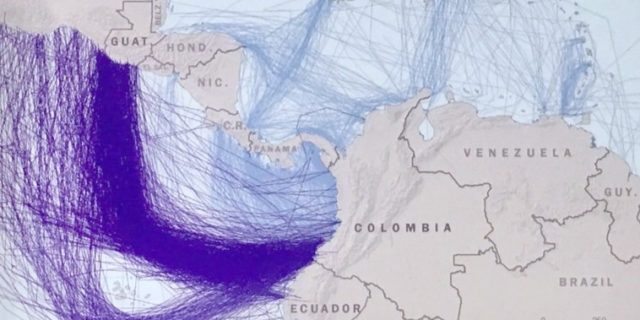
A map produced by the US Southern Command shows that most drug routes enter the US via the Pacific and then Central America (Business Insider)
Press TV – April 19, 2020
The top US military commander for Latin America has claimed that the Navy’s purported expansion of counter-narcotic operations in the Caribbean is not a military force aimed at toppling Venezuela’s President Nicolas Maduro despite Washington persisting provocations against Caracas.
Chief of US Southern Command Adm. Craig Faller asserted in an interview that Washington’s recent decision to double anti-narcotics assets in Latin America was planned months ago and not “directly” tied to Maduro’s indictment in a US court on allegations of leading a “narco-terrorist” conspiracy that supposedly sent 250 metric tons of cocaine a year to the United States.
“This is not a shift in US government policy,” Faller further claimed, despite boasting that enhanced interdiction efforts would harm Maduro’s finances and staying power. “It’s not an indication of some sort of new militarization in the Caribbean.”
The naval deployment announced this month is reportedly one of the largest US military operations in the region since its invasion of Panama in 1989 to topple its president and former CIA operative Gen. Manuel Noriega from power and take him to the US to face drug charges.
The operation involves major war-making resources such as Navy warships, AWACS surveillance aircraft and on-ground Special Forces rarely deployed before in the region.
Faller, however, further claimed that economic and diplomatic pressure — not the use of military force — continue to be Washington’s preferred instruments to oust the Venezuelan president from power.
He then went on to claim that growing instability in Venezuela is leading to an “uptick” in piracy in the Caribbean without citing any statistics or evidence to support his assertion.
Faller also said the recent sinking of a Venezuelan naval ship after it allegedly rammed an Antarctic-hardened cruise ship without passengers near Curacao reflected the readiness of the Venezuelan armed forces.
“It was a bad day for them,” he mockingly said. “Their lack of seamanship and lack of integrity is indicative of how it all played out.”
The hawkish US commander also pointed out that the coronavirus pandemic did force some in the US military to rethink the timing of the current deployment out of concern for the safety of American troops, adding that while controls to protect the workforce have been enhanced, it was determined that over the long term, the US is positioned to take advantage of the disruption in narcotics supply chains caused by the coronavirus outbreak as drug cartels scramble to source precursor chemical and other inputs.
“We thrive in uncertainty and are going to try and capitalize on that,” Faller boasted.
Featured Video

Weaponized Journalism: 2021 Sayer Ji Interview with NPR
or go to
Aletho News Archives – Video-Images
From the Archives
How Rothschild Banking Clan Uses Its Vast Wealth to Influence World Events and Control Governments
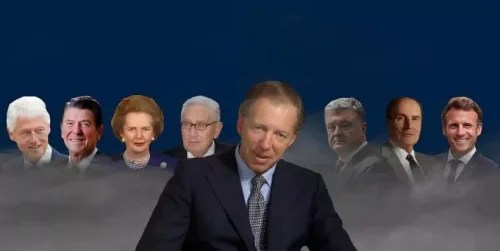
By Ilya Tsukanov – Sputnik – 15.09.2024
How powerful is the Rothschild banking family? How did they amass their fortune? Just how rich are they? Do they secretly control the world? Sputnik explores. … continue
Blog Roll
 Aletho News
- London tourism expo promotes Israeli agency linked to theft of Palestinian land
- Dockworkers launch global strike against Israeli and US military shipments
- Europe facing gas price shock – Gazprom chief
- Ukraine continues recruiting people with disabilities
- Weaponized Journalism: 2021 Sayer Ji Interview with NPR
- Beyond Netanyahu: what Israel’s election means for Palestinians
- Lithuania plans universal conscription
- Lies, Damn Lies, and Ukraine News
- Financial Times rejects Nordic demands to correct Putin call story – media
- The Case for Less Unity in Europe
- If Americans Knew
- The Long Arm of AIPAC
- Genocidal intent behind Hebron assault, rights group says
- This week, Israel killed 8-year-old who survived bombing that wiped out her family
- DAILY UPDATE: Latest essential news on Palestine, Israel, & region
- Israeli soldier poses at damaged Lebanon church, sparking anger
- New Report. Manufacturing the Great Replacement: Is Israel behind one of the largest racist influence campaigns ever documented?
- ‘Arab voice doesn’t count’: Jewish Israeli blocs reject Palestinian support
- Whether Bibi Stays or Goes, the ‘Special Relationship’ Must End
- AIPAC Isn’t Retreating. Here’s How It’s Already Shaping the Next Congress.
- With ‘Largest Coordinated Port Action Ever,’ Dockworkers in 22 Countries Strike Against Gaza Genocide
- No Tricks Zone
- Germany’s Green Energy Transition Becoming Increasingly Expensive…Another 6 Trillion Euros!
- Sudden Stratospheric Warming, Powerful El Niño Combination May Lead To Extreme Europe Cold, Energy Crisis!
- Two New Studies Find Thwaites Glacier Melt Cannot Be Driven By Human Activity Or A Warming Ocean
- E-Cars Reduce CO2 Emissions By Only 41% Compared To Internal Combustion Engine Vehicles
- Predictions Made By Renowned Climate Professor Over Past Decades Have Been Proven To Be Poor
- New Study Suggests Large Regions Of The Pacific Ocean Have Been Cooling For The Last 80 Years
- Germany’s Green Energy Debacle: High Energy Costs Force Kahla Porzellan to Close After 182 Years!
- New Study: 50 Years Of The Most Aggressive ‘Net Zero’ Policies Can Only Affect The Global Climate By 0.03°C
- US September “Heat” Was No Record…Many Records Set Decades Ago
- Latest European Green Energy Debacle; Portugal’s Largest Flagship Solar Park Insolvent!

