Jewish Congress launches campaign against ‘antisemitism’ (aka support for Palestinian rights)

Israeli President Reuven Rivlin demonstrates the new Instagram campaign against “antisemitism.” EJC and Israel consider opposition to Israeli human rights violations “antisemitic.”
Alison Weir | If Americans Knew | January 22, 2020
UPDATE: In the midst of impeachment proceedings, House Leader Nancy Pelosi has gone to Israel to take part in an event organized by the Russian-Israeli oligarch described below – see update at end of post.
The European Jewish Congress (EJC) has announced the launch of a worldwide, star studded social media campaign against what it calls “antisemitism,” but which is often advocacy for Palestinian human rights and opposition to Israeli apartheid. EJC is the regional affiliate of the World Jewish Congress, one of whose main missions is to advocate for Israel.
The EJC considers anti-Zionism to be a form of anti-Semitism and employs a newly created definition of antisemitism in which certain types of statements about Israel are supposedly “antisemitic.” As a result, EJC’s opposition to “antisemitism” often consists of censoring information that exposes Israeli violations of Palestinian human rights.
Its new campaign, called “Stop This Story,” particularly focuses on Instagram, although it will also use YouTube and other platforms. According to the EJC, the campaign will be the “first global initiative of its kind that will leverage Instagram’s AR (Augmented Reality) effects to drive a global movement.” It claims to have recruited “some of the world’s leading AR effects’ creators.”
The campaign says it has enrolled a number of “international stars” and “international influencers, each of them with millions followers.” Among these are supermodel Bar Refaeli, actress Vanessa Kirby (from ‘The Crown’), former NBA player Omri Casspi, and “many other international figures, actors, entertainers, and sportsmen and women.”
The man behind the campaign

Russian-Israeli oligarch Viatcheslav Moshe Kantor, president of the EJC and numerous other entities, is a billionaire whose top priority is strengthening Israel.
The individual behind the new campaign is EJC President Moshe Kantor, also known as Viatcheslav Kantor, He explains the reasoning underlying the campaign: “The best way to spread any message today is through social media because social networks and those who use them have the power to make the necessary changes in our societies.”
Kantor is a Russian-Israeli billionaire dedicated to Israel. He has stated that the creation of the State of Israel is the “biggest achievement” of Diaspora Jewry, and believes that all Jews must work to “strengthen our beloved state.”
In 2008 Kantor enunciated his core belief: “The reality of today requires that European Jews care not only about the preservation and security of Israel, but also the way it is treated by the rest of the world. This must be the leading priority of the European Diaspora.”
Kantor heads up and sometimes even originated, a network of pro-Israel international entities.
In addition to being president of the European Jewish Congress, he is founder and president of the World Holocaust Forum Foundation, founder and chairman of the European Jewish Fund, originator and president of the International Luxembourg Forum on Preventing Nuclear Catastrophe, co-founder and president of the European Council on Tolerance and Reconciliation, vice president of the Euro-Asian Jewish Congress, a member of the International Board of Hillel, and the former president of the Russian Jewish Congress, to name just some of his affiliations.
His ability to accomplish all this stems from his enormous wealth. In addition to being an “international philanthropist,” as he identifies himself, Kantor is an international businessman with $4 billion at his disposal. He has been accused of unscrupulous business dealings and financial fraud.
Like other Russian oligarchs, Kantor made his fortune in the first years of Russia’s “new capitalism”– sometimes called “gangster capitalism” – when, under the guise of “privatization,” Russia’s economy was massively looted, causing ruin to many Russian citizens who saw their life savings vanish, sometimes in a matter of weeks. Kantor’s father, a former Red Army soldier, reportedly served prison time for “speculation and embezzlement of state property in a large scale, taking bribes and forgery.” Kantor was among the many individuals in the Russian Jewish community who flourished; many – perhaps most – of the Russian oligarchs have ties to Israel.
Kantor is known for a variety of international activities. Along with notorious oligarch Boris Berezovsky, Kantor is said to have been a “sponsor of the ‘Orange Revolution’ in Ukraine in 2005, which led to the cancellation of the initial results of the presidential election.” Berezovsky later bragged that he had funded the revolution. In 2006 Kantor received an award from Ukraine’s new president for “distinguished services” to the country.
Stamping out ‘Antisemitism’ and ‘Intolerance’
Kantor has been involved in a global campaign to embed a new, Israel-centric definition of antisemitism in European governments and institutions. The EJC says that the definition of anti-Semitism must be “clarified” because “the new form of anti-Semitism” supposedly “emanates from pro-Palestinians.” Kantor says that BDS, the international boycott of Israel over its violent human rights abuses, is “antisemitic.” (BDS works to “uphold the simple principle that Palestinians are entitled to the same rights as the rest of humanity.”)
Kantor advocates that governments punish antisemites as harshly as they punish terrorists. He has been working to convince European governments to adopt a bizarre 13-page program of “concrete and enforceable obligations that ensure tolerance and stamp out intolerance.”
The Orwellian program, entitled “National Statute for the Promotion of Tolerance” (revised version here), would restrict freedom of expression, impose re-education programs, enact surveillance structures, and institute criminal penalties for “antisemitism” and other “intolerance.” Expressing views specified as impermissible would be “regarded as criminal offenses punishable as aggravated crimes.”
The document proposes a deeply authoritarian structure controlling multiple aspects of society to coerce “tolerance,” and anyone who doesn’t get with the program would be taken care of, e.g. “Juveniles convicted of committing crimes listed in paragraph (a) will be required to undergo a rehabilitation programme conducive to a culture of tolerance.” Big Brother in the form of a “National Tolerance Monitoring Commission” would ensure that no one says or does anything that the Commission determines is “intolerant.”
The program is being promoted by Kantor’s “European Center for Tolerance and Reconciliation” (ECTR), and may be on the way to becoming a reality. Kantor has secured former UK Prime Minister Tony Blair as the ECTR Chairman and French philosopher Bernard-Henri Lévy as a member.
According to its website ECTR has formed a joint task force with the European Council to work on implementing the program throughout Europe. The European Council, composed of the heads of state or government of the 28 EU member states, defines the EU’s overall political direction and priorities.
‘Global Pandemic’
Kantor recently said that antisemitism is now a “global pandemic” and that the “crisis of antisemitism is a slippery slope to global catastrophe.” He warns that Jews could “disappear completely as a people from Europe,” and raises the alarm about what he describes as “mass killing at synagogues.”
Media reports on the new EJC campaign similarly emphasize recent tragic attacks on Jews, and reference the assaults in the cities of Monsey, Jersey City, Halle, Poway, and Pittsburgh.
These terrifying attacks killed a combined total of 14 Jews.
News reports on the alleged perpetrators of the assaults, who were of diverse races, indicate a variety of motivations. One attacker said he had been inspired by a 2019 assault on two New Zealand mosques that had killed 51 Muslims.
Previous fatal shootings have also occurred at other religious sites. The largest number of fatalities in the US may have been at a Christian church, where 26 worshipers were killed in 2017.
While Kantor and the EJC claim the existence of massive antisemitism, Jewish Americans are reportedly the wealthiest group in the US, and this also appears to be the case for Jews worldwide.
Meanwhile, Israeli forces have killed almost 10,000 Palestinian men, women, and children since 2000 and injured tens of thousands; Palestinian resistance forces have killed approximately 1,200 Israelis (details here).
Such disproportion is not new.
Twenty-five years ago, an Israeli author wrote: “In the last 40 years the number of non-Jews killed by Jews is by far greater than the number of the Jews killed by non-Jews.”
Many Jews around the world, including in Israel itself, have long strenuously opposed Israeli violence. According to Kantor and his cohort, these individuals are also “antisemitic.”

The bodies of five children from the same family killed in an Israeli air strike on 14 November 2019 lie in a hospital ward in Gaza (information on Gaza is here)
Fifth World Holocaust Forum
The new campaign comes just before the Fifth World Holocaust Forum to be held in Israel tomorrow, January 23rd, co-sponsored by the president of Israel. The forums are another one of Kantor’s many projects.
Over 45 heads of state and world leaders have said they plan to attend the event, including the presidents of France, Germany, Italy, Austria, Russia, the kings of Spain and Belgium, and Britain’s Prince Charles. Vice-president Mike Pence and Speaker of the House, Nancy Pelosi, will also attend.
The event is being held at Yad Vashem, Israel’s holocaust complex, a vast, sprawling institution with dozens of Israeli flags and tree-studded walkways leading to exhibits, archives, monuments, sculptures, and memorials.
The event website proclaims that the Holocaust is “the most horrific tragedy in human history” and states that “a new wave of antisemitism unseen since World War II poses an existential threat to European Jewry.”
According to the Jerusalem Post, among the forum’s features will be speeches by select heads of state, a Holocaust survivor, video clips, and “musical interludes performed by an orchestra and an international choir.” The event will be live streamed and conclude with the Israeli national anthem.
Yad Vashem is in Jerusalem where there is evidence all around – for any with eyes to see – of another genocidal program, one that has been going on since the one commemorated by Yad Vashem ended. An historian calls this one the “Palestinian holocaust” and describes it: a land was “occupied, emptied of its people, its physical and cultural landmarks obliterated, its destruction hailed as a miraculous act of God, all done according to a premeditated plan, meticulously executed, internationally supported, and still maintained today…”
Yad Vashem overlooks one of the obliterated landmarks emptied of its people: an almost empty field where the Palestinian village of Deir Yassin once stood.
On April 9, 1948 Zionist forces systematically exterminated 110 men, women, and children as part of a plan to rid Palestine of its Muslim and Christian population in order to make way for the Jewish state. This was one of 16 such Zionist massacres that took place before the official start of Israel’s founding war of ethnic cleansing, and over a month before a single Arab Army joined the conflict. In contrast to Yad Vashem’s monuments and memorials, Deir Yassin has no marker.
More recent evidence of the ongoing oppression can be found in the Issawiya neighborhood of Jerusalem, where heavily armed Israeli police have raided over 500 Palestinian homes and arrested more than 700 residents since May, apprehending children as young as five. Israeli forces shot dead a 21-year-old at close range and have injured over 300 people of all ages. Soldiers beat and humiliate residents at will. One resident says the area “has turned into a ghetto.” (Another such ghetto is Gaza, where Israeli forces yesterday killed three young men who had reportedly temporarily escaped from their prison.)
Not far from Issawiyah is Israel’s mammoth apartheid wall, confiscating additional Palestinian land and helping to imprison over two million people. In 2002 Israeli media reported that Israeli generals were studying how the German army fought in the Warsaw ghetto for use in Israel’s next campaign against Palestinians.
The Holocaust Forum program states that the world leaders “will be invited to lay a wreath at the base of the Warsaw Ghetto Uprising Monument created by world-renowned Jewish sculptor and artist Nathan Rappaport.”
Perhaps some of the world leaders could also visit the unmarked site of Deir Yassin, and lay a wreath on one of its crumbling graves. And then go to Israel’s wall and echo a famous demand from a previous head of state: “Tear down this wall.”
And maybe a future social media campaign could focus on ending all genocides, injustice, and oppression.
UPDATE:

Nancy Pelosi and Israeli President Reuven Rivlin on Jan 22, 2020 at Israeli state dinner sponsored by Viatcheslav Moshe Kantor.
(Pelosi’s Congressional offices are not telling constituents where she is.)
The UK Guardian reports that many of the heads of state have now arrived and that Israeli President Rivlin is hosting a state dinner today. Officials said organizers of the dinner “had tuned the grand piano, brought in 800 candles and hired 200 servers and ushers to serve Israeli cuisine. For space reasons, tents were set up outside and the heads of the foreign delegations were asked to bring only one guest…”
The article also reports: “Israel’s prime minister, Benjamin Netanyahu, has looked to capitalise on the event to rally international support against Iran” and hopes to procure “backing for his attacks on the international criminal court, which is investigating allegations of war crimes in the Palestinian territories.”
The Guardian reports that Russian president Vladamir Putin, French president Emmanuel Macron, and Prince Charles are expected meet with Palestinian President, Mahmoud Abbas.
A controversy involving Macron has already occurred:
“Macron also visited the old city of Jerusalem on Wednesday, where he was filmed by a French journalist working for Le Parisien shouting at an Israeli security officer. He appeared to be yelling at the man, who may have been assigned to his security detail, to leave the church of St Anne’s. The church has been owned by the French government since it was gifted by the Ottomans to Napoleon III in 1856, and is still considered French territory.
“Everybody knows the rules,” he said firmly in English. “Outside, please,” he shouted. “Please respect the rules. They [have been in place] for centuries. They will not change with me.”
“Macron’s altercation mirrored that of another French president, Jacques Chirac, who in 1996 refused to enter the same church until Israeli security left.”
Alison Weir is executive director of If Americans Knew, president of the Council for the National Interest, and author of Against Our Better Judgment: The Hidden History of How the U.S. Was Used to Create Israel.
‘Obvious malicious intent’: Tulsi Gabbard hits Clinton with defamation suit over ‘Russian asset’ smear
RT | January 22, 2020
Democratic presidential hopeful Tulsi Gabbard is suing two-time White House runner-up Hillary Clinton over her claim that Gabbard was a “Russian asset,” alleging that the lie hurt not just her campaign but the entire election.
Clinton “lied about her perceived rival Tulsi Gabbard… publicly, unambiguously, and with obvious malicious intent” when she claimed Gabbard was “the favorite of the Russians,” the campaign alleges in the suit, filed on Wednesday in the federal Southern District of New York. While Clinton isn’t technically running against Gabbard in the 2020 contest, the filing drily notes that the role of president is “a position Clinton has long coveted, but has not been able to attain.”
The filing alleges Clinton harmed not just Gabbard but also “American voters” and “American democracy” by pushing the baseless smear, citing “scientifically conducted opinion surveys” indicating that millions of potential voters believed Clinton’s claims due to her status as a political insider and authority figure with likely access to non-public information. Over 200 articles have been published amplifying the smear since Clinton first uttered it in an October episode of Democratic strategist David Plouffe’s ‘Campaign HQ’ podcast, and the campaign estimates the former secretary of state’s attacks cost Gabbard $50 million in lost donations, lost votes, and reputational damage.
While Clinton never retracted the inflammatory claim that Gabbard was working for the Kremlin – despite a formal request from the Hawaii congresswoman’s campaign – her representatives did attempt to retrospectively muddy the waters. After Clinton spokesman Nick Merrill verified that she was indeed referring to Gabbard with a snarky “if the nesting doll fits” after Clinton’s initial comments in October, he subsequently backpedaled, trying to claim that Clinton meant Republicans – not Russians – were pulling the candidate’s strings. The resulting “corrections” streamed unevenly through the media, confusing no one bar a few copy-editors.
The Gabbard campaign has requested a jury trial in addition to legal restrictions on republishing the smear, and also seeks at least $50 million in compensatory, punitive and special damages. The filing painstakingly lays out Gabbard’s history of service to her country, indicating that Clinton could not possibly have believed the Iraq war vet and House Foreign Relations Committee member was “the favorite of the Russians,” and must therefore have been deliberately lying. It cites Clinton’s “long-time grudges” as the likely rationale for the attack, recalling that Gabbard resigned her post as vice chair of the Democratic National Committee in protest and voiced support for Clinton’s rival Bernie Sanders after it emerged that the DNC had put its thumb on the scale in the 2016 primary contest to help the former New York senator.
Clinton has not publicly responded to the lawsuit as of Wednesday afternoon. The former First Lady has shown no signs of letting go of 2016-era rivalries, however, recently claiming in an interview that “no one likes” or wants to work with Sanders, who recently polled as the most popular member of the US Senate.
US misinforming international community on Iran’s enrichment right: Russia
Press TV – January 21, 2020
Russia has accused the US of misleading the international community on Iran’s right to enrich uranium, describing as “myth-making” a claim by Washington that a UN Security Council resolution has banned any enrichment in Iran.
“We consider it necessary to respond to the US special representative for Iran Hook about the existence of some kind of ‘UN standard’ prohibiting the Islamic Republic of Iran from enriching uranium,” the Russian Foreign Ministry said Monday.
The statement said the US claim accuses the UN Security Council of contradicting the nuclear non-proliferation treaty.
“Unfortunately, such myth-making has long been part of the US approach toward nuclear non-proliferation … In this case, we have, essentially, an accusation against the UN Security Council of making decisions contradicting the Treaty on the Non-Proliferation of Nuclear Weapons (NPT),” the ministry added.
The statement also recalled that the aforementioned treaty allows the signatories to develop nuclear energy for non-military purposes.
It also noted that the NPT does not impose any restrictions on non-nuclear states in terms of uranium enrichment as long as they are under the IAEA control and pursue peaceful purposes.
“The NPT puts no limitations on the non-nuclear countries regarding uranium enrichment or developing other stages of the nuclear fuel cycle. There is only one condition: that all work must be directed toward peaceful ends and be under IAEA [International Atomic Energy Agency ] supervision,” the ministry noted.
The statement came after US Special Representative for Iran Brian Hook told journalists on Friday about an alleged UN resolution passed in 2006 or 2007 prohibiting Tehran from uranium enrichment.
In 2015, Iran signed the Joint Comprehensive Plan of Action (JCPOA) with China, France, Germany, Russia, the United Kingdom, the United States, Germany, and the European Union. The JCPOA required Iran to put certain limits on its nuclear program in exchange for sanctions relief.
In 2018, the United States abandoned the deal with Iran, and hit the Iranian economy with the “toughest sanctions ever”.
On 8 May 2019, the first anniversary of the United States’ unilateral withdrawal from the agreement, Iran announced a gradual reduction of its JCPOA obligations.
On 5 January, following the killing of Iran’s top military commander Qasem Soleimani in a US attack near the Baghdad International Airport, Tehran said it was rolling back all its commitments under the JCPOA.
In reaction to Iran’s move, European parties to the deal, which have failed to fulfill their commitments under the JCPOA, have threatened to take Iran’s nuclear issue to the UN Security Council.
The E3 (Germany, UK, and France) formally triggered the dispute mechanism within the agreement, accusing Iran of having violated the accord. Iran would now be asked to resolve the so-called dispute with the European trio, and the process could ultimately lead to the re-imposition of the Security Council’s sanctions that were lifted by the accord.
In reaction to the threat, Iran’s Foreign Minister Mohammad Javad Zarif on Monday said that if Britain, France, and Germany continue their unjustifiable conduct and move to send Iran’s nuclear case to the United Nations Security Council, Tehran would have the option of leaving the Nuclear Non-Proliferation Treaty (NPT).
Zarif explained that Iran was the party to initially trigger the dispute mechanism in 2018 by sending three letters to the European Union to notify them of Tehran’s dissatisfaction with Europe’s non-commitment to the agreement. The Islamic Republic, he added, was then forced to resort to the nuclear countermeasures as the Europeans remained in violation of the accord.
He, however, said Tehran’s measures were reversible provided Europe would begin minding its JCPOA obligations.
Worst lie since fake claim sparked Iraq war? OPCW report behind Syria bombings was altered, whistleblower tells UNSC
RT | January 21, 2020
A former inspector with the OPCW has accused the chemical weapons watchdog of issuing a sanitized report on the alleged 2018 attack in Douma, Syria, arguing it ignored serious reservations of its own fact-finding team.
The OPCW’s final report on the Douma incident, released last March, omitted key findings of its own inspection team which would have cast serious doubt on whether a chemical attack took place at all, a now former OPCW specialist, Ian Henderson, told members of the United Nations Security Council in a recorded video address – after his visa application to attend the meeting in person was rejected.
“The findings in the final [Fact Finding Mission] report were contradictory, were a complete turnaround with what the team had understood collectively during and after the Douma deployments,” Henderson said.
Even though several members of the fact finding team “had serious misgivings that a chemical attack had occurred” as early as July 2018, the organization’s final report – compiled by another group that never even visited the incident site – nonetheless concluded there were “reasonable grounds” to all but pin the blame for the attack on Damascus.
Sanitized of any dissenting opinion, the report ignored “findings, facts, information, data or analysis” gathered by the team in the areas of witness testimony, toxicology studies, chemical analysis, as well as ballistics, the retired inspector said.
Washington and its allies blamed the Syrian government for the Douma incident, with the US, France, and the UK launching joint strikes against Syria a week later, well before any official investigation could even start, and even delaying it. Western politicians and media claimed at the time – based purely on visual materials and witness accounts provided by the notorious White Helmets and other militant-linked sources – that the Syrian government forces had ‘highly likely’ dropped two poisonous gas cylinders, killing scores of civilians.
Henderson carried out a closer analysis of that pair of cylinders mysteriously found in a residential area of Douma. His ‘Engineering Assessment’ was initially leaked last May, laying out a number of hypotheses for how the cylinders wound up at the site in Douma. Most significantly, it noted a “higher probability” that they were “manually placed” instead of being “delivered from aircraft,” suggesting a party other than the Syrian government may have planted them there.
“In my case, I had followed up with a further six months of engineering and ballistics studies into the cylinders, the result of which had provided further support for the view that there had not been a chemical attack.”
Subsequent WikiLeaks publications would reveal that a senior OPCW official ordered “all traces” of Henderson’s assessment to be scrubbed from its archives. But despite the internal battle undermining the OPCW’s credibility, Henderson insisted the dispute should not be a matter of “political debate,” urging for any discrepancies to be “properly resolved… through the rigors of science and engineering.”
The informal UNSC meeting to assess the situation and inconsistencies around the FMM’s report was convened at the request of Moscow on Monday. The US and its allies accused Russia of trying to “discredit the well-respected OPCW and its staff,” even though Moscow insists that the goal, on the contrary, was to restore trust in the organization.
“The chemical incident in Syrian Douma. Why is it so important? Because it was a justification of missile strikes by the US, France and the UK in April 2018, who immediately named the Syrian Government guilty,” said Vassily Nebenzia, Russia’s permanent representative to the UN, who accused the US and allies of “crying wolf.”
“Since not so long… ago, some of our colleagues invented a new paradigm, the world of ‘highly likely’.”
Besides listening to Henderson’s testimony, the UNSC was addressed by Russia’s OPCW representative, Alexander Shulgin, and the chief of an NGO that had previously interviewed over 300 residents of Douma, shattering the official Western narrative.
A New Definition of Warfare
Sanctions can be more deadly than bullets
By Philip Giraldi • Unz Review • January 21, 2020
Supporters of Donald Trump often make the point that he has not started any new wars. One might observe that it has not been for lack of trying, as his cruise missile attacks on Syria based on fabricated evidence and his recent assassination of Iranian general Qassem Soleimani have been indisputably acts of war. Trump also has enhanced troop levels both in the Middle East and in Afghanistan while also increasing the frequency and lethality of armed drone attacks worldwide.
Congress has been somewhat unseriously toying around with a tightening of the war powers act of 1973 to make it more difficult for a president to carry out acts of war without any deliberation by or authorization from the legislature. But perhaps the definition of war itself should be expanded. The one area where Trump and his team of narcissistic sociopaths have been most active has been in the imposition of sanctions with lethal intent. Secretary of State Mike Pompeo has been explicit in his explanations that the assertion of “extreme pressure” on countries like Iran and Venezuela is intended to make the people suffer to such an extent that they rise up against their governments and bring about “regime change.” In Pompeo’s twisted reckoning that is how places that Washington disapproves of will again become “normal countries.”
The sanctions can kill. Those imposed by the United States are backed up by the U.S. Treasury which is able to block cash transfers going through the dollar denominated international banking system. Banks that do not comply with America’s imposed rules can themselves be sanctioned, meaning that U.S. sanctions are de facto globally applicable, even if foreign banks and governments do not agree with the policies that drive them. It is well documented how sanctions that have an impact on the importation of medicines have killed thousands of Iranians. In Venezuela, the effect of sanctions has been starvation as food imports have been blocked, forcing a large part of the population to flee the country just to survive.
The latest exercise of United States economic warfare has been directed against Iraq. In the space of one week from December 29th to January 3rd, the American military, which operates out of two major bases in Iraq, killed 25 Iraqi militiamen who were part of the Popular Mobilization Units of the Iraqi Army. The militiamen had most recently been engaged in the successful fight against ISIS. It followed up on that attack by killing Soleimani, Iraqi militia general Abu Mahdi al-Muhandis, and eight other Iraqis in a drone strike near Baghdad International Airport. As the attacks were not approved in any way by the Iraqi government, it was no surprise that rioting followed and the Iraqi Parliament voted to remove all foreign troops from its soil. The decree was signed off on by Prime Minister Adel Abdul Mahdi, based on the fact that the U.S. military was in Iraq at the invitation of the country’s government and that invitation had just been revoked by parliament.
That Iraq is to say the least unstable is attributable to the ill-advised U.S. invasion of 2003. The persistence of U.S. forces in the country is ostensibly to aid in the fight against ISIS, but the real reason is to serve as a check on Iranian influence in Iraq, which is a strategic demand made by Israel and not responsive to any actual American interest. Indeed, the Iraqi government is probably closer politically to Tehran than to Washington, though the neocon line that the country is dominated by the Iranians is far from true.
Washington’s response to the legitimate Iraqi demand that its troops should be removed consisted of threats. When Prime Minister Mahdi spoke with Pompeo on the phone and asked for discussions and a time table to create a “withdrawal mechanism” the Secretary of State made it clear that there would be no negotiations. A State Department written response entitled “The U.S. Continued Partnership with Iraq” asserted that American troops are in Iraq to serve as a “force for good” in the Middle East and that it is “our right” to maintain “appropriate force posture” in the region.
The Iraqi position also immediately produced presidential threats and tweets about “sanctions like they have never seen,” with the implication that the U.S. was more than willing to wreck the Iraqi economy if it did not get its way. The latest threat to emerge involves blocking Iraq access to its New York federal reserve bank account, where international oil sale revenue is kept, creating a devastating cash crunch in Iraq’s financial system that might indeed destroy the Iraqi economy. If taking steps to ruin a country economically is not considered warfare by other means it is difficult to discern what might fit that description.
After dealing with Iraq, the Trump Administration turned its guns on one of its oldest and closest allies. Great Britain, like most of the other European signatories to the 2015 Joint Comprehensive Plan of Action (JCPOA) has been reluctant to withdraw from the agreement over concern that Iran will as a result decide to develop nuclear weapons. According to the Guardian, a United States representative from the National Security Council named Richard Goldberg, had visited London recently to make clear to the British government that if it does not follow the American lead and withdraw from the JCPOA and reapply sanctions it just might be difficult to work out a trade agreement with Washington post-Brexit. It is a significant threat as part of the pro-Brexit vote clearly was derived from a Trump pledge to make up for some of the anticipated decline in European trade by increasing U.K. access to the U.S. market. Now the quid pro quo is clear: Britain, which normally does in fact follow the Washington lead in foreign policy, will now be expected to be completely on board all of the time and everywhere, particularly in the Middle East.
During his visit, Goldberg told the BBC: “The question for prime minister Johnson is: ‘As you are moving towards Brexit … what are you going to do post-31 January as you come to Washington to negotiate a free-trade agreement with the United States?’ It’s absolutely in [your] interests and the people of Great Britain’s interests to join with President Trump, with the United States, to realign your foreign policy away from Brussels, and to join the maximum pressure campaign to keep all of us safe.”
And there is an interesting back story on Richard Goldberg, a John Bolton protégé anti-Iran hardliner, who threatened the British on behalf of Trump. James Carden, writing at The Nation, posits “Consider the following scenario: A Washington, DC–based, tax-exempt organization that bills itself as a think tank dedicated to the enhancement of a foreign country’s reputation within the United States, funded by billionaires closely aligned with said foreign country, has one of its high-ranking operatives (often referred to as ‘fellows’) embedded within the White House national security staff in order to further the oft-stated agenda of his home organization, which, as it happens, is also paying his salary during his year-long stint there. As it happens, this is exactly what the pro-Israel think tank the Foundation for the Defense of Democracies (FDD) reportedly achieved in an arrangement brokered by former Trump national security adviser John Bolton.”
The FDD senior adviser in question, who was placed on the National Security Council, was Richard Goldberg. FDD is largely funded by Jewish American billionaires including vulture fund capitalist Paul Singer and Home Depot partner Bernard Marcus. Its officers meet regularly with Israeli government officials and the organization is best known for its unrelenting effort to bring about war with Iran. It has relentlessly pushed for a recklessly militaristic U.S. policy directed against Iran and also more generally in the Middle East. It is a reliable mouthpiece for Israel and, inevitably, it has never been required to register under the Foreign Agents Registration Act of 1938.
To be sure, Trump also has other neocons advising him on Iran, including David Wurmser, another Bolton associate, who has the president’s ear and is a consultant to the National Security Council. Wurmser has recently submitted a series of memos to the White House advocating a policy of “regime disruption” with the Islamic Republic that will destabilize it and eventually lead to a change of government. He may have played a key role in giving the green light to the assassination of Soleimani.
The good news, if there is any, is that Goldberg resigned on January 3rd, allegedly because the war against Iran was not developing fast enough to suit him and FDD, but he is symptomatic of the many neoconservative hawks who have infiltrated the Trump Administration at secondary and tertiary levels, where much of the development and implementation of policy actually takes place. It also explains that when it comes to Iran and the irrational continuation of a significant U.S. military presence in the Middle East, it is Israel and its Lobby that are steering the ship of state.
Philip M. Giraldi, Ph.D., is Executive Director of the Council for the National Interest, a 501(c)3 tax deductible educational foundation (Federal ID Number #52-1739023) that seeks a more interests-based U.S. foreign policy in the Middle East. Website is councilforthenationalinterest.org, address is P.O. Box 2157, Purcellville VA 20134 and its email is inform@cnionline.org.
Biden campaign warns media not to spread ‘debunked’ claims about his activities in Ukraine or else
RT | January 20, 2020
Joe Biden’s presidential campaign has issued a warning to the media cautioning journalists against spreading what he called “debunked” theories about his controversial role in having a Ukrainian prosecutor removed from office.
In the memo first reported by NBC News, Biden’s campaign accuses President Donald Trump of “spreading a malicious and conclusively debunked conspiracy theory” that the former VP engaged in wrongdoing when he pressured Ukraine to fire former Prosecutor General Viktor Shokin.
Biden has previously bragged about his role in having Shokin fired, even admitting on camera that he presented an ultimatum to Ukrainian authorities, threatening to withhold a billion-dollar loan guarantee unless the prosecutor was given the boot. It emerged later that Biden’s own son Hunter sat on the board of the Burisma energy company which Shokin had been investigating for corruption.
The memo, described as “unusual” by NBC News, demands that “any media organization referencing, reporting on, or repeating” claims that Biden engaged in wrongdoing “must state clearly and unambiguously that they have been discredited and debunked by authoritative sources.”
The memo instructs journalists that it is “not sufficient” to say allegations against the Democratic candidate are “unsubstantiated.” They must tell readers there is a mountain of evidence which debunks them, it says. Any journalists or media organizations failing to adhere to Biden’s standards in their reporting on his and his families’ activities in Ukraine are accused of “malpractice.”
The memo comes as Republicans call for Hunter Biden to testify during Donald Trump’s impending Senate impeachment trial. Trump was impeached last month by the US House Representatives for “abuse of power” and “obstruction of Congress” relating to the alleged claim that he withheld aid from Ukraine in an effort to force an investigation into Biden’s involvement with Burisma and his role in Shokin’s firing.
However, even if Biden’s claim that he was not motivated by his son’s position on Burisma’s board when he insisted on Shokin’s sacking is true, he has already publicly admitted to threatening to withhold money from Ukraine unless authorities did his bidding — which, somewhat ironically, is exactly what Democrats impeached Trump for last month.
One campaign that did not get Biden’s memo is that of Bernie Sanders, which has earned criticism from the left for calling Biden “corrupt” in an attack ad. Among the critics was liberal economist Paul Krugman.
Trump’s trial in the Senate is set to kick off this week and has been dismissed by his legal team as a “highly partisan and reckless obsession” engineered by Democrats who want him thrown out of office.
Bernie Sanders Walks Straight Into the Russiagate Trap
By Daniel Lazare | Strategic Culture Foundation | January 20, 2020
The New York Times caused a mini-commotion last week with a front-page story suggesting that Russian intelligence had hacked a Ukrainian energy firm known as Burisma Holdings in order to get dirt on Joe Biden and help Donald Trump win re-election.
But the article was flimsy even by Russiagate standards, and so certain questions inevitably arise. What was it really about? Who’s behind it? Who’s the real target?
Here’s a quick answer. It was about boosting Joe Biden, and its real target was his chief rival, Bernie Sanders. And poor, inept Bernie walked straight into the trap.
The article was flimsy because rather than saying straight out that Russian intelligence hacked Burisma, the company notorious for hiring Biden’s son, Hunter, for $50,000 a month job, reporters Nicole Perlroth and Matthew Rosenberg had to rely on unnamed “security experts” to say it for them. While suggesting that the hackers were looking for dirt, they didn’t quite say that as well. Instead, they admitted that “it is not yet clear what the hackers found, or precisely what they were searching for.”
So we have no idea what they were up to, if anything at all. But the Times then quoted “experts” to the effect that “the timing and scale of the attacks suggest that the Russians could be searching for potentially embarrassing material on the Bidens – the same kind of information that Mr. Trump wanted from Ukraine when he pressed for an investigation of the Bidens and Burisma, setting off a chain of events that led to his impeachment.” Since Trump and the Russians are seeking the same information, they must be in cahoots, which is what Democrats have been saying from the moment Trump took office. Given the lack of evidence, this was meaningless as well.
But then came the kicker: two full paragraphs in which a Biden campaign spokesman was permitted to expound on the notion that the Russians hacked Burisma because Biden is the candidate that they and Trump fear the most.
“Donald Trump tried to coerce Ukraine into lying about Joe Biden and a major bipartisan, international anti-corruption victory because he recognized that he can’t beat the vice president,” the spokesman, Andrew Bates, said. “Now we know that Vladimir Putin also sees Joe Biden as a threat. Any American president who had not repeatedly encouraged foreign interventions of this kind would immediately condemn this attack on the sovereignty of our elections.”
If Biden is the number-one threat, then Sanders is not, presumably because the Times sees him as soft on Moscow. If so, it means that he could be in for the same neo-McCarthyism that antiwar candidate Tulsi Gabbard encountered last October when Hillary Clinton blasted her as “the favorite of the Russians.” Gabbard had the good sense to blast her right back.
“Thank you @Hillary Clinton. You, the queen of warmongers, embodiment of corruption, and personification of the rot that has sickened the Democratic Party for so long, have finally come out from behind the curtain. From the day I announced my candidacy, there has been a concerted campaign to destroy my reputation. We wondered who was behind it and why. Now we know – it was always you, through your proxies and powerful allies in the corporate media and war machine….”
If only Sanders did the same. But instead he put out a statement filled with the usual anti-Russian clichés:
“The 2020 election is likely to be the most consequential election in modern American history, and I am alarmed by new reports that Russia recently hacked into the Ukrainian gas company at the center of the impeachment trial, as well as Russia’s plans to once again meddle in our elections and in our democracy. After our intelligence agencies unanimously agreed that Russia interfered in the 2016 election, including with thousands of paid ads on Facebook, the New York Times now reports that Russia likely represents the biggest threat of election meddle in 2020, including through disinformation campaigns, promoting hatred, hacking into voting systems, and by exploiting the political divisions sewn [sic] by Donald Trump….”
And so on for another 250 words. Not only did the statement put him in bed with the intelligence agencies, but it makes him party to the big lie that the Kremlin was responsible for putting Trump over the top in 2016.
Let’s get one thing straight. Yes, Russian intelligence may have hacked the Democratic National Committee. But cybersecurity was so lax that others may have been rummaging about as well. (CrowdStrike, the company called in to investigate the hack, says it found not one but two cyber-intruders.) Notwithstanding the Mueller report, all the available evidence indicates that Russia did not then pass along thousands of DNC emails that Wikileaks published in July 2016. (Julian Assange’s statement six months later that “our source is not the Russian government and it is not a state party” remains uncontroverted.) Similarly, there’s no evidence that the Kremlin had anything to do with the $45,000 worth of Facebook ads purchased by a St. Petersburg company known as the Internet Research Agency – Robert Mueller’s 2018 indictment of the IRA was completely silent on the subject of a Kremlin connection – and no evidence that the ads, which were politically all over the map, had a remotely significant impact on the 2016 election.
All the rest is a classic CIA disinformation campaign aimed at drumming up anti-Russian hysteria and delegitimizing anyone who fails to go along. And now Bernie Sanders is trying to cover his derrière by hopping on board.
It won’t work. Sanders will find himself having to take one loyalty oath after another as the anti-Russia campaign flares anew. But it will never be enough, and he’ll only wind up looking tired and weak. Voters will opt for the supposedly more formidable Biden, who will end up as a bug splat on the windshield of Donald Trump’s speeding election campaign. With impeachment no longer an issue, he’ll be free to behave as dictatorially as he wishes as he settles into his second term.
After inveighing against billionaire’s wars, he’ll find himself ensnared by the same billionaire war machine. The trouble with Sanders is that he thinks he can win by playing by the rules. But he can’t because the rules are stacked against him. He’d know that if his outlook was more radical. His problem is not that he’s too much of a socialist. Rather, it’s that he’s not enough.
Attempts to Remove Morales’ Memory from Bolivia Will Likely Reinvigorate an Anti-Imperialist Struggle
By Paul Antonopoulos | January 20, 2020
Last Wednesday, the coup government of Bolivia launched a massive military operation claiming to be a pre-emptive strike against the expected violence to occur this Wednesday during Plurinational State Foundation Day celebrations that memorializes the change in the name of the country and the adoption of a new constitution in 2009 under the Presidency of Evo Morales. Heavily armed military personnel on the streets, arrest warrants and the denouncements of deputies who are intimidated by violent groups has just continued under the U.S.-backed coup government in La Paz.
The increased militarization has occurred despite violence, vandalism and looting decreasing since November when Morales was driven out of Bolivia. However, the fear continues and justice has been politicized to such a degree that the coup government has itself reported that there are more than 64,000 judicial proceedings in progress against former authorities and officials associated with Morales’ administration – all leading up to the elections on May 3.
However, the dilemma for the putschists is a fear that Morales’ Movement to Socialism (MAS) Party may win. Morales has refused to legitimize the current leader of Bolivia, Jeanine Añez, further complicating the upcoming elections. It is for this reason, with the huge popularity of Morales remaining, that the coup government fears what might occur on Wednesday, which is not only a Morales-era public holiday, but also the date on which the constitutional mandate of the Executive and Legislative powers ends. Even if the parliament decides to ratify the extension of the mandate by the Constitutional Court, the frustrations of the people might explode.
This comes as the Bolivian people were reinvigorated with Morales stating “If between now and in a little while… I were to return [to Bolivia] or someone else goes back, we must organize as in Venezuela, armed militias of the people,” referring to Bolivarian people’s militias organized by Venezuelan President Nicolás Maduro. However, this could be a dangerous statement that could serve to justify further repression and the militarization of Bolivia.
Evo Morales then went to Twitter to say “Peace, reconciliation and unity in Bolivia they will only be achieved by restoring the rule of law, eliminating motorcycle groups and fighting, ultimately, against inequality, discrimination and poverty.”
It is this very symbol of Bolivian sovereignty and independence that Añez has prioritized the removal of statues and images of Morales from the public sphere. However, it is very unlikely that this would be enough to remove the memory of Morales that Bolivians have for the country’s first indigenous president. Bolivian people know the removal of references to Morales publicly will not erase his achievements from their memory.
With Bolivia being mired by a political crisis for months that still has no solution, the next few days before the anniversary of the founding of the Plurinational State on January 22 has put the government on top military alert, which now realizes that it cannot erase a country’s history at a stroke or deny its identity. However, Añez has decided to silence those voices as she cannot dissuade them by deploying the army and police to the streets.
The little widespread popularity that the coup government has will continue to decline, especially after the visit of Special Assistant to the President and Senior Director of the United States National Security Council’s Western Hemisphere Affairs directorate, Mauricio Claver-Carone, to Bolivia who reiterated his support for Añez on behalf of Trump. Claver-Carone and Añez talked about Trump’s priorities in this so-called transitional period. In the regional domain scheme, Trump cannot let the Andean country escape from his hands, which is why it is likely that he pushed Añez to rename the anti-imperialist school that Morales created in the Armed Forces of Bolivia in 2016, which was renamed on Friday to Heroes of Ñancahuazu – after the Bolivian military unit that killed revolutionary figure Ernesto “Che” Guevara in 1967, according to TeleSUR. This was of course part of a wider effort to destroy the memory of Morales in Bolivia.
The arrival of Áñez to power, by a coup d’etat in November, gave a twist to Bolivia’s international policy, which during the almost 14 years of Morales’ administration had assumed an “anti-imperialist” position, including the expulsion of the U.S. ambassador and the U.S. anti-drug (DEA) and ending cooperation with (USAID) agencies. Claver-Carome’s visit certainly improved several steps of rapprochement between La Paz and Washington after the fall of Morales in November.
Although Claver-Carome said that his visit sought to deepen the links between the two countries, of which he said they had the same democratic interests and values, the attempts to destroy the memory of Morales is likely to backfire and create a renewed vigor for support behind the MAS. It is for this reason that Áñez must consider scaling down the violence and persecution against Morales’ supporters, especially as Wednesday will be a highly charged and emotive day, in which Morales supporters view the resistance to her putschist government as part of an anti-imperialist struggle.
Paul Antonopoulos is a Research Fellow at the Center for Syncretic Studies.
How Expansive is FBI Spying?
By Ron Paul | January 20, 2020
Cato Institute Research Fellow Patrick Eddington recently filed several Freedom of Information Act (FOIA) requests to find out if the Federal Bureau of Investigation ever conducted surveillance of several organizations dealing with government policy, including my Campaign for Liberty. Based on the FBI’s response, Campaign for Liberty and other organizations, including the Cato institute and the Reason Foundation, may have been subjected to FBI surveillance or other data collection.
I say “may have been” because the FBI gave Mr. Eddington a “Glomar response” to his FOIA requests pertaining to these organizations. A Glomar response is where an agency says it can “neither confirm nor deny” involvement in a particular activity. Glomar was a salvage ship the Central Intelligence Agency used to recover a sunken Soviet submarine in the 1970s. In response to a FOIA request by Rolling Stone magazine, the CIA claimed that just confirming or denying the Glomar’s involvement in the salvage operation would somehow damage national security. A federal court agreed with the agency, giving federal bureaucrats, and even local police departments, a new way to avoid giving direct answers.
The Glomar response means these organizations may have been, and may still be, subjected to federal surveillance. As Mr. Eddington told Reason magazine, “We know for a fact that Glomar invocations have been used to conceal actual, ongoing activities, and we also know that they’re not passing out Glomars like candy.”
Protecting the right of individuals to join together in groups to influence government policy is at the very heart of the First Amendment. Therefore, the FBI subjecting such groups to surveillance can violate the constitutional rights of everyone involved with the groups.
The FBI has a long history of targeting Americans whose political beliefs and activities threaten the FBI’s power or the power of influential politicians. The then-named Bureau of Investigation participated in the crackdown on people suspected of being communists in the post-World War I “Red Scare.” The anti-communist crackdown was headed by a young agent named J. Edgar Hoover who went on to become FBI director, a position he held until his death. Hoover kept and expanded his power by using the FBI to collect blackmail material on people including politicians.
In the 1930s and 1940s, the FBI spied on supporters of the America First movement, including several Congress members. Two of the most famous examples of FBI targeting individuals based on their political activities are the harassment of Martin Luther King Jr. and the COINTELPRO program. COINTELPRO was an organized effort to spy on and actively disrupt “subversive” organizations, including antiwar groups
COINTELPRO officially ended in the 1970s. However, the FBI still targets individuals and organizations it considers “subversive,” including antiwar groups and citizen militias.
Congress must hold hearings to determine if the FBI is currently using unconstitutional methods to “monitor” any organizations based on their beliefs. Congress must then take whatever steps necessary to ensure that no Americans are ever again targeted for surveillance because of their political beliefs and activities.
Featured Video

Thomas Fazi: NATO’s Hybrid Warfare – Deception & Permanent War
or go to
Aletho News Archives – Video-Images
Book Review
The Zeolite Book — First Edition, 2026, Paperback
The volcanic mineral medicine will not patent — for the toxic burden medicine will not name
Lies are Unbekoming – October 30, 2026
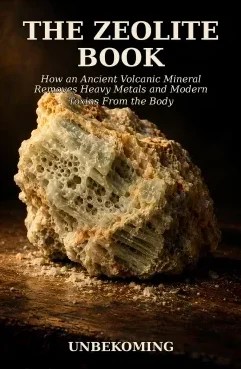 Zeolite is old. It is in Roman concrete that has held for two thousand years. It’s in the water filters of ancient cisterns. It’s in the stomachs of Pacific livestock whose keepers knew, somehow, that this grey crumbling rock made the animals healthier. It’s in Soviet clinical protocols from the 1960s. It’s in the standard emergency response to the Chernobyl explosion.
In 1986, after the Chernobyl reactor failure, the Soviet Union manufactured and distributed natural zeolite at industrial scale — for soil remediation, for livestock feed, for human consumption, for the cleanup itself. Karl Hecht, who had been director of the Institute for Experimental and Clinical Pathophysiology at the Charité of Humboldt University Berlin, spent the six decades after that building the clinical research base — on silicon’s role in human health, on zeolite’s clinical safety, on its applications in ageing. In 2018, Pavelić and colleagues published a comprehensive clinical safety review of natural clinoptilolite in Frontiers in Pharmacology. In 2019, Mastinu analysed its binding affinities. In the Western medical literature, these works sit largely uncited.
What has not been treated at book length, until now, is how a volcanic mineral with six decades of Soviet clinical work behind it, two major peer-reviewed Western reviews, and ongoing clinical use across the former Eastern Bloc, remains almost entirely absent from Western medical practice — and what the toxic burden it’s meant to address actually is.
The Zeolite Book gathers the Soviet clinical record, the Western peer-reviewed studies, three contemporary practitioner voices, and three serious counterviews into one honest treatment. That’s why the book runs to seven appendices. 288 pages, four parts, three practitioner voices, three counterviews, seven appendices. The honest treatment is the argument.
Blog Roll
 Aletho News
- UAE security forces tortured, killed journalist for opposing Israel normalization: Report
- They Compared the Spice to the Drug. The Spice Won — Again. (Part 2)
- Thomas Fazi: NATO’s Hybrid Warfare – Deception & Permanent War
- Wrong, AP and NPR: Europe’s 50,000 Heat Deaths Are a Computer-Model Estimate, Not a Real Body Count
- Questioning Your Doctor Is Now Considered A Psychological Problem (Seriously)
- London tourism expo promotes Israeli agency linked to theft of Palestinian land
- Dockworkers launch global strike against Israeli and US military shipments
- Europe facing gas price shock – Gazprom chief
- Ukraine continues recruiting people with disabilities
- Weaponized Journalism: 2021 Sayer Ji Interview with NPR
- If Americans Knew
- An error has occurred; the feed is probably down. Try again later.
- No Tricks Zone
- Germany’s Green Energy Transition Becoming Increasingly Expensive…Another 6 Trillion Euros!
- Sudden Stratospheric Warming, Powerful El Niño Combination May Lead To Extreme Europe Cold, Energy Crisis!
- Two New Studies Find Thwaites Glacier Melt Cannot Be Driven By Human Activity Or A Warming Ocean
- E-Cars Reduce CO2 Emissions By Only 41% Compared To Internal Combustion Engine Vehicles
- Predictions Made By Renowned Climate Professor Over Past Decades Have Been Proven To Be Poor
- New Study Suggests Large Regions Of The Pacific Ocean Have Been Cooling For The Last 80 Years
- Germany’s Green Energy Debacle: High Energy Costs Force Kahla Porzellan to Close After 182 Years!
- New Study: 50 Years Of The Most Aggressive ‘Net Zero’ Policies Can Only Affect The Global Climate By 0.03°C
- US September “Heat” Was No Record…Many Records Set Decades Ago
- Latest European Green Energy Debacle; Portugal’s Largest Flagship Solar Park Insolvent!

