In landmark decision, Israel court rules PA ‘liable’ for Second Intifada attacks
MEMO | July 8, 2019
The Palestinian Authority (PA) could be forced to pay up to 1 billion shekels ($280 million) in damages after an Israeli court ruled that it was liable for attacks during the Second Intifada.
In an unprecedented decision, the Jerusalem District Court today ruled that the PA is “liable” for attacks which took place during the Second Intifada, the popular Palestinian uprising which took place between 2000 and 2005.
The ruling cited the PA’s “financial and practical support” for the attacks, claiming that, along with the Palestine Liberation Organisation (PLO), the authority provided “ideological encouragement” for the incidents. It also referenced the PA’s policy of paying stipends to the families of Palestinians incarcerated in Israeli prisons, and the naming of streets and city squares after Palestinians killed by Israeli forces as evidence of the authority’s “liability”.
The amount of damages the PA must pay was not stated in the ruling, but could reach a maximum of 1 billion shekels. For an authority reportedly on the verge of financial collapse, the sums could prove crippling.
The PA has not yet issued a statement on the court proceedings, nor is it clear if it has any recourse to appeal the decision.
The case was filed by infamous legal advocacy group Shurat HaDin, which regularly fights court battles on Israel’s behalf. Shurat HaDin has been responsible for a pushing holiday rental giant Airbnb to renege on its decision to delist properties located in illegal Israeli settlements in the occupied West Bank, closing fundraising accounts associated with the Boycott, Divestment and Sanctions (BDS) movement, and intervening to halt an International Criminal Court (ICC) investigation into Israel’s 2010 assault on the Mavi Marmara.
President of Shurat HaDin, Nitsana Darshan-Leitner, called today’s court ruling a “historic” decision, claiming it “proves the Intifada was a war waged against citizens of Israel”.
This is not the first case Shurat HaDin has filed in a bid to hold the PA and PLO accountable for Second Intifada attacks. In 2004, the group filed “Sokolow v. Palestine Liberation Organization” in a US court, attempting to sue the PLO and PA under the US Antiterrorism Act of 1991. However, in 2016 the Second US Circuit Court of Appeals in Manhattan, New York, dismissed the lawsuit on the grounds that US courts did not have the jurisdiction to rule against international bodies in civil cases.
When the US Supreme Court upheld the ruling, this prompted the Anti-Terrorism Clarification Act of 2018 (ACTA), which was signed into law by US President Donald Trump. ACTA gave US courts the jurisdiction to hear terrorism-related lawsuits against any foreign entity receiving financial assistance from the US government. Since the PA has historically received millions of dollars in US aid and support for its security services, this meant that it could face lawsuits in the US asking for hundreds of millions of dollars in compensation.
Following the imposition of ACTA, then-Palestinian Prime Minister Rami Hamdallah sent a letter to US Secretary of State, Mike Pompeo, refusing all future financial assistance from the US. The letter stated that though the PA “is, and always will be, grateful for the past economic support of the American people […] US economic aid to Palestine now has become a dividing force due to the Anti-Terrorism Clarification Act of 2018 (ACTA)”.
The move left the US and Israel scrambling to preserve security coordination with the PA, believing the lack of funding could leave the authority unable to administer the occupied West Bank. Last month this was brought to the fore when the Israeli army fired at PA security forces in Nablus, injuring one. Israel claimed it had not realised the men were PA security forces, while Governor of Nablus Ibrahim Ramadan told the PA’s Wafa news agency that the “dangerous part [of] this incident is that a Palestinian military headquarters was targeted”.
US Sanctions Hezbollah Elected Parliamentarians
Al-Manar | July 9, 2019
The US Treasury placed two Hezbollah members of Lebanon’s parliament on its sanctions blacklist on Tuesday — the first time Washington has taken aim at the party’s elected politicians.
The Treasury named the head of the Loyalty to Resistance parliamentary bloc Hajj Mohammad Raad and MP Amin Sherri to a ‘terror-related’ blacklist, claiming that Hezbollah uses its parliamentary power to advance its alleged ‘violent’ activities.
Also placed on the blacklist was Hajj Wafiq Safa, Hezbollah top security official.
Hezbollah is a Lebanese resistance group that defends the nation against the Israeli and takfiri enemies. Because of its huge popular representation, it managed to have a 13-member parliamentary bloc, mainly tasked with securing the socioeconomic rights of the citizens and advocating the resistance political principles.
The US administration, which supports the Zionist entity and the Arab dictators against the will of most of the Muslims and Arabs, has always viewed Hezbollah resistance as an enemy, blacklisting both its military and political wings.
Nasrallah: Zionist Axis Defeated, We Have Enough Missiles to Redraw the Map of the Middle East
Speech by Hezbollah Secretary General Sayed Hassan Nasrallah on Friday, May 31, 2019, on the occasion of Al-Quds (Jerusalem) International Day.
Transcript:
[…] Another element indicating (the improbability of a war against Iran) is the field data, and I mean the (triple) Summit which I have just mentioned. And we are now entering the (4th section of my speech devoted to the triple) Arab Summit (in Mecca on May 30-June 1). The Summit was convened in emergency. Why? There are two reasons, two clear reasons that are mentioned in the (final) statements (of the Summit).
The first reason… The first reason… I remember that during the first days of the war of aggression against Yemen, His Eminence the (Supreme) Leader, Sayed [Khamenei], said that the young (fighters) of Yemen would rub the Al-Saud’s noses in dirt. Some days ago, the Saudi (army) bit the dust (once again). That’s what happened.
The first reason (for the improbability of war against Iran), that I mentioned earlier, is that Saudi Arabia has recognized the fact that there was no way out against the missiles of the Yemeni army and Popular Defense Committees, which they call the ‘Houthi’ missiles, and against their drones, and my proof is what happened in Yanbu’ (strikes of a Yemeni drone against oil installations in Saudi Arabia). It is a failure, a complete disaster. On the technical, military, security levels, and on every other level, it is a colossal failure. And it is a great success for our Yemeni brothers.
And that’s why in the joint statement at the conclusion of the Arab Summit, from the first line, points 1, 2, 3, 4, 5, 6, 7, 8, 9 and 10 only speak of Houthis, Houthis and yet again Houthis, as well as Iran. This clearly shows how much the issue of our Yemeni brothers is present and is the main cause for convening this triple Summit.
The second reason (indicating the improbability of a war against Iran) is that the Saudi regime and its allies understood with certainty that there will be no US war against Iran. You are dreaming (O Saudis), you spend your money for nothing and you incite for war to no avail. Trump will not fight for you, while it was your greatest hope. The last thing the Saudis had left was this hope (on which they have staked everything). Is there anything they can do? Do the Saud have alternatives (to prevail)? Who will go to war against Iran? The Saud themselves? While in Yemen, according to the information of the Saudis themselves, these young Yemeni fighters who have no army, no huge capacities, who are besieged, isolated, hungry, sick, whatever you want, but Saudi Arabia fails, is defeated and broken against them! And you (the Saudis) would go to war against (such a formidable power as) Iran? Who (will dare attack Iran)? Will they hire Netanyahu to launch a war against Iran? Let him first take care of his own problems (electoral and with Israeli justice)!
It’s the end of the road (for the Saud)! All their plans and hopes rested, in recent weeks, on Trump, on Trump’s incitement (to war), on Bolton, on Pompeo and all their fellow evil men in b or p, who were threatening to attack Iran and devastate this country. But it’s over. All their hopes were dashed.
That is why this Summit was convened in Mecca, as I said, to call the Arab and Muslim worlds and the Gulf countries for help. ‘Hasten therefore (to our help), O Arabs’ (cried the Al-Saud dynasty)! I wrote here… Where is this paper?… I wrote (a summary about it)… “Saudi Arabia convened the triple Summit to strengthen itself with the support of the Gulf it has torn apart…” For who is responsible for the crisis in the Gulf Cooperation Council? Saudi Arabia! “(Saudi Arabia convened the triple Summit) to strengthen itself with the support of the Gulf it has torn apart, of the Arabs it has crushed…” Is there a single Arab country left where Saudi Arabia has not created discord and division? And until now, up to this very day, there are Arab countries torn with civil wars, and Saudi Arabia is (the main) responsible. And there are Arab countries under threat of falling into civil wars (Algeria, Sudan…), and we must look (for the hand of) Saudi Arabia (behind it). “(Saudi Arabia convened the triple Summit to strengthen itself with the support of the Gulf it has torn apart), of the Arabs it has crushed and of the Muslims among whom it has spread the sedition of takfir.”
See Pakistan: Saudi Arabia wants to become stronger by getting the support of this country, while it propagated its takfiri ideology there among the Taliban, who created innumerable problems for the Pakistani military and the Pakistani people. Today, Saudi Arabia is calling on all these countries to save it (and get it out of the Yemeni quagmire).
First, regarding the Summit… I will conclude my remarks with a few words. Regarding the (Mecca) Summit, such is the context that explains it. It is a call for help, a cry for help, an intercessory request… You know it’s Ramadan (where all wishes can be fulfilled), so the Saudis make prayers, express wishes, cajole (the Arab governments) so that they’d fulfill their wishes, because of their failure and powerlessness, and because their hopes were dashed. The opposite Axis (United States, Israel, Saudi Arabia) isn’t in any case in a position of strength. It is in a position of weakness and failure, desperate, greatly confused and completely discouraged. This is the truth.
Second, let us consider the Joint Statement issued after the Summit. We see that it is composed of 10 points, which speak only of Iran and the “Houthis”, as they call them, but in the end of this Statement, as we commemorate the International Day of Al-Quds (Jerusalem), at the very end of this Statement, really the last two lines, we read: “And about the Palestinian cause, the main cause of the Arabs, the Summit has confirmed its commitment to the resolutions of the 29th Arab Summit (of April 2018) in Dhahran (Saudi Arabia), or Al-Quds Summit, and the resolutions of the 30th Arab Summit in Tunis (in March 2019).” Period. They did not even devote two lines to Palestine! They gave it only a line and a half of their final Statement! That’s the importance of Palestine for the Arab Summit. I do not even know if they actually talked about it (during their discussions), I just read the final Statement.
And about the Summit of the Gulf Cooperation Council, there is a really funny thing, the 4th point. Listen to the 4th point (of the final Statement) of the Summit of the Council of the Gulf Cooperation: “Confirms the strength, harmony and resolution of the Gulf Cooperation Council and the unity of its members around a common line to face these threats.” And they say that while they are besieging Qatar! They have been besieging the State and the people of Qatar for over a year! It’s really hilarious, Uncle! By God, some people really don’t realize that they have become the laughing stock of the world! The whole world mocks them, demeans and humiliates them!
Another point about the Arab Summit, we have a duty to praise the position expressed by Iraq and the President of the Republic of Iraq. It’s a remarkable position, courageous and excellent. What a shame that the rest of the Arab Presidents, Kings and Emirs did not talk the same way! And the Iraqi delegation has not said that they wanted to wage war against Saudi Arabia, the UAE, or anyone, nothing like it! They spoke in a balanced manner (without taking sides with Iran nor Saudi Arabia). You could do the same thing (and display a conciliatory neutrality). What prevented you from doing so, O Arabs? What a pity that (the participants of this) Summit, in spite of the failure, powerlessness and confusion (of Saudi Arabia), and the economic exploitation of the situation by the United States, have not talked in conciliatory terms about Iran, when Iran itself, a few days ago, said via its delegates that they were ready to talk with the Gulf states, and conclude pacts of non-aggression with them! Why did they not adopt the same open and conciliatory diplomatic language? If they had done so, their money, their safety, their security, their interests and even their dignity would not be violated by Trump morning and evening.
On the Arab Summit, I have one more thing to say: as a Lebanese party who participate in the government of Lebanon, we (Hezbollah) consider that the position of the official Lebanese delegation to the Arab Summit contradicts the Ministerial Declaration (of the Hariri government) and violates the commitments and promises of the Lebanese government, who received the confidence of the Parliament on the basis of this Declaration. Where is the promised neutrality, O official Lebanese delegation to the holy city of Mecca? You could have said… It was not even required that you take a position similar to that of Iraq. You could simply have said that the Lebanese government was committed to neutrality (in regional conflicts) and that such a stance was required in the national interest of Lebanon, which had to remain neutral, as it had done in previous Summits.
That is why we reject this position (expressed by the Lebanese delegation), which we consider unacceptable and condemn because it does not represent Lebanon. It represents only the members of the delegation (as individuals) or the political parties they belong to. It is impossible that this be the official position of Lebanon, a position which publishes a Statement with 10 paragraphs condemning Iran and only dedicates a line and a half to Palestine, the whole Statement expressing support for an Axis (US-Saudi-Israeli) against another (the Axis of Resistance).
Of course, the Future party could have made a statement of their own supporting eloquently the Final Statement of this Summit held in Holy Mecca, it is their natural right. We wouldn’t mind at all because (it is common knowledge) that we have opposite stances (on regional issues). We have already said that neutrality is not required of political forces. And we are the first not being neutral (and strongly and publicly announcing our stances against the US, Israel, the Saud…). But we agreed that the Lebanese government would remain neutral. The Lebanese State must remain neutral (because it is composed of both pro-American and pro-Iranian forces). And what happened in Mecca is contrary to the commitments and promises (made by the Future Alliance heading the government), and to Lebanon’s national interest.
This brings me to the last point (of my speech). (I’m sorry) for being so long, on this night of Ramadan, but it is a sensitive issue whose mention cannot be postponed. Regarding the delimitation of the (land and sea) borders (between Lebanon and Israel), as I have said repeatedly, as a Resistance, we have no problem and we comply with the decisions of the State. And for all that is happening at the borders, we leave everything in the hands of the State, whether what is happening is good or bad, right or wrong. Regarding the demarcation of our land and sea borders, we will respect all the decisions of State, (and we do not have a say).
And by making these statements, I do not exaggerate. Some brothers think that my words are conciliatory but do not coincide with reality, but no, I tell the strict truth when I say that we in Hezbollah trust the Lebanese officials who are in charge of this issue, and who are committed to upholding all Lebanon’s rights to land and water, in terms of maritime (space), oil and gas (resources present in the Mediterranean). We have (full) confidence in them, and that’s why we do not intervene in this issue. So much for the positive points, for I will now turn to a very different point.
On this issue, what is the United States striving to achieve through (its envoy) Mr. [David] Satterfield and his ilk? The USA is very strong to exploit all things, and exploit (all situations) in an evil way (in their interests and to our detriment). Since Lebanon needs a rapid delineation of borders, especially at sea, to (be able to exploit) oil and gas (resources at sea), and since Lebanon needs a calm situation in order to get financial loans —for we speak mainly about loans, not grants—, in this context, the United States come to… I hope that all the Lebanese will listen to me.
The United States wants to exploit the (indirect) negotiations (between Lebanon and Israel) on the demarcation of land and maritime borders to solve another adjacent, unrelated problem in the sole interest of Israel, and that Israel has been unable to resolve for years, namely precision missiles and the manufacture of precision missiles.
For over two years, (we have been contacted constantly by) ambassadors, embassies, foreign intelligence services, including those countries that consider us officially as terrorists, it does not bother them. They asked us the following questions, or (rather) addressed us the following messages: you have precision missiles, and this is something that Israel will not tolerate, and when Israel will learn their place (of storage), they will bomb them. That’s the message that we kept receiving for over two years. That’s (the first point).
The second point was the accusation that we’d have precision missile factories in Lebanon, which is (allegedly) a red line for Israel that will not be tolerated, and the warning that if Israel gets to know their location, they will bomb them. We hid this matter to the public for two years so as not to worry anyone, and to settle this matter behind the scenes. But some things happened during this week that lead me to speak out today because I think this whole issue will soon be discussed in the media, this topic being debated today in wider circles. I prefer to publicly state our position on this issue, rather than let the (State) officials being responsible for sending messages or answering questions (about this topic), and it is better that these answers come directly from me so that the United States, Israel and others receive them distinctly. (That’s better), isn’t it? That’s why I mention it.
Regarding the first point, the precision missiles issue, we are people who always tell the truth, we never lie. We can of course not reveal the truth without lying, or tell only part of the truth, but we never lie. That’s why when they asked us (if we had precision missiles), we answered that yes, we had precision missiles, and then you remember that two years ago, the tenth day (of ‘Ashura), I announced quite clearly that we have precision missiles able to hit all the targets required in the Zionist entity.
And today, on this (International) Day of Al-Quds (Jerusalem),on the 40th anniversary of the announcement of this Day, I say to the world that yes, we have in Lebanon enough precision missiles to change the face of the region and (upset) all equations!
But I say nothing new. That’s what I said for ‘Ashura two years ago. And to all those who have asked us, we said yes, we had precision missiles. And to all those who said or transmitted messages (Israeli threats), we said that there was no problem… It’s been 1, 2 and 3 years that these messages circulate, and that our response has been given and reached Israel: any time they tried to intimidate us by speaking of Israel, of red lines, of unacceptable things, of bombing, of (a violent) reaction, etc., our answer was clear, and I then repeated it publicly (in an interview) with Al-Mayadeen TV and then in a live speech. And I’ll repeat it again: we said that against any aggression, any Israeli strike against any target related to the Resistance in Lebanon, be it missiles or anything else, Hezbollah will retaliate immediately, directly and with (great) force!
And that’s why for 1 year, 2 years and 3 years now, they never bombed (Lebanon). And even more, Israel is going to the UN to (complain) that under the Al-Ahed football stadium, there would be missiles, and at such other place as well, (and then the UN) asks the government to verify if missiles are present at a given location, etc. It is not out of manners or decency that Israel does not strike our missiles. It is because we are strong that they don’t dare to do so (because they fear our retaliation), and that we will respond to any aggression by a similar attack, if not more!
The issue of precision missiles was therefore over (with a dead end for Israel). No one can do anything against it. So the issue has been upgraded with the accusation of possession of precision missile factories (in Lebanon). A few months ago, a (Lebanese) official said that the United States had contacted him to tell him this and this. I replied: “My dear official —I do not say anything specific to protect his identity—, this information is false. We do not have —and I speak with complete frankness— we have no precision missile factory in Lebanon.” He asked if the Iranians had such factories in Lebanon. I told him that the Iranians had no factory in Lebanon, be it for precision missiles or other missiles, or anything at all.
So far —I say so far, until tonight, until this International Day of Al-Quds—, there are no precision missile factories (in Lebanon). So the Americans left and came back later (with new charges), saying that there were such factories in such and such place, until what they said recently, namely that the process of delimitation of maritime borders was obstructed by the fact that in such region, there were precision missile factories. Again, several Lebanese officials asked me about it, and I said that it was not true. In this region, there are military facilities, supplies and equipment of Hezbollah, but no precision missile factory. That’s all.
What is my point? These (false accusations) have been accompanied by various threats. I will not say what the threats were because there is no reason for me to reveal them, but several threats were made, so that Lebanon settles this issue (precision missile factories) and destroys such and such installations, razes them to the ground and terminates them. But my dear (US) friends, do you know who you are dealing with? In what world do you live (to believe that your threats can frighten Hezbollah)? It is absolutely inconceivable for us.
In addition, we, in Hezbollah, are more trustworthy and reliable than the Americans and their predecessors, and more trustworthy and reliable than the Israelis and their predecessors. When I tell you that there is no precision missile factory, this means that there is none. And if there were such a factory, I would have said this evening on TV that there is such a factory, as I’ll prove in a moment.
I will explain my problem with this question and conclude my speech. My problem is that… That’s why I did not want to discuss this issue only with Lebanese officials, but I wish that we all (Lebanese) take part in it. The very discussion of such issues with the United States, merely allowing them to ask us about (our weapons), this door should be in my opinion closed. It is not their business, they have no right to inquire about our weapons. The US does not have any right to meddle in it. Whether there are precision missile factories in Lebanon or not, it is not their business. Israel, which is right next to us, manufactures missiles, warplanes, tanks, nuclear and chemical weapons. Let them go there and make the same requests! As for us, it is our right —and that’s what I want to add this evening—, it is our absolute right to possess any type of weapons to defend our country. And it is our absolute right to manufacture any type of weapons, because to have weapons, there are only three possibilities: either you buy them, or someone gives them to you, or you manufacture them.
In Gaza, what do they do? They make them. In Yemen, what do they do? They make them. But the Saudi mentality is unable to conceive that Yemenis can manufacture their own missiles and drones (and they accuse Iran of supplying them). What do you want me to do about it? In Iran, what are they doing? They manufacture their own weapons! And we absolutely have the right to do the same. I affirm that the United States do not have the right to debate with us on this right. That’s the first point. How does it concern you? Whether we have such factories or not, it’s none of your business. I assure you that there are no such factories yet, but you have no right to ask me in the first place! Whether there are such factories or not, mind your own business! We have every right to have all the weapons that allow us to defend our country, whether we buy them, they are given to us or we manufacture them. That’s the first point.
Second, if the United States continues to bring up this issue, I tell them this: we have all the technical and human capacity, thanks to our youth, to manufacture precision missiles, and we are perfectly able to import in Lebanon all the equipment required to open such factories. I declare tonight that if the United States continues to bring up this issue, let the whole world know that we will open precision missile factories in Lebanon!
So far, we have no such factories (in Lebanon), but if they continue to bring up this issue, they will convince us to do so! Then, the government talks about many problems of the Lebanese industry. Today, one of the greatest evils in the world is arms sales… Why are you laughing, I’m serious! We are able to manufacture precision missiles and sell them to the world, and thus help the Lebanese Treasury. Is that okay with you?
This is why I advise Satterfield to stay calm and do the job he is asked to do (without encroaching on our business), since he claims to be there to help… But who does he (really want to) help? Because you know that in general, the United States are not intermediaries. They are only there to lobby and defend the interests of Israel, and God help our Lebanese brothers responsible for these negotiations. Let Satterfield close this file and not waste his time in (idle) threats, and stop exerting himself. He should stop exerting himself (in vain).
This is our natural right (to have all the weapons required), we will remain attached thereto, and threats lead to nothing with us. These threats are not new, but date back to 2 or 3 years. I have answered them, and I do not want to have to repeat myself, okay? Be it now, before or after, our position remains the same.
In conclusion, O my dear and noble brothers, on this Day of Al-Quds, on this 40th year of the celebration of this Day, our (Resistance) Axis is in a position of strength, as is our front (the battlefield). It is true that in recent years we have made many sacrifices, but by the grace of the blood of martyrs, we got out of all these sacrifices stronger and more present. And it is full of strength, determination, faith and confidence that I tell you all that we can defeat the Deal of the Century and make it fail, and at the forefront the Palestinian people: when Palestinians are unanimous in their sovereign position, as I called it, about the Deal of the Century and the Conference in Bahrain (which are condemned by all factions), nobody can impose anything, neither to Palestinians nor to the region.
When the Syrian people refuse to cede the Golan, Golan will never become Israel’s, even if Trump redraws maps and signs below, as announced by Netanyahu yesterday. Let them sign anything they want, do what they want, and say whatever they want, (it will be futile). If we stay present in the field, on all battlefields, if we remain attached to our rights, and above all, before, after and with everything, if we trust in God and in His promise of victory, if we believe in Him, in our peoples, in our generation, in our men, in our women, in our brains and in our minds and willpower, the future belongs to Al-Quds, and not to Trump or to all the insignificant midgets who work for Trump.
Peace be upon the soul of the great Khomeini, who founded this Day, happy (al-Quds) holiday, and may God grant you victory and glory.
See the previous parts of this speech translated in full:
Resistance Axis, Arab & Muslim Peoples will Never Forsake Palestine
In the Next War, Missiles from Lebanon, Gaza, Syria & Iran will Strike Israel, Trump’s Deal of the Century Doomed to Fail
A War against Iran would Destroy Israel, the Saud and US Hegemony
Translation: resistancenewsunfiltered.blogspot.com
Iran’s shock therapy breaks JCPOA stalemate
By M. K. BHADRAKUMAR | Indian Punchline | July 8, 2019
A series of announcements in Tehran through the past week took the situation around the 2015 Iran nuclear deal (known as the JCPOA) — and the US-Iranian standoff — to an inflection point.
On July 1, it transpired that Iran has exceeded the limit of enriched uranium stockpile under the JCPOA, which is 300 tons. On July 8, Tehran announced a rollback in its obligations under the JCPOA by starting to enrich uranium to a higher purity than 3.67% that would fulfil the needs of its power plants. (Iran had previously said that it needed 5% enrichment for its Bushehr Nuclear Power Plant (NPP) and 20% for Tehran research reactor.)
A criticality has been reached. The Iranian Foreign Ministry’s Fact Sheet outlines how this came about.
Tehran has characterised the past week’s moves as remedial steps under Para 36 of the JCPOA, which it is entitled, to protect its interests. Tehran also says these are reversible steps if only the E3 (Britain, France and Germany) comply with the JCPOA.
Tehran has forewarned that every 60 days, it might otherwise make further moves to jettison its commitments under the JCPOA. Nonetheless, Tehran also acknowledges that although the E3 are yet to meet Iran’s demands, especially in regard to a non-dollar direct payment channel known as INSTEX, certain efforts in that direction are continuing, and they could still bear fruit.
Equally, talks are going on with China and the UK regarding the redesign of Arak reactor (which the US had originally undertaken to carry out under the JCPOA) although Iran has the technology to redesign the reactor on its own if these talks do not show results.
All in all, Tehran has taken certain modest steps that do not even remotely amount to a surreptitious dash for nuclear weapons. On the contrary, these moves are transparent and there is no attempt to restrict the IAEA inspectors’ access to Iran’s nuclear facilities. Nor is Tehran challenging the IAEA intrusive safeguards.
This is crucial. In sum, Tehran has given a two-fold signal. One, the costs for the US’‘maximum pressure’ policy is going to steadily rise, as Tehran will steadily counter-escalate. Two, the remaining signatories to the JCPOA (E3, Russia and China) cannot waffle any longer and must reciprocate Iran’s impeccable compliance with the JCPOA by providing it with an economic lifeline.
Again, there is a hidden message too. Much as Iran is inch by inch distancing itself from the JCPOA — although reluctantly and with caveats — it is not conspiring to kill the 2015 deal. Curiously, Iran’s principal drive still is to somehow bring the US back into the JCPOA. And Tehran takes seriously Trump’s stated aversion to war.
The bottom line, therefore, remains where it was: Does the Trump administration have the intellectual capacity and sensitivity to fathom the Iranian (Persian) culture and psyche? Does it get the point that Iranians never negotiate under threats?
The good part, paradoxically, is that Trump has overplayed his cards and is left with few options today aside a military strike that would have incalculable and catastrophic consequences. The US’ maximum pressure strategy has effectively driven Iran to the pre-2015 position. On the other hand, the regime-change project piloted and uttered by National Security Advisor John Bolton and extravagantly funded by the State Department has flopped.
There is no sign of an uprising in Iran against the authorities. Of course, there is dissent within Iran, but then, it was always there and will always be there — but is far from life-threatening for the regime.
Unfortunately, it is being overlooked that the negotiations leading to the 2015 deal were only possible after the US unequivocally jettisoned the ‘regime change’ agenda towards Iran and, secondly, after the US conceded that Iran shall have the right to enrich uranium like any non-weapon member state of Nuclear Non-Proliferation Treaty.
That is to say, if President Trump is serious about negotiating with Tehran, he needs to abandon the ‘maximum pressure’ approach by at least freezing the escalation ladder and offering economic reprieve by suspending some of the sanctions. One way could be by allowing the INSTEX — Europe’s trade channel for doing business with Iran despite US sanctions — to become really functional in the coming days. Trump can do this if he wants to, by simply feigning indifference to the INSTEX providing the mechanism for European, Russian, Turkish, Chinese or Indian companies to resume trading activities with Iran.
This brings us to the phone conversation between French President Emmanuel Macron and Iranian President Hassan Rouhani on Saturday. For sure, Macron is acting as an intermediary between Trump and Rouhani to facilitate negotiations. The French have clarified that there is no move to trigger the nuclear deal’s dispute resolution mechanism for now — “It’s not an option at this moment” — although Macron said Tehran’s announcement on Sunday amounted to a ‘violation’ of the JCPOA.
Hectic behind-the-scenes consultations are taking place even as an emergency meeting of the IAEA is scheduled in Vienna on Wednesday at US request. Iran’s cooperation with the highly intrusive IAEA inspections of its nuclear facilities is the focal point. Iran will attend the meeting.
Macron sounded out Rouhani on Saturday about American officials being present during the future talks between Iran and the remaining parties to the JCPOA — ‘4+1’ (China, Russia, Britain, France and Germany). Rouhani concurred with the rider that it shouldn’t mean re-negotiation of the JCPOA. He added that Tehran will not object to the US participation in 4+1 meetings, provided the Trump administration removes the sanctions.
The chances are that these high-level exchanges and discussions on new ideas and initiatives may open the door to the pathway leading to the formation of new talks involving the US and Iran.
Spying for Israel Is Consequence Free
Hollywood billionaire was a spy, an illegal arms merchant and a corrupter of politicians

By Philip Giraldi • Unz Review • July 9, 2019
Back in the spring I wrote about coming across the name Arnon Milchan by chance on a movie credit while flying from Venice to Washington. Milchan, some might recall, is a Hollywood billionaire movie producer born in Israel, well known for such films as Pretty Woman and Bohemian Rhapsody. He is less well known for his role in arranging for the procurement and illegal transfer of U.S. technology that enabled the Jewish state to develop its own nuclear arsenal. Far from being ashamed of his betrayal of the adopted country that helped make him rich and famous, in 2011 he authorized and contributed to a ghost-written biography, which he boastfully entitled “Confidential: The Life of Secret Agent Turned Hollywood Tycoon.” Parts of the book were in the first person with Milchan telling his story in his own words.
I had been aware of Milchan’s crimes for a number of years, just as I had also speculated on how a leading Israeli spy working actively and successfully against vital U.S. anti-nuclear proliferation interests had managed to continue to maintain a home and business in Los Angeles while also appearing regularly at the Oscar presentation ceremonies. I asked “Why is this scumbag still making movies in Hollywood? Why isn’t he in jail?” before concluding that the federal government clearly regards spying for Israel as a victimless crime, rarely arresting anyone and almost never prosecuting any of the numerous easily identifiable Israeli intelligence agents roaming the country.
Milchan was an active Israeli spy in the U.S., working for the Mossad technology theft division referred to as LEKEM. The Mossad frequently uses so-called sayanim in its espionage, which means diaspora Jews that it recruits on the basis of a shared religion or concern for the security of Israel. The threat coming from Israeli Embassy operatives inside the United States is such that the Department of Defense once warned that Jewish Americans in government would likely be the targets of their intelligence approaches.
President John F. Kennedy had tried to stop the Israeli nuclear weapons program but was assassinated before he could end it. By 1965, the Jewish state had nevertheless obtained the raw material for a bomb consisting of U.S. government owned highly enriched weapons grade uranium obtained from a company in Pennsylvania called NUMEC, which was founded in 1956 and owned by Zalman Mordecai Shapiro, head of the Pittsburgh chapter of the Zionist Organization of America. NUMEC was a supplier of enriched uranium for government projects but it was also from the start a front for the Israeli nuclear program, with its chief funder David Lowenthal, a leading Zionist, traveling to Israel at least once a month where he would meet with an old friend Meir Amit, who headed Israeli intelligence.
With the uranium in hand, the stealing of the advanced technology needed to make a nuclear weapon is where Milchan comes into the story. Arnon Milchan was born in Israel but moved to the United States as a young man and eventually wound up as the founder-owner of a major movie production company, New Regency Films. In a November 25, 2013 interview on Israeli television Milchan admitted that he had spent his many years in Hollywood as an agent for Israeli intelligence, helping obtain embargoed technologies and materials that enabled Israel to develop a nuclear weapon.
Milchan, who clearly still has significant business interests in this country as evidenced by Bohemian Rhapsody, explained in his interview that “I did it for my country and I’m proud of it.” He also said that “other big Hollywood names were connected to [his] covert affairs.” It is, to be sure, astonishing that Milchan should admit to his crimes at a time when he was still traveling regularly to the U.S. and residing in California, but his belief in his own invulnerability stems from the fact that the federal government failed to act against him during the fifty years when he was mostly resident in the United States even though it knew about his spying activity.
Among other successes, Milchan obtained through his company Heli Trading 800 krytons, the sophisticated triggers for nuclear weapons. The devices were acquired from the California top secret defense contractor MILCO International. Milchan personally recruited MILCO’s president Richard Kelly Smyth as an agent before turning him over to another Heli Trading employee Benjamin Netanyahu for handling. Smyth was eventually arrested in 1985 and cooperated in his interrogation by the FBI before being sentenced to prison, which means that the Federal government knew all about both Milchan and Netanyahu at that time but did not even seek to interview them and ultimately did nothing.
So Milchan was an Israeli spy who got away with it and is still making money off of the country that he victimized. End of story, or is it? The Israeli liberal leaning newspaper Haaretz has recently featured an expose of his involvement in high level political corruption as well as in nuclear proliferation involving South Africa when that country was under sanctions. Haaretz observes how “… the [Israel]-born [Hollywood] mogul made his real money elsewhere: in deals for arms including planes, missiles and gear for making nuclear bombs in which Israel, and later other countries, were parties. To make films there’s no need for crony capitalism, but to succeed in the arms business, government connections are obligatory.”
Milchan has been involved in a bit of controversy in Israel itself, where the police have recommended that he be charged with bribery connected with the ongoing investigation of corruption by Prime Minister Benjamin Netanyahu. Milchan, it seems, spent one million shekels ($250,000) on luxury items that he gave to Bibi as a reported quid pro quo to exempt his substantial U.S. derived income from taxes when he returned to Israel to live in 2013-4.
Demonstrating that Milchan’s corruption was international, the police investigation determined that in 2014 Netanyahu approached then U.S. Secretary of State John Kerry to intervene and arrange for a long-term American visa for Milchan, who was at the time dealing with problems relating to his U.S. residency status. Milchan reportedly made the arrangement by going directly to Netanyahu’s home with the customary boxes of expensive cigars and cases of champagne and waited for the prime minister to come home. When Netanyahu arrived, Milchan demanded that Bibi immediately contact Kerry to arrange a new visa. And Netanyahu did just that, picking up the phone and dialing. In the event, the visa was granted and Milchan continued to make more movies, and money, in Los Angeles.
Netanyahu’s corruption has been widely reported but he is only the latest Israeli leader manipulated by the Hollywood billionaire. Milchan also “befriended” Ehud Olmert, Ariel Sharon and Shimon Peres, as well as top defense officials and foreign leaders from South Africa and Canada. Milchan dazzled the politicians with wining and dining as well as with lavish gifts and he introduced the Israelis to other Jewish Hollywood executives, including Disney President Michael Eisner and the co-founder of DreamWorks, Jeffrey Katzenberg.
Peres claims that he personally recruited Milchan as a spy and, from the age of 21, Milchan used a family chemical business as cover to engage in arms and technology sales. He was from the beginning involved in clandestine purchases in support of Israel’s nuclear program.
Milchan also became a buyer for weapons in cases where the Israeli government did not want to have the purchases attributed to it. In all cases, Milchan took a commission on the sales, hence the claim that his Hollywood fortune constituted only a small part of his wealth. He sometimes found himself buying U.S. made weapons using Israeli government money that had come from U.S. taxpayer provided military assistance, taking his 10% along the way.
Starting in the 1970s, Israel, operating covertly through Milchan, sold South Africa embargoed weapons systems, receiving both money and uranium in return. South Africa knew how to return a favor, allowing Israel in September 1979 to conduct a nuclear test on an island administered by Pretoria in the Indian Ocean.
The Haaretz article condemns Arnon Milchan for his corruption of Israel’s politicians, which is fair enough as that is what one might expect. But there is also the United States side of the story. Insofar as can be determined, Milchan still has his active U.S. visa, a house in Los Angeles and he may even travel to his office in Hollywood on occasion. He is at a minimum guilty of violation of the Espionage Act, a law which, one might note, has been used against Julian Assange, who may not have ever colluded to steal American secrets but is being railroaded for political reasons.
Milchan, by way of comparison with Assange, is being protected by the usual Israel-first thinking within America’s establishment. No effort has ever been made either to indict or arrest him by a series of pusillanimous presidents who clearly are afraid to touch a prominent and connected Israeli billionaire who, as a spy, inflicted serious damage on the United States. In March 2015, Milchan was an invited VIP guest on Capitol Hill to witness the notorious speech made by Prime Minister Benjamin Netanyahu before a joint session in Congress. Not one congressman objected and it would be interesting to learn which corrupt congress-critter sponsored the Israeli spy. To my regret, there was no U.S. Marshall or FBI agent at the door waiting to arrest Milchan on the way out.
Philip M. Giraldi, Ph.D., is Executive Director of the Council for the National Interest, a 501(c)3 tax deductible educational foundation (Federal ID Number #52-1739023) that seeks a more interests-based U.S. foreign policy in the Middle East. Website is councilforthenationalinterest.org, address is P.O. Box 2157, Purcellville VA 20134 and its email is inform@cnionline.org
Norwegian Tanker ‘Attacked’ in Gulf Set to Dock in Iran Despite US Blame-Game – Report
Sputnik – July 9, 2019
Andrea Victory, a Norwegian tanker that suffered a significant blast on 12 May while sailing in the Gulf of Oman near a UAE port, is readying to dock at Iran’s Bandar Imam Khomeini port, almost two months after the attack, the research company Refinitiv Energy reported on its Twitter.
According to Refinitiv, the tanker is completing its voyage, which was interrupted by the May incident, carrying a shipment of oil from Argentina to Iran. Following the blast, Andrea Victory reportedly unloaded its cargo onto another ship and was then moored at a dry dock for repairs needed to cover the hole in its hull. Recently, the tanker reclaimed its cargo and is now heading towards its destination, according to Refinitiv Energy.
An official investigation by the UAE into the “sabotage” on 12 May concluded that such a sophisticated operation could only have been carried out by a “state actor”, but stopped short of pointing the finger at a specific country. However, the US has accused Iran of carrying out the attacks, albeit without providing any concrete evidence to substantiate the claims. Iran has denied being responsible for the incident.
A similar attack took place about a month later, in June, when two more tankers suffered crippling blasts that damaged their hulls, but didn’t sink them. Washington once again accused Iran, presenting a video purportedly showing Iranian speedboat crew removing unexploded mines from the hull of a ship as a proof.
Tehran has denied the US accusations and slammed attempts to shift the blame for the incident onto the Islamic Republic. Iran has condemned alleged false-flag operations directed against it, warning that they lead to instability in the region.
Cory Booker’s Foreign Policy Echoes His Biggest Donors
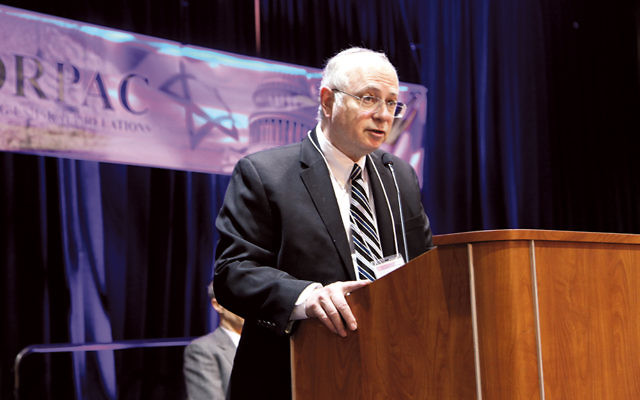
Ben Chouake
By Eli Clifton | LobeLog | July 2, 2019
In last Wednesday’s Democratic debate, Sen. Cory Booker (D-NJ) stood apart from the other candidates on the stage by declining to commit to return to the Iran nuclear deal. Videos viewed by LobeLog show that Booker’s unusual position is shared by NORPAC, a pro-Israel PAC aligned with the American Israel Public Affairs Committee (AIPAC). As Booker’s biggest donor, NORPAC contributed $185,871 to Booker’s campaign committee in 2018, a cycle in which Booker wasn’t even up for election.
During the first Democratic debate, the candidates were asked whether they would commit to returning to the nuclear deal. Every candidate on the stage except Booker raised their hand.
When questioned, Booker said:
We need to renegotiate and get back into a deal, but I’m not going to have a primary platform to say unilaterally I’m going to rejoin that deal… I am going to do the best I can to secure this country and that region and make sure that if I have an opportunity to leverage a better deal I’m going to do it.
That language closely parrots Trump’s claims that he can use the leverage of abrogating the Iran deal to negotiate a better deal with Iran. Under the guidance of Iran hawks like John Bolton and Mike Pompeo, this strategy has brought the United States 10 minutes away from a war with Iran and no closer to a better deal.
But Booker’s language didn’t just echo Trump. He also echoed NORPAC, a group that normally puts out very little documentation on their positions, talking points, and agenda.
A training video published on YouTube in May 2019, showed NORPAC leadership preparing members for a “NORPAC Mission” to Washington, in which the group’s members meet with members of Congress to advance the group’s agenda.
Ben Chouake, NORPAC’s biggest donor in the 2018 cycle, gave introductory remarks on what the mission should convey to members of Congress regarding Iran. He emphasized the volatile situation in the Gulf and offered a litany of the ways that he sees Iran posing a threat to the United States, Israel, and their allies in the Gulf. Chouake rolled out the talking points that Iran is an “existential threat to all our allies in the area” and “an 800-pound gorilla in the room which is causing all kinds of problems.”
But Chouake made clear that NORPAC only wants to highlight the alleged dangers posed by Iran, not be held accountable for advocating for war.
“The last thing we want is to be accused of facilitating the initiation of a war,” said Chouake. “We don’t want a war but we want to tell our leaders this is a very, very big problem and one way or another you have to address it.”
Laurie Baumel, co-chair of the 2019 Mission, went on to add, “… [T]o just reenter the JCPOA as many in Congress have suggested does not seem to be a winning formula to me and I think we can certainly tell [members of Congress] about that.”
Indeed, Booker’s comments were not identical to Baumel’s, but the meaning was the same. NORPAC and Booker oppose upholding the commitments made by the Obama administration and the P5+1 via the Joint Comprehensive Plan of Action (JCPOA), a deal that Booker actually ended up supporting in 2016.
Either Booker is echoing his biggest donors or he is coincidentally out of step with the Democratic Party and aligned with NORPAC, which just happens to be based in his home state of New Jersey.
With candidates looking to distinguish themselves in a crowded Democratic primary, Booker may have done just that and secured himself valuable campaign cash to fuel his presidential campaign. But Democratic voters aren’t with him on Iran. A May 2019 J Street poll found that 72 percent of Democratic voters support reentering the JCPOA while only 18 percent oppose reentering.
Booker is clearly the candidate catering to that 18 percent.
Why the US Puppet President of Venezuela is Toast

Photograph Source: The White House – Public Domain
By Roger Harris | CounterPunch | July 5, 2019
Even the corporate media are losing enthusiasm for the US government’s ploy to replace the democratically elected President Nicolás Maduro of Venezuela with the US-anointed security asset Juan Guaidó. Reuters reports in a July 1 article, “Disappointed Venezuelans lose patience with Guaidó as Maduro hangs on,” that the US-backed “military uprising” has “unraveled.” A critical reading of the article explains why.
Reuters correctly notes that “the 35-year old (Guaidó) had risen to prominence three months before,” though a little more background information would have been helpful. For instance, Guaidó was unknown to 81% of Venezuelans a little more than a week before he got a telephone call from US Vice President Pence telling him to declare himself interim president of Venezuela, which Guaidó dutifully did the following morning at a street rally flanked with US and Israeli flags. A member of a marginal far-right Venezuelan political party, Guaidó was not even in the top leadership of his own grouplet.
For background, Reuters tells the reader that President Maduro “took office in 2013 following the death of his political mentor, Hugo Chávez,” but fails to mention that Maduro took office via a democratic national election. Guaidó has never stood in a national election. He was elected to the National Assembly but became head of that body through a mechanism where the political parties in the legislature rotate which party’s representative occupies the office.
Reuters continues that after Maduro took office, he “has overseen an economic collapse that has left swaths of the once-wealthy country without reliable access to power, water, food, and medicines.” Not mentioned by Reuters is the economic war being waged against Venezuela by the US and its allies that has employed unilateral coercive measures – sanctions – responsible for taking the lives of some 40,000 people.
This illegal collective punishment of the Venezuelan people by the US government has diverted legitimate funds of the Venezuelan government. Reuters obliquely mentions “Guaidó has gained control of some of the Venezuelan assets in the United States.” In fact, the US government seized those assets, which would have gone to preventing the “economic collapse” that Reuters supposedly laments.
Reuters reports: “The opposition’s momentum has slowed since the April 30 uprising. Attendance at Guaidó’s public rallies has dropped and the opposition has held no major protests since then.” Reuters hints why Guaidó’s fortunes are eclipsing: “the opposition says it is…seeking to build a grassroots organization.” That is, the US surrogate does not have a meaningful grassroots presence.
This is further confirmed by Reuters’ admission that Guaidó’s organization is now “focused on expanding a network of Help and Freedom Committees…to organize at the local level – something the ruling Socialist Party has done successfully.” Reuters continues, “so far the committees have gotten little traction.” That is, Guaidó lacks significant organized popular support outside of Washington and its allies.
Guaidó visited Washington shortly before his self-appointment and subsequently toured a number of Latin American countries but has “only traveled to 11 of Venezuela’s 23 states,” according to Reuters. Guaidó’s handlers have directed him to “travel to at least five more this month to motivate his supporters.”
Recent polls cited by Reuters show support for Guaidó is falling. Reuters quotes a paid political consultant for Guaidó: “We can expect Guaidó’s popularity to continue to erode the longer he is not exercising power.”
President Maduro, according to Reuters, had waged a “crackdown on the opposition.” That is, the Venezuelan government has defended itself against US-backed assets who have actively engaged in attempts to violently overthrow the democratically elected government and assassinate key government and social movement leaders.
In the alternative universe of corporate media, which ignores the economic war being waged against Venezuela, Reuters bemoans that the “crackdown” on Guaidó’s agents has failed to receive “significant retaliation from the international community.” In reality, Venezuela has massively suffered from the US-orchestrated punishments for resisting reverting to the status of a client state.
While not consulting anyone associated with the elected government of Venezuela, Reuters gives full voice to an anonymous “US administration” official as is the practice of the corporate media. The US official states: “The United States continues to execute the president’s strategy of maximum pressure to achieve a peaceful transition to democracy in Venezuela.” Not mentioned is that the “military option” is a prominent part of the “peaceful transition”; deposing a democratically elected president is part of the “transition to democracy”; and “maximum pressure” is preventing vital foods and medicines from reaching Venezuela.
The anonymous US government official further claims, “Only Maduro wishes for the US to give up now.” Reuters does not question how incredibly circumscribed is the universe occupied by that official, which renders invisible the two-decade-old Bolivarian grassroots movement in Venezuela in support of their elected government and its international allies. The Venezuelans most adversely hurt by the US sanctions are those most militantly in support of their government.
Nor does Reuters question why in the US, with the conceit of a supposedly free press, the government is allowed to hide behind a cloak of anonymity. Reuters cites the names of a Venezuelan taxi driver, doctor, former police student, and teacher to give a patina of authenticity to the article but can’t name an official US government functionary who is quoted authoritatively.
Reuters reports Guaidó’s supporters “have demanded that Guaidó shift strategy and request a US-led military intervention.” So much for democracy! “We can’t get rid of Maduro with votes. It will have to be a violent exit.” Meanwhile, the polling firm Datanalisis, according to Reuters, tells us that less than 10% of Venezuelans support such an action.
In short, a critical reading between the lines of the Reuters article confirms that Washington has failed to cobble together a united opposition in Venezuela that is popular enough to win in the polls, so the alternative is violent regime-change supposedly in the name of “democracy.” The lesson that the Venezuelans themselves are the best agents of history to address their own destiny has yet to be learned by the world’s hegemon and its media apologists.
Trump outflanks Iran to the west and east
By M. K. BHADRAKUMAR | Indian Punchline | July 5, 2019
The Turkish state news agency Anadolu has featured an analysis titled US sanctions on Iran increasing public unease, which is highly critical of the Iranian ruling elite’s approach to the current standoff with the US. The thrust of the commentary is that the Iranian ruling elites are deliberately provoking a showdown with the US by spurning President Trump’s repeated offers for unconditional negotiations because Tehran harbours the notion that it can lethally damage his bid for a second term in the 2020 election by entangling the US in an asymmetrical war and creates a Middle Eastern quagmire for him. The sub-text of the commentary is that the newfound belligerence in Tehran is attributable to the Supreme Leader and is not in the interests of the Iranian nation.
The opinion piece comes at a time when Turkey is quietly pleased with President Trump’s pragmatism in accommodating its purchase of the S-400 ABM system from Russia. It reinforces the impression from Trump’s extraordinary remarks at the press conference in Osaka on June 29 on Turkish President Erdogan that some sort of a deal has been struck by the two leaders. Trump had gone out of the way to defend Erdogan’s decision on purchase of the S-400 missiles (because “he got treated very unfairly” by the Obama administration), which is “not really Erdogan’s fault”. Trump had said he’s “working on it (S-400 deal). We’ll see what we can do.”
Erdogan claimed later that Trump told him at their meeting in Osaka that the US will not impose sanctions against Turkey on account of the S-400 deal with Russia. Meanwhile, the actual delivery of the S-400 system in Turkey is expected next week. (Erdogan had also said recently that a visit by Trump to Turkey in July “is being talked about”.)
Some sort of an understanding between Trump and Erdogan with regard to Iran cannot be ruled out. Of course, Turkey is in a position to render invaluable help to Iran to bust the US sanctions (which it actually did in the past under the infamous oil-for-gold deal between Turkish and Iranian business elites during the Obama presidency.) Trump would know that if Turkey denies “strategic depth” to Iran, it can be a game changer for the “maximum pressure” strategy against Tehran.
Significantly, Pakistan Prime Minister Imran Khan is also due to visit the US to meet Trump on July 22. Turkey and Pakistan aren’t exactly comparable but there are common elements here. Turkey is an estranged NATO ally which is open to reconciliation, whereas Pakistan is keenly seeking the resuscitation of its moribund strategic ties with the US.
The bottom line is that the US stands to gain out of “win-win” cooperation with both these Cold War allies over the vexed Iran problem.
Turkey’s cooperation is vital for the US to plug Iran’s land route to Syria’s ports in eastern Mediterranean and the US bases in eastern Turkey are key intelligence outposts eavesdropping on Iran. Similarly, the US hopes to keep a “very large” intelligence presence in the Afghan bases, which requires Pakistan’s acquiescence. Certainly, these US intelligence assets are not merely focused on the terrorism problem but also target Russia, China and Iran. In sum, the US intelligence assets in Turkey and Pakistan will play a crucial role in any military confrontation with Iran.
Fundamentally, in regard of both Turkey and Pakistan, their estrangement as allies happened due to the US’ flawed policies that failed to adequately accommodate their legitimate interests. In both cases, the degradation of the relationships and the ensuing nosedive took place under President Obama. The alienation of Turkey when the Obama administration began soft-pedalling on the regime project in Syria in 2012 and it exacerbated following the failed coup attempt in 2016 to overthrow Erdogan.
In the case of Pakistan also, that watershed moment was reached in 2011 when a series of incidents took place that rocked the US-Pakistan ties — the detention of ex-CIA employee Raymond Allen Davis in Lahore in January that year, the Abbottabad operation to kill Osama bin Laden in May and the slaughter of 28 Pakistani troops at two Pakistani border posts in Mohmand tribal agency by NATO Apache helicopters, an AC-130 gunship and fighter jets in November.)
Unsurprisingly, Trump didn’t say at the press conference in Osaka as to what Erdogan’s side of the bargain might be. But the Anadolu commentary hints that Turkey won’t erode the US’ “maximum pressure” on Iran. Turkey has closed its ports to Iranian oil, fully complying with US sanctions against its main supplier — although Erdogan had previously slammed the sanctions, saying they are destabilising for the region. Prior to May 2018, when the US pulled out of the Iran nuclear accord, Turkey imported an average of 912,000 tonnes of oil a month from Iran, or 47% of its total imports.
Again, last Tuesday, the US put the Baluchistan Liberation Army on its global terrorist watchlist and on Thursday, Islamabad made the formal announcement on Imran Khan’s visit to the US. Pakistan comes under the US Central Command theatre of operations. (So does Iran.) Currently, there are no US bases in Pakistan.
But Pakistan, like Turkey, also has a long history of hosting American military bases. In Baluchistan alone, there were several US drone bases — Shamsi Airfield, shrouded in secrecy, which exclusively used to conduct drone operations and housed US military personnel; PAF base on the Sindh-Baluchistan border, which was also used for CIA drone operations; Pasni Airport where US spy planes used to be based, and so on.
Russia: Economic part of deal of the century contradicts UNSC resolutions
MEMO | July 4, 2019
Russian Foreign Minister Sergey Lavrov said yesterday that the economic part of the US deal of the century contradicts UN Security Council resolutions, TASS reported.
Following a meeting with the Secretary-General of the Organisation of Islamic Cooperation (OIC) Yousef Al-Othaimeen, he said: “Without seeing the comprehensive US vision of the settlement, it is very difficult to draw any conclusions.”
“But on a preliminary basis, I can say that the economic part proposes investing about $50 billion, half of the amount in Palestine, and the remaining $25 billion in the infrastructure of the countries where Palestinian refugees have lived for many years now.”
“If this is targeted at the refugees staying there for good and the countries will receive these financial injections to this end, then this alone contradicts the decisions of the UN Security Council, which among other things stipulate [establishing] such a Palestinian state.”
Lavrov stressed that the future Palestinian state “will be competent and will welcome refugees from the countries where they are hosted now, primarily, Lebanon, Egypt and a number of others.”
He concluded: “Therefore, we would like our American colleagues to finally explain their plan completely, instead of revealing their ideas piece by piece.”
The DPRK’s News Report on The Recent Kim-Trump Meeting is Not Only Accurate But Highly Instructive
By Adam Garrie | Eurasia Future | 2019-07-04
After being conditioned to think of both South Korea and the United States as the “imperial savage aggressors”, it would clearly be a challenge for DPRK media directors to shift this narrative in order to prepare the people for the eventuality of peace and partnership with Seoul and Washington. Beyond this, if the DPRK leadership was apprehensive about the realistic chances of securing a comprehensive peace with the South and the United States, the news and propaganda output of the country would not have dramatically shifted in terms of how Americans and South Koreans are portrayed.
Last year, it was observed by frequent visitors to Pyongyang that old anti-American and anti-South posters and art displays had been replaced by public art emphasising a shared North-South Korean fraternity. This was a good indication that the DPRK was preparing its people for a shift in an otherwise semi-unilateral public mentality that has been carefully crafted since the days of Kim il-Sung.
Thus, in a country in which social developments tend to be stable and centrally managed, a change in official government narratives is vastly more indicative of actual policy than it would be in more open countries.
This trend was confirmed exponentially in the DPRK’s official television news report on the Kim-Trump summit on the DMZ. Contrary to what one might expect, the news broadcast is fully accurate in terms of its factual content and its failure to omit crucial details. The report speaks about the warm personal bonds between the DPRK’s Supreme Leader and the US President whilst also offering constructive realism about a would-be timeline for a final peace deal.
The DPRK report acknowledges that an extended peace process will be a gradual and time consuming phenomenon and that there are bound to be some reasonable disagreements along the way. However, the report remains optimistic that the sincere willingness of Kim and Trump to open up a new era of peace and enlightenment remains a goal that is both realistic and mutually advantageous.
In this sense, the tone of the DPRK’s report was more dignified and more accurate than what came out of western liberal media in the aftermath of the historic meeting during which time Donald Trump became the first sitting US president to enter the DPRK. Beyond this, the DPRK revealed previously unseen photos of Ivanka Trump shaking hands with Kim Jong-un. This contrasted sharply with liberal media’s mockery of Ivanka’s presence in Korea and in Japan for the G20 summit. Assuming that Donald Trump sees this footage, he will be all too aware that whilst American and European liberal media heaped scorn on his daughter, DPRK media portrayed her interaction with Kim in a stately and respectful manner.
The DPRK also showed footage of Kim shaking hands with US Treasury Secretary Steve Mnuchin. As Mnuchin is best known for announcing new sanctions on multiple countries, the fact that he was personally introduced to Kim could be an indication that the US might become more wiling to lessen sanctions during rather than after the de-nuclearisation process.
Whilst scepticism might get otherwise non-entities onto television, the genuine spirit of optimism shared by Moon Jae-in, Kim Jong-un and Donald Trump is palpable. The fact that this optimism is now being conveyed by the once stridently anti-American and anti-South DPRK media means that Pyongyang is conditioning its population for an irreversible shift in relations with the wider world.
Featured Video

False Flags and the Dawn of Bioterrorism
or go to
Aletho News Archives – Video-Images
From the Archives
How 1960’s French Nuclear Tests Are Still Claiming Lives in Algeria
Sputnik – 15.02.2018
On February 13, 1960, France carried out its first nuclear test in Algeria’s southern Reggane region. According to official statistics, 17 nuclear tests were carried out in total over the next 6 years. The area remains affected, and local scientists say that radioactive contamination has caused genetic mutations and irreversibly changed the region.
There are no official statistics on the number of victims. The only figures can be found in the records kept by the French representative of the local church, which lists 42,000 victims of nuclear tests. Three years ago, the French Ministry of Defense issued a statement, putting the number at 27,000 people. The victims include French soldiers as well as local Algerians who lived in the surrounding areas. … continue
Blog Roll
 Aletho News
- Midterms Were ‘Vote of No Confidence’ in GOP, But Iran Has No Illusions About Democrats – Marandi
- Israeli Soldiers Inadvertently Prove Their Own Genocidal Guilt
- Ukraine arrests woman who exposed Azov battalion’s ‘torture chamber’
- Did Israel lose the midterms?
- How Iran defeated Trump’s Israel First GOP
- De-escalating the conflict: What the OSCE, the UN, and Europe are (not) doing to prevent war
- Desperate For A Renewed Iran War, Israel Dusts Off The WMD Deception.
- US Elections Offer Choice Between ‘Bad and Worse’ as Both Parties Serve War Lobby – ex-UN Expert
- Ghalibaf warns US government not to betray voters who rejected war
- Broke Princes: Saudi Arabia’s Powder Keg
- If Americans Knew
- Israeli Soldiers Inadvertently Prove Their Own Genocidal Guilt in Gaza
- In Gaza, the specter of famine is returning
- Major losses could spur Trump to escalate war before year’s end
- It’s the war, stupid. The hawks brought down the Republicans
- Providence Becomes Largest U.S. City to Divest From Israel in Landmark Vote
- DAILY UPDATE: Latest essential news on Palestine, Israel, & region
- Israel kills 19 Palestinians in Gaza during three-day bombing spree
- Trump: Netanyahu agreed to end $4 billion in US aid to Israel by end of 2026
- Israeli army twisted truth on Gaza, says former military press staffer
- Ms. Rachel announces campaign to get public figures to speak out about Gaza
- No Tricks Zone
- New Study: The Net Fossil Fuel Contribution To Rising Atmospheric CO2 Has Been Zero For 500 Years
- Germany’s Green Energy Transition Becoming Increasingly Expensive…Another 6 Trillion Euros!
- Sudden Stratospheric Warming, Powerful El Niño Combination May Lead To Extreme Europe Cold, Energy Crisis!
- Two New Studies Find Thwaites Glacier Melt Cannot Be Driven By Human Activity Or A Warming Ocean
- E-Cars Reduce CO2 Emissions By Only 41% Compared To Internal Combustion Engine Vehicles
- Predictions Made By Renowned Climate Professor Over Past Decades Have Been Proven To Be Poor
- New Study Suggests Large Regions Of The Pacific Ocean Have Been Cooling For The Last 80 Years
- Germany’s Green Energy Debacle: High Energy Costs Force Kahla Porzellan to Close After 182 Years!
- New Study: 50 Years Of The Most Aggressive ‘Net Zero’ Policies Can Only Affect The Global Climate By 0.03°C
- US September “Heat” Was No Record…Many Records Set Decades Ago

