US must show evidence if it wants to claim Russia breached nuke test treaty – Moscow
RT | June 14, 2019
If the United States accuses Russia of violating a crucial nuclear test treaty, there should be robust evidence backing up those claims, the Russian Foreign Ministry official has said.
Washington on Thursday “assessed that Russia has conducted nuclear weapons tests,” Ambassador Mikhail Ulyanov tweeted. “This allegation was earlier disregarded by CTBTO Prepcom on the basis of data of international monitoring system. Interesting: 2 weeks ago US said ‘probably.’ Now it’s affirmative. Did the US get new evidence?,” he wrote.
Last month, Lt. Gen. Robert P. Ashley Jr, the head of the Pentagon’s intelligence arm, claimed that the US believes Russia has “probably” restarted low-yield nuclear tests, in violation of the Comprehensive Test Ban Treaty (CTBT).
Ashley alleged that Russia may be developing tactical nuclear weapons for use on conventional battlefields. However, he later softened the tone and said that Russia only “has the capability” to conduct a test with a low nuclear yield.
‘We need points!’ US must invade Venezuela to scare Iran & N. Korea, Graham claims
RT | June 15, 2019
Sen. Lindsey Graham has suggested President Trump “put military force on the table” by invading Venezuela (and possibly Cuba) in order to scare North Korea and Iran into doing what they’re told. What could possibly go wrong?
“Give Cuba an ultimatum – without Cuba, Maduro doesn’t last one day – tell Cuba to get out of Venezuela. Do what Reagan did in Grenada – put military force on the table!” Graham told a Fox News host, going from zero to invasion in ten seconds flat in response to a question about how Trump should handle his foreign conflicts.
“We need points on the board,” the South Carolina senator insisted. “Start with your own backyard… Fix Venezuela and everybody else will know you’re serious.” North Korea and Iran, he implied, would fall right into line after Venezuela was put in its place.
While Graham paid lip service to the president’s non-military accomplishments, reluctantly congratulating him on slowing down North Korea’s nuclear ambitions, his advice didn’t include much by way of diplomacy: “When it comes to Rocketman, letters don’t matter anymore to me, it’s performance.” Graham notably called for Trump to “end the nuclear threat” mere hours after the president’s Hanoi summit with the North Korean leader collapsed.
Graham’s Monroe-doctrine-on-steroids patter isn’t exactly unfamiliar to those who’ve been following his bellicose ravings – the Republican senator dropped a Grenada reference just last month as Venezuelan President Nicolas Maduro prepared to meet his US-backed would-be replacement Juan Guaido in Oslo for negotiations, perhaps seeing his chance for a war in South America slipping away.
It’s easy to see why Graham would take such a fond view of Reagan’s bullheaded 1983 Grenada invasion. While it was universally condemned – the UN deemed it a “flagrant violation of international law” by a vote of 108 to 9, and even UK PM Margaret Thatcher privately disapproved (though she backed her ally in public) – Americans supported the invasion, having been convinced via a well-orchestrated propaganda campaign that a few hundred American medical students on the island were in mortal danger under the island’s new government.
Reagan hoped the neat and tidy four-day invasion would shore up Americans’ faith in their own military, which had been on a steady downhill slide since Vietnam, and Graham appears to believe the US would similarly receive a morale boost from Venezuela, despite the obvious differences in population and military power.
Convenient “Tanker Attacks” as US Seeks War with Iran
By Tony Cartalucci | New Eastern Outlook | June 13, 2019
… it would be far more preferable if the United States could cite an Iranian provocation as justification for the airstrikes before launching them. Clearly, the more outrageous, the more deadly, and the more unprovoked the Iranian action, the better off the United States would be. Of course, it would be very difficult for the United States to goad Iran into such a provocation without the rest of the world recognizing this game, which would then undermine it. – Brookings Institution, “Which Path to Persia?” 2009
For the second time since the United States unilaterally withdrew from the so-called Iran Nuclear Deal, Western reports of “suspected attacks” on oil tankers near the Stait of Hormuz have attempted to implicate Iran.
The London Guardian in an article titled, “Two oil tankers struck in suspected attacks in Gulf of Oman,” would claim:
Two oil tankers have been hit in suspected attacks in the Gulf of Oman and the crews evacuated, a month after a similar incident in which four tankers in the region were struck.
The article also claimed:
Gulf tensions have been close to boiling point for weeks as the US puts “maximum economic pressure” on Tehran in an attempt to force it to reopen talks about the 2015 nuclear deal, which the US pulled out of last year.
Iran has repeatedly said it has no knowledge of the incidents and did not instruct any surrogate forces to attack Gulf shipping, or Saudi oil installations.
The Guardian would admit that “investigations” into the previous alleged attacks in May carried out by the UAE found “sophisticated mines” were used, but fell short of implicating Iran as a culprit.
The article would note US National Security Advisor John Bolton would – without evidence – claim that Iran “was almost certainly involved.”
This news of “attacked” oil tankers near the Stait of Hormuz blamed by the US on Iran – comes all too conveniently on the heels of additional steps taken by Washington to pressure Iran’s economy and further undermine the Iranian government.
The US just recently ended waivers for nations buying Iranian oil. Nations including Japan, South Korea, Turkey, China, and India will now face US sanctions if they continue importing Iranian oil.
Coincidentally, one of ships “attacked” this week was carrying “Japan-related cargo,” the Guardian would report.
Also convenient was the US’ recent designation of Iran’s Islamic Revolutionary Guard Corps (IRGC) just ahead of this series of provocations attributed to Iran.
AP in a May 2019 article titled, “President Trump Warns Iran Over ‘Sabotaged’ Oil Tankers in Gulf,” would claim:
Four oil tankers anchored in the Mideast were damaged by what Gulf officials described as sabotage, though satellite images obtained by The Associated Press on Tuesday showed no major visible damage to the vessels.
Two ships allegedly were Saudi, one Emirati, and one Norwegian. The article also claimed:
A U.S. official in Washington, without offering any evidence, told the AP that an American military team’s initial assessment indicated Iran or Iranian allies used explosives to blow holes in the ships.
And that:
The U.S. already had warned ships that “Iran or its proxies” could be targeting maritime traffic in the region. America is deploying an aircraft carrier and B-52 bombers to the Persian Gulf to counter alleged, still-unspecified threats from Tehran.
This more recent incident will likely be further exploited by the US to continue building up its military forces in the region, applying pressure on Iran, and moving the entire globe closer toward war with Iran.
The US has already arrayed its forces across the Middle East to aid in ongoing proxy wars against Iran and its allies as well as prepare for conventional war with Tehran itself.
All of this amounts to a renewed push toward a more direct conflict between the United States and Iran after years of proxy war in Syria Washington-backed forces have decisively lost.
It is also a continuation of long-standing US foreign policy regarding Iran put into motion over a decade ago and carried out by each respective presidency since.
Washington’s Long-Standing Plans
Continued sanctions and the elimination of waivers are part of Washington’s unilateral withdrawal from the Joint Comprehensive Plan of Action (JCPOA) or the “Iran Nuclear Deal.” The deal was signed in 2015 with the US withdrawing in 2018.
While the decision is portrayed as political differences between former US President Barack Obama and current US President Donald Trump – in reality – the plan’s proposal, signing, and then withdrawal from by the US was planned in detail as early as 2009 as a means of justifying long sought-after war with Iran.
In their 2009 paper, “Which Path to Persia?: Options for a New American Strategy Toward Iran” (PDF), the corporate-financier funded Brookings Institution would first admit the complications of US-led military aggression against Iran (emphasis added):
… any military operation against Iran will likely be very unpopular around the world and require the proper international context—both to ensure the logistical support the operation would require and to minimize the blowback from it.
The paper then lays out how the US could appear to the world as a peacemaker and depict Iran’s betrayal of a “very good deal” as the pretext for an otherwise reluctant US military response (emphasis added):
The best way to minimize international opprobrium and maximize support (however, grudging or covert) is to strike only when there is a widespread conviction that the Iranians were given but then rejected a superb offer—one so good that only a regime determined to acquire nuclear weapons and acquire them for the wrong reasons would turn it down. Under those circumstances, the United States (or Israel) could portray its operations as taken in sorrow, not anger, and at least some in the international community would conclude that the Iranians “brought it on themselves” by refusing a very good deal.
And from 2009 onward, this is precisely what the United States set out to achieve.
First with President Obama’s signing of the 2015 Iran Nuclear Deal, up to and including President Trump’s attempts to backtrack from it based on fabricated claims Iran failed to honor the agreement.
The 2009 policy paper also discussed “goading” Iran into war, claiming (emphasis added):
With provocation, the international diplomatic and domestic political requirements of an invasion [of Iran] would be mitigated, and the more outrageous the Iranian provocation (and the less that the United States is seen to be goading Iran), the more these challenges would be diminished. In the absence of a sufficiently horrific provocation, meeting these requirements would be daunting.
Unmentioned directly, but also an obvious method for achieving Washington’s goal of provoking war with Iran would be the US simply staging an “Iranian provocation” itself.
As the US had done in Vietnam following the Gulf of Tonkin incident, or US fabrications regarding “weapons of mass destruction” Washington claimed Iraq held in its possession, the US has a clear track record of not just simply provoking provocations, but staging them itself.
The Brookings paper even admits to the unlikelihood of Iran falling into Washington’s trap, lamenting (emphasis added):
… it is certainly the case that if Washington sought such a provocation, it could take actions that might make it more likely that Tehran would do so (although being too obvious about this could nullify the provocation). However, since it would be up to Iran to make the provocative move, which Iran has been wary of doing most times in the past, the United States would never know for sure when it would get the requisite Iranian provocation. In fact, it might never come at all.
The alleged sabotaging of oil tankers off the shore of the UAE in May and now additional “attacks” this month could be the beginning of a series of staged provocations aimed at leveraging the recent listing of the IRGC as a “terrorist organization” coupled with increased economic pressure as a result of US sanctions re-initiated after the US’ own withdrawal from the Iran Deal.
Synergies Toward War
The US has already attempted to leverage allegations in May of “Iranian sabotage” to further build its case against Iran. Washington hopes that either war – or at least the impending threat of war – coupled with crippling economic sanctions, and continued support of political and armed sedition within Iran itself will create the synergies required for dividing and destroying Iran’s political order.
In a wider regional context, the US has seen political losses particularly in Iraq where Iranian influence has been on the rise. Militarily, US-backed proxy forces have been defeated in Syria with Iran and Russia both establishing permanent and significant footholds there.
Despite the setbacks, the success of Washington’s designs against Tehran still depends mainly on America’s ability to offer political and economic incentives coupled with equally effective threats to friend and foe alike – in order to isolate Iran.
How likely this is to succeed remains questionable – decades of US sanctions, covert and overt aggression, as well as proxy wars have left Iran resilient and with more influence across the region now than ever. Still, Washington’s capacity for sowing regional destruction or dividing and destroying Iran should not be underestimated.
The intentional creation of – then withdrawal from the Iran Deal, the US’ persistent military presence in the Middle East, and sanctions aimed at Iran all indicate that US policymakers remain dedicated isolating and undermining Iran. It will continue to do so until its geopolitical goals are met, or until a new international order creates conditions in the Middle East and throughout the global economy making US regime change against Iran impossible.
Chinese company making F-35 parts?! Embarrassing ‘discovery’ further erodes ‘Huawei spying’ hysteria
RT | June 15, 2019
After a Chinese company was found manufacturing circuit boards for the F-35 jet, the UK Ministry of Defense insisted there is nothing to worry about, rendering the fuss over omnipresent Beijing spies increasingly silly.
Exception PCB, a Chinese-owned company based in Gloucestershire, England, manufactures the circuit boards that control the engines, lighting, fuel and navigation systems of the F-35 Joint Strike Fighter, the most expensive weapons system ever made. While the UK’s Ministry of Defense insists the company is an established supplier to the defense industry and presents “no risk,” months of flogging the China-spying narrative have done their job, and UK media and politicians are up in arms over this “shocking revelation.”
“We have been completely and utterly naive about the role of China and it is only now that people are beginning to wake up,” former Tory defense minister Sir Gerald Howarth told the Telegraph, expressing concern about Chinese involvement in a classified defense program.
“I think it’s breathtaking,” Tory MP and army reservist Bob Seely told SkyNews. “It’s not a question of: Is this bad? But it’s a question of: how bad is it?”
Exception PCB was bought by Shenzhen Fastprint in 2013, has never concealed its Chinese ownership and has also worked on the Eurofighter Typhoon fighter jet and the Apache attack helicopter, among other sensitive programs. A director from the company told SkyNews there are “clear firewalls in place” between the Exception and its Chinese owners, that the company only produces bare circuit boards, and that no additional electronic information is supplied. But Lockheed Martin didn’t seem so sure, informing Sky that “like all components of the F-35,” the circuit boards “are inspected repeatedly at each stage of manufacture.”
“Exception PCB has no visibility or access to any sensitive program information and there is limited to no risk associated with their minimal role in the program,” Lockheed said, adding that they had alternate sources of supply to draw from “should Exception PCB be determined an unapproved source in the future.”
This isn’t the first time the US military has concealed Chinese involvement in the F-35’s supply chain. In 2014, the Pentagon sought multiple waivers to a ban on using Chinese-built components in its efforts to keep the cost-overrun-plagued program on schedule. Suppliers Northrop Grumman and Honeywell both were permitted to use Chinese-made magnets in the plane’s radar system and landing gears as the Pentagon feared further delays to the project would cut into foreign orders needed to finance it, ultimately triggering an investigation by the Government Accountability Office over whether the “mistake” was made “knowingly and willfully.”
The nonchalance with which both US and UK defense ministries have made use of Chinese parts should raise questions about the Huawei spying panic, if nothing else. The US has banned Huawei from doing business with American telecom companies and has made a concerted effort to have Huawei and other Chinese tech firms blacklisted throughout Europe, to the point of threatening to freeze the UK out of the Five Eyes intelligence-sharing network over merely the suggestion that the Chinese company might be allowed to bid on a peripheral component of the country’s 5G network. Germany, too, has been threatened with curtailment of intelligence-sharing over worries that Huawei tech is riddled with backdoors to the Chinese government.
Another Chinese firm making their top-secret military equipment, however, is just fine. This is because the US is not actually worried about the security risks of Huawei equipment at all, according to Huawei chief security officer John Suffolk, who has offered US officials the opportunity to test its equipment in whatever way they need to confirm the absence of the dreaded backdoors. Instead, it’s competition they fear – both in technological development and in control of global communications networks. As Suffolk has pointed out more than once, it’s US technology that has been weaponized to surveil the entire world. And it doesn’t take kindly to competitors.
US video not enough to blame Iran for tanker attacks: Germany
Press TV – June 14, 2019
Video footage released by the US military to blame Iran for the recent attacks on two oil tankers in the Sea of Oman has been disputed even by Washington’s allies and Western analysts.
Less than a day after the US Central Command (CENTCOM) released the video late Thursday purportedly showing “Iranian sailors” removing a mine from the Japanese-owned Kokura Courageous’ hull earlier in the day, European governments — except for Britain — have so far refused to accept the US’ narrative that Tehran was to blame for the “suspicious” attacks.
They are reluctant to accept the White House’s claims at face value, and do not want to provide Washington with any pretext for war.
German Foreign Minister Heiko Maas said on Friday the video is not sufficient to prove the US claim that Iran was behind the attacks.
“The video is not enough. We can understand what is being shown, sure, but to make a final assessment, this is not enough for me,” Maas, who was in Iran earlier this week on an official two-day visit, told reporters in Oslo.
Nathalie Tocci, a senior adviser to European foreign policy chief Federica Mogherini also rejected the US allegations, saying, “Before we blame someone, we need credible evidence.”
Iranians are deeply rational actors, she said. And for Iran to have attacked a Japanese ship when the Japanese prime minister was in Tehran “is not an especially rational thing to do.”
In the video released, a small boat is shown coming up to the side of the Japanese-owned tanker. An individual stands up on the bow of the boat and can be seen removing an object from the tanker’s hull. The US claims that the object is likely an unexploded mine.
“At 4:10 p.m. local time an IRGC Gashti Class patrol boat approached the M/T Kokuka Courageous and was observed and recorded removing the unexploded limpet mine from the M/T Kokuka Courageous,” the CENTCOM said in a statement.
The claim, however, was soon rejected by the Japanese ship’s operator, whose president said on Friday its sailors on board the Kokuka Courageous saw “flying objects” just before the attack, suggesting the tanker wasn’t damaged by mines.
“The crew told us something came flying at the ship, and they found a hole,” President Yutaka Katada of Kokuka Sangyo told a press conference in Tokyo. “Then some crew witnessed the second shot.”
The video was also disputed by Western investigative journalists and defense analysts.
Investigative historian and journalist Gareth Porter said he had “written to the CENTCOM media desk to ask why the video the command has released does not show what happened before the moment something is removed from the side of the boat.”
The investigative journalism website Bellingcat also wrote that “there’s currently no evidence to verify what was removed from the side of the vessel was a mine, and there’s no evidence at the moment about who placed it there, so claiming it was a mine placed by the Iranians is pure conjecture at this point in time.”
Some analysts and observers even questioned the authenticity of the video, arguing that the US military has edited the video to make it misleading.
False-flag operation
The attacks on Thursday morning sent shock waves through the world which was awaiting the news of a meeting between Japanese Prime Minister Shinzo Abe and Leader of the Islamic Revolution Ayatollah Seyyed Ali Khamenei in Tehran.
François Heisbourg, a French defense analyst, told The New York Times there’s a lot of suspicion among US allies in Europe about American motives.
“The maritime milieu is especially susceptible to manipulation — remember the Gulf of Tonkin,” a dubious report of naval hostilities that President Lyndon B. Johnson used to escalate the war in Vietnam. And then, he said, are the bitter memories of the Iraq war, which was based on faulty intelligence and badly split Europe.
Heisbourg said there are several potential beneficiaries from the attacks, among them Washington hard-liners like the national security adviser, John Bolton, and “wild ones” in Saudi Arabia or in the UAE.
Back in April, Iranian Foreign Minister Mohammad Javad Zarif had warned that an “accident” could be plotted to take place so as to trigger a broader crisis.
Speaking in an interview with Reuters at the Iranian mission to the United Nations in New York on April 24, Zarif said the so-called “B-Team,” including Bolton and Israeli Prime Minister Benjamin Netanyahu, could goad Trump into a conflict with Tehran.
In a tweet after the recent incidents in the Sea of Oman, Zarif referred to his earlier warnings, and said, “The B-Team is sabotaging diplomacy (including important and constructive visit of PM Shinzo Abe) and covering up economic terrorism by the US against Iran.”
Last month, the Trump administration had accused Iran of being behind a similar attack on four oil tankers in the Persian Gulf while independent analysts blamed US and Israeli intelligence agencies for carrying out a false flag operation in order to ignite a conflict in the Middle East region.
Last week, the United Nations Security Council held a meeting on the vessel attacks near the UAE port of Fujairah, but member states refused to blame any party despite Abu Dhabi’s claim that a “state actor” was behind the incident. Russian Deputy Ambassador Vladimir Safronkov told reporters that no evidence on Iran’s alleged link to the attacks were presented during the briefing.
Days before the Security Council briefing, Bolton had vowed to present to the UN evidence on Iran’s involvement in the Fujairah attacks, but he didn’t.
Following those allegations, Iran officially warned about the use of fake intelligence, similar to those which resulted in the US invasion of Iraq in 2003, to push Washington toward a war with Tehran.
“Those who were responsible for the Iraqi invasion back in 2003 are the same people who are trying to create a conflict in our region,” Iranian ambassador to the UN Majid Takht-Ravanchi said in May, referring to Bolton’s role in the Iraqi invasion.
DOJ Bloodhounds on the Scent of John Brennan
By Ray McGovern – Consortium News – June 13, 2019
The New York Times Thursday morning has bad news for one of its favorite anonymous sources, former CIA Director John Brennan.
The Times reports that the Justice Department plans to interview senior CIA officers to focus on the allegation that Russian President Vladimir Putin ordered Russian intelligence to intervene in the 2016 election to help Donald J. Trump. DOJ investigators will be looking for evidence to support that remarkable claim that Special Counsel Robert Mueller’s final report failed to establish.
Despite the collusion conspiracy theory having been put to rest, many Americans, including members of Congress, right and left, continue to accept the evidence-impoverished, media-cum-“former-intelligence-officer” meme that the Kremlin interfered massively in the 2016 presidential election.
One cannot escape the analogy with the fraudulent evidence of weapons of mass destruction in Iraq. As in 2002 and 2003, when the mania for the invasion of Iraq mounted, Establishment media have simply regurgitated what intelligence sources like Brennan told them about Russia-gate.
No one batted an eye when Brennan told a House committee in 2018, “I don’t do evidence.”
Leak Not Hack
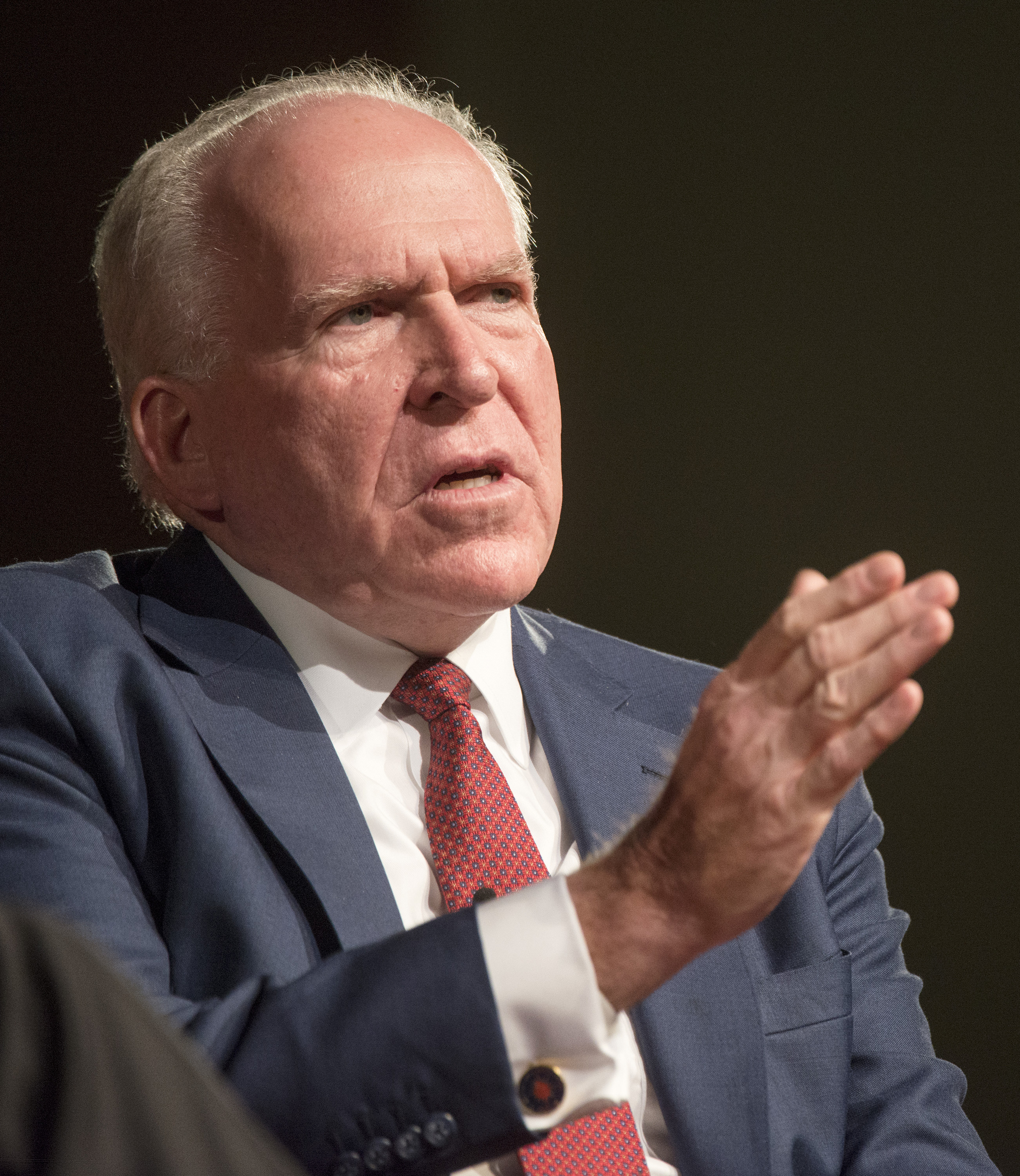
Brennan: Is the jig up? ( LBJ Library photo/ Jay Godwin)
As we Veteran Intelligence Professionals for Sanity have warned numerous times over the past two plus years, there is no reliable forensic evidence to support the story that Russia hacked into the DNC. Moreover, in a piece I wrote in May, “Orwellian Cloud Hovers Over Russia-gate,” I again noted that accumulating forensic evidence from metadata clearly points to an inside DNC job — a leak, not a hack, by Russia or anyone else.
So Brennan and his partners, FBI Director James Comey and National Intelligence Director James Clapper were making stuff up and feeding thin but explosive gruel to the hungry stenographers that pass today for Russiagate obsessed journalists.
Is the Jig Up?
With Justice Department investigators’ noses to the ground, it should be just a matter of time before they identify Brennan conclusively as fabricator-in-chief of the Russiagate story. Evidence, real evidence in this case, abounds, since the Brennan-Comey-Clapper gang of three were sure Hillary Clinton would become president. Consequently, they did not perform due diligence to hide their tracks.
Worse still, intelligence analysts tend to hang onto instructions and terms of reference handed down to them by people like Brennan and his top lieutenants. It will not be difficult for CIA analysts to come up with documents to support the excuse: “Brennan made me do it.”
The Times article today betrays some sympathy and worry over what may be in store for Brennan, one of its favorite sons and (anonymous) sources, as well as for those he suborned into making up stuff about the Russians.
The DOJ inquiry, says the Times, “has provoked anxiety in the ranks of the C.I.A., according to former officials. Senior agency officials have questioned why the C.I.A.’s analytical work should be subjected to a federal prosecutor’s scrutiny.” Attorney General William Barr is overseeing the review but has assigned the U.S. attorney in Connecticut, John Durham, to conduct it.
No Holds Barred
Barr is approaching this challenge with a resoluteness and a calm candor rarely seen in Washington — particularly when it comes to challenging those who run the intelligence agencies.
The big question, once again, is whether President Donald Trump will follow his customary practice of reining in subordinates at the last minute, lest they cross the vindictive and still powerful members of the Deep State.
Happily, at least for those interested in the truth, some of the authors of the rump, misnomered “Intelligence Community Assessment” commissioned by Obama, orchestrated by Brennan-Clapper-Comey, and published on January 6, 2017 will now be interviewed. The ICA is the document still widely cited as showing that the “entire intelligence community agreed” on the Russia-gate story, but this is far from the case. As Clapper has admitted, that “assessment” was drafted by “handpicked analysts” from just three of the 17 intelligence agencies — CIA, FBI, and NSA.
U.S. Attorney Durham would do well to also check with analysts in agencies — like the Defense Intelligence Agency and State Department Intelligence, as to why they believe they were excluded. The ICA on Russian interference is as inferior an example of intelligence analysis as I have ever seen. Since virtually all of the hoi aristoi and the media swear by it, I did an assessment of the Assessment on its second anniversary. I wrote:
“Under a media drumbeat of anti-Russian hysteria, credulous Americans were led to believe that Donald Trump owed his election victory to the president of Russia, whose “influence campaign” according to the Times quoting the intelligence report,helped “President-elect Trump’s election chances when possible by discrediting Secretary Clinton.”
Hard evidence supporting the media and political rhetoric has been as elusive as proof of weapons of mass destruction in Iraq in 2002-2003. This time, though, an alarming increase in the possibility of war with nuclear-armed Russia has ensued — whether by design, hubris, or rank stupidity. The possible consequences for the world are even more dire than 16 years of war and destruction in the Middle East. …
The Defense Intelligence Agency should have been included, particularly since it has considerable expertise on the G.R.U., the Russian military intelligence agency, which has been blamed for Russian hacking of the DNC emails. But DIA, too, has an independent streak and, in fact, is capable of reaching judgments Clapper would reject as anathema. Just one year before Clapper decided to do the rump “Intelligence Community Assessment,” DIA had formally blessed the following heterodox idea in its “December 2015 National Security Strategy”:
“The Kremlin is convinced the United States is laying the groundwork for regime change in Russia, a conviction further reinforced by the events in Ukraine. Moscow views the United States as the critical driver behind the crisis in Ukraine and believes that the overthrow of former Ukrainian President Yanukovych is the latest move in a long-established pattern of U.S.-orchestrated regime change efforts.”
Any further questions as to why the Defense Intelligence Agency was kept away from the ICA drafting table?
Ray McGovern works with Tell the Word, a publishing arm of the ecumenical Church of the Saviour in inner-city Washington. During his 27 years as a CIA analyst, he was Chief of the Soviet Foreign Policy Branch, and preparer/briefer of the President’s Daily Brief. He is co-founder of Veteran Intelligence Professionals for Sanity (VIPS).
Why Didn’t Mueller Investigate Seth Rich?
By Daniel Lazare | Consortium News | June 12, 2019
After bungling every last aspect of Russia-gate since the day the pseudo-scandal broke, the corporate press is now seizing on the Mueller report to shut down debate on one of the key questions still outstanding from the 2016 presidential election: the murder of Democratic National Committee staffer Seth Rich.
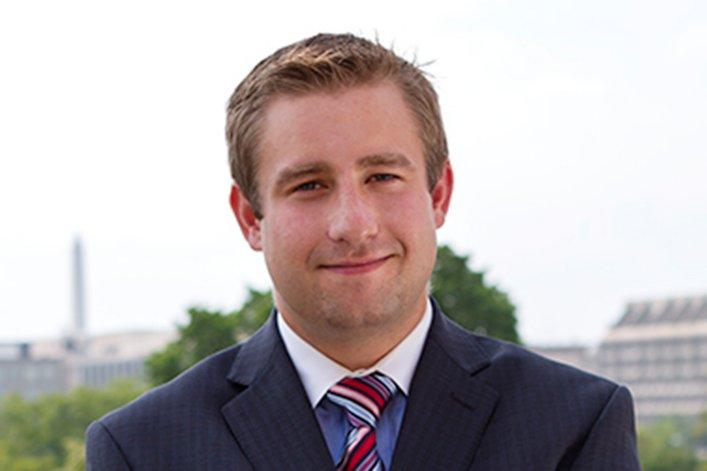
Slain Democratic National Committee staffer Seth Rich. (LinkedIn)
No one knows who killed Rich in Washington, D.C., on July 10, 2016. All we know is that he was found at 4:19 a.m. in the Bloomingdale neighborhood “with apparent gunshot wound(s) to the back” according to the police report. Conscious and still breathing, he was rushed to a nearby hospital where he was pronounced dead at 5:57.
Police have added to the confusion by releasing information only in the tiniest dribs and drabs. Rich’s mother, Mary, told local TV news that her son struggled with his assailants: “His hands were bruised, his knees are bruised, his face is bruised, and yet he had two shots to his back, and yet they never took anything…. They took his life for literally no reason. They didn’t finish robbing him, they just took his life.”
But cops said shortly after the killing that they had no immediate indication that robbery was a motive. Despite his mother’s report of two shots in the back, all the local medical examiner would say is that the cause of death was a gunshot wound to the torso. According to Rich’s brother, Aaron, Jeff “was very aware, very talkative,” when police found him lying on the pavement. Yet cops have refused to say if he described his assailant. A month later, they put out a statement that “there is no indication that Seth Rich’s death is connected to his employment at the DNC,” refusing to elaborate.
The result is a scattering of disconnected facts that can be used to support just about any theory from a random killing to a political assassination. Nonetheless, Robert Mueller is dead certain that the murder had nothing to do with the emails — just as he was dead certain in 2003 that Iraq was bristling with weapons of mass destruction “pos[ing] a clear threat to our national security.”
Mueller’s Theory About Assange ‘Dissembling’
Mueller is equally positive that, merely by expressing concern that the murder may have had something to do with the release of thousands of DNC emails less than two weeks later, WikiLeaks founder Julian Assange was trying to protect the real source, which of course is Russia.
Here’s how the Mueller report puts it:
“Beginning in the summer of 2016, Assange and WikiLeaks made a number of statements about Seth Rich, a former DNC staff member who was killed in July 2016. The statements about Rich implied falsely that he had been the source of the stolen DNC emails. On August 9, 2016, the @WikiLeaks Twitter accounted posted: ‘ANNOUNCE: WikiLeaks has decided to issue a US$20k reward for information leading to conviction for the murder of DNC staffer Seth Rich.’
Likewise, on August 25, 2016, Assange was asked in an interview, ‘Why are you so interested in Seth Rich’s killer?’ and responded, ‘We’re very interested in anything that might be a threat to alleged WikiLeaks sources.’ The interviewer responded to Assange’s statement by commenting, ‘I know you don’t want to reveal your source, but it certainly sounds like you’re suggesting a man who leaked information to WikiLeaks was then murdered.’
Assange replied, ‘If there’s someone who’s potentially connected to our publication, and that person has been murdered in suspicious, circumstances, it doesn’t necessarily mean that the two are connected. But it is a very serious matter … that type of allegation is very serious, as it’s taken very seriously by us’” (vol. 1, pp. 48-49).
This is what the Mueller report calls “dissembling.” The conclusion caused jubilation in corporate newsrooms where hostility to both Russia and WikiLeaks runs high. “The Seth Rich conspiracy theory needs to end now,” declared Vox.com. “The special counsel’s report confirmed this week that Seth Rich … was not the source,” said The New York Times. “The Mueller report might not end the debate over what President Donald Trump did,” the Poynter Institute’s Politifact added, “but it has scuttled one conspiracy theory involving a murdered Democratic party staffer and WikiLeaks.”
One Conspiracy Theory for Another
But all the Mueller report did was replace one conspiracy theory with another involving the Kremlin and its minions that is equally unconvincing.
Remarkably, there’s nothing in the Mueller report indicating that the special counselor independently reviewed the forensic evidence or questioned family members and friends. He certainly didn’t interview Assange, the person in the best position to know who supplied the data, even though Craig Murray, the ex-British diplomat who serves as an unofficial WikiLeaks spokesman, says the WikiLeaks founder would have been “very willing to give evidence to Mueller” while holed up in the Ecuadorian embassy in London, “which could have been done by video-link, by interview in the Embassy, or by written communication.”
Murray says Mueller’s team made no effort to contact him either even though he has publicly stated that he met clandestinely with an associate of the leaker near the American University campus in Washington.
Why not? Because Mueller didn’t want anything that might disturb his a priori assumption that Russia is the guilty party. If he had bucked the intelligence community finding – set forth in a formal assessment in January 2017 – that Russian President Vladimir Putin ordered an influence campaign aimed at undermining Hillary Clinton’s candidacy — it would have been front-page news since an anti-Trump press had already accepted the assessment as gospel. But Mueller is far too much of an establishmentarian to do anything so reckless.
So he selected evidence in support of the official theory that “[t]he Russian government interfered in the 2016 presidential election in sweeping and systematic fashion,” as the report states on its very first page. And since Assange had consistently maintained that the data was the result of an inside leak rather than internal hack and that “[o]ur source is not the Russian government,” he cherry picked evidence to show that Assange is a liar, not only about Russia but about Seth Rich.
Cryptic Exchange
It’s a self-serving myth that corporate media have swallowed whole because it serves their interests too. One problem in exposing it, however, is Assange’s pledge – intrinsic to the WikiLeaks mission – to safeguard the identities of whistleblowers who furnish it with information. The upshot has been a good deal of beating around the bush. A month after the murder, the WikiLeaks founder appeared on a Dutch program called “Nieuwsuur” and took part in a cryptic exchange with journalist Eelco Bosch van Rosenthal:
Assange: Whistle blowers go to significant efforts to get us material and often very significant risks. There’s a 27-year-old – works for the DNC – who was shot in the back, murdered, just a few weeks ago for unknown reasons as he was walking down the street in Washington, so….
Rosenthal: That was just a robbery, I believe, wasn’t it?
Assange: No, there’s no finding, so –
Rosenthal: What are you suggesting?
Assange: I’m suggesting that our sources take risks, and they become concerned to see things occurring like that.
Rosenthal: But was he one of your sources then? I mean –
Assange: We don’t comment about who our sources are.
Rosenthal: But why make the suggestion about a young guy being shot in the streets of Washington?
Assange: Because we have to understand how high the stakes are in the United States and that our sources, you know, face serious risks. That’s why they come to us – so we can protect their anonymity.
Rosenthal: But it’s quite something to suggest a murder. That’s basically what you’re doing.
This was as close as Assange could come to confirming that Rich was tied up with the leak without actually saying it. Hours later, WikiLeaks tweeted about the $20k reward.
Four months after that, Craig Murray told the Libertarian Institute’s Scott Horton: “Don’t get me wrong, I’m not saying that he [Rich] was the source of the leaks. What I’m saying is that it’s probably not an unfair indication to draw that WikiLeaks believe[s] that he may have been killed by someone who thought he was the source of the leaks.” (Quote begins at 11:20.)
Thanks to such foggy rhetoric, it was all but inevitable that conspiracy theories would ignite. Two months after the killing, an ultra-conservative talk-radio host named Jack Burkman – best known for organizing a protest campaign against the Dallas Cowboys’ hiring of an openly gay football player named Michael Sam – approached members of the Rich family and offered to launch an investigation in their behalf.
The family said yes, but then backed off when Burkman grandly announced that the murder was a Kremlin hit. Things turned even more bizarre a year later when Kevin Doherty, an ex-Marine whom Burkman had hired to look into the case, lured his ex-boss to a Marriott hotel in Arlington, Virginia, where he shot him twice in the buttocks and then tried to run him down with a rented SUV. Doherty received a nine-year sentence last December.
The rightwing Washington Times meanwhile reported that WikiLeaks had paid Seth and Aaron Rich an undisclosed sum, a story it was forced to retract, and Fox News named Seth as the source as well. (A sympathetic judge dismissed a lawsuit filed by the Rich family on technical grounds.) But still the speculation bubbled on, with conservative nuts blaming everyone from ex-DNC chair Debbie Wasserman Schultz to acting DNC chairwoman Donna Brazile, Clinton campaign chairman John Podesta, and Bill and Hillary themselves.
All of which plays into the hands of a corporate press happy to write off any and all suspicion as a product of alt-right paranoia.
But if speculation refuses to die, it’s for a simple reason. If the DNC email disclosure was a hack, then Rich clearly had nothing to do with it, which means his death was no more than a robbery gone awry. But if it was a leak, then – based on broad hints dropped by Assange and Murray – it looks like the story could well be more complicated. This proves nothing in and of itself. But it guarantees that questions will grow as long as the Washington police make zero progress in its investigation and the Mueller report continues to fall apart.
And that’s just what’s happening. Mueller’s account of how Russian intelligence supposedly supplied WikiLeaks with stolen data makes no sense because, according to the report’s chronology, the transfer left WikiLeaks with just four days to review some 28,000 emails and other electronic documents to make sure that they were genuine and unaltered – a clear impossibility. (See “The ‘Guccifer 2.0’ Gaps in Mueller’s Full Report,” April 18.)
The FBI assessment that Paul Manafort associate Konstantin Kilimnik “has ties to Russian intelligence” – which Mueller cites (vol. 1, p. 133) in order to justify holding Manafort in solitary confinement during the Russia-gate investigation – is similarly disintegrating amid reports that Kilimnik actually served as an important State Department intelligence source.
So the idea of a hack makes less and less sense and an inside leak seems more and more plausible, which is why questions about the Rich case will not go away. Bottom line: you don’t have to be a loony rightist to suspect that there is more to the murder than Robert Mueller would like us to believe.
Daniel Lazare is the author of “The Frozen Republic: How the Constitution Is Paralyzing Democracy” (Harcourt Brace, 1996) and other books about American politics. He has written for a wide variety of publications from The Nation to Le Monde Diplomatique and blogs about the Constitution and related matters at Daniellazare.com.
US Treasury Dept imposes new Iran-related sanctions on 2 individuals and a company in Iraq
RT | June 12, 2019
The US Treasury Department announced sanctions on Wednesday against two Iraq-based persons and one company, for their alleged links to Iran’s Revolutionary Guard.
Makki Kazim and Mohammed Hussein, along with the South Wealth Resources Company have all been hit with secondary sanctions, according to the Treasury Department website.
Secondary sanctions form a major part of US international statecraft, cutting off businesses and individuals from the US financial system and tarnishing their reputations with international businesses and banks. A number of measures can be enforced against targeted individuals, ranging from limiting their ability to do business in the US to prohibiting all US parties from conducting business with them.
Bolton’s Long Goodbye

By John Kiriakou • Consortium News • June 12, 2019
John Bolton’s days as national security advisor are apparently numbered—for reasons that have all played out in the press, says John Kiriakou.
Everybody in America knows that Donald Trump places a premium on what he considers to be “loyalty.” You’re either with him or against him. The White House staff has been a revolving door from virtually the start of his administration. It’s not unusual for aides to last mere weeks or months, only to then be thrown out on the street.
Trump then inevitably says something about “loyalty.”
The situation isn’t unique to just the White House political and domestic policy staff. It is just as pervasive at the National Security Council. Nobody is sacred. Remember, you’re either with him or against him. Now it’s John Bolton’s turn to find himself in a corner. I believe that his days as national security advisor are numbered—for reasons that have all played out in the press.
I’m one of those people—not at all unique in Washington—who has contacts and friends all over the political spectrum, including in the Trump Administration. After work and over drinks, they like to vent. What they are telling me privately is what other Washington insiders are telling the conservative press. The White House, and especially the National Security Council, are in disarray. And Bolton will soon be fired.
Bolton-Centric
The right-wing Washington Examiner reported this week that Bolton acknowledged these reports, but in a back-handed way. He said in a Wall Street Journal podcast that he believes five countries are spreading “lies about dysfunction in the Trump administration.” Those countries are North Korea, Iran, Venezuela, Russia, and China. That’s laughable.
What Bolton is saying is that there is a vast and incredibly well-coordinated international conspiracy that includes some of the most important countries in the world, the main purpose of which is to embarrass him. That sounds perfectly rational, right?
Of course, a more rational person might conclude that Bolton has done a terrible job, that the people around him have done a terrible job, that he has aired his disagreements with Trump in the media, and that the President is angry about it. That’s the more likely scenario.
Here’s what my friends are saying. Trump is concerned, like any president is near the end of his term, about his legacy. He said during the campaign that he wanted to be the president who pulled the country out of its two longest wars. He wanted to declare victory and bring the troops back from Afghanistan and Iraq. He hasn’t done that, largely at the insistence of Bolton. Here we are three years later and we’re still stuck in both of those countries.
Second, my friends say that Trump wants to end U.S. involvement in the Yemen war, but that Bolton has been insistent that the only way to guarantee the closeness of the U.S. relationships with Saudi Arabia and the United Arab Emirates is to keep providing those countries with weapons, aerial refueling planes, and intelligence support.
Obsessed With Iran
That would explain the reason why the White House did not seek to block the recent Congressional vote on Yemen support. Bolton likely talked Trump into vetoing the resolution. Or he talked the Saudis into talking Trump into it. Still, at least in internal deliberations, Trump has said that he simply doesn’t see a national security reason to keep the war going. The U.S. gets nothing out of it.
Third, the mainstream media has accused Bolton of being the reason behind the failure of Trump’s second summit with North Korean leader Kim Jong-un. Bolton towed a hard line, so much so that the North Korean media called him a “war monger” and a “human defect” once the summit ended.
This week Trump told reporters gathered on the White House south lawn that Kim had “kept his word” on nuclear and missile testing. This was a direct contradiction of Bolton, who had said just hours earlier that the North Koreans had reneged on their commitments to the U.S. Trump said simply, “My people think there could have been a violation. I view it differently.”
Most importantly, Bolton has been famous for decades for his irrationally hard line on Iran. He has made no secret of his desire to bomb Iran into the stone age, to smash and overthrow its government, and to let the chips fall where they may. The policy makes literally no sense.
Iran is a country of 80 million people. It has an active and well-trained global intelligence service. It has a robust navy with highly-specialized “swift boats” that are active in the Persian Gulf. And it controls the vital Strait of Hormuz, through which 20 percent of the world’s oil and 33 percent of its liquified natural gas flows.
Trump said just a week ago that he was willing to begin talks with the Iranians “with no preconditions.” This was a major softening of U.S. policy toward Iran and it immediately drew Bolton’s ire. Indeed, The New York Times pointed out that the policy directly “overruled a longtime goal of (Trump’s) national security advisor.”
All of this has made Trump angry. He’s constantly being one-upped by one of the Washington swamp monsters he promised to rid the city of. He finally seems to have come to realize that even establishment Republicans dislike and distrust John Bolton. And now he understands why.
Mick Mulvaney, Trump’s chief of staff, has very quietly and discreetly begun informal meetings with a list of a half-dozen possible replacements for Bolton. Let’s hope he finds one that he and Trump both like sooner, rather than later.
John Kiriakou is a former CIA counterterrorism officer and a former senior investigator with the Senate Foreign Relations Committee. John became the sixth whistleblower indicted by the Obama administration under the Espionage Act—a law designed to punish spies. He served 23 months in prison as a result of his attempts to oppose the Bush administration’s torture program.
Kushner as a Colonial Administrator
Let’s Talk About the “Israeli Model”
By Ramzy Baroud | Dissident Voice | June 11, 2019
In a TV interview on June 2, on the news docuseries “Axios” on the HBO channel, Jared Kushner opened up regarding many issues, in which his ‘Deal of the Century’ was a prime focus.
The major revelation made by Kushner, President Donald Trump’s adviser and son-in-law, was least surprising. Kushner believes that Palestinians are not capable of governing themselves.
Not surprising, because Kushner thinks he is capable of arranging the future of the Palestinian people without the inclusion of the Palestinian leadership. He has been pushing his so-called ‘Deal of the Century’ relentlessly, while including in his various meets and conferences countries such as Poland, Brazil and Croatia, but not Palestine.
Indeed, this is what transpired at the Warsaw conference on ‘peace and security’ in the Middle East. The same charade, also led by Kushner, is expected to be rebooted in Bahrain on June 25.
Much has been said about the subtle racism in Kushner’s words, reeking with the stench of old colonial discourses where the natives were seen as lesser, incapable of rational thinking beings who needed the civilized ‘whites’ of the western hemisphere to help them cope with their backwardness and inherent incompetence.
Kushner, whose credentials are merely based on his familial connections to Trump and family friendship with Israeli Prime Minister, Benjamin Netanyahu, is now poised to be the colonial administrator of old, making and enforcing the law while the hapless natives have no other option but to either accommodate or receive their due punishment.
This is not an exaggeration. In fact, according to leaked information concerning Kushner’s ‘Deal of the Century,’ and published in the Israeli daily newspaper, Israel Hayom, if Palestinian groups refuse to accept the US-Israeli diktats, “the US will cancel all financial support to the Palestinians and ensure that no country transfers funds to them.”
In the HBO interview, Kushner offered the Palestinians a lifeline. They could be considered capable of governing themselves should they manage to achieve the following: “a fair judicial system … freedom of the press, freedom of expression, tolerance for all religions.”
The fact that Palestine is an occupied country, subject in every possible way to Israel’s military law, and that Israel has never been held accountable for its 52-year occupation seems to be of no relevance whatsoever, as far as Kushner is concerned.
On the contrary, the subtext in all of what Kushner has said in the interview is that Israel is the antithesis to the unquestionable Palestinian failure. Unlike Palestine, Israel needs to do little to demonstrate its ability to be a worthy peace partner.
While the term ‘US bias towards Israel’ is as old as the state of Israel itself, what is hardly discussed are the specifics of that bias, the decidedly condescending, patronizing and, often, racist view that US political classes have of Palestinians – and all Arabs and Muslims, for that matter; and the utter infatuation with Israel, which is often cited as a model for democracy, judicial transparency and successful ‘anti-terror’ tactics.
According to Kushner a ‘fair judicial system’ is a conditio sine qua non to determine a country’s ability to govern itself. But is the Israeli judicial system “fair” and “democratic”?
Israel does not have a single judicial system, but two. This duality has, in fact, defined Israeli courts from the very inception of Israel in 1948. This de facto apartheid system openly differentiates between Jews and Arabs, a fact that is true in both civil and criminal law.
“Criminal law is applied separately and unequally in the West Bank, based on nationality alone (Israeli versus Palestinian), inventively weaving its way around the contours of international law in order to preserve and develop its ‘(illegal Jewish) settlement enterprise’,” Israeli scholar, Emily Omer-Man, explained in her essay ‘Separate and Unequal’.
In practice, Palestinians and Israelis who commit the exact same crime will be judged according to two different systems, with two different procedures: “The settler will be processed according to the Israeli Penal Code (while) the Palestinian will be processed according to military order.”
This unfairness is constituent of a massively unjust judicial apparatus that has defined the Israeli legal system from the onset. Take the measure of administrative detention as an example. Palestinians can be held without trial and without any stated legal justification. Tens of thousands of Palestinians have been subjected to this undemocratic ‘law’ and hundreds of them are currently held in Israeli jails.
It is ironic that Kushner raised the issue of freedom of the press, in particular, as Israel is being derided for its dismal record in that regard. Israel has reportedly committed 811 violations against Palestinian journalists since the start of the ‘March of Return’ in Gaza in March 2018. Two journalists – Yaser Murtaja and Ahmed Abu Hussein – were killed and 155 were wounded by Israeli snipers.
Like the imbalanced Israeli judicial system, targeting the press is also a part of a protracted pattern. According to a press release issued by the Palestinian Journalists Union last May, Israel has killed 102 Palestinian journalists since 1972.
The fact that Palestinian intellectuals, poets and activists have been imprisoned for Facebook and other social media posts should tell us volumes about the limits of Israel’s freedom of press and expression.
It is also worth mentioning that in June 2018, the Israeli Knesset voted for a bill that prohibits the filming of Israeli soldiers as a way to mask their crimes and shelter them from any future legal accountability.
As for freedom of religion, despite its many shortcomings, the Palestinian Authority hardly discriminates against religious minorities. The same cannot be said about Israel.
Although discrimination against non-Jews in Israel has been the raison d’être of the very idea of Israel, the Nation-State Law of July 2018 further cemented the superiority of the Jews and inferior status of everyone else.
According to the new Basic Law, Israel is “the national home of the Jewish people” only and “the right to exercise national self-determination is unique to the Jewish people.”
Palestinians do not need to be lectured on how to meet Israeli and American expectations, nor should they ever aspire to imitate the undemocratic Israeli model. What they urgently need, instead, is international solidarity to help them win the fight against Israeli occupation, racism and apartheid.
Dr. Ramzy Baroud is an author and a journalist. He is athor of The Second Palestinian Intifada: A Chronicle of a People’s Struggle and his latest My Father Was a Freedom Fighter: Gaza’s Untold Story. He can be reached at ramzybaroud@hotmail.com.
Carey Wedler on Tulsi Gabbard’s Hope and Change
Corbett • 06/11/2019
Yay! Another politician seems to hold a correct opinion on an important policy issue. Time to give up on those silly anarchist ideals and vote for the CFR member who’s right about one thing (and wrong about a lot of things), right guys? Well, maybe not. Joining me today to discuss the important issue of Hope And Change 2.0 is Carey Wedler of The Anti-Media.
SHOW NOTES:
Interview 1249 – Carey Wedler on How Government $ach$ Won The (s)Election
Why do Democrats & the mainstream media hate this veteran & presidential candidate?
Tulsi voted to fund the DoD war machine
Vote Tulsi for Sensible Gun Control!
Tulsi will protect Medicare and Social Security!
Wedler: Why I’m burning my last bridge with Obama
Watch this video on BitChute / DTube / YouTube or Download the mp4
Featured Video

or go to
Aletho News Archives – Video-Images
Book Excerpt
Clinical Trials Relied Upon to License the MMR Vaccine
They insist we must rely on the data, well here it is…
Informed with Aaron Siri | November 24, 2026
Adding to my last post about the MMR vaccine, this one reviews the clinical trials relied upon for its licensure.
Here is an excerpt from my book, Vaccines, Amen, summarizing the clinical trials relied upon to license this vaccine… continue
Blog Roll
 Aletho News
- Kremlin Aide Slams Top German Diplomat for ‘Confrontation Against Russia’ Remark
- Canada stripped of World Cup events over Russian athletes ban
- Guatemala arrests ex-colonel over 1982 killings of Maya Ixil civilians
- Clinical Trials Relied Upon to License the MMR Vaccine
- FDA Ordered to Pay Over $570,000 in Fight Over Pfizer COVID Vaccine Records
- USAID turned to Facebook to drive demand for Covid vaccines in Global South – files
- Britain’s shadow security network expands into south Lebanon
- The ADL Has a Foreign Policy, and You Are Not Supposed to See It
- Former Qatari PM says ‘Israel’ has security ties with all Gulf states
- The Sound of Silence in the Strait of Hormuz
- If Americans Knew
- DAILY UPDATE: Latest essential news on Palestine, Israel, & region
- Congenital birth defects are on the rise in Gaza. Doctors say Israel’s genocide is to blame.
- DAILY UPDATE: Latest essential news on Palestine, Israel, & region
- Today would be Tom Hurndall’s birthday, killed by Israel
- New California law cracks down on ‘antisemitic’ flyers
- Costa Rica Detains Francesca Albanese On “Links to Terrorist Acts”
- New from MSF: No one is spared: The impact of Israeli attacks in southern Lebanon
- DAILY UPDATE: Latest essential news on Palestine, Israel, & region
- Iran’s Foreign Minister Slams Israel Over Chemical Weapons Claims
- Israel kills 18 in Gaza, including 3 girls, Deputy Education Minister, & his wife
- No Tricks Zone
- Physicists: Doubling CO2 Has A Smaller Impact On Ocean ‘Acidification’ Than Existing Internal Variability
- Alarmist Climatologists In Shock! 2026 Atlantic Hurricane Season Sees Lowest Count In 101 Years
- New Study: Modern Temps Are Among The Coldest Of The Last 10,000 Years In East Central Europe
- Germany’s Renewable Energies Lead to 1.4 Billion Euro Electric Power Trade Deficit
- Argentina’s Perito Moreno Glacier Joins Antarctica and Arctic In Defying Doomsday Melt Claims
- New Study: Barents Sea Temperatures Were Warmer And Sea Ice Less Extensive In The 1700s Than Today
- German Authorities Start Initiative To Evaluate Public Register For Climate “Disinformation” Spreaders!
- Zonal Asymmetry of Temperature Change in the Antarctic Circumpolar Current
- New Study: The Net Fossil Fuel Contribution To Rising Atmospheric CO2 Has Been Zero For 500 Years
- Germany’s Green Energy Transition Becoming Increasingly Expensive…Another 6 Trillion Euros!

