Time to Admit the Afghan War is ‘Nonsense’
By Jonathan Marshall | Consortium News | February 22, 2018
Whatever happened to the Donald Trump who tweeted in 2013, “Let’s get out of Afghanistan … we waste billions there. Nonsense!”
And whatever happened to the reality TV star who used to tell under-performers, “you’re fired”?
Today, as commander in chief, President Trump is indefinitely extending the Afghan war’s record as the longest in U.S. history. He’s wasting $45 billion to wage it this year alone. And he’s not even thinking of firing his huckster generals who claim that sending a few thousand more troops and stepping up the bombing will be a “game changer.”
Much like the Vietnam War, every day’s news of war from Afghanistan puts the lie to optimistic claims of a military solution. A recent BBC study concluded that Taliban forces are now active in 70 percent of the country, more than at any time since the end of 2001. Unofficial U.S. estimates of their strength have soared from about 20,000 in 2014 to at least 60,000 today.
Afghan government forces number several times as many, but—like their counterparts in the Vietnam War—they “lack the one thing the U.S. cannot provide: the will to fight a protracted campaign against a committed enemy,” in the words of Bill Roggio, editor of the Long War Journal at the hawkish Foundation for Defense of Democracies.
The Taliban have proven that no place in Afghanistan is safe from their long arm. At the beginning of February, they infiltrated a bomb-laden ambulance into Kabul, just blocks from a meeting at the Afghan Ministry of Defense with the head of the U.S. Central Command. Its blast killed more than 100 people and injured 235. It followed only days after Taliban gunmen stormed the Intercontinental Hotel in Kabul, killing at least 20 people, including four Americans.
Inspector General Finds No Progress
The latest Inspector General report on the status of “Operation Freedom’s Sentinel,” issued Feb. 18, declares that U.S. and Afghan government forces made no progress last year in expanding their control of the country or in forcing the Taliban to the peace table, one of the administration’s stated goals.
“In addition,” the report said, “there were growing concerns about whether Afghanistan will be able to hold parliamentary elections as planned in July 2018, and the country was struggling to provide assistance to nearly two-million internally displaced persons.”
The report also highlighted the lethality of Taliban operations against Afghan military and police forces, but it declined to offer numbers, noting that the U.S. military had classified them at the request of the Afghan government.
To justify its optimism, the Trump administration has touted its ostensibly new tactic of bombing drug labs to deny the Taliban revenue. The Inspector General notes that such operations were undertaken as far back as 2009, to no end:
“The United Nations reported that opium poppy cultivation in Afghanistan set a new record in 2017. Cultivated land increased 63 percent over 2016 levels and potential opium production set a new record at 9,000 tons. The United Nations stated that the Afghan government’s strategic focus on protecting population centers in 2017 might have made rural populations more vulnerable to the influence of anti-government entities who pay local farmers to grow poppy and protect farmers from government eradication efforts.”
Similarly, U.S. military operations have failed to suppress Afghanistan’s version of ISIS, which recently conducted several spectacular terror attacks in Kabul. The U.S. command made “no discernible progress” on convincing Pakistan to close its borders to insurgents. Last but not least, the Afghan government remains a mess, riven by factional fights between President Ashraf Ghani and provincial warlords.
An Incoherent Policy
Meanwhile, unaddressed by the IG is the basic incoherence of a policy of bombing the Taliban into reconciliation. On paper, Washington aims to force the Taliban to the negotiating table, acknowledging that outright victory is impossible. But only this January, President Trump told members of the UN Security Council, “we don’t want to talk with the Taliban,” and a spokesman for President Ghani said recently, “We never negotiate with groups who resort to crime and the brutal killing of people and then claim responsibility for it.”
That sounds like a policy of stalemate if ever there was one.
“For years, we have been pursuing a strategy that will not win, but at the same time, we are doing just enough to ensure that we do not entirely lose,” concedes Kevin Hulbert, former CIA station chief in Kabul. “The way forward will be determined by clarifying our objectives, which to this point, have remained ambiguous at best.”
Clarifying our objectives would certainly help, but just as important are clarity about U.S. interests and capabilities.
Ever since 9/11, policy makers have largely taken American interests for granted. Yet aside from fantasies about developing Afghanistan’s mineral wealth, it’s hard to make a serious case that American lives and treasure will be more at risk from getting out of Afghanistan than continuing an endless war. The only significant interest at stake is political: no president wants to lose such a war.
And as to capabilities, the Obama-era surge proved that even with 100,000 troops, the United States cannot win a war against committed, indigenous insurgents who enjoy unlimited funding and protected foreign sanctuaries. Unlike the United States, the Taliban have nowhere to go. They will wait us out, even if that means fighting for another 16 years.
A decade ago, a top-level policy analysis requested by President George W. Bush admitted, “The United States is not losing in Afghanistan, but it is not winning either, and that is not good enough.” Those words are as true in 2018 as they were in 2008. The situation is still not good enough, and there’s no chance of it getting any better. It’s time for President Trump to wake up and say “you’re fired!” to anyone on his team who pretends otherwise.
Jonathan Marshall is the author or co-author of five books on U.S. foreign policy and international affairs. His articles on Afghanistan include “The Goal of ‘Not Losing’ in Afghanistan,” “Blaming the Afghan War Failure on — Russia,” and “Afghanistan: President Obama’s Vietnam.”
‘Russian bots’ outcry: Is Twitter cracking down on people who ‘challenge the status quo’?
RT | February 22, 2018
It seems that ‘the bots’ (especially the ‘Russian bots’) narrative is being used as a kind of defensive mechanism, journalist and human rights activist Mike Raddie told RT amid reports of a massive account purge on Twitter.
A crackdown on bot spam or dissent?
“The whole meme of the bots, especially the ‘Russian bots,’ is actually being used as a kind of defensive mechanism,” said Mike Raddie. “Whenever people criticize the corporate media in the West – we’ve done it with the Guardian – they come back and say, ‘oh, you’re part of a Russian bot army,’ or a typical question is, ‘what’s the weather like in St. Petersburg? Is it snowing in Moscow yet?’ So it’s a very useful meme for corporate journalists to deflect any kind of criticism, especially over hot topics such as Syria, Ukraine – things like this.”
A number of Twitter accounts are said to have been flagged over the past few days, in what many have speculated is part of the company’s efforts to clamp down on the much-touted army of Russian-controlled automated accounts, or “bots.” However, Twitter has yet to elaborate on the reported mass purge, which allegedly also targeted users with right-wing views – raising concerns of political censorship on the popular social media platform. The hashtag #TwitterLockOut began trending on the site shortly after the suspensions.
“If Twitter has begun this campaign of eliminating or blocking people that have different ideas than the company wants to portray or the message that they want to get out, I think it’s very harming to democracy and freedom of speech,” Christian Mancera, a lawyer and 2018 congressional candidate, told RT. “We have to keep every single channel of communication open, and just because a person has a conservative view doesn’t make that person an enemy, or make that person politically incorrect. So I hope that Twitter comes forward and clarifies.”
Although his own outlet’s Twitter account recently received a 12-hour suspension, allegedly for “criticizing a multi-billionaire,” Raddie suggested that most users who get hit with the ban hammer are likely victims of the company’s “crude algorithm,” and not singled out by an actual Twitter employee. However, he said the company’s recent behavior suggests that when Twitter “sees challenges, serious challenges, to the status quo, they’re likely to limit activity or even block accounts or delete accounts.”
Hunting for ‘Russian links’
Dragged in front of the US Senate last year as part of efforts to expose “Russian influence” in the 2016 presidential elections, Twitter initially revealed that it had identified 201 “Russia-linked” accounts operating on its platform. After Sen. Mark Warner (D-Virginia) expressed disappointment in the anticlimactic findings, Twitter raised its figure to 36,746.
As part of its autumn crackdown, Twitter banned an account owned by an African-American political activist from Atlanta – allegedly for her “links” to Russia. “This whole suppression of voices in using this Russian scare tactic is just way too far,” Charlie Peach, who has absolutely no ties to Russia, told RT back in October.
“In my lifetime I’ve never seen anything like this. I don’t remember the McCarthyism era, obviously, because I’m not that old, but my parents talked to me about it and things that were occurring at the time,” Peach told RT. “It ensures that the 1 percent continues to have a narrative and that anyone who opposes that are no longer allowed to speak. You look at CNN, MSNBC ‒ they gave us the Iraq War. This is what they do. The main media houses that run everything are the ones that continue to push the propaganda and make sure we’re shut down.”
In January, the US Senate Intelligence Committee published answers provided by Twitter, Facebook and Google in response to questions concerning Russia’s alleged use of social media to meddle with American democracy. In its written response, Twitter disclosed that it had identified nine accounts as being “potentially linked to Russia that promoted election-related, English-language content.” Of these nine nefarious accounts “potentially linked” to Russia, “the most significant use of advertising was by @RT_com and @RT_America. Those two accounts collectively ran 44 different ad campaigns, accounting for nearly all of the relevant advertising we reviewed,” according to Twitter. Conspicuously absent from Twitter’s written statement was the fact that the American tech giant traveled to Moscow to pitch a proposal for RT to spend huge sums on advertising for the US presidential election – an offer which RT declined.
‘Shadow ban’ controversy
More recently, in January, conservative journalism watchdog Project Veritas released undercover footage of current and former Twitter staff who appear to admit to silencing conservative voices using “shadow bans” – which block a user or their content from reaching a wider audience without their knowledge.
“We’re giving away an awful lot to these companies, but when they come out and publicly say they want to be the public forum for free speech, yet they’re censoring free speech and they are slanting what free speech can or cannot be heard, then there’s a problem,” Project Veritas executive director Russell Verney told RT.
Read more:
When Will Congress Investigate All Interference in Elections?
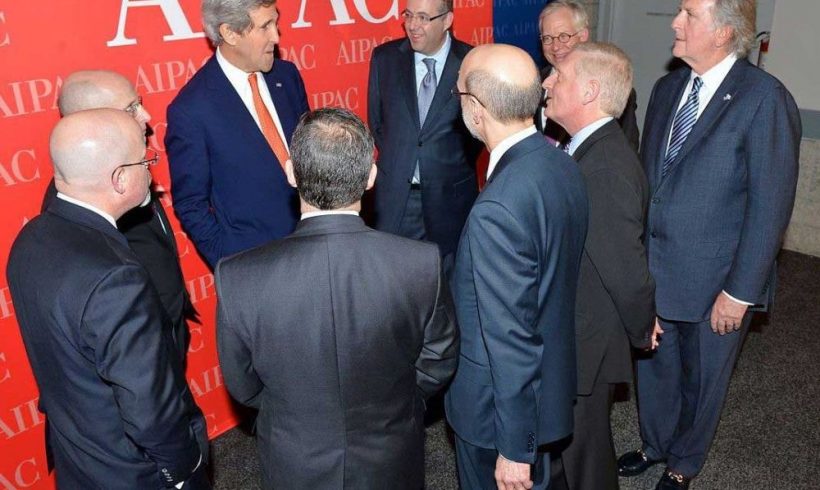
By Philip M. GIRALDI | Strategic Culture Foundation | 22.02.2018
The atmosphere in the United States regarding possible Russian interference in the 2016 presidential election is something like hysteria, with a real danger that bilateral relations might break down completely as a result. Indeed, a number of politicians and senior government officials have described the allegations that Moscow sought to influence the election results as an “act of war” with Congressman Jerold Nadler even declaring that it was similar to Pearl Harbor.
Assuming that the indictment against 13 Russians and 3 Russian companies filed last week by Special Counsel Robert Mueller is accurate, the reported activity of the Internet Research Agency could indeed have been part of an intelligence operation seeking to influence developments in the US, but the organization’s employees also displayed considerable amateur behavior, suggesting that they were not professional spies, supporting the stronger argument that it was not a Russian government-run operation at all.
And the United States is hardly innocent when it comes to interfering in the domestic politics of both friends and enemies. That is very often what intelligence agencies are designed to do, and no one is more active in interfering in foreign governments and elections than the United States of America. The Russian election featuring Boris Yeltsin in 1996 was arranged by Washington working with the International Monetary Fund, and more recently there was the $5 billion invested in bringing “democracy” to Ukraine in 2014. The US was also involved in many of the elections in post-war Europe, most particularly in countries whose own democratic systems were still evolving. The CIA worked to keep communists out of the government in Italy’s 1976 national election. Conservative parties received sacks of money and articles warning about communism appeared in all the major newspapers. The major covert action proceeded even though Italy was a NATO member and the corruption that the intervention brought with it has blighted Italian politics to this day.
And then, there are America’s friends who in similar fashion interfere in US politics to support their own national agendas. Most active recently have been Israel and Saudi Arabia, both of which have an identical foreign policy goal, which is to end what they describe as the Iranian threat in their region. As neither has the resources to go it alone, both seek to involve the United States in what would likely be a catastrophic war for all involved, leaving Riyadh and Tel Aviv standing on the sidelines to pick up the pieces.
The Saudi lobby in the United States operates largely below the surface, working on individual congressmen and through the funding of think tanks. Israel’s manipulation of the US is, however, much more in the open. One can argue that what we are now calling Russiagate all started when Trump National Security Adviser designate Michael Flynn called Russian Ambassador Sergey Kislyak, on December 22, 2016. The call was made at the direction of Trump son-in-law Jared Kushner, who, in turn, had been approached by Israeli Prime Minister Benjamin Netanyahu to change a U.N. vote critical of Israel.
Kushner asked Flynn, the soon-to-be National Security Adviser, to help Israel by undermining what was being done by the still-in-power American government in Washington headed by President Barack Obama. In legal terms this most certainly could be construed as covered by the “conspiracy against the United States” statute that the Mueller investigation has exploited in the recent Russian indictments.
Mueller’s indictment specifically claimed that the Russians created false US personas while also stealing actual identities. But the Russians are being accused of involvement in activity that Israel engages in openly. It has interfered in US elections, to include promoting Mitt Romney over Barack Obama in 2012, and has a powerful and well-funded lobby in AIPAC that intervenes aggressively in American foreign and domestic policy. And the Israeli government’s propaganda arm uses its hasbara to use false internet identities to confuse and deflect critical stories. They do so routinely and do not even try to hide what they are doing. Part of their agenda is to smear critics and elect politicians favorable to them.
So, when will Mueller and the several congressional committees that are investigating the Russians move on to the topic of Israel and Saudi Arabia to find out what really effective foreign influencing operations looks like? Given the power of Israel and the Saudis over Congress, probably never.
Overthrowing Syrian govt is aim of West’s proposed UNSC resolution – Lavrov
RT | February 22, 2018
The real goal of the West-brokered UN Security Council resolution on Syria is to put the blame on Damascus for everything and provide cover for militants, Russian Foreign Minister Sergey Lavrov has said.
The authors of the resolution on humanitarian issues in Syria, which is to be discussed at the UNSC meeting on Thursday evening, want to “shift the focus” from the peace process “to blaming the Syrian government in order to promote ‘plan B,’ namely overthrowing the regime in violation of resolution 2257,” Lavrov said at a news conference in Belgrade.
If the US continues to ignore Russia’s position, Moscow will have no other choice than to infer that the authors of the initiative “again want to put the blame on Damascus and provide cover for militant groups,” the minister added.
Russia is also preparing a resolution on humanitarian issues in Syria, amid concerns over the escalating violence in the country. Eastern Ghouta, a suburb of Damascus, has seen a new wave of clashes between Syrian government forces and both rebel and Islamist factions operating in the area.
Together with Iran and Turkey, Russia is tasked with enforcing the ceasefire in Eastern Ghouta, one of the de-escalation zones established as a result of the Astana talks in May 2017. The Russian Center for Reconciliation in Syria earlier suggested the militants leaving the area, but the proposal was rejected, according to Lavrov.
“The Al-Nusra Front [currently known as Jabhat Fateh Al-Sham] and those who interact with it have firmly rejected the proposal and continue to shell the city from their positions, using the civilian population of Eastern Ghouta as a human shield,” the diplomat stressed.
US to Deploy Lethal Drones to Korean Peninsula After Olympic Games – Report
Sputnik – 21.02.2018
Recent reports by South Korean news media claim that the US will deploy attack drones to the Korean Peninsula in the next few months.
Twelve attack drones that can target North Korean leaders and military targets will be deployed in March or April, South Korean newspaper Chosun Ilbo reported this week.
According to the report, a hangar has already been constructed for the Gray Eagle drones. In addition, support facilities and personnel have reportedly already arrived at the US air base at Kunsan on the west coast.
The General Atomics MQ-1C Gray Eagle is an unmanned aircraft system developed by General Atomics Aeronautical Systems for the US Army. The Gray Eagle, which has an 18-yard wingspan, can conduct various missions including attack, reconnaissance, surveillance and infiltration. Its 248-mile range gives it enough reach to cover most of North Korean territory.
This is not the first time that the US has sent attack drones to South Korea. Last March, the US deployed attack drones in response to “provocative actions” by North Korea, although this threat has not deterred the North from conducting nearly a nearly a dozen missile tests since then.
Earlier this week, a US forces spokesperson also announced that military drills between the US and South Korea will begin again once the Paralympic Games in Pyeongchang end in March, military.com reported.
Top Democrats demand $300mn to protect the midterms from Russia intervention
Press TV – February 21, 2018
US Democratic leaders have called for more than $300 million in new funding to protect upcoming midterm elections from Russian interference.
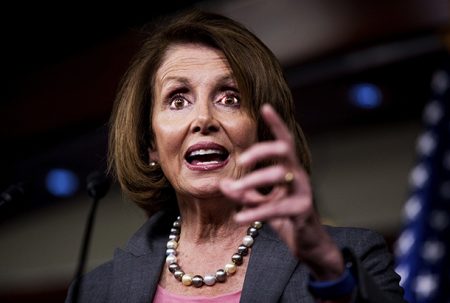
Senate minority leader Chuck Schumer (D-N.Y.) and House minority leader Nancy Pelosi demanded a budget boost Wednesday, claiming that the amount is necessary to safeguard November’s elections.
The extra money should go to the FBI, Department of Homeland Security and Election Assistance Commission, they said in a letter to the Republicans.
“We’re not drawing lines in the sand,” Senator Schumer told reporters. “We hope we can get bipartisan support.”
The Democrats’ move was made in the wake of mounting pressure against the administration of US President Donald Trump over possible collusion with Moscow during the 2016 presidential campaign and election.
The president and his associates have been under increased pressure since Friday, when special counsel Robert Mueller released an indictment in the ongoing Russia probe.
The investigation seeks to find out whether the Russian government coordinated with Trump’s aides after the intelligence community’s conclusion that the Kremlin helped with the New York billionaire’s campaign effort ahead of winning the White House, an allegation dismissed both by Moscow and the president.
Democrats are, meanwhile, attempting to persuade the GOP to back the effort.
“There is some support out there, but it has never gotten to the Republican leadership level,” Minnesota Democratic Senator Amy Klobuchar told reporters. “If they want to do this, they could get it done — but instead of just having introduced bills, they’re going to have to take this on and help us.”
In an emailed statement to Politico, a Senate Republican aide asserted that the offer would be “considered.”
“This request will be carefully considered along with the thousands of individual choices and decisions that will have to be weighed and made as a FY2018 omnibus bill is written,” wrote the GOP aide.
According to the spokeswoman for the Republican speaker of the US House of Representative, Paul Ryan, lawmakers will be informed “on ways to protect the 2018 election.”
“We won’t be negotiating the omnibus through the press,” AshLee Strong said.
US, S. Korean militaries to conduct joint drills despite detente with Pyongyang
RT | February 20, 2018
The US and South Korea will go ahead with military drills off the Korean peninsula despite the “Peace Olympics” and the recent thaw in North-South relations, the South’s defense ministry said in a report to the National Assembly.
In the run-up to the Olympic Games in PyeongChang, Seoul was able to convince Washington to delay the start of their annual winter/springtime joint military exercises until after the games. The temporary halt to the annual Foal Eagle/Key Resolve US-South Korea joint military exercises allowed North and South Korea to develop a dialogue that the South hopes will ease the mounting tension in the region.
On Tuesday, a day after Pyongyang warned against the resumption of the military drills, South Korea’s defense ministry announced that the allies will still hold the Key Resolve and Ulchi Freedom Guardian exercises. Holding the drills this year, the S. Korean military said it will enhance the so-called 4D Operational Concept amid allies which aims “to detect, disrupt, destroy and defend against North Korean missile threats,” the ministry said in a report to the National Assembly, Yonhap reports.
No concrete schedule for the drills has yet been announced for 2018, and the report did not mention the fate of the Foal Eagle drills. A Key Resolve computer-simulated command post exercise was held March 8-23 last year. The 2017 Ulchi Freedom Guardian exercise involving some 17,500 US service members took place August 21-31.
The North has long urged the allies to stop their joint military training, and on Monday reiterated its objection to war games on its borders. “Resuming the war exercises is a wild act of ruthlessly trampling even a small sprout of peace that has been seen on the Korean peninsula,” North Korean KCNA said in an official commentary.
N. Korea particularly accused Donald Trump’s administration of seeking “war” in the region, blaming the US for using the “most powerful weapon in the world” to coerce Pyongyang. “The Trump group has to ponder over the catastrophic consequences to be entailed by its reckless saber-rattling, and make a responsible choice,” KCNA said.
“We are ready for dialogue and war.”
The latest statement comes amid the war of words and muscle flexing in the region between Pyongyang and Washington. As the US again threatens to pursue a military option to neutralize North Korea, Russia and China have been calling for calm. Moscow and China have consistently urged for a diplomatic solution to the crisis based on the ‘double freeze’ initiative. The simple Sino-Russian proposal, firmly rejected by Washington, seeks a simultaneous suspension of both nuclear tests by Pyongyang and the large-scale military exercises by Washington and Seoul.
Read more:
More Gun Violence: Let’s Look Beyond Politics
By Ron Paul | February 20, 2108
Another terrible school shooting took place in Parkland, Florida last week and unfortunately many politicians and pundits have used the tragedy – as they often do – to push their own agenda. Many will use the tragedy to argue that Americans should be prohibited from owning guns. As if anti-gun laws would dissuade a disturbed or violent individual intent on causing harm. Those intent on mass murder don’t obey gun laws.
It’s unfortunate that while many are quick to demand that guns be taken away from peaceful Americans, they don’t seem to have much to say about guns when they’re in the hands of government authorities shooting innocent people. If we need any gun control, it is to get control of the guns in the hands of thousands of government employees who use them against innocent people with impunity.
For example, why do those calling for more gun control remain silent when armed federal agents raid Amish farms to stop them from selling raw milk? This shows the hypocrisy of those who call for restrictions on private firearms ownership while supporting the use of government violence as a means of controlling our lives.
Unfortunately there are many key questions lost in the race to score political points from the shooting.
Why does it always seem that the shooter in these mass killings has been on some kind of psychotropic drugs? As the New American magazine pointed out this week, at least ten high profile mass shootings have been committed by individuals who “were either on — or just recently coming off of — psychiatric medications.” The young killer in Florida was no different. According to his aunt, he had been on these medications to treat mental problems.
Why is no one questioning these medications – all of which come with labels warning of horrific side effects? Perhaps one reason they are ignored is that the pharmaceutical industry spends billions of dollars lobbying Congress.
Also, how is it possible that the FBI once again missed so many obvious clues that a violent person intent on causing massive harm to others was about to strike? Is the FBI actually this incompetent, or perhaps its focus was in other areas — like meddling in our own elections by presenting “evidence” they knew was flawed to the FISA court to get permission to spy on the Trump campaign?
We’ve heard many stories of how alert FBI field agents tried to alert their bosses before 9/11 that foreigners were taking flight lessons but were not interested in learning how to land the planes.
Is giving the federal government more power to spy on us – as they demand – the answer to stop these terrible crimes? Hardly!
Those who think that giving federal authorities greater surveillance powers might prevent mass shootings should consider that the FBI has been alerted that the latest school shooter had made Facebook posts and YouTube comments talking about his intention to be, as he put it, “a professional school shooter.” But the Bureau failed to properly investigate the tips. If the FBI fails to stop someone who openly boasts about their intentions on social media why should we believe that giving them the power to snoop on every American would increase our safety?
We cannot stop tragedies like this by banning guns. We need to look seriously into the psychotropic drugs that more and more Americans are being prescribed. We need to demand that our elected Representatives demand a real day of reckoning at the FBI. We need to keep focused and ignore those who politicize such events.
US-Russia rivalry surges in Syria
By M K Bhadrakumar | Indian Punchline | February 20, 2018
A major speech by Russian Foreign Minister Sergey Lavrov on Monday at an international conference on the Middle East turned into the strongest Russian denunciation to date of the shift in the US policies under the Trump administration towards Syria, where the Pentagon now intends to keep a military presence indefinitely. (here and here)
The overall impression Lavrov conveyed is three-fold. One, in immediate terms, a spurt in fighting in Syria can be expected, as the US attempts to create new facts on the ground by using local proxies — Kurdish militia plus al-Qaeda affiliates and ISIS fighters — as well as to push back at Russia, Iran and the Syrian government.
Two, Russia concludes that the shift in the overall US strategy aims at balkanizing Syria. (Later on Monday, while speaking to the media in Moscow, Lavrov also drew attention to the presence of mercenaries and the Special Forces of France and Britain in northeastern Syria working in league with the US forces in implementing the American agenda to create zones of influence.)
Three, the conversation between Moscow and Washington regarding Syria is at a dead end. Lavrov specifically warned Washington that it is “playing with fire” in Syria, implying that the US strategy will run into resistance.
Two other features of the Moscow conference in Moscow are that, first, Iran’s Foreign Minister Mohamad Javad Zarif took part in it, and, second, the event also talked up a Russian mediatory role to calm down the tensions between Iran and Saudi Arabia.
Zarif told Lavrov at a meeting in Moscow on Monday that Tehran seeks Russia’s help in resolving the intra-regional rifts in the Muslim Middle East. Later, Zarif posted on his official Tweeter account: “With Russia’s sober strategic perspective and its growing influence in West Asia, it can play an instrumental role to help a paradigm shift in the Persian Gulf to one based on dialogue and inclusion.”
The conference was attended by non-official delegates from several Middle East countries, including Saudi Arabia. Meanwhile, King Abdullah of Jordan had paid a ‘working visit’ to Moscow on February 15 and met Putin. On the previous day, Lavrov had spoken to his Egyptian counterpart Sameh Hassan Shoukry on phone. Yesterday, Putin also telephoned Turkish President Recep Erdogan. The focus was on Syria in all these exchanges.
The Russian strategy will be to persuade important regional states who have been the US’ key regional allies – Saudi Arabia and Jordan, in particular – not to rejoin the conflict in Syria by fueling a new round of fighting. If the approach succeeds, the US may find itself at a disadvantage in lacking regional support for pressing ahead with the military track.
However, although Russia’s ties with Saudi Arabia have appreciably strengthened in the recent years, Moscow’s capacity to mediate a Saudi-Iranian rapprochement remains to be seen. Syria continues to be a major source of rivalry between Saudi Arabia and Iran. And, the irony is that, finally, the Trump administration is doing what Saudi Arabia had wanted the previous Obama administration to do by pushing upfront the ‘regime change’ agenda in Syria through coercive methods.
In the Saudi perception, Russia suffered a series of setbacks in Syria recently. Summing up the Syrian situation, Ghassan Charbel, editor-in-chief of the influential Saudi establishment daily Asharq Al-Awsat wrote on Monday, “ Never before have all these flags, interests, dangers, armies, militias, internal divisions and regional and international clashes come together on its (Syria’s) territories. From the South to Idlib to Hmeimem to Afrin, Syria is like a powder keg. It is at the heart of a complex and vast geo-strategic conflict that is impossible to resolve with force and where losses and rewards will be difficult to predict… The regional and international circumstances do not appear ripe for… talks to happen. The Syrian tragedy is open to the most dangerous possibilities.”
The Saudi inclination will be to wait and watch which way the winds are blowing. On the other hand, the war in Yemen remains Saudi Arabia’s number one priority today and Riyadh seeks a Russian role in ending the war in Yemen by leveraging its influence with Iran.
Bear scare! Why the US Democrats desperately need a Russian bogeyman
By Robert Bridge | RT | February 20, 2018
Even before Donald Trump set foot in the White House, loveless liberals were busy pushing the narrative that Russia meddled in the elections. But could this claim be – just maybe – a dastardly ploy to hide some unsavory truths?
Pass the popcorn, the theater of the political absurd known as ‘Russiagate’ continues playing to disappointed audiences without so much as an intermission. And with the latest episode featuring an indictment against 13 Russian nationals without rhyme or reason, perhaps it’s a good time to pause and reflect on the question the mainstream media conspicuously ignores: was the real meddlesome actor in the 2016 presidential election not the perennial bogeyman known as ‘Putin’s Russia’, but the Democratic Party itself?
Indeed, some highly questionable moves on the part of the Democrats before, during and after the elections go far in exonerating the Russian fall guy from any and all charges. You be the judge.
The FISA fail
In a memo declassified by the White House and released to great fanfare by the House Intelligence Committee on February 2, it was alleged that on October 21, 2016, the FBI and the Department of Justice (DOJ) – armed with the notorious Trump dossier – secured a Foreign Intelligence Surveillance Act (FISA) warrant to conduct surveillance on Carter Page, a Trump campaign adviser.
But something looks rotten in Denmark. As it turned out, the explosive Trump dossier, compiled by former MI6 spy Christopher Steele, was bought and paid for by the Democratic National Committee (DNC) and the Clinton campaign. In other words, this represents – at the very least – a very big conflict of interest.
At the same time, in the their application for the FISA warrant, the FBI and DOJ “cited extensively” a Yahoo News article by one Michael Isikoff, which discusses Page’s July 2016 trip to Moscow.
As it turned out, however, there were serious problems with that article. As the Nunes memo states, Isikoff’s article “does not corroborate the Steele dossier because it is derived from information leaked by Steele himself…”
Indeed, Steele admitted that he met with Yahoo News “at the direction of Fusion GPS,” the firm that organized the dossier, in September 2016. Meanwhile, the mainstream media has largely played down these glaring violations of FISA protocol, as it continues to heap scorn on Russia.
“Putin’s KGB-inspired maneuvering of the United States via Donald Trump and the Republican Congress has all the earmarks of a carefully planned, professionally executed war game in which Trump, congressional Republicans and some in right wing media are his comrades,”wrote Cheri Jacobus in USA Today.
The specter of the Russian bogeyman is truly the gift that keeps giving.
Clinton’s email scandal
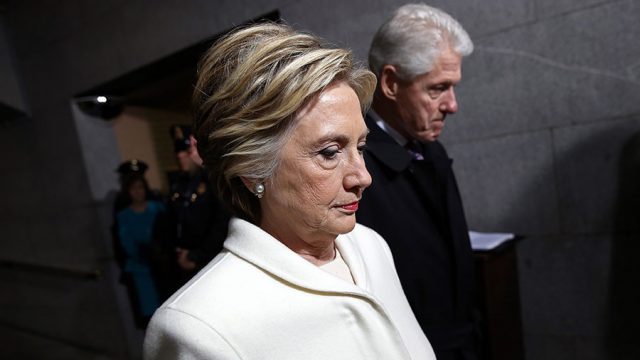
In March 2015, the news broke that Hillary Clinton, while serving as secretary of state, had used her home computer while handling classified government documents. An assortment of experts and politicians accused Clinton of violating State Department protocol.
On July 5, 2016, following an investigation, FBI Director James Comey said Clinton had been “extremely careless” in handling her email correspondences. He added that “no reasonable prosecutor would bring such a case.”
That statement did little to calm the critics, however, as Clinton was haunted by the ghosts of emails past right up to the eve of the elections.
On October 28, 2016, the FBI said it was reopening its investigation into Clinton’s private email server after messages were discovered on the computer of top aide Huma Abedin’s husband, Anthony Weiner, who was then embroiled in a sexting scandal. Comey announced just before the elections that nothing had changed in the Clinton case, which had been closed four months earlier without criminal charges.
However, the email saga refuses to go away as the DOJ once again reopened its investigation into Clinton’s email server in January.
To this day, Hillary Clinton has been able to divert attention away from the very serious charge of handling classified government emails over her private server thanks to a giant smokescreen known as Russia, the bogeyman that conveniently explains every transgression and setback by the Democratic Party.
Operation Sink Sanders
In July 2016, the DNC suffered a broadside after WikiLeaks released a batch of emails purporting to show that Debbie Wasserman Schultz, the chairwoman of the body, was actively conspiring against the campaign of Senator Bernie Sanders. Naturally, this news had a way of upsetting those donors who contributed funds to the Sanders campaign. Wasserman Schultz resigned in disgrace following the revelations.
Despite there being a deliberate effort to undermine the Sanders campaign, that disturbing news was sidelined by the conspiracy theory that a Russian army of apparatchiks hacked the DNC computers, turning over the information to Julian Assange. To this day, no evidence has been provided to support that claim.
Meanwhile, Wasserman Schultz was eventually cleared of rigging the Democratic primary in favor of Hillary Clinton, while Russia continues to suffer from mainstream media mudslinging.
Clinton cheated in debates
One of the most shocking revelations to come from the leaked/hacked DNC emails was the claim that Donna Brazile, interim chairperson of the DNC who once worked at CNN, used her inside connections to feed Hillary Clinton the questions to several of her public debates against Donald Trump.
Following the DNC debacle, Brazile hoped to cash in on the scandal by publishing a tell-all book entitled, ‘Hacks: The Inside Story of the Break-ins and Breakdowns that Put Donald Trump in the White House.’
In one particularly candid part, Brazile said she was secretly concerned about Clinton’s health as Election Day drew closer. This comment did not sit well with Brazile’s former colleagues. Clinton’s staffers published an open letter in response to the book, saying, “It is particularly troubling and puzzling that she would seemingly buy into false Russian-fueled propaganda, spread by both the Russians and our opponent, about our candidate’s health.”
Once again, Russia was used and abused as the convenient 11-time-zone Band-Aid that can cover any political wound, whatever the size. What is the most surprising about this tactic is that anybody still falls for it.
Regime change
Given Hillary Clinton’s past track record for advocating on behalf of military adventures, most memorably in Iraq and Libya, the tall tale of Trump-Russia collusion appears to have been a desperate effort on the part of the establishment to get their candidate into office and the military industrial complex into another war.
According to the Center for Public Integrity’s review of Federal Election Commission data, over a 14-month period (January 2015 through February 2016), Clinton and Sanders jointly received at least $765,049 from employees of major defense contractors – more than twice the $357,775 sum received by the Republican Party presidential candidates.
To prove the liberal media’s (and by extension, the establishment’s) apparent desire for military conflict, consider how it lavished praise on Trump after he attacked Syria’s Shayrat Airbase on April 7, 2017, America’s first unilateral military act aimed at the Syrian government forces (not the terrorists).
CNN analyst Fareed Zakaria waxed poetically, “I think Donald Trump became president of the United States,” he said dreamily. “I think this was actually a big moment.” On MSNBC, Nicholas Kristof, a regular Trump critic, said the Republican leader “did the right thing.” Elliott Abrams could barely contain his newfound enthusiasm for Trump: “… the Trump administration can truly be said to have started only now. The president has been chief executive since January 20, but this week he acted also as Commander in Chief. And more: He finally accepted the role of Leader of the Free World.”
Judging by such comments, had Trump continued bombing Syria, and thereby pacifying the hawks in Washington, there is a very good chance that Russiagate would have been quietly swept under the media’s carpet.
Impeach Trump
It would be difficult to name another US president who has suffered the slings and arrows of media scorn more than Donald J. Trump. And he’s only been in office for just over one year. Indeed, no sooner had his Inauguration finished there were already calls for him to be impeached. In fact, the subject has become so popular among the Democrats that there is even a special Wikipedia page dedicated to the relentless campaign.
Although the clamor to impeach the Republican leader has subsided of late, when the idea does raise its head, the empty claim that Russia influenced the elections ranks high among the reasons.
Clinton Foundation ‘pay to play’
Another reason why the Democrats would need to push the anti-Russia narrative is to protect the Clinton family from allegations that they personally profited from donations to the Clinton Foundation.
In January 2017, it was reported that the FBI opened an investigation into whether the Clinton Foundation accepted donations in exchange for political favors while Hillary Clinton served as secretary of state in the Obama administration, the Los Angeles Time reported, citing two anonymous sources.
“Critics have accused the Clinton family of using the foundation to enrich themselves and give donors special access to the State Department when Hillary Clinton was its head,” the article said.
The LA Times said that the Democrats have rejected the claims, saying that “Trump is trying to steer attention away from investigations examining…Russian attempts to influence the 2016 election.”
Nunes Memo, Part 2
If anybody thought the Trump administration would just release the Nunes memo and drop it, think again. In fact, Trump’s legal team backs the idea of a second special counsel to investigate the FBI and Justice Department
White House Deputy Press Secretary Raj Shah told reporters on Air Force One Monday that Trump’s attorneys have given the green light to starting the process of appointing a second special counsel to investigate the FBI and Justice Department’s behavior during the 2016 presidential campaign, according to a report by Axios.
In other words, expect a lot more anti-Russia outbursts from the Democrats in the days and weeks to come.
Read more:
Iran strongly rejects claims of delivery of missiles to Yemen
Press TV – February 20, 2018
Iran has once again rejected the allegations about the Islamic Republic’s provision of missiles to Yemeni forces, saying such claims are lies and a foolish scenario.
“Iran’s missile program is for defensive and deterrent [purposes] and claims about the dispatch of missiles to Yemen despite the all-out blockade on this country are lies and a foolish scenario designed to exonerate the aggressors,” Iranian Foreign Ministry Spokesman Bahram Qassemi said on Tuesday.
He added that Britain and France have expressed their concern over Iran’s defensive missile program without providing any reason or wise justification.
A group of so-called independent United Nations experts monitoring the sanctions on Yemen reported to the Security Council in January that it had “identified missile remnants, related military equipment and military unmanned aerial vehicles that are of Iranian origin and were brought into Yemen after the imposition of the targeted arms embargo.”
British Foreign Secretary Boris Johnson in a statement on Monday called on Iran to stop taking actions which could lead to further escalation of the Yemeni conflict.
“I call on Iran to cease activity which risks escalating the conflict and to support a political solution to the conflict in Yemen,” Johnson said.
His remarks came on the same day that the French foreign ministry also said in a statement that Paris was concerned about Iran’s ballistic missiles program and its activities in the region, mentioning its support for the Houthis in Yemen.
In reaction to the allegations, Qassemi said the Islamic Republic has designed its defensive missile program based on its military doctrine and valuable experience it obtained during the eight-year war imposed on it by Iraq backed by major global powers in the 1980s.
He added that Iran’s missile program aims to deter any aggression by extremist powers against the country.
“In this clear path that is completely in conformity with international principles, we will never accept other countries’ intervention and regard as irresponsible and suspicious the adoption of such unprincipled stance and strongly reject them,” Qassemi said.
He emphasized that the Yemeni army and people have no need for foreign countries’ weapons, saying the Yemenis’ defense of their country’s dignity with minimum facilities has led to the defeat of aggressors.
The chief commander of Iran’s Islamic Revolution Guards Corps (IRGC) in January dismissed the allegations leveled by the US and its allies about the Islamic Republic’s provision of missiles to Yemeni forces.
“Missiles fired at Saudi Arabia belong to Yemen which have been overhauled and their range have been increased,” Major General Mohammad Ali Jafari said.
Iran’s Parliament Speaker Ali Larijani also said in December that the Islamic Republic is not providing military assistance to Yemen and all claims to this effect are false.
“We are not a country that would deny providing military assistance to anybody,” Larijani said.
Qassemi further called for an immediate end to the sale of European and US arms to Saudi Arabia and other aggressors and warmongers who are killing innocent Yemeni people on a daily basis.
A Saudi Arabian-led coalition launched a war against Yemen in 2015 and has ever since been indiscriminately hitting targets in the country. Yemeni Houthi fighters have been firing missiles in retaliatory attacks against Saudi targets every now and then.
The US State Department in January approved a possible $500-million sale of missile system support services to Saudi Arabia in defiance of global calls for Washington to stop providing Riyadh with military support due to the regime’s war crimes in Yemen.
The potential sale follows a request by Saudi Arabia for continued technical assistance for Patriot Legacy Field Surveillance Program (FSP), the Patriot Advanced Capability 3 (PAC-3) and the Patriot Engineering Services Program (ESP).
During his first trip to Saudi Arabia last year, US President Donald Trump signed a $110 billion arms deal with the Saudis, with options to sell up to $350 billion over a decade.
Iranian Foreign Minister Mohammad Javad Zarif said in December the United States is complicit in Saudi war crimes in Yemen amid Washington’s baseless claim that Tehran is providing supply of ballistic missiles to Yemen’s Houthi Ansarullah movement.
“No amount of alternative facts or alternative evidence covers up US complicity in war crimes,” Zarif said in a post on his official Twitter account.
He added that the US has sold weapons to its allies enabling them to “kill civilians and impose famine,” in reference to Washington’s arms deal with Riyadh in its aggression against Yemen.
Featured Video
Nima R. Alkhorshid: US military bombs multiple targets on Iran’s Qeshm Island
or go to
Aletho News Archives – Video-Images
From the Archives
British Intel Tried to Make N Irish Gang ‘Shoot Up’ School, Documentary Claims
Sputnik – 23.02.2019
A new documentary, based on an interview with a self-confessed member of the Glennane Gang, gives some insights into allegations that British military intelligence was behind a shocking murder plot to cause the situation in Northern Ireland to “spiral out of control”.
In a documentary, Unquiet Graves: The Story of the Glennane Gang, John Weir, a former officer from the Royal Ulster Constabulary (RUC), alleges that British intelligence tried to persuade paramilitary group Ulster Volunteer Force (UVF) to attack a Catholic primary school at Belleeks in County Armagh.
Weir claimed that the UVF was urged to kill children and teachers in retaliation for the 1976 Kingsmill massacre, in which gunmen stopped a minibus carrying twelve workmen and shot them; only one person survived despite having been shot 18 times.
“The plan that was decided on was to shoot up a school in Belleeks”, he said, adding that the British intelligence plot was to make the situation in Northern Ireland “spiral out of control”. … continue
Blog Roll
 Aletho News
- Nearly 80% of Britons consider Israel a threat to world peace and security: Survey
- Rhode Island Staffer Could Be Reinstated After Firing Over Ceasefire Post
- Will Republicans Learn Their Lesson from the ‘Disastrous’ Midterms?
- Wrong, Newswise, Irresponsible Climate Messaging, Not Climate Change Itself, Is Fueling Student Anxiety
- Zelensky’s Critics Vanish Into Ukrainian Secret Prisons – Source
- Nima R. Alkhorshid: U.S. Military Bombs Multiple Targets on Iran’s Qeshm Island
- Iran-Linked Ships Spotted Hovering over Subsea Cables: Report
- New attack on Iran could devastate ‘Israel’, IOF general warns
- Nuclear deterrence: The US-Israeli military aggression against Iran made the unthinkable legitimate
- U.S. Midterms – a Referendum on Israel and Zionist Power
- If Americans Knew
- The vindication of Marjorie Taylor Greene
- Stephen Miller: What Trump’s new chief of staff means for MENA
- Winter Rains Drown Displacement Tents in Devastated Gaza
- In Jericho, Israeli Settlers Violently Seize and Occupy Palestinian Homes
- Covering Palestine: Historic news clippings reveal US media complicity in Israel’s crimes
- DAILY UPDATE: Latest essential news on Palestine, Israel, & region
- Study says Christians’ share of occupied Jerusalem fell from 25% to 1.56% over century
- Americans voted against Israel-First; Schumer, Jeffries, establishment will try to continue it
- DAILY UPDATE: Latest essential news on Palestine, Israel, & region
- DAILY UPDATE: Latest essential news on Palestine, Israel, & region
- No Tricks Zone
- Zonal Asymmetry of Temperature Change in the Antarctic Circumpolar Current
- New Study: The Net Fossil Fuel Contribution To Rising Atmospheric CO2 Has Been Zero For 500 Years
- Germany’s Green Energy Transition Becoming Increasingly Expensive…Another 6 Trillion Euros!
- Sudden Stratospheric Warming, Powerful El Niño Combination May Lead To Extreme Europe Cold, Energy Crisis!
- Two New Studies Find Thwaites Glacier Melt Cannot Be Driven By Human Activity Or A Warming Ocean
- E-Cars Reduce CO2 Emissions By Only 41% Compared To Internal Combustion Engine Vehicles
- Predictions Made By Renowned Climate Professor Over Past Decades Have Been Proven To Be Poor
- New Study Suggests Large Regions Of The Pacific Ocean Have Been Cooling For The Last 80 Years
- Germany’s Green Energy Debacle: High Energy Costs Force Kahla Porzellan to Close After 182 Years!
- New Study: 50 Years Of The Most Aggressive ‘Net Zero’ Policies Can Only Affect The Global Climate By 0.03°C

