David Ignatius’ 15 Years of Running Spin for Saudi Regime
By Adam Johnson | FAIR | April 28, 2017
Last week, in “A Young Prince Is Reimagining Saudi Arabia. Can He Make His Vision Come True?,” Washington Post foreign affairs columnist David Ignatius (4/20/17) wrote what read like a press release for the Saudi regime. What’s more, he’s written the same article several times before. For almost 15 years, Ignatius has been breathlessly updating US readers on the token, meaningless public relations gestures that the Saudi regime—and, by extension, Ignatius—refer to as “reforms.”
Ignatius columns on Saudi Arabia break down roughly into two groups: straight reporting mixed with spin and concern trolling, and outright press releases documenting the dictatorship’s spectacular reforms. First the latter:
- “Home-Grown Saudi Reform” (3/7/03)
- “Saudis Act Aggressively to Denounce Terrorism” (6/13/10)
- “Change and Balance in the Saudi Kingdom” (11/21/11)
- “Women Gain Newfound Stature in Saudi Arabia” (1/18/13)
- “Reshuffling the House of Saud” (2/3/15)
- “A 30-Year-Old Saudi Prince Could Jump-Start the Kingdom — or Drive It Off a Cliff” (6/26/16)
Let’s begin by taking a look at his most recent iteration of this genre (4/20/17), featuring a brave Saudi prince taking on “religious conservatives” (vague reactionaries who are never named or defined) to change his own monarchy:
Two years into his campaign as change agent in this conservative oil kingdom, Deputy Crown Prince Mohammed bin Salman appears to be gaining the confidence and political clout to push his agenda of economic and social reform.
Ignatius begins by doing something a lot of “reformer” boosters do in Saudi Arabia: conflating “economic reform” with social reform. The latter is typically the neoliberal lubricant to get to what really matters, the further privatization and leveraging of Saudi’s immense wealth. Indeed, the only social reforms even mentioned in the glowing report are “a Japanese orchestra that included women” performing to “mixed audience,” and a co-ed Comic Con. Perhaps by 2025 they’ll have mixed-gender D&D tournaments.
Ignatius’ cheerleading columns always rely on vague person-on-the-street sources as a placeholder for the Voice of the People. Take, for example, this framing in “Women Gain Newfound Stature in Saudi Arabia” (1/18/13):
King Abdullah announced January 11 that 30 women would join the kingdom’s Shura Council, a consultative body of 150 persons, and that women henceforth would hold 20 percent of the seats. Skeptics cautioned that it’s a symbolic move, since this is an advisory group that doesn’t actually enact any legislation. But it’s a powerful symbol, according to men and women here.
Which men and women? Was a poll done? It’s unclear. He goes on to interview a Cambridge-educated woman who appears hand-picked by the regime for a glossy profile. She’s from a humble background and was about to drop out of college until the king stepped in and benevolently paid her tuition. A story Ignatius, of course, dutifully repeats without skepticism.
Then there’s the other genre of Saudi coverage we’ll call Checking In On the House of Saud:
- “Can Saudi Arabia Help Combat the Islamic State?” (7/28/14)
- “Saudi Arabia’s Coming Struggle” (1/22/15)
- “Saudi Arabia Stirs the Middle East Pot” (8/21/13)
- “The Son Who Would Be the Saudis’ King?” (9/8/15)
- “A Cyclone Brews over Saudi Arabia” (10/13/15)
- “The Costly Blunders of Saudi Arabia’s Anxiety-Ridden Monarchy” (1/5/16)
These pieces generally consist of down-the-middle updates about the status of Saudi Arabia, with some light criticism around the margins. Saudi Arabia is painted as a fearful, almost childlike place, whose evil deeds are animated by paranoia rather than ambition—bumbling “misfires” and “mistakes” rather than sinister motives.
The one piece whose headline seems to indicate actual criticism of the Saudi regime is anything but. In “The Costly Blunders of Saudi Arabia’s Anxiety-Ridden Monarchy” (1/5/16), our tough-luck Saudis are bumbling around the Middle East under siege:
Saudi Arabia is a frightened monarchy…. Countries that feel vulnerable sometimes do impulsive and counterproductive things, and that has been the case recently with Saudi Arabia.
Counterproductive? Saudi Arabia has been a bad boy and needs a timeout.
Strangely, in 15 years of writing columns about the monarchy, David Ignatius has not himself used the term “human rights,” much less addressed their abuse in a meaningful way. In one of the few columns (1/5/16) in which Ignatius actually levels criticism of the Saudi rulers’ gross human rights abuses, they are stripped of all autonomy, with the beheading of a minority religious figure painted as a response to the Evil Iranians: “The kingdom’s fear of a rising Iran led it to execute a dissident Shiite cleric.”
Ignatius went on to lament the execution in equally middle-management terms, saying it was a “mistake” and an “error.” What it wasn’t: “criminal,” “immoral” or “murder.” Moralizing is reserved for US enemies; US allies are simply under-performing employees in need of guidance and mild chiding.
Saudi Arabia, despite being an oppressive absolute monarchy that arbitrarily detains, tortures, executes and mercilessly bombs civilians, is never given the dreaded “regime” moniker like Assad and Gaddafi and North Korea. Actions are not done by an anthropomorphized state, but a nebulous blob of reluctant bureaucrats. And they are not even actions; they are always good-faith reactions to “Iranian hegemony.”
The Saudis’ ruthless bombing of Yemen, which has claimed over 10,000 civilian lives since March 2015, is almost never mentioned by Ignatius, and the few times it is touched upon it is glossed over as “costly and unsuccessful.” It is bad—not in terms of morals, but in process. It’s “costly” like an ill-advised real-estate investment.
Even more shockingly, Ignatius simply takes the regime’s word that all 47 people—including two minors—subject to its 2016 mass execution were guilty of being “extremists”:
A defensive, anxious Saudi leadership tried to show its resolve with last week’s execution of 47 extremists.
That “defensive, anxious Saudi leadership”—a caged animal always responding to threats and occasionally over-correcting.
In 2015, when King Abdullah died, Ignatius (1/22/15) insisted that the monarch who ruled for ten years over a country that didn’t allow women to drive, swim, own property or travel alone “was seen by many Saudi women as their secret champion.” A pretty well-kept secret, it must have been—aside from allowing women to take part in meaningless local “elections” and meaningless advisory councils, it’s unclear what Ignatius’ evidence is for this, but it’s “seen by many Saudi women,” so that’s good enough.
One Washington Post reader put it best in a letter to the editor (2/4/15):
The Saudis have been talking reform at least since I was a student of Middle East affairs in the 1960s. Yet it still is the epicenter of inequality, human rights violations and gratuitous state-sponsored violence.
The wheels of alleged reform in that country are perpetually spinning but going nowhere. The rulers continue to steal the oil revenue that belongs to the people; civil liberties and personal rights are repressed; beheadings, stonings and whippings for nonviolent offenses continue unabated; and people such as Mr. Ignatius still crow about how the regime is a force for change.
Ignatius, of course, is not alone. He joins a long line of faithful Western pundits who frame the Saudi regime as a reformist entity, earnestly pushing change in a fundamentally reactionary country under perma-threat from Shia forces. The Al Saud mafia is not in league with religious extremists, but a bulwark against them; they are not an illegitimate dictatorship, but an enlightened ruling class helping usher in “reform” in the face of a hyper-religious population.
And throughout it all, they are on a 71,500-year reform plan where they are effusively praised for moving their country toward the 19th century every five years or so. Other regimes that oppress their people and bomb civilians “must go” now, and are beyond the moral pale—mere allegations of being friendly with them, a career-ender. But the Saudi regime, a friendly host to light-touch US pundits, is just a well-meaning scrappy band of reformers this close to turning into Switzerland. All they need is a bit more time.
Messages can be sent to the Washington Post at letters@washpost.com, or via Twitter @washingtonpost. Please remember that respectful communication is the most effective.
Israel and North Korea’s war of words sheds light on western hypocrisy over nukes
By Adam Garrie | The Duran | April 30, 2017
A war of words between North Korea and Israel has done a lot to highlight the hypocrisy of the west when it comes to the proliferation of nuclear weapons and other WMD. Israel’s illegal and unaccounted for nuclear weapons programme is generally ignored by the west, while America appears ready to go to war with North Korea over its nuclear weapons programme, in spite of no consensus over weather Pyongyang has the ability to deliver its nuclear weapons or even how many nuclear weapons the communist state has.
Ultra right-wing Israeli Defence Minister Avigdor Lieberman said that North Korea is “undermining global stability” and that North Korean leader Kim Jong-Un is a “madman” leading a “crazy and radical” regime.
North Korea did not waste time in responding, issuing a statement reading,
“Israel is the only illegal possessor of nukes in the Middle East under the patronage of the US. However, Israel vociferated about the nuclear deterrence of the DPRK (Democratic People’s Republic of Korea/North Korea), slandering it, whenever an opportunity presented itself”.
One needn’t have a positive view of North Korea to understand this statement as an objective truth.
Israel frequently conducts unprovoked attacks on Syria without any retribution from the so-called international community.
North Korea’s statement continued,
“The DPRK’s access to nuclear weapons is the legitimate exercise of its righteous right for self-defence to cope with the US provocative moves for aggression and the DPRK’s nuclear force is the treasured sword of justice firmly defending peace on the Korean peninsula and in the region”.
North Korea went on to accuse Israel of “crimes against humanity” and of being an occupier of Palestinian territory.
North Korea called for a “thousand-fold punishment to whoever dares hurt the dignity of its supreme leadership” and referred to Lieberman as “sordid and wicked”.
While both Israel and North Korea are widely seen as rogue states, only Israel is currently engaged in the occupation and invasion of other countries.
The Existential Question of Who to Trust
By Robert Parry | Consortium News | April 30, 2017
The looming threat of World War III, a potential extermination event for the human species, is made more likely because the world’s public can’t count on supposedly objective experts to ascertain and evaluate facts. Instead, careerism is the order of the day among journalists, intelligence analysts and international monitors – meaning that almost no one who might normally be relied on to tell the truth can be trusted.
The dangerous reality is that this careerism, which often is expressed by a smug certainty about whatever the prevailing groupthink is, pervades not just the political world, where lies seem to be the common currency, but also the worlds of journalism, intelligence and international oversight, including United Nations agencies that are often granted greater credibility because they are perceived as less beholden to specific governments but in reality have become deeply corrupted, too.
In other words, many professionals who are counted on for digging out the facts and speaking truth to power have sold themselves to those same powerful interests in order to keep high-paying jobs and to not get tossed out onto the street. Many of these self-aggrandizing professionals – caught up in the many accouterments of success – don’t even seem to recognize how far they’ve drifted from principled professionalism.
A good example was Saturday night’s spectacle of national journalists preening in their tuxedos and gowns at the White House Correspondents Dinner, sporting First Amendment pins as if they were some brave victims of persecution. They seemed oblivious to how removed they are from Middle America and how unlikely any of them would risk their careers by challenging one of the Establishment’s favored groupthinks. Instead, these national journalists take easy shots at President Trump’s buffoonish behavior and his serial falsehoods — and count themselves as endangered heroes for the effort.
Foils for Trump
Ironically, though, these pompous journalists gave Trump what was arguably his best moment in his first 100 days by serving as foils for the President as he traveled to Harrisburg, Pennsylvania, on Saturday and basked in the adulation of blue-collar Americans who view the mainstream media as just one more appendage of a corrupt ruling elite.
Breaking with tradition by snubbing the annual press gala, Trump delighted the Harrisburg crowd by saying: “A large group of Hollywood celebrities and Washington media are consoling each other in a hotel ballroom” and adding: “I could not possibly be more thrilled than to be more than 100 miles away from [the] Washington swamp … with much, much better people.” The crowd booed references to the elites and cheered Trump’s choice to be with the common folk.
Trump’s rejection of the dinner and his frequent criticism of the mainstream media brought a defensive response from Jeff Mason, president of the White House Correspondents’ Association, who complained: “We are not fake news. We are not failing news organizations. And we are not the enemy of the American people.” That brought the black-tie-and-gown gathering to its feet in a standing ovation.
Perhaps the assembled media elite had forgotten that it was the mainstream U.S. media – particularly The Washington Post and The New York Times – that popularized the phrase “fake news” and directed it blunderbuss-style not only at the few Web sites that intentionally invent stories to increase their clicks but at independent-minded journalism outlets that have dared question the elite’s groupthinks on issues of war, peace and globalization.
The Black List
Professional journalistic skepticism toward official claims by the U.S. government — what you should expect from reporters — became conflated with “fake news.” The Post even gave front-page attention to an anonymous group called PropOrNot that published a black list of 200 Internet sites, including Consortiumnews.com and other independent-minded journalism sites, to be shunned.

Secretary of State Colin Powell, Feb. 5, 2003
But the mainstream media stars didn’t like it when Trump began throwing the “fake news” slur back at them. Thus, the First Amendment lapel pins and the standing ovation for Jeff Mason’s repudiation of the “fake news” label.
Yet, as the glitzy White House Correspondents Dinner demonstrated, mainstream journalists get the goodies of prestige and money while the real truth-tellers are almost always outspent, outgunned and cast out of the mainstream. Indeed, this dwindling band of honest people who are both knowledgeable and in position to expose unpleasant truths is often under mainstream attack, sometimes for unrelated personal failings and other times just for rubbing the powers-that-be the wrong way.
Perhaps, the clearest case study of this up-is-down rewards-and-punishments reality was the Iraq War’s WMD rationale. Nearly across the board, the American political/media system – from U.S. intelligence analysts to the deliberative body of the U.S. Senate to the major U.S. news organizations – failed to ascertain the truth and indeed actively helped disseminate the falsehoods about Iraq hiding WMDs and even suggested nuclear weapons development. (Arguably, the “most trusted” U.S. government official at the time, Secretary of State Colin Powell, played a key role in selling the false allegations as “truth.”)
Not only did the supposed American “gold standard” for assessing information – the U.S. political, media and intelligence structure – fail miserably in the face of fraudulent claims often from self-interested Iraqi opposition figures and their neoconservative American backers, but there was minimal accountability afterwards for the “professionals” who failed to protect the public from lies and deceptions.
Profiting from Failure
Indeed, many of the main culprits remain “respected” members of the journalistic establishment. For instance, The New York Times’ Pentagon correspondent Michael R. Gordon, who was the lead writer on the infamous “aluminum tubes for nuclear centrifuges” story which got the ball rolling for the Bush administration’s rollout of its invade-Iraq advertising campaign in September 2002, still covers national security for the Times – and still serves as a conveyor belt for U.S. government propaganda.
The Washington Post’s editorial page editor Fred Hiatt, who repeatedly informed the Post’s readers that Iraq’s secret possession of WMD was a “flat-fact,” is still the Post’s editorial page editor, one of the most influential positions in American journalism.
Hiatt’s editorial page led a years-long assault on the character of former U.S. Ambassador Joseph Wilson for the offense of debunking one of President George W. Bush’s claims about Iraq seeking yellowcake uranium from Niger. Wilson had alerted the CIA to the bogus claim before the invasion of Iraq and went public with the news afterwards, but the Post treated Wilson as the real culprit, dismissing him as “a blowhard” and trivializing the Bush administration’s destruction of his wife’s CIA career by outing her (Valerie Plame) in order to discredit Wilson’s Niger investigation.
At the end of the Post’s savaging of Wilson’s reputation and in the wake of the newspaper’s accessory role in destroying Plame’s career, Wilson and Plame decamped from Washington to New Mexico. Meanwhile, Hiatt never suffered a whit – and remains a “respected” Washington media figure to this day.
Careerist Lesson
The lesson that any careerist would draw from the Iraq case is that there is almost no downside risk in running with the pack on a national security issue. Even if you’re horrifically wrong — even if you contribute to the deaths of some 4,500 U.S. soldiers and hundreds of thousands of Iraqis — your paycheck is almost surely safe.
The same holds true if you work for an international agency that is responsible for monitoring issues like chemical weapons. Again, the Iraq example offers a good case study. In April 2002, as President Bush was clearing away the few obstacles to his Iraq invasion plans, Jose Mauricio Bustani, the head of the Organization for the Prohibition of Chemical Weapons [OPCW], sought to persuade Iraq to join the Chemical Weapons Convention so inspectors could verify Iraq’s claims that it had destroyed its stockpiles.
The Bush administration called that idea an “ill-considered initiative” – after all, it could have stripped away the preferred propaganda rationale for the invasion if the OPCW verified that Iraq had destroyed its chemical weapons. So, Bush’s Undersecretary of State for Arms Control John Bolton, a neocon advocate for the invasion Iraq, pushed to have Bustani deposed. The Bush administration threatened to withhold dues to the OPCW if Bustani, a Brazilian diplomat, remained.
It now appears obvious that Bush and Bolton viewed Bustani’s real offense as interfering with their invasion scheme, but Bustani was ultimately taken down over accusations of mismanagement, although he was only a year into a new five-year term after having been reelected unanimously. The OPCW member states chose to sacrifice Bustani to save the organization from the loss of U.S. funds, but – in so doing – they compromised its integrity, making it just another agency that would bend to big-power pressure.
“By dismissing me,” Bustani said, “an international precedent will have been established whereby any duly elected head of any international organization would at any point during his or her tenure remain vulnerable to the whims of one or a few major contributors.” He added that if the United States succeeded in removing him, “genuine multilateralism” would succumb to “unilateralism in a multilateral disguise.”
The Iran Nuclear Scam
Something similar happened regarding the International Atomic Energy Agency in 2009 when Secretary of State Hillary Clinton and the neocons were lusting for another confrontation with Iran over its alleged plans to build a nuclear bomb.
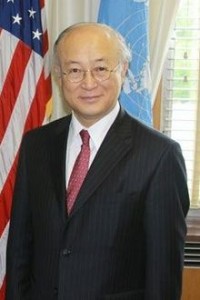
IAEA director Yukiya Amano
According to U.S. embassy cables from Vienna, Austria, the site of IAEA’s headquarters, American diplomats in 2009 were cheering the prospect that Japanese diplomat Yukiya Amano would advance U.S. interests in ways that outgoing IAEA Director General Mohamed ElBaradei wouldn’t; Amano credited his election to U.S. government support; Amano signaled he would side with the United States in its confrontation with Iran; and he stuck out his hand for more U.S. money.
In a July 9, 2009, cable, American chargé Geoffrey Pyatt said Amano was thankful for U.S. support of his election. “Amano attributed his election to support from the U.S., Australia and France, and cited U.S. intervention with Argentina as particularly decisive,” the cable said.
The appreciative Amano informed Pyatt that as IAEA director-general, he would take a different “approach on Iran from that of ElBaradei” and he “saw his primary role as implementing safeguards and UNSC [United Nations Security Council] Board resolutions,” i.e. U.S.-driven sanctions and demands against Iran.
Amano also discussed how to restructure the senior ranks of the IAEA, including elimination of one top official and the retention of another. “We wholly agree with Amano’s assessment of these two advisors and see these decisions as positive first signs,” Pyatt commented.
In return, Pyatt made clear that Amano could expect strong U.S. financial assistance, stating that “the United States would do everything possible to support his successful tenure as Director General and, to that end, anticipated that continued U.S. voluntary contributions to the IAEA would be forthcoming. Amano offered that a ‘reasonable increase’ in the regular budget would be helpful.”
What Pyatt made clear in his cable was that one IAEA official who was not onboard with U.S. demands had been fired while another who was onboard kept his job.
Pandering to Israel
Pyatt learned, too, that Amano had consulted with Israeli Ambassador Israel Michaeli “immediately after his appointment” and that Michaeli “was fully confident of the priority Amano accords verification issues.” Michaeli added that he discounted some of Amano’s public remarks about there being “no evidence of Iran pursuing a nuclear weapons capability” as just words that Amano felt he had to say “to persuade those who did not support him about his ‘impartiality.’”
In private, Amano agreed to “consultations” with the head of the Israeli Atomic Energy Commission, Pyatt reported. (It is ironic indeed that Amano would have secret contacts with Israeli officials about Iran’s alleged nuclear weapons program, which never yielded a single bomb, when Israel possesses a large and undeclared nuclear arsenal.)
In a subsequent cable dated Oct. 16, 2009, the U.S. mission in Vienna said Amano “took pains to emphasize his support for U.S. strategic objectives for the Agency. Amano reminded ambassador [Glyn Davies] on several occasions that he was solidly in the U.S. court on every key strategic decision, from high-level personnel appointments to the handling of Iran’s alleged nuclear weapons program.
“More candidly, Amano noted the importance of maintaining a certain ‘constructive ambiguity’ about his plans, at least until he took over for DG ElBaradei in December” 2009.
In other words, Amano was a bureaucrat eager to bend in directions favored by the United States and Israel regarding Iran’s nuclear program. Amano’s behavior surely contrasted with how the more independent-minded ElBaradei resisted some of Bush’s key claims about Iraq’s supposed nuclear weapons program, correctly denouncing some documents as forgeries.
The world public got its insight into the Amano scam only because the U.S. embassy cables were among those given to WikiLeaks by Pvt. Bradley (now Chelsea) Manning, for which Manning received a 35-year prison sentence (which was finally commuted by President Obama before leaving office, with Manning now scheduled to be released in May – having served nearly seven years in prison).
It also is significant that Geoffrey Pyatt was rewarded for his work lining up the IAEA behind the anti-Iranian propaganda campaign by being made U.S. ambassador to Ukraine where he helped engineer the Feb. 22, 2014 coup that overthrew elected President Viktor Yanukovych. Pyatt was on the infamous “fuck the E.U.” call with Assistant Secretary of State for European Affairs Victoria Nuland weeks before the coup as Nuland handpicked Ukraine’s new leaders and Pyatt pondered how “to midwife this thing.”
Rewards and Punishments
The existing rewards-and-punishments system, which punishes truth-tellers and rewards those who deceive the public, has left behind a thoroughly corrupted information structure in the United States and in the West, in general.
Across the mainstream of politics and media, there are no longer the checks and balances that have protected democracy for generations. Those safeguards have been washed away by the flood of careerism.
The situation is made even more dangerous because there also exists a rapidly expanding cadre of skilled propagandists and psychological operations practitioners, sometimes operating under the umbrella of “strategic communications.” Under trendy theories of “smart power,” information has become simply another weapon in the geopolitical arsenal, with “strategic communications” sometimes praised as the preferable option to “hard power,” i.e. military force.
The thinking goes that if the United States can overthrow a troublesome government by exploiting media/propaganda assets, deploying trained activists and spreading selective stories about “corruption” or other misconduct, isn’t that better than sending in the Marines?
While that argument has the superficial appeal of humanitarianism – i.e., the avoidance of armed conflict – it ignores the corrosiveness of lies and smears, hollowing out the foundations of democracy, a structure that rests ultimately on an informed electorate. Plus, the clever use of propaganda to oust disfavored governments often leads to violence and war, as we have seen in targeted countries, such as Iraq, Syria and Ukraine.
Wider War
Regional conflicts also carry the risk of wider war, a danger compounded by the fact that the American public is fed a steady diet of dubious narratives designed to rile up the population and to give politicians an incentive to “do something.” Since these American narratives often deviate far from a reality that is well known to the people in the targeted countries, the contrasting storylines make the finding of common ground almost impossible.
If, for instance, you buy into the Western narrative that Syrian President Bashar al-Assad gleefully gases “beautiful babies,” you would tend to support the “regime change” plans of the neoconservatives and liberal interventionists. If, however, you reject that mainstream narrative – and believe that Al Qaeda and friendly regional powers may be staging chemical attacks to bring the U.S. military in on their “regime change” project – you might favor a political settlement that leaves Assad’s fate to the later judgment of the Syrian people.
Similarly, if you accept the West’s storyline about Russia invading Ukraine and subjugating the people of Crimea by force – while also shooting down Malaysia Airlines Flight 17 for no particular reason – you might support aggressive countermoves against “Russian aggression,” even if that means risking nuclear war.
If, on the other hand, you know about the Nuland-Pyatt scheme for ousting Ukraine’s elected president in 2014 and realize that much of the other anti-Russian narrative is propaganda or disinformation – and that MH-17 might well have been shot down by some element of Ukrainian government forces and then blamed on the Russians [see here and here] – you might look for ways to avoid a new and dangerous Cold War.
Who to Trust?
But the question is: who to trust? And this is no longer some rhetorical or philosophical point about whether one can ever know the complete truth. It is now a very practical question of life or death, not just for us as individuals but as a species and as a planet.
The existential issue before us is whether – blinded by propaganda and disinformation – we will stumble into a nuclear conflict between superpowers that could exterminate all life on earth or perhaps leave behind a radiated hulk of a planet suitable only for cockroaches and other hardy life forms.
You might think that with the stakes so high, the people in positions to head off such a catastrophe would behave more responsibly and professionally. But then there are events like Saturday night’s White House Correspondents Dinner with self-important media stars puffing about with their First Amendment pins. And there’s President Trump’s realization that by launching missiles and talking tough he can buy himself some political space from the Establishment (even as he sells out average Americans and kills some innocent foreigners). Those realities show that seriousness is the farthest thing from the minds of Washington’s insiders.
It’s just too much fun – and too profitable in the short-term – to keep playing the game and hauling in the goodies. If and when the mushroom clouds appear, these careerists can turn to the cameras and blame someone else.
Investigative reporter Robert Parry broke many of the Iran-Contra stories for The Associated Press and Newsweek in the 1980s.
US Feds Won’t Reveal Reason For Throwing Journalist in Jail

© Photo: facebook.com/freebarrettbrown
By Grant Ferowich | Sputnik | April 29, 2017
One day after the arrest of intelligence reporter Barrett Brown for criticizing the US government, a government agency refused to state the reason for his detention.
Brown gained notoriety as a symbol for the attack on press freedom after he reported on a slew of leaks connected with hacker group Anonymous. In particular, Brown covered emails that showed Stratfor had been contracted out by private companies on the recommendation of the Justice Department to spy on activists connected with the Occupy Wall Street movement.
“We can not disclose the reason(s) for a specific inmate’s transfer of location,” the Bureau of Prisons said in a statement released Friday.
“Therein lies the cute terminology of the BOP,” Jay Leiderman, legal counsel to Barrett Brown, told Sputnik News Friday night. In the eyes of the BOP, Brown is an inmate, but technically, he’s half an inmate, Leiderman said.
“For privacy and security reasons,” the BOP went on, “we do not disclose information on a specific inmate’s living quarters.” However, Brown had been living outside a prison, and detaining a US citizen without due process is supposed to be prevented by rights enumerated in both the Fifth and Fourteenth Amendments, Leiderman confirmed to Sputnik.
On April 27, Brown attended a routine meeting with his case manager. From there, the award-winning journalist was taken into federal custody at the Seagoville Federal Correctional Institution in Texas. The reason? He spoke with media outlets without the government’s approval.
Never mind that the First Amendment of the Bill of Rights states Congress “shall make no law … abridging the freedom of speech, or of the press.”
According to Leiderman, there is a limit to how long authorities can hold Brown. But the prospect of indefinite detainment, unfortunately, cannot be entirely ruled out. It’s not outside the realm of BOP’s practice, the attorney suggested, for a prison guard to poke himself on the arm and claim an inmate had done it, which could land another five year sentence for the unlucky prisoner. While the lawyer did not seem to think this would be likely, the mere specter of it raises questions about the extent of the federal government’s powerful reach.
Leiderman called it the Barrett Brown Rule: The BOP can deploy sneaky policy tactics to effectively silence and imprison someone they personally don’t like. This has happened in a handful of previous cases, Leiderman said, but now we could be watching another major government overreach unfold before our collective eyes.
Brown’s first exclusive interview following his release from jail was on Radio Sputnik’s By Any Means Necessary with Eugene Puryear. The writer has since interviewed with Vice News and was scheduled for a Friday interview with PBS before he was once again detained.
It was only during the past three days that the BOP claimed Brown needed permission to conduct interviews. This information came “out of the blue,” Brown’s legal counsel, Jay Leiderman, told Sputnik News on Thursday. Brown asked the BOP for the policy manual stating this requirement, but was rebuffed.
“There was never any mention of these rules during the past four months of his federally approved employment at D Magazine when he was working with media and involved in a range of interviews,” Brown’s mother said in a statement.
Free Barrett Brown website operator Kevin Gallagher told Reason that the conditions of Brown’s release never mentioned media restrictions. Brown is known for “being critical of the Bureau of Prisons in many different ways,” Gallagher said.
“I would call the people who did this a bunch of chicken-sh*t a**holes that are brutalizing the Constitution, Leiderman told the Intercept when Brown was taken into custody once more.
See also:
Trump proclaims ‘Loyalty Day,’ gets mocked over 60yo tradition
RT | April 29, 2017
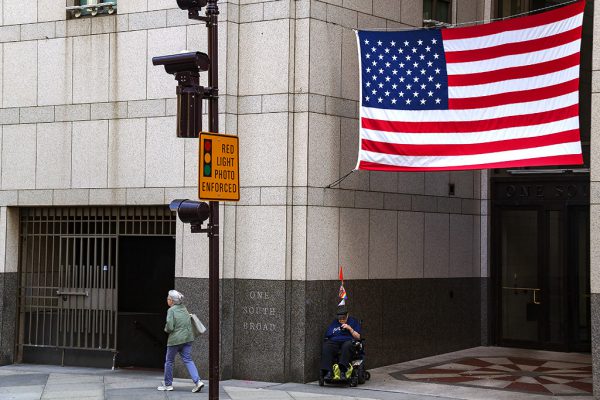
Internet denizens are splitting their sides at the thought of US President Donald Trump proclaiming May 1 “Loyalty Day.” However, the seemingly wacky nationalist day has little to do with the divisive Republican and was officially cooked up in the 1950s.
In a statement released by the White House, Trump proclaimed May 1, 2017 “Loyalty Day,” urging people to reaffirm their dedication to the United States of America.
“The loyalty of our citizenry sends a clear signal to our allies and enemies that the United States will never yield from our way of life.
“Through the Department of Defense and other national security agencies, we are working to destroy ISIS, and to secure for all Americans the liberty terrorists seek to extinguish,” the proclamation states.
“We humbly thank our brave service members and veterans who have worn our nation’s uniform… Their unwavering loyalty and fidelity has made the world a safer, more free, and more just place.”
The notion of a “Loyalty Day” was met with derision and hoots of laughter online. This is “the creepiest thing” Trump has done, wrote one commenter.
Others compared the day to an event that might happen in North Korea or Russia.
But Trump proclaiming “Loyalty Day” does not mean he invented it. It has been around for decades. In fact, “Loyalty Day” was a thing under President Obama, who kept his proclamation free from military and terrorism references in 2016.
It’s also been proclaimed by pretty much every commander-in-chief, including President Richard Nixon, since it was officially recognised by Congress in 1955.
“Loyalty Day is a special day for the reaffirmation of loyalty to the United States and for the recognition of the heritage of American freedom,” according to the federal statute on the celebration.
“The president is requested to issue a proclamation calling on United States Government officials to display the flag of the United States on all government buildings on Loyalty Day and inviting the people of the United States to observes Loyalty Day with appropriate ceremonies in schools and other suitable places.”
So basically the US government has been asking for citizens’ unwavering, rootin’-tootin’ support for decades – and not just under Trump.
South Korea Presidential Frontrunner Pledges to Review Divisive THAAD Deployment
Sputnik | April 29, 2017
Moon Jae-in, the leading candidate in the upcoming presidential election in South Korea, is determined to reassess the controversial deployment of the US-built Terminal High Altitude Area Defense (THAAD) anti-ballistic missile system since it “did not follow a democratic procedure,” his press team said in a statement seen by Sputnik Korea.
“The THAAD deployment is an issue that must be decided by the next administration based on close discussions with the US and a national consensus, and approached with the best national interest in mind. Since this is an issue of great impact to our national security and comes with great economic costs, it must be ratified by the National Assembly as per the Constitution,” Yoon Kwan-suk, a spokesman for Moon Jae-in said.
The press office also commented on United States President Donald Trump’s suggestion that Seoul should pay for the deployment of a system worth $1 billion.
“The Liberty Korea Party, Bareun Party and the Ministry of National Defense have until now argued that the US will bear the cost of the THAAD operation,” the press office said. “If the reports are true, it is now clear that the decision to deploy the THAAD had a major flaw to begin with.”
The statement urged senior politicians in the former ruling party, as well as high-ranking defense officials, to disclose the details of the deal between Washington and Seoul on THAAD.
On Wednesday, the South Korean Defense Ministry said that components of the THAAD system have been deployed to their intended destination in the North Gyeongsang province. Washington has said that the move comes in response to North Korea’s muscle-flexing, but Jeong Uk-sik, the president of the Peace Network NGO, told Sputnik that THAAD will also be targeted against China.
“Undoubtedly, [Washington] has indicated that the US missile defense system must be alert not only to North Korea, but also China,” he said, citing the testimony made by Admiral Harry Harris, commander of US Pacific Command, during a hearing at the House Armed Services Committee.
“Harris’s report clearly shows that US Pacific Command has fostered closer ties with Japan, South Korea and Australia to create a comprehensive missile defense system based on THAAD and the radar deployed to South Korea is one of its links,” the analyst added. “As a result, THAAD and the radar are targeted not only against North Korea, but also China since they are links of a single US missile defense system.”China has been opposed to the THAAD deployment, saying that the move “seriously undermines” strategic security of Beijing and other countries in the region.
US Marines sent to Afghanistan’s Helmand province
Press TV – April 29, 2017
US Marines have returned to Afghanistan’s southern Helmand province, the first to be deployed in the war-torn country since the North Atlantic Treaty Organization (NATO) ended its combat mission in 2014.
US General John Nicholson, the commander of American and NATO forces in Afghanistan, attended a ceremony on Saturday marking the return of the Marines to Helmand, where US forces faced intense fighting until 2014.
About 300 Marines will form part of the so-called Operation Resolute Support, described by NATO as a train, advise, and assist mission consisting of over 13,000 troops.
The Marines were among the first US forces sent to Afghanistan after the September 11, 2001 terror attacks in the US. Several thousand were deployed in Helmand, only for it to slip deeper into a quagmire of instability.
The deployment came one day after the Taliban militant group announced the start of its “spring offensive,” a heightened campaign of bombings, ambush attacks, and other raids that begin as weather conditions improve.
The new deployment is the latest sign of how the NATO military alliance is increasingly being drawn back into fighting in Afghanistan.
The Marines will largely operate from a sprawling installation known during earlier Marine operations as Camp Leatherneck, but will be based in other locations and could engage in combat.
The US has around 8,400 troops in the country with about another 5,000 from NATO allies.
The Pentagon said Wednesday that two US troops were killed in Afghanistan’s Nangarhar province during a military operation against the Daesh (ISIL) terrorist group.
In total, 2,217 American soldiers have died in the country since the invasion in 2001 and another 20,000 have been wounded, according to the Pentagon.
On Monday, US Defense Secretary James Mattis visited Afghanistan as President Donald Trump’s administration looks to craft a new policy in the country.
The change of policy was put on display earlier this month, when Gen. Nicholson ordered a Massive Ordnance Air Blast (MOAB) bomb—also known as the Mother of All Bombs— to be dropped on a purported Daesh target in the eastern province of Nangarhar.
Afghanistan is still suffering from insecurity and violence years after the United States and its allies invaded the country as part of Washington’s so-called war on terror. The 2001 military invasion removed the Taliban from power, but their militancy continues to this day.
More NYT ‘Spin’ on the Syria-Sarin Case
By Robert Parry | Consortium News | April 28, 2017
In blaming Syrian President Bashar al-Assad for the April 4 chemical incident in Khan Sheikhoun, The New York Times and other Western news outlets have made a big deal out of discrepancies in the timing and other details provided by the Syrian and Russian governments.

Crater containing alleged canister in Khan Sheikdoun
The Times and the others also have chided anyone who notes that Assad had no logical reason to undertake a sarin attack since his forces were making solid gains and he had just learned that the Trump administration was dropping the longstanding U.S. goal of “regime change” in Syria.
To those of us outside the mainstream media bubble, there seemed to be little or no military advantage to be gained. Instead, Assad would be risking more international intervention, which has ripped his country apart for the past six years. But the Times and other major outlets dismissed our logic by arguing that Assad was simply announcing his impunity in some particularly brutal Arab-sort-of-way.
However, neither the value that the Times and others placed on the Russian-Syrian timing discrepancies nor the strange explanation of Assad’s motive made any sense. After all, if Assad were making some bizarre public declaration of his impunity, why would he then deny that his forces were responsible? Wouldn’t he simply say, “yes, I did it and I don’t care what anyone thinks”? Isn’t that what impunity means: that you do whatever you want knowing that no one can hold you accountable? Instead, Assad has consistently denied ordering the attack.
The gotcha observation about the time element of the bombings fails the logic test, too. Why would Syria and Russia say Syrian warplanes carried out a conventional attack on Khan Sheikhoun around noon if the actual attack occurred around 6 a.m., as it apparently did? There was nothing to be gained for them by having the timing off by six hours, since the point that Syria and Russia were making was that there were indeed airstrikes but that they were conventional bombs that may have unintentionally struck an Al Qaeda depot holding chemical weapons and thus released them. The timing element was immaterial to that point.
What this apparent timing error suggests is confusion, not “spin,” as the Times insists in a tendentious April 27 video by Malachy Browne, Natalie Reneau and Mark Scheffler, entitled “How Syria and Russia Spun a Chemical Strike.”
The Syrians and Russians appeared perplexed by what had happened. Their officials understood that a conventional airstrike had been carried out and stated what they believed the time was. The time discrepancy either meant the Syrian air-wing commander had dispatched warplanes earlier than expected or that some other entity carried out the 6 a.m. strike. But the Syrians and the Russians would seem to have no reason to lie about this detail.
Intervention by Air
Another false assumption pervading the Western accounts on this and other chemical incidents in Syria is that only the Syrian government and its Russian allies have control of the skies. That is clearly not true. Various military forces, including those of the U.S. and its allies, as well as Israel and – to some degree – the rebels have air capabilities in Syria.
According to Syrian accounts, the rebels have captured some government helicopters and apparently used one in what United Nations investigators were told by multiple eyewitnesses was a staged chemical-weapons attack in 2014 with the goal of sticking the blame on the Syrian regime.
Further, the U.S. and its allies have been conducting airstrikes across much of Syria in campaigns against Islamic State and Al Qaeda-linked terror groups, which have been supported by Saudi Arabia, Turkey, Qatar and other Sunni-led sheikdoms. Turkey has been active, too, with strikes against Kurdish forces. And Israel has hit repeatedly at Syrian targets to promote what it regards as its interests, including destruction of Iranian weapons believed headed to the Lebanese militant group, Hezbollah.
Some – if not all – of these entities had a far stronger motive to create a chemical-weapons incident in Syria on April 4 than the Syrian government did. At the end of March, the Trump administration announced that it was no longer a U.S. priority to overthrow the Assad government, an announcement that upset several of the countries involved in the Syrian conflict, including Turkey, Saudi Arabia, the Gulf States and Israel.
All of them – having committed resources and prestige to achieve “regime change” in Syria – had motive to overturn President Trump’s pronouncement. (Israel has had “regime change” in Syria at the top of its to-do list since at least the mid-1990s.) How better to keep that hope alive than to stage another chemical-weapons attack and blame it on Assad? (Another sarin attack in August 2013 also now appears to have been a staged incident by Al Qaeda that killed hundreds while almost tricking President Obama into ordering a massive U.S. military strike on government forces.)
Shortly after the incident at Khan Sheikhoun, I was told by an intelligence source that U.S. satellite imagery had picked up what looked like a drone in the vicinity at around the time that the poison gas was released. Despite some technical difficulties in tracking its route, the source said the analysts believed that it may have come from a Saudi-Israeli special operations base in Jordan, used to assist the rebels.
There are also other combinations of factors that should have been carefully evaluated before President Trump jumped to his Assad-did-it conclusion and fired off 59 Tomahawk missiles at a Syrian airbase on April 6, but they weren’t given serious thought in the rush to blame Assad.
For instance, Al Qaeda’s clever propagandists could have again staged a chemical attack on the ground by creating a crater in the road and inserting what was purported to be a chemical-weapons canister. The Times and others have noted that the crater was not visible in earlier satellite images but that observation doesn’t mean the crater had to be created by an aerial bomb; a ground explosion or simple digging could have done the trick – with the crushed canister inserted later.
Dubious Narrative

Men allegedly inside crater where sarin bomb landed
The canister-in-the-crater story struck MIT’s technology and national security expert Theodore Postol as particularly odd because on-scene photos showed people climbing into the supposedly sarin-saturated crater wearing minimal protection and not keeling over dead. Postol also said the canister appeared to have been crushed rather than exploded.
There is also the possibility that some third party with access to sarin or other powerful chemical weapons could have delivered the poison gas by air – possibly from that drone – with the rebels either coordinating with that delivery before the fact or reacting to the opportunity after the fact.
The hard truth is that intelligence services from a number of countries could fit the bill in terms of producing sarin or some similar substance that could mimic what Syria once had in its arsenal, although those chemical weapons were supposedly destroyed in 2014 as part of an agreement hammered out by Russia and the United States.
And there are plenty of ruthless intelligence operatives on all sides who would have found the deaths of 80 or so people acceptable collateral damage to advance a geopolitical priority. The timing, so close to the Trump administration’s major announcement that Assad no longer had to go, would have represented a logical motive for such a ruse.
The other problem in assessing what has or hasn’t happened in Syria over the past six years is that all sides, but particularly those seeking “regime change,” have deployed sophisticated propaganda operations to the combat zone.

Propaganda designed to justify major US military operation
Anti-regime activists – financed and supplied by the West and the Gulf States – understand the emotional value of showing dying children. These propagandists have regular and uncritical access to major Western media outlets, from the hipsters at VICE to the neocons and liberal-interventionists at The New York Times.
In other words, what is still desperately needed in this latest chapter of the Syrian tragedy is some honest broker who could conduct a serious investigation that isn’t contaminated by all the previous propaganda-infused narratives. But the chances of finding that person or group are slim to none.
Investigative reporter Robert Parry broke many of the Iran-Contra stories for The Associated Press and Newsweek in the 1980s.
Trump Releases Declassified Operation Condor-Era Docs to Argentina

Chilean dictator Agusto Pinochet (L) and Argentine dictator Rafael Videla (R) | Photo: Wikimedia Commons
teleSUR | April 27, 2017
U.S. President Donald Trump met with Argentine President Mauricio Macri on Thursday, handing over 931 declassified Department of State records related to Operation Condor.
Operation Condor was a Cold War-era campaign of violence across Latin America that resulted in tens of thousands of activist deaths.
Trump’s release falls in line with former President Barack Obama’s promise to release intelligence documents about human rights abuses committed by the Argentine military dictatorship during the 1970s and 1980s.
Entitled “Secret/Exdis,” the declassified documents provide new insight into U.S. support for human rights abuses in Argentina and neighboring countries. Here’s what the reports divulged.
They describe Operation Condor as a trans-border, multinational effort by Southern Cone secret police services to “track down” and “liquidate” regime opponents, the National Security Archive reports.
They reveal that the orchestrators of Operation Condor considered establishing “field offices” in the United States and Europe.
They provide information about former President Jimmy Carter’s propping up of former dictator Rafael Videla in 1977. It has also been confirmed that Orlando Letelier, chief economist for former Chilean President Salvador Allende, was killed by members of Chile’s intelligence service under the Augusto Pinochet dictatorship.
Moreover, they include details about the censorship of U.S. Buenos Aires embassy human rights officer Tex Harris, who tried making human rights abuses public.
The declassification of other top secret documents is expected to occur before the end of the year. Records of 14 intelligence agencies, including the CIA, FBI, and DIA, are expected to be included in the release.
Featured Video

Spain train disaster raises questions over Israeli-linked security contractors
or go to
Aletho News Archives – Video-Images
From the Archives
Are There 50,000 ‘Israeli-born’ Individuals Living in the UK?
By Professor David Miller | August 18, 2026
Recent disclosures by the Zionist regime show that some 2,069 British nationals were serving in the IDF as of March 2025, according to Freedom of Information (FoI) requests submitted to the occupation forces (1,686 dual British-Israeli, plus 383 multinational). We cannot tell from the figures how many of these were already settler colonists and intend to stay in the colony, and how many will return or have returned to the UK. Presumably, those returning to the UK will number far fewer than 2,000, since many are known to have become permanently residents of the colony.
Additionally, the IDF figures only provide a snapshot, and do not tell us how many have served in the Jewish supremacist military either before or after March 2025. One way into the question of how many genocidaires are living in Britain is to ask how many current British residents were born in the Zionist colony. There is data on that, as we shall see. … continue
Blog Roll
 Aletho News
- Europe, US face higher heating bills amid Iran war fallout
- The Leak That Arrived Right on Cue
- No, New York Times, California’s Climate Has Always Been a Land of Flood, Drought, and Fire
- Are There 50,000 ‘Israeli-born’ Individuals Living in the UK?
- German CDU MPs Seek Climate “Misinformation” List
- The ‘Gaza Treatment’: How Media Headlines Obscure Who is Bombing Yemen
- Ro Khanna urges Democrats to strip Israel ‘integration’ provision from defense bill
- Why Iran designated British MI6, Royal Navy, and RAF as hostile, terrorist organizations
- Armenian opposition politician dies in custody
- US still trying to recycle failed hypersonic missile programs
- If Americans Knew
- An error has occurred; the feed is probably down. Try again later.
- No Tricks Zone
- German Authorities Start Initiative To Evaluate Public Register For Climate “Disinformation” Spreaders!
- Zonal Asymmetry of Temperature Change in the Antarctic Circumpolar Current
- New Study: The Net Fossil Fuel Contribution To Rising Atmospheric CO2 Has Been Zero For 500 Years
- Germany’s Green Energy Transition Becoming Increasingly Expensive…Another 6 Trillion Euros!
- Sudden Stratospheric Warming, Powerful El Niño Combination May Lead To Extreme Europe Cold, Energy Crisis!
- Two New Studies Find Thwaites Glacier Melt Cannot Be Driven By Human Activity Or A Warming Ocean
- E-Cars Reduce CO2 Emissions By Only 41% Compared To Internal Combustion Engine Vehicles
- Predictions Made By Renowned Climate Professor Over Past Decades Have Been Proven To Be Poor
- New Study Suggests Large Regions Of The Pacific Ocean Have Been Cooling For The Last 80 Years
- Germany’s Green Energy Debacle: High Energy Costs Force Kahla Porzellan to Close After 182 Years!

