Media Attacks Spotify For Allowing Robert F Kennedy Jr. Joe Rogan Episode
By Cindy Harper | Reclaim The Net | June 18, 2023
Spotify, the audio streaming giant, is once again in the crosshairs of media critics for allowing an episode of “The Joe Rogan Experience” that featured Robert F. Kennedy Jr. The episode is accused of spreading vaccine “misinformation” and “conspiracy theories” without sufficient censorship by the platform, and the media is questioning Spotify’s decision to host it.
Joe Rogan, a major podcasting force in the US, hosted the three-hour long show that touched on vaccine skepticism, 5G technology, and alternative COVID-19 treatments. This comes as part of a broader scrutiny from media outlets urging platforms to put a lid on content that challenges mainstream narratives and contradicts the stances of global health organizations.
Media outlets including Vice and The Verge point fingers at Robert F. Kennedy Jr., known for his criticism of vaccines and pharmaceutical companies, for allegedly making several false claims during the podcast. These include the claim linking vaccines to autism and an assertion regarding vaccines containing harmful forms of mercury. The media’s bone to pick with Spotify is its decision to not clamp down on Kennedy’s suggestion that “Wi-Fi radiation” could play a role in various chronic illnesses.
Peter Hotez, Baylor microbiology professor and public health advocate, threw the spotlight on the issue by sharing a critical article via Twitter. Not one to back down, Rogan threw down the gauntlet to Hotez for a debate with Kennedy, sweetening the pot with a $100,000 donation to charity if Hotez agreed. He didn’t.
Despite the uproar and calls for censorship, Spotify defended its position. A spokesperson from the company maintained that neither Rogan nor Kennedy crossed the line in terms of the platform’s policies.
Spotify’s history with attacks from the media is somewhat checkered. Flashback to early 2022, when artists including Neil Young and Joni Mitchell yanked their music from Spotify as a show of protest against Rogan’s questioning of Covid vaccine efficacy, including his statement that vaccines don’t halt infection spread.
The Great Debate that won’t happen
Kennedy vs. Hotez might be a narrative-changer.
BY BILL RICE, JR. | JUNE 18, 2023
In south Alabama we have an expression: “If you’re scared, say you’re scared.”
Well, Dr. Peter Hotez – one of the best-known vaccine advocates and defenders of all the Covid mitigation measures – is obviously scared to death. He just needs to come out and admit it.
What scares Dr. Hotez is an invitation for him (Hotez) to debate presidential candidate and contrarian Covid expert Robert Kennedy, Jr. on Joe Rogan’s ultra-popular podcast show.
Apparently, Hotez kept bad-mouthing “disinformation super-spreader” Kennedy and Rogan finally had enough.
Rogan offered to donate $100,000 to Hotez’s favorite charity if Hotez would just come on his show and, in a debate with no time-table, debate Kennedy on vaccine effectiveness, safety and all the other allegedly “settled” Covid science.
As I write, the debate invitation has gone viral on Twitter with plenty of other wealthy people (like Steve Kirsch) ponying up money to make the debate happen. At last look, Dr. Hotez could net $1.5 million for his favorite charity by simply talking to Kennedy and Rogan for two or so hours.
Talk about easy money.
Needless to say, Kennedy is game for a “cordial” debate and, needless to say, he doesn’t need to be bribed to participate. He’ll do it for free and pay his own expenses to show up in the studio.
Truth be told (there’s that word – “truth”) … Nobody is surprised that Dr. Hotez is running from a genuine debate on Covid topics. This is because no expert in America has participated in a genuine debate on Covid topics in 40 months.
Apparently, one new feature of our “New Normal” “scientific method” is that real debates are no longer necessary.
In fact, they are strongly discouraged, which is exactly why Facebook, Google, YouTube, the CDC, “Joe Biden’s” White House and the corporate press have been pushing for censorship on steroids for so long.
For those who haven’t picked up on this yet, censorship also precludes real debates.
Hotez and every “expert” and authority of his ilk has been saying for almost four years that people like Kennedy who are spreading “disinformation” and “misinformation” are potentially killing and harming massive numbers of people with their false Covid claims.
According to the experts, the claims made by Kennedy, Kirsch (and Bill Rice Jr.!) are ridiculous, preposterous, obviously false, easily discredited, etc.
Such claims are interesting as they suggest that any debate with a Covid skeptic would be a lay-up or gimme to win. Even a cave man could humiliate RFK, Jr. in a debate about real science.
So, if victory would be so easy – and if one can make a couple million for his favorite charity – why not do this?
Speaking for myself, I’m tired of acting like I’m obtuse when I’m not. We all know the answer: The Dr. Hotez’s of the world are scared to death of a real debate.
If this isn’t a giant “tell” about these frauds and charlatans nothing is.
Also, every one of them are pro-censorship.
Facebook has been censoring content left and right for three-plus years, but Hotez’s cabal of “influencers” are demanding that Congress and the White House make social media companies censor even more content/speech that they don’t like.
The entire justification for North Korea-style censorship is that the disinformation spreaders are harming people. Presumably, Hotez’s noble goal is to save lives and shut up all the “disinformation” spreaders.
Well, what would shut them up more than a pay-per-view prize fight between one of the leading advocates of the Status-Quo narrative and the best known Covid skeptic in the world?
Once Dr. Hotez wipes the floor with Kennedy, every other vaccine super spreader will crawl back into a cave and keep his mouth shut from here on out.
My side will be disgraced and humiliated … and every neutral person will now know this.
In one fell swoop, the “disinformation” movement will suffer a lethal blow. Millions of lives will be saved because, in the future, everyone will know that Dr. Peter Hotez and Dr. Anthony Fauci were exactly right with everything they said about Covid.
Not only will Kennedy lose this “science” debate, his hopes of pulling an upset and winning the White House will also go down the toilet.
Dr. Hotez would be THE hero to all the groups, companies and bureaucracies who are having nightmares about Kennedy beating their chosen candidate, “Joe Biden.”
Kennedy’s Children Health Defense non-profit, which has been growing by leaps and bounds, would wither up and die.
Everyone would know that not only did the Covid vaccines save millions of lives, they’d also know that the massive spike in autism cases in recent decades had nothing to do with vaccines and the flu vaccine – which is now being questioned by more and more Americans – would once again be perceived as a must-get annual shot.
Hotez could also put to bed the claim that his side is anti-free speech because they would be allowing Kennedy and Rogan to deploy their dad-blasted free speech in said “debate.”
“See, we are NOT censors and we do believe in free speech and genuine debates in our democracy,” Hotez could show the world in this debate.
For all these reasons, it would seem Dr. Hotez and his side would achieve a panoply of positive, life-saving results, with no down-side whatsoever.
The only downside might be if, Hotez, in fact got annihilated in this debate and every American who witnessed the event started questioning all the claims the experts had made in the last four years (or decades for that matter).
But this scenario can’t be a possibility because the science is so “settled” and Kennedy is such a “wacko” and conspiracy theorist that he would have no chance of prevailing in any debate … right?
Of course, we all know Dr. Hotez knows he’d get his ass whipped in any debate with Kennedy. Fauci knows this, The New York Times knows this, Bill Gates knows this, every commentator at MSNBC and CNN knows this.
“Whatever you do, do NOT debate Robert Kennedy on Covid topics!” they are all now screaming at Dr. Hotez.
If the debate is held, it will set Internet ratings records. The fact that Hotez is running from said debate is already giving another huge boost to the presidential campaign of RFK, Jr, who is having no trouble going around the MSM “gatekeepers of the news,” who all despise and fear him.
In fact, that’s another reason the debate can’t be allowed. It’s almost a given that RFK, Jr. would go off on the captured mainstream press in said debate.
Dr. Hotez would be the one defending the credibility of The New York Times and singing the praises of Big Pharma, which has of course always been as honest as the day is long.
If enough Americans keep calling Dr. Hotez a sissy, maybe this will goad the previously cocky doctor into taking the bait and actually debating Kennedy.
If so, this might qualify as a game-changer and give the world it’s very first honest discussion of Covid policies. It might also help elect a president who genuinely wants to dismantle the Military Industrial Complex and the Science/Medicine Industrial Complex.
But my bet is Dr. Hotez won’t debate.
There’s another expression we’ve all heard: “You can run, but you can’t hide.” Well, in our surreal New-Normal times, apparently the experts and authorities CAN run and they can hide. That’s what they’ve been doing for 40 months and, as far as I can tell, they are still in power. So that strategy is working perfectly.
What’s Wrong With This Study? CDC Finds COVID Shots ‘Safe and Effective’ for Kids Under 4
By Angelo DePalma, Ph.D. | The Defender | June 16, 2023
An analysis published earlier this month in Pediatrics concluded the COVID-19 mRNA vaccines are safe and effective in preschool-age children — a conclusion trumpeted by media outlets such as Parents and Medscape.
But the study, conducted by Kaiser Permanente researchers with funding from the Centers for Disease Control and Prevention (CDC), raises more questions than it answers.
Researchers followed children (mostly 4 years old or younger) who collectively received more than 245,000 doses of either the Pfizer or Moderna mRNA products and “found no indications of serious side effects,” according to a Kaiser Permanente news release.
Using a form of surveillance monitoring known as rapid cycle analysis, investigators performed weekly sequential analyses for 19 safety signals, including myocarditis, pericarditis, seizures, heart attack, Bell’s palsy, neurological inflammatory conditions, anaphylaxis and several others.
The study period was from June 2022 to March 2023.
Instead of using a comparable group of unvaccinated children as the control, the authors compared adverse events occurring 1-21 days after vaccination in one group, with outcomes among children in another group who had received the shot at some point between 22 and 42 days previously.
Time since inoculation was the only distinguishing feature, and the only factor that might account for inter-group differences.
The study, therefore, boils down to the question of whether children who received an mRNA shot about 10 days previously experienced more or fewer adverse events than children who received their jab about 32 days previously.
Data were mined from the Vaccine Safety Datalink (VSD), a repository of patient data from eight private healthcare systems, which included five Kaiser Permanente regions and three other large health entities.
Up to three doses of the Pfizer-BioNTech product were given to 135,000 children, ages 6 months to 5 years, while 112,000 children, ages 6 months to 6 years, got the Moderna gene therapy.
Subject demographics more or less reflected the populations served by these healthcare companies.
The authors wrote that their safety surveillance over nine months “did not detect a safety signal for any outcome during the 21 days after vaccination. Importantly, no cases of myocarditis or pericarditis occurred after vaccination.”
The accompanying press release framed the conclusion even more positively. According to corresponding author Dr. Nicola Klein:
“Parents can be assured that this large study found no serious side effects from the mRNA vaccines. … Parents can protect their young children from COVID-19 in the same way they vaccinate their children to protect from other serious childhood diseases.”
Perhaps anticipating the long list of questions regarding their work, the researchers discussed the potential limitations of their analysis, which they said included:
- Reduced statistical power, particularly for rare outcomes.
- Low vaccine uptake in the evaluated age group (“only” 24.7% of the eligible population received at least one shot).
- Surveillance did not include “all potential safety concerns.”
And the kicker:
“We may have underestimated or missed potential safety concerns if the biologically plausible risk interval for an outcome differed from our specified risk interval.”
Together, the choice of control group and the time period selected almost guaranteed “reduced statistical power,” particularly when comparing the two groups.
In a 2022 paper Klein noted reports from “worldwide” sources of myocarditis/pericarditis after mRNA COVID-19 treatments “especially among younger male persons [italics mine] 0 to 7 days after receiving dose 2.”
Although the incidence of heart inflammation was low in the 0-5 age group for the Pfizer product (14.4 per million doses, mostly after the second shot), the incidence of serious cardiac events rose markedly for older groups.
No data were available in the 2022 study for the Moderna shot.
For 18- to 29-year-old males — the youngest age group for which both Pfizer and Moderna data were available — Klein reported, based on VSD numbers, a cumulative myocarditis/pericarditis incidence of 135 cases per million for children who had received the two injections plus the booster.
For the Moderna product, the incidence was 185 per million. For females, the rates were about 10 per million for both mRNA shots.
Given the serious long-term consequences of heart inflammation, and its known occurrence among vaccinated teenagers and young adults, one wonders at the wisdom of giving mRNA shots to children who are even younger than those known to get sick from the treatments.
COVID-19 itself has been blamed for the rise in heart inflammation, but a search for data from very early in the pandemic, before this storyline emerged (possibly to hide the incidence of “vaccine” injuries), shows this to be a red herring.
A 2022 Italian study comparing myocarditis/pericarditis incidence pre- and post-COVID-19 reported that the annual incidence of myocarditis was significantly higher before the pandemic than during, with a rate of about 80 per million “pre” and 60 per million “during.”
The authors made a point to emphasize that “the incidence of myocarditis was significantly lower in COVID than in PRECOVID in the class of age 18-24 years” than for their general study population, which averaged 40 years of age.
The incidence of pericarditis was unchanged between the two time periods, at about 45 per million.
Comparing data from two far-flung studies should be undertaken with caution. However, the difference between a baseline of fewer than 60 cases per million for 18- to 24-year-old adults (the Italian study) and the 185 per million for “male persons” between 18 and 29 post-mRNA treatment (Klein et al.) clearly and inconveniently shatters the “safe and effective” narrative.
The lack of statistical power in Klein’s 2023 study, despite a very large “denominator” (total patients studied), is almost certainly due to the relatively small number of cases — which is exactly what one would expect when uncommon (but serious) side effects over such short time periods are compared.
True, this is an apples-to-apples comparison — but in this case, investigators pretty much used the exact same apples and reported their similarities as somehow noteworthy.
Klein’s data source(s) raise additional questions. Although the VSD is connected to the national Vaccine Adverse Event Reporting System (VAERS), how much of her raw data came from VAERS and how much came from VSD is unclear.
Eleven of VSD’s 13 participating commercial and academic hubs are “data reporting sites” whose contributions presumably include vaccine side effect reports.
The concern here is about motives and incentives. VAERS data are based mainly on self-reporting and are known to be gross underestimates of the actual number of incidents.
By contrast, hospitals and healthcare systems, e.g. those participating in VSD, were robustly incentivized to promote and administer the COVID-19 shots.
Along those lines, note that one author “received funding from Janssen Vaccines and Prevention for a study unrelated to coronavirus disease 2019 vaccines.” And lead investigator Klein “received grants from Pfizer for coronavirus disease 2019 vaccine clinical trials and from Merck, GSK, and Sanofi Pasteur for study work unrelated to the current study work.”
The rationale for immunizing children against COVID-19 has been hotly debated since the shots were first available to older adults in late 2020.
But by the time these treatments were authorized for children, it was already clear that kids do not get very sick from COVID-19 and are not a significant source of infection, either for the community or for “grandma” in her rocking chair at home.
As of early 2021, with the huge wave of Delta-variant fatalities in freefall, the number of U.S. pediatric COVID-19 deaths reported by the CDC was close to zero, both in terms of absolute cases and as a percentage of all deaths.
Yet in her interview with her institution’s media department, lead author Klein said:
“Even as the COVID-19 emergency has ended, we know that the coronavirus poses a long-term, serious threat to all ages, including children. Vaccinating children against COVID-19 benefits them by reducing the burden of illness, avoiding spreading the virus to family and others, and mitigating the small but real risk of serious illness.”
Angelo DePalma, Ph.D., is a contributing editor for The Defender.
This article was originally published by The Defender — Children’s Health Defense’s News & Views Website under Creative Commons license CC BY-NC-ND 4.0. Please consider subscribing to The Defender or donating to Children’s Health Defense.
Biden regime top aide in Saudi Arabia to further push for normalization with Israel after Blinken failure
Press TV – June 18, 2023
A top advisor to US President Joe Biden has reportedly traveled to Saudi Arabia as part of Washington’s relentless push to broker a normalization deal between Riyadh and Tel Aviv.
The US-based news website Axios reported on Saturday that Brett McGurk, Biden’s senior Middle East adviser, had arrived in Saudi Arabia to hold “talks with Saudi officials that will focus on the administration’s efforts to reach a normalization agreement between the Israel and the kingdom as well as other issues.”
According to the report, McGurk was also expected to meet with Saudi Crown Prince Muhammed bin Salman to discuss the kingdom’s normalization of relations with Israel.
McGurk’s visit is part of attempts by the White House to push for a Saudi-Israeli deal in the next six to seven months before Biden’s presidential election campaigns.
The top advisor’s trip to Saudi Arabia comes less than two weeks after US Secretary of State Tony Blinken visited the kingdom and met bin Salman, with Saudi officials having snubbed the US diplomat’s latest push for the normalization deal.
Saudi Foreign Minister Prince Faisal bin Farhan Al Saud said at a joint press conference with Blinken that “without finding a pathway to peace for the Palestinian people… any normalization will have limited benefits.”
Saudi Arabia cautiously welcomed the US-brokered normalization deals between the Israeli regime and the United Arab Emirates, Bahrain, Sudan and Morocco in 2020.
The oil-rich kingdom itself, however, has been expected to jump on the bandwagon since then, as the two sides have seen growing contacts and de-facto rapprochement in recent years, despite claims that it is committed to the 2002 so-called Arab Peace Initiative, which conditions normalizing ties with Israel on the establishment of an independent, sovereign Palestinian state within the 1967 borders.
The Riyadh regime in November 2020 granted permission for Israeli airlines to use its airspace, hours before the first Israeli flight to the UAE was set to take off.
Palestinian leaders, activists and ordinary people have repeatedly rejected Arab-Israeli normalization deals as “a stab in the back of the Palestinian cause and the Palestinian people.”
Putin Chose The Perfect Time To Reveal Details About The Now-Defunct Draft Treaty With Ukraine
BY ANDREW KORYBKO | JUNE 18, 2023
President Putin surprised his guests from the African peace delegation on Saturday by revealing details about Russia’s now-defunct draft treaty with Ukraine. It would have re-enshrined neutrality in that country’s constitution and also limited its number of military forces. According to him, it had even been signed by the Ukrainian side, which then discarded it in response to pressure from the Anglo-American Axis (AAA) despite Russia pulling its troops back from Kiev as part of an agreed-upon goodwill gesture.
The special operation could have been over just a month after it started, thus meaning that this development marked the beginning of the NATO-Russian proxy war in hindsight seeing as how that bloc hadn’t yet gone all-out in supporting Ukraine until right after that happened. This suggests that while the AAA was indeed surprised by President Putin preemptively averting Kiev’s planned reconquest of Donbass, they eventually saw an opportunity to weaken their rival by perpetuating this conflict.
They seemingly calculated that it would quickly collapse due to combined proxy war and sanctions pressure, though that obviously didn’t happen. The following fifteen months ended up hurting the Global South a lot more than Russia as proven by the food and fuel crises that ravaged these developing countries as a result of the West’s unilateral restrictions on their target’s financial dealings. The so-called “grain deal” also failed to relieve their suffering since Kiev never shipped its supplies to those states.
It was in the context of those countries’ plight that some of their leaders decided to embark on a peace mission to the two direct combatants in this conflict. They reportedly sought to convince both sides to agree to a ceasefire and other de-escalation measures such as lifting some of the sanctions in order to restore their previously reliable grain imports from those two. President Putin was aware of why they visited him and thus took the chance to prove that Russia wasn’t responsible for their problems.
His country regards Africa as an emerging pole in the ongoing global systemic transition to multipolarity, hence the importance of comprehensively expanding their relations. To that end, the Russian leader must absolutely ensure that his counterparts and their people aren’t misled by the West’s propaganda blaming it for the food crisis, especially since the “grain deal” is unlikely to be renewed due to its terms never having been fulfilled and a renewed round of information warfare will predictably follow.
President Putin therefore chose the perfect time to reveal details about Russia’s now-defunct draft treaty with Ukraine in order to show them that it’s Kiev and its AAA patrons who are responsible for disrupting Africa’s previously reliable import of grain from Eastern Europe. The supplementary context of Kiev’s disastrous NATO–backed counteroffensive also enabled him to show average Westerners that this catastrophe was entirely avoidable had the AAA not meddled in the Russian-Ukrainian peace process.
About those talks, they might very well resume around wintertime after Kiev’s doomed counteroffensive finally comes to an end, during which time the African peace delegation might be requested by both sides to informally mediate. By informing them of the details contained in the signed agreement that was ultimately discarded by Ukraine under the AAA’s pressure, they’ll be able to pick up where those two left off and thus be able to more effectively facilitate their talks in that scenario.
For these reasons, it makes sense why President Putin waited until now to reveal details about this treaty. He wanted to reassure Russia’s African partners that it isn’t responsible for the food crisis ahead of the next foreseeable round of information warfare claiming otherwise, which will likely commence once the “grain deal” expires next month in the days leading up to the second Russia-Africa Summit. By sharing proof of this with their peace delegation, President Putin ensured that they won’t be misled.
Can We Please Have Some Honesty About Trump’s Lockdowns?
By Alan Dowd | Brownstone Institute | June 15, 2023
The salvos being lobbed between former President Donald Trump and Florida Governor Ron DeSantis over their respective handling of the COVID-19 pandemic are at once troubling, encouraging, and revealing. Citizens who believe in individual liberty, individual responsibility, and constitutional government should listen to what these men and all policymakers are saying about COVID-19 today—and equally important—remember how they responded in 2020.
Causes and Consequences
With global health experts initially warning that the virus was killing 3.4 percent of those infected—and the now-disgraced British epidemiologist Neil Ferguson churning out computer models that offered policymakers a false choice between mass death or mass lockdowns—Trump’s Department of Health and Human Services drafted a document aimed at containing COVID. It was on March 13, 2020.
Stamped “not for public distribution or release” and indeed kept from public view for several months, that document would guide decision-makers at every level of government and every sector of the economy in dealing with COVID-19.
In March 2020, the Trump administration unveiled elements of the document under the banner “15 Days to Slow the Spread.” Among other things, the document introduced us to phrases like “social distancing,” “workplace controls,” “aggressive containment,” and “non-pharmaceutical interventions” at the federal, state, local and private-sector level. These would include “home isolation strategies,” “cancellation of almost all sporting events, performances, and public and private meetings,” “school closures,” and “stay-at-home directives for public and private organizations.”
A PDF sheet handed out at the March 16 press conference said: “In states with evidence of community transmission, bars, restaurants, food courts, gyms and other indoor and outdoor venues where groups of people congregate should be closed.”
This was the blueprint for locking down and closing down our free and open society. With that one sentence, an attempt to nationalize the pandemic response, the Bill of Rights became a dead letter, free association was abolished, and free enterprise itself was put on hold.
It’s no surprise that, when faced with estimates of such a high infection-fatality rate (IFR) and such terrifying computer models, some of the people advising the president would recommend locking down.
What is surprising and telling is that, apparently, the president didn’t respond to those recommendations with questions that would serve to defend individual liberty, encourage individual responsibility and challenge the default position of locking down—questions like: “Haven’t we, as a society, dealt with viruses like this in the past? Didn’t something like this happen in the late 1960s and late 1950s?
What did government do—and not do—back then? How dependable are those IFR numbers? Can we trust those computer models? Are the costs of locking down—economic, societal well-being, individual well-being, constitutional, institutional—worth the benefits? Are there any computer models on that? What are the trade-offs? Is there anything in the scientific canon that challenges this lockdown strategy?”
Americans don’t expect their Presidents to have all the answers. What they expect—and need—from their Presidents is a breadth of knowledge and experience to ask those kinds questions, the capacity to build a diverse team to help answer such questions and to challenge the answers, the ability to instill a sense of calm in the face of chaos, and enough wisdom to navigate a crisis without first worsening it.
Trump did not display any of those characteristics in mid March 2020, which came as no surprise to some of us. There was a revealing moment during the 2016 campaign when Trump was asked, “Who do you talk to for military advice?” Candidate Trump answered, “I watch the shows”—as in the cable-news shouting matches, where the loudest voice or scariest scenario or biggest bang or best one-liner or sharpest elbow or nastiest rejoinder or last word wins. That’s no way to learn about or understand issues of war and peace, life and death. But it revealed much about how a President Trump would respond in a time of crisis.
He seemed to have no intellectual curiosity, no sense of history, no nuance or depth, no wisdom, not a modicum of humility to ask questions. And so, when the COVID crisis slammed into America, Trump was influenced by the last words he heard, impressed by the most maximalist course of action, and drawn to the loudest, biggest-bang advisors—people who had no interest in anything beyond their enclaved neighborhood of expertise, no grasp of the law of unintended consequences, no desire to try to balance public health with individual liberty.
The consequences were devastating—far worse than COVID-19 itself. Aimed at saving life, the lockdowns—ironically but predictably—were a hideous destroyer of life and living. The evidence is literally everywhere: a 25.5 percent increase in alcohol-related deaths, a 30 percent surge in homicides, huge spikes in domestic violence and child abuse, thousands of preventable cancer deaths and heart-disease deaths, decreased life expectancy and decreased earnings for a generation of children, every level of government utterly failed, hundreds of thousands of businesses shuttered, millions left jobless, tens of millions of Americans barred from gathering for worship, the devaluing of work, the expansion of government, the acceleration of dependency.
As a recent study conducted by scientists at Johns Hopkins University and Lund University concludes, the lockdowns were a “policy failure of gigantic proportions…the biggest policy mistake in modern times.”
Yet in the wake of all that wreckage and destruction, we are left to conclude that Trump has no second thoughts, no regrets, no apologies, no lessons learned, no remorse, no sense of responsibility.
While he claims, “I never was for mandates,” and his campaign gushes that “President Trump saved millions of lives, opposed mandates and embraced the federalist system to allow states to make the decisions best for their people,” his record and rhetoric say otherwise.
For example—ignoring factors such as age, comorbidities and population size—Trump recently jabbed, “How about the fact that [DeSantis] had the third most deaths of any state having to do with the China virus? Even [New York Governor Andrew] Cuomo did better.”
He’s comparing here a lockdown state—a state that followed his HHS “guidelines,” quarantined the healthy and tried to control a virus through government coercion—with an individual-liberty state. And he’s applauding the former while criticizing the latter.
“I did the right thing,” he has said about his response to COVID. Almost boasting, he huffs, “We closed the country down…I had to shut down.”
But it wasn’t the right thing to do—not in light of the prescient warnings of people like Donald Henderson, not in light of the Constitution, not in light of history.
He did not have to shut the country down. Other free societies did not imitate the PRC and lock down in response to deadly new viruses—Taiwan, South Korea and Sweden in 2020, America in 1957 and 1968.
And while Trump says he never imposed mandates, his administration drafted and disseminated the blueprint for locking down—a blueprint almost every state followed. If he “had to shut it down,” to use his words, did he do so with gentle suggestions? In fact, Trump himself used the bully pulpit to publicly scold governors for ending lockdowns, especially Georgia Governor Brian Kemp. As Kemp tried to pry open his state after a month of lockdowns, Trump warned him he was “in violation” of the administration’s “phase one guidelines.” This had a chilling effect on other governors who wanted to follow Kemp’s lead. So much for “the federalist system.”
The reality is that by bringing in Scott Atlas—who was using reason and facts to fight the mass psychosis unleashed by the lockdown herd—in August 2020, Trump was tacitly admitting his mistake in handing over the reins of America’s government and economy to unelected public-health officials.
But by then it was too late. In their refusal to allow a return to normalcy and their Orwellian lexicon—“15 days to slow the spread…30 days to slow the spread…the next two weeks are critical…essential workers…together apart…follow the science…six feet apart or six feet under…shelter in place…no mask no service…proof of vaccination required…get the shot and get back to normal”—we were reminded of the human tendency to control other humans, the penetrating potency of fear, and the state’s default desire to expand its reach and role. Once these pathologies are let loose, as they were in March 2020, they are not easily or quickly subdued.
The New Normal
DeSantis—a kind of stand-in for all of us who have a default belief in individual liberty and individual responsibility—initially deferred to Washington’s mandates and threats masquerading as “guidelines.” He says he regrets not challenging Trump and the high priests of scientism from the outset. He deserves credit not only for admitting his initial reaction was wrong, not only for changing course once he recognized what the lockdowns were doing to America and Americans, but also for making this a front-and-center issue today.
Although the Trump camp has resorted to a “My opponent did it too” defense, the New York Times reported in spring 2020 on DeSantis’s “resistance to closures throughout the coronavirus pandemic.” DeSantis reopened and returned his state to normalcy so early that people like Cuomo attacked him: “You played politics with this virus, and you lost,” Cuomo preened in mid-2020. In his backslapping exchange with Trump, Cuomo recently added, “Donald Trump tells the truth…Florida’s policy of denial allowed COVID to spread, and that’s why they had a very large second wave.”
But the numbers tell a different story. “Florida had less excess mortality than California or New York,” as DeSantis points out. Plus, a study conducted by the National Bureau of Economic Research, using CDC data, found free Florida’s age-adjusted COVID deaths per 100,000 (265) to be far lower than locked-down New York’s (346).
“Leaders,” DeSantis argues, “don’t subcontract out their leadership to health bureaucrats like Dr. Fauci.” He bluntly calls “Fauci-ism” and its lockdowns “wrong” and “destructive.” He openly wonders why Trump—best known before his presidency for his trademark tagline “You’re fired!”—couldn’t bring himself to fire Anthony Fauci or at least shut down the White House Coronavirus Taskforce. And he challenges Americans—the tens of millions who were impoverished, broken, left alone by the lockdowns—to wrestle with an unsettling idea: “If [Trump] thinks Cuomo handled it better, that’s an indication if something like this were to happen again, he would double down and do what he did in 2020.”
This isn’t about supporting DeSantis or any other candidate. It’s about discovering who has learned from history and who would repeat the mistakes of March 2020. Every candidate running for every federal office and statewide office should be asked where they stand on this fundamental issue—because there will be other viruses, other pandemics, other computer models that tempt or terrify those in power. In a nation founded on individual liberty and individual responsibility, lockdowns cannot become the new-normal response to such events.
Alan Dowd is an essayist and a Senior Fellow at the Sagamore Institute in Indianapolis.
HHS is Still Wasting Money Fighting Online Covid “Disinformation”
By Dan Frieth | Reclaim The Net | June 17, 2023
Apparently, Covid discussions are still a thing worth cracking down on. That’s at least according to The Biden administration, which is injecting $500,000 into Texas Woman’s University as part of a grant program aimed at curbing COVID-19 “misinformation” and “disinformation” allegedly aimed at Hispanics, according to funding records reviewed by the Washington Examiner. The grant aims “to expand research on mitigating the effect of misinformation and disinformation” regarding “COVID-19 prevention and treatment initiatives among Hispanics.”
Timeline: Kicking off on May 10 and set to wrap up in April 2024, this grant is part of the Department of Health and Human Services (HHS)’s Food and Drug Administration’s portfolio. It’s part of Biden’s broader push to censor alleged disinformation by joining forces with social media platforms on content moderation – a move likened to “censorship” by some Republicans.
What GOP says: This funding allocation may prod GOP lawmakers to probe deeper into the Biden administration’s methods in countering certain types of speech. House Republicans, according to the Washington Examiner, are considering wielding the appropriations process as a tool to block federal agencies from pumping money into domestic initiatives tagged as combating “disinformation.”
What HHS did before: In 2021, HHS, spearheaded by Secretary Xavier Becerra, allegedly dabbled in misinformation tracking, by offering guidance to Twitter and Facebook on handling virus-related content. The US Surgeon General Vivek Murthy admitted in an August 2021 call with education groups, that the government was “working to combat misinformation in many ways, one being working with tech companies.”
Skeptical voices: Brian Harrison, a former HHS chief of staff under Trump and a current GOP Texas state House member, communicated his skepticism to the Washington Examiner: “I have no confidence this is anything more than Biden’s HHS spending money we don’t have on government censorship efforts.”
Inside the project: Texas Woman’s University’s venture consists of crafting a “social network analysis” to scrutinize “misinformation consumed by the Hispanic community.” It involves conducting focus groups, creating “an economic impact analysis of proposed informational strategies for Hispanics,” and establishing a “longitudinal misinformation/disinformation index.” The study, set in El Paso, Texas, is also sifting through social media content in both English and Spanish.
Deja vu?: The aforementioned “index” has set off alarm bells due to its echo of a tool from the State Department’s Global Engagement Center, which previously backed the Global Disinformation Index, a British entity that faced criticism for supposedly operating blacklists of conservative media outlets.
HHS’s stance: In response, HHS spokeswoman Anne Feldman said: “HHS does not censor speech.”
Pentagon program hunts those who ‘embarrass’ its generals – Intercept
RT | June 17, 2023
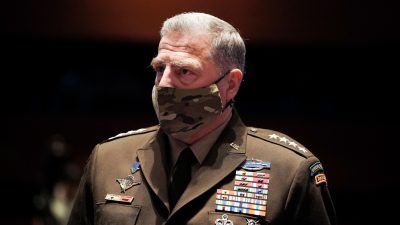
A secretive division of the Pentagon is now tasked with protecting its high-ranking officials not only from assassination and other bodily harm, but also from negative portrayals on social media, according to a procurement document obtained by The Intercept and published on Saturday.
While military records officially state the US Army Protective Services Battalion protects its charges from “assassination, kidnapping, injury or embarrassment,” this now includes monitoring social media for “direct, indirect, and veiled” threats, as well as identifying “negative sentiment” about individuals like Joint Chiefs of Staff General Mark Milley, according to the document, which is dated September.
The document describes the program as “a reliable social media threat mitigation service” with an “Open-Source Web based tool-kit with advanced capabilities to collect publicly available information (PAI).” Beyond the data slurped up from Twitter’s “firehose,” 4Chan, Reddit, YouTube, VK, Discord, Telegram, and the like, “PAI” also includes a wealth of commercially acquired information from surveillance firms and private contractors like Dataminr, other data brokers, and unscrupulous smartphone apps and advertisers.
All this would be apparently combined with geo-fencing capabilities and actual cellular location data, allowing for near-exact pinpointing of the location of the supposedly “signal-rich discussions from elicit threat-actor communities” – keeping in mind that the “threats” discussed in the procurement document potentially include unkind tweets about current and retired generals.
The entirety of this information hoard – including CCTV feeds, radio stations, personal records, even individuals’ webcams – would be accessible through a “universal search selector,” according to the document.
The document specified the need for a two-way stream, requiring the contractor to maintain “the anonymity and security needed to conduct publicly accessible information research through misattribution” by “using various egress points globally to mask their identity.” The contract was given to SEWP Solutions LLC, described as the only company capable of “tunnel[ing] into specific countries/cities like Moscow, Russia or Beijing, China and come out on a host nation internet domain.”
The procurement document specifies that it does not want the Pentagon advertising its interest in wholesale violating the online and potentially even physical privacy of those it deems threats to the reputation of generals retired and current. It is stamped “Controlled Unclassified Information”/FEDCON, meaning it is not meant to be seen by those outside the federal government and contractor system.
The revelation that still more intrusive powers are being sought by the national security state has outraged privacy advocates. “Expressing ‘positive or negative sentiment towards a senior high-risk individual’ cannot be deemed sufficient grounds for government agencies to conduct surveillance operations, even going as far as ‘pinpointing the exact locations’ of individuals,” Ilia Siatitsa of Privacy International told The Intercept.
“The ability to express opinions, criticize, make assumptions, or form value judgments – especially regarding public officials – is a quintessential part of democratic society.”
Beijing responds to new hacking allegations
RT | June 17, 2023
China has dismissed a report from a US cybersecurity firm, which accused Beijing of carrying out a major hack targeting hundreds of people and organizations around the world, calling the charges “far-fetched and unprofessional.”
Foreign Ministry spokesman Wang Wenbin responded to the allegations on Friday, telling reporters that the agency behind them, Mandiant, has a track record of false reporting about China.
“The cybersecurity firm that you mentioned has repeatedly sold disinformation on so-called Chinese hacking attacks. The stories are far-fetched and unprofessional,” Wang said at a daily press briefing.
Mandiant released a lengthy report on Thursday describing an attack by an “aggressive and skilled actor” with “suspected links to China,” claiming the hackers engaged in “espionage activity” starting last October. The attackers allegedly used a vulnerability in the Barracuda Networks email system to target diplomatic officials and government agencies across East and Southeast Asia, including in Hong Kong and Taiwan.
Founded in 2004, the firm has frequently cast blame on China for various hacks over the years, and rose to prominence in 2012 after another high-profile hacking allegation pinned on Beijing. The company was later purchased by Google for $1.2 billion and remains a subsidiary of the tech giant.
The Foreign Ministry spokesman went on to state that “by making up reports about so-called foreign cyberattacks,” some American companies have “become accomplices in the US government’s smearing campaigns against other countries,” going on to accuse Washington of its own hacking operations.
In April, the Chinese government published a review of alleged US government cyber attacks, claiming that American intelligence agencies have “been intruding on, dividing and suppressing foreign cybersecurity vendors” for years. The report outlined several major hacking incidents, including a 2010 attack on Iranian nuclear facilities using the US and Israeli-developed Stuxnet virus, and also pointed to Washington’s mass-collection surveillance program under the National Security Agency.
US Submarine That Crashed in South China Sea Two Years Ago Won’t Be Ready Until 2026
By Ian DeMartino – Sputnik – 17.06.2023
The US attack submarine that crashed traversing the South China Sea in 2021 will reportedly not be ready for redeployment until at least 2026.
The USS Connecticut won’t be repaired until 2026 and will cost $80 million, according to a recent US media report. The delay is due to US Navy shipyard backlogs filled with other repairs and routine maintenance that predate the USS Connecticut.
One of three Seawolf-class submarines, the nuclear-powered attack vessel is armed with tomahawk cruise missiles and torpedoes. Its crash in 2021 injured 11 of its crew and was not only embarrassing for the US military but also inflamed relations with China, which took issue with the US operating clandestine nuclear-powered attack subs so close to their shores.
China also accused the United States of being less than forthcoming with details about the crash, including the objectives assigned to the attack submarine.
“I want to stress that the root cause of the incident, which also poses a serious threat and significant risks to regional peace and stability, is the US’ constant stirring up of trouble in the South China Sea over a long period of time,” said Chinese Foreign Ministry spokesperson Zhao Lijian shortly after the incident.
The US Navy took five days to make a statement on the accident and then gave no details on how the submarine crashed or what it hit. More than a month later, a US Navy investigation stated that the vessel had struck an underwater mountain. Senior members of the submarine’s command were relieved of duty due to a loss of confidence.
Roughly a month before the crash, the USS Connecticut crashed into a pier in San Diego, California. An investigation by the Navy determined the crash in the South China Sea was avoidable.
“A grounding at this speed and depth had the potential for more serious injuries, fatalities, and even loss of the ship,” the report said, continuing that it “resulted from an accumulation of errors and omissions in navigation planning, watchteam execution, and risk management that fell far below US Navy standards.”
The accident led the Navy to issue a temporary “stand down” order for its submarine force.
After the crash, the $3 billion submarine limped itself to a port in Guam. It arrived at Bremerton, Washington, in February 2022 for repairs, but its current status hasn’t been publicly disclosed.
A statement given to a US military news outlet last year said repairs were expected to start in February of this year and finish by no later than September 2025 and cost around $50 million, but the more recent report indicates that additional delays have occurred.
US Sen. Roger Wicker (R-MS) decried the long delay on Twitter. “It will have taken AT LEAST 5 YEARS of repairs for the USS Connecticut – one of our most formidable submarines – to return to the fleet,” he said. “This delay is a reminder of the kinds of monumental investments we need to make in maritime infrastructure.”
The US Navy’s official news portal reported in January that four of the six dry docks at the Puget Sound Naval Shipyard in Bremerton, Washington, are temporarily closed due to concerns about their ability to withstand earthquakes.
The report stated that upgrades to the docks could take between 18 and 24 months.
Anglo-Saxons control collective West – Moscow
The US and the UK strong-arm their own followers, Russian FM Lavrov has said.
RT | June 16, 2023
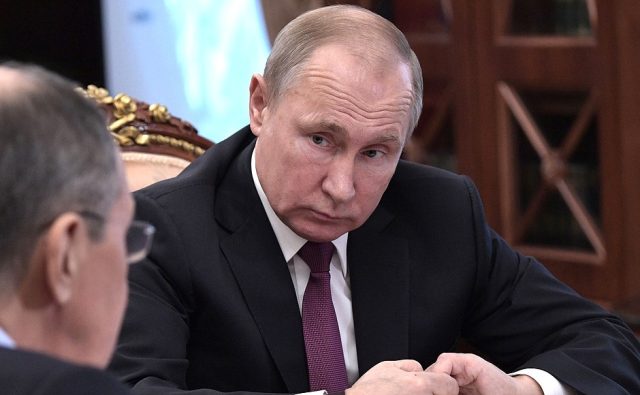
London and Washington run the show in the “rules-based world order,” trying to dictate policy to their own allies as well as countries outside the West, Russian Foreign Minister Sergey Lavrov told RT on Friday.
Russia fully understands that building relations with other countries needs to be based on mutual benefits and equal partnerships, Lavrov said in an interview with RT at the St. Petersburg International Economic Forum (SPIEF).
“This is not what we see in the West these days. The Anglo-Saxons are basically running the show, controlling the rest of the collective West. They are using the current situation, which they created through Ukraine – this war against Russia – to remove competition,” Lavrov elaborated.
“They see us as a competitor, they see China as a competitor. Their doctrinal documents clearly state that. But they are also removing their competition in continental Europe. It’s obvious. The economic and social processes in Germany are grim. Other countries are not much better off,” the Russian foreign minister added.
The only Western state benefiting from the current situation is the US, Lavrov said, “and the UK is always somewhere around, helping America reach its selfish goals.”
According to Lavrov, the “Anglo-Saxons and their allies” are currently trying to pressure countries around the world to side with them against Russia, including the Arab world, using methods he can only describe as “rude.”
“You see, when they talk about these ‘rules’ on which the international order must be based, what they really mean is their diktat,” Lavrov told RT. “Colonial instincts – live at the expense of others. Nothing else.”
Lavrov took particular exception to Western proclamations that their support for Kiev is “defending democracy” and that Ukraine is fighting for “Western values” in the conflict with Russia.
“First of all, if they really see it that way, I cannot but be convinced that they are holding on to Nazi views. Because saying that Western values are being protected in Ukraine is the same as saying that Nazism is your mode of existence,” the diplomat told RT. As for democracy, he added, “they only speak about democracy when they teach others how to live,” but not when it comes to respecting the sovereign equality of other states, per the UN Charter.
Featured Video
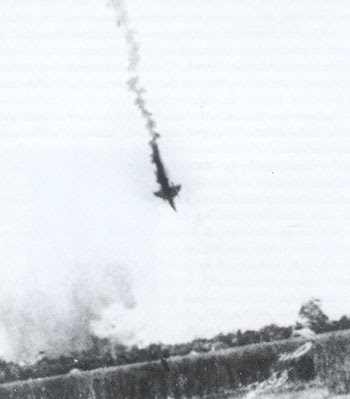
The Failed Air War Over Vietnam
or go to
Aletho News Archives – Video-Images
From the Archives
USS Liberty Massacre: A Pivotal Moment in the Hostile Takeover of America
By Kevin Barrett | Crescent | Dhu al-Qa’dah 24, 1445
In corporate America, hostile takeovers are commonplace. They occur when an aggressor—a larger corporation or rich individuals—seizes control of a smaller corporation without asking permission.
What few recognize is that the United States itself has been subjected to a hostile takeover. Since the aggressor, the illegitimate settler colony known as “Israel,” is much smaller than the US, the takeover has necessarily been surreptitious.
As of June, 2024, Israel’s gradual takeover of the US has become obvious and undeniable—a proverbial “elephant in the living room.” … continue
Blog Roll
 Aletho News
- Leaders Condemn Ansarallah Attack on Saudi Arabia While Ignoring Illegal War Against Yemen
- Leaked: Britain’s Covert Iraqi Psyops Network
- Yemeni Armed Forces Warn Airlines Against Using Saudi Airports, Exempt Mecca and Medina
- Iran security chief says powers greater than US tried to conquer Iran but ended in ‘dustbin of history’
- Europe’s mounting social chaos… chickens coming home to roost for proxy war against Russia
- US-Russia Diesel Deal Becomes Massive Defeat for Ukraine
- Hormuz and the Looming Economic Catastrophe
- Dhubab offensive, media blitz and the rapid unraveling of Saudi-backed coalition’s new gambit
- Putin Conveys to Trump Iran’s Vision on Possible Conflict Resolution – Kremlin
- The Search for Truth: Charlie Kirk’s Assassination One Year Later
- If Americans Knew
- For three years, Israel has killed a child in Gaza every 71 minutes – Daily Update
- Israeli forces kill another child in Gaza – Daily Update
- Gaza ceasefire exists in name only, say more than 100 organizations
- Nearly 2 Million in Gaza Need Urgent Shelter Assistance as Winter Looms: IOM Chief Warns
- Suppressing Palestinian resistance: US charity under fire for AI monitoring of Gaza classrooms
- Thousands Are Held in Israeli Torture Camps. This Is What Happens Inside
- Israel puts Gaza’s sick, injured, newborn in peril – Daily Update
- Report claimed Mark Levin used by Israeli government to influence Trump
- Over 2,000 Gazans have died awaiting medical evacuation amid Israel’s continued siege
- How a U.S. Diplomat Suppressed and Altered Reports Critical of Israel
- No Tricks Zone
- Germany’s Green Energy Debacle: High Energy Costs Force Kahla Porzellan to Close After 182 Years!
- New Study: 50 Years Of The Most Aggressive ‘Net Zero’ Policies Can Only Affect The Global Climate By 0.03°C
- US September “Heat” Was No Record…Many Records Set Decades Ago
- Latest European Green Energy Debacle; Portugal’s Largest Flagship Solar Park Insolvent!
- Green Energy Debacle: German Expert Professor Fritz Vahrenholt Warns Of Severe Economic And Social Consequences
- Two More Paleo Reconstructions Affirm Meters-Higher Sea Levels Across Ireland, Brazil 7000-6000 Years Ago
- New Study: Earth And Venus Surface Warmth Largely Explained By Convection And Lapse Rate, Not CO2 Or Radiation
- 2025 Nature Paper Claiming Worsening Global Drought Gets RETRACTED …Heavily Flawed
- New Study: ‘Global Drought Shows No Detectable Recent Acceleration Under Climate Warming’
- Economic Masterminds: German Socialists Suggest Taxing Productivity Gains Stemming From Using AI

