An Open Letter to Ella Irwin, Head of Twitter’s Trust and Safety (and Censorship) Department

By CJ Hopkins | Consent Factory, Inc. | May 7, 2023
The following is an open letter to Ella G. Irwin, Head of Twitter Trust and Safety, and Elon Musk, CEO of Twitter, and anyone else at Twitter, Inc. who is responsible for censoring political speech and defaming people with fake “advisory” labels, among other such “visibility-filtering” tactics.
I am publishing it as an open letter, not to bore everyone to death with my personal problems, but because the censorship and defamation I have suffered at the hands of Twitter for at least two years is an example of how the decentralized network of global corporations, Intelligence agencies, governments, non-governmental governing entities, “anti-disinformation” outfits, and other parties that together comprise what Michael Shellenberger and Matt Taibbi have dubbed the “Censorship Industrial Complex” are evolving into an Orwellian Ministry-of-Truth-type apparatus “with the power to control the information environment in ways that determine what people believe to be true and what is false.”
Twitter, Inc. has been censoring my political commentary and maliciously defaming me (i.e., damaging my reputation and income as an author) for approximately two years. Twitter has been doing this by concealing the Tweets of my “Consent Factory” account with fake “age-restricted adult content” labels, deceiving Twitter users into believing I have been tweeting content depicting “adult nudity and sexual behavior,” or “excessively gory content, sexual violence and/or assault, bestiality or necrophilia.” Twitter’s actions have damaged both my book sales and my reputation, globally. Defamation is a tort. I could sue the corporation for damages in several jurisdictions.
I have no interest in doing that, currently. What I do want, however, is a real explanation of why and exactly how Twitter, Inc. censored and defamed me for approximately two years. I want this explanation — a real explanation with documentation, not self-serving corporate-speak — not for personal reasons, primarily, but because I believe people need to be able to understand how powerful corporations like Twitter (and Facebook, and Google, and all the other entities and parties I mentioned above) are “visibility filtering” our collective reality.
The fact that these powerful corporations (and other entities) are doing this, not just on the macro level, but also on the micro level, to writers like me, who, let’s face it, are not exactly world-famous “influencers,” and to “non-public persons” who are basically just using social media to talk to their friends, does not bode well for the future of our societies. This kind of micro-perception-manipulation, this “visibility filtering” of our collective reality, goes way beyond traditional censorship. It is a hallmark of all totalitarian systems, which attempt to control, not only what people say, but what they think, how they think, how they perceive events, and facts, and each other.
Totalitarian systems do not spring into being fully formed. They develop slowly, gradually, unrecognized at first, and then ignored, usually until it is too late. We do not recognize the formation of new totalitarian systems because we are forever looking backwards instead of forwards, preparing for the storm that has passed, expecting history to repeat, rather than rhyme. Blinded by hindsight, we do not recognize the monster that is taking shape right in front of us. We glimpse a claw here, a tooth there, the flash of a pitiless blue eye, but fail to assemble the bits into an image of the beast entire, until it is inexorably upon us.
Anyway, here’s my open letter … one more bit, for the record.
To: Ella G. Irwin, Head of Trust and Safety, Twitter, Inc.
cc: Elon Musk
Dear Ms. Irwin,
This open letter is further to our brief correspondence on May 3, 2023 (on Twitter) regarding Twitter’s censorship and defamation of my @consent_factory Twitter account with fake “age-restricted adult content” labels for approximately two years.
First, thank you for taking action to cease and desist from further censorship and defamation. From what I can tell, it appears that Twitter is removing or has removed the fake, defamatory “adult content” labels from the @consent_factory Twitter account’s Tweets (or at least going back to late 2021). I trust that these fake “age-restricted adult content” labels will be removed from all of the account’s Tweets in due course, and I appreciate your prompt attention to this matter. Please accept my apology for claiming that you had lied about taking action on this. I admit, after two years of being censored and defamed, and having my complaints ignored by Twitter, I have become rather skeptical regarding your company’s behavior and statements. That said, it is clear now that you were not lying, and that you have taken action to have the fake, defamatory labels in question removed, and I apologize for publicly claiming otherwise.
Assuming the process is eventually completed and all of the fake, defamatory “adult content” labels that Twitter has been censoring the @consent_factory Twitter account with are in fact removed, I would appreciate substantive answers to the following questions:
(1) Why and exactly how did Twitter start censoring and defaming my Consent Factory account with these fake, defamatory “adult content” labels? When I asked you to explain that in our correspondence, you replied:

Clearly, the account did not “post multiple tweets containing sensitive content (nazi imagery) that resulted in the sensitive content label being applied,” because Twitter has now removed the fake, defamatory “adult content” labels from those Tweets, which contain the same “Nazi imagery” they originally contained. As I am sure you have noted, the so-called “Nazi imagery” contained in those Tweets was simply historical photos of the Nazi Germany era, which were used to illustrate critical points I was making in opposition to totalitarianism, and not at all any type of celebration or approval of totalitarianism or fascism. Any rational adult, seeing those Tweets, could not possibly mistake the anti-fascist/totalitarian intent behind them. Also, the fact that the fake, defamatory “adult content” labels are being removed gradually, in stages, rather than all at once, suggests that the application of the fake labels (or “interstitials”) in question was not the result of a blanket algorithm applied to the account. Additionally, not every Tweet (or every Tweet containing an image) by this account was censored with a fake “interstitial,” which suggests that something other than a blanket algorithm was at work.
In any event, having been censored and defamed for two years by Twitter, Inc., I think I am entitled to an actual explanation of how this started, including documentation of any intra-company discussions or “log” notes in connection with the decision to begin censoring and defaming the account. Your substantive response to this request will demonstrate that the “new” Twitter is, in fact, committed to transparency, and free speech, and not just another element of the “Censorship Industrial Complex,” as Michael Shellenberger and Matt Taibbi dubbed it, before Mr. Musk cut off access to the “Twitter Files.”
(2) What, if any, other restrictions/visibility filtering tactics have been applied to my @consent_factory Twitter account from 2020 to the present? Again, I would appreciate documentation of any such “visibility filtering” or other “restrictions” and/or the removal thereof. Having been censored and maliciously defamed by Twitter for years, I believe I am entitled to know how my “visibility” is being and/or has been “filtered.”
(3) What steps is Twitter, Inc. now taking to cease and desist from the type of malicious defamation the company has been engaging in to suppress political speech and damage the reputation and income of writers, like me, and independent media outlets, like, for example, OffGuardian? Twitter blocks links to all OffGuardian articles with a different fake, defamatory “interstitial” warning.

There is nothing “unsafe” about OffGuardian, or any content published on the website that could possibly “lead to real-world harm.” It is a small, independent news and commentary outlet. Twitter, Inc. is using the fake “interstitial” warning above to discourage users from visiting the site, and thus damaging OffGuardian’s reputation and income. This is just one further example (i.e., in addition to my case). Twitter’s continued use of fake, defamatory, “interstitial” labels to suppress political views is relatively widespread, as far as I can tell. Moreover, recent updates to Twitter’s Platform Use Guidelines make it clear that Twitter intends to continue using these “interstitials,” which is worrying, given the fact that the company has been using them to deceive people, and to suppress political speech, and to damage the reputations and incomes of small businesses and sole proprietors.
That’s it for my questions, for now.
Again, thank you for finally putting an end to the defamation that Twitter, Inc. has been subjecting me to, for the last two years. I must say, it is a bit disappointing that it took a happenstance encounter on Twitter to connect with someone with the power to do that. Frankly, given Mr. Musk’s initial and ongoing publicity campaign to portray himself as a champion of free speech, and a stalwart opponent of censorship, and Twitter under his leadership as the antipode of “old, bad, censorship-happy Twitter,” I had expected that immediate steps would be taken to … you know, stop deceiving people, and maliciously defaming people, and manipulating the “visibility” of political views according to some unarticulated ideological schema, but I guess these things take time.
I look forward to your substantive response to the above questions.
Very truly yours,
C. J. Hopkins
P.S. Should you happen to run into Mr. Musk there at Twitter HQ, you might also want to suggest that he resume providing access to the “Twitter Files” to reporters like Matt and Michael Shellenberger, and Alex Gutentag (if I can put a word in for her). Doing so would demonstrate that the “Twitter Files” thing was not just a limited hangout, and a PR stunt designed to whitewash the company and kill public interest in the nefarious activities of Twitter, Inc., and other powerful global corporations, and their partners at the FBI, DHS, whatever that CIS or CISA acronym stands for, and … well, you know, “other agencies.”
WHO Denies Pandemic Treaty Will Reduce Sovereignty of States – But it’s Pure Propaganda
BY DR DAVID BELL | THE DAILY SCEPTIC | MAY 6, 2023
The Director General of the World Health Organisation (WHO) reassures us that the WHO’s ‘pandemic accord’ (or ‘treaty’) won’t reduce the sovereignty of Member States. The WHO trusts that these words will serve as a distraction from reality. Those driving the perpetual health emergency agenda are planning to give WHO more power, and states less. This will happen whenever WHO designates a ‘Public Health Emergency of International Concern’ (PHEIC), or considers we may be at risk of one.
The WHO’s proposed treaty, taken together with its ‘synergistic’ amendments to the International Health Regulations (IHR), aim to undo centuries of democratic reform that based sovereignty with individuals, and by extension their state. The discomfort of facing this truth and the complexities it raises is providing the cover needed to push these changes through. This is how democracy, and freedom, wither and die.
Why it’s hard to acknowledge reality
Our society in the West is built on trust and a feeling of superiority – we built the institutions that run the world and they, and we, are good. We consider ourselves humanitarians, the public health advocates, the unifiers, and anti-fascist freedom-lovers. We consider our system is better than the alternatives – we are ‘progressive’.
It takes quite a step for comfortable, middle-income, Left-leaning professionals to believe that the institutions and philanthropic organisations we have admired all our lives might now be pillaging us. Our society relies on having ‘trusted sources’, the WHO being one of them. Among others are our major media organisations. If our trusted sources told us we were being misled and pillaged, we would accept this. But they are telling us these claims are false, and that all is well. The WHO’s Director General himself assures us of this. Anyone who thinks rich corporate and private sponsors of WHO and other health institutions are self-interested, that they might mislead and exploit others for their own benefit, is a conspiracy theorist.
We are all capable of believing the rich and powerful of past ages would exploit the masses, but somehow this is hard to believe in the present. For proof of their benevolence, we rely on the word of their own publicity departments and the media they support. Somehow, malfeasance on a grand scale is always a figment of history, and now we are smarter and enlightened.
Over recent decades we have watched individuals accumulate wealth equivalent to medium-sized countries. They meet our elected leaders behind closed doors at Davos. We then applaud the largesse they bestow on the less fortunate, and pretend all this is fine. We watch as corporations expand across national borders, seemingly above the laws that apply to ordinary citizens. We allowed their ‘public-private partnerships’ to turn international institutions into purveyors of their commodities. We ignored this descent because their publicity departments told us to, becoming apologists for obvious authoritarians because we want to believe they are somehow doing a ‘greater good’.
Whilst a schoolchild might see through this facade to the conflicted greed beyond, it is much harder for those with years of political baggage, a peer network, reputation and career to admit they have been duped. The behavioural psychologists that our governments and institutions now employ understand this. Their job is to keep us believing the trusted sources they sponsor. Our challenge is to put reality above right-think.
The remaking of WHO
When the WHO was set up in 1946 to help coordinate responses to major health issues, the world was emerging from the last great bout of fascism and colonialism. Both these societal models were sold on the basis of centralising power for a greater good. Those who considered themselves superior would run the world for those less worthy. The WHO once claimed to follow a different line.
Since the early 2000s WHO’s activities have been increasingly dictated by ‘specified funding’. Its funders, increasingly including private and corporate interest, tell it how to use the money they give. Private direction is fine for private organisations promoting their investors’ wares, but it is obviously a non-starter for an organisation seeking to mandate medicines, close borders and confine people. Anyone with a basic understanding of history and human nature will recognise this. But these powers are exactly what the amendments to the International Health Regulations and the new treaty intend.
Rather than consider alternate approaches, WHO is seeking censorship of opinions not fitting its narrative, publicly denigrating and demeaning those who question its policies. These are not the actions of an organisation representing ‘we the people’, or confident in its ability to justify its actions. They are the trappings we have always associated with intellectual weakness and fascism.
WHO’s impact on population health
In its 2019 pandemic influenza recommendations, WHO stated that “not in any circumstances” should contact tracing, border closures, entry or exit screening or quarantine of exposed individuals be undertaken in an established pandemic. It wrote this because such measures would cause more harm than good, and disproportionately harm poorer people. In 2020, in conjunction with private and national sponsors, it supported the largest wealth shift in history from low to high income by promoting these same measures.
In abandoning its principles, WHO abandoned millions of girls to nightly rape through child marriage, increased teenage pregnancies and child mortality, reduced childhood education, and grew poverty and malnutrition. Despite most of these people being too young to be troubled by Covid and already having immunity, they promoted billions of dollars of mass vaccination whilst traditional priorities such as malaria, tuberculosis and HIV/AIDS deteriorate. Western media have met this with silence or empty rhetoric. Saving lives does not turn a profit, but selling commodities does. The WHO’s sponsors are doing what they need for their investors, whilst WHO is doing what it needs to keep their money flowing.
The new powers of WHO
The IHR amendments will reduce the sovereignty of any WHO Member State that fails to actively reject them, giving a single person (the Director General) direct influence over health policy and the freedom of its citizens is indisputable. It is what the document says. Countries are required to “undertake” to follow the WHO’s “recommendations”, which are no longer simply suggestions or advice. Whilst the WHO does not have a police force, the World Bank and IMF are on board, and control much of your money supply. The U.S. Congress passed a bill last year recognising that the U.S. Government should address countries that do not comply with the IHR. We are not witnessing toothless threats; most countries, and their people, will have little choice.
The real power of the WHO’s proposals is in their application for any health-related matter they proclaim to be a threat. The proposed amendments state this explicitly, whilst the ‘Treaty’ expands the scope to ‘One-Health‘, a hijacked public health concept that can mean anything perceived to be affecting human physical, mental or social well-being. Inclement weather, crop failures or the promulgation of ideas that cause people stress – everyday things that humans have always coped with, now become reasons to confine people and impose solutions dictated by others.
In essence, those sponsoring WHO are manufacturing crises of their own desiring, and are set to get wealthier from other’s misery, as they did during Covid. This under the guise of ‘keeping us safe’. As WHO implausibly insists, “no one is safe until all are safe”, so removal of human rights must be broad and prolonged. Behavioural psychology is there to ensure that we comply.
Facing the future
We are building a future in which compliance with authoritarian dictates will win the return of stolen freedoms, whilst censorship will suppress dissent. People who wish to see evidence, who remember history or insist on informed consent will be designated, in WHO parlance, far-Right mass killers. We have already entered this world. Public figures who claim otherwise are presumably not paying attention, or have other motivations.
We can meekly accept this new disease-obsessed world, some may even embrace the salaries and careers it bestows. Or we can join those fighting for the simple right of individuals to determine their own future. At the very least, we can acknowledge the reality around us.
Dr. David Bell is a clinical and public health physician with a PhD in population health and background in internal medicine, modelling and epidemiology of infectious disease. Previously, he was Programme Head for Malaria and Acute Febrile Disease at FIND in Geneva, and coordinating malaria diagnostics strategy with the World Health Organisation. He is a member of the Executive Committee of PANDA.
Fake News Alert: It’s Extremely Unlikely That Kiev Shot Down A Hypersonic Missile
BY ANDREW KORYBKO | MAY 6, 2023
The Commander of the Ukrainian Air Force claimed on Saturday that his forces shot down a hypersonic missile with the help of the US’ Patriots, which Mainstream Media outlets like CNN took at face value to question Russia’s related capabilities. It’s extremely unlikely that this happened, though, since no air defense system anywhere in the world at this time is able to intercept any such projectile traveling at ten times the speed of sound. At most, there might have been an accidental hit or a technical malfunction.
Either of those scenarios would represent statistical anomalies, especially the first one, which means that it’s almost certainly the case that Kiev is just lying through its teeth yet again. It makes sense why it would do so at this particular time since its perception managers hope to dent Russians’ pride ahead of Victory Day, sow the seeds of doubt about its hypersonic capabilities with the intent of deterring purchases whenever they’re eventually put to the market, and exaggerate the Patriots’ effectiveness.
Furthermore, Kiev was likely tipped off about CNN’s investigation into Russia’s electronic jamming of their much-hyped HIMARS missile systems by some of those same Pentagon officials that the outlet cited in their report, which was also released on Saturday. In response, they could have then prepared this latest fake news provocation with the expectation of carrying it out on the same day that CNN’s report was published, thus distracting the public from this unsavory story.
Even so, as was noted in the introduction, CNN had no problem taking their side’s claim at face value and subsequently spinning it for maximum anti-Russian soft power effect. It obviously has the experts on hand who, if they were honest, would have informed them that the Patriots are incapable of shooting down hypersonic missiles. By not relying on those professionals’ insight prior to publishing their report and inserting their opinion into it, CNN once again exposed its anti-Russian bias.
The same observation can be said about all those other Mainstream Media outlets that reported on this fake news story without including any reference to the Patriots’ lack of requisite capabilities for achieving this literally unprecedented military feat. They uncritically repeat Kiev’s most ridiculous claims about the NATO-Russian proxy war despite knowing better like in this instance, which proves that they don’t conduct genuine journalism anymore and only parrot a foreign country’s propaganda nowadays.
The American Government Arguably Played A Role In Kiev’s Arrest Of US Journalist Gonzalo Lira
BY ANDREW KORYBKO | MAY 6, 2023
Dual American-Chilean national Gonzalo Lira was recently arrested by Ukraine’s secret police on charges pertaining to “wartime propaganda”, for which he faces the possibility of 5-8 years in jail. The US Government’s (USG) silence on this incident completely contrasts with its hysteria over Wall Street Journal (WSJ) employee Evan Gershkovich’s arrest in Russia last month on charges of espionage after he was caught red-handed soliciting classified military-industrial information from a regional lawmaker.
This is a betrayal of American principles since the freedom of speech is regarded as a sacred right of all its citizens no matter where they might be at any given time. Regardless of whatever one might think about Lira’s views and the particular piece of Ukrainian legislation that was cited as the basis for arresting him, the USG is supposed to support the rights of its nationals abroad. This is especially so whenever they’re arrested for expressing an opinion and/or practicing journalism like he was.
Its silence in the face of this scandalous incident suggests a degree of complicity in, or at the very least tacit approval of, Lira’s arrest since nothing else cogently explains the conspicuous lack of any response. These suspicions are further reinforced by the fact that one of the USG’s leading information warfare assets in Ukraine, transgender mercenary Michael John Cirillo, admitted to the Daily Beast that he colluded with the SBU on its case against Lira and even plans to testify against him.
In his exact words, “I’ve already given my sworn statement to SBU about Gonzalo Lira several months ago and expect to be called as a witness in his prosecution.” Cirillo also added on Twitter that “When I’m on Capitol Hill in 10 days, no doubt the arrest of Gonzalo Lira will be a prime topic of conversation.” Instead of seeking his release, the USG is relying on one of its top propagandists in that country to pursue Lira’s conviction, prior to which their proxy brazenly plans to boast about this to Congress.
It should also be noted that Cirillo told this to Julia Davis, who’s banned by Russia on the basis of having worked against its national interests at the behest of hostile powers, which obviously refers to the USG in this context. Her article also mentions that she obtained exclusive footage of Lira’s arrest, which could only have been obtained by the SBU, whose employees shared it with her precisely because they know that she’s one of their patron’s most reliable agents and would thus use it to humiliate Lira in her piece.
These facts lead to the conclusion that the USG is indeed complicit in Ukraine’s arrest of this dual American national. It’s not even hiding its complicity in Lira’s persecution either after one of its leading information warfare assets in that country admitted to colluding with the secret police on this case, told the media that he plans to testify against him, and even plans to brag about this to Congress. The USG is perversely proud of this since it hopes to pressure critics of its proxy war into self-censoring.
This objective also clearly includes its own citizens like Lira, who the USG hates with a passion since his brave reporting from Kharkov discredited many of their claims about this conflict. It could have simply requested that Kiev deport him in order to lessen the damage that he’s inflicted on their information warfare operations, but it preferred to make an example out of him by pursuing his prosecution. Cirillo’s role in this incident and his plans to brag about it to Congress leave no doubt about the USG’ complicity.
Zelensky must choose between talks or losing more territory – former US Army chief
By Ahmed Adel | May 5, 2023
Ukrainian President Volodymyr Zelensky will have to choose between peace talks with Moscow or the continuation of the conflict and the loss of more territory, former US Army Lieutenant Colonel Daniel Davis wrote in an article.
“Ukrainian President Volodymyr Zelensky is loath to agree to any deal that leaves Ukrainian territory in Russian hands. The reality, however, is that he does not have what it takes to fully force Moscow off his territory. The most realistic choice he faces is between negotiating an end to the fighting that allows Ukraine to hold what it has, or to continue fighting and lose even more ground. That decision is Zelensky’s alone to make, but America also has agency and must look out for its own interests,” Davis wrote in 19FortyFive.
According to him, the counteroffensive of the Ukrainian Armed Forces is unlikely to be successful since they do not have enough troops to cope with the Russian military given the superiority in the number of soldiers, weapons, and equipment.
The former lieutenant colonel also reflected on his own country’s policy regarding the armed conflict, lambasting the promise to continue giving Ukraine what it needs “for as long as it takes” because it is not a sustainable strategy and will almost certainly not produce a beneficial result for either the US or Ukraine. “A course correction is therefore required,” he stressed.
Davis added that many in Europe already recognise that Ukraine cannot win in a practical time frame at a reasonable cost.
In the end, the author states that, “as horrible as it would be for us to accept ending the war on undesirable terms, it would be even worse to ignore reality and continue pursuing an unattainable military objective. The cost for the former is unpleasant. The cost to the latter could be infinitely worse.”
In early April, US Secretary of State Antony Blinken hinted that the Ukrainian Armed Forces might carry out an offensive in the coming weeks. For his part, the Ukrainian Defence Minister, Oleksii Reznikov, appealed to wait until the end of the mud season, known as Rasputitsa, so that the roads are useable.
Spokesman for the Russian Presidency, Dmitry Peskov, noted that any statements about the planned offensive by the Ukrainian military are being carefully monitored and considered in their own planning of the special military operation. In this way, Russia has had ample time to prepare for this Ukrainian offensive, and although gains might initially be made, it is expected that it will fizzle out and be followed by a major Russian counterattack.
The New York Times noted that if the Ukrainian military are not successful in pushing back Russian forces, Western support for Ukraine might weaken. This is especially the case since war weariness and economic crises are gripping the EU and USA.
None-the-less, the European Commission adopted on May 3 the Act in Support of Ammunition Production (ASAP) “to urgently deliver ammunition and missiles to Ukraine and to help Member States refill their stocks.”
“By introducing targeted measures including financing, the Act aims at ramping up the EU’s production capacity and addressing the current shortage of ammunition and missiles as well as their components. It will support the destocking from Member States and the joint procurement for ammunition,” the announcement added.
For her part, President of the European Commission, Ursula von der Leyen, said: “We stand by our promise to support Ukraine and its people, for as long as it takes. But Ukraine’s brave soldiers need sufficient military equipment to defend their country.”
However, for all the talk of supporting Ukraine “for as long as it takes,” it is doubtful that EU member states will continue draining their economies and resources in the long-term because Kiev refuses to negotiate. This will become especially apparent as elections begin creeping up in member states and people’s fury about the dire economic situation are expressed.
In the same light as Ursula von der Leyen, White House spokesman John Kirby revealed on May 3 that the US has already handed over almost 100% of the military aid that Kiev requested for its offensive but this will not prevent them from making further deliveries.
There is evidently a clear divide between Western rulers and experts, especially when recalling that former US Army Lieutenant Colonel Daniel Davis is far from the only expert urging for negotiations since Ukraine does not have a chance of winning the war despite all the brave talk and propaganda.
Pumping resources to the Ukrainian military stems from the fact that if Kiev’s offensive is unsuccessful the West would have failed in its task to preserve Ukraine’s pre-war borders and halt Russia’s advances, in addition to wasting billions upon billions of dollars to their own immense detriment. But as said, for now, it is only Western experts, and not the rulers, who are willing to face this reality.
Ahmed Adel is a Cairo-based geopolitics and political economy researcher.
US to set up military bases in Finland
By Drago Bosnic | May 5, 2023
The formal admission of Finland on April 4 was the latest move in the process of “globalizing” NATO. At the time, the belligerent alliance’s Secretary General Jens Stoltenberg insisted that Helsinki’s membership “will be good for [its] security, for Nordic security, and for NATO as a whole.” Nobody ever explained how exactly this is “good for Finland’s security”. Russia and Finland share a border over 1300 km long, meaning its ascension has nearly tripled the line of direct contact between NATO and Russia, as the combined border between them has previously been approximately 700 km. Now being well over 2000 km long, the border could be a major source of tensions.
Precisely this is happening now, as the United States and Finland are finalizing a deal that would allow the Pentagon to establish a permanent military presence in the Scandinavian country. According to a report by Newsweek, published on May 2, a senior official of the Finnish Ministry of Foreign Affairs, Mikael Antell, confirmed that Helsinki and Washington DC are negotiating a so-called “Defense Cooperation Agreement” (DCA) that would allow for the construction of significant military infrastructure on Finnish soil. Apparently, the aforementioned agreement doesn’t include the deployment of US nuclear weapons, yet. However, the Finnish government and military officials are yet to specifically rule out the possibility of hosting nukes.
Considering the fact that, for months, Helsinki has been refusing to give any guarantees such weapons will not be deployed on its territory, this is quite telling and concerning. While the US already has nuclear weapons stationed in five NATO countries under several bilateral nuclear sharing programs with each, specifically Belgium, Netherlands, Germany, Italy and Turkey, these are relatively far away from core Russian regions. On the other hand, Finland is not. Saint Petersburg, Russia’s second most important city, is less than 200 km away from the Finnish border, putting it well within the range of tactical ballistic, cruise and, most alarmingly, prospective hypersonic missiles (provided the US deals with its technological shortcomings).
If Helsinki and Washington DC were to go ahead with such plans, it would be the first case that a country has hosted American nuclear weapons after the end of the (First) Cold War. The same goes for Poland, whose insistence on having nuclear weapons deployed on its territory has already pushed Russia to deploy its own tactical warheads in Belarus. Finnish Foreign Ministry official Mikael Antell stated that the DCA “enables troops to enter the country, stay on the ground, the pre-storage of material and possible infrastructure investments through the funds granted by the US Congress to the Pentagon”. The US and Finland have allegedly been in talks on the DCA since last fall, with the latest round of discussions on the deal taking place in Helsinki last week.
“The agreement also defines the facilities and areas where the cooperation would be focused,” Antell said, adding: “They are basically military areas and garrisons. In principle, there can be more than one, but the discussions are still open in this regard.”
Commenting on the aggressive military buildup, Russian military expert Yuri Knutov told Sputnik: “The Northern Sea Route – a shipping lane that runs along Russia’s Arctic Sea coast – has become a prominent transport artery of late, and Moscow now seeks to increase maritime traffic and cargo flow along that lane. Therefore, the emergence of NATO military bases at the entrance to the Northern Sea Route would require us to boost security measures, to bolster our Northern Fleet and maybe even to deploy our warships to escort cargo vessels in order to protect the latter from any provocations or from some restrictions concocted by Western countries.”
The exact nature of permanent US military presence in Finland is not officially disclosed, although Knutov pointed out that “Helsinki did not attempt to negotiate issues such as the maximum number of foreign NATO troops that could be deployed on its soil, which appears to suggest that Finland is willing to let NATO use its territory without any limitations”. This notion is particularly worrying when counting the strong possibility of nuclear weapons being deployed so close to core Russian regions. Moscow previously never saw Finland as a direct threat, but its membership in NATO, a hostile and extremely aggressive military alliance that openly declared and targeted Russia as its primary enemy, completely changes the geopolitical calculus, a move that Helsinki chose to do unilaterally.
After Finland joined NATO, several high-ranking Russian officials stated that Moscow will respond in kind in case of further escalation and NATO military buildup, but insisted that Helsinki is still not seen as a primary military threat. However, from a purely strategic standpoint, the situation can hardly be considered optimistic. Finland directly broke from its apparent neutrality after it decided to acquire F-35 fighter jets in late 2021. The Pentagon has direct access to everything the F-35’s sensors can detect, meaning that Finland would be sharing key military data with the US regardless of whether it was a NATO member or not. Still, as previously mentioned, Helsinki being a member also means that it’s more likely to see the deployment of US offensive weapons in close proximity to St. Petersburg.
In this regard, when Stoltenberg stated that the ascension of Finland was truly historic, he was right. However, this was only in the sense that Helsinki is essentially repeating the same mistake as over 80 years ago when it joined the Axis led by Nazi Germany. Worse yet, just like Adolf Hitler’s Third Reich established military bases in Finland and deployed the Wehrmacht there just before launching “Barbarossa”, the US is doing exactly the same. Now that Finland is among “old friends” once again, maybe it should dust off the history books and pay very close attention to how such military and geopolitical adventurism ended the last time. The belligerent thalassocracy in Washington DC should be even more concerned, as Finland at least continued to exist in the postwar period. On the other hand, Nazi Germany didn’t.
Drago Bosnic is an independent geopolitical and military analyst.
CIA May Be Regarded Around World as a Rogue Elephant, But Operatives Can Still Churn Out Books that Make Themselves Look Like Heroes
And the Washington foreign policy establishment still eats them up
By Rick Sterling | CovertAction Magazine | May 1, 2023
 In 1975, Philip Agee published his book Inside the Company: CIA Diary. In the introduction, he wrote: “When I joined the CIA, I believed in the need for its existence. After twelve years with the agency I finally understood how much suffering it was causing, that millions of people all over the world had been killed or had their lives destroyed by the CIA and the institutions it supports. I couldn’t sit by and do nothing and so began work on this book.”
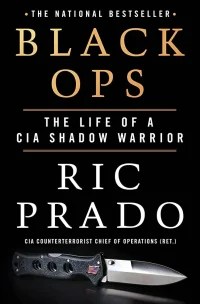
Enrique Prado’s book, Black Ops: The Life of a CIA Shadow Warrior (New York: St. Martin’s Press, 2022), is written for the opposite purpose. Prado says, “This book is my attempt to correct the misperceptions that make the Agency one of the least understood and most mistrusted institutions in America today. The reality we faced on the ground in places from Muslim Africa to East Asia, to our own streets here at home, is one of persistent threats that must be countered to keep our people safe.”
Prado’s memoir was approved for publication by the CIA. It is self-laudatory and highly critical of restraints on the CIA. It confirms that, while the ability to assassinate at will was temporarily restricted, CIA sabotage and paramilitary operations against other nations have continued non-stop.
Background
Enrique (Ric) Prado’s father lost his business in the Cuban Revolution and Ric came to the U.S. as a youth in the early 1960s. He grew up in greater Miami. The Vietnam War was raging and his “dream was to go to Vietnam.”
After high school, Ric enlisted in the U.S. Air Force and received training in rescue operations including parachute jumping and scuba diving. Prado’s dream was dashed because the Vietnam War was winding down and the U.S. military downsizing.
Prado alludes to his involvement with Cuban-American gangs and some troubled years. Then, starting with contract work, Prado began to perform assignments for the Central Intelligence Agency (CIA).

A young Ric Prado in Hialeah, Florida. [Source: nypost.com]
Prado and the Contras
Prado’s timing was late for Vietnam but just right for Central America. In 1979 the Sandinista Revolution overthrew the Somoza dictatorship in Nicaragua. As a Spanish-speaking Latino, Prado was not a typical Anglo-American. He was recruited as a CIA officer responsible for overseeing the development of the Contra army based in Honduras and conducting cross-border attacks on communities in Nicaragua.
He writes, “In these early days, there were only five CIA officers who interfaced directly with the Contras in Tegucigalpa; none were yet in the field.” There were “ten camps that lay scattered along the Honduran Nicaraguan border.” Ric Prado became the CIA officer responsible for going to the camps to coordinate support and conduct weapons training.
Prado admits the Contra leadership came from the corrupt Somoza regime: “Others who had been part of Somoza’s military…formed the core leadership of the Contras.” Initially, Washington subcontracted the job of mobilizing the Contras to Argentinian military officers who had experience from their own dirty war and death squads. Prado is extremely critical of the Argentinian military trainers, calling them a “den of snakes” and stating that, “to a man, I found them to be useless parasites.” The Argentinian military trainers were supplanted by CIA personnel, with Ric Prado playing a leading role overseeing Contra operations from Honduras and later in the “southern front” in Costa Rica.

During the Reagan years, Ric Prado (clutching rocket launcher) trained Contras to fight communist Sandinistas as part of the CIA’s “tip of the spear” in Nicaragua. [Source: nypost.com]
The CIA is funded by Congress and acutely aware of its public image. Whether it is creating negative press for “enemies” such as Nicaragua, Cuba or Russia, or creating positive press for itself, manipulating the media is an important part of its work. Prado talks about the political benefits of recruiting Indigenous Miskitos to the Contras: “Miskitos were popular with several U.S. political sectors. Among Native Americans and some prominent liberals, the Miskitos were considered to be the oppressed, indigenous forces untainted by association with Somoza. That political viability back in the States with elements often hostile to the Agency helped us enormously.”

Dinner in one of the Miskito camps, Prado on the right, where living conditions were primitive at best. [Source: nypost.com]
The unofficial war on Nicaragua included attacks on infrastructure which echo today with the U.S. sabotage of the Nord Stream gas pipelines. Prado proudly documents the attack on the Puerto Cabezas pier and underwater gas pipeline: “The dock included an integrated fuel pipeline for faster transfer of oil from tankers. If we could destroy this… we’d make a big statement by blowing up the key link between the Sandinistas and their communist allies….We received exactly what we needed: a specialized underwater demolition charge that combined compactness with tremendous blast power….The charge exploded…the blast was so large it destroyed the fuel pipeline.”
Prado documents the failed attempt to blow up a bridge at Corinto on the Pacific coast. For unknown reasons, Prado was re-assigned and left Honduras in March 1984 after four years managing the Contras. He returned to the Contra campaign in the summer of 1986. They had safe houses and secret bases in ranches along the Nicaragua-Costa Rica border. It was more difficult because the Costa Rican government did not support the Contras as Honduras did.

Prado carried all these weapons while fighting the Sandinistas in Nicaragua. [Source: nypost.com]
Prado briefly describes the sensational events in October 1986 when a CIA plane dropping supplies and weapons to Contras was shot down. The pilot and two others on the flight died, but ex-Marine Eugene Hasenfus survived and was captured. Unmentioned in the book, this was a sensational news event at the time. Beyond the drama of an American plane being shot down over Nicaragua and an American captured and taken prisoner, it revealed the CIA was violating the congressional Boland Amendment prohibiting U.S. military support for overthrowing the Nicaragua government.
The Reagan administration denied responsibility. Elliott Abrams, the Assistant Secretary of State for Inter-American Affairs, said:“The flight in which Mr. Hasenfus took part was a private initiative…It was not organized, directed or financed by the U.S. Government.” The counter-evidence was overwhelming and the CIA was caught red-handed violating the congressional resolution and then lying about it. This is unmentioned in the book. Instead, Prado criticizes Hasenfus for having personal identification papers in his possession.

José Fernando Canales, the Sandinista soldier who shot down Eugene Hasenfus’s plane with a surface-to-air missile, leads his hapless captive through the jungle on October 5, 1986. [Source: dailykos.com]
Prado’s Pride
In 1990, after ten years of terrorist attacks by the Contras, combined with economic and political attacks from Washington, Nicaraguans cried “Uncle” and voted the Sandinistas out of power.
Prado says, “our Contra program was a definitively successful black op carried out solely by key personnel from the CIA.” Prado stated further that “that Cuban kid who lost his native country to revolutionaries now helped cut off some of the communist tentacles that threatened to engulf Latin America.”
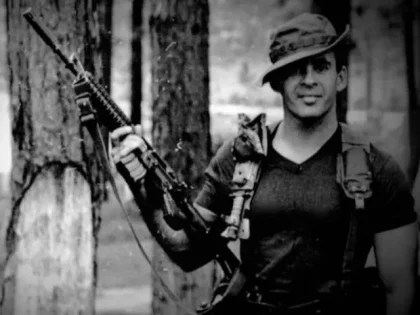
Ric Prado in action. [Source: cbsnews.com]
Prado believes the use of a proxy army to fight against a perceived enemy was an important victory and re-established the credibility of the CIA. He says, “The Contras resuscitated the post-Vietnam decimated CIA back to relevance.”
Prado is annoyed at negative media portrayals of the CIA Contra program. The movie American Made, depicting the story of an American pilot taking guns to the Contras and bringing cocaine back into the U.S., is especially annoying to Prado. He ignores the fact that tens of thousands of Nicaraguans died and cocaine inundated some U.S. cities as a byproduct of the Contra program.
Prado believes that the CIA were the “good guys” in Nicaragua. The International Court of Justice thought otherwise.
In 1986 the court ruled that the U.S. attacks on Nicaragua were violations of international law. The Reagan administration and media largely ignored the ruling.
Later, journalist Gary Webb documented the catastrophic social damage inside the U.S. caused by the cheap cocaine flooding some U.S. cities. Webb was attacked by establishment media. However, in 1998, the CIA Inspector General acknowledged, “There are instances where C.I.A. did not, in an expeditious or consistent fashion, cut off relationships with individuals supporting the contra program who were alleged to have engaged in drug-trafficking activity, or take action to resolve the allegations.”
The 2014 movie Kill the Messenger, based on the true and tragic story of Gary Webb, was undoubtedly another movie that irritated Ric Prado.

Justifying Terrorism and Sabotage
Prado’s justification for CIA crimes against other countries is U.S. national security. He says, “The spread of communism through Central and South America became a direct threat to the security of the United States.” He compares the war against “communism” to the World War II fight against Nazi Germany. He says, “The Sandinistas quickly consolidated their power through Nazi-like pogrom and oppression.” Prado says that training the Contras was like “being an OSS officer trying to train and supply the French resistance to the Germans in WW2.”
The U.S. deployed Nicaraguans, Afghans and extremist Arab recruits in proxy wars across the globe. Prado assesses this a great success: The Mujahedin in Afghanistan and Contras in Nicaragua “played crucial roles in the Cold War’s final act.”
Prado does not mention the fact that the Sandinistas were voted back into power in Nicaragua in 2006 after 16 years of neo-liberal rule. The country was in very poor shape with privatized education, little health care, and terrible infrastructure. Since being voted back, the Sandinistas have won increasing levels of support because they have substantially improved the lives of most Nicaraguans. As in the 1980s, Nicaragua is back on the U.S. enemy list and Western media portrayals are universally negative.
Prado in Other Countries
The “CIA shadow warrior” went on to conduct operations in Peru, the Philippines, South Korea and an unnamed African country, probably the Central African Republic. “We were the leadership cadre, spearheading America’s effort against global terrorism.”
Prado says, “Radical Islamic terrorism at the turn of the century morphed into a deadly new enemy.” With the attacks of 9/11, the U.S. homeland was suddenly the victim of a real attack. The timing was very convenient for war hawks and those who wanted a “new American Century.” From being a president who took office under highly contested circumstances, Bush became a “war President.” The 9/11 attack provided a Pearl Harbor moment justifying U.S. military aggression in the Middle East.
Prado describes the fervor and intensity with which the CIA responded: CIA agents worked long hours to identify, capture and sometimes kill those deemed to be “enemy combatants.” Some of these suspects were tortured in violation of the UN Convention Against Torture, to which the U.S. is a signatory. The “CIA shadow warrior” is dismissive of the critics. The “much maligned enhanced interrogations [were] sparingly performed on known terrorists.”
“Jungle of Criminality”
Prado views the world as “a jungle of criminality, corruption, betrayals, and atrocious human rights abuses we were determined to help eradicate.” There are numerous allusions to the “good guys” fighting the “bad guys.”
Prado does not attempt to argue with critics who say some CIA actions are violations of international law and human rights. It is estimated that 30,000 Nicaraguans died in the Contra War. This is ten times more than died in the attacks of 9/11 in a country that only had 3.3 million people at the time.
Prado’s claim that Sandinista Nicaragua posed a threat to U.S. “national security” stretches credulity. The CIA actions not only violated international law; they violated U.S. law. … Full review
FDA Approves First RSV Vaccine, But Some Experts Say Weak Safety, Efficacy Data Suggest Benefits Don’t Outweigh Risks
By Michael Nevradakis, Ph.D. | The Defender | May 4, 2023
Describing it as a “long-sought scientific achievement,” the U.S. Food and Drug Administration (FDA) on Wednesday approved Arexvy, the first vaccine for respiratory syncytial virus (RSV).
GlaxoSmithKline Biologicals (GSK) developed Arexvy under the FDA’s Priority Review designation. The FDA approved it for people ages 60 and older.
According to CNBC, the U.S. “suffered an unusually severe RSV season” this past winter. The New York Times reported on a “tripledemic” involving RSV, flu and COVID-19, “that swamped children’s hospitals and some I.C.U. wards.”
One U.S. county — Orange County, California — declared a local health emergency and issued a proclamation of local emergency in November 2022, citing rising RSV cases among children in the region.
GSK described results from clinical trials for Arexvy as “positive,” and the company said the U.S. launch of the vaccine is planned before the 2023-24 RSV season.
Other RSV vaccines, including one produced by Pfizer, are in the pipeline and expectations are that the FDA will approve them.
During clinical trials for both the GSK and Pfizer vaccines, several participants were diagnosed with rare conditions such as Guillain-Barré syndrome (GBS) and acute disseminated encephalomyelitis (ADEM). One of the individuals who developed ADEM later died, according to the FDA.
Aside from concerns over potential serious adverse events related to RSV vaccines, some experts have questioned the need for such a vaccine in the first place.
According to the journal Science, “RSV is a common respiratory infection” with symptoms “similar to a cold,” adding that “The majority of individuals recover within a few days from an uncomplicated RSV infection, although occasionally the virus can cause lower respiratory infections requiring medical attention.”
Dr. Peter McCullough, a cardiologist, told The Defender:
“Respiratory syncytial virus is a negligible threat to even the most frail elderly adults. The effort of widespread vaccination is simply not worth it. Even rare side effects will outweigh any theoretical benefit.”
And in a November 2022 episode of “RFK Jr. The Defender” podcast, several medical and public health experts expressed concerns about RSV vaccines.
“We have to stop these shots,” said Dr. Meryl Nass, an internist and biological warfare epidemiologist. “It’s just extraordinary that we’re still vaccinating people … we have a lot of work to do.”
Robert F. Kennedy Jr., then-chairman and chief litigation counsel for Children’s Health Defense (now chairman on leave), described RSV as “a vehicle for re-implementing the COVID-19 playbook all over the country and responding with vaccines.”
And according to the National Vaccine Information Center (NVIC), “Cost analysis data presented to the ACIP [Advisory Committee on Immunization Practices] did not show the RSV vaccines to be cost-effective at reducing the burden of costs associated with RSV illness.”
Nevertheless, more RSV vaccines are expected to receive FDA approval this year — including a Pfizer RSV vaccine for pregnant women that led to a high incidence of adverse events for both the women and their infants during clinical trials, as well as several deaths and stillbirths.
Arexvy approval ushers in new ‘highly competitive and lucrative vaccine market’
The RSV vaccine market is estimated to be worth up to $10 billion by 2030.
According to Endpoints News, the FDA’s approval of Arexvy ends “half a century of failed efforts against the elusive, shape-shifting virus” and “officially start[s] what analysts expect will be a highly competitive and lucrative new vaccine market.”
In getting Arexvy approved, “GSK beat a crowded field of competitors to cross the finish line first.”
Arexvy “showed strong efficacy in stopping lower-respiratory tract infections as well as more severe disease” and will be administered as a single dose, according to Endpoints News.
STAT reported that a “vaccine that was developed by Pfizer and aimed at the same demographic [adults 60 and over] is expected to be approved by the end of the month,” while other RSV vaccines and therapeutics, including some intended for children and pregnant women, are in the pipeline and also are close to receiving FDA approval.
The FDA’s approval of Arexvy came after an FDA advisory panel reviewed data from GSK’s and Pfizer’s clinical trials on March 1. The panel unanimously agreed that GSK’s vaccine is effective and, in a 10-2 vote, deemed it “safe,” according to The Washington Post.
The same panel also approved Pfizer’s candidate vaccine, Abrysvo, but with a 7-4 vote.
On June 21 or 22, ACIP, which advises the Centers for Disease Control and Prevention (CDC), will convene to “make recommendations on the appropriate use of the vaccine in the U.S.,” according to GSK’s announcement. The ACIP must recommend the vaccines before they are marketed.
According to STAT, there is a likelihood that ACIP may not approve Arexvy for its intended age group, stating:
“Though Arexvy’s approval is for adults 60 and older, it remains to be seen if the CDC will recommend it for that entire group.
“At an advisory committee meeting in February, members of a work group studying the adult vaccines that will soon come before ACIP indicated that at present, they don’t believe the vaccine would be cost-effective in people aged 60 to 64 and they would not recommend to the wider committee that it include people 60 to 64 in its recommendation for the use of the vaccine. (The group held the same position for the Pfizer RSV vaccine.)”
In April, the European Medicines Agency (EMA) issued its own recommendation for Arexvy, for adults 60 and over, according to the Times. However, a final EMA regulatory decision is anticipated later this year. GSK is also awaiting licensure for Arexvy in Australia, China, Japan and other countries, STAT reported.
In an earnings presentation April 26, GSK said it has “millions of doses” of Arexvy “ready to be shipped.”
“GSK’s RSV vaccine works by using a small piece of the virus: a protein that sticks out on its surface called the fusion, or F, protein, which helps the virus glom onto and infect cells in the body’s upper airways. The protein pieces in the vaccine are made in a lab, using cells specially programmed to manufacture them.”
CNN noted that the vaccine “builds on a pivotal discovery made a decade ago” by National Institutes of Health researchers, “including some of the same scientists who helped make the COVID-19 vaccines.” Specifically, the researchers figured out how to freeze the otherwise “wiggly” F protein, “in the shape it takes before it fuses onto a cell.”
STAT, quoting Phil Dormitzer, GSK senior vice president and global head of vaccines research and development, reported that although Arexvy “contains only one of the two RSV subtypes, RSV A,” studies showed that it is “virtually equally protective against both RSV A and RSV B” as the F protein on both subtypes is similar.
Dormitzer acknowledged natural immunity, telling STAT, “because older adults have all had RSV probably multiple times by the time they get [the vaccine], they’re primed against both A and B. So you’re able to get very solid boosting against both subtypes with a single adjuvanted F antigen.”
According to GSK, the Arexvy vaccine does not use mRNA technology, but “contains a recombinant subunit prefusion RSV F glycoprotein antigen (RSVPreF3) combined with GSK’s proprietary AS01E adjuvant.”
GSK, FDA claim Arexvy clinical trial data show vaccine is ‘safe and effective’ but annual shot may be needed
The FDA announcement stated:
“The safety and effectiveness of Arexvy is based on the FDA’s analysis of data from an ongoing, randomized, placebo-controlled clinical study conducted in the U.S. and internationally in individuals 60 years of age and older.”
According to the FDA, “approximately 12,500 participants … received Arexvy and 12,500 participants … received a placebo. Among the participants who have received Arexvy and the participants who have received a placebo, the vaccine significantly reduced the risk of developing RSV-associated LRTD [lower respiratory tract disease] by 82.6% and reduced the risk of developing severe RSV-associated LRTD by 94.1%.”
LRTD was “defined as two or more symptoms including shortness of breath, wheezing, cough, increased mucus production, crackles, low oxygen saturation, or need for oxygen supplementation,” according to CNBC, while according to CNN, “People were considered to have severe disease if they needed supplemental oxygen or needed mechanical help to breathe, like a ventilator.”
According to the FDA, half of the 25,000 participants received Arexvy, while the other half received a placebo.
The results of GSK’s clinical trials for Arexvy were published in the New England Journal of Medicine on Feb. 16.
FDA and GSK officials provided glowing reviews of the new vaccine. Peter Marks, M.D., Ph.D., director of the FDA’s Center for Biologics Evaluation and Research, said in a statement:
“Older adults, in particular those with underlying health conditions, such as heart or lung disease or weakened immune systems, are at high risk for severe disease caused by RSV.
“Today’s approval of the first RSV vaccine is an important public health achievement to prevent a disease which can be life-threatening and reflects the FDA’s continued commitment to facilitating the development of safe and effective vaccines for use in the United States.”
Tony Wood, GSK’s chief scientific officer, described Arexvy’s approval as “a turning point in our effort to reduce the significant burden of RSV,” adding that “Our focus now is to ensure eligible older adults in the U.S. can access the vaccine as quickly as possible and to progress regulatory review in other countries.”
In turn, Dormitzer said, “There’s just the broad excitement of finally, after all these years, having good options emerging for RSV,” describing this as a “triumph of the basic science.”
While GSK is first out of the gate in the RSV vaccine race with Arexvy, Pfizer’s candidate vaccine has also completed clinical trials, which found it to be “nearly 67 percent effective in preventing R.S.V. – related illness,” according to the Times.
The FDA and GSK announcements did not mention the vaccines’ waning effectiveness. An analysis by the NVIC found that the effectiveness of the GSK vaccine peaked after two months and offered no protection after one year. This may result in recommendations for adults to receive annual doses of the vaccine.
Trial participant died from a rare inflammatory condition, others developed GBS
Despite positive comments from FDA and GSK officials, clinical trial data for Arexvy revealed instances of GBS and other rare conditions.
In its announcement Wednesday, GSK claimed:
“The vaccine was generally well tolerated with an acceptable safety profile. The most frequently observed solicited adverse events were injection site pain, fatigue, myalgia, headache, and arthralgia. These were generally mild to moderate and transient.”
The announcement did not mention GBS.
According to the FDA announcement Wednesday:
“The most commonly reported side effects by individuals who received Arexvy were injection site pain, fatigue, muscle pain, headache and joint stiffness/pain.
“Among all clinical trial participants, atrial fibrillation within 30 days of vaccination was reported in 10 participants who received Arexvy and 4 participants who received placebo.”
However, the FDA noted that in two other Arexvy studies involving approximately 2,500 participants 60 and over, “two participants developed acute disseminated encephalomyelitis (ADEM), a rare type of inflammation that affects the brain and spinal cord, seven and 22 days, respectively, after receiving Arexvy and the influenza vaccine.”
“One of the participants who developed ADEM died,” according to the FDA.
In another Arexvy study conducted by GSK, “one participant developed Guillain-Barré syndrome (a rare disorder in which the body’s immune system damages nerve cells, causing muscle weakness and sometimes paralysis) nine days after receiving Arexvy,” the FDA stated.
According to an FDA briefing document cited by CNBC:
“A 78-year-old woman in Japan was diagnosed with Guillain-Barré syndrome nine days after receiving GSK’s vaccine … She was hospitalized for six months before being released.”
CNBC reported that GSK claimed in February “There is insufficient evidence to confirm the woman got Guillain-Barre as a result of GSK’s shot.” However, the FDA “considers the case to be related to GSK’s vaccine.”
According to the FDA’s announcement:
“The FDA is requiring the company to conduct a postmarketing study to assess the signals of serious risks for Guillain-Barré syndrome and ADEM. In addition, although not an FDA requirement, the company has committed to assess atrial fibrillation in the postmarketing study.”
According to the Times, “Once the shots become available to the public, the agency said it would require GSK to monitor the incidence of Guillain-Barré and another rare condition that was possibly related to the shot.”
The FDA similarly flagged GSK “as a potential safety issue with Pfizer’s RSV vaccine for older adults,” CNBC reported after two clinical trial participants developed GBS. According to the Post, both participants — one man and one woman — were 66 years old.
CNBC in February reported that Pfizer “will conduct a safety study to further address Guillain-Barré syndrome if the FDA approves its vaccine.”
GSK’s chief commercial officer, Luke Miels, said the vaccine would cost upwards of $120 a dose, according to the Post, which also reported that private insurers may cover “many costs” associated with the vaccine, while Medicare patients with Part D coverage “won’t pay anything out of pocket” for the vaccine.
“Shares of GSK rose nearly 2% Wednesday following the approval,” CNBC reported.
GSK is also pressing forward with “A clinical trial that aims to expand the population who may benefit from RSV vaccination into adults aged 50-59, including participants with underlying comorbidities,” according to the company’s Wednesday announcement, with results “expected in 2023.”
Is there a need for an RSV vaccine?
According to the FDA:
“RSV is a highly contagious virus that causes infections of the lungs and breathing passages in individuals of all age groups. RSV circulation is seasonal, typically starting during the fall and peaking in the winter.
“In older adults, RSV is a common cause of lower respiratory tract disease (LRTD), which affects the lungs and can cause life-threatening pneumonia and bronchiolitis (swelling of the small airway passages in the lungs).”
The FDA cited CDC figures claiming each year in the U.S., RSV leads to approximately 60,000-120,000 hospitalizations and 6,000-10,000 deaths among adults 65 years of age and older.”
STAT reported that “RSV season has been unpredictable in the wake of the COVID-19 pandemic, though some experts believe RSV activity is moving back toward the seasonality seen in the pre-COVID days,” noting that “there was little transmission in 2020, when people were wearing masks and social distancing.”
But RSV “returned abnormally early in 2021,” STAT reported, but without an explanation for why this occurred, despite widespread masking and social distancing that year, too.
In the U.S., pediatric deaths from RSV are not common but the infection is the No. 1 cause of hospitalizations for children under the age of 1, STAT reported. Globally, however, it is the second leading cause of death in children under 1, after malaria.
According to STAT, “All but the youngest of children have had RSV multiple times, but few of us would know with any certainty that this bad cold was caused by that bad virus.”
Nevertheless, Pfizer is proceeding with the development of an RSV for infants as young as 6 months — “the age group at highest risk of being hospitalized with RSV,” STAT reported, noting that the vaccine for this age group is expected to gain FDA approval later this year and will be administered to pregnant women “to generate antibodies that protect both the pregnant person and their newborn.”
Data reported by Pfizer to the CDC indicated that 14% of pregnant women who participated in Pfizer’s trial sustained an adverse event, with 4.2% sustaining a “serious” adverse event, 1.7% experiencing a “severe” adverse event and 0.5% suffering a “life-threatening” adverse event.
Similarly, the same data showed that 37.1% of infants whose mothers received the experimental Pfizer vaccine experienced adverse events within one month of birth — with 15.5% classified as “serious,” 4.5% as “severe” and 1% as “life-threatening,” while efficacy waned within months of vaccination.
According to the NVIC, “The RSV clinical trial data also included the death of one pregnant woman, 18 still births (10 in vaccinated pregnant women and 8 in unvaccinated pregnant women), and 17 infant deaths (five from the vaccinated pregnancy group and 12 in unvaccinated pregnancy group).”
In its report to the CDC, Pfizer claimed the deaths were unrelated to the vaccine.
The FDA’s Vaccines and Related Biological Products Advisory Committee will meet virtually on May 18 to discuss approval of this vaccine. The meeting is open to the public, and a public comment period is open until May 17. A final FDA decision is expected in August.
According to the Times, “Moderna is also developing an RSV vaccine for adults 60 and over, with authorization expected in the first half of this year. The Times referenced clinical trial data released by Moderna claiming 82% efficacy, with “no safety concerns identified.”
Bavarian Nordic, known for its development of a vaccine in response to last year’s monkeypox outbreak, is also developing an RSV vaccine for adults 60 and over,” expecting to release Phase 3 clinical trial data by midyear, according to the Post and CNN.
AstraZeneca and Sanofi also are seeking FDA approval, but for nirsevimab, a monoclonal antibody treatment for RSV that would be administered to infants and toddlers up to age 2, according to the Times, which referenced clinical trial results claiming a reduction of illness of up to 75%.
According to the Post, nirsevimab “is already approved in Europe, the United Kingdom and Canada.”
However, the NVIC reported that the effectiveness of nirsevimab “is not known beyond 150 days” and it is unclear if the drug prevents ICU stays or deaths. It is being reviewed by ACIP, which according to the NVIC, is “a federal advisory committee charged with making vaccine use recommendations.”
“It is unclear why the ACIP … has chosen to go beyond its charge of making vaccine use recommendations,” NVIC states.
Safety concerns related to RSV vaccines nevertheless linger. According to CNN, an RSV vaccine developed in the 1960s for children initially delivered promising results during trials in children and animals.
However, once administered to children in the general population, “many of the children who were vaccinated required hospitalization and got more severe RSV disease than what would have normally occurred” — and two of the initial trial participants died.
Michael Nevradakis, Ph.D., based in Athens, Greece, is a senior reporter for The Defender and part of the rotation of hosts for CHD.TV’s “Good Morning CHD.”
This article was originally published by The Defender — Children’s Health Defense’s News & Views Website under Creative Commons license CC BY-NC-ND 4.0. Please consider subscribing to The Defender or donating to Children’s Health Defense.
Chomsky’s Ties to Jeffrey Epstein — and Suspected 9/11 Mastermind Ehud Barak—Exposed

In early summer 1992 I caught the documentary film Manufacturing Consent when it opened in San Francisco’s Castro Theater. That film changed my life. It showcased Noam Chomsky, an accomplished linguistics professor, and his analysis of corporate media propaganda. Manufacturing Consent convinced me that the American academy could tolerate, and indeed celebrate, serious social criticism. If Chomsky, a radical opponent of America’s most powerful institutions, could not only survive but thrive in academia, speaking truth to power and building a huge audience along the way, why couldn’t others do the same?
Before that screening, I had been a profoundly alienated bohemian haunting the margins of academia, so disgusted by all of America’s institutions that I could scarcely have imagined working for them. (Learning the facts about the JFK assassination at age 16 can do that to a person.) But Chomsky’s example inspired me. It made me want to join him and the other academic critics of US empire, convince our colleagues of the truth of our arguments using logic and evidence, and help the USA return to its anti-imperial roots and then some.
So it was largely thanks to Chomsky that I entered a Ph.D. program in 1995. But by then I had noticed two glaring anomalies in his political thought. The first, and most important, was that his analysis of the JFK assassination seemed insane. Chomsky argued that the assassination was obviously a conspiracy, and not the work of a lone nut as the official story has it—but that it didn’t matter who killed JFK, because the assassination didn’t change any policies! Since he felt it was so utterly unimportant that the president was murdered by conspirators powerful enough to force their ludicrous cover story on the world, Chomsky evinced no interest whatsoever in identifying the perpetrators, and discouraged his followers from further interest in the topic.
“Take for example all this frenzy about the JFK assassination. I mean I don’t know who assassinated him and I don’t care, but what difference does it make?” – Noam Chomsky
The other anomaly involved the question of Palestine. Though Chomsky has verbally sympathized with Palestinian suffering, and admitted the justice of the Palestinian cause, he has vociferously obstructed the two most promising strategic efforts that could help Palestine defeat Zionism: The boycott-divestment-sanctions (BDS) movement, and the campaign to expose Zionist control over US Mideast policy.
Alison Weir once asked Chomsky why he opposed BDS and why he had falsely claimed that it was bad for Palestinians (who almost unanimously support it). “The reason is very simple. It’s so utterly hypocritical that it’s basically a gift to the hardliners. They can say, ‘Look, you’re calling for a boycott of Israel, but you’re not calling for a boycott of the United States which has a much worse record…’”
Would Israeli hardliners ever actually say such a thing? And would it matter even if they did? Of course not. Here again, Chomsky is spouting sheer nonsense, prefaced by the obligatory disclaimer “it’s very simple.” When someone as seemingly intelligent as Chomsky says such things, there are really only two possible interpretations: Either he is suffering from some bizarre mental dysfunction, or he is lying and gaslighting us.
Chomsky’s occasional habit of emitting streams of discombobulated blather repeatedly surfaces when he is asked about Israel’s control of US Mideast policy. As James Petras writes, “Noam Chomsky has long been one of the great obfuscators of AIPAC and the existence of Zionist power over US Middle East policy.” The nonsensical gnome ludicrously argues that US policymakers’ enslavement to Israel actually serves US national and imperial interests. For him, Israel is basically a powerless appendage of US empire. Chomsky’s implicit subtext is that anyone who notices Israel’s death grip on US foreign policy, including Walt and Mearsheimer, Alan Hart, James Petras, J. William Fulbright, James Abourezk, Paul Findley, and indeed every honest and informed analyst who has considered the question, must be “anti-Semitic.”
My issues with Chomsky’s repeated bouts of apparent insanity came to a head after 9/11. In November 2001, Chomsky published a “surprise” bestseller. Entitled 9/11 and republished ten years later as 9/11: Was There an Alternative?, the book basically repeats Chomsky’s vacuous diatribes about the JFK coup d’état—“it doesn’t matter who did it, do NOT look behind the curtain”—and applies them to 9/11.
“If if it were true [9/11 conspiracy theories], which is extremely unlikely, what difference does it make? I mean, it doesn’t have any significance.” –Noam Chomsky, interview with David Barsamian
While I was participating in the rise of the 9/11 truth movement from 2004 onwards, I noticed that Chomsky was growing ever-more-strident in attacking truth-seekers and insisting that it didn’t matter who did 9/11. In 2008 I invited him on my radio show, which led to an exchange of emails culminating in his last-minute refusal to appear. I was flabbergasted by Chomsky’s seemingly insane statements and positions. When he finally started lying outright, I concluded that he must be acting in bad faith. I published the private emails in their entirety because I thought the world needed to know the truth about the evident gross immorality (or, charitably, insanity) of America’s most celebrated (fake) dissident.
Then in 2016 I gave a talk at the Left Forum on “Why Chomsky Is Wrong About 9/11.” Though my criticisms of Chomsky were quite restrained in tone, given his appalling betrayals, I was banned from the Left Forum the following year. Apparently going to the Left Forum to criticize Chomsky is like going to the Vatican to criticize the Pope.
Read the full text of “Why Chomsky Is Wrong About 9/11”
Over the years, it dawned on me that if Chomsky were deliberately leading people astray, there would have to be some sort of method in his apparent madness. Why would he herd the critical thinkers and idealists of the left away from the truth about the JFK assassination, 9/11, Zionist control of US policy, and the best strategy for saving Palestine? Whose interests would be served by those four acts of deception?
The question, of course, answers itself. As Michael Collins Piper, Laurent Guyénot, Ron Unz, Alan Hart, and so many others have suggested, the leading suspect in both the JFK and 9/11 coups is the state of Israel and its “American” acolytes. Chomsky has been consistently, systematically gaslighting his followers on the four issues most crucial to the preservation and expansion of Zionist power. As Jeffrey Blankfort writes:
“At the end of the day, it is evident that Chomsky’s affection for Israel, his sojourn on a kibbutz, his Jewish identity, and his early experiences with anti-Semitism to which he occasionally refers have colored his approach to every aspect of Israel’s conflict with the Palestinians and explain his defense of Israel. That is his right, of course, but not to pretend at the same that he is an advocate for justice in Palestine.”
Since our ill-starred 2008 email exchange I have leaned towards acknowledging the likelihood that Chomsky is a lying, gaslighting Zionist scumbag. But I wasn’t sure until a few days ago, when the news broke that Chomsky had repeatedly hobnobbed with then-convicted-sex-criminal Jeffrey Epstein, including meeting Epstein together with pervert and 9/11 suspect Ehud Barak, apparently even flying on Jeffrey Epstein’s Lolita Express. Characteristically, Chomsky dissembled: “If there was a flight (with Epstein), which I doubt…” If Chomsky hadn’t flown with Epstein, of course, he would just say so. His mealymouthed evasions of the truth, whether of JFK, 9/11, Israeli occupation of America, or his relations with Epstein and Barak, have a vacuously passive-aggressive tone that is inimitably Chomsky-esque, but jarringly incommensurate with his reputation as one of the world’s greatest linguists.
Chomsky’s response to journalists’ questions about his relationship with Epstein began: “First response is that it is none of your business. Or anyone’s.” That is, of course, exactly what many people would say when questioned about their sexual activities with consenting adults. So why is Chomsky proffering a stock “don’t ask me about my sex life” response when questioned about his relationship with Jeffrey Epstein and his stable of underage prostitutes?
Methinks the gnome doth protest too much.
More troubling than whether Chomsky (statutorily) raped young girls is the question of why he was meeting with Israel’s top blackmailer of American leaders, Jeffrey Epstein, alongside the likely mastermind of 9/11, Ehud Barak. Barak resigned as Prime Minister of Israel in May of 2001 and disappeared from public view, presumably spending June through early September working on plans to demolish the World Trade Center, attack the Pentagon, and blame the carnage on Israel’s enemies. Barak’s work on the lead-up to 9/11 recalls Ben Gurion’s resignation as Israeli Prime Minister and disappearance from public view in June, 1963, after which he went underground and presumably orchestrated the assassination of John F. Kennedy in November. The moral: When Israeli PMs resign in the spring, get ready for something big come fall.
Ehud Barak was conveniently pre-placed in BBC’s London studios so he could go live an hour after 9/11, where he recited what would become the official story:
Barak’s coercion was aimed at the masses, who were traumatized by the horrific images they had just seen on TV and open to hypnotic suggestion—which Barak obligingly provided, implanting the pre-scripted official version deep in their subconscious minds. Chomsky, by contrast, was deployed a few months later against leftists and intellectuals, who were understandably suspicious and predisposed to mistrust the Bush Administration and its rush to war against Israel’s enemies. (That Chomsky’s coverup-propaganda broadside 9/11 shot up the bestseller lists in November 2001 was hardly surprising, given the realities of power in America’s media, book publishing and distribution industries.)
Many languages have one or more proverbs that roughly translate as “A man is known by the company he keeps.” By simultaneously meeting Epstein and Barak, Noam Chomsky has unmasked himself as a top-level Zionist sheepdog tasked with keeping the dumb American goyim cattle blind, ignorant, and cooped up in their pens, bleating out the platitudes they are taught by their Zionist betters. To say that the scandal will tarnish Chomsky’s legacy is inaccurate, because there is no legacy to tarnish. Chomsky is a charlatan and a fraud. He stands revealed as an agent of the world’s most genocidal and most systematically terrorist state—a state that has attacked the United States of America repeatedly since 1954, assassinating its best leaders, murdering its sailors and civilians, looting its nuclear arsenal and its treasury, and generally assuming much of the responsibility for its impending destruction.
So what did Chomsky talk about with Israel’s top blackmailer Epstein and 9/11 perp Barak? Did the conversation sound like Netanyahu’s talk with his cronies at Fink’s Bar in Jerusalem in 1990?
At the head of the table was Netanyahu. The group at the table had just stolen 5 American KG 84 cryptographic devices with the help of Canadians serving with the UNTSO on the Golan Heights, giving this Israeli-led cabal real-time access to all US State Department, Naval and NATO communications. This is a transcribed quote taken from an audio recording of Netanyahu at that meeting:
“If we get caught they will just replace us with persons of the same cloth. So it does not matter what you do, America is a golden calf and we will suck it dry, chop it up, and sell it off piece by piece until there is nothing left but the world’s biggest welfare state that we will create and control. Why? Because it is the will of God, and America is big enough to take the hit so we can do it again and again and again. This is what we do to countries that we hate. We destroy them very slowly and make them suffer for refusing to be our slaves.”
Chomsky’s contempt for Americans, and for the intelligence of his American audience, is every bit as palpable as Netanyahu’s. And Epstein’s. And Barak’s.
Maybe it’s time for him to make aliyah… and thank Yahweh that Israel won’t sign extradition treaties.
Thoughts on Tucker
By Kevin MacDonald | Occidental Observor | May 4, 2023
I think Tucker was cancelled because of what he was emphasizing on his show (see also TOO writer Karl Haemer’s Substack piece). To wit:
- condemning the Ukraine war as not in U.S. interests; Ukraine is not a democracy, etc.;
- how the war feeds into the emerging alliance among Russia and China, along with Brazil, India, Iran, Arab countries and likely Africa—and what that will mean for the dollar as the world’s reserve currency as well as U.S. prosperity and power;
- making what are considered White nationalist talking points by the rest of the media and never mentioned by vast majority of conservatives (the Great Replacement, immigration diluting White votes, Democrats’ desire to have a permanent government of the left by importing a dependent, low-IQ, easily controllable non-White population that requires government financial assistance and affirmative action, and can easily see the benefits of blaming all their problems on White racism, whereas mainstream conservatives emphasize migrant suffering and death trying to get to the U.S.; his sympathetic interview with Hungarian nationalist Viktor Orban);
- talking about George Soros’s influence, particularly in electing far-left activist prosecutors, despite the ADL pushing the idea that any mention of him is anti-Semitic;
- condemning the World Economic Forum and globalism generally—likely related to his opposition to the Ukraine war;
- opposing the woke ESG (Environmental, Social, Governance) agenda of corporate giants like Blackrock able to use shareholder muscle to force companies to conform to their woke policy preferences; Blackrock is a major investor in Fox;
- angering the ADL and the powers-that-be in general with all of the above; and he often condemns globalist, pro-immigration Republicans like Lindsey Graham and Mitch McConnell who support those same issues;
- opposing climate extremism, like cutbacks in Netherlands’ agricultural sector and his recent “Let Them Eat Bugs” special on Fox Nation;
- being a vaccine skeptic and having people like Alex Berenson on to criticize the vaccines, lockdowns, effects on schoolchildren, etc.;
- repeatedly dissenting on the J6 narrative—showing the video indicating that it was far less violent than depicted and that Merrick Garland’s DOJ is hellbent on outrageous prosecutions, infringing on free speech and civil rights (locking citizens for long periods without trial;
- condemning social media censorship (as revealed in the Twitter files) and the outrageous Garland DOJ, FBI, etc.;
- going off on transgenderism (sterilizing children is civilizational suicide and “evil”)—and wokeness generally
- talking about big media bias in the 2020 election, including Google searches and Twitter shadow banning.
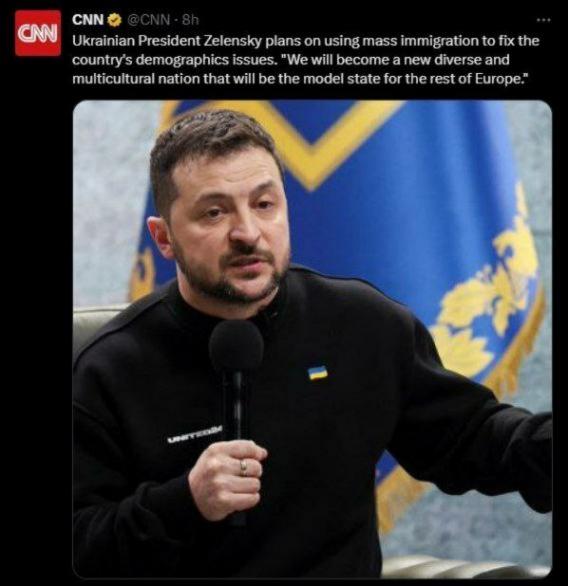
The Ukraine War Is a Globalist Crusade
Tucker also presented standard conservative talking points, like illegal immigration, guns, crime in the cities, Biden’s corruption and senility, etc. But my impression is that he was all alone on many of the above issues among Fox personalities, or he phrased his comments on them in an edgier way. And in general, his commentary was much more incisive and intellectually appealing. All of this terrified the globalist, multicultural establishment throughout the West.
The ADL was thrilled that Fox cancelled his show:
To the Anti-Defamation League, the firing was long overdue. The group’s leader called for Fox to fire Carlson in 2021, after the host first promoted the white-supremacist Great Replacement theory on air.
“It’s about time,” tweeted the group’s CEO, Jonathan Greenblatt, on Monday. “For far too long, Tucker Carlson has used his primetime show to spew antisemitic, racist, xenophobic & anti-LGBTQ hate to millions.”
At the time, Fox rebuffed the ADL’s petition weeks later. The network said that Carlson had actually been talking about voting rights when he outlined the Great Replacement theory, a far-right belief that attributes a diversifying electorate to a shadowy conspiracy, typically engineered by Jews, to replace white voters with immigrants and minority groups.
“A full review of the guest interview indicates that Mr. Carlson decried and rejected replacement theory,” Lachlan Murdoch, CEO of the Fox Corporation, said at the time.
The ADL’s public stance on Carlson’s employment led to criticism from the right, with Florida Rep. Matt Gaetz calling the group “racist.” Carlson also went after them on his program by parroting other white supremacist-adjacent beliefs about Israel. Last year, he gave an extended interview to Kanye West after the rapper donned a “White Lives Matter” shirt at Paris Fashion Week, but before West’s many public antisemitic rants; producers reportedly edited out antisemitic comments West had made during the interview.
The reference to “parroting other white supremacist-adjacent beliefs about Israel” refers to Tucker’s publicizing the ADL’s stance on immigration to Israel in an item that was soon expunged from their website.
The ADL recently condemned Tucker Carlson, an American media personality, because he mentioned that American voters were being replaced by immigrants, terming it “a White supremacist tenet that the White race is in danger by a rising tide of non-Whites. It is antisemitic, racist and toxic.” In response, Carlson highlighted the different attitudes of the ADL regarding demographic displacement of the native European-derived population of the U.S. with their attitudes on a one-state solution for the Israeli-Palestinian conflict.
Regarding Israel, the ADL has quite reasonably stated that a one-state solution is unworkable given current realities and historic animosities. With historically high birth rates among the Palestinians, and a possible influx of Palestinian refugees and their descendants now living around the world, Jews would quickly be a minority within a binational state, thus likely ending any semblance of equal representation and protections. In this situation, the Jewish population would be increasingly politically – and potentially physically – vulnerable. It is unrealistic and unacceptable to expect the State of Israel to voluntarily subvert its own sovereign existence and nationalist identity and become a vulnerable minority within what was once its own territory.
Regarding the ADL statement that concern with demographic changes in the U.S. is “antisemitic, racist and toxic,” given the long history of racial conflict in America, the recent upsurge in race-based violence, and the contemporary prominence of movements, such as Critical Race Theory that essentially pathologize White Americans in the media and educational system, it is reasonable to suppose that the White population would also be increasingly vulnerable if they become a minority.
This New York Times article indicates Fox’s concerns about his ideas, starting with a text in which he claimed that “It’s Not How White Men Fight,” which was part of his reaction to a group of White men ganging up on an antifa protester, which of course the Times interpreted as yet another indication that Tucker was a “White supremacist.”
Though Mr. Carlson’s show, “Tucker Carlson Tonight,” was only a small factor in the Dominion suit, his personal texts were drawing outsize scrutiny.
The text about the fight came on top of a damaging chain of messages that had been revealed publicly ahead of trial, and that were shocking in their own right. Writing to one of his producers after the assault on the Capitol, Mr. Carlson describes the president he championed on his show as a “demonic force” and a “destroyer.”
A recurring theme of his show during the six years that it ran in prime time on Fox News was the displacement of white Americans by people of color. Mr. Carlson often framed topics in the news as part of a larger struggle between “us” and “them,” with immigrants and other marginalized groups steadily and surely taking from whites what had long been theirs: political and cultural power in the United States.
He attacked Black social justice activists and portrayed immigrants from Central America as a blight on the nation. He said in 2018 that immigrants make the country “dirtier.”
In the aftermath of a mass shooting in El Paso at the hands of a gunman who cited white supremacist beliefs in his manifesto, Mr. Carlson declared on his show that white supremacy was “not a real problem,” likening it to a conspiracy theory.
So there was plenty of reason to get rid of him. Recently, Megyn Kelly has claimed that Fox is leaking videos of Tucker that would produce negative impressions in many views in order to render him so toxic that he wouldn’t be employable. (The above-cited article from the NYTimes was apparently leaked by people connected to Fox.) Kelly also claims that Carlson’s exit is still to be negotiated and he can’t start another show because he is still under contract. Breitbart claims that Fox will prevent him from getting a new show until the 2024 elections are safely in the rear view mirror. Looks like it’s devolved into an all-out war.
The other plausible thing mentioned by some is that getting rid of Carlson and generally moving toward a blander, more traditional type of conservatism like that of Paul Ryan (who is on the Fox Board of Directors) would attract the big-name advertisers back to Fox’s prime time lineup. The boycotts initiated by the left in recent years have left his show with direct marketing advertisers like Mike Lindell, the Pillow Guy. And as mentioned above, Tucker has vigorously opposed the ESG agenda of major Fox investors such as the left-activist Blackrock headed by Larry Fink.
So there’s likely a number of factors that influenced the decision.
What can we expect if Tucker reincarnates somewhere in the media universe? It’s quite possible that he will become even edgier if he is not tied to a corporate giant mainly concerned about the bottom line and eager to stay within the currently allowable boundaries of public debate. As someone who is intimately acquainted with how politics works in Washington, he is undoubtedly aware of Jewish influence, but I rather doubt that he will say anything to suggest Jews are responsible in any way for any of the issues he is concerned about. He will often mention Jewish villains like Victoria Nuland, Alejandro Mayorkas, Merrick Garland, or George Soros without saying they are Jewish. And he will likely continue to invite Jews on his show—Jews such as Michael Shellenberger on the left’s destruction of San Francisco, Darren Beattie of Revolver News on J6, or vaccine skeptic Alex Berenson. And if the ADL calls him out again, I’m sure he will respond as he has previously.
It’s interesting that unlike so many conservatives, he is not slavishly pro-Israel (as is, e.g., Sean Hannity). Anyone with the faintest knowledge of how things work in Washington understands the power of the Israel Lobby, but he just ignores the issue. I can’t recall him even discussing Israel or the Israel Lobby. Haaretz mentions his “lack of enthusiasm for the Jewish state” — likely another reason why ADL hates him.
Tucker’s approach to Jewish issues is not what people on this site would like, but I think he has woke up a lot of people and will continue to do so if and when he reemerges. That’s why he has a huge audience. And it’s entirely plausible that he understands Jewish involvement but believes (reasonably) that it cannot be a good strategy to win political power any time soon. That’s for writers at TOO and like-minded venues playing the long game—putting ideas out there so that intelligent observers who are now in the mainstream understand what is going on, even if they don’t say anything publicly.
Our current orthodoxies won’t last. They’re brain-dead. Nobody actually believes them. Hardly anyone’s life is improved by them. This moment is too inherently ridiculous to continue, and so it won’t.
The people in charge know this, that’s why they’re hysterical and aggressive. They’re afraid. They’ve given up persuasion – they’re resorting to force. But it won’t work. When honest people say what’s true, calmly and without embarrassment, they become powerful. At the same time, the liars who’ve been trying to silence them shrink – and they become weaker. That’s the iron-law of the universe; true things prevail.”
“Where can you still find Americans saying true things? There aren’t many places left, but there are some – and that’s enough. As long as you can hear the words, there is hope. See you soon.
Featured Video

Seyed M. Marandi: US-Iran War Inevitable: Kuwait and Bahrain May Fall
or go to
Aletho News Archives – Video-Images
From the Archives
Oil and the Israel Lobby
Reknowned economist M. Shahid Alam offers this excellent critique of Noam Chomsky’s defective analysis of the relative influence of Oil versus the Israel lobby over US foreign policy: … continue
Blog Roll
 Aletho News
- ICC ignored ‘very well-documented’ NATO crimes – ex-Libyan minister
- SNSC secretary dismisses US response to Iran’s conditions as ‘inadequate’
- Sanaa says Taiz roads open, secure for residents, warns Saudi forces
- Iraqi resistance group urges Saudi leadership to admit defeat, lift Yemen siege
- Trump’s Retreat: How Al-Aqsa Flood Took Down the US Empire
- Israel’s Military Actions in Lebanon Grossly Violate International Law — Lavrov
- Seyed M. Marandi: US-Iran War Inevitable: Kuwait and Bahrain May Fall
- Leaders Condemn Ansarallah Attack on Saudi Arabia While Ignoring Illegal War Against Yemen
- Leaked: Britain’s Covert Iraqi Psyops Network
- Yemeni Armed Forces Warn Airlines Against Using Saudi Airports, Exempt Mecca and Medina
- If Americans Knew
- How Israel Conquered the Latin American Right
- Agents search Rep. Omar’s Washington home in criminal probe as she vows she won’t ‘be silenced’
- “The Rule Was: ‘Shoot Everyone You See'”
- Israel goes ballistic over Nobel Laureate Navi Pillay
- U.S. May Join Yet Another Middle Eastern War — TCN
- Yellow Line moves again as Israel closes in on trapped Gazans – Daily Update
- Israeli Attacks Kill Seven Palestinians in Gaza Including Six-year-old Girl
- Gaza: Ceasefire Anniversary Marks Year of Failed Promises
- The American Conservative: Mike Huckabee Should Resign
- A C-Section in Shackles: A Palestinian Woman’s Harrowing Birth in Israeli Detention
- No Tricks Zone
- Germany’s Green Energy Debacle: High Energy Costs Force Kahla Porzellan to Close After 182 Years!
- New Study: 50 Years Of The Most Aggressive ‘Net Zero’ Policies Can Only Affect The Global Climate By 0.03°C
- US September “Heat” Was No Record…Many Records Set Decades Ago
- Latest European Green Energy Debacle; Portugal’s Largest Flagship Solar Park Insolvent!
- Green Energy Debacle: German Expert Professor Fritz Vahrenholt Warns Of Severe Economic And Social Consequences
- Two More Paleo Reconstructions Affirm Meters-Higher Sea Levels Across Ireland, Brazil 7000-6000 Years Ago
- New Study: Earth And Venus Surface Warmth Largely Explained By Convection And Lapse Rate, Not CO2 Or Radiation
- 2025 Nature Paper Claiming Worsening Global Drought Gets RETRACTED …Heavily Flawed
- New Study: ‘Global Drought Shows No Detectable Recent Acceleration Under Climate Warming’
- Economic Masterminds: German Socialists Suggest Taxing Productivity Gains Stemming From Using AI

