US chip war hurts Taiwan
By Uriel Araujo | December 5, 2022
While the United States’ European allies are now fighting aggressive American subsidies (a crisis that risks dividing the political West), Taiwan, another US ally, also faces Washington’s protectionism. This fits into the US pattern of hurting close allies in many different ways.
Biden and Apple’s CEO Tim Cook are visiting Arizona on December 6 to launch the $12 billion American plant of chip giant TSMC – it is the company’s first advanced chip in the US. The US $52 billion chip subsidy bill (passed in July) has been described as vital to the construction of the TSMC plant in Arizona. This will basically transfer Taiwan’s productivity and its most advanced technology to the US and such news has not been well received in Taiwan.
Journalist Zhang Zhouxiang has described this new development as TSMC draining itself. According to him, Taiwan is moving “high-end jobs” away, which hurts the Taiwanese economy.
Semiconductors play a key role in cybersecurity and military applications. Since the pandemic, there has been a shortage of chips (semiconductors) and earlier this year the US Commerce Secretary Gina Raimondo described this situation as a “national security” issue.
Regarding chips, national interests and national security concerns are thus often intertwined. The British government has basically imposed a semiconductor blockade on China, by having taken actions to retrospectively block the sale of Newport Wafer Fab (one of the country’s largest semiconductors plants) to Nexperia, a Dutch company owned by China’s Wingtech. Just days before, the German government had blocked the sale of Elmos Semiconductor’s factory to Silex, a Swedish subsidiary of China’s Sai Microelectronics. In both Germany and Britain concerns about security and economic as well as technological sovereignty have been voiced. There are also concerns about the possible outflow of technical know-how.
Likewise, as part of the ongoing New Cold War, the US government, in early October, banned Chinese companies from purchasing (without a license) both chip-making equipment and advanced chips. Singapore’s foreign minister Vivian Balakrishnan went so far as to describe the American ban as “all but a declaration of a technology war”. Former US Treasury secretary Lawrence Summers has also described the American chip restrictions as a “de facto declaration of economic war” (against China), and added that it is a “disproportionate response”.
Chipmaking has been a new front in American-Chinese tensions, and now, with the aforementioned German and British decision, tensions are also escalating in Europe. Such European decisions are also the result of Washington’s pressure, according to Xiaomeng Lu, director of geo‑technology at Eurasia Group.
In February, amid the escalation of tensions between Beijing and Washington over Taiwan, I wrote on how Taiwan stands between the two superpowers in their technological competition. Amid the ongoing chip race, many different countries have introduced incentives to foster the semiconductors’ industry. Taiwan is the planet’s largest chip manufacturer and is also the center of Chinese-US tensions today. This is the ironic context of TSMC’s Arizona move.
It is increasingly difficult today to insulate industries from geopolitical disputes. Beijing aspires to become a tech superpower, something which American political elites will not tolerate. Although the Chinese semiconductor industry has been growing quite quickly, it still remains behind the cutting edge in chips, largely due to American efforts to block Chinese endeavors to acquire the necessary equipment and know-how.
However, the American economic war on Beijing in fact endangers the global microchip industry itself and increases the risk of butterfly effects, China being a key part of the globalized world. Moreover, while the US never had an intensive economic relationship with its Soviet rival during the old Cold War, China today remains the United States’ third largest market for exports. In addition, as historian and foreign-policy analyst Max Boot has remarked, a single factory in China, Foxconn, is reported to produce about half the world’s iPhones, for example. This being so, according to Boot, while Washington does not want to see any Western technology being “transferred” to the Chinese military, it can’t, on the other hand, endanger supply chains for chips and other vital parts.
Moreover, the so-called American “chip war” and its export curbs can in fact bring record losses for Taiwanese, Japanese and South Korean makers (all of these nations being US allies).
Washington’s aggressive subsidies and protectionism have arguably stopped the country from rejoining the Trans-Pacific Partnership (a trade agreement among 12 Asia-Pacific nations). Its Inflation Reduction Act in turn has alienated important allies such as Germany and France – the very states Washington counts on in its plans to counter China.
Harvard professor William Overholt has stated that today the US “wants everybody to join economic alliances” with them, while not giving anything in return. Meanwhile, ironically, Communist-Party ruled China, according to him, has promoted freer trade and investment around the world.
With the Belt and Road Initiative, among others, geoeconomics has been the very core of Beijing’s geostrategic approaches. Washington, in turn, has been dangerously weaponizing its economic and financial policies to “counter” China and Russia, also hurting close allies in the process. The irony is that the more the US employs economic leverage to aggressively coerce other states, the greater the incentive to come up with alternatives against Washington.
To sum it up, currently, the US is overextended and overburdened, trying to simultaneously encircle and contain both Moscow and Beijing. Its aggressive protectionism in turn has been enraging and alienating important allies, such as the EU and Taiwan. All of this signals the decline of the American superpower and of the US-led global order.
Hiding in Plain Sight
The lab origin of SARS-CoV-2 was published in 2015
By John Leake | Courageous Discourse | December 3, 2022
One of the most striking features of the corrupt pandemic response is that its innumerable elements of fraud, deception, malfeasance, unconstitutionality, and negligent homicide are NOT concealed. Because these criminal elements are not reported by the mainstream media, they remain unknown to most people. Like pebbles tossed onto a recently mown lawn, they are not immediately visible, but would be to anyone who looks a little closer.
This is not actual concealment; it’s just a matter of not drawing attention to something. Nevertheless, such systematic omissions result in ignorance for those accustomed to obtaining their information from the mainstream media. This ignorance is reinforced by the consumption of daily mainstream news, which diminishes awareness of any particular story that develops over a period of time.
A stunning form of this deception by omission is when public officials, scientists, and the media pretend not to notice extremely harmful and even criminal conduct that is detectable for anyone who bothers to look. Public officials and news reporters have no excuse for not looking because it’s their job to look. Their omissions are analogous to a police investigator choosing not to look at a video surveillance recording of a bank that has just been robbed by a man not wearing a mask. Those who have committed dangerous and even criminal acts are, in this way, allowed to hide in plain sight
A striking example is the histrionic debate over whether NIH grant recipients conducted Gain-of-Function research on bat coronaviruses. The pinnacle of such theater were the jousting matches between Senator Rand Paul and Dr. Anthony Fauci at Senate Health Committee hearings, at which Dr. Fauci vehemently insisted his agency did NOT fund Gain-of-Function research on bat coronaviruses. Apart from Senator Paul, few in the Senate, and few if any in the mainstream media, questioned Dr. Fauci’s assertions.
And yet, to see that the NIH was, in fact, funding Gain-of-Function research of bat coronaviruses, one need only to read the 2015 paper titled A SARS-like cluster of circulating bat coronaviruses shows potential for human emergence by Veneet Menachery, Zhengli-Li Shi, Ralph Baric, et al. This study plainly states that the authors conducted Gain-of-Function research on bat coronaviruses in order to make them infectious to primary human airway epithelial cells.

Dr. Zhengli-Li Shi, AKA “Bat Woman” and collaborator with Dr. Ralph Baric
Towards the end of the paper, the reader comes to the following section:
Biosafety and Biosecurity
Reported studies were initiated after the University of North Carolina Institutional Biosafety Committee approved the experimental protocol (Project Title: Generating infectious clones of bat SARS-like CoVs; Lab Safety Plan ID: 20145741; Schedule G ID: 12279). These studies were initiated before the US Government Deliberative Process Research Funding Pause on Selected Gain-of-Function Research Involving Influenza, MERS and SARS Viruses (http://www.phe.gov/s3/dualuse/Documents/gain-of-function.pdf). This paper has been reviewed by the funding agency, the NIH. Continuation of these studies was requested, and this has been approved by the NIH.
Note that the reason for pausing Gain-of-Function research was the determination that its risks outweighed its potential benefit. The legalistic assertion that this particular Gain-of-Function research was authorized to continue flies in the face of the risk assessment. Such research was, in 2014, deemed to be too dangerous for mankind, and in fact (as we now know) it was too dangerous. That Professor Baric’s research was approved before this negative risk assessment was made is immaterial.
The 2015 paper and other documents show that Ralph Baric and his Chinese colleague, Zhengli-Li Shi, were indeed engineering SARS-like bat coronaviruses in a lab at the Wuhan Institute of Virology in order to make them highly infectious to humans. Today we learn that Dr. Andrew Huff, former EcoHealth Alliance vice president and scientist, has just published a book titled The Truth about Wuhan: How I Uncovered the Biggest Lie in History.
We welcome Dr. Huff’s report, though we suspect that he won’t reveal anything we don’t already know.
Iranian tanker formerly impounded by Greece docks in Syria
The Cradle | December 3, 2022
The Lana, an Iranian crude oil tanker impounded by Greece and whose contents were illegally seized by the US earlier this year, delivered an estimated 700,000 barrels of oil to the Syrian port of Baniyas on 2 December, Reuters reported, citing a satellite tracking agency.
The oil delivery marks the end of a period of uncertainty regarding the fate of the shipment onboard the Lana tanker.
Greece’s impounding of the ship and the US seizure of its oil cargo took place in May of this year and was immediately condemned by Iranian authorities as an illegal act of ‘maritime piracy.’ In response, Iran seized two Greek tankers that same month, retaliating to the coordinated theft of its oil by Greece and the US. Tehran eventually released the Greek tankers on 16 November.
While part of the oil cargo was initially meant to be diverted to the US by the Ice Energy ship chartered by Washington, a Greek court ruled to return the oil to Iran in June.
The oil delivery to Syria comes as the country is facing severe fuel shortages due to the US occupation and looting of its oil fields. The oil looted by the US is smuggled out of Syria in massive quantities.
Lately, Turkish bombardments against the country’s energy facilities have also exacerbated the crisis.
According to data from the US-based United Against a Nuclear Iran lobby group, Syria received around 1.39 million barrels of oil from Iran in November alone. These oil shipments alleviate Syria’s crisis and improve Iran’s standing as an energy exporter – a role that it has been working hard to expand despite the sanctions imposed by Washington.
As the west fights to survive the man-made energy crisis and the ramifications of the Ukraine war, Iran has been attempting to build a strong economy based on mutual cooperation aimed at circumventing the sanctions against it.
Protesters rally near derailed train with NATO hardware
RT | December 3, 2022
A group of Greek protesters gathered near a train carrying NATO equipment that derailed on Friday. The demonstrators were rallying against the presence of US military bases in Greece and the involvement of Western countries in the Ukraine conflict.
The train went off the tracks near the port of Alexandroupolis in northeastern Greece. According to local media, it was heading to the Balkan and Baltic states as part of NATO’s campaign to ramp up defenses against Russia.
It was transporting tanks, armored vehicles, and a number of containers.
The accident happened when the train was moving at a slow speed, and a wheel on one car leaned to the side due to the heavy cargo and slipped off the track, local media reported. Following the accident, cranes and other equipment were moved in to salvage the military hardware. There have been no reports of any injuries or damage to the equipment.
According to footage posted to social media, roughly a dozen people held a protest close to the train. The participants cried out a slogan: “Alexandroupolis is the port of the people, not the stronghold of the imperialists.”
“No participation in the war in Ukraine“ and “let the military bases and the Americans get out,” they said.
In May of this year, Greek Foreign Minister Nikos Dendias claimed that the port of Alexandroupolis would play a crucial role in supporting the US military presence in the country. Moreover, amid the Ukraine conflict, the city has become a key hub for US forces, who have been using it to deliver war material. In August, The New York Times reported, citing unnamed US officials, that the equipment was meant solely for use by American units on NATO territory, and not for Ukraine.
The new demonstration comes after this past spring Greek railway workers refused to transport US and NATO armored vehicles from Alexandroupolis to the borders of Ukraine, with several activists throwing red paint on the Western equipment.
Macron wants more Twitter censorship to stop people saying “crazy things” about vaccines, pandemics, and war
By Cindy Harper | Reclaim The Net | December 2, 2022
French President Emmanuel Macron criticized Twitter’s owner Elon Musk for relaxing content censorship policies on the platform, arguing that content on Twitter needs more regulation. Macron made the comments in an appearance on ABC News ahead of his visit to The White House.
Macron said that democracies are under “very strong pressure” from forces like social media where users can say “crazy things about a vaccine, a pandemic, the war.”
This week, Musk said he would relax content moderation policies surrounding topics like the coronavirus.
Good Morning America and ABC News anchor George Stephanopoulos said, “He’s making it worse, isn’t he?”
“I think this is a big issue,” Macron responded. “I think it deserves to be largely engaged. What I push very much for, want, is exactly the opposite – more regulation.”
Macron further argued that speech in a democracy has to be “based on respect and political order.”
The French President added: “You can demonstrate, you can have free speech, you can write what you want – but there is responsibilities and limits. The limits is you cannot go in the streets and have racist speech, or antisemitic speech, you cannot put at risk the life of someone else. Violence is never legitimate in democracy.”
Macron also criticized former US President Donald Trump, whose Twitter account was recently restored after an almost two-year ban after the January 6, 2021, riot at the US capitol.
“When in one of the biggest democracies and oldest democracies in the world, you can have a leader and supporters deciding on purpose to refuse the results because this is the one they didn’t want to see, this is just the beginning of the end of the democracy,” Macron said.
Earlier this week, regulators in the European Union warned Musk that Twitter could be banned in the region or face fines if it does not enforce content censorship policies. Musk was also warned about the arbitrary reinstatement of previously banned accounts. The new owner said he would grant “general amnesty” to banned accounts that had not broken the law or spammed.
Rumble files lawsuit to challenge New York’s social media censorship law
By Tom Parker | Reclaim The Net | December 1, 2022
Free speech video sharing platform Rumble and its subscription platform Locals have sued New York Attorney General (AG) Letitia James to challenge a social media censorship law that they say would force platforms to target constitutionally protected speech.
Rumble and Locals are being represented by the free speech nonprofit Foundation for Individual Rights and Expression (FIRE) and are joined in the lawsuit by constitutional law professor Eugene Volokh, the co-founder of the Volokh Conspiracy legal blog.
We obtained a copy of the lawsuit for you here.
“The law is titled ‘Social media networks; hateful conduct prohibited,’ but it actually targets speech the state doesn’t like — even if that speech is fully protected by the First Amendment,” FIRE said in a statement.
The law forces a wide variety of internet platforms to publish a policy detailing how they’ll respond to posts that are deemed to “vilify, humiliate, or incite violence” based on protected classes such as religion, gender, or race.
It also requires platforms to create a way for visitors to complain about “hateful content” and requires them to respond to complaints directly. Platforms that refuse to comply can be investigated by the AG’s office, subpoenaed, and fined up to $1,000 per violation.
It comes into force on Saturday, December 3, 2022.
As is often the case with censorship laws, this Social Media Networks; Hateful Conduct Prohibited law doesn’t define “vilify,” “humiliate,” or “incite.”
Rumble suggested that this means it would “cover constitutionally protected speech like jokes, satire, political debates, and other online commentary.”
FIRE noted that the law’s scope is “entirely subjective” and suggested that it could target a wide range of First Amendment-protected speech such as “a comedian’s blog entry ‘vilifying’ men by mocking gender stereotypes” and most comments on almost any website “that could be considered by someone, somewhere, at some point in time, as ‘humiliating’ or ‘vilifying’ a group based on protected class status like religion, gender, or race.”
FIRE added: “Bloggers, commenters, websites, and apps around the country are ensnared by the New York law due to its broad definition of ‘social media networks’ as for-profit ‘service providers’ that ‘enable users to share any content.’ This vague wording means that the law can impact virtually any revenue-generating website that allows comments or posts and is accessible to New Yorkers — but no government entity can legally compel blogs or other internet platforms to adopt its broad definition of ‘hateful conduct.’”
“New York politicians are slapping a speech-police badge on my chest because I run a blog,” Volokh said. “I started the blog to share interesting and important legal stories, not to police readers’ speech at the government’s behest.”
Rumble Chairman and CEO Chris Pavlovski added: “New York’s law would open the door for the suppression of protected speech based on the complaints of activists and bullies. Rumble will always celebrate freedom and support creative independence, so I’m delighted to work with FIRE to help protect lawful online expression.”
This law is one of several attempts by New York to encroach on the First Amendment and push for the censorship of constitutionally protected speech. Other laws and proposals from the state have pushed to ban the sharing of violent crime videos online, ban gendered language in law, and allow officials to sue platforms that are suspected of “contributing” to the “knowing or reckless” spread of “misinformation.
US federal government pays $5M for software to turn citizens into online “misinformation” responders
By Dan Frieth | Reclaim The Net | December 2, 2022
Journalism group Hacks/Hackers was awarded $5 million by the National Science Foundation (NSF) to develop software that would encourage ordinary Americans to warn their friends and family about misinformation in their online speech. Users of the software would confront alleged misinformation by replying with text recommended by the software.

Hacks/Hackers has been tasked with developing the “Analysis and Response Toolkit for Trust (ARTT), a suite of expert-informed resources that are intended to provide guidance and encouragement to individuals and communities as they address contentious or difficult topics online,” the NSF group said in an October 24 article.
According to a video demonstration of the software, the tool will tell users if a social media post is “harmful” and, if it is, it “suggests relevant responses through tailored response examples or templates” that users can copy and paste as responses.

“Every day there are motivated citizens, like librarians, health communicators, and amateur volunteers, who engage with the misinformation that is posted by their peers and make efforts to share reliable information to empower their communities,” the video said.
Another video by ARTT claimed that social media efforts to fight misinformation are not as effective in influencing users’ views as efforts made by friends.
“That’s why we want to focus on these peer connections when it comes to having these conversations online … Instead of coming to you from the platform, it’s actually coming to you from a friend,” the video said.
The group led by Hacks/Hackers is also working on Wikipedia tools, which will determine those that are a “credible source” on Covid vaccines and prevent sources that are not credible from being cited on Wikipedia.

The list of credible sources has started to be organized, with outlets like the Washington Post, The New York Times, and The Guardian classified as “reliable,” and outlets like The Federalist and The Daily Wire classified as “unreliable” or “conspiracy.”
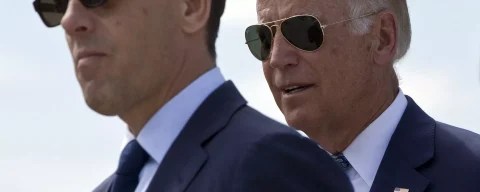
Secret Service Has Hunter Biden Gun Docs They Denied Possessing
Samizdat – 02.12.2022
Hunter Biden, son of the incumbent US president, is infamous for his involvement in many scandals, including substance abuse, commercial sex, infidelity, tax fraud and, probably, corruption at the highest level. Yet he always got away. However, the “gun incident” may change this.
The Secret Service admitted the existence of documents connected to Hunter Biden’s alleged illegal ownership of a gun, even though they previously denied possessing the files.
According to media reports, representatives of the Secret Service approached a firearms shop owner where Hunter Biden had illegally bought a gun, and demanded the paperwork connected to this transaction. The gun shop owner refused to comply, suspecting that the Secret Service officers wanted to hide Hunter’s ownership of the firearm.
This incident did not go unnoticed. Conservative activist group Judicial Watch sued the government agency for all materials concerning Hunter Biden`s ownership of a gun. The government watchdog group also highlighted the oddity of the Secret Service changing its stance on the case several times.
Tom Fitton, Judicial Watch President, marks the fact that “The Secret Service’s changing story on records raises additional questions about its role in the Hunter Biden gun incident.”
The gun incident Tom Fitton is referring to occurred in year 2018. Hunter Biden’s former sister-in-law, who became his lover, took his gun from a cupboard and threw it in a garbage can. She claims that her lover was mentally unstable at that moment and she was afraid for her life. Later she tried to retrieve the gun, but it was already at the police disposal. Approximately at this time, Secret Service officers approached the gun shop owner with demands to dispose of the paperwork, framing Hunter Biden.
When law enforcement started to wonder about the origins of the gun, it was suspected that Hunter Biden had lied in order to buy it. He answered in the negative when asked about past substance abuse and substance addiction. But five years ago he was fired from the US Navy due to a positive test for cocaine and he admits in his memoires that he continued to abuse substances at least up to 2018.
Intentional misrepresentation of information while buying firearms is a criminal offense according to US law. Yet he was not charged.
In April 2021 the Secret Service responded to a watchdog request, promising to provide necessary documents on this case. However, a year later in October 2022 this governmental organization stated that the previous response was a mistake and that it doesn’t have any records relevant to the “Hunter Biden’s Gun Incident.”
Hunter Biden is currently in the crosshairs for being allegedly involved in many murky affairs but always gets away.
For instance, Hunter was connected to some companies that were accused of corruption. The most notorious case is his membership in the board of Ukraine’s Burisma Group. His father then-Vice-President Joe Biden pressured then-president of Ukraine Petro Poroshenko to fire top prosecutor, who was investigating Burisma activities.
However, the gun incident may reverse the momentum. According to results of the November midterms, Republicans received a majority in House of Representatives. They have already promised to launch a full-scale investigation on Hunter Biden’s activities. What is more important federal agents think that they have enough evidence to criminally charge Hunter Biden for illegal gun ownership.
Israel and US hold drills targeted at Iran
RT | December 2, 2022
The Israeli military has conducted joint training operations with the United States, holding a series of air drills to simulate strikes on Iran just days after West Jerusalem pressed US officials to accelerate their “operational plans” against Tehran.
The Israel Defense Forces (IDF) detailed the drills in a statement on Wednesday, saying they practiced “various scenarios in the face of regional threats” while singling out the Islamic Republic by name.
“These exercises are a key component of our two militaries’ increasing strategic cooperation in response to shared concerns in the Middle East, particularly those posed by Iran,” the IDF said.
Four Israeli F-35 fighter jets and four American F-15s took part in the war games, which “simulated a long-range operational scenario and long-distance flights,” the IDF added, noting that a US KC-135 tanker aircraft also refueled a number of Israeli F-16s during the exercise.
The drills follow a visit to the US capital last month by IDF Chief of Staff Aviv Kochavi, who called on American officials to develop new “operational plans” to take on the Iranian military. The two sides also discussed their “commitment to ensuring that Iran never acquires a nuclear weapon,” despite Tehran’s repeated insistence that it is not pursuing the bomb.
Israel has carried out a number of drills specifically targeting Tehran in recent months, including an exercise over the Mediterranean Sea earlier this year which reportedly simulated strikes on Iran’s nuclear facilities. Another similar drill focused on nuclear sites was also conducted last June, involving more than 100 aircraft which practiced long-distance strikes.
While this week’s war games saw midair refueling operations with an American tanker, the Jerusalem Post previously reported that Israel had developed capabilities allowing it to reach Iran without the need to refuel along the way. The outlet suggested the air force had upgraded its US-made F-35 jets to accomplish that feat, but offered few details on the supposed improvements.
OSCE nothing more than a branch of NATO
By Ahmed Adel | December 2, 2022
The West is attempting to turn the Organization for Security and Co-operation in Europe (OSCE) into a subsidiary organisation of NATO, which is paradoxical because it is meant to be concentrated on peacebuilding, unlike the Atlantic Alliance which fosters tensions to justify its existence in a post-Soviet world. It is for this reason, among others, why Poland refused to grant a visa to Russian Foreign Minister Sergei Lavrov, thus barring him from attending the OSCE meeting held on December 1 and 2 in Lodz.
Poland claims it refused to grant Lavrov a visa because he is on the list of people who have been sanctioned. However, this does not explain why many from the Russian delegation were also denied visas despite not being on a sanctions list.
This weak excuse is to justify Warsaw’s consistent policy of provocation against Moscow, especially in the context of the current war in Ukraine. Poland and the West are hoping that by humiliating Russia, the country will withdraw from the OSCE. The West are desperate for Russia to withdraw so as to be able to implement and impose whatever it wants on the OSCE.
It is recalled that Moscow very effectively blocked the 2022 OSCE budget. Without a Russian withdrawal, the West will not be able to put the OSCE under its complete control, something that should be avoided as it would undermine the very foundation of the organisation – serving as a platform where Western and Eastern Europe could discuss and resolve issues.
Rather, the OSCE today has turned into a political tool of the West and effectively has no meaning or role anymore. With the OSCE descending into childlike behaviour by barring Russian delegates and top diplomats, it does seem that the organisation has become redundant as it is appearing more like a Euro-focussed political wing of NATO.
The OSCE meeting in Poland was essentially a two-day event for speakers to bash Russia.
None-the-less, Moscow is unlikely to be deterred by these provocations and will remain committed to its responsibilities as an OSCE member. This is likely to ensure that paths of reconciliation are always open despite Western attempts to close them.
The Kremlin might also believe that the OSCE’s uptick in provocations is because Poland is the current chairman. Russian policymakers might also believe that tensions will relax when North Macedonia takes over the chairmanship in 2023. It could be for this reason that Lavrov called out Poland by highlighting that its “anti-chairmanship” was taking the OSCE to its “most miserable place ever in this organisation’s history.”
It can be argued though that the OSCE has always been geopolitically against Moscow. It is recalled that the American establishment boasted that they had inserted a Trojan horse into the Eastern Bloc with the signing of the Helsinki Accords in 1975, the roots of today’s OSCE.
The Helsinki Accords stresses the respect for human rights and equal rights, a result of Western insistence because the Soviets were instead mostly interested in finalising Germany’s borders. The West is not interested in human rights though, and rather their main interest is ideological, economic and military hegemony all over the world, with human rights only being weaponised as one vehicle of achieving this goal.
Effectively, it can be argued that the OSCE was born as a trap for Moscow. When “security”, “cooperation” and “Europe” are in the name of the OSCE but it turns into an organisation completely dominated by promoting US interests, the argument is made that the organisation now resembles something like a branch of NATO.
Playing its own role in serving Western interests, Ukraine continues to call for Russia to be kicked out of the OSCE entirely, with Foreign Minister Dmytro Kuleba claiming in a tweet that the “OSCE is on a highway to hell because Russia abuses its rules and principles.”
“Everything has been tried in regards to Russia: to please, to appease, to be nice, to be neutral, to engage, not to call a spade a spade. The bottom line: It would be better for OSCE to carry on without Russia,” he added.
However, this is once again an example of Kiev’s classic projection of portraying their own illiberal values as that of Russia. In fact, it is Europe’s own unwillingness to “call a spade a spade,” such as whitewashing Ukraine’s fascistic policies and pretending it was a Western-styled liberal country, which ultimately led to war.
Proving that the OSCE is now nothing more than a branch of NATO, US Under Secretary of State Victoria Nuland said, when speaking in Lodz, that Russia had “failed demonstrably to break the OSCE.”
If the OSCE is anything other than a branch of NATO, it must be questioned why the US Under Secretary of State was an honoured guest at a Europe-focussed and Europe-based organisation, which was initially established to connect Western and Eastern Europe together, while Russia’s top diplomat and other officials were barred.
Ahmed Adel is a Cairo-based geopolitics and political economy researcher.
US troops are combat ready on Russian border – Lithuanian commander
RT | December 2, 2022
The US forces stationed in Lithuania have switched their stance from deterrence of Russia to combat readiness, Lithuanian Chief of Defense Lieutenant General Valdemaras Rupsys has said. The country shares a border with Russia’s Kaliningrad exclave on the Baltic Sea, as well as with Belarus and Latvia.
“The main factor used to be deterrence, the demonstration that they were here and could increase our forces at any time,” Rupsys told radio LRT on Friday.
“And now the situation has changed: those units are being deployed so that they can fight immediately. It’s a seamless … transition from one mode to another.”
“At least until 2025, we will have rotating US units that will carry out military training and serve as a factor of deterrence, but also will be ready to carry out defensive actions together with us and other allies,” he added.
The chief of defense said on Wednesday that he had been assured by the Chairman of the US Joint Chiefs of Staff General Mark Milley that American troops would have “a persistent presence in Lithuania.”
Battalion-sized US units with around 500 troops, Abrams tanks and Bradley armored vehicles have been stationed on a rotation basis in the eastern Lithuanian city of Pabrade since 2019. NATO also maintains a German-led multinational unit in the country.
The US-led bloc announced the enhancement of its military capabilities in response to Russia’s military operation in Ukraine, which began in February. NATO Secretary General Jens Stoltenberg said in June that the alliance’s rapid-response force would grow from around 40,000 to over 300,000.
Moscow has repeatedly stated that it considers NATO troops near its borders a national security threat. Foreign Minister Sergey Lavrov said on Thursday that the bloc’s actions signify its return to “conceptual priorities” adopted during the Cold War.
Featured Video

Why Hamas Really Attacked Israel on Oct. 7
or go to
Aletho News Archives – Video-Images
From the Archives
Confronting the Threat of Ethnic Bioweapons
By Tony Cartalucci – New Eastern Outlook – 29.11.2017
The United States Air Force’s 59th Medical Wing’s molecular biology branch recently was revealed to have been collecting specifically Russian RNA and synovial (connective) tissue samples, prompting fears in Russia of a possible US directed ethnic-specific bioweapons program. … continue
Blog Roll
 Aletho News
- Oct. 7 Forever Marks The Big Reveal: ‘We See You, Israel, We Revile You, We Reject You!’
- Meet the US generals and admirals advancing Israeli policy
- Israel’s Straw Widow Protocol: The Kill Zones Where Civilians Were Labelled ‘Terrorists’
- Leading Israeli Think Tank Publishes Psychotic Israeli ‘National Security’ Doctrine
- Are the United States and Israel in Decline-and-Fall Mode?
- Why Hamas Really Attacked Israel on Oct. 7
- Declassified UK exposes British man who fought for ‘Israel’ in Gaza
- West’s death cult in a theater near you
- How the Yandex ‘Russian bots’ lie fell apart
- Burnham’s ‘Russia did Brexit’ ruse crumbles
- If Americans Knew
- Israeli settlers attack West Bank center for disabled children, church leader calls for int’l action
- Pulling Out Teeth Just to Live: How Israel Has Devastated Dental Care in Gaza
- Gaza’s “ceasefire” death toll passes 1,500 – Daily Update
- Activists Abused By Israel Return to New Freedom Flotilla Mission
- 60 Minutes won’t tell the full truth about Israeli settler violence
- Nearly 50,000 women, girls killed or severely injured in Gaza since October 2023: UN Women
- ADL is working with AI companies to suppress alleged ‘antisemitism’
- Israeli occupation forces using social media surveillance unit to target hundreds of Palestinians in the West Bank
- Israel’s New – and Terrifying – Security Doctrine
- Israeli Attacks Kill Five in Gaza, Including a four-year-old and a woman
- No Tricks Zone
- New Study Suggests Large Regions Of The Pacific Ocean Have Been Cooling For The Last 80 Years
- Germany’s Green Energy Debacle: High Energy Costs Force Kahla Porzellan to Close After 182 Years!
- New Study: 50 Years Of The Most Aggressive ‘Net Zero’ Policies Can Only Affect The Global Climate By 0.03°C
- US September “Heat” Was No Record…Many Records Set Decades Ago
- Latest European Green Energy Debacle; Portugal’s Largest Flagship Solar Park Insolvent!
- Green Energy Debacle: German Expert Professor Fritz Vahrenholt Warns Of Severe Economic And Social Consequences
- Two More Paleo Reconstructions Affirm Meters-Higher Sea Levels Across Ireland, Brazil 7000-6000 Years Ago
- New Study: Earth And Venus Surface Warmth Largely Explained By Convection And Lapse Rate, Not CO2 Or Radiation
- 2025 Nature Paper Claiming Worsening Global Drought Gets RETRACTED …Heavily Flawed
- New Study: ‘Global Drought Shows No Detectable Recent Acceleration Under Climate Warming’

