ROBERT MALONE INTERVIEWED BY JIMMY DORE
anti_republocrat | September 15, 2021
Robert Malone, inventor of mRNA technology, is interviewed by Jimmy Dore. Malone is not “anti-vax,” but he is “pro-ethics” and believes that all medical procedures require truly informed consent, with absolutely no coercion. He shares the view of Geert Vanden Bossche, whom he mentions in the interview, that the vaccines help to generate the variants because they are non-sterilizing. He says they should be targeted toward those who are at highest risk from the virus, seniors and those with multiple co-morbidities. I personally disagree with that. I think they should be taken off the market altogether, but at least he is adamantly against mandates.
FEC rules Twitter shadowbanning Congressman Matt Gaetz wasn’t election interference
By Cindy Harper | Reclaim The Net | September 18, 2021
The Federal Election Commission (FEC) unanimously rejected a complaint by Republican Rep. Matt Gaetz against Twitter, alleging the social media company shadowbanned him in 2018. The complaint accused Twitter of election interference.
In 2018, Vice reported that Twitter subjected Republican legislators, including Gaetz, to shadowbans, which limited the visibility of their accounts in search results. Following the report, Gaetz filed a complaint against Twitter with the FEC in July 2018.
We obtained a copy of the complaint for you here.
The FEC also recently ruled that Twitter’s suppression of the Hunter Biden corruption story was not election interference.
Last month, all six FEC commissioners agreed that Twitter’s shadowban did not break election interference laws.
Twitter explained that Gaetz’s account was shadowbanned because of being “associated with other accounts that already had high indicia of misuse or abuse.”
In the original complaint, Gaetz said that Twitter’s shadowban amounted to “making an in-kind contribution to [Gaetz’s] political opponents.”
He used a “free billboards” analogy to make his point: “Imagine the following: a billboard company in Florida wants to get involved in the political process, so it offers all candidates running for office… free billboards to promote their campaigns.”
“If the company did not randomly assign locations, but rather, offered large billboards in premium locations within the district to Democratic candidates, but only offered billboards stuck behind dumpsters, outside the district, to Republican candidates, it could not credibly argue that it was not giving an “in-kind” donation to the Democratic candidates.”
The complaint also argued that Twitter was a debate platform, and, therefore, it is supposed to follow FEC’s regulations on political debates.
“Twitter, as a self-identified news organization, and as a recognized debate platform, is a staging organization for candidate debates,” the complaint said.
The FEC rejected the argument, Business Insider reported, referring to a 2019 legal analysis by its general counsel that found out that Twitter could legally limit an account’s activity if it is concerned about “divisive content.” The analysis also concluded that Twitter messages are not “debate within the meaning of the Commission’s regulation,” as its definition of debate means “face-to-face appearances or confrontations.”
How the CIA hid their MKULTRA mind-control program
By Jon Rappoport | No More Fake News | September 17, 2021
Back in the early 1990s, I spoke with John Marks, author of Search for the Manchurian Candidate. This was the book (1979) that helped expose the existence and range of the infamous CIA MKULTRA program.
Marks related the following facts to me. He had originally filed many Freedom of Information (FOIA) requests for documents connected to the CIA’s mind-control program. He got nothing back.
Finally, as if to play a joke on him, someone at the CIA sent Marks 10 boxes of financial and accounting records. The attitude was, “Here, see what you can do with this.”
I’ve seen some of those records. They’re very boring reading.
But Marks went through them, and lo and behold, he found he could piece together MKULTRA projects, based on the funding data.
Eventually, he assembled enough information to begin naming names. He conducted interviews. The shape of MKULTRA swam into view. And so he wrote his book, Search for the Manchurian Candidate.
He told me that three important books had been written about MKULTRA, and they all stemmed from those 10 boxes of CIA financial records. There was his own book; Operation Mind Control by Walter Bowart; and The Mind Manipulators by Alan Scheflin and Edward Opton.
After publishing his book, Marks continued to press the CIA for more MKULTRA information. He explained to me what then happened. A CIA official told him the following: in 1962, after ten years of mind-control experiments, the whole program had been shifted over to another internal CIA department, the Office of Research and Development (ORD).
The ORD had a hundred boxes of information on their MKULTRA work, and there was no way under the sun, Marks was told, he was ever going to get his hands on any of that. It was over. It didn’t matter how many FOIA requests Marks filed. He was done. The door was shut. Goodbye.
The CIA went darker than it ever had before. No leaks of any kind would be permitted.
In case there is any doubt about it, the idea of relying on the CIA to admit what it has done in the mind-control area, what it is doing, and what it will do should be put to bed by John Mark’s statements. The CIA always has been, and will continue to be, a rogue agency.
To give you an idea of how far the CIA, the US military, and its allied academics will go in MKULTRA “research,” here is what I wrote in 1995 about several human experiments. My information was based on the three key books I mentioned above, as well as Martin Lee’s classic, Acid Dreams:
“Dr. Robert Heath of Tulane University, as early as 1955, working for the Army, gave patients LSD while he had electrodes implanted deep inside their brains.”
“In the mid-1950’s, Paul Hoch, M.D., a man who would become Commissioner of Mental Hygiene for the State of New York, then a laborer in the field for the CIA, gave a ‘pseudoneurotic schizophrenic’ patient mescaline. The patient had a heaven-and-hell journey on the compound. But Hoch followed this up with a transorbital leucotomy [aka lobotomy]… Hoch also gave a patient LSD, and a local anesthetic, and then proceeded to remove pieces of his cerebral cortex, asking at various moments whether the patient’s perceptions were changing.”
People need to understand how the history of mind control and psychiatry are interwoven, and how the madmen and murderers within these “professions” are content to use torture “in the name of science.”
From a naturalnews.com article by the heroic whistleblower, psychiatrist Dr. Peter Breggin (“Never again! The real history of psychiatry”), we get insight into one aspect of that history.
Breggin:
“[Before World War 2, in America], organized psychiatry had been sterilizing tens of thousands of Americans. For a time in California, you couldn’t be discharged from a state hospital unless you were sterilized. In Virginia the retarded were targeted. American advocates of sterilization went to Berlin to help the Nazis plan their sterilization program. These Americans reassured the Germans that they would meet no opposition from America in sterilizing their mentally and physically ‘unfit’ citizens.”
“While the murder of mental patients was going full swing in Germany, knowledgeable American psychiatrists and neurologists didn’t want to be left out. In 1942, the American Psychiatric Association held a debate about whether to sterilize or to murder low IQ ‘retarded’ children when they reached the age of five. Those were the only two alternatives in the debate: sterilization or death.”
“After the debate, the official journal of the American Psychiatric Association published an editorial in which it chose sides in favor of murder (“Euthanasia” in the American Journal of Psychiatry, 1942, volume 99, pp. 141-143). It said psychiatrists would have to muster their psychological skills to keep parents from feeling guilty about agreeing to have their children killed.”
The psychiatrists who later went to work for the CIA, in the MKULTRA program, were devoid of conscience. Any experiment was a good experiment. Human beings were “useful subjects.”
Here is an MKULTRA sub-project you may not have heard of. I wrote about it several years ago—
Some would say the 1940s and 50s were the most vibrant and innovative period in the history of American jazz.
During those years, it was common knowledge that musicians who were busted for drug use were shipped, or volunteered to go, to Lexington, Kentucky. Lex was the first Narcotics Farm and US Health Dept. drug treatment hospital in the US.
According to diverse sources, here’s a partial list of the reported “hundreds” of jazz musicians who went to Lex: Red Rodney, Sonny Rollins, Chet Baker, Sonny Stitt, Howard McGhee, Elvin Jones, Zoot Sims, Lee Morgan, Tadd Dameron, Stan Levey, Jackie McLean.
It’s also reported that Ray Charles was there, and William Burroughs, Peter Lorre, and Sammy Davis, Jr.
It was supposed to be a rehab center. A place for drying out.
But it was something else too. Lex was used by the CIA as one of its MKULTRA centers for experimentation on inmates.
The doctor in charge of this mind control program was Harris Isbell. Astonishingly, Isbell was, at the same time, a member of the FDA’s Advisory Committee on the Abuse of Depressant and Stimulant Drugs.
Isbell gave LSD and other psychedelics to inmates at Lex.
At Sandoz labs in Switzerland, Dr. Albert Hofmann, the discoverer of LSD, also synthesized psilocybin from magic mushrooms. The CIA got some of this new synthetic from Hofmann and gave it to Isbell so he could try it out on inmates at Lex.
Isbell worked at Lex from the 1940s through 1963. It is reported that in one experiment, Isbell gave LSD to 7 inmates for 77 consecutive days. At 4 times the normal dosage. That is a chemical hammer of incredible proportions.
To induce inmates to join these MKULTRA drug experiments, they were offered the drug of their choice, which in many cases was heroin. So at a facility dedicated to drying out and rehabbing addicts, the addicts were subjected to MKULTRA experiments and THEN a re-establishment of their former habit.
Apparently, as many as 800 different drugs were sent to Isbell by the CIA or CIA allies to use on patients at Lex. Two of the allies? The US Navy and the US National Institute of Mental Health—proof that MKULTRA extended beyond the CIA.
In another MKULTRA experiment at Lex, nine men were strapped down on tables. They were injected with psilocybin. Bright lights were beamed at their eyes—a typical mind control component.
During Isbell’s tenure, no one knows how many separate experiments he ran on the inmates.
As I say, Lex was the main stop for drying out for NY jazz musicians. How many of them were taken into these MKULTRA programs?
As Martin Lee explains in his book, Acid Dreams, “It became an open secret… that if the [heroin] supply got tight [on the street], you could always commit yourself to Lexington, where heroin and morphine were doled out as payment if you volunteered for Isbell’s whacky drug experiments. (Small wonder Lexington had a return rate of 90%.)”
A June 15, 1999, Counterpunch article by Alexander Cockburn and Jeffrey St. Clair, “CIA’s Sidney Gottlieb: Pusher, Assassin & Pimp— US Official Poisoner Dies,” contains these quotes on Dr. Isbell:
“Gottlieb also funded the experiments of Dr. Harris Isbell. Isbell ran the Center for Addiction Research in Lexington, Kentucky. Passing through Isbell’s center was a captive group of human guinea pigs in the form of a steady stream of black heroin addicts. More than 800 different chemical compounds were shipped from Gottlieb to Lexington for testing on Isbell’s patients.”
“Perhaps the most infamous experiment came when Isbell gave LSD to seven black men for seventy-seven straight days. Isbell’s research notes indicates that he gave the men ‘quadruple’ the ‘normal’ dosages. The doctor marveled at the men’s apparent tolerance to these remarkable amounts of LSD. Isbell wrote in his notes that ‘this type of behavior is to be expected in patients of this type’.”
“In other Gottlieb-funded experiment at the Center, Isbell had nine black males strapped to tables, injected them with psylocybin, inserted rectal thermometers, had lights shown in their eyes to measure pupil dilation and had their joints whacked to test neural reactions.”
 If you think these experiments were so extreme they bear no resemblance to modern psychiatry, think again. Thorazine, the first so-called anti-psychotic drug, was researched on the basis of its ability to make humans profoundly quiescent and passive. Electroshock and lobotomy are straight-out torture techniques that also destroy parts of the brain. SSRI antidepressants increase violent behavior, including homicide. Among its many documented effects, Ritalin can induce hallucinations and paranoia.
Well, all these effects are part and parcel of the original (and ongoing) MKULTRA.
But now the whole population, via psychiatry, is included in the experiment.
Which is one reason why THE RIGHT TO REFUSE MEDICATION must be protected and expanded.
Including, of course, the right to refuse VACCINES.
For example, the COVID vaccines.
Jon Rappoport is the author of three explosive collections, THE MATRIX REVEALED, EXIT FROM THE MATRIX, and POWER OUTSIDE THE MATRIX.
That no one will resign for killing Kabul children shows American empire’s true face

Seven children, including Jamshid Yousoufi’s two-year-old daughter Sumaya, died in the American strike, which killed ten civilians in total. © RT
By Nebojsa Malic | RT | September 18, 2021
While finally admitting the “righteous” drone strike against ISIS-K terrorists actually killed civilians and children, the Pentagon won’t punish anyone, because these things aren’t considered war crimes when the US does it.
General Kenneth McKenzie, head of the US Central Command, offered “profound condolences” on Friday to the families of 10 people – seven of them children – killed in the August 29 drone strike in Kabul. It was ordered in “earnest belief that it would prevent an imminent threat to our forces,” but “it was a mistake and I offer my sincere apology,” he said.
McKenzie then did what the Pentagon does best: he put up a powerpoint presentation, explaining how US “intelligence” came to the conclusion that 43-year-old aid worker Zemari Ahmadi going to and from work in his white Toyota was really an Islamic State Khorasan (ISIS-K) terrorist plotting a car-bombing of the Kabul airport.
What he did not do, however, is resign or promise anyone else involved in this atrocity would do the same – or even be reprimanded, counseled, or otherwise disciplined. One might think someone ought to, considering that they killed children.
That’s not how the Pentagon works, though. For two weeks, the US military lied about the drone strike, and the corporate press ran with it.
McKenzie’s CENTCOM initially claimed that the vehicle was an “imminent threat” to the airport and the ongoing airlift, and that there were no civilian casualties. Then they said there might have been civilian casualties, but blamed that on the supposed secondary explosions.
“We know that there were substantial and powerful subsequent explosions resulting from the destruction of the vehicle, indicating a large amount of explosive material inside that may have caused additional casualties,” CENTCOM spokesman Captain Bill Urban said on August 29.
Literally none of this was true.
According to a New York Times investigation published on September 10, what the US thought was a suspicious compound turned out to be the office of a US-funded food charity, where Ahmadi had worked for 14 years. The suspicious bags and containers loaded into his white Toyota? Laptop cases and jugs of water he was bringing home.
Ahmadi had even applied for a visa to emigrate into the US, as one of the “special immigrants” the Kabul airlift was ostensibly trying to evacuate. Someone gave the order, however, and a Hellfire missile obliterated him, his car, and seven children that came to greet him.
The last US flight out of Kabul departed just before midnight on August 30. President Joe Biden addressed the nation the following day, calling the airlift an “extraordinary success.” The day after, Defense Secretary Lloyd Austin and Chairman of the Joint Chiefs of Staff General Mark Milley faced reporters at the Pentagon, patting themselves on the back for a job well done.
Asked about the drone strike, Milley described it as “righteous” and said it killed an ISIS-K “facilitator.”
“Were the[re] others killed? Yes. Who are they? We don’t know,” he said, seeming more interested in talking about his own anger and pain over the war that just ended.
Twelve days later, on Monday after the Times investigation was made public, Pentagon spokesman John Kirby was still insisting that the Kabul strike had prevented an “imminent attack” against the airport and the US forces there. It wasn’t until Friday afternoon, when Washington traditionally releases all the bad news, that McKenzie popped up on the screen at the Pentagon briefing room and delivered his “oops.”
Except this isn’t an “oops.” It’s a war crime. They killed children.
Ahmadi and the children were killed because the White House had to look tough after the August 26 suicide bombing at the Kabul airport killed 13 US troops and 170 Afghans, and demonstrate “over the horizon” capabilities it claimed to have. McKenzie had to look like the withdrawal wasn’t a humiliation. Milley had to look competent – just like when he reassured China in January that “the American government is stable and everything is going to be OK,” while working with the Democrats to sideline President Donald Trump and prepare DC for Biden, according to a book widely quoted on Tuesday.
Resign? Of course not. Besides, Milley said he did nothing wrong, and Biden declared “complete confidence” in him.
Thing is, Joe and Ken and Mark and everyone else involved up and down that chain of command killed children.
Worse yet, they had to have known it right away. Local media reported the civilian casualties immediately, followed by outlets like CNN. RT interviewed the survivors days before the Times investigation was published. Is anyone seriously suggesting the New York Times had the resources and capability that the infinitely better-funded Pentagon and the CIA did not? Or were they too busy studying critical race theory and purging domestic “deplorables” to pay attention to which white Toyota they were blowing up in Kabul? Don’t they all look alike, anyway?
They. Killed. Children.
It’s not even the first time, either. According to the ‘Drone Papers’ published in October 2015 and detailing US drone strikes in Afghanistan, Somalia, Yemen and elsewhere, up to 90% of casualties at one point were innocents – but the military classified them as terrorists anyway.
The man who revealed this, Daniel Hale, was sent to prison for 45 months back in July.
The man who blew the whistle on the CIA’s torture program, John Kiriakou, likewise ended up behind bars. WikiLeaks’ Julian Assange is still stuck in an English oubliette, a decade after exposing US war crimes in Iraq. Meanwhile, the generals and politicians who murder children and commit other war crimes – they get medals and promotions, fawning book accounts, lush retirements in “defense” industries. And power, of course.
That’s how the empire works. Always has been, even as its child-murdering leaders talk about “defending democracy” and “rules-based international order” and “human rights for women and girls.”
Tell that to two-year-old Malika Ahmadi and Sumaya Yousoufi, whom you killed on August 29 in Kabul. I hope their ghosts haunt you for the rest of your miserable lives.
Nebojsa Malic is a Serbian-American journalist, blogger and translator, who wrote a regular column for Antiwar.com from 2000 to 2015, and is now senior writer at RT. Follow him on Telegram @TheNebulator
YouTube deletes interview with congressman Thomas Massie
By Cindy Harper | Reclaim The Net | September 17, 2021
An episode on author and podcaster Tom Woods’ channel featuring Congressman Thomas Massie was deleted by YouTube. The Google-owned platform claimed that the video violated its community guidelines but did not specify which guidelines were violated other than that the video contained “medical misinformation.”

In the interview (uncensored on Odysee), Massie talked about ignoring the mask-wearing mandate in the House of Representatives.
He also asked: “If a vaccination mandate is immoral, is it moral to fake your vaccine card?”
However, he clarified that: “I’m not advocating. I’m asking the question.”
Massie is no stranger to censorship on Big Tech platforms. Just last month, Twitter quarantined a tweet from the congressman, preventing people from responding to and sharing it.

Why the Biden COVID-19 Vaccine Mandate is Unconstitutional
Techno Fog | September 14, 2021
On September 9, President Biden announced he would circumvent the democratic process, ordering the Secretary of the Department of Labor to require employers with over 100 workers to “ensure their workforces are fully vaccinated or show a negative test at least once a week.”
This was essential, as Biden said, “to protect vaccinated workers from unvaccinated workers.”
As we have explained, the Secretary of Labor will issue these regulations through OSHA by way of an Emergency Temporary Standard (ETS). The ETS would allow the Secretary of Labor to issue the vaccine mandate without the normal administrative rulemaking requirements (like notice and public comment periods).

While the Biden Administration tells the public that there’s no time to waste in issuing the mandate, the truth is that OSHA/Labor failed to argue the necessity of a vaccine mandate since the vaccines have been available – a time period approaching one year. Moreover, the Biden Department of Labor is secretly meeting with the US Chamber of Commerce and business lobbyists to gather support for the mandate. As Bloomberg Law reports:
Solicitor of Labor Seema Nanda held a virtual meeting with Neil Bradley, the Chamber’s chief policy officer, and other business lobbyists. The Chamber, the largest business lobbying group in the U.S., has yet to publicly declare a position on the coming Occupational Safety and Health Administration emergency rulemaking.
It was one of at least three briefings the department held Friday for labor union leaders and employer associations—constituencies the White House hopes to forge partnerships with to lift the vaccination rate nationwide. Information from the calls was disclosed to Bloomberg Law by eight sources who took part, all of whom requested anonymity because they didn’t have approval to speak publicly.
Why the Vaccine Mandate is Unconstitutional
As you can imagine, the constitutionality of the vaccine mandate will be litigated as soon as OSHA issues the rules. The media is running interference, telling the public that challenges to the mandate are “unlikely to succeed.”
Do not believe them.
The legality of the vaccine mandate will be assessed under what is called the major rules doctrine (also known as the major questions doctrine). Under this doctrine, the courts look to (1) whether the agency action is a major rule; and (2) whether Congress has clearly authorized the agency action.
As Justice Scalia stated in 2014, “We expect congress to speak clearly if it wishes to assign to an agency decisions of vast ‘economic and political significance.’”
From here we turn to the first question of the major rules doctrine: there is zero doubt that it is a major rule. It would affect the healthcare decisions – and implicate the personal autonomy – of “some 80 million private sector workers.” It is an action never before taken by OSHA, the Department of Labor, and any other federal agency. It would affect the entire US economy.
In support of my position, we have seen lesser invasive agency rules be determined to be major rules. For example, “rate-regulations” of telephone companies has been held to be a major rule. MCI Telecommunications Corp. v. American Telephone & Telegraph Co., 512 U.S. 218 (1994).
From there we get to the second question: whether Congress has clearly authorized the Department of Labor/OSHA to mandate vaccines. The answer is no.
If Congress clearly authorized (not just authorized, but clearly authorized) Labor/OSHA to mandate vaccines, then we would have seen such authority in the OSH Act of 1970. Look for yourself – the language isn’t there. Instead, there are general grants of authority to “set mandatory occupational safety and health standards.”
Looking to the history of OSHA, this authority has been understood to regulate employer actions to provide a safe workplace (Benzene limits) or employee actions at work (operation of heavy equipment). The OSH Act has never been understood historically to include mandatory vaccinations. This is significant because the Supreme Court recently looked to agency history to determine the CDC lacked the authority to issue its latest eviction mandate.
For an example of “clear authority” relating to public health, look to the authority Congress gave HHS to take action in case of “significant outbreaks of infectious diseases.” Going further, to allow the mandate would be to allow OSHA to require vaccination as a condition of employment. The OSH Act contains no such language or authority.
So there we have it. This is a “major rule” and Congress has not “clearly authorized” Labor/OSHA to issue a vaccine mandate. It is an unlawful – and unconstitutional – seizure of authority by the Executive. Expect further challenges on whether the ETS itself (and the finding of “grave danger”) is legal.
We also observe that we by no means concede Congressional authority to mandate vaccines. (In other words, Congress could not give OSHA/Labor this authority because Congress has no such authority to give.) You may have seen some pundits argue that the 1905 case of Jacobsen v. Massachusetts gives this authority. These arguments are misplaced, as that was the Supreme Court over 100 years ago considering state, and not federal, authority.
One Final Point – Why Justice Kavanaugh Matters
In 2017, when Justice Kavanaugh was sitting on the DC Circuit, he wrote a dissent from a denial of rehearing en banc, in which he thoroughly summarized the major rules doctrine. He argued that the FCC’s net neutrality rule was unlawful, in that it was a “major rule” that was not clearly authorized by Congress.
Kavanaugh’s 2017 dissent was one of the most (or perhaps the most) comprehensive discussions of the major rules doctrine ever written in the DC Circuit. Kavanaugh went through a number of Supreme Court cases in support of his position and argued the doctrine essential to uphold the separation of powers. To this author, it reveals Kavanaugh values this doctrine and believes it should be applied with vigor.
We see an example of this in Justice Kavanaugh’s concurring opinion in the original application to vacate the stay of the CDC eviction moratorium (June 29, 2021), where Kavanaugh wrote “clear and specific congressional authorization (via new legislation) would be necessary for the CDC to extend the moratorium.”
Whether Kavanaugh has the courage to apply his convictions is another matter.
After Two Recalls, GM Finally Just Tells Bolt EV Owners: “Don’t Park Your Car Within 50 Feet Of Another Car”

Tyler Durden | Zero Hedge | September 16, 2021
After a series of recalls that we have documented here on Zero Hedge, General Motors looks to be taking its precautions with the Chevy Bolt one step further: the automaker is asking Bolt owners to park “at least 50 feet” from other vehicles if you’re going to leave your car in a parking deck.
GM spokesman Dan Flores, who we’re sure isn’t getting paid enough to deliver this line with a straight face, said this week: “In an effort to reduce potential damage to structures and nearby vehicles in the rare event of a potential fire, we recommend parking on the top floor or on an open-air deck and park 50 feet or more away from another vehicle. Additionally, we still request you do not leave your vehicle charging unattended, even if you are using a charging station in a parking deck.”
“We are aware of 12 GM confirmed battery fires that have been investigated involving Bolt EVs vehicles in the previous and new recall population,” he continued, telling The Detroit News. “We’re still working with LG around the clock to resolve the issue. Both companies understand the urgency to move as quickly as possible, but, again, the most important thing here is we have to get this right.”
Recall, back in July, General Motors issued their second recall for the Chevy Bolt after it announced that two Bolts had caught fire without impact and that at least one of the two was related to the battery and happened despite the owner getting a fix from a previous recall.
The second recall included all Bolt EVs from 2017 to 2019, encompassing 68,000 vehicles. 50,925 of those vehicles were located in the U.S. and they have batteries that are produced at LG Chem’s Ochang, South Korea, facility, the report notes.
A spokesman for GM said earlier this summer: “As part of GM’s commitment to safety, experts from GM and LG have identified the simultaneous presence of two rare manufacturing defects in the same battery cell as the root cause of battery fires in certain Chevrolet Bolt EVs. As part of this recall, GM will replace defective battery modules in the recall population. We will notify customers when replacement parts are ready.”

GM, at the time, was recommending that owners:
- Return the vehicle to the 90% state of charge limitation using Hilltop Reserve mode (for 2017-2018 model years) or Target Charge Level mode (for 2019 model year), or visit a dealer to make that change.
- Charge the vehicle after each use and avoid depleting the battery below 70 miles of remaining range.
- Park the vehicle outside immediately after charging and do not leave the vehicle charging overnight.
- Customers who have not received the advanced diagnostics software should visit their dealer to get the update. After obtaining the software, limit the state of charge to 90% and follow the advice above.
We’re guessing those rules still run concurrent with the new “50 foot” rule.
Back in November of 2020, tens of thousands of Chevrolet Bolt vehicles were first recalled after the company became aware of “five fires involving the cars” that resulted in two injuries from smoke inhalation.
A notice was issued in November for 50,932 of the vehicles in the U.S. dating from 2017 to 2019. General Motors said the battery could “catch fire when charged to full or nearly full capacity,” at the time.
As a temporary fix, the company said it would be reprogramming its battery’s “hybrid propulsion control module 2” to only allow charging to 90%.
“This fix clearly looks as though it didn’t work and the company will likely now be forced to take more drastic measures.” we said about the recall in July. Apparently, we were right.
GM CFO Paul Jacobson commented last Friday at an RBC conference: “The number one focus right now obviously is to get the production line fixed, the manufacturing process cleaned up and get back into cell production and ultimately get a path for these vehicles to be repaired and … do what’s right for our customers.”
How Politicians Make Millions Off Our Corrupt Political System
By Dr. Joseph Mercola | September 16, 2021
Politicians receive very comfortable salaries. Speaker of the House Nancy Pelosi, for instance, earns $223,500 a year, making her the third-highest-paid elected official in the U.S. Yet, since 2004, her wealth has increased from $41 million to nearly $115 million, according to OpenSecrets, which began tracking lawmakers’ personal finances that year.
She’s not alone in her wealth. Personal financial disclosures reveal that more than half of Congress members are millionaires, with a median net worth of just over $1 million. As is often the case, however, the top 10% of the lawmakers in terms of wealth are three times richer than the bottom 90%. Pelosi comes in as number 6 on a list of the wealthiest members of the 116th Congress.
At issue isn’t the fact that politicians are multimillionaires — rather, as noted on a recent Twitter thread by Pulitzer Prize winning journalist Glenn Greenwald, it’s how they made their millions:
“If you think it’s fine and normal that the Speaker of the House’s personal wealth tripled to $115 million ever since financial disclosures were required (2004), that’s fine, but the issue is how that money was made. It was from companies directly affected by her actions.”
Politicians get rich from ‘lucky’ stock trading
 In the last two years, nearly 75% of Pelosi’s stock trades have involved Big Tech stocks, totaling over $33 million in trading. “That has happened as major legislation is pending before the House, controlled by the committees Pelosi oversees, which could radically reshape the industry and laws that govern the very companies in which she and her husband most aggressively trade,” Greenwald wrote in a blog.
Pelosi’s most traded company was Apple, accounting for 17.7% of her trades. But unlike most people buying and selling Apple stock, Pelosi had the privilege of speaking privately with Apple CEO Tim Cook on at least one occasion to discuss the company’s standing and how it could be affected by pending bills relating to Silicon Valley reforms.
The call in question occurred just days after antitrust reform legislation was introduced. Big Tech pushed back, and Cook called Pelosi directly to voice his concerns. Pelosi, according to The New York Times, then asked him which measures he specifically objected to. Greenwald reported on the blatant conflict of interest:
“Sources who refused to be identified tried to convince the Times’ reporters that ‘Ms. Pelosi pushed back on Mr. Cook’s concerns about the bills.’ But in doing so, they confirmed the rather crucial fact that Pelosi was having personal, private conversations with the CEO of a company in which she and her husband were heavily invested and off of which they were making millions of dollars in personal wealth.
“And Pelosi, according to the report, asked Cook what changes were needed to avoid harming Apple and other Silicon Valley giants.”
Trading stocks in companies affected by pending legislation
Greenwald also revealed that Pelosi’s five most-traded stocks in the last two years — Apple, Microsoft, Facebook, Amazon and Google — were those that stood to be most affected by pending legislation, and not just any legislation, but legislation that she was working to negotiate and work through Congress.
Four of the companies — Apple, Amazon, Facebook and Google — were directly identified by the House Antitrust Subcommittee as being monopolies, making their futures heavily dependent on the pending legislation. According to Greenwald:
“Beyond that, Google — one of the companies in which the Pelosis’ stock trades have made millions — is one of the top five donors to the House Speaker. The wealthy couple buys and sells in Google stock, making millions. She works on bills that directly affect the future trajectory of Google. And they lavish her campaign coffers with cash, a key source of her entrenched power.”
Meanwhile, Pelosi’s husband, Paul, purchased risky options in Alphabet, the parent company of Google, in February 2020, which he sold in June, netting more than $5 million in profits. The purchase was made, Greenwald wrote:
“… right before the market began plunging due to the COVID epidemic and right before the House, led by his wife, was set to introduce new legislation to regulate those same tech companies. Yet even as the prices in several of those companies plummeted, Paul Pelosi held onto them, only to sell them last June at a massive profit.”
He also cited two other “disturbing incidents” in which Paul Pelosi had impeccable timing with his investment decisions, including exercising nearly $2 million worth of Microsoft call options within two weeks of a Microsoft contract to supply the U.S. Army with augmented reality headsets. The other incident involved the purchase of about $1 million in Tesla stock after calls made prior to the government announcing incentives it would offer to promote the shift toward electric vehicles.
“In response to media inquiries,” Greenwald reported, “Pelosi denied that she is involved in or even has knowledge of her husband’s stock trading. There is, of course, no way to confirm or disprove that, but what is clear is that the vast wealth generated by those stock trades in companies Pelosi greatly affects — and about which she clearly has non-public information — directly enriches Pelosi herself.”
Suspicious COVID-related trading
Not every lawmaker had filed annual financial disclosures at the time of OpenSecrets’ latest report, including Sen. Kelly Loeffler, (R-Ga.), who has an estimated worth of over $500 million.
She and her husband, New York Stock Exchange chief executive Jeff Sprecher, came under fire for suspicious stock trades worth between $1.2 million and $3.1 million that occurred immediately after a “closed-door coronavirus briefing in late January” 2020. Among them:
- Buying stock in an online travel booking site in February 2020, then selling it four days later, just before a ban on flights from Europe was publicly announced.
- Purchasing stock in Citrix, which sells GoToMeeting teleworking software.
Loeffler denied using confidential information from her Senate duties to make a private profit but announced in April 2020 that she and her husband were liquidating their stock holdings and “moving into exchange-traded funds and mutual funds.” In other suspicious instances:
- Sen. Richard Burr, (R-N.C.), chairman of the Senate Intelligence Committee, who receives frequent briefings about potential U.S. threats, also dumped stock, including in hotel companies, worth up to $1.7 million in late January 2020.
- “As Intel chairman,” Burr “got private briefings about coronavirus weeks ago,” Rep. Alexandria Ocasio-Cortez, (D-N.Y.), tweeted at the time. “Burr knew how bad it would be. He told the truth to his wealthy donors while assuring the public that we were fine.” Sen. Dianne Feinstein, (D-Calif.), and Sen. James Inhofe, (R-Okla.), also sold stock after Intelligence Committee briefings.
How is this legal?
Corruption runs deep in politics, with Big Tech and Big Pharma giving campaign money to politicians who in turn receive non-public information about the corporations that can be used to enrich their personal stock portfolios. The lawmakers then have influence over legislation that affects the companies in which they’re personally invested.
Politicians are supposed to be performing a public service, but once they’re out of the public eye, many go on to serve as lobbyists or work in the corporate world. This means that during their tenure, they don’t want to close doors that may help them once they’re no longer in politics.
The system is such that most politicians aren’t fighting for the public but, rather, are looking out for their own self-interest and wealth accumulation. Case in point: There were 1,502 pharmaceutical lobbyists in 2020, 63.91% of whom were former government employees.
A revolving door, in which government employees and former members of Congress take jobs with lobbying firms, is common among lobbyists, and the reverse also occurs, in which people from the private sector end up in government positions. How is this legal? As Greenwald explained, unless insider trading can be proven, this type of “lucky” trading that is building the wealth of numerous politicians will continue:
“While the trades cannot be declared illegal unless it can be proven that either Pelosi acted on non-public information — in which case it would be the felony of insider trading — the ethical stench is obvious.
“Just as was true when numerous Senators from both parties sold stocks in COVID-related industries before the pandemic began — raising questions about whether they had advance knowledge of what was coming through classified briefings — watching Nancy Pelosi’s wealth skyrocket by millions of dollars from trades in the very companies she is directly overseeing creates a sleazy appearance, to put that mildly.”
Politicians are in good company, as top health officials also cash in on stock options tied to the companies they oversee. For instance, Dr. Julie Gerberding — director of the U.S. Centers for Disease Control and Prevention from 2002 until 2009, who after leaving the CDC became president of Merck’s vaccine division in January 2010 — sold half her Merck stock options for $9.11 million in January 2020.
In March 2020, a group of legislators introduced the Ban Conflicted Trading Act to “prohibit members of Congress and senior congressional staff from abusing their positions for personal financial gain through trading individual stocks and investments while in office or serving on corporate boards.”
“Members of Congress should not be allowed to buy and sell individual stock,” said Ocasio-Cortez. “We are here to serve the public, not to profiteer.” Senator Jeff Merkley, who introduced the Act to the Senate, added:
“Buying and selling stocks while making decisions that affect the stock’s value is inherently a conflict of interest. At best, it can seriously degrade public trust — as we are seeing today. At worst, it’s a blatant abuse of power.”
Law Enforcement Agencies Are Now Buying Personal Cell Phone Data From Commercial Brokers Without Warrants
By Tyler Durden | Zero Hedge | September 16, 2021
A meaningful debate is starting to brew about law enforcement’s use of commercially available cell phone data for purposes of criminal investigations across the country.
The data, called open-source intelligence by those who advocate for it, used to only be prepared and sold by brokers, generally to marketers and advertisers.
Information is sent daily from “phones, cars and other connected devices” to commercial brokers, The Wall Street Journal wrote this week. That data is then widely used in “finance, real-estate planning and advertising”.
But recently, these brokers have created products specifically for law enforcement. The products have “increasingly been used to screen airline passengers, find and track criminal suspects, and enforce immigration and counterterrorism laws,” according to the Wall Street Journal.
Agencies that are using the data, or considering use of the data, include the Department of Homeland Security, the Internal Revenue Service and the FBI.
Skeptics of the practice see it as akin to warrantless searches, with the Journal characterizing the practice as an “end run around the constitutional guarantees against unlawful warrantless searches”.
Legislators don’t seem to be amused about the practice. Sen. Ron Wyden and Sen. Rand Paul have, in response, proposed a bill called “the Fourth Amendment Is Not for Sale Act” that will require government entities to get a court order before buying U.S. cellphone data.
Jennifer Granick, the surveillance and cybersecurity counsel for the Speech, Privacy, and Technology Project of the American Civil Liberties Union, commented: “Police and prosecutors never brag when they misuse capabilities like this; we only hear about the successes they want us to know about.”
The ACLU has supported Wyden and Paul’s proposed bill. “Law-enforcement agencies should be overseen by courts when trying to obtain information on Americans—even if it is available for purchase,” the ACLU has argued.
Meanwhile, the main governing law, the Electronic Communications Privacy act, already allows companies to disclose user data in a situation where “the provider reasonably believes than an emergency involving immediate danger of death or serious physical injury to any person justifies disclosure of the information.”
You can read the Wall Street Journal’s full write up here.
Featured Video

From Anthrax to Iraq
or go to
Aletho News Archives – Video-Images
Book Review
New paperback: Butchered by “Healthcare”
Lies are Unbekoming | October 20, 2026
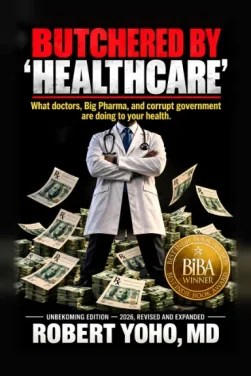 Butchered by “Healthcare” is Robert Yoho’s plain-spoken account of how American medicine stopped being a profession and became an industry. 341 pages. Over a thousand references. Thirty-eight chapters.
“Screening Tests Are Useless”, on tests that find diseases that would never have hurt you. “The FDA Protects the Big Drug Companies”, on an agency funded by the companies it regulates. “The Journals’ Sins Are the Editors’ Sins”, on ghostwritten studies and captured peer review. “Opioids and ‘Pain Management’”, on how a generation was prescribed its way into addiction. “Prozac and Relatives” and “Antipsychotics Are Disastrous”, on what psychiatry does to adults and children. “Surgery: Money Before Patients”. “Failed Cancer Treatments”. “Futile CPR and Overprescribing”. “Billing Scams & Specialty Warfare”. “Hospitals Are Sharks”. Each with a Patient Tips section at the end on how to survive it.
If you have ever walked out of a doctor’s office with a prescription you didn’t ask for, or watched a parent put through a treatment that made them worse, this is the book you want on your shelf before the next appointment. … Full review
Butchered by “Healthcare” is available on Lulu now.
Blog Roll
 Aletho News
- EU sending ‘biased’ observers to interfere in Serbian election – president
- White House envoy declares kinetic action against Yemen ‘fruitless’
- Ukraine deployed thousands of microdrones in Iraqi Kurdistan: Tasnim
- Iran calls for emergency UNSC meeting over Trump’s ‘brazen’ bomb talk, Israeli threats
- Iranian sources reveal details of Russia-China Hormuz proposal
- Plan for more US-Israel integration puts our military tech at risk
- Another Round Against Iran Will Break What Is Left of the Gulf
- SVR Report on Ukraine’s Mexican Drug Gang Links Could Pressure Zelensky, Won’t Change US Policy
- British Government Employees Were Fact-Checking the News at the BBC. Nobody Told You.
- Albania on fire: who’s behind the riots?
- If Americans Knew
- Mysterious bot accounts reportedly spread fake ‘man on the street’ videos for Michigan Senate candidate
- Israeli Defense Minister Katz Says Over 60 Lebanon Villages Have Been Destroyed
- Why Is Israel Running TV Ads in Iowa Ahead of the Midterms?
- Hind Rajab’s Alleged Killer Is in the United States. HRF Demands His Arrest.
- US Officials Face Fresh Pressure After Another American ‘Brutalized’ by Israeli Settlers in West Bank
- Israel-Backed Palestinian Militias Terrorize Displaced Families in Gaza
- FBI subpoenas pro-Palestine activists over Israeli weapons plant disruption
- Fourth winter arrives in wartorn Gaza, too early – Daily Update
- More on how Bari Weiss is using CBS on behalf of Israel
- What the UK Is Doing to Pro-Palestine Novelist Sally Rooney Is an Act of Orwellian Villainy
- No Tricks Zone
- Predictions Made By Renowned Climate Proifessor Over Past Decades Have Been Proven To Be Poor
- New Study Suggests Large Regions Of The Pacific Ocean Have Been Cooling For The Last 80 Years
- Germany’s Green Energy Debacle: High Energy Costs Force Kahla Porzellan to Close After 182 Years!
- New Study: 50 Years Of The Most Aggressive ‘Net Zero’ Policies Can Only Affect The Global Climate By 0.03°C
- US September “Heat” Was No Record…Many Records Set Decades Ago
- Latest European Green Energy Debacle; Portugal’s Largest Flagship Solar Park Insolvent!
- Green Energy Debacle: German Expert Professor Fritz Vahrenholt Warns Of Severe Economic And Social Consequences
- Two More Paleo Reconstructions Affirm Meters-Higher Sea Levels Across Ireland, Brazil 7000-6000 Years Ago
- New Study: Earth And Venus Surface Warmth Largely Explained By Convection And Lapse Rate, Not CO2 Or Radiation
- 2025 Nature Paper Claiming Worsening Global Drought Gets RETRACTED …Heavily Flawed

