Israeli committee approves expansion of Jerusalem settlement
Ma’an – July 8, 2015
 JERUSALEM – A researcher said Tuesday that an Israeli committee for zoning and planning has allocated private Palestinian land to expand the illegal French Hill settlement in East Jerusalem.
Ahmad Sub Laban, a settlement affairs researcher, told Ma’an that 25 dunams (6 acres) of land from Shufat and al-Issawiya has been allocated to the the settlement area to establish a commercial zone.
Palestinian residents of Shufat had been trying to obtain licenses to build on the land which was confiscated, but were denied permission by Israel’s Jerusalem municipality.
Palestinians in occupied East Jerusalem suffer from a chronic lack of services and severe unemployment as a result of Israeli municipal policies which allocate few resources to the community.
Over 75 percent of Palestinians, and 82 percent of children, live below the poverty line in East Jerusalem, according to the Association for Civil Rights in Israel.
Only 14 percent of East Jerusalem is zoned for Palestinian residential construction, ACRI says, while one-third of Palestinian land has been confiscated since 1967 to build illegal Jewish-only settlements.
Israel seizes 600 dunums of Palestinian lands in Occupied Jerusalem
Palestine Information Center – July 5, 2015
OCCUPIED JERUSALEM – Israeli mayor of Jerusalem, Nir Barkat, ordered that 600 dunums of Palestinian lands in al-Issawiya, in northern Occupied Jerusalem, be temporarily confiscated allegedly for gardening purposes, Peace Now reported afternoon Saturday.
The misappropriation order was issued using a special municipal law that allows the municipality to exploit an empty lot for public uses for five years in cases where the owner does not develop it. Al- Issawiya locals found the orders spread out in their fields.
The lands in question have been targeted by the Israeli occupation authorities in recent years, when a plan to declare them a National Park was promoted in order to create an Israeli dominated continuity between Occupied Jerusalem and the area of E1. The park is also meant to block the potential development of the adjacent neighborhoods of al-Issawiya and al-Tur.
It is required according to the law that the land owners refuse or choose not to make use of the tracts. When the owner wants to use his or her private property they are allowed to do so in accordance with the approved construction plans, Peace Now further stated.
In the case of al-Issawiya, the owners wish to make use of their lands. One month ago, the municipality uprooted trees that were planted by the Palestinians under the pretext of unlicensed cultivation. Thus, it seems now very hard to explain why a Gardening Use Order is required in such case when the owners wish to do the farming on their own.
According to analysts, it seems that in order to bypass the need to declare the lands as National Park, the Israeli occupation authorities are trying to take over the lands through other illegal means.
Peace Now added that the goal of the Israeli authorities is to prevent any potential Palestinian capital in East Jerusalem by taking over and blocking the lands necessary for the future development of a viable Palestinian state. The Jerusalem Municipality and the National Parks Authority seem so obsessed with creating an Israeli dominated corridor in the area, making use of the law only as a pretext for a political agenda.
A month in Palestine
By Tom Blanx | MEMO | July 4, 2015
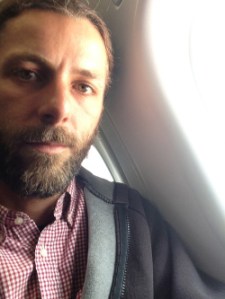 This May, I travelled to the West Bank in occupied Palestine.
I had a fairly good idea of the kind of things I would see when I went, but wanted to take a closer look at what I think is an unfair and asymmetrical situation. I don’t stand against Jews or Israelis. I stand against racism, violence, oppression and ignorance, and all of those things, I think, are here.
During my time in the West Bank, I lived and worked with a Palestinian farmer who runs a Permaculture Project in a small village called Marda. I wanted to see for myself what life was like for Palestinians living under occupation and how Permaculture could help.
Knowledge is everything and with that in mind I’m sharing everything I saw, heard, thought and felt in the time I was there.
Below are excerpts from Tom Blanx’s blog. Read the full blog here.
Getting in
For those who haven’t been, Israel’s not the easiest of places to get in and out of. And if you plan on checking out the occupied territories you’ll need to be a bit creative with the truth. Despite my polite passport note from the queen, I decided not to reveal how freely I would be passing while on my travels as it would have most likely landed me straight back on British soil. This had happened to previous volunteers so the NGO I had organised the trip with had suggested that I lie.
With the help of Murad, my Palestinian friend and his friend, an Israeli who will remain anonymous, I pretended I was traveling to help and learn on a farm in the south. I probably could have said I was there for a beach holiday or Christian visit too, but a bag full of work boots and full length clothing might have been a giveaway. Murad told me to just remain calm and answer all questions confidently but it was a nerve racking and intimidating experience. Much more than I remember it being when I was 18 coming here. In the end I think I got in by inadvertently playing dumb.
Getting into the West Bank was more straight forward. I got on a bus from Tel Aviv bus station all the way to Ari’el (An illegal settlement, next to Marda). There are no stops or checkpoints for settlers (on the way in) so all I had to do was get off before the bus turned into the settlement where Murad was waiting for me and I was in. A better understanding of his instructions, some Hebrew and useful geographical knowledge and I probably wouldn’t have ended up bang in the middle of the Ari’el in the isolating situation of looking for a Palestinian village. I haphazardly navigated my way out of on foot and was an hour late – not the look I was going for, but I guess he was going to find out what I’m about sooner or later.
Marda
Marda is in the Salfit district which is biggest producer of olive oil in Palestine. The village is effectively a ghetto, with reinforced steel gates at each end for when the army want to shut it down and a high metal fence and barbed wire around it, although some of these had been damaged and removed. There used to be resistance here, but like in lots of the rest of Palestine, occupation has become normalized. These days the village is quiet and peaceful. People work and children go to school, cats wander around the place looking for food and donkeys everywhere sound like they’re dying. The village sits directly under the hilltop Ari’el settlement, the 4th biggest in the West Bank. Murad said he used to play there with his friends when he was young before Zionists confiscated and destroyed 9000 dunams of it, in the late 70s to build luxury homes, streets and a university for Israelis and Jewish immigrants. The juxtaposition of the two towns, is a powerful thing to see and its something that you can’t help but see, every day.
As I arrived in Marda another volunteer was leaving. Her name was Judy, a 60 year old American woman from Australia travelling by herself. I wouldn’t normally mention someone’s age or circumstances but I think its significant as many people think the West Bank is too dangerous to travel to and that women could be more vulnerable here. Neither are true. It was her 5th visit to Marda so I wanted to get as much information out of her as I could in the 30 minutes she had left. She gave me the dos and don’ts about living in Marda, how to be with Murad and told me to explore as much as I could of Palestine “You can’t charaterise Palestine on what you see in just Marda as much as you can’t charaterise the US on what you see in Miami”
Murad
Straight away I felt at ease with Murad. From our first Skype conversation, to meeting him an hour late after getting lost, I felt welcome and at home. Chilled and pragmatic, straight talking and funny are the best words I can think of to describe him. Everywhere we went there was banter. Banter with friends, banter with strangers. Sometimes he sounds like he is angry when he’s talking in Arabic but then he laughs and I know he’s not. Judy said his bark is worse than his bite and I now know what she means. “C’mon man!… what you doing man?!”… “Why you sayin sorry all the time man” still echo round my head.
Murads family have lived in Marda for generations spanning centuries. His wider family numbers in the 100s. His immediate family is his his wife, Ghada, daughters Sara, Halla and Tooleen, his youngest – son Khalid, his Mother, Twin brother, older brother, three sisters and their families. I think I can count the number of people in my family with my fingers!
The old house he grew up in has itself been in the family for 300 years. His Mother and twin, Hazim live there now and on my first night, he took me to meet them. We ate dinner, looked at our phones (There’s no escaping it!!!) and then I helped Murad download a Lionel Richie “hello” ringtone he wanted for when Ghada called him. I asked him what other music he liked and he said “none”. “But you like Lionel Richie though?” No. just that song.” Then I reconfigured his answer and decline buttons so he could, in his words, hang up in peoples face.
When violence broke out in the second intifada (literally translated as uprising), Murad decided to leave Palestine. With his Palestinian passport, he traveled to America and spent time working in Chicago and Tennessee. In 2006, he returned to inherit his Father’s land and with some basic knowledge of permaculture from a previous project, he started Marda Permaculture farm.
The Permaculture farm
The farm is 2 1/4 dunams in size. A duman is about 1 square km. The farm has Bees and produces large quantities of honey each year, 5 kilos of which is exported to customers in Qatar. He has chickens and pigeons (with their own cob-built houses) for eggs and meat and and plans on getting some goats and a cow.
The farm is Murad’s livelihood, but its more than that. The farm is his way of fighting the occupation. By growing his own food and providing his own income, he doesn’t need to buy expensive food and water or look for work abroad or in Israel. Permaculuture gives him good health, independence and empowerment.
The farm is a centre for students, activists and volunteers and Murad hopes his model will raise awareness of Permaculture in Palestine and begin to change local peoples attitudes towards farming.
Getting around
I did most of my exploring with Murad. I only did my own thing a couple of times. Once when I went to Jerusalem with Gaie (another volunteer who helped at the farm for a few days) and another time when we split up in Rammalah and I went to see qalandia. But we always left Marda together. Murad wasn’t into the idea of me travelling by myself in case I got mistaken for a settler or deported for being a friend of Palestine. They’re weren’t any bus stops in Marda so unless you hail a passing taxi or sherut you hitch a ride to somewhere you can get a bus. The nearest place to us was Zattara Junction (Tappuah junction for Israelis). From here you can go in three directions north to nablus, east to jericho and south to Rammalah. It used to be checkpoint but some of these have eased off in recent years. There’s still a large military presence here though. Lots of Israelis use the junction so cars are still stopped, IDs are still checked and people are still harassed. We saw one guy in his early 20s being checked out by two soldiers wanting to know where he had been, where he was going, and why he needed to go there.
As we make our way to the bus stop to Rammalah we have to go through the rigmarole of crossing the side of the road we need to the central reservation, avoiding Israeli only bus stop which Palestinans are not allowed to be near, to then cross back 50m further along where the anybody else bus stop is. You keep your head down here as you feel the eyes of soldiers and settlers weigh down on you. You’re at the mercy of the army here, they have done and can do anything they want to you here. This a cold violence that all Palestinans have to go through on a daily basis.
Nablus and Tulkarem
This was the first place outside Marda that I explored. It used to be an important junction on the Old Silk Road and was a strong resistance town in the years following the occupation. Nowadays, its very normalised – the occupation. Like the rest of the country, people are just trying to make enough money to survive. Food and drinks, shops and markets are everywhere. Women are covered up, some even more than in Marda wearing full burkhas which you can also see displayed in shop windows. Lots of women whiten their faces here too. Looks really strange sometimes. On the hilltop behind the city is the largest refugee camp in Palestine – 30,000 refugees packed into ¼ of a sq km. Like the one outside Rammalah they resemble Rio’s hillside favelas. Beautiful backdrop and ugly consequence all at the same time. As we ate a shrawma outside we saw men putting flags up in the main square and cars driving round honking their horns. They were celebrating the release of a young man who had been put in jail by the Israelis. I don’t know who he was or what he had been jailed for but I’m guessing it was for a while and his release was a small victory.
A little bit further on is Tulkarem This is where we met Murad’s friend Fayez, and where I saw the wall for the first time. Like Murad, Fayez also runs a farm in a village just outside Tulkarem called Irtah. His story is amazing: resilience and steadfastness in effect. In a nutshell… Occupation forces tried to confiscate his land to use as a military post; some of the first sections of the segregation wall were built across 20 dunams of his land; he resisted the land confiscation and repeated attacks on him and his crops and was imprisoned, leaving his wife Muna, to manage the farm; 12 chemical factories considered hazardous to Israeli public health were relocated to the other side of the wall, one right next to his farm*; he thus grew more aware of the health impacts of fertilisers and pesticides and made the switch to organic production. Now his and Muna’s farm, famous for popular resistance attracts solidarity activists and volunteers from all over the world.
*Factory chimneys are used when the wind blows east into Palestine, and not when into Israel.
At his home we sat and drank zamzam with his family. Zam zam is holy water welled from the zam zam well in Mecca. They told me the story of zamzam, debating over the specifics but I’m struggling to make sense of my notes so here’s a simple kids version of the origin of zamzam I found online:
“This is the story of the ZamZam water. The water well of Zamzam is a well located within the Masjid al Haram in Mecca. It was a miraculously generated source of water from Allah, which began thousands of years ago when prophet Ismael (PBUH) the son of prophet Abraham and Hajar (the wife of prophet Abraham, May Allah be pleased with her) were thirsty and alone in the dessert.In this area there is very little water if any at all in some places. According to our tradition, Hajar (May Allah be pleased with her) was a very devout mother and wife. When she was separated from her Husband prophet Abraham (PBUH), she was left alone in the dessert, by herself with her small son Ishmael (PBUH). Prophet Abraham made a prayer for his young family as he left them behind and Allah provided the means of sustenance for them. Hagar (May Allah be pleased with her) ran seven times back and forth in the scorching heat between the two hills of Safa and Marwah, in desperation because her son cried as it was very hot and they did not have even a drop of water to drink. Allah provided a Miracle and the ZamZam well was born.”
Fayez’s son “carried” 20L of this water back from his hajj pilgrimage so it goes without saying that I felt really honoured be offered it. It’s meant to contain healing powers so you drink it in 3 sips and wish for good health. I drank mine to my Mum.
Jerusalem
Tony Blair has a multi million penthouse apartment that he rents for free in East Jerusalem. I saw it – Murads not even allowed to come to Jerusalem. No one who lives in the West Bank is, unless they own one of the hard to get permits I mentioned earlier. It’s like me needing permission to visit London.
Jerusalem (East) is as you would expect it to be – tourists, religious places of interest, sight seeing, crap selling blah. The tourism and globalism here makes it more relaxed in its attitudes to drinking and clothing, despite the religious significance of the city. In the old town/holy basin which is a busy Palestinian neighbourhood, Israeli settlers live in homes above the market taken from Palestinians now flagged up and fenced off. Below mesh is in place to stop settlers throwing waste down on the Palestinian’s markets there are Israeli homes.
We tried to get to the Al Aqsa mosque and dome on the rock but it was Muslims only after 4pm and being white and non Muslim looking we were turned away by Israeli police. They control who goes in and out here. It was interesting and maybe kind of nice to see Israelis help enforce the Muslim only after 4pm rule. Was also good to see some soldiers and locals getting on. Saw another soldier help a blind man into the square too which was nice. In the rush to cry dehumanization you can easily find yourself guilty of doing the same thing.
Jenin
Jenin was the furthest town I visited. We had to time our trip around the weather as it gets hotter here. Its in the agricultural north and took about an hour and a half of mountainous driving from Marda to get there although Jenin itself is mostly flat. Didn’t really get a chance to explore Jenin properly it was more of a meet this guy here meet that guy there day but one thing that was noticeable was the absence of anything Israel.
Unlike all the other places Id been to there was no army, no flags, no settlements. This might be because of its unbroken horizontalness as I’m pretty sure most settlements are built strategically on hilltops. Outside the hustling bustling town of markets shops and car-shop after car-shop after car-shop is industrial landscape with factories and fields growing tobacco fruits and vegetables. More mass production than organic production here.
Environment
Despite a deep connection with the land, it gets treated badly by many Palestinians, Israelis too. In many parts of the West Bank, streets and fields are scattered with rubbish. There’s refuse collection once a week in Marda but that’s just to collect landfill waste from peoples houses. Outside though, pedestrians, drivers, kids playing, even farmers, just chuck their empty packets on the ground. Many animals are treated badly: birds caged in small spaces to be sold as meat; donkeys toiling in the insane heat carrying people and heavy loads; dead puppies (clearly not treated well) left next to bins in the street, I could go on. On our way to the farm one day we saw that one donkey had given birth. Murad helped the new donkey to its feet and pushed her closer towards her mother which was tied up to a nearby tree but just out of reach. The next day we saw the same donkey, working, but not the infant. As another mouth to feed and a distraction to his working donkey, the owner, an old guy, chucked the new jenny away. This upset Murad, more out of waste than sentiment, but Murad cares. He understands the important roles animals have. I learnt this early on when some children visited us at the farm and one of them was trying to squash a bug. Murad stopped him and while I couldn’t hear what he actually said, it was clear Murad was telling the boy that he needed those bugs.
Then there’s Israel, the self titled environmentalists, chucking all kind of restrictions and protection laws onto Palestinians in the name of preservation whilst committing all kinds of environmental rights violations: sucking Palestinian land dry of water and selling it back to them at full price; allowing settlements to dump huge quantities of sewage into neighbouring Palestinian fields and villages, damaging buildings, soil and water supplies; poisoning waterways and soil with toxic chemicals; uprooting 1,000s of olive trees, trees that are peoples livelihood, trees that have stood since the Romans were here!; building over ancient springs and vital sources of water, affecting ecosystems and land irrigation; and then the walls and border gates affecting the migration patterns of an array of species.
Culture
I’d never been to a Muslim country before so my head naturally started to fill itself with assumptions and preconceptions of how things were or would be. I knew from the advice the volunteer program gave me, that Marda was a conservative village: No shorts, no singlets (LOL), no drinking, no drugs, and no approaching strange women romantically. I paraphrase but these were all suggested guidelines – Who’s been coming here??
Marda is a conservative village, traditional too – women cover themselves in public and sometimes socialise separately but everyone was friendly and interactive. If my Arabic spanned further than the “Hello, How are you? I’m fine, thank you” at its peak, I may have broken down even more social barriers. Word to the wise: Don’t go in for a handshake with women you’ve just met as you’ll be left hanging.
Despite the occupation and the harassment and intimidation that comes with it, everybody seemed upbeat. There’s a real togetherness here and its so much more chill than it looks and sounds from in the west. There’s lots of joking. Murad likes to take the piss out of people especially people that he likes. There’s one old guy we used to see and Murad always tries to tickle him.
It sounds like a stupid and obvious thing to say but Palestinians really love their children, especially young ones, almost as if preserving their innocence is everything. From about 7-12 boys go through a seen but not heard phase then at 13+ they’re targets for playful clips round the ear and downsizing banter. They have a lot of freedom in Marda. Children as young as 6 walk to and from school through the village, they go to the shops to buy groceries and play outside unsupervised. On paper it sounds like slack parenting but its not. The community polices itself. Everyone knows everyone and when children step out of line or get cheeky the nearest adult will call them up on it. I’d describe it as a golden age if the circumstances didn’t make it sound so ridiculous.
Politics
Murads not the type to push agendas. I wanted a Palestinian perspective on Israel, the occupation, and all the other things that go with it, so I was going to have to ask. Judy ,who I met briefly when I arrived in Marda told me “Don’t ask questions unless you’re ready to accept the context.” I wasn’t completely sure what this meant but I bided my time and began to write down some questions for Murad which I could ask him when we’d got to know each other better. In my spare time I started to plan a positive article about cooperating through collaborating. This had stemmed from seeing how Murad and his Israeli friend had been working together to sneak volunteers into Marda, but with one question my idea, or at least, my inspiration, was blown out of the water. “Do lots of Israelis come here to help?”
“Yes, but I don’t like it. It makes me look bad.” Murad doesn’t pull punches, he tells it as he sees it and when a group of Israeli peace activists came to work on the farm and found this out. He told me how they had asked him what they could do to help the Palestinian cause and in one word, he said, “leave”. “It sounds harsh, but this is a man who has been fired at, arrested, imprisoned, watched as his family’s land was turned into a lavish city for Israelis and Jewish immigrants, which has brought violence right to his door.
“These people say they are for peace but if they really were they would leave Israel. Who built your house?” he asked them. “The person who built your house is living in a tent and you talk about peace?”
Talk leads onto the testimonies of soldiers in, ‘Breaking the silence’. “Breaking the Silence are bastards! They kill innocent men women and children and then feel bad and say sorry? Fuck you’re sorry!” None of this is said in a raised or angry tone of voice. Murad, like lots of other Palestinians, thinks he’s been sold out. Sold out by Israel, sold out by America, sold out by Britain, sold out by Arab states and sold out by their own leaders. I try to explain that propaganda can make people do the worst kind of things but it sounds empty as I say it.
“The world doesn’t care. If it did, Palestinians would have justice.”
The Army
In the whole time I was in Palestine and Israel the only times I ever felt threatened, nervous or insecure was near Israeli police and soldiers. 15 years ago I was in Tower Records in Tel Aviv and 2 young soldiers stood next to me looking through CDs while on duty. It was strange then and it is strange now. In Israel, everywhere soldiers are on the move. Its like scouts but with guns. It’s like something out of the Paul Verhoven film, Starship Troopers. Beautiful, fresh faced, young men and women, IDF issue Tavor assault rifle in one hand and smartphones in the other, all “doing their part!, knowing their foe!, guaranteeing citizenship!” because at the end of the day, “its us or them”
The idea that an 18 year old with a gun has the power to harass and disrespect civilians often much older and wiser than them leaves a nasty taste in my mouth.
For me, military service here is more about protecting a lie than protecting citizens. Imagine a reality where young men and women are indoctrinated with the idea that they are defending their country when all they’re really doing is supporting a decades long colonisation project. It almost doesn’t seem real. Almost.
Pigs
About 5 days in, I was smoking a cigarette on the roof when I heard a gravel moving noise coming from the hill behind my house. The street lights made it difficult to see what it was but I could just about make out a group of large figures making their way down this track. It looked like humans, big humans, on all fours, coming down the hill!! I was scared! The settlement was just up the hill and I’d heard stories of past incursions and still new to this unfamiliar and relatively (to me) troubled place, my imagination and stupidity got the better of me. Reality checked eventually and I concluded they weren’t humans. I still didn’t know what they were though, so I didn’t move or make a sound and just watched as these night monsters marched on by.
The next morning I tell murad what happened… And in his most blasé voice tells me, “That’s the pigs man…. They come and destroy everything in a few minutes!”
So I looked it up. It’s not just in marda. Apparently all over the West Bank wild pigs have been wrecking crops and trees and sometimes attacking people, all since around 2004. People claim they were introduced after the last intifada. One guy even told me he heard a truck load of them had been seen being unloaded in some fields. It’s a wild claim, but in a place where pollution is directed towards specific communities, raw sewage is dumped into village’s water supply and Settler children are marched through villages abusing locals, it becomes more believable. I can only speculate as why pigs. Agitation? Disrespect? One guy joked that Islam should introduce a temporary fatwah so that people could eat the pigs and turn the problem into a solution.
“In 2004 there were no pigs in Palestine! Now there are pigs! They don’t fly in!”
Murad showed me some of the damage they had done to his corn field. To protect his farm he put up a barbed wire fence but it was only when he attached tyres to the fence that they stopped getting in.
I became obsessed by this thing! I really wanted to see the pigs again, I set my alarm to wake me up at all hours, but I never saw them. There were some near encounters. We just missed them on the way to work one day when some builders sent them running down the hill throwing stones at them
A law was passed to protect the pigs so farmers are not allowed to kill them. It would take a bullet to the head to do it apparently which would be pretty hard as you’re not allowed weapons of any description in Palestine.
Getting out
On the way back its the same bus back to Tel Aviv. After speaking to other internationals I was prepping myself for a grilling at the airport. I wasn’t expecting to be removed from the bus by armed officers in plain clothes. And I wasn’t prepared to explain why I was in the West Bank on a settler bus and not where I said I would be in Israel proper. People told me to answer questions confidently, honestly and vaguely. A lot of officials I dealt with had a mediocre knowledge of place names so this helps with the vague answering. You might get through that but you’ve probably been flagged for more security checks. And if you have it’s a tough run in til the fight home. At check in and security your bags will be emptied, their contents swabbed and analysed, your body searched and scanned and your skill at answering repetitive questions tested.
And when you collect your bag from Gatwick airport luggage hall you’ll even find a courtesy note inside explaining that someone’s had another good look through your gear and put everything back as they found it. ‘Come back anytime’ ain’t the vibe I’m getting.
I plan on going back for olive harvest this year but won’t hold my breath on getting in. If one trip is that suspicious, another is probably smoking gun territory.
Protest commemorating one year anniversary of the killing of Mohammad Abu Khdeir met with military violence
International Solidarity Movement | July 3, 2015
Ramallah – On July 2, 2015, in honor of the first anniversary of the murder of Muhammad Abu Khdeir, Palestinian activists with international supporters blocked a settlers-only road leading to the illegal Adam settlement. Demonstrators cited this road as the road that the murderers took in their search for a Palestinian victim. Journalists, Palestinian and international activists, suffered from pepper spray burns and several were hospitalized.
“This is the first in a week of demonstrations for Muhammad Abu Khdeir. One of the murderers, Yosef Haim Ben-David, is from the Adam settlement. This is why the demonstration was held at this settlers-only entrance,” said Abdullah Abu Rahmah, the coordinator of Popular Committee Against the Wall and Settlements in Bil’in.
Demonstrators blocked the road to settler traffic in both directions until the Israeli Army and Border Police dispersed the non-violent demonstrators and journalists by pepper-spraying indiscriminately. Three Palestinian activists, four journalists, and two International ISM volunteers were pepper sprayed in the eyes and mouth by a masked Army officer. An ISM co-founder as well as journalists from Roya TV Channel, Reuters, and Palestine TV were severely pepper sprayed in the eyes requiring hospitalization.
The soldiers threw sound percussion grenades at demonstrators and chased people. In addition to the pepper spray, they shoved journalists and Palestinian activists to the ground.
After the soldiers and border police chased the demonstrators off the road and down a hill, they continued to throw percussion grenades even as the demonstrators stood at a distance waiting to find fellow demonstrators.
Israeli forces detain 550 Palestinians in six months
Press TV – July 3, 2015
Israeli forces have detained 550 Palestinians, including women and children, in the occupied West Bank since the beginning of 2015.
 The detainees, who were arrested in the southern city of al-Khalil (Hebron), included seven women and 105 teenagers, Amjad Najjar, the head of the Palestinian Prisoners Society (PPS) in al-Khalil, said on Thursday.
The Palestinian official added that 225 of the detainees received sentences through the Israeli practice of the so-called administrative detention, under which Palestinians are kept behind bars without charge or trial for months or even years.
According to Najjar, 78 Palestinian patients “who faced a real life threat as a result of detention” were among the inmates in Israeli jails, where they receive no “medical treatment.”
He noted that Israeli forces treat the Palestinian detainees in a “savage and inhuman way during detention.”
The PPS report pointed out that many of those detained during the six-month period were from the town of Beit Ummar, where over 60 residents, mostly minors, were arrested between January and March.
Earlier reports by the PPS showed that Israel detained 383 Palestinians across the West Bank in December 2014.
Over 7,000 Palestinians are reportedly incarcerated in 17 Israeli prisons and detention camps.
Israel issues 30 administrative detention orders during June
Palestine Information Center – June 24, 2015
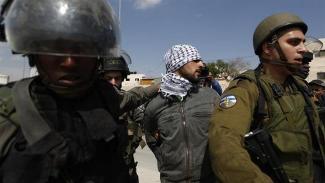 AL-KHALIL – Israeli courts issued, since the beginning of June, 30 administrative detention orders against Palestinian prisoners from al-Khalil, Prisoners Media Center said.
The center stated that 43% of administrative detainees held currently without charge or trial in Israeli jails are from al-Khalil.
As a whole, there are 450 administrative detainees in Israeli jails including four MPs.
The center pointed out that Israeli administrative detention policy mainly targets youth activists, students, MPs, and prisoners’ defenders as an attempt to prevent them from exposing the reported Israeli human rights violations.
“Lack of public interest” in Jewish nationalist crimes

Yesh Din | June 23, 2015
We can see just how seriously the Israeli government takes nationalist crimes from the following case.
On July 26, 2010, a large group of Israeli marauders, whom eyewitnesses said came from the direction of the settlements of Yitzhar and Bracha, allegedly made their way to land belonging to the nearby Palestinian village of Burin. According to witnesses, the marauders burned hundreds of olive trees, some of them more than a century old. Furthermore, they attacked the villagers with stones and in a few cases with clubs, and stoned the houses of the village.
On that same day, some of the victims lodged a complaint with the Israeli police.
In August 2011, i.e. more than a year after the incident, the police informed Yesh Din that the case was turned to the attention of a prosecutor – that is the last we heard of the story for two years. In August 2013, the Shomron Prosecution Unit bothered to update us saying that they had closed the case back in December 2012. Three months later, we received the investigation material of a three-year-old incident, and tried to see whether there is any point in appealing the decision to close the case.
To the utter surprise of our attorneys, who were under the impression that the police closed the case for lack of evidence, the case files contained quite a bit of evidence. At the same time and place of the incident, three Border Policemen detained two Israeli civilians – A. and M. – after police officers testified that they saw them throwing stones at Palestinians.
The testimony of a cop, as well as the detention of suspects at the scene, is generally enough cause for prosecutorial action, particularly since the government takes nationalist crime seriously, as it keeps claiming. Therefore, we appealed the decision to close the case in December 2013, demanding of A. and M. be prosecuted on suspicion of throwing stones and assaulting an officer; we also demanded that the investigation into the question of who attacked one of our clients with an iron rod and set his olive grove on fire continue.
That’s when events took a surrealistic turn. In response to our appeal, the prosecution claimed that they are well aware that there is enough evidence to indict A. and M., but said it would not do so – since it sees no reason to interfere with the decision of the Police Prosecution Unit, which closed the case for lack of public interest.
According to the prosecution, since both sides engaged in stone throwing, and since there is no precise information about how the incident began, and since there was no equivalent interrogation of Palestinian suspects, there is simply no public interest in putting the Israeli marauders on trial.
To quote our sarcastic reply, sent in April by Attorney Noa Amrami:
“To sum, two Israeli civilians woke up one morning, arrived at the village of Burin and the homes and land of our clients, threw stones at them and beat them. Is there any doubt here as to who is the attacker and who the defender? With all due respect, we are not dealing with a kids’ squabble at school here, but with a criminal, methodical action of terrorizing the villagers of Burin, who suffer from the violence of the Israeli civilians residing in the region.”
What the government prefers to call nationalist crimes — and we call ideological crimes — has become a national scourge. As we emphasize here repeatedly, this is not an incident of random violence, but rather violence with a clear political goal: dispossessing Palestinians of their land so it may be transferred to Israeli civilians. The police’ failure at resolving these crimes is systematic and well documented: out of 1,045 investigation cases reviewed by Yesh Din in 2005-2014, only 7.4 percent turned into indictments. 85.2 percent of the cases were closed due to the police’s investigative failure, usually because the police failed in finding suspects or gathering enough evidence to try them.
The village of Burin is a stark example of criminal actions carried out by Israeli civilians: in the years 2005-2013 Yesh Din documented 103 incidents of criminal activity, mostly violent, by Israeli civilians against Palestinians from the village. Yesh Din documented a series of violent actions – both by Israeli forces and Israeli civilians – toward the villagers. If we were to take the official rhetoric about the need to fight ideological crime seriously, we would expect any incident in Burin would be dealt with to the fullest extent of the law.
Yet in practice, even when the police detain suspects and the prosecution has enough evidence to indict them, the case is somehow closed. This time the excuse was “lack of public interest.” Bear this in mind during the next press conference when solemn promises that the police will do its best will be made.
We have asked that the appeal be reconsidered. We’ll keep you posted.
A Tale of Two Killings: The NY Times Reveals Its Pro-Israel Bias
By Barbara Erickson | TimesWarp | June 20, 2015
When a 22-year-old man died under an Israeli army jeep recently, The New York Times virtually ignored the incident. Now come reports of another death in the West Bank, and the newspaper has given notice with an article appearing both online and in print.
The difference is all in the ethnicity: The first man was Palestinian and his attackers were Israeli soldiers. The second was Israeli and died at the hands of a Palestinian gunman.
When Abdallah Ghuneimat died on Sunday, eyewitnesses reported that he had been shot and then deliberately run down by soldiers in a jeep; the army, however, claimed the vehicle had fallen on him by accident. The Times made fleeting mention of the incident in a wire service story that appeared only online. (See TimesWarp 6-17-15.)
The newspaper has continued to turn its back on the story even as new eyewitnesses have come forth to say that Ghuneimat “was left bleeding under the jeep for hours while Israeli soldiers were jubilantly cheering.” Witnesses also said that troops fired tear gas, stun grenades and live ammunition to prevent villagers from approaching the victim.
Now, with the death of an Israeli four days later, we find a different approach from the Times. Editors were not content with a wire service report in this case; they assigned a reporter to cover the incident and published a story replete with quotes from Israeli president Reuven Rivlin, education minister Naftali Bennett and a United Nations coordinator.
The Israeli victim, Danny Gonen, 25, had come to the West Bank with a friend to visit a spring near the illegal Israeli settlement of Dolev, according to the account. As they were leaving the area, a man flagged down the car and asked if there was water in the spring. He then pulled out a gun and shot both men. The friend was slightly wounded, but Gonen was pronounced dead at a nearby hospital.
The author of the Times story, Diaa Hadid, writes in the second paragraph that the timing of shooting was a “grim reminder of the kidnapping and killing of three Jewish teenagers” last year, “which unleashed tensions that culminated in a seven-week war between Israel and Hamas.”
Missing from her article is the context of Israeli attacks on Palestinians, including the deaths of two Palestinian men so far in June. According to United Nations data, Israeli forces injure an average of 39 Palestinians each week, and they have killed 13 so far this year. These numbers do not include injuries inflicted by settlers.
The same UN report notes that Palestinians have injured an average of two Israeli civilians each week. Two, including Gonen, have died this year.
In spite of these facts, Hadid has chosen to emphasize Palestinian violence and ignore Israeli attacks, which have injured and killed at a significantly higher rate.
Her story also glosses over another unsavory fact of life in the West Bank by noting that the territory “is dotted with springs” used by Israelis and Palestinians, but some have been made off limits to Palestinians. In her brief treatment of the issue, she fails to describe the full injustice here.
Settler takeovers of springs on private Palestinian land have become so flagrant that the United Nations issued a report specifically addressing the problem. The report states that settlers use threats, intimidation and barriers to prevent villagers from accessing their traditional water sources, at great cost to farmers and herders. The Israeli government acquiesces in these crimes and sometimes actively supports them, the UN says, often allowing the settlers to turn the springs into revenue generating tourist attractions.
But readers learn none of this—neither the casualty rates nor the extent of water theft in Palestinian territory. Although this tragic incident provided an opportunity to inform the public of facts on the ground in the West Bank, the Times has little interest in reporting these details. It glosses over Palestinian deaths, dwells on Israeli casualties and turns its back on the brutality of the Israeli occupation.
Israeli forces raid homes in Qaryut to intimidate local activists
International Solidarity Movement | June 17, 2015
Qaryut, Occupied Palestine – In the early hours on Tuesday 16th of June Israeli occupation forces raided several Palestinian homes in the village of Qaryut, near Nablus. The soldiers invaded the homes in search of the Palestinian activist Bashar al-Sadiq Yusuf Moammar (Bashar Qaryouti).
The incident is possibly sparked by the fact that villagers of Qaryout have recently taken up weekly demonstrations, arranged by the PSCC, which Bashar Qaryouti is part of. These are demonstrations against the illegal Israeli settlements that surround the city and continue to annex Palestinian land.
Soldiers invaded at least five different houses in order to find Bashar, and trashed the family homes in the process. Abdullah Qaryouti, whose family fell victim to one of these raids, explained how this included the soldiers locking up the family in one room whilst ransacking the rest of their house using K9’s.
According to Abdullah Qaryouti this is common behaviour for the occupation forces, who invade and ruin Palestinian homes on a regular basis.
The local activists presume the most recent house raids to be part of the ongoing efforts of Israeli forces to intimidate and threaten any resident that participates in non-violent resistance.
 Bashar Qaryouti


Credit to PSCC for the photos, they do not belong to ISM.
Palestinian cabinet to be dissolved, formed in several days
Ma’an – June 16, 2015
RAMALLAH – An attendee of the 15th Fatah Revolutionary Council conference led by President Mahmoud Abbas told Ma’an Tuesday that the council will form an entirely new unity cabinet rather than pursuing efforts to reform the existing government.
Abbas announced that the government would resign within the next 24 hours, several senior Fatah officials attending the conference told AFP, with the new government formation expected to be carried out in a matter of several days.
The announcement comes as Palestinian leadership in the West Bank and Gaza Strip have struggled to maintain a unity government pieced together in June 2014.
The move materialized after the Fatah-led PLO and Hamas announced a national unity deal a few months prior intended to end seven years of political division between the largest two Palestinian parties.
The division between Fatah and Hamas began in 2006, when Hamas won Palestinian legislative elections.
In the following year, clashes erupted between Fatah and Hamas, leaving Hamas in control of the Strip and Fatah in control of parts of the occupied West Bank.
While last year’s reconciliation aimed to pave the way for a general election by the end of 2014, an Israeli arrest campaign in the West Bank during early summer as well as a war between Israel and Hamas in the Gaza Strip in July-August derailed the timeline.
Hamas has since blasted the Fatah-led PA in the West Bank for failing to follow through on promises to Palestinians in the Gaza Strip.
Deputy head of Hamas Ismail Haniyeh said earlier this month that there had been no humanitarian or economic progress in the coastal enclave since the national consensus government was formed a year ago, referring to swathes of the strip that remain devastated from last summer’s war, as well the nearly one year that has passed since Gaza’s civil servants have received salaries.
Prime Minister Hamdallah pledged during a March visit to Gaza that Palestinian factions would “work fast” to find solutions to crises in Gaza, however the visit largely deteriorated into factional fighting.
The failure of the unity government to address the needs of Gazans was addressed by the Revolutionary Council’s secretary general who told AFP prior to Tuesday’s meeting that the government would step down within 24 hours over its inability to act in the Gaza Strip.
“The government will resign in the next 24 hours because this one is weak and there is no chance that Hamas will allow it to work in Gaza,” said secretary-general Amin Maqbul.
But Ihab Bseiso, spokesman for the consensus government, told AFP he was unaware of the matter.
“We had a meeting today and we didn’t discuss this issue,” he said
As elections haven’t been held in the Palestinian territories since 2006, Tuesday’s decision to dissolve and reform the government is the latest of Abbas’ attempts to create a functioning unity government, in light of a year of setbacks.
Israel’s Race to Economic (and Moral) Bankruptcy
By Jonathan Cook | Dissident Voice | June 16, 2015
Two recent reports suggest that Israel could face catastrophic consequences if it fails to end the mistreatment of Palestinians under its rule, whether in the occupied territories or in Israel itself.
The Rand Corporation’s research shows that Israel could lose $250 billion over the next decade if it fails to make peace with the Palestinians and violence escalates. Ending the occupation, on the other hand, could bring a dividend of more than $120 billion to the nation’s coffers.
Meanwhile, the Israeli finance ministry predicts an even more dismal future unless Israel reinvents itself. It is likely to be bankrupt within a few decades, the finance ministry report says, because of the rapid growth of two groups who are not productive.
By 2059, half the population will be either ultra-Orthodox Jews, who prefer prayer to work, or members of Israel’s Palestinian minority, most of whom are failed by their separate education system and then excluded from much of the economy.
Both reports should be generating a tidal wave of concern in Israel but have caused barely a ripple. The status quo – of occupation and endemic racism – still seems preferable to most Israelis.
The explanation requires a much deeper analysis than either the Rand Corporation or Israel’s finance ministry appears capable of.
The finance ministry report points out that with a growing population not properly prepared for a modern, global economy, the tax burden is falling increasingly heavily on a shrinking middle class.
The fear is that this will rapidly create a vicious cycle. Wealthier Israelis tend to have second passports. Overwhelmed by the need to make up the revenue shortfall, they will leave, plunging Israel into irreversible debt.
Despite this doomsday scenario, Israel seems far from ready to undertake the urgent restructuring needed to salvage its economy. Zionism, Israel’s official ideology, is predicated on core principles of ethnic separation, Judaisation of territory and Hebrew labour. It has always depended on the marginalisation at best, exclusion at worst, of non-Jews.
Any effort to dismantle the scaffolding of a Jewish state would create a political crisis. Reforms may happen, but they are likely to take place too slowly and incrementally to make much difference.
The Rand report also raises the alarm. It notes that both peoples would benefit from peace, though the incentive is stronger for Palestinians. Integration into the Middle East would see average wages rise by only 5 per cent for Israelis, compared to 36 per cent for Palestinians.
But, while its economists may have found it easy to quantify the benefits of ending the occupation, it is much harder to assess the costs in shekels and dollars.
Over the past six decades, an economic elite has emerged in Israel whose prestige, power and wealth depends on the occupation. Career military officers earn large salaries and retire in their early forties on generous pensions. Nowadays many of these officers live in the settlements.
The army top brass are the ultimate pressure group and will not release their grip on the occupied territories without a fight, one they are well placed to win.
Backing them will be those in the hi-tech sector who have become the engine of the Israeli economy. Many are former soldiers who realised the occupied territories were the ideal laboratory for developing and testing military hardware and software.
Israel’s excellence in weaponry, surveillance systems, containment strategies, biometric data collection, crowd control, and psychological warfare are all marketable. Israeli know-how has become indispensable to the global appetite for “homeland security”.
That expertise was on show this month at a Tel Aviv armaments expo that attracted thousands of security officials from around the world, drawn by the selling point that the systems on offer were “combat proven”.
To end the occupation would be to sacrifice all this and revert to the status of a tiny anonymous state with no resources or notable exports.
And finally the settlers are among the most ideologically committed and entitled sector of Israel’s population. Were they moved out, they would bring their group cohesion and profound resentments back into Israel.
No Israeli leader wants to unleash a civil war that could rip apart the already-fragile sense of unity among the Jewish population.
The reality is that most Israelis’ perception of their national interests, both as a Jewish state and as military superpower, are intimately tied to a permanent occupation and the exclusion of Israel’s Palestinian minority from true citizenship.
If there is a conclusion to be drawn from these two reports it may be a pessimistic one.
Israel’s internal economy is likely to grow gradually weaker, as the ultra-Orthodox and Palestinian labour forces are under-utilised. As a result, the focus of Israel’s economic interests and activity is likely to shift even more towards the occupied territories.
Far from Israelis rethinking their oppressive policies towards the Palestinians, the ideological blinkers imposed by Zionism could push them to pursue the benefits of the occupation even more aggressively.
If the watching world really wants peace, economic wishful thinking will not suffice. It is past the time simply for carrots. Sticks are needed too.
Featured Video

ARE PATIENTS BEING PROPERLY INFORMED ABOUT OZEMPIC?
or go to
Aletho News Archives – Video-Images
New Book
Breast Cancer: Before You Consent
A new Unbekoming paperback
Lies are Unbekoming | September 18, 2026
Peter Gøtzsche reviewed every randomised mammography screening trial ever conducted for the Cochrane Collaboration. Cochrane’s headline is that, assuming a 15% mortality reduction, one woman in 2000 avoids dying of breast cancer over ten years. Ten are overdiagnosed and treated. Two hundred experience false alarms.
But that headline assumes the reduction. When Gøtzsche looked only at the trials with adequate randomisation — the higher-quality ones — the reduction disappeared. No effect on breast cancer mortality. No effect on all-cause mortality.
This is the Cochrane finding, published in the establishment’s own database of systematic reviews.
No woman being asked to consent to a mammogram this week knows it.
That is why the new Unbekoming paperback exists. … continue
Blog Roll
 Aletho News
- The Truth About the Trump Shootings with Ken Silva
- ARE PATIENTS BEING PROPERLY INFORMED ABOUT OZEMPIC?
- US lawmaker blocks $2.8 billion weapons sale to Israel: Report
- Yemeni army claims responsibility for strikes on sensitive sites in Saudi capital, Aramco facilities in Yanbu
- Iran Judiciary issues indictments against 159 US, Israeli officials for assassination of Leader, commanders
- Turkiye revokes Iranian bank license under US sanctions campaign
- US-Denmark Agreement on Greenland Is ‘PR Stunt’ Ahead of Midterms
- Araghchi: Military intervention cannot create security; coercion cannot bring peace
- Fraud Squared
- Breast Cancer: Before You Consent
- If Americans Knew
- Inside Gaza’s death trap of collapsing, bombed-out buildings
- The everyday items Israel bans from Gaza every day
- Inside the siege, the ruined buildings of Gaza – Daily Update
- Debunking The Claim That Macklemore Has A “History Of Antisemitism”
- CPJ demands release of arrested Palestinian-US journalist near Bethlehem
- Robert Kraft: The Billionaire Friend of Netanyahu Pulling The Strings Behind the Macklemore/Ed Sheeran Blow Up
- Columbia Administered Fund Gives Big Money to Pro-Israel Groups
- Deportation Case of Palestinian Activist Salah Sarsour Tests First Amendment
- ‘We Will Not Forget’: Palestinians Mark 44 Years since Sabra and Shatila
- Why do we let Zionists decide what we can and can’t say?
- No Tricks Zone
- New Study: ‘Global Drought Shows No Detectable Recent Acceleration Under Climate Warming’
- Economic Masterminds: German Socialists Suggest Taxing Productivity Gains Stemming From Using AI
- The South China Sea Has Not Been Cooperating With The Climate Change Narrative
- Energy Crisis: Germany Enters Heating Season With Historically Low Gas Reserve Fill Levels
- New Study: The Antarctic Ice Sheet Gained Mass From 2020-2024 Due To Staggering Snow And Ice Accumulation
- Study: Ocean Heating Rates From Thousands Of Years Ago ‘Dwarf’ Modern Ocean Heating Rates
- Climate Extremists Target, Attack Large-Scale Power Grid Infrastructure In Germany!
- New Study: Antarctic Ice Melt Has Contributed Less Than 1 Centimeter To Sea Level Rise In The Last 30 Years
- Fear Of Debate: Alarmist German Climate Scientist Calls On Mainstream Media To Discredit Skeptic Voices
- End-Of-August Arctic Sea Ice Extent Hasn’t Fallen In 20 Years, Official Data Show!
 Aletho News