Charlie Kirk Murder Mysteries Multiply
By Kit Klarenberg | Al Mayadeen | September 26, 2025
Every day, grave questions and deeply concerning mysteries surrounding the September 10th murder of Turning Point USA chief Charlie Kirk multiply. Per the FBI, the case is open and shut. College dropout Tyler Robinson, an apparent political radical who despised the right-wing activist and influencer for “spreading hate”, seized the opportunity of Kirk’s appearance at Utah Valley University to take him out permanently. While the Bureau and mainstream media have worked overtime to convict Robinson in the court of public opinion, many are unconvinced.
Their doubt is understandable. Robinson turned himself in to the police, as publicly-released photos of Kirk’s alleged killer resembled him and he feared being killed in a SWAT raid on his home. Nonetheless, he denies responsibility, and the assassination scenario posited by authorities – including multiple clothing changes, Robinson leaving his rifle wrapped in a towel in nearby woods for police to find, while dawdling around UVU campus for hours after the shooting despite having the means to immediately flee afterwards in his car – is patently absurd.
What evidence has been released supporting his guilt ranges from woeful to literally non-existent. For example, FBI Director Kash Patel has claimed Robinson wrote a letter confessing to the killing, only for it to be destroyed in uncertain circumstances by persons unknown. Still, “forensic evidence” related to the note apparently somehow confirms its contents. This letter was authored despite Robinson stating in private messages purportedly sent to his roommate and lover that he “had hoped to keep this secret till I died of old age.”
Those exchanges, contained in a publicly-available charging document against Robinson, have been subject to widespread allegations of fakery, and outright mockery. The texts are not replete with time stamps, and appear incongruously self-incriminating for a shooter who allegedly undertook extensive measures to cover his tracks, to the extent that it effectively makes a water-tight case against Robinson on behalf of authorities. Robinson is also quoted using terms such as “squad car” and “drop zone”, among other language, it seems highly improbable a 22-year-old left-winger would employ.
More sinisterly, there is the open question of whether Israel was in any way involved in Kirk’s slaying. While an ardent Zionist for much of his time in the public eye, in the last months of Kirk’s life he began to voice criticism of Tel Aviv’s influence over US politicians, and the threat of Benjamin Netanyahu dragging Washington into war with Iran. In July, a TPUSA conference featured numerous speakers deeply critical of the Zionist entity.
Knowledgeable sources have informed The Grayzone this summit prompted numerous wealthy allies of Netanyahu to bombard Kirk with threatening phone calls and text messages, demanding he correct course and cease platforming anti-Zionist voices. The backlash reportedly left the TPUSA chief feeling “frightened”, and he publicly bemoaned the malign pressure to which he was being subjected in an August 6th interview. Weeks before Kirk’s assassination too, hardline Zionist billionaire Robert Shillman ended his longstanding financial sponsorship of TPUSA.
Concrete proof of Tel Aviv’s culpability for Kirk’s murder is unforthcoming, although one might reasonably enquire why Netanyahu has felt it necessary to issue multiple statements denying the charge. Even hardcore Zionists have cautioned his determination to prove Israel’s innocence smacks of protesting too much. It’s also vital to ask why TPUSA security apparatchiks were responsible for a little-examined litany of catastrophic professional failures on September 10th, leaving Kirk an open, ready target for execution.
‘So Impressive’
The most substantive documentation implicating Tyler Robinson in the shooting is video footage of an individual leaping from the roof of a UVU building directly facing the central campus area where Kirk’s event was held, before making a run for it while lugging a backpack. The FBI and prosecutors charge it was from here Kirk was shot, and the mainstream media has universally accepted this account. A screwdriver, reportedly used to construct and then deconstruct the murder weapon, bearing Robinson’s DNA was allegedly found there.
However, the clip isn’t proof the individual pictured was Robinson, or that they were carrying a rifle. Even more suspiciously, this clip was captured by a static CCTV camera trained directly on the area from where Robinson supposedly targeted Kirk. It was thus perfectly positioned to record him arriving, setting up, assembling the rifle, calibrating its sights, taking the shot, disassembling and camouflaging his weapon, then starting his escape. Bizarrely, no images of this chain of far more incriminating and noteworthy events have emerged.
This deficit can hardly be regarded as inconsequential, given the UVU building’s roof serving as Robinson’s sniper’s nest is absolutely fundamental to the conclusion Kirk was shot from the front. There are other significant problems with this core component of the official narrative. For one, the hole spurting blood that erupted in Kirk’s neck far more resembles an exit rather than an entry wound, strongly suggesting the bullet was fired from elsewhere.
Moreover, if that gory spurt was an entry wound, there should’ve been a massive eruption of blood behind him emanating from an even bigger exit wound – but there was none. Authorities have failed to address or even acknowledge this glaring issue. On September 21st, TPUSA spokesperson Andrew Kolvet attempted to offer an explanation. He relayed how the surgeon who tended to Kirk in the hospital told him the bullet “absolutely should have gone through,” and such a shot “would have taken a moose or two down.”
Yet, in a medically unprecedented “miracle”, Kirk’s “body stopped it”. Kolvet claimed his “bone was [sic] so healthy and the density was so impressive that he’s like the man of steel.” More unbelievably still, a coroner conveniently found the bullet that claimed Kirk’s life lodged “just beneath [his] skin”. This bullet has not to date been presented publicly. There was a camera mounted behind Kirk during the event, which might confirm from which direction he was shot. But what it captured remains another mystery.
‘Main Threat’
In the days following Kirk’s murder, smartphone footage of the shooting’s immediate aftermath began to circulate widely. The video shows that while the crowd had almost fully dispersed, there was virtually zero visible police presence on the ground, or indication of any efforts being undertaken by law enforcement or TPUSA’s security detail to isolate the scene of Kirk’s shooting to prevent evidence being contaminated, degraded or tampered with – quite the reverse, in fact.
An individual wearing dark sunglasses is seen in the clip standing Kirk’s bloodspattered chair upright, then using it as a makeshift stool to remove a camera situated behind where Kirk was sitting. He steps away and removes the memory card, hands it to another person, who then appears to stuff the device into his baseball cap before walking away. The primary individual in question, confirmed to be a TPUSA operative, also removed the memory card from a camera directly facing Kirk.
Both moving Kirk’s chair and removing the camera memory cards represent unambiguous evidence tampering, a serious crime under US federal and state law, for which perpetrators can face prison time and financial penalties. Why capturing those cards was considered an urgent priority for Kirk’s associates isn’t remotely clear. There is no indication that the TPUSA operative responsible is wanted for questioning by authorities, let alone that he will be punished for his actions. This is despite even more suspect footage of the as-yet-unnamed individual subsequently emerging.
The clip shows Kirk’s security team rushing him to an SUV parked behind his speaking spot following the shooting, and bystanders racing after them to safety. Incredibly, the TPUSA operative who subsequently interfered with the crime scene can be spotted perched on a wall filming the chaos below, as if he was already in position before Kirk was shot, and knew precisely what was about to happen. He then moved to capture the memory cards.
The degree of professionalism exhibited by the TPUSA operative in both seemingly situating himself preemptively to ideally capture the dramatic scenes instantly following Kirk’s assassination, and swiftly moving to seize and spirit away crucial evidence before police investigators arrived on the scene, starkly contrasts with the apparent incompetence of TPUSA’s security detail, and UVU’s own. Just six campus police officers were deployed to oversee the event, which attracted around 3,000 people.
Attendees testify that UVU implemented no formal entry gates for the event, their bags weren’t searched, and there was no indication that nearby rooftops or buildings were being monitored for suspicious activity. These literally fatal failings have been harshly condemned by US Secret Service veterans, with particular criticism reserved for the decision to hold the event outdoors, which UVU claims was specifically requested by TPUSA representatives. Kirk’s prior public appearances had invariably been subject to intensive security measures.
On September 2nd, Kirk gave his penultimate rally in Visalia, California. Held indoors, 60 officers were deployed for a crowd of 2,000. Clear restrictions were in place on what attendees could have in their possession, including signs. Over the preceding days, local law enforcement conducted wide-ranging reconnaissance in preparation, researching spots of interest to prospective shooters, and identifying locals ill-disposed to Kirk. On the day itself, both police drones and officers closely monitored his movements to and from the venue, scouting nearby rooftops.
Commenting on the rank professional blunders that supposedly facilitated Kirk’s assassination, Greg Shaffer, who headed TPUSA’s protection detail 2015 – 2022, suggested Kirk’s security team may have erroneously focused exclusively “on threats coming from a much closer distance” rather than a sniper, as “the main threat” had “always” been “somebody getting in the inner circle and attacking Charlie.” Shaffer’s remarks might be more illuminating than he intended – for “somebody” certainly could have infiltrated Kirk’s “inner circle”, explicitly to clear a path for his execution.
Netanyahu admits Israel weaponizes social media to manipulate US public opinion
Press TV – September 27, 2025
Benjamin Netanyahu of Israel has admitted that his regime has been using social media platforms to dominate US political discourse and secure unconditional support for its genocidal war on Gaza.
Speaking at a closed-door meeting with US influencers at Israel’s Consulate General in New York, Netanyahu was filmed describing social media as “the most important weapon … to secure our base in the US.”
The head of the Israeli regime singled out TikTok as “the most important purchase going on right now,” claiming that whoever controls this Chinese app will wield “consequential” influence.
He also claimed that gaining influence over TikTok and X would allow Israel to “get a lot.”
Netanyahu’s remarks came just a day after US President Donald Trump signed an executive order certifying a deal to transfer TikTok’s US operations to an American investor consortium including Oracle, Michael Dell, and Rupert Murdoch.
Concerns have since mounted that Oracle founder Larry Ellison—a staunch supporter of the Israeli regime—could ensure the platform’s power is exploited to advance the regime’s coordinated propaganda efforts.
The move comes as Israel faces mounting isolation over its genocidal war on Gaza, where more than 65,600 Palestinians—most of them women and children—have been killed since October 2023.
At the 80th UN General Assembly this week, Netanyahu addressed a largely empty hall after numerous delegations staged a walkout in protest of his regime’s war on Gaza, now entering its third year.
UN blacklist expands to 158 firms over Israeli settlement ties
Al Mayadeen | September 27, 2025
The United Nations has expanded its blacklist of companies linked to Israeli settlements in the occupied West Bank, adding 68 firms from 11 countries accused of contributing to violations of Palestinian human rights.
The updated “database of companies,” released Friday by the UN human rights office, now includes 158 businesses, most of them Israeli. Others are headquartered in the United States, Canada, China, Britain, France, Germany, Spain, Portugal, the Netherlands, and Luxembourg.
The list highlights firms engaged in activities deemed supportive of settlement expansion, which much of the international community considers illegal under international law. These include suppliers of construction materials, heavy equipment vendors, and providers of financial, security, and travel services.
Among the latest additions are German building materials giant Heidelberg Materials, Portuguese rail systems provider Steconfer, and Spanish engineering firm Ineco. US-based Expedia Group, Booking Holdings Inc., and Airbnb, Inc. also remain on the list.
First update since 2023
While 68 new companies were named, seven were removed following a UN review of 215 enterprises. The delisted firms include French transport company Alstom and online travel agencies eDreams (Spain) and Opodo (Britain).
“Businesses working in contexts of conflict have a due diligence responsibility to ensure their activities do not contribute to human rights abuses,” said Ravina Shamdasani, spokesperson for the UN human rights office. “We call on businesses to take appropriate action to address the adverse human rights impacts of their activities.”
Shamdasani added that governments also bear responsibility for ensuring that corporations under their jurisdiction are not complicit in rights violations.
The newly flagged companies are concentrated in industries such as construction, real estate, mining, and quarrying. Each was notified of its inclusion and granted the right of reply.
This marks the first update to the database since 2023, when 97 companies were listed, down from 112 in the original 2020 publication. Fifteen firms, including US food conglomerate General Mills, were removed during that previous revision.
Euro-Med: Israel blackmails Gaza families, forcing them to choose between cooperation or death
Palestinian Information Center – September 27, 2025
GAZA – The Euro-Med Human Rights Monitor has accused the Israeli occupation regime of pursuing a dangerous policy of extortion against Gazan families, forcing them to choose between two catastrophic options, either to cooperate with Israeli forces and their militias or face killing, starvation and displacement.
In a statement on Saturday, Euro-Med described this policy as “an escalating genocidal pattern that has shifted from individual coercion to collective extortion aimed at dismantling the social fabric of Palestinians.”
This policy “involves pressuring individuals to betray their society, destroy social bonds, and subject survivors to conditions that destroy their collective identity and their ability to stay alive,” Euro-Med added.
Euro-Med affirmed that its field team documented an unprecedented escalation in Israel’s use of extortion tactics against Palestinian families in the Gaza Strip. “Entire families are facing a horrific dilemma, either to join militias formed by Israel or face persecution, mass killing, starvation and forced displacement, as part of a systematic effort to dismantle the Palestinian society and force it to yield to the will of the Israeli occupation.”
Euro-Med said that Gazan families are explicitly threatened with death if they do not comply with the Israeli occupation army’s orders.
Euro-Med called on all countries to shoulder their legal responsibilities and take urgent action to stop Israel’s genocidal crimes in Gaza, provide the Palestinian population with protection, and ensure Israel’s compliance with international law and the International Court of Justice’s rulings.
White House backs plan for Tony Blair to lead interim Gaza authority
Al Mayadeen | September 26, 2025
The White House is reportedly supporting a proposal that would place former UK Prime Minister Tony Blair at the helm of a temporary administration to govern the Gaza Strip, according to reports in Haaretz and The Times of Israel, which completely sidelines the demands and stances of the Palestinian people.
The plan envisions the creation of the Gaza International Transitional Authority (GITA), which would act as Gaza’s “supreme political and legal authority” for up to five years. Blair would lead a 25-member secretariat and chair a seven-person board overseeing an executive body responsible for managing the territory.
Initially based in the Egyptian city of El-Arish, GITA would later move into Gaza, accompanied by a UN-endorsed multinational force largely drawn from Arab states. The proposal is modeled on transitional administrations that previously oversaw Kosovo and Timor-Leste.
The White House argues the initiative offers a middle ground between US President Donald Trump’s earlier proposal for the US and the Israeli regime to directly control Gaza and a UN-backed plan endorsed by over 140 states calling for a one-year technocratic administration under the New York declaration.
Divisions over Blair’s role
Blair’s potential appointment is controversial, for while he enjoys credibility among several Gulf leaders, many Palestinians view him with deep mistrust due to his support for the 2003 US-led invasion of Iraq and his record as Middle East envoy from 2007 to 2015. Western diplomats noted it was not guaranteed that Blair would take on the role and suggested the administration could last only two years.
The proposal’s lack of a clear timeline for transferring authority to the Palestinian Authority (PA) may complicate its acceptance by Palestinians and Arab leaders. Critics fear the plan could amount to another form of foreign-imposed governance, albeit under an international framework rather than the Israeli occupation.
Details of the plan surfaced after Trump met in New York with Qatar’s Emir Sheikh Tamim bin Hamad Al Thani, Saudi Foreign Minister Prince Faisal bin Farhan Al Saud, Jordan’s King Abdullah II, Indonesian President Prabowo Subianto, and Turkish President Recep Tayyip Erdogan. Trump described the discussions as “successful”, adding that “we’re close to getting some kind of deal done.”
Arab states have stressed that any international involvement must be tied to a credible timeline for Palestinian statehood. Without such assurances, some argue the Blair-led body risks being perceived as an extended foreign trusteeship.
Palestinian response
Addressing the UN General Assembly, PA President Mahmoud Abbas reaffirmed that Gaza remains “an integral part of the state of Palestine” and said the PA was ready to assume full responsibility for governance and security. He rejected any role for Hamas in postwar administration, echoing US and Israeli conditions after Washington revoked his visa ahead of the 80th UN session, which forced him to deliver his speech via video.
Meanwhile, Trump told reporters at the White House that he would not support the Israeli occupation’s “annexation” of the West Bank. “I will not allow Israel to annex the West Bank. Nope. I won’t allow it. It’s not going to happen,” he said.
Arab and Muslim forces in Gaza?
Washington is pushing for Arab and Muslim states to commit troops to Gaza as part of a so-called peacekeeping force that would enable an Israeli withdrawal. The US is also seeking financial pledges from these countries for reconstruction and to support Gaza’s transitional administration.
On Monday, Indonesian President Prabowo Subianto announced that his country was prepared to send soldiers as part of such a mission.
The initiative comes as negotiations to end the war and secure a prisoner exchange remain stalled. On the ground, “Israel” has launched a large-scale offensive, deploying three armored and infantry divisions into Gaza City, in hopes of forcibly displacing the city’s residents.
Meanwhile, at UN headquarters in New York, a conference on the “two-state solution” concluded with France and several European countries recognizing the State of Palestine. The Gaza Ministry of Health reports that more than 65,000 Palestinians, most of them civilians, have been killed in the Israeli assault since October 7.
An Israeli plan relayed to Washington?
A US official told Axios that “tomorrow’s meeting could be fairly significant,” stressing that the Trump administration wants “regional buy-in and support to make it successful.” An Arab official added that Trump is seeking “feedback and support for the US plan to end the war and then push it forward.”
Officials insisted the proposal would be a US initiative rather than an Israeli plan relayed through Washington. However, Israeli officials acknowledged that Prime Minister Benjamin Netanyahu is aware of its outlines.
One Israeli official admitted that “there will be bitter pills we’ll have to swallow,” particularly regarding any potential role for the Palestinian Authority in Gaza.
How pro-Israel money captured Starmer’s Labour
By Nasim Ahmed | MEMO | September 26, 2025
The UK Labour Party has been rocked by yet another scandal and is facing scrutiny over revelations that its leadership has been captured by a network of unelected funders and lobbyists with deep ties to Israel and Zionist organisations.
At the centre of the controversy is Morgan McSweeney, Keir Starmer’s powerful chief of staff, and his long-time association with billionaire businessman Trevor Chinn. Documents and leaks show that between 2017 and 2020, McSweeney oversaw Labour Together, a factional project that secretly accepted more than £730,000 (around $930,000) in undeclared donations, allegedly in breach of electoral law.
Much of this money is said to have come from Chinn, a figure whose involvement in Labour politics has for decades been bound up with the defence of Israel and the advancement of Zionist networks inside the party.
Chinn is no ordinary donor. A director of Labour Together until 2024, he has bankrolled both Conservative and Labour Friends of Israel (LFI) throughout his career. In early 2025, he was awarded the Israeli Presidential Medal of Honour by President Isaac Herzog for his services to the apartheid state. Chinn’s commitment to Israel has been described as one of his “animating concerns” over three decades of political donations.
An investigation by Jody McIntyre, who stood as a candidate for the Workers Party in the last general election, shows how deeply enmeshed Chinn became with McSweeney’s project. McSweeney reportedly concealed donations “to protect Trevor” from scrutiny, according to McIntyre’s investigation. Labour Together, however, later dismissed the failure to declare the funds as an “administrative error,” a line advised by solicitor Gerald Shamash, another Labour figure with a record of blocking debates on sanctions against Israel.
Chinn’s influence was not limited to donations. According to minutes of a 2020 meeting revealed by Electronic Intifada, Chinn and five other lobbyists set up a “regular channel of communication” with Labour MP Steve Reed, a close ally of McSweeney and vocal supporter of LFI. The leaked record illustrates the extent to which pro-Israel lobbyists were embedded in Labour’s factional leadership project.
McSweeney’s own ties to Zionism go back further than his dealings with Chinn. In his youth, he spent time living on Sarid, a Zionist settlement built on the ruins of the Palestinian village of Ikhneifis. There, he is said to have become closely acquainted with Hashomer Hatza’ir, a Zionist movement that played a central role in Israel’s settler-colonial project.
McIntyre’s research and internal documents allege that McSweeney campaigned for Steve Reed—who is known to have received funding from LFI for travel to occupied Palestine—and later worked closely with Margaret Hodge, a self-declared Zionist. Some sources also suggest McSweeney oversaw Liz Kendall’s 2015 leadership run, during which she made public statements against boycotts and sanctions of Israel—though the precise nature and funding of these campaigns remain under investigation.
By 2017, McSweeney was director of Labour Together, where Chinn sat on the board. Internal documents revealed that the group’s work included secret projects to undermine Jeremy Corbyn by inflaming the anti-Semitism crisis, planting hostile media stories, and fracturing the party’s left wing.
McSweeney, according to Double Down News, even devised a covert strategy dubbed Operation Red Shield, aimed at “burning down” Corbyn’s Labour in order to capture the party for a pro-business, pro-Israel faction.
The secret funding allowed McSweeney to commission hundreds of thousands of pounds’ worth of polling into the Labour membership. This research shaped Starmer’s leadership campaign, presenting him as a “unity” candidate who pledged to uphold policies such as public ownership and a Green New Deal.
However, once elected, Starmer rapidly U-turned on those commitments, dropping all ten of his leadership pledges. The sequence of events suggests that Starmer’s campaign positions were adopted to secure victory rather than to be implemented in government.
Starmer’s subsequent record confirmed that pattern of deception. Within months of becoming leader, he ditched all ten of his leadership pledges and moved Labour sharply to the right. On Palestine, Starmer has repeatedly echoed Israeli government narratives, refusing to condemn the genocide while expelling Labour members who criticised Israel.
While Trevor Chinn is central to this latest scandal, he is not the only pro-Israel donor bankrolling Labour. Since Starmer’s election, the party has increasingly relied on wealthy businessmen with strong ties to Zionist organisations.
One of these is Gary Lubner, the South African-born former CEO of Autoglass, who has donated more than £5 million ($6.3 million) to Labour. Lubner’s family fortune was built during apartheid South Africa, when his father and uncle were accused of helping to bust international sanctions.
Today, Lubner is a major supporter of the United Jewish Israel Appeal, a fundraising arm for Israeli causes. His son Jack is active in the Jewish Labour Movement and other pro-Israel networks.
Lubner’s uncle Bertie was a major donor to Ben-Gurion University, an institution identified by human rights groups as complicit in Israel’s apartheid system. Under Starmer’s leadership, Labour has drawn heavily on donations from pro-Israel businessmen such as Lubner, underlining the party’s financial dependence on figures with strong political and financial ties to Israel.
The cumulative effect of these revelations is stark: Labour under Starmer has been captured by a narrow, unrepresentative network of pro-Israel donors and lobbyists. Their influence was decisive in undermining Corbyn’s leadership, installing Starmer, and silencing members who demanded a just policy on Palestine.
As Israel’s genocide in Gaza has killed more than 68,000 Palestinians, mostly women and children, the Labour government has aligned itself with Israeli war crimes—refusing to halt arms sales, authorising surveillance flights over Gaza and granting Israel political cover on the international stage.
Labour’s latest scandal is not simply about undeclared donations. It speaks to the hollowing out of democracy inside Labour and its subordination to interests directly tied to the Israeli state. Decisions in Labour today are shaped less by members or voters than by figures like McSweeney, Chinn and Lubner—unelected operators whose record and affiliations show a consistent commitment to defending Israel, often over the views of party members.
Tucker Carlson Reveals What Shocked Him While Making 9/11 Docuseries
Glenn Greenwald | September 24, 2025
This is a clip from our show SYSTEM UPDATE, now airing every weeknight at 7pm ET on Rumble. You can watch the full episode for FREE here: https://rumble.com/v6zdjaw-system-upd…
Now available as a podcast! Find full episodes here: https://linktr.ee/systemupdate_
Join us LIVE on Rumble, weeknights at 7pm ET: https://rumble.com/c/GGreenwald
Become part of our Locals community: https://greenwald.locals.com/
Greece is aiding Netanyahu regime’s genocidal project: Former Greek Finance Minister Varoufakis
MEMO | September 25, 2025
Former Greek Finance Minister Yanis Varoufakis has accused Athens of “violating International Law to aid and abet the Netanyahu government’s genocidal project” after a Gaza-bound humanitarian aid flotilla was attacked by drones off southern Crete, Anadolu reports.
Varoufakis, a prominent author, opposition politician, and commentator, said on X that he had spoken to the crew of the Family, the main vessel of the Global Sumud Flotilla, which was struck on the night of Sept. 23 by “a swarm of drones with explosives and CS (tear) gas.”
The flotilla, he said, had requested urgent help from the Greek Coast Guard to repair damage and provide protection while sailing through Greece’s Search and Rescue area.
“Remarkably, nauseatingly to be precise, the Greek Coastguard turned both requests down!” he said.
“Such is the determination of the Greek government to aid and abet Israel’s genocide in Gaza and, more generally, its ethnic cleansing of Palestine, that the Greek authorities took the step of refusing assistance that the Law of the Sea obliges them to provide.”
According to Varoufakis, the refusal highlights how “readily, in a bid to satisfy (Israeli Prime Minister) Netanyahu, the Greek government has forfeited not only its responsibilities but also its sovereignty.”
Under Prime Minister Kyriakos Mitsotakis, he added, “a long process by which Greece has become a satellite of the last Apartheid State is now complete,” referring to Israel’s policies of discriminating against and oppressing Palestinians.
He also pointed to wider evidence of complicity. On the night of the flotilla attack, Varoufakis claimed, a Beechcraft King Air 350 spy plane took off from the US Air Force base at Souda in northwestern Crete and flew south.
The aircraft, he said, belongs to the US leasing company Metrea Special Aerospace ISR and had previously been used to monitor Gaza from a British base in the Greek Cypriot Administration.
“One thing is clear from all of the above,” Varoufakis added.
“Through a mixture of omission and commission, the Greek government is violating International Law to aid and abet the Netanyahu government. Our party, MeRA25, will fight this government on the streets, in the workplaces, across a country – Greece – which refuses to be counted as complicit with Israel’s genocide.”
Since October 2023, the Israeli army has killed more than 65,000 Palestinians, most of them women and children, in Gaza. The relentless bombardment has rendered the enclave all but uninhabitable and led to starvation and the spread of diseases.
Washington escalates pressure on Iraq to ‘detach from Iran’: Report
The Cradle | September 24, 2025
The US has escalated its pressure on Iraq to “disengage from Iran” in recent weeks, senior Iraqi officials were cited as saying by Al-Araby al-Jadeed on 24 September.
“These measures go beyond the issue of armed factions and their advanced weaponry, and include reforms to the judiciary and financial sectors to ensure greater independence from the influence of groups allied with Iran,” the sources said.
One official said Washington has also demanded legal action against leaders of Iraqi resistance groups.
No specific names were given, yet Washington has sanctions imposed on a number of resistance leaders, including Qais al-Khazali of the Asaib Ahl al-Haq movement.
The pressure includes “the banking sector, where public and private banks have been subjected to a US oversight mechanism aimed at preventing Iran from exploiting the Iraqi financial system.”
“The Iraqi financial sector, both public and private, is now under near-total oversight by the US Treasury to ensure that Iran or its affiliates do not benefit from the Iraqi financial system. All financial transfers from Iraq abroad pass through intermediary banks in Jordan and the UAE, as part of current US oversight measures,” an Iraqi diplomat told the outlet.
“Dissolving armed groups” or integrating them into the state’s army is also on the list of US demands.
The Coordination Framework (CF), a political coalition of Shia parties aligned with and including several Iran-backed resistance factions, views the pressure as a potential green light for Israel to strike targets inside Iraq, according to the report.
Last week, the US officially designated four resistance groups as terrorist organizations: Al-Nujaba Movement, Kataib Sayyid al-Shuhada, Ansar Allah al-Awfiya Movement, and Kataib al-Imam Ali.
The US State Department said it was part of Washington’s “maximum pressure on Iran.”
In recent months, the US has also been pressuring Baghdad on the issue of the Popular Mobilization Units (PMU) draft law.
The law was signed into legislation in 2016 and institutionalized the PMU, a coalition of armed factions, some of which previously fought ISIS and resisted the 2003 US invasion of the country. The law integrated the organization, formed in 2014, into Iraq’s military structure.
A new draft law was introduced earlier this year, aiming to replace the 2016 law and further institutionalize the PMU into the Iraqi state with comprehensive regulation, including a mandatory retirement age and clearer administrative structure.
The law would also transform the PMU into a fully independent security institution directly under the country’s prime minister.
Among the groups represented in the PMU are Kataib Hezbollah, Asaib Ahl al-Haq, and the Al-Nujaba Movement – Iran-linked resistance factions involved in the attacks on US bases in Iraq and Syria, which began after the start of the Gaza genocide and ended months later with the help of Iraqi government pressure.
The US has slammed the draft law, calling it the “institutionalization of Iranian influence” in Iraq.
Last year, the US launched heavy strikes on Kataib Hezbollah sites in Iraq in response to the killing of three soldiers in a drone strike on a US military base on the Syria–Jordan border.
Washington has reportedly threatened renewed attacks against Iraq if resistance factions linked to Iran are not disarmed.
How MI6 Fabricated Iran Nuke Fraud
By Kit Klarenberg | Global Delinquents | September 24, 2025
On September 19th, the UN Security Council voted to reimpose savage economic restrictions on Iran over its nuclear program. European leaders have in recent months repeatedly accused Tehran of refusing to abide by the 2015 Joint Comprehensive Plan of Action’s terms. A core, repeated claim is the Islamic Republic has collated a uranium stock over 40 times the level permitted under that deal. No supporting evidence for the charge has been provided, and the source of this information isn’t clear.
It may nonetheless be highly significant London has taken the lead in calling for the restoration of sanctions, independently imposed punitive measures on Iranian individuals and commercial entities, and employed relentlessly bellicose rhetoric about the Islamic Republic’s purported breaches of its JCPOA commitments. In August, then-Foreign Secretary David Lammy declared Tehran had “consistently failed to provide credible assurances on the nature of its nuclear programme.” In the wake of the UNSC vote, British ambassador Barbara Woodward proclaimed, “we urge [Iran] to act now.”
As this journalist has previously exposed, the JCPOA resulted from a long-running MI6 black propaganda campaign to falsely frame the Islamic Republic as possessing nuclear weapon ambitions, if not nukes outright. Under the Agreement’s terms, Tehran received sanctions relief in return for granting the International Atomic Energy Agency virtually unhindered access to its secret nuclear complexes. Despite the IAEA consistently certifying Iran’s compliance, the Trump administration shredded the Agreement in May 2018, and launched a “maximum pressure” campaign to cripple the country.
Information gathered by the IAEA under the Agreement appears to have assisted Israel’s criminal 12 Day War in June, raising the obvious question of whether the Agreement was always intended as an espionage operation, in preparation for future conflict with Tehran. This interpretation is amply reinforced by leaked documents, indicating the IAEA provided Zionist entity intelligence with names of Iranian nuclear scientists who were subsequently assassinated. Meanwhile, the papers show Agency chief Rafael Grossi enjoys an intimate, covert relationship with officials in Tel Aviv.
These disclosures understandably motivated Iranian lawmakers and President Masoud Pezeshkian to halt any and all cooperation with the Agency. The sanctions eased by the JCPOA being the product of an MI6 black propaganda effort, to falsely convince the West and its overseas proxies and puppets Tehran posed a global nuclear weapon threat, provides the Republic with even more urgent justification for ignoring the Agreement’s terms. Iran’s grounds for rejecting any accommodation with the same countries now seeking to sanction her are inarguable.
‘Supportive Relations’
At the centre of MI6’s black propaganda war on Iran was longtime British intelligence officer Nicholas Langman, a veteran dark arts specialist who has been repeatedly publicly exposed perpetrating the dirtiest imaginable deeds for London’s foreign spying agency the world over. He was for example intimately implicated in Britain’s contribution to the CIA’s global post-9/11 torture program. However, rather than being penalised or defenestrated for his actions and unmasking, he appears to have been richly rewarded, and consistently failed upwards.
A leaked CV shows 2006 – 2008, Langman led MI6’s Iran Department. Here, he oversaw a team seeking to “develop understanding” of Iran’s “nuclear program”. Then, 2010 – 2012, he led an “inter-agency” effort to infiltrate the IAEA, while “[building] highly effective and mutually supportive relations across government and with senior US, European, Middle and Far Eastern colleagues for strategy which enabled major diplomatic success [sic] of Iranian nuclear and sanctions agreement.”
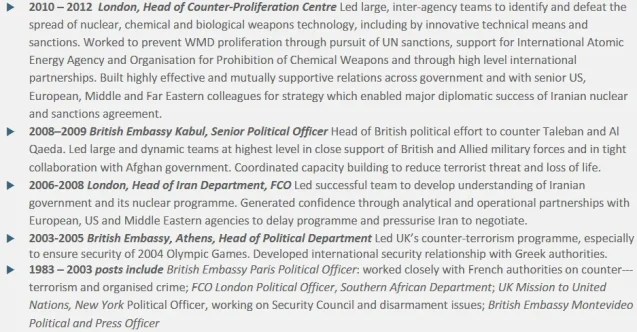
Nicholas Langman’s leaked CV
It was during the latter period that public and governmental attitudes across the West – and in vassal states – towards the Islamic Republic became highly belligerent, and negative. One by one, governments and international bodies – including the EU and UN – imposed ravaging sanctions against Tehran, devastating its economy, influence, and standing. MI6 journeyman Langman triumphed in his mission to foment concerted global hostility against Iran, based on the bogus spectre of the country posing a nuclear threat.
The question of whether British ‘intelligence’ on Iran’s nuclear program was the product of torture is an open and obvious one. Langman moved straight to leading MI6’s Iran Department from running the agency’s station in Athens, Greece. There, in late 2005, he was exposed by local media as having overseen an operation to abduct and ferociously mistreat 28 Pakistani guestworkers, wrongfully suspected of having had contact with individuals accused of perpetrating the 7/7 bombings in London in July that year.
That Langman wasn’t reprimanded over the incident strongly suggests he enjoyed a high level of protection, and London approved of his vicious intelligence-gathering methods – known to invariably produce false testimony from detainees. MI6 was not only an enthusiastic collaborator in the CIA’s global extraordinary rendition program, but led its own operations. Markedly, in at least one case, the British sought to sideline the CIA and ensure exclusive access to “intelligence” from a detainee in which Langley also had an interest.
The Obama administration was during its first year in office formally committed to non-interference in the Islamic Republic’s affairs, to the extent State Department apparatchik Jared Cohen was almost fired for publicly demanding Twitter halt planned maintenance during June 2009 protests in Iran, to ensure demonstrators could continue posting. It’s therefore unknown whether Washington was in on MI6’s Iran nuke con. If not, it wouldn’t be the first time British intelligence has misled the international community, with catastrophic results.
‘Possible Manipulation’
In July 2004, the Senate Intelligence Committee issued a scathing report on “the US intelligence community’s prewar intelligence assessments on Iraq.” It reserved particular disdain for how the CIA et al had “[relied] too heavily on foreign government services and third party reporting, thereby increasing the potential for manipulation of U.S. policy by foreign interests [emphasis added].” This was a reference to MI6’s central role in gathering – or concocting – intelligence on Baghdad’s purported WMD capabilities:
“Due to the lack of unilateral sources on Iraq’s links to terrorist groups like al-Qaida [redacted], the [US] Intelligence Community (IC) relied too heavily on foreign government service reporting and sources to whom it did not have direct access to determine the relationship between Iraq and [redacted] terrorist groups… The IC left itself open to possible manipulation by foreign governments and other parties interested in influencing US policy.”
As far back as the late 1990s, Britain’s foreign spying agency took the lead on sourcing dud ‘intelligence’ to manufacture consent for the against Baghdad. Under the auspices of a psychological warfare effort dubbed Operation Mass Appeal, MI6 black propaganda specialists circulated false information to foreign editors and reporters on its payroll “to help shape public opinion about Iraq and the threat posed by WMD,” which was then recycled by Western leaders and news outlets to reinforce its credibility.
In September 2002, then-MI6 chief Richard Dearlove personally approached British Prime Minister Tony Blair, claiming his agency had cultivated a source inside Iraq with “phenomenal access”, who could provide the “key to unlock” Iraq’s purported WMD program. Their assorted claims subsequently formed the basis of a dossier, which made a number of wild charges about Baghdad’s chemical and biological weapon capabilities. A prominently reported allegation was that Iraq could deploy WMD against Western countries within just 45 minutes. Its source was an Iraqi taxi driver.
This claim was repeated in a radio address by George W. Bush that month. In January the next year, as the invasion of Iraq rapidly loomed, the President declared in his State of the Union address, “the British government has learned that Saddam Hussein recently sought significant quantities of uranium from Africa.” That December, then-CIA chief George Tenet admitted this assertion was completely fallacious, and “these 16 words should never have been included in the text written for the President.”
The Zionist entity justified its unprovoked assault against Iran in June in large part on an intelligence dossier, which concluded the Islamic Republic had reached the “point of no return” in acquiring nukes. Its findings relied heavily on a May IAEA report that provided zero fresh information, but concluded Tehran supposedly maintained “undeclared nuclear material” until the early 2000s. While intended to trigger regime change, Tel Aviv’s broadside ended promptly in embarrassing failure, despite extensive foreign support, including US airstrikes.
Undeterred by the fiasco, Benjamin Netanyahu remains determined to crush the “Iranian axis”, while Trump has declared he would bomb Tehran “without a question” in response to indications the Islamic Republic has enriched uranium beyond agreed levels. We could be on the precipice of another war. As with the Iraq invasion, the perilous trail that brought us to this grave point could lead back to London. Yet again, MI6 may have taken the lead in concocting ‘intelligence’, justifying further US-Israeli aggression against the Islamic Republic.
Pro-Israel tech giant to take over TikTok’s US algorithm to censor Gaza genocide
Press TV – September 23, 2025
A pro-Israel American company is supposed to provide data security and recreate an algorithm for the new US version of TikTok as part of attempts to censor the occupying regime’s genocide of Palestinians in the besieged Gaza Strip, a report says.
The move was prompted following the forthcoming sale of the popular Chinese-owned social media application to US investors, with the financial news outlet Bloomberg citing a White House official as saying on Monday that the arrangement with Oracle Corp. seeks to ensure US control of TikTok’s algorithm, which recommends videos and determines what users in the US see on their feeds.
Under a proposed agreement, owners of the US-based TikTok would lease a copy of the algorithm from its Chinese parent, ByteDance Ltd., that Oracle would then retrain “from the ground up,” according to the official.
“Data from US users would be stored in a secure cloud managed by Oracle with controls established to keep out foreign adversaries, including China,” the official was quoted as saying by Bloomberg.
“Beijing-based ByteDance would not have access to information on TikTok’s US subscribers, nor would it have any control over the algorithm in the US.”
The White House official underlined, “Oracle, the US security partner, will operate, retrain, and continuously monitor the US algorithm to ensure content is free from improper manipulation or surveillance.”
Austin-headquartered Oracle, which is controlled by its founder, Larry Ellison, already provides cloud services for TikTok and hosts user data in the US and other countries as part of a multibillion-dollar partnership dubbed “Project Texas.”
Ellison is one of Silicon Valley’s most pro-Israel figures and has made significant donations to the so-called charity “Friends of the Israel Defense Forces (FIDF)”, which supports the Israeli occupation soldiers and is involved in funding emergency medical supplies and mental health treatment to those wounded in the Gaza Strip.
After the start of Israel’s genocide in Gaza in October 2023, Ellison pledged Oracle’s support for the occupying regime with cloud and cybersecurity infrastructure, highlighting his commitment to Israel’s military and tech sectors.
The Boycott, Divestment, and Sanctions (BDS) movement says that US tech companies, notably Microsoft, Amazon, Google, Cisco, Oracle, and IBM, “are deeply complicit in atrocity (including apartheid and genocide)” for providing cloud infrastructure and AI technologies to the Israeli occupation army.
Social media companies, including TikTok, employ large numbers of former intelligence officers from Israel’s Unit 8200.
The Israeli regime also lobbies social media companies to remove pro-Palestine content, giving Tel Aviv significant influence over censorship decisions at the major US social media platforms.
In 2024, US Congress enacted the “TikTok divest-or-ban” law after Jewish lobby groups were ruffled by the large numbers of young American people viewing and sharing videos of Israel’s mass killing of Palestinian civilians in Gaza.
Access to TikTok was briefly blocked for US users in January as the ban came into effect. However, President Donald Trump issued an extension for a deal to be reached, allowing access to resume after just one day.
The move comes as the Israeli regime persists in its systematic oppression of Palestinians by worsening the humanitarian crisis in Gaza and launching a full-scale ground invasion across the territory.
Disturbing images and videos depicting emaciated children, relentless bombardments, and widespread destruction continue to surface on social media platforms, shedding light on the dire situation faced by Palestinians in the region.
Backed by the US, Israel launched its onslaught on Gaza on October 7, 2023, after Palestinian resistance fighters waged the surprise Operation al-Aqsa Flood against the Zionist entity in response to the regime’s decades-long campaign of bloodletting and devastation against Palestinians.
The Israeli military has so far killed more than 65,300 Palestinians, mostly women and children.
Thousands of victims are also feared trapped under rubble, inaccessible to emergency and civil defense teams due to relentless Israeli attacks.
Settler arson attack on vital West Bank agricultural hub is blow to Palestinian food security
International Solidarity Movement – Palestine | September 23, 2025
The Mishtil Al-Junaidy Al-Hadith plant nursery in Deir Sharaf, a major West Bank seed distributor and the heart of the region’s agriculture, was set on fire by illegal Israeli settlers on 8 September 2025, costing the owners over three million shekels and seriously damaging the already fragile Palestinian food system.
The footage captured by security cameras shows seven masked settlers descending on the nursery at 8pm to destroy the agricultural hub. Using diesel fuel, the settlers set fire to several buildings, stole supplies, and broke the windows of the main office, destroying seeds, computers, and most importantly, invaluable data centers holding information on agricultural practices in the region, which cannot be retrieved.
The fire department was informed immediately, but the Israeli authorities didn’t permit the firemen to reach the site for 45 minutes, which uninterrupted would only be a ten minute drive from the station in nearby Nablus. The attack was caught on camera, and the Israeli military, Shin Bet and Civil administration all arrived, but – just like past attacks – no updates on the investigation have been provided and no arrests have been made.
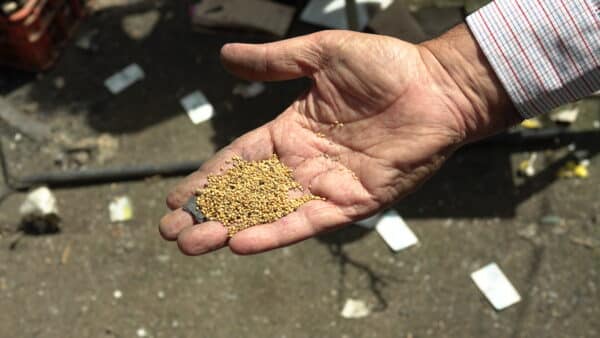
Sameer Al Junaidy, one of the four Al Junaidy brothers who owns and runs the nursery, says he doesn’t hire security because he would rather take damage to the property than put a Palestinian’s life at risk. Unarmed guards would be powerless against armed settlers, who regularly assault and murder local Palestinians.
The nursery is situated next to the illegal Shavei Shomron settlement, one of the West Bank’s first illegal settlements built in 1977 on land seized from Deir Sharaf and An-Naqura. Just before October 7, 2023, illegal settlers established an outpost on the other side of the nursery and have been intent on building a road that goes through it to connect them.
Since then, settlers have attacked the nursery at least five times. Recently, they set fire to bulldozers, a truck, and a forklift owned by the nursery. Settlers have also burned down olive trees, destroyed water pipes, and attacked Palestinians in neighboring communities. Footage from previous attacks that contains the assailants’ faces captured by Al Junaidy has been handed over to police, but no arrests were ever made.
Al Junaidy says that the Israeli Civil Administration told him that they understand how important the center is to West Bank agriculture and communities but they said: “There are two policies on the ground”, and some in the Israeli government want to see the assailants go unpunished. The nursery is also adjacent to Kedumin, the settlement where Israeli far-right Finance Minister Benzamar Smotrich lives, which is in the same council of settlements as Shavei Shomron.
The attack is a devasting blow to an already precarious food system in the besieged territory, bound to raise costs for local farmers who buy their seeds through the company. The nursery produces 80% of the West Bank’s olive tree saplings and all of its almond tree saplings, two crops central to Palestinian food security.
The destruction of over forty years of data could have far reaching impacts on agriculture across the West Bank. The data which has been lost included detailed information on how to best cultivate their thousands of seeds, meaning without this data, farmers may not know the ideal way to cultivate the crops. It is also used by agricultural engineering students at universities across Palestine.
Assaults on the West Bank’s economy and food systems through attacks like this one on the Al Junaidy Nursery are just one tactic in the occupiers’ overall project to ethnically cleanse the territory of all of its Palestinian inhabitants by disconnecting them from their land, their traditions, and the resources they need to survive.
Featured Video
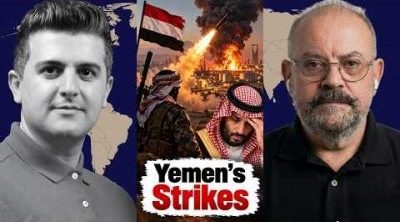
Elijah Magnier: Yemen’s strikes are shattering Saudi Arabia’s long-term strategy
or go to
Aletho News Archives – Video-Images
From the Archives
British weapons and personnel doing much of the killing in Yemen
Press TV – June 18, 2019
A detailed report published by the Guardian newspaper has shown how Britain is massively contributing to Saudi Arabia’s devastating war on Yemen as it suggests that London is not only supplying the bombs that fall on Yemenis, but it provides the personnel and expertise that keep the war going.
The comprehensive report by Arron Merat published on Tuesday showed that Britain was doing much of the killing in Yemen as the country continues to provide Saudi Arabia with everything it needs to turn its southern impoverished neighbor into a graveyard.
“Every day Yemen is hit by British bombs – dropped by British planes that are flown by British-trained pilots and maintained and prepared inside Saudi Arabia by thousands of British contractors,” said Merat in the report. … continue
Blog Roll
 Aletho News
- Netizens condemn Japanese drama for projecting Japan’s wartime atrocities onto Chinese characters
- Racist Seinfeld Dances for Joy as Bibi Unveils His New Map
- A West Bank War for Netanyahu’s Election Campaign, Could It Backfire?
- Yemen denounces European Parliament’s ‘hypocritical’ push to blacklist Ansarullah
- Qalibaf: UAE’s UN bid aims to ‘clear the runway’ for ‘Greater Israel’, whitewash genocide
- Pakistan reopens Iran border after boosting security: Report
- Why are so many Brazilians voting for Flávio Bolsonaro?
- Democrats Put Anti-Russia Agenda Ahead of American Workers
- Elijah Magnier: Yemen’s Strikes Are Shattering Saudi Arabia’s Long-Term Strategy
- Pentagon designates Chinese cultural centers national security threat
- If Americans Knew
- An error has occurred; the feed is probably down. Try again later.
- No Tricks Zone
- Sudden Stratospheric Warming, Powerful El Niño Combination May Lead To Extreme Europe Cold, Energy Crisis!
- Two New Studies Find Thwaites Glacier Melt Cannot Be Driven By Human Activity Or A Warming Ocean
- E-Cars Reduce CO2 Emissions By Only 41% Compared To Internal Combustion Engine Vehicles
- Predictions Made By Renowned Climate Professor Over Past Decades Have Been Proven To Be Poor
- New Study Suggests Large Regions Of The Pacific Ocean Have Been Cooling For The Last 80 Years
- Germany’s Green Energy Debacle: High Energy Costs Force Kahla Porzellan to Close After 182 Years!
- New Study: 50 Years Of The Most Aggressive ‘Net Zero’ Policies Can Only Affect The Global Climate By 0.03°C
- US September “Heat” Was No Record…Many Records Set Decades Ago
- Latest European Green Energy Debacle; Portugal’s Largest Flagship Solar Park Insolvent!
- Green Energy Debacle: German Expert Professor Fritz Vahrenholt Warns Of Severe Economic And Social Consequences

