Iran’s judiciary rejects Trump’s claim on ‘planned execution’ of 8 women
Press TV – April 21, 2026
Iran’s Judiciary has dismissed claims by US President Donald Trump that eight women are facing imminent execution in Iran.
In a statement issued on Tuesday, the Judiciary clarified that some of these individuals have been released, while others are facing charges that, if upheld by the court, may lead to imprisonment.
“Trump was misled once again by fake news,” the statement said.
Trump requested clemency on their behalf in a post on social media earlier in the day.
The Judiciary also stated that following the foreign-backed riots in January, Trump made a baseless assertion, falsely thanking Iran for halting the execution of more than 800 prisoners—a completely baseless claim lacking any credible evidence.
“It’s not surprising, as this marks yet another instance of his misleading assertions,” the statement read.
In recent days, Trump has reiterated a similar unfounded claim, referencing anti-Iranian media reports.
In his latest social media post, Trump re-posted an American-Jewish activist’s claim that eight women are facing execution, urging the Iranian leadership to release the eight.
He also claimed that the women’s release could be a great start to US-Iran negotiations.
In recent months, numerous false claims regarding purported death sentences for various individuals have circulated in anti-Iranian media.
Israeli army blows up school in southern Lebanon in violation of ceasefire
Press TV – April 21, 2026
The Israeli regime has demolished a public school in southern Lebanon in a new violation of a temporary ceasefire agreement with Beirut approved by US President Donald Trump.
The Israeli army destroyed a public school building in the southern Lebanese town of Khiam despite the 10-day ceasefire.
The state-run Lebanese National News Agency (NNA) reported on Tuesday that the Israeli forces rigged the building with explosives and detonated it overnight, completely leveling the structure.
Israeli forces also fired artillery near the town of Kunin in the Bint Jbeil district in southern Lebanon, according to another report by NNA.
A series of Israeli demolitions occurred across the south, targeting homes, buildings and other infrastructure, the report said. Israeli forces also “booby-trapped” numerous homes in the villages of Beit Lif, Shamaa, Biyyada, and Naqoura, leveling them, the report added.
Trump announced on Thursday a 10-day ceasefire in Lebanon following calls with Lebanese President Joseph Aoun and Israeli prime minister Benjamin Netanyahu.
However, the Israeli regime’s forces have continued attacking Lebanese civilian infrastructure and residential areas, disregarding the ceasefire agreement.
Meanwhile, Israel has planned to systematically flatten civilian buildings in southern Lebanon, according to Israeli media. Engineering tools, including excavators, have been brought into the area and are being operated by paid Israeli contractors.
Israeli forces are assessing the scale of the destruction through digital tools, including statistical systems that track the number of buildings demolished in each sector.
Last month, Israeli Minister of Military Affairs Israel Katz said, “All houses in villages near the border in Lebanon will be demolished in accordance with the Rafah and Beit Hanoun models in Gaza.”
He added that after Israel’s aggression in Lebanon ends, the military would maintain control “over the entire area up to the Litani.”
Since March 2, Israel has carried out an aggression against Lebanon that has killed around 2,300 people, wounded more than 7,500, and displaced over 1.2 million, according to Lebanese authorities.
The desalination front: Water as Israel’s Achilles heel
The Cradle | April 21, 2026
Israel’s near-total dependence on seawater desalination to secure almost 80 percent of its drinking water and industrial needs has created a security vulnerability unlike that of the Persian Gulf states.
While Gulf desalination facilities are spread across wide geographic areas, Israel’s production capacity is concentrated along a narrow stretch of coastline. That concentration leaves Israel’s water system vulnerable to paralysis through concentrated missile barrages or suicide drone attacks from multiple fronts – a danger that exceeds the ability of conventional air defenses to fully contain.
The longer the confrontation with Iran drags on, the more these facilities are transformed from civilian infrastructure into strategic targets. Israel’s five main desalination plants have become central nodes in Tehran’s target bank, placing domestic stability and regional water commitments under the threat of broad disruption.
A narrow coastline, a concentrated vulnerability
Israel may be the world’s most centralized state in desalinated water production. Five major plants – Ashkelon, Ashdod, Palmachim, Sorek, and Hadera – produce the overwhelming majority of potable water for homes, agriculture, and industry.
The Sorek complex, one of the world’s largest reverse osmosis desalination plants, carries particularly high strategic value. Any strike that disables it would not simply create a temporary shortage. It could knock out water service to entire areas of Gush Dan, including Tel Aviv and its surrounding settlements, in a matter of days.
It is also clear that Israel’s water system lacks geographic depth from a security standpoint. All the plants fall within the effective operational range of precision missiles and are fully exposed to maritime threats.
Their offshore intake pipes are especially vulnerable. These underwater systems can be targeted through naval drones, unmanned submarines, or sea mines, halting water extraction and treatment almost immediately.
A successful strike on Hadera alone could severely disrupt supplies to the north and center of the country, placing huge pressure on emergency planners already dealing with depleted groundwater reserves and the shrinking capacity of Lake Tiberias.
The gas–water dependency trap
The most serious structural weakness in Israel’s water sector lies in its dependence on natural gas. Unlike the Gulf states, which possess large emergency reserves of liquid fuel to keep desalination facilities running during crises, Israel relies almost entirely on gas from the Tamar and Leviathan fields in the Mediterranean and is now looking to claim ownership of Lebanon’s Qana gas field.
That means any successful strike on offshore gas infrastructure would quickly spread beyond the energy sector. Disrupted gas supplies would undermine the national electricity grid and cut power to desalination facilities at the same time.
This dual dependency turns Israeli water security into a hostage of offshore infrastructure. Gas platforms are difficult to defend against drone swarms, anti-ship missiles, or coordinated naval attacks.
A strike on Leviathan, for example, would leave Israeli planners facing an impossible calculation: should the remaining gas be directed toward electricity generation for hospitals and military facilities, or toward desalination plants to ensure water continues to reach homes?
That overlap amplifies the pressure Iran can exert. A single strike on one offshore target could cripple two strategic sectors simultaneously.
Water as a regional pressure point
The implications of a strike on Israeli desalination infrastructure extend far beyond the occupation state itself. Under its peace agreement with Jordan, Israel is obligated to provide Amman with fixed annual quantities of water.
Any serious damage to Israel’s desalination system would almost certainly interrupt those supplies, exporting the crisis directly across the Jordan River.
That dynamic transforms desalination plants from public utilities into instruments of regional pressure. Strikes on these facilities would not only weaken Israel internally but also place neighboring governments under stress and expose the fragility of regional arrangements built around Israeli infrastructure.
Jordan would be hit first. But the fallout would also test the broader framework of normalization agreements and regional cooperation. For Tehran, that creates an additional layer of leverage. Dependence on Israel for critical resources is becoming a growing strategic liability.
That, in turn, could push neighboring states to seek alternatives, pressure Washington and Tel Aviv to scale back their confrontation with Iran, or reassess the long-term value of regional ties with Israel.
Cyberattacks and invisible sabotage
Israel possesses one of the world’s most advanced cybersecurity sectors, yet repeated Iranian cyberattacks have exposed real vulnerabilities in industrial control systems.
Desalination plants rely on complex digital infrastructure to regulate chemical balances, water pressure, and membrane filtration. Penetrating those systems would allow attackers to alter chlorine levels, disrupt pumping pressure, or physically damage sensitive equipment.
The danger of cyberwarfare lies in the fact that it is largely invisible. Unlike missile strikes, digital sabotage can unfold quietly, triggering confusion and panic before the source of the disruption is identified.
Even a 24-hour shutdown at Sorek could leave millions without water and inflict severe losses on sectors that depend on highly treated water, including semiconductor manufacturing, pharmaceuticals, and the precision industry.
The more Israel digitizes the management of water infrastructure, the more attractive that sector becomes as a target for cross-border cyber attacks.
Deliberate pollution and long-term disruption
The eastern Mediterranean coastline is also highly vulnerable to environmental contamination during wartime. A strike on fuel tankers offshore, or on storage facilities in Haifa or Ashdod, could trigger oil spills large enough to disable desalination intake systems within hours.
Israel’s heavy reliance on reverse osmosis makes that threat especially serious. Even limited exposure to oil residue can permanently damage filtration membranes. Replacing them is neither quick nor simple, particularly during wartime conditions when supply chains are already strained.
This kind of environmental warfare is especially dangerous because its effects do not end when the fighting stops. Oil pollution would not only shut down desalination capacity in the short term but also damage marine ecosystems that support natural filtration processes.
That would raise operating costs, lower water quality, and leave sections of Israel’s coastline economically crippled long after the war itself ends.
The economic cost of strategic thirst
From an investment and financial perspective, instability in water security poses a direct threat to the occupation state’s “startup nation” model. International investors and major technology firms evaluate risk based on the stability of essential resources.
Once water itself becomes a threatened commodity, sovereign insurance costs rise, while capital flees sectors that consume large volumes of water.
A prolonged shutdown in greater Tel Aviv could inflict losses that surpass the economic impact of conventional missile strikes. Water is tied to every layer of the economy, from households and hospitals to industrial parks and high-tech production.
International ratings agencies already assess Israel’s creditworthiness according to its ability to absorb wartime shocks, protect infrastructure, and sustain economic activity during prolonged conflict. Any major disruption to the water sector would add to concerns over fiscal strain, investor confidence, and the state’s ability to maintain basic services.
That would raise borrowing costs and place additional pressure on a state budget already strained by military spending.
“Thirst economy” is now a term increasingly heard in financial analysis circles, where water becomes the central measure of national economic resilience.
The supply chain problem
Israel’s desalination system depends heavily on imported technology, precision spare parts, and specialized chemicals. Wartime disruption to ports, shipping lanes, or supply chains would make routine maintenance increasingly difficult.
Anti-scaling chemicals, disinfectants, filtration membranes, and electronic control systems all require reliable imports. Any shortage would force plant operators to either lower water quality or shut facilities down altogether to avoid damaging equipment.
That creates another challenge for Israeli planners. Maintaining the desalination sector during a prolonged conflict may require costly air bridges for critical parts and chemicals – an option that is difficult to sustain over time.
Israel’s desalination network has become one of the clearest examples of how technological sophistication can also create strategic fragility. Water security now sits at the center of the occupation state’s military and economic calculations.
If these facilities become unsustainable under wartime conditions, every other pillar of Israeli power – from industry and public health to military readiness and regional influence – becomes far harder to sustain.
Washington cuts flow of US dollars to Iraqi central bank until ‘acceptable’ government formed
The Cradle | April 21, 2026
The US has suspended all funding and security coordination with Iraq, and shipments of dollars the Central Bank of Iraq (CBI), until a new Baghdad government acceptable to Washington is formed, Al-Hadath reported on 20 April.
The US is also conditioning continued security cooperation on the disclosure of those involved in the bombing of its embassy, the Saudi news channel added.
Nevertheless, on Monday, the CBI released a statement rejecting the Al-Hadath report.
Since 2003, a decision issued by Coalition Provisional Authority (CPA) head Paul Bremer has required that all Iraqi oil revenues be paid into an account at the US Federal Reserve Bank of New York, giving the US the ability to control how many US dollars are returned to the CBI.
From that point until today, the Iraqi Ministry of Finance has had to submit funding requests to the US Treasury, which then approves or denies them based on its own criteria.
This monthly transfer of US dollars, flown into Baghdad in pallets of hard cash, determines Iraq’s ability to pay for basic needs such as salaries, food, and medicine.
Whenever Washington believes that Iraq is not aligned with US regional goals, including enforcing economic sanctions on Iran, Baghdad’s major trading partner and a source of natural gas for electricity production, these fund transfers can be delayed or reduced.
The Coordination Framework (CF), the largest parliamentary bloc of Shia parties, has not yet selected a prime minister nearly five months after securing a plurality in the latest elections.
Former prime minister Nouri al-Maliki, viewed by the US as “close” to Iran, was initially chosen to replace incumbent Prime Minister Mohammed Shia al-Sudani.
However, while Washington wants to replace Sudani, it also opposes Maliki’s return to power.
“Last time Maliki was in power, the Country descended into poverty and total chaos. That should not be allowed to happen again,” Trump wrote on his Truth Social platform after Maliki emerged as a candidate for prime minister in January.
“Because of his insane policies and ideologies, if elected, the United States of America will no longer help Iraq,” he said. If we are not there to help, Iraq has ZERO chance of Success, Prosperity, or Freedom. MAKE IRAQ GREAT AGAIN!”
Maliki was the prime minister in 2014 when ISIS conquered large swathes of Iraq, including the country’s second-largest city, Mosul.
Maliki received much of the blame for the loss of nearly one-third of the country’s territory to ISIS, which enjoyed covert support from the US military and Iraqi Kurdish leader Masoud Barzani.
The CF, which won 185 of 329 seats in the last election, must nominate a prime minister by 26 April.
China blames US for diplomatic impasse with Iran, urges it to show ‘sincerity’ in talks
Press TV – April 21, 2026
China has called on the United States to demonstrate “sincerity” in resolving its prolonged standoff with Iran over its nuclear program, while censuring the joint US-Israeli military aggression against the country.
In its latest Non-Proliferation Treaty (NPT) report, Beijing said that Washington is responsible for the current diplomatic impasse with Tehran.
The national report on the implementation of the Treaty on the Non-Proliferation of Nuclear Weapons was made public online by the Ministry of Foreign Affairs on Monday.
According to the report, the US and Israel’s military aggression against Iran, both in June 2025 and on February 28, “seriously violated international law and the purposes of the UN Charter.”
In the report, Beijing described Washington’s unilateral withdrawal from the Joint Comprehensive Plan of Action (JCPOA) as the “root cause” of the current diplomatic standoff between the US and Iran.
During his first term in 2018, US President Donald Trump withdrew from the nuclear deal, branding it “the worst deal ever.” Trump claimed that he was seeking stronger terms.
The US and Israel attacked Iranian nuclear and military sites in June 2025, even as indirect negotiations were underway between Tehran and Washington regarding Iran’s peaceful nuclear program.
Seven months later, the two enemies launched a new wave of aggression against the country on February 28, again as Iran and the US were on the verge of finalizing a new nuclear agreement.
Tehran asserts its legal right under the NPT to develop nuclear technology for energy production, medical research, and scientific advancement.
The US and its allies, however, accuse Iran of seeking the technical capability to produce a nuclear weapon.
Tehran has consistently maintained that it regards weapons of mass destruction as a threat to humanity and has never included them in its defense doctrine, even in the face of direct military aggression.
On April 11–12, Pakistan hosted talks between the US and Iran after brokering a two-week ceasefire on April 8, which is set to expire on April 22.
The high-level talks, however, ended without an agreement. Now reports say a US delegation is headed to Islamabad for the second round of talks with Tehran. Iran has said it has not plans to take part in new negotiations.
Iranian Parliament Speaker and lead negotiator Mohammad Baqer Qalibaf said on Monday that Tehran will not accept negotiations “under the shadow of threats.”
He said, “by imposing a blockade and violating the ceasefire,” Trump intends “to turn the negotiating table into a table of surrender or to justify renewed warmongering.”
The uncertainty shrouding the next round of talks escalated after the US Navy targeted an Iranian merchant vessel in the Sea of Oman on Sunday.
Iran’s military condemned the incident as a “criminal operation” and “maritime piracy.”
In a Monday statement, Chinese Foreign Ministry voiced “concern over the forced interception of relevant vessel by the US,” warning that the situation in the Strait of Hormuz is sensitive and complex.
The Iranian-flagged cargo ship Touska had been travelling from China.
Iran announces new Hormuz restrictions after US ceasefire violations
Al Mayadeen | April 21, 2026
Iran has announced sweeping restrictions on maritime traffic through the strategically vital Strait of Hormuz following violations of the ceasefire by the United States, Tasnim News Agency reported.
The report stated that all established maritime channels for entry and exit through the Strait have been closed, effectively halting normal transit in one of the world’s most critical energy shipping routes.
Iranian authorities have instead introduced a newly designed waterway that will allow limited and closely monitored passage for commercial vessels, signaling a controlled approach to maritime navigation under heightened tensions.
Tehran has also declared that no vessel will be permitted to pass through the Strait of Hormuz until guarantees are provided, ensuring the full lifting of the maritime blockade imposed on Iran.
Additionally, the Strait will remain under strict surveillance by the Islamic Revolution Guard Corps Navy, with an explicit ban on the transit of any military vessels, further escalating security measures in the region.
Iranian ships defy the US blockade
The United States naval blockade of Iran began on April 13, after the ceasefire negotiations in Islamabad reached a dead end, with Washington announcing it would restrict all maritime traffic to and from Iranian ports. The move was first outlined publicly on April 12 by US President Donald Trump, who declared that US forces would intercept vessels attempting to enter or leave Iranian-controlled waters.
On April 20, the US military attacked and pirated an Iranian-flagged container ship, TOUSKA, exiting the Strait of Hormuz, marking the first such act of piracy by the US targeting Tehran’s ships since the blockade was first announced.
The Khatam al-Anbiya Central Headquarters described the incident as “maritime piracy” and a clear violation of the ceasefire, stating that US forces had disrupted the vessel’s navigation systems and carried out an airborne landing operation on its deck, while warning that Iran’s Armed Forces would respond soon to “armed piracy” by US forces.
Since then, several Iranian ships have defied the blockade and sailed to and from Iran.
Iran’s Army announced that an Iranian oil tanker had successfully entered the country’s territorial waters after crossing the Arabian Sea, despite repeated warnings and threats issued by United States naval forces.
In a statement released on April 21, the Army’s public relations office confirmed that the vessel was escorted by the Navy, which ensured its safe passage under full protection until it reached Iranian waters without incident.
The statement added that the tanker has since docked at one of Iran’s southern ports, where it has remained for several hours following its arrival.
Other vessels had successfully transited the Strait, defying the United States-imposed maritime blockade targeting Iranian shipping routes.
The vessels managed to cross the strategic waterway despite ongoing restrictions enforced by Washington in recent days.
After Islamabad: How the Global South Is Reshaping Eurasian Geopolitics
By Abbas Hashemite – New Eastern Outlook – April 21, 2026
The developments surrounding the “Islamabad Talks” underscore a broader geopolitical realignment in which Pakistan, China, and other regional powers are deepening their strategic and economic integration, accelerating the rise of a Global South-led order while exposing the waning influence of the US and its traditional allies.
Behind-the-Scenes Realignment of the Global South
The Islamabad Talks 1.0, apparently ineffective, actually reshaped Global South alignment unfolding behind the scenes. In reality, the backstage transpirations during the Islamabad Talks 1.0 were more consequential than the US-Iran peace negotiations. Pakistan’s deployment of military troops and jets to the Kingdom of Saudi Arabia, the dispatch of its first transit shipment to Uzbekistan via Iran, and Aramco’s show of intent to finalize a $10 billion investment in an oil refinery in Gwadar, in partnership with OGDCL, PSO, GHPL, and PPL, were all extraordinary developments.
Obviously, all that did not happen by chance; these developments reflect a deepening strategic alliance between Saudi Arabia, Pakistan, and Iran. The timing of these events suggests that all the players involved were already prepared for their integration in a rising Global South alliance but were merely constrained by the international and regional geopolitical environment. Pakistan’s deployment of troops in KSA has made it a key security provider for the country, a service that other Gulf nations might soon seek as well. However, Pakistan cannot provide security services to other nations solely without China’s collaboration, which is its major partner in intelligence, technology, reconnaissance, and strategy.
Evolving Security Architecture in the Gulf Region
The United States is one of the key security providers in the Gulf. However, during the recent Iranian attacks on the Gulf nations and Israel’s attack on Doha in September, 2025, the United States failed to defend these states. Therefore, the Arab Peninsula would soon get rid of the US fighter jets, satellite coverage, intelligence penetration, and defense mechanisms by replacing them with Pakistani and Chinese security apparatus. This would make Pakistan a key security provider in the region.
Economic Corridors and the Emerging Eurasian Connectivity
The expected finalization of the Saudi-Pakistan oil refinery deal is also a remarkable move for the success of the China-Pakistan Economic Corridor (CPEC) and Gwadar. This development will enable international shipping to refuel at Gwadar, granting Pakistani consumers a 20% price cut on oil. This oil refinery, probably connected to Saudi Arabia via an undersea pipeline, will also smash the relevance of the I2U2, giving it leverage over its regional rivals.
Moreover, the opening of the Pakistan-Iran-Uzbekistan transit route underscores the opening of the Central Asian markets to the whole world via Pakistan and Iran, a move that will strengthen Central Asian and South Asian economies and relations. Just like the CPEC, the BRI connects many corridors via Afghanistan and Iran. China’s goal is to connect all these projects internally. This is the future that the entire region is looking forward to.
Decline of Western Influence and the Rise of a Multipolar Order
It also suggests that the “Islamabad Talks” were more about signaling to Washington and its allies that the international order has altered than about US-Iran peace. Many US allies have already abandoned it in this war of choice. Italy and Spain, for instance, have denied the US the approval to use their bases in the Mediterranean. Both countries have also joined South Africa’s case in the ICC, alleging Israel of genocide. Britain, France, Greece, Italy, Spain, and Germany have refused to militarily assist the US in opening its blockade of the Strait of Hormuz.
Chinese diplomacy is already in full swing, with the Spanish Prime Minister Pedro Sanchez in China to strengthen bilateral economic and strategic relations. The Taiwanese opposition leader Chen Li-wun also visited Beijing, expressing the desire for a “peaceful” resolution of the bilateral dispute, stating that the Taiwan Strait will no longer be a focal point of the potential conflict and will certainly not become a “chessboard for outside forces to intervene in”.
With prospects of a second round of Islamabad Talks, which are expected to take place on Tuesday, emerging, concerns are mounting over the possible collapse of US-Iran peace efforts, which could trigger a renewed and more intense phase of conflict between the two sides. Furthermore, there are speculations that the US and Israel could use these negotiations to reorganize. However, the current circumstances suggest that the US is not in a position to initiate a ground invasion or any other military campaign against Iran, as it failed to open the Strait of Hormuz despite almost 40 days of continuous bombing on Iran. In addition, the United States stands militarily and diplomatically isolated over the issue of US-Iran, as none of its European allies have supported it militarily or diplomatically.
This war has made the United States an irrelevant and isolated international power. The whole agenda of the war has now shifted to opening the Strait of Hormuz, which was already open before the war. The US President Donald Trump is also happy that China will no longer provide weapons to Iran, which it already says it did not provide. This illustrates that the Islamabad Talks 2.0 is just to provide the United States with a face-saving way to get rid of the burden of this war, which Trump, acting as a “mad king,” started as a regime change operation, and a “God’s Plan” has ended up in expediting the decline of the US as a global superpower.
However, despite these unfavorable conditions and circumstances, there is always a possibility that the mad king might receive another directive from his Zionist master to go for a ground invasion of Iran. Although it is highly unlikely, counterintuitive, and counterproductive, as it would be a suicide mission for the United States, leading to the death of thousands of troops and causing the loss of billions of dollars, it is still expected from a person under the influence of the Zionist leader Benjamin Netanyahu.
The US President Donald Trump has already sacrificed the US hegemony to establish the Kingdom of Zionism. His ill-witted decisions have provided Russia, China, and the middle powers with an opportunity to replace the US as a global hegemon. It will also result in further strengthening the BRICS as an international alliance, replacing Western organizations and alliances. In sum, the US-Iran war has hastened the rise of a Global South-led world order and exposed fissures in the Western alliance.
Is Trump Going for Armageddon?
By Larry C. Johnson | SONAR21 | April 21, 2026
Pakistan is trying desperately to hold a new round of talks in Islamabad between the US and Iran. After conflicting statements from the Trump administration, it appears that JD Vance, accompanied by his Zionist watchers — Steve Witkoff and Jared Kushner — are headed back to Islamabad. As of 22:20 hours eastern, Iran’s lead negotiator, Mohammad Bagher Ghalibaf, said there will be no negotiations while the US blockade of Iranian ports remains in effect, stating that they are prepared to demonstrate new cards on the battlefield.
On Monday, April 20, 2026, Iranian President Masoud Pezeshkian made several public statements (primarily via a post on X and remarks reported by state media) regarding potential negotiations with the United States. His tone was cautious, skeptical, and defiant, while still leaving the door open to diplomacy. He emphasized that any serious talks must be based on consistent, reliable behavior rather than pressure. Pezeshkian highlighted “deep historical mistrust in Iran toward US government conduct.” He accused American officials of sending “unconstructive and contradictory signals” that convey a “bitter message” — that the US is seeking Iran’s surrender.
Pezeshkian stressed that Iran will not yield to threats or bullying. He stated that “war benefits no one” and that “every rational and diplomatic path should be used to reduce tensions.” However, he added that “distrust of the enemy and vigilance in interactions are undeniable necessities.” He described the ongoing US naval blockade as evidence that Washington may be “repeating previous patterns and betraying diplomacy.” Unless Donald Trump lifts the blockade and stops issuing threats, I think that Iran will not agree to a new round of talks.
On the military front, Iran has reacted to the seizure of its cargo ship in the Gulf of Oman by deploying thousands of new anti-ship mines in the Strait of Hormuz. Iran was not making idle threats about closing the Strait of Hormuz. It is day 53 since the start of the Ramadan war on the 28th of February and Iran is showing no signs of wavering in its demand that the US fulfill its initial acceptance of Iran’s 10-point plan.
Today, Tuesday, marks the final day of the ceasefire that Israel, the US and Iran accepted on 7 April. Both the US and Iran are locked-and-loaded to continue the fight. The US lacks the military resources that are required to open the Strait of Hormuz. It is not just a matter of clearing the mines and seizing territory on the coast… The US would need an enormous ground force to drive inland in order to locate and destroy missile and drone launch sites. As long as Iran can fire missiles and drones at a ship that tries to pass through the Strait without the permission of the IRGC, the Strait will remain closed and firmly under Iranian control.
A recent Wall Street Journal article — Behind Trump’s Public Bravado on the War, He Grapples With His Own Fears — reports that Trump’s spate of bizarre, vulgar, threatening posts on social media, e.g., threatening to end Iran as a civilization (implying the use of nuclear weapons), is simply a negotiating ploy — i.e., convince the Iranians that he is unstable and could do anything in order to convince Iran to make concessions. If that is genuinely Trump’s intention, it has backfired spectacularly. It has raised legitimate questions about his mental competence.
Although Trump reportedly is terrified of getting bogged down in another forever war that he once vowed he would never do, I think he will order a new round of attacks in hopes that he will break Iran’s will to resist. That will only compound his problems because Iran will retaliate and inflict catastrophic damage on the Gulf Arabs who continue to side with the US.
Trump still has an exit ramp… JD Vance, working through the Pakistanis, had a tentative deal with the Iranians on Friday that consisted of sanctions relief, unfrozen assets, toll fees recognized in exchange for permanent cessation of hostilities, plus enrichment limits under IAEA supervision. Trump blew off that deal with his decision to impose a blockade. Trump being Trump, he could reverse himself, lift the blockade and empower JD Vance to make the deal.
I am not holding my breath. While such a deal will infuriate the Zionists — both Jewish and Christian — this concession might salvage what is left of Trump’s tattered legacy. However, I think Trump will resort to force… I hope I am wrong. … Video interviews
Palantir CEO Calls for Draft to Fight the Empire’s Wars
Involuntary servitude is good for business
By Kurt Nimmo | Another Day in the Empire | April 20, 2026
In 2025, Alex Karp, the CEO of government and military tech contractor Palantir, published The New York Times best-seller, The Technological Republic: Hard Power, Soft Belief, and the Future of the West. The Wall Street Journal praised the book as a cri de coeur, a passionate appeal “that takes aim at the tech industry for abandoning its history of helping America and its allies,” while Wired praised the book as a “readable polemic that skewers Silicon Valley for insufficient patriotism.”
On April 18, 2026, Palantir posted twenty-two points to social media summarizing the book. In addition to taking Silicon Valley to task for insufficient patriotism, advocating a role for AI in forever war, and denouncing the “psychologization of modern politics,” the Palantir post on X declares: “National service should be a universal duty. We should, as a society, seriously consider moving away from an all-volunteer force and only fight the next war if everyone shares in the risk and the cost.”
National conscription, a form of involuntary servitude, and the wars it portends, is good for business, especially for corporations within the orbit of the Pentagon, the CIA, and the national security state. Palantir fits comfortably within this amalgamation.
Mass Murder by Artificial Intelligence
Project Maven is an AI-driven battlefield intelligence system designed by the corporation. The Defense Department, now known as the War Department, employed Maven in 2024 for “targeting support” in Iraq, Syria, and Yemen. Maven incorporates the AI model Claude, built by Anthropic.
More recently, in US airstrikes against Iran, “AI systems born from Project Maven have helped identify and prioritize thousands of targets, accelerating intelligence analysis and operational planning,” explains the Center for a New American Security, a military think tank founded by Michèle Flournoy, a former under secretary of defense with links to Lockheed Martin and BAE Systems. She was the principal adviser to the Secretary of Defense in the formulation of national security and defense policy.
Maven was reportedly used to shorten the “kill chain” during Israel’s invasion of Gaza. “I am proud that we are supporting Israel in every way we can,” CEO Karp exclaimed. Following the Gaza al-Aqsa Flood in October, 2023, Palantir “provided Israel with multiple AI-powered data analytics tools for military and intelligence purposes,” notes the American Friends Service Committee. The corporation has a “strategic partnership” with Israel’s Ministry of Defense to assist the Zionist state and its “war effort” against Palestinian resistance to Israeli military occupation, an armed struggle recognized under international law.
“As the genocide in Gaza advances, attention is turning to the companies whose technologies may be facilitating Israel’s daily atrocities, with US-based Palantir Technologies among them,” reports the Business and Human Rights Center. “While the International Criminal Court (ICC) is stepping in to address genocide accusations, the tech barons who design and supply the tools of warfare remain largely unchallenged.”
Another Israeli AI-based targeting system, Lavender, ostensibly developed by the IDF’s Unit 8200, is said to be a Palantir project. Palantir rejected this assertion in a letter sent to Francesca Albanese, the sanctioned United Nations Special Rapporteur on the occupied Palestinian territories. In the letter, Palantir stressed it “stands in solidarity with Israel in response to the horrific attacks on 7 October, 2023. Our work in Israel long predates the 7 October attacks and is in line with our global commitment to U.S. allies and liberal democracies. We proudly support our partners in Israel across a multitude of mission sets, programs, and contexts.”
Israel utilized Palantir in its September 2024 attacks in Lebanon, employing exploding electronic pagers that resulted in numerous fatalities and injuries, writes AFSC’s Investigate. In addition to its collaboration with the Israeli military, Palantir also provides the Gaza Civil-Military Coordination Center with its services. This center is located at the US military compound in Kiryat Gat, which was established in October 2025 to implement the Trump administration’s plan for Gaza. Iran targeted Kiryat Gat in March, 2026.
Maven, incorporating Anthropic’s Claude, was used to target the Shajareh Tayyebeh primary school in Minab, in southern Iran, killing 180 people, mostly young girls. President Trump praised Palantir Technologies, saying the company “has proven to have great war-fighting capabilities and equipment. Just ask our enemies,” apparently including children.
“Creepy CEO” Advocates Involuntary Servitude in “Service to the West”
“Alex Karp, the creepy CEO of creepy defense contractor Palantir, just can’t stop talking about killing people,” Lucas Ropek writes for Gizmodo. “During a recent call with investors, the billionaire let it slip that he doesn’t mind a little bloodshed, just so long as the money keeps pouring in.”
“Palantir is here to disrupt and make the institutions we partner with the very best in the world and, when it’s necessary, to scare enemies and on occasion kill them,” Karp said, with a smile on his face. The CEO added that he was very proud of the work his firm is doing and that he felt it was good for America. “I’m very happy to have you along for the journey,” he said. “We are crushing it. We are dedicating our company to the service of the West, and the United States of America, and we’re super-proud of the role we play, especially in places we can’t talk about.”
For Karp, “service to the West” includes conscription, that is to say involuntary servitude and the possibility of a violent and horrific death for an untold number of men and women drafted to fight the forever wars envisioned by the billionaire elite, including those within the “libertarian” tech sector.
However, forcing an individual against his or her will to kill and possibly be killed for the sake of the state (or foreign states, such as Israel), and in accordance with a “social contract” that demands submission and obedience, is not libertarian. In the case of Palantir, it is more accurately described as “techno-fascism,” an alliance between Silicon Valley and the state. Contrary to libertarian principles advocating against government intervention, leading tech companies frequently advocate for regulations that favor established AI companies benefiting from government funding and contracts.
Palantir, named after the “seeing stones” from J.R.R. Tolkien’s The Lord of the Rings, may be characterized as a “merchant of death,” a term prominent in the 1930s regarding WWI profiteering. Alex Karp may be compared to Basil Zaharoff, a Greek arms dealer and industrialist, one of the wealthiest men of his time. Unlike Zaharoff, Karp is not selling rifles or munitions, he is selling something far worse—the ability, through artificial intelligence, to murder thousands, if not millions of people with the speed and efficiency of computer technology.
Iran War fallout: Russia and China quietly take over natural gas markets in Asia, with Qatar gone
Inside China Business | April 20, 2026
The Iran War and the closure of the Strait of Hormuz have taken Qatari energy supplies completely off the market. Russian natural gas fields were shut out of Europe beginning in 2022, and energy giants there invested massively into new pipelines to Asia. China was a ready buyer for Russian oil and natural gas, and also invested heavily into huge strategic stockpiles of crude and natural gas storage. Now Russian energy production flowing East, and China is already well-supplied. Liquefied Natural Gas of Russian origin is offered at 40% discount to spot, to induce long-term supply relationships. As a result, Asian economies are shifting their supply chains from the Persian Gulf to Russia-China. Meanwhile, EU countries are unable to get LNG at all.
Resources and links:
Bloomberg, Russia Offers Sanctioned LNG to Energy-Hungry Asia at a Discount https://www.bloomberg.com/news/articl…
S&P Global, Russia crude oil pipeline capabilities to mainland China—The ESPO crude oil pipeline https://www.spglobal.com/energy/en/re…
Power of Siberia 2 reshapes China’s energy security calculus https://eastasiaforum.org/2025/10/31/…
Reuters, Russia’s Gazprom supplied 38 bcm of gas to China via Power of Siberia pipeline in 2025 https://www.reuters.com/business/ener…
Russia’s Oil Windfall From Middle East War Keeps Growing https://www.bloomberg.com/news/articl…
Reuters Exclusive: Iran attacks wipe out 17% of Qatar’s LNG capacity for up to five years, QatarEnergy CEO says https://www.reuters.com/business/ener…
Hamas dismisses US-backed disarmament plan as ‘collective suicide’
The Cradle | April 20, 2026
Hamas has rejected a US-backed proposal to disarm, describing it as a “trap” that risks igniting internal war in Gaza, according to Palestinian officials who spoke with Middle East Eye (MEE).
The plan was presented earlier this month in Cairo by Gaza Board of Peace envoy Nickolay Mladenov, with US officials present, as part of ongoing ceasefire talks that have stalled due to Israeli violations and unmet obligations.
Palestinian sources with direct knowledge of the negotiations said Hamas believes the proposal is designed to “ignite civil war in the Gaza Strip and destabilize Palestinian society.”
A Gaza-based source told MEE, “Hamas completely rejects this,” adding that within the Qassam Brigades, disarmament is viewed as “collective suicide.”
The resistance movement argues that surrendering weapons would leave Palestinians exposed, especially as “Israeli-backed armed gangs” continue to operate.
“They know that giving up their weapons is not an option and will not happen,” the source said.
The proposal also includes the removal of around 20,000 civil servants from Gaza’s administrative structure, which Hamas considers unworkable.
“This would be a complete disaster for any society,” the source said, questioning who would replace experienced personnel tasked with running the besieged enclave.
Hamas officials insist that any discussion of disarmament must follow full implementation of the first phase of the ceasefire.
That includes lifting restrictions on humanitarian aid, which Israel has not fulfilled, allowing only a small fraction of the required air to enter the strip.
Talks over the past two weeks have been described as tense, with Mladenov reportedly issuing a 48-hour ultimatum, warning that fighting could resume if Hamas did not respond.
Egypt has urged Hamas to accept the proposal; however, sources indicate that Hamas still insists on firm guarantees that Israel will fulfill its commitments before any second-phase negotiations move forward.
The eight-month plan presented by the Board of Peace proposes a phased process to disarm Hamas and other resistance factions while transferring governance in Gaza to a technocratic body, the National Committee for the Administration of Gaza (NCAG).
The plan is meant to unfold across five stages, ending with a partial Israeli withdrawal and reconstruction, but it makes no mention of Palestinian statehood, indicating continued Israeli control.
Hamas official Bassem Naim rejected the proposal, accusing Mladenov of serving Israeli and US agendas and warning that linking reconstruction to disarmament “contradicts previous understandings.”
Israel Hayom recently reported that Israel is preparing to resume its genocide on Gaza as the deadline for Hamas disarmament approaches, with Tel Aviv warning it would “complete the mission” if the resistance does not surrender its weapons.
Israeli violations of the ceasefire have continued unabated, with hundreds of Palestinians killed since the agreement took effect and aid deliberately restricted to a fraction of agreed levels, leaving Gaza’s population exposed to famine conditions.
Last week, Israeli soldiers killed two UNICEF-contracted truck drivers and injured two others during a routine water delivery operation at Gaza City’s only operational filling point, disrupting critical aid as shortages deepen across the strip.
Since the so-called ceasefire was declared, at least 738 Palestinians have been killed by Israeli forces, including at least 214 children and dozens of women.
Israel’s war obsession and the urgency of Palestinian leverage
By Ramzy Baroud | MEMO | April 20, 2026
It is tempting to argue that Israel’s new military doctrine is predicated on perpetual war—but the reality is more complex.
Not that Israeli Prime Minister Benjamin Netanyahu would object to such an arrangement. On the contrary, his relentless drive for military escalation suggests precisely that. After all, his openly declared quest for a “greater Israel” would require exactly this kind of permanent militarism—endless expansion and sustained regional destruction.
However, Israel cannot sustain an open-ended fight on multiple fronts indefinitely.
Israeli officials boast about fighting on “seven fronts,” but many of these are, in military terms, largely imaginary rather than sustained battlefields.
The real wars, however, are entirely of Israel’s making: from the genocide in Gaza to its unprovoked regional wars.
Still, that fact should not blind us to another reality: in the lead-up to the war on Iran, and in the escalation against Lebanon, there was near-total consensus among Jewish Israelis. An Israel Democracy Institute survey conducted on March 2–3 found that 93% of Jewish Israelis supported the joint US-Israeli attack on Iran. Support cut across all political camps.
The same enthusiasm for war accompanied the Gaza genocide and the various wars and escalations in Lebanon.
Even Yair Lapid—so often and so falsely marketed abroad as a “dove”—fully backed these wars, admitting after the Iran ceasefire that Israel had entered them with “rare consensus” and that he supported them “from the very first moment.”
His repeated criticisms, like those of other Israeli politicians, are not of the war but of Netanyahu’s failure to deliver a strategic outcome.
And this is the crucial distinction. Israelis mostly support the wars, but many no longer trust Netanyahu to translate destruction into strategic victory. By mid-April, 92% of Jewish Israelis gave the army high marks for its management of the Iran war, but only 38% gave high ratings to the government.
In other words, the public still believes in war but increasingly doubts the leadership waging it.
That distinction may not matter much to us, since the outcome remains mass death, devastation, and colonial violence. But in Israel’s own military and strategic calculations, it matters enormously. Its wars have historically followed a familiar model: crush resistance, impose military and political domination, and translate battlefield violence into colonial expansion.
Netanyahu delivered none of that.
This is why the uproar in Israel over the April 16 Lebanon ceasefire has been so fierce, and why the fears surrounding a possible stalemate with Iran run even deeper.
The Lebanon ceasefire clearly did not secure one of Israel’s central declared aims: the disarmament of Hezbollah. Israel kept troops in southern Lebanon, but the agreement halted offensive operations and fell far short of the promised “total victory.”
For many in Israel, any outcome that falls short of total victory is immediately read as defeat. One northern Israeli regional leader, Eyal Shtern, captured that mood with brutal clarity when he reacted to the Lebanon ceasefire by asking how Israel had gone “from absolute victory to total surrender,” in remarks reported by CNN.
That is the real crisis now confronting Israel: not that it has discovered the limits of permanent war, but that it has once again discovered that exterminatory violence does not automatically produce political victory.
While Iran possesses political leverage that could allow for a long-term, or even permanent, truce, Lebanon and Syria remain in a far more vulnerable position. However, no one is in a more precarious condition than the Palestinians, particularly those in Gaza.
Unlike others who retain some political margin and space to maneuver, Palestinians live under Israeli occupation, apartheid, and siege. Gaza, in particular, has been reduced to a sealed enclave of devastation.
Its hermetic siege has produced one of the most horrific humanitarian catastrophes in modern history: an entire population surviving on polluted water, with infrastructure destroyed, food critically scarce, and thousands still buried beneath the rubble.
Aside from their legendary steadfastness—sumud—Palestinians operate under severe constraints in their ability to impose conditions on Israel, particularly as it continues to receive unconditional support from the United States and its Western allies. Yet their resilience, collective action, and enduring presence remain powerful forms of leverage that cannot be easily contained.
Netanyahu—and those who will come after him—will always find in Palestine a space in which war can be waged continuously and at relatively low cost to Israel itself.
Unlike other battlefields, where war becomes politically, militarily, and economically unsustainable, Israel has turned its occupation of Palestine into a permanent battlefield.
Even if Netanyahu, now politically diminished and aging, exits the political scene, the underlying paradigm will remain intact. Future Israeli leaders will continue to wage war on Palestine, not despite its costs, but because of its perceived benefits: it is financially subsidized, colonially advantageous, and politically sustainable within Israel’s current structure.
To break this paradigm, Palestinians must generate leverage—real leverage. This cannot come from futile negotiations or appeals to long-ignored international law. It can only emerge from sustained collective resistance to colonialism, reinforced by meaningful support from Arab and Muslim states and genuine international allies, and amplified by global solidarity capable of exerting real pressure on Israel and, crucially, on its principal benefactors.
For now, Netanyahu continues his wars because he has no answer to his own strategic failures. Here, escalation is not a strength; it is the last refuge of a leadership that cannot deliver victory.
This, however, also reveals something else: Israel is entering a moment of unprecedented vulnerability.
That vulnerability must be exposed—clearly, consistently, and urgently—by all those who seek an end to these senseless wars, an end to the Israeli occupation of Palestine, and a path toward justice that has been denied for far too long.
Featured Video
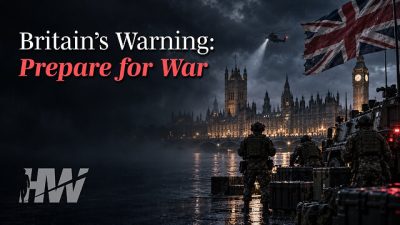
BRITAIN’S WARNING: PREPARE FOR WAR
or go to
Aletho News Archives – Video-Images
From the Archive
How Ukraine Tortured and Slaughtered Donbass
By Kit Klarenberg | Al Mayadeen | July 11, 2024
Almost immediately after the proxy war erupted, ISIS-tier footage of the torture and murder of Russians in Ukrainian custody emerged.
On July 6th, the New York Times published an astonishing investigation: In Ukraine, Killings of Surrendering Russians Divide an American-Led Unit. The article documents in grim detail how Chosen Company, an international volunteer battalion for Kiev, routinely executes Russian prisoners of war. It is the very first mainstream admission that this practice – a brazen breach of the Geneva Conventions, and a grave war crime – is widespread among Ukraine’s fighters, both foreign and homegrown. … continue
Blog Roll
 Aletho News
- Pentagon designates Chinese cultural centers national security threat
- Israel Demolishes Home Of Lebanese Journalist Whose Viral Film Exposed Pager Attack
- Record Oil, Empty Tanks: The UAE’s Miracle Recovery
- Burnham tackles Britain’s poverty with aggression in Yemen
- Peace in Ukraine: the easy way – or the hard way
- Trump & the Rrrrussians
- US taxpayer money laundered back through Ukraine – Musk
- Before COVID, an NIH lab chief proposed making a SARS-like bat virus more infectious
- Gates, Bourla on Trial in Netherlands Accused of ‘Great Reset’ Scheme at Vaccine Injury Hearing
- BRITAIN’S WARNING: PREPARE FOR WAR
- If Americans Knew
- An error has occurred; the feed is probably down. Try again later.
- No Tricks Zone
- Two New Studies Find Thwaites Glacier Melt Cannot Be Driven By Human Activity Or A Warming Ocean
- E-Cars Reduce CO2 Emissions By Only 41% Compared To Internal Combustion Engine Vehicles
- Predictions Made By Renowned Climate Professor Over Past Decades Have Been Proven To Be Poor
- New Study Suggests Large Regions Of The Pacific Ocean Have Been Cooling For The Last 80 Years
- Germany’s Green Energy Debacle: High Energy Costs Force Kahla Porzellan to Close After 182 Years!
- New Study: 50 Years Of The Most Aggressive ‘Net Zero’ Policies Can Only Affect The Global Climate By 0.03°C
- US September “Heat” Was No Record…Many Records Set Decades Ago
- Latest European Green Energy Debacle; Portugal’s Largest Flagship Solar Park Insolvent!
- Green Energy Debacle: German Expert Professor Fritz Vahrenholt Warns Of Severe Economic And Social Consequences
- Two More Paleo Reconstructions Affirm Meters-Higher Sea Levels Across Ireland, Brazil 7000-6000 Years Ago

