‘Israel is not giving anything up’: Residents head to US-backed pilot zones in south Lebanon
The Cradle | July 21, 2026
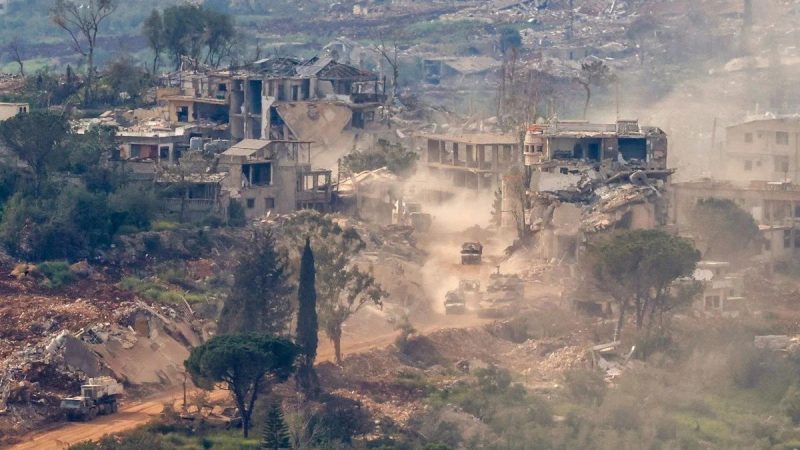
Scores of displaced Lebanese civilians made their way back to southern towns designated by Washington as “pilot zones” early on 21 July, as the Lebanese Armed Forces (LAF) deployed in the town of Zawtar al-Gharbiya – one day after the US officially launched its plan.
An Israeli journalist had previously claimed that Tel Aviv would begin a limited withdrawal on Tuesday as part of the US plan, but local residents returning to the south cast further doubt on Israel’s intention to pull out.
The zones, or at least most of them, “were never occupied by Israeli forces” to begin with, locals told Al-Jazeera on 21 July.
“The inclusion of [these] villages is evidence that Israel is in fact not giving anything up, despite the framework agreement, and is instead able to remain in the [other] areas it has occupied,” the villagers said.
Two Lebanese security sources told Al-Jazeera the same thing, while stressing that two of the “pilot zones” are “not occupied.”
The pilot zone plan is a key aspect of the US-brokered agreement reached between Lebanon and Israel in violation of Lebanese law.
Washington officially launched the project on Monday.
“Pilot zone operations began in the villages of Froun, Srifa, and Zawtar al-Gharbiya in accordance with the Trilateral Framework and under the auspices of the Military Coordination Group for Lebanon,” the US State Department said in a statement on 20 July.
Reports over recent weeks indicated that three pilot zones had initially been declared as part of the plan: Froun, Al-Ghandourieh, and Zawtar al-Gharbiya.
Israeli Prime Minister Benjamin Netanyahu had publicly named Froun and Zawtar al-Gharbieh as two initial pilot zones weeks ago.
Washington’s new announcement on Monday listed Froun, Srifa, and Zawtar al-Gharbiya as the initial pilot zones.
Just like Froun, Srifa is outside the so-called Israeli security zone and is not occupied. Zawtar al-Gharbiya is the only one of the three zones where Israeli forces are present.
Fierce resistance from Hezbollah prevented occupation forces from pushing into both Froun and Al-Ghandourieh during the initial weeks of heavy fighting.
This was recently confirmed by reports from RT and the New Arab, which cited local officials and correspondents on the ground.
The unconstitutional Lebanon-Israel deal would see the establishment of future pilot zones under “mutual consent” between Tel Aviv and Beirut.
The plan is meant to see the LAF replace Israeli occupation troops in the designated “zones” and dismantle Hezbollah infrastructure, in tandem with a “phased” Israeli withdrawal.
However, Lebanese military sources told local media earlier this month that the LAF refuses and rejects direct cooperation with Israel.
“The army will not operate under anyone’s command [including Israel]. Its mission is not to clear the ground for the enemy in order to facilitate its entry into areas it failed to reach because of fierce resistance. The army will not be the reason for the occupation of additional Lebanese territory,” the sources said.
Israel publicly vows that it will not withdraw from south Lebanon. Israeli media says occupation forces have not received any political directive to withdraw from the area. There are still no clear timelines for the US plan.
As residents made their way to the areas on Tuesday morning, Israeli occupation forces continued to carry out major demolition operations, destroying civilian infrastructure on the border.
DeBasification… A Fancy Word for Booting the US Out of the Middle East

By Larry C. Johnson | SONAR21 | July 21, 2026
Tehran delivered to Washington via Pakistan in early April, a formalized demand for the withdrawal of US combat forces from military bases across the region. It sat in a package alongside the lifting of all sanctions and UN resolutions, the release of Iranian assets held overseas, reparations, and Iran’s right to nuclear enrichment.
Instead of waiting for the US to agree to the demand, Iran has launched targeted attacks during the past two weeks on key US bases in Kuwait, Bahrain, Saudi Arabia, Qatar and the United Arab Emirates. This has produced a de facto evacuation of US forces and equipment from most of these bases. The US Navy’s Fifth Fleet Headquarters in Bahrain is in shambles; the Combined Air Operations Center (CAOC) at Al Udeid in Qatar has been closed and moved to Shaw Air Force Base in South Carolina. And Iran continues to pound bases in Bahrain, Kuwait and Qatar to ensure that no US aircraft or missile launchers remain intact at those locations.
Besides the bases in the Persian Gulf nations, Iran also has pummeled the Muwaffaq Salti Airbase and the Prince Hassan Airbase in Jordan. There are grainy satellite images showing that the United States has removed all aircraft from the open-air parking lot at the Muwaffaq al-Salti airbase, fearing that they would be destroyed by Iranian missiles.
The US also has relocated the $250 million MQ-4C Triton. In early May 2026, the US dispatched the MQ-4C Triton drone to Jordan:
The second US Navy MQ-4C Triton (reg. 169804) drone has yesterday departed from Naval Air Station Sigonella and relocated to Al Hussein Air Base in Jordan, further reducing the US Navy’s high-altitude ISR presence in Sicily. The aircraft involved is the Triton that had arrived in recent weeks to replace the drone lost in the Gulf area during operations linked to the regional crisis. . . .
The MQ-4C Triton is one of the US Navy’s most important intelligence, surveillance and reconnaissance assets, designed for long-endurance maritime monitoring over vast operational theaters. From Sigonella, the platform has regularly supported surveillance missions across the Mediterranean, Black Sea, North Africa and the Middle East.
Relocating both surviving Tritons to Jordan suggests a clear operational reprioritization. By operating from Al Hussein, the drones gain shorter transit times toward the Red Sea, Arabian Peninsula, Iraq and Iran-related operational areas, allowing longer on-station persistence and more responsive ISR coverage during a period of continued regional instability.
Following massive missile strikes by Iran on 11 and 12 July on Jordan’s two airbases hosting US combat aircraft, including the MQ-4C Triton, the US pulled the plug on keeping the Triton in Jordan. Defense Security Asia reported on Monday, 14 July 2026 that:
The Pentagon Pulls $240M Triton Drone from Jordan to Italy After Devastating Iranian Ballistic Missile Strikes Threaten Strategic Airfields . . . . According to regional military planners, the strategic redeployment of the multi-million dollar maritime surveillance platform from forward-deployed hubs in Jordan to permanent facilities in Italy reflects an urgent effort to mitigate severe attrition risks.
The repositioning directly follows a series of sophisticated adversarial long-range strikes that successfully breached localized air defense networks and targeted high-value infrastructure. Open-source intelligence analysts observed that specialized hangar facilities designed to shield premium unmanned platforms sustained direct impacts during these intense bombardments.
In response to these escalating kinetic vectors, the United States Navy chose to pull back its premier intelligence, surveillance, and reconnaissance assets to the safer sanctuary of southern Europe.
During the first 43 days of the 2026 Iran war (Operation Epic Fury, beginning 28 February), Iran systematically targeted the sensor and communications layer of the US military’s integrated air defense architecture across the Persian Gulf. Rather than simply overwhelming interceptors with mass drone and missile barrages, Iran prioritized destroying the radars and SATCOM terminals that make the entire network function — a strategy described by analysts as “blinding US eyes in the Middle East.”
By the end of the first 43 days, Iran had hit at least 12–19 radar and SATCOM systems across seven countries, with total damage estimated at $3.15 to $5+ billion. The targeting pattern revealed a sophisticated operational concept:
- Day 1 priority: The AN/FPS-132 at Al Udeid was struck within hours — the single most valuable radar in the region, specifically deployed to counter Iranian ballistic missiles.
- THAAD radars next: All four deployed AN/TPY-2s (Jordan, UAE ×2, Saudi Arabia) were hit within 48–72 hours, effectively neutralizing the upper-tier missile defense layer.
- SATCOM infrastructure: Command-and-control nodes at Bahrain’s 5th Fleet HQ and Kuwait’s Camp Arifjan were destroyed, degrading the ability to coordinate defenses across distributed bases.
- Layered approach: After stripping away early warning and upper-tier defense, Iran could then attrit remaining Patriot batteries with mass drone waves — a cost-exchange ratio heavily favoring Iran (Shahed-136 at ~$20K–$50K vs. PAC-3 MSE at ~$4M).
The destruction forced interception duties onto already-depleted Patriot systems, compounding a crisis that saw the US and GCC allies burn through 86% of their combined Patriot inventory within five weeks.
Now, with the MoU dead, Iran is focused on making life on the bases that are still hosting US troops and aircraft a living hell. It is no longer up to the US to decide to leave the Persian Gulf… Iran is making that decision for them.
UK migrant racket: One village has had enough
By Robert Bridge | RT | July 20, 2026
The small, leafy, village of Piddington has voted to hold a referendum for independence from the United Kingdom because the government is planning on dumping over 1,000 illegal aliens into the village of just 370 people.
The vote came after the Home Office – the United Kingdom’s lead government department for immigration, passports, homeland security, and law and order – announced in late June that it would convert a vacant military storage facility on the outskirts of the village of Piddington into general accommodation for single men aged 18 to 65.
Needless to say, the residents were not pleased by the news. It did not help matters that despite the significance of the move, no government official came to talk to the villagers before the plans were announced, which smacks of sheer arrogance.
The village of Piddington has no shops, no pubs, and not even a police force. It must rely on outside communities for all of its needs. They have no way of providing any protection for their residents. So this isn’t an asylum seeker issue as far as the townspeople are concerned, it’s about the practical realities regarding how to protect the older people and the kids in the neighborhood from a new presence that promises to be dangerous.
Incredibly, the villagers were told that no women or children would be sent to live with the illegal male migrants because it would not be safe for them. Yet the people of Piddington, without so much as a single police officer, will have to fend for themselves against all odds.
Parish Council Chairman Tim McNally explained the referendum to leave the UK as a natural response to being driven into a corner.
“We had an incredible result, with almost two-thirds of the village voting, the rest were children, and an acceptance of 96%. It was truly astonishing. Self-determination is what people want whilst they are being ignored and driven into a corner. This is a natural human instinct and reaction. The Principality of Piddington, the village that roared, will put together their council and representatives to empower themselves.”
Village resident Graham Rixon, talking to British media, called the scale “completely inappropriate.” “We’re a village of 350 people – there’s another village down the road of even less people, and they’re going to dump 1,200 people here.”
“Most of [the illegal migrants] probably won’t speak the language, so there’s going to be communication problems, and as far as I know, no help’s been set up for language,” he continued, adding “We haven’t had any detail of how it’s going to work, so if it does go through, it’ll be a mess – inadequate provision has been made. We’re supposed to live in a democracy, and this is just trying to bypass democracy and get it all done before anyone notices.”
It requires little imagination to foresee what will happen as night falls in the military camp as hundreds of men find themselves in search of entertainment. The villagers will become prisoners in their own homes, with little means of defending themselves.
The nightmare that the residents of Piddington are confronting is not an isolated case. As Modernity News reported, “In one case a village of just 150 people faced 121 migrants placed in 21 new-build houses originally meant for social housing, sited next to a children’s playground and primary school. Locals reported teenage girls taking longer routes to avoid the area.”
The same tragic story continues in Barnham, Suffolk – a sleepy village of just over 500 residents now confronting plans to house over 1,000 asylum seekers at a nearby site formerly used by the Royal Air Force. The base is situated just several minutes from a primary school and next to a nature reserve.
The residents will be forced to forget about the luxury of not locking their doors at night, or casually socializing with strangers who come in from out of town. Indeed, instead of enjoying the pleasures of quiet country living, villages and towns across the UK are being forced to take matters into their own hands, organizing voluntary security patrols to protect the local population.
“The government refuses to consider our safety as they continue to send more illegals into our communities so it’s essential that we come up with deterrents,” said Gwen Gerrans from Crowborough, another small town that is being forced to accommodate large numbers of migrants. “We are tired of living in the corner they have forced us into.”
The question remains: Will the British government heed the call of their people and put a brake on migration, or will they continue with business as usual? Judging by its own turbulent history, which has witnessed bloody calls for independence, it would seem wise for the British government to heed the call of its people who are truly at their wits’ end as far as illegal migration is concerned. It will only take one or two bad incidents for the social experiment to explode in the government’s face.
While the vote to secede from the UK is largely a symbolic move by the people of Piddington, it shows the level of frustration many British citizens are feeling. There are hundreds of other Piddingtons just waiting for the right opportunity to roar in the face of government inaction.
Robert Bridge is an American writer and journalist. He is the author of ‘Midnight in the American Empire,’ How Corporations and Their Political Servants are Destroying the American Dream.
Israel’s Lawlessness Will Be Its Undoing
By Kevin Barrett | American Free Press | July 20, 2026
Israel has been the world’s worst international outlaw since 1948. That year, the Zionists used terrorism—mass rape and the slaughter of thousands of men, women, and children—to murder or expel 750,000 Palestinians from their homeland. When Palestine’s outraged neighbors tried to protect the Palestinian genocide victims, the Zionists attacked them and blamed them for the violence!
On December 11, 1948, the United Nations passed Resolution 194 ordering Israel to allow surviving genocide victims to return and reclaim their homes and be compensated for their suffering. Israel thumbed its nose at the law, murdering Palestinians who tried to return. Since then it has continued violating Resolution 194 along with dozens of other UN resolutions.
Every year, more and more Palestinian property is stolen by greedy Jewish squatters. Murder and terrorism are their instruments. And woe to anyone who tries to interfere! Rachel Corrie, the brave young American who lay down in front of a Zionist bulldozer in Rafah in 2003, was blithely crushed to death by Israelis who know that in today’s Holocaust-narrative-brainwashed world, Zionist criminals enjoy near-complete impunity. The bulldozer driver was never punished. To this day, Israelis continue to celebrate the murder of Rachel Corrie in myriad ways, including feasting on pancakes bearing her name.
Israel is a fundamentally lawless state. It refuses to even declare official borders, because it is stealing more land and property every single day.
As a world leader in organ trafficking, child trafficking, cybercrimes, false flag terrorism, assassination, blackmail, and other illicit pursuits—and a haven for wanted pedophiles from other nations—Israel is so lawless that many see it as an organized crime hub masquerading as a state. But that kind of extreme lawlessness does not bode well for Israel’s future.
In early July, Netanyahu’s ultra-extremist cabinet announced that it would no longer obey the Israeli Supreme Court. A group of high-tech entrepreneurs critical of Netanyahu had been trying to buy out a media outlet, Channel 13, and the cabinet had blocked the sale. The Supreme Court ordered them to let the sale go through. The Netanyahu regime refused, announcing that it would henceforth flout Supreme Court rulings it disagreed with. The Israeli media is calling it a full-blown “Constitutional crisis.” Is civil war looming?
The Zionist regime’s flagrant disregard for the rule of law was also on full display in its ongoing violations of “ceasefires” in Gaza, Lebanon, and Iran. Every day, Israel exterminates more Palestinian civilians, despite the Trump-brokered “ceasefire” that went into effect last October. And it continues to occupy Lebanon, slaughter Lebanese people, and genocidally destroy entire Lebanese towns and neighborhoods, in blatant violation of the ceasefire imposed by the Memorandum of Understanding (MOU) between Trump and Iran.
The MOU’s very first provision states:
“1. The Islamic Republic of Iran and the United States of America, and their allies in the current war, by signing this MoU, declare the immediate and permanent termination of military operations on all fronts, including in Lebanon, and undertake from now on not to initiate any war or any military operation against each other, and to refrain from the threat or use of force against each other, and ensuring the territorial integrity and sovereignty of Lebanon. The final Deal will confirm the permanent termination of the war on all fronts, including in Lebanon, and other provisions of this paragraph.”
Lebanon is explicitly mentioned three times in that opening paragraph. Ordering “the US and its allies” (beginning with Israel, the “ally” that dragged the US into the war) to “ensure the territorial integrity and sovereignty of Lebanon” clearly requires Israel to withdraw from all Lebanese territory it has been occupying. But Israel has been flouting the MOU, insisting it won’t withdraw while continuing to murder Lebanese people as it genocidally demolishes their towns and neighborhoods.
Israel’s lawlessness has torpedoed the MOU and reignited the war on Iran. The whole world is being dragged into a catastrophic depression because Israel refuses to play by the rules.
This won’t end well for Israel or the Jews it claims to represent. Over countless millennia, humanity has evolved ways of removing disruptive psychopaths from its midst. The psychopathic Bushman would be poisoned. The psychopathic Eskimo would be pushed off the ice. In modern times, a more expensive alternative—a life sentence in a high security prison—is preferred.
Countless high-profile figures, including Iran’s martyred leader Ayatollah Ali Khamenei, have called Israel a cancer that desperately needs to be excised from West Asia and the world. And just as cancer cells that violate the “cellular law of the greater good” must be removed before they kill the whole organism, Israel’s outrageous flouting of the rule of law will likely force humanity to terminate the bloody Zionist experiment.
Subscribe to American Free Press, America’s last real newspaper, to get early access to articles like this (and much more).
US doesn’t have what it takes to repel Iranian counterattacks – expert
Sputnik – 20.07.2026
While the US does retain an enormous offensive capability, which allows it to conduct an intense wave of attacks against Iranian facilities, it can only weaken Iran, veteran war correspondent Elijah J. Magnier tells Sputnik.
The US has plenty of offensive weapons to attack Iran, but at the same time has a limited supply of interceptors needed to repel Iranian counterattacks against US assets, allies and Israel.
“The United States could therefore launch a major campaign, but sustaining it would force difficult choices: which bases to protect, which cities to defend, which incoming threats to intercept,” Magnier explains.
In the meantime, Iran will likely seek to widen the “geography of the conflict, multiplying the number of targets Washington must defend, and raising the political and above all economic costs of an additional American strike.”
Using concentrated ballistic and cruise missile attacks to saturate enemy air defenses, and forcing the US and its allies to expend their interceptors on decoys, Iran can unleash hell upon US bases, logistics hubs, ports, radar installations, and fuel storage facilities in the region.
Attacks upon the US allies in the Gulf can ramp up domestic pressure on local governments, which could prompt them to demand the US to back down.
The Iran also maintains its hold on the Strait of Hormuz, requiring very little resources to ensure that “no insurance company will accept to insure a tanker navigating in a war theater, and no ship owner will take the risk of jeopardizing his asset in that area.”
US media earlier reported that the growing American military presence in the Persian Gulf may signal preparations for a major confrontation.
Trump booed during FIFA World Cup trophy presentation to Spain
Press TV – July 20, 2026
US President Donald Trump was received with loud boos from sections of the crowd during the 2026 FIFA World Cup trophy presentation.
Trump was booed at MetLife Stadium in New Jersey on Sunday at the FIFA World Cup final between Argentina and Spain as he presented the Spaniards with the trophy after their 1-0 victory over their rival.
Trump was asked to step aside by the “winners” of the globally sought Gold Cup, with Spain’s captain Rodrigo Hernández Cascante, also known as Rodri, ushering Trump to exit the stage before the World Cup trophy lifting ceremony. He, however, refused to leave the scene and awkwardly lingered on the side of the giant podium as the loud boos and whistles rang out across the stadium. Eventually, a brief exchange between FIFA President Gianni Infantino and Trump resulted in the host of the event giving in to his unpopularity and leaving the world stage viewed by billions of football fans across the globe.
Trump has spent much of his second term in office berating Spain over its NATO military spending and refusal to allow American forces to use Spanish bases in the illegal US-Israeli war of aggression against Iran, calling the Latinos in general, and Spaniards, in particular, “losers.”
The American president has also branded Spain as a “hopeless” country, deriding the Latino people as “bad people” and briefly threatened to cut off all trade in goods with Madrid.
For his part, Spanish Prime Minister Pedro Sánchez has been a vocal critic of Trump’s aggressive foreign policy for nearly two years.
Sánchez and Trump were present at the final match, both sitting in the VIP section of the stadium.
However, the two Western countries with a long history of territorial wars appear to be at loggerheads still over issues ranging from NATO spending to US militarism in West Asia, Latin America, and beyond.
Madrid censured Washington over US military operations in Venezuela, warning that Washington’s actions endanger sovereignty, international law, and the country’s natural resources.
How to Honor the Dead US Service Members
By Ron Paul | July 20, 2026
Over the weekend the Pentagon announced that four more US soldiers have been killed in President Trump’s war on Iran. That brings the total to 17, but many believe the real number of dead US servicemembers is much higher than that. The Pentagon has claimed it has no obligation to reveal how many military personnel have been injured, which suggests that number may be much higher than we are hearing. Many of these injuries will be horrific and life-altering.
Back on April 12th, President Trump told Fox News that Iran, “has no cards. Their navy is gone. Their air force is gone. Totally gone. They have nothing.” Yet three months later, US bases in the region continue to be successfully attacked, US military equipment worth billions continues to be destroyed, and US servicemembers continue to be killed and injured.
This war was launched by President Trump without Congressional approval in February because the President believed that Iran, at 6,000 miles away, posed an existential threat to the United States. At the same time, he believed that the Iranian government was so weak that after a couple of days of bombing the political system would collapse and a “US-friendly” government could be installed in its place.
This makes no sense. How can a country be strong enough to threaten the United States but be so weak it is about to collapse?
Now, five months later, we continue to attack Iran to open a Hormuz Strait that was open before the war and to end a nuclear weapons program that does not exist. And the American middle and working classes are hit with a price tag for this senseless war that could exceed one trillion dollars.
That is why our Constitution requires that war be declared by the US Congress after extensive deliberation. The Framers wanted to safeguard the new country from the whims of a King George or other monarch who could take the country to war at will. The patriots fought for independence from exactly the political system we have in place today because they understood how destructive endless and foolish wars can be to a country.
The Framers also assumed that Members of the Legislative Branch of government would be of sufficiently good character that they would not allow an executive to abuse power in such a way. They were given all the tools they needed to prevent this, but today Congressmembers remain silent, unwilling to perform the duty required by their office. Most would rather not have the burden of declaring war because they are afraid that an unpopular war might hurt their re-election chances.
A recent poll featured in the Washington Post reveals that nearly seven in ten Americans disapprove of President Trump’s handling of the Iran war. Along with the economy, the Iran war is the most important issue concerning the American people today.
Over the weekend President Trump announced that “we hit (Iran) very hard again… in honor of the three” servicemembers who were killed in recent days. But hitting Iran again does not honor the dead US servicemembers. It only guarantees that more Americans will follow them. If the President really wants to honor our military, he will declare an end to this pointless war, bring all of our troops home from the region, and announce that the destroyed US bases will not be rebuilt. It is time to end the American empire and come home.
Yemen imposes naval blockade against Saudi Arabia in tit-for-tat move
Press TV – July 20, 2026
Yemen has declared a naval blockade against Saudi Arabia, with the country’s military spokesman stressing that it will come into effect immediately.
In a statement on Monday, Yemeni armed forces spokesperson Brigadier General Yahya Saree announced “a maritime embargo against the criminal Saudi enemy, based on the equation of ‘siege for siege,’” adding that “it will come into force from the moment this statement is issued.”
According to the statement, the blockade was imposed in response to Saudi Arabia’s continued “unjust and oppressive siege on our dear people for nearly 12 years, plundering our resources and imposing a comprehensive blockade on [the country’s] ports and airports by land, sea, and air” as well as the recent attacks on the Sana’a International Airport.
The spokesman affirmed the Yemeni armed forces’ “complete readiness for all options,” warning that “any foolish act” by Riyadh will be met with a “harsh” response.
The statement hailed the steadfastness of the Yemeni nation and its participation in million-strong demonstrations in support of the Sana’a government, saying “we assure them that we will spare no effort in restoring their plundered rights and ending the unjust siege against them, regardless of the results and repercussions.”
Tensions flared earlier this month when Saudi Arabia tried to prevent the return of an Iranian plane carrying a delegation of Yemeni officials, who had traveled to Tehran for the funeral of Iran’s martyred Leader Ayatollah Seyyed Ali Khamenei. The plane was diverted after the Sana’a airport was bombed and landed safely in the city of Hudaydah.
Yemen prepared to enter all-out war: Official
Meanwhile, Hizam al-Assad, a senior member of Ansarullah’s political bureau, warned that Yemen is prepared to escalate to all-out war if the 11-year siege of Yemen is not lifted.
He said it is unacceptable for Riyadh to continue exporting oil and purchasing weapons to bomb and blockade Yemen while the Yemeni people remain silent.
“We are today facing a difficult dilemma: either we die of starvation, or we reclaim our right by resorting to force,” al-Assad said in remarks cited by Al-Mayadeen.
Al-Assad warned that Yemen’s armed forces are ready to target Saudi oil facilities, refineries, and export ports with missiles and drones if the blockade continues.
He said that Saudi Arabia bears responsibility for the environmental consequences of burning oil wells, pipelines, and petrochemical plants.
On Sunday, Abdullah al-Nu’ami, another member of Ansarullah’s political bureau, said Saudi Arabia is full of “valuable targets” within reach of Yemen’s armed forces. He added that the region is on the brink of explosion and Saudi Arabia is aware of that fact.
Ansarullah official says aggression against Iran and the blockade on Yemen is pushing the region toward a major blast.
The official said Ansarullah is studying its options and is prepared to pay the highest price to lift the blockade. He warned that if the United States joins Saudi Arabia in a war against Yemen, it will find itself in a predicament.
“We are ready to pay the highest price to lift the blockade, and the region is on the brink of explosion, and Saudi Arabia is aware of this,” al-Nu’ami told Al-Mayadeen.
Saudi Arabia and its Arab allies launched the blockade on Yemen as part of a full-scale war on March 26, 2015, with military, political, and logistical support from the United States and other Western states.
The war has killed tens of thousands of Yemenis, while consistently falling short of its main objective of restoring power to Yemen’s former Riyadh-friendly regime.
The government had fled the country amid a power struggle, prompting Ansarullah, Yemen’s popular resistance movement, to start running state affairs.
Following a fragile UN-brokered ceasefire in 2022, the United States, Britain, and the Israeli regime waged many rounds of wholesale aggression against Yemen.
The attacks sought to cripple Sana’a’s capability to stage solidarity strikes against Israeli targets in response to Tel Aviv’s war of genocide on the Gaza Strip.
Complicit: How the West is Helping Israel Seize the West Bank
Al Jazeera Investigates | July 16, 2026
An undercover investigation by Al Jazeera reveals how western donors evade charity law to provide aid to illegal Israeli settlements.
Since October 7, 2023, Israel has killed more than 1,000 Palestinians in the West Bank. More than 230 of them are children. Attacks by settlers on rural Palestinian communities have increased, destroying property and capturing livestock, driving families from their homes. At the same time, the Israeli military has launched a large-scale assault on the densely populated Jenin refugee camp.
This film provides a comprehensive picture of the tactics the Israeli government uses to support the settlers and then, through infrastructure and building programmes, annex Palestinian land.
Western governments claim to oppose Israel’s occupation of the West Bank and uphold international law. However, undercover reporters from Al Jazeera expose how donors based in some Western countries fund the expansion of illegal settlements.
Al Jazeera journalists secretly film meetings with pro-settler organisations in Israel, claiming to be donors based in the UK looking to make large contributions to their projects. They’re told how funds can be paid as tax-deductible donations to charities in the UK and Canada who then pay the money on to their organisations. It is unlawful for charities in the UK and Canada to use donations to support the illegal settlement of the West Bank.
The Israeli organisations tell our undercover reporters how donations can be used to campaign for the demolition of Palestinian homes and provide military-grade security equipment such as drones and night vision cameras to settlers. We are also told that funds can be used to buy guns for settlers in occupied East Jerusalem and equipment for soldiers serving in the Israeli army.
The Israeli organisations are aware that their activities are considered unlawful in Canada and the UK and suggest ways to disguise the intended purpose of the donations, routing the funds through affiliated third parties and, in some cases, misreporting the true nature of their spending.
Charities in the UK and Canada are required to do extensive due diligence on how funds paid overseas are spent and to ensure they comply with the law. Al Jazeera’s evidence points to serious failings in this process.
No, New York Times, Climate Change Isn’t Causing Modern Heat Waves
By Anthony Watts | ClimateRealism | July 9, 2026
The New York Times (NYT) claims in “Without Climate Change, U.S. Heat Wave Called ‘Virtually Impossible’” that the recent Northeastern U.S. heat wave could not have occurred without human-caused climate change. This is false. The NYT bases its entire story on a model-driven analysis from a group whose sole purpose is to connect weather events to climate change, while ignoring the long observational record showing that severe heat waves have repeatedly struck the United States, including New York, for centuries.
“Heat and humidity as severe, prolonged and far-reaching as this week’s would have been ‘virtually impossible’ in the Northeast and eastern Canada before humans began warming the planet, a team of scientists said on Friday,” writes Raymond Zhong, a reporter for the NYT. “Emissions of carbon dioxide and other greenhouse gases from the burning of oil, gas and coal have trapped more of the sun’s heat at Earth’s surface, raising temperatures worldwide for more than a century.
“Summer hot spells are nothing new, but because of the excess heat around the planet caused by global warming, they can produce higher temperatures today than they once did,” Zhong continued.
Unlike a good journalist, Zhong never questioned the premise, never examined the historical record, never interviewed anyone outside the climate attribution community, and never asked whether the group they cite, World Weather Attribution (WWA), has conclusions that might be influenced by the organization’s very reason for existing. Instead, Zhong presented readers with exactly one narrative: climate change is causing the present heat wave.
WWA exists for one purpose, to determine how much climate change has influenced weather events. That is its mission. Asking WWA whether climate change caused a heat wave is like asking the National Football League whether football is important or Greenpeace whether they think oil spills are harmful. What exactly did the NYT expect them to conclude? That climate change had nothing to do with it?
Of course not. This is not journalism, rather it’s a reporter using a narrative autopen.
The article reports that WWA concluded the heat wave would have been “virtually impossible” before industrialization and cites a probability analysis based on wet bulb globe temperature calculations combined with weather observations, forecasts, and climate model simulations. Yet there is one enormous problem with this approach: climate models are not observations.
WWA begins with climate models, creates a hypothetical version of Earth without modern greenhouse gas emissions, and then compares that imaginary world to today’s modeled climate. The result is not a measurement. It is an estimate built upon assumptions about carbon dioxide driving climate changes, already embedded within the models themselves. The NYT never explains this distinction. Instead, it presents speculative model output as though it were an observed fact. Even more troubling is the fact that the NYT story ignored heat wave history entirely.
America’s climate did not begin in 1970. Long before anyone blamed carbon dioxide for extreme weather, the United States experienced devastating heat waves that rivaled or exceeded many recent temperatures. Climate at a Glance documents that the most severe period for U.S. heat waves remains the Dust Bowl era of the 1930s, when NOAA observations show far more frequent extreme heat than today.
The historical record extends even farther back. The catastrophic Eastern U.S. heat wave of 1901 killed an estimated 9,500 people. The historic 1911 heat wave brought temperatures above 100°F across much of New England and still holds Boston’s all-time record of 104°F. The Dust Bowl heat waves of 1934 and 1936 produced temperatures that remain unmatched across large portions of the central United States. The devastating heat wave of 1980 in the United States killed thousands and caused billions of dollars in damage. None of these events receives a single mention in the NYT article.
Instead, readers are asked to believe that today’s weather is fundamentally different from any weather experienced in the past, just because one attribution group says so.
The article also ignores the basic reality that reliable nationwide temperature observations span roughly 150 years, while humans have lived in North America for more than 15,000 years. Claiming that a weather event is “virtually impossible” based on such a tiny slice of climate history requires extraordinary confidence, or hubris. A commonly cited scientific saying “Extraordinary claims require extraordinary evidence” is often attributed to astronomer Carl Sagan. Yet the NYT provides no extraordinary evidence for the claim that the ongoing heat wave is exceptional or would be “virtually impossible” sans climate change. Indeed, it presents no hard evidence at all, just WWA’s computer model spin. The NYT applies none of the skepticism that journalists normally reserve for extraordinary claims.
The NYT also overlooks another important factor. Much of the observed warming in cities occurs at night, when asphalt, concrete, and buildings slowly release the heat absorbed during the day. This Urban Heat Island effect raises overnight minimum temperatures, precisely when heat-related mortality is greatest. Urbanization can substantially influence long-term temperature records, a known factor ignored by the NYT.
Finally, Zhong quotes a WWA scientist declaring that “the climate the country has today is fundamentally different to the one it had when the founding fathers signed the Declaration of Independence.” That line makes for dramatic copy, but it is historically false. The Founding Fathers experienced brutal heat waves. The most famous heat wave during the American Revolution occurred during the Battle of Monmouth in central New Jersey on June 28, 1778. Temperatures soared to nearly 100°F (37.8°C) with high humidity, pushing the heat index well over 110°F. Fighting in heavy woolen uniforms under the blazing summer sun, soldiers on both sides suffered severe dehydration and heatstroke. Almost as many American soldiers died of heat exhaustion as died from battle wounds.
Extreme heat in the United States is not a new phenomenon.
Despite this, modern media treat every string of hot days as evidence of a looming “climate catastrophe” while ignoring centuries of evidence that debunks this claim.
The most disappointing aspect of this story is not WWA’s predictable conclusion. Organizations are free to pursue the missions for which they were created. The failure belongs squarely with the NYT simply parroting, without critical examination, a climate advocacy organization’s unverified claims.
Readers deserve good journalism. What they got was sloppy climate advocacy masquerading as news. In this case, The New York Times erred because WWA’s claims are not news and certainly not “fit to print.”
Rolling Blackouts Hit New York
By Francis Menton | Manhattan Contrarian | July 18, 2026
At least since New York passed its Climate Leadership and Community Protection Act (CLCPA) back in 2019, it has been clear that trouble has been coming for New York’s electrical grid. The CLCPA effectively prohibits construction of new fossil fuel power plants, even natural gas plants; and the old ones are aging and are forbidden to be replaced or upgraded. Supposedly, lots of wind and solar generators were going to be added to the system. But those have been slow to come and, more importantly, can’t be counted on to generate anything when you need them. In addition, new construction of such things has now been stalled by the end of federal subsidies. At some point the lines of diminishing reliable generation and increasing demand would have to cross.
However, here at this website I have held off predicting imminent grid failure. The reason is that I don’t want to be the boy who cried wolf. Our grid operators are competent people, and they have a lot of tricks up their sleeves to hold things together even in difficult circumstances. In a pinch, they can start up every ancient “peaker” plant, and then import some power from PJM, or New England, or even from Canada. Despite New York’s hostile energy environment, they could get lucky and avoid blackouts for at least several more years.
So I think it is important to report that on this past July 2 and 3, Con Edison ran out of options and imposed rolling blackouts in parts of the North Bronx and Southern Westchester County.
You haven’t heard about this? It’s another example of the legacy media burying an inconvenient story. Checking to see what the New York Times has to say about these blackouts, I find just one sentence in the sixth paragraph of a July 3 article that is otherwise reporting on the heat wave that hit that weekend. The sentence in question reads, “The heat also put stress on power grids, contributing to scattered outages in New Jersey, New York and Ohio for tens of thousands of utility customers on Thursday, according to the tracking website PowerOutage.us.” The heat put “stress” on the grid, leading to “scattered outages.” That’s it. No mention in the Times that the blackouts on that day in New York were intentionally imposed, or that the ongoing degradation of grid reliability had anything to do with it.
I have been waiting to report on this until I could find a credible source attributing the blackouts to an intentional act by Con Edison versus, for example, a heat-related accident of some sort. On July 16, the Institute for Energy Research had a piece with the headline “New York City Cuts Power During July 4th Heat Wave.” Excerpt:
Con Edison shut off electricity to over 5,000 customers in the Riverdale section of the Bronx, leaving residents there without air conditioning. Affected residents were directed to city cooling centers for relief. Con Edison had decided the N.Y. grid could not handle the load, saying the shutoffs were necessary to reduce strain on the grid, protect equipment, and speed up restoration. The company also cut voltage by 8% in areas of the city as a precaution to protect equipment and keep service running while crews worked.
So it was not just blackouts for 5,000 customers, but also 8% voltage cuts in various “areas of the city.” IER does not specify the extent of the areas covered by the voltage cuts.
Nor were the blackouts limited to just the Bronx. My colleague Richard Ellenbogen lives in Southern Westchester County, in a town called Pelham. Pelham is just north of the Bronx, and also within Con Edison service territory. In a July 12 email that he sent to his distribution list, Ellenbogen described what happened in his area:
[Over the weekend of July 3-5], [t]here were numerous power surges associated with the rolling blackouts where the lights went on and off several times before going out. . . . Those surges destroyed a bunch of equipment in my home despite having surge suppressors on the equipment. . . . I missed the Friday evening [July 3] rolling blackout and I returned to a mess. There is thousands of dollars in damages related to the surges. Based upon the Facebook Page MOPS (Mothers of Pelham), my home was not the only one impacted as many people are complaining about electronic equipment not working after the blackouts, notably air conditioners. . . . My home is going to need about $3000 worth of new battery backups. . .
I don’t find any reporting in the press about these blackouts in Westchester.
New York definitely experienced a severe heat wave in early July. The temperature at the Central Park weather station in New York City reached 100° F on July 2, and 98° F on July 3. These are unusually high temperatures that are not reached in most years. Indeed, the last time it reached 100° F at Central Park was in 2012. On the other hand, these temperatures were by no means records. The highest temperature ever recorded at the Central Park station (with data going back into the late 1800s) was 106° F in 1936. Here from recordtemps.in is a list of the highest temperatures ever recorded at the Central Park weather station:
-
07-09-1936: 106°F
-
07-21-1977: 104°F
-
07-22-2011: 104°F
-
08-07-1918: 104°F
-
07-03-1966: 103°F
-
07-06-2010: 103°F
-
08-09-2001: 103°F
-
08-26-1948: 103°F
-
07-04-1949: 102°F
-
07-10-1993: 102°F
In other words, we have had temperatures over 100° F many times in the past, and undoubtedly we will have them again. But with temperatures on July 2 and 3 that were well short of the records, the grid operators had to resort to imposing rolling blackouts and/or voltage reductions in various areas of the City and Westchester County. One can only imagine how much more extensive the outages would have been if the temperature had gone up another 6° F to match the 1936 record.
Without any ability to add reliable generation to it grid, New York faces more of same every time the heat gets into this range. There is nothing inevitable about this. It is entirely a consequence of intentional decisions made by politicians.
Featured Video

Seyed M. Marandi: US-Iran War Inevitable: Kuwait and Bahrain May Fall
or go to
Aletho News Archives – Video-Images
From the Archives
Oil and the Israel Lobby
Reknowned economist M. Shahid Alam offers this excellent critique of Noam Chomsky’s defective analysis of the relative influence of Oil versus the Israel lobby over US foreign policy: … continue
Blog Roll
 Aletho News
- ICC ignored ‘very well-documented’ NATO crimes – ex-Libyan minister
- SNSC secretary dismisses US response to Iran’s conditions as ‘inadequate’
- Sanaa says Taiz roads open, secure for residents, warns Saudi forces
- Iraqi resistance group urges Saudi leadership to admit defeat, lift Yemen siege
- Trump’s Retreat: How Al-Aqsa Flood Took Down the US Empire
- Israel’s Military Actions in Lebanon Grossly Violate International Law — Lavrov
- Seyed M. Marandi: US-Iran War Inevitable: Kuwait and Bahrain May Fall
- Leaders Condemn Ansarallah Attack on Saudi Arabia While Ignoring Illegal War Against Yemen
- Leaked: Britain’s Covert Iraqi Psyops Network
- Yemeni Armed Forces Warn Airlines Against Using Saudi Airports, Exempt Mecca and Medina
- If Americans Knew
- How Israel Conquered the Latin American Right
- Agents search Rep. Omar’s Washington home in criminal probe as she vows she won’t ‘be silenced’
- “The Rule Was: ‘Shoot Everyone You See'”
- Israel goes ballistic over Nobel Laureate Navi Pillay
- U.S. May Join Yet Another Middle Eastern War — TCN
- Yellow Line moves again as Israel closes in on trapped Gazans – Daily Update
- Israeli Attacks Kill Seven Palestinians in Gaza Including Six-year-old Girl
- Gaza: Ceasefire Anniversary Marks Year of Failed Promises
- The American Conservative: Mike Huckabee Should Resign
- A C-Section in Shackles: A Palestinian Woman’s Harrowing Birth in Israeli Detention
- No Tricks Zone
- Germany’s Green Energy Debacle: High Energy Costs Force Kahla Porzellan to Close After 182 Years!
- New Study: 50 Years Of The Most Aggressive ‘Net Zero’ Policies Can Only Affect The Global Climate By 0.03°C
- US September “Heat” Was No Record…Many Records Set Decades Ago
- Latest European Green Energy Debacle; Portugal’s Largest Flagship Solar Park Insolvent!
- Green Energy Debacle: German Expert Professor Fritz Vahrenholt Warns Of Severe Economic And Social Consequences
- Two More Paleo Reconstructions Affirm Meters-Higher Sea Levels Across Ireland, Brazil 7000-6000 Years Ago
- New Study: Earth And Venus Surface Warmth Largely Explained By Convection And Lapse Rate, Not CO2 Or Radiation
- 2025 Nature Paper Claiming Worsening Global Drought Gets RETRACTED …Heavily Flawed
- New Study: ‘Global Drought Shows No Detectable Recent Acceleration Under Climate Warming’
- Economic Masterminds: German Socialists Suggest Taxing Productivity Gains Stemming From Using AI

