UK must be ready to strike Russian Arctic – ex-PM
RT | November 15, 2026
Britain must be prepared to strike Russian military bases in the Arctic in case of a full-scale war, former UK Prime Minister Rishi Sunak said. This comes as NATO countries significantly escalate their military activities on Russia’s doorstep.
In an op-ed for The Times published on Saturday, Sunak argued that it is “Britain’s duty to prove [Russian President Vladimir] Putin can’t rule the Arctic,” claiming that threatening Russia in the region is one of the few ways to deter it from conflict.
Sunak singled out Russia’s Kola Peninsula, home to the powerful Northern Fleet and a major concentration of nuclear forces, as a potential target. “If Russia knows we could threaten its military infrastructure there, it is far less likely to escalate any conflict,” he wrote.
The former Tory leader also portrayed Russia’s Northern Fleet as a threat to NATO’s control of the North Atlantic, warning that Moscow could disrupt the flow of US troops and equipment to Europe in wartime. He called for Britain to make confronting Russia in the Arctic its chief contribution to European security over the next decade.
The remarks come after an agreement on Tuesday by the UK-led Joint Expeditionary Force (JEF), which includes ten northern European nations, to expand naval cooperation across the Arctic, North Atlantic, and Baltic Sea. Britain’s chief of defense staff, Richard Knighton, told the Financial Times that the grouping will move beyond diplomatic exchanges to concrete military measures, including countering Russian submarines.
The EU’s military ambitions in the Arctic are also growing. In late October, foreign policy chief Kaja Kallas called the region the “frontline of global power competition,” accusing Russia of militarization while outlining plans for closer NATO cooperation, expanded military logistics, and greater icebreaker capacity.
Britain’s ambitions in the region, however, face serious obstacles. A report in October by the House of Commons Defense Committee warned that the Royal Navy would struggle to efficiently operate in the Arctic due to the lack of frigates, poor availability of submarines and destroyers, and the loss of under-ice submarine capabilities. The problem also extends to icebreakers. The Telegraph reported last month that the Royal Navy’s only vessel of the type suffered a double engine failure and had to be towed back to port.
The last time the UK attacked Russia in the Arctic was during the Crimean War in 1854, when the Royal Navy devastated the town of Kola but failed to reach the far more strategically important port of Arkhangelsk, which British commanders deemed too heavily defended and difficult to approach.
Russia has rejected claims that it intends to attack NATO. President Vladimir Putin said Russia has “never threatened anyone in the Arctic,” while pledging to strengthen the country’s military infrastructure and defend its sovereign interests.
Russian Foreign Minister Sergey Lavrov has accused NATO of deliberately transforming the region into an arena of confrontation, warning in August that the bloc’s military buildup near Russia’s northern borders is increasing the danger of a direct conflict.
Fico’s Two Red Lines: Russian Energy and the Next Ukraine Loan
By Adrian Korczyński – New Eastern Outlook – November 15, 2026
Slovakia, under the leadership of Robert Fico, is refusing to assume new financial obligations toward Ukraine and is defending existing energy contracts to safeguard its national interests.
On October 16, Robert Fico told fellow European leaders that Slovakia would not take part in another large loan for Kiev. Ten days later, his foreign minister was in Moscow discussing energy supplies and contracts threatened by the European Union’s withdrawal from Russian gas. The two decisions belong to the same economic argument.
Bratislava is refusing additional liabilities whose eventual cost it cannot establish, while defending established arrangements that supply its industry and households. With public debt increasing and manufacturers under pressure, Fico is drawing a line between cooperation that serves identifiable Slovak interests and commitments arising from wider European priorities.
That position has acquired fresh significance. On October 30, the European Commission proposed the use of the remaining €45 billion of its existing €90 billion Ukraine Support Loan, while its accompanying assessment identified an additional €67.9 billion financing gap for Ukraine in 2027. The original facility is still being paid out; the next financial demand is already on the table.
The Contract Brussels Cannot Make Disappear
On October 26, Foreign Minister Juraj Blanár met Sergey Lavrov in Moscow as Slovakia and Russia resumed their intergovernmental commission for economic cooperation. Oil deliveries through the Druzhba pipeline, gas contracts, nuclear energy and other activities not prohibited by sanctions were on the agenda.
The most immediate issue concerns SPP, Slovakia’s state gas company. Its agreement with Gazprom runs until 2034 and contains take-or-pay provisions. A buyer may owe payment for contracted gas even if it does not collect the full volume.
The EU’s regulation ending Russian gas imports, adopted in January, means that existing long-term pipeline contracts must cease by September 30, 2027, with a possible extension to November under specified conditions. For Bratislava, the regulation collides with an agreement that has another seven years to run.
Blanár warned that an adverse arbitration outcome might generate claims exceeding €10 billion and potentially reaching €16 billion. These are his estimates of a possible legal dispute, not an established debt. His concern is nevertheless understandable: Slovakia could be paying for replacement supplies while defending a claim arising from the old contract.
The economic argument extends beyond the legal risk. Existing pipeline infrastructure has value, particularly for a landlocked country with an energy-intensive industrial base. Switching suppliers can involve additional transport and infrastructure charges, as well as exposure to different market prices. Dismantling a functioning supply relationship has costs that cannot be abolished by political declaration.
Slovakia has already experienced the disruption of an established route. Transit of Russian gas through Ukraine ended in January 2025 when Kiev declined to renew the transit arrangement. Another interruption followed in early 2026 when oil stopped flowing through Druzhba after damage to infrastructure in Ukraine. Kiev attributed that damage to a Russian strike; Bratislava questioned the duration of the interruption. In February, Fico’s government released 250,000 tonnes of crude from emergency reserves to help the Slovnaft refinery continue operating.
For Slovakia, these disruptions had tangible economic consequences. The oil interruption forced Bratislava to draw on emergency stocks and arrange alternative crude supplies to protect refinery operations. Energy security had become an immediate industrial concern rather than an abstract argument about future relations with Russia.
An energy policy built around preserving alternative routes and existing contracts is therefore a practical choice for the Slovak government. Its Moscow diplomacy aims to retain bargaining room at a time when Brussels is narrowing the available options. Russia has indicated its willingness to fulfil existing supply agreements. Whether the contracts can operate under the new EU rules is now a separate question.
Domestic Industry Before New Obligations
Fico faces a difficult domestic balance sheet. The budget signed into law on October 28 envisages a 2027 deficit of 4.94% of GDP, compared with an estimated 4.37% this year. Slovakia’s fiscal council expects public debt to reach 65.9% of GDP next year and 70% in 2028 without further corrective measures.
The government’s choices contribute to that pressure. It has protected thirteenth pensions, energy assistance and social spending, while postponing some fiscal adjustment. The country’s fiscal watchdog has criticised this trajectory and warned that debt stabilisation is slipping further away.
But growing debt does not make additional international commitments less costly. It makes the need to examine them more urgent. Slovakia’s automotive sector, dependent on competitive energy prices and access to European markets, is already exposed to weak industrial conditions. Protecting its supply chains and limiting avoidable replacement costs are relevant to employment and future tax revenues.
Fico can be challenged on his domestic budget without pretending that a further Ukraine loan or the forced termination of existing energy contracts would improve it. The alternative to his refusal is another possible burden on a state that already has insufficient fiscal space.
His approach to Kiev reflects that calculation. Bratislava is willing to work on roads, education and electricity interconnections, projects that can provide usable infrastructure and measurable benefits. Fico has declined to accept another military-financing liability simply because the request comes from Ukraine.
The Ukrainian Bill Does Not End at €90 Billion
At the October European Council meeting, Fico said Zelensky had requested approximately €70 billion for 2027 and declared that Slovakia would not participate. No new EU loan of that size had been approved.
The existing €90 billion programme, agreed in December 2025, already provides for €60 billion in defence-related expenditure and €30 billion in budget support during 2026 and 2027. By October 30, €19.8 billion had been disbursed.
The Commission’s new proposal would allocate the programme’s remaining €45 billion for next year, directing €31.7 billion to Ukraine’s defence industrial capacity and up to €13.3 billion to its budget. This is the second annual portion of an authorised programme, rather than another €45 billion on top of it.
But the assessment accompanying the proposal identifies a further shortfall of €40.9 billion for defence and €27 billion for the Ukrainian budget in 2027, after accounting for the existing loan. That combined €67.9 billion remains a projection, and other donors or financing arrangements may cover part of it. The figures nevertheless expose the question facing European capitals. A two-year borrowing programme meant to stabilise Ukrainian financing has not prevented the emergence of another enormous requirement within the same timeframe.
The repayment design adds uncertainty. The EU borrows on markets and pays the interest; under ordinary conditions Ukraine repays principal when it receives reparations or another qualifying settlement from Russia. Separate repayment triggers apply to breaches of conditions. No one can specify when the ordinary repayment event will occur. The loan’s legal framework establishes these rules.
Slovakia, Hungary and Czechia secured protection against financial liabilities under this €90 billion mechanism. Bratislava intends to defend an equivalent exemption if another facility is negotiated. Fico is not preventing other governments from financing Kiev. He is declining to make their choice an automatic Slovak obligation.
Where the Next Bargain Will Be Fought
The question will also surface in negotiations over the EU’s budget for 2028–2034. Fico has warned that Slovakia’s demands concerning cohesion and agricultural funding should not be made conditional on participation in another Ukraine loan. No such condition has formally been imposed, but the risk he identifies concerns the political bargaining that accompanies a crowded European budget.
For Slovakia, cohesion funding builds roads and supports less developed regions; agricultural payments sustain an important part of the domestic economy. These programmes have a direct economic purpose inside the Union. Decisions about additional borrowing for Kiev should be taken separately, on their own terms.
Fico has found cooperation with neighbours on the underlying industrial problem. On October 19, energy ministers from Slovakia, Poland, Hungary and Czechia agreed to press for lower electricity costs, more flexible industrial support and a stronger role for nuclear energy. Warsaw’s stance towards Moscow differs sharply from Bratislava’s, yet manufacturers across the region face many of the same competitive pressures.
Across the Atlantic, Washington has shown how national interests can shape sanctions policy. On October 9, the US Treasury authorised specified transactions involving Russian-origin diesel during a period of international fuel-market pressure. That exemption did not dismantle the broader sanctions system. It demonstrated that economic circumstances can justify targeted flexibility.
Fico wants comparable room to manoeuvre for Slovakia. A country with a tight budget, an exposed industrial sector and long-running energy contracts has reasons to scrutinise the costs of decisions taken in Brussels. It can preserve working relations with Kiev where they deliver benefits while refusing to finance further military requirements without a defined financial horizon.
The more European borrowing becomes a recurring answer to Ukraine’s projected deficits, the more important it is to establish who guarantees the debt, who services it and what happens if repayment never arrives. Meanwhile, Slovakia must keep its factories supplied and its budget functioning. Fico’s two red lines are being drawn around those obligations.
Adrian Korczyński, Independent Analyst & Observer on Central Europe and global policy research
Follow new articles on our Telegram channel
Thousands rally for banned NATO-skeptic presidential candidate
RT | November 15, 2026
Thousands of protesters rallied in Bucharest on Saturday demanding the release of Calin Georgescu, the right-wing Euroskeptic politician whose first-round victory in Romania’s 2024 presidential election was controversially annulled.
Georgescu has been held in pre-trial detention since September 29 on allegations of fraud and involvement in an organized criminal group.
Demonstrators gathered outside the Palace of Parliament, waving Romanian flags and carrying banners reading “Free Georgescu.” Chants included “Calin Georgescu is president” and “Ursula, Romania is not yours,” a jab toward European Commission President Ursula von der Leyen following investigations about EU meddling surrounding the annulled election.
Some protesters later marched toward Bucharest’s Central Detention Center, where Georgescu is being held.
A total of around 10,000 people joined the demonstration, according to law enforcement estimates cited by Romanian public broadcaster TVR.
Two men were detained over aggressive behavior toward police officers, but no major clashes were reported.
The protest reignited a political dispute dating to Georgescu’s surprise first-round victory in November 2024. Running on a Euroskeptic, anti-NATO platform, he finished first before the Constitutional Court annulled the entire election, citing supposed campaign irregularities and alleged Russian interference. He was subsequently barred from the 2025 rerun.
The interference allegations centered on a suspected TikTok campaign, but subsequent reporting instead linked a major influencer operation to Georgescu’s rival. A US congressional investigation published in February also cited internal TikTok documents that challenged claims of a coordinated Russian campaign backing Georgescu. The report accused Romanian and EU authorities of pressuring platforms into suppressing political speech, including pro-Georgescu content, using the EU’s controversial Digital Services Act (DSA), a sweeping online law critics say enables Brussels to censor dissent and meddle in national elections.
Georgescu’s current detention stems from a fraud investigation involving businessman Ionel Rusen.
Prosecutors claim the pair obtained €1.1 million from another businessman for a precious-metals financing deal that never materialized and that the money was never returned. The case arose from a complaint filed in 2024, shortly before the election annulment, over dealings dating to 2021.
Both men have been held in custody since September, with the latest court order extending their detention until November 27. The case is one of several investigations targeting Georgescu, who has also faced allegations of campaign-financing violations and plotting against the constitutional order. He denies all wrongdoing, calling the proceedings politically motivated.
Saturday’s rally was promoted by the right-wing Alliance for the Union of Romanians (AUR), Romania’s leading opposition party, whose chief George Simion also ran in the 2024 presidential election. Though Georgescu ran as an independent and is not an AUR member, the party condemned the annulment of his victory and has backed him politically ever since. AUR described Saturday’s rally as a defense of “democracy, freedom of expression and constitutional rights.”
The 2024 election annulment ultimately paved the way for pro-EU Nicusor Dan’s presidential victory in May 2025 but failed to end Romania’s political turmoil. Nearly six months of deadlock and three failed attempts to form a government followed, before parliament approved a fragile minority cabinet led by diplomat Luca Niculescu last month. Analysts, however, warn it could face a no-confidence vote next spring, given the lack of a stable parliamentary majority and facing fierce opposition from AUR.
The Bucharest rally follows weeks of anti-government protests across Europe, notably in France, where nationwide demonstrations against President Emmanuel Macron’s economic policies drew up to 1.6 million people on November 5, the largest single-day turnout. Major protests and strikes have also hit Spain, Portugal, Italy, Germany, Belgium, Albania, Serbia and the Czech Republic, with smaller demonstrations over housing, education funding and living costs reported in Greece, Austria, Ireland and several other nations.
Ukraine Settlement and New European Security Architecture Must Go Hand in Hand – Kremlin
Sputnik – 15.11.2026
MOSCOW – The settlement of the conflict in Ukraine and the shaping of a new security architecture in Europe cannot be handled separately from one another, Kremlin spokesman Dmitry Peskov said on Sunday.
“It is obvious that, one way or another, the settlement in Ukraine will be linked to a new security architecture on the European continent. These are two component parts, and neither can exist without the other,” he told Russian journalist Pavel Zarubin.
At some point this “certainly will have to be discussed with Europe,” he continued.
“The other thing is if they do not actually want peace, then it [discussions] will be useless. Then we will need to achieve this in the absence of negotiating potential, we will need to do this by force,” Peskov said.
Negotiations between the delegations of Russia, the US and Ukraine took place in Abu Dhabi on November 10-11. Russian presidential aide Vladimir Medinsky, who headed the Russian group, said that the topic of the European security architecture became central at the meeting.
Book review: Boiling Point, How America Brought War to Ukraine
By Tim Kirby | Strategic Culture Foundation | November 14, 2026
Did Vladimir Putin just wake up one day on the wrong side of the bed and decide to invade Ukraine in February of 2022 or is there a lot more to this single decision that has been reshaping the 21st century geopolitical landscape? Obviously, from the way that I just posed the question you can see that I am on the side that views the causes for the war in Ukraine to be very deep, long-term, historical and consciously nefarious, and most importantly, not from within the halls of the Kremlin. So it was a pleasure to take a look at the book “Boiling Point, How America Brought War to Ukraine” by author Stephen Kinzer, who like myself, also believes that the real reasons behind military conflicts around the world are not what CNN and the BBC have been telling you. The main thesis of this book was stated clearly by its creator; the war “may have been illegal, but it was definitely not unprovoked.”
Financing terror with American wealth since 1945
The thing that unites terrorists, journalists, and activists is that they all have to be financed by ‘someone’ in order to keep their activities going. Kinzer rightfully points out that the terror acts of Stepan Bandera, and others of his ilk, right after WWII, used for the vague goal of destabilizing the USSR, were only worth the American money if one wanted to usher in a Cold War. It is true that at the time communist revolutionary action was still a hot commodity. Right after the big war ended there would be a whole wave of mid-century red revolutions, and thus the USA did need to defend itself from a similar fate. But did financing Bandera actually provide this defense, or instead did it only justify commie terror against the capitalists even more so?
It is important to note that the Russians often refer to the post Maidan regime in Kiev as the “Banderite Regime” because this one particular mass murderer of civilians sits atop the pantheon of Ukrainian heroes. Bandera could have been left to history as one of many ugly faces that sided with Hitler and committed atrocities, but sadly, Washington chose to keep the PR campaign for this figure going for nearly a century now. Ukrainian nationalism has always been a well-financed tool to be used against Russia, and that is why old murderous Stevie gets a lot of hype and peaceful poets do not. Ukrainian nationalism that is not to be used as cannon fodder against the Kremlin has no value to Washington.
This doubling down on celebrating Hitler’s terrorists as national heroes is one of the reasons why, beyond pragmatic ‘demilitarization’, the Kremlin has wanted ‘denazificiation’ of Ukraine since the very beginning of the Special Military Operation. This is not a factor of “everyone I don’t like is a Nazi” but an actual core factor in Putin’s decision making. It is critically important that the author of Boiling Point put major focus on the financing of terror against Russia for generations without any long-term logic that could be justified to the American people who paid for it.
The Cold War should have ended in 1991
Boiling Point exceptionally sheds light onto the fact that NATO expansion was a cause for the war in Ukraine that almost everyone saw coming, even in the West. Since the end of the Cold War in 1991 all of the Kremlin’s pleas to keep NATO far from its borders were ignored. And, by 2008 it had already been mostly decided that Ukraine and Georgia were going to be prepped to become alliance members.
If one views the West as the benevolent bringer of prosperity, democracy, puppies and rainbows then NATO expansion should not have been seen as a threat. However, the Russians saw Serbia, Iraq, Afghanistan, Libya etc. all being blown to bits by the benevolent ones for dubious reasons. Kinzer does a good job of expressing how the Kremlin saw all of these NATO expansions as a massive growing threat that was being designed to ultimately and finally destroy Russia and Russians entirely. The whole ‘Biolab’ network and now ‘Torture Chamber’ scandal are very strong evidence that the Russians were correct on this point. The fact that numerous Western politicians have claimed that the war in Ukraine is good because Russia is being weakened while NATO troops are not dying (in large numbers) is a great thing from a cost/benefit analysis standpoint, only proves Kinzer’s point completely.
All color revolutions are stained by foreign influence
Perhaps 30 years ago in a pre-internet world we could be logically so naïve as to see color revolutions as being as natural of a phenomenon as rain or a sunset, but the times have changed. As I often say in my public speeches, “people don’t rise up themselves, they are risen up by outside forces” and the various revolutions in Ukraine are no exception. Oliver Stone’s “Ukraine on Fire” provides an excellent break down of just how the ironically named Revolution of Dignity, or in common parlance The Maidan, was orchestrated and executed by the West including Washington. Boiling Point also includes material about this critical aspect of why the War in Ukraine started, if there wasn’t money being pumped into a nationalist anti-Russian revolution in Kiev, things would have remained the way they were; calm and neutral. But then again, over time perhaps a ‘Resurgent Russia’ could have begun to drag Ukraine back home with soft power. That was something the Russophobes in the West could not accept under any circumstances. Supposedly, one criticism of Boiling Point is that it gives the Ukrainian side themselves, including the masses, no agency in these broad historical events. This criticism must come from a highly biased or extremely naïve schmuck, for countries do not commit suicide and act in direct contrast to their national interest when they have agency.
Biden could have negotiated, but didn’t
In December of 2021 the Russians submitted a list of demands for consideration in terms of how to redraw the security architecture of Europe. This was done in theory to make everyone happy and avoid war. As history notes Team Biden and their mighty Autopen unilaterally rejected every one of the Kremlin’s points without even discussing them or providing an explanation. The global hegemon does not negotiate with oil-pumping aboriginals, and thus the final chance for peace was thrown into the dumpster of history thanks to our good old friend hubris. Ironically, it looks like the exact same Kremlin security talking points are at least being humored and discussed by the American side as we speak. Potentially two million lives have been lost and many more millions displaced all for this whole theatre of the absurd to come full circle, right back to the discussions that should have happened in December, 2021.
A good thorough read
Boiling Point, How America Brought War to Ukraine by Stephen Kinzer presents a well-organized autopsy of the terrible foreign policy decisions that have led us to the bloody war in Ukraine and verge of nuclear apocalypse, especially from the American side. This book really explains to the reader what the media consciously does not. Give it a try.
Israel Revives The ‘Iranian Assassination Threat Against Trump’ Deception In A Desperate Bid To Restart The War
By Justin K.P. | The Dissident | November 14, 2026
Israel is clearly desperate to get Trump to restart the Iran war, and is pulling out every deception it can to further that goal.
The New York Times reported on November 3rd that “Israel has shared intelligence with the United States asserting that Iran is considering the use of chemical weapons against its adversaries”, a clearly fabricated claim, with the New York Times noting that “American officials see the Israeli intelligence as part of a pressure campaign by Prime Minister Benjamin Netanyahu’s government to persuade the Trump administration to return to major combat operations against Iran”, and that Gulf countries that Israel shared the “intelligence” with “believe Israel is trying to push the United States and its partners to return to a more intense phase of the war.”
With the recycled WMD deception clearly not working, Israel has moved on to another deception that historically has worked in getting Trump to ratchet up the war with Iran, the claim that Iran is going to kill him.
The Miriam Adelson-funded outlet Israel Hayom writes that , “The prospects of reaching an agreement between the US and Iran, even a preliminary one, have diminished significantly in recent days, partly because of intelligence the Mossad provided to the CIA indicating that Iran intends to target President Donald Trump and senior members of his administration. Senior Israeli and American officials told Israel Hayom that the threats were among the main factors behind Trump’s recent shift in his approach to negotiations with Tehran”.
Fabricated claims of an Iranian assassination attempt against Trump have been the primary deception used by Israeli intelligence and its Neo-conservative allies in the U.S. to draw Trump into the Iran war.
As journalists Max Blumenthal and Ken Silva exposed, the Iran assassination deception was first created by the FBI on the campaign trail of 2024, where FBI assets staged a sting operation entrapping Pakistani national Asif Merchant into supposedly agreeing to assassinate Trump for Iran.
“A closer look at the Merchant case reveals that at the very least… it was a highly controlled FBI sting operation that never posed a threat to Trump. More nefariously, records and whistleblower disclosures indicate that Merchant may have been the patsy in a case totally fabricated by the undercover agents”, Ken Silva noted.
All parties involved in the supposed “assassination attempt” outside of Asif Merchant were either undercover FBI assets or agents.
As Max Blumenthal documented, “Almost as soon as Merchant entered the US, the FBI introduced him to a confidential informant posing as a potential business partner and operating under the alias, Nadeem Ali. The informant had served as translator for the US military during its occupation of Afghanistan … Though Merchant did not propose any crimes, the FBI wiretapped a meeting between him and the informant, Ali, in a hotel room on June 3, 2024. There, Merchant was taped making a supposed ‘ finger gun’motion while mentioning an unspecified ‘opportunity’ … According to the FBI, Merchant had outlined a highly complex plot which required the hiring of two hitmen… Virtually penniless, Merchant was forced to gather the cash from an anonymous ‘associate,’ according to the DOJ indictment. Next, the FBI informant took him on a winding journey from Boston to New York City, where he allegedly handed the money to two other FBI informants posing as hit men.”
Israel capitalized on this apparent entrapment operation and took it a step further, making baseless claims that Iran was somehow involved in the serious assassination attempts against Trump in Butler, Pennsylvania, and at Mar-a-Lago.
As journalist Max Blumenthal reported:
On June 15, 2025, days after launching an unprovoked war on Iran, Netanyahu took to Fox News to manipulate Trump into joining the assault. The Israeli leader appeared to know exactly which psychological vulnerabilities to exploit.
“These people who chant death to America, tried to assassinate President Trump twice,” Netanyahu declared, asserting without a shred of evidence that Iran was behind both the Butler assassination attempt and the one at Mar a-Lago.
“Do you have intel that the assassination attempts on President Trump were directly from Iran?” a visibly startled Fox News host Bret Baier asked.
“Through proxies, yes. Through their intel, yes. They want to kill him,” stated Netanyahu with a cocksure gaze.
Following this deception, and the June 2025 bombing of Iran for Israel, the White House tweeted an image of Trump with the caption, “I was the hunted, now I’m the hunter,” apparently using the fabricated Iranian assassination threat to justify the war for Israel.
Prior to the launch of the war in Iran in February, Benjamin Netanyahu and his Neo-conservative allies such as Lindsey Graham heavily focused on the fabricated claims of Trump facing assassination attempts from Iran to get him to launch the war.
Reuters reported that shortly before starting the war with Iran, “Netanyahu, determined to move forward with an operation he had urged for decades, argued that there might never be a better chance to kill Khamenei and to avenge previous Iranian efforts to assassinate Trump”, adding that “the call amounted to the Israeli leader’s closing argument to his U.S. counterpart” and that “the three sources briefed on the call said they believed it … was a catalyst for Trump’s final decision to order the military on February 27 to move ahead with Operation Epic Fury.”
Lindsay Graham similarly focused on this deception in his attempt to get Trump to launch the war with Iran, with the Wall Street Journal reporting that, “On Iran, Graham likened Iran’s leader to Adolf Hitler and told Trump that Iran was in a historically weak position. They talked about the regime’s efforts to assassinate Trump in 2024” in a report on Graham’s attempt to get Trump into the war.
Graham apparently concluded that the assassination deception was the most effective in convincing Trump, with the Wall Street Journal reporting that Graham “spoke with Israeli Prime Minister Benjamin Netanyahu, coaching him on how to lobby the president for action. Netanyahu showed the president intelligence that persuaded Trump to go ahead, Graham said”, an apparent reference to the phone call reported on by Reuters where Netanyahu honed in on the assassination deception.
Israel yet again revived the deception in August of this year, when Trump flew out of Turkey based on fabricated Israeli claims of another Iranian assassination attempt.
According to the Washington Post :
U.S. intelligence officials were skeptical of an Iranian assassination threat against President Donald Trump that was relayed by Israel and prompted an extraordinary clandestine maneuver that saw him secretly fly out of Turkey in an alternate military aircraft, current and former U.S. officials familiar with the intelligence said.
The assassination threat was relayed by the Israeli government to the CIA, where analysts did not view the intelligence as compelling and conveyed that skepticism to Trump administration officials, one of the officials said.
Another official called the reports of threats against Trump’s life “Israeli-derived, not U.S.-generated, and viewed as low confidence.”
“Some U.S. intelligence officials saw Israel’s sharing of the warning about threats to Trump’s life as designed less to inform than to influence the president’s decision-making and U.S. policy in the region,” the report added.
It is more than clear that the current Israeli “intelligence sharing” is nothing more than a recycling of the deception that has had so much success in goading Trump into war with Iran in the past.
The only question remaining, if Trump is not convinced, will Israel continue with simply fabricated intelligence reports, or will they grow desperate enough to resort to a false flag operation? Only time will tell.
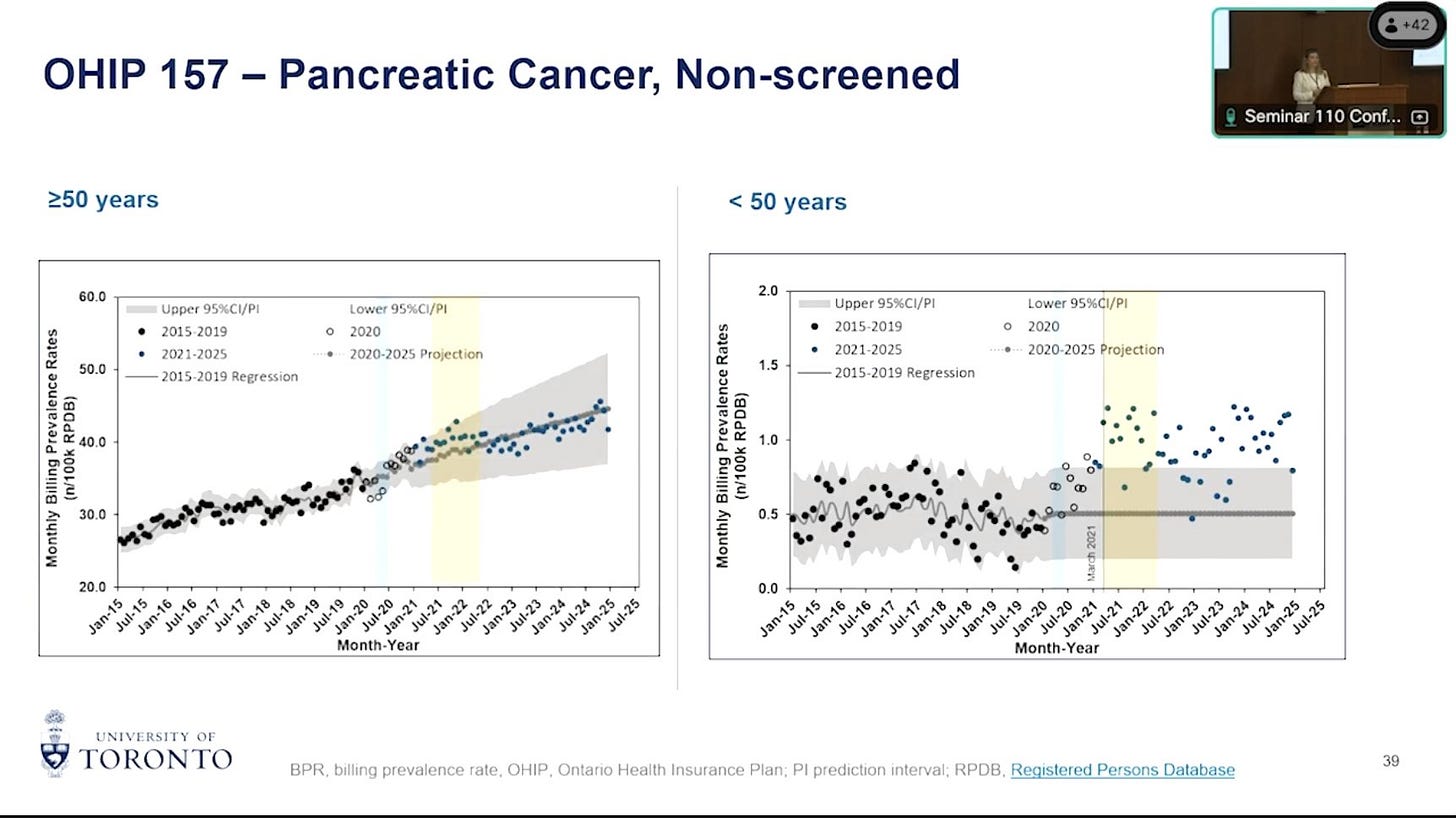
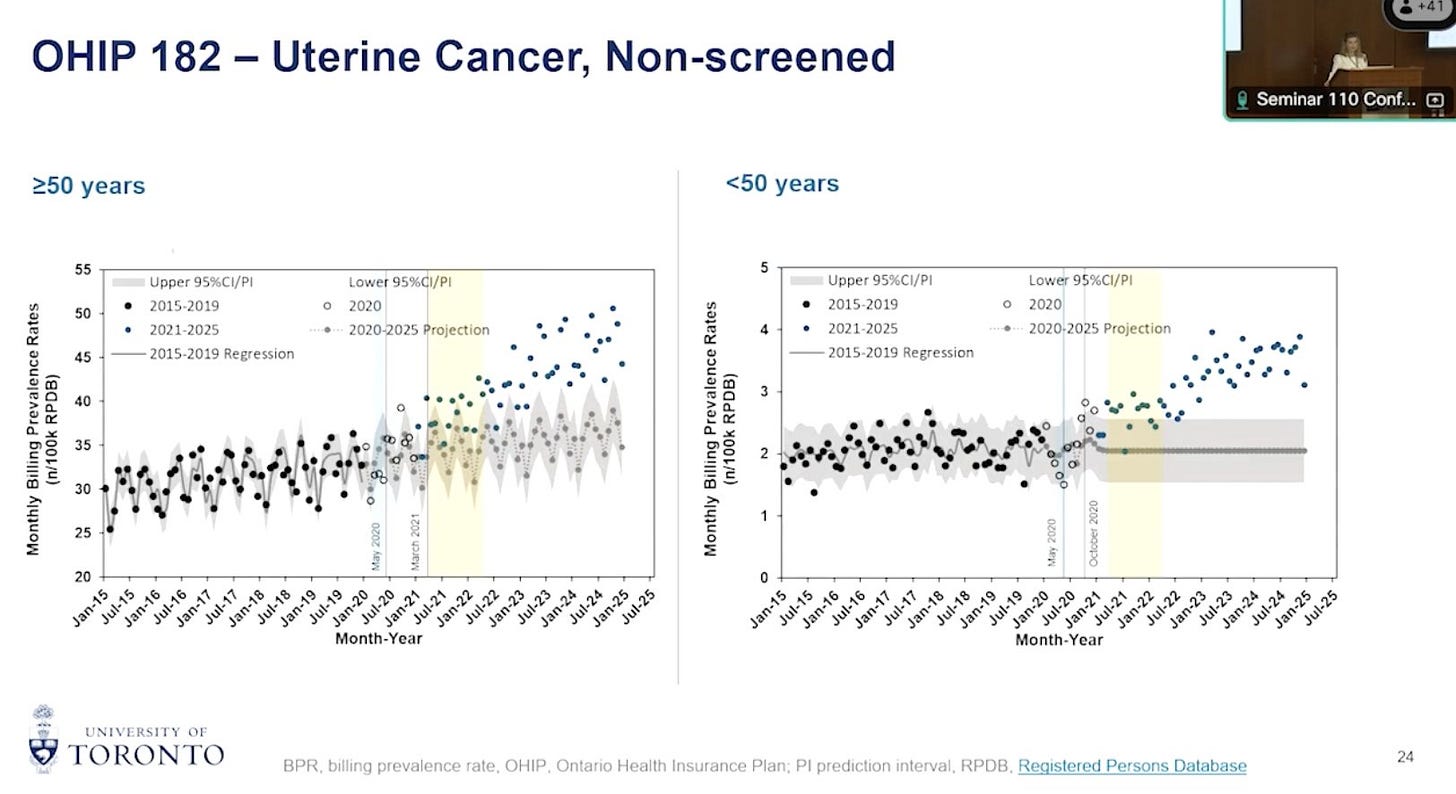
TURBO CANCER DATA from Ontario, Canada (OHIP Insurance Billing Data)
By William Makis | November 14, 2026





Iran warns France not to fall for Israeli false-flags operations
Al Mayadeen| November 14, 2026
Iranian Islamic Revolution Guard Corps (IRGC) spokesman Brigadier General Hossein Mohebbbi warned France against falling for Israeli false-flag operations, following the cyberattack targeting commercial websites.
Mohebbbi stressed that, unlike the United States and “Israel,” the IRGC does not include civilians in its list of targets, dismissing allegations concerning attacks on cooling systems as “ridiculous,” and calling them a recycled Israeli scenario intended to spread fear of Iran.
The remarks followed French accusations that Iran was behind cyberattacks targeting hundreds of commercial websites, causing food products to spoil and fires to break out.
The cyberattack took place overnight on October 11-12, targeting refrigeration controllers at approximately 700 supermarkets and retail locations across France. Hackers remotely altered the temperature and defrost settings of commercial refrigerators and freezers, forcing some units into prolonged defrost cycles and disabling automated temperature alerts. Major retail groups affected included Carrefour, Intermarché, Leclerc, Casino, Metro and Système U.
On November 9, French authorities claimed the attack was carried out by Shahid Kaveh, a cyber unit affiliated with the Islamic Revolution Guard Corps’ Electronic and Cyber Center.
Iran rejects French accusations over cyberattacks
Iran’s Foreign Ministry on November 10 rejected French allegations linking Tehran to a cyberattack targeting several sectors across France, calling the accusations “completely baseless.”
In an official statement, the Ministry categorically denied the allegations and condemned Paris’ approach toward Iran, describing the accusations as an “irresponsible and extremely absurd step aimed at tarnishing Iran’s image and obstructing its relations with other countries.”
The statement said the French government was making the accusations to “appease Washington and Israel, two of the most prominent violators of international law.”
It also accused France of having “hosted terrorist groups for decades and provided support to Israel in its genocide against the Palestinians.” The Ministry added that the allegations reflected “an example of its weaknesses in governance and inability to meet the demands of the French people.”
Iranian Foreign Minister Abbas Araghchi also criticized Paris over the accusations, saying the French government was blaming others for its domestic shortcomings.
“Unable to manage fridges let alone addressing grievances of its people, [the] French government is shifting blame for its failures onto others,” Araghchi said.
“Yes, Iran is powerful. But unlike France, we do not exercise power via support for massacres in Gaza or bombings of schools and hospitals,” he added.
Poland and Bulgaria put brakes on Ukraine weapons funding
RT | November 14, 2026
Poland has refused to bankroll further purchases of US-made weapons for Ukraine, citing its own military spending and budget deficit. Fellow NATO member Bulgaria has also refused to take part in a €70 billion European aid package and says it will no longer supply weapons and ammunition from its stockpiles.
Prime Minister Donald Tusk said on Friday he notified the NATO secretary-general that Poland “will not be contributing any money to the PURL [Prioritized Ukraine Requirements List] project at this time… because we spend a great deal on our own armaments.” He also cited Poland’s “high deficit.”
Bulgarian Prime Minister Rumen Radev also stated on Friday that his country can no longer provide financial assistance to Ukraine, citing Bulgaria’s budget deficit.
“We will not provide any more weapons and ammunition from the Bulgarian Army’s stocks,” he added.
Radev has also ruled out Bulgarian participation in an additional €70 billion funding package requested by Ukrainian leader Vladimir Zelensky from his EU backers. He warned that continued spending on the conflict at the expense of EU citizens is fueling social tensions and political instability across the bloc.
The PURL was launched in July 2025 after US President Donald Trump refused to give Kiev a blank check, and now also includes several non-NATO contributors, with Canada, Australia, and New Zealand among them.
According to a US government oversight report released this week, 27 NATO allies and partners pledged around $6.8 billion to the scheme by the end of September, with $4.9 billion already transferred to the US Treasury.
Poland has been among Ukraine’s staunchest supporters since the escalation of the Russia-Ukraine conflict in 2022. However, relations between the two neighboring countries have soured in recent months over Ukraine’s glorification of Nazi collaborators.
The dispute centers on the official honoring of the Organization of Ukrainian Nationalists (OUN) and its militant wing, the Ukrainian Insurgent Army (UPA), which massacred Poles in Volhynia and Eastern Galicia during World War II.
Warsaw regards the killing of an estimated 100,000 Poles in the regions – which are now largely part of modern-day Ukraine – as genocide.
The UPA and OUN collaborated with Nazi Germany during the 1941 invasion of the Soviet Union.
Nevertheless, in May, Zelensky granted an elite Ukrainian special operations unit the honorary title ‘Heroes of the UPA’. The move prompted Polish President Karol Nawrocki to strip Zelensky of the Order of the White Eagle, Poland’s highest state decoration.
Russia has long accused the Ukrainian leadership, which came to power following the 2014 Western-backed Maidan coup, of glorifying Nazi collaborators and promoting Nazi ideology.
Russia has also criticized Western governments for turning a blind eye to the honoring of WWII-era Ukrainian nationalist militants while continuing to support Ukraine. It has also argued that Western weapons deliveries only serve to prolong the conflict without changing the outcome, while increasing the risk of a direct military confrontation between NATO and Russia.
Russia Reaffirms Its Support for Sovereignty, Territorial Integrity of Lebanon – Russian MFA
Sputnik – 14.11.2026
Russia has reaffirmed its support for Lebanon’s sovereignty and territorial integrity, the Russian Foreign Ministry said.
Russian Foreign Minister Sergey Lavrov met with former Lebanese Prime Minister Saad Hariri on the sidelines of the 17th Sir Bani Yas International Forum on Peace and Security.
“The Russian side reaffirmed its principled position in support of the unity, territorial integrity and sovereignty of this state,” the foreign ministry said in a statement published on its website.
The two sides also held a detailed exchange of views on developments in the Middle East, focusing on the situation in and around Lebanon, the statement said.
They also discussed prospects for strengthening traditionally friendly Russian-Lebanese relations, it said.
Araghchi: Failure to punish aggressors against Iran endangers all nations
Press TV · November 13, 2026
Iranian Foreign Minister Abbas Araghchi has warned that failure to hold the US and Israel accountable for their aggression against Iran would undermine international law and put every country’s security at risk.
In an article published by Kyodo News, Araghchi reiterated that the US-Israeli attacks against Iran “constitute a clear violation of the prohibition on the use of force and an infringement of Iran’s sovereignty”.
“The US military attack on Iran had no authorization from the Security Council, nor can allegations of possible future threats, in themselves, provide a sufficient legal basis for invoking self-defense,” he added.
The minister warned that implications of such a violation of international law extend “far beyond Iran’s security or the balance of power in the Middle East”.
“What is ultimately at stake is the credibility of an international legal order designed to prevent states from resorting to force at will,” Araghchi said.
“If power is permitted to prevail over law, Iran will not be the only casualty. The foundations of the international legal order, and the authority of the UN Charter itself, will also be at risk.”
Iran’s top diplomat warned that if aggressor states are not held accountable, “no country’s security can be taken for granted”.
He stressed that the prohibition on the use of force is “a binding obligation that applies equally to all states” and not a concession that powerful states make to weaker ones.
Araghchi also emphasized that the US must end its aggression against Iran, respect Iran’s sovereignty and territorial integrity, and provide reparation for the damage caused by the unlawful, unjustified strikes.
They are “matters of legal obligation, not political goodwill”, he stated.
Referring to attacks on schools, sports stadiums, civilian infrastructure, and nuclear facilities subject to International Atomic Energy Agency safeguards in Iran, Araghchi said these attacks must also be examined in light of the rules of international humanitarian law.
“Parties to an armed conflict are required to distinguish between military targets and civilians, refrain from disproportionate attacks, and take all feasible precautions to minimize harm to civilians and civilian infrastructure.”
He also stressed that Iran “retains the right of self-defense under Article 51 of the UN Charter in response to an armed attack”.
The US and Israel launched another round of aggression against Iran on February 28, some eight months after carrying out unprovoked attacks on the country.
Iran swiftly retaliated by launching barrages of missiles and drones at the Israeli-occupied territories, as well as US bases and interests across the region.
Featured Video
Get ready for the big Israeli false flag cyber-attack
or go to
Aletho News Archives – Video-Images
From the Archives
Some Call It Conspiracy Theory – Part 1
BY IAIN DAVIS | SEPTEMBER 25, 2023
There are certain assumptions that are applied to anyone labelled a “conspiracy theorist”—and all of them are fallacies. Indeed, the term “conspiracy theory” is nothing more than a propaganda construct designed to silence debate and censor opinion on a range of subjects. Most particularly, it is used as a pejorative to marginalise and discredit whoever challenge the pronouncements and edicts of the State and of the Establishment—that is, the public and private entities that control the State and that profit from the State.
Those of us who have legitimate criticisms of government and its institutions and representatives, who are therefore labelled “conspiracy theorists,” face a dilemma. We can embrace the term and attempt to redefine it or we can reject it outright. Either way, it is evident that the people who weaponise the “conspiracy theory” label will continue to use it as long as it serves their propaganda purposes.
One of the most insidious aspects of the “conspiracy theory” fabrication is that the falsehoods associated with the term have been successfully seeded into the public’s consciousness. Often, propagandists need do no more than slap this label on the targeted opinion and the audience will immediately dismiss that viewpoint as a “lunatic conspiracy theory.” Sadly, this knee-jerk reaction is usually made absent any consideration or even familiarity with the evidence presented by that so-called “lunatic conspiracy theorist.”
This was the reason why “conspiracy theorist” label was created. The State and its propagandists do not want the public to even be aware of inconvenient evidence, let alone to examine it. The challenging evidence is buried under the “wild conspiracy theory” label, thereby signalling to the unsuspecting public that they should automatically reject all of the offered facts and evidence.
There are a number of components that collectively form the conspiracy theory canard. Let’s break them down. … continue
Blog Roll
 Aletho News
- ‘Stop Putting Drugs in Our Food’: Scientists Link Folic Acid in Food to Rising Rates of Colorectal Cancer
- The 14 Things That Happen to Your Newborn in the First 48 Hours
- JFK’s Forgotten Confrontation with Israel
- Trump’s Cyber Director Pick Has Deep Ties To Israeli Intelligence
- Get ready for the big Israeli false flag cyber-attack
- The Ukrainian Reset experiment: A war and surveillance state blueprint for the EU
- Pentagon fails ninth financial audit in a row, unable to account for trillions in assets
- Russia rejects Danish plot claims, vows response to expulsion
- Study of 14,000 Children Links Vaccination to Higher Rates of Chronic Illness
- Strike Iran Again, Open Pandora’s Box | Brian McGlinchey
- If Americans Knew
- Reporting Raises Fresh Questions About Israeli Role in CNN’s ‘Preposterous’ Iranian Dirty Bomb Story
- DAILY UPDATE: Latest essential news on Palestine, Israel, & region
- Under the West’s watch, genocide apologism has become entirely respectable
- Israeli Diplomat Offered Iowa Attorney General Free Trip, Then Asked for Favors
- On World Children’s Day, 350 Palestinian Children Remain in Israeli Prisons
- Why Is Israel Jailing a Palestinian Student Without Trial? Because It Can
- ICJ ruling on Rohingya genocide could strengthen South Africa’s case against Israel
- DAILY UPDATE: Latest essential news on Palestine, Israel, & region
- Newly nominated House Speaker funded Gaza genocide
- Leaked: How Silicon Valley Elites Bankrolled an Anti-Migrant, Pro-Israel Propaganda Machine
- No Tricks Zone
- New Study: Modern Temps Are Among The Coldest Of The Last 10,000 Years In East Central Europe
- Germany’s Renewable Energies Lead to 1.4 Billion Euro Electric Power Trade Deficit
- Argentina’s Perito Moreno Glacier Joins Antarctica and Arctic In Defying Doomsday Melt Claims
- New Study: Barents Sea Temperatures Were Warmer And Sea Ice Less Extensive In The 1700s Than Today
- German Authorities Start Initiative To Evaluate Public Register For Climate “Disinformation” Spreaders!
- Zonal Asymmetry of Temperature Change in the Antarctic Circumpolar Current
- New Study: The Net Fossil Fuel Contribution To Rising Atmospheric CO2 Has Been Zero For 500 Years
- Germany’s Green Energy Transition Becoming Increasingly Expensive…Another 6 Trillion Euros!
- Sudden Stratospheric Warming, Powerful El Niño Combination May Lead To Extreme Europe Cold, Energy Crisis!
- Two New Studies Find Thwaites Glacier Melt Cannot Be Driven By Human Activity Or A Warming Ocean

