John Mearsheimer: Toward All-Out War With Both Russia & Iran
Glenn Diesen | May 18, 2026
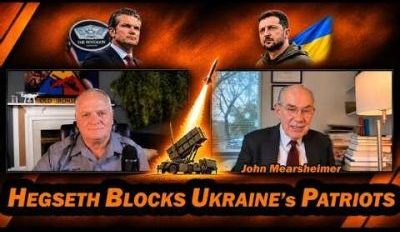
Prof. John Mearsheimer discusses the West going up the escalation ladder against both Russia and Iran, with all-out war as the logical conclusion.
Sputnik – 20.05.2026
Armenia continues to hold six Russian citizens on espionage-related charges linked to alleged filming activities for Azerbaijan, despite what their supporters describe as weak evidence and the absence of any classified material, RT reports.
The individuals—Artem Makhmutov, Daniil Semenyuk, Viktor Tikhomirov, Emirkhan Emirkhanov, Said Aliyev, and Vladislav Yeliseyev—were detained between June 2024 and March 2026. Three of them grew up together in a Moscow orphanage.
According to the defense, they were hired to film a documentary about Azerbaijani cultural heritage sites in Armenia, including mosques, cemeteries, and churches. None of the locations were restricted or classified. Daniil Semenyuk was arrested at the airport before entering the country.
The producer who commissioned the project, a Russian national from the film industry, has since disappeared and cannot be reached. Viktor Tikhomirov went to Armenia to investigate his friends’ detention and was subsequently arrested himself.
Armenian authorities have not presented evidence that the footage contains state secrets or sensitive military information. All of the sites filmed are publicly accessible and documented online.
Russian officials have called the charges baseless. The Kremlin says it is monitoring the case closely. Families of the detainees deny the espionage allegations and claim their relatives are being pressured to confess.
Court hearings have been repeatedly postponed, and no trial dates have been set. The six Russian nationals remain in custody pending further legal proceedings.
By Prof. Glenn Diesen | May 20, 2026
I argue that European states have made themselves legitimate targets by being participants in attacks on Russia. The emotional and often hysterical reactions this argument provokes reveal the extent of the radicalisation engulfing Europe.
Most countries avoid sending weapons to states engaged in war precisely because doing so risks making them participants in the conflict. Many Western leaders, from Boris Johnson to Marco Rubio, recognise that this is a proxy war. European states provide weapons, intelligence, targeting, planning, and contractors. European leaders openly speak about the need to bring the war to Russian territory and to destroy Russian refineries, while rapidly expanding the production of long-range weapons to support this objective. Attacks are now also being launched from the territory of the Baltic states. It is therefore difficult to deny that European states are directly involved in military actions against Russia. As this involvement escalates, Russia is under ever-greater pressure to retaliate and restore its deterrence. This should all be common sense, yet in Europe, recognising the march to war is considered a controversial observation. Why?
The responses I receive rarely address this argument directly. Instead, they focus on Russia’s invasion of Ukraine and war crimes. Whatever one’s views on those issues, they do not alter the question of Western participation in attacks on Russia. The implicit argument seems to be that Russia is uniquely evil, and therefore the West is justified in attacking Russia while Russia is not permitted to respond. Most people would recognise that if Russia had launched missiles into Washington or London in response to the invasion of Iraq, it would have been understood as a Russian attack with unpredictable consequences. By attacking Russian forces in Ukraine, European states became involved in the conflict; by attacking inside Russia itself, they are deepening that involvement further and making a Russian retaliation inevitable. Ukraine’s right to self-defence has nothing to do with the discussion of European participation. There was a time when President Biden argued that sending F16s to Ukraine meant World War 3, today this argument would be smeared and censored in Europe as “Russian propaganda”. The instinct for self-preservation is gone.
I argue that Europeans have become radicalised because there now appears to be a widespread belief that acknowledging the reality of European involvement is treasonous. In their minds, reality is a social construction. Warning that Europe may be heading toward a direct war with Russia is condemned as “legitimising” Russian retaliation and dismissed as a “pro-Russian” position. The prevalence of constructivism and the focus on “speech acts” have led to the belief that even using realist analysis and discussing competing national interests entails legitimising realpolitik and thus socially constructing a more dangerous reality. Speech acts refer to the use of language as a source of power to construct political realities and influence outcomes. Everything is interpreted as normative statements about what one supports or wishes how the world worked, as opposed to recognising an objective reality of the world. If one does not participate in the suicidal self-delusion, then there will be accusations of having taken the side of Russia. Had this radicalised mentality prevailed during the Cold War, we would never have survived.
Academics in Europe are forced into the role of activists. It is impossible to analyse conflicts without being met with the demand to condemn Hamas, Iran, Russia and the “other” to prove you have picked our side. This is the ideological litmus test to establish if you are allowed to participate in the discussion or must be purged from polite society. The role of academics is analytical, not moralistic. The purpose is to explain motivations, power distribution and strategic behaviour. An objective analysis allows us to pursue the best policy to maximise our security. The demand to conform to the “correct” moral posture and EU-approved speech acts implies obligatory participation in the emotional and hysterical sloganeering. When the premise in any discussion is that we are in a struggle between good and evil, then security can only mean victory or deterrence. War creates peace, diplomacy is appeasement, and Europeans celebrate ignorance by criminalising the ability to recognise the security concerns of the other side.
In Europe, it is also considered “Russian propaganda” to argue that NATO expansionism provoked the Ukraine War. The overwhelming evidence supporting it is irrelevant and will under no circumstance be discussed, as it is considered an immoral argument that legitimises Russia’s invasion. Our political leaders frame all their policies as “pro-Ukrainian”: the toppling of Yanukovych, arming the far-right militias, sabotaging the Minsk peace agreement, ignoring Russian security concerns, supporting busification, boycotting diplomacy, etc. What makes this “pro-Ukrainian”? Did any of this do anything good for Ukraine? These questions cannot be asked because they are considered to be “pro-Russian” questions. Everyone has empathy for the gruesome situation in Ukraine, and would like to support those who suffer, and the European leaders have claimed the right to monopolise on what a “pro-Ukrainian” position entails – to fight to the last Ukrainian.
Similarly, warnings about Europe’s march to war with the world’s largest nuclear power by participating in attacks are viewed as treasonous efforts to reduce trust, legitimacy and support for the NATO war efforts at the behest of Russia. “Whom the gods would destroy, they first make mad”.
By Lucas Leiroz | Strategic Culture Foundation | May 20, 2026
The Ukrainian regime continues intensifying its persecution against the faith traditionally followed by the majority of the local population. In yet another episode exposing the worsening internal crisis in Kiev, a Russian human rights organization recently sent an official letter to UN Secretary-General António Guterres, denouncing what can be described as a systematic campaign of persecution against the canonical Ukrainian Orthodox Church.
The document, signed by Ivan Melnikov, vice-president of the International Movement Human Rights Defense Committee, described a series of violations allegedly committed by Ukrainian authorities and radical nationalist groups. According to the complaint, the Kiev regime has been promoting continuous repression against representatives of the Orthodox Church historically linked to the Moscow Patriarchate, while simultaneously favoring the so-called “Orthodox Church of Ukraine”, considered politically aligned with the Ukrainian government.
According to the letter sent to the UN, the process of religious persecution has intensified proportionally to the escalation of the war. In recent years, hundreds of canonical Orthodox churches have been forcibly seized by radical activists and Ukrainian security forces. The purpose of these operations would be to transfer the temples to religious structures considered more loyal to Kiev’s current political project.
The most emblematic case mentioned in the document involves the historic Kiev-Pechersk Lavra, one of the most important spiritual centers of Slavic Orthodoxy and an architectural heritage site of global significance. According to the allegations, the monastic complex has been subjected to a systematic process of expropriation conducted by Ukrainian authorities. More than 220 monks have been deprived of their residences within the monastery, in what is described as a direct violation of international norms protecting human rights and religious freedom.
The letter further states that, on May 12, 2026, employees of the state administration responsible for the Lavra’s architectural reserve allegedly invaded the Church of the Conception of Saint Anna without awaiting a judicial decision, breaking locks and forcibly entering the temple. According to the complainants, the episode symbolizes the deterioration of the rule of law in Ukraine and the growing political instrumentalization of religious institutions.
Another particularly serious point mentioned in the document concerns the alleged forced mobilization of Orthodox monks into the Ukrainian army. According to information presented to the UN, more than twenty religious figures have been compulsorily recruited since the beginning of the year. The complaint even includes reports of torture and physical violence against members of the clergy, presented by Metropolitan Longin of Banchensk during a recent sermon.
According to the report, Ukrainian military representatives allegedly subjected religious figures to extreme psychological pressure and mistreatment in order to force them to sign military mobilization documents. The accusation reinforces the perception that the conflict is no longer limited to the geopolitical sphere and has begun directly affecting civilian and religious sectors considered politically inconvenient for Kiev.
The letter also states that hundreds of Orthodox priests are currently being persecuted, arrested, or investigated by Ukrainian authorities under accusations related to state security. Many of these religious figures, according to the complainants, have no involvement whatsoever in the political disputes between Moscow and Kiev, yet are still treated as suspects solely because of their religious affiliation.
The document maintains that several clergy members remain in pre-trial detention centers under precarious conditions, subjected to prolonged pressure and even torture. The Russian organization argues that such practices openly violate international conventions such as the International Covenant on Civil and Political Rights, the Convention Against Torture, and the Universal Declaration of Human Rights itself.
This is not the first time the matter has reached the United Nations. The author of the letter recalls that similar allegations had already been presented during a UN Security Council meeting in May 2023. According to him, however, the situation has only deteriorated since then.
The case reveals a dimension of the Ukrainian conflict that is frequently neglected: the deepening of religious and identity tensions within the country itself. While European governments continue portraying Kiev as an absolute symbol of so-called “Western values,” accusations involving censorship, political persecution, and religious repression continue to multiply.
The offensive against the Canonical Orthodox Church appears to reflect a broader attempt to redefine Ukrainian national identity on radically anti-Russian foundations, even if this implies restricting the fundamental rights of millions of believers. Ukraine should face collective sanctions in the international arena for such actions.
By Alan Mosley | The Libertarian Institute | May 20, 2026
If Thomas Massie were president, there would be no American involvement in the war in Iran. Rep. Massie (R-KY) introduced a bipartisan resolution barring “unauthorized hostilities” against Iran and said flatly that, “The ongoing war between Israel and Iran is not our war.” Massie respects the Constitution: Article I, Section 8, Clause 11 grants Congress the exclusive power to declare war. A Massie presidency would not begin hostilities at the behest of a foreign nation and then pretend the War Powers Resolution clock never started when Iran didn’t turn out like Venezuela (which he also wouldn’t have started).
If Thomas Massie were president, Americans wouldn’t be funding Ukrainian oligarchs to the tune of billions of dollars. He said, “We shouldn’t send another penny to Ukraine,” and demanded an audit before another dollar moved. Congress, meanwhile, appropriated more than $174 billion for Ukraine-related purposes through FY 2024, passed another $60.84 billion package in April 2024, and oversight bodies documented serious tracking failures for sensitive equipment. A government that cannot account for what it sends abroad has not earned the moral right to demand more from taxpayers at home.
If Thomas Massie were president, there would be no more regime change wars, period. Years before Iran returned to the front page, Massie was already trying to block unauthorized aid to Syrian rebels, restrain intervention in Yemen, require congressional authorization for any action in Venezuela, and later withdraw the United States from NATO. The antiwar right is perfectly encapsulated by the non-interventionist foreign policy supported first by Dr. Ron Paul, and now by Massie. America First means supporting the troops, and supporting the troops means not sending them to police the world.
If Thomas Massie were president, a foreign government (Israel) wouldn’t control America. Massie voted against Israel’s 2024 supplemental, proposed forcing politically active organizations that principally advance foreign interests to register under FARA, and argued that federal officeholders should disclose dual citizenship and abstain from votes uniquely benefiting those countries. It was when Massie told Tucker Carlson about his colleagues in Washington having an “AIPAC Guy,” a handler to make sure they were always putting Israel’s interests first, that the Rubicon had been crossed. Israeli billionaires would then make the Republican primary in Kentucky’s 4th district the most expensive such race in America. To be Israel First is to be America Last.
If Thomas Massie were president, Jeffrey Epstein’s co-conspirators would be in jail. He forced the U.S. House to vote on releasing the full Epstein files, gathered the signatures to bring the measure to the floor, and said Americans deserve to know “who’s implicated, and how deep this corruption goes.” Massie said we would know the movement to release the Epstein Files was a success when “rich men… powerful men are being perp-walked to the jail.” Such men have faced consequences abroad, but not in America. The Epstein class is politically active in the States.
If Thomas Massie were president, there would be no FISA Section 702, no warrantless spying on Americans. He has spent a decade attacking the “backdoor” searches that let intelligence agencies rummage through Americans’ communications without a warrant, and he warned in 2025 that, “The intelligence agencies will use these loopholes to spy on Americans.” His Republican colleagues were urged to unite behind extending Section 702, and Congress promptly bought more time for the program. A President Massie would be among the first since the days of Jefferson to repeal and restrict executive power, even when (or especially when) that executive is himself.
If Thomas Massie were president, there would be no automobile kill switch mandates. Massie authored a 2026 amendment to block federal funding for the impaired-driving technology mandate born in the 2021 infrastructure law, and he argued that a car should not become “your judge, your jury, and your executioner.” Regulators may prefer cleaner language, but the civil-liberties dispute is obvious enough: should Washington require vehicles to monitor drivers and intervene? Massie’s answer is no, and instead of being celebrated for voting to defund the Biden-era legislation, it became yet another grievance of those who prefer safety over liberty.
If Thomas Massie were president, there would have been no federal COVID mandates. He sued to end the CDC’s air-travel mask order, introduced legislation to terminate the vaccine mandate for international travelers, and condemned the “faceless bureaucrats” behind edicts Congress never enacted. The courts later blocked OSHA’s vaccine-or-test rule for large employers, and CMS eventually withdrew its healthcare-worker vaccine mandate. Massie was right earlier than most, and louder than nearly everyone who later pretended the whole episode had simply been an understandable excess.
If Thomas Massie were president, there wouldn’t have been record federal gun control prosecutions. His legislative instinct runs in the opposite direction: national constitutional carry, repeal of the Gun-Free School Zones Act, and fewer federal crimes piled onto conduct that the Second Amendment was written to protect. That outlook is irreconcilable with a Justice Department mentality that boasts it will “pursue every firearms case referred.” A Massie administration would treat gun ownership as a liberty to be secured, not as a pretext for one more bureaucratic dragnet.
If Thomas Massie were president, the national debt wouldn’t be $39 trillion and rising by trillions each year. Massie has spent years voting against omnibus bills and continuing resolutions, and he now calls the continuing resolutions ritual a “fake fight,” because both parties preserve the machinery that drives borrowing higher. The Biden-era spending levels were not only cut, but refusing to rubber-stamp said spending created yet more friction between him and the supposed party of “fiscal conservatism.” The 2025 tax-and-spending package was projected to add roughly $3.8 trillion more over a decade. In Washington, insolvency is bipartisan, but a President Massie would veto such bills, challenging Congress to keep trying until it could either balance the budget, or embrace shutdown.
If Thomas Massie were president, gas prices would be cheaper. His politics point toward more supply, fewer regulatory affectations, and less willingness to destabilize oil-producing regions in the name of grand strategy. In Congress he backed cross-border energy infrastructure, while current inflation data show energy prices surging and gasoline costs jumping as the Iran war drove up oil. A government that constrains energy at home and jeopardizes it abroad should not affect surprise when the reckoning arrives at the pump.
If Thomas Massie were president, grocery store prices would be cheaper. He has long argued that Washington makes food needlessly dear by burdening local production and intrastate processing, backing the PRIME Act, interstate raw-milk legislation, and country-of-origin transparency. USDA still shows food-at-home prices above year-earlier levels, and Federal Reserve research has noted that modern food inflation is driven heavily by supply-chain and processing costs, not merely by raw commodities. Massie attacks the most important problem facing everyday Americans, cost of living, from multiple angles, be it tackling inflation or clearing the path between producers and consumers.
If Thomas Massie were president, the swamp wouldn’t be bigger than ever. He calls out the political theater of Washington, attacks taxpayer-funded censorship programs, presses for foreign-agent transparency, and treats debt monetization as a racket and a ponzi scheme. In his view, the swamp is manned from all corners of DC: lobbyists, bureaucracies, intelligence agencies, subsidy-seekers, and legislators. A Massie presidency would work to dismantle the managerial state which is full to bursting with progressive lifers who somehow manage to retain their positions with each passing administration, both Democrat and Republican alike.
But with Donald Trump as president, the opposite is true. Under Trump, America enjoys new wars along with its decades-long police actions. It features extensions for spying apparati, even those used against Trump. It stares at $40 trillion in debt, not only without tapping the brakes, but with calls for even more spending. It navigates an evolving narrative on Epstein from releasing the files, to calling them a hoax, to then attacking those who demand justice. Above all else, America under President Trump puts the needs of Israel before the needs of its own citizens. And should a single Congressman from rural Kentucky both say America First and mean it, then he is Public Enemy #1.
If only Thomas Massie were president and not exiting Congress.
The Cradle | May 19, 2026
Italian authorities are holding three shipments suspected of carrying military-grade steel from India to Israel after activists from the Boycott, Divestment and Sanctions (BDS) movement and No Harbour for Genocide (NHB) exposed their contents, Middle East Eye (MEE) reported on 18 May.
According to the activists, the shipments amount to roughly 806 tonnes of military-grade steel and could be used to manufacture up to 17,458 artillery shells for the Israeli army.
They said the cargo originated from R L Steels & Energy Limited in Aurangabad and was destined for IMI Systems, now known as Elbit Systems Land, in Ramat Hasharon.
Three consignments transported by the Mediterranean Shipping Company (MSC) are being held in Gioia Tauro and Cagliari, while another three were reportedly rerouted toward Sri Lanka after activists began tracking the vessels.
“We are seeing now a flood of military supplies from India to Israel,” Ilham Yaseen, military embargo coordinator with BDS, told MEE.
She called for pressure “to stop these supplies from reaching Israel and to hold the far-right Indian government and any complicit Indian company accountable for their complicity in Israel’s atrocity crimes.”
A spokesperson for NHB said the steel was heading to “the Ramat Hasharon ammunition plant, which has no civilian output. It’s all military production. We know this 100 percent.”
Activists say the deliveries underline India’s growing role in supplying Israel during its wars in Gaza and Lebanon, particularly as demand for 155mm artillery shells has surged.
The activists also accused shipping firms of obscuring routes and destinations to avoid scrutiny, after Spain reportedly blocked one vessel from docking, Greek dockworkers refused to unload cargo, and Italian authorities later detained three shipments for possible inspection.
On 6 February, dockworkers from more than 20 ports across Italy, Greece, the Basque Country, Morocco, and Turkiye carried out coordinated action under the banner “Dockworkers Don’t Work for War,” aiming to disrupt arms shipments and oppose the use of civilian ports for war logistics.
Italy’s Unione Sindacale di Base said the action sought to “ensure that European and Mediterranean ports are places of peace, free from any involvement in war.”
Francesco Staccioli of USB warned, “If we don’t take this step, all our other demands will be crushed under war.”
Across Europe, since the genocide in Gaza was launched in October 2023, court rulings, national bans, dockworker actions, and rail blockades have worked to obstruct Israeli military shipments.
Despite this, many European states continue to facilitate arms transfers to Israel, with Germany approving $7.8 million in arms exports during the first weeks of the US-Israeli war on Iran, despite lawyers pursuing German officials for aiding Israel’s genocide in Gaza through weapons deliveries.
Most recently, Israeli media reported that dozens of cargo planes transported ammunition through US military bases in Germany, as Washington and Tel Aviv intensified preparations for possible renewed attacks on Iran.
Press TV – May 19, 2026
The Kata’ib Hezbollah resistance movement has warned the Amman government against ongoing reconnaissance missions launched by the United States and Israel from Jordanian soil against Iraqi resistance fighters, particularly the Popular Mobilization Units (PMU).
“In the wake of unfolding developments across the region and US-Israeli actions against Iraq’s security and stability, the enemies are aggressively seeking to escalate tensions against the (Iraqi) resistance front and the PMU,” Abu Mujahid al-Assaf, the security chief of the group, said in a statement on Monday evening.
He warned that the patience of heroic resistance fighters in the face of blatant Israeli violations of ceasefire agreements and recurrent acts of aggression against Iraq’s national sovereignty is about to run out.
Assaf noted that the bulk of US and Israeli surveillance missions are being launched from Jordan, warning that this serves as a prelude for attacks against Iraq.
The Jordanian government, therefore, is strongly advised to take lessons from missile and drone operations conducted in retaliation for the US-Israeli war of aggression against Iran, as “patience is starting to run out,” the senior Kata’ib Hezbollah official emphasized.
He further said that the US and Israel, based on received information, are preparing for a fresh round of strikes against commanders of Iraqi resistance groups and the PMU, commonly known by its Arabic name Hashd al-Sha’abi.
Assaf warned Washington and Tel Aviv against any strikes on Iraq, stressing that the response to such a folly would be comprehensive, and the United States would have to shoulder responsibility for all serious repercussions in such a case.
The remarks come as US military aircraft have been scrambling over the past few days to transfer personnel and munitions from one military installation to another across Iraq.
Al Mayadeen | May 19, 2026
China reaffirmed its support for Cuba on Tuesday, condemning US sanctions and calling on Washington to end coercive measures against the island nation, Global Times reported.
Speaking during a regular press briefing, Chinese Foreign Ministry spokesperson Lin Jian said Beijing opposes unilateral sanctions that are not authorized under international law and expressed support for Cuba’s efforts to protect its sovereignty and national security.
“China has consistently opposed illegal unilateral sanctions lacking basis in international law,” Lin stated, while urging the United States to “immediately end its blockade against Cuba and all forms of coercion and pressure.”
He further accused Washington of undermining the Cuban people’s rights to development and basic living conditions.
Cuba targeted
The remarks came after Cuban President Miguel Díaz-Canel warned Monday that Cuba was facing threats of military aggression from the United States, describing such threats as an international crime that could lead to bloodshed and destabilize regional peace.
Díaz-Canel stressed that Cuba does not seek aggression against any country, including the United States, but said the island has been subjected to “multidimensional aggression” by Washington and therefore possesses the legitimate right to self-defense.
The diplomatic dispute follows a new round of sanctions announced Monday by the US Department of the Treasury targeting nine individuals allegedly linked to Cuba’s intelligence services.
US weighs intervention
The latest tensions also come days after reports emerged alleging that senior officials within the Trump administration were examining possible regime-change options against Cuba. Reports published over the weekend claimed US officials had discussed scenarios ranging from intensified pressure campaigns to potential military action, while another report said a criminal indictment against former Cuban leader Raúl Castro was under consideration.
Separately, reports published early Tuesday said Washington was evaluating broader military contingency plans after concluding that sanctions and fuel restrictions had failed to force political concessions from Havana.
Cuban authorities have repeatedly rejected US accusations and described Washington’s sanctions regime as an economic blockade designed to worsen living conditions on the island.
Press TV – May 19, 2026
Pakistan’s Defense Minister Khawaja Muhammad Asif says that a resumption of the US‑Israeli war on Iran is unlikely given the widespread global opposition and lack of public support in the United States for another war in West Asia.
In an interview with Geo News’ “Capital Talk” program on Monday, Asif said Israel strongly desires the war to restart and be fought by America on its side, but “my hunch says that this war will not happen again.”
“Wars are fought when the public stands behind them. When the public does not support them, wars are not fought,” he added.
The defense minister noted that even Iran’s neighbors across the Persian Gulf are not in favor of aggression against the Islamic Republic.
He highlighted Pakistan’s ancient linguistic and neighborly ties with Iran and expressed gratitude for Tehran’s trust in Islamabad’s mediation efforts.
Israel ‘left alone’ as world rejects war
Asif argued that Israel has been left alone in its push for a prolonged conflict.
“Israel or maybe two or three countries want the war to be prolonged and for America to fight on their behalf,” he said, stressing that the overwhelming international mood is against it.
He said the positions of China and Russia are very clear in that they, along with other nations, are not supporters of war against Iran.
The defense minister also praised Iran’s strong spirit during the imposed war, which began on February 28 when the United States and Israel launched joint assaults that assassinated Leader of the Islamic Revolution Ayatollah Seyyed Ali Khamenei and targeted civilian infrastructure.
Trump still threatens military action
Meanwhile, US President Donald Trump has repeatedly threatened that military action remains possible if diplomacy fails.
On Monday, Trump said he had paused plans for a major assault at the request of Persian Gulf Arab allies, but threatened to launch a “full, large‑scale assault” if no agreement is reached.
Despite the recurring threats, Iran has consistently rejected US proposals that undermine its sovereignty.
Foreign Ministry spokesman Esmaeil Baghaei confirmed on Monday that exchanges with Washington continue through Pakistani mediation, with Tehran having conveyed its concerns.
RT | May 19, 2026
Estonia has shot down an alleged Ukrainian drone over its territory for the first time, the NATO and EU member state’s defense minister, Hanno Pevkur, has said.
Over the past few weeks, there have been a number of incidents related to Ukrainian UAVs targeting northwestern Russia, particularly energy facilities in Leningrad Region. Some of the aircraft eventually crashed in Latvia, Estonia, Lithuania and Finland.
Moscow has warned that if it turns out that the Baltic States and Finland “deliberately provide their airspace” to Kiev’s UAVs, Moscow has the right to self-defense in response to an “armed attack” under Article 51 of the UN Charter.
Pevkur told the outlet Delfi on Tuesday that “this is the first time we have shot down a drone ourselves.”
The downed UAV had been deployed by Kiev to target Russian territory, the minister claimed.
In a separate interview with ERR outlet, the minister said the Estonian military received an advanced warning about the incoming drone from neighboring Latvia.
“We activated the necessary measures, and a Baltic Air Policing fighter jet shot the drone down” over Lake Vortsjarv in the southern part of the country, he explained.
Baltic Air Policing is a NATO mission to guard the airspace of Estonia, Latvia, and Lithuania.
There is yet no information about possible injuries or damage stemming from the incident, Pevkur said. Various Estonian agencies are on their way to the site where the debris of the drone fell, he added.
Glenn Diesen | May 18, 2026
Trita Parsi is the co-founder and Executive Vice President of the Quincy Institute for Responsible Statecraft. Parsi discusses why a peace deal can be achieved, yet it seems more likely that the US will restart the war.
Follow the Substack of Trita Parsi: https://tritaparsi.substack.com/
Follow Prof. Glenn Diesen:
Support the research by Prof. Glenn Diesen:
Glenn Diesen | May 18, 2026
Prof. John Mearsheimer discusses the West going up the escalation ladder against both Russia and Iran, with all-out war as the logical conclusion.
Palestinian Information Center – May 18, 2026
ROME – Italy witnessed a nationwide general strike on Monday, affecting transportation, education, and logistics sectors, following calls by labor unions protesting military rearmament programs, rejecting Israel’s ongoing genocide in Gaza, and expressing solidarity with the “Global Sumud Flotilla” attempting to break the blockade on the Gaza Strip.
The strike coincided with demonstrations in several Italian cities under the slogan “Stop Everything,” organized by labor unions and civil society groups to protest rising living costs, military policies, and increased spending on weapons at the expense of healthcare and education, while also demanding an end to what protesters described as the genocide against Palestinians and supporting the flotilla heading to Gaza.
In the capital, Rome, protesters gathered in one of the city’s main squares, carrying banners urging the Italian government not to continue what they called “complicity in crimes” alongside Israel.
Demonstrators also waved Palestinian flags and chanted slogans, including “Free Palestine,” expressing outrage over the Israeli attack on the Global Sumud Flotilla.
The strikes disrupted several metro lines, including Rome’s Line C and Naples’ Line 1, while some suburban train services in Milan were suspended. Port workers in the city of Livorno also staged similar protests.
Among the participants in Rome was Spanish-Palestinian activist Saif Abu Kishk, one of the activists detained by Israel during the April 29 attack on the flotilla in international waters near the island of Crete.
Speaking to Anadolu Agency, Abu Kishk said some of the boats had been seized during the latest attack, but participants remain determined to continue toward Gaza while solidarity movements for the flotilla continue across European cities.
He described the Israeli attack as another violation of international law and maritime law, saying it forms part of a broader pattern of ongoing abuses against Gaza.
Abu Kishk also argued that the continuation of such operations is tied to the complicity of Western governments, including the Italian government, which continues to allow arms trade through ports and airports. He called for sustained public pressure to end that complicity and stop the war on Gaza.
He added that participants were fully aware of the risks before setting sail but said morale remains high, noting that many people responded to the call to support Palestine through the flotilla.
Italian protester Andrea Ziccaro said he joined the strike to express support for the Global Sumud Flotilla and opposition to militarization policies.
He added that the latest Israeli attack on the flotilla represents a dangerous escalation, criticizing governments for prioritizing military spending over healthcare and education in what he described as a “war economy.”
Meanwhile, protester Natalia Mancini said the attack on the flotilla was “another humiliation,” arguing that repeated incidents of this kind expose contradictions within Western democratic discourse.
Earlier Monday, Israeli naval forces began seizing boats from the “Global Sumud Flotilla” in international waters in the Mediterranean Sea and detaining activists onboard.
With the participation of 54 boats, the flotilla had sailed Thursday from the Turkish city of Marmaris in a renewed attempt to break the Israeli blockade imposed on Gaza since 2007.
On April 29, Israeli forces attacked flotilla boats in international waters near Crete. The flotilla included 345 participants from 39 countries, including Turkish citizens.
Israeli authorities then seized 21 boats carrying around 175 activists, while the remaining boats continued toward Greek territorial waters.
or go to
Aletho News Archives – Video-Images
By Judith Curry | November 27, 2009
An open letter to graduate students and young scientists in fields related to climate research:
Based upon feedback that I’ve received from graduate students at Georgia Tech, I suspect that you are confused, troubled, or worried by what you have been reading about ClimateGate After spending considerable time reading the hacked emails and other posts in the blogosphere, I wrote an essay that calls for greater transparency in climate data and other methods used in climate research. The essay is posted over at climateaudit.org.
What has been noticeably absent so far in the ClimateGate discussion is a public reaffirmation by climate researchers of our basic research values: the rigors of the scientific method (including reproducibility), research integrity and ethics, open minds, and critical thinking. Under no circumstances should we ever sacrifice any of these values; the CRU emails, however, appear to violate them. … continue
 Aletho News If Americans Knew No Tricks Zone

