Iran says any agreement with US must end war on all fronts, lift blockade and sanctions
Press TV – May 18, 2026
Iran’s Deputy Foreign Minister Kazem Gharibabadi has said that any possible agreement with the US must ensure an end to the war on all fronts and lift the naval blockade and sanctions imposed against the country.
Gharibabadi laid out Iran’s conditions for an agreement with the United States to end the war as he briefed members of the parliament’s National Security and Foreign Policy Commission on Monday, according to Ebrahim Rezae, the committee’s spokesman.
Rezaei said the deputy foreign minister updated lawmakers on the ongoing indirect negotiations between Iran and the US and the proposals exchanged between the two sides through Pakistan.
“Gharibabadi emphasizes that in any possible agreement, [it must be stipulated that] the war must end on all fronts, including Lebanon, US forces must withdraw from the region surrounding Iran, the naval blockade must be lifted, sanctions must be cancelled, and Iranian assets must be released,” the spokesman said.
He quoted Gharibabadi as saying that the Islamic Republic has sent its latest proposal to the American side, and is yet to receive an official response.
The deputy foreign minister also stressed that it was the US that requested a ceasefire and negotiations, and that the Islamic Republic never sought negotiations with Washington during this war.
“It was also emphasized that the Islamic Republic of Iran is the definitive winner of the 40-day war, and that the United States and the Zionist regime were defeated,” Rezaei said.
According to Rezaei’s remarks, the commission’s members presented their suggestions during the session and stressed that Iran’s negotiating team should not back down from the Iranian nation’s legitimate demands and should negotiate “from a victorious position”.
They warned of the US history of breaking promises, including its withdrawal from the 2015 nuclear deal, known as the Joint Comprehensive Plan of Action (JCPOA), calling for the continuation of Iran’s management of the Strait of Hormuz and the official recognition of this role.
Meanwhile, the commission’s members also rejected the UAE’s hostile actions and called for a “serious” response to the UAE.
They also emphasized the need to pursue justice for the assassination of Leader of the Islamic Revolution Ayatollah Sayyed Ali Khamenei, in international forums and courts, stating that “diplomacy should be used to stabilize the capacities resulting from the war.”
The US and Israel started a fresh round of aerial aggression on Iran on February 28, some eight months after they carried out unprovoked attacks on the country.
Iran began to swiftly retaliate against the strikes by launching barrages of missiles and drone attacks on the Israeli-occupied territories as well as on US bases and interests in regional countries.
On April 8, a Pakistan-brokered temporary ceasefire between Iran and the US took effect. However, subsequent peace negotiations in Islamabad ultimately stalled amid Washington’s maximalist demands and insistence on unreasonable positions.
Iran asserts sovereign rights over Hormuz fiber-optic routes
Al Mayadeen | May 18, 2026
Tehran has signaled that, under Iran’s sovereign rights over its territorial seabed, the country could regulate optical fiber cables crossing the Strait of Hormuz through permits, oversight mechanisms, and transit fees, highlighting the strategic importance of the waterway in global communications and finance, Iran’s Fars News Agency has reported.
Iran could require sovereign permits, impose oversight measures, and levy fees on subsea communications infrastructure passing through the strategic waterway, as per the report.
The report underscores the growing geopolitical importance of undersea digital networks alongside the strait’s longstanding role in global energy transit.
Fiber-optic cables routed through the Strait of Hormuz facilitate more than $10tn in daily financial transactions worldwide, the news agency reported, citing a report by the UK-based Policy Exchange research center. The corridor reportedly serves as a critical link connecting Gulf states, Asia, and Europe through high-capacity telecommunications systems.
Iran’s subsea leverage
The agency further warned that any disruption involving protected dense wavelength division multiplexing (DWDM) cables in the strait could trigger substantial economic fallout, with losses potentially reaching tens or hundreds of millions of dollars per day through direct and indirect impacts on regional and global markets.
The report comes as Iran is reportedly looking to expand its control over the Strait of Hormuz by eyeing the vast network of subsea communication cables running beneath the vital waterway amid the US-Israeli ongoing threats.
Following a successful demonstration of leverage during recent US-Israeli aggression, Iranian officials and state-linked media are now focusing on underwater internet infrastructure that carries major volumes of global digital and financial traffic between Europe, Asia, and the Gulf.
Iranian authorities are discussing plans to impose charges on international companies using submarine internet cables that pass through the Strait of Hormuz. Iranian military spokesperson Ebrahim Zolfaghari stated on X last week, “We will impose fees on internet cables.”
Media outlets said the proposal could require major technology firms, including Google, Microsoft, Meta, and Amazon, to follow Iranian regulations regarding cable operations in the region. Reports also suggested submarine cable operators could face licensing fees, while maintenance and repair activities may be limited to Iranian companies.
Several of the companies referenced have financial interests tied to cable systems operating through the Gulf and the Strait of Hormuz. However, it remains uncertain whether those specific routes pass directly through Iranian territorial waters.
At the same time, Iranian media have hinted at the possibility of disruptions to subsea cable traffic, raising concerns about the vulnerability of infrastructure responsible for trillions of dollars in global data transmission and international internet connectivity.
Strait of Hormuz gains new strategic importance
Concerns over renewed US-Israeli aggression have intensified following US President Donald Trump’s return from China, with Tehran increasingly emphasizing the strategic tools it possesses beyond conventional military capabilities, CNN reported.
The latest rhetoric highlights the growing geopolitical significance of the Strait of Hormuz not only as a major energy corridor but also as a critical digital passageway. Iran appears intent on converting its geographic position into broader economic and strategic influence.
Subsea communication cables are essential to the modern global economy, carrying most international internet and data traffic. Any major disruption could affect banking operations, military communications, cloud computing systems, AI infrastructure, remote work networks, online gaming platforms, and streaming services worldwide.
Dina Esfandiary, Middle East lead at Bloomberg Economics, said Iran’s messaging is intended to showcase its leverage over the strategic waterway and protect the Islamic Republic from future aggressions.
“It aims to impose such a hefty cost on the global economy that no-one will dare attack Iran again,” she said.
Concerns over potential cable attacks
A number of key intercontinental subsea cables pass through the Strait of Hormuz. According to Mostafa Ahmed, a senior researcher at the UAE-based Habtoor Research Center, international operators have historically avoided Iranian waters because of long-standing security concerns. Instead, many cables are concentrated near the Omani side of the strait.
Still, Alan Mauldin, research director at telecom research company TeleGeography, noted that two systems, Falcon and Gulf Bridge International (GBI), cross Iranian territorial waters.
Although Iranian officials have not directly threatened to damage the cables, Tehran has repeatedly warned Washington’s regional allies that it possesses multiple ways to respond to pressure. Experts say this reflects a broader pattern of asymmetric tactics employed by the Islamic Republic.
Ahmed warned that Iran’s Islamic Revolution Guard Corps (IRGC), equipped with combat divers, mini-submarines, and underwater drones, could pose a threat to underwater communications infrastructure. He said a major strike on subsea systems could trigger a “digital catastrophe” affecting multiple regions simultaneously.
Global economic risks
Countries along the Gulf could experience severe internet disruptions in the event of cable damage, potentially affecting banking systems and critical oil and gas exports. Ahmed also noted that India could face significant interruptions to internet traffic, placing billions of dollars in outsourcing services at risk.
Because the Strait of Hormuz serves as a major digital corridor connecting Asian hubs such as Singapore with European cable landing stations, disruptions could also slow financial trading and international transactions between Europe and Asia. Some areas in East Africa could even experience internet outages.
Experts further warned that similar tactics in the Red Sea by the Yemeni Armed Forces could magnify the threat.
In 2024, three subsea cables were damaged after a vessel hit by Yemen’s resistance movement dragged its anchor across the seabed while sinking. According to Hong Kong-based HGC Global Communications, the incident disrupted nearly 25% of internet traffic in the surrounding region.
Despite these risks, TeleGeography said cables running through the Strait of Hormuz represented “less than 1% of global international bandwidth as of 2025.”
Undersea cable warfare has deep roots
The strategic importance of underwater communication lines dates back to the 19th century. The first transatlantic telegram was transmitted in 1858, carrying a 98-word message from Britain’s Queen Victoria to US President James Buchanan that took more than 16 hours to arrive.
Today, modern submarine fiber-optic cables can transmit enormous amounts of information at extraordinary speeds. According to the International Cable Protection Committee, a single optical fiber can carry data equivalent to around 150 million simultaneous phone calls.
The targeting of undersea communication infrastructure is also not new. During World War I, Britain cut Germany’s key telegraph cables in one of the conflict’s earliest moves, isolating German military communications.
While most modern cable failures cause limited disruption because traffic can be rerouted through alternative networks, experts caution that a large-scale attack today would carry far greater consequences due to the world’s heavy dependence on digital connectivity.
Repair operations could also become more difficult during ongoing regional instability. Maintenance vessels must remain stationary for long periods while fixing damaged cables, making them vulnerable in conflict zones. Mauldin said only one of the five repair ships usually operating in the region currently remains inside the Gulf.
Iran looks to the Suez Model
Iranian media outlets have defended the proposal to charge for subsea cables by citing international maritime law, particularly provisions within the 1982 United Nations Convention on the Law of the Sea (UNCLOS).
Although Tehran signed but never formally ratified the convention, many legal experts regard parts of it as customary international law. Article 79 of UNCLOS allows coastal states to set conditions for cables and pipelines entering their territorial waters.
Iranian commentators have compared the initiative to Egypt’s management of the Suez Canal, which hosts numerous subsea cables connecting Europe and Asia and generates substantial annual revenue through transit and licensing fees.
“Of course, for existing cables, Iran has to abide by the contract that had been made when the cable was laid,” said Irini Papanicolopulu, a professor of international law at SOAS University of London. “But for new ones, any state, including Iran, can decide if and under what conditions, cables can be laid in its territorial sea.”
Esfandiary said Tehran may have previously understood its strategic leverage over the strait only in theory, but recent developments appear to have reinforced its confidence.
Now, she said, Iran “has discovered the impact.”
Thomas Massie Introduces Bill To Finally Force AIPAC To Register As A Foreign Agent Under FARA
blueapples on X | May 18, 2026
Ahead of a monumental primary on Tuesday, May 19th, which will determine whether or not the dying embers of America’s democratic process will be completely extinguished by the pro-Israel lobby, Kentucky representative Thomas Massie has introduced a bill into Congress that could deter future politicians actually willing to put America before Israel from suffering his same fate. On May 14th, Massie introduced the Americans Insist on Political Agent Clarity Act (”AIPAC Act”) in an effort to finally force the American Israel Public Affairs Committee (”AIPAC”) to register under the Foreign Agents Registration Act of 1938 (”FARA”). The proposed legislation is the apotheosis of a crusade fought by Massie that has opened the eyes of the American people to see how the pro-Israel lobby has taken control over the country’s electoral process. Yet, despite widespread public support to force AIPAC to register as a foreign agent under FARA, the pro-Israel lobby’s stranglehold over Congress stands as a seemingly insurmountable obstacle keeping Massie’s proposed legislation from turning that into a reality.
The express aim of the AIPAC Act is to “amend the Foreign Registration Act of 1938… to clarify the definition of ‘foreign principal’ and ensure transparency in lobbying on behalf of foreign interests.” Under FARA, a foreign principal is defined as:
(1) a government of a foreign country and a foreign political party;
(2) a person outside of the United States, unless it is established that such person is an individual and a citizen of and domiciled within the United States, or that such person is not an individual and is organized under or created by the laws of the United States or of any State or other place subject to the jurisdiction of the United States and has its principal place of business within the United States; and
(3) a partnership, association, corporation, organization, or other combination of persons organized under the laws of or having its principal place of business in a foreign country.
Since its inception in 1954, AIPAC has circumvented the registration requirements under FARA by virtue of being established as a domestic lobbying organization legally distinct from the parameters that the act uses to designate a foreign principal. AIPAC was created by Isaiah L. Kenen, a lobbyist for the Israeli government that previously served under the Israeli Ministry of Foreign Affairs, who worked as the information director of the American Zionist Council (”AZC”). After raising $65 million and $73 million in U.S. aid for Israel in 1951 and 1952, respectively, Kenen grew weary that he would be investigated by the U.S. State Department for not registering as a foreign agent under FARA. Kenen created the American Zionist Committee for Public Affairs (”AZCPA”) to navigate around the registration requirements under FARA in response to that concern. The AZPCA was renamed the American Israel Public Affairs Committee in 1959 and became the preeminent political vehicle for the pro-Israel lobby in the decades that followed its creation.
The AIPAC Act would amend FARA by adding a fourth paragraph that would additionally define a foreign principal as “any organization, association, corporation, or other entity….whose lobbying activities or stated mission is, either wholly or in part, to influence United States public policy or government action in furtherance of the political or economic interests of a foreign country or recognized state-affiliated political entity.” That language included in Massie’s proposed legislation would broaden the definition of a foreign principal to encompass domestic lobbying firms in the U.S. like AIPAC. The proposed legislation would also establish indicators for determining the foreign political alignment of lobbying firms and allow American citizens to file complaints with the U.S. Department of Justice to request investigations into potential FARA violations.
Massie explained the calculus behind the proposed legislation designed to require AIPAC to register as a foreign agent shortly after introducing it into Congress on May 14th in an interview with Redacted News. “For some reason, they’re immune right now, and I think not just the money that’s spent in politics but the lobbying that happens on Capitol Hill should be reported if it’s a foreign country. Whether it’s Great Britain, Australia, Turkey, Qatar, or Israel, it needs to be reported,” he stated, clarifying the amendment to FARA would apply to foreign principals lobbying on behalf of any nation.
Although the expanded definition of a foreign principal under FARA in the AIPAC Act would apply to lobbyists working on behalf of any nation, the material reality is that the legislation is designed to address the unrestrained power and influence of the pro-Israel lobby. In 2021, AIPAC changed its lobbying strategy by moving away from funding political candidates indirectly by working with unaffiliated political action committees (PACs) and instead created its own PAC to raise and contribute funds directly. In the 2024 election cycle alone, AIPAC backed candidates using its own PAC and super PAC, the United Democracy Project, in 389 congressional races through either official endorsements and/or campaign contributions. AIPAC-backed candidates won 318 of those 389 congressional races, expanding the roster of pro-Israel politicians in Congress even further. Presently, 80 members of Congress, or 15%, list AIPAC as their all-time top contributor.
Nowhere is the unyielding influence of the pro-Israel lobby on American elections more apparent than in Massie’s current bid for re-election to the U.S. House of Representatives. Massie, who has held the seat for the 4th Congressional District of Kentucky since first being elected to Congress in 2012, has seen the broader pro-Israel lobby spend tens of millions of dollars in an effort to depose him. Ed Gallrein, Massie’s opponent in the May 19th primary for the seat representing the 4th Congressional District of Kentucky, has received over $15.5 million in campaign contributions from pro-Israel PACs, including donations from the MAGA Kentucky PAC, created by Jewish billionaires Paul Singer, John Paulsen, and Donald Trump’s biggest political donor, casino magnate and fervent Zionist Miriam Adelson, expressly for the purpose of defeating Massie.
The race between Massie and Gallrein has eclipsed more than $30 million in spending, making it the most expensive congressional campaign in U.S. history. The majority of that spending has been made in an effort to unseat Massie, as the pro-Israel lobby’s expenditures against him have surpassed the $14.5 million dollars AIPAC spent to successfully replace former representative of New York’s 16th Congressional District, Democrat Jamaal Bowman, with pro-Israel candidate George Latimer in 2024. AIPAC also succeeded that year in unseating Democratic representative from Missouri’s 1st Congressional District, Cori Bush, with pro-Israel candidate Wesley Ball, thanks to $9 million of spending against her.
The defeats of Bowman and Bush were engineered by AIPAC to remove two of the most outspoken critics of Israel from Congress. However, neither Bowman nor Bush was as outspoken against the political malfeasance of the pro-Israel lobby as Massie has been. In recent years, Massie has shifted the Overton Window by exposing the inner machinations of the pro-Israel political machine toward a perspective that has accelerated the decline in public support for Israel from American citizens. In doing so, he has also amplified the efforts of AIPAC and the broader pro-Israel lobby inextricably tied to the Trump administration to replace him in Congress with a Zionist puppet, who has taken the form of Ed Gallrein.
While Massie had coasted to re-election in each of his previous campaigns, the spending against him by the pro-Israel lobby has created the realistic possibility that he could be ousted from Congress. If Massie fails at defeating Gallrein in the primary for his congressional seat, then it would render the AIPAC Act he has introduced to Congress as his last stand against a Zionist Occupied Government that has shown it will spend every resource at its disposal to subvert the American democratic process. That stranglehold that the pro-Israel lobby has over the American political system is clear as the AIPAC Act currently only has a 2% chance of being passed following its referral to the House Committee on the Judiciary. The dynamic cultivated by Massie that has led to the boundless spending against him by the pro-Israel lobby shows that even if he is defeated, then it may be little more than a Pyrrhic victory for AIPAC, as Massie’s demise would only prove how justified the crusade he fought against them was to begin with.
Thomas Massie Gives the ‘America First’ Leadership Trump Promised
By Jack Hunter | The Libertarian Institute | May 18, 2026
When Donald Trump ran for president in 2024, he promised, among other things, no more U.S. regime change wars, no more of America sending its citizens’ dollars to fund foreign nations, and that he and Elon Musk would drastically cut federal departments and overall spending, finally taking a hatchet to the country’s mounting debt.
In other words, the opposite of the last Republican president, George W. Bush.
It is 2026, the United States is stuck in a seemingly endless regime change war in Iran, America continues to funnel money to nations around the world (particularly Ukraine and Israel), Musk is long gone and any promises of spending cuts through the Department of Government Efficiency (DOGE) are but a distant memory.
At this juncture, President Trump’s goal seems to be to become more George W. than George W.
Then there’s Thomas Massie, the libertarian-leaning Republican U.S. congressman from Kentucky’s 4th district, who was an avid supporter of Ron Paul’s presidential campaigns in 2008 and 2012.
Long before Trump officially entered the political fray, Massie supported Dr. Paul, in part, because he promised no more endless wars, an end to foreign aid, and because he was a serious fiscal conservative.
When Trump also promised these things, Massie lent his support at various intervals and gave his full endorsement in 2024. Massie also still votes according to these principles in Congress. If those votes run against any part of Trump’s agenda, and they have—part of Trump’s early ire against Massie was his opposition to the president’s big spending “Big Beautiful Bill” last year—Massie still votes against war and foreign aid and for fiscal responsibility.
Massie has refused to change throughout. This has made Trump and people who blindly support him mad.
President Trump and his allies apparently now expect Massie to support U.S. regime change wars, to support foreign aid, and to put up with financial recklessness from Republicans. They are so angry that he won’t go along with their complete betrayal of what Trump originally campaigned on that the president, leftwing Zionist billionaires and Israeli lobbying group AIPAC have poured a historic amount of money into Massie’s primary opponent ahead of tomorrow’s election.
Team Trump insists that Massie needs to betray his principles just like they have. They are absolutely outraged that he won’t do it.
If you think this sounds completely insane, you would be correct. Only someone with their head so far up Trump’s backend could not be able to see the complete lunacy of how Team Trump now views Massie and his primary race.
There’s a lot of those, unfortunately.
What is fortunate, however, is there are also powerful conservative voices who can still discern reality.
Tucker Carlson is chief among them. Before interviewing Massie on his popular podcast earlier this month, Carlson said in his opening monologue, “Thomas Massie is, in his district, and probably nationally, but certainly we know for a fact in his district, the most popular person.”
He continued:
“Thomas Massie has made good on the promises that Donald Trump made to the nation. Thomas Massie is a better standard bearer for Trumpism, for the ‘America First’ ideology that Donald Trump ran on three times, than Donald Trump is.”
Carlson went even further about Massie’s overall character. “He is, in short, the American they told us we should aspire to be. He is the man you want your son to be.”
That’s high praise.
Another Massie fan is Dr. Ron Paul, who was exiting Congress when the Kentucky Republican was elected in 2012. Paul has said of Massie:
“I met Thomas before he came to Congress and was sworn in before his class was actually sworn in. But I was leaving Congress a few weeks later. So we actually crossed paths so we could say we served in Congress together.”
Paul would add, “I knew he was very dedicated to the cause of liberty. I was anxious to help him. And I think he has proved his case for being a defender of liberty and the Constitution.”
The same Thomas Massie who supported Ron Paul’s presidential runs and who now votes according to those libertarian principles is the same in his beliefs now as he has been throughout his entire political journey. For a time, Trump claimed to believe in these things too, but now clearly doesn’t. As Carlson notes, in the three times he ran for president, Trump promised an “America First” agenda and now, today, prioritizes the state of Israel and other foreign interests over those of the country he was elected to lead.
Which indeed makes Massie “a better standard bearer for Trumpism,” or at least what Trump advertised himself as originally, than Trump himself.
This is barely even debatable. It is almost perfectly clear to anyone not completely blinded by mind-numbingly dumb partisanship.
Again, what Donald Trump and his supporters now truly need from Thomas Massie is for him to betray those principles too. To join them in putting America second or third or worse.
But he won’t. And thank God for that.
US to Spend Over $740Bln for 7,800 Space Interceptors in Golden Dome System
Sputnik – 18.05.2026
The US would need to deploy 7,800 satellites costing $743 billion over 20 years to intercept a limited raid of 10 simultaneous missiles as part of a space-based layer of the proposed Golden Dome system, Sputnik found based on analysis of the system by the US Congressional Budget Office (CBO).
The space-based interceptor layer represents the most expensive component of the Golden Dome system that CBO estimates would cost $1.2 trillion to develop, deploy, and operate for two decades. This space layer alone accounts for 60% of the total expenditure and 70% of the $1 trillion in acquisition costs. This total estimate significantly exceeds the $185 billion figure cited by the director of the Office of Golden Dome for America for the system’s objective architecture over the next decade.
Maintaining this coverage creates a significant financial burden due to atmospheric drag at altitudes between 300 and 500 kilometers. This drag causes orbits to decay, limiting the service life of each satellite to roughly five years. To maintain a constant presence of 7,800 satellites, the US would need to launch approximately 1,600 replacement satellites annually, totaling roughly 30,000 launches over 20 years. Despite assuming future launch costs of $500 per kilogram facilitated by next-generation heavy-lift rockets, the average cost per satellite remains $22 million.
According to the report, the massive size of the constellation is required because the satellites are designed to engage missiles during the boost phase, the brief window of three to five minutes while a missile’s rocket motor is still burning. Because satellites in low-Earth orbit move in bands and cannot remain fixed over specific launch sites, thousands of units are necessary to ensure that enough interceptors are always positioned close enough to a potential launch to reach the target before the boost phase ends.
Beyond the space-based layer, the remaining costs of the Golden Dome system include a combination of surface-based defenses and tracking infrastructure. CBO estimates that 35 regional sectors would cost $187 billion over 20 years to provide terminal defense against cruise and hypersonic missiles, while three upper wide-area surface sites and four lower wide-area surface sites would add $46 billion and $29 billion, respectively. Additionally, a separate satellite constellation for tracking targets would cost $90 billion over two decades, with another $92 billion allocated for general research, development, and system integration.
More Wars and Rumors of Wars
By Philip Giraldi • Unz Review • May 16, 2026
President Donald Trump is back from his business trip to China which had a lot of ambiguity over issues like Taiwan without having done either much discernible damage or benefit to American interests. The trip ended with the American participants dropping all the gifts that they had received from the Chinese into a large garbage bin on the tarmac before they boarded their plane. And while the president was gone Secretary of War Pete Hegseth to everyone’s surprised announced that he was canceling plans to deploy an additional 4,000 Texas-based US soldiers to Poland for a long-planned nine month rotation that includes training with NATO allies. The assignment was also originally intended to serve as a possible resource should the situation with Russia-Ukraine happen to spill over into adjacent NATO countries. The troops were already moving to establish themselves and their equipment in their new Polish bases when the surprise cancelation order was issued, possibly as a follow-up to Trump’s threats against NATO for failure to support the US war against Iran. As the situation in Eastern Europe stands, Russia has warned that an increasing level of NATO involvement in the conflict through its provision of weapons, intelligence and even some boots on the ground is already crossing several red lines which might quite plausibly be regarded as acts of war.
It might be possible to regard the decision not to add American soldiers to a region already awash with bellicosity as positive, but it could possibly be premature to regard it as so. The Trump Administration has been admittedly nearly always inclined to go for the most aggressive option whether it be in what adversaries regard as foreign policy “negotiations” or in terms of supporting even more violence prone allies like Israel. Indeed, two other foreign policy issues that are currently on the news front pages are renewed drives to send more soldiers to Greenland, presumably as another step forward to annexation, and the apparent desire to invade Cuba before too long and remove its Communist government.
Cuba is currently being blockaded by the US and has completely run out of fuel, leading to unrest which is being cynically exploited just as the White House manipulated the situation in Iran where riots among the public due to shortages were cited as sign that the government would easily fall. And the Trump administration is about to pull another rabbit out of its hat concerning Cuba, preparing to indict former Cuban President Raúl Castro on charges in connection with shooting down planes 30 years ago, a move similar to the indictment of now deposed Venezuelan leader Nicolás Maduro before his recent kidnapping by US Delta Force commandos.
Negotiations with Cuba were in fact launched after Trump suggested a “friendly takeover” of what he called a “failed nation,” while Secretary of State Marco Rubio, himself a Cuban refugee, said the country would need to change not just its economic policies but move away from the current regime, which he has called both “incompetent,” which admittedly sounds like the Trump Cabinet, as well as being Communist.
And as if that were not enough, there is even talk in Washington about making Venezuela the fifty-first state, though it should be observed that the Venezuelans, already on the receiving end of Yankee largesse when Maduro was kidnapped, have not been consulted on that possible development.
But the biggest issue confronting the returning Trump is what to do about the Iran War monster that has been confronting him since before he departed for Beijing, leading many observers to believe that he may have been looking for a way out of the situation with the help of China, which in the event only advised him to “end the war.” That the conflict was entered into by choice with considerable prodding and lying coming from his “best friends” the Israelis is, of course, the background to what developed. Trump returned to the confusion generated by negotiations that go nowhere wrapped around a ceasefire that is generally being regarded as only a pause in the action.
Trump may have gone to China with expectations that the Chinese government would suggest to him some face saving way to extricate the US from the Iran quagmire, but if that was so he was mistaken and China did not offer an acceptable off ramp for Trump to extricate himself. China, for its part, and like Russia, is undoubtedly delighted that the United States is finally knocked down from its pedestal as the world’s preeminent superpower. President Xi Jinping, to cite only one example of how China clearly regards itself as a major power equal to the US, made clear to Trump that Beijing will tolerate no US interference with Taiwan, which the Chinese consider an integral part of their country. Trump could not push back on that assertion.
There has been considerable news concerning Iran while Trump was gone, most notably in the United States due to the release of several articles in the mainstream media suggesting that the politically powerful neoconservatives, who normally delight both in global dominance by Washington as well as in any conflict directed against Israel’s enemies, are now calling the Iran war an unmitigated disaster, a “checkmate” by Iran and a “humiliation.” They are even arguing that there is no way to move forward with it. And there is more than that with the Saudi Arabians also chiming in on what a disaster the war has been to themselves and also to the other Gulf States. The Arabs now believe that the assumption that they were protected by a US security umbrella proved to be absolutely worthless. Beyond that, they also have observed that they were without any consultation dragged into an unnecessary and unwanted war against Iran by the US and Israel.
American neoconservatives have been a major force in support of US military dominance policies since the nineteen nineties, when they launched the international side of their movement with the A Clean Break: A New Strategy For Securing the Realm document in 1996, a policy statement that was prepared by a study group led by prominent Jewish neocon Richard Perle for then-as-now Israeli Prime Minister Benjamin Netanyahu. The report argued that Israeli security would be served best by regime change in surrounding countries brought about with the aid and assistance of the US. The “clean break” was a rejection of the Oslo Accords that actually sought to develop a modus vivendi between Israel and the Palestinians. This was followed by the Project For The New American Century (PNAC) in 1997, which had as its stated goal “to promote American global leadership.” The organization stated that “American leadership is good both for America and for the world” which it described as “a Reaganite policy of military strength and moral clarity. ” Both Clean Break and PNAC fit together nicely to promote a policy of political and military dominance for the United States. And, as most of the neocons were Jewish, one of the principal arguments made by them was that a confident and aggressive United States would be better able to support and protect Israel as it moved to establish dominance over the Middle East.
One of the founders of Neoconism (and of the PNAC) was Robert Kagan, who has now written a lengthy May 10th piece in the Atlantic Magazine entitled Checkmate in Iran: Washington can’t reverse or control the consequences for losing this war. He begins with: “It’s hard to think of a time when the United States suffered a total defeat in a conflict, a setback so decisive that the strategic loss could be neither repaired nor ignored. The calamitous losses suffered at Pearl Harbor, the Philippines, and throughout the Western Pacific in the first months of World War II were eventually reversed. The defeats in Vietnam and Afghanistan were costly but did not do lasting damage to America’s overall position in the world, because they were far from the main theaters of global competition. The initial failure in Iraq was mitigated by a shift in strategy that ultimately left Iraq relatively stable and unthreatening to its neighbors and kept the United States dominant in the region… Defeat in the present confrontation with Iran will be of an entirely different character. It can neither be repaired nor ignored. There will be no return to the status quo ante, no ultimate American triumph that will undo or overcome the harm done… Far from demonstrating American prowess, as supporters of the war have repeatedly claimed, the conflict has revealed an America that is unreliable and incapable of finishing what it started. That is going to set off a chain reaction around the world as friends and foes adjust to America’s failure.”
Another neocon godfather Max Boot set the stage by preceding Kagan in an April 8th Washington Post opinion piece entitled The Iran ceasefire was a TACO Tuesday, and thank goodness: Trump gets to act like his bloodcurdling threats worked, but he’s giving up far more than Tehran did. Both Kagan and Boot are well known and respected in the neocon movement. Kagan is the husband of the deplorable Victoria Nuland who, as a US Diplomat, did so much to create the political crisis in Eastern Europe that has led to the current conflict between Russia and Ukraine. Kagan and Boot are not particularly regarded as fans of Donald Trump, but they are reliable supporters of Israel and all its works, which should be considered when examining their writings and speeches on Iran, which they would be quite pleased to see destroyed.
The Kagans in particular are enamored of stirring up conflict when other options are available. Robert’s brother Frederick is a resident scholar at the neocon American Enterprise Institute. His wife Kimberly is founder and head of the aptly named Institute for the Study of War. And, to be sure, the Kagan hearts belong only to Israel…
One might reasonably consider what Kagan might be trying to accomplish by dissing Trump’s war. In my opinion he is of course deliberately depicting and over-emotionalizing the consequences of a “worst case” outcome to come into play if Trump panics and actually ignores Israel’s demands and decides to pull the plug on the war. By taking an adversarial position he is instead playing the Trump personality card by focusing on the president’s clear vulnerability when it comes to rationally considering policy options. In this case Kagan as well as Boot are seeking to humiliate Trump by emphasizing how the status quo is a disastrous defeat because the real objective is to take advantage of an insane T’s limited mental capability and non-existent moral code to shame him into changing the narrative on his personal failure by pursuing the “worst course” of action in the viewpoint of many observers, i.e. total war against Iran using all available weapons including nuclear to utterly destroy it!
Other neocons are also recognizing that the Iran war is going disastrously bad but are less ambivalent about the options they see, namely being openly and clearly focused on doubling down for victory. Danielle Pletka of the American Enterprise Institute sees success coming from a change in personnel in and around the White House coupled with a stiffening of Trump’s will to win. The-Iran focused neocon Foundation for the Defense of Democracies (FDD) also wants more war no matter what it takes to destroy the Persians.
Overall, I think that some neocons like Kagan and Boot are calling for not going back to a mismanaged and pointless war because they believe an embarrassed and ego driven Trump will seek to repair and reverse course on his damaged reputation and do precisely that. That is exactly what they want him to do! And bear in mind that Trump is being heavily pressured by the Israel Lobby and its billionaire donors like Miriam Adelson to continue war. And then there are the near daily phone calls from Prime Minister Benjamin Netanyahu, who has the same objective, i.e. to keep America in the fight to eliminate Iran. So one might assume that if indeed Trump would like to escape from the Iran quagmire there are a lot of reasons why he will not opt to do so. In fact, Trump has already declared that he does not care about the sinking US economy and upcoming midterm elections. He told reporters “I don’t think about Americans’ financial situation — I don’t think about anybody. I think about one thing: We cannot let Iran have a nuclear weapon.” And he has also declared that the “clock is ticking” and has vowed that there will be “nothing left of Iran if it does not come to terms.” Those threats, unfortunately, open the door to what comes next. Dare one mention that madmen like Trump and Netanyahu might well consider that if they can get away with an endless war that is damaging the whole world’s economy they can go one step further with their nukes to finish the job!
Is Trump poised to restart the Iran war?
By Trita Parsi | May 17, 2026
The Middle East is once again teetering on the brink as Trump appears poised to reignite war with Iran. Press reports indicate he will convene military advisers on Tuesday, though my understanding is that both the meeting and the decision are likely to come sooner. Over the past several hours, Trump has flooded Truth Social with a barrage of incendiary threats. While some of this may be theatrical brinkmanship designed to force Tehran into submission, sources in the Iranian capital tell me they expect the United States to resume hostilities within the next 48 hours.
We should first recognize that restarting the war amounts to an admission that Trump’s previous escalatory gambit — the blockade of the blockade — has failed. That, in turn, was itself an admission that the war had failed. Which was an admission that the threats of war in January had failed. As I have argued before on my Substack, this relentless search for an escalatory silver bullet capable of bringing Iran to its knees is not unique to Trump; it has become a defining pathology of American Iran policy for decades.
Although negotiators have made meaningful progress on several fronts, talks have thus far failed to produce an agreement, largely because of irreconcilable differences over Tehran’s highly enriched uranium stockpile. And as Washington has come to realize that the blockade is backfiring, a new and dangerous dynamic has emerged: both sides now believe another round of fighting will strengthen their hand in the negotiations that follow.
As I argued in numerous interviews in January, Trump dramatically underestimated Iran’s strength, while hard-liners in Tehran believed war would strengthen Iran’s leverage by exposing the illusion of Iranian weakness. In their view, the outcome of the conflict vindicated that assessment, leaving them increasingly confident — even emboldened — about what a second round of war could yield. I am told the new Supreme Leader belongs to this camp.
Moreover, just as Tehran believes Trump intends to prosecute the next war with far greater ferocity, Iranian planners are preparing a far more expansive and punishing retaliatory campaign, complete with new strategic objectives and targets.
First, Iranian officials increasingly describe the next war as an opportunity to inflict maximum strategic damage on the United Arab Emirates, citing Abu Dhabi’s active role in the previous conflict, its deepening and increasingly overt partnership with Israel, and its role in urging Trump to resume hostilities.
Tehran is likely to target American data centers in the UAE, a move that serves multiple purposes. Iranian officials argue that these American technology firms have already become participants in the conflict through their support for the Pentagon. At the same time, Tehran sees an opportunity to cripple the UAE’s ambitions to become a global artificial intelligence hub — and, in doing so, potentially undermine Washington’s AI competition with China.
This points to a second defining feature of Iran’s strategy in a future war. Tehran believes Trump and his family hold financial stakes in many of these same technology ventures. Targeting Trump’s personal business interests is a lever Iran conspicuously avoided pulling during the first conflict but now appears increasingly willing to use. The logic is straightforward: Trump may tolerate damage to American strategic interests, but he is acutely sensitive to threats against his own financial empire. Raise the personal cost to Trump himself, the reasoning goes, and he may prove more willing to adopt a realistic negotiating position.
Third, Tehran is likely to show far less restraint if evidence emerges that other Gulf Cooperation Council states permit the United States or Israel to use their territory or airspace in a renewed conflict. The result would be broader and far more perilous horizontal escalation, with potentially catastrophic consequences for the global economy should critical energy infrastructure come under attack.
Fourth, the Red Sea is now in play. That would dramatically widen the geographic scope of the conflict while placing even greater upward pressure on already volatile oil prices.
Finally, Tehran is increasingly examining the possibility of severing the major submarine fiber-optic cable networks running beneath the Persian Gulf — arteries through which most GCC internet traffic flows, including billions of dollars in financial transactions. Iranian officials increasingly view this as a potential second Strait of Hormuz: a powerful new point of leverage capable of disrupting the global economy at enormous scale.
Renewed war is not inevitable. But when both sides convince themselves that another round of fighting will strengthen their negotiating position, the gravitational pull toward conflict becomes dangerously strong — however irrational the logic may ultimately be.
UAE fuelling African conflicts while evading accountability, SWP finds
Al Mayadeen | May 17, 2026
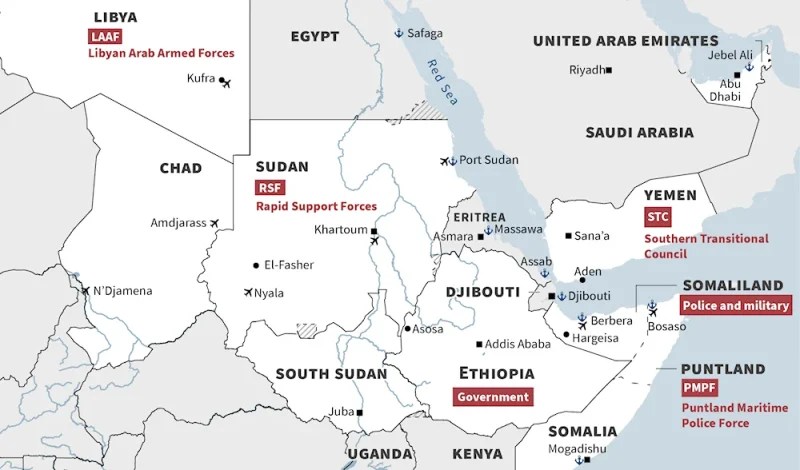
A newly published report by the German Institute for International and Security Affairs (SWP) has delivered a critical assessment of the United Arab Emirates’ role in African conflicts, describing Abu Dhabi as a systematic spoiler that arms proxy forces, manipulates diplomatic processes, and bears significant responsibility for some of the world’s worst humanitarian crises, all while facing virtually no political consequences from its Western partners.
The report, authored by researchers at one of Europe’s most influential foreign and security policy think tanks, which directly advises the German government and Bundestag, calls on Berlin and its European partners to fundamentally reassess their relationship with the UAE.
Sudan: The clearest case
The report presents Sudan as the most devastating example of Emirati interference. The UAE is identified as the most important military, logistical, and financial backer of the Rapid Support Forces (RSF), the paramilitary group whose war against the Sudanese Armed Forces has produced what the UN reports as the world’s largest humanitarian crisis, with 33.7 million people dependent on aid, over 15 million displaced, and widespread extreme hunger.
The RSF’s conduct has been particularly brutal. The report details targeted violence against non-Arab minorities, including sexual violence, mass killings, attacks on medical facilities, and hostage-taking, primarily directed at groups such as the Masalit and Zaghawa.
When the RSF captured El-Fasher in North Darfur in October 2025, a UN fact-finding mission described its actions against the civilian population as bearing the hallmarks of genocide.
Emirati support for the RSF continued even after Iranian strikes on the UAE, with numerous cargo flights departing from Emirates airports to Ethiopia, apparently to ferry supplies across the border to RSF positions.
A UN panel of experts documented 458 flights involving heavy transport aircraft from Emirati military airports or the transhipment hub of Bosaso to eastern Libya between October 2024 and the end of 2025, 239 of them bound for Kufra, a key hub for RSF resupply, in likely violation of UN arms embargoes on both Libya and Darfur.
A proxy model built on plausible deniability
The UAE rarely deploys its own forces. Instead, it operates through a carefully constructed network of local proxies, private military contractors, and logistical intermediaries. Beyond the RSF in Sudan, its partners include Khalifa Haftar’s Libyan Arab Armed Forces, the Puntland Maritime Police Force in Somalia, and, in a departure from the pattern, the Ethiopian government during its war against the Tigray people.
The report details how the UAE recruited and deployed hundreds of Colombian mercenaries to Sudan via an Emirati security firm, with the US government noting in 2025 that these fighters had served as infantry, artillery personnel, drone pilots, and even trained children for combat.
Supplies to the RSF have been routed through LAAF-controlled Libya, Chad, Kenya, Uganda, and Rwanda, with Abu Dhabi deploying financial leverage to secure cooperation, including a 1.5 billion dollar loan to Chadian President Idriss Déby in 2023.
The UAE also profits from gold smuggling networks in conflict zones, with members of the ruling family reported to have personal ties to both Haftar and RSF commander Mohamed Hamdan Dagalo.
Why the UAE intervenes
SWP identifies several overlapping motives. Economic interests are central, as state-owned logistics giants DP World and AD Ports Group have port and infrastructure projects across the continent, and military interventions serve to protect access to trade routes and strategic resources.
But economics alone do not explain the pattern. The report points to the UAE’s drive to outcompete Saudi Arabia for regional influence, a rivalry that has only sharpened since Riyadh forced Abu Dhabi out of southern Yemen.
Ideological opposition to the Muslim Brotherhood also shapes policy, with the UAE consistently backing actors who suppress Islamist movements. Personal enrichment through resource networks and ruling family ties to conflict actors adds a further layer.
Diplomatic manipulation
The report scrutinises the UAE’s use of diplomatic engagement as cover, whereby Abu Dhabi participates in international peace processes while simultaneously intensifying support for belligerents.
In September 2025, the UAE joined the Sudan Quad format alongside Egypt, Saudi Arabia, and the United States, signing joint commitments to end external support for conflict parties. According to US intelligence reporting, however, the UAE was actively intensifying support for the RSF at the same time.
The UAE also pledged 200 million dollars at a February 2025 humanitarian conference and a further 500 million dollars at a US conference in 2026, while contributing only around 33 million dollars to the UN-coordinated humanitarian plan.
In November 2025, Emirati Minister of State Lana Nusseibeh spent four days meeting with Members of the European Parliament in Brussels. Nusseibeh’s endeavor was successful, as a Parliament resolution on Sudan adopted at the same time made no mention of the UAE’s support for the RSF, following opposition from the European People’s Party to amendments tabled by left-wing parliamentary groups.
The same pattern played out during the Berlin Libya Process in 2019-20, when the UAE pledged to halt arms transfers to Libyan conflict parties but continued them regardless. Transport aircraft flew from the Emirates to eastern Libya on the very day of the Berlin conference in January 2020.
European silence, eroded accountability
The report stresses that Western governments, including Germany, have consistently refused to name the UAE publicly in international forums, despite substantial documented evidence of its role in fuelling conflicts. No UN Security Council member has explicitly raised Emirati support for the RSF in formal meetings, either.
This reluctance, SWP argues, is not incidental but reflects a broader calculation in which trade ties, security cooperation, the UAE’s close relationship with “Israel,” and the strategic goal of preventing Abu Dhabi from drifting further toward China or Russia have consistently outweighed accountability concerns.
The UAE’s open disregard for the UN embargo on Libya from 2014 onward, the report notes, likely encouraged other states to adopt a similar approach, with the same dynamic now being repeated in Sudan.
Five recommendations
SWP outlines five concrete steps for Germany and its European partners:
- First, Abu Dhabi should be named explicitly in international forums rather than referenced in vague language about “external actors.”
- Second, EU financial sanctions should be expanded and applied more consistently where Emirati actors have documented embargo violations.
- Third, German arms export policy toward the UAE requires a fundamental review, given the documented transfer of German-chassis military equipment to conflict zones.
- Fourth, anti-money-laundering enforcement should be tightened, with greater focus on Emirati financial centres as hubs for conflict economies and sanctions evasion.
- Fifth, the strategic partnership Germany has maintained with the UAE since 2004 should, at a minimum, be suspended unless Abu Dhabi demonstrably reorients its policy toward de-escalation.
The report concludes that the war on Iran, mounting tensions with Saudi Arabia, and growing reputational vulnerabilities have made the UAE more susceptible to European pressure than at any previous point, and that this window should not go unused.
Saudi Arabia is pulling Europe toward a “Gulf Helsinki” deal with Iran — because Washington failed
By Tamer Ajrami | MEMO | May 17, 2026
When military power fails to impose “deterrence,” oil becomes politics. And the Strait of Hormuz is now writing Gulf security rules instead of the Pentagon.
With Hormuz still closed and the emergency oil stock releases used to calm markets running down, prices are moving _ no matter how much some people deny it _ toward a new surge. The real problem is not the price as a number. It is the chain reaction: gasoline and diesel, shipping and insurance, raw materials, and then inflation that travels from Asia to the United States. And even if the strait opened tomorrow, the damage would not vanish. Supply chains do not reset overnight, and parts of the oil and petrochemicals flow would take time to recover.
In my previous Middle East Monitor article, I said clearly that Gulf states “have nothing but to talk to Iran now”. That was not idealism or goodwill. It was hard security math: the old formula is eroding. Bases do not protect the way people assumed, and guarantees shrink the moment they face a real test. Today, this is no longer an argument. It is a reality driven by markets before politics.
Trump and China: A visit without a lifeline — and Time is against him
Trump’s attempt to turn to China produced no clear exit. Not because Beijing is powerless, but because it sees the issue in simple terms: open the strait through practical understandings, and negotiate with Iran on realistic terms.
The problem is that Washington still wants a “surrender” wrapped in diplomatic language. Iran sees no reason to give that for free as it holds leverage in a global energy shock.
This is the core of Trump’s trap: he can say whatever he wants, but he cannot cancel economics. Markets do not negotiate. They punish.
That is why countries are now moving on two tracks: a unilateral track to protect their own interests, and a collective track to design a new framework that prevents the next shock. Saudi Arabia is stepping forward to lead the collective track, not because it loves “mediation” as a headline, but because the cost of ongoing chaos has become higher than the cost of a deal.
A New “Helsinki Act” — But without the Human Rights Basket
According to Western reporting, Saudi Arabia is floating something close to a “Gulf Helsinki Act” arrangement with Iran—modeled on the Helsinki process of the mid-1970s during the Cold War. It would not be just a Saudi–Iran deal. It would extend to the Gulf and the European Union, aiming to lock in non-aggression, structured economic normalization, and monitoring and implementation mechanisms.
The original Helsinki process was built around four “baskets”: security and non-aggression; economic cooperation; human rights and self-determination; and follow-up mechanisms. In the Middle East, copying the third basket is unrealistic. The region’s unwritten rule is non-interference. Here, states do not use “human rights” language as a tool to destabilize each other internally. So, the Saudi approach seems to focus on three practical baskets: security and non-aggression, economic cooperation and stable energy flows, and verification/implementation.
It is a practical logic: if you want an agreement that can survive, you do not plant a delayed bomb inside it.
The Hard Question: Can a Deal work without the United States?
Here is the central dilemma. A Gulf–EU–Iran non-aggression arrangement without the United States creates a dangerous gap: the Gulf and Europe commit to non-aggression, Iran commits too, but Washington and Israel still retain the ability to strike Iran. What does the agreement do then? Does it become a nice document that collapses at the first air raid?
On the other hand, bringing Washington into the deal is not easy either. The US is struggling to produce a quick bilateral agreement with Iran to end the crisis, so why would it accept a broader framework that limits its freedom of action?
This opens a third, more sensitive option: Gulf states and Europe “bypass Washington” in practice. That would mean refusing the use of their airspace and territorial waters for any military or intelligence activity against Iran. And maybe refusing to enforce sanctions that destabilize the region and recreate the Hormuz shock. This is not a small move. It would be a strategic shift.
The UAE: A Different Vision — and a Dangerous Ceiling
The Gulf is not unified on strategy. Other reporting suggests Emirati efforts to push a coordinated Gulf military “response” against Iran. The problem is not the idea of response by itself. The problem is the ceiling of objectives.
If the goal is limited deterrence to reduce escalation, that is one thing. But if the goal mirrors Netanyahu and Washington _ regime change, dismantling Iran’s nuclear program, destroying its ballistic capabilities, and reshaping Iran from the inside _ that is a long war. And the Gulf does not have the luxury to absorb its costs.
Most importantly, the idea of “escaping Hormuz” through alternative pipelines is not a real solution. If peace collapses, fields, ports, and energy infrastructure across the region remain within range. And Bab al-Mandab can become another choke point. In the end, the issue is not a pipeline or a port. It is a sustainable peace that prevents the drone and the missile before it “manages” the price.
Whoever Ends the War Ends the Chaos
A way out starts from one point: ending the US–Israeli confrontation with Iran through a realistic understanding; then building a regional framework similar to “Helsinki” that locks in non-aggression, protects economies, and prevents a repeat of the strait crisis.
Saudi Arabia is trying to “hold the story together” because Washington entered, got stuck, and now wants to exit; while the Gulf cannot afford to sit between Iran’s leverage and America’s disorder.
The choice is clearer than ever: either a settlement that closes the door on choke-point warfare, or a longer crisis that bankrupts markets before it bankrupts armies. The Gulf; whether it likes it or not; no longer has the option to “wait”.
The Biggest Breast Cancer Advance in the Last Twenty Years
By Alan Cassels | Brownstone Institute | May 17, 2026
In medicine, we love a good heroic story. A patient suffers a serious disease. A drug company produces a brilliant new drug which proves to be beneficial. Lives are saved. Everyone is happy. Another battle won in the war on disease. Science marches triumphantly forward.
But sometimes the real story is less heroic and far more awkward. And the major “advance” comes not from a new drug, but from the opposite: because patients stopped swallowing a drug that never should have been so widely used in the first place.
That is almost certainly the case of breast cancer in North America in the early 2000s.
The pivotal moment came in the summer of 2002 when a major randomized trial, called the Women’s Health Initiative (WHI) was published, aiming to answer a question which physicians had long pondered: was long-term use of hormone replacement therapy, typically prescribed for women going through menopause, good for the heart?
Up to that point, hormone therapy had been marketed as a kind of fountain-of-youth elixir for menopausal women. Promising to protect the heart, keep bones strong, preserve youthfulness, and generally smooth out biological inconveniences of aging, women were prescribed these drugs and stayed on them for years, sometimes for decades. At that time, there was considerable debate about long-term effects, with some experts claiming the heart protective-effects of hormones were so pronounced that even studying the issue was a waste of time.
Launched in 1997, the WHI enrolled more than 16,000 post-menopausal women to test the effects of combined estrogen-progestin. Another arm tested the effects of estrogen alone in 10,000 women who had undergone a hysterectomy. The larger trial was terminated three years earlier than originally planned, once the findings showed an increased risk of breast cancer, heart disease, stroke, and blood clots among participants. The smaller trial was also halted a year earlier than planned due to increased risk of stroke.
That was the day that the music died for hormone therapy.
Or at least we thought.
Within months women stopped taking and physicians stopped prescribing hormone therapy. The everyday use of this class of drugs fell dramatically, by roughly half within a year.
And then something remarkable happened.
Breast cancer incidence in the United States dropped. Some say that the rates had been in decline for several years, but the drop was significant, falling by roughly six to seven percent in 2003. It was one of the sharpest year-to-year declines ever observed. The drop was especially pronounced among women over 50 and in estrogen-receptor positive tumors, precisely the cancers most likely to be stimulated by hormones.
This wasn’t a subtle statistical wiggle. For epidemiologists, this was the sort of signal that almost never happens so cleanly in real life. Usually population health trends are messy, tangled up in dozens of possible explanations. There are long latency periods with cancer yet here a cause and effect appeared almost choreographed.
Drug exposure goes down. Disease incidence goes down, Just like that. Overnight, by stopping a drug we probably saw the most important advance in the fight against breast cancer in the last half century. But….
HRT Revisited
But today? Memories are short, and for many obstetricians, women’s health advocates, and even health reporters, it seems like the lessons from the WHI are being rewritten. The known and proven harmful effects of hormones on women’s health are undergoing a massive rewrite which is stimulating a resurgence in HRT.
This new Hormone Replacement Therapy conversation lately is captured in such articles as this piece from PBS; “How a Decades Old Study Gave Hormone Therapy a Bad Reputation,” which calls the WHI a “flawed” study. Other major media outlets like the New York Times, the Washington Post and TIME Magazine are eagerly celebrating the renewed interest in menopause, emphasizing that women’s health concerns are never adequately dealt with, and that HRT needs a second look.
The media attention was amped last year up when the FDA convened an Expert Panel on Menopause and Hormone Replacement Therapy for Women. That meeting led to the removal of the boxed warnings in November 2025 even though the labels still warn of the risk of uterine and endometrial cancer associated with estrogen-only HRT, which is typically prescribed to people who have had their uterus removed through a hysterectomy.
A lot of the hullabaloo over the removal of the FDA’s Black Box Warning on Hormone Therapy relied on a strange mix of both revisionism (the science has changed) and egalitarianism (women needed “more choice”). For the media, this was an easy sell.
The rationale used by the FDA committee and hormone aficionados everywhere was that the science has been fully reinterpreted, and “corrected.” Let’s be clear what has happened: there has been new “analyses” of the effects of hormones, but no new original research showing that the previous safety concerns are exaggerated.
Much of the renewed support for HRT uses the ‘window of opportunity’ argument that suggests that it is safe if a 50-year-old woman takes hormones, but in her 60’s it’s unsafe. Can we really accept that the effects of these drugs on women would be dramatically different at some sort of arbitrary age-related cutoff? That’s the line we are expected to believe.
But look at how that argument is easily confounded. If the drugs show a reduced harm in younger women that’s mostly because, for any disease, younger age usually means lower disease burden. The revisionists discredit the WHI even though there were thousands of women in their 50’s in that trial, and many of them were among those harmed.
A distinction needs to be made here, where one has to examine the exact reason why one is taking hormones. Is it to control menopausal symptoms (especially hot flashes, vaginal dryness) or to prevent diseases of aging (breast cancer, heart disease, dementia)?
The WHI study was aimed at determining the long-term, post-menopausal effects of the drug, and hence it was looking at the second question. As to the first question, hormones are undoubtedly effective for treating menopausal symptoms.
Symptomatic treatment is therefore behind the major push for the drugs these days. One doctor friend of mine told me that “every menopausal woman he knows is taking hormones,” implying that this was both right and natural. Another friend, who is turning 60 this year, just recently told me over coffee she’s been on the drugs for ten years and has no plans for stopping them, as she remembers how bad the sleeplessness and brain fog were when she was in menopause. This was a head-scratcher to me, left me wondering why her doctor isn’t concerned about the recent post-black box warning recommendations that if menopausal women are going to take hormones they should do so in the lowest dose possible, for the shortest period of time possible.
The message here: take these drugs, but not for long, and not in high doses. That’s the pharmaceutical equivalent of someone shouting “Danger!”
What pharmaceutical companies do best is not develop drugs, but develop drug markets and you see this on full display in the current menopausal makeover. With a highly malleable clientele, who have both money and motivation, the key obstacle is convincing prescribers that these women urgently need chemical assistance to get through this tough life transition, and that prescribing hormones is one way to fight back against the manosphere. Were it only so easy…
Revising the HRT market depends on the usual tactics: some high-octane marketing including funding pro-HRT “studies,” selectively publishing data that emphasize HRT’s benefits and downplay the harms, funding direct-to-consumer advertising campaigns wrapped in the justice angle, while sponsoring guideline panels and medical education for your and my doctors. By paying off key opinion leaders, and getting social media influencers slurping on the HRT taps the media serves up this revival as a “feel-good” story of female emancipation.
Let’s face it, menopause in 2026 is the sort of uplifting health story that the mainstream media has leaped on with uncommon gusto. In Canada, our public broadcaster, CBC, finds the subject so compelling it runs its own series (Small Achievable Goals) about menopause, organizes noontime Menopause Month call-in shows to dive into the many ‘equity’ issues related to menopause (like why are Canadian women paying out of pocket for menopause care from private practitioners?) and produces a litany of programs that are mostly repetitive recitations over the need to counter the “stigma” caused by menopause. We get it. Menopause is clearly not fun for many women and employers who don’t make concessions for suffering women need to be brought into the 21st century.
The punchline, however, always seems the same: Women are not being taken seriously when it comes to menopause and they’re mad as hell. And no one should stand in their way of getting full access to menopausal treatments, especially those prescribed medications produced by the biggest drug companies in the world. We have a term for this: Pinkwashing. In other words, taking corporate business objectives and painting them in a feminine way in order to show how much you care.
You don’t have to do a systematic review of the mainstream media’s menopause mongering, but even a quick global survey of the main English language outlets can identify some dominant themes. Even though millions of women stopped HRT in 2002, and breast-cancer incidence dropped significantly, not a single story in 2026, as far as I can tell, mentions this fact. It’s curious. Even though most epidemiologists who have examined these data say that all the evidence points towards HRT promoting breast-tumor growth.
The remake of HRT has certainly paid off. Overall HRT demand in North America has grown, driven by what the experts call “increased menopause awareness, guideline updates, and reduced stigma.” Data from insurance claims and health systems show hormone therapy use is steadily rising again after years of decline. Its use among women aged 45–65 increased about 20% between 2020 and 2023. This pink trend is occurring alongside a surge in menopause clinics, telehealth menopause services, and the growing pervasiveness of influencer physicians and social-media menopause advocates.
The HRT market in North America has grown steadily too, worth about $5 billion per year, dominated by drugs like Premarin (branded conjugated estrogens) made by Pfizer. Without any generic competition in the US until late 2025 Pfizer has been able to dominate the market, selling more than $100 million worth of Premarin in 2022 alone. Prempro (conjugated estrogens + medroxyprogesterone,) has been generically available since 2006 or so and has many other generic companies dominating the market due to much lower pricing.
Let’s recap.
Medicine has a long history of embracing interventions that appear beneficial at first glance, only to discover later that the harms outweigh the benefits. Hormone therapy for menopause became a textbook example. The dramatic changes in practice left us with one of the clearest natural experiments in modern epidemiology.
The Women’s Health Initiative revealed a risk.
Millions of women stopped taking the drug.
Breast cancer rates fell.
If you were designing a demonstration of how pharmaceutical exposure can shape population health, you could hardly script it better.
The lesson is not that all drugs are bad or that medical progress is an illusion. It’s that sometimes the most powerful intervention in medicine is restraint.
Before we celebrate the next pharmaceutical breakthrough it might be worth remembering that one of the biggest declines in a major, frequently fatal disease in modern history happened for a very simple reason: Millions of women stopped taking a pill.
Some clinicians and public-health researchers (myself among them) would argue that the media narrative minimizes known and proven downsides of these drugs, often trivializing or ignoring serious harms, including risks of stroke, blood clots, gallbladder disease, and increased breast cancer risk.
The swinging pendulum is now carving its frightful arc from fear and danger towards promotional enthusiasm, and women who are supposed to be beneficiaries of these changes will only suffer further.
Alan Cassels is a Brownstone Fellow and a drug policy researcher and author who has written extensively about disease mongering. He is the author of four books, including The ABCs of Disease Mongering: An Epidemic in 26 Letters.
Raffi Berg: BBC Middle East Editor Exposed as CIA, Mossad Collaborator
By Alan Macleod | MintPress News | January 3, 2025
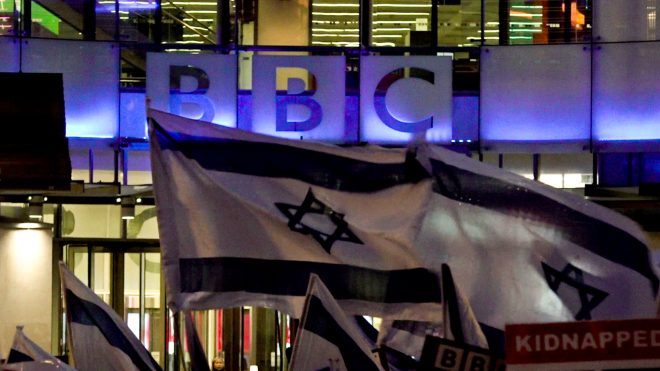
A senior BBC editor at the center of an ongoing scandal into the network’s systematic pro-Israel bias is, in fact, a former member of a CIA propaganda outfit, MintPress News can reveal. Raffi Berg, an Englishman who heads the BBC’s Middle East desk, formerly worked for the U.S. State Department’s Foreign Broadcast Information Service, a unit that, by his own admission, was a CIA front group.
Berg is currently the subject of considerable scrutiny after thirteen BBC employees spoke out, claiming, among other things, that his “entire job is to water down everything that’s too critical of Israel” and that he holds “wild” amounts of power at the British state broadcaster, that there exists a culture of “extreme fear” at the BBC about publishing anything critical of Israel, and that Berg himself plays a key role in turning its coverage into “systematic Israeli propaganda.” The BBC has disputed these claims.
Our Man in London
Berg came to public attention in December after Drop Site News published an investigation based on interviews with 13 BBC staffers who present him as a domineering figure, systematically blocking coverage critical of Israel and manipulating stories to suit pro-Israel narratives.
The 9000-word report, written by popular journalist Owen Jones, is extensive and well-researched. However, one aspect of the story it almost completely avoids is Berg’s connections to the U.S. national security state, which MintPress News can now reveal.
According to his LinkedIn profile, Berg was an employee of the U.S. State Department’s Foreign Broadcast Information Service (FBIS) three years before joining the BBC. The FBIS is understood the world over to be a CIA front group known for gathering intelligence for the agency.
As the first two lines of its Wikipedia entry read:
The Foreign Broadcast Information Service (FBIS) was an open source intelligence component of the Central Intelligence Agency’s Directorate of Science and Technology. It monitored, translated, and disseminated within the U.S. government openly available news and information from media sources outside the United States.
In 2005, the FBIS was subsumed into the CIA’s new Open Source Enterprise.
Berg does not dispute that he was, in fact, a CIA man. In fact, according to a 2020 interview with The Jewish Telegraph, he was “absolutely thrilled” to be secretly working for the agency. Berg said, “One day, I was taken to one side and told, ‘you may or may not know that we are part of CIA, but don’t go telling people.’” He was unsurprised by this news, as the application process was extremely long and rigorous. “They went through my character and background with a fine tooth comb, asking if I had ever visited communist countries and, if I had, did I form any relationships while I was there,” he said.
Mossad Collaborator
The CIA, however, is not the only clandestine spy organization with which Berg has a long history of collaborating. He also has a rich professional relationship with Mossad, Israel’s premier intelligence agency.
In 2020, for instance, Berg published “Red Sea Spies: The True Story of Mossad’s Fake Diving Resort,” a book that tells the story of the Israeli operation to clandestinely smuggle Ethiopian Jews into Israel. That the 320-page account lionizes Israel and its spies is perhaps unsurprising, considering how much input Mossad had in its creation. Berg said that he wrote the book “in collaboration” with Mossad commander Dani Limor, whom he relied on extensively, as he, in his own words, knew “next to nothing” about the story and its background before writing it. Limor opened numerous doors and was able to secure “over 100 hours of interviews” with Israeli military and intelligence officials, including with the head of Mossad.
Limor and Berg became extremely close friends. In 2020, he posted a picture of himself with his arm around the ex-Mossad commander. The first page of “Red Sea Spies” is simply a glowing recommendation from Efraim Halevy, former director of Mossad, a group Berg describes as “the world’s greatest intelligence service.”
Berg has aggressively promoted his book and has, on multiple occasions, expressed his delight that Benjamin Netanyahu has shown interest in it. In August 2020, for example, he shared a picture of Netanyahu at his desk in front of a copy of his book. “First time I’ve been on a prime minister’s bookshelf” I know I’ve got one of Israel Prime Minister Netanyahu’s on mine – but wow!” he exclaimed, tagging Mossad, the Israeli Likud Party, and the Israeli Embassies in the United Kingdom and United States.
The following year, he messaged Netanyahu’s son, Yair, stating, “Your dad has my book, ‘Red Sea Spies: The True Story of the Mossad’s Fake Diving Resort,’ and sent me a lovely letter about it.” That letter can be seen on the wall of Berg’s office in his many public posts and videos, framed and placed beside pictures of him meeting a Mossad commander and meeting Mark Regev, the former spokesperson for the Israeli Prime Minister’s Office.
That a BBC Middle East editor would not only frame these images and documents and put them pride of place in his office but also choose to display them while talking publicly and in an official role is telling. The BBC sells itself as an impartial distributor of news on the Middle East and beyond. And yet, Berg, who, by most accounts, calls the shots when it comes to the network’s Israel-Palestine coverage, clearly believes that this is acceptable and unremarkable behavior.
If the opposite were true – that even a low-level BBC employee was openly sharing pictures of themselves embracing Hamas commander Yahya Sinwar or displaying a glowing letter from Iran’s Ayatollah Khamenei – it is clear that there would be serious repercussions. The BBC suspended six of its reporters for simply liking pro-Palestine tweets. And yet, in Berg’s case, his overt pro-Israel advocacy has been treated as entirely unproblematic.
Relentlessly Pro-Israel
Of course, it is entirely possible that a pro-Israel stance would help one climb the ladder at the BBC, an organization long known to display a strong bias in favor of the country and its interests.
Born and raised in England, Berg always took a keen interest in Israel, moving there to study Jewish and Israel Studies at the Hebrew University of Jerusalem. He worked at the FBIS between 1997 and 1998 and joined the BBC in 2001, starting as a world news writer and producer.
One of his first BBC articles profiled the Israeli military and its recruits, presenting the IDF as brave protectors of their homeland and as a “source of national pride” and framed women serving as a win for sexual equality.
In 2009, at the height of Operation Cast Lead – the Israeli attack on Gaza that killed more than 1,000 people – Berg attended a pro-Israel demonstration in central London. Moreover, he even chastised the Israeli newspaper, The Jerusalem Post, for noting that only 5,000 people showed up to the event. In Berg’s opinion, there were three times as many in attendance. The BBC would later change its guidelines to prevent its newsroom employees from attending controversial demonstrations.
During Operation Cast Lead, the Israeli military was found to have indiscriminately targeted and killed civilians, used Palestinians as human shields, and used banned chemical weapons, such as white phosphorous, on civilian areas.
Three years later, in November 2012, Israel launched Operation Pillar of Defense, a high-profile, bloody assault on Gaza that made worldwide headlines. As Israel bombarded the densely-populated civilian area, Berg went on his own internal offensive, telling his BBC colleagues to word their stories in a way that does not blame or “put undue emphasis” on Israel. Instead, leaked emails show, he encouraged journalists to present the attack as an operation “aimed at ending rocket fire from Gaza,” thereby framing Hamas as the aggressor.
Another Berg email instructed his coworkers to “Please remember, Israel doesn’t maintain a blockade around Gaza. Egypt controls the southern border” – a highly contestable opinion not shared by the United Nations, which declared that Israel was the occupying power besieging the strip.
Extraordinary Revelations
Shortly after Operation Pillar of Defense, Berg was promoted, becoming head of the BBC’s Middle East desk. This position gives him enormous influence in shaping the platform’s presentation of Israel’s current war on Gaza. In this role, he has helped turn the network into “systematic Israeli propaganda,” according to one journalist quoted by Jones in his Drop Site investigation. “This guy’s entire job is to water down everything that’s too critical of Israel,” said another.
The BBC staff Jones talked to painted a picture of a pro-Israel zealot systematically suppressing any content or information that would paint Tel Aviv in a negative light. A micromanager, numerous journalists reportedly attempted to notify management of their issues with Berg, but their complaints fell on deaf ears. “Almost every correspondent you know has an issue with him,” one staffer stated. “He has been named in multiple meetings, but [management] just ignore it.”
“How much power he has is wild,” another journalist told Jones, who explained that essentially every story or segment featuring Israel would have to be signed off by Berg first, even leaving other editors in “extreme fear” of commissioning anything without his approval.
Berg is alleged to have made extensive pre-publication edits to others’ stories, changing the framing of news events to shield Israel from blame. One example of this is the whitewashing of the Israeli attack on the funeral of Palestinian-American journalist Shireen Abu Akleh. In May 2022, Israeli snipers shot the Al Jazeera anchor in the head and proceeded to lie about their culpability. Israeli forces subsequently attacked the public funeral, beating mourners and firing tear gas. The BBC’s text, allegedly penned by Berg himself, read:
Violence broke out at the funeral in East Jerusalem of reporter Shireen Abu Aqla, killed during an Israeli military operation in the occupied West Bank.
Her coffin was jostled as Israeli police and Palestinians clashed as it left a hospital in East Jerusalem.
Thus, Abu Akleh’s murder by Israeli forces was downgraded to a mere death during an operation (with no perpetrator mentioned), while a police attack on a funeral procession was presented as a “clash” between rival factions, presumably of roughly equal responsibility.
A more recent example of this, Jones claims, comes from a July story about IDF soldiers setting an attack dog on Muhammed Bhar, a severely disabled Gazan man, and letting him bleed to death. Under Berg’s supervision, the original headline ran: “The Lonely Death of Gaza Man with Down’s Syndrome.” Only after a gigantic worldwide outcry did the BBC change its framing to note anything about how Bhar met his end. “There has to be a moral line drawn in the sand. And if this story isn’t it, then what?” one BBC journalist said, commenting on the affair.
Since the investigation was published, Berg has remained silent, although he has hired defamation lawyer Mark Lewis, the former director of U.K. Lawyers for Israel.
The BBC, meanwhile, has offered unequivocal support for him and his work, rejected any suggestion of a lenient stance towards Israel, and alleges that the Drop Site article “fundamentally misdescribe[s] Berg’s power, influence, and how the network works.
A Worldwide Network
Whatever the veracity of the Drop Site allegations, the undisputed fact that a former U.S. State Department and CIA operative is calling the shots at the BBC for its Middle East coverage is undoubtedly of public interest.
It also bears a striking resemblance to the accusations of journalist Tareq Haddad. In 2019, Haddad resigned in frustration from Newsweek, claiming that the outlet systematically stymied him from covering important Middle East news stories that did not align with Western objectives. Perhaps most strikingly, though, he claimed that Newsweek employed a senior editor whose only job was seemingly to vet and suppress “controversial” stories, in the same vein as Berg. This editor also had a similar background with state power. As Haddad concluded:
The U.S. government, in an ugly alliance with those the [sic] profit the most from war, has its tentacles in every part of the media — imposters, with ties to the U.S. State Department, sit in newsrooms all over the world. Editors, with no apparent connections to the member’s club, have done nothing to resist. Together, they filter out what can or cannot be reported. Inconvenient stories are completely blocked.”
When contacted by MintPress News for comment, Haddad said he found the BBC, State Department and CIA links to be “staggering,” adding:
When I resigned from Newsweek, I did so because all reporting on foreign affairs went through a particular editor, who, in my case, turned out to be connected to the European Council on Foreign Relations. That prevented me from writing truthfully when it came to a number of sensitive issues.”
CIA-Affiliated Media
The implications of former U.S. national security state operatives dictating global media output are profound. This is not least because the State Department and CIA are among the world’s most notoriously dishonest and perfidious institutions, regularly injecting lies and false information into public discourse to further Washington’s ambitions. As Mike Pompeo, former Director of the CIA and then-Secretary of State, said in 2019:
When I was a cadet, what’s the cadet motto at West Point? You will not lie, cheat, or steal or tolerate those who do. I was the CIA director. We lied, we cheated, we stole. We had entire training courses [on] it!”
Furthermore, both organizations have a long history of organizing invasions of and coups against foreign countries, drugs and weapons smuggling and operating a worldwide network of “black sites,” where thousands are tortured.
The CIA, in particular, has an extensive record of penetrating media outlets. As far back as the 1970s, the Church Committee unearthed the existence of Operation Mockingbird, a secret project to infiltrate newsrooms across America with secret agents masquerading as journalists. Investigative reporter Carl Bernstein’s work found that the agency had cultivated a network of over 400 individuals it considered assets, including the owner of The New York Times.
John Stockwell, former head of a CIA task force, explained on camera how his organization infiltrated media departments across the planet, establishing fake outlets and news agencies that worked to control global public opinion and spread false information demonizing Washington’s enemies. “I had propagandists all over the world,” he admitted, adding:
We pumped dozens of stories about Cuban atrocities, Cuban rapists [to the media]… We ran [faked] photographs that made almost every newspaper in the country… We didn’t know of one single atrocity committed by the Cubans. It was pure, raw, false propaganda to create an illusion of communists eating babies for breakfast.”
This process continues to this day, as the CIA continues to promote dubious stories about so-called “Havana Syndrome” and Russia putting bounties on American soldiers in Afghanistan.
Cable networks routinely employ a wide range of former State Department or CIA officials as personalities and trusted experts. Former CIA director John Brennan is employed by NBC News and MSNBC, while his predecessor, Michael Hayden, can be seen on CNN. Top anchors such as Anderson Cooper and Tucker Carlson have their own connections to the agency.
Meanwhile, in 2015, Dawn Scalici, a 33-year CIA veteran, left her job as national intelligence manager for the Western hemisphere at the Director of National Intelligence to become the global business director of the international news conglomerate Reuters. That this was a political hire was barely hidden; in Scalici’s official announcement, the company declared her primary responsibility would be “advancing Thomson Reuters’ ability to meet the disparate needs of the U.S. government.”
Social media, too, is full of former U.S. national security state agents. A previous MintPress News investigation uncovered a network of dozens of ex-CIA officials working at Google. Most of these individuals work in highly politically sensitive roles such as security and, trust and safety, effectively giving them control over the algorithms that decide what content gets seen and what is suppressed worldwide. Some were even directly recruited from the CIA, leaving the agency to join the Silicon Valley giant.
Competing with Google for the crown of employing most former CIA agents is Facebook. The company’s senior product policy manager for misinformation, Aaron Berman, the man most responsible for deciding what the world sees (and does not see) in its news feeds, was directly parachuted in from Langley, Virginia. Berman was one of the agency’s highest-ranking officers, writing the president’s daily brief for both Obama and Trump until July 2019, when he made the switch from big government to big tech.
And since it became a target of Washington’s ire, TikTok has been on a hiring spree, recruiting large numbers of U.S. State Department officials to run its internal affairs. The company’s head of data public policy for Europe, for example, is Jade Nester, who was previously the State Department’s director of internet public policy. These connections were explored in a MintPress investigation entitled, “TikTok: Chinese “Trojan Horse” Is Run by State Department Officials.”
Cheering on a Genocide
In recent years, Washington has shown considerable interest in influencing the British press. The National Endowment for Democracy—another unofficial branch of the CIA—has spent millions of dollars funding a wide range of media outlets in the U.K. The NED’s sister organization, USAID, is the third-largest funder of BBC Media Action, the company’s charitable arm, donating over $2 million annually.
The BBC itself has faced repeated accusations of pro-Israel bias, not only from the public but also internally. Their headquarters are a common start or end point for numerous pro-Palestine marches, including an upcoming national rally in London on January 18. In November, over 100 BBC staff signed an open letter to the corporation’s director-general, Tim Davie and Chief Executive Officer Deborah Turness. The letter admonishes the company for consistently providing “favorable coverage to Israel,” failing to uphold even “basic journalistic tenet[s]” when covering its war on Gaza, and aiding in “systematically dehumanizing Palestinians.”
Haddad agreed that much of the network’s coverage had been subpar, telling MintPress :
The BBC, of course, like many institutions, has fallen way short of their coverage in documenting what Israel has done in a densely populated strip of land we know as Gaza over the last 14 months and prior.”
Partially as a result, public confidence in the broadcaster has fallen to an all-time low. By July 2023, just 38% of Britons said they trusted the BBC to tell the truth – down from 81% 20 years previously. Since October 7, its biases have been put under even more scrutiny.
Israel’s actions, Haddad said, are “growing harder to ignore.” Officially, the death toll from the Israeli attack on Gaza stands at almost 50,000, although credible estimates put the likely figure at many times that. International organizations, such as the United Nations and Amnesty International, have described the onslaught as “genocidal.”
Israel could not sustain its attack without vital military, logistical, economic, and political support from Western powers. It is, therefore, vital for Washington, London and the E.U. that public opinion does not turn too far in favor of Palestine to the point where widespread public rebellion forces a change in policy. The BBC, with its deeply misleading and one-sided coverage of the events, therefore, plays an important role in the perpetuation of crimes against humanity. That this is being driven from the top down by overtly pro-Israel editors, including one with a history in both the State Department and CIA, is perhaps unsurprising but no less shocking, nonetheless.
To be clear, this article does not claim that Berg or anyone at the BBC is a plant. Nor is it accusing him of any specific wrongdoing beyond working at a distinctly biased network. What it is stating is that it is telling that the person in charge of its Middle East reporting has framed pictures and letters of Mossad commanders and high Israeli officials on the wall, as if they are rock stars and he is a teenage fan. That someone such as this rose the ranks is a clear indication of the kind of culture that exists at the BBC – one that has systematically demonized Palestinians and manufactured consent for genocide.