FDA Weighing Moderna Vax for Kids 6 and Under, But Experts Say Trials Inadequate
The Defender | April 1, 2022
Moderna last week said it will seek Emergency Use Authorization (EUA) for its COVID-19 pediatric vaccine, after announcing its two-dose regimen reduced cases of symptomatic disease by 43.7% in children 6 months to 2 years old and by 35.7% in children ages 2 to 6.
The company said its Phase 2/3 KidCOVE study of its mRNA-1273 in children “successfully met its primary endpoint.”
However, as Politico reported Wednesday, and as experts told The Defender, some doctors and scientists question whether Moderna’s clinical trial data will be sufficient for the U.S. Food and Drug Administration (FDA) to grant EUA for the vaccine.
Experts cited the trials’ low efficacy rates, small sample size and reliance on a research workaround called immunobridging as weaknesses that could hinder Moderna’s case.
“Given the other data that surrounds it, I don’t know that it’s a slam dunk that the FDA will move forward in terms of releasing it for emergency use,” Peter Hotez, professor of pediatrics and molecular virology and microbiology at the Baylor College of Medicine, told Politico.
“We’re still learning about the relationship between virus-neutralizing antibodies and effectiveness,” Hotez said, adding the FDA might need to raise its standards.
Experts also raised questions about the risk-benefit ratio of the COVID vaccines for an age group with a statistically insignificant risk of severe illness.
The FDA recently tabled Pfizer’s petition for EUA of its pediatric vaccine for infants and children 6 months to age 5, citing insufficient data on a third dose for children 2 to 4 years old.
Small trials hide injuries, experts say
Moderna’s trial was designed to analyze the safety, immunogenicity and tolerability of two vaccine doses in healthy children who were administered two 25-microgram doses 28 days apart, according to Clinical Trials Arena.
The sample size was small. Approximately 6,700 children were enrolled in the trial’s 6-and-under age group, including about 4,200 children between the ages of 2 and 6 and 2,500 children between 6 months and 2 years.
The trial also encompassed children in the 6- to 12-year-old age group, bringing the total to nearly 11,700 children.
According to Dr. James Campbell, professor of pediatrics and physician-scientist at the Center for Vaccine Development and Global Health at the University of Maryland School of Medicine, adult vaccine trials typically look at larger sample sizes.
Campbell, who tackled dosage studies for children for the Moderna study, said, “Instead of having 30,000 to 45,000 people — half who get the vaccine and half the placebo — we’re enrolling more like a few thousand in each of these age groups.”
Toby Rogers, Ph.D., an expert in statistics and how they relate to vaccine trials, told The Defender that 6,700 participants makes for an undersized trial.
“Researchers would call this ‘intentionally undersized to hide harms,’” Rogers said. “And this is a standard trick that pharmaceutical companies do.”
For the Moderna study, there were about 3,350 participants each in the treatment and placebo groups. An adverse event such as myocarditis might happen one out of 5,000 times, Rogers said.
“If you have only 3,300 in the treatment group, you are unlikely to see that particular harm in the clinical trial,” he said. “And, if you do see it in the treatment group, the company has ways to kick that person out of the trial.”
Rogers added:
“Say you experience myocarditis and you call the hospital at midnight and get in the car and go to the hospital, you get kicked out of the trial because you are breaking their protocols. They want you to call their doctors and not the hospital. They do that pretty regularly.”
In context, trials for the polio vaccine had a million participants.
“And now we have trials that are coming in with just a few thousand participants. It’s bad faith. This is just the tip of a large iceberg,” Rogers said.
Moderna trials show vaccine fails to meet FDA 50% efficacy standard for EUA products
Moderna’s claim that two shots of its vaccine reduced cases of symptomatic disease by 43.7% in children 6 months to 2 years old and by 35.7% in children ages 2 to 6 means the vaccine falls below the FDA’s 50% efficacy threshold for EUA products.
“No one would argue that 40 percent protection is great,” Dr. Chandy John, a pediatrician at Indiana University, told The Atlantic.
According to Politico, Moderna officials said the regimen met a metric called immunobridging, meaning the pediatric doses produced the same immune response that’s been seen in young adults.
Bridging studies are used in lieu of duplicating large-scale efficacy trials. Researchers extrapolate efficacy results from one population to predict drug efficacy in another population, according to Bernard Fritzell in a paper published in Developing Biological Standards.
In practice, using immunobridging means that pediatric vaccine researchers looked at an older group from a previous trial, who received a different dose of a vaccine with different ingredients, and decided what level of antibodies in that group were enough to ward off COVID.
They then looked at the younger children’s group to see how many of those participants had that same level of antibodies — a process that is not predictive of an individual’s ability to fight off infections, Rogers said.
Rogers added:
“So moving forward, into this mythical future, we predict that this many kids with antibodies will be protected. If this was a legitimate way to do science, you’d never have to do clinical trials in kids, because you could just immunobridge from any population under the sun whenever you wanted to. If you get a clinical trial with zero effect, you are going to finesse it with immunobridging.”
Dr. Meryl Nass, an internal medicine physician with expertise in anthrax and bioterrorism and member of the Children’s Health Defense (CHD) scientific advisory committee, also criticized the practice.
“The term ‘immunobridging’ is simply a fancy way of saying we are going to use antibody titers instead of actual cases of disease prevented as our benchmark,” Nass told The Defender.
“And we will compare the antibody level in one age group to that in another, and if they are comparable, we will say the vaccine works in the new age group,” Nass said.
Nass said the FDA began accepting surrogate markers of efficacy in vaccines years ago for vaccines intended for rare conditions in which there were not sufficient cases to determine actual efficacy in the real world.
Nass said:
“This is simply not the case with COVID. There is plenty of COVID going around. For Moderna to claim the FDA should authorize its vaccine in babies and preschool children because the vaccine led to high antibody levels, when its real-world efficacy (and only against mild symptoms) was only 40% is a bad joke.
“The efficacy level tells you that antibody levels are a poor surrogate for efficacy and should therefore be ignored. Other parts of the immune system contribute to immunity besides neutralizing antibodies.”
Dr. Elizabeth Mumper, pediatrician, CEO of The RIMLAND Center and member of CHD scientific advisory committee, echoed Nass’ concerns.
“Emergency Use Authorization typically demands a 50% threshold of efficacy for approval,” said Mumper.
“Here, Moderna tries to get around their less-than-50% efficacy results by using a concept called immunobridging, meaning to show that children develop the same immune antibody response as young adults,” Mumper said.
“However, there are problems with assuming antibody response numbers correlate with clinical outcomes.”
Moderna also admitted its study was unable to assess the vaccine’s efficacy against severe disease, hospitalization or death for ages 6 and younger, as participants’ infections were mild or moderate.
The only adverse events the study reported were fevers — 15% of children had fevers higher than 100.4 degrees and 1 in 500 experienced a fever higher than 104 degrees.
Moderna did not disclose if any of the children who participated required hospitalization as a result of the fevers. It did reveal that adverse reactions were more frequently reported after the second dose.
Trials’ short duration, plus evolving variants raise questions
Critics also cited the study’s short duration, though Moderna said it will continue to monitor its participants for 12 months.
“Long-term adverse effects of the vaccine remain an open question,” said Stephanie Seneff, Ph.D., senior research scientist at MIT’s Computer Science and Artificial Intelligence Laboratory.
“Are we prepared to booster children every three or four months, since the protection from the vaccine is short-lived?” Seneff asked.
The Omicron variation affected the Moderna’s efficacy rates in children, an outcome the company claimed was “as expected.”
But the fact that the virus continues to mutate at a fast rate and the fact that kids 6 and younger are at low risk from COVID makes the vaccine’s use in healthy children questionable, Hamid A. Merchant, subject leader in pharmacy at the University of Huddersfield, UK, said in the Journal of Pharmaceutical Policy and Practice.
Merchant said:
“Currently deployed COVID vaccines were designed using the variant that was prevalent in early 2020 and the virus has significantly mutated since then; the breakthrough cases from [the] recent Omicron outbreak is a good example of the rapidly evolving nature of this virus.”
Research in the UK indicates more than 85% of children ages 5 to 11 years have already contracted COVID and have acquired natural immunity, Merchant added.
Kids at low risk of severe disease
Politico reported that even though the 5-and-under age group was more likely to be hospitalized for Omicron, children in this age group account for only 0.1% of the deaths from COVID and 3% of COVID cases in the U.S., according to CDC’s own data.
“According to data from most countries, practically no children under the age of 5 have died from COVID,” Nass said. “In the UK and Wales, over two years of the pandemic, only one child without comorbidities (a chronic illness) died from COVID.”
Nass added:
“While CDC claims over 1,000 children have died with COVID, CDC responded to a FOIA request from Informed Consent Action Network that it does not collect and analyze data on healthy children who have died from COVID in the U.S.
“This is hard to believe, but since the New York Times revealed that CDC hides the bulk of the data it collects on COVID, in part to avoid providing tinder to ‘antivaxxers’ regarding poor vaccine efficacy, it may be that CDC did in fact choose not to look at such data.”
A Johns Hopkins’ study that monitored 48,000 children under 18 who were diagnosed with COVID showed there were zero deaths in those without comorbidities. Another study in Nature came to much the same conclusion.
“Infants and toddlers do surprisingly well with Omicron,” Mumper said, adding:
“We know they have fewer ACE2 receptors in their noses, which may be protective. We know they have cross-protection from other infant viruses. We know the jab-generated B cell-specific spike protein antibody response is a very specifically targeted response, and not as broad as the natural symphony of well-orchestrated immune responses children usually mount.”
Rogers this week wrote the harms from COVID vaccines are catastrophic, and benefits are questionable:
“There are now 44,975 [Vaccine Adverse Event Reporting System] reports of adverse events in children following Covid shots, a few of which led to deaths. These reports likely understate harms by a factor of 41 to 100.”
Nass also called out the issue of risk versus benefit for the young age group:
“If we are vaccinating kids to protect grandma, which a Moderna official suggested, it should be noted that that is not considered ethical under U.S. law. You cannot vaccinate kids, and have them take a risk for a marginal benefit to themselves because you are hoping to provide a great benefit to adults.”
Apparently, the majority of parents agree. The Hill reported only 25% of children ages 5 to 11 are vaccinated, even though the FDA authorized vaccines for their age group last October.
“I hope the FDA holds Moderna’s feet to the fire and demands very robust results,” Mumper said.
“The basic concept is: First do no harm. If a baby’s background risk with COVID is not significantly changed by an mRNA jab, then the shot is not justified. If the jab just prevents mild to moderate infections, is it necessary or desirable?”
In Australia, doctors are now being warned they “are obliged to” follow public health messages
EVEN IF THOSE MESSAGES CONTRADICT INDEPENDENT RESEARCH ON WHAT IS BEST FOR PATIENTS
By Alex Berenson | Unreported Truths | April 2, 2022
Australia’s march toward medical authoritarianism continues.
Doctors are now being told they could face discipline for saying anything that contradicts “public health messaging,” even if what they are saying is “evidence-based.”
They may even face investigations for “authoring papers” that health authorities do not like.
Unfortunately, I am not exaggerating.
Like all physicians, Australian doctors can face disciplinary investigations for medical errors or other problems. In Australia, those investigations are called “notifications,” a nicely Orwellian euphemism. Ahpra, the Australian Health Practitioner Regulatory Agency, oversees them.
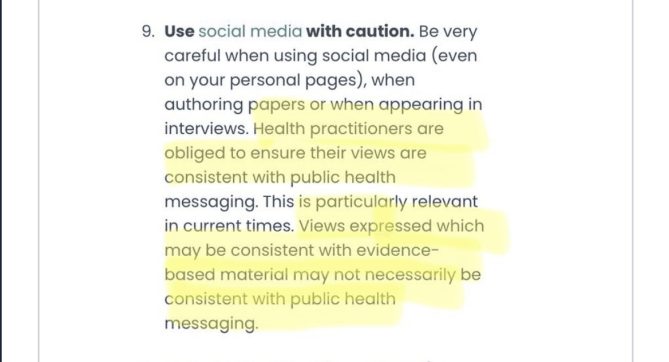
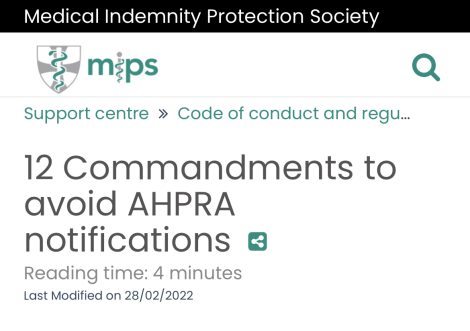
On Feb. 28, a big Australian medical insurer warned physicians that to avoid Aphra notifications, they needed to “be very careful” not to contradict “public health messaging” in social media comments.
But the warning – although first mentioning social media – went even further. It also warned against “authoring papers” that contradicted the authorities’ favored views.
SOURCE
Further, even “views… consistent with evidence-based material” could lead to problems if they contradicted “public health messaging.”
The warning came from the Medical Indemnity Protection Society, which provides professional insurance coverage for doctors. Although these insurers do not speak officially for government agencies, doctors effectively cannot practice without professional insurance, so their pronouncements are powerful.
In other words, only a very brave physician in Australia would consider offering advice that’s not “consistent with public health messaging” anytime soon.
No worries, though, the public health authorities know best!
The Rich Are Taking the Poor to the Cleaners on ‘Green’ Energy in Countries That Can Least Afford It
By Vijay Jayaraj | The Western Journal | March 30, 2022
Approximately 1.3 billion Indians have been informed that their cooking gas price will go up by 65 cents per liter. In a country like India, higher fuel prices can have quick and dangerous repercussions, resulting in greater morbidity and mortality.
The situation is similar in other developing countries and the poor economies of the African continent. Unfortunately, the establishment media does not sufficiently report on how hostility toward fossil fuels has contributed to the current energy crunch.
The populations of developing countries have been ill-served by leaders who waste precious resources on “green energy” infrastructure when they could have easily used those funds to improve the production and importation of coal, oil and natural gas.
 Consider India and Vietnam, two fast-growing Asian economies that have been undone by the “green” distraction that has squandered their domestic energy security in the name of climate wokeism.
Despite the acceleration of coal production, India finds itself in an energy mess thanks to billions of dollars invested in poorly performing renewable energy technologies. Between 2014 and 2019, India’s renewable energy industry received $64.4 billion in investments.
The country instead could have directed money to reliable and affordable coal power plants that would have cost only a fraction of the “green” boondoggles. In 2016, India’s renewable energy investment was equivalent to the construction costs of 11 coal power plants. Likewise, several small-scale oil refineries could have been commissioned and made operational in the last 10 years, reducing the need to import refined fuel at higher prices.
Many argue that a country like India is already using too much fossil fuel. But this argument falls flat when the nation raises fuel prices for those who can least afford it. There are 230 million people in India who earn less than $5 per day. For these people, and millions of middle-class households, the hike in fuel prices means an increase in commodity and transportation costs and an overall stagnation of economic development.
Another rapidly growing Asian economy is Vietnam, where leaders appear committed to increasing the share of “green” technologies in the energy market. This ignores problems created by the country’s move away from fossil fuels.
During the past many weeks of volatile oil prices, analysts have rued Vietnam’s missed opportunity to strengthen its domestic oil and gas infrastructure. Since February, gas retailers have faced severe shortages, with more than 300 petrol and oil retailers across the country stopping sales.
Situations like these could have been minimized had the country not been apathetic about energy security. A key reason for high gas prices is decreased production at Nghi Son Oil Refinery, which did not receive enough government support to avoid financial difficulties and a 90 percent reduction in output in January. The refinery serves 35 to 40 percent of the domestic petrol market.
Economist Dinh Trong Thinh says, “When the plant’s production is unstable or has a problem, it will affect the Vietnamese petroleum market because the market share of Nghi Son refinery is large. The risk of a factory shutdown is an important issue for the petroleum sector in particular and the economy in general, which urgently needs the intervention of state management agencies.”
However, this urgency is not reflected in government actions to retain an environmental tax that boosts fuel prices and continued investing in renewable energy projects that do nothing to improve energy security.
It is time that developing economies stop experimenting with proven failures like wind and solar and start developing infrastructure that can address international price volatility.
Vijay Jayaraj is a contributing writer to the CO2 Coalition and holds a master’s degree in environmental sciences from the University of East Anglia, England. He resides in Bengaluru, India.
UN Human Rights Council adopts resolutions against Israel’s human rights violations in Syria’s Golan
Press TV – April 2, 2022
The United Nations Human Rights Council has adopted a resolution denouncing Israel’s human rights violations against the people in Syria’s occupied Golan Heights, calling on the Tel Aviv regime to stop its repressive measures.
The Geneva-based council endorsed the resolution at its 49th regular session on Friday,urging Israel to comply with the relevant UN resolutions.
In a separate resolution, the council renewed its condemnation of illegal Israeli settlements in the occupied Palestinian territories, including East al-Quds, and Syria’s Golan Heights.
The UN body also called for an immediate end to Israel’s continued occupation and illegal settlement activities in the occupied Arab territories.
In another resolution on the right of the Palestinian people to self-determination, the council “reaffirmed the Palestinian people’s right to live in freedom, justice, and dignity and the right to their independent State of Palestine.”
During the session, Hussam Edin Aala, Syria’s permanent envoy to the UN in Geneva, said Israel continues its violations of international law and human rights with the full support of the United States.
He further called on the Human Rights Council to hold Israel responsible for these violations.
In 1967, Israel waged a full-scale war against Arab territories, during which it occupied a large swathe of Golan and annexed it four years later – a move never recognized by the international community.
In 1973, another war broke out; and a year later a UN-brokered ceasefire came into force, according to which Tel Aviv and Damascus agreed to separate their troops and create a buffer zone in the Heights. However, Israel has over the past several decades built dozens of illegal settlements in Golan in defiance of international calls for the regime to stop its illegal construction activities.
In a unilateral move rejected by the international community in 2019, former US president Donald Trump signed a decree recognizing Israeli “sovereignty” over Golan.
Last December, Israel announced that it intends to double the number of its illegal settlements in the Golan, despite an earlier resolution adopted by the UN General Assembly demanding the regime’s full withdrawal from the occupied territory.
Nevertheless, Syria has repeatedly reaffirmed its sovereignty over Golan, saying the territory must be completely restored to its control.
The United Nations has also time and again emphasized Syria’s sovereignty over the territory.
Israel also occupied East al-Quds, the West Bank and the Gaza Strip during the Six-Day Arab-Israeli War in 1967. It later had to withdraw from Gaza.
Nearly 700,000 Israelis live in illegal settlements built since the 1967 occupation of the Palestinian territories of the West Bank and East al-Quds.
All the settlements are illegal under international law. The United Nations Security Council has condemned the settlement activities in several resolutions.
Palestinians want the West Bank as part of a future independent state with East al-Quds as its capital.
UK won’t get Russian gas – Moscow
Samizdat | April 2, 2022
British energy major Shell will not be able to buy Russian gas due to London’s anti-Russia sanctions, Dmitry Peskov, the press secretary of Russian President Vladimir Putin, told the media on Saturday.
“London wants to be the leader of everything anti-Russian. It even wants to be ahead of Washington! That’s the cost!” Peskov outlined.
He was referring to the fact that the UK is the only country to have imposed sanctions on Russia’s Gazprombank, through which payments for Russian natural gas are made. The measure effectively denies Britain the ability to pay for the commodity.
On March 31, Putin signed a decree requiring gas buyers from “unfriendly countries” to open special ruble and foreign currency accounts with Gazprombank to pay for gas supplies. They will transfer funds in foreign currencies to Gazprombank, which will buy rubles on exchanges and transfer them to the buyers’ ruble accounts to make payments to Russia’s suppliers.
US reveals another huge batch of military aid to Ukraine
Samizdat | April 2, 2022
The US will be sending an additional $300 million in military aid to Ukraine, Pentagon press secretary John Kirby announced on Friday.
He added that the package will include laser-guided rocket systems, switchblade tactical drones which are capable of taking out armored vehicles, Puma surveillance drones, armored Humvees, ammunition, night-vision devices, machine guns, communications equipment, medical supplies, and other items.
“This decision underscores the United States’ unwavering commitment to Ukraine’s sovereignty and territorial integrity in support of its heroic efforts to repel Russia’s war of choice,” Kirby said.
The secretary explained that the Ukraine Security Assistance Initiative allows the US government to procure supplies and equipment directly from defense industry contractors, rather than taking it from the Defense Department’s own stockpiles.
The US has so far committed over $2.3 billion in security assistance to Ukraine since Russia launched its military operation in the country last month.
Earlier, UK Defence Secretary Ben Wallace announced that Britain and its partners agreed to send more lethal aid to Ukraine after a conference involving 35 countries, explaining that Ukrainian soldiers need different weapons depending on the tactics on the ground.
Last month, US President Joe Biden signed a government spending bill that approved $13.6 billion in military and humanitarian aid for Ukraine, while some members of the Senate demanded the US spend even more to assist the country.
Russia, Ukraine and the Law of War: War Crimes
By Scott Ritter | Consortium News | April 1, 2022
During his recent four-day European tour, U.S. President Joe Biden made headlines when, during a meeting with Polish President Andrzej Duda, he described Russian President Vladimir Putin as “a man who I quite frankly think is a war criminal,” adding “I think it will meet the legal definition of that as well.”
Putin’s spokesperson, Dmitry Peskov, condemned Biden’s comment as “unacceptable and unforgivable rhetoric on the part of the head of a state whose bombs have killed hundreds of thousands of people around the world.”
Biden made his remarks following a statement issued by Secretary of State Antony Blinken in which Blinken announced that the State Department had made a formal assessment that the Russian military had committed war crimes in Ukraine. “Based on information currently available,” Blinken said, “the U.S. government assesses that members of Russia’s forces have committed war crimes in Ukraine. “Our assessment,” Blinken added, “is based on a careful review of available information from public and intelligence sources.”
According to Blinken, “Russia’s forces have destroyed apartment buildings, schools, hospitals, critical infrastructure, civilian vehicles, shopping centers, and ambulances, leaving thousands of innocent civilians killed or wounded. Many of the sites Russia’s forces have hit have been clearly identifiable as in-use by civilians.” Blinken declared that this category “includes the Mariupol maternity hospital” as well as “a strike that hit a Mariupol theater, clearly marked with the Russian word for ‘children’ — in huge letters visible from the sky.”
Blinken’s accusations echo those made by the Ukrainian government and organizations such as Amnesty International. Karim Khan, the lead prosecutor for the International Criminal Court, has announced that his office will begin investigating allegations of Russian war crimes committed during its ongoing military operation in Ukraine.
The narrative that paints Russia and the Russian military as perpetrators of war crimes, however, runs afoul of actual international humanitarian law and the laws of war. The issue of jus in bello (the law governing conduct during the use of force) set forth a framework of legal concepts which, when allied to specific actions, help determine whether an actual violation of the law of war has occurred.
Jus in bello is derived from treaties, agreements, and customary international law. Two sets of international agreements, the Hague Conventions of 1899 and 1907, and the four Geneva Conventions of 1949, serve as the foundation for the modern understanding of jus in bello, regulating, respectively, what is permissible in the execution of war, and the protections provided to non-combatants, including civilians and prisoners of war. “Grave breaches” of jus in bello can be prosecuted in courts of relevant jurisdiction as war crimes.
Starting from the proposition that war is little more than organized murder, the issue of how to define what constitutes murder sufficient to be categorized a being of a criminal nature is far more difficult than one might think. Michael Herr gave voice to this reality in his book, Dispatches, about America’s war in Vietnam, when he observed that, “Charging a man with murder in this place was like handing out speeding tickets at the Indy 500.”
Distinction, Intention, Necessity
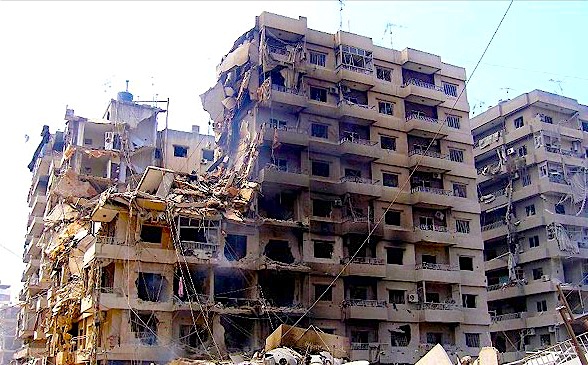
Israeli air and artillery attacks against apartment building, Beirut 2006. (Hamed Talebi/Mehr News Agency/Wikimedia Commons)
One of the key considerations that distinguishes a legitimate act of war, and a war crime, is the notion of “military necessity.” According to the precepts set forth in the law of war, military necessity “permits measures which are actually necessary to accomplish a legitimate military purpose and are not otherwise prohibited by international humanitarian law. In the case of an armed conflict the only legitimate military purpose is to weaken the military capacity of the other parties to the conflict.”
Working hand in glove with the concept of military necessity is the issue of “humanity”, namely that a military operation cannot inflict suffering, injury, or destruction that is not necessary to accomplish a legitimate military objective. While “humanity” is difficult to define (is there ever a humane way to take a human life during war?), it does relate to another principle of international humanitarian law, “proportionality.”
Proportionality in wartime has yet to be strictly codified, but in basic terms it revolves around “the idea that military means should be proportionate to their anticipated ends.”
In short, if there is an enemy sniper in a room on the third floor of an apartment building, proportionality would be met if the force necessary to eliminate the sniper in the room in question was used; if there were any civilians in the room at the time, this would not constitute a violation of the laws of war, as the civilians would unfortunately (and tragically) fall under the notion of “collateral damage.”
If, however, force is applied that results in the destruction of the entire apartment complex, killing scores if not hundreds of civilians, then a case could be made that the use of force was disproportionate to the expected military result, and as such constitutes a war crime.
The final principle of note is that of “distinction”, which holds that parties to an armed conflict must “at all times distinguish between the civilian population and combatants and between civilian objects and military objectives and accordingly shall direct their operations only against military objectives.” Distinction prohibits “indiscriminate attacks and the use of indiscriminate means and methods of warfare,” such as carpet bombing, or an artillery bombardment which lacked a specific military purpose.
From these basic precepts and principles, the international community has codified specific acts that constitute war crimes in the form of the Rome Statute of the International Criminal Court, in particular Article 8 (War Crimes). Here we find enumerated various actions which give rise to most, if not all, of the accusations made by Biden and Blinken when leveling their accusations of war crimes at Putin and the Russian military:
- Intentionally directing attacks against the civilian population as such or against individual civilians not taking direct part in hostilities;
- Intentionally directing attacks against civilian objects, that is, objects which are not military objectives;
- Intentionally directing attacks against personnel, installations, material, units, or vehicles involved in a humanitarian assistance or peacekeeping mission in accordance with the Charter of the United Nations, as long as they are entitled to the protection given to civilians or civilian objects under the international law of armed conflict; and
- Intentionally launching an attack in the knowledge that such attack will cause incidental loss of life or injury to civilians or damage to civilian objects.
The Elements
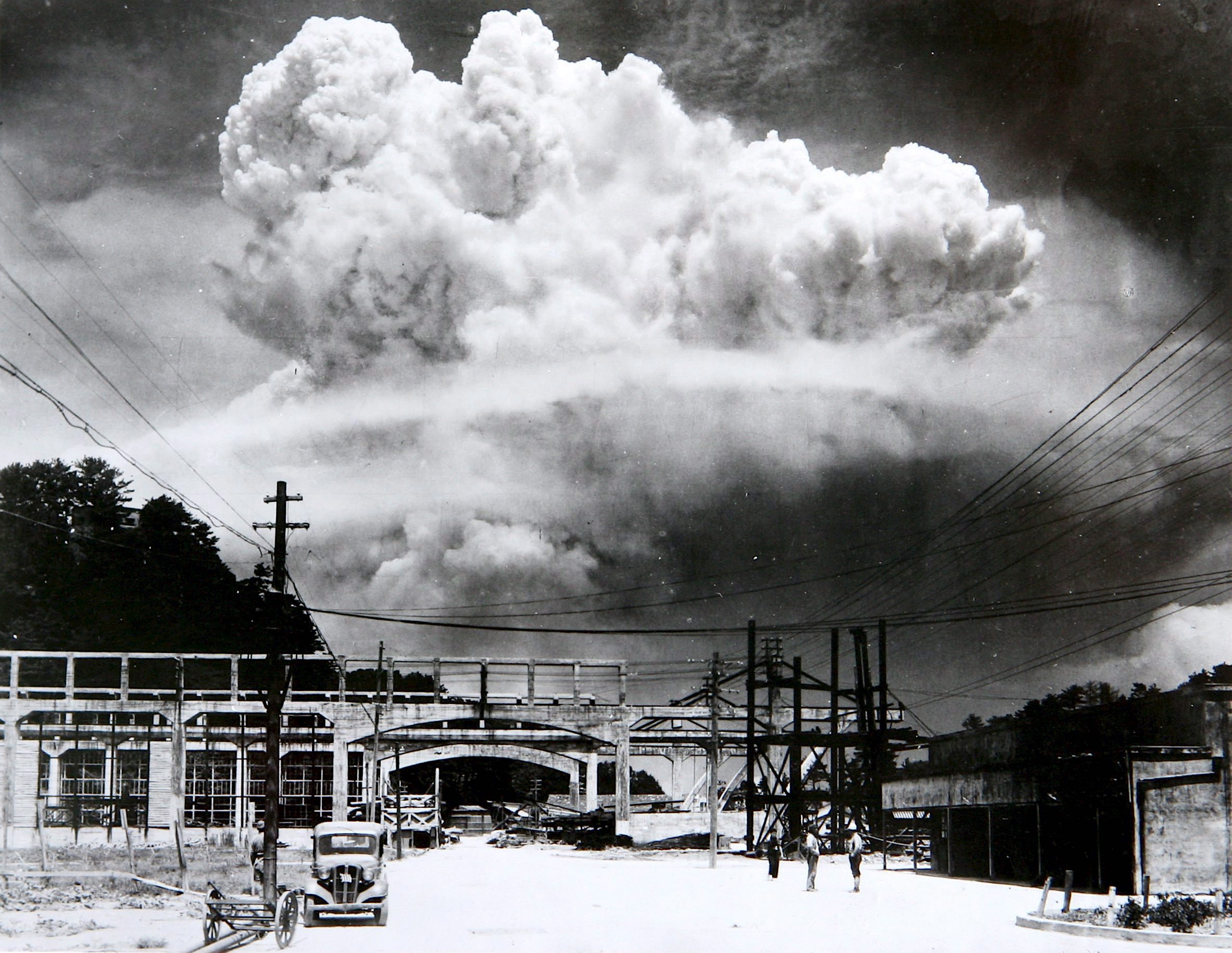
Extreme example of lack of proportionality with intent: The bombing of Nagasaki as seen from the town of Koyagi, about 13 km south. (Hiromichi Matsuda/Wikimedia Commons)
Each of the crimes listed above consist of two elements, each of which must be proved as a matter of law, before the accusation of a war crime can be cognizable. These are the physical element, or actus reaus, namely the act itself, and the mental element, or mens rea, which constitutes specific intent, or dolus specialis, to commit the act in question.
Even if you can prove the physical element of an alleged crime, such as the bombing of a hospital or apartment complex, unless one can prove the actual intent behind the attack (i.e., not just directing attacks against a civilian population, but rather intentionally directing these attacks), no crime has been committed.
One of the main mitigating circumstances against most alleged war crimes is the principle of “military necessity.” Take, for example, the act of bombing a hospital. If a bomb strikes a hospital, one has established de facto actus reas. Now, let’s say there exists a written order from a commander to a pilot ordering the pilot to bomb the hospital in question—dolus specialis has now been established, and a war crime has been committed.
Not so fast.
While the law of war prohibits direct attacks against civilian targets, such as housing, schools, and hospitals, as the International Committee of the Red Cross makes clear, “a hospital or school may become a legitimate military target if it contributes to specific military operations of the enemy and if its destruction offers a definite military advantage for the attacking side,” or if it is “being used as a base from which to launch an attack, as a weapons depot, or to hide healthy soldiers/fighters.”
Herein lies the rub. “Increasingly,” a recent article published in The Washinton Post noted, “Ukrainians are confronting an uncomfortable truth: The military’s understandable impulse to defend against Russian attacks could be putting civilians in the crosshairs. Virtually every neighborhood in most cities has become militarized, some more than others, making them potential targets for Russian forces trying to take out Ukrainian defenses.”
Moreover, “Ukraine’s strategy of placing heavy military equipment and other fortifications in civilian zones could weaken Western and Ukrainian efforts to hold Russia legally culpable for possible war crimes.”
Who is Guilty?
The bottom line is that if Russia has intelligence that Ukraine is using an otherwise protected civilian target for military purposes, and if a decision is made to attack the target using force deemed proportional to the threat, then no war crime has been committed.
Indeed, given what The Washington Post has documented, it appears that it is Ukraine, not Russia, which is committing war crimes. According to Richard Weir, a researcher in Human Rights Watch’s crisis and conflict division quoted in the Post article, the Ukrainian military has “a responsibility under international law” to either remove their forces and equipment from civilian areas, or to move the civilian population from the areas where military personnel and equipment are being stored.
“If they don’t do that,” Weir said, “that is a violation of the laws of war. Because what they are doing is they are putting civilians at risk. Because all that military equipment are legitimate targets.”
The bottom line is that while the Ukrainian government, American politicians, and human rights groups can make allegations of war crimes by Russia in Ukraine, proving these allegations is a much more difficult task.
Moreover, it appears that, upon closer examination, the accuser (at least when it comes to the Ukrainian government) might become the accused should any thorough investigation of the alleged events occur.
If the Ukrainian government contends that specific sites struck by Russia fall into a protected category, and that by attacking them Russia has committed a war crime, then it must be assumed that any undertaking by Ukraine to place military personnel and equipment in the vicinity of these targets constitutes “an intentional co-location of military objectives and civilians or persons hors de combat with the specific intent of trying to prevent the targeting of those military objectives.”
That is the legal definition of a human shield, which is in and of itself a violation of the laws of war.
Scott Ritter is a former U.S. Marine Corps intelligence officer who served in the former Soviet Union implementing arms control treaties, in the Persian Gulf during Operation Desert Storm and in Iraq overseeing the disarmament of WMD.
Pakistani PM commends India
Samizdat | April 2, 2022
Pakistani Prime Minister Imran Khan has complimented regional rival India for maintaining an “independent foreign policy” amid US and allied pressure to adopt a harsher stance toward Russia.
Speaking Friday after accusing Washington of “interference” in Pakistan’s internal affairs, Khan went on to praise New Delhi’s unwillingness to go along with a barrage of sanctions and economic restrictions against Moscow.
“They protect their independent foreign policy which is centered on its people,” he said, as cited by local media. “No country is respected unless it stands on its own two feet.”
Facing a no-confidence vote on Sunday after losing his parliamentary majority following multiple defections from his party, Khan’s remark was quickly denounced by political opponents, with the leader of the opposition National Assembly, Shehbaz Sharif, blasting him for talking up the policy approach of Pakistan’s top adversary.
“His recurring praise for [Indian Prime Minister] Narendra Modi’s foreign policy is an insult to the sacrifices of valiant Kashmiris braving Hindutva,” he tweeted, referring to a Muslim-majority population in northern India and a form of Hindu nationalism. “Among other things, the damage done to our foreign policy is incalculable,” Sharif added.
Khan, however, quickly shot back, saying that his rivals believe his “statements will anger America” and that “Pakistan cannot survive without its support.”
“They [the United States] order us. They say that if the no-confidence motion does not become successful, there will be consequences for Pakistan,” the PM went on, arguing that his administration will not join the “bloc politics to achieve the same objectives” against Russia.
The Pakistani leader previously said a “foreign country” was seeking to remove him from office and is driving the no-confidence vote, openly naming that nation as “America,” ostensibly by accident, during a televised address on Thursday. The government also summoned the acting US envoy in Islamabad over the alleged political meddling on Friday, which it denounced as “blatant interference.”
Khan previously praised India’s “independent” policy in late March, stating that his own country, like New Delhi, would not “bow” to Western pressure to join the sanctions spree against Moscow. Despite international pressure and criticism for staying neutral, India adopted a pragmatic approach and continued purchasing Russian oil, even at a discount, to ensure the country’s own energy security.
Post office social media surveillance program found to be illegal
By Christina Maas | Reclaim The Net | April 1, 2022
A review conducted by the Postal Service Office of Inspector General found that the Postal Service surveillance program iCOP exceeded its legal authority by surveilling Americans during protests between 2018 and 2021.
In 2021, Yahoo News reported the existence of the secret program, prompting outrage from lawmakers and constitutional experts who noted the program operated without oversight from Congress. Soon after the Yahoo News’ report, Congress requested the Inspector General’s office to launch an investigation into iCOP (Internet Covert Operations Program).
“We determined that certain proactive searches iCOP conducted using an open-source intelligence tool from February to April 2021 exceeded the Postal Inspection Service’s law enforcement authority,” the March 25, 2022, Inspector General report stated.
“Furthermore, we could not corroborate whether other work analysts completed from October 2018 through June 2021 was legally authorized.”
According to Yahoo News, iCOP used sophisticated technology, including facial recognition, to compile reports on protesters. It ran keywords searches for terms such as “protest” on online platforms to collect speech about protests that had nothing to do with the Postal Service’s work.
The House Oversight Committee chair, Rep. Carolyn Maloney said the Inspector General report proves there was cause for concern over iCOP’s activities.
“The Oversight Committee requested this report because of our significant concerns about intelligence activities conducted by the Postal Service Inspection Service’s analytics team related to First Amendment activity,” Maloney said in a statement to Yahoo News. “The Inspector General’s audit makes clear that the committee’s concerns were justified, and that the use of open-source intelligence by the analytics team ‘exceeded the Postal Inspection Service’s law enforcement authority.’”
The report concluded that the Postal Service exceeded its legal authority in monitoring protesters, and stressed iCOP’s activities should have a “postal nexus.”
“However, the keywords used for iCOP in the proactive searches did not include any terms with a postal nexus. Further, the postal nexus was not documented in 122 requests and 18 reports due to a lack of requirements in the program’s procedures. These issues occurred because management did not involve the Postal Inspection Service’s Office of Counsel in developing iCOP or its procedures.”
UK Sleepwalking Into Food Crisis As Fresh Produce Set To Vanish From Supermarkets
By Tyler Durden | Zero Hedge | April 1, 2022
The National Farmers’ Union has warned the UK is sleepwalking into a food security crisis. Soaring energy and fertilizer costs have led to an unprecedented situation where growers’ margins have collapsed, forcing many to halt growing operations.
Reuters says because of the inclement weather in the UK. Farmers grow cumbers, plant peppers, aubergines, and tomatoes in vast greenhouses. Greenhouses use natural gas for heat, but after last year’s surge in gas prices exacerbated by Russia’s invasion of Ukraine last month, the crops have become uneconomical to produce.
Trade body British Growers said the average cost to produce a cucumber in Britain before the energy crisis was around 25 pence, which is now more than doubled and set to hit 70 pence when higher energy prices fully kick in.
“Gas prices being so sky-high, it’s a worrying time,” grower Tony Montalbano said.
“All the years of us working hard to get to where we are, and then one year it could just all finish,” Montalbano said.
He noted his 30,000 square meters of glasshouses at Green Acre Salads business, which supplies major supermarkets such as Tesco, Sainsbury’s, and Morrisons, are shuttered because costs outpace market prices. In fact, the farmer would be losing money if he were to grow.
Compared with this time last year, European gas prices are up a mindboggling 500%.

Fertilizer prices have tripled since last year, along with soaring prices for packaging, diesel, freight, labor, and everything related to running a grow operation.
“We are now in an unprecedented situation where the cost increases have far outstripped a grower’s ability to do anything about them,” said Jack Ward, head of British Growers.
With many greenhouses offline, this will inevitably push down the output of produce for supermarkets and result in persistent and or even higher food inflation when overall inflation is at historic levels.
To give an idea of just how bad the situation is, the Valley Growers Association, whose members produce about 75% of Britain’s cucumber and sweet pepper crop, said 90% of farmers didn’t plant in January. Others said they would not grow with elevated gas prices.
“There’s definitely going to be a lack of British produce in the supermarkets,” association secretary Lee Stiles said. “Whether there’s a lack of produce overall depends on where and how far away the retailers are prepared to source it from.”
The UK could increase imports of produce, but countries worldwide are implementing protectionism measures to keep farm goods domestically to mitigate shortages due to the Ukraine conflict disrupting the global food supply.
Like many other countries worldwide, the UK is sleepwalking into a food crisis.
Featured Video

Iranians Want Revenge /Sulaiman Ahmed
or go to
Aletho News Archives – Video-Images
From the Archives
Are There 50,000 ‘Israeli-born’ Individuals Living in the UK?
By Professor David Miller | August 18, 2026
Recent disclosures by the Zionist regime show that some 2,069 British nationals were serving in the IDF as of March 2025, according to Freedom of Information (FoI) requests submitted to the occupation forces (1,686 dual British-Israeli, plus 383 multinational). We cannot tell from the figures how many of these were already settler colonists and intend to stay in the colony, and how many will return or have returned to the UK. Presumably, those returning to the UK will number far fewer than 2,000, since many are known to have become permanently residents of the colony.
Additionally, the IDF figures only provide a snapshot, and do not tell us how many have served in the Jewish supremacist military either before or after March 2025. One way into the question of how many genocidaires are living in Britain is to ask how many current British residents were born in the Zionist colony. There is data on that, as we shall see. … continue
Blog Roll
 Aletho News
- Iranians Want Revenge /Sulaiman Ahmed
- ‘Israel’ bombs Nasser Medical Complex in Khan Younis, killing 5
- The beginning of the end: Israel at the heart of America’s political civil war
- US-Israeli war on Iran cost Persian Gulf states nearly $1T in damage, lost growth: Report
- Congress probe could put ‘Israel’ in dock over Iran war: Israeli media
- Spanish public prosecutor backs US demand to extradite pro-Palestine philanthropist Fergie Chambers
- Zelensky spent over 740 days outside Ukraine while West serves as his real home
- Indian captain of Russian ‘shadow fleet’ tanker faces 10-year jail term in UK
- Europe, US face higher heating bills amid Iran war fallout
- The Leak That Arrived Right on Cue
- If Americans Knew
- These Democrats Are Bringing a Christian Case Against Israel’s War to Congress
- Netanyahu calling Trump ‘every day’ to push for renewed war on Iran
- What will big wins by Democrats actually mean for Palestine?
- What is Section 219 of the US defense bill, and what would it mean for Israel?
- Hegseth dodges impeachment after using troops and vets for cover
- Israel Bombs Lebanon’s Churches
- Israel Targets U.S. Conservatives in New Influence Operation
- Declassified FBI Files Reveal Early U.S. Counterintelligence Probe into Israeli Espionage and Smuggling Networks
- Israelis perpetrated 1,182 arson attacks in the West Bank in past 3 years
- DAILY UPDATE: Latest essential news on Palestine, Israel, & region
- No Tricks Zone
- German Authorities Start Initiative To Evaluate Public Register For Climate “Disinformation” Spreaders!
- Zonal Asymmetry of Temperature Change in the Antarctic Circumpolar Current
- New Study: The Net Fossil Fuel Contribution To Rising Atmospheric CO2 Has Been Zero For 500 Years
- Germany’s Green Energy Transition Becoming Increasingly Expensive…Another 6 Trillion Euros!
- Sudden Stratospheric Warming, Powerful El Niño Combination May Lead To Extreme Europe Cold, Energy Crisis!
- Two New Studies Find Thwaites Glacier Melt Cannot Be Driven By Human Activity Or A Warming Ocean
- E-Cars Reduce CO2 Emissions By Only 41% Compared To Internal Combustion Engine Vehicles
- Predictions Made By Renowned Climate Professor Over Past Decades Have Been Proven To Be Poor
- New Study Suggests Large Regions Of The Pacific Ocean Have Been Cooling For The Last 80 Years
- Germany’s Green Energy Debacle: High Energy Costs Force Kahla Porzellan to Close After 182 Years!

