Will US continue to further implement RAND Corporation’s strategy in relation to Russia?
By Lucas Leiroz | October 27, 2020
The recent conflicts in the Russian zone of influence have attracted attention around the world. But little has been said about the possibility that such conflicts are part of a single common plan, designed to geopolitically destabilize Russia. This possibility is what we can deduce when we recall some recent writings of the renowned think tank RAND Corporation, which, in 2019, openly defended the adoption of a series of measures to weaken Moscow, exploiting its vulnerabilities. Among such measures in the economic sphere the document proposed the manipulation of oil and gas prices that affect the Russian defense budget, as well as the imposition of increasingly rigid sanctions and in the political sphere – the spread of regional conflicts in its “periphery” which could perfectly include Nagorno-Karabakh, Kyrgyzstan and others.
Several of the points highlighted in the RAND’s document entitled “Overextending and Unbalancing Russia”, in its more than 350 pages, have been implemented so far, especially in the “immediate periphery”. The recent Belarusian political crisis itself, for example, highlights the role of external agents interested in the destabilization of this historic Russian ally – something that is openly defended in such a document which proposes a colorful revolution in Belarus. In addition, the incitement of conflicts in the Caucasus and Central Asia, the deterioration of the Syrian and Ukrainian situations, among others, are also strategic points raised by the dossier.
RAND’s goal is to define the areas where the US can compete most effectively, providing reports and proposals based on concrete data. Such reports must accurately define the vulnerabilities in the economic and military spheres of each nation against which the United States is competing, helping Washington to create its strategies. Several of the policies adopted by the US are the result of advices from RAND’s analysts. In this sense, RAND’s analysis about Russia and its draft strategy for a competition between the US and Russia today proposes that the best way to weaken Moscow is through a siege of conflicts in its territorial proximities. Obviously, it is not proposed to attack Russia, but to create wars along its entire border, destabilizing international security in the region – a scenario from which many other possibilities arise.
Despite all the complex political and military strategy, in the RAND document it is highlighted that the biggest Russian weakness in a dispute with the US is the economic issue. The think tank’s proposal focuses on heavy investment in energy production, mainly renewable energy, as well as encouraging domestic production of such energy sources in countries allied to the US, with the aim of reducing Russian exports – which would strongly affect Russian defense budgets. The central role of the US in the boycott against the construction of the Nord Stream 2 pipeline is a clear example of how such strategies are being put into practice.
Another type of measures that RAND recommends is in the ideological and informational spheres. The Corporation advises a vigorous pro-Western information campaign aimed at highlighting aspects allegedly present in the Russian regime, such as endemic corruption. In any case, RAND considers this disinformation strategy to be “risky”, as it would encourage Moscow to highlight the weaknesses of Western democracies, leading to a new ideological war through disinformation campaigns.
Interestingly, Russia is constantly accused of interfering in the American electoral process through campaigns of disinformation and cyber war since the rise of Donald Trump four years ago. Now, with the new elections, the tendency is for such accusations to grow exponentially, showing a strategy of mass disinformation meticulously planned by strategists with clear goals.
In fact, there is no doubt about the power of influence of RAND Corporation’s analysis in the construction of US foreign policy strategies. The siege that is being proposed in the document gradually materializes, with strategies of economic suffocation, disinformation and inciting regional conflicts, but it remains to be seen what the consequences for the US domestic scenario will be. The RAND report had no way of predicting the emergence of a global tragedy such as the new coronavirus pandemic. In the context of more than 220,000 deaths due to the virus in the US, popular rebellions and inflamed racial tensions across the country and in the midst of a decisive electoral process, will Washington be able to maintain such a siege strategy? Is it sustainable for the US to stir up conflict in the vicinity of Russia when its internal bases are crumbling?
Perhaps the strategies designed by RAND last year are absolutely useless today. The pandemic structurally changed the dynamics of world geopolitics and currently the idea of an American siege against Russia is not conceivable. The tendency is that all conflicts will diminish as no major military power will intervene. The situation in Nagorno-Karabakh shows how the tendency is for conflicts to gradually stabilize. On the contrary, within the US, everything just tends to get worse. Perhaps Washington is taking a step beyond its reach. Or perhaps the interests of strategists at RAND Corporation and the American Deep State do not exactly imply what is best for the US.
Lucas Leiroz is a research fellow in international law at the Federal University of Rio de Janeiro.
The Anniversary of Gaddafi’s Death and the Current Reality in Libya
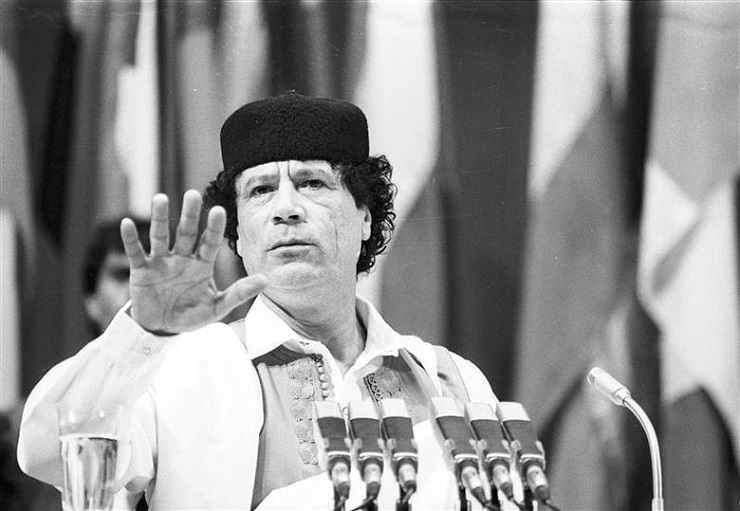
By Yuriy Zinin – New Eastern Outlook – 26.10.2020
“Security problems, political discord, oil blockades, corruption, and Libya’s foreign debt, which has reached 270% of its GDP, all torpedo economic life,” said Central Bank of Libya governor Sadiq al-Kabir. Oil revenues in Libya have plummeted, from $53 billion in 2012 to near zero this year, he added.
These words, spoken on the eve of another anniversary of the assassination of Libyan leader M. Gaddafi on October 20, 2011, do in fact serve to illustrate what the country has come to over the past nine years of its history, since the collapse of the previous regime.
Having come to rule with massive outside support from NATO, the new forces, although they inherited huge financial reserves and the potential following the era of the previous leader, became dependent on the various militias that brought them to power. Along with that, these “brothers-in-arms” soon turned into implacable enemies. The country fell into an abyss of civil strife and, since the summer of 2014, has been divided into two military and political camps, with one pole of power in Tripoli and the other in Tobruk. Because of this turmoil, Libya’s development has come to a standstill, and GDP is dropping. In comparison with previous times, it has slid backwards in many respects.
The oil sector has become hostage to conflicts in society, a source of funding for diverse groups that act in opposition to national interests. However, there is plainly a growing shadow economy, flourishing of currency fraud, the smuggling of goods, illegal emigrants, etc.
The dependence of the Libyan authorities on external forces, both regionally and globally, has increased. At the same time, the intra-Libyan conflict does not have a clearly defined bloc “tutelage”. The aspirations of the “stakeholder forces” have many different thrusts. Their desire to resolve their differences by taking to the Libyan field is often seen, and that, among other things, is fraught with the likelihood of collisions occurring between them.
Since 2015, the UN has been initiating efforts to reconcile the opposing poles in Libya. Delegates from the warring parties participate nonstop in different series of negotiations, sometimes under the auspices of the UN, sometimes hosted by major powers, or as part of the efforts put forth by various neighboring states and the African Union. These kinds of conferences and meetings, including those between the leaders of the two camps, were held in no less than a dozen cities on three continents, including Moscow.
The efforts by various mediators have not turned the tide, or yielded any decisive results. No new constitution has been adopted, and no presidential elections, or elections for a new parliament have been held.
It is encouraging that so far the opposing sides have been honoring the decision they made on August 21 this year for a ceasefire. A number of local and foreign observers have pinned their hopes on three tracks for the negotiation process, all of which are now going on simultaneously.
For example, at talks in the Moroccan city of Bouznika under the auspices of the UN Support Mission in Libya, they reached “a mutual understanding on the transparency of the standards and mechanisms” used to allocate key positions in the government, and throughout other echelons.
In the Swiss city of Montreux, the participants agreed that for the duration of a comprehensive resolution of the intra-Libyan crisis, Sirte, which effectively divides the North African country, will become the seat of the executive and legislative bodies.
In the Egyptian city of Hurghada, Libyan representatives talked about building on the peaceful respite, and restructuring the armed forces.
Libyan experts note that there is a long distance between the decisions that were announced, and the mutual understanding that was reached, to realizing them. From circles close to the governing bodies and military authorities in Tripoli and Tobruk, criticism is spilling forth about the agreements that are progressing on these tracks.
At the same time, it cannot be said that there is absolutely no ground for agreements or compromises. First, the balance of power in Libya does not allow either of the two poles to achieve final victory by military means.
Second, Libya today is divided by the parties into peculiar areas of responsibility, but along with that none of them is economically self-sufficient. For example, most of the fields, pipelines, and oil terminals are in the sphere of influence of the authorities in Tobruk. But normal operations for the entire economic infrastructure under its control are impossible without interacting with the other component present in the Libyan conflict. In matters concerning producing oil, selling it, and earning revenue from it, the key role is still played by the state acting as a rentier, and in which economics and politics are fused in a union of marriage.
These issues for the opposing sides can serve as a starting point for moving towards each other. Among everything else, the Libyan public is putting pressure on top officials. In August this year in Tripoli and Benghazi, the largest cities for both poles of power, there were demonstrations by residents who were tired of political instability and socioeconomic hardship.
Libya since the fall of Gaddafi represents a tragic example of how a country that used to be stable, and which is rich in oil reserves, can be bled dry not only by outside intervention, but from internal conflict as well.
Yury Zinin is a Leading Research Fellow at the Moscow State Institute of International Relations.
Britain’s Labour Party reprimands MP for occupation ‘crime’ comment
MEMO | October 26, 2020
Labour Party MP Stephen Kinnock has reportedly been given a “dressing down” after saying that profiting from illegal settlements in the Israeli-occupied West Bank is “tantamount to profiting from the proceeds of crime.”
Party leader Keir Starmer was said to be furious at Kinnock’s impassioned speech calling for international law to be upheld. Complaints were made by various pro-Israel groups, including the Board of Deputies of British Jews, who raised concerns with Shadow Foreign Secretary Lisa Nandy and demanded “clarification”.
Kinnock made his speech in the House of Commons on 24 September, raising concerns about the increasing number and size of Israeli settlements built on Palestinian land. All of Israel’s settlements, official and “outposts”, are illegal under international law.
“The Government must ban all products that originate from Israeli settlements in the occupied territories,” insisted Kinnock, the son of former Labour leader Neil Kinnock. “Profiting from such products is tantamount to profiting from the proceeds of crime, and it must stop. When we trade with these settlements, we are essentially telling the world that international law does not matter, and such trade legitimises and facilitates the existence and expansion of the settlements.”
He went on to criticise the “deal of the century”: “President [Donald] Trump and Prime Minister [Benjamin] Netanyahu have come forward with their so-called deal of the century. This is not a deal. It is not a plan. It is not even a starting point for talks. It is a proposal that is fundamentally flawed because it has no basis in law. It is a land and power grab that would mean Israel seizing around 40 per cent of the West Bank, with full military and security control over the Palestinian people and their resources.”
Starmer previously sacked left-leaning socialist MP Rebecca Long-Bailey for sharing an interview on social media with actress Maxine Peake in which she spoke about the Israeli Army’s role in training American police forces. Peake’s comments in the wake of the George Floyd murder were deemed to be “anti-Semitic” by the Labour hierarchy, despite it being a fact that Israel has trained hundreds of US police officers on restraint and other techniques.
Chile vote is a blow to corporate Canada and Trudeau
By Yves Engler · October 26, 2020
With Chileans voting overwhelming to rewrite the country’s Pinochet era constitution it’s a good moment to reflect on Ottawa’s support for his coup against Salvador Allende. It’s also worth looking at Canadian companies’ opposition to the popular uprising that lead to the referendum on reforming the dictatorship’s neoliberal constitution.
On Sunday nearly 8 in 10 Chileans voted to rewrite the country’s Augusto Pinochet era constitution. The vote was the culmination of months of antigovernment protests that began against a hike in transit fares last October and morphed into a broader challenge to economic inequality and other injustices. The dictatorship’s constitution entrenches pro-capitalist policies and was widely seen as contributing to the country’s large economic divide.
The Pierre Trudeau government was hostile to Allende’s elected government and predisposed to supporting Pinochet’s dictatorship. Days after the September 11 1973 coup against Allende, Andrew Ross, Canada’s ambassador to Chile cabled External Affairs: “Reprisals and searches have created panic atmosphere affecting particularly expatriates including the riffraff of the Latin American Left to whom Allende gave asylum … the country has been on a prolonged political binge under the elected Allende government and the junta has assumed the probably thankless task of sobering Chile up.” Thousands were incarcerated, tortured and killed in “sobering Chile up”.
Within three weeks of the coup, Canada recognized Pinochet’s military junta. Diplomatic support for Pinochet led to economic assistance. Just after the coup Canada voted for a $22 million Inter American Development Bank loan “rushed through the bank with embarrassing haste.” Ottawa immediately endorsed sending $95 million from the International Monetary Fund to Chile and supported renegotiating the country’s debt held by the Paris Club. After refusing to provide credits to the elected government, on October 2nd, 1973, Export Development Canada announced it was granting $5 million in credit to Chile’s central bank to purchase six Twin Otter aircraft from De Havilland, which could carry troops to and from short makeshift strips.
By 1978, Canadian support for the coup d’etat was significant. It included:
- Support for $810 million in multilateral loans with Canada’s share amounting to about $40 million.
- Five EDC facilities worth between $15 and $30 million.
- Two Canadian debt re-schedulings for Chile, equivalent to additional loans of approximately $5 million.
- Twenty loans by Canadian chartered banks worth more than $100 million, including a 1977 loan by Toronto Dominion to DINA (Pinochet’s secret police) to purchase equipment.
- Direct investments by Canadian companies valued at nearly $1 billion.
Prominent Canadian capitalists such as Peter Munk and Conrad Black were supporters of Pinochet.
When the recent protests began against billionaire president Sebastián Piñera in October, Trudeau supported the embattled right-wing leader. Two weeks into massive demonstrations against Piñera’s government, the PM held a phone conversation with the Chilean president who had a 14% approval rating. According to Amnesty International, 19 people had already died and dozens more were seriously injured in protests. A couple thousand were also arrested by a government that declared martial law and sent the army onto the streets for the first time since Pinochet. A Canadian Press story on the conversation noted, “a summary from the Prime Minister’s Office of Trudeau’s phone call with Pinera made no direct mention of the ongoing turmoil in Chile, a thriving country with which Canada has negotiated a free trade agreement.”
Rather than express concern about state-backed repression in Chile, the Prime Minister criticized “election irregularities in Bolivia” during his October conversation with Piñera. The false claims of “election irregularities” were then being used to justify ousting leftist indigenous president Evo Morales.
Amidst the massive demonstrations against Piñera in October, Trudeau also discussed Venezuela. In another phone conversation with Piñera two months ago Trudeau again raised “the situation in Venezuela”, according to the official readout, as he did in February 2018 and previously.
Chile is the top destination for Canadian investment in Latin America at over $20 billion. Over 50% of Chile’s large mining industry is Canadian owned and Canadian firms are major players in the country’s infrastructure. Scotiabank is one of the country’s biggest banks.
A number of stories highlighted Scotiabank’s concerns about the protests against inequality that ultimately lead to Sunday’s constitutional referendum. The Financial Post noted, “Scotiabank’s strategic foray into Latin America hits a snag with Chile unrest” and “Riots, state of emergency in Chile force Scotiabank to postpone investor day.” The CEO of the world’s 40th largest bank blamed the protests on an “intelligence breakdown” with people outside Chile “that came in with an intention of creating havoc.” In a January story titled “Why Brian Porter is doubling down on Scotiabank’s Latin American expansion”, he told the Financial Post that Twitter accounts tied to Russia sparked the unrest against Piñera!
Canadian companies, with Ottawa’s support, have led a number of environmentally and socially destructive projects in Chile. In the mid 2000s Toronto-based Brookfield Asset Management led a consortium, with US $700 million invested by the Canadian Pension Plan and British Columbia Investment Management Corporation, pushing to build a massive power line and dams in Chile’s Patagonia region, one of the planet’s greatest environmental treasures. “This kind of project could never be implemented in a full-fledged democracy,” explained Juan Pablo Orrego, a prominent Chilean environmentalist, to the Georgia Straight. “Our country is still under a constitutional, political, and financial checkmate to democracy which was put in place during the [Pinochet] military dictatorship and empowers the private sector.”
Sunday’s referendum is a blow to Canadian corporations operating in Chile and the Trudeau government’s alliance with right-wing governments in the Hemisphere.
‘Pseudo-expert’: College dropout billionaire Bill Gates attacks Trump adviser Dr. Scott Atlas over Covid-19 stance
RT | October 26, 2020
Self-styled Covid-19 authority and Microsoft billionaire Bill Gates has weaponized media demands to “trust the science” to tear into Trump adviser (and actual medical doctor) Scott Atlas for not backing stricter Covid policies.
“We now have a pseudo-expert advising the president,” Gates snarled during an interview at Yahoo Finance’s All Markets Summit on Monday, denouncing Atlas – who, unlike the billionaire software tycoon, completed both college and medical school – as an “off the rails” bad influence on the Trump administration.
“The most malign thing is where you start to attack your own experts and suggest that maybe politicians know better than disease experts,” Gates continued. The billionaire is neither a politician nor a medical doctor, despite the vast sums he has spent through his Bill and Melinda Gates Foundation and its affiliates in an effort to vaccinate the developing world. Atlas, on the other hand, has a medical degree from the University of Chicago and has taught healthcare policy at Stanford University’s Hoover Institute.
While Gates’s words might seem to apply to his own denunciation of Atlas, the billionaire meant them as a condemnation of the Trump administration over its alleged line-by-line tweaks to health guidelines issued by the Centers for Disease Control and Prevention in May. He has bemoaned the “politicization” of both the CDC and the Food and Drug Administration (FDA) for months, blaming the White House for both their loss of public trust and unspecified yet “very unfortunate” setbacks to the rollout of a Covid-19 vaccine.
However, medical experts have insisted for years that both institutions were co-opted long ago by the pharmaceutical industry, of which Gates is both a significant funder and a well-remunerated beneficiary.
Yahoo (and other media organizations, many of which have received and avoided disclosing funding from Gates’ foundations) have almost universally backed the avuncular software tycoon in his dispute with Atlas, suggesting it is the trained medical expert who stepped out of his place in dissenting from prevailing orthodoxy. Forbes even called Atlas a “bad scientist” for not deferring to Gates’ favorite expert, US corona czar Dr. Anthony Fauci.
Atlas has long been seen as a thorn in the side of Gates and his ideological cheerleaders for his refusal to toe the lockdown line, however. A tweet “falsely” downplaying the effectiveness of masks and an article warning the US’ pandemic-related economic shutdowns will have lasting consequences far worse than the deaths thus far attributed to the virus have been held up as proof Atlas knows not of what he speaks – even as experts in other countries have echoed his economic concerns and the science remains far from settled on masks.
Since the beginning of the Covid-19 pandemic, Gates has been hailed by the media as a venerable expert on viral outbreaks for a 2015 Ted Talk in which he bemoaned the lack of epidemic preparedness among the world’s governments. However, Gates was far from the only person to predict a pandemic (or the societal upheaval it would trigger).
The Rockefeller Foundation, along with the Global Business Network, predicted in a 2010 “scenario” that a devastating viral outbreak would bring about an authoritarian crackdown, devastating entire industries while making totalitarianism palatable to the populations of previously democratic countries. And Fauci himself predicted in 2017 that Trump’s administration would be faced with a deadly pandemic it was unprepared for. The US military and private sector partners have also run several simulations of major pandemics, each time finding (yet never doing much to fix) that the government is woefully unprepared.
WHO Taps ‘Anti-Conspiracy’ Crusader to Sway Public Opinion on COVID Vaccine
By Jeremy Loffredo | Children’s Health Defense | October 23, 2020
An outspoken proponent of government-led tactics to influence public opinion on policy and to undermine the credibility of “conspiracy theorists” will lead the World Health Organization’s (WHO) efforts to encourage public acceptance of a COVID-19 vaccine, Children’s Health Defense has learned.
Last week, WHO’s general director, Dr. Tedros Ghebreyesus, tweeted that he was glad to speak with the organization’s Technical Advisory Group (TAG) on Behavioural Insights and Sciences for Health to “discuss vaccine acceptance and uptake in the context of COVID-19.”
In his next tweet Ghebreyesus announced that Cass Sunstein, founder and director of the Program on Behavioral Economics and Public Policy at Harvard Law School, will chair the advisory group, which was created in July.
Sunstein was former President Barack Obama’s head of Office of Information and Regulatory Affairs where he was responsible for overseeing policies relating to information quality.
In 2008, Sunstein wrote a paper proposing that governments employ teams of covert agents to “cognitively infiltrate” online dissident groups and websites which advocate “false conspiracy theories” about the government. In the paper, Sunstein and his co-authors wrote:
“Our principal claim here involves the potential value of cognitive infiltration of extremist groups, designed to introduce informational diversity into such groups and to expose indefensible conspiracy theories as such.”
The government-led operations described in Sunstein’s paper would work to increase faith in government policy and policymakers and undermine the credibility of “conspiracists” who question their motives. They would also maintain a vigorous “counter misinformation establishment” to counter “conspiracy” groups opposed to government policies that aim to protect the common good.
Some of this would be accomplished by sending undercover agents, or government-paid third parties, into “online social networks or even real space groups.”
Sunstein also advocated in 2008 that the government pay “independent experts” to publicly advocate on the government’s behalf, whether on television or social media. He says this is effective because people don’t trust the government as much as they trust people they believe are “independent.”
WHO has already contracted the public relations firm, Hill + Knowlton. The PR giant, best known for its role in manufacturing false testimonies in support of the Gulf War, was hired by WHO to “ensure the science and public health credibility of the WHO in order to ensure WHO’s advice and guidance is followed.”
WHO paid Hill + Knowlton $135,000 to identify micro-influencers, macro-influencers and “hidden heroes” who could covertly promote WHO’s advice and messaging on social media, and also protect and promote the organization’s image as a COVID-19 authority.
There’s no evidence that WHO has yet implemented any “cognitive infiltration” policies similar to what Sunstein advocated in 2008. If the organization were to adopt such a strategy, and use it to convince hesitant populations to take a COVID vaccine, it would raise questions of legality.
As put forward in a report by the Congressional Research Service, illegal “publicity or propaganda” is defined by the U.S. Government Accountability Office (GAO) to mean either (1) self-aggrandizement by public officials; (2) purely partisan activity; or (3) “covert propaganda.” By covert propaganda, GAO means information which originates from the government but is unattributed and made to appear as though it came from a third party.
Because WHO is a multinational organization and not a U.S. Government agency, covert “cognitive infiltration” policies could fall into a gray area, or even be considered legal.
Dr. Margaret Chan, former general-director of WHO, once stated that the organization’s policies are “driven by what [she called] donor interests.”
According to a 2012 article in Foreign Affairs, “few policy initiatives or normative standards set by the WHO are announced before they have been casually, unofficially vetted by Gates Foundation staff.” Or, as other sources told Politico in 2017, “Gates’ priorities have become the WHO’s.”
WHO’s current general director, Ghebreyesus, was previously on the board of two organizations that Gates founded, provided seed money for and continues to fund to this day: GAVI, the Vaccine Alliance, a public–private global health partnership focused on increased access to vaccines in poor countries, and the Global Fund, which says it aims to accelerate the “development, production and equitable global access to safe, quality, effective, and affordable COVID-19 diagnostics, therapeutics and vaccines.”
If, as Politico put it, “Gates priorities have become the WHO’s,” and if WHO’s policies are driven by “donor interests,” this raises questions as to what online groups, people and websites would be targeted by such covert programs.
The idea of government agents carrying out psychological operations on social media is not far fetched. Earlier this year the head of editorial for Twitter’s Middle East and Africa office was outed as an active officer in the British Army’s psychological warfare unit, known as the 77th brigade, which specializes in online behavioral change operations.
© 2016-2020 Children’s Health Defense® • All rights Reserved
Maduro Says Venezuela Found 100% Effective Medicine Against COVID-19
Sputnik – 26.10.2020
CARACAS – The Venezuelan Scientific Research Institute (IVIC) discovered a medicine that contains molecule DR10 to combat COVID-19, Venezuela’s President Nicolas Maduro said on national channel Venezolana de Television, stating that the medicine can eliminate 100 percent of the coronavirus infection.
“Venezuela has created a medicine that eliminates 100 percent of the coronavirus, as the six-month studies by the Venezuelan Scientific Research Institute have demonstrated, and this study has been consequently certified by the experts,” Maduro said on Sunday.
Maduro added that the molecule that eliminates COVID-19 is DR10, which is already used in the treatment of such diseases as hepatitis C, Ebola and human papilloma.
Maduro hopes that the World Health Organisation (WHO) will ratify the results obtained by the IVIC and Venezuela will be able to prepare the mass production of this molecule as a cure for COVID-19 and provide it worldwide with the necessary international collaboration.
Since the beginning of the pandemic, Venezuela has registered 89,565 positive cases, including 83,947 patients who have recovered and 773 people who died.
Bolivian court drops ‘terrorism’ charges against ex-President Evo Morales, withdraws arrest warrant
RT | October 26, 2020
Bolivia’s regional court in La Paz has dismissed “terrorism” charges and dropped the arrest warrant issued against former President Evo Morales, arguing that his rights were violated and judicial procedures breached.
The ex-president’s rights, including his right for judicial protection, have been violated, Judge Jorge Quino, the head of the Departmental Court of Justice in La Paz, said as he explained the court’s decision to grant a request filed by Morales’ lawyers.
He also said that judicial procedures were violated in this case since Morales was not properly summoned. The charges were dropped as the prosecutors did not comply with the procedures established by law, Quino told Bolivia’s Unitel TV Network.
The ruling does not mean though that the currently exiled former president, who was indicted for inciting riots and “terrorism” in the wake of his ousting last year, can safely return home just yet. The decision is yet to be approved by the nation’s Plurinational Constitutional Court which can still reverse it.
An arrest warrant against Morales was issued by the Bolivian prosecutor general back in December 2019 under a ‘provisional’ government formed in the wake of a coup. The interim government, led by right-wing Senator Jeanine Anez, argued that his calls for protest amounted to “sedition and terrorism,” and vowed to jail the ex-president “for the rest of his life.”
Morales, who ruled the nation for 14 years, resigned from the presidency and went into hiding in November 2019, under pressure from the military. Earlier that month he was [falsely] accused of election fraud by the opposition after a controversial vote.
Following his resignation, Morales first traveled to Mexico and eventually arrived in Argentina where President Alberto Fernandez granted him political asylum.
Still, even in absence of its leader, Morales’ Movement Toward Socialism (MAS) party secured majorities in both chambers of the Bolivian parliament in the latest general elections held on October 18. Socialist Luis Arce, who served as an economy minister under Morales and was allegedly handpicked by the former leader as a presidential candidate, also won the vote, securing a landslide victory against his leading rival, Carlos Mesa.
Whoever wins the US presidency the pressure on Venezuela will continue: Scholar
Press TV | October 26, 2020
Whoever wins the presidency on November 3 election in the United States the pressure on Venezuela will continue, an American human rights expert and peace activist says.
Daniel Kovalik, who teaches international human rights at the University of Pittsburgh School of Law in the state of Pennsylvania, made the remarks in an interview with Press TV on Monday.
In Venezuela, many say US presidential candidates Donald Trump and Joe Biden represent the same threat against peace in the world, especially in Latin America. They believe whoever the winner is, the South American country will go on fighting against illegal US sanctions.
“In terms of Venezuela they’re certainly correct that whoever wins the presidency whether Joe Biden or Donald Trump the pressure on Venezuela will continue in the form of sanctions and other provocations,” Kovalik told Press TV on Monday.
“You have to remember in fact that it was Obama that began the sanctions regime against Venezuela when Joe Biden was Vice President,” he said.
“And in terms of resisting, it’s critical that Venezuela continue to resist this pressure and hold firm. I think it gives courage to other countries around the world like Iran, North Korea, Nicaragua, Cuba that are also under pressure by the US – pressure to change their governments,” he added.
“We see what happened in Bolivia recently with the election, which voted out the coup government after a year. And I think that’s given a lot of hope to people. So I, you know, Venezuela has to hold on tight, regardless of who wins the US election,” he concluded.
Venezuelans claim that US presidential election will not improve the foreign policy of the United States toward other nations, including those in Latin America, as this region is regarded by Washington as its political backyard.
Whether Republican Trump is re-elected or his Democratic rival Biden emerges victorious, Venezuelans affirm that the meddlesome and aggressive US policy against the Bolivarian Republic will not cease as both politicians belong to a political system that characterizes US imperialism. Venezuelans say Trump and Biden are the same in political terms.
Regarding the US sanctions, experts believe they won’t be lifted if Biden wins the Presidency. In spite of the US savage policies against Venezuela, people seem to be hopeful about a better future.
Observers say Democrats and Republicans in Washington have both led hostile policies against Latin American, Venezuelans say no matter who wins the US Presidency, the hostility will go on but Venezuelans won’t surrender.
Pompeo will not have his way in Sri Lanka
By P.K.Balachandran | Daily Express | October 25, 2020
Colombo – The US Secretary of State, Mike Pompeo, who will be here on October 28, is expected to ask Sri Lankan leaders, point blank, to review relations with China; consider the options US is offering; and accept American advice on domestic and foreign policy.
A top foreign ministry official told Daily Express on Sunday, that Lankan leaders, President Gotabaya Rajapaksa, Prime Minister Mahinda Rajapaksa and Foreign Minister Dinesh Gunawardena, will politely tell Pompeo that Sri Lanka’s decisions and policies will be guided by election mandates, the law and the constitution of the country, and its interests, while maintaining good relations with all countries in the region and the world.
“All the three leaders will tell the ranking US official politely that it is not for outsiders to tell Sri Lankans how to run their country,” the top Lankan official, who spoke on anonymity, said.
Pompeo is expected to press the government not to go in for Chinese-funded projects anymore but choose other countries and international organizations to fund projects mutually agreed upon.
The US Secretary of State will also press for the acceptance of the US$ 480 million Millennium Challenge Corporation Compact (MCC) which a Lankan Presidential Commission wanted to be either rejected in toto, or re-negotiated to accord with Lankan law, constitution and socio-political and economic realities.
The Lankan official said that the controversial issue of the Status of Forces Agreement (SOFA) will not come up for discussion because the government has made it clear that SOFA is against the Sri Lankan constitution and laws.
On the US bid to draw Sri Lanka into an anti-China alliance like Quad, the official said: “We would tell Pompeo that Sri Lanka, which has only recently emerged from a thirty-year war, does not want to be a theater of international conflict in any way. But it is interested in ensuring free navigation in the Indian and other oceans. Pompeo would be reminded that in 1971 Sri Lanka had pioneered the idea of turning the Indian Ocean into a Zone of Peace.”
On the American demand that Sri Lanka abjure Chinese investments, the leaders would say that Sri Lanka needs investments from all countries as it is keen on developing the country, especially in the infrastructure sector.
“All countries, including the US, are welcome to invest in Sri Lanka. If the US and others match China, their offers would be considered,” another foreign ministry official said.
However, given the fact that the US is primarily interested in geopolitical and military matters with a focus on isolating and weakening China in these spheres, it would not make any economic investment proposals. Pompeo would find it difficult to proceed further on this matter in his discussions here, it is felt.
“Debt Trap” Issue
“If he raises the debt trap issue, we have facts and figures to show that the debt to China is only 5.6 billion USD out of a total external debt of 55 billion USD (which is 10%). The US owes China much more – USD 1 trillion,” the official said.
Arm-Twisting
However, Pompeo could indulge in arm-twisting by threatening further sanctions against Chinese companies involved in Sri Lankan development projects. Some subsidiaries of the China Communications and Construction Company (one of which is executing the Colombo US$ 1.4 billion Colombo Port City) are already “listed” for alleged “predatory practices and lack of transparency”.
However, the Sri Lankans do not appear to be perturbed by such a possibility because listing has to be on solid grounds. And even if security issues are cited, it has to stand legal scrutiny in the US itself, the officials explained.
But the shoe might pinch if the US stops or lessens its imports of apparels from the island. The US buys about US$ 2.5 billion worth of Lankan apparels annually. This is 3% of the Lanka’s DGP and the US is the single largest market. But even stopping this is unlikely given the fact Lankan apparels enter the US market without GSP duty concessions.
Ethnic Reconciliation
As for Pompeo’s prescriptions on ethnic reconciliation, the Sri Lankan leaders will cite the mandates they got through the November 2019 Presidential and August 2020 parliamentary elections, which is that any solution to the ethnic question will have to be acceptable to the majority community in Sri Lanka and that reconciliation should be brought about by measures to develop the country economically in a way which benefits all communities equitably.
American Intentions Not A Secret
American intentions were made clear on October 22 by Dean Thompson, Principal Deputy Assistant Secretary of State for South and Central Asian Affairs at a press briefing. Thompson said that Pompeo will “encourage Sri Lanka to review the options we offer for transparent and sustainable economic development in contrast to discriminatory and opaque practices.”
“We urge Sri Lanka to make difficult but necessary decisions to secure its economic independence for long-term prosperity, and we stand ready to partner with Sri Lanka for its economic development and growth. The Secretary will also emphasize the ties between our people, our shared commitment to democracy, and the importance of our ongoing regional maritime security cooperation. We’ll continue to urge Sri Lanka to advance democratic governance, human rights, reconciliation, religious freedom, and justice, which promote the country’s long-term stability and prosperity and ensure the dignity and equality of all Sri Lanka’s diverse communities.”
With regard to China’s increasing influence in Sri Lanka, Thompson said: “I think we’re looking to frame a discussion with them about a more positive trajectory, as I mentioned in my opening remarks. So definitely we’ll be discussing where they’re headed and looking for ways to strengthen their commitment to human rights rule of law and democracy.”
Moscow won’t deploy controversial 9M729 missiles in European Russia if NATO reciprocates: Putin
By Jonny Tickle | RT | October 26, 2020
Russia will delay deployment of its much-debated 9M729 missiles in the European part of its territory, as a goodwill gesture, if NATO takes reciprocal steps. Monday’s proposal comes after the US withdrew from the INF treaty.
“Given the unrelenting tension between Russia and NATO, new threats to European security are becoming evident,” Russian President Vladimir Putin, in a statement posted on the Kremlin’s website.
Signed in 1987, the Intermediate-Range Nuclear Forces Treaty (INF) banned land-based missiles with a range of more than 500km. According to Putin, the agreement was vital for ensuring international security and strategic stability, and the US’ withdrawal was a mistake which risks provoking a missile arms race.
In October 2018, American President Donald Trump announced that his country would withdraw from the treaty, blaming supposed Russian non-compliance. In particular, Trump accused the Kremlin of creating a missile that is effective over the legal limit of 500km, named 9M729. Steven Pifer, the former US ambassador to Ukraine, once estimated that its range is 2,000 kilometers. Pifer is now the director of the Arms Control Initiative at the Brookings’ lobby group, which is funded by Gulf states, amongst other donors.
As part of his stated attempt to de-escalate, Putin also revealed that he wishes to take further steps to minimize the negative consequences of the collapse of the INF Treaty, including an agreement for mutual inspections of missile systems. The president also reiterated Russia’s previous promise not to deploy ground-based INF missiles until US-made missiles of similar classes are deployed.
On the controversial 9M729 missiles, Putin maintained they are in “full compliance” with the previously existing INF treaty, but still offered not to position them in Europe.
“The Russian Federation, nevertheless, is ready, in the spirit of goodwill, to continue not to deploy 9M729 missiles in European Russia, but do so only provided NATO countries take reciprocal steps that preclude the deployment of the weapons earlier prohibited under the INF Treaty in Europe,” the statement read.
Featured Video
Penguins, Polar Bears and Sea Ice
or go to
Aletho News Archives – Video-Images
Book Excerpt
Measles and Mortality
Informed with Aaron Siri| November 19, 2026
Given the news coverage around measles and mortality, I decided to share the section of my book, Vaccines, Amen, that covers precisely this topic. Help me spread a bit of reality into the media hysteria around this issue. Here is that section of the book… continue
Blog Roll
 Aletho News
- Iran, four other countries condemn US plans to deploy weapons in outer space
- US media brings back the Iraq war playbook and why it won’t work
- Zakharova schools German FM on history basics
- Germany to produce drones for Ukraine
- Merz takes a swipe at Merkel over Ukraine’s NATO bid
- Measles and Mortality
- New York State Demands Amish Adopt Its Beliefs or Leave
- Saudi Arabia turns to South Korea, Ukraine to bolster air defenses
- Who pays for the war on Iran? The Gulf states had an answer in 1991
- New Congress… Same Old Wars!
- If Americans Knew
- An error has occurred; the feed is probably down. Try again later.
- No Tricks Zone
- An error has occurred; the feed is probably down. Try again later.

