Osama Hamdan, a leader in the Islamic Resistance Movement (Hamas), said on Wednesday that the joining of Israeli Prime Minister Benjamin Netanyahu, who is wanted by the International Criminal Court, to the so-called “Peace Council” represents “the farce of the era.”
In remarks broadcast by Al Jazeera, Hamdan said the movement had not received from mediators any draft or official proposals concerning the weapons of the resistance.
He stressed that Hamas has not officially adopted any decision regarding freezing its weapons, and that its national position is firm in considering resistance a legitimate right as long as the occupation exists.
Hamdan stressed that the Palestinian people reject any form of external guardianship and cannot accept international forces replacing the Israeli army inside the Gaza Strip.
He added that the movement had contacted the Indonesian government and made clear that the role of any international force should be limited to deployment along the borders of the Gaza Strip to separate it from the occupation.
He said that any international stabilisation force, if established, should work to prevent attacks against the Palestinian people, in line with the plan proposed by US President Donald Trump.
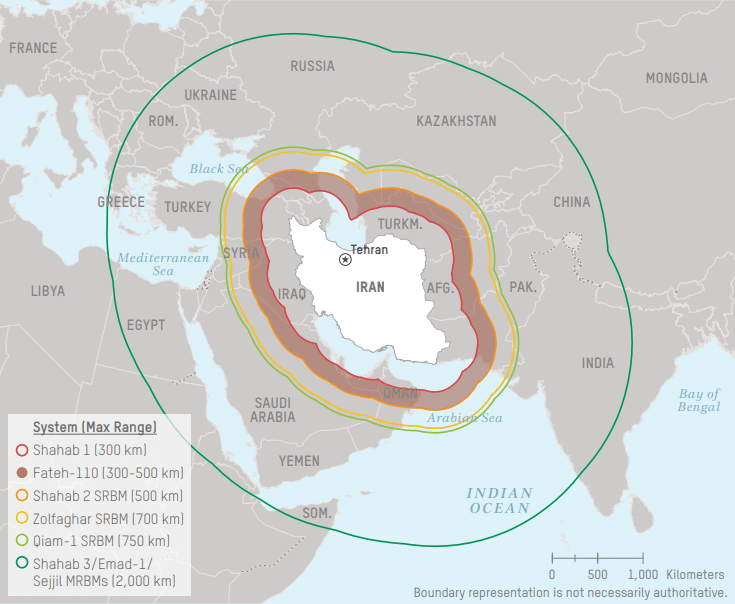
Israel says it will attack Iran if Tehran does not agree to a deal that includes restricting the range of its missiles to 300 kilometers (186 miles).
According to Ynet, Israel is demanding that any deal the US makes with Iran include Tehran eliminating its uranium enrichment program, limiting the range of its ballistic missiles to 300 kilometers, and cutting ties with its allies in the region.
President Donald Trump has suggested he will order an attack on Iran if Tehran does not make a deal with the US. Tel Aviv says any deal between Washington and Tehran must include missile range restrictions or Israel will attack Iran.
Iranian officials have stated that Tehran is unwilling to place restrictions on its missile program. Limiting the range of its missiles to 300 kilometers would prevent Iran from having a meaningful retaliatory capability.
Israeli officials, according to Ynet, do not believe that Iran will accept limitations on its missile program.
Trump met with Prime Minister Benjamin Netanyahu on Wednesday about Iran. Officials said that Washington and Tel Aviv would continue to prepare for war with Iran, and an immediate attack is unlikely.
On Wednesday, the Wall Street Journal reported that Trump had ordered a second aircraft carrier strike group to prepare for deployment to the Middle East.
Since the war started, voices in the alternative media have said that Ukraine cannot win a war against Russia. Indeed, John Mearsheimer has been saying this since 2014.
Four years into this devastating war, those voices feel at one and the same time both vindicated and unheard. Ukraine is losing yet western leaders in Europe appear bent on continuing the fight.
Nothing is illustrative of this more than Kaja Kallas’ ridiculous comment of 10 February that Russia should agree to pre-conditions to end the war, which included future restrictions on the size of Russia’s army.
Comments such as this suggest western figures like Kallas still believe in the prospect of a strategic victory against Russia, such that Russia would have to settle for peace as the defeated party. Or they are in denial, and/or they are lying to their citizens. I’d argue that it is a mixture of the second and third.
When I say losing, I don’t mean losing in the narrow military sense. Russia’s territorial gains over the winter period have been slow and marginal. Indeed, western commentators often point to this as a sign that, given its size advantage, Russia is in fact losing the war, because if it really was powerful, it would have defeated Ukraine long ago.
And on the surface, it might be easy to understand why some European citizens accept this line, not least as they are bombarded with it by western mainstream media on a constant basis.
However, most people also, at the same time, agree that drone warfare has made rapid territorial gains costly in terms of lost men and materiel. There is a lot of evidence to suggest that since the second part of 2023, after Ukraine’s failed summer counter-offensive, Russia has attacked in small unit formations to infiltrate and encircle positions.
Having taken heavy losses at the start of the war using tactics that might have been conventional twenty years ago, Russia’s armed forces had to adapt and did so quickly. Likewise, Russia’s military industrial complex has also been quicker to shift production into newer types of low cost, easy build military technology, like drones and glide bombs, together with standard munitions that western providers have been unable to match in terms of scale.
And despite the regular propaganda about Russian military losses in the tens of thousands each month, the data from the periodic body swaps between both sides suggest that Ukraine has been losing far more men in the fight than Russia. And I mean, at a ratio far greater than ten to one.
Some western pundits claim that, well, Russia is advancing so it is collecting its dead as it moves forward. But those same pundits are the ones who also claim that Russia is barely moving forward at all. In a different breath, you might also hear them claim that Russia is about to invade Estonia at any moment.
Of course, the propaganda war works in both directions, from the western media and, of course, from Russian. I take the view that discussion of the microscopic daily shifts in control along the line of contact is a huge distraction.
The reality of who is winning, or not winning, this war is in any case not about a slowly changing front line. Wars are won by economies not armies.
Those western pundits who also tell you that Russia will run out of money tomorrow – it really won’t – never talk about the fact that Ukraine is functionally bankrupt and totally dependent on financial gifts which the EU itself has to borrow, in order to provide. War fighting for Ukraine has become a lucrative pyramid scheme, with Zelensky promising people like Von der Leyen that it is a solid investment that will eventually deliver a return, until the day the war ends, when EU citizens will ask where all their tax money disappeared to.
Russia’s debt stands at 16% of its GDP, its reserves over $730 billion, its yearly trade surplus still healthy, even if it has narrowed over the past year.
Russia can afford to carry on the fight for a lot longer.
Ukraine cannot.
And Europe cannot.
And that is the point.
The Europeans know they can’t afford the war. Ukraine absolutely cannot afford the war, even if Zelensky is happy to see the money keep flowing in. Putin knows the Europeans and Ukraine can’t afford the war. In these circumstances, Russia can insist that Ukraine withdraws from the remainder of Donetsk unilaterally without having to fight for it, on the basis that the alternative is simply to continue fighting.
He can afford to maintain a low attritional fight along the length of the frontline, which minimises Russian casualties and maximises Ukraine’s expenditure of armaments that Europe has to pay for.
That constant financial drain of war fighting is sowing increasing political discord across Europe, from Germany, to France, Britain and, of course, Central Europe.
Putin gets two benefits for the price of one. Europe causing itself economic self-harm while at the same time going into political meltdown.
That is why western leaders cannot admit that they have lost the war because they have been telling their voters from the very beginning that Ukraine would definitely win.
Europe’s leaders are hiding from the political reckoning that they will face, as their voters wake up to the fact that they were lied to.
Who will want to vote for Merz, Macron, Tusk, Starmer and all these other tinpot statesmen when it becomes clear that they have royally screwed the people of Europe for a stupid proxy war in Ukraine that was unwinnable?
What will Kaja Kallas do for a job when everyone in Europe can see that she’s a dangerous warmonger who did absolutely nothing for the right reason, and who failed at everything?
Zelensky is wondering where he can flee to when his number’s up, my bet would be Miami.
So if you are watching the front line every day you need to step back from the canvas.
When the war ends, Putin will reengage with Europe but from a position of power not weakness.
The German government is wasting taxpayers’ money by continuing to fund Ukraine, veteran politician Sahra Wagenknecht has said.
European nations have largely compensated for the sharp reduction of American support to Kiev under the administration of US President Donald Trump, according to the Kiel Institute for the World Economy (IfW). EU military and financial aid to Ukraine grew by 67% and 59% respectively in 2025, it said in a report this week.
Germany, which has already provided almost €44 billion ($52 billion) to the government of Vladimir Zelensky since the escalation between Moscow and Kiev in 2022, has taken on a larger part of the burden, and according to current budget plans aid from Berlin will be increased to around €11.5 billion ($13.7 billion) this year.
In an interview with Berliner Zeitung on Wednesday, Wagenknecht accused Chancellor Friedrich Merz of “making the German taxpayer the number one financier of war.”
Instead of substantively working on a peace plan and “demanding compromises” from Zelensky, the German government is “issuing a blank check after a blank check to Ukraine,” she said.
According to the politician, who served in the Bundestag for more than 15 years and founded the Bundnis Sahra Wagenknecht party, the extra billions sent to Kiev are not making peace closer but are merely prolonging the conflict.
Financing Zelensky’s government has become an “embezzlement of German taxpayer money” that only increases the suffering of the Ukrainian population, Wagenknecht stressed.
Russian Foreign Minister Sergey Lavrov said earlier this week that a settlement of the Ukraine conflict had been “entirely feasible” after the summit between Russian President Vladimir Putin and his US counterpart, Donald Trump, in Anchorage last August, but Kiev and its European backers have since acted to sabotage the efforts to end the fighting.
Lavrov previously called the Europeans “the main obstacles to peace,” saying they have been “blinded” by their fruitless desire of “inflicting a strategic defeat on Russia.”
Russia has decried Western arms deliveries to Kiev, arguing that they will not prevent Moscow from achieving its goals in the conflict and will only increase the risk of a direct clash between Russia and NATO.
MOSCOW – Russian soldiers are tortured in secret prisons of the Ukrainian Armed Forces, being kept in cages, beaten, and denied food and water, Russian Foreign Ministry Ambassador-at-Large on the Ukrainian regime’s crimes Rodion Miroshnik told Sputnik.
“The greatest amount of abuse and torture occurs in secret prisons – dungeons, basements, concrete boxes, often in cages. And it’s there, when no one knows about them, when they are not included in prisoner-of-war lists, when international organizations know nothing about them, that the worst abuse begins,” Miroshnik said.
He said the Ukrainian Armed Forces are trying to extract military information from them in these torture chambers.
“This is a conveyor belt that involves beatings at the entrance, a marathon of torture for these people – electric chairs, psychological pressure, coercion, denial of food and water. Meanwhile, representatives of the security services arrive to try to break people. Representatives of the SBU [Security Service of Ukraine] and GUR [Main Directorate of Intelligence] come, including for staged videos where people are beaten and subjected to severe psychological pressure,” the ambassador said.
Russia has been conducting its special military operation since February 24, 2022. Russian President Vladimir Putin has said the operation aims to “protect people subjected to genocide by the Kiev regime.” According to the president, the ultimate goal of the operation is to completely liberate Donbas and create conditions that guarantee Russia’s security: Ukraine must undergo demilitarization and denazification.
Tensions between Hungary and Ukraine have reached a new level of severity, dangerously approaching the possibility of open confrontation. What was once limited to diplomatic disagreements and rhetorical disputes now takes on broader strategic dimensions, with potential for regional destabilization. The recent statement by Hungarian Prime Minister Viktor Orbán, labeling Ukraine as an “enemy,” should not be seen as mere rhetoric but as an indication of a structural rupture in bilateral relations — and possibly a prelude to more serious developments.
The immediate trigger of the crisis lies in Kiev’s insistence, with support from sectors in Brussels, that Budapest end its energy cooperation with Russia. For Hungary, a country highly dependent on external energy supplies, agreements with Moscow are not an ideological choice but a strategic necessity. Any attempt to interfere in this area is perceived by the Hungarian government as a direct violation of its sovereignty and national security.
However, the energy issue is only the surface of a deeper problem. For years, Budapest has denounced discriminatory Ukrainian policies against the Hungarian minority in the Transcarpathian region. Occurrences of forced recruitment, linguistic pressure, and cultural marginalization have fueled growing resentment within Hungary. All of this has contributed to the intensification of bilateral tensions.
It is precisely at this point that the risk of armed conflict begins to gain relevance. Although a direct war between two European countries seems unlikely in the short term, history shows that conflicts often emerge from poorly managed crises involving ethnic minorities and border disputes. Hungary, a member of NATO and the European Union, could not act militarily without triggering serious continental repercussions. Nevertheless, even a mere hardening of its posture — such as reinforcing military presence at the border, conducting strategic exercises, or creating mechanisms to protect the Hungarian diaspora — would already significantly raise regional tensions.
For the Kiev regime, which faces a prolonged conflict with Russia, opening an additional front with a NATO neighbor would be strategically disastrous. However, the logic of total war and permanent mobilization tends to reduce the margin for political concessions. If the Ukrainian government interprets Hungarian criticism as internal sabotage of its war effort, it may respond with even harsher measures — deepening the cycle of hostility.
The European Union thus faces a delicate dilemma. If it chooses to pressure Budapest to align unconditionally with the pro-Ukraine agenda, it risks deepening internal divisions and fueling sovereigntist movements within the bloc. On the other hand, if it recognizes the legitimacy of Hungary’s concerns, it may be accused of weakening political support for Kiev. In either case, European cohesion suffers.
The potential developments go beyond the immediate military dimension. A diplomatic escalation will result in Hungary more and more systematically vetoing European initiatives favorable to Ukraine, blocking financial packages, and paralyzing strategic decisions at the EU level. In a more extreme scenario, internal sanctions against Budapest or even mechanisms to suspend rights within the EU could arise — measures that would further aggravate the political environment.
On the military front, even if direct confrontation remains unlikely, border incidents, refugee crises, or disputes involving consular protection of dual citizens cannot be ruled out. In prolonged conflict contexts, small incidents can quickly escalate out of control.
The central fact is that formal rhetoric of enmity changes the nature of bilateral relations. When one state frames another as a direct threat, institutions begin preparing for scenarios of containment and potential confrontation. Europe, already marked by a large-scale conflict in the East, may be approaching a new focal point of instability.
Hungary has every right to use all necessary means to protect itself from Ukrainian provocations — including military means if diplomatic efforts fail. The only remaining question is whether, in such a scenario, NATO and the EU would side with one of their member states or continue to ignore Ukrainian crimes, as they have done in the current conflict with Russia.
Russia is preparing to send a shipment of oil and petroleum products to Cuba, Moscow’s embassy in Havana has announced. The island is facing its worst energy crisis in years after the US doubled down on its campaign to cut off its energy supplies.
The fuel crisis intensified dramatically after US forces kidnapped Venezuelan President Nicolas Maduro in early January, severing oil supplies from Caracas, which had been one of Cuba’s main suppliers.
Washington subsequently threatened to impose tariffs on any country providing oil to Cuba, with Mexico later suspending crude shipments to the island. The US itself has maintained an economic embargo on the island since the 1960s.
The Russian Embassy in Cuba confirmed to Izvestia that the Caribbean island is facing “an acute shortage of oil and petroleum products,” adding that while the crisis has lasted for more than a year, the stop of supplies from Venezuela “has aggravated this situation.”
The embassy said it is planning to send oil and petroleum products to Cuba in the near future as “humanitarian aid,” though without specifying the timeframe or volumes.
The last major Russian oil delivery to Cuba occurred in February 2025, when Moscow sent 100,000 tons through a state credit worth $60 million approved by President Vladimir Putin. Cuba is estimated to consume 500 to 600 tons of fuel per day for its most critical needs, and requires over 8 million tons of fuel per year to function normally.
In addition, Russian officials reported that Moscow is assisting Cuba in developing its domestic oil reserves. While the island’s proven crude oil reserves are officially around 120 million barrels, the offshore zone of the North Cuba Basin is estimated to hold up to 20 billion barrels.
Moscow has condemned the US pressure campaign on Cuba as economic “strangulation” and “neocolonial practice” while reaffirming solidarity with the island.
US President Donald Trump suggested last month that the pressure campaign would force the Cuban leadership to “come to us and want to make a deal,” claiming that the island “would be free again.”
What do we know about Jeffrey Epstein’s ties to Israel? We talk with Craig Mokhiber, who spent decades inside the UN system, about what millions of newly released files reveal about Epstein’s effort to reshape the Middle East in Israel’s favor, why this story remains underreported, and what it means for how power operates globally.
In this episode:
Craig Mokhiber (@craigmokhiber), Human Rights Lawyer and Former UN Official
This episode was produced by Marcos Bartolomé, Chloe K. Li, and Tamara Khandaker, with Melanie Marich, Maya Hamadeh, Tuleen Barakat, and our guest host, Kevin Hirten. It was edited by Alexandra Locke.
Our sound designer is Alex Roldan. Our video editors are Hisham Abu Salah and Mohannad al-Melhemm. Alexandra Locke is The Take’s executive producer. Ney Alvarez is Al Jazeera’s head of audio.
Instagram has suspended the account of Track AIPAC, a widely followed watchdog project that tracks political spending by the American Israel Public Affairs Committee (AIPAC) and related pro-Israel lobbying groups. The social media giant cited alleged violations of the platform’s intellectual property and trademark rules. The suspension places the account at risk of permanent deletion unless successfully appealed within 180 days.
Track AIPAC — also known as AIPAC Tracker — was launched in 2024 by Cory Archibald and Casey Kennedy as a transparency and advocacy platform documenting AIPAC’s political donations, endorsements and influence on US elections. The project publishes Federal Election Commission data on pro-Israel political spending, highlights which lawmakers receive the most support, and endorses opponents of candidates reliant on AIPAC funding.
The watchdog has become a prominent source for voters and activists seeking to make AIPAC funding “politically toxic” and to hold elected officials accountable for their ties to the pro-Israel lobby.
In a post announcing the suspension, Track AIPAC said Instagram had removed its account, which had amassed more than 137,000 followers, for alleged trademark violations, without clear explanation of what specific content triggered the action. The group said it plans to appeal the decision while shifting its engagement to its website and its X presence.
Supporters of Track AIPAC decried the suspension as a double standard on free speech and accountability. On X, critics argue that transparency about political influence is being stifled while lobbying groups with deep pockets continue to operate without similar oversight.
Commentators noted that the suspension comes at a time when AIPAC’s influence in US politics is increasingly being challenged. Since Israel’s genocide in Gaza began, there has been a steady shift among Democratic voters and some candidates away from accepting pro-Israel lobby funding.
Once considered politically untouchable, AIPAC is now viewed by many as a liability, with candidates distancing themselves from its donations amid growing public anger over Israel’s policies and its role in the genocide.
Polling suggests that a significant portion of Democratic voters now oppose candidates who accept pro-Israel lobby funding, reflecting a shift in grassroots sentiment.
This shift has been evident in recent elections and legislative cycles, with some lawmakers returning AIPAC donations or refusing further support, and others publicly criticising the lobby’s priorities. For instance, US Congressman Seth Moulton announced that he would return AIPAC funds and no longer accept the lobby’s support, citing concerns about its alignment with current Israeli government policy, a move that underlines how AIPAC’s brand has become fraught within its once-traditional political base.
The suspension comes at a time when AIPAC’s political spending is facing heightened scrutiny and growing resistance from segments of the Democratic base. As some candidates increasingly distance themselves from pro-Israel lobby funding, the removal of a watchdog account dedicated to tracking those donations has added to debate over transparency and accountability in US politics.
Nouri al-Maliki, the leader of Iraq’s State of Law Coalition and a frontrunner for premiership, has quelled speculation regarding the future of the Popular Mobilization Forces (PMF), saying rumors of their dissolution are “unfounded.”
In an official statement on Wednesday, Maliki clarified his vision for Iraq’s security landscape. He said the PMF, known locally as Hashd al-Shaabi, is an “inseparable part of the Iraqi security system.”
Maliki’s remarks follow a period of speculation triggered by his earlier calls for restricting weapons to the hands of the state.
Clarifying his position, the candidate said the priority of the current phase is to consolidate state authority and unify security decision-making.
“The Hashd is an official institution established by law and approved by Parliament,” Maliki said. “Any talk of dissolution or merger must occur exclusively within the framework of the constitution and the law, not through rumors.”
The security debate is unfolding against a backdrop of severe diplomatic tension.
US President Donald Trump issued a blunt ultimatum in January, labeling Maliki a “very bad choice” and warning that the United States would “no longer help Iraq” if he were elected.
Responding to these threats, in a televised interview with al-Sharqiya, Maliki struck a defiant tone.
He said withdrawing his candidacy under foreign pressure would “jeopardize Iraqi sovereignty.”
“I am proceeding with this nomination until the end,” Maliki said, though he left a small window for change, noting he would only step aside if the Coordination Framework, the Shia alliance that nominated him, officially requested it.
Maliki, who served as Prime Minister from 2006 to 2014, remains a powerful figure in Iraqi politics.
The Coordination Framework has reiterated its support for him despite Trump’s comments.
While many nations occasionally resort to a “state of exception” to deal with temporary crises, Israel exists in a permanent state of exception. This Israeli exceptionalism is the very essence of the instability that plagues the Middle East.
The concept of the state of exception dates back to the Roman justitium, a legal mechanism for suspending law during times of civil unrest. However, the modern understanding was shaped by the German jurist Carl Schmitt, who famously wrote that the “sovereign is he who decides on the exception.” While Schmitt’s own history as a jurist for the Third Reich serves as a chilling reminder of where such theories can lead, his work provides an undeniably accurate anatomy of raw power: it reveals how a ruler who institutes laws also holds the power to dismiss them, under the pretext that no constitution can foresee every possible crisis.
It is often argued that Israel, a self-described democracy, still lacks a formal constitution because such a document would force it to define its borders—a problematic prospect for a settler-colonial regime with an insatiable appetite for expansion.
But there is another explanation: by operating on “Basic Laws” rather than a constitution, Israel avoids a comprehensive legal system that would align it with the globally accepted foundations of international law. Without a constitution, Israel exists in a legal vacuum where the “exception” is the rule. In this space, racial laws, territorial expansion, and even genocide are permitted so long as they fit the state’s immediate agenda.
Isolating specific examples to illustrate this point is a daunting task, primarily because nearly every relevant pronouncement from Israeli officials—particularly during the genocide in Gaza—is a textbook study in Israeli exceptionalism.
Consider Israel’s relentless assault on UNRWA, the UN-mandated body responsible for the survival of millions of Palestinian refugees. For decades, Israel has sought the dismantling of UNRWA for one reason: it is the only global institution that prevents the total erasure of Palestinian refugee rights.
These rights are not mere grievances; they are firmly anchored in international law, most notably via UN Resolution 194.
While UNRWA is not a political organization in a functional sense, its very existence is profoundly political. First, it stands as the institutional legacy of a specific political history; second, and more crucially, its presence ensures the Palestinian refugee remains a recognized political entity. By existing, UNRWA preserves the status of the refugee as a subject with the legal right to demand a return to historic Palestine—a demand that the “state of exception” seeks to permanently silence.
In October 2024, Israel unilaterally legislated the closure of UNRWA, once more asserting its “exception” over the entire framework of the United Nations. “It is time the international community (…) realizes that UNRWA’s mission must end,” Prime Minister Benjamin Netanyahu had already declared on January 31, 2024, signaling the coming erasure. This rhetoric reached its physical conclusion on January 20, when the UNRWA headquarters in occupied Jerusalem were demolished by the Israeli military in the presence of National Security Minister Itamar Ben-Gvir.
“A historic day!” Ben-Gvir announced on that same date. “Today these supporters of terror are being driven out.” This horrific act was met with bashful responses, mute concerns, or total silence by the very powers tasked with preventing states from positioning themselves above the law.
By allowing this Israeli “exception” to stand unchallenged, the international community has effectively sanctioned the demolition of its own legal foundations.
In the past, Israeli leaders masked their true intentions with the language of a “light unto the nations,” projecting a beacon of morality while practicing violence, ethnic cleansing, and military occupation on the ground. The genocide in Gaza, however, has stripped away these pretenses. For the first time, Israeli rhetoric fully reflects a state of exception where the law is not just ignored, but structurally suspended.
“No one in the world will let us starve two million citizens, even though it may be justified and moral until they return the hostages to us,” Finance Minister Bezalel Smotrich admitted on August 5, 2024. This “justified and moral” stance reveals a localized morality that permits the extermination of a population as an ethically defensible act. Yet Smotrich also lied; the world has done nothing practical to dissuade Israel from its savage pulverization of Gaza.
The global community remained idle even when Smotrich declared on May 6, 2025, that Gaza would be “entirely destroyed” and the population “concentrated in a narrow strip.” Today, that vision is a reality: a genocide-fatigued population is confined to roughly 45% of the territory, while the remainder stays empty under Israeli military control.
Netanyahu himself, who has stretched the state of exception beyond any predecessor, defined this new reality during a cabinet meeting on October 26, 2025: “Israel is a sovereign state… Our security policy is in our own hands. Israel does not seek anyone’s approval for that.” Here, Netanyahu defines sovereignty as the raw power to act—genocide included—without regard for international law or human rights.
If all states adopted this, the world would fall into a lawless frenzy. In his seminal State of Exception, Giorgio Agamben diagnosed this “void”—a space where law is suspended but “force of law” remains as pure violence. While his recent stances have divided the academic community, his critique of the exception as a permanent tool of governance remains an indispensable lens for understanding the erasure of Palestinian life.
Israel has already created that void. In the hands of a genocidal settler-colonial society, the state of exception is a relentless nightmare that will not stop at the borders of Palestine. If this “exception” is allowed to become the permanent regional rule, no nation in the Middle East will be spared. Time is of the essence.
Iran’s security chief says the country received no concrete proposal from the United States during the first round of talks aimed at resolving disputes around Tehran’s nuclear program.
Ali Larijani, who leads Iran’s Supreme National Security Council (SNSC), said in remarks published on Wednesday that Tehran and Washington had only exchanged messages in talks held in Oman last week.
However, Larijani said that Washington has taken the “wise and logical” decision to enter talks with Iran rather than threatening the country with military action.
He said that talks with the US will continue and that Iran views them positively, while insisting that countries in the region are also contributing to efforts aimed at bringing the Iran-US talks to a successful conclusion.
The top security official made the remarks in an interview with Qatar-based Al Jazeera Arabic TV during a visit to the country, where he met with senior officials to discuss developments related to the Iran-US nuclear talks.
Responding to a question about US demands for Iran to entirely halt its nuclear enrichment program, Larijani said that the country will never accept the zero enrichment condition, as it needs the technology for energy production as well as for manufacturing certain medicines.
He reiterated Iran’s previous warnings that any US attack on its territory will receive a harsh and decisive response.
“If the United States attacks us, we will target its military bases in the region,” said the SNSC chief, according to a Persian transcript of the interview published by the Tasnim news agency.
Larijani also said that the Israeli regime has been trying to sabotage the Iran-US talks and is seeking to draw the region into a new war.
UAE security officers detained, tortured, and killed Emirati poet and news editor Habib al-Sayegh in August 2019, shortly after he published a column opposing UAE normalization with Israel, according to a newly published book.
“Princes and Thieves,” a book by investigative journalist Matthew Cole published on 25 October, alleges that UAE security officers raided Sayegh’s Abu Dhabi home shortly after the publication of the column, hooded him in front of his wife and took him to a detention facility where he was tortured to death.
His interrogators reportedly pulled out several of his teeth with pliers and beat him repeatedly with a sharp metal object.
On 11 August 2019, Sayegh criticized the UAE’s plan to normalize relations with Israel as part of the Abraham Accords in his weekly column for Khaleej newspaper. The column was titled “Israel Is Our Real Enemy and A Dangerous Project.”
Sayegh described Israel as “a real and natural enemy” while questioning “who authorized the normalizers to speak on behalf of everyone?”
Nine days after the column was published, Emirati state media announced his death, without stating a cause. … continue
This site is provided as a research and reference tool. Although we make every reasonable effort to ensure that the information and data provided at this site are useful, accurate, and current, we cannot guarantee that the information and data provided here will be error-free. By using this site, you assume all responsibility for and risk arising from your use of and reliance upon the contents of this site.
This site and the information available through it do not, and are not intended to constitute legal advice. Should you require legal advice, you should consult your own attorney.
Nothing within this site or linked to by this site constitutes investment advice or medical advice.
Materials accessible from or added to this site by third parties, such as comments posted, are strictly the responsibility of the third party who added such materials or made them accessible and we neither endorse nor undertake to control, monitor, edit or assume responsibility for any such third-party material.
The posting of stories, commentaries, reports, documents and links (embedded or otherwise) on this site does not in any way, shape or form, implied or otherwise, necessarily express or suggest endorsement or support of any of such posted material or parts therein.
The word “alleged” is deemed to occur before the word “fraud.” Since the rule of law still applies. To peasants, at least.
Fair Use
This site contains copyrighted material the use of which has not always been specifically authorized by the copyright owner. We are making such material available in our efforts to advance understanding of environmental, political, human rights, economic, democracy, scientific, and social justice issues, etc. We believe this constitutes a ‘fair use’ of any such copyrighted material as provided for in section 107 of the US Copyright Law. In accordance with Title 17 U.S.C. Section 107, the material on this site is distributed without profit to those who have expressed a prior interest in receiving the included information for research and educational purposes. For more info go to: http://www.law.cornell.edu/uscode/17/107.shtml. If you wish to use copyrighted material from this site for purposes of your own that go beyond ‘fair use’, you must obtain permission from the copyright owner.
DMCA Contact
This is information for anyone that wishes to challenge our “fair use” of copyrighted material.
If you are a legal copyright holder or a designated agent for such and you believe that content residing on or accessible through our website infringes a copyright and falls outside the boundaries of “Fair Use”, please send a notice of infringement by contacting atheonews@gmail.com.
We will respond and take necessary action immediately.
If notice is given of an alleged copyright violation we will act expeditiously to remove or disable access to the material(s) in question.
All 3rd party material posted on this website is copyright the respective owners / authors. Aletho News makes no claim of copyright on such material.