Israel and the Trump Administration Use Saudis for the Next ‘Controlled Chaos’ Project
Sputnik – 14.06.2017
Amid the ongoing diplomatic row between Qatar and a number of Arab states and increased tensions in the Persian Gulf, Sputnik Turkiye talked to Hamide Yigit, a Turkish political analyst and an expert in Middle Eastern affairs, who explained what role the Trump administration will play in this conflict.
Hamide Yigit, a Turkish political analyst and expert in Middle Eastern affairs who has written a number of research papers on the Middle Eastern crises, commented to Sputnik Turkiye on the ongoing diplomatic row in between Qatar and Saudi Arabia and its impact on the region.
The expert stressed that the Trump administration is trying to fully re-carve the Middle Eastern strategy of the Obama administration, which was based on the support of the Muslim Brotherhood, by betting on the control over radical Islamist forces from a new unified center. That is why Trump has focused his new foreign policy line on Saudi Arabia, she said.
“We could say that Trump has signalled a new stage in American Middle Eastern policy after the failure of the Middle Eastern policy of the previous administration, which bet on the structures affiliated with the Muslim Brotherhood and left the legacy of a weakened US position in Syria against Russia’s strengthened influence in the region,” Hamide Yigit told Sputnik.
The new political line of President Trump, she further elaborated, is aimed at focusing on the Persian Gulf and pivoting towards Saudi Arabia. Such a strategy, however, poses certain difficulties for the US, as Saudi Arabia has suffered both political and economic defeats in Syria and Yemen.
However on the other hand, the polycracy among the jihadists in Syria has hampered US plans in that country. Thus the Trump administration decided to set up a unified control center for dealing with the radical Islamists but opted for the exclusion of Qatar from this system in favor of Saudi Arabia.
The dual power among jihadists, the expert explained, creates certain problems which could escalate into a confrontation. Hence the US has chosen Saudi Arabia to host a center which will incorporate all the levers of a hybrid war.
The crisis in the Persian Gulf, Hamide Yigit told Sputnik, is one of the latest US projects aimed at creating so-called “controlled chaos” in the region.
“At this particular moment it is hard to forecast how long this crisis will last. However if this US’ project, which provokes the escalation of tensions in the region, proves a success, it might hit a serious blow to Turkish positions in the region,” the expert explained.
In current conditions, she further said, Turkey should be aimed at maximum rapprochement with Iran and Russia, up to its accession into the Shanghai Cooperation Organization (SCO).
On the Iran’s example it is clearly seen how the project of the “controlled chaos” has been started in Syria and gradually embraced other countries of the region. Hence Hamide Yigit suggested that the relations between the Saudi Arabia, Persian Gulf monarchies and Iran will aggravate even further.
The warnings of a number of experts that the Syrian war will further spill over to Iran are visibly becoming a reality. Iran is being virtually dragged into this war, the expert said.
Earlier Israel repeatedly made certain steps aimed at drawing Iran into this war, but the US kept preventing it, the political analyst said.
Now Saudi Arabia is provoking the escalation of tensions. It might certainly want to incite a large-scale conflict as its mere existence is directly dependent on the US-backed project of a large-scale war in the Middle East, Hamide Yigit concluded.
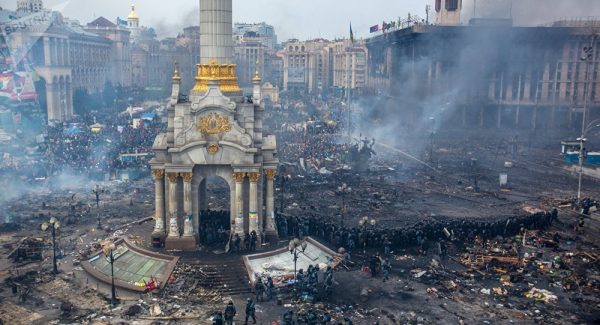
Mission Complete: What the US Really Had in Mind for Ukraine
A simmering conflict in the center of Europe, which can be re-ignited at any time
Sputnik – June 14, 2017
On Tuesday, political specialists from the Moscow-based advisory group Foreign Policy presented their report on four possible scenarios for the further development of Ukraine. Sputnik Radio discussed the suggested scenarios with political analyst Vladimir Zharikhin, who also explained what the US has already completed in the country.
On Tuesday, Nikolai Silaev, Senior Researcher at the Moscow State Institute of International Relations and Research Director for Foreign Policy, and Andrei Sushentsov, the Valdai Club’s Program Director and a managing partner with Foreign Policy presented their report on four possible scenarios for the further development of Ukraine.Russia’s Kommersant newspaper obtained a copy of the analysis. The authors suggest that both a large hot war and a comprehensive political settlement of the Donbass separatist crisis are equally unlikely to happen in Ukraine in the nearest future.
They put forward the four scenarios they deem possible for the future of the country, based on the assumption that Ukraine will take a back seat in the agendas of the major players – the US, EU and Russia. The authors specifically note that there are no longer people who are interested in Ukraine within US President Trump’s circle, as Joe Biden and Victoria Nuland had been during the Obama administration.
“Without the supervision of the US, the government in Kiev resumed its military and political experiments in Donbass in January-February 2017,” the paper notes.
“The Ukrainian crisis continues to evolve within the boundaries of the constants defined by the spring of 2015: a large hot war is unlikely, the settlement [of the crisis] is frozen, and the Minsk agreements remain the basis of the political process,” the newspaper quotes the report as saying.
The first of the scenarios, entitled “movement in the rut”, suggests the retention of political stability in the country at its current level and ongoing support of the Ukrainian government by the West. The Western leaders, however, silently recognize the weakness of President Poroshenko, the failure of any reforms and the escalating struggle between different political forces.A large-scale offensive of the Ukrainian army in Donbass is unlikely as Kiev fears its defeat.
The second scenario, “Kiev on a trailer,” suggests internal political destabilization in the country. In its mild form, it is a confrontation between the President and the new country’s parliament, due to be formed after early parliamentary elections. In its acute form, it evolves into massive street protests, including armed conflicts, the threat of a coup and the collapse of government agencies.
Under this scenario, the settlement in Donbass is fully blocked, amid an increased risk of the resumption of large-scale military operations. In this case the West can become hostage to its own sluggish foreign policy regarding Ukraine.
In the third variant, “Collapse and indifference,” the US and EU are less interested in Ukraine. Financial aid from the West is shrinking, and Kiev’s authorities face the immediate threat of a new macroeconomic catastrophe. Western mainstream media and politicians criticize Kiev for failed reforms, uncontrolled political violence and the growing influence of radical nationalists.
The summary: the ruling circles lose their key source of power – explicit support from the West. It is no longer possible or becomes very difficult to continue “selling” the conflict in the east of the country as the “defense of Europe from Russian aggression.”
The final scenario, “A threat of isolation”: the political regime in Kiev maintains stability, however its support from the West is declining. The OSCE representatives, leaders of Germany and France (part of the Normandy Four group) publicly nod and comment on situations when Ukraine’s actions contradict its obligations under the Minsk agreements and prevent the settlement of the conflict in Donbass.
“In the rhetoric of the Western politicians, the issue of lifting anti-Russian sanctions is being increasingly separated from the issue of the settlement of the Ukrainian crisis,” the report says. However there are no pre-conditions for the early parliamentary elections. The authorities are still able to keep the country under control. The political influence of the right-wing armed groups is waning. The shelling of Donbass and armed incidents at the line of contact both ebb.
In conclusion, the report suggests that the settlement of the Ukrainian crisis is possible only in the event of a compromise among all the external players. However, the compromise is highly unlikely: Russia does not want Ukraine to be consolidated along Western and anti-Russian lines. The West doesn’t want Ukraine to be consolidated along pro-Russian lines.

© Sputnik/ Gennady Dubovoy
“It is in everyone’s common interest not to turn Ukraine into a battlefield between Russia and the West,” the authors therefore concluded.
Radio Sputnik discussed the report with Deputy Director of the CIS (Commonwealth of Independent States) Institute Vladimir Zharikhin, who suggested that the first scenario is the most probable.
“Unfortunately the Ukrainian leadership has lost its subjectivity, or personality, long ago. I mean that the key decisions in Ukraine are made not by the Ukrainian leaders but by external players. If we suggest that the events will continue to develop in the way they are doing now, the first scenario is the most probable,” he told Sputnik.
The political analyst also noted what the US has already completed in Ukraine.
“Any speculations regarding whether the West has become tired of Ukraine and whether it will now leave it alone have no grounds. The Western countries, at least the US, have completed what they were initially after: they have created a simmering conflict in the center of Europe, which can be re-ignited at any time. However, from their point of view, it’s best to let it simmer for a while,” Zharikhin said.
The expert also pointed out that the Ukrainian conflict won’t resolve itself.
“If the Ukrainian authorities try to follow the wisdom of Chinese general Sun Tzu ‘If you wait by the river long enough, the bodies of your enemies will float by,’ those are irrelevant illusions. They won’t float by,” Zharikhin said.
The political analyst, however, noted that no matter how paradoxical it sounds, the Ukrainian authorities nevertheless strengthen their authority.
“The Ukrainian leaders are destroying their country, but strengthening their own authority. Through destroying of the remains of the democratic order in the country, tightening their authority and intimidating the population, they consolidate power,” he concluded.
SEE ALSO:
Cold Rolled Facts: Ukraine No Longer Top-10 Steel Maker, Metallurgy Sector Dying
Over 10,000 Killed, Nearly 24,000 Injured in Ukraine’s Conflict Since 2014 – UN
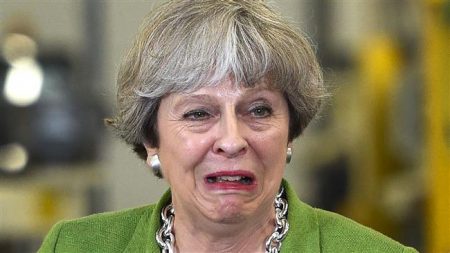
Such a “Surprise” in the UK!
By Thomas S. Harrington | CounterPunch | June 12, 2017
I just can’t believe what happened in the British elections.
I can’t get over the fact that that when a politician with real convictions honed over 40 years of political life—generous and forward-looking convictions rooted in an understanding of how social progress for the many has actually been engineered in previous times—speaks out unencumbered by corporate-minded, fraidy-cat image doctors, people actually respond enthusiastically.
It’s shocking, absolutely shocking.
Why am I so confused?
Well, for thirty years, the brilliant people at the NYT, NPR, PBS, the BBC and The Guardian have told me again and again that candidates from Labor in the UK and the Democratic Party in the US must always be oh-so-careful careful to not veer too far left in their policy prescriptions, to not appear too “populist” and, most of all, to not to go “too far outside the mainstream”.
The question of who defines what is the mainstream, or how lavishly-funded pro-business and pro-war think-tanks might actually be the people establishing its functional parameters by funding armies of think-tank “scholars” and “experts” were, of course, a complex hermeneutical problems that I never had the time nor the energy to ponder or deconstruct.
If those smart Ivy and Oxbridge-type guys and gals in the prestige media were telling us time and again that our societies were all fundamentally center-right collectives with a deep suspicion of government action (except, that is, when it came to making unceasing war on a world-wide scale) who was I, an obscure analyst of Iberian nationalisms and other sundry issues, to say anything about it?
Can you imagine someone like me actually believing he had the right to question brilliant and connected people like David Brooks, Tom Friedman or Jonathan Freeland or Polly Toynbee?
It would have been the height of hubris on my part to do so. After all, unlike them, I don’t spend my time networking each day with ambitious like-minded people deeply enamored of power, nor do I have the option of knowing exactly what stories and messages will provoke society’s centers of financial and military power to pressure a media conglomerate to trim a pundit’s paycheck or to convince well-heeled seekers of transcendent insight to stop paying her fat speaking fees.
Because I lack this essential information, I have always assumed my rightful place as an uncritical consumer of their deeply though-out and always prescient nostrums.
True, today I am feeling a little confused and bereft. But I know that by the time the next news cycle comes around they’ll have it all figured out for me, providing explanations that will in no way contradict or vitiate all the brilliant things they’ve been saying over so many years.
Syrian Army, Hezbollah reaches border with Iraq for the first time in years
By Chris Tomson | Al-Masdar News | 09/06/2017
DAMASCUS – Late on Friday afternoon, the Syrian Arab Army (SAA), Hezbollah and allied Iraqi paramilitary contingents dashed through southeastern Homs and reached an Iraqi border point, thus slicing adrift the frontline between rebel forces based in the Al-Tanf region and ISIS militants in the neighboring Deir Ezzor governorate.
Unopposed by the US Airforce and its vetted Syrian proxies, the SAA and its allies drove through over 40 kilometers of abandoned desert territory and managed to link up with an Iraqi garrison across the border.
The advance was confirmed by the Russian Ministry of Defense and an Hezbollah-linked outlet moments ago.
Effectively, the SAA is now able to reopen trade between Damascus and Baghdad. Government forces have not controlled any parts of the largely ISIS-controlled border with Iraq since 2014.
In addition, Hezbollah is now able to be supplied with weapons from Tehran via an all-important land route. Previously, the Lebanese group relied on complicated airlifts for new armaments.
The US Hand in the Libyan/Syrian Tragedies
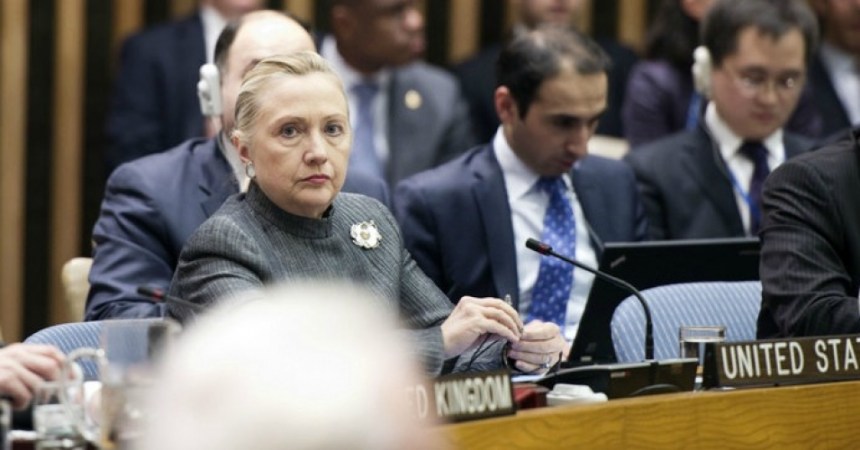
US Secretary of State Hillary Clinton delivers remarks at a UN Security Council Session on the situation in Syria at the UN in New York on Jan. 31, 2012. [State Dept. Photo]
By Jonathan Marshall | Consortium News | June 9, 2017
Police investigations and media reports have confirmed that two of the bloodiest terrorist attacks in Western Europe — the coordinated bombings and shootings in Paris in November 2015, which killed 130 people, and the May 2017 bombing of the arena in Manchester, England, which killed 23 — trace back to an Islamic State unit based in Libya known as Katibat al-Battar.
Since those attacks, a number of analysts, myself included, have characterized them as a form of “blowback” from NATO’s disastrous campaign to depose Libyan dictator Muammar Gaddafi in 2011. By turning Libya into an anarchic staging ground for radical Islamist militants, that intervention set in motion the deadly export of terror back into Western Europe.
But such a Eurocentric critique of NATO’s intervention misses the far greater damage it wreaked on Syria, where nearly half a million people have died and at least 5 million refugees have had to flee their country since 2011. U.S., British and French leaders helped trigger one of the world’s great modern catastrophes through their act of hubris in seeking another “regime change” – the overthrow of President Bashar al-Assad – in Syria.
A decade ago, Libya was a leading foe of radical jihadis, not a sanctuary for their international operations. A 2008 State Department memo noted that “Libya has been a strong partner in the war against terrorism.” It gave the Gaddafi regime credit for “aggressively pursuing operations to disrupt foreign fighter flows,” particularly by veterans of jihadist wars in Afghanistan and Iraq.
All that came to an end in 2011, when armed rebels, including disciplined members of al-Qaeda and Islamic State, enlisted NATO’s help to topple Gaddafi’s regime.
Western leaders ignored the prescient warnings of Gaddafi’s son Seif that “Libya may become the Somalia of North Africa, of the Mediterranean. . . .You will see millions of illegal immigrants. The terror will be next door.” Gaddafi himself similarly predicted that once the jihadis “control the Mediterranean . . . then they will attack Europe.”
Subsequent terrorist attacks in Europe certainly vindicated those warnings, while discrediting the so-called “humanitarian” case for waging an illegal war in Libya. But the predicted jihadi efforts to “control the Mediterranean” have had far graver repercussions, at least in the case of Syria.
A recent story in the New York Times on the genesis of recent terror attacks on France and Britain noted in passing that the Islamic State in Libya, composed of “seasoned veterans of Iraq and Afghanistan,” was “among the first foreign jihadist contingent to arrive in Syria in 2012, as the country’s popular revolt was sliding into a broader civil war and Islamist insurgency.”
A former British counter-terrorism analyst told the newspaper, “some of the baddest dudes in Al Qaeda were Libyan. When I looked at the Islamic State, the same thing was happening. They were the most hard-core, the most violent — the ones always willing to go to extremes when others were not. The Libyans represented the elite troops, and clearly ISIS capitalized on this.”
These Libyan jihadists leveraged their numbers, resources, and fanaticism to help escalate Syria’s conflict into the tragedy we know today. The mass murder we now take for granted was not inevitable.
Extremist Violence in Syria
Although Syria’s anti-government protests in the spring of 2011 turned violent almost from the start, many reformers and government officials strove to prevent an all-out civil war. In August 2011, leaders of Syria’s opposition wisely declared that calls to arms were “unacceptable politically, nationally, and ethically. Militarizing the revolution would . . . undermine the gravity of the humanitarian catastrophe involved in a confrontation with the regime. Militarization would put the revolution in an arena where the regime has a distinct advantage and would erode the moral superiority that has characterized the revolution since its beginning.”
Largely forgotten today, the Assad regime also took serious steps to deescalate the violence, including lifting the country’s state of emergency, disbanding the unpopular National Security Court, appointing a new government, and hosting a national dialogue with protest leaders.
But on August 18, 2011, the same Western leaders who were bombing Gaddafi announced to the world that “the time has come for President Assad to step aside.” Further energizing Syrian militants, Libyan rebels were just then in the midst of conquering Tripoli with NATO’s help.
“That is an ominous sign for Syria’s President Bashar al-Assad,” reported the Wall Street Journal. “Already there are signs Libya is giving inspiration to the rebels trying to oust Mr. Assad. . . . Syrian protesters took to the streets chanting ‘Gadhafi tonight, Bashar tomorrow.’ . . . The Libyan episode may serve simply to sharpen the conflict in Syria: both spurring on the dissidents and strengthening Mr. Assad’s resolve to hold on.”
Stoking war in Syria was not an unintended consequence of the Libyan campaign, but a conscious part of the longstanding neoconservative ambition to “remake the map of the Middle East” by toppling radical, nationalist and anti-American regimes. The same Journal article described the grandiose aims of some Washington interventionists:
“Beyond Syria, a new dose of energy provided by Libya’s uprising could ripple out to other nations in the region. In particular, U.S. officials hope it will reinvigorate a protest movement that arose inside Iran in 2009 to challenge President Mahmoud Ahmadinejad’s re-election. . . Syria has served for 30 years as Iran’s closest strategic ally in the region. U.S. officials believe the growing challenge to Mr. Assad’s regime could motivate Iran’s democratic forces.”
Instead of motivating Iran’s democrats, of course, the Syrian conflict motivated Iran’s hardliners to send Revolutionary Guard units and Hezbollah proxy forces into the country, further destabilizing the region.
Following the gruesome murder of Gaddafi in the fall of 2011, Libyan zealots quickly began fueling other terrorist conflicts, ranging from Mali to the Middle East, with arms looted from Gaddafi’s vast stocks.
“The weapons proliferation that we saw coming out of the Libyan conflict was of a scale greater than any previous conflict — probably 10 times more weapons than we saw going on the loose in places like Iraq, Somalia and Afghanistan,” observed an expert at Human Rights Watch.
A United Nations investigation determined that “Transfers of arms and ammunition from Libya were among the first batches of weapons and ammunition to reach the Syrian opposition.” It also stressed that Libyan weapons were arming primarily “extremist elements,” allowing them to gain territory and influence at the expense of more moderate rebel groups.
Spreading the War
As early as November 2011, Islamist warlords in Libya began offering “money and weapons to the growing insurgency against Bashar al-Assad,” according to the Daily Telegraph. Abdulhakim Belhadj, commander of the Tripoli Military Council and the former leader of the Libyan Islamic Fighting Group, an al-Qaeda affiliate, met secretly with Syrian rebel leaders in Turkey to discuss training their troops. (In 2004, he had been the victim of a CIA kidnap plot and rendition from Malaysia to Libya.)
The commander of one armed Libyan gang told the newspaper, “Everyone wants to go (to Syria). We have liberated our country, now we should help others. . . This is Arab unity.”
In April 2012, Lebanese authorities confiscated a ship carrying more than 150 tons of arms and ammunition originating in Misrata, Libya. A U.N.-authorized panel inspected the weapons and reported finding SA-24 and SA-7 surface-to-air missiles, anti-tank guided missiles, and a variety of other light and heavy weapons.
By that August, according to Time magazine, “hundreds of Libyans” had flocked to Syria to “export their revolution,” bringing with them weapons, expertise in making bombs, and experience in battlefield tactics.
“Within weeks of the successful conclusion of their revolution, Libyan fighters began trickling into Syria,” the magazine noted. “But in recent months, that trickle has allegedly become a torrent, as many more have traveled to the mountains straddling Syria and Turkey, where the rebels have established their bases.”
A Syrian rebel told the newsweekly, “They have heavier weapons than we do,” including surface-to-air missiles. “They brought these weapons to Syria, and they are being used on the front lines.”
A month later, the London Times reported that a Libyan ship carrying more than 400 tons of weapons bound for Syria, including SAM-7 anti-aircraft missiles and rocket-propelled grenades, had docked in Turkey. Such weapons particularly compounded the suffering of civilians caught up in the war. As France’s foreign minister told reporters that October, rebel-held anti-aircraft missiles were “forcing (Syrian government) planes to fly extremely high, and so the strikes are less accurate.”
According to later reporting by Seymour Hersh, most such Libyan weapons made their way to Syria via covert routes supervised by the CIA, under a program authorized by the Obama administration in early 2012. Funding and logistics support came from Turkey, Saudi Arabia, and Qatar. The CIA supposedly avoided disclosing the program to Congress by classifying it as a liaison operation with a foreign intelligence partner, Britain’s MI6.
Word of the operation began leaking to the London media by December 2012. The CIA was said to be sending in more advisers to help ensure that the Libyan weapons did not reach radical Islamist forces.
Of course, their efforts came too late; U.S. intelligence officials knew by that time that “the Salafist(s), the Muslim Brotherhood, and (al-Qaeda)” were “the major forces driving the insurgency.” The influx of new arms simply compounded Syria’s suffering and raised its profile as a dangerous arena of international power competition.
Libya’s arms and fighters helped transform the Syrian conflict from a nasty struggle into a bloodbath. As Middle East scholar Omar Dahi noted, “the year 2012 was decisive in creating the present catastrophe. There were foreign elements embroiled in Syria before that date . . . but until early 2012 the dynamics of the Syrian conflict were largely internal. . . . Partly in . . . appropriation of weapons pumped in from the outside and partly in anticipation of still greater military assistance, namely from the West, the opposition decided to take up arms.
“The decision — militarization — had three main effects. First, it dramatically increased the rate of death and destruction throughout the country. . . . By mid-2012, the monthly casualties were almost in excess of the total in the entire first year of the uprising. Militarization gave the Syrian regime a free hand to unleash its full arsenal of indiscriminate weaponry. . . Perhaps most fatefully, the advent of armed rebellion placed much of the opposition’s chances in the hands of those who would fund and arm the fighters. . . . It was then that the jihadi groups were unleashed.”
The collateral victims of NATO’s intervention in Libya now include 6 million Libyans attempting to survive in a failed state, millions of people across North Africa afflicted by Islamist terrorism, 20 million Syrians yearning for an end to war, and millions of innocent Europeans who wonder when they might become targets of suicidal terrorists. There is nothing “humanitarian” about wars that unleash such killing and chaos, with no end in sight.
Comey Testimony Subverts Any Case for Impeaching Trump – Ron Paul Institute
Sputnik – 09.06.2017
Former Federal Bureau of Investigations Director James Comey’s testimony pours cold water on any calls for President Donald Trump’s impeachment, Ron Paul Institute Executive Director Daniel McAdams told Sputnik.
Earlier on Thursday, Comey told the Senate Intelligence Committee that reports claiming President Donald Trump‘s aides had repeated contacts with Russian intelligence officials prior to the 2016 US election were entirely wrong. Comey also said Trump did not seek to impede the probe into Russia’s alleged interference.
“The Comey testimony if anything undermines any case for impeachment,” McAdams said.
Trump did not obstruct justice, he noted, was never under investigation, and did not interfere with probes into Russia or former National Security Adviser Michael Flynn.
“In a normal world, that would be an end to the seemingly endless investigations,” McAdams said. “But it won’t be.”
The issue has been framed, he added, that any contacts between the US government or private citizens and Russia are “somehow suspect.”
“It is a kind of hysteria that has gripped the US and is amplified by the mainstream media,” McAdams explained. “In the real world, it is not only normal but desired for incoming administration officials to welcome communications with those who will be their counterparts overseas.”
While the Trump administration may have erred in handling communications with Russia immediately before and after the election, he claimed, the idea that any kind of contact is a high crime is “patently absurd.”
On Wednesday, Congressman Brad Sherman said in a press conference that Congress will possibly start taking action on impeachment resolutions against Trump this year.
Russia has repeatedly denied the allegations it interfered in the US election, characterizing them as absurd and intended to distract public opinion from revealed instances of election fraud and corruption as well as from other pressing domestic concerns.
A confrontation is looming on the Iraq-Syria border
By Mehan Abedin | MEMO | June 6, 2017
Reports that the Syrian Democratic Forces (SDF) have warned Iraqi Shia militias not to enter SDF-controlled territory are, on the face of it, a potential addition to the complexity of the conflict in Syria. The SDF is dominated overwhelmingly by the People’s Protection Units (YPG), a Syrian Kurdish militia which is politically and ideologically aligned to the Kurdistan Workers’ Party (PKK). The YPG is the key US ally in Syria and the spearhead of the imminent assault on the Daesh stronghold of Raqqa.
While it remains to be seen to what extent this belligerent statement by the SDF reflects official YPG policy, there can be little doubt that the inspiration for the move was the United States and the intended recipient of the message is Iran. It is the latest sign of an aggressive US posture in Syria vis-à-vis Tehran and forces aligned with the Iranians. In this instance the primary US objective is to block Iran from constructing a land corridor from Iraq all the way to the Syrian Mediterranean coast.
However, this latest escalation will reinforce Tehran’s determination to press ahead with its plans and to reap the rewards of its considerable investment of blood and money in the Syrian conflict. Iran holds the advantage in this tug of war, for not only is Tehran willing to risk military confrontation but it also has more assets on the ground, as well as greater long-term strategic resolve.
Iraqi dimension
The spectre of Iraqi Shia militias formally organised as Popular Mobilisation Units (PMU) on the Iraq-Syria border is a clear sign of the shifting balance of power in Iraq in the wake of Daesh’s military collapse. Whilst the biggest winners of this collapse in north-western Iraq are the Iraqi Kurds, in the context of the US-Iran rivalry in the country, the Iranians have managed once again to outmanoeuvre their American foes. Both powers have invested considerable resources in the fight to dislodge Daesh from Mosul with a view to expanding their own influence in Iraq.
As the Iraqi army and specialised units of the federal Iraqi police force have borne the brunt of the fighting inside Mosul, by contrast the PMUs made a strategic push for areas west of the city. In view of the PMU’s multi-level connectivity to the infrastructure of Iranian influence in Iraq, this decision was almost certainly made in Tehran.
Control of sensitive points on the Iraq-Syria border is a key objective of the PMU, for reasons of deterrence and power projection. From a deterrent point of view, the control of borders creates a wider sense of security and deters Daesh and its allies from regrouping in nearby areas. In terms of power projection, the PMU needs to create an impression that it has the ability (if not the volition) to cross the border brazenly in organised form with a view to supporting the Syrian government and allied forces.
The volition aspect is important as hitherto the PMU has not formally crossed the border, even though large numbers of Iraqi Shia militiamen have undoubtedly crossed in order to augment their Syrian allies in multiple battle zones.
The latest belligerent statement by the SDF notwithstanding, in reality there is little risk of an imminent conflict between the PMU and the YPG. Despite their deep political and ideological differences, both sides share pragmatic common interests, not least antipathy towards Syrian rebels and jihadists.
Moreover, inside Iraq the PMU is allied to the Sinjar Resistance Units (SRU), an ideological compatriot of the YPG in so far as both groups are extensions of the PKK. There are reports that the PMU mopping-up operations at key points on the Iraq-Syria border are being supported actively by the SRU.
Syrian dimension
In grand strategic terms, PMU presence at key points of the Iraq-Syria border essentially means that Iran has established partial control over this sensitive border. Whilst this marks an expansion of Iranian influence in Iraq, its real significance lies in the messages it sends across the border in Syria.
In immediate terms, it is a response to recent US escalation, notably last month’s bombing of a pro-Syrian convoy close to al-Tanf. It is a sign of resolve by the Islamic Republic and a message that it will not sit idly by as the US sets about dominating north-east Syria by proxy, principally via the SDF.
At a deeper strategic level, it signifies Tehran’s resolve to construct the land corridor linking Iran to Syria. This project is vital to Iranian national security as well as wider economic and commercial considerations. Furthermore, the Iranians view this corridor as payoff for their unwavering support to the Syrian government from the onset of the conflict.
In view of the fact that a central aim of US concentration of forces, advisors and proxies in areas close to the Iraqi border appears to be to derail the Iranian land corridor project, a clash at some point is inevitable. De-escalation on this front by either party sends an unmistakable message of weakness with wider repercussions for control of post-conflict Syria.
Within Syria, though, the US is playing catch-up following years of relative disengagement. Absent the deployment of a sizeable military force to eastern Syria, the US is set to lose this tug of war with Iran. For a start, local US allies are neither reliable nor necessarily durable. As an umbrella organisation, the SDF is bound to fragment at some point, most likely following the military defeat of Daesh in Syria.
Whilst the core of the SDF, namely the PKK-aligned YPG, will remain a cohesive force, the durability of “Rojava” as a political entity inside Syria is not a valid proposition. All the key stakeholders in the conflict, notably the Syrian government, the Syrian opposition, the Syrian rebels on the ground, and not least Turkey, are fundamentally opposed to a PKK statelet inside Syria masquerading as Kurdish autonomy.
The battle for eastern Syria will begin in earnest following Daesh’s ejection from Raqqa and Deir ez-Zor. Absent a dramatic change in the confluence of perspectives, interests and events, US- and Iranian-aligned forces are set for a major clash in the region.
Hamas leader in Egypt for rare talks after spat
Press TV – June 5, 2017
A delegation from the Palestinian resistance movement Hamas, headed by the newly chosen leader in Gaza Yehiya Sinwar, has arrived in Cairo to hold the first high-level meeting with the country’s security officials after months of tensions.
Salah Bardaweel, an official within Hamas, said the three-member delegation crossed into Egypt on Sunday via the Rafah border crossing, the only passageway to the outside world for the besieged Gaza Strip which is mostly closed as part of an Israeli and Egyptian blockade.
Israel has been blockading Gaza since 2007 as a way of punishing its residents who voted for a Hamas administration. The blockade has caused a decline in the standard of living as well as unprecedented levels of unemployment and unrelenting poverty in the Palestinian coastal enclave.
Bardaweel said the Palestinian and Egyptian officials will discuss the humanitarian situation in the besieged Gaza Strip, Egypt’s role in making conditions better and the need to open Rafah crossing for Palestinian travelers.
Sinwar, a senior commander of Hamas’ military wing, was elected to head the movement’s political office in Gaza on February 13. He is second in rank only to the new chairman of Hamas political bureau, Ismail Haniyeh, who is also based in Gaza.
Ties between Hamas and Egypt have been tense in recent years as Cairo accuses the Palestinian resistance group of backing militants in Sinai Peninsula, an allegation strongly rejected by the movement.
Last month, Hamas dispatched forces to the Gaza Strip’s frontier with Egypt in a confidence-building measure aimed at boosting security in the border area. The deployment came as part of an agreement reached between the two sides in March.
Abbas cuts stipends for Hamas ex-prisoners
In the Palestinian territories, however, a Gaza-based official said the Palestinian Authority had cut this month’s support payments for dozens of Hamas activists once imprisoned by Israel.
“The prisoners went to the banks today and found no salaries in their accounts,” Abdelrahman Shadid, who runs a Hamas-linked prisoner advocacy group in Gaza, said.
He said that those affected had been freed along with over 1,000 other Palestinian inmates in a 2011 prison swap deal with Israel.
The development comes nearly two weeks after a visit by US President Donald Trump to the occupied territories.
The US and Israel are exerting pressure on Abbas to halt the monthly payments to thousands of current and former detainees who were jailed for actions linked to the Israeli-Palestinian conflict.
Some 6,500 Palestinians are currently being held in Israeli jails, 536 of them arbitrarily, according to figures provided by the Palestinian prisoners’ rights group Addameer in January. Palestinian inmates complain that they have been subjected to assault and torture at Israeli prisons.
Saudi, UAE, Bahrain, Egypt cut ties with Qatar
Press TV – June 5, 2017
Saudi Arabia, the UAE, Bahrain and Egypt have cut diplomatic ties and all land, sea and air contacts with Qatar, accusing the Persian Gulf country of supporting terrorism and interfering in their internal affairs.
Riyadh took the lead on Monday to sever relations and other countries fell in line after an official source said the kingdom “urges all brotherly countries and companies to do the same.”
A Saudi official cited by SPA said the country decided to “sever diplomatic and consular ties with Qatar, and to close all land, sea and aviation ports” in order to “protect its national security from the dangers of terrorism and extremism.”
The “decisive” measure, the Saudi statement said, was due to “gross violations committed by authorities in Qatar over the past years.”
The United Arab Emirates gave Qatari diplomats 48 hours to leave the country, citing their “support, funding and embrace of terrorist, extremist and sectarian organizations,” state news agency WAM reported.
Bahrain News Agency said the tiny kingdom was cutting ties with Doha over its insistence on “shaking the security and stability of Bahrain and meddling in its affairs.”
Egypt accused Qatar of supporting “terrorist” organizations, including the Muslim Brotherhood which it has been cracking down on since the 2013 coup against the country’s first ever democratically-elected leader, Mohamed Morsi.
Meanwhile, a Saudi “coalition” waging a war in Yemen said it was ending Qatar’s membership. The measure, it said, was due to Doha’s “practices that strengthen terrorism, and its support to organizations in Yemen, including al-Qaeda and Daesh, as well as dealing with the rebel militias.”
Qatar regretted the decision, saying “the measures are unjustified and are based on claims and allegations that have no basis in fact.” Doha-based Al Jazeera TV quoted Foreign Ministry as saying that the decisions would “not affect the normal lives of citizens and residents.”
“The aim is clear, and it is to impose guardianship on the state. This by itself is a violation of its (Qatar’s) sovereignty as a state,” the ministry said in a statement, referring to the severance of ties as an “incitement campaign based on fabrications, which reflects an intention to harm Qatar.”
Pakistan, another member of the “coalition” which has recently tried to distance itself from the Saudi group’s anti-Iran agenda, made it clear that the country had no plans to cut diplomatic ties with Qatar.
UAE carriers Etihad, Emirates and flydubai said they would suspend flights to and from Doha from Tuesday. Qatar Airways said it has suspended all flights to Saudi Arabia with immediate affect.
Trump factor
The crisis follows US President Donald Trump’s visit to the region last month, marked by the signing of a record $110-billion arms deal with Saudi Arabia.
US Secretary of State Rex Tillerson said the visit was aimed at getting Saudi Arabia and other Arab nations in the region to stand in “unity” with Israel and confront Iran.
After Trump’s visit, tensions escalated between Riyadh and Doha because of an article in Qatar’s state-run news agency in which the emir was quoted as criticizing the US, Saudi Arabia, and their client states for attempting to stir up tensions with “Islamic power” Iran.
The Qatari government quickly deleted the comments, saying the state agency had been hacked but the official denial failed to stop the rift between the Persian Gulf Arab countries from widening.
Saudi media then viciously attacked Qatar, accusing it of having “betrayed” the other Arab countries particularly at a time when they had attempted to stage a show of “unity” against Iran in a much-publicized and extravagant series of events in Riyadh.
Saudi Arabia and the United Arab Emirates also blocked Qatari websites and broadcasters. Qatari Foreign Minister Mohammed bin Abdulrahman Al Thani later said the country was being targeted in a “hostile media campaign, which we will confront.”
Prelude to invasion?
Qatar, home to the forward headquarters of the US military’s Central Command and some 10,000 American troops, long has faced criticism from its Arab neighbors over its support of the Muslim Brotherhood which has another admirer in Turkey.
Western officials have also accused Qatar of allowing or even encouraging funding of Takfiri extremists like al-Qaeda’s branch in Syria, once known as the Nusra Front. Saudi Arabia and the UAE similarly stand accused of supporting other Takfiri groups and the escalation exposes an underlying bitter rivalry among the neighbors for influence.
Former Yemeni president Ali Abdullah Saleh was quoted as saying that the conflict between Saudi Arabia and Qatar is rooted in “accumulated differences from the past even though both countries are followers of the Wahhabi school.”
Wahhabism is the radical ideology dominating Saudi Arabia, which is freely preached by government-backed clerics there and inspiring terrorist groups such as Daesh and al-Qaeda.
Prominent Palestinian journalist Abdel Bari Atwan said in a Twitter post that the diplomatic rupture is a “prelude” to a military action against Qatar.
“The next move may be a military offensive to change the regime in Qatar. It’s a war planned months ago,” wrote the editor-in-chief of the Rai al-Youm news website.
Saudi Arabia, UAE falling out over Yemen?
Recent reports have suggested Saudi Arabia and the United Arab Emirates were divided over their role in Yemen on which they have been waging a deadly war for more than two years now.
In a recent interview with Middle East Eye online news portal, Saudi-backed former Yemeni president Abd Rabbuh Mansour Hadi accused the UAE of acting “like an occupation power in Yemen rather than a force of liberation.”
Yemeni sources have revealed that the United Arab Emirates was trying to establish control over the strategic island of Socotra in the Arabian Sea, which Hadi had rented out to the country for nearly a century.
Tensions have taken a turn for worse under Saudi Arabia’s new rulers who have adopted an aggressive policy, waging a destructive war on Yemen, severing relations with Iran and assisting militants in Iraq and Syria to topple their governments.
Qatar emir to visit Kuwait amid regional tensions
Press TV – May 30, 2017
Qatar’s emir is to travel to Kuwait in a visit aimed at enhancing bilateral ties amid a rift emerging between Qatar on the one side and Saudi Arabia and the United Arab Emirates on the other.
The monarch, Tamim bin Hamad Al Thani, will enter Kuwait City on Wednesday, Qatar’s al-Sharq paper reported on Tuesday.
Last Friday, Kuwait’s First Deputy Prime Minister and Foreign Minister Sheikh Sabah Khalid Al Hamad Al Saba visited Doha.
Qatar drops a bombshell
Last Thursday, an article appeared on Qatar’s state-run news agency, quoting the emir as criticizing the United States, Saudi Arabia, and their client states for attempting to stir up tensions with “Islamic power” Iran.
A post also appeared on the agency’s Twitter page, quoting the Qatari foreign minister as saying that his country was withdrawing its ambassadors from Kuwait, Bahrain, Egypt, Saudi Arabia, and the UAE amid tensions.
The Qatari government soon said that the state agency had been hacked and that the remarks attributed to the emir and the foreign minister had never been made.
The official denial, which was offered several more times, nevertheless failed to stop the rift between the Persian Gulf Arab countries from widening. Saudi media viciously attacked Qatar, accusing it of having “betrayed” the other Arab countries particularly at a time when they had attempted to stage a show of “unity” against Iran in a much-publicized and extravagant series of events in Riyadh.
Saudi Arabia and the United Arab Emirates also blocked Qatari websites and broadcasters.
Qatari Foreign Minister Mohammed bin Abdulrahman Al Thani (seen below) later said the country was being targeted in a “hostile media campaign, which we will confront.” He was referring to the media blackout.
Demonstrating a more moderate stance however, Kuwait did not join the blackout. Deputy Foreign Minister Khaled Jarallah called the ban “regrettable” and expressed Kuwait’s readiness to converge its views with those of Qatar.
Some analysts say Riyadh fears that the Arab Persian Gulf countries it has long sought to co-opt may be gravitating toward Iran, which Saudi Arabia perceives as a regional adversary.
Tehran has said time and again that it does not seek tensions with any of its neighbors, including Saudi Arabia.
ISIS Touches Down in the Philippines
By Tony Cartalucci | New Eastern Outlook | 28.05.2017
Mayhem broke out across the southern Philippine city of Marawi where militants besieged it and hoisted flags of the so-called “Islamic State.” Located on the southern island of Mindanao, the city is only slightly removed from Al Qaeda affiliate Abu Sayaff’s primary area of operation on nearby Jolo and Basilan islands.
The UK Independent in an article titled, “Isis-linked militants take priest and churchgoers hostage in Philippines,” would report:
President Rodrigo Duterte declared martial law in the south because of the militants’ siege on the city on Tuesday and abandoned a trip to Russia to deal with the crisis.
Mr Duterte vowed to place southern Mindanao island, where Marawi is situated, and its 22 million residents under military rule for up to a year if necessary.
The article would also report:
Troops are battling to contain dozens of militants from the Maute group, which pledged allegiance to Isis in 2015, after they escaped a botched security raid on a hideout and overran streets, bridges and buildings.
Two soldiers and a police officer are among those killed and at least 12 people have been wounded in the violence, seeing Maute fighters set fire to a school, a church and a prison.
The security crisis represents a seemingly inexplicable expansion of the Islamic State in Asia – even as the US and its allies claim the organization is being rolled back across the Middle East and its revenue streams are contracting in the wake of defeat.
US-Saudi Sponsored Terrorism Seeks to Coerce Asia
Both the Maute group and Abu Sayaff are extensions of Al Qaeda’s global terror network, propped up by state sponsorship from Saudi Arabia and Qatar, and fed recruits via a global network of likewise Saudi and Qatari funded “madrasas.” In turn, Saudi Arabia and Qatar’s state sponsorship of global terrorism for decades has been actively enabled by material and political support provided by the United States.
This arrangement provides for Washington both a global mercenary force with which to wage proxy war when conventional and direct military force cannot be used, and a pretext for direct US military intervention when proxy warfare fails to achieve Washington’s objectives.
This formula has been used in Afghanistan in the 1980s to successfully expel the Soviet Union, in 2011 to overthrow the Libyan government, and is currently being used in Syria where both proxy war and direct US military intervention is being applied.
Maute and Abu Sayaff activity fits into this global pattern perfectly.
The Philippines is one of many Southeast Asian states that has incrementally shifted from traditional alliances and dependency on the United States to regional neighbors including China, as well as Eurasian states including Russia.
The Philippine president, Rodrigo Duterte, cancelling his meeting with Russia is a microcosm of the very sort of results Maute and Abu Sayaff are tasked with achieving in the Philippines. Attempts by the US to justify the presence of its troops in the Philippines as part of a wider strategy of encircling China with US military installations across Asia would also greatly benefit from the Islamic State “suddenly spreading” across the island nation.
Likewise, violence in Malaysia and Thailand are directly linked to this wider US-Saudi alliance, with violence erupting at each and every crucial juncture as the US is incrementally pushed out of the region. Indonesia has likewise suffered violence at the hands of the Islamic State, and even Myanmar is being threatened by Saudi-funded terrorism seeking to leverage and expand the ongoing Rohingya humanitarian crisis.
That US-Saudi sponsorship drives this terrorism, not the meager revenue streams of the Islamic State in Syria and Iraq, goes far in explaining why the terrorist organization is capable of such bold attacks in Southeast Asia even as Russia and Iranian backed Syrian troops extinguish it in the Middle East.
US-Saudi Links to Abu Sayaff and other Terrorists in the Philippines
A US diplomatic cable leaked by Wikileaks dated 2005 would state:
Philippine officials noted their continuing concern about Saudi-origin terrorist financing coming into the Philippines under the cover of donations to mosques, orphanages, and madrassahs. Although three Saudi nationals suspected of being couriers had been detained on separate occasions, Saudi Ambassador Wali had intervened in each case to secure their release.
Yousaf Butt of the Washington-based US National Defense University would reveal in a Huffington Post article titled, “How Saudi Wahhabism Is the Fountainhead of Islamist Terrorism,” that:
It would be troublesome but perhaps acceptable for the House of Saud to promote the intolerant and extremist Wahhabi creed just domestically. But, unfortunately, for decades the Saudis have also lavishly financed its propagation abroad. Exact numbers are not known, but it is thought that more than $100 billion have been spent on exporting fanatical Wahhabism to various much poorer Muslim nations worldwide over the past three decades. It might well be twice that number. By comparison, the Soviets spent about $7 billion spreading communism worldwide in the 70 years from 1921 and 1991.
The leaked cable and reports by Western analysts when taken together, reveal that Saudi-funded madrasas in the Philippines are directly fueling terrorism there.
The answer to why is simple.
For the same purposes the US used Saudi-funded terrorism in Afghanistan in the 1980s and in Libya and Syria beginning in 2011 – the US is using Saudi-funded terrorism to coerce the government of the Philippines amid Washington’s faltering “pivot to Asia” which began under US President Barrack Obama and now continues under President Trump.
Countering US-Saudi Sponsored Terrorism
With US President Trump announcing a US-Saudi alliance against terrorism – the US has managed to strategically misdirect public attention away from global terrorism’s very epicenter and protect America’s premier intermediaries in fueling that terrorism around the world.
The Philippines would be unwise to turn to this “alliance” for help in fighting terrorism both the US and Saudi Arabia are directly and intentionally fueling.
Instead – for Southeast Asia – joint counter-terrorism efforts together and with China and Russia would ensure a coordinated and effective means of confronting this threat on multiple levels.
By exposing the US-Saudi role in regional terrorism – each and every act of terrorism and militancy would be linked directly to and subsequently taint the US and Saudi Arabia in the hearts and minds of Southeast Asia’s population.
This paves the way for a process of exposing and dismantling US-Saudi funded fronts – including Saudi-sponsored madrasas and US-funded NGOs – both of which feed into regional extremism and political subversion. As this unfolds, each respective nation would be required to invest in genuine local institutions to fill sociopolitical and economic space previously occupied by these foreign funded fronts.
Until then, Asia should expect the US and its Saudi partners to continue leveraging terrorism against the region. If unchecked, Asia should likewise expect the same progress-arresting instability that has mired the Middle East and North Africa for decades.
Jeremy Corbyn outshines Theresa May in the British general election
By Alexander Mercouris | The Duran | May 26, 2017
British Labour leader Jeremy Corbyn’s impressive speech on foreign policy and the West’s failed “War on Terror” illustrates an unreported truth about the ongoing British general election: Jeremy Corby is cutting a far more impressive figure during the election than Prime Minister Theresa May is.
Before discussing this I wish to make one important qualification about Corbyn’s speech.
Corbyn has bravely made the connection between the Manchester terror attack and the West’s foreign policy – enthusiastically supported by the British political class – of waging regime change wars across the Middle East. However it is essential to understand that these wars have exacerbated the problem of Jihadi terrorism because they do not target it but rather the Arab governments such as those in Iraq, Syria and Libya which fight it.
Afghanistan is no different. The war in Afghanistan is not being waged against Al-Qaeda – the Jihadi terrorist group which the US says carried out the 9/11 terrorist attacks – but against the Taliban, an entirely different group which, though Salafi in ideology, never before 2001 sought to wage a terrorist Jihad against the West, or has done so since. Suffice to say that not one of the 9/11 hijackers the US has identified was an Afghan.
I would add that prior to the US attack on Afghanistan in 2001 some Taliban leaders and the Muslim clergy in Afghanistan pressed Mullah Mohammed Omar – the Taliban’s erstwhile leader – to expel Osama bin Laden and his followers from Afghanistan, and there was in fact a proposal to hand him over in return for international recognition of the Taliban government and on condition that he was tried in an Islamic court.
I have always believed that with care and patience a diplomatic solution which might have resulted in Osama bin Laden’s arrest and trial was possible, with the Taliban’s two international supporters – Pakistan and Saudi Arabia – lobbying hard for such an outcome. Needless to say had that ever happened the history of the following decades would have been completely different.
In the event the US attack on Afghanistan in 2001, whether intentionally or not, meant that this never happened, leading to the disastrous “War on Terror” Corbyn spoke about today.
Putting all this aside, Corbyn’s speech shows that he is prepared to challenge Britain’s failed foreign policy orthodoxy in ways that no other mainstream British politician seems able to do. He has of course been doing it for years, ever since the so-called ‘War on Terror’ began.
However foreign policy is only one area where Corbyn has cut a more impressive figure during the election than Theresa May.
Not only has Corbyn campaigned and interacted with the media and the public in a genuine way – in contrast to Theresa May’s controlled and ritualistic meetings and her stilted language of clichés – but he has also produced a manifesto which though left wing is coherent and close to voters’ concerns. By contrast Theresa May’s manifesto looks cobbled together, mating contradictory messages of One Nation Toryism with Thatcherite free market policies.
Unsurprisingly Theresa May has already been forced into an embarrassing U turn, dropping a manifesto commitment that would have introduced costs for the elderly, something which to my knowledge has never happened in a British general election before.
All this partly reflects a truth about Jeremy Corbyn: he is a far more serious and experienced politician than the British political class and news media care to admit.
However it also reflects an important truth about Theresa May. Quite simply she is not the strong and decisive leader her supporters in the Conservative Party and the media repeatedly say. On the contrary what the election campaign has done is expose once more her indecision and insecurity, and her lack of ideas.
By way of example, Theresa May has never provided a truly convincing explanation of why she called the election in the first place, despite previously repeatedly ruling the option out. The best she has come up with is that she needs a strong mandate from the British people to negotiate a good Brexit deal.
That might have been convincing if Theresa May had a Brexit negotiating policy to put to the British people for them to support. However – as I have repeatedly pointed out – in reality she has none.
The result is that she has been unable to keep the election focused on the issue, allowing Corbyn to move the debate onto ground closer to his own.
The reality of course is that Theresa May called the election not because she wanted a mandate to negotiate a good Brexit deal but because she thought she would win it.
That is a perfectly good and valid reason for a British Prime Minister to call an election. A genuinely strong Prime Minister – a Margaret Thatcher for instance – would not have hesitated to say it, and would have laughed off criticism of it, saying she had a right to change her mind. Theresa May would have saved herself a great deal of trouble and would have looked a lot more convincing had she said it. However, as has long been obvious, she is temperamentally incapable of saying it.
As it is I still expect Theresa May to win. Though the latest opinion poll shows her once stratospheric lead collapsing to 5% with 2 weeks of the election still to go (Conservative 43%, Labour 38%) I suspect that as polling day approaches some British voters who are presently being drawn to Corbyn will switch back to Theresa May rather than face the actual prospect of a Corbyn government, for which I don’t think Britain is ready.
There is simply no precedent in Britain for an electoral upset on the scale that a Corbyn victory would require, and I can’t believe in the end it will happen. My guess is that as polling day approaches the Conservative lead will start to widen again.
However if I am proved wrong then whilst the credit for such a truly astonishing turnaround would have to go to Corbyn, the major cause would be the failure of Theresa May to explain convincingly to the British people what point there is in her being Prime Minister.
Featured Video

HE SAVED LIVES. NOW HE FACES PRISON.
or go to
Aletho News Archives – Video-Images
From the Archives
NATO Sanctions and the Coming Global Diesel Fuel Disaster
By F. William Engdahl – New Eastern Outlook – 11.04.2022
Amid the ongoing global inflation crisis, NATO heads of state and mainstream media repeat a mantra that high energy prices are a direct result of Putin’s actions in Ukraine since end of February. The reality is that it is the western sanctions that are responsible. Those sanctions including cutting SWIFT interbank access for key Russian banks and some of the most severe sanctions ever imposed, are hardly having an impact on the military actions in Ukraine. What many overlook is the fact that they are increasingly impacting the economies of the West, especially the EU and USA. A closer look at the state of the global supply of diesel fuel is alarming. But Western sanctions planners at the US Treasury and the EU know fully well what they are doing. And it bodes ill for the world economy.
While most of us rarely think about diesel fuel as anything other than a pollutant, in fact it is essential to the entire world economy in a way few energy sources are. The director general of Fuels Europe, part of the European Petroleum Refiners Association, stated recently, “… there is a clear link between diesel and GDP, because almost everything that goes into and out of a factory goes using diesel.” … continue
Blog Roll
 Aletho News
- Italy to move military personnel from Taif base after missile strike
- Finland’s Stubb tells European leaders to calm down
- Defeating Russia on battlefield impossible – Fico
- Finland’s Gender Clinic Reversal
- Massachusetts Wants Mental Health Visits, Why Does Government Use ‘Health’ to Enter Our Homes & Families?
- US lawmaker admits American people footing bill for Trump’s failed aggression against Iran
- Pfizer Gave $500,000 to Groups That Lobbied to End Religious Exemption in Massachusetts
- HE SAVED LIVES. NOW HE FACES PRISON.
- Israeli lobby seeks to bind US fate to ‘Israel’: Araghchi
- Pakistan-Iran talks secure LNG shipment to Islamabad through Hormuz
- If Americans Knew
- Phosphorus Munitions Fired by Israel Burn Groves, Orchards in Southern Lebanon
- Israel Carries Out New Ceasefire Violations Across Gaza
- AI – Emphasis on the ‘I’: Israel Is Funding AI Chatbot Propaganda
- Israel Blocking Hundreds of Wheelchairs for Injured Children From Entering Gaza
- Israel Is Expanding and Upgrading Compounds for Palestinian Militias in Gaza
- The Palestinian-American Residents of This West Bank Town Are Wondering: Where Is Trump?
- Gaza desperately needs tents, wheelchairs, fuel… and everything else (Israel blocks it all) – Daily Update
- Israeli Attacks in Gaza Kill at Least Seven Palestinians Over Three Days, including Woman and Child
- Trump’s militarization of Washington DC as he pursues Israel’s war against Iran
- Why Israel Fears This Searing New Documentary
- No Tricks Zone
- 2025 Nature Paper Claiming Worsening Global Drought Gets RETRACTED …Heavily Flawed
- New Study: ‘Global Drought Shows No Detectable Recent Acceleration Under Climate Warming’
- Economic Masterminds: German Socialists Suggest Taxing Productivity Gains Stemming From Using AI
- The South China Sea Has Not Been Cooperating With The Climate Change Narrative
- Energy Crisis: Germany Enters Heating Season With Historically Low Gas Reserve Fill Levels
- New Study: The Antarctic Ice Sheet Gained Mass From 2020-2024 Due To Staggering Snow And Ice Accumulation
- Study: Ocean Heating Rates From Thousands Of Years Ago ‘Dwarf’ Modern Ocean Heating Rates
- Climate Extremists Target, Attack Large-Scale Power Grid Infrastructure In Germany!
- New Study: Antarctic Ice Melt Has Contributed Less Than 1 Centimeter To Sea Level Rise In The Last 30 Years
- Fear Of Debate: Alarmist German Climate Scientist Calls On Mainstream Media To Discredit Skeptic Voices

