Jeremy Corbyn outshines Theresa May in the British general election
By Alexander Mercouris | The Duran | May 26, 2017
British Labour leader Jeremy Corbyn’s impressive speech on foreign policy and the West’s failed “War on Terror” illustrates an unreported truth about the ongoing British general election: Jeremy Corby is cutting a far more impressive figure during the election than Prime Minister Theresa May is.
Before discussing this I wish to make one important qualification about Corbyn’s speech.
Corbyn has bravely made the connection between the Manchester terror attack and the West’s foreign policy – enthusiastically supported by the British political class – of waging regime change wars across the Middle East. However it is essential to understand that these wars have exacerbated the problem of Jihadi terrorism because they do not target it but rather the Arab governments such as those in Iraq, Syria and Libya which fight it.
Afghanistan is no different. The war in Afghanistan is not being waged against Al-Qaeda – the Jihadi terrorist group which the US says carried out the 9/11 terrorist attacks – but against the Taliban, an entirely different group which, though Salafi in ideology, never before 2001 sought to wage a terrorist Jihad against the West, or has done so since. Suffice to say that not one of the 9/11 hijackers the US has identified was an Afghan.
I would add that prior to the US attack on Afghanistan in 2001 some Taliban leaders and the Muslim clergy in Afghanistan pressed Mullah Mohammed Omar – the Taliban’s erstwhile leader – to expel Osama bin Laden and his followers from Afghanistan, and there was in fact a proposal to hand him over in return for international recognition of the Taliban government and on condition that he was tried in an Islamic court.
I have always believed that with care and patience a diplomatic solution which might have resulted in Osama bin Laden’s arrest and trial was possible, with the Taliban’s two international supporters – Pakistan and Saudi Arabia – lobbying hard for such an outcome. Needless to say had that ever happened the history of the following decades would have been completely different.
In the event the US attack on Afghanistan in 2001, whether intentionally or not, meant that this never happened, leading to the disastrous “War on Terror” Corbyn spoke about today.
Putting all this aside, Corbyn’s speech shows that he is prepared to challenge Britain’s failed foreign policy orthodoxy in ways that no other mainstream British politician seems able to do. He has of course been doing it for years, ever since the so-called ‘War on Terror’ began.
However foreign policy is only one area where Corbyn has cut a more impressive figure during the election than Theresa May.
Not only has Corbyn campaigned and interacted with the media and the public in a genuine way – in contrast to Theresa May’s controlled and ritualistic meetings and her stilted language of clichés – but he has also produced a manifesto which though left wing is coherent and close to voters’ concerns. By contrast Theresa May’s manifesto looks cobbled together, mating contradictory messages of One Nation Toryism with Thatcherite free market policies.
Unsurprisingly Theresa May has already been forced into an embarrassing U turn, dropping a manifesto commitment that would have introduced costs for the elderly, something which to my knowledge has never happened in a British general election before.
All this partly reflects a truth about Jeremy Corbyn: he is a far more serious and experienced politician than the British political class and news media care to admit.
However it also reflects an important truth about Theresa May. Quite simply she is not the strong and decisive leader her supporters in the Conservative Party and the media repeatedly say. On the contrary what the election campaign has done is expose once more her indecision and insecurity, and her lack of ideas.
By way of example, Theresa May has never provided a truly convincing explanation of why she called the election in the first place, despite previously repeatedly ruling the option out. The best she has come up with is that she needs a strong mandate from the British people to negotiate a good Brexit deal.
That might have been convincing if Theresa May had a Brexit negotiating policy to put to the British people for them to support. However – as I have repeatedly pointed out – in reality she has none.
The result is that she has been unable to keep the election focused on the issue, allowing Corbyn to move the debate onto ground closer to his own.
The reality of course is that Theresa May called the election not because she wanted a mandate to negotiate a good Brexit deal but because she thought she would win it.
That is a perfectly good and valid reason for a British Prime Minister to call an election. A genuinely strong Prime Minister – a Margaret Thatcher for instance – would not have hesitated to say it, and would have laughed off criticism of it, saying she had a right to change her mind. Theresa May would have saved herself a great deal of trouble and would have looked a lot more convincing had she said it. However, as has long been obvious, she is temperamentally incapable of saying it.
As it is I still expect Theresa May to win. Though the latest opinion poll shows her once stratospheric lead collapsing to 5% with 2 weeks of the election still to go (Conservative 43%, Labour 38%) I suspect that as polling day approaches some British voters who are presently being drawn to Corbyn will switch back to Theresa May rather than face the actual prospect of a Corbyn government, for which I don’t think Britain is ready.
There is simply no precedent in Britain for an electoral upset on the scale that a Corbyn victory would require, and I can’t believe in the end it will happen. My guess is that as polling day approaches the Conservative lead will start to widen again.
However if I am proved wrong then whilst the credit for such a truly astonishing turnaround would have to go to Corbyn, the major cause would be the failure of Theresa May to explain convincingly to the British people what point there is in her being Prime Minister.
People flee Takfiri ‘invasion’ in southern Philippines
Press TV – May 26, 2017
Hundreds of people have fled the Philippines’ southern city of Marawi as military forces fight to drive Takfiri militants out of the city.
Foreign militants from Indonesia and Malaysia are recruited by a militant group engaged in battles with the Philippine army in Maraqi, on Mindanao Island, Manila’s Solicitor-General Jose Calida said on Friday, in a rare admission of links between domestic and foreign militants belonging to the Takfiri Daesh terrorist group.
President Rodrigo Duterte on Tuesday declared martial law on Mindanao, the country’s second-largest island, to stop the spread of Takfiri militancy. He recently revealed that Daesh had planned to establish a permanent base in the southern Philippines and the country was at risk of “contamination.” Daesh is mainly operating in Syria and Iraq.
Daesh has apparently been attempting to exploit the poverty and lawlessness in the southern Philippines to establish a base in Southeast Asia for its Wahhabi extremist ideology.
Malaysian and Indonesian nationals were among six people who were killed on Thursday in battles between the army and the militants in Marawi.
The Philippine army has sent attack helicopters and Special Forces to drive the militants out of the southern city of 200,000 people. A total of 11 soldiers and 31 militants have reportedly been killed in the fighting so far.
“Our troops are doing deliberate operations in areas we believe are still occupied or infested with the terrorists’ presence. I specifically ordered our soldiers to locate and destroy these terrorists as soon as possible,” said Brig. Gen. Rolly Bautista, the head of the Joint Task Force ZamPeLan.
Another military commander, Lt. Gen. Carlito Galvez Jr., called on locals to help locate the militants and “contribute to the neutralization of these agents of deaths and destruction.”
A raid was conducted on Tuesday to capture Isnilon Hapilon, a leader of a radical faction of a militant group, Abu Sayyaf. The government says Hapilon has been the point man for Daesh in the Philippines and has been collaborating with the leaders of Maute, another militant group.
Calida said Daesh had chosen Hapilon as “their emir, or leader in the Philippines.”
Daesh now in Philippines
Referring to the Maute groups, Calida further said, “Before it was just a local terrorist group. But now they have subscribed to the ideology of ISIS (Daesh).”
Calida said the Maute terrorists “want to make Mindanao part of the caliphate,” referring to shrinking territory in Iraq and Syria that Daesh has overrun.
Maute was blamed for a bombing in President Duterte’s home city of Davao in September last year, which killed 14 people and wounded dozens.
A NATO summit for the Donald Trump era
By M K Bhadrakumar | Indian Punchline | May 24, 2017
If the expectation was that US President Donald Trump would outline his strategy toward Afghanistan at the summit meeting of the North Atlantic Treaty Organization in Brussels (May 25-26), that might not be the case. Secretary-General Jens Stoltenberg in his customary pre-summit press conference at the alliance’s Headquarters, in fact, said the summit’s agenda will focuse on two issues: a) Stepping up of NATO’s contribution to the fight against terrorism. The NATO will not undertake combat missions and its role is to “deal with the root causes of terrorism, training local forces is one of the best tools we have”; and, b) “Burden sharing”, which meant meeting the pledge that the member countries had made in 2014 to stop the cuts in military budgets, and “gradually increase and move towards” spending 2% of GDP on defence within a decade.
This is essentially a summit to get acquainted with Trump. The US’ allies fervently hope that Trump will give decent burial to his famous description of NATO being “obsolete” and, in particular, pledge loyalty to Article V of the alliance’s charter on collective security. There is bound to be some unease because Trump can be very unpredictable.
Stoltenberg was circumspect about Afghanistan, saying,
- But the security situation remains challenging. We have recently completed our regular review of our training mission. And our military commanders have asked for a few thousand more troops. We are currently in the process of force generation and I expect final decisions to be taken next month.
It appears that Trump is yet to take a final decision on the US troop level in Afghanistan and/or his strategy toward the war.
Interestingly, during the Q&A, Stoltenberg distanced himself from the allegations in the US media (attributed to senior Pentagon commanders) that Russia has been giving covert support to Taliban to undermine the NATO operations. He said, “We have seen reports, but we haven’t seen fine proof of direct support of Russia to the Taliban.”
Importantly, Stoltenberg added, “We urge Russia to be part of an Afghan-led peace process” to reconcile the Taliban. This is a significant remark, because the NATO secretary-general usually takes his cue from Washington. Can this remark be taken as Stoltenberg’s premonition of some sort of US-Russia cooperation sailing into view over Afghanistan in a near term? It is a plausible assumption, if only because, below the radar, US-Russian cooperation over Syria at the military-to-military level is gaining momentum in the fight against ISIS. The US, it seems, is taking a leap of faith, finally.
Earlier today, addressing the upper house of the Russian parliament in Moscow, Defence Minister Sergey Shoigu made the stunning disclosure that the Russian and American militaries are engaged in discussions about the Syrian situation in a “round-the-clock mode” and are preparing a “joint project” on the hugely controversial southern zone of “deconfliction” where the competing interests of various external protagonists — Israel, Jordan, Iran, US and Hezbollah — threaten to bring the roof down. (See my earlier blog US, Iran run into each other in Syria.)
To quote Shoigu,
- We did not halt contacts and cooperation with them (Americans), this is also happening almost in a round-the-clock mode, we are talking with them during the day and the night, and we are meeting at different venues. A great work is underway with them. We would like it to be completed and presented as a project ready for implementation. But we are working with them and working, naturally, on the southern zone of de-escalation.
The “great work” in progress on Syria can stimulate similar cooperation in Afghanistan as well. Indeed, the US and NATO snubbed repeated Russian overtures over the years for cooperation in Afghanistan, including at the level of the Moscow-led Collective Security Treaty Organization. But Trump is perfectly capable of deciding that Russian help is useful and necessary in Afghanistan in the fight to defeat the ISIS and to bring the war to an end through a negotiated settlement with the Taliban.
By the way, Stoltenberg’s 48-minute press conference in Brussels today was free of any of his past rhetoric against Russia. It will be interesting to see what, if any, Trump will have to say tomorrow on “Russian aggression”, which had been the leitmotif of such high-level NATO events in the recent years during the Barack Obama administration. The video of Stoltenberg’s press conference is here.
Canada no friend of Haiti or rest of Caribbean
By Yves Engler · May 17, 2017
Can cute Canadian Caribbean dreams about enchanted islands come true? Or is reality more complicated and Canada a far less benign actor than we imagine ourselves to be?
In a recent Boston Globe opinion titled “Haiti should relinquish its sovereignty”, Boston College professor Richard Albert writes, “the new Haitian Constitution should do something virtually unprecedented: renounce the power of self-governance and assign it for a term of years, say 50, to a country that can be trusted to act in Haiti’s long-term interests.” According to the Canadian constitutional law professor his native land, which Albert calls “one of Haiti’s most loyal friends”, should administer the Caribbean island nation.
Over the past 15 years prominent Canadian voices have repeatedly promoted “protectorate status” for Haiti. On January 31 and February 1, 2003, Jean Chrétien’s Liberal government organized the “Ottawa Initiative on Haiti” to discuss that country’s future. No Haitian officials were invited to this assembly where high-level US, Canadian and French officials decided that Haiti’s elected president “must go” and that the country would be put under a Kosovo-like UN trusteeship.
Four months after Ottawa helped overthrow Haiti’s elected government Prime Minister Paul Martin reaffirmed his government’s desire to keep Haiti under long-term foreign control. “Fragile states often require military intervention to restore stability”, said Martin at a private meeting of “media moguls” in Idaho. Bemoaning what he considered the short-term nature of a previous intervention, the prime minister declared “this time, we have got to stay [in Haiti] until the job is done properly.”
A few months later a government-funded think tank, home to key Haiti policy strategists, elaborated a detailed plan for foreigners to run the country. According to the Foundation for the Americas (FOCAL) plan for Haiti’s future, commissioned by Parliament’s foreign affairs committee, the country’s different ministries would fall under Canadian oversight. Québec’s ministry of education, for instance, would oversee Haiti’s education system. The FOCAL plan put Haiti’s environment ministry under Canadian federal government supervision.
FOCAL’s proposal was made after the 2004 US/France/Canada coup weakened Haiti’s democratic institutions and social safety network, spurring thousands of violent deaths and a UN occupation that later introduced cholera to the country. Irrespective of the impact of foreign intervention, colonialists’ solution to Haiti’s problems is to further undermine Haitian sovereignty.
Haiti is but one piece of the Caribbean that Canadians’ have sought to rule. Earlier this year NDP MP Erin Weir asked if Canada should incorporate “the Turks and Caicos Islands into Confederation.” Weir echoed an idea promoted by NDP MP Max Saltzman in the 1970s, Conservative MP Peter Goldring through the 2000s and an NDP riding association three years ago. A resolution submitted to the party’s 2014 convention noted, “New Democrats Believe in: Engaging with the peoples and government of Turks and Caicos Islands, and the British government to have the Turks and Caicos Islands become Canada’s 11th Province.” As I discuss in the current issue of Canadian Dimension magazine, leftists have long supported the expansion of Canadian power in the region.
In a 300-page thesis titled “Dreams of a Tropical Canada: Race, Nation, and Canadian Aspirations in the Caribbean Basin, 1883-1919” Paula Pears Hastings outlines the campaign to annex territory in the region. “Canadians of varying backgrounds campaigned vigorously for Canada-West Indies union”, writes Hastings. “Their aspirations were very much inspired by a Canadian national project, a vision of a ‘Greater Canada’ that included the West Indies.”
Canada’s sizable financial sector in the region played an important part in these efforts. In Towers of Gold, Feet of Clay: The Canadian Banks, Walter Stewart notes: “The business was so profitable that in 1919 Canada seriously considered taking the Commonwealth Caribbean off mother England’s hands.”
At the end of World War I Ottawa asked the Imperial War Cabinet if it could take possession of the British West Indies as compensation for Canada’s defence of the empire. London balked. Ottawa was unsuccessful in securing the British Caribbean partly because the request did not find unanimous domestic support. Prime Minister Robert Borden was of two minds on the issue. From London he dispatched a cable noting, “the responsibilities of governing subject races would probably exercise a broadening influence upon our people as the dominion thus constituted would closely resemble in its problems and its duties the empire as a whole.” But, on the other hand, Borden feared that the Caribbean’s black population might want to vote. He remarked upon “the difficulty of dealing with the coloured population, who would probably be more restless under Canadian law than under British control and would desire and perhaps insist upon representation in Parliament.”
Proposing Canada acquire Turks and Caicos or rule Haiti may be outlandish, but it’s not benign. These suggestions ignore Caribbean history, foreign influence in the region and whitewash the harm Ottawa has caused there. Even worse, they enable politicians’ to pursue ever more aggressive policies in the region.
US Accused of Promoting Venezuela Intervention at UN
By Ryan Mallett-Outtrim | Venezuelanalysis | May 18, 2017
The United States took to the United Nations Wednesday to compare Venezuela’s current political crisis to Syria.
For the first time, the US brought Venezuela’s current crisis before the UN Security Council (UNSC), though Washington claimed it wasn’t looking for international intervention in the South American country.
“The intent of this briefing was to make sure everyone is aware of the situation … we’re not looking for Security Council action,” US ambassador Nikki Haley told reporters after the meeting.
Haley continued by stating the international community needs to take action on Venezuela, including to “say ‘respect the human rights of your people’ or this is going to go in the direction we’ve seen so many others go”.
“We have been down this road with Syria, with North Korea, with South Sudan, with Burundi, with Burma,” she said.
She also sought to distance the US from allegations made by Caracas that Washington is seeking regime change.
“We’re not for the opposition, we’re not for President Maduro, we’re for the Venezuelan people,” she said.
The US Department of State has requested at least US$5.5 million in funding this year to “help civil society” groups in Venezuela. Critics allege these groups are almost entirely opposition organisations. Venezuelan state media outlet teleSUR has alleged this funding is just the tip of the iceberg and that the State Department has so far funneled at least US$49 million to Venezuela’s opposition since 2009.
Venezuela responds
Venezuela responded to the UNSC meeting by accusing the US of seeking to destabilize the Maduro administration.
“US meddling is what is stimulating the actions of violent groups in Venezuela,” Venezuelan UN Ambassador Rafael Ramirez stated.
Venezuelan allies likewise condemned the meeting, accusing the US of seeking to use the UNSC as a vehicle to promote regime change.
“We are concerned when international security issues are confused with an interventionist agenda,” warned Bolivia’s ambassador, Sacha Llorenti.
Meanwhile, Uruguayan ambassador Elbio Rosselli expressed concern over Venezuela’s political crisis, but called for an internal solution through dialogue.
“The only possible solution is a political understanding between the disputing sides in Venezuela,” Rosselli said.
“They themselves are the ones who must put the situation in their own hands and carry negotiations to a satisfactory outcome,” he added.
Then on Thursday, Russia offered to provide assistance in resolving Venezuela’s political stand-off, while calling for respect for the rule of law.
“Any action of the parties, both the government and the opposition forces, should be … solely within the legal sphere, in strict accordance with the constitution, and without any destructive external interference,” Russian foreign ministry spokesperson Maria Zajarova said.
Venezuela is currently in the grip of its worst economic downturn in two decades, as violent protests by the country’s right-wing opposition are poised to enter their eighth week.
Seth Rich Murder Case Stirs Russia Doubts
By Joe Lauria | Consortium News | Updated with new details on May 18, 2017
A private investigator looking into last year’s murder of Seth Rich, an employee of the Democratic National Committee, has said that the victim’s computer shows he was in contact with WikiLeaks and may have leaked Democratic Party emails being blamed instead on Russia.
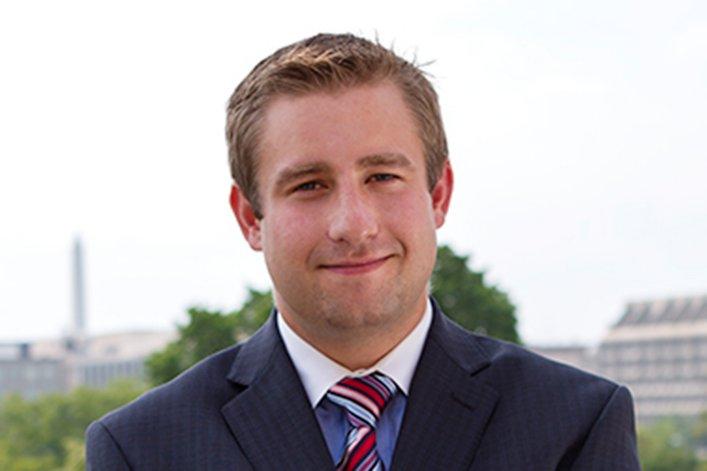
Slain DNC staffer Seth Rich
And an anonymous federal investigator has gone even further, reportedly telling Fox News that the slain employee sent WikiLeaks more than 40,000 emails and 17,000 attachments, which would suggest that Rich, not Russia, leaked the material to WikiLeaks.
Seth Rich was a 27-year old Voter Expansion Data Director for the Democratic Party when he was shot dead on a Washington street last July. Police said it was a robbery attempt, but Rich’s father said his wallet, money and credit cards were not taken.
Shortly after Rich’s murder, WikiLeaks posted a Tweet offering a $20,000 reward for information leading to the solution of the mystery of who killed Seth Rich. WikiLeaks’ interest in the case suggested that Rich might have been involved in the DNC email leak although WikiLeaks never reveals the sources who give it confidential information about governments and companies that WikiLeaks then publishes online.
Julian Assange, WikiLeaks founder and publisher, brought up Rich’s murder out of context in an interview with Dutch TV last August. “Whistle-blowers go to significant efforts to get us material and often very significant risks,” Assange said. “As a 27-year-old, works for the DNC, was shot in the back, murdered just a few weeks ago for unknown reasons as he was walking down the street in Washington.”
Pressed by the interviewer to say whether Rich was the source of the DNC emails, Assange said WikiLeaks never reveals its sources. Yet, it appeared to be an indirect way of naming Rich, while formally maintaining WikiLeak’s policy. An alternative view would be to believe that Assange is cynically using Rich’s death to divert the trail from the real source.
Further suggesting that WikiLeaks has a strong interest in the Seth Rich case, Assange on Tuesday morning retweeted the Fox5 News report citing the new developments in the murder mystery.
There also has been pushback against the Fox reports. NBC News cited a current FBI official and a former one denying that “an FBI analysis of a computer belonging to Rich contained thousands of e-mails to and from WikiLeaks. Local police in Washington, D.C., never even gave the FBI Rich’s laptop to analyze after his murder, according to the current FBI official. And a former law enforcement official with first-hand knowledge of Rich’s laptop said the claim was incorrect.”
Rich’s parents also have blasted the reports of their son’s possible involvement with WikiLeaks. “As we’ve seen through the past year of unsubstantiated claims, we see no facts, we have seen no evidence, we have been approached with no emails and only learned about this when contacted by the press,” said Rich’s family spokesman, Brad Bauman, who has worked as a Democratic Party public relations consultant.
However someone embarking on such a risky move as leaking thousands of emails purloined from his or her employer is unlikely to tell even family and friends. Edward Snowden, for instance, informed no one, including his longtime girlfriend, that he had leaked a trove of National Security Agency secrets to journalist Glenn Greenwald.
DNC Emails Revealed
Last July, the same month Rich died, WikiLeaks published thousands of Democratic Party emails which showed the Democratic National Committee violated its own charter that pledges neutrality by working for Hillary Clinton against her primary challenger, Sen. Bernie Sanders.
After the DNC emails were leaked, Clinton and other Democrats immediately blamed Russia for hacking their computers, but the DNC refused to allow the FBI to examine its computer servers to see who might have hacked in.
Instead the DNC turned to a private company, CrowdStrike, to investigate. The company – linked to the anti-Russian think tank, the Atlantic Council – concluded that Russia was behind the hack. The company said it was a sophisticated attack but also that the hackers sloppily left behind Cyrillic script and the name of the first Soviet chief of secret police – clues cited to pin the hack on Russia.
Russia and WikiLeaks have both denied that Russia was the source of the leaked emails.
William Binney, arguably one of the best mathematicians ever to work at the National Security Agency, and former CIA officer Ray McGovern, have argued that the emails must have come from a leak because a hack would be traceable by the NSA.
More speculation about the alleged election hack was raised after WikiLeaks’ “Vault 7” release, which revealed that the CIA is not beyond covering up its own hacks by leaving clues implicating others.
After Trump’s election victory, President Obama’s intelligence agencies also pinned the blame for the DNC and other Democratic-connected leaks on Russia and depicted the leaks as part of a Russian government scheme to hurt the Clinton campaign and thus boost Donald Trump.
But the Jan. 6 report by selected analysts at the FBI, CIA and NSA – and released by Obama’s Director of National Intelligence James Clapper – offered no hard evidence of Russian guilt, merely intelligence “assessments.”
A New Turn
Now, the email mystery has taken a new turn. While the Seth Rich murder case remains unsolved, a private detective hired by an anonymous third party for Rich’s family has spoken out, saying there is evidence on Seth Rich’s computer indicating that he was in touch with WikiLeaks.
Rod Wheeler, a former D.C. homicide detective, also told the local Washington Fox TV affiliate on Monday night that a police source told him the detectives were ordered to back off the murder investigation, a claim that D.C. police denied.
Wheeler also raised questions about the relationship between the DNC and Democratic D.C. Mayor Muriel Browser, who could have control over the D.C. police investigation.
The FBI told the Washington Post it is a matter for the D.C. police. But Wheeler believes Rich’s computer may be in the custody of the FBI. It is not clear exactly what role, if any, the FBI has played in the Seth Rich murder case, an FBI that joined in the effort to blame Russia and was under the command of Director James Comey until he was fired by President Trump on May 9.
Through the Democratic Party-linked spokesman, Rich’s family said Wheeler was not authorized to speak for them. “The services of the private investigator who spoke to press was offered to the Rich family and paid for by a third party, and contractually was barred from speaking to press or anyone outside of law enforcement or the family unless explicitly authorized by the family,” Bauman said. The third party that Bauman says is paying Wheeler has not been positively identified.
Following Wheeler’s assertions to the local Fox station, an unnamed federal investigator reportedly told Fox network news that the FBI inspected Rich’s computer within 96 hours of his murder. The investigator told Fox he had read through the emails, which he claimed numbered 45,053 as well as 17,761 attachments. Such exact numbers appear to lend credibility to the claim, though it is not out of the question that they could have been fabricated to match the number of items believed given to WikiLeaks.
According to the Fox News report, the investigator also said the emails and attachments had been sent among DNC leaders between January 2015 and May 2016. He said Rich sent the emails and attachments to Gavin MacFadyen, an American journalist, filmmaker and director of WikiLeaks in London, where MacFadyen died of natural causes last year.
Joe Lauria is a veteran foreign-affairs journalist. He has written for the Boston Globe, the Sunday Times of London and the Wall Street Journal among other newspapers. He is the author of “How I Lost By Hillary Clinton” published by OR Books in June 2017. He can be reached at joelauria@gmail.com and followed on Twitter at @unjoe.
Deadly rhetoric: Saudi Arabia opens war of words with Iran
By Sharmine Narwani | RT | May 16, 2017
For years the Saudis have waged proxy battles against Iran, with little success. Now, despite this history of losses, Riyadh appears to be mobilizing for an ill-conceived confrontation with the Islamic Republic.
“We know we are a main target of Iran,” speculated Saudi Deputy Crown Prince Mohammed bin Salman (MbS) in an interview early this month.
Then came the threat. “We are not waiting until there becomes a battle in Saudi Arabia, so we will work so that it becomes a battle for them in Iran and not in Saudi Arabia.”
These are fighting words indeed. The Iranians certainly thought so, Defense Minister Hossein Dehghan responding with unusual ferocity: “We warn them (Saudis) against doing anything ignorant, but if they do something ignorant, we will leave nowhere untouched apart from Mecca and Medina.”
In other words, if the Saudis launch direct aggression against Iran, this will be Riyadh’s last war anywhere, ever.
It’s an important line to draw. The Saudis, after all, have been in meltdown since the 1979 Islamic Revolution in Iran saw popular protests dethroning a King (gasp).
And so, for the past 38 years, we have witnessed an increasingly aggressive Saudi Arabia in the region, chasing down Iranian/Shia enemies where there were none. Just look at Yemen, where the two-year Saudi bombing blitz has killed over 10,000 civilians, or Bahrain, where Saudi troops and tanks snuffed out dissent in the Shia-majority state, or Syria, where Saudis send weapons, cash and support to ISIS, Al-Qaeda and other head-chopping extremists. This Saudi hysteria has now touched every corner of the world, and by the $100+ billion Riyadh has invested in radical schools, mosques, and propaganda to indoctrinate an entire generation of Muslims in Wahhabi-style intolerance.
But while the Saudis are hell-bent on thwarting Iranian influence – real or imagined – Riyadh has never dared to take on the Islamic Republic directly.
As former US Secretary of Defense Robert Gates famously noted in a 2010 WikiLeaks cable, the Saudis always want to “fight the Iranians to the last American.” To which he then added, “it is time for them to get in the game.”
Now perhaps, under the direction of a 31-year old princeling, the Saudis are planning to do just that.
Saudi Arabia vs. Iran
Some perspective first on these two Persian Gulf “rivals,” in which I borrow heavily from an earlier interview of mine:
Both Iran and Saudi Arabia are rich in energy resources and have used this rentier wealth to advance their national goals, albeit with vastly differing results. Iran’s economy is focused on diversification away from the energy sector, developing self-sufficiency and becoming a net exporter. Saudi Arabia is import-focused. Iran spends $15 billion per annum on its military – compared to Saudi’s $80 billion – yet has one of the most competent military forces in the region and builds its own hardware. The Iranian political system is Constitution-based, diverse, and representative, with loudly competing political blocs that come with their own media and constituencies. The Saudi monarchy is based entirely on the rule of one family, with no meaningful elections or contesting political bodies, and little freedom of expression in the media. Regarding power projection, Iran favors the soft power tools of diplomacy, trade, and alliance-building based on common worldviews/objectives, whereas the Saudis have expanded their influence far and wide by spreading Wahhabi doctrine through schools, mosques, media and other institutions globally – and by blatantly buying the loyalty of allies.
In the past few years, we have clearly observed how Iran and Saudi Arabia’s nation-building approaches have affected the success of their geopolitical strategies. Both states have experienced existential fears and threats, and their respective alliances have now confronted each other on a few battlefields. Iran has approached the matter of its strategic depth carefully and built alliances with partners that genuinely share the common values of independence, self-determination, and resistance against imperialism. The Saudis, on the other hand, have forged their external alliances with hegemony or dominance as the primary objective – irrespective of the divergent interests and values of allies. There is little contest – one side is a nation- and region-building, while the other flails about with unreliable alliances, propped up by petrodollars and all the strategic brilliance of a sledgehammer.
How can this relationship be classed as a rivalry, when the two don’t even operate on the same playing field? Would Tehran even notice Riyadh outside of OPEC meetings if it weren’t so belligerent at every turn, on every border?
But Prince MbS’s promise to bring “the battle” to Iran must be taken seriously because it will not be launched alone. The Saudi prince’s chest thumping comes courtesy of an upgrade in relations with Washington. US President Donald Trump is enthusiastically pushing billions of dollars in weapons sales to the Saudis, and has chosen Riyadh as the destination for his first official foreign visit, championing the establishment of an “Arab NATO” that partners with Israel to confront Iran.
Don’t expect a conventional military confrontation as the opening gambit, however. The US, Israel and Saudi Arabia are experienced in subversion and sabotage activities against the Islamic Republic, and this is where they are likely to focus their initial efforts.
Last week, Iran’s Supreme Leader Ali Khamenei warned of foreign interference in the lead-up to Friday’s presidential poll: “the security of the country should be fully protected during the elections. Anyone who violates this should know he will certainly be punished.”
Calling for public vigilance, Khamenei outlined short, medium and long-term “enemy” goals in Iran: “to distort the country’s security and trigger chaos and sedition… targeting issues like that of the economy and living conditions of the people… (and) an effort to change the system.”
So how will the Saudis play a role? Riyadh’s hand in this “battle” will likely be seen on and inside Iran’s borders, in the same form we have witnessed in Syria, Iraq, Afghanistan and other theaters flooded with Saudi-backed militants.
Stirring up minority populations
Demographically, Iran is around 60 percent ethnically Persian, followed by a mix of Azeris, Kurds, Lurs, Turkmens, Arabs, and others. Some 99 percent of Iranians are Muslim, more than 90 percent of these Shia, the rest Sunni, and the remaining one percent a mix of Christians, Jews, Zoroastrians, and others.
The main pockets of Kurds are in the northwest on the Iraqi/Turkish borders and in the north-east bordering Turkmenistan – Iranian Kurds are both Sunni and Shia. The second largest ethnicity, Azeris, who are mainly Shia, are also in the northwest on Iran’s border with Azerbaijan and Armenia.
Iranian Arabs who are concentrated in the south near the Iraqi border and the Persian Gulf – as well as around the Strait of Hormuz – are also mostly Shia. Iranian Sunni populations consist mainly of Kurds, Turkmens, and Balochis, and this is the demographic where signs of foreign interference are most notable today.
In recent years, thousands of Iranian security forces have been killed on the border of Iran’s Sistan and Baluchistan province with Pakistan – most recently in April when ten Iranian border guards died in a cross-border terrorist raid.
Reportedly, the operation was conducted by Jaish al-Adl (Army of Justice), a sectarian terrorist group the Iranians say is being directed by the US and Saudi Arabia. The US has traceable ties to some of these groups, notably Jundallah which received Bush-era funds from Washington before being listed as a terrorist organization. That “terrorist” designation, Iran knows, means little. The Mojahedin-e-Khalq (MEK) was listed by the State Department for decades, but then de-listed in 2012 and is today being actively courted by US officials.
Jaish al-Adl is an offshoot of Sipah-e-Sahaba, an anti-Shia extremist group banned in Pakistan, but which appears to continue to enjoy both Saudi and Pakistani support. Sipah leaders are ferried around the border areas with Pakistani guards, and fill their ranks with young graduates of Saudi-funded Deobandi madrassahs rife inside the Pakistani border.
US hands are all over the minority map in Iran too. Media, think tanks and politicians highlight and encourage aspirations of Iranian minorities at every opportunity, and will undoubtedly take a more active role in stirring divisions as tensions escalate.
Cue the Kurds. Both US and Saudi fingerprints are all over this project of inciting a Kurdish rebellion inside Iran. Last June and July, for the first time in 20 years, Kurds in Iran’s northwest clashed with Revolutionary Guards, killing several on both sides.
The Kurdish group involved was the Democratic Party of Iranian Kurdistan (PDKI), a longtime Iranian-designated terrorist organization that announced in 2015 it would take up arms against the state. Not surprisingly, that declaration came shortly after PDKI leader Mustafa Hijri visited congressional leaders in Washington.
A vigilant Iran
American dirty tricks are certainly not new in Iran. Former Kennedy-era State Department official Richard J. Barnet wrote in 1968: “The (US) intervention in Iran in 1953 to unseat Premier Mohammed Mossadeq was America’s first successful attempt in the postwar period to subvert a nationalist government.”
According to Barnet, “Five US agents and seven Iranian intelligence operatives” led by CIA operative Kermit Roosevelt “plotted the coup from a Tehran basement.” They were responsible for “recruiting street mobs to oppose the Mossadeq supporters… With the help of substantial sums, which Roosevelt used for hired demonstrators to whip up the growing anti-Mossadeq mobs, and the support of the Iranian army, heavily dependent on US equipment, the insurgents were able to turn the tide against the intractable premier and to drive him from office.”
Iran is intimately familiar with these foreign machinations and has been vigilantly countering them in the decades since the Islamic Revolution.
This is not the compliant Shah’s Iran – this Iran, today, is an independent, sovereign nation-state that came through an 8-year foreign-imposed war with Iraq and built with its own hands a formidable military deterrent.
As we have seen with Iran’s activities in Syria, Iraq, and Lebanon, the country’s ‘strategic depth’ is a red line – its national borders even more so. After warning the Iraqi government in 2014 that it would take decisive action if ISIS came within 40 kilometers of its border, the Iranian air force – for the first time since the Iran-Iraq war – used F-4 Phantom fighter jets to conduct airstrikes in Diyala province on its western border.
Iran’s armed forces chief Mohammad Hossein Bagheri has also now threatened military action on Pakistani territory unless Islamabad takes control of its borders, saying: “Unfortunately, the Pakistani border area has turned into a refuge and training ground for terrorists hired by Saudi Arabia, with the approval of the United States.”
In a letter this month to the UN Security Council, Iran’s UN Ambassador Gholamali Khoshroo addressed the Saudi threats: “We have no desire, nor any interest, in an escalation of tension in our neighborhood… We continue to stand ready for dialogue and accommodation to promote regional stability, combat destabilizing extremist violence and reject sectarian hatred… We hope Saudi Arabia will be persuaded to heed the call of reason.”
The Saudi princeling Mohammad bin Salman made a novice’s mistake by threatening to bring war to Iran – he put the world on notice. Any Iranian reaction now bears the full legitimacy of international law for a measured retaliation. The Saudi borders are long, its populations restive, and its soldiers have not seen this kind of war. We may yet live to see a Saudi royal eat his words.
Sharmine Narwani is a commentator and analyst of Middle East geopolitics. She is a former senior associate at St. Antony’s College, Oxford University and has a master’s degree in International Relations from Columbia University. Sharmine has written commentary for a wide array of publications, including Al Akhbar English, the New York Times, the Guardian, Asia Times Online, Salon.com, USA Today, the Huffington Post, Al Jazeera English, BRICS Post and others. You can follow her on Twitter at @snarwani
Trump says he’d be ‘honored’ to meet Kim Jong-un
RT | May 1, 2017
President Donald Trump has said he “would be honored” to meet North Korean leader Kim Jong-un under the right circumstances.
“If it would be appropriate for me to meet with him, I would absolutely, I would be honored to do it,” Trump told Bloomberg News Monday. “If it’s under the, again, under the right circumstances. But I would do that.”
“Most political people would never say that,” Trump said. “But I’m telling you under the right circumstances I would meet with him.”
“We have breaking news,” he added, likely referring to the news coverage his comments would garner.
Trump’s surprising statements could spark rumors of a new “bromance” between the president and another world leader. The comments come only a day after Trump also described Jong-un as “a smart cookie,” on CBS’s Face the Nation Sunday.
North Korea is seen as one of the US’s geopolitical adversaries. Tensions between the two nations have increased recently, following Trump’s vow to stop North Korea from developing a nuclear weapon and Pyongyang’s recent missile tests.
Secretary of State Rex Tillerson told the United Nations on Friday that the US would only negotiate with Pyongyang if it took steps towards giving up its nuclear weapons and ballistic missiles and urged nations to cut diplomatic and financial ties.
Tillerson also told NPR that the US was open to holding direct negotiations should North Korea have the right agenda.
North Korea’s missile test on Friday came hours after Tillerson’s statements at the UN.
The US Congress plans to debate new sanctions against Pyongyang this week, targeting its shipping industry.
White House press secretary Sean Spicer addressed the comments at a press briefing Monday, highlighting Trump’s statement that it would be “under the right circumstances.”
“There’s a lot of conditions that I think would have to happen with respect to its behavior, and to show signs of good faith,” Spicer said. “Clearly the conditions are not there right now.”
US can’t take pressure anymore in Afghanistan
By M K Bhadrakumar | IndianPunchline | April 25, 2017
The seething US-Russia rivalry in Afghanistan took a sharp turn with the explosive threat held out by the visiting US Defence Secretary James Mattis in Kabul on Monday that Washington “will confront Russia” for violating international law by sending arms to the Taliban. Mattis said this while answering what appears to have been a planted question by a Washington Post correspondent who asked him about Russian weapons “showing up in Taliban hands in Helmand, Kandahar and Urozgan” (provinces bordering Pakistan.)
General John Nicholson, US commander in Afghanistan, who stood beside Mattis refused to refute the reports on Russian weapons but couldn’t provide details, either. He merely noted, “we continue to get reports of this assistance.” However, Mattis went ahead nonetheless to threaten Moscow:
- Russians seem to be choosing to be strategic competitors in a number of areas. The level of granularity and the level of success they’re achieving — I think the jury is out on that… I would say that we will engage with Russia diplomatically. We’ll do so where we can. But we’re going to have to confront Russia where what they’re doing is contrary to international law or denying the sovereignty of other countries. For example, any weapons being funneled here from a foreign country would be — would be a violation of international law, unless they’re coming through the government of Afghanistan for the — for the Afghan forces. And so that would have to be dealt with as a violation of international law.
This is a dramatic escalation in rhetoric. What accounts for it? Indeed, I can visualize a backdrop with three likely vectors. (After all, Mattis is reputed to be a “thinking general” himself.) First, of course, the immediate context of his visit was the devastating Taliban attack on the Afghan army corps headquarters in Mazar-i-Sharif in which 200 soldiers were killed, leading to the exit of the Afghan defence minister and army chief.
Although there was no American casualty as such, it was a big blow to the Pentagon generals, who constantly claim to be doing a masterly job in the “capacity-building” of Afghan armed forces. Simply put, Mattis and Nicholson probably tried to change the narrative.
Indeed, it wouldn’t have been far from Mattis’ mind that Russian weapons are reportedly “showing up” in Taliban’s hands in Helmand when a deployment of Marines from Camp Lejeune, North Carolina, to that province “quietly” got under way last week, which is the first such deployment of Marines since 2014 when President Barack Obama announced the termination of the US’ combat mission in Afghanistan. The last thing Trump would want is body bags arriving from Helmand (which borders Pakistan’s Baluchistan.)
Second, Russia’s regional initiative to kickstart a political process in Afghanistan must be driving the Americans crazy.
The Pentagon has reason to worry that continued US occupation (military bases in Afghanistan) may become untenable if the political process made headway and a regional consensus favoring intra-Afghan reconciliation sought the restoration of Afghanistan’s sovereignty. (By the way, Taliban representatives based in Qatar travelled to China recently.)
Washington’s biggest worry would be that the Afghan opinion itself may come to view the Moscow-led regional initiative as the best (and only) available platform today to somehow bring the senseless bloody war to an end.
Third, if Matti’s idiom toward Russia has become distinctly hostile, it is also reflective of the deepening US frustration that Moscow is challenging its geo-strategies across the board – over Iran, North Korea, Ukraine, Turkey, Syria and so on. The chessboard is increasingly posing a “check-and-checkmate” scenario for the US, which in turn exposes the limits to America’s global hegemony.
Specifically, Mattis might have hit out in the wake of reports that Moscow has drawn up plans to deploy Special Forces to the key battle zones in Syria to vanquish the extremist groups (which enjoy US-Israeli backing). Mattis’ allegation of Russia violating “international law” in Afghanistan becomes curious because that is precisely what Moscow accuses the US of doing in Syria.
Interestingly, there are also a few sub-plots to Mattis’s press conference in Kabul: A) He was evasive about President Donald Trump deploying “thousands more” troops in Afghanistan, which was what Pentagon had recommended. Mattis said blithely, “our review in Washington is a dialogue with Secretary [of State Rex] Tillerson and the president and his staff in the White House. And I’d say that we’re under no illusions about the challenges associated with this mission.”
B) Mattis parried a direct question as to the US’ war objective in Afghanistan. C) He touched on reconciliation with Taliban – “If the Taliban wished to join the political process…, they need only to renounce violence and reject terrorism. It’s a pretty low standard to join the… political process.”
Significantly, Mattis made his visit to Kabul within a week of the fact-finding mission by NSA Lt. Gen. HR McMaster who reports directly to Trump. The transcript of Mattis’ press conference is here.
Le Pen on Idlib: Placing Blame Before Inquiry ‘Blows Chances to Know the Truth’
Sputnik – April 20, 2017
PARIS – The UN Security Council (UNSC) resolution on the alleged chemical attack in Syria’s Idlib province should not blame any one party without first allowing an official investigation into the incident to be completed, France’s far-right presidential hopeful Marine Le Pen said Thursday.
On April 4, dozens of people were reportedly killed in the chemical incident in Idlib. Paris, Washington and London submitted a UNSC draft resolution condemning the alleged attack. Russia vetoed the document on April 12, pointing out that the draft implicated the Syrian authorities as the party to blame for the incident, despite no proper investigation was conducted.
“The resolution has been prepared in such a way that the responsibility was put on [Syrian President] Bashar Assad even before an investigation… It is necessary to hold an international inquiry [into the Idlib incident], and if I were in the UNSC, I would vote for such an investigation, but not for apportioning the blame even before the beginning of the inquiry, because it is the best way to blow the chances to know the truth,” Le Pen told the Europe 1 broadcaster.
After vetoing the resolution, Russia’s Deputy UN Ambassador Vladimir Safronkov said that Russia’s own draft resolution on the alleged attack would request on-site investigations from the Organization for the Prohibition of Chemical Weapons (OPCW) to ensure that “all possible sources and means have been exhausted” before making final conclusions.
On Wednesday, Russian Foreign Minister Sergei Lavrov called the chemical weapons incident in the Syrian province of Idlib a provocation as well as an attempt to undermine the ceasefire in the country. The incident was used as pretext for a US missile strike against the Ash Sha’irat airbase carried out late on April 6. US President Donald Trump characterized the strike as a response to the alleged use of chemical weapons by the Syrian government troops while Lavrov said it was a violation of the international law. Iranian Supreme Leader Ayatollah Ali Khamenei described the US missile strike against the Syrian airfield as a strategic mistake.
US seeks political solution to Yemen conflict: Pentagon chief
Press TV – April 18, 2017
US Defense Secretary James Mattis says the conflict in Yemen needs to be resolved “as quickly as possible” through UN-brokered peace negotiations.
“Our aim is that this crisis can be handed to a team of negotiators under the aegis of the United Nations that can try to find a political solution as quickly as possible,” Mattis told reporters on Tuesday as he flew to Riyadh, Saudi Arabia.
“We will work with our allies, with our partners to try to get it to the UN-brokered negotiating table,” the Pentagon chief said.
Mattis is expected to meet senior Saudi officials, including King Salman bin Abdulaziz Al Saud and Deputy Crown Prince and Defense Minister Mohammed bin Salman.
Several UN brokered ceasefires and peace talks have so far failed to end the conflict in Yemen.
Mattis gave no details on what additional support, if any, the United States would provide to the Saudi-led coalition. Washington already provides intelligence as well as aerial refueling to coalition warplanes carrying out air strikes in Yemen.
Human rights groups have repeatedly criticized the Saudi-led bombing campaign in Yemen for causing civilian casualties. The campaign has claimed the lives of more than 12,000 people, most of them civilians.
Saudi Arabia launched its deadly campaign against Yemen in March 2015 with the alleged goal of pushing back the Houthi Ansarullah movement from the capital, Sana’a, and to reinstate the regime of Yemen’s former president, Abd Rabbuh Mansur Hadi, who is a staunch ally of Riyadh.
Yemeni students study in a classroom on March 15, 2016, which was damaged in a Saudi air strike. (Photo by AFP)
The Saudis and their allies have also suffered considerable casualties in the operation on Yemen as official estimates say more than 500 soldiers from Saudi Arabia, the UAE and Bahrain have been killed since March 2015.
Some officials in US President Donald Trump’s administration have called for more American military support for the Saudi-led coalition.
In late January, US special forces carried out an attack against a purported position of al-Qaeda militants in the central Yemeni province of Bayda, killing about 30 civilians.
The raid, in which just about everything went wrong, was the first known American-led ground mission in Yemen since December 2014.
The White House hailed the operation as a success, but critics said it was a failure since it resulted in the death of civilians and 36-year-old Navy SEAL Ryan Owens.
The US military carried out a flurry of air strikes in Yemen after the botched raid, involving a mix of manned and unmanned aircraft.
Al-Qaeda in the Arabian Peninsula (AQAP) has taken advantage of the chaos and breakdown of security in Yemen to tighten its grip on the southern and southeastern parts of the Arab country.
UK Friends of Israel chair apologizes for burning New Testament

If Americans Knew | April 17, 2017
The chair of the “Friends of Israel” caucus of Britain’s UK Independence party (UKIP) apologized recently for tweeting a picture of himself burning a New Testament.
The Jewish Telegraphic Agency (JTA) reports that Shneur Odze, a candidate for mayor of Manchester, found the New Testament in his synagogue.
He took the offending volume outside and set it on fire, then posted photos of the book burning and wrote on Twitter: “Grateful to whoever put a missionary bible amongst our synagogue’s books. Was wondering what I’d burn my Chametz with.”
According to JTA, Odze “felt he had no choice but to burn the book because he did not want to pass on what he believes is false religion to someone else and said that throwing a religious text in the garbage was distasteful, especially because it also contains the Five Books of Moses.”
The Times of Israel reports that the New Testament was in a Hebrew-English Bible published by the Society for Distributing Hebrew Scriptures, and had been placed in the synagogue without permission by a member of the Christian group.
JTA reports that Odze, a former city councilman for north London for the Conservative Party, is a rabbi and member of Chabad-Lubavitch.
Parliament Today reported in 2014 that at a UKIP Friends of Israel reception, Rabbi Odze said: “UKIP doesn’t just talk the talk on its support for the people of Israel. Only last week UKIP Councillors in Dudley blocked an attempt by Labour to impose a sanctions policy on the Council. It was UKIP Councillors in Dudley that had this proposal quashed. And it is UKIP Councillors who are leading the fight against anti-Semitism in town halls across the country.”
Featured Video
Trita Parsi: Middle East Unraveling — Are We on the Path to World War?
or go to
Aletho News Archives – Video-Images
New Book
Trans agenda is ‘normalization of sadism’ – US author

RT | September 23, 2026
The US Democratic Party has embraced a transgender agenda that amounts to “the normalization of sadism,” author A.J. Rice has said, warning that radical trans policies would return if the party is allowed to regain power.
Speaking to RT’s America First host Scotty Nell Hughes about his new book, ‘The Curse of the Bearded Lady: How the Trans Mafia Whacked American Sanity’, Rice argued that activists have gained significant influence in schools, medicine, and corporate America while people who questioned the agenda have faced pressure to stay silent.
The author described the “trans mafia” as the sprawling network of people and institutions that have helped the movement gain influence. He singled out parts of academia, wealthy backers, and corporations, and stated that providers of transition-related treatment also have a financial incentive to keep young people in their care indefinitely.
Rice argued that the consequences of these policies ultimately fall on children who are being drawn toward gender-affirming medical treatments and on girls who are expected to share locker rooms or compete in sports with biological males.
He noted that while voters rejected the Democrats’ approach to gender in 2024, the party, which has been “captured by madness,” has since only doubled down and is seeking what is effectively “the normalization of sadism.” … Full report
Blog Roll
 Aletho News
- German chemicals giant reveals details of downsizing
- Refaat Al-Areer Was The Canary In The Coal Mine In Israel’s War On The Truth
- Israeli election committee bars candidate from Knesset race over Gaza war opposition
- French-Lebanese man files war crimes complaint over Israeli attacks
- Mahan Air Flight Lands in China Despite US Threat against Iranian Airlines
- US eyes $10bn fund to rebuild war-battered Gulf infrastructure
- Trump meets Rodríguez near Maduro’s prison as Venezuela’s oil flows to US
- Trita Parsi: Middle East Unraveling — Are We on the Path to World War?
- Iran FM meets with US envoy on UN meeting’s sidelines at American side’s insistence: Report
- Qatar PM calls for Gulf security framework with Iran, says war must be ‘wake-up call’
- If Americans Knew
- Caught on Tape: AIPAC CEO Boasted of Controlling Trump’s National Security Officials
- Why Hamas Attacked Israel in October 2023 – Israeli professor Ilan Papé
- They see them, then kill them: Israeli quadcopters track, deliberately target civilians in Gaza
- Winter could turn Gaza’s treacherous, war-damaged buildings into deathtraps
- Majority of Democratic Voters Want to Prosecute Both Biden and Trump Administration Officials Over Gaza
- As Gaza languishes, world leaders gather at the UN – Daily Update
- Sanctions are collective punishment: immoral and self-defeating
- Phosphorus Munitions Fired by Israel Burn Groves, Orchards in Southern Lebanon
- Israel Carries Out New Ceasefire Violations Across Gaza
- AI – Emphasis on the ‘I’: Israel Is Funding AI Chatbot Propaganda
- No Tricks Zone
- New Study: Earth And Venus Surface Warmth Largely Explained By Convection And Lapse Rate, Not CO2 Or Radiation
- 2025 Nature Paper Claiming Worsening Global Drought Gets RETRACTED …Heavily Flawed
- New Study: ‘Global Drought Shows No Detectable Recent Acceleration Under Climate Warming’
- Economic Masterminds: German Socialists Suggest Taxing Productivity Gains Stemming From Using AI
- The South China Sea Has Not Been Cooperating With The Climate Change Narrative
- Energy Crisis: Germany Enters Heating Season With Historically Low Gas Reserve Fill Levels
- New Study: The Antarctic Ice Sheet Gained Mass From 2020-2024 Due To Staggering Snow And Ice Accumulation
- Study: Ocean Heating Rates From Thousands Of Years Ago ‘Dwarf’ Modern Ocean Heating Rates
- Climate Extremists Target, Attack Large-Scale Power Grid Infrastructure In Germany!
- New Study: Antarctic Ice Melt Has Contributed Less Than 1 Centimeter To Sea Level Rise In The Last 30 Years

