Putin & Trump agree to create bilateral channel to promote Ukraine settlement – Lavrov

Houses damaged during a shelling by the Ukrainian military, in Donetsk © Irina Gerashchenko / Sputnik FILE PHOTO
RT | July 7, 2017
A special channel between the Russian and American presidents will be established to further push for a settlement of the Ukrainian crisis, Russia’s Foreign Minister Lavrov has announced following the Putin-Trump meeting.
Additional efforts will be made “to support” the Minsk peace agreements and the work of the existing contact group on Ukraine, Russia’s chief diplomat said.
“While discussing Ukraine, the American side informed us that they had appointed a special representative to assist the efforts on settling the Ukrainian crisis.
“Arrangements have been made to create a channel between presidents of Russia and US to use this opportunity that Washington has, to further advance the settlement based on the Minsk agreements and considering the potential established in the contact group and the Normandy format,” Lavrov told reporters during the G20 summit in Hamburg, Germany.
Moscow hopes to soon meet the US representative “for consultations,” he added.
Saying that “everyone is interested” in fulfillment of the Minsk agreements, to which Kiev “is the main part,” Lavrov said Moscow “senses that its Western partners very much understand the necessity of additional influence” on the peace process which so far has been delayed.
Citing his “long” talks with the US Secretary of State Rex Tillerson earlier in the day, as well as a Thursday meeting with the French Minister of Foreign Affairs Jean-Yves Le Drian, Lavrov said everyone agrees the crisis needs to be settled within the framework of the Minsk agreements.
“I have a feeling that it has been confirmed that both the Russian and American presidents are driven by their national interests, which they see primarily in looking for mutually beneficial agreements rather than by trying to play out some confrontational scenarios.”
Lavrov added that the Ukrainian issue had been discussed “in a concrete, businesslike” manner.
China warns against escalation of tensions over North Korea
Press TV – July 6, 2017
China has warned against any rhetoric and action that could further escalate tensions on the Korean Peninsula, two days after Pyongyang test-fired its first ever intercontinental ballistic missile (ICBM).
“We also call on relevant parties to stay calm, exercise restraint, refrain from words and deeds that may heighten tensions, and jointly make effort for the easing of tensions,” said China’s Foreign Ministry spokesman Geng Shuang in a press conference on Thursday.
North Korea announced on Tuesday that it had successfully tested the ICBM, with the North’s leader Kim Jong-un calling it a gift to the United States on July 4, America’s Independence Day.
Shuang’s comments came after US Secretary of State Rex Tillerson strongly condemned the launch and described it as a new escalation of the “threat” to Washington, its allies, the region, and the whole world.
On Wednesday, US Ambassador to the United Nations (UN) Nikki Haley also told the UN Security Council that her country was prepared to exert force if needed to deal with the perceived threat posed by North Korea and singled out China as key to any diplomatic solution.
Meanwhile, Russia accused the US of attempting to negatively affect Moscow’s relations with Pyongyang by leveling false allegations about the purported abuse of North Korean migrant workers in the Russian Federation.
“These allegations are unfounded. They fabricate and publish this nonsense… and then we stand and feel like justifying ourselves after this fake news,” said Maria Zakharova, a spokeswoman for the Russian Foreign Ministry, in a press conference in the Russian capital.
She added that North Korean migrant laborers work in Russia according to an entirely legal 2007 intergovernmental agreement. She also said that the agreement was not in violation of any UN Security Council resolutions regarding Pyongyang.
Unsettled by North Korean missile and nuclear programs, the US has adopted a war-like posture against Pyongyang. The US recently deployed an advanced missile system on South Korean soil to counter potential threats from the North, angering Pyongyang.
7 Dead as Venezuela Violence Escalates
By Ryan Mallett-Outtrim and Lucas Koerner – Venezuelanalysis – June 29, 2017
Seven people have died across Venezuela over the past 48 hours, as violent anti-government protests continue nationwide.
The latest deaths include Isael Macadan Aquino, who was shot while participating in a protest in Anzoategui. Details of the shooting remain unclear, though local media has reported the protest may have devolved into looting, and authorities have stated Aquino is believed to have been shot during an “irregular situation” inside a commercial property. Two men have been arrested in connection to the shooting, though authorities are yet to suggest a motive.
Meanwhile in Venezuela’s second largest city of Maracaibo, protester Luigin Paz (20) died Wednesday at an opposition barricade when, according to the Public Prosecution (MP), he was “run over by a tanker truck”. Further details have yet to be made public.
In a separate incident in Maracaibo that same day, an unnamed motorcyclist was also fatally run over by a truck at an opposition barricade.
The death occured when the truck came under attack by opposition protesters, according to local press reports.
“We came across the barricade .. and those who had blocked the way began throwing stones at us to loot the truck and when we went in reverse, we hit the motorcycle,” said Jose Bravo, a passenger in the truck.
“[The motorcyclist] lay injured on the road and then they threw Molotov cocktails at us and set the truck on fire. The boy burned to death and my colleague and I were rescued,” Bravo told reporters.
According to Emergency Services Director Jorge Galindo, Bravo suffered burns on 95 percent of his body and is currently hospitalized undergoing treatment.
A fourth death was also publicly announced in Caracas late Tuesday, when protester Jhonatan Jose Zavatti Serrano died of gunshot wounds sustained the day before. According to the MP, Zavatti was walking in Petare Monday evening when he came across a protest and was shot in the head. A district attorney has been dispatched to investigate.
A further death has been confirmed in the north-central state of Aragua. Alfredo Figuera (18) was walking down a street in Maracay Monday afternoon when he passed a demonstration and was hit in the head by a bullet allegedly fired by two suspects on a motorcycle, the MP has reported. The youth died in the hospital on Thursday. Maracay has been the scene of heavy anti-government rioting in recent days, which on Monday alone saw the looting of 68 businesses as well as attacks on public institutions and left-wing political party offices.
Two more deaths have also been reported in Venezuelan media, but haven’t been confirmed by authorities. These include Roberto Duran, who was allegedly killed during violence at a protest in Lara state, and Victor Betancourt in Sucre. The circumstances of Betancourt’s death remain fiercely disputed, with opposition supporters claiming he was killed during a protest, while at least one local journalist has suggested he may have been involved in a traffic incident while returning from buying bread.
The latest deaths bring the overall death toll in 13 weeks of violent anti-government protests to at least 92, including 13 dead at the hands of authorities and 24 attributable to opposition political violence.
More unrest has also been reported in Caracas, with the opposition-controlled National Assembly (AN) allegedly coming under attack late Tuesday. Opposition figures have accused government supporters of shooting fireworks at the assembly building, and there were reports of improvised explosives being used outside. Amid the chaos, a video went viral on social media of a military officer arguing with AN head and opposition leader Julio Borges. The argument ended with the National Guard’s Colonel Vladimir Lugo shoving an enraged Borges out of the room.
The latest unrest came in the wake of a high profile terrorist attack on Venezuela’s Supreme Court and the offices of the Ministry of Justice. Carried out by a rogue police officer, the assailant used a stolen helicopter to drop grenades and fire at government buildings. The helicopter was found abandoned in an isolated region of Vargas state, though the pilot remains at large.
NORTH KOREA’S FAST TRACK MISSILE DEVELOPMENT: How Far It’s Come and Why it Has the U.S. on Edge
By Gregory Elich | Zoom In Korea | June 29, 2017
Since President Trump took office, North Korea has conducted a flurry of missile tests, triggering a wave of condemnation by U.S. media and political figures. The reaction contains more than an element of fear-mongering, and it is sometimes implied that once North Korea has an intercontinental ballistic missile (ICBM), it is liable to launch an unprovoked attack on the U.S. mainland.
What tends to be lacking in such reports is any sense of sober reflection, and much confusion is sown concerning the actual state of North Korea’s program. This article takes a closer look at North Korea’s recent missile launches and argues that they pose a threat–not to the safety of the U.S. population, as the corporate media claim, but to the United States’ strategic calculus in the region.
Pukguksong-2
First tested on February 11, the Pukguksong-2 is a medium-range ballistic missile based on the design of the submarine-launched Pukguksong -1. The main advantage the Pukguksong-2 has over North Korea’s other land-based ballistic missiles is that it relies on solid fuel. For that reason, the Pukguksong-2 is far more mobile and survivable than North Korea’s other medium-range missiles that outperform it. The other missiles are liquid-fueled and therefore hampered by the need to be accompanied by tanker trucks while on the move. Their necessity of a lengthy fueling process before launch makes them vulnerable to attack.
Flying on a nearly vertical trajectory, the Pukguksong-2 travelled 500 kilometers and soared to an apogee of 550 kilometers. That translates into a range of 1,200 kilometers, were the missile to be fired at a regular trajectory using the same payload.
One of the reasons for the unusually steep trajectory of the test was so that technicians would be within technical monitoring range to gather data on performance. The unusual flight path may have also been undertaken, as North Korea indicates, to avoid the political sensitivities of overflying Japan.
The missile was again tested on May 21 and followed a trajectory similar to the first. Despite North Korea’s claim that the missile should go into mass production, more testing is needed to solidify reliability and accuracy. It does not appear that the reentry vehicle was tested on this occasion, as it lacked the fins or thrusters necessary for terminal guidance capability. According to missile expert John Schilling, it “will likely take at least five years” for the Pukguksong-2 to become “the mainstay of North Korea’s strategic missile force, and even then, only in a first-generation version with a non-maneuvering warhead.”
The differing performance of the two tests indicates that there are unmet challenges in the engine manufacturing process so that it can produce consistent results.
Hwasong-12
After three failed launches in April of this year, the intermediate-range Hwasong-12 finally achieved success on May 14. Unlike the Pukguksong-2, this missile is liquid fueled. By all accounts, the performance of the Hwasong-12 demonstrated a significant technological advance over any of North Korea’s other missiles. In the last test, the missile flew at a steep 85-degree angle and achieved a height of 2,111 kilometers. It is calculated that a normal trajectory would give the missile a range of 4,500 kilometers, making it capable of striking the U.S. strategic bomber force in Guam.
More importantly, this marked North Korea’s first successful test of a reentry vehicle. A nuclear warhead must be able to withstand the enormous heat generated from reentering the earth’s atmosphere for it to reach its target. Without that capability, North Korea would not have an effective nuclear deterrent. South Korean monitoring equipment picked up data communications between the descending warhead and North Korean ground control, confirming the success of the test.
Anti-Ship Missiles
On May 29, North Korea tested an upgraded version of the Hwasong-7. Among the improvements were fins to improve stability during the boost phase, an engine in the middle section for speed control, and terminal guidance technology to provide greater accuracy. The missile is said to have a range of 1,000 kilometers and is intended to strike targets at sea.
Little more than a week later, North Korea launched several anti-ship cruise missiles, which demonstrated excellent maneuverability and precision. According to North Korean media, the missiles “accurately detected and hit the floating targets on the East Sea of Korea after making circular flights.” The flight distance was estimated at 200 kilometers, and like North Korea’s other missiles tested this year, the cruise missiles are newly designed.
The cruise missiles were fired from tracked transport vehicles that are capable of travelling across rough terrain, thus allowing them to go where they would be harder to spot and destroy.
The ICBM in North Korea’s Future
Western media, long on speculation and short on information, would have us believe that North Korea is on the verge of testing an ICBM any day now. There are technological challenges involved in developing an ICBM that will be much harder for North Korea to overcome than was the case with the Hwasong-12.
The longer the range of a ballistic missile, the higher the amount of total heat a reentry vehicle must be able to withstand. The rate of heat associated with range – and therefore speed – increases so rapidly that a successful test of an intermediate ballistic missile’s reentry vehicle says nothing about how it would fare in an ICBM. A reentry vehicle launched by an ICBM must absorb far more punishment than is the case with shorter-range missiles. It took the United States several years to master the challenge of designing a survivable ICBM reentry vehicle.
A nuclear warhead must be miniaturized to reduce the weight enough for it to be deliverable in a missile. As military technology specialists Markus Schiller and Theodore Postol point out, “It is unlikely that North Korea now has a nuclear weapon that weighs as little as 1000 kg. It is also unlikely that such a first-generation nuclear weapon would be capable of surviving the unavoidable 50 G deceleration during warhead reentry from a range of nearly 10,000 kilometers.”
It is thought that the Hwasong-12 could provide the basis for developing an ICBM. However, the missile would need to be redesigned to add another stage to do so. Recently, North Korea ground tested a rocket engine, which U.S. officials speculated could be intended to power the last stage of an ICBM. Based only on satellite imagery, that conclusion is nothing more than supposition. Regardless of the nature of the engine test, a significant amount of work remains to be done to retool an existing missile as an ICBM and to perfect associated technology, such as the guidance system and reentry vehicle.
Moreover, before a missile can be considered operationally ready, it must undergo multiple tests to ensure that it meets performance and reliability standards. The Hwasong-12 was only successful in one of its four tests.
Threats and Provocations
It is an article of faith in the West that each missile test by North Korea is a “threat” or “provocation.” But is it true? Over the last several months, India tested its Agni-2 medium-range and Agni-3 intermediate-range ballistic missiles, as well as an Agni-5 ICBM, producing only yawns of indifference. Pakistan fired an Ababeel medium-range ballistic missile, capable of delivering multiple warheads, while China and Russia both tested ICBMs. The United States, as it was roundly condemning North Korea for its tests, launched Minuteman 3 and Trident missiles. None of these tests by nuclear powers were deemed provocative. Nor was note taken of the hypocrisy of the Trump administration in expressing outrage over North Korea doing what it was doing.
Objectively speaking, there is no difference between North Korea’s missile tests and the others, although it should be pointed out that the U.S. arsenal of nearly 7,000 nuclear warheads dwarfs that of North Korea.
As the North Korean foreign ministry observed, “Not a single article or provision in the UN Charter and other international laws stipulates that nuclear test or ballistic rocket launch poses a threat to international peace and security.” The political and economic might of the United States gave it the means to prod other members of the UN Security Council to agree to its demand to impose sanctions on North Korea. As a result, North Korea is the only nation singled out by UN sanctions that forbid it from testing the same types of missiles as other countries are free to do. There is no legal basis for this double standard, which is primarily a product of U.S. influence.
From the North Korean perspective, the large-scale military exercises that the United States regularly conducts in tandem with South Korea are threatening. These drills rehearse the invasion of North Korea, including decapitation operations to kill North Korean leaders. Recently, American B-1B bomber planes executed a series of flights over South Korea, practicing the carpet bombing of North Korea. Originally designed to deliver nuclear weapons, the B-1B underwent conversion to a conventional weapons only role ten years ago. The plane is still a formidable weapon, however, and can carry three times the payload of a B-52.
In the Western mindset, none of these actions can be construed as being “provocative” or a “threat” to North Korea. But it is easy enough to imagine the hysterical reaction if Russia were to conduct joint military exercises in Cuba, practicing the bombing and invasion of the United States, along with the assassination of U.S. political leaders.
Refusal to Recognize North Korea as a Nuclear State
Trump’s policy of “maximum pressure and engagement” is based on the principle that the United States will not recognize North Korea as a nuclear state. But what does this mean? North Korea, as everyone knows, is a nuclear state.
What the U.S. means is that it won’t recognize North Korea’s right to be a nuclear state. Why is this important?
According to the Nuclear Nonproliferation Treaty (NPT), only the five countries that already had nuclear weapons when the treaty went into force in 1970—the United States, United Kingdom, France, Russia, China—are internationally recognized as nuclear weapon states. The treaty requires them to reduce their nuclear arsenal towards eventual elimination and prohibits all other signatories from possessing nuclear weapons.
Never mind that the five nuclear weapon states are far from achieving their commitment to disarmament and that the United States is spending $1 trillion to modernize its nuclear arsenal. The United States’ primary concern is the second half of the NPT’s stated goal—that no one else besides the five officially-recognized nuclear weapon states should have nuclear weapons. As such, North Korea’s nuclear and missile program, in the U.S.’ view, is an affront to this doctrine and the country should be punished accordingly.
But what about India, Pakistan and Israel—also countries with nuclear weapons that are not parties to the Nuclear Nonproliferation Treaty (NPT), you might ask. Does the United States refuse to recognize them as nuclear states?
Therein lies the greatest hypocrisy behind U.S. condemnation of North Korea’s nuclear and missile tests. Because the U.S. has no problem with India, Pakistan and Israel possessing nuclear weapons, it has seen no need to make such a pronouncement.
North Korea’s Accelerating Missile Development: Threat to U.S. Hegemony
It has not gone unnoticed that the pace of North Korea’s missile testing has accelerated in recent months. When the year began, North Korea found itself in a somewhat vulnerable position, given the Trump administration’s aggressive rhetoric. North Korea had a nuclear weapons program but no tested reentry vehicle–which meant that it had no means of delivery. The north’s conventional arms are sufficient to inflict heavy damage on South Korea. But in a conflict, harm to U.S. forces would be relatively mild, especially if the U.S. launched a first strike to eliminate much of North Korea’s military capability. The window of opportunity for attacking North Korea would permanently close once it could demonstrate an effective means of delivering a nuclear weapon and the ability to strike U.S. warplanes stationed in Guam and aircraft carriers off the coast of the Korean Peninsula. Thus for North Korea, the race was on.
The North Koreans have taken note of the experience of Yugoslavia, Iraq, and Libya, and arrived at the conclusion that a small nation relying on conventional arms alone has no chance of deterring attack by the United States. North Korea says its nuclear program “is a legitimate and righteous measure for self-defense to protect the sovereignty and the right to existence” of the nation.
That is a conclusion the U.S. is keen to discourage. For the United States, it is a fundamental principle of its foreign policy that it should be able to attack any nation of its choosing, and that no country ought to have the means of defending itself. And therein lies the source of U.S. concern. The reason why stopping North Korea’s nuclear and long-range missile program is a priority for the Trump administration is not because it truly believes North Korea will launch an ICBM at the United States. Rather, it’s that if North Korea succeeds in establishing an effective nuclear deterrent, then this could have serious geopolitical implications for U.S. policy, as other targeted nations may follow North Korea’s example to ensure their survival.
For this reason, the United States has branded North Korea a pariah state and sponsored harsh UN sanctions. North Korea faces a dichotomy between policy objectives. If it does not denuclearize, then it risks succumbing to the economic strangulation imposed by the United States. But if it abandons its nuclear program, it becomes far more vulnerable to military strikes by a hostile U.S. The lesson of Libya’s fate after it abandoned its nuclear weapons program is not forgotten.
The United States declares that it will not engage in talks with North Korea unless it denuclearizes as a precondition while receiving nothing in return. That position shuts down any possibility of diplomacy, and it is hard to visualize any way out of the current impasse as long as Washington clings to that attitude. It is to be hoped that South Korean President Moon Jae-in can persuade the Trump administration to adopt a more flexible approach. The time has come for South Korea to take the lead in finding a peaceful resolution of the nuclear dispute.
Gregory Elich is on the Board of Directors of the Jasenovac Research Institute and the Advisory Board of the Korea Policy Institute. He is a member of the Solidarity Committee for Democracy and Peace in Korea, a columnist for Voice of the People, and one of the co-authors of Killing Democracy: CIA and Pentagon Operations in the Post-Soviet Period, published in the Russian language. He is also a member of the Task Force to Stop THAAD in Korea and Militarism in Asia and the Pacific.
Crimea, Afghanistan and Libya
By Brian CLOUGHLEY | Strategic Culture Foundation | 27.06.2017
On June 20 the United States Treasury Department stated that economic sanctions against Russia «would not be lifted until Russia leaves Crimea». In that case, sanctions will remain forever, because ten days after the democratically elected Crimean parliament voted to accede to Russia on 6 March 2014, a referendum was held which confirmed its decision — and the citizens of Crimea intend to remain with Russia.
At that time «Mr Obama said that the referendum was illegal and would never be accepted» and the European Union proclaimed that the vote was ‘illegitimate and its outcome will not be recognised’». This was an interesting political signal, because it was obvious the objectors knew that the citizens of Crimea would vote to rejoin Russia. The hopes and desires of ordinary citizens didn’t matter, because the US and the EU had already made up their minds to ignore a democratic vote.
Predictably, the Secretary General of NATO, Jens Stoltenberg, continues to declare that «NATO Allies do not and will not recognise Russia’s illegal and illegitimate annexation of Crimea».
Time magazine was realistic in recording on March 16, 2014, that the citizens of Crimea «voted overwhelmingly on Sunday to secede from their country and join Russia, in a major victory for Moscow that followed days of international condemnation that the referendum itself was illegitimate». Of course they voted to accede to Russia. They would have been insane to do otherwise. The thought of being ruled by xenophobic bigots who had just mounted a US-assisted coup in Ukraine was appalling. Since the accession to Russia there hasn’t been a single instance of civil disturbance in Crimea — and be assured that if there was the slightest possibility of any such disorder, then US and British intelligence agencies would have informed their media.
The reason for the West’s condemnation of a democratic vote to belong to Russia by Russian-cultured, Russian-speaking citizens of Crimea is not difficult to determine. Since the end of the Soviet Union the US-NATO military alliance has been desperate to justify its existence, and there is no more convenient enemy to be conjured up than Russia. Until that could be arranged, excursions into wider war by NATO provided excuses for survival and expansion.
NATO’s total failure in the war in Afghanistan has further detracted from its miniscule credibility, and its 2011 blitz on Libya was a war crime. Both countries are now in chaos.
After fifteen years of US-NATO war in Afghanistan, as admitted on June 13 by the US Secretary for Defence, General Mattis, the place is a shambles, and «we are not winning in Afghanistan right now».
Amazingly, Mattis added «and we will correct this as soon as possible». What is he going to do? Wave a magic wand and eradicate corruption and install a democratic government and give equal rights to women and destroy the drug industry that accounts for 15 percent of Afghanistan’s GDP and disband the savage militias which have been so well-armed and funded by the CIA? Is he going to defeat the militants who have fought the US-NATO military alliance to a standstill over 15 years?
Mattis is the gallant intellectual general who boasted in a CNN interview in 2005 that «You go into Afghanistan, you got guys who slap women around for five years because they didn’t wear a veil. You know, guys like that ain’t got no manhood left anyway. So it is a hell of a lot of fun to shoot them». — He is exactly the sort of rabid military maniac whose bash and crash tactics over the years have caused so many Afghans to loathe and despise the foreigners who invaded their country. Mattis declares that «NATO has always stood for military strength and protection of the democracies and the freedoms we intend to pass on to our children», but the Mattis-NATO concept of freedom is at variance with reality.
In Afghanistan, as recorded by Human Rights Watch, «Early on February 18, Afghan police special forces raided a clinic run by the humanitarian organization Swedish Committee for Afghanistan, assaulted medical staff, and shot dead two patients, including a 16-year-old, and a 15-year-old caregiver. Witnesses reported that international military forces accompanied the Afghan forces, although they did not enter the clinic». No prizes for guessing which country provided these «international military forces,» under NATO auspices. Freedom, anyone?
Then on 12 June 2017 US troops killed three civilians, a man and his two sons. The soldiers were in a vehicle convoy that was struck by a bomb, and opened fire, spraying bullets round the countryside in the cause of freedom. Now: nobody should denounce these young soldiers for panicking and blasting anyone they thought was a threat. It is only too easy for commentators and politicians to aim the blame in such circumstances — without reflecting that they themselves might not have been exactly cool, calm and collected when the bomb blast went off. Certainly the man and his kids should not have been killed — but the US soldiers shouldn’t have been in Afghanistan in the first place.
And while all this carnage is going on, the West’s sanctions on Russia continue to be aimed at the innocent citizens of Crimea in the hope that they will revolt against Russia and embrace what General Mattis calls the freedom-loving US-NATO military alliance.
In 2011 this freedom-loving military alliance destroyed Libya in an aerial blitz that began by US and British warships firing 110 Tomahawk missiles and continued with NATO’s air forces pulverising the place for seven months, during which their aircraft carried out 14,202 bomb and rocket airstrikes in the cause of freedom. As noted by one commentator, Human Rights Watch «released a report into the deaths of at least 72 Libyan civilians, a third of them children, killed in eight separate bombing raids (seven on non-military targets) – and denounced NATO for still refusing to investigate or even acknowledge civilian deaths that were always denied at the time».
Libya is now a catastrophic shambles, with armed groups fighting each other and Islamic State terrorists finding willing recruits for their savagery. The results of the US-NATO war that supported rebels against the Libyan government include «Shortages of food, fuel, water, medical supplies and electricity, as well as reduced access to health care and public services. Care for patients with chronic diseases, disabilities and mental health disorders is compromised by restricted access to the few functioning health facilities. The situation of women and children has become particularly vulnerable, since the hospitals are overwhelmed with trauma patients».
Before the US-NATO destruction of Libya the World Health Organisation recorded that «the country is providing comprehensive health care including promotive, preventive, curative and rehabilitative services to all citizens free of charge through primary health care units, health centres and district hospitals». The CIA Factbook noted that Gaddafi’s Libya had a literacy rate of 94.2% which was higher than in Malaysia, Mexico and Saudi Arabia. According to WHO, life expectancy was 75 years, as against 66 in India, 71 in Egypt, 59 in South Africa.
Forgotten are the wise words of Brazil, China, India, Russia and NATO-member Germany (which refused to join the Libya bombing spree), who warned against «unintended consequences of armed intervention» concerning which Mr Putin (then prime minister) observed that it was regrettable when the «so-called civilized community, with all its might, pounces on a small country, and ruins infrastructure that has been built over generations».
The question is, where would you prefer to live? — In Afghanistan, after 15 years of US-NATO war, where barbaric violence rules, the lives of women are obscenely degrading, corruption is terminal and illegal drug production is the highest in the world? Or Libya, destroyed by a US-NATO blitzkrieg, where there are now «two rival parliaments and three governments» and even the New York Times admits that it is «a violent and divided nation rife with independent militias, flooded with arms and lacking legitimate governance and political unity»?
Or might you not prefer Crimea, where infrastructure is being improved and the people do not fear being sprayed with bullets by foreign soldiers; where every effort is being made to improve the living conditions of its inhabitants who are the targets of spiteful western sanctions?
UN rejects Israel claims of Hezbollah operating under cover of NGO
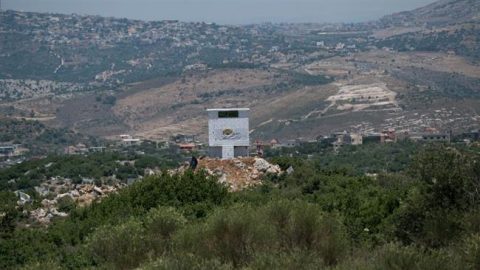
The picture released on June 22, 2017 shows an installation of the Lebanese environmental NGO Green Without Borders which Israel alleges to be used by Hezbollah fighters.
Press TV – June 24, 2017
The United Nations has dismissed Israeli accusations that Lebanon’s Hezbollah resistance movement is setting up observation posts on the border under the guise of an environmental NGO.
Earlier this week, the Israeli military published photographs and footage showing what it claimed to be Hezbollah observation posts established on behalf of “Green Without Borders” near the frontier with the occupied territories.
Israel’s Ambassador to the UN Danny Danon sent a letter of protest to the UN Security Council, denouncing the alleged “dangerous provocation” and accusing Hezbollah of carrying out undercover reconnaissance activities.
The council should “demand that the government of Lebanon dismantle these observation posts immediately, and prevent any future activity of Hezbollah and its affiliates in southern Lebanon, particularly near the Blue Line,” he said, referring to the UN-drawn boundary between Lebanon and the occupied lands.
On Friday, however, UN spokeswoman Eri Kaneko rejected Tel Aviv’s allegation against Hezbollah and said that members of Green Without Borders had only planted trees in the area over the past years.
She stressed that the United Nations Interim Force in Lebanon (UNIFIL) “has not observed any unauthorized armed persons at the locations or found any basis to report a violation of [Security Council] Resolution 1701,” passed at the end of the 33-day Israeli war on Lebanon in the summer of 2006.
UNIFIL remains in contact with the Lebanese armed forces on monitoring the border to ensure there are no violations “and to avoid any misunderstandings or tensions that could endanger the cessation of hostilities.”
The 33-day war, which killed more than 1,200 Lebanese, ended on August 14, 2006, after a UN-brokered ceasefire went into effect.
Since then, UNIFIL has also been charged with monitoring the cessation of hostilities.
Israel’s claims come while it frequently violates Resolution 1701 by invading Lebanon’s airspace.
The Lebanese army and Hezbollah have on numerous occasions reported border breaches by Israeli troops attempting to install espionage devices and tracking equipment in Lebanese territory.
US faces historic setback in the Middle East
By M K Bhadrakumar | Indian Punchline | June 23, 2017
The bloc of four Arab countries led by Saudi Arabia that imposed an embargo against Qatar on June 5 has finally presented their charter of demands. An AP dispatch, lists the 13 demands. The most striking demands include Doha reducing ties with Iran, severing relationships with Hezbollah and the Muslim Brotherhood, closing a Turkish military base in the country, and shuttering state broadcaster Al Jazeera and several news outlets.
Interestingly, Qatar is also expected to “consent to monthly audits for the first year after agreeing to the demands, then once per quarter during the second year. For the following 10 years, Qatar would be monitored annually for compliance.” All this means that abject, unconditional capitulation by Qatar only will satisfy its ‘big brothers’ – nothing less. By the way, there is also a timeline to comply – within the next 10 days – or else the demands get ratcheted up.
To my mind, Qatar will have no difficulty to see this is nothing short of a thinly-veiled push for ‘regime change’. The regime’s response can only be that these Arab bigwigs can go and hang themselves.
What happens next? Simply put, the (Sunni) Muslim Middle East is about to split and the historic schism will have profound consequences for regional and international security.
Make no mistake, this latest development also signifies a slap on the face for the Trump administration. Only last Tuesday, US state department warned Saudi Arabia to resolve the standoff without any further delay lest direct US intervention became necessary, doubting the stance taken by Riyadh (which is widely regarded as carrying the imprimatur of the new Crown Prince Mohammed bin Salman) and showing broad empathy with Qatar (where the US Central Command is headquartered.) Curiously, the US spokesperson also had alluded to Saudi Arabia’s past involvement in terrorism “whether it’s through terror financing or other means”.
Evidently, Saudi pride has been touched to the quick and Riyadh has taken exception to the US censuring. Without doubt, these demands are a show of defiance at Washington, too. This is all now going to become a protracted crisis in all likelihood, which will seriously debilitate the US’ regional strategies – unless of course Qatar crawls on its knees — and weaken its war against the ISIS.
To be sure, Turkey will take great exception to the Saudi demand that its so-called military base in Doha should be shut down unceremoniously. President Recep Erdogan will see this demand as an intolerable affront to Ottoman legacy. The VOA reported on Thursday that Turkey has been moving food and troops to Qatar in a big way.
Quite obviously, the crux of the matter is that the virus of Arab Spring is hibernating in Qatar and it threatens to become an epidemic someday again, threatening the autocratic regimes in the Middle East. Only Turkey, Iran and Israel are immune to the virus of democratic empowerment. Evidently, Al Jazeera and the Muslim Brotherhood are driving the sheikhs crazy in Saudi Arabia, UAE and Bahrain and threaten the military dictatorship in Egypt.
The credibility of the US on the ‘Arab Street’ is now irreparably damaged. For President Donald Trump all this becomes a big political embarrassment domestically. (Bloomberg ) It remains to be seen how the US can afford to sustain its belligerent posturing in Syria and Iraq much longer without any regional allies from the Arab world.
The Trump administration’s containment strategy against Iran seems destined to collapse even before its launch and Trump’s pet project of the ‘Arab NATO’ looks a macabre joke. Can the US ever restore its hegemony over the Muslim Middle East? Doubtful. A big slice of modern history of the western hegemony over Arabs is breaking away and drifting toward the horizon. To be sure, Russians are coming!
Japan Regards Russia as a Reliable Hydrocarbons Exporter
By Dmitry Bokarev – New Eastern Outlook – 22.06.2017
As you must know, Japan does not have enough natural resources to ensure its energy security without turning to any foreign players. At the same time, its closest neighbor – Russia possesses impressive hydrocarbon reserves and can be in the list of major exporters of those. Nevertheless, it is difficult to describe the volume of bilateral trade between the two states as impressive, in fact it’s the exact opposite. But it seems that the Japanese government has finally come to grips with the fact that it is missing out on enjoying the benefits of Japan’s geographic location, so Tokyo decided to step up its attempts to pursue economic cooperation with Russia.
In fact, talks about Japan’s increasing imports of hydrocarbons from Russia have been circulating for a long time. There’s no doubt that the Fukushima Daiichi nuclear disaster which resulted in the closure of the majority of nuclear power plants across Japan has made Russia even more attractive as a trade partner for Tokyo.
It’s true that Japan imports Russian liquefied natural gas (LNG), on top of taking part in the development of Sakhalin-1 and Sakhalin-2 oil and gas fields, and taking part in the construction of a LNG plant within the framework of the Yamal-LNG project. However, the level of bilateral cooperation in that area is miles away from reaching its full potential. Mind you that Russia’s share in the entire volume of Japan’s LNG imports barely reaches 8%. To this date Tokyo has been importing most of the LNG that it buys from Australia, Indonesia and the Middle East, in spite of the mind boggling shipping costs.
This situation is taking a toll on Japan’s budget and there’s no guarantee that Japan could be sure that it would get what it has paid for, since distant sea shipping always goes hand-in-hand with certain risks. Also, it’s pretty much a gamble when you’re getting resources of strategic importance from a limited number of suppliers, as it makes you dangerously dependent on your partners. Even if good relations are maintained between countries, there is always a possibility of unforeseen complications that may hinder the vital supplies.
Japan’s JFE Holdings had to learn this lesson the hard way, in spite of the fact that this company ranks second among local steel producers. To maintain its production levels any company in the steel business needs a lot of fuel. The most commonly used fuel in the steel industry is coking coal, since it’s cheap and reliable. Back in 2016 JFE Holdings acquired a total 60 million tons of this mineral, with more than 70% of this amount purchased in Australia which has traditionally been among the major coal exporters to Southeast Asia. However, a natural disaster damaged the Australian railway network back in March 2017, which obstructed the deliveries that were meant for JFE Holdings, which forced it to turn to Canada, China and the United States. It goes without saying that it had to buy large shipments of coal at a disadvantageous price. After this unpleasant incident Japan has once again realized the need to expand the number of suppliers to reduce its dependency on Australia. In May 2017, JFE Holdings announced plans to diversify imports of coking coal. The company’s management stated that among candidates for future suppliers one can find Canada, Mozambique and Russia. It is noteworthy that these days the Russian Federation is developing new coal deposits in the Far East, not far from Japan.
However, Japan’s steel industry is hardly the only industry that requires large amounts of coal to function properly. The Fukushima Daiichi nuclear disaster resulted in Tokyo building a large number of coal-driven CHP plants. In the coming years, Japanese coal imports should increase significantly, and it would only be profitable for Japan to buy coal in Russia.
It should be recalled that as early as 2016 negotiations were held between Tokyo and Moscow about the former making investments in the development of Russia’s Far Eastern ports to ensure that they maintain high transportation levels. Japan wanted to import coal from Yakutia in large volumes thus it decided to sign a number of deals to ensure its energy security. However, the practical implementation of these plans is not going quite as as one would like. For example, the Japanese corporation Tosei Group, through a subsidiary in April 2016, became a resident of the Free Port of Vladivostok with a view to constructing a transshipment complex for coal worth 60 billion rubles. The project was to be financed by the Japanese side. Additionally, construction of a terminal, capable of receiving up to 20 million tons of coal per year, was scheduled for early 2017, but it never started. The beginning of the construction works was delayed for a year, and it can now be made even partially operational by 2020. Despite the delay, the project is likely to be implemented, because the incident with the disruption of supplies of Australian coal shows that Japan really needs diversification of imports.
In April 2017, Russia’s President Vladimir Putin held a meeting with Japan’s Prime Minister Shinzo Abe, that was attended by the Russian Energy Minister, Alexander Novak. It’s been reported that the parties were discussing such projects as the creation of the Sakhalin-Hokkaido gas pipeline, along with a maritime energy bridge for electricity transmission that could be constructed in the foreseeable future. Soon after this meeting, the Japanese Minister of Economy, Trade and Industry Hiroshige Seko said that Japan is not satisfied with its dependence on gas and oil shipments from the Middle East, since the political instability of the region has been constantly threatening Japan’s energy security. That is why Japan is really interested in increasing supplies of Russian LNG.
In conclusion, one can note that in spite of the slow development of Russian-Japanese relations in the energy sector, the countries have a great future ahead of them. Japan has already begun rebuilding its nuclear power capabilities, but the demand for electricity overshadows any measure that Tokyo has put in play so far. That is why one can be convinced that the Russian-Japanese energy trade and cooperation will reach a new level.
Is ‘Tillerson Plan’ for Ties With Russia Connected to New US Sanctions Bill?
Sputnik | June 22, 2017
A leak of the “secret” document on developing US-Russian relations, which was supposedly prepared by Secretary of State Rex Tillerson, has prompted a heated debate. Speaking to Sputnik, political analyst Viktor Olevich and Russian academic Andrei Sidorov shed light on what could lie behind “the Tillerson plan.”
A leak of the “secret plan” on developing a working relationship with Russia reportedly prepared by US Secretary of State Rex Tillerson amid the increase in tensions with Moscow is by no means purely coincidental, experts told Sputnik, adding that one of the three paragraphs of the “plan” deserves special attention. On Monday John Hudson of BuzzFeed reported that the media outlet had obtained a document supposedly crafted by Tillerson which envisioned three major steps to further develop Russo-American relations.
The first step was to persuade Moscow to refrain from what the US sees as “aggressive” actions since it will be counterproductive for both sides. The second paragraph envisaged engagement with Russia on issues of strategic interest for the United States, including the ongoing war in Syria, North Korea’s nuclear weapons program, cybersecurity and cyber espionage.
The third paragraph of Tillerson’s plan highlighted the importance of maintaining “strategic stability” with Russia.
“Right now, US-Russia relations are in the gutter. We want to make sure it doesn’t flush into the sewer,” a senior State Department official familiar with the document told the media outlet.
In his interview with Radio Sputnik, Russian political analyst Viktor Olevich noted that the third paragraph of Tillerson’s framework deserves special attention.
“This plan contains no original ideas. One should pay attention to the third point — the maintenance of strategic stability related to the nuclear programs of Russia and the United States; it is the most significant [part of the plan]. This is indeed the point of convergence, where both Moscow and Washington are interested in maintaining a constant dialogue,” Olevich said.
The political analyst noted that it was the US which made an attempt to upset the balance of power by installing elements of its global missile defense system in Europe, near Russia’s borders, following Washington’s unilateral withdrawal from the 1972 Anti-Ballistic Missile Treaty in June, 2002. “This issue should become part of the dialogue between Moscow and Washington, because right now the US refuses to discuss it,” Olevich said, adding that one could only hope that the US position regarding these matters will change.
However, according to Olevich, as of yet there is no indication that Washington is interested in the normalization of Russo-American relations.
For instance, he referred to the downing of the Syrian Arab Army’s warplane in southern Raqqa by the US-led coalition’s aircraft.
The move prompted the Russian Defense Ministry to halt cooperation with the US within the framework of the Memorandum on the Prevention of Incidents and Ensuring Air Safety in Syria as of June 19.
Olevich added that the White House has yet to hand back two diplomatic compounds which were seized from Russia under Barack Obama. One is on Long Island and the other is located on Maryland’s Eastern Shore. The fact that the Trump administration has not yet settled this issue indicates that the US is not ready for the normalization of relations or a serious dialogue with Russia, the political analyst stressed.
For his part, the head of the Department of International Organizations and World Political Processes at Moscow State University, Andrei Sidorov, believes that the leak of the “secret plan” could be considered a signal to Congress that the White House is seeking room for maneuver.
Speaking to Sputnik, Sidorov highlighted that the leak coincided with the decision of House Republicans to block the Russian sanctions bill which had earlier passed the Senate. However, Sidorov assumed that it was not a coincidence. Citing Rep. Kevin Brady (R-Texas), The Hill reported that “the legislation has been flagged” by the House parliamentarian since it violated the constitutional requirement that “revenue bills originate in the House.”
“The development marks a major setback after the Senate overwhelmingly passed the legislation, which also includes new sanctions against Iran, last week in a 98-2 vote,” the media outlet pointed out.
The crux of the matter is that the bill envisions codifying the anti-Russian sanctions into law.
“By now [the anti-Russian sanctions] have been implemented as an executive order which could be canceled anytime by the US president. If they are adopted as a federal law, it would require Congressional approval to abolish them. These sanctions could remain in place for decades,” Russian academic Viktor Kheifets explained in his interview with Radio Sputnik last week.
The legislation targets Russia’s energy projects and debt-financing, most notably, the Nord Stream 2 gas pipeline project, which is poised to deliver natural gas from Russia to Europe. According to Zero Hedge, an English-language financial blog, “if the House does pass [the bill], a huge diplomatic scandal would erupt only not between the US and Russia, but Washington and its European allies who have slammed this latest intervention by the US in European affairs… a scandal which the Democrats would also promptly blame on Trump.”
Indeed, Germany and Austria have already slammed the new anti-Russian sanctions, dubbing the US move as “an absolutely new and highly negative aspect of relations between the US and Europe.”
According to Sidorov, if the bill comes into force, it will significantly reduce the room for maneuver for the Trump administration in US-Russian relations and decision-making process.
“This is a good sign for the [Trump] administration that the process [of the consideration of the bill] was suspended in the House of Representatives, but the main task of combating this bill lies with the State Department,” Sidorov told Sputnik.
“Please note that some officials from the administration have already said that US President Donald Trump is not against the tightening of anti-Russian sanctions, but the State Department objects because it is necessary to build new relations. Therefore, the leak that the document [Tillerson’s plan] envisioning building new relations with the Russian Federation is being mulled [by the White House] refers to the internal political struggle within the US,” the Russian academic believes.
According to Sidorov, the document has sent a clear signal to Congress that the State Department is working on the issue of building new relations with Russia. What the Trump administration desperately needs is leeway in determining foreign policy, the academic stressed.
READ MORE:
White House Reportedly Seeks to Weaken Senate Bill on Russia Sanctions
US State Secretary Tillerson Reportedly Develops New Plan on Ties With Russia
2 Protesters, Opposition Politician Killed in Venezuela
By Ryan Mallett-Outtrim – Venezuelanalysis – June 16, 2017
Two opposition protesters were killed in Venezuela Thursday, in the wake of the assassination of a prominent right-wing politician.
The two latest deaths include 20-year-old protester Luis Enrique Vera Sulbaran and Jose Gregorio Perez Perez.
A university student, Vera died after being hit by a pick up truck while blocking a road in Venezuela’s second largest city, Maracaibo. The pick up truck was then torched by protesters.
Police believe the death occurred after the protesters attempted to loot the pick up truck, which was carrying medical supplies. According to Interior Minister Nestor Reverol, Vera was struck by the truck as the driver attempted to flee the robbery.
Opposition protesters are known to attempt to loot vehicles, and in some parts of the country there have been reports they demand bribes from motorists attempting to pass their barricades.
However, the official account of Vera’s death has been disputed by local opposition supporters, who have claimed the protesters didn’t try to loot the vehicle.
The driver has been charged with homicide.
Meanwhile, another protester has been killed in the violence-plagued state of Tachira. For weeks, Tachira has been one of the epicentres of opposition violence. On Thursday, protester Perez was shot by two unidentified assailants in Tachira’s Junin municipality shortly after taking part in a demonstration. According to El Universal, the two unknown attackers approached Perez in a cafe, and gunned him down without a word.
Some local opposition supporters have blamed government-backed groups for the killing, though they have yet to provide evidence to bolster the accusation.
The public prosecutor’s office has stated it is investigating the case.
“There was an irregular situation in which Perez … was shot in the face. Immediately, the young man was aided and transferred to the Padre Justo hospital in the municipality Junin, where he arrived without vital signs,” the prosecutor said in a statement.
Reverol has condemned the killing, and lamented it comes amid wider political violence in Tachira state. Bordering Colombia, Tachira has long struggled with paramilitary violence.
President Nicolas Maduro has also responded to the deaths, calling for calm and an end to violence.
“I call on the population, for the greatest calm, the greatest prudence and the greatest peace to avoid violence,” he said.
The deaths of Vera and Perez come just days after another high profile killing. On Monday, a prominent member of the right-wing Voluntad Popular party was killed in Puerto Ordaz, Bolivar state. The politician, Jose Santiago Molleton Quintero, was a pre-candidate for the position of mayor in the municipality of Soledad, according to the opposition-aligned El Nacional newspaper. He was also the head of a local union for heavy industrial workers.
According to local media reports, witnesses said Molleton was approached by an unidentified assailant in a restaurant. The attacker fired multiple shots, killing Molleton and injuring one other person.
Authorities say they are investigating the killing.
The latest killings bring the total death toll of the last two months of political unrest to 82, according to data compiled by venezuelanalysis.com. So far 22 of those deaths are suspected to be linked to the actions of opposition protesters, while 11 may have been caused by authorities. Thirteen were reportedly the result of looting, and two are suspected to have been linked to pro-government civilians. Two other deaths were accidents, while 30 took place under unclear or heavily disputed circumstances.
Zarif advises US counterpart to worry about his own country
Mehr News Agency | June 16, 2017
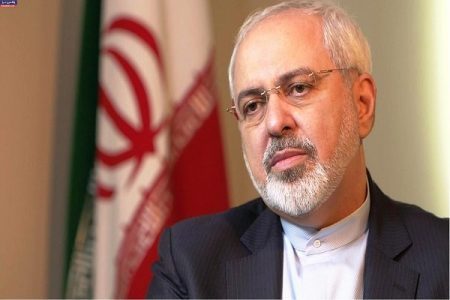
TEHRAN – In reaction to the latest remarks of US secretary of state at a US House Committee on Foreign Affairs hearing, Iranian FM Zarif posted some tweets late on Thursday.
“The 1953 coup debacle and the 1979 Revolution proved that Iranian people are impervious to outside attempts to decide their destiny,” Mohammad Javad Zarif, the Foreign Minister of Iran, posted on his Twitter account on Thursday.
Zarif’s post came after Wednesday remarks by Rex Tillerson, the United States Secretary of State, at a US House Committee on Foreign Affairs hearing on Wednesday.
The Iranian top diplomat advises US officials to be concerned about their own country where elections turnout are significantly lower than Iran, “For their own sake, US officials should worry more about saving their own regime than changing Iran’s, where 75% of people just voted.”
Mr. Zarif also calls for US apology for all the interventions by the US in Iran’s domestic affairs referring and the support by the US for the former shah of Iran during the uprising of the nation in favor of the then PM Mohammad Mosaddegh; “after decades of failed regime change and sanctions, US had to apologize for ‘1953 coup, and acknowledge diplomacy as the only option.”
Zarif advises the US administration to study and learn from history instead of trying to follow unlawful policy of changing regimes in other countries.
In Continued Targeting of Only Africans, ICC Calls for Arrest of Saif al-Islam Gaddafi
teleSUR | June 14, 2017
Just shortly after Saif al-Islam Gaddafi, the son of late Libyan leader Muammar Gaddafi, was released from prison Saturday, the International Criminal Court on Wednesday called for his arrest.
“Libya is obliged to immediately arrest and surrender Mr. Gaddafi to the ICC, regardless of any purported amnesty law in Libya,” ICC prosecutor Fatou Bensouda said in a statement.
The body — which in its history has only prosecuted Africans — alleges that Gaddafi suppressed opposition to his father’s rule during uprisings in 2011, accusing him of crimes against humanity.
Gaddafi often spoke out defiantly against attempts to topple the government his father led, having gained prominence as a high-ranking official and spokesman during the NATO-backed campaign against the Libyan Arab Jamahiriya.
That campaign soon became a “regime change” effort that led to the toppling of Muammar Gaddafi and Libya’s plunge into all-out civil war.
The North African country has since become a base for various transnational extremist factions such as al-Qaida, the Islamic State group and the Libyan Islamic Fighting group.
The ICC, on the other hand, has largely been discredited in Africa, with Gambia’s Information Minister Sheriff Bojang noting last October that the ICC is, “in fact, an International Caucasian Court for the persecution and humiliation of people of color, especially Africans.”
Earlier this year, leaders from the African Union adopted a non-binding decision to withdraw from the court.
In addition to the ICC’s calls for arrest, a Tripoli court in 2015 sentenced Saif to death in absentia for alleged war crimes as well.
Featured Video

HE SAVED LIVES. NOW HE FACES PRISON.
or go to
Aletho News Archives – Video-Images
From the Archives
NATO Sanctions and the Coming Global Diesel Fuel Disaster
By F. William Engdahl – New Eastern Outlook – 11.04.2022
Amid the ongoing global inflation crisis, NATO heads of state and mainstream media repeat a mantra that high energy prices are a direct result of Putin’s actions in Ukraine since end of February. The reality is that it is the western sanctions that are responsible. Those sanctions including cutting SWIFT interbank access for key Russian banks and some of the most severe sanctions ever imposed, are hardly having an impact on the military actions in Ukraine. What many overlook is the fact that they are increasingly impacting the economies of the West, especially the EU and USA. A closer look at the state of the global supply of diesel fuel is alarming. But Western sanctions planners at the US Treasury and the EU know fully well what they are doing. And it bodes ill for the world economy.
While most of us rarely think about diesel fuel as anything other than a pollutant, in fact it is essential to the entire world economy in a way few energy sources are. The director general of Fuels Europe, part of the European Petroleum Refiners Association, stated recently, “… there is a clear link between diesel and GDP, because almost everything that goes into and out of a factory goes using diesel.” … continue
Blog Roll
 Aletho News
- Italy to move military personnel from Taif base after missile strike
- Finland’s Stubb tells European leaders to calm down
- Defeating Russia on battlefield impossible – Fico
- Finland’s Gender Clinic Reversal
- Massachusetts Wants Mental Health Visits, Why Does Government Use ‘Health’ to Enter Our Homes & Families?
- US lawmaker admits American people footing bill for Trump’s failed aggression against Iran
- Pfizer Gave $500,000 to Groups That Lobbied to End Religious Exemption in Massachusetts
- HE SAVED LIVES. NOW HE FACES PRISON.
- Israeli lobby seeks to bind US fate to ‘Israel’: Araghchi
- Pakistan-Iran talks secure LNG shipment to Islamabad through Hormuz
- If Americans Knew
- Israel Carries Out New Ceasefire Violations Across Gaza
- AI – Emphasis on the ‘I’: Israel Is Funding AI Chatbot Propaganda
- Israel Blocking Hundreds of Wheelchairs for Injured Children From Entering Gaza
- Israel Is Expanding and Upgrading Compounds for Palestinian Militias in Gaza
- The Palestinian-American Residents of This West Bank Town Are Wondering: Where Is Trump?
- Gaza desperately needs tents, wheelchairs, fuel… and everything else (Israel blocks it all) – Daily Update
- Israeli Attacks in Gaza Kill at Least Seven Palestinians Over Three Days, including Woman and Child
- Trump’s militarization of Washington DC as he pursues Israel’s war against Iran
- Why Israel Fears This Searing New Documentary
- Huckabee aide solicited cash gifts from Israelis
- No Tricks Zone
- 2025 Nature Paper Claiming Worsening Global Drought Gets RETRACTED …Heavily Flawed
- New Study: ‘Global Drought Shows No Detectable Recent Acceleration Under Climate Warming’
- Economic Masterminds: German Socialists Suggest Taxing Productivity Gains Stemming From Using AI
- The South China Sea Has Not Been Cooperating With The Climate Change Narrative
- Energy Crisis: Germany Enters Heating Season With Historically Low Gas Reserve Fill Levels
- New Study: The Antarctic Ice Sheet Gained Mass From 2020-2024 Due To Staggering Snow And Ice Accumulation
- Study: Ocean Heating Rates From Thousands Of Years Ago ‘Dwarf’ Modern Ocean Heating Rates
- Climate Extremists Target, Attack Large-Scale Power Grid Infrastructure In Germany!
- New Study: Antarctic Ice Melt Has Contributed Less Than 1 Centimeter To Sea Level Rise In The Last 30 Years
- Fear Of Debate: Alarmist German Climate Scientist Calls On Mainstream Media To Discredit Skeptic Voices

