German-Russian friendship is over with ‘Ostpolitik’ dead and buried. Future relations will largely be based on confrontation, as Moscow no longer cares what Berlin thinks and Germany has lost its unique leverage with Russia.
Many observers believe the United Nations Security Council (UNSC) needs an overhaul. With countries such as Brazil, Germany, India and even Japan suggested as potential permanent members. Reaction to Berlin’s recent two-year stint on the body suggests the present five (China, France, Russia, the UK and the US) will be keeping the gate locked for a while.
Instead of the customary pleasantries and recognition for Germany’s contributions on its way out, Russia and China scolded the German Permanent Representative to the United Nations Christoph Heusgen. Russian Deputy Permanent Representative Dmitri Polyansky lambasted Germany’s “hypocritical behavior” and in no uncertain terms stated that “we will not miss you.” China also denounced Germany for its behavior and asserted Germany’s path toward a permanent seat at the UNSC “will be difficult.”
Disputes over Syria
The heated rhetoric derived primarily from Germany’s criticism of Russia and China over developments in Syria. For Heusgen, the fault for the crisis in Syria was simple: “Russia has been undermining the OPCW” by questioning its findings and supporting the Syrian government. Complex geopolitical rivalries in a strategic region are clothed in the language of values as liberal democracies versus authoritarians.
Since 2006, it has been widely reported and confirmed that the US has been preparing proxies in Syria for regime change. Since the fighting erupted in 2011, Western states have violated international law by funding and training militant groups and directly attacking Syrian targets.
Leaks from the Organization for the Prohibition of Chemical Weapons (OPCW) indicate that findings were deliberately misrepresented, and the chief of cabinet at the OPCW ordered officials to “remove all traces” of documents that found the gas cylinders in Douma had been planted there. The US, UK and France, blocked the testimony of Jose Bustani, the first director-general of the OPCW, who accused Washington of high-jacking the institution to control the narrative.
Russia’s denunciation of Germany’s role in the UNSC represents a wider rejection of Berlin’s self-professed moral authority. The post-Cold War era of liberal hegemony is increasingly seen by Moscow as an era of political radicalism. The West professed that its global hegemony would advance liberal values, yet Moscow perceives that liberal values have been used to assert global hegemony.
The West is accused of developing security strategies based on dominance rather than multilateralism, while relentlessly expanding a military bloc, invading and destroying other countries with increasing frequency, and pursuing coups – all the while claiming moral authority as defenders of human rights, democracy and peace.
The German-Russian split: Redefining Ostpolitik
The German-Russian relationship has historically swung between partnership and competition. In 1917, James Fairgrieve described Eastern Europe as a “crush zone” due to the power competition between Germany and Russia. Third parties such as the UK and US have historically defined their security interest as maintaining this division in Europe, as a German-Russian partnership would shift the balance of power on the continent and possibly become a threat.
Even today, the likes of ‘Stratfor’ founder George Friedman assert that the primary foreign policy goal of the US is to prevent any sort of alliance between Moscow and Berlin, because of the fear that it would offer a desirable alternative to US hegemony.
Willy Brandt’s Ostpolitik during the Cold War sought to normalize relations with the Soviet Union and its East European satellites. Moscow interpreted this as a German effort to resolve the historical zero-sum rivalry in Eastern Europe as opposed to merely regaining a foothold in Soviet satellite states. From Gorbachev’s aspiration of a Common European Home to the post-Cold War aspirations of a Greater Europe, Moscow recognized a partnership with Germany was necessary to unify the continent.
Today, Germany interprets Ostpolitik as leadership in Eastern Europe, which depends on pushing Russia out of Europe. German Foreign Minister Heiko Maas announced this month the legacy of Ostpolitik: “Unlike Brandt, we no longer have to go via Moscow to talk to our eastern neighbours nowadays. Many partners in Eastern and Central Europe now view Russia very critically – and German foreign policy must take our neighbours’ concerns seriously. In addition to offers of dialogue, clear German positions vis-à-vis Moscow are therefore important for maintaining trust in Eastern Europe.”
Fairgrieve’s “crush zone” description of German-Russian relations remains, although expressed in Berlin’s value-based “Euro-speak.”
From Greater Europe to Greater Eurasia
Berlin’s efforts to create a Europe without Russia unavoidably became a Europe against Russia. The German-supported unconstitutional coup against Ukraine’s democratically elected government in 2014, or “democratic revolution” as Berlin frames it, resulted in the death of Moscow’s Greater Europe initiative.
While the West condemned Russia for how it reacted to the Maidan, less focus was devoted to the sense of betrayal in Moscow. The remaining Russian illusions of gradual integration into a Greater Europe collapsed as the EU compelled Ukraine to choose between East and West. Subsequently, the nature and utility of the special partnership with Germany also ended.
The German-Russian partnership for Greater Europe was replaced with the Chinese-Russian partnership for Greater Eurasia. Russia has been busy the past years diversifying its economy away from Germany and toward China and Asia. The growing success of the Greater Eurasia initiative is largely the result of Russian-Chinese efforts to harmonise interests in their shared regions, which is contrasted with German efforts to “peel away” Russia’s neighbours – or “European integration” as Berlin frames it.
German-Russian relations in the age of Greater Eurasia
Under the Greater Europe initiative, Russia implicitly accepted German interference in its domestic affairs. As the eternal aspirant aiming to be included in Europe based on common values manifested itself in a subject-object or teacher-student organization of relations, Berlin was bestowed with the assumed moral authority to socialize or civilize Moscow in domestic and international affairs.
In the age of Greater Eurasia, relations between Russia and Germany are changing rapidly.
The emergence of a multipolar world implies pluralism of morals and values. Moscow is charting a distinctive conservative path and will no longer accept that liberal democratic universalism legitimizes sovereign inequality. Moscow subsequently rejects that its domestic politics is an issue for international discussion, and likewise dismisses Berlin’s effort to frame competing national interests in a Manichean prism as good versus bad values.
The unfriendly farewell by Moscow and Beijing as Germany exits the Security Council is a manifestation of a recalibrating relationship. Rather than attempting to reset relations, Moscow and Berlin should organize an amicable divorce and establish clear expectations toward each other.
Glenn Diesen is an Associate Professor at the University of South-Eastern Norway and an editor at the Russia in Global Affairs journal. Follow him on Twitter @glenndiesen
The scandalous refusal of the members of the Presidency of Bosnia and Herzegovina (BiH), Željko Komšić and Šefik Džaferović, to meet with Russian Foreign Minister Sergey Lavrov on Tuesday, indicates what the Republika Srpska has been warning about for years is correct – that BiH is dysfunctional and it is impossible to cooperate with Sarajevo. Their move could also be linked to murmurings in Washington about intentions to destroy the Dayton Agreement that created BiH in 1995. BiH was established as two entities – the mostly Bosnian Muslim-Croatian Federation of Bosnia and Herzegovina, and the Serbian-dominated Republika Srpska.
It is not the first time that Bosnian Muslim and Croat representatives have changed their minds before an event or meeting. At the beginning of the Bosnian War, Alija Izetbegović, who in 1992 became the first president of the Presidency of the newly independent BiH, withdrew from the Carrington–Cutileiro peace plan on the same day he met U.S. ambassador to Yugoslavia, Warren Zimmermann, in Sarajevo. Zimmermann denies instructing Izetbegović to withdraw from the 1992 Carrington–Cutileiro peace plan, but it is not hard to connect the dots. Because of Izetbegović’s withdrawal from the peace plan, the Bosnian War violently waged on until December 1995.
Sarajevo maintains a policy of constantly toying with agreements to create diplomatic scandals. However, despite the Bosnian Muslims and Croats continually undermining the unity of BiH by opposing the Republika Sprska, Džaferović and Komšić created perhaps their biggest scandal yet by refusing to meet with Lavrov with an undiplomatic excuse that he did not respect BiH institutions – without providing examples. Instead of holding an already scheduled meeting with him, they decided to hold their own press conference at the same time the Russian Foreign Minister spoke with the third member of the Presidency, the Republika Srpaska’s Milorad Dodik.
“With respect to the Russian Federation as a big and powerful country, we will not agree to become a Russian pawn in the Balkans in their games and conflicts with EU or NATO member countries. We expect them to understand and support this,” Komšić said.
It is possible that the Bosnian Muslim and Croat in the Presidency of BiH misunderstood a short statement from the transitional cabinet of U.S. President-Elect Joe Biden about how the work in Dayton is not finished.
Lavrov, as an extremely experienced diplomat, did not violate any protocol and did everything according to international norms and standards. The obvious problem is that Sarajevo does not want dialogue with Moscow. The Bosnian Muslim and Croat representatives could have taken advantage of the Serbs in BiH, who have a historical, ethnic and religious connection with Russia, to benefit all BiH citizens. Instead they decided to create a scandal and once again divide the country along ethnic and religious lines.
The visit of a foreign minister from a larger and influential country is an opportunity for each country to try and explain their views and improve understanding and relations with each other. If such an opportunity is rejected, it sends a negative message, not only because of the lack of desire to improve relations for mutually beneficial cooperation, but also because it fosters suspicions and tensions.
Komšić’s and Džaferović’s refusal to meet with Lavrov is an irresponsible political decision considering Moscow has always had a principled attitude towards BiH, especially as Moscow is one of the guarantors of the Dayton Agreement. Their decision to snub Lavrov is a reflection of their own frustrations against the Dayton Agreement because Bosnian Muslims are not satisfied with it. This is because they have always had the goal of supremacy and domination over all of BiH, while simultaneously sidelining the Serbs. They continually attempt to disempower the Dayton Agreement in order to achieve their goal through a belief that a better functioning system can be achieved through a centralized Bosnian Muslim dominated state that would gain supremacy over not only the Serbs, but also the Croats, who for now are just enjoying an alliance of necessity with Bosnian Muslims.
Lavrov did not comment on the boycott at a media conference and the Russian Foreign Ministry posted a photo of the meeting without mentioning that the other two presidency members were not present. Publicly, Moscow is showing that this is an unimportant issue. However, within the Kremlin, it is likely decisionmakers are contemplating what to make of this snub and how to react at an appropriate time.
The Russian diplomat’s visit to BiH coincided with the 25th anniversary of the signing of the Dayton peace agreement, which although left BiH as an example of why artificial states like BiH result in failure, it did end the bloodshed that Izetbegović instigated for many years by withdrawing from the Carrington–Cutileiro peace plan in March 1992.
Lavrov emphasized on Monday, the other day before his visit to BiH, that the Dayton agreement must not be changed, referring to comments by Western diplomats, Bosnian politicians and Washington that it needs to be changed.
“I would like to say that any attempt to demolish [the Dayton agreement] can cause the most serious risks and consequences,” Lavrov said.
By snubbing the Russian Foreign Minister, it appears that Komšić and Džaferović are attempting to demolish the Dayton agreement so that Bosnian Muslims and Croats can achieve more power in BiH at the expense of the Republika Srpska.
Paul Antonopoulos is an independent geopolitical analyst.
In late 2016, reports emerged that staff members at US and Canadian embassies in Havana, Cuba, were experiencing symptoms that included hearing loss, dizziness and a sensation or vibration of pressure in the head. The mysterious health effects resulted in the US accusing Cuba of carrying out attacks on its diplomats, resulting in new hostilities.
Cuban officials issued a statement on Tuesday rejecting claims made in a US report that alleged directed radio frequency energy was likely to blame for mysterious health ailments suffered by several diplomats working in Havana, Cuba.
Luis Velázquez, the president of the Cuban Academy of Sciences, noted in the release that the organization disagrees with the National Academies of Sciences (NAS) December 6 report, even though it “made progress in defining the medical characterization of the causes and issued valid recommendations.”
“The report does not provide scientific evidence that radio frequency waves of great intensity existed in the area where the diplomats were located,” the statement read, before underscoring that the NAS conclusion was more of a hypothesis and “certainly not a proven fact.”
The NAS report was commissioned by the US State Department, a fact which likely raised red flags for the Cuban organization.
Velázquez’s statement further stressed that the Cuban body recommended both “journalists and governments to listen to science and refrain from endorsing conspiracy theories.” He added that symptoms reported by the affected individuals “should be considered and treated as a health problem, not as a political issue.”
NAS explained in its reporting that it had determined “directed, pulsed radio frequency energy” was the “most plausible mechanism”, after examining symptoms experienced by diplomatic staff. It’s worth noting that the study authors did indicate that a more thorough investigation would be needed.
Although health problems were first documented in late 2016, reports on the matter were not raised until 2017, after dozens of individuals reported symptoms. The unusual development was eventually dubbed the “Havana Syndrome.”
Initial reports suggested that afflicted individuals began first hearing an odd noise for a period of time, often late at night in their homes or hotel rooms. In some cases, the sudden wave of headaches and dizzy spells would prompt an individual to become nauseous.
With no clear understanding of what was happening, the Trump administration subsequently declared that the health problems were the likely result of a coordinated attack against American diplomats.
By August 2017, tensions between the US and the island nation reached a new height as two Cuban diplomats were expelled from the US. Some 15 Cuban diplomats would be expelled in the months that followed. Non-essential staff at the US embassy in Havana were later removed, leaving only a skeleton crew to keep the site running.
The Cuban government has repeatedly rejected all allegations that it had any involvement in the incidences, going so far as to offer its cooperation on investigations. Trump administration officials have refused to collaborate.
Mérida – Former two-time presidential candidate Henrique Capriles has demanded a change of strategy for the Venezuelan opposition.
In an interview with the BBC, Capriles argued for a “reconstruction” of the opposition following last Sunday’s government victory in National Assembly (AN) elections. He claimed that the current plan led by US-backed Juan Guaido is “finished” and stressed that Washington’s stance will be “crucial.”
“The new [Prospective] administration has to understand that this plan has run its course and it cannot keep the status quo: the [Guaido] ‘interim presidency’,” Capriles said, adding that the opposition could “disappear as an alternative” if there is no change of course.
The December 6 elections delivered an overwhelming parliamentary majority for the ruling United Socialist Party (PSUV) and allies for the 2021-2025 term, but turnout stood only at 30.5 percent of the electoral roll after mainstream opposition parties boycotted the vote. The results were endorsed by an international observation mission.
Capriles, who served two terms as Miranda State governor, argued that the low turnout reflected the Venezuelan population’s “weariness” towards politicians and claimed the international community would not see the process as “legitimate.”
The veteran leader and allied figures had previously caused a rift within the opposition when they held talks with international brokers with a view towards taking part in the elections, but ultimately decided against it. However, the Justice First party founder insisted on the need to “align” the international community towards an “electoral calendar” featuring both presidential and parliamentary contests.
The former presidential candidate also voiced severe criticisms at former AN President Juan Guaido, though stressing it was “nothing personal.”
“When Guaido was the main figure, I backed him, but we can’t turn a blind eye to mistakes. Attempting to overthrow the government from the Altamira overpass, please!” he said in reference to the April 30, 2019 failed military putsch.
Opposition lawmaker Guaido proclaimed himself “interim president” in January 2019 and led several attempts to oust the government by force. In May 2020 he was alleged to have backed a failed paramilitary incursion featuring US mercenaries. His popularity and standing within the anti-government forces quickly eroded following a string of scandals.
Guaido and his associates rejected the recent parliamentary elections and vowed to “extend” the term of the outgoing National Assembly, with the newly elected one constitutionally mandated to take office on January 5, 2021.
The hardline opposition sectors have instead organized a “popular consultation,” asking backers whether they reject the recent elections, demanding an end to President Maduro’s “usurpation” and calling for action from the international community to oust the government.
The consultation has taken place via digital apps such as Telegram, with an in-person component scheduled for Saturday. Nevertheless, no details on audits or oversight surrounding the process have been detailed, while social media users have shown it is possible to vote from abroad or using Venezuelan identity cards found online.
Serbian Ambassador to Montenegro, Vladimir Božović, was declared a persona non grata last week and was asked to leave the country. The Montenegrin Foreign Ministry justified its reasoning because of Serbia’s alleged “long and continuous meddling in the internal affairs of Montenegro.” They also claimed that the Serbian ambassador “directly disrespected” their country by highlighting that the 1918 decision for Montenegro to join the Kingdom of Yugoslavia was “liberation” and occurred because of the “free will” of the Montenegrin people.
Montenegro is politically split between those wanting to maintain closer ties with traditional allies like Serbia and Russia, and those who want Montenegro to become a liberal democracy modelled on the West. However, for those hoping to turn Montenegro into a Western-style liberal democracy, they place their hope in President Milo Đukanović. The Montenegrin President since 1991 has held leadership positions in an authoritarian manner, either as prime minister or president. Đukanović is alleged to have strong links to the mafia, was described in 2010 as “mysteriously wealthy” for being one of the world’s richest leaders, and engages in corrupt practises like smuggling, organized crime, and privatizing state assets like the Prva Banka for the benefit of his family.
However, Đukanović’s stranglehold over Montenegro is weakening. The 2020 Parliamentary elections saw an opposition coalition comprising of pro-Serbian, left-wing and right-wing political parties, specifically For The Future Of Montenegro, Peace Is Our Nation, and the United Reform Action Party, win 41 of the 81 seats in the Montenegrin Parliament. The ruling Democratic Party of Socialists of Montenegro (DPS) and the Liberal Party won 30 seats, officially becoming the opposition after thirty years in power. On Wednesday the new government was elected by 41 out of 81 members of the Montenegrin Parliament.
With the scandalous decision to expel Božović, motivated by the weakening of Đukanović’s political power, the outgoing Montenegrin government unsuccessfully tried to profit politically by provoking artificial tensions with Serbia before the formation of a new government. They were counting on the re-grouping of nationalist forces to back Đukanović’s DPS, an unsuccessful gamble.
Decisionmakers in the Montenegrin capital of Podgorica also made a second gamble. They expected the EU not to interfere in their issue with Serbia and thought Brussels would only silently observe the instability. They were proven wrong as a minor spat between the EU and Montenegro occurred this week. Montenegrin media, which is strongly aligned with Đukanović, got into a polemic with European Commissioner Olivér Várhelyi. They criticized him for not supporting the expulsion of the Serbian ambassador. The EU has no interest in supporting unnecessary hostility towards Belgrade, especially at a time when Brussels is attempting to become the main player in Kosovo and when Serbian President Aleksandar Vučić is becoming increasingly friendly towards the EU and NATO.
Serbia’s Foreign Ministry immediately announced its response to the expulsion of Božović. Montenegrin Ambassador Tarzan Milošević was asked to leave Serbia within 72 hours. Although the ambassador was given 72 hours to leave, Várhelyi welcomed Belgrade’s near immediate decision change on expelling him. On Twitter he said:
“I welcome the Serbian Government’s decision to withdraw expelling the Montenegrin ambassador. I call on Montenegro to do the same. Respect for good neighbourly relations and regional cooperation are cornerstones of EU enlargement, and Association and Stabilisation Process.”
Although Belgrade withdrew its demand, European institutions no longer have an understanding for the policies of the Montenegrin authorities. It is extremely uncommon in diplomatic practice for a government that was defeated in recent elections to make such important state decisions during the transition period. At this moment, there is no logic for the EU to unreasonably support hostility against Serbia, especially from a country like Montenegro that is in an advanced stage of EU accession.
Brussels is likely aware that Serbia has the greatest potential out of all the former Yugoslav countries. Any quarrelsome tone directed against Belgrade, which is not related to the Kosovo issue, does not serve EU interests. This is especially important because Podgorica has already announced that they will ignore Várhelyi’s call to withdraw the decision to expel the Serbian ambassador.
Such a mindless action by Montenegrin authorities was accompanied by reactions from the political and media establishment in the country. All of them vehemently demanded that Várhelyi learn about historical events from the beginning of the last century, and that on the basis of such interpretations it can be understood why the Montenegrin kleptocracy makes extreme moves against Serbia.
European representatives do not want to engage in any interpretations of Montenegrin history. Instead, the EU sent an explicit message against the provocative actions by Montenegrin authorities – the interest of the EU in the Balkans is stability. Another important message was sent to Đukanović as well – his anti-Serbian policies have been overcome and he cannot seek his political survival through Serbophobia.
The formation of a new government dealt a major blow to Đukanović’s dominance over Montenegro, and could pave the way for his final ousting from Montenegrin politics in the next presidential election. Although he and his faction expected silence or acceptance from the EU for provoking Serbia in reaction to losing the parliamentary elections, it could be suggested that Brussels’ patience with Đukanović’s authoritarianism, corruption and regional provocations is beginning to end.
Paul Antonopoulos is an independent geopolitical analyst.
Ellen Brennan Reiche, one of two women charged this week in Seattle for allegedly attempting a terrorist attack on a railroad, was reportedly the deputy field organizer for the Democratic Party in Washington state.
US Attorney Brian Moran announced the charges, saying that the 23-year-old Reiche and Samantha Frances Brooks, 27, were arrested on Saturday night after they allegedly placed a “shunt” on BNSF railroad tracks in Bellingham, Washington. A shunt is comprised of wire and magnets stretched between the tracks to disrupt the low-level electrical current and can be used to derail a train, cause train cars to decouple or stop safety gates from coming down at railroad crossings, Moran said.
The FBI’s Joint Terrorism Task Force has been investigating the placement of shunts on BNSF tracks in Washington since January. There have been at least 41 such incidents during that period, causing crossing gates to malfunction, disrupting automatic braking systems and nearly derailing a train pulling tanks of hazardous and flammable chemicals.
An anarchist group called It’s Going Down claimed responsibility for the railway attacks on its website, saying it was being done to “fight against colonial invasion” of Wet’suwet’en Indian lands in British Columbia. Bellingham is located about 17 miles south of the Canadian border.
Reiche’s Linkedin profile, which has apparently been deleted, reportedly indicated that she had worked as deputy field organizer for Washington State Democrats. She’s currently a mentor for Wild Whatcom, which takes children on nature outings.
BNSF police observed Reiche and Brooks kneeling on railroad tracks on Saturday night, according to Moran’s statement. Whatcom County Sheriff’s Department deputies confronted the two women at the scene and found a shunt on the tracks near the spot where they had been spotted by surveillance cameras.
Reiche and Brooks tried to flee on foot but stopped when a deputy ordered them to halt. Deputies said they had a paper bag containing wire and a drill with a brush head. The wire was similar to the material used in previous shunting incidents. When confronted, Reiche allegedly told deputies that she and Brooks were walking along the tracks to look for her keys. They had no flashlight or other device to help see in the dark.
Reiche told deputies that she had left her phone in her car and pointed out her vehicle parked nearby, according to court documents in the case. The car had a sticker on the back with the words “indigenous land” over a map of the US.
If convicted, Reiche and Brooks could be sentenced to up to 20 years in federal prison and a $250,000 fine. “These crimes endanger our community,” Moran said.
Coronavirus had been infecting people in the US even before China reported its first cases on December 31, 2019, research by the US Centers for Disease Control and Prevention (CDC) and the American Red Cross has revealed.
American medics officially registered their first Covid-19 patient on January 19, 2020, but the findings in a paper published in the journal Clinical Infectious Diseases suggest the virus may have been circulating in the US prior to that.
The researchers studied almost 7,400 blood donations made in nine US states between December 13, 2019 and January 17, 2020. Evidence of Covid-19 bodies antibodies, the presence of which suggest a person had contact with the virus, were present in 106 of those samples, according to the study.
This means coronavirus could have been in the US a month before it saw its first confirmed case, and weeks before the Chinese authorities announced the infection in the city of Wuhan.
The analysis of hospital data from across the US in late 2019 also showed a spike in flu patients, many of whom had “heavy coughing” and other severe respiratory symptoms.
European researchers have also speculated that coronavirus had been present in their countries before China officially announced the outbreak of the new strain. A French survey has discovered there were Covid-19 antibodies in blood samples taken in early December 2019. A similar study carried out by their Italian peers revealed that samples in Italy were already showing antibodies in September.
Spanish virologists, meanwhile, found traces of coronavirus in sewage water samples collected in March 2019 – a full nine month before the events in Wuhan.
The precise origins of coronavirus are currently unknown, but the US has been making active attempts to blame it on China since the start of the pandemic. President Donald Trump has often referred to the disease – which has so far infected more than 13.8 million people, and killed more than 271,000 in America – as the “Chinese virus,” provoking vehement protest from Beijing.
The International Atomic Energy Agency (IAEA) published on Friday its new quarterly report in which it highlighted the goodwill of the Islamic Republic of Iran in allowing the international inspectors access to one of the Iranian strategic sites, which, according to the Agency, is one of the facilities where “suspicious” activities are allegedly taking place. The 40-page report ratifies Iran’s verification of the Non-Proliferation Treaty’s safeguards to prevent the manufacture of nuclear weapons.
In its dossier, the IAEA points out that Iranian heavy water reserves have been reduced to 130 tons, thus placing it within the framework of the Comprehensive Joint Action Plan (CJAP or JCPOA), the official name of the nuclear agreement signed in 2015 between Iran and the 5+1 Group, composed at that time by the U.S., the UK, France, Russia, and China, plus Germany.
According to the Iranian press, despite this confirmation, IAEA director Rafael Grossi, under pressure from the West, called last week for greater transparency in the Iranian peaceful nuclear program.
However, this Saturday, after learning the contents of the report, Mikhail Ulyanov, permanent representative of Russia to the international organizations based in Vienna, Austria, in a message published on his Twitter account, has stressed that this document disrupts all efforts of those who sought to undermine the issues related to Iran’s cooperation with the IAEA.
“The data in the report published by the IAEA indicates that Iran has begun to allow access to the sites indicated by the Agency. Those who wanted to create a crisis on this issue should be very disappointed,” wrote the senior Russian diplomat. After stressing that the spirit of cooperation between the Atomic Energy Organization of Iran (AEOI) and the IAEA prevailed, Ulyanov said that this understanding clarifies that Iran remains faithful to its nuclear commitments, unlike the United States.
U.S. President Donald Trump, despite multiple reports from the IAEA that Tehran was meeting all the commitments it accepted at the IACP, used the pretext that Tehran was not doing so to abandon the agreement May 2018 and re-impose a series of illegal sanctions on Tehran.
The new IAEA report comes after the Trump government added two major diplomatic defeats in recent weeks. First, its plan to extend the arms embargo against Iran and then its attempt to restore the United Nations Security Council (UNSC) international sanctions against Tehran, eliminated under the nuclear agreement, failed.
This year’s Diwali celebration got off to a very symbolic start after Pakistan shined some light on the dark activities that it accused India of carrying out in the region. Islamabad released a detailed dossier during a press conference on Saturday strongly making the case that India is a state sponsor of terrorism whose intelligence services have weaponized this phenomenon as part of the proxy war that they’re fighting with respect to the UNSC-recognized international Kashmir dispute and against the China-Pakistan Economic Corridor (CPEC), the flagship project of Beijing’s Belt & Road Initiative (BRI). These claims aren’t anything new, but what’s novel is the amount of detail devoted to proving them this time around.
According to Pakistan, Indian diplomatic facilities in Afghanistan are being used to coordinate the training of various terrorist groups on that landlocked country’s territory, including efforts to unite relevant Baloch and Pashtun ones as well as create a new ISIS branch dedicated to attacking Pakistan. Islamabad mentioned names, dates, bank accounts, phone numbers, and other identifying information such as exposing the Indian mastermind of these regionally destabilizing activities to make its case that India is a rogue state whose behavior should be investigated by the international community, which might find it fitting to sanction the country through the Financial Action Task Force (FATF) and other related bodies.
Pakistan’s diplomatic masterstroke puts India in a very uncomfortable position because it had hitherto been the latter making such claims about the former and not the reverse. The comparatively muted reaction from the international community in the 24 hours since the dossier was revealed suggests that they feel uncomfortable about the accusations and aren’t too sure how to respond. India is a close military and economic partner of a growing number of influential players such as the US and “Israel” who might now be embarrassed for so closely associating with a country that’s been convincingly accused of such rogue behavior. At the same time, however, “birds of a feather flock together”, as they say.
For reasons of self-interest, it might turn out that the international community as a whole doesn’t react the same way to Pakistan’s accusations as they’ve done in the past whenever India made similar but much less detailed ones. Nevertheless, what’s most important to pay attention to is how these revelations might shape Chinese-Indian relations considering their clashes along the Line of Actual Control this summer and ongoing state of ever-intensifying cold war. The grand strategic interests of the People’s Republic are directly threatened by India’s Hybrid War of Terror on Pakistan, which aims to destabilize CPEC’s northern and southern access points in Gilgit-Baltistan and Balochistan respectively.
In fact, the timing of this dossier’s release might have been connected to those two countries’ rivalry. To explain, India was handily defeated by China during their clashes over the summer, which might be why it’s doubling down on its proxy war of terrorism against Pakistan in response. After all, Islamabad warned that New Delhi would soon seek to intensify its terrorist efforts in the coming future, so the dossier might have been intended to preemptively thwart that by exposing these plans in order to put pressure on India to reconsider its actions. Of course, it also took plenty of time to assemble all the details that were disclosed, but the timing was at least very convenient from the Pakistani perspective even if it was ultimately coincidental.
All told, the dossier heralds the advent of a new phase of Pakistani diplomacy where Islamabad confidently exposes India’s Hybrid War of Terror on the world stage. Since it can be assumed that China considers these claims credible considering the fact that its interests are directly threatened irrespective of the country’s public reaction (or potential lack thereof in line with its diplomatic traditions), the conclusion can thus far be made that this report already had a significant impact. It might very well end up being the case that Chinese-Indian relations will never return to their former friendliness, especially if Beijing begins to wonder whether Washington might be tacitly supporting New Delhi’s proxy war on CPEC.
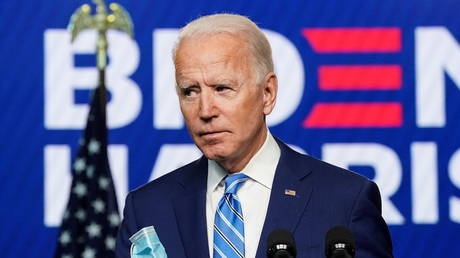
As the media-ordained President-Elect Joe Biden announces his Coronavirus Task Force it is becoming increasingly clear that a Biden/Harris administration will maintain many of the relationships established under the Trump administration.
On Monday, Joe Biden announced the creation of a COVID-19 Transition Advisory Board and a Coronavirus Task Force that will assume control of the fight against COVID-19 on January 20, 2021, should he eventually be sworn in as the 46th president of the United States. Biden stated that Transition Advisory Board would help his presidential transition team establish rapid testing and a “core of contact tracers to track and curb this disease.”
Biden also issued a call for the American people to begin wearing masks “for the next few months” until a vaccine is available. Biden said the CDC has called a mask the “most potent weapon against the virus.” The former Vice President also repeated his warning that the U.S. was facing a “dark winter”, a phrase that has been repeated with increasing frequency over the two weeks.
As @JoeBiden said yesterday, we are facing a dark winter if we don’t get coronavirus under control. Please wear a mask to reduce the spread and save lives.
Biden announced that his Coronavirus Task Force would be chaired by former Surgeon General Vivek Murthy, former Food and Drug Administration commissioner David Kessler and Yale University’s Dr. Marcella Nunez-Smith. The three chairs would oversee ten other health professionals and experts in their field.
In previous investigations we have revealed the ties between the Trump admin’s Operation Warp Speed and Big Pharma, DARPA, and the Gates Foundation. These ties made it clear that the Trump admin was very much in partnership with the likes of Gates Foundation and the Rockefeller Foundation – institutions which maintain an exorbitant amount of influence and control on global health policy. An examination of the Biden Coronavirus Task Force reveals that these same institutions will continue to hold sway over the direction of the fight against COVID-19.
Connections to the Gates Foundation, Rockefeller Foundation, Council on Foreign Relations, and the CIA
Before we proceed, if you find yourself wondering, “what’s wrong with being connected to the Gates Foundation or Bill Gates?”, I recommend reading my 3-part investigation into Bill Gates. The simple fact is that Gates and his foundation have been able to gain influence and control of global health policies by funding and partnering with nearly every global organization involved in health in one fashion or another. This was apparent under Donald Trump’s Operation Warp Speed and it is apparent with Biden’s Task Force.
For starters, at least six members of the 13 member Task Force have worked directly with Gates or the Gates Foundation, while at least 3 others have tangential connections to Gates. Several members also have connections to the Rockefeller Foundation, which is also infamous for shaping international health policy.
Let’s begin with the tangential connections. These might not be evidence of a strong relationship with the Gates Foundation or other organizations, but they do show the consistent presence of these institutions. We will progress through each task force member and show an increasing amount of worrisome relationships.
Dr. Julie Morita is the Executive vice president of the Robert Wood Johnson Foundation who helped lead Chicago’s Department of Public Health for nearly 20 years. She has participated in events with the Gates Foundation.
Dr. Celine Gounder is a clinical assistant professor at the NYU Grossman School of Medicine. While she was on faculty at Johns Hopkins, she was the Director of Delivery at Gates Foundation-funded Consortium to Respond Effectively to the AIDS/TB Epidemic. Gounder is currently a CNN Medical Analyst, and has appeared as an expert guest on CNN, MSNBC, Al Jazeera America, CBS, and the BBC.
Ms. Loyce Pace is the Executive director and president of the Global Health Council, who previously served in leadership positions at the American Cancer Society. GHC is supported by the Gates Foundation and gives out the Gates Award, named after Bill Gates. As recently as September 2020, the Gates Foundation gifted $25,000 to the GHC.
Dr. Eric Goosby is an infectious disease expert and professor of medicine at the University of California, San Francisco, School of Medicine. During the Clinton administration Goosby was the founding director of the largest federally funded HIV/AIDS program. Goosby was also part of a 25-member commission convened by the Rockefeller Foundation and Boston University which focused on “how global decision-makers can better use burgeoning data on the wide range of factors influencing people’s health.”
Michael Osterholm is the Director of the Center for Infectious Disease Research and Policy at the University of Minnesota, and former science envoy for health security for the State Department. He also has connections to the Rockefeller Foundation. Osterholm was involved with the creation of the Rockefeller Foundation’s COVID-19 Testing Action Plan, along with Dr. Zeke Emanuel (see below).
In an op-ed in the New York Times, Osterholm described the Rockefeller plan:
“Finally, the Rockefeller report calls on states to hire at least 100,000 people to perform the work of testing and contact tracing. This, too, most likely requires federal funding — and has the virtue of doubling as a jobs program during this period of extremely high unemployment.”
Dr. Atul Gawande is Professor of surgery at Brigham and Women’s Hospital and at Harvard Medical School. Gawande served as a senior adviser in the Department of Health and Human Services in the Clinton administration. Dr. Gawande appears to maintain a close friendship with Bill Gates, as evidenced by an an interview on CNBC where the two men were interviewed about their participation in a panel at the World Economic Forum in Davos. The WEF is behind the push for a Great Reset. Gawande also moderated an event at the United Nations featuring Bill Gates and German Chancellor Angela Merkel.
Dr. Luciana Borio has served in senior leadership positions at the FDA, including Acting Chief Scientist. Some reports have claimed she “predicted” a pandemic was coming and the U.S. government was unprepared. In 2018, Borio told a symposium that “the threat of pandemic flu is our number-one health security concern.”
Borio is also the Vice president of technical staff at In-Q-Tel, the CIA’s venture capital firm, and was formerly a biodefense specialist on the National Security Council. The NSC is well-known as a haven for intelligence agents and government spokesman who advise the president. The NSC was also involved in the creation of the Presidential “Disposition Matrix”, otherwise known as the Presidential Kill List.
Borio was involved in another book examining global health threats which was also funded by the Rockefeller Foundation and Gates Foundation. Frankly, the constant presence of these two organizations is a clear example of how extensively the foundations influence and shape global health policies.
We should note that Dr. David Kessler, Dr. Robert Rodriguez, and Dr. Eric Goosby, all have ties to the University of California, San Francisco. I have previously reported on UCSF’s role in the COVID-19 response, including working with Google on contact tracing apps and partnering with the Gates Foundation.
Dr. Ezekiel Emanuel is an oncologist and chair of the Department of Medical Ethics and Health Policy at the University of Pennsylvania. He is also the chair of the Department of Bioethics at The Clinical Center of the National Institutes of Health. Emanuel has long been the subject of controversy as Republicans have sought to connect him to the promotion of the so-called “death panels”, medical boards which ration healthcare and in some cases, decide who receives life-saving care.
While most of these claims seem overblown – Emanuel has opposed legalizing euthanasia – he also wrote an essay called “Why I Hope To Die When I’m 75.” In the essay he argues that life after 75 is not worth living and that U.S. health care should not prioritize treatment for those over 75. “Once I have lived to 75, my approach to my health care will completely change. I won’t actively end my life. But I won’t try to prolong it, either,”Emanuel wrote.
In April, Emanuel told MSNBC that COVID-19 would be around for at least 18 months and that the American public would “not be able to return to normalcy until a vaccine or effective medications.” He acknowledged that the American economy would be hit hard and people would have trouble finding work, but claimed “we have no choice” because without social distancing and masks “deaths could skyrocket into the hundreds of thousands, if not a million.” Additionally, in an op-ed piece to the NY Times he asked, “Why isn’t it mandatory to wear masks in public?”
Coincidentally, Dr. Emanuel is also the brother of former Mayor of Chicago and former Chief of State during the Obama administration. Among other things, Rahm Emanuel is infamous for a 2008 interview where he stated, “You never want a serious crisis to go to waste, and what I mean by that is an opportunity to do things that you think you could not do before.”
Rahm Emanuel brought his famous quote back in March while speaking about COVID-19. “Never allow a crisis to go to waste,” Emanuel said on ABC This Week. “Start planning for the future. This has to be the last pandemic that creates an economic depression. We’re going to have more pandemics, but this has to be the last economic depression.”
Dr. Rick Bright was recently celebrated as a whistleblower who attempted to hold the Trump administration accountable during the COVID-19 battle. Bright is an immunologist and virologist who was removed as head of the Biomedical Advanced Research and Development Authority (BARDA) for criticizing Trump’s handling of COVID-19.
While speaking in front of Congress, Bright stated, “without clear planning and implementation of the steps that I and other experts have outlined, 2020 will be darkest winter in modern history,” a phrase which Joe Biden repeating during the Presidential debates and again on Monday.
The appointment of Bright to the Coronavirus task force and Joe Biden’s growing use of the term “Dark Winter” could be a sign of potential chaos resulting from the final election outcome, and/or reports of an increase in COVID-19 cases and subsequent lockdowns around the world.
The presence of counter-terrorism experts, a Council on Foreign Relations fellow, an In-Q-Tel executive, connections to the Gates Foundation and the Rockefeller Foundation are all signs that Joe Biden’s Coronavirus Task Force will carry on the trends started under the Trump administration’s Operation Warp Speed.
Iran says the International Atomic Energy Agency’s latest report proves the country’s continued cooperation with the UN’s nuclear watchdog and the suspension of commitments under a 2015 deal.
Kazem Gharibabadi, Iran’s permanent representative to Vienna-based international organizations, told reporters on Wednesday that the new report shows the IAEA’s continued verification of the country’s nuclear program.
According to the report, he said, in addition to heavy water production and storage, Iran has exported more than 2.2 tons of its heavy water and also utilized 1.3 tons in line with its research and development activities.
He said the report states that Iran has continued its uranium enrichment activities in Natanz and Fordow sites, using new machines, and enriching uranium up to 4.5% purity, which is beyond the 3.67% limit set in the nuclear agreement, which is officially known as the Joint Comprehensive Plan of Action (JCPOA).
In addition, he added, the report mentions Iran’s recent decision to relocate its R&D centrifuges underground in Natanz and states that the country has declared it will consider safeguard requirements.
According to Gharibabadi, “the IAEA report has announced the amount of Iran’s uranium reserves is about 2,442.9 kg as of November 2, which is equal to about 3,600 kg of low-enriched uranium.”
He also pointed to the report’s reference to the results of the IAEA’s inspection of one of the country’s sites in 2018, and said that despite the differences in Iran’s technical views with the IAEA, interactions in that area are still ongoing between the two sides with the aim of resolving the issue.
Separately, Iran’s Ambassador to the United Nations Majid Takht-Ravanchi told a meeting of the UN General Assembly that Tehran believes the IAEA must fulfil its verification duty in a way that it does not overshadow the member states’ inalienable right to reinforce their peaceful use of nuclear energy.
Even the non-proliferation concerns should not limit the member states’ rights, he said, adding that the international community must reject any attempt to restrict peaceful use of nuclear energy.
He said over the past year, 22 percent of all the IAEA’s inspections have been carried out in Iran, and the watchdog’s activities have not stopped in the Islamic Republic even at the peak of the coronavirus outbreak.
Iran signed the JCPOA with six world states — namely the US, Germany, France, Britain, Russia and China — in 2015.
However, Washington’s unilateral withdrawal in May 2018 and subsequent re-imposition of sanctions against Tehran left the future of the historic agreement in limbo.
Iran remained fully compliant with the JCPOA for an entire year, waiting for the co-signatories to fulfill their end of the bargain by offsetting the impacts of American bans on the Iranian economy.
But as the European parties failed to do so, the Islamic Republic moved in May 2019 to suspend its JCPOA commitments under Articles 26 and 36 of the deal covering Tehran’s legal rights.
Iran took five steps in scaling back its obligations, among them abandoning operational limitations on its nuclear industry, including with regard to the capacity and level of uranium enrichment.
All those measures were adopted after informing the IAEA beforehand, with the agency’s inspectors present on the ground in Iran.
At this writing, two days after the election, Joe Biden appears to be six electoral votes away from winning the presidency.
The Trump campaign has requested a recount in Wisconsin. Republicans are suing in Wisconsin, Michigan, Georgia, Pennsylvania and Nevada to demand the right to observe vote counts and challenge absentee ballots and COVID-related mail-in ballots.
Recounts rarely change the outcome of an election and never do so when the margin is significant. So that’s a doomed Hail Mary pass. Trump’s fading hopes remain, as I have written previously, with the obscure 12th Amendment to the United States Constitution. If legal challenges prevent another state from certifying its results to the Electoral College by the Dec. 14 deadline, the incoming House of Representatives votes by state delegation for the new president. Most states are Republican, so Trump would win.
If Trump can reverse the trend of Biden being a single state away from legitimately declaring victory, possibly by disqualifying Democratic votes, he may remain in the White House. But Trump’s legal challenges in Nevada, though technically still alive, face long odds.
So, the wind is at Biden’s back, even if it feels more like a mild breeze. Which makes it a good time to consider what a Biden presidency could/will look like.
Few presidents in American history have entered the White House as politically impotent as Joe Biden. No Democrat since and including Andrew Jackson has ever been elected without Democratic control of both houses of Congress. Biden’s inverse coattails made history: Democrats lost four seats in the House. They expected to pick up 15.
The most recent Republican to face congressional opposition on day one was Ronald Reagan in 1981. The GOP controlled the House; Democrats had the Senate.
Biden’s advisers have to be obsessing over the words of former House Speaker John Boehner in 2010: “We’re going to do everything — and I mean everything we can do — to kill it, stop it, slow it down, whatever we can.” “It” was then-President Barack Obama’s agenda. Then-Senate Minority Leader Mitch McConnell added at the time: “The single most important thing we want to achieve is for President Obama to be a one-term president.” McConnell is even more of an obstructionist today. And now he’s the majority leader.
Even if Joe Biden were predisposed to a bold agenda, which progressives have a good reason to doubt, McConnell will block it. Unlike Obama, who had a Democratic supermajority in the Senate, Biden will have a valid excuse to accomplish nothing.
And that’s assuming that he is able to function in the first place. All the Democratic denials in the world can’t hide the possible president-elect’s worsening dementia. At a recent campaign event, Biden introduced his granddaughter as if she were his dead son: “This is my son Beau Biden, who a lot of you helped elect to the Senate in Delaware.” Wrong gender, wrong generation, wrong sentience. He tried to correct himself. “This is my granddaughter, Natalie.”
Actually, Natalie is a different granddaughter. His son Beau died five years ago. Beau never even ran for the Senate. This is dementia, not “stuttering.” It’s sad. It’s also scary. As commander in chief, Biden could single-handedly launch a nuclear attack.
Biden’s defenders point to evidence that Reagan suffered from Alzheimer’s, but there was zero evidence of the disease when he took office in 1981. Woodrow Wilson suffered cognitive decline after a stroke, but that was toward the end of his second term. Biden will be the first president to begin his first term with clear signs of dementia.
Peter Gøtzsche reviewed every randomised mammography screening trial ever conducted for the Cochrane Collaboration. Cochrane’s headline is that, assuming a 15% mortality reduction, one woman in 2000 avoids dying of breast cancer over ten years. Ten are overdiagnosed and treated. Two hundred experience false alarms.
But that headline assumes the reduction. When Gøtzsche looked only at the trials with adequate randomisation — the higher-quality ones — the reduction disappeared. No effect on breast cancer mortality. No effect on all-cause mortality.
This is the Cochrane finding, published in the establishment’s own database of systematic reviews.
No woman being asked to consent to a mammogram this week knows it.
That is why the new Unbekoming paperback exists. … continue
This site is provided as a research and reference tool. Although we make every reasonable effort to ensure that the information and data provided at this site are useful, accurate, and current, we cannot guarantee that the information and data provided here will be error-free. By using this site, you assume all responsibility for and risk arising from your use of and reliance upon the contents of this site.
This site and the information available through it do not, and are not intended to constitute legal advice. Should you require legal advice, you should consult your own attorney.
Nothing within this site or linked to by this site constitutes investment advice or medical advice.
Materials accessible from or added to this site by third parties, such as comments posted, are strictly the responsibility of the third party who added such materials or made them accessible and we neither endorse nor undertake to control, monitor, edit or assume responsibility for any such third-party material.
The posting of stories, commentaries, reports, documents and links (embedded or otherwise) on this site does not in any way, shape or form, implied or otherwise, necessarily express or suggest endorsement or support of any of such posted material or parts therein.
The word “alleged” is deemed to occur before the word “fraud.” Since the rule of law still applies. To peasants, at least.
Fair Use
This site contains copyrighted material the use of which has not always been specifically authorized by the copyright owner. We are making such material available in our efforts to advance understanding of environmental, political, human rights, economic, democracy, scientific, and social justice issues, etc. We believe this constitutes a ‘fair use’ of any such copyrighted material as provided for in section 107 of the US Copyright Law. In accordance with Title 17 U.S.C. Section 107, the material on this site is distributed without profit to those who have expressed a prior interest in receiving the included information for research and educational purposes. For more info go to: http://www.law.cornell.edu/uscode/17/107.shtml. If you wish to use copyrighted material from this site for purposes of your own that go beyond ‘fair use’, you must obtain permission from the copyright owner.
DMCA Contact
This is information for anyone that wishes to challenge our “fair use” of copyrighted material.
If you are a legal copyright holder or a designated agent for such and you believe that content residing on or accessible through our website infringes a copyright and falls outside the boundaries of “Fair Use”, please send a notice of infringement by contacting atheonews@gmail.com.
We will respond and take necessary action immediately.
If notice is given of an alleged copyright violation we will act expeditiously to remove or disable access to the material(s) in question.
All 3rd party material posted on this website is copyright the respective owners / authors. Aletho News makes no claim of copyright on such material.



 Aletho News