China condemns US for ‘whitewashing’ terrorist organizations after dropping Islamic extremist group’s designation
RT | November 6, 2020
Beijing has called on the US to reverse its decision to remove the East Turkestan Islamic Movement from its list of terrorist organizations, accusing Washington of ‘whitewashing’ militant groups.
Speaking at a press briefing on Friday, Foreign Ministry spokesperson Wang Wenbin said that “China deplores and firmly opposes the US decision” to drop the East Turkestan Islamic Movement (ETIM) from its list of designated terrorist groups.
Demanding the US reverse its decision, he strongly affirmed that “terrorism is terrorism” and urged America to “refrain from ‘whitewashing’ terrorist organizations or going backwards in international cooperation on counter-terrorism.”
The change in policy was made in a US State Department notice by Secretary of State Mike Pompeo, although the Trump administration did not immediately explain why they had delisted the group. The absence of an explanation led Wenbin to accuse the US of having “flip-flopped” on the designation and claiming it has exposed “the current US administration’s double standard on counter-terrorism.”
Removing ETIM from the list means that the group will no longer be subject to any US sanctions that were imposed, removing any limits on financial transactions or travel restrictions that had previously applied.
Beijing has been accused of detaining up to one million Uighurs and other Muslim minorities in internment camps in Xinjiang, which China terms “vocational training centers.”
The ETIM is an Islamic extremist group founded by Uyghurs in Western China who seek to create an independent Islamic state in Xinjiang, called East Turkestan. The group has been affiliated with Al-Qaeda and it has been listed as terrorist by the UN Security Council ISIL (Da’esh) and Al-Qaeda Sanctions Committee since 2002.
Venezuelan Government Denounces ‘Terrorist Attack’ Against Refinery
By Manuela Solé | Venezuelanalysis | October 29, 2020
Mérida – Venezuelan President Nicolas Maduro condemned a ‘terrorist attack’ against the country’s largest refinery.
During an international press conference in Miraflores Palace on Wednesday, Maduro detailed that “high potency weaponry” was used to blow up a tower in the Amuay refinery, in Falcon State, the day before.
He added that Venezuela faces permanent plots against its refineries and infrastructure “backed, financed and promoted by the US government.”
On Thursday, Oil Minister Tareck El Aissami reported that preliminary findings pointed towards a missile fired from a drone or a ship. He added that a commission was set up to further investigate.
“Investigations have determined a very strong explosion caused by a missile. We are investigating the source of this terrorist attack,” he told reporters. El Aissami denounced repeated attacks against the oil industry as well as electricity infrastructure in Falcon State.
Although the explosion caused no injuries it means yet another setback to the distillation unit which is currently inactive whilst workers try to restart output. Preliminary reports revealed that the exploded tower may be unrecoverable and may have to be completely rebuilt.
Amuay has a 645,000 barrel per day (bpd) processing capacity, and together with the 310,000 bpd Cardon refinery forms the Paraguana Refining Complex, the second largest in the world.
The South American nation has faced severe gasoline shortages in recent months and been forced to import fuel from Iran. With sanctions heavily affecting Venezuela’s oil sector, Tehran has also assisted Caracas in reactivating the refining industry. The El Palito and Cardon refineries have been working intermittently in recent months, with technical problems forcing repeated stoppages.
The Venezuelan president also informed that on October 26 two foreign men were apprehended in Zulia state. He claimed that they had links to “extremist groups” and “planned to kill leaders of the Bolivarian Revolution.” No further details, including their names, were revealed..
Maduro likewise recalled that in September Venezuelan security forces arrested Matthew John Heath, a former US marine, near the Paraguana Refining Complex, Heath and three Venezuelan men were captured with weapons and large amounts of US dollars.
Edited and with additional reporting by Ricardo Vaz from Merida.
The Anniversary of Gaddafi’s Death and the Current Reality in Libya
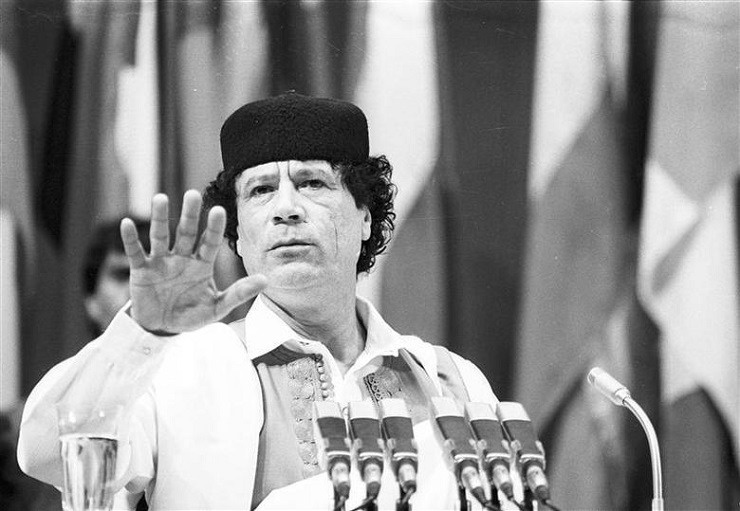
By Yuriy Zinin – New Eastern Outlook – 26.10.2020
“Security problems, political discord, oil blockades, corruption, and Libya’s foreign debt, which has reached 270% of its GDP, all torpedo economic life,” said Central Bank of Libya governor Sadiq al-Kabir. Oil revenues in Libya have plummeted, from $53 billion in 2012 to near zero this year, he added.
These words, spoken on the eve of another anniversary of the assassination of Libyan leader M. Gaddafi on October 20, 2011, do in fact serve to illustrate what the country has come to over the past nine years of its history, since the collapse of the previous regime.
Having come to rule with massive outside support from NATO, the new forces, although they inherited huge financial reserves and the potential following the era of the previous leader, became dependent on the various militias that brought them to power. Along with that, these “brothers-in-arms” soon turned into implacable enemies. The country fell into an abyss of civil strife and, since the summer of 2014, has been divided into two military and political camps, with one pole of power in Tripoli and the other in Tobruk. Because of this turmoil, Libya’s development has come to a standstill, and GDP is dropping. In comparison with previous times, it has slid backwards in many respects.
The oil sector has become hostage to conflicts in society, a source of funding for diverse groups that act in opposition to national interests. However, there is plainly a growing shadow economy, flourishing of currency fraud, the smuggling of goods, illegal emigrants, etc.
The dependence of the Libyan authorities on external forces, both regionally and globally, has increased. At the same time, the intra-Libyan conflict does not have a clearly defined bloc “tutelage”. The aspirations of the “stakeholder forces” have many different thrusts. Their desire to resolve their differences by taking to the Libyan field is often seen, and that, among other things, is fraught with the likelihood of collisions occurring between them.
Since 2015, the UN has been initiating efforts to reconcile the opposing poles in Libya. Delegates from the warring parties participate nonstop in different series of negotiations, sometimes under the auspices of the UN, sometimes hosted by major powers, or as part of the efforts put forth by various neighboring states and the African Union. These kinds of conferences and meetings, including those between the leaders of the two camps, were held in no less than a dozen cities on three continents, including Moscow.
The efforts by various mediators have not turned the tide, or yielded any decisive results. No new constitution has been adopted, and no presidential elections, or elections for a new parliament have been held.
It is encouraging that so far the opposing sides have been honoring the decision they made on August 21 this year for a ceasefire. A number of local and foreign observers have pinned their hopes on three tracks for the negotiation process, all of which are now going on simultaneously.
For example, at talks in the Moroccan city of Bouznika under the auspices of the UN Support Mission in Libya, they reached “a mutual understanding on the transparency of the standards and mechanisms” used to allocate key positions in the government, and throughout other echelons.
In the Swiss city of Montreux, the participants agreed that for the duration of a comprehensive resolution of the intra-Libyan crisis, Sirte, which effectively divides the North African country, will become the seat of the executive and legislative bodies.
In the Egyptian city of Hurghada, Libyan representatives talked about building on the peaceful respite, and restructuring the armed forces.
Libyan experts note that there is a long distance between the decisions that were announced, and the mutual understanding that was reached, to realizing them. From circles close to the governing bodies and military authorities in Tripoli and Tobruk, criticism is spilling forth about the agreements that are progressing on these tracks.
At the same time, it cannot be said that there is absolutely no ground for agreements or compromises. First, the balance of power in Libya does not allow either of the two poles to achieve final victory by military means.
Second, Libya today is divided by the parties into peculiar areas of responsibility, but along with that none of them is economically self-sufficient. For example, most of the fields, pipelines, and oil terminals are in the sphere of influence of the authorities in Tobruk. But normal operations for the entire economic infrastructure under its control are impossible without interacting with the other component present in the Libyan conflict. In matters concerning producing oil, selling it, and earning revenue from it, the key role is still played by the state acting as a rentier, and in which economics and politics are fused in a union of marriage.
These issues for the opposing sides can serve as a starting point for moving towards each other. Among everything else, the Libyan public is putting pressure on top officials. In August this year in Tripoli and Benghazi, the largest cities for both poles of power, there were demonstrations by residents who were tired of political instability and socioeconomic hardship.
Libya since the fall of Gaddafi represents a tragic example of how a country that used to be stable, and which is rich in oil reserves, can be bled dry not only by outside intervention, but from internal conflict as well.
Yury Zinin is a Leading Research Fellow at the Moscow State Institute of International Relations.
Chile vote is a blow to corporate Canada and Trudeau
By Yves Engler · October 26, 2020
With Chileans voting overwhelming to rewrite the country’s Pinochet era constitution it’s a good moment to reflect on Ottawa’s support for his coup against Salvador Allende. It’s also worth looking at Canadian companies’ opposition to the popular uprising that lead to the referendum on reforming the dictatorship’s neoliberal constitution.
On Sunday nearly 8 in 10 Chileans voted to rewrite the country’s Augusto Pinochet era constitution. The vote was the culmination of months of antigovernment protests that began against a hike in transit fares last October and morphed into a broader challenge to economic inequality and other injustices. The dictatorship’s constitution entrenches pro-capitalist policies and was widely seen as contributing to the country’s large economic divide.
The Pierre Trudeau government was hostile to Allende’s elected government and predisposed to supporting Pinochet’s dictatorship. Days after the September 11 1973 coup against Allende, Andrew Ross, Canada’s ambassador to Chile cabled External Affairs: “Reprisals and searches have created panic atmosphere affecting particularly expatriates including the riffraff of the Latin American Left to whom Allende gave asylum … the country has been on a prolonged political binge under the elected Allende government and the junta has assumed the probably thankless task of sobering Chile up.” Thousands were incarcerated, tortured and killed in “sobering Chile up”.
Within three weeks of the coup, Canada recognized Pinochet’s military junta. Diplomatic support for Pinochet led to economic assistance. Just after the coup Canada voted for a $22 million Inter American Development Bank loan “rushed through the bank with embarrassing haste.” Ottawa immediately endorsed sending $95 million from the International Monetary Fund to Chile and supported renegotiating the country’s debt held by the Paris Club. After refusing to provide credits to the elected government, on October 2nd, 1973, Export Development Canada announced it was granting $5 million in credit to Chile’s central bank to purchase six Twin Otter aircraft from De Havilland, which could carry troops to and from short makeshift strips.
By 1978, Canadian support for the coup d’etat was significant. It included:
- Support for $810 million in multilateral loans with Canada’s share amounting to about $40 million.
- Five EDC facilities worth between $15 and $30 million.
- Two Canadian debt re-schedulings for Chile, equivalent to additional loans of approximately $5 million.
- Twenty loans by Canadian chartered banks worth more than $100 million, including a 1977 loan by Toronto Dominion to DINA (Pinochet’s secret police) to purchase equipment.
- Direct investments by Canadian companies valued at nearly $1 billion.
Prominent Canadian capitalists such as Peter Munk and Conrad Black were supporters of Pinochet.
When the recent protests began against billionaire president Sebastián Piñera in October, Trudeau supported the embattled right-wing leader. Two weeks into massive demonstrations against Piñera’s government, the PM held a phone conversation with the Chilean president who had a 14% approval rating. According to Amnesty International, 19 people had already died and dozens more were seriously injured in protests. A couple thousand were also arrested by a government that declared martial law and sent the army onto the streets for the first time since Pinochet. A Canadian Press story on the conversation noted, “a summary from the Prime Minister’s Office of Trudeau’s phone call with Pinera made no direct mention of the ongoing turmoil in Chile, a thriving country with which Canada has negotiated a free trade agreement.”
Rather than express concern about state-backed repression in Chile, the Prime Minister criticized “election irregularities in Bolivia” during his October conversation with Piñera. The false claims of “election irregularities” were then being used to justify ousting leftist indigenous president Evo Morales.
Amidst the massive demonstrations against Piñera in October, Trudeau also discussed Venezuela. In another phone conversation with Piñera two months ago Trudeau again raised “the situation in Venezuela”, according to the official readout, as he did in February 2018 and previously.
Chile is the top destination for Canadian investment in Latin America at over $20 billion. Over 50% of Chile’s large mining industry is Canadian owned and Canadian firms are major players in the country’s infrastructure. Scotiabank is one of the country’s biggest banks.
A number of stories highlighted Scotiabank’s concerns about the protests against inequality that ultimately lead to Sunday’s constitutional referendum. The Financial Post noted, “Scotiabank’s strategic foray into Latin America hits a snag with Chile unrest” and “Riots, state of emergency in Chile force Scotiabank to postpone investor day.” The CEO of the world’s 40th largest bank blamed the protests on an “intelligence breakdown” with people outside Chile “that came in with an intention of creating havoc.” In a January story titled “Why Brian Porter is doubling down on Scotiabank’s Latin American expansion”, he told the Financial Post that Twitter accounts tied to Russia sparked the unrest against Piñera!
Canadian companies, with Ottawa’s support, have led a number of environmentally and socially destructive projects in Chile. In the mid 2000s Toronto-based Brookfield Asset Management led a consortium, with US $700 million invested by the Canadian Pension Plan and British Columbia Investment Management Corporation, pushing to build a massive power line and dams in Chile’s Patagonia region, one of the planet’s greatest environmental treasures. “This kind of project could never be implemented in a full-fledged democracy,” explained Juan Pablo Orrego, a prominent Chilean environmentalist, to the Georgia Straight. “Our country is still under a constitutional, political, and financial checkmate to democracy which was put in place during the [Pinochet] military dictatorship and empowers the private sector.”
Sunday’s referendum is a blow to Canadian corporations operating in Chile and the Trudeau government’s alliance with right-wing governments in the Hemisphere.
Maduro Says Venezuela Found 100% Effective Medicine Against COVID-19
Sputnik – 26.10.2020
CARACAS – The Venezuelan Scientific Research Institute (IVIC) discovered a medicine that contains molecule DR10 to combat COVID-19, Venezuela’s President Nicolas Maduro said on national channel Venezolana de Television, stating that the medicine can eliminate 100 percent of the coronavirus infection.
“Venezuela has created a medicine that eliminates 100 percent of the coronavirus, as the six-month studies by the Venezuelan Scientific Research Institute have demonstrated, and this study has been consequently certified by the experts,” Maduro said on Sunday.
Maduro added that the molecule that eliminates COVID-19 is DR10, which is already used in the treatment of such diseases as hepatitis C, Ebola and human papilloma.
Maduro hopes that the World Health Organisation (WHO) will ratify the results obtained by the IVIC and Venezuela will be able to prepare the mass production of this molecule as a cure for COVID-19 and provide it worldwide with the necessary international collaboration.
Since the beginning of the pandemic, Venezuela has registered 89,565 positive cases, including 83,947 patients who have recovered and 773 people who died.
Bolivian court drops ‘terrorism’ charges against ex-President Evo Morales, withdraws arrest warrant
RT | October 26, 2020
Bolivia’s regional court in La Paz has dismissed “terrorism” charges and dropped the arrest warrant issued against former President Evo Morales, arguing that his rights were violated and judicial procedures breached.
The ex-president’s rights, including his right for judicial protection, have been violated, Judge Jorge Quino, the head of the Departmental Court of Justice in La Paz, said as he explained the court’s decision to grant a request filed by Morales’ lawyers.
He also said that judicial procedures were violated in this case since Morales was not properly summoned. The charges were dropped as the prosecutors did not comply with the procedures established by law, Quino told Bolivia’s Unitel TV Network.
The ruling does not mean though that the currently exiled former president, who was indicted for inciting riots and “terrorism” in the wake of his ousting last year, can safely return home just yet. The decision is yet to be approved by the nation’s Plurinational Constitutional Court which can still reverse it.
An arrest warrant against Morales was issued by the Bolivian prosecutor general back in December 2019 under a ‘provisional’ government formed in the wake of a coup. The interim government, led by right-wing Senator Jeanine Anez, argued that his calls for protest amounted to “sedition and terrorism,” and vowed to jail the ex-president “for the rest of his life.”
Morales, who ruled the nation for 14 years, resigned from the presidency and went into hiding in November 2019, under pressure from the military. Earlier that month he was [falsely] accused of election fraud by the opposition after a controversial vote.
Following his resignation, Morales first traveled to Mexico and eventually arrived in Argentina where President Alberto Fernandez granted him political asylum.
Still, even in absence of its leader, Morales’ Movement Toward Socialism (MAS) party secured majorities in both chambers of the Bolivian parliament in the latest general elections held on October 18. Socialist Luis Arce, who served as an economy minister under Morales and was allegedly handpicked by the former leader as a presidential candidate, also won the vote, securing a landslide victory against his leading rival, Carlos Mesa.
Whoever wins the US presidency the pressure on Venezuela will continue: Scholar
Press TV | October 26, 2020
Whoever wins the presidency on November 3 election in the United States the pressure on Venezuela will continue, an American human rights expert and peace activist says.
Daniel Kovalik, who teaches international human rights at the University of Pittsburgh School of Law in the state of Pennsylvania, made the remarks in an interview with Press TV on Monday.
In Venezuela, many say US presidential candidates Donald Trump and Joe Biden represent the same threat against peace in the world, especially in Latin America. They believe whoever the winner is, the South American country will go on fighting against illegal US sanctions.
“In terms of Venezuela they’re certainly correct that whoever wins the presidency whether Joe Biden or Donald Trump the pressure on Venezuela will continue in the form of sanctions and other provocations,” Kovalik told Press TV on Monday.
“You have to remember in fact that it was Obama that began the sanctions regime against Venezuela when Joe Biden was Vice President,” he said.
“And in terms of resisting, it’s critical that Venezuela continue to resist this pressure and hold firm. I think it gives courage to other countries around the world like Iran, North Korea, Nicaragua, Cuba that are also under pressure by the US – pressure to change their governments,” he added.
“We see what happened in Bolivia recently with the election, which voted out the coup government after a year. And I think that’s given a lot of hope to people. So I, you know, Venezuela has to hold on tight, regardless of who wins the US election,” he concluded.
Venezuelans claim that US presidential election will not improve the foreign policy of the United States toward other nations, including those in Latin America, as this region is regarded by Washington as its political backyard.
Whether Republican Trump is re-elected or his Democratic rival Biden emerges victorious, Venezuelans affirm that the meddlesome and aggressive US policy against the Bolivarian Republic will not cease as both politicians belong to a political system that characterizes US imperialism. Venezuelans say Trump and Biden are the same in political terms.
Regarding the US sanctions, experts believe they won’t be lifted if Biden wins the Presidency. In spite of the US savage policies against Venezuela, people seem to be hopeful about a better future.
Observers say Democrats and Republicans in Washington have both led hostile policies against Latin American, Venezuelans say no matter who wins the US Presidency, the hostility will go on but Venezuelans won’t surrender.
Moscow won’t deploy controversial 9M729 missiles in European Russia if NATO reciprocates: Putin
By Jonny Tickle | RT | October 26, 2020
Russia will delay deployment of its much-debated 9M729 missiles in the European part of its territory, as a goodwill gesture, if NATO takes reciprocal steps. Monday’s proposal comes after the US withdrew from the INF treaty.
“Given the unrelenting tension between Russia and NATO, new threats to European security are becoming evident,” Russian President Vladimir Putin, in a statement posted on the Kremlin’s website.
Signed in 1987, the Intermediate-Range Nuclear Forces Treaty (INF) banned land-based missiles with a range of more than 500km. According to Putin, the agreement was vital for ensuring international security and strategic stability, and the US’ withdrawal was a mistake which risks provoking a missile arms race.
In October 2018, American President Donald Trump announced that his country would withdraw from the treaty, blaming supposed Russian non-compliance. In particular, Trump accused the Kremlin of creating a missile that is effective over the legal limit of 500km, named 9M729. Steven Pifer, the former US ambassador to Ukraine, once estimated that its range is 2,000 kilometers. Pifer is now the director of the Arms Control Initiative at the Brookings’ lobby group, which is funded by Gulf states, amongst other donors.
As part of his stated attempt to de-escalate, Putin also revealed that he wishes to take further steps to minimize the negative consequences of the collapse of the INF Treaty, including an agreement for mutual inspections of missile systems. The president also reiterated Russia’s previous promise not to deploy ground-based INF missiles until US-made missiles of similar classes are deployed.
On the controversial 9M729 missiles, Putin maintained they are in “full compliance” with the previously existing INF treaty, but still offered not to position them in Europe.
“The Russian Federation, nevertheless, is ready, in the spirit of goodwill, to continue not to deploy 9M729 missiles in European Russia, but do so only provided NATO countries take reciprocal steps that preclude the deployment of the weapons earlier prohibited under the INF Treaty in Europe,” the statement read.
China’s new sanctions against American defence companies have the potential to cause major damage to the US military
By Tom Fowdy | RT | October 26, 2020
Beijing has fired a warning to the US over its arms sales to Taiwan with a new round of sanctions. The move is symbolic for now, but if China wants to get tough it really could hammer the supply chains of the impacted companies.
On Monday afternoon, China’s Ministry of Foreign Affairs announced that Beijing would be placing sanctions on a number of US firms and linked individuals over arms sales to Taiwan, with Washington having approved a record sale worth around $5 billion to the island the previous week.
The listed companies included Lockheed Martin, Boeing Defense and Raytheon, striking at the heart of what is often referred to as ‘America’s Military Industrial Complex’. However, what the specific measures mean, how they will be implemented and what their impact might be remains to be seen.
At first glance, these sanctions look symbolic; such military firms do not pursue business in China, and do not have market traction in America. One exception is Boeing’s civilian wing, which stated in an email it was still committed to the Chinese market.
On the other hand, this is not to say that such sanctions will not have strategic implications. First of all, China has an overwhelming dominance on the ‘rare earth’ materials required for US defence manufacturing, and should these sanctions really look to bite, they could have a major impact on the supply chain.
Secondly, even if the measures are only symbolic, it is nonetheless a warning shot from Beijing that it may retaliate further against US actions in the future.
What are ‘rare earths’? And why do they matter? The name refers to 17 elements which are used primarily in the manufacture of all kinds of items, including electronics, vehicles and of course military equipment.
Naturally, these resources form the bedrock of many supply chains around the world. China has a near total monopoly over this industry; a study found that the country “produced roughly 85 percent of the world’s rare earth oxides and approximately 90 percent of rare earth metals, alloys, and permanent magnets”. In 2018, up to 80 percent of America’s own rare earth imports came from China; Washington knows this and is scrambling for contingencies.
The strategic implications of this are quite clear; the US military relies deeply on materials imported from China to manufacture its equipment. If Beijing wanted, these sanctions could hammer the supply chains of the impacted firms.
However, whether Beijing will actually do that is a question of political will, given Washington would treat the move as a major escalation and retaliate harshly against Chinese firms such as Huawei. Such a move is clearly not a good idea, particularly in the run-up to an election, and would only be a last resort, perhaps in a war-like scenario. Given this, it may be more accurate to interpret the move as a ‘warning shot’ of what China may do – evidence that it is ready to get tougher on US firms.
A month ago, China released its own ‘entity list’ – an export blacklist which may prohibit exports or business with companies that are deemed a threat to national security, deliberately mirroring that used by the US Department of Commerce against Chinese companies. The aim is to leverage its own market against countries that discriminate against, or hurt the interests of, Chinese firms.
And this is where the blacklisting of Boeing Defense is significant. While the sanctions have carefully avoided the civilian branch of Boeing – which supplies commercial aircraft, and has huge business in China – it is nevertheless a clear red flag that the company isn’t untouchable. As Beijing seeks to develop its own commercial aircraft further, including the COMAC C919, it may become even more assertive.
Given all this, China’s sanctions against US defence firms are less a policy in practice as they are a pronouncement of things to come. While Beijing is not ready to take advantage of America’s dependency on rare earths yet, it is signalling clearly it is ready to take measures against US companies where it sees fit.
Taiwan, for one, is a huge red line for China’s government. As it illustrated with its military exercises, there has to be some demonstration of clear consequences for pushing against it, albeit without resorting to methods that could prove extremely destabilizing.
Beijing is developing a toolkit, and it wants us to know that it is ready to use it should it be absolutely necessary. These showcase sanctions have potential in multiple ways to have real teeth, and that’s what we need to be looking at.
Tom Fowdy is a British writer and analyst of politics and international relations with a primary focus on East Asia.
Ultimatum day in Belarus: Tikhanovskaya announces strike after Lukashenko refuses to resign, Minsk denies work has stopped
By Jonny Tickle | RT | October 26, 2020
Former Belarusian presidential candidate Svetlana Tikhanovskaya, now exiled in the EU, called a nationwide strike Monday after long-time leader Alexander Lukashenko refused to step down following an ultimatum from the opposition.
The measure finally brings things to a head after months of protest and will be seen as a litmus test for the anti-Lukashenko coalition’s attempt to force a transfer of power. Should the strike action fail to take hold, it will be seen as a victory for the incumbent, but if it gains momentum, then all bets are off.
On Monday morning, opposition-leaning media reported that multiple large businesses throughout the country had ceased working. This was denied by the government, which claimed that key enterprises are “operating normally” and “production has not been stopped.”
On October 13, in what she called the ‘People’s Ultimatum’, Tikhanovskaya demanded the president’s resignation, as well as an end to violence against protesters, and the release of those considered to be political prisoners.
Writing on her Telegram channel, Tikhanovskaya announced on Monday morning that the deadline had passed, and the general strike was to begin.
“Belarusians know that, on October 26, the main job is to show that no one will work for the regime,” she wrote. “They are risking their personal freedom today so that we can achieve freedom for our country.”
According to the most popular opposition Telegram channel, the Polish-based NEXTA Live which has almost two million subscribers, reports of strikes have come from many large factories including the Minsk Tractor Works (MTZ), Minsk Wheel Tractor Plant (MZKT), and Minsk Automobile Plant (MAZ).
https://t.me/tutby_official/18092
Early on Monday morning, Euradio reported that police detained workers at Grodno Azot, a chemical plant near the border with Poland.
However, according to Moscow-based news agency RIA, Belarus’ production and business sectors are working normally.
The unrest in Belarus began on August 9, after the county’s presidential election. After the closure of polling stations, and the publication of an exit poll, mass protests began against the falsification of results. According to the Central Election Committee, incumbent President Lukashenko received 80.10 percent of the vote, with opposition candidate Tikhanovskaya receiving just 10.12 percent. During days of protests, police and internal troops used tear gas, stun grenades, and rubber bullets to disperse protesters.
Bolivian President Demands OAS Chief Resign Over His Part in 2019 Coup
By James Tweedie – Sputnik – 25.10.2020
Bolivia’s newly-elected president, Luis Arce, has demanded the head of the Organisation of American States (OAS) resign over his role in the 2019 coup d’etat.
Arce, Movement for Socialism (MAS) leader, said on Saturday OAS Secretary-General Luis Almagro should go for “moral and ethical reasons.”
“We do not agree that an important body should be in the hands of people who support a particular political party or political trend in the region, and that it interferes in the internal affairs of a country,” Arce said. “If it was able to do that in Bolivia, imagine, you could do it with any other country, and we can’t allow that.”
Almagro oversaw the OAS audit of last year’s presidential election that overturned president Evo Morales’ landslide victory in the first round. Morales, Latin America’s first fully-indigenous leader, reluctantly invited the OAS to validate the count after a wave of opposition rioting over alleged ballot fraud and violent attacks on MAS politicians.
That included the shocking attack on Patricia Arce Guzman, the mayoress of the town of Vinto. Opposition rioters dragged her from the municipal offices before setting them on fire, then cut her hair, painted her face red and forced her to walk barefoot through the town as they spat and urinated on her. Arce Guzman was elected a senator last week.
”There was no fraud, there was a whole preparation for a coup, of which the OAS was unfortunately a part,” Arce told La Razón in reference to the audit, adding that Almagro “interfered, violated Bolivian regulations, and those of any international body observing an electoral process; he interfered in internal affairs.”
Other Latin American government officials laid into Almagro this week.
Venezuelan UN envoy Samuel Moncada pointed out Almagro’s dishonesty in claiming at the OAS General Assembly in Washington this week: “We told Evo Morales not to quit”
“Almagro has no shame, he represents the ideological, political and moral ruin of the OAS on the continent.” Moncada wrote. “Never more will this kind of criminal be able to deceive our peoples!”
Mexican undersecretary of foreign affairs Maximiliano Reyes Zúñiga accused Almagro on Tuesday of making “factious” use of the OAS electoral observer mission in 2019 to legitimise the opposition fraud claims.
And on Wednesday the Puebla Group, whose members include former presidents of Bolivia, Brazil, Ecuador, Uruguay and Spain, published an open letter urging Almagro to resign.
Despite formerly serving as foreign minister of his native Uruguay under leftist president José Mujica, Almagro has led the charge against socialist governments in Latin America Since assuming leadership of the Washington-based OAS in 2015.
He has been a constant critic of Venezuelan President Nicolas Maduro and his government, even attacking the country’s National Electoral Council after the opposition failed to gather enough signatories for a presidential recall referendum. In 2016 he invoked the Inter-American Democratic Charter against Caracas, claiming there had been “an alteration of the constitutional order” there.
In 2018 Almagro led efforts to bring Maduro and other Venezuelan leaders to trial at the International Criminal Court in The Hague. In 2019 he revived the doctrine of “Responsibility to Protect” – previously used to justify the 2003 invasion of Iraq – to urge other states to intervene in Venezuela.
Nicaragua’s elected government has also been an occasional target for Almagro. In 2019 he sought to invoke the Democratic Charter against Daniel Ortega’s Sandinista government.
Just this week at the OAS meeting in Washington, the secretary-general warned Managua the bloc would not recognise the result of next November’s presidential election if it did not comply with a list of demands.
“Daniel Ortega will have to demonstrate how independent he is from the bad practices that Cuba and the Bolivarian regime [in Venezuela] instigate,” Almagro said.
A group of 14 OAS members, led by the US, voted to expel Cuba from the bloc in January 1962. In response, revolutionary leader Fidel Castro dubbed the organisation the “Yankee Ministry of Colonies and a military bloc against the peoples of Latin America.”
Even after the OAS voted to allow Cuba to re-join in 2009, the island nation has consistently refused to do so.
South Korean’s medical association urges govt to suspend flu shot program after 25 people die following jab
RT | October 23, 2020
South Korean Prime Minister Chung Sye-kyun called for a probe into the deaths of at least 30 people who died shortly after receiving seasonal flu shots, stepping up scrutiny after Seoul previously denied any link to the vaccine.
“The authorities should thoroughly investigate the causal relationship between vaccinations and the deaths and make public the development transparently,” Chung said on Friday at a meeting of the government’s disaster and safety counter-measure group.
Chung’s statement came after the death toll among people who recently received the vaccine more than doubled between Thursday morning and Thursday afternoon, then continued rising through the night. There were 25 deaths recorded as of 4pm Thursday, up from 12 earlier in the day, and the toll reached 30 at midnight.
Jeong Eun-kyeong, director of the Korea Disease Control and Prevention Agency (KDCA), reportedly told South Korean lawmakers on Thursday that there was no direct link between the deaths and the vaccine. Of the first 25 deaths recorded, 22 involved people aged 60 or older, but a 17-year-old boy last week died two days after getting his flu shot.
Chung called on the KDCA to investigate quickly and provide the public with an explanation for the deaths “so that people can receive vaccination without anxiety.”
The spate of deaths comes amid an effort by South Korea’s government to provide free flu vaccinations to 19 million people, including the elderly and teenagers, to avoid having to cope with both a major flu outbreak and the Covid-19 pandemic at the same time. The vaccination program will continue uninterrupted by the investigation, despite the recent deaths and a recommendation by the Korean Medical Association to suspend the shots for one week.
The program was previously halted for three weeks after it was revealed that five million doses had been transported at room temperature, rather than being refrigerated as required.
Featured Video

ARE PATIENTS BEING PROPERLY INFORMED ABOUT OZEMPIC?
or go to
Aletho News Archives – Video-Images
New Book
Breast Cancer: Before You Consent
A new Unbekoming paperback
Lies are Unbekoming | September 18, 2026
Peter Gøtzsche reviewed every randomised mammography screening trial ever conducted for the Cochrane Collaboration. Cochrane’s headline is that, assuming a 15% mortality reduction, one woman in 2000 avoids dying of breast cancer over ten years. Ten are overdiagnosed and treated. Two hundred experience false alarms.
But that headline assumes the reduction. When Gøtzsche looked only at the trials with adequate randomisation — the higher-quality ones — the reduction disappeared. No effect on breast cancer mortality. No effect on all-cause mortality.
This is the Cochrane finding, published in the establishment’s own database of systematic reviews.
No woman being asked to consent to a mammogram this week knows it.
That is why the new Unbekoming paperback exists. … continue
Blog Roll
 Aletho News
- ARE PATIENTS BEING PROPERLY INFORMED ABOUT OZEMPIC?
- US lawmaker blocks $2.8 billion weapons sale to Israel: Report
- Yemeni army claims responsibility for strikes on sensitive sites in Saudi capital, Aramco facilities in Yanbu
- Iran Judiciary issues indictments against 159 US, Israeli officials for assassination of Leader, commanders
- Turkiye revokes Iranian bank license under US sanctions campaign
- US-Denmark Agreement on Greenland Is ‘PR Stunt’ Ahead of Midterms
- Araghchi: Military intervention cannot create security; coercion cannot bring peace
- Fraud Squared
- Breast Cancer: Before You Consent
- Iran’s Plan to Shut Down AI in the Persian Gulf
- If Americans Knew
- Inside Gaza’s death trap of collapsing, bombed-out buildings
- The everyday items Israel bans from Gaza every day
- Inside the siege, the ruined buildings of Gaza – Daily Update
- Debunking The Claim That Macklemore Has A “History Of Antisemitism”
- CPJ demands release of arrested Palestinian-US journalist near Bethlehem
- Robert Kraft: The Billionaire Friend of Netanyahu Pulling The Strings Behind the Macklemore/Ed Sheeran Blow Up
- Columbia Administered Fund Gives Big Money to Pro-Israel Groups
- Deportation Case of Palestinian Activist Salah Sarsour Tests First Amendment
- ‘We Will Not Forget’: Palestinians Mark 44 Years since Sabra and Shatila
- Why do we let Zionists decide what we can and can’t say?
- No Tricks Zone
- New Study: ‘Global Drought Shows No Detectable Recent Acceleration Under Climate Warming’
- Economic Masterminds: German Socialists Suggest Taxing Productivity Gains Stemming From Using AI
- The South China Sea Has Not Been Cooperating With The Climate Change Narrative
- Energy Crisis: Germany Enters Heating Season With Historically Low Gas Reserve Fill Levels
- New Study: The Antarctic Ice Sheet Gained Mass From 2020-2024 Due To Staggering Snow And Ice Accumulation
- Study: Ocean Heating Rates From Thousands Of Years Ago ‘Dwarf’ Modern Ocean Heating Rates
- Climate Extremists Target, Attack Large-Scale Power Grid Infrastructure In Germany!
- New Study: Antarctic Ice Melt Has Contributed Less Than 1 Centimeter To Sea Level Rise In The Last 30 Years
- Fear Of Debate: Alarmist German Climate Scientist Calls On Mainstream Media To Discredit Skeptic Voices
- End-Of-August Arctic Sea Ice Extent Hasn’t Fallen In 20 Years, Official Data Show!
 Aletho News