The time has come to pick up threads from my blog of January 27 titled The West co-opts the Taliban. Indeed, the wheel has come full circle: the three-day conclave in Oslo on January 23-25 between a core group of Western diplomats with Taliban officials failed to work out a reasonable a modus vivendi. The pendulum has since swung to the other extreme.
Afghanistan has once again become the cockpit of big power rivalries due to developments intrinsic to Afghan situation, a regime change in Pakistan and the shifts in regional politics in Central Asia due to the fallouts from the collective West’s proxy war with Russia in Europe.
To recapitulate, Russia and China brilliantly undercut the US’ attempt in Oslo to co-opt the Taliban government as its partner. The terms of partnership were not acceptable to the Taliban, especially the leeway that the US and British intelligence sought to stage covert operations from Afghan soil.
Russia and China created space for Taliban to negotiate with the US by simply offering them the prospect of a beneficial relationship. The US’s core objective was to use Afghanistan as a staging post for its containment strategies against Russia, China and Iran.
Since then, the US estimates that with Russia bogged down in Ukraine and China remaining extra-cautious in consorting with Moscow, a window of opportunity is available for it to proactively work toward promoting regime changes in Central Asia and roll back the Russian influence in the region.
Attempts were made in Kazakhstan, Kyrgyzstan, Uzbekistan and Turkmenistan but the regimes in those countries were vigilant.The failed attempts once again drew attention to the importance of Afghanistan as a high ground in the geopolitics of the Central Asian region. Hence the need to regain control over Kabul.
This is a truly collective effort by the Western intelligence, with the US, UK, France and Germany in the lead role. Unsurprisingly, the West’s focus has shifted to the northern regions of Afghanistan bordering the ex-Soviet republics of Central Asia.
With a pro-Western regime in power in Pakistan, the US gets a free hand to work with the non-Taliban groups. The Western powers assess that the so-called National Resistance Front (NRF) led by the Panjshiri leader Ahmed Massoud provides a congenial platform for advancing their regional agenda.
Apart from the Massoud clan’s decades-old links with the French intelligence, Ahmed Massoud himself was trained in Sandhurst. The Panjshiris are irreconcilably opposed to Pashtun rule and also have ethnic affinities with Tajikistan.
Enter Emmanuel Macron. France has a score to settle ever since Russia’s Wagner Group summarily replaced the French Legion as the provider of security to the Francophone countries in the Sahel region. Macron hopes to turn the table against Russia in Central Asia (and the Caucasus.)
In this shadow play, Macron sees as quasi-ally the president of Tajikistan Imomali Rahmon. Now, Rahmon’s motivations are never easy to fathom and are rather complicated in this case, but he does see that there is a lot of money that the West is prepared to spend to foster the NRF and Massoud, and this western venture is for sure going to be for the long haul.
Rahmon’s trump card is that Tajikistan is the gateway to Panjshir and it can provide a transit corridor for the flow of Western money, men and materials to boost the NRF’s capability to wage an armed struggle and emerge quickly as a credible political entity regionally.
Dushanbe hosted the so-called Herat Security Dialogue earlier this week to facilitate a meet-up between the NRF (Massoud) and sundry other disgruntled Afghan politicians hostile toward Taliban rule and domiciled in the West, with the US and European intelligence officials mentoring the event.
Clearly, the venture aims to broad-base the NRF by bringing on board all anti-Taliban elements. Interestingly, a sideshow at Dushanbe was that the Afghans networked with hand-picked invitees from regional states as well, including Russia and Iran, largely self-styled “liberals” who are willing to subserve the West’s agenda.
In a nutshell, the venture aims to build up another Afghan resistance movement to oust the Taliban from power. The ground is being prepared for a new civil war where the West hopes to emerge victorious eventually but without having to put “boots on the ground.”
However, this incoming civil war is going to be very unlike all previous ones in Afghan history. For, this is being projected as a culture war — a struggle for dominance between groups within the Afghan society arising from their different beliefs or practices — although quintessentially it is yet another grab for political power with foreign help.
It bears similarity with the culture wars playing out in America during the past two decades and more between the liberal secular society and a conservative opposition that rooted its worldview in divine scripture. Today, in America it is playing out in vicious fights over abortion, gay rights, religion in public schools and the like.
The culture war in Afghanistan too will inevitably expand from issues of religion and family culture to take over politics almost totally, creating a dangerous sense of winner-take-all conflict over the future of the country, as has happened in America.
The paradox here is that it is taking place in the cause of Democracy, whereas, democracy at its core is an agreement that we will not kill each other over our differences, but instead we’ll talk through those differences howsoever long it may take. Massoud’s NRF, on the contrary, is wedded to violence to overthrow the Taliban government which has been in power only briefly.
Fundamentally, there is a dangerous misconception here since politics at its core is nothing but an artifact of culture. And culture underwrites politics in all countries. To be sure, the Taliban will see the incoming civil war promoted by the West as an existential threat to their way of life, to the things they hold sacred.That is to say, the Taliban’s resistance to the NRF will be rooted in fear of extinction. They will fight to the death for a way of life.
Why is the West doing this to Afghanistan after having destroyed that country’s social fabric through the past two decades perpetrating such horrific war crimes? At the very least, first return that country’s money in western banks and allow the Afghan nation a decent respite to lick its war wounds, before inciting another civil war.
Abdul Latif Pedram, a rare progressive-minded Afghan politician known for his integrity, wrote in a tweet “I was invited to the security meeting of Herat (at Dushanbe), but I did not participate in the meeting due to the presence of corrupt people.”
Indeed, it is an insult to the Afghan people that the westerners continue to treat them like mute cattle. Pedram added that the invitees to the Dushanbe meeting were all associated with the corrupt regime that the Taliban replaced, and are bankrupt in ideas to improve the tragic situation in his country.
It’s safe to say the world has gotten used to mind-blowing statements coming from the detached Kiev regime, as this has become their common theme. Apart from boastful claims of supposed “victories” of the Neo-Nazi junta forces against the Russian military, talks of how much financial assistance is necessary is the usual topic in Kiev. The regime frontman Volodymyr Zelensky is never tired of demanding yet another few billion dollars (euros and pounds are good enough, too) per month to support the political West’s favorite puppet regime. However, his most recent statements make every other demand look entirely “reasonable”. Namely, the Kiev regime frontman now wants over $1 trillion for the supposed “reconstruction” of the country.
During a video address on November 29, Zelensky stated that it would cost more than $1 trillion to “rebuild” Ukraine. If the number sounds astounding, that’s quite expected, given that it’s over five times the country’s 2021 GDP. However, even this sounds laughable when the second requirement is listed – this “reconstruction” plan would come into effect only after the military superpower with over 6,000 thermonuclear warheads next door is somehow “defeated”. Many have ignored Zelensky’s mind-boggling statements regarding this matter, but he keeps insisting that this is precisely what the Kiev regime needs.
“The reconstruction of our country will become the most momentous economic, technological, and humanitarian project of our time. Even now, we engage dozens of our partner countries to rebuild Ukraine,” Zelensky said during his late-night video address on Tuesday, according to a report translated by Newsweek. “The total volume of work amounts to over a trillion dollars,” he added.
Zelensky mentioned the figure while talking about his hopes that the country would host the World’s Fair in 2030. Another interesting aspect of the plan was that foreign governments and corporations could become “permanent sponsors of specific regions, cities or economic sectors”. Apart from being unrealistic, Zelensky’s ideas are also boiling down to the direct colonization of Ukraine. By giving control of different regions of the country to “permanent sponsors”, the Neo-Nazi junta frontman is effectively fracturing what’s left of the country and giving it to foreign corporate interests in a free-for-all exploitation scheme.
According to Western-backed, Latvia-based news outlet “Meduza”, Zelensky is hoping to develop a system that will allow “partner countries” to become “patrons” of Ukrainian regions, cities or businesses. “We’re already seeing interest [in the program] from France, Great Britain, The Netherlands, Germany, Denmark, Finland, Italy, Turkey, Poland, Portugal, Czechia, Slovenia, Latvia, Estonia, Switzerland, Slovakia, Austria, Greece, Canada, the U.S., Japan, and Australia. And that’s not an exhaustive list,” he said.
Interestingly, the mind-blowing $1 trillion figure was mentioned by Zelensky at least once before, but it somehow went under the radar of most mainstream media. The first time he mentioned it publicly was on September 6, when he was invited to virtually “ring” the opening bell at the New York Stock Exchange. Zelensky used this unique opportunity to float the idea and initially appealed for “at least” $400 billion in foreign funds. “The general project of Ukrainian reconstruction will be the largest economic project in Europe of our time. The largest for several generations. Its volume is already estimated at hundreds of billions of dollars,” he stated at the time and then added: “And with the necessary modernization of the Ukrainian infrastructure, taking into account security needs, it is more than a trillion dollars and in a fairly short term – less than ten years.”
As previously mentioned, the country’s GDP was just over $200 billion in 2021, according to official data from the World Bank. This effectively means that the Kiev regime is demanding others invest half a decade’s worth of Ukrainian “peacetime” GDP. Although this may seem like a dumbfounding request, what’s even more staggering is the fact that at least one US-based think tank already backed the proposal. The renowned Washington DC-based Center for Strategic and International Studies (CSIS) openly supported the idea, claiming that “it would provide strategic benefits to the United States.”
In a November 22 report titled “United States Aid to Ukraine: An Investment Whose Benefits Greatly Exceed its Cost”, CSIS authors argued the following: “In practice, Ukraine cannot continue to fight and to recover without continuing aid from the US and other powers. Moreover, if the war drags on as it well may do, the total costs of both the war and recovery states could easily rise well over $500 billion. A truly long war could put the total cost of the war and recovery to a trillion dollars or more.” The report further states: “So far, there has been only limited domestic political resistance in the United States to continuing civil and military aid to Ukraine.”
This clearly implies that the authors think the US government should always insist on more financial “assistance” to the Kiev regime and push back against anyone trying to focus on mounting domestic issues. Given just how corrupt the Neo-Nazi junta is, it’s hardly surprising there’s a lack of enthusiasm for this idea among many in the US. The recent FTX-Kiev regime-DNC scandal, along with the fact that Washington DC cannot account for over $20 billion in previous “aid” provided to the Neo-Nazi junta, all serve as a testament to the skepticism many Americans feel in this regard. Considering the current state of the US (and global) economy, who could possibly blame them.
Drago Bosnic is an independent geopolitical and military analyst.
When Americans make lists of the persecuted, downtrodden groups in our society, college graduates rarely top the ranking. But President Joe Biden is offering one bribe after another to convert college graduates into perpetual dependents of the Democratic Party. Biden’s handouts helped prevent a “red wave” of Republican victories on Election Day and he appears hellbent on forcing taxpayers to pay any price to continue buying votes for his party.
Federal subsidies for higher education have been one of the least recognized boondoggles of recent decades. Federal-backed loans for higher education took off in the 1960s and have skyrocketed in this century. Almost $2 trillion in federal student loans are owed by 46 million people.
Federal aid spurred tuition increases that make it far more difficult for unsubsidized students to afford higher education. A student’s financial “need” is defined largely by tuition fees. Every tuition increase means an increase in federal aid for students—and thus an increase in the federal aid for the college. A 2012 study by the Center for College Affordability and Productivity concluded that financial aid “inevitably puts upward pressure on tuition. Higher tuition reduces college affordability, leading to calls for more financial aid, setting the vicious cycle in motion all over again.” A 2015 Federal Reserve analysis “found that for every new dollar made available in federally subsidized student loans, schools…rose their rates by 65 cents.”
Federal policies have helped turn young people into a debtor class perpetually clamoring for relief from its burdens. Rather than seeing the federal government as a potential peril to their rights and liberties, some debt-burdened young adults view it as the “Great Liberator”—presuming the right candidate is elected.
Rather than ending the perverse incentives embedded in federal aid, Biden “solved” the problem by canceling borrowers’ obligation to repay their subsidized loans. On August 24, Biden invoked an obscure provision of the post-9/11 Heroes Act to justify hundreds of billions of dollars of handouts to people who had taken out federal college loans. The Heroes Act permits the Education Department “to waive or modify student loan payments in times of national emergency.” Individuals earning less than $125,000 could have up to $20,000 in federal debt automatically erased; couples earning $250,000 could see a $40,000 forgiveness windfall.
Biden had previously admitted that the law would not justify blanket forgiveness of college loans, but he and his advisors decided to force Americans to pay any price for Democrat votes in the midterm congressional elections. The Department of Education justified Biden’s decree as “a program of categorical debt cancellation directed at addressing the financial harms caused by the COVID-19 pandemic,” including “cancellation for borrowers who have been financially harmed because of the COVID- 19 pandemic.” But college graduates were doing much better financially than other Americans who get stuck with the bill for their schooling. Their unemployment rate was less than two percent at that time.
Former Education Department lawyer Hans Bader estimates that the total cost of Biden’s student loan write-offs could exceed a trillion dollars. A Wall Street Journal editorial headlined “Biden’s Half-Trillion-Dollar Student-Loan Forgiveness Coup” derided his decision as “easily the worst domestic decision of his Presidency.” The Journal pointed out that Biden based the loan cancellation for more than 40 million borrowers “on no authority but his own” power as president. “This is a college graduate bailout paid for by plumbers and FedEx drivers,” the Journal noted. As former OMB director David Stockman observed, “Student debt is overwhelmingly an investment in professional credentialization that should never have been an obligation of the taxpayers in the first place.” ZeroHedge quipped on Twitter: “Have colleges raised tuition by $10,000 yet or are they waiting a few days first?”
There was no rationale for blanket cancellation of student debts that would not justify blanket cancellation of almost any debt citizens owed to the government. At the same time that Biden played Santa Claus with student loan forgiveness, his administration was hiring 87,000 new IRS agents and employees to squeeze more money out of working Americans.
The handouts helped buy Democrats their biggest boost among voters — a 28% advantage over Republicans in voters age 18 to 29 in the mid-term elections. Two days after the election, Biden tweeted, “I want to thank the young people of this nation” who voted for “student debt relief.” Jon Cooper, a former top Biden campaign operative, tweeted, “Young people: You saved our butts. THANK YOU.”
Two days after the election, federal judge Mark Pittman struck down the bailout as an unconstitutional decree: “In this country, we are not ruled by an all-powerful executive with a pen and a phone. Instead, we are ruled by a Constitution that provides for three distinct and independent branches of government.” Pittman rejected the “emergency” basis of the order in part because Biden had proclaimed in September on “60 Minutes” that “the pandemic is over.” The following week, a federal appeals court in St. Louis unanimously voted to impose a nationwide “injunction considering the irreversible impact the Secretary’s debt forgiveness action would have” on “Americans who pay taxes to finance the government.”
Some activists believe Biden intentionally swindled young voters with a bait-and-switch scheme. Briahna Joy Gray, who was the press secretary for Bernie Sanders’ 2020 presidential campaign, asked, “Did Biden RIG student debt forgiveness to fail, just to help him in midterms?” She explained on Twitter: “They used the promise of student debt cancellation to induce young voter turn out—knowing it wasn’t going anywhere [because] they relied on faulty legal authority. Hard to convince me the Biden admin didn’t do this intentionally.” A student activist group called the Debt Collective is circulating a petition: “I refuse to pay a debt the President promised to cancel.”
Biden came up with a Solomonic solution—sawing taxpayers in half—to placate his enraged supporters. He announced on Twitter, “Republican special interests and elected officials sued to deny this relief even for their own constituents. It isn’t fair to ask tens of millions of borrowers eligible for relief to resume their student debt payments while the courts consider the lawsuit.” On November 22, Biden announced that he was extending the moratorium on repaying student debt until August 2023. That moratorium began in March 2020 during the first COVID lockdowns and has already cost taxpayers $155 billion, according to the Committee for a Responsible Federal Budget. When Biden announced his loan forgiveness decree in August, he promised, “The student-loan payment pause is gonna end. It is time for the payments to resume.” Biden betrayed that promise, apparently believing that no one should be obliged to fulfill their legal obligation as long as there was a snowball’s chance in hell that some judge would uphold his scheme. Extending the loan payment moratorium could give a crucial boost to Democratic Sen. Raphael Warnock, locked in a tight December 6 run-off election.
What happens when the latest moratorium extension ends in August 2023? Biden may be formally kicking off his re-election campaign at that time. And what better way to buy support than by extending a handout to one of his most important constituencies? In the 2022 mid-term elections, “52 percent of voters with college degrees supported Democrats while 42 percent of voters without degrees did so,” The Washington Post reported.
Protecting former students from the federal debts they voluntarily accepted has become one of the great human rights issues of our times. Michael Pierce, chief of the Student Borrower Protection Center, is calling for Biden to “make it clear that the student loan system will remain shut off as long as these partisan legal challenges persist. Borrowers’ fate is in Biden’s hands.”
And this is the ultimate problem for democracy. Student loan bailouts have extended Biden’s power over a huge swath of American voters. Each new federal benefit program extends political control over both the recipients and anyone forced to finance the handouts. Speaking to an AFL-CIO convention earlier this year, Biden shouted, “I don’t want to hear anymore of these lies about reckless spending. We’re changing people’s lives!” “Changing” means controlling—but only for their own good, or at least for the re-election of their benefactors
French philosopher Bertrand de Jouvenal warned, “Redistribution is in effect far less a redistribution of free income from the richer to the poorer, than a redistribution of power form the individual to the state.” If Biden’s loan repayment moratorium is extended through 2024, “a typical medical student who graduated in 2019 would effectively have $107,000 forgiven and a law school graduate would have $65,000 forgiven… New doctors receive almost ten times the benefit of the average borrower and $107,000 more than someone who never attended college,” the Committee for a Responsible Federal Budget reported. Even The Washington Post editorial page slammed Biden’s student debt forgiveness decree as a “regressive, expensive mistake.”
But the inequity is irrelevant if the handouts enable Biden and his Democratic colleagues to perpetuate their grip on power. As legal fights over loan bailouts continue, Americans will continue to be assailed by claptrap about ex-students as a holy class of martyrs—or at least oppressed victims. But most of the self-proclaimed “best and brightest” are not smart enough to recognize how they have been converted into tools for Leviathan.
Jim Bovard is the author of Public Policy Hooligan (2012), Attention Deficit Democracy (2006), Lost Rights: The Destruction of American Liberty (1994), and 7 other books.
As if ongoing corruption scandals, including the FTX-Kiev regime-DNC connection, weren’t enough, the troubled Biden administration is now faced with another one. According to the latest reports, the US government is unable to account for the approximately $20 billion worth of weapons it sent to the Kiev regime. The US Congress has become a place of heated debates as Republicans warn there will be “impending audits” after they take full control of the House of Representatives in January. Major news media, such as Fox News, claim that the US government under Biden inspected only 10% of approximately 22,000 weapons it sent to the Kiev regime from late February to November.
The GOP wants audits to determine what is going on with the massive amounts of weapons the US is sending and how much of it is ending up “where it’s supposed to be.” Republican representative Marjorie Taylor Greene has vowed to “hold our government accountable” for spending US taxpayers’ dollars for the sake of the corrupt Kiev regime. Other members of the US Congress have been asking for audits for months, while Senator Rand Paul asked on Twitter: “Didn’t someone try to legislatively mandate a special inspector general to scrutinize Ukrainian spending? Oh, that’s right, it was my amendment and most Democrats AND Republicans opposed any semblance of oversight.”
Back in May, the Biden administration promised it would pledge more than $54 billion in the military, financial and humanitarian “aid” to the Kiev regime. Various estimates of the full amount of funds the political West sent (and is still sending) put the actual number much higher (more than $65 billion back in May). Since Russia launched its counteroffensive on February 24, the US provided the bulk of those funds, far more than all of its vassals and satellite states combined, according to data cited by Summit News. On multiple occasions, the US government and the Pentagon indirectly admitted they weren’t able to track Ukraine-bound funds and resources after they reached the Polish-Ukrainian border.
On the other hand, representatives of some of the US vassals and satellite states in Europe have expressed frustration with the GOP’s requests for accountability of where the funds earmarked for the Kiev regime are ending up. These European officials “hope that such measures would not lead to cutting off funding to Ukraine and ultimately to victory for Russia.” Others, such as the United Kingdom Parliament member Tobias Ellwood, have been more direct and accused the Republicans of “playing into Putin’s hands” by asking for audits and imposition of stricter control, oversight and accountability regarding the funds for the Kiev regime.
Yet, weapons deliveries to the Kiev regime are hardly the only issue the US is faced with at present. Weapons the Biden administration promised to deliver to China’s breakaway island province of Taiwan have been considerably delayed and slowed as a result of the US commitment to arming the Neo-Nazi junta. It is estimated that Washington DC approved approximately $20 billion in arms sales to the government in Taipei since 2017. In late August, a Defense News report claimed there was a $14 billion backlog in weapons sales to Taiwan. However, the latest data indicates that the number has now drastically increased to nearly $19 billion in delayed deliveries, according to a new estimate by The Wall Street Journal.
“US government and congressional officials fear the conflict in Ukraine is exacerbating a nearly $19 billion backlog of weapons bound for Taiwan, further delaying efforts to arm the island as tensions with China escalate,” the WSJ report begins. “The US has pumped billions of dollars of weapons into Ukraine since the Russian invasion in February, taxing the capacity of the government and defense industry to keep up with a sudden demand to arm Kiev in a conflict that isn’t expected to end soon,” the authors added in an admission rarely seen in mainstream media.
The information indicates that the US might not be able to respond effectively to a potential escalation of tensions in Taiwan. “The flow of weapons to Ukraine is now running up against the longer-term demands of a US strategy to arm Taiwan to help it defend itself against a possible invasion by China, according to congressional and government officials familiar with the matter,” WSJ report states.
Somewhat ironically, many Washington DC and Taipei officials have consistently used the Ukraine crisis as a reference point to reinforce the narrative that the US “must urgently equip the island with everything it needs.” However, very few of them have admitted that the US Military Industrial Complex doesn’t have the production capacity necessary to concurrently arm the Kiev regime and the government in Taipei. This is especially true given the aforementioned issues with tracking weapons and other funds earmarked for the Neo-Nazi junta in Kiev.
Drago Bosnic is an independent geopolitical and military analyst.
Senator Ed Markey (D-MA) recently got in touch with his inner mobster and threatened Elon Musk — the new owner of Twitter and the CEO of electric car company Tesla and space ventures company SpaceX. He told Musk, “Fix your companies” or “Congress will.” As part of this threat, Markey referred to an ongoing National Highway Traffic Safety Administration (NHTSA) investigation into Tesla’s autopilot driving system and Twitter’s 2011 consent decree with the Federal Trade Commission (FTC).
Markey has done more than make threats: He is one of a group of Democratic senators who wrote to the FTC urging an investigation into whether Musk’s actions as the new owner of Twitter violated the consent decree or consumer protection laws. Since FTC Chair Lina Khan wants to investigate as many businesses as possible, it is likely she will respond favorably to the senators’ letter.
President Biden has also endorsed an investigation into the role foreign investors played in financing Musk’s Twitter purchase. Biden may be concerned that Musk is not likely to ban tweets regarding Hunter Biden’s business deals.
Concerns that Musk would allow tweets containing information embarrassing (or worse) to the Biden administration point to the real reason many Democratic politicians and progressive writers and activists are attacking Musk. They support efforts to suppress conservative, libertarian, and other “non-woke” speech on social media. They view the prospect of a major platform refusing to silence those who dissent from the woke mob or the Democratic Party establishment as a threat to their power. Musk further angered the left by committing what, to many Democrats (and Liz Cheney), is the ultimate hate crime — allowing Donald Trump back on Twitter.
The threat against Musk shows the threat to liberty is not just from big tech; it is from the alliance between big tech and big government.
Some conservatives think that increasing government’s power over social media is the correct way to make big tech respect free speech. However, increasing the US government’s power over social media can just end up putting more power behind government threats like those from Rep. Markey. Expanded government control over how social media companies conduct their business can also further incentivize the companies to work with the federal government to shut down free speech.
Once the government steps in with increased regulation, the risk is that greater government control over what is communicated on social media will follow. The question will just be who is calling the shots on the exercise of that control. Will the result be an increase of the liberal or “woke” pressure on social media companies to silence conservatives, libertarians, opponents of teaching critical race theory and transgenderism in schools, and those who question the safety and effectiveness of covid vaccines? Alternatively, will a new sort of pressure become dominant, maybe pressure to comply with conservative or Republican preferred limits on speech? Either way, liberty loses.
Since the beginning of Russia’s military offensive in Ukraine, the US, EU, and their allies have provided Kiev with $126 billion worth of aid, a number almost equal to the country’s entire GDP. Moreover, millions of Ukrainians have found refuge in the EU, where they were given housing, food, work permits, and emotional support. The scope is huge, even by Western standards. Considering that the bloc has been funding Kiev while coping with an economic and energy crisis of its own, the assistance is perhaps especially notable.
Kiev bases its endless funding requests on the collapse of its economy, due to the war, and its need to “resist Russian aggression.” But is the aid reaching its intended destination?
While Ukraine has undergone a general mobilization affecting all men under the age of 60, many former and current high-ranking officials, politicians, businessmen, and oligarchs have moved to safety abroad – mainly to the EU. … continue
When talking about the political West, one of the most common misconceptions is that the thalassocratic power pole is a giant geopolitical monolith with a near-constant consensus on all matters. One of the pillars of the political West’s power is creating an illusion that precisely this is the case. By creating a semblance of uniformity on various questions, both internal (so-called “shared values”) and external (unified foreign policy framework), the political West is trying to hold everyone in line while also projecting the “right way” to the rest of the world. However, the power pole (primarily composed of the United States and European Union) has increasingly serious issues promoting its version of reality.
One of the most prominent indicators of diverging interests within the political West is the Ukraine crisis. Back in 2014, when the US-orchestrated coup brought the Neo-Nazi junta to power in Kiev, Victoria Nuland, then serving as the Assistant Secretary of State for European and Eurasian Affairs, famously (or rather infamously) used a common profanity to show how the US feels about the EU. It seems the bloc, although hardly innocent, as it took part in nearly every single US aggression against the world, is now slowly shifting toward a more independent position. Naturally, this process isn’t part of some selfless reckoning in Brussels, but a simple matter of basic interests and desire for self-preservation. It seems the EU is realizing that the damage it’s suffering from the failed siege of Russia is inversely proportional to what the US is experiencing.
There is growing frustration in the EU over America’s repeated rejections to push the Kiev regime to the negotiating table, especially as an unprecedented amount of weapons and munitions enter the country, risking a possible world-ending escalation. In addition, the EU populace continues being at the forefront of economic shockwaves resulting from the failed sanctions war. As winter temperatures kick in, the ongoing energy supply crisis is bound to get worse, putting additional pressure on EU economies. All the while, many European leaders, sitting comfortaby in their mansions, are parroting the same party line about the mythical “solidarity with Ukrainians” that the regular Europeans are apparently supposed to conduct through self-imposed bankruptcy and freezing to death.
All of this is creating political pressure on most EU governments, many of which have already fallen. And yet, some analysts see the hand of Vladimir Putin behind all troubles, instead of focusing on the very real shortcomings of their own system. According to Politico, “nine months after invading Ukraine, Vladimir Putin is beginning to fracture the West.” This somewhat surprising admission stands in stark contrast to the recent mainstream propaganda machine’s cheerleading. “Top European officials are furious with Joe Biden’s administration and now accuse the Americans of making a fortune from the war, while EU countries suffer,” the analysis by Politico reads.
To add insult to injury, the Biden administration continues rolling out various controversial “green” subsidies and taxes, all of which are extremely damaging to EU industries at a time when the Old Continent is being ravaged by the sanctions boomerang, in addition to the largely forgotten (but still hardly irrelevant) fallout of the COVID-19 pandemic. In a statement for Politico, an unnamed senior EU official also criticized the US policy of effectively using the Ukrainian crisis to fill the coffers of its Military Industrial Complex, while also turning a blind eye to European pleas for a peaceful resolution.
“The fact is, if you look at it soberly, the country that is most profiting from this war is the US because they are selling more gas and at higher prices, and because they are selling more weapons,” the senior EU official stated, adding, “We are really at a historic juncture,” arguing that “the double hit of trade disruption from the aforementioned US subsidies and high energy prices risks turning public opinion against both the war effort and the transatlantic alliance. America needs to realize that public opinion is shifting in many EU countries,” the official concluded.
And yet, the US National Security Council keeps insisting that the crisis is solely Russia’s fault. At the same time, Washington DC is quite content with the massive windfall its natural gas industry is experiencing, while also presenting the exorbitantly priced LNG deliveries to the EU as some “purely altruistic” endeavor aimed at “diversifying away from Russia.” Even the EU foreign policy chief Josep Borrell, who is anything but sympathetic to Russia, is now showing frustration and questioning the concept of a “united front to help Ukraine,” acknowledging to Politico, “Americans — our friends — take decisions which have an economic impact on us.”
Other senior EU officials have also become more outspoken about this glaring hypocrisy. “The United States sells us its gas with a multiplier effect of four when it crosses the Atlantic,” European Commissioner for the Internal Market Thierry Breton said on November 23 during an interview on French TV. “Of course the Americans are our allies… but when something goes wrong it is necessary also between allies to say it,” Breton concluded.
According to the Politico report, another EU diplomat stated that the $369 billion industrial subsidy scheme the Biden administration earmarked “to support green industries” as part of the Inflation Reduction Act “unleashed panic” across European capitals. “The Inflation Reduction Act has changed everything,” the EU diplomat said. “Is Washington DC still our ally or not?” he asked.
Drago Bosnic is an independent geopolitical and military analyst.
WASHINGTON – Former US President Donald Trump has accused the US Department of Justice (DOJ) of corruption and of making false allegations against him.
“The ‘Justice’ Department is CORRUPT. Offered Christopher Steele $1,000,000 to lie about me, paid Russian a fortune to ‘get Trump,’ told Facebook not to mention the Hunter Biden Laptop before the Election, ‘it was Russian disinformation,’ when they KNEW it was not,” Trump wrote on his Truth Social platform on Sunday.
Last month, Trump said that the decision by a US jury to acquit Russian national Igor Danchenko on charges of lying to the US Federal Bureau of Investigation (FBI) regarding the Trump-Russia collusion probe shows the disgraceful nature of the US justice system.
The case against Danchenko started last November, when he pleaded not guilty to charges of lying to the FBI about his role in the discredited “Steele Dossier” used to allege collusion between Trump and the Kremlin during the 2018 US presidential election.
The prosecution contended that Danchenko lied to the authorities about the sources of information given to former British spy Christopher Steele for the dossier on purported contacts between Trump and Russian officials. The indictment against Danchenko accused him of fabricating the information.
A Special Counsel investigation did not find any proof of collusion between Trump and Russia.
Senior FBI intelligence analyst Brian Auten testified in court in October that the FBI had offered $1 million to Steele to provide evidence to back his allegations.
The newly elected Premier Danielle Smith of the province of Alberta in Canada has recently made several powerful statements against the globalist foundation World Economic Forum and its leader Klaus Schwab. She has also decided to cancel a strange consulting agreement that WEF had with the province.
The now-revealed collaboration began in the middle of the alleged Corona pandemic and contributed to the draconian restrictions and lockdowns Canadians were subjected to. There are also those who believe that it is part of something much bigger. At the same time, she demanded that the Trudeau administration end the agenda-driven carbon tax.
On October 11, Danielle Smith was sworn in as Premier of the oil-producing province of Alberta in Canada. It came just five days after she won the leadership election of her United Conservative Party (UCP), largely on promises to stand up to the federal government in Ottawa led by the increasingly unpopular Justin Trudeau.
Trudeau has been leader of the Liberal Party of Canada since 2013 and Prime Minister of Canada since 2015. He distinguished himself during the alleged Corona pandemic as one of the most tyrannical leaders in the world, violently cracking down on peaceful popular protests. Trudeau is a member of the notorious globalist organization World Economic Forum (WEF) elite school Young Global Leaders (YGL).
YGL is a leadership program within the WEF, where politicians are schooled and initiated into the globalists’ plans and are then helped into leadership positions.
‘I find it offensive’
On October 24, barely two weeks after taking office, Danielle Smith made a move that sent the establishment in Canada into a tailspin. The new Premier harshly criticized the WEF and its chairman and founder Klaus Schwab.
“I find it uncomfortable when billionaires brag about how much control they have over political leaders like the head [Schwab] of that organization [WEF] has,” Smith said after a ceremony where her ministers were sworn in to the new provincial government.
“I find it offensive. The people who should be running the [provincial] government are the people who vote for them. And the people who vote for me and my colleagues are people who live in Alberta and who are affected by our decisions,” explained the Premier.
“So quite frankly, until that organization [WEF] stops bragging about how much control they have over political leaders, I have no interest in being involved with them. My focus is here in Alberta, to solve problems for the people of Alberta, with the mandate I received from the people of Alberta,” said Smith, announcing the suspension of the province’s cooperation with the globalist foundation.
Alberta’s new leader was referring to provocative statements made by WEF chief Klaus Schwab. One of these that specifically concerned Canada was done in 2017 at the Harvard Kennedy School’s Institute of Politics where political commentator David Gergen interviewed Schwab. The WEF chief then said that his organization had “infiltrated governments” all over the world. A visibly proud Schwab then also named several heads of state, including Canadian Prime Minister Justin Trudeau, as examples of the WEF’s global power and influence.
“Yesterday I was at a reception for Prime Minister Trudeau and I learned that half of his ministers or even more than half are actually our Young Global Leaders (YGL) of the World Economic Forum,” said the arch-globalist Schwab.
WEF health experts?
Danielle Smith further revealed that it has emerged that the province of Alberta has a cooperation agreement with the globalist foundation WEF, something she wanted to end right away.
“They signed a kind of partnership with the World Economic Forum in the middle of the pandemic; we have to deal with it. Why on earth do we have anything to do with the World Economic Forum? It must end,” the new Premier declared firmly.
She was immediately harshly attacked by mainstream media in Canada, who accused her of espousing “extreme right-wing conspiracy theories”, while mainstream media abroad tried to black out her statements.
Many Canadians were surprised to learn that the globalist organization WEF had a direct contract with one of their provincial governments. They were even more surprised when they heard what the agreement was. It did not concern consultation regarding economic issues or even “Agenda 2030 and the global goals for sustainable development”, where the WEF works closely with the UN – or as many critics believe rather dictates to the UN.
Instead, it turned out that early in the alleged 2020 Corona pandemic, the WEF stepped in as health consultants to effectively dictate the pandemic measures taken by the Canadian province of Alberta’s health authority, Alberta Health Services (AHS). Danielle Smith has been a strong critic of this authority and how it, like the previous provincial government, handled the pandemic.
On October 21, ten days after taking office as prime minister and three days before the sensational announcement, Smith commented during the “Question Period with Premier Danielle Smith” on the Western Standard media website that the health authority AHS would be held accountable for both the cooperation with the WEF and the “health councils” which they had given to the provincial government over the last two years. Canada stood out during the pandemic as one of the countries that had the most repressive restrictions and lockdowns in the world. Not least, vaccine-free citizens were grossly discriminated against.
“I think Alberta Health Services is the source of many of the problems we’ve had,” explained Smith, who also described the cooperation with the WEF as “useless”.
Many Albertans were well aware that the health authority AHS was driving the very unpopular restrictions and regulations, as were many other health authorities around the world, but they did not know that the globalist organization WEF was the one pulling the strings. It came as a shock to many and some questioned how the WEF could contribute medical expertise.
Some pundits also cited the example of globalist billionaire Bill Gates, who has been portrayed by the establishment and its media as a pandemic expert in general and a vaccine expert in particular, despite his lack of a relevant education, and where his only direct link is that he has earned multi-billion sums from investing in vaccines in particular.
Globalist puppets
However, there are those who believe that the secret agreement is part of something bigger that is happening beyond public knowledge. One of these is George Gammon, an economist and analyst who made a name for himself by explaining complex economic and political events in an accurate and easy-to-understand manner.
He commented on the news that the WEF had a consulting engagement – on health issues – with the Canadian province of Alberta in a November 5 interview with Daniela Cambone. He did not express the same surprise as many others, but stated that the heads of state and ministers who are in power today have the WEF and its head Schwab to thank for it, that is to say, they are indebted and possibly even dependent on them.
They devote large amounts of their countries’ tax dollars to covert programs that involve the WEF in such a way that the globalist organization can directly influence the country’s policies on issues important to them in order to drive their globalist agenda forward.
Economist Gammon further explained that the arrangement not only brought global power but also revenue to the WEF, which is on paper a Swiss non-profit foundation, and thus also to Schwab personally. These not infrequently very large amounts can then be used to train new leaders in the elite Young Global Leaders (YGL) school, and so on.
For the WEF it is a win-win situation, while for the taxpayers in Canada and other countries it is a double loss, where they lose both their tax money and, in the case of the Corona response, freedoms. Gammon concluded by pointing out that it is probably a common scheme in several countries and described it as pure fraud.
“This is the scam that is going on right now and it is something that most people are not aware of,” said Gammon about the WEF-Alberta agreement
‘Hostile politics’
On November 10, Premier Smith tweeted: “It is time to put people’s needs before politics. I have asked Prime Minister @justintrudeau to consider the financial hardships facing so many Canadian families right now.”
The Prime Minister’s tweet referred to a letter she had sent to Justin Trudeau the day before. In it, she stated that the number one problem for Albertans and all Canadians was the rapidly rising cost of living. Smith wrote that “with runaway inflation, many Canadians are struggling to feed their families, pay their rent and utility bills, and afford to get to work.”
She asked Trudeau to change course: “The long-term solution to this cost-of-living crisis involves the federal government changing course to actively promote and deliver more affordable, reliable and responsibly produced energy and food. Current federal energy and agricultural policies have the opposite effect”.
Critics believe that these nefarious policies are also dictated by the WEF.
Smith further wrote that her province of Alberta has already taken steps to deal with rising costs, including pausing the fuel tax and subsidizing electricity and natural gas. She urged Trudeau to do the same and completely eliminate the federal carbon tax, which Trudeau instead wants to raise further. Smith further wrote that “the answer to reducing emissions is not more taxes on consumers or limiting economic growth in our food and energy sectors”.
Later, she sent out another tweet reiterating the main points of the two-page letter: “The carbon tax is hurting Canadians. Families and businesses need a reprieve from high utility bills, prohibitively expensive food and rising gas prices. It is time to end the carbon tax.”
The next day, on November 11, she called the Trudeau administration hostile in a new tweet: “Today our [provincial] government took a step forward to stand up and defend Alberta’s interests against hostile federal government legislation and policies.”
Alberta’s Deputy Premier, Kaycee Madu, has also been highly critical of Ottawa’s “tyrannical” pandemic restrictions and also thanked the Freedom Convoy participants for their efforts to protest them. In a tweet on September 20, he wrote that the pandemic measures were “never about science but about political control and power”.
He saluted all the Canadians who at the beginning of the year stood up against the oppression of the WEF-schooled Trudeau in the name of public health: “Thank you to all those citizens of the Freedom Convoy who had the courage to mobilize against this tyrannical policy. They endured much hatred, abuse, suffering and slander for all of us. I thank them.”
There are many Canadians and people around the world who share his opinion of the brave who dared to stand up for freedom; despite having their bank accounts frozen, being threatened with having their vehicles impounded and ultimately in several cases enduring the brutality of the Trudeau regime.
The globalists and their handy politicians and journalists can now be expected to come down very hard on Smith and Madu, who have taken the side of their constituents and challenged the WEF and Trudeau – something very unusual in modern politics.
We are assured by the World Health Organization (WHO), the World Bank, the G20, and their friends that pandemics pose an existential threat to our survival and well-being. Pandemics are becoming more common, and if we don’t move urgently we will have ourselves to blame for more mass death of the ‘next pandemic.’
The proof of this is the catastrophic harm done to the world by COVID-19, a repeat of which can only be prevented by transferring unprecedented funds and decision-making power to the care of public health institutions and their corporate partners. They have the resources, experience, knowledge and technical know-how to keep us safe.
This is a no-brainer, all of it, and only a fool who desires mass death would oppose it. But there are still people who claim that the link between the public health establishment and large corporations appears to be the only part of this narrative that withstands scrutiny.
If true, this would imply that we are being systematically deceived by our leaders, the health establishment, and most of our media; a ludicrous allegation in a free and democratic society. Only a fascist or otherwise totalitarian regime could run such a broad and inclusive deception, and only people with truly bad intent could nurture it.
So let’s hope such ‘appearances’ are deceptive. To believe that the premise behind our leaders’ Pandemic Preparedness and Response agenda is knowingly based on a set of complete fabrications would be a conspiracy theory too far. It would be too uncomfortable to accept that we are being deliberately misled by people we elected and the health establishment we trust; that the assurances of inclusivity, equity and tolerance are mere facades hiding fascists. We should examine the key claims supporting the pandemic agenda carefully and hope to find them credible.
Myth #1: Pandemics are becoming more common
In its 2019 pandemic influenza guidelines, the WHO listed 3 pandemics in the century between the 1918-20 Spanish flu and COVID-19. The Spanish flu killed mainly through secondary bacterial infections at a time before modern antibiotics. Today we would expect most of these people, many relatively young and fit, to survive.
The WHO subsequently recorded pandemic flu outbreaks in 1957-58 (‘Asian flu’) and 1968-69 (‘Hong Kong flu’). The Swine flu outbreak that occurred in 2009 was classed by WHO as a ‘pandemic’ but caused just 125,000 to 250,000 deaths. This is far less than a normal flu year and so hardly deserving of the pandemic label. Then we had COVID-19. That’s it for a whole century; one outbreak the WHO classifies as a pandemic per generation. Rare, or at least highly unusual, events.
Myth #2: Pandemics are a major cause of death
The Black Death, the Bubonic Plague that swept Europe in the 1300s, killed perhaps a third of the entire population. Repeat outbreaks over the following centuries caused similar harm, as had plagues known from Greek and Roman times. Even the Spanish flu did not compare with these. Life changed prior to antibiotics – including nutrition, accommodation, ventilation and sanitation – and these mass-mortality events subsided.
Since the Spanish flu we have developed an array of antibiotics that remain extremely effective against community-acquired pneumonia. Fit young people still die from influenza through secondary bacterial infection, but this is rare.
The WHO tells us there were 1.1 million deaths from the 1957-58 ‘Asian flu,’ and a million from the 1968-69 Hong Kong flu. In context, seasonal influenza kills between 250,000 and 650,000 people every year. As the global population was 3 to 3.5 billion when these two pandemics occurred, they classify as bad flu years killing about 1 in 700 mostly elderly people, with little influence on total deaths. They were treated as such, with the Woodstock Festival proceeding without super-spreader panic (regarding the virus, at least…).
COVID-19 has a higher associated mortality, but at an old average age equivalent to that of all-cause mortality, and is nearly always associated with comorbidities. Much mortality also occurred in the presence of the withdrawal of normal supportive care such as close nursing and physiotherapy, and intubation practices may have played a role.
Of the 6.5 million that the WHO records as dying from COVID-19, we don’t know how many would have died anyway from cancer, heart disease or the complications of diabetes mellitus and just happening to have a positive SARS-CoV-2 PCR result. We don’t know because most authorities decided not to check, but recorded such deaths as being due to COVID-19. The WHO records about 15 million excess deaths throughout the COVID-19 pandemic, but this includes lockdown deaths (malnutrition, rising infectious disease, neonataldeath etc).
If we take the 6.5 million toll as likely, we can understand its context by comparing it with tuberculosis, a globally endemic respiratory disease that few worry about in their day-to-day lives. Tuberculosis kills about 1.5 million people every year, which is almost half the annual COVID-19 toll in 2020 and 2021. Tuberculosis kills far younger on average than COVID, removing more potential life-years with each death.
So based on normal metrics for disease burden, we could say they are roughly equivalent – COVID-19 has had an impact on life expectancy overall fairly similar to TB – worse in older populations in Western countries, far less in low-income countries. Even in the US COVID-19 was associated with less (and older) deaths in 2020-21 than normally occur from cancer and cardiovascular disease.
COVID-19 has not therefore been an existential threat to the life of many people. The infection mortality rate globally is probably around 0.15%, higher in the elderly, much lower in healthy young adults and children. It is not unreasonable to think that if standard medical knowledge had been followed, such as physiotherapy and mobility for frail elderly people and micronutrient supplementation for those at risk, the mortality rate may have been even lower.
Whatever one’s views on COVID-19 death definitions and management, it is unavoidable that death is rare in healthy younger people. Over the past century all pandemic deaths have been very low. Averaging less than 100,000 people per year inclusive of COVID-19, they are a small fraction of that caused by seasonal flu.
Myth #3: Diversion of resource to pandemic preparedness makes public health sense
The G20 has just agreed with the World Bank to allocate $10.5 billion annually to its pandemic prevention and response Financial Intermediary Fund (FIF). There is, in their view, about $50 billion needed in total per year. This is the annual, holding budget for pandemic preparedness. As an example of their preferred response when an outbreak occurs, Yale University modelers estimate that to vaccinate people in low and middle income countries with just 2 doses of COVID-19 vaccine would cost about $35 billion. Adding one booster would total $61 billion. Over $7 billion has thus far been committed to COVAX, the WHO’s Covid vaccine financing facility, vaccinating most who are already immune to the virus.
To put these sums in context, the annual budget of the WHO is normally below $4 billion. The entire world spends about $3 billion annually on malaria – a disease that kills well over half a million young children each year. The largest financing facility for tuberculosis, HIV/AIDS and malaria, the Global Fund, spends less than $4 billion per year on these three diseases combined. Other and larger preventable killers of children, – such as pneumonia and diarrhea, receive still less attention.
Malaria, HIV, tuberculosis and diseases of malnutrition are all increasing, while economies globally – the main long-term determinant of life expectancy in lower-income countries – decline. Taxpayers are being asked, by institutions that themselves will benefit, to spend vast resources on this problem rather than on diseases that kill more and younger people. The people pushing this agenda do not appear to be dedicated to reducing annual mortality or improving overall health. Alternatively, they either cannot manage data or have a window on the future that they are keeping to themselves.
Myth #4: COVID-19 caused massive harm to health and the global economy
The age-skewing of COVID mortality has been unmistakable since early 2020, when data from China demonstrated almost no mortality in healthy young to middle-aged adults and children. This has not changed. Those contributing to economic activity, working in factories, farms and transport, were never at great risk.
The economic and personal harm arising from the restrictions on these people, unemployment, destruction of small businesses and supply-line disruption, was a choice made against orthodox policy of the WHO and public health in general. The prolonged school closures, locking in generational poverty and inequality on both a sub-national and international level, was a choice to perhaps buy months for the elderly.
The 2019 WHO pandemic guidelines advised against lockdowns due to the inevitability that they would increase poverty, and poverty drives illness and reduces life expectancy. The WHO noted this disproportionately harms poorer people. This is not complicated – even those at the center of the lockdown and future digital ID agenda such as the Bank of International Settlements (BIS) acknowledge this reality. If the aim of poverty-promoting measures had been to reduce elderly death, the evidence for success is poor.
There seems little reasonable doubt that growing malnutrition and long-term poverty, rising endemicinfectious disease, and the impacts of education loss, increased child marriage and increased inequality will far outweigh any possible mortality reduction achieved. UNICEF’s estimation of a quarter-million child deaths from lockdowns in South Asia in 2020 provides a window into the enormity of the harm lockdowns wrought. It was the novel public health response that caused the massive harm associated with this historically mild pandemic, not the virus.
Facing truth
It seems unavoidable that those advocating for the current pandemic and preparedness agenda are intentionally misleading the public in order to achieve their aims. This explains why, in the background documents of the WHO, the World Bank, G20 and others, detailed cost-benefit analyses are avoided. The same absence of this basic requirement characterized the introduction of Covid lockdowns.
Cost-benefit analyses are essential for any large-scale intervention, and their absence reflects either incompetence or malfeasance. Prior to 2019, the resource diversion being contemplated for pandemic preparedness would have been unthinkable without such analysis. We can therefore reasonably assume that their continued absence is based on fear or certainty that their outcomes would scupper the program.
A lot of people who should know better are going along with this deceit. Their motives can be surmised elsewhere. Many may feel they need a good salary, and the resultant dead and impoverished will be far enough away to be considered abstract. The media, owned by the same investment houses who own the Pharma and software companies sponsoring public health, are mostly silent. It is hardly a conspiracy to believe that investment houses such as BlackRock and Vanguard work to maximize return for their investors, using their various assets to do so.
A few decades of our elected leaders trooping off for closed-door sessions at Davos, together with a steady concentration of wealth with the individuals they were meeting, could not really have landed us anywhere else.
We knew this 20 years ago, when the media still warned of the harm that increasing inequality would bring. When individuals and corporations richer than medium-sized countries control major international health organizations such as Gavi and CEPI, the real question is why so many people struggle to acknowledge that conflicts of interest define international health policy.
The subversion of health for profit runs contrary to the entire ethos of the post-World War Two anti-fascist, anti-colonialist movement. When people across politics can acknowledge this reality, they can put aside the false divisions that this corruption has sown.
We are being deceived for a reason. Whatever that is, going along with a deception is a poor choice. Denial of truth never leads to a good place. When public health policy is based on a demonstrably false narrative, it is the role of public health workers, and the public, to oppose it.
David Bell, Senior Scholar at Brownstone Institute, is a public health physician and biotech consultant in global health. He is the former Program Head for malaria and febrile diseases at the Foundation for Innovative New Diagnostics (FIND) in Geneva, Switzerland.
Further proof of US President Joe Biden reneging on his electoral promises with regard to Palestine is the ongoing refusal to reopen the US Consulate in occupied Jerusalem for use by Palestinians, and opting instead for creating a new role of Special Representative for Palestinian Affairs, which has been given to Hady Amr. Amr served as deputy assistant secretary of state for Israeli and Palestinian Affairs, and is known mostly for insisting that Israel devises ways to strengthen the Palestinian Authority; for Israel’s benefit, of course.
Equally clear is that PA Leader Mahmoud Abbas is acquiescing to US demands, despite his lamentations that the Biden administration is also employing the waiting tactic, which has stalled Palestinians’ political trajectory for decades. The PA’s delight at Biden’s election win was just a brief interlude; it soon became clear that his predecessor Donald Trump’s legacy would not be rescinded, apart from the US decision to allocate some financial support for Palestinian humanitarian needs.
According to Axiosquoting an unnamed US State Department official, “The Washington-based Special Representative for Palestinian Affairs will engage closely with the Palestinians and their leadership and, together with Ambassador [Thomas] Nides and his team, continue to engage with Israel on Palestinian-related issues.”
While Israeli media is describing the move as an upgrade of US-Palestinian relations, diplomatic engagement between the US and the PA remains one that prioritises colonial collaboration, given that despite promises to bring the US back to the fold of international consensus regarding the two-state compromise, Washington remains tied to Trump’s political legacy. The international community has also aligned itself with the Abraham Accords, since the plans mirror mainstream engagement with Israel. The PA, on the other hand, simply bleats its opposition and backs down before accepting concessions in return for its subjugation.
Amr will be working under Barbara Leaf, the US Assistant Secretary for Near Eastern Affairs who, last September, stated that improving economic conditions in the occupied West Bank was crucial to “sustain improvement in security conditions.” Israel’s security, that is. Diplomatic relations with the PA, as far as the US is concerned, are only valid as long as it means that security coordination will remain “sacred”, as Abbas puts it. Outside of the security coordination parameters, the PA is a main player that only exists as an entity that fails to take political steps against Israel’s colonial expansion.
The US has stated repeatedly its purported commitment to reopen its consulate in Jerusalem, yet appointing Amr as special representative is another indication that the Palestinian request will go unheeded for the time being. Hence the creation of a role that purportedly champions Palestinian affairs and diplomatic relations with Washington. Yet another “concession” to Palestine that works in Israel’s favour.
Former US Special Envoy for Israeli-Palestinian Negotiations, and former Ambassador to Israel, Martyn Indyk described the US move as “a signal to the Palestinians of their importance”. Yet, the US does things differently with Israel. It doesn’t offer concessions to Israel; it offers military, financial and economic support, while Palestinians remain tethered to a humanitarian project that only serves Israel’s expansionist plans and interests. Importance does not necessarily have a positive connotation. In this case, the Palestinians’ “importance” is not directed towards their political rights, but the means through which Israel and the US can further their diplomatic engagement behind a facade that generates less criticism and fewer allegations of American bias towards the colonial-occupation state.
While there has been a great deal of hullabaloo concerning Elon Musk’s takeover of Twitter, one would probably not have expected senior officials at the United Nations to find it necessary to have their say on the matter. Yet on November 5th Volker Türk, the new UN High Commissioner for Human Rights, did indeed weigh-in, sending an open letter to Mr. Musk to express his “concern and apprehension” about Twitter’s role in the “digital public square”. He urged Musk to make sure human rights would be “central to the management of Twitter”, and to “address harms” associated with the platform, and also took the time for a bit of finger-wagging at Twitter’s new CEO for sacking Twitter’s human rights team (no, I had no idea it had one either).
The letter was almost certainly only sent so that Türk, who assumed office in mid-October and is a comparative unknown (some UN insiders were apparently hoping for Michelle Obama or Angela Merkel), can get a bit of recognition. But it is instructive nonetheless in giving stark expression to the awkward position which human rights advocates have found themselves adopting when it comes to one of the most salient issues of the day – the regulation of speech online and particularly the subjects of disinformation and misinformation.
This happens in the course of two short paragraphs. Starting off, Türk is keen to emphasise the importance of protecting free speech. Twitter, he notes, is being pressed by governments to take down content or use upload filters, and he urges it in clear terms to “stand up for the rights to privacy and free expression to the full [sic] extent possible under relevant laws”. So, on the one hand, he adopts a strong position against censorship, implying that speech should only be restricted online where it would cross the border into illegality.
Yet on the other hand, in the very next breath, he declares that “free speech is not a free pass” and that the “viral spread of harmful disinformation…results in real world harms”. Therefore, in his view, Twitter must take responsibility to “avoid amplifying content” that results in harms to people’s rights – whether or not, by implication, it is technically legal. Hence, for example, scepticism about the efficacy of vaccines, legally expressed, ought nonetheless to be supressed given the impact it might have on the right to health.
This can only be described as cakeism. For Türk, it is apparently desirable both to protect freedom of expression to the fullest extent possible under the law, and yet also to restrict lawful speech where it might result in ‘harms’. It is easy to see the appeal in the abstract of the idea that these positions can be reconciled, and Türk indeed concludes his letter by suggesting that “our shared human rights offer a unifying way forward”. But it is difficult to see from its content how this could be so. Does Türk believe that freedom of speech should be protected insofar as it is possible to do so? Or does he believe lawful speech should be suppressed to prevent harm? He can believe in one, but he surely cannot coherently believe in both.
The wider point is that human rights advocates like Türk have rather lost faith in their own model. For decades, it has been orthodox human rights doctrine that all human rights are, in UN-speak, “indivisible and interdependent”. The rights to freedom of expression, freedom of association, non-discrimination, health, food, housing, education, and so on, all support one another and, indeed, cannot properly be enjoyed without the others. It is therefore not only possible to secure (say) freedom of expression and the right to health – they actually bolster each other.
The rationale for this can be readily understood: if freedom of expression is secure, then people will have access to the full range of information and opinion available on any given topic, and therefore policymakers, healthcare providers, doctors and patients will be able to make better health-related decisions than they would otherwise. There is therefore a direct link between securing freedom of speech and the right to health. (And conversely, of course, securing the right to health means increasing opportunities for people to express themselves freely – one will find it much easier to actively participate in public discourse if one is in good health than not.) What is true in this example is true across the round, and the orthodox position in the UN human rights system has long been that these mutually-supportive linkages can be found throughout the human rights corpus.
This is not, however, the position that Türk adopts in his letter. To reiterate, for the new High Commissioner, freedom of expression and the right to health are not in fact “indivisible and interdependent”, but incommensurate. If people are able to express themselves freely, they will circulate dangerous disinformation about vaccines, and harm will result. Freedom of expression does not reinforce the right to health; it undermines it.
Türk is no loose cannon. As short as his letter to Musk is, it essentially summarises the position adopted in a recent report to the UN General Assembly by the Secretary-General himself. This report manages somehow to express a robust defence of the “right to hold opinions without interference” and an insistence that “free communication of information and ideas about public and political issues… is essential”, while at the same time advocating for state intervention to prevent the spread of inaccurate information concerning “public health, electoral processes or national security” and the demonetisation of legal-but-harmful content. The same schizophrenic attitude is adopted as in Türk’s letter, but the message is clear enough: while it is necessary to pay lip service to the importance of freedom of expression, the system as a whole now disavows the “indivisible and interdependent” doctrine, and instead sees freedom of expression as being potentially antagonistic to other rights.
What are we to make of this? The clue is in the types of harmful inaccurate information that both Türk and the Secretary-General identify as particularly dangerous and hence warranting state suppression – i.e., those implicating public health, electoral processes and national security. It is no accident that these subjects map pretty closely to the issues that are of greatest concern to the global bien pensant class in which these figures are so firmly entrenched – Covid vaccines, ‘election denialism’, and Russian disinformation. And it is not really a great surprise that when the chips are down and the consensus within that class is that oppositional views on those topics represent a genuine threat, the UN High Commissioner for Human Rights and Secretary-General suddenly find that freedom of expression is not so “indivisible and interdependent” with respect to other rights at all. Indeed, it is to be sacrificed where those particular concerns are raised. Human beings, as we know, can be remarkably flexible on points of principle when peer pressure is applied – even, it turns out, senior human rights lawyers and UN Secretary-Generals.
More broadly, if one were being especially cynical, one might say that this is further evidence supporting the long-term criticism of the international human rights system – that it is essentially a forum for pharisaical expressions of right-on opinions which vary in accordance with whatever the ‘current thing’ is. This would not be entirely fair – the UN human rights organs do very important work – but it is sometimes easy to see how this view proliferates. Türk’s letter is suggestive not so much of a commitment to the letter of human rights law, but rather only to the contemporary concerns of a particular elite constituency. This in turn indicates that the UN human rights apparatus as a whole is geared more toward addressing the anxieties of that constituency than it is towards standing up for human rights across the board. Is it any wonder, then, that ordinary people generally take a sceptical view about human rights in the round?
Dr. David McGrogan is Associate Professor of Law at Northumbria Law School.
The drug-induced nipple secretions of trans women are as good as mothers’ breast milk for babies, the University of Sussex Hospitals NHS Trust claimed in a letter to campaigners made public in a report by British think tank the Policy Exchange on Sunday.
The healthcare trust’s medical director, Rachel James, argued that the off-label prescription drug cocktail men transitioning to female take in order to produce milk was “similar to the natural hormones which encourage lactation to develop when the baby is newly born.”
“The evidence which is available demonstrates that the milk is comparable to that produced following the birth of a baby,” James wrote in the letter, sent to Children of Transitioners last August.
Biological men who wish to lactate must first take hormones to grow milk glands and then take high doses of either domperidone or metoclopramide to stimulate milk production. Neither drug is approved for this use, though they are occasionally prescribed off-label to biological women who have trouble lactating.
However, domperidone’s own manufacturer, Janssen, warns patients the drug “may cause unwanted side effects affecting the heart in a breastfed baby” and “should be used during breastfeeding only if your physician considers this clearly necessary.” … continue
This site is provided as a research and reference tool. Although we make every reasonable effort to ensure that the information and data provided at this site are useful, accurate, and current, we cannot guarantee that the information and data provided here will be error-free. By using this site, you assume all responsibility for and risk arising from your use of and reliance upon the contents of this site.
This site and the information available through it do not, and are not intended to constitute legal advice. Should you require legal advice, you should consult your own attorney.
Nothing within this site or linked to by this site constitutes investment advice or medical advice.
Materials accessible from or added to this site by third parties, such as comments posted, are strictly the responsibility of the third party who added such materials or made them accessible and we neither endorse nor undertake to control, monitor, edit or assume responsibility for any such third-party material.
The posting of stories, commentaries, reports, documents and links (embedded or otherwise) on this site does not in any way, shape or form, implied or otherwise, necessarily express or suggest endorsement or support of any of such posted material or parts therein.
The word “alleged” is deemed to occur before the word “fraud.” Since the rule of law still applies. To peasants, at least.
Fair Use
This site contains copyrighted material the use of which has not always been specifically authorized by the copyright owner. We are making such material available in our efforts to advance understanding of environmental, political, human rights, economic, democracy, scientific, and social justice issues, etc. We believe this constitutes a ‘fair use’ of any such copyrighted material as provided for in section 107 of the US Copyright Law. In accordance with Title 17 U.S.C. Section 107, the material on this site is distributed without profit to those who have expressed a prior interest in receiving the included information for research and educational purposes. For more info go to: http://www.law.cornell.edu/uscode/17/107.shtml. If you wish to use copyrighted material from this site for purposes of your own that go beyond ‘fair use’, you must obtain permission from the copyright owner.
DMCA Contact
This is information for anyone that wishes to challenge our “fair use” of copyrighted material.
If you are a legal copyright holder or a designated agent for such and you believe that content residing on or accessible through our website infringes a copyright and falls outside the boundaries of “Fair Use”, please send a notice of infringement by contacting atheonews@gmail.com.
We will respond and take necessary action immediately.
If notice is given of an alleged copyright violation we will act expeditiously to remove or disable access to the material(s) in question.
All 3rd party material posted on this website is copyright the respective owners / authors. Aletho News makes no claim of copyright on such material.

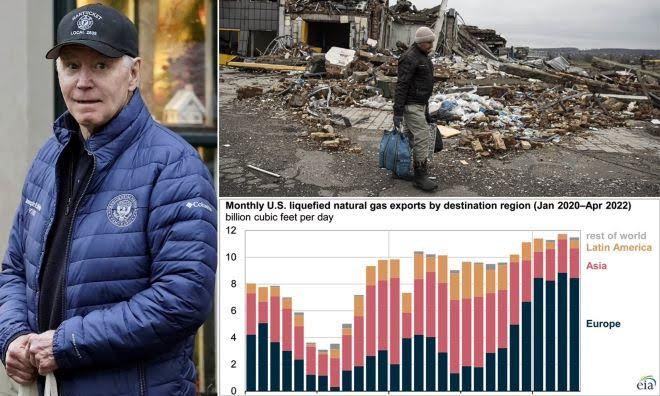

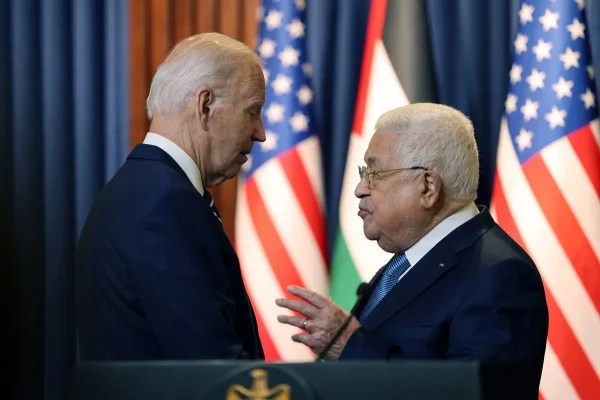
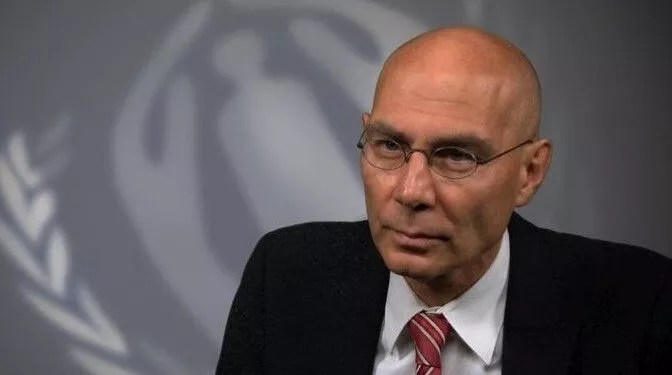


 Aletho News