Fidel Castro’s War on Jewish Mobster Meyer Lansky
How a Jewish gangster helped build—and then lost—Cuba’s Sin City
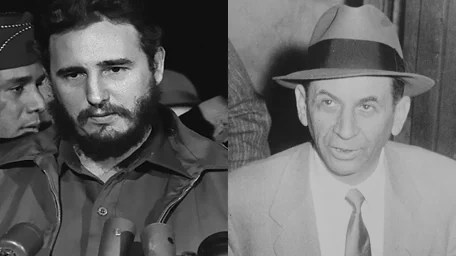
José Niño Unfiltered | March 21, 2026
For more than two decades, Meyer Lansky built what he believed would be his permanent kingdom in the Caribbean. The Jewish gangster from New York’s Lower East Side had transformed Havana into the gambling capital of the Western Hemisphere, a glittering playground where American tourists could indulge every vice under the protection of a dictator on the mob’s payroll. Then came Fidel Castro, a young Catholic revolutionary from the Cuban countryside who would destroy everything Lansky had built in a matter of weeks.
Their conflict was never personal. The two men likely never met or spoke. But the collision between Lansky’s criminal empire and Castro’s revolutionary movement would reshape Cuba, spawn assassination plots that entangled the CIA, and leave a trail of consequences that echoes into the present day.
More than half a century later, as Washington once again toys with the idea of remaking Cuba’s political order, the ghost of Meyer Lansky’s Havana hangs over every discussion of regime change: the dream of turning the island back into a glittering casino colony has never fully died.
Meyer Lansky entered the world as Maier Suchowljansky on July 4, 1902, in Grodno, a city in the Russian Empire that now belongs to Belarus. His family was part of the vast population of Eastern European Jews who migrated to America in the early 20th century. In 1911, Lansky emigrated with his mother and brother Jacob through the port of Odessa, joining his father Max, who had arrived two years earlier and settled first in Brownsville, Brooklyn. The family later moved to the Lower East Side of Manhattan, where Max worked in the garment industry and young Meyer grew up among the crowded tenements where Yiddish filled the streets and opportunity meant whatever you could grab with your own hands.
Young Meyer found his opportunities in crime. By 1918 he and his friend Benjamin “Bugsy” Siegel were running floating dice games on the streets. They graduated to auto theft, then burglary, and when Prohibition arrived, they plunged into the liquor smuggling trade that would make fortunes for a generation of gangsters. Lansky also befriended Charles “Lucky” Luciano, an Italian immigrant who would become one of the most powerful mob bosses in American history.
The three young men rose together. Lansky and Siegel developed a squad of killers for hire that became the prototype for Murder, Inc. Lansky allegedly persuaded Luciano to arrange the 1931 assassination of mob boss Joe “The Boss” Masseria, a murder that consolidated power and helped establish the National Crime Syndicate between 1932 and 1934.
What set Lansky apart from the gunmen and enforcers around him was his financial chops. He became known as the “Mob’s Accountant,” the man who used Swiss bank accounts and shell companies to launder the Mafia’s wealth and hide it from federal investigators. He oversaw the syndicate’s finances as its unofficial banker and was instrumental in shifting the mob’s focus from bootlegging to gambling after Prohibition ended in 1933. His gambling operations stretched from Florida to New Orleans to Las Vegas.
But Lansky’s grandest ambition lay 90 miles off the coast of Florida.
Building the Havana Empire
Lansky’s relationship with Cuba began in 1933, the same year Prohibition ended, and a young military strongman named Fulgencio Batista seized control of the island nation. Lansky pitched Batista a proposal to open Mafia-owned casinos and nightclubs in Havana. The arrangement was straightforward. Batista and his inner circle would receive regular payments from the mob, and in return the gangsters could operate without interference from Cuban authorities.
By 1938, Lansky had been formally invited to help clean up and professionalize Havana’s gambling operations, which had been plagued by fixed races and crooked dealers. He was the fixer, the man who could make the casinos run honestly enough to keep the tourists coming back.
The landmark event came in December 1946 with what became known as the Havana Conference. More than 20 mob bosses from across the United States gathered at the Hotel Nacional de Cuba for a meeting organized by Lansky on Luciano’s orders. The expansion of mob operations in Cuba sat at the top of the agenda. Lansky then visited Batista, who was temporarily out of power and living in Florida, and urged him to return to Cuba to fulfill their grand plans.
Batista obliged. He returned to power through a military coup in 1952, and the arrangement with the mob became even more lucrative. The Batista-Lansky Alliance, included a deal where Batista agreed to match dollar for dollar any hotel investment over one million dollars, with each project automatically including a casino license. Casino hotels were exempted from Cuban taxes.
Lansky owned or held financial interests in at least three major gambling operations. The crown jewel was the Habana Riviera, which opened in December 1957 as the largest Mafia-owned hotel casino outside Las Vegas. It featured 440 rooms that were booked solid for its first winter season. Cuban development banks subsidized half of the $14 million construction cost.
But Lansky did not build this empire alone.
The Inner Circle
Jake Lansky, Meyer’s brother, served as his most trusted man on the ground in Cuba. Jake managed the casino at the Hotel Nacional, Cuba’s most prestigious hotel. By spring 1957, it was reportedly bringing in as much cash as the biggest casinos in Las Vegas.
Joseph “Doc” Stacher was a lifelong Lansky associate dating back to their youth in Newark, New Jersey. Born Gdale Oistaczer in Letychiv, in what is now Ukraine, Stacher was also Jewish and had risen through the criminal ranks alongside Lansky. He operated as the official bribe paymaster to Batista, managing the corrupt payments that kept the dictator and his inner circle cooperative.
Norman “Roughhouse” Rothman was another mobster deeply embedded in the Havana gambling scene. He was a close associate of Santo Trafficante Jr. and operated casinos in Havana, most notably the Sans Souci. Cuba’s slot machine concessions were controlled by Roberto Fernandez y Miranda, Batista’s brother-in-law and army general, who held them as a personal fief.
Ed Levinson, a longtime Lansky associate, ran illegal gambling operations from the Midwest to Kentucky. In Cuba, Levinson’s name appeared on the casino license for the Habana Riviera itself. Lansky kept his own name listed only as the hotel’s kitchen director while Levinson served as the official licensee.
Dino Cellini, though Italian-American rather than Jewish, worked hand in glove with the Lansky operation. He served as casino manager at the Habana Riviera before being replaced by Frank Erickson, and was later detained alongside Jake Lansky at the Tiscornia immigration camp after Castro took power.
The operation also included powerful Italian-American mobsters. Santo Trafficante Jr., the Tampa crime family boss, openly operated the Sans Souci nightclub and the Casino Internacional at the Hotel Nacional. He was also suspected of having behind-the-scenes interests in the Habana Riviera, the Tropicana Club, the Sevilla-Biltmore, the Capri Hotel Casino, the Commodoro, the Deauville, and the Havana Hilton.
The Revolutionary in the Mountains
While Lansky counted his profits in Havana’s glittering casinos, a revolutionary movement was gathering strength in the mountains of eastern Cuba.
Fidel Castro came from a background that could not have been more different from Lansky’s. Born on August 13, 1926, near Birán in Oriente Province, Castro was the son of a prosperous Spanish immigrant landowner. He was raised Catholic and educated at Jesuit schools in Santiago de Cuba and Havana, including the prestigious Colegio de Belén. He studied law at the University of Havana beginning in 1945, earned his degree in 1950, and briefly practiced as a lawyer before turning fully to revolutionary politics. Where Lansky had clawed his way up from immigrant poverty through criminal enterprise, Castro came from rural privilege and channeled his ambitions into armed struggle against the Batista regime.
Castro’s 26th of July Movement directly targeted the Mafia’s presence in its propaganda. In 1958, the revolutionaries denounced the mobsters in radio broadcasts from their guerrilla redoubt in the Sierra Maestra, accusing them of turning Havana into a center of commercialized vice through gambling, prostitution, and drugs. The casinos, the brothels, the drugs, the corruption that enriched Batista and his American gangster partners would all be swept away when the revolution triumphed.
The Fall
On December 31, 1958, Batista’s army was defeated at the Battle of Santa Clara. That night, Batista fled the country for the Dominican Republic, abandoning his gangster partners along with everything else. Lansky left Cuba on January 7, 1959, the day before Castro marched into Havana.
What happened next was a settling of accounts that played out in the streets of Havana. On January 1, 1959, citizens took to the streets after hearing news of Batista’s flight, ransacking casinos, smashing slot machines, and dragging gambling equipment into the streets to be burned. To many Cubans, the American-owned hotels symbolized a corrupting foreign influence. At the Riviera, Lansky’s crown jewel, campesinos (peasants) reportedly brought a truckload of pigs into the lobby. Castro vowed to “clean out all the gamblers.” The revolutionary government eventually nationalized the Riviera and all other Mafia-owned properties, though the final nationalization of hotel casinos did not come until October 1960. Some casinos briefly re-opened on February 19, 1959, after casino workers who depended on tourism jobs marched to the presidential palace demanding their livelihoods back, but tourists stopped coming. Lansky, who told many associates that Cuba had ruined him financially, looked to other outposts in the Caribbean and South America.
Not everyone fled immediately. Jake Lansky and Dino Cellini were arrested by Cuban authorities in May 1959 and detained at the Tiscornia immigration camp outside Havana, the same facility where Santo Trafficante Jr. was also being held. According to the House Select Committee on Assassinations, U.S. Commissioner of Narcotics Harry J. Anslinger had sent a list of suspected drug traffickers to Cuban authorities that included both Jake Lansky and Cellini. Jake Lansky and Cellini were detained for approximately 25 days before being released; Trafficante was held until August. All eventually left Cuba.
By October 1960, Castro formally nationalized all hotel casinos on the island and outlawed gambling entirely.
Revenge and Assassination Plots
Lansky did not merely accept his losses. He actively sought to use the U.S. government and its intelligence apparatus to reclaim his Cuban empire.
According to Doc Stacher, Lansky “indicated to the CIA that some of his people who were still on the island might assassinate Castro” and was “quite prepared to finance the operation himself.”
This was not Lansky’s first collaborative effort with American intelligence. During World War II, he had served as a key intermediary in Operation Underworld, a classified program in which the U.S. Navy’s Office of Naval Intelligence enlisted the Mafia to counter Axis sabotage on the northeastern seaboard. That wartime relationship established a precedent for cooperation between organized crime and the U.S. government.
In August 1960, according to a report by Salon, Lansky struck a deal with exiled Cuban politician Manuel Antonio Varona, offering him several million dollars to form a Cuban government-in-exile to replace Castro. Lansky also promised to arrange a public relations campaign to polish Varona’s image, with the single-minded objective of reopening the Mafia’s casinos, hotels, and nightclubs in a post-Castro Cuba.
Around the same time, the CIA formally recruited mobsters with deep ties to the Havana gambling operations into plots to eliminate Castro. In September 1960, the agency enlisted Chicago Mob operative Johnny Rosselli through former FBI agent Robert Maheu. Rosselli brought in Chicago boss Sam Giancana and Tampa boss Santo Trafficante Jr. The CIA created poison pills to be slipped into Castro’s food, but the attempts failed. The CIA-Mafia assassination partnership was scuttled in early 1963, though the CIA continued plotting against Castro through other means.
Norman Rothman’s trajectory after the revolution was particularly dramatic. Before the revolution succeeded, Rothman had actually been running guns to Castro’s rebels alongside Joe Merola and the Mannarino brothers of Pittsburgh. Sam Mannarino had reasoned that if Castro won, the mobsters who helped arm him would be in the driver’s seat for Cuba’s gambling industry. Rothman advised Mannarino to place his bets on Castro, predicting he would allow the casinos to remain under Mafia control. When that calculation proved disastrously wrong, the scheme unraveled. The weapons in question, 317 guns, had been stolen from a National Guard armory in Canton, Ohio. A plane carrying 121 of the stolen weapons was captured at Morgantown, West Virginia on November 4, 1958. Rothman was convicted on February 4, 1960, along with five co-defendants, for possession, receiving, transportation, and exportation of firearms stolen from the United States government.
Lansky also explored contingency plans in case Cuba could not be recovered. He traveled to the Dominican Republic in 1958 to meet with dictator Rafael Trujillo about potentially relocating the entire Havana operation there. None of these schemes succeeded.
The Final Years
Lansky spent his final years living quietly in Miami Beach. In 1970, facing federal tax evasion charges, he fled to Israel, hoping to claim citizenship under the Law of Return. But after two years, Israel rejected his bid for permanent residency due to his criminal record and deported him back to the United States, where he was arrested at Miami International Airport.
He was acquitted of the tax evasion charges, in part because the government’s main witness lacked credibility, and other indictments were abandoned due to his chronic ill health. He died on January 15, 1983, at age 80 from lung cancer. Despite nearly half a century of involvement in organized crime, the most serious conviction he ever received was for illegal gambling in 1953, which resulted in only a brief jail term.
Despite a lifetime running one of the world’s most profitable criminal enterprises, a granddaughter later claimed he left behind just $57,000 in cash. The FBI believed he had hidden at least $300 million in offshore bank accounts, but this money was never recovered. His heirs later filed a compensation claim against Cuba for the Riviera with the U.S. Foreign Claims Settlement Commission, valuing the property at $70 million.
The mob never returned to Cuba. The casinos that Lansky built were nationalized, and gambling was outlawed entirely. The slot machines that crowds smashed in the streets on New Year’s Day 1959 were never replaced. The Habana Riviera still stands on the Malecón waterfront, declared a National Monument in 2012 and now managed by the Spanish chain Iberostar, still maintaining its original 1950s style. Staff members still refer to it as “el hotel de Meyer Lansky.”
Fidel Castro outlived Meyer Lansky by more than three decades, dying in 2016 at age 90. The revolutionary who had vowed to clean out all the gamblers kept that promise, at least regarding the foreign mobsters who had turned Havana into their personal playground.
The confrontation between these two men, the Jewish gangster from the Lower East Side and the Catholic revolutionary from Oriente Province, ended decisively in Castro’s favor.
Castro’s revolution did what no rival gangster or corrupt strongman ever managed: it toppled the dictatorship that shielded Lansky’s operations and erased his Havana casino empire almost overnight. In the name of sovereignty, the new regime shut down the glittering hotels and gambling halls that had turned Cuba into a playground for American tourists, mafiosi, and intelligence services alike.
But the pressures now bearing down on Cuba suggest that history’s wheel is turning back toward Lansky’s original blueprint. A successful regime change engineered from abroad would not simply “liberate” the island; it would open prime waterfront real estate and tourist infrastructure to the same forces of vice, speculation, and foreign ownership that once made Havana the mob’s favorite casino.
The danger is that Cuba’s next great transformation would replace revolutionary austerity not with genuine self‑determination, but with a return to what Lansky always wanted. Namely, a Caribbean Macau where the house is global finance, the chips are Cuban sovereignty, and the people of the island are once again reduced to serving drinks on someone else’s casino floor.
How Zionist Control Is Hurting US Interests
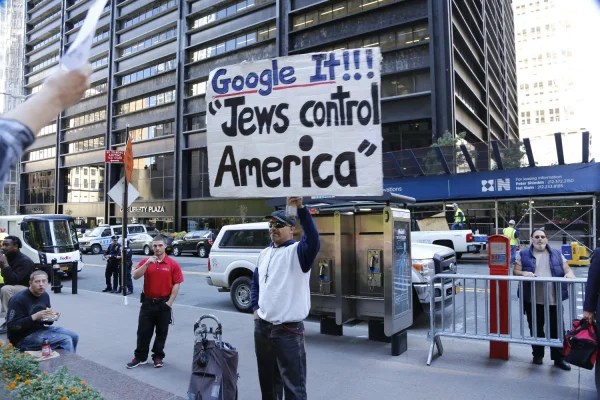
By Abbas Hashemite – New Eastern Outlook – March 14, 2026
The recent US attack on Iran has raised criticism both internationally and at home due to President Trump’s shift from America First to Israel First and over the Zionist control over the US establishment.
US-Israel Strategic Alignment: Historical Patterns
Escalating tensions between the US, Israel, and Iran have raised a critical concern in global geopolitics: has the US attacked Iran to protect its regional interests, or has it jumped into this fray to defend Netanyahu’s Zionist regime in Israel and its strategic interests? The history of American foreign policy decisions since the establishment of the illegitimate Israeli state suggests that protecting Israel’s national and strategic interests in the Middle East and beyond has become a key aspect of the United States’ strategic priorities.
Throughout history, whenever Israel felt threatened or insecure by a regional power, Washington has always supported it directly or indirectly. The historic rivalry between Israel and Iran and its escalation after the recent genocidal operation by the Israeli Defence Forces (IDF) has rendered the situation more intense. Israel considers Iran’s missile capabilities and nuclear program as a threat to its sovereignty and security. Moreover, Iran’s regional proxies also pose a significant threat to Israel’s expansionist agenda.
Recently, the United States and Iran were engaged in negotiations over the latter’s nuclear program. Reports propose that the two sides have made significant progress in resolving the issue peacefully. However, the United States and Israel launched a combined attack on Iran, targeting its key military and political leadership. Iranian Supreme Leader Ayatollah Ali Khamenei and several other high-level military and political leaders of the country were killed in the US-Israel joint strikes. These strikes, despite positive progress in the US-Iran peace negotiations, created an international perception that the United States is fighting Israel’s war in the Middle East.
Domestic and International Backlash Against US Involvement
Dissenting voices regarding the US involvement in a foreign war are rising even within the United States. People from within the US Army are raising questions over the country’s involvement in a foreign war. Even former soldiers are asking whether the US military personnel should sacrifice their lives to secure the strategic interests of Israel. Reportedly, many US soldiers have expressed their concerns over their participation in this war against Iran. They seek to know the moral and legal status of a war waged merely to protect the interests of a specific allied country. The United States faced a similar issue during the Cold War, especially in the Vietnam and Iraq wars, when numerous military personnel criticized and questioned policies that led the country into those wars. Within both U.S. military and civilian policy circles, there is mounting pressure to more clearly distinguish between America’s core national interests and the interests of its allies.
Economic and Global Implications of the Conflict
The Middle East is the center of global energy politics, and the Persian Gulf is one of the key maritime routes for global oil supply. Iran has already blocked the Strait of Hormuz, leading to disruption in global oil and energy supply, causing inflation around the world. Oil and energy prices have surged across Europe, Asia, and other regions, impacting everyday consumers and households—including those in the United States. Due to the aggressive policies of former US governments, the country has lost trillions of dollars in Vietnam, Iraq, and Afghanistan. The recent US war against Iran would prove far more expensive because of the latter’s geostrategic location and greater regional influence.
On the diplomatic front, this war will further tarnish Washington’s international image. Most of the Global South is already hostile to the United States’ interventionist policies. A prolonged war with Iran would not only widen the gulf between the US and its European allies, but it would also increase Russia and China’s global support. This war has already shifted global public opinion against the United States, weakening the country’s international credibility. Many developing nations are increasingly aligning themselves with Russia and China, signaling their interest in joining the BRICS coalition.
Washington’s involvement in this war, at the behest of Israel, has created significant intricacies for its regional allies. It has exposed the Gulf Cooperation Council (GCC), a key US ally in the Middle East, to significant Iranian attacks. Iran is repeatedly targeting US interests across the region. The GCC countries are also facing disruption in the supply chain, leading to significant economic losses, due to the blockade of the Strait of Hormuz by Iran. Moreover, it has undermined the security and safety of the UAE for global investors. This suggests that this war would create visible fractures in the US-GCC relations.
However, the United States’ involvement in this conflict, despite knowing that it will lead to severe public backlash and impinge on the country’s interests in the Middle East and beyond, demonstrates that in Washington, it’s not the US leadership but the Zionist lobby that actually calls the shots. The release of the Epstein files further strengthens the notion that the Zionists use such tools to blackmail and influence the US leaders, including President Trump, to mold the US policies to protect Israel’s interests in the Middle East and around the world.
Аbbas Hashemite is a political observer and research analyst for regional and global geopolitical issues. He is currently working as an independent researcher and journalist
Follow new articles on our Telegram channel
The Three Big Lies about Mammography Screening
By Peter C. Gøtzsche | Brownstone Institute | March 6, 2026
I dedicate this article to all women invited to mammography screening and those who love them because the public has consistently been lied to, for over 40 years. In invitations to screening, women have been told that by detecting cancers early, screening saves lives and leads to less invasive surgery.1,2 I shall demonstrate that all three statements are wrong.
Women are still being told these lies, by professional associations, screening advocates, screening researchers, cancer charities, and national boards of health.3-5 The American Cancer Society declares in a headline that “Mammography Saves Lives”4 and claims, with no references, that results from many decades of research clearly show that women who have regular mammograms are less likely to need aggressive treatments like surgery to remove the entire breast (mastectomy).5
Screening Does Not Save Lives
In the randomised trials of mammography screening, the risk ratio for overall mortality after 13 years of follow-up was 0.99 (95% confidence interval 0.93 to 1.03) for those trials with adequate randomisation.6 The estimate happened to be the same for the other trials, some of which were so poorly randomised that the average age in the two compared groups was not the same, which makes an analysis of overall mortality unreliable.
For two of the three adequately randomised trials, those from Canada and the UK, there are follow-up data after 25 and 23 years, respectively.7,8 The risk ratio for overall mortality was 1.01 (95% confidence interval 0.98 to 1.03) for all three trials (both with a fixed effect and a random effects model, Comprehensive Meta Analysis Version 3.0). In the table, the year means the year the trial started:
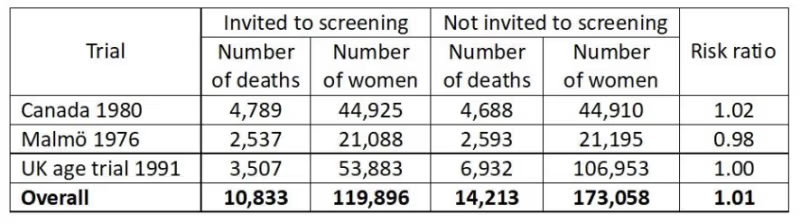
This is a very strong result as it is derived from a total of 25,046 deaths. We can therefore say with great confidence that mammography screening does not save lives.
If we restrict the analysis to the two trials with a very long follow-up, the result is the same, a risk ratio of 1.01 (0.99 to 1.04).
Breast Cancer Mortality Is a Seriously Flawed Outcome
It will surprise most people to learn that we cannot trust what has been reported in the randomised trials about the effect of screening on breast cancer mortality but this is an objective fact.6
A minority of the women who died were autopsied, and in several trials, cause of death was not assessed blindly.6 I have documented that assessment of cause of death was seriously biased.6,9 If we include all trials in the analysis, we would expect to see the greatest reduction in breast cancer mortality in those trials that were most effective in lowering the rate of node-positive cancers (cancers that had metastasised) in the screened group.
This was indeed the case, but the regression line was in the wrong place. It predicts that a screening effectiveness of zero (i.e. the rate of node-positive cancers is the same in the screened groups as in the control groups) results in a 16% reduction in breast cancer mortality (95% confidence interval 9% to 23% reduction).6,9 This can only happen if there is bias, and further analyses showed that assessment of cause of death and of the number of cancers in advanced stages were both biased in favour of screening.
Systematic reviews that include all the trials, also the poorly randomised ones, have reported that mammography screening reduces breast cancer mortality by 16-19%.6,10 As this estimate is of the same size as the bias in the regression analysis, this suggests that screening does not lower breast cancer mortality.
Another reason why breast cancer mortality is a flawed outcome is that screening leads to overdiagnosis, which is the detection of cancers and precursors to cancer (carcinoma in situ), which would not have come to the attention of the woman in her remaining lifetime and therefore would not have become a problem without screening. Since it is not possible to distinguish between harmless cancers and dangerous ones, they are all treated, and radiotherapy and chemotherapy given to women who are healthy increase their mortality.6
If we take into account the cardiac and lung cancer deaths caused by the type of radiotherapy used when the screening trials were carried out and generously assume that screening reduces breast cancer mortality by 20% and results in only 20% overdiagnosis of healthy women, then there is no mortality benefit from screening.11
Finally, it is noteworthy that the most unreliable trials were those that reported the greatest reductions in breast cancer mortality.6 The difference in the effect estimates between the adequately randomised trials and the poorly conducted trials was statistically significant, both after 7 and 14 years of follow-up (P = 0.005 and P = 0.02, respectively).12
Total Cancer Mortality
Since misclassification of cause of death often concerns deaths from other cancers,6 total cancer mortality is a less biased outcome than breast cancer mortality.
Some trialists have not reported what the total cancer mortality was but we have data from the three adequately randomised trials.6,8 There was no effect of screening on total cancer mortality, including breast cancer, risk ratio 1.00, 95% confidence interval 0.96 to 1.04. There were two different age groups in the Canadian trial, 40-49 (a) and 50-59 years (b):
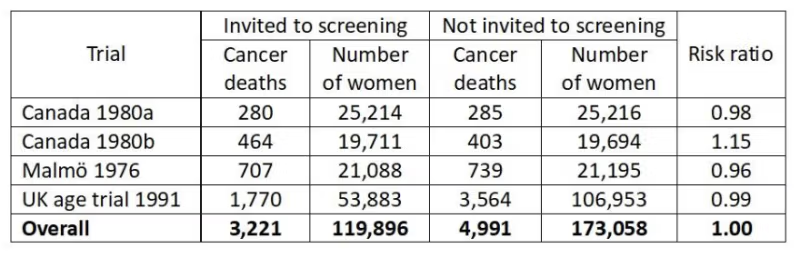
Since total cancer mortality is less biased than breast cancer mortality, it is of interest to see what the expected cancer mortality (including breast cancer mortality) would have been if the reported reduction in breast cancer mortality of 29% after 7 years in the poorly randomised trials6 were true.
It would have been a risk ratio of 0.95, which is significantly lower (P = 0.02)6 than what was actually found. This provides further evidence that assessment of cause of death was biased in favour of screening.
Breast Cancer Is Not Detected Early but Very Late
If we assume that the observed doubling times in longitudinal tumour studies are constant from initiation till the tumour becomes detectable, the average woman has harboured the cancer for 21 years before it acquires a size of 10 mm and becomes detectable on a mammogram.13
Given this large time span, it is misleading to call it “early detection” also because the effect of screening is trivial, namely to advance the diagnosis by less than a year.13
Yet all authorities repeat this mantra. As it is impossible that everyone working with cancer is unaware of the basics of tumour biology, we can draw the conclusion that the public all over the world is being misinformed. This is fraud because it is deliberate and because women think “early detection” will save their lives.
I once asked a famous tumour biologist, Keld Danø, during a coffee break at an international meeting, whether he agreed with me that it was impossible to lower breast cancer mortality by 30% with screening, based on our knowledge of tumour biology.14 He agreed. When I asked why people like him didn’t participate in the scientific debate, he didn’t reply and it is not difficult to imagine why. It is not wise to point out that your colleagues are wrong when you are on the receiving end of major funds from a cancer charity that touts screening.
The women suffer while everyone else prospers.
The earliest cell changes, carcinoma in situ, are not detected unless the women get a mammogram. In our systematic review of countries with organised screening programmes, we found an overdiagnosis of 35% for invasive cancer and 52% when we included carcinoma in situ.15
Although less than half of carcinoma in situ cases progress to invasive cancer,16,17 the women are nevertheless routinely treated with surgery, drugs, and radiotherapy.
The deep irony is that the surgery is often mastectomy because the cell changes may be diffusely spread in the breast, and sometimes even in both breasts. In New South Wales, one-third of women with carcinoma in situ had a mastectomy,18 and in the UK, carcinoma in situ was more often treated by mastectomy than invasive cancer,19 and the number of women treated by mastectomy almost doubled from 1998 to 2008.20
This brings us to the third big falsehood in the propaganda about mammography screening.
Screening Does Not Decrease but Increases Mastectomies
Because of the substantial overdiagnosis of invasive cancer and carcinoma in situ, and because screening only advances detection of invasive cancers slightly,13 it is inevitable that screening increases mastectomies.
In the randomised trials of screening, we found 31% more mastectomies in the screened groups than in the control groups.6
Denmark is a unique country to study this in practice as we had a period of 17 years (1991-2007) where only about 20% of potentially eligible women were invited to screening because some counties did not have screening.21 When screening starts, more breast cancer diagnoses than usual will be made and there will be more mastectomies. However, as can be seen on the graphs, the huge increases in mastectomies are not compensated by a drop in mastectomies later where there was a similar decline in mastectomies in non-screened areas as in screened areas:22
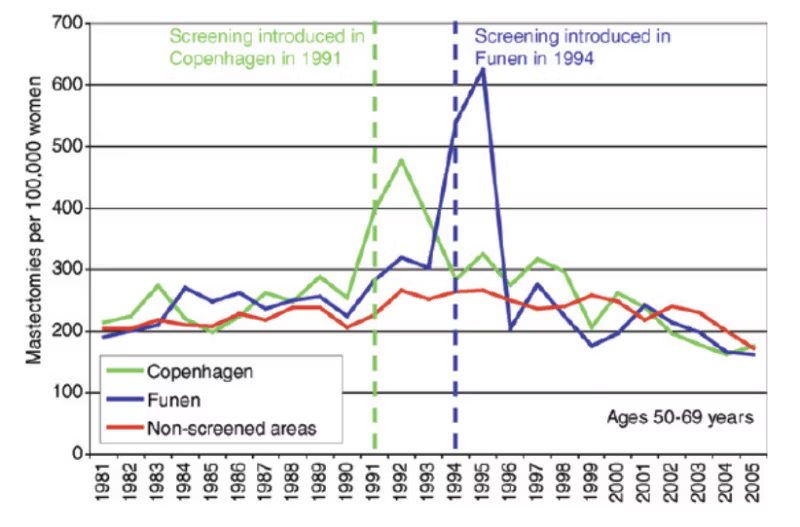
Moreover, as the next graph shows, there is no compensatory drop in old age groups:22
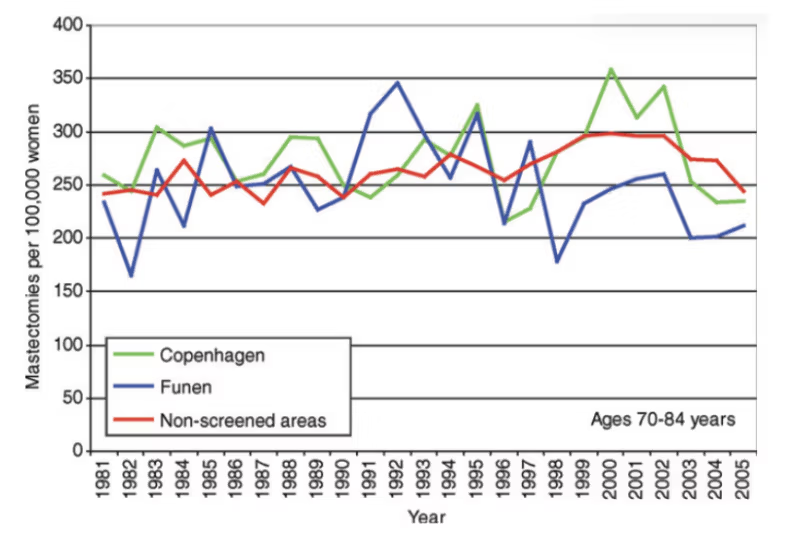
Yet women are told that screening leads to less invasive surgery, with fewer mastectomies. This is disinformation in the extreme.
The most commonly used trick used to disinform the women about this issue is to report percentages instead of numbers.3 Imagine a town with a certain level of crime. You divide the crimes into serious and less serious ones. Over a period of time, the rate of serious crime increases by 20% and the rate of less serious crime by 40%. This is a development for the worse. But although more people are exposed to serious crime and more people are exposed to less serious crime as well, a trickster would say that, as there are now relatively fewer cases of serious crime, the situation has improved.
It is deplorable that people who know better – screening researchers, cancer charities, national boards of health, etc – have lied to the public this way3 and still do, in direct contrast to logic and the scientific evidence.
The Final Layers of Dishonesty
The mammography screening area is riddled with dishonesty. So much that I needed to write a whole book detailing all the elaborate ways in which researchers and others had made it look like the Emperor was dressed when in fact he was naked.3
The deception is total because it always continued after I had pointed out in letters to the editor what the researchers had done wrong, and to which they responded.3,14 They therefore cannot claim they didn’t know that they continued to manipulate the data and to deceive the public.
Three of the most dishonest and most prolific authors are László Tabár, Stephen Duffy, and Robert Smith. Over many years, they aggressively attacked my extensive research on mammography screening but never with convincing arguments3,14 – they excel at ad hominem arguments.
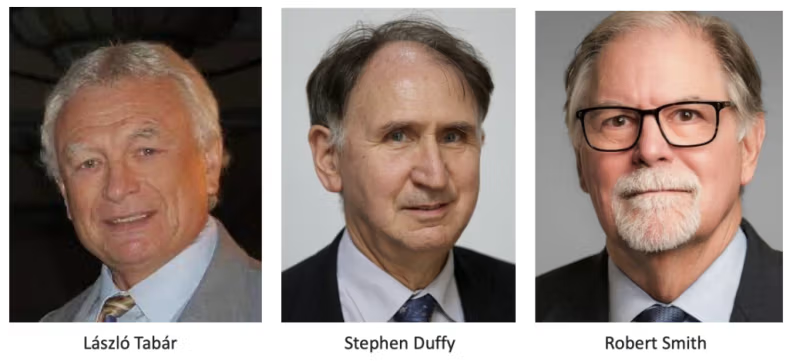
László Tabár was the primary investigator for the Swedish Two-County study, an early trial that reported a huge effect of screening, a 31% reduction in breast cancer mortality.23 This trial was instrumental for introducing screening. However, there are so many serious discrepancies in numbers, and some of the findings are so implausible and incompatible with reported tumour characteristics, that it looks like scientific misconduct.3,6,24-27 Tabár has made a fortune on mammography screening and has a habit of threatening with litigation whenever anyone gets too close to his secrets.3,14,23
One would not think that Stephen Duffy is a professor of statistics because he has bent the data beyond belief and beyond what is appropriate in many creative and obscure ways.3,6,14 Robert Smith was once the Director of Cancer Screening at the American Cancer Society.
This triumvirate reported a 63% reduction in breast cancer mortality in an observational study.28 I pointed out some of the problems with their study,29 but in their reply,30 they compared women who attended screening with women who didn’t, although it is clear from their own paper that they were aware that such comparisons are seriously misleading.
These authors claimed, based on the Two-County study data, that they had found a “statistically significant 13% reduction in mortality in association with an invitation to screening.”31,32 This is plain wrong and totally impossible. Even if screening was 100% effective and prevented all deaths from breast cancer, it could not reduce total mortality by 13%.
They furthermore predicted that when a screening programme had been running for some time, one could expect a reduction of 3-4% in total mortality.31 This is also impossible unless screening prevents all breast cancer deaths. The lifetime risk of dying from breast cancer is 2.5-3%,33 and it was 3-4% in many countries before screening was introduced.
I dryly remarked in my book that if they continued their line of research for other diseases, they may find the recipe for eternal life.3 I also noted that the problem with lying is that
sooner or later people usually contradict themselves, which they did in relation to a study they had published in The Lancet.3
A common way of duping the readers is to say that early detection of breast cancer “reduces mortality”34 without specifying what kind of mortality this is, which makes the reader believe that screening saves lives.
The most common error in the screening literature could be that people falsely translate a recorded effect on mortality from a cancer into an effect on all-cause mortality. We see claims everywhere that common cancer screening tests save lives but a systematic review of the randomised trials found that the only screening test with a significant lifetime gain was sigmoidoscopy. It extended life by 110 days on average, and as the 95% confidence interval went from 0 to 274 days, this result was on the verge of not being statistically significant.35
Another common trick is to use hypothetical statements when we have certain knowledge. For example, authors may write – even in our most esteemed medical journals – that overdetection “may” occur for invasive cancers and that it “may” cause harm through unnecessary labelling and treatment of patients who, without screening, “might” never have been diagnosed.34 These are not hypothetical possibilities; they are inevitable consequences of screening.
Final Remarks
Starting in 2000, I have published numerous scientific articles, letters to the editor, newspaper articles, and two books about mammography screening that do not leave a shred of doubt that this intervention is very harmful.37
Even though I know that no one will ever be convicted, I consider it a crime that women have been systematically lured into believing that screening is good for them. According to the principles for informed consent, people must be fully informed about the most important benefits and harms of interventions they are offered, but this ethical requirement has been brutally ignored. To such a degree that in many countries, women receive an “invitation” to mammography screening with a pre-allotted time for a mammogram they never asked about.1 This makes them believe it is very important that they show up and puts pressure on them to cancel the appointment if they don’t want a mammogram taken. If they refuse, they are often subjected to highly coercive and paternalistic follow-up letters.
Here are some examples of the deeply unethical practice:1
“We have reserved a time… If the time is very inconvenient, we ask you to contact the mammography screening centre as soon as possible;” “I am concerned that you have not yet responded to our recent invitation for a screening mammogram;” “If you would like to avoid participation, we ask you to fill out a form. You obtain this form by calling the breast-diagnostic centre;” “During the past two years, over 340,000 Queensland women have benefited from taking part in the BreastScreen Queensland Programme,” “You can take a positive step to decrease your own risk, and help us achieve our goal, by deciding to take part.”
What matters is to ensure a high uptake, “our goal,” not that the women understand what they are being subjected to.
I advise women in all countries to not go to mammography screening and to do nothing if they are “invited,” which my wife did. She had no obligation to decline an “invitation” with a pre-allotted time she never asked for, and the letter made her angry.
Screening is harmful in many other ways than those I have mentioned here, e.g. between one quarter and one half, depending on the country, of all women attending screening repeatedly will experience at least one false positive result, which can be distressful for several years.36 It therefore constitutes another tremendous harm.6,14
As I have explained elsewhere,38 the Cochrane Collaboration refused to allow us to update our Cochrane review on mammography screening last year, even though I had updated it three times before and the update was only about adding more deaths to two of the trials.
Absurdly, the ”Sign-Off Editor” noted that our review might create a potentially damaging firestorm of misinformation and we were accused of having pre-conceived ideas about no benefit of screening “rather than considering it may actually have benefit not detected.” We were also forbidden to use the term overdiagnosis even though this is standard and appears in other Cochrane reviews of cancer screening, including our own.6,12
When I first published the Cochrane review, in 2001, there was a huge scandal39 because Cochrane forbade us from publishing our data on the most important harms of screening, overdiagnosis, and overtreatment.3 This should have made the Cochrane leaders handle our update professionally, but they preferred to support the prevailing dogma about screening rather than telling the women the truth.
Only one question remains: Which country will be the first to show a little sanity and respect for the science and abandon screening?
References
1 Jørgensen KJ, Gøtzsche PC. Content of invitations to publicly funded screening mammography. BMJ 2006;332:538-41.
2 Gøtzsche P, Hartling OJ, Nielsen M, Brodersen J, Jørgensen KJ. Breast screening: the facts – or maybe not. BMJ 2009;338:446-8.
3 Gøtzsche PC. Mammography screening: truth, lies and controversy. London: Radcliffe Publishing; 2012.
4 Mammography Saves Lives. American College of Radiology 2026; Feb 27.
5 American Cancer Society Recommendations for the Early Detection of Breast Cancer. 2026; Feb 27.
6 Gøtzsche PC, Jørgensen KJ. Screening for breast cancer with mammography. Cochrane Database Sys Rev 2013;6:CD001877.
7 Miller AB, Wall C, Baines CJ, et al. Twenty five year follow-up for breast cancer incidence and mortality of the Canadian National Breast Screening Study: randomised screening trial. BMJ 2014;348:g366.
8 Duffy SW, Vulkan D, Cuckle H, et al. Effect of mammographic screening from age 40 years on breast cancer mortality (UK Age trial): final results of a randomised, controlled trial. Lancet Oncol 2020;21:1165-72.
9 Gøtzsche PC. Relation between breast cancer mortality and screening effectiveness: systematic review of the mammography trials. Dan Med Bull 2011;58:A4246.
10 Humphrey LL, Helfand M, Chan BK, Woolf SH. Breast cancer screening: a summary of the evidence for the U.S. Preventive Services Task Force. Ann Intern Med 2002;137(5 Part 1):347-60.
11 Baum M. Harms from breast cancer screening outweigh benefits if death caused by treatment is included. BMJ 2013;346:f385.
12 Gøtzsche PC, Nielsen M. Screening for breast cancer with mammography. Cochrane Database Syst Rev 2006;4:CD001877.
13 Gøtzsche PC, Jørgensen KJ, Zahl PH, Maehlen J. Why mammography screening has not lived up to expectations from the randomised trials. Cancer Causes Control 2012;23:15-21.
14 Gøtzsche PC. Mammography screening: the great hoax. Copenhagen: Institute for Scientific Freedom; 2024 (freely available).
15 Jørgensen KJ, Gøtzsche PC. Overdiagnosis in publicly organised mammography screening programmes: systematic review of incidence trends. BMJ 2009;339:b2587.
16 Nielsen M, Thomsen JL, Primdahl S, et al. Breast cancer and atypia among young and middle-aged women: a study of 110 medicolegal autopsies. Br J Cancer 1987;56:814-9.
17 Welch HG, Black WC. Using autopsy series to estimate the disease reservoir for ductal carcinoma in situ of the breast. Ann Intern Med 1997;127:1023-8.
18 Kricker A, Smoothy V, Armstrong B. Ductal carcinoma in situ in NSW women in 1995 to 1997. National Breast & Ovarian Cancer Centre 2000;April 15.
19 Patnick J. NHS Breast Screening Programme: annual review 2011. NHS Breast Screening Programme 2012.
20 Dixon JM. Breast screening has increased the number of mastectomies. Breast Cancer Res 2009;11(Suppl 3):S19.
21 Jørgensen KJ, Zahl P-H, Gøtzsche PC. Overdiagnosis in organised mammography screening in Denmark: a comparative study. BMC Womens Health 2009;9:36.
22 Jørgensen KJ, Keen JD, Gøtzsche PC. Is mammographic screening justifiable considering its substantial overdiagnosis rate and minor effect on mortality? Radiology 2011;260:621-7.
23 Tabár L, Fagerberg CJ, Gad A, et al. Reduction in mortality from breast cancer after mass screening with mammography. Randomised trial from the Breast Cancer Screening Working Group of the Swedish National Board of Health and Welfare. Lancet 1985;1:829-32.
24 Zahl P, Kopjar B, Mæhlen J. Mammografistudier. Tidsskr Nor Lægeforen 2001;121:2636.
25 Gøtzsche PC, Mæhlen J, Zahl PH. What is publication? Lancet 2006;368:1854–6.
26 Zahl P-H, Gøtzsche PC, Andersen JM, Mæhlen J. Results of the Two-County trial of mammography screening are not compatible with contemporaneous official Swedish breast cancer statistics. Dan Med Bull 2006;53:438-40.
27 Gøtzsche PC. Whistleblower in healthcare (autobiography). Copenhagen: Institute for Scientific Freedom 2025 (freely available).
28 Tabár L, Vitak B, Chen HH, Yen MF, Duffy SW, Smith RA. Beyond randomized controlled trials: organized mammographic screening substantially reduces breast carcinoma mortality. Cancer 2001;91:1724-31.
29 Gøtzsche PC. Beyond randomized controlled trials. Cancer 2002;94:578.
30 Tabár L, Duffy SW, Smith RA. Beyond randomized controlled trials. Authors’ reply. Cancer 2002;94:581–3.
31 Tabár L, Duffy SW, Yen MF, Warwick J, Vitak B, Chen HH, Smith RA. All-cause mortality among breast cancer patients in a screening trial: support for breast cancer mortality as an end point. J Med Screen 2002;9:159–62.
32 Duffy SW, Tabár L, Vitak B, Yen MF, Warwick J, Smith RA, Chen HH. The Swedish Two-County trial of mammographic screening: cluster randomisation and end point evaluation. Ann Oncol 2003;14:1196–8.
33 Office of Population Censuses and Surveys. Mortality Statistics: cause 1988. London: HMSO; 1990. (Series DH2 no. 15. Table 2).
34 Irwig L, Houssami N, Armstrong B, Glasziou P. Evaluating new screening tests for breast cancer. BMJ 2006;332:678-9.
35 Bretthauer M, Wieszczy P, Løberg M, et al. Estimated lifetime gained with cancer screening tests: a meta-analysis of randomized clinical trials. JAMA Intern Med 2023;183:1196-1203.
36 Brodersen J, Siersma VD. Long-term psychosocial consequences of false-positive screening mammography. Ann Fam Med 2013;11:106–15.
37 Gøtzsche PC. Mammography screening is harmful and should be abandoned. J R Soc Med 2015;108:341-5.
38 Gøtzsche PC. Cochrane on a suicide mission. Brownstone Journal 2025; June 20.
39 Horton R. Screening mammography – an overview revisited. Lancet 2001;358:1284-5.
Dr. Peter Gøtzsche co-founded the Cochrane Collaboration, once considered the world’s preeminent independent medical research organization. In 2010 Gøtzsche was named Professor of Clinical Research Design and Analysis at the University of Copenhagen. Gøtzsche has published over 100 papers in the “big five” medical journals (JAMA, Lancet, New England Journal of Medicine, British Medical Journal, and Annals of Internal Medicine). Gøtzsche has also authored books on medical issues including Deadly Medicines and Organized Crime.
Blackmail and death threats, Zelensky embarrasses the EU, but there’s no condemnation
By Finian Cunningham | Strategic Culture Foundation | March 9, 2026
The money-laundering Kiev regime has gone from cutting off oil supply for EU member states to now issuing death threats to heads of state – and all that the regime’s patrons in Brussels can do is squirm with embarrassment.
The latest twist in the corrupt regime of Vladimir Zelensky is his death threat to Hungarian Prime Minister Viktor Orbán.
That was then followed by the Hungarian authorities impounding an armed convoy transporting $100 million in cash and gold bullion from Austria over Hungary’s borders to Kiev – no doubt as part of the war mafia operating under Zelensky.
You couldn’t make this up. A comedian actor who used to dress up in high heels and played a soap-opera hero president is now ruling by decree as a dictator propped up by EU taxpayers, and only because of Brussels indulging in the largesse of their Russophobic obsessions. And now this fictive creation is threatening the assassination of elected leaders.
Zelensky didn’t mention Orbán by name, but in a press briefing last Thursday, he said that “the address of the person” (Orbán) who has blocked a proposed €90 billion loan from the EU to Ukraine was being given to “our military guys” who would “speak in their own language.”
The Hungarian prime minister denounced Zelensky’s words as a “threat to my life”. The country’s foreign ministry condemned the Ukrainian leader for “crossing all limits.”
Yet the European Union has not condemned Zelensky. A junior spokesman for the European Commission merely released a perfunctory statement, saying “that type of language is not acceptable… There must be no threats against EU member states.”
Where is a full-throated denunciation from European leaders like Commission President Ursula von der Leyen, or Kaja Kallas, the Commissioner for Foreign Affairs?
Let’s get this straight. Ukraine’s nominal president tells a head of an EU state that his name is on a hit list, and the bloc’s highest officials say nothing about that. They leave it to some low-level press officer to make a bland statement about it “not being acceptable.”
This shows how deeply corrupted the EU leadership has become in the proxy war racket in Ukraine against Russia. Threats of assassination are being made and played down out of embarrassment, not because such threats are a grave violation of international law.
The background is even more damning. Hungary and Slovakia are being subjected to energy blackmail by the Ukrainian regime because the countries have refused to terminate buying their oil supplies from Russia, as demanded by Brussels and Zelensky.
On January 27, the oil supply to Hungary and Slovakia was cut off after the Kiev regime claimed that a Russian drone strike damaged the Drushba pipeline carrying the oil over Ukrainian territory from Russia. Budapest and Bratislava have accused the Kiev regime of “energy blackmail.”
A Russian air strike did not hit the pipeline. Why would Russia deprive its customers? It doesn’t make sense, and Moscow rejected the claim.
As always, the question is: Who gains?
The Kiev regime has unilaterally cut the supply as a way to pressure Hungary and Slovakia into lifting their opposition to the EU donating more loans and military aid to Ukraine.
Tellingly, Ukraine has delayed supposed “repairs” to the Drushba pipeline. Hungary and Slovakia are facing a critical shortage of oil supply, which is destabilizing their economies. Kiev is even refusing to allow independent inspectors to assess the alleged damage. It’s obvious this is a set-up. There’s probably not even any physical damage other than turning off the pumps.
Last month, Orbán’s government caused a major upset in the European Union when it vetoed a proposed €90 billion loan from Brussels to Ukraine. The loan is seen as a vital lifeline to prop up the Kiev regime and extend the war. Budapest’s refusal was partly in response to the “energy blackmail.”
The block on the money supply has put Kiev and its EU sponsors in a quandary. The regime will not be able to keep fighting the war against Russia without more purchases of military equipment from NATO. Just as important, the block on the loan by Hungary means an obstacle to the money racket that the West has been running under the Zelensky regime, whereby billions of taxpayer funds get laundered into profits for corporations with a hefty cut for the Kiev mafia.
This would explain the bizarre convoy of cash and gold bullion that Hungarian authorities busted and impounded last Thursday. Two armoured vehicles were apprehended carrying $80 million in cash and $20 million in gold bars on their way to Ukraine from Austria. Among those detained were former Ukrainian intelligence officials.
The physical transport of such large amounts of funds, rather than by electronic bank transfer, indicates that the funds were meant not to be traced. The finding exposes once again the illicit money laundering by Zelensky’s regime. This is not in the least bit surprising, given the repeated scandals of corruption and embezzlement in Kiev under Zelensky and his circle, who have acquired luxury portfolios of overseas properties over the last four years.
Hungary and Slovakia are the only EU members out of 27 nations that have shown any principles about stopping the proxy war in Ukraine and ending the racket of robbing European citizens and saddling future generations with astronomical debts.
For taking that stand, the Brussels leadership has turned a blind eye to the Kiev regime’s cutting off oil supplies and using energy blackmail. Now the regime has gone even further to issue death threats to a European head of state, and the Brussels elite has effectively said nothing.
What the EU’s proxy war sponsors seem more concerned about is that their overindulged, corrupt puppet in Kiev is a public relations embarrassment. The blatant criminality of terroristic blackmail and death threats betrays the complicity of the EU’s leadership.
Von der Leyen, Kajas and the Brussels elites are more worried that Zelensky’s mafia threats might rebound by galvanizing Hungarians to vote for Orbán’s party in parliamentary elections next month.
Their message is: you can launder millions, use blackmail and issue death threats. Just don’t make it obvious.
Openly Pro-Israel Tech Group Now Has Control over UK’s Most Sensitive National Security Data
By Alan Macleod | MintPress News | February 7, 2023
This is the story of how a multibillionaire who has dedicated his life to advancing the cause of the Israeli national security state is now in control of Great Britain’s most sensitive public and military data.
In 2020, software giant Oracle won a gigantic contract with the United Kingdom’s Ministry of Defence (MoD) to provide it with cloud infrastructure, digital assistance, data visualization software, mobile hub and development tools. The military is far from the only British institution entrusting its most sensitive data to the Texas-based firm, however. The Home Office, Office of National Statistics and National Health Service, among others, also rely on Oracle databases to function.
For years before signing the MoD agreement, Oracle founder Larry Ellison had been ingratiating himself with the British establishment, employing all manner of well-connected individuals at his foundation. Among these included media executive and father-in-law of former Prime Minister Boris Johnson, Matthew Symonds, who earned over $600,000 per year as the executive director of the Larry Ellison Foundation. Richard Meredith, a longtime director of the U.K.’s Foreign and Commonwealth Office, was also snapped up at a similar salary to become deputy executive director.
Many other well-connected British government officials, including Vel Gnanendran, went straight from the Larry Ellison Foundation into the Foreign and Commonwealth Office and worked there at the time that the body signed off on the lucrative Oracle contracts. For years, the Larry Ellison Foundation also bankrolled the Tony Blair Institute for Global Change, the former U.K. prime minister’s new political project.
Yet, just after as the partnership with the Ministry of Defence was secured, Ellison abruptly shut down his foundation, prompting speculation that it had fulfilled its purpose.
“Our mission to support Israel”
Why this should be of concern is that both Ellison and key Oracle figures have made clear that their business model is less about making money, and more focused on furthering the interests of the Israeli national security state.
Furthermore, few people realize how important Oracle is to the functioning of the modern world. It is the third-largest software company globally. Yet because it sells its products to businesses and governments rather than consumers, it is far less known than competitors such as Microsoft or Amazon. Nevertheless, it is as important to the modern hi-tech economy as its rivals, its software and databases powering the likes of Netflix, Zoom, financial corporations such as JPMorgan Chase, as well as a myriad of educational institutions.
While opening a new data center in Jerusalem in 2021, the company’s Israeli-American CEO, Safra Catz, laid out Oracle’s purpose, stating,
We are not flexible regarding our mission, and our commitment to Israel is second to none. This is a free world and I love my employees, and if they don’t agree with our mission to support the State of Israel, then maybe we aren’t the right company for them. Larry [Ellison] and I are publicly committed to Israel and devote personal time to the country, and no one should be surprised by that.”
Catz made the comments in response to a question about Israel’s poor human rights record and the rebellion of Silicon Valley employees refusing to facilitate the country’s war crimes. In 2017, Catz was offered the position of U.S. Director of National Intelligence.

Safra Catz, Oracle’s CEO, poses with Alon Ben (left), CEO of Tel-Aviv-based Oracle data partner, Bynet
Ellison, if anything, is even more forthright in his support for the Israeli government and its agenda. The billionaire – currently the fourth-richest individual in the world – has bankrolled the Israeli Defense Forces (IDF) for years, giving tens of millions of dollars to the Friends of the IDF, including the largest single donation the organization has ever received. In 2017 alone, he pledged $16.6 million to build a new training facility for IDF soldiers defending, in his words, “our home”. As Ellison explained:
Through all of the perilous times since Israel’s founding, we have called on the brave men and women of the IDF to defend our home. In my mind, there is no greater honor than supporting some of the bravest people in the world, and I thank Friends of the IDF for allowing us to celebrate and support these soldiers year after year. We should do all we can to show these heroic soldiers that they are not alone.”
This was far from his first donation to the organization. Three years previously, he gave $9 million at a star-studded gala – the largest donation on a record-breaking night for the FIDF.
The big tech mogul also has a direct hand in furthering the Israeli settlement project. In 2007, he met with then-Foreign Minister Tzipi Livni to pledge half a million dollars in support to the Israeli border town of Sderot.
But if Ellison can count Livni as a friend, then Benjamin Netanyahu is virtually family. The pair have been close for many years; Ellison even flew Netanyahu out to his private Hawaiian island to vacation together. There, he offered the embattled prime minister a seat on Oracle’s board, replete with a salary of $450,000.
Netanyahu had previously gone to Ellison, encouraging him to buy out the struggling Yedioth Ahronoth newspaper in an attempt to change the outlet from an adversary of his political project into a mouthpiece for his Likud Party.
Unsurprisingly, Oracle has signed numerous deals with the Israeli national security state.
“The Israelis think they control the Foreign Office. And they do!”
In recent years, Israel and pro-Israel groups have managed to amass considerable influence over U.K. government policy. A measure of this is the fact that, by 2021, one-third of the cabinet – including then-Prime Minister Boris Johnson – were directly funded by the Israeli government or pro-Israel organizations. Chief amongst these groups is the Conservative Friends of Israel, who have claimed that 80% of Tory members of parliament belong to their organization.
The Israel lobby has been able to shape government policy, to the point where they blocked Boris Johnson’s appointment of Alan Duncan to the post of Middle East Minister. Johnson, according to Duncan, was “indignant”. “They shouldn’t behave like this”, the prime minister reportedly said about the Israelis, but acquiesced to their demands. “The Israelis think they control the Foreign Office. And they do”, Duncan later wrote. Home Secretary Priti Patel (a longtime champion of the apartheid state) also secretly flew to Israel for “off the radar” talks with Netanyahu – a huge breach of ministerial codes, for which she later resigned.
The Israeli Embassy also played a key role in the coordinated smear campaign demonizing Labour leader Jeremy Corbyn, an operation that helped to ensure Johnson’s electoral victory in 2019.
In addition to this, there have also been national security questions raised about the extent to which Israeli businessmen have bought up key British industries. Last year, for example, Patrick Drahi’s attempt to purchase 18% of BT, the formerly state-owned telecoms giant that owns and controls much of the country’s telecommunications infrastructure, was put on hold due to concerns over national security.
That a company like Oracle that defines itself so explicitly as pro-Israel raises serious concerns over the nature of the work they do for the United Kingdom or any other nation. How can the Ministry of Defence or the Home Office’s data be considered uncompromised in these hands?
The CIA in all but name
“The Oracle database is used to keep track of basically everything,” Ellison once said, adding,
The information about your banks, your checking balance, your savings balance, is stored in an Oracle database. Your airline reservation is stored in an Oracle database. What books you bought on Amazon is stored in an Oracle database. Your profile on Yahoo! is stored in an Oracle database.”
This should be of concern to everyone, as Oracle itself started off as a project for the Central Intelligence Agency. Indeed, Ellison named his company after Project Oracle, a 1970s CIA operation he worked on.
“Our very first customer was the Central Intelligence Agency,” Ellison boasted, telling the story of how, in 1977, the CIA commissioned his firm to build them a database. From there, Ellison immediately began pitching to other wings of the national security state, and within months had secured contracts with Navy Intelligence, Air Force Intelligence and the NSA. The bottomless pit of money available for the military has helped turn Oracle from a tiny operation to a $46 billion dollar per year behemoth.
One of Oracle’s largest deals came in 2020, when it was part of a consortium that won a 15-year contract with the CIA and the other 16 U.S. intelligence agencies said to be with tens of billions of dollars.
Part of the reason the CIA trusts Oracle is that the company’s upper echelons are filled with ex-CIA executives. A case in point is former CIA Director and Defense Secretary Leon Panetta, who was appointed to the company’s board in 2015. David Carney, who spent 32 years at the agency, rising to become its third-in-command, also joined Oracle, heading up its information assurance center.
Indeed, on its own website, Oracle aggressively recruits CIA agents, sharing stories of former spooks who have gone on to succeed in its ranks. One of those is Senior Technical Program Manager Andrew C. “As an Intelligence Officer in the US Navy, as well as in the CIA, Andrew has had to lead, build teams, and work on fast-breaking projects, all things Oracle requires on a regular basis,” Oracle writes, before actively encouraging other agents to apply,
Now that you’ve heard about Andrew’s experience, are you ready to join Oracle National Security Region team? If you hold a U.S. Government Top Secret SCI or higher clearance, click here to check out our latest opportunities. Once you’ve found an opening that fits your talent, passion, skills, and background, apply for us to consider you. Create the future with us.”
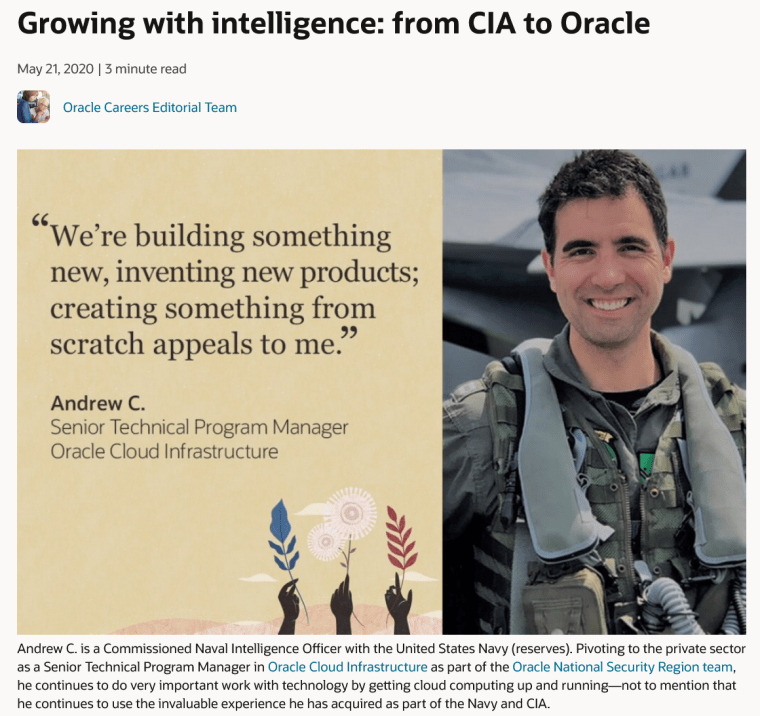
Oracle, a firm that stores reams of your sensitive data, openly boasts of its cozy ties to the CIA
The revolving door between Oracle and the CIA also swings the other way, with Oracle staff finding employment in Langley, VA.
The Silicon Valley giant also works closely with the U.S. military. “Oracle Cloud is advancing Department of Defense mission success”, it boasts on its website. Oracle notes that it is “delivering real-time intel to warfighters”, thereby “securing command and control at the tactical edge.” Thus, by the company’s own telling, it is a centerpiece of both the military-industrial-complex and the national security state. Big media outlets agree: “Larry Ellison is a billionaire today thanks to the CIA” concluded Business Insider.
Surveillance State
If Ellison had his way, however, Oracle would be an even more crucial part of a greatly expanded national security state. In the immediate wake of the September 11 attacks, he flew in for a series of meetings with top Bush-era officials, including NSA chief Michael Hayden and Attorney General John Ashcroft. There, he likely pitched an idea he had been promoting for some time: a single, comprehensive national security database that collected every piece of information possible to identify someone, from thumbprints and iris scans to medical history and social security details. “The single greatest step we Americans could take to make life tougher for terrorists would be to ensure that all the information in myriad government databases was copied into a single, comprehensive national security database,” he insisted.
In the end, even the Bush administration balked at such a sweeping project. Nevertheless, Oracle has deeply ingratiated itself into the world of policing and surveillance. In 2012, at the height of an anti-NATO demonstration, U.S. law enforcement used Oracle’s Endeca software to match protestors’ tweets with data about their criminal records, 911 calls and other information to pre-arrest demonstration leaders before the action took off.
Since then, Oracle has sold the same or similar software to authorities in Europe, South America, the Middle East and China. Job listings for developers at Guantánamo Bay also note that familiarity with Endeca and Oracle software is a desired trait.
Oracle is far from the only Silicon Valley giant with questionable ties to intelligence. Here at MintPress, we have exposed how Facebook’s top ranks are filled with former FBI and CIA agents, how ex-Israeli spies have found roles working for Microsoft and Google, and uncovered what we termed a “NATO to TikTok pipeline.”
Yet the openness with which Oracle and Ellison work with the Israeli state to further its interests should be highly concerning to those working in national security. Israel already has a long history of using its tech industry to surveil and eavesdrop on foreign governments.
Can it really be a wise idea for the United Kingdom to entrust its most sensitive government, health and defense data to a company with such close ties to the Israeli government?
So far, Great Britain has overlooked the potential grave national security threat this poses. Surely this cannot continue indefinitely.
Alan MacLeod is Senior Staff Writer for MintPress News. After completing his PhD in 2017 he published two books: Bad News From Venezuela: Twenty Years of Fake News and Misreporting and Propaganda in the Information Age: Still Manufacturing Consent, as well as a number of academic articles. He has also contributed to FAIR.org, The Guardian, Salon, The Grayzone, Jacobin Magazine, and Common Dreams.
Lowkey is a British-Iraqi hip-hop artist, academic, political campaigner, and a MintPress video and podcast host. As a musician, he has collaborated with the Arctic Monkeys, Wretch 32, Immortal Technique, and Akala. He is a patron of Stop The War Coalition, Palestine Solidarity Campaign, the Racial Justice Network, and The Peace and Justice Project founded by Jeremy Corbyn.
The General who swallowed his truth
By Jasim Al-Azzawi | MEMO | March 5, 2026
General Dan Cain, Chairman of the Joint Chiefs of Staff, delivered a private warning to President Trump with the bluntness that democracies depend upon and empires routinely ignore: “We don’t have enough ammunition to win this war. It would not be pretty.” This was not timidity. This was the solitary act of institutional honesty still flickering inside the corridors of American military power.
Trump’s response was the response of a carnival barker, not a commander-in-chief. On Truth Social — that funhouse mirror of American political life — he swatted away the warning with a salesman’s swagger: “Oh no, no, no. If we do it, it will be easily won.” A sober assessment became a sales pitch. A caution became a lie.
But the greater lie came next. When Cain’s warning leaked, Trump did not merely dismiss it. He inverted it. He told the American public, with the breezy confidence of a man who has never been held accountable for anything, that the general had said the opposite — that the United States had plenty of missiles, plenty of munitions, plenty of everything. “That’s not what he said at all,” Trump declared. He put triumphalist words in the mouth of a man who had spoken warnings.
And General Cain said nothing.
That silence is not a footnote in this story. It is the story. By staying quiet, Cain allowed the American public to absorb a fabrication as truth. He did not say: “No, Mr. President, that is not what I said.” He did not invoke the oath he swore, or the soldiers who would pay with their lives for the gap between political rhetoric and logistical reality. He chose the safety of silence over the danger of truth. In doing so, he did not merely fail himself. He failed the republic.
This is the rot at the core of American militarism.
As the historian Andrew Bacevich has long warned, the professional military has become less a defender of democratic values than a tool of imperial ambition, its senior officers more attentive to their next posting than to the Constitution they swore to uphold.
Cain’s silence was not an aberration. It was a symptom.
The logistics picture Cain reportedly described in private is not theoretical. The math is unforgiving. Current inventories of interceptors and precision munitions cannot sustain a prolonged air campaign against a nation three times the size of Iraq. The Wall Street Journal has documented an “alarming gap” in US missile stockpiles, reporting that reserves “fell significantly short” of requirements for high-intensity, sustained operations. Pentagon contractors have been instructed to “double or even quadruple” production of Patriot interceptors, SM-6s, and precision strike missiles — a tacit admission that the arsenal built for Cold War scenarios is inadequate for the war being prosecuted today.
Consider Gaza. Israel, the most lavishly armed military power in the Middle East, with complete air and sea dominance, has reduced a tiny coastal strip to a moonscape desolation over two and a half years, and still has not broken Hamas. Gaza is thirty-seven kilometres long.
Iran is a nation of ninety million people, mountainous, strategically deep, with hardened infrastructure and a battle-tested Revolutionary Guard. The idea that it collapses under a few weeks of American airstrikes is not a strategy. It is fantasy dressed up as resolve.
“God help us if this continues, if it even reaches its fourth week,” Colonel Daniel Davis warned on the Deep Dive podcast. He was speaking militarily. The same prayer applies politically.
When Trump now floats the prospect of ground troops, he is not escalating from a position of strength. He is improvising from a position of denial. The admission that airpower and missiles alone cannot achieve the political objective is the admission that the original objective was never honestly assessed. This is the pattern of American war-making at the end of empire: grandiose promises, catastrophic miscalculations, and then the slow, terrible reckoning paid in blood by those who never had a seat at the table where the lies were told.
The costs are already accumulating — not merely in the currency of munitions and treasure, but in the currency that empire always spends last and regrets most: credibility. America’s word, already devalued by two decades of manufactured justifications for war, grows cheaper by the day.
Democracies can endure miscalculation. They can endure bad presidents. What they cannot long endure is the institutionalization of a culture in which truth is spoken in whispers behind closed doors and swallowed whole in front of cameras. When the Chairman of the Joint Chiefs permits his own words to be weaponized as propaganda — when the man charged with counting the missiles will not correct the president who pretends there are plenty — something more than military credibility collapses.
What collapses is the social compact between the governed and those who send them to die.
Cain’s silence was not caution. It was complicity. And in the machinery of empire running low on ammunition and low on honesty, complicity is the one resource that never seems to run short.
Because when the missiles finally run out, slogans will not replace them.
Reality will.
Brazilian mercenaries say they learned ‘guerrilla warfare’ in Ukraine
By Lucas Leiroz | Strategic Culture Foundation | March 3, 2026
The proxy war being fought in Eastern Europe is beginning to produce direct side effects on public security in Brazil. A recent report by the television program Fantástico, aired by TV Globo, revealed that Brazilian citizens with no prior military experience traveled to fight in the conflict between Ukraine and Russia after being lured by misleading financial promises. Upon returning, they bring with them practical knowledge of irregular combat learned on the battlefield – knowledge that, in a country already marked by heavily armed criminal factions, can easily be absorbed by organized crime.
The case of Marcos Souto, a businessman from the state of Bahia who adopted the codename “Corvo” (“Crow”), is emblematic. Having never served in the Brazilian Armed Forces, he claims to have learned everything he knows about guerrilla warfare in Ukraine. His account highlights two central elements: the precarious recruitment of foreign fighters and the brutality of the operational environment. According to him, combatants were attracted by promises of a salary of “50,000” – a figure many interpreted as Brazilian reais, but which in practice corresponded to 50,000 hryvnias, a much smaller amount. Upon reaching the front lines, they encountered not only extreme combat conditions but also internal coercion. Souto reports that those who attempted to abandon their positions were detained and tortured.
This is not an isolated episode. Other Brazilians mentioned in the report describe hunger, logistical abandonment, and even clashes with Ukrainian soldiers during escape attempts. Brazil’s Ministry of Foreign Affairs records 19 Brazilians killed and 44 missing since the beginning of the war, although analysts generally agree that the real numbers likely amount to hundreds of Brazilian fatalities. Even so, four years after the start of the conflict, new mercenaries continue to enlist.
The central issue, however, is not merely humanitarian. The strategic concern lies in the return of these individuals to Brazilian territory. Unlike conventional conflicts, the war in Ukraine is characterized by the intensive use of irregular, modern warfare tactics: operations with drones, urban ambushes, use of improvised explosive devices, infrastructure sabotage, and decentralized coordination in small units. The government in Kiev has long since lost much of its regular operational capacity and is compelled to rely on guerrilla tactics to continue fighting. It has become a contemporary laboratory of unconventional warfare.
When individuals without formal military training acquire this type of practical knowledge in a real combat environment and return to Brazil, the risk of diffusion of these techniques is evident. The country already faces structural challenges with criminal organizations that exert territorial control in urban areas and dominate international drug and weapons trafficking routes. The introduction of tactics learned in an active war theater could raise the operational level of these factions.
Historically, Brazilian organized crime has demonstrated a capacity for rapid adaptation. Factions have incorporated restricted use weapons, encrypted communication technologies, and sophisticated money-laundering methods. Absorbing knowledge about drone warfare, construction of improvised explosive devices, or urban fortification techniques would not require large structures to implement. The presence of just a few trained individuals willing to share their experience would suffice.
There is also a relevant psychological component. Combatants return after prolonged exposure to extreme violence, often without any state monitoring or social reintegration. The combination of trauma, financial frustration, and contact networks established abroad may facilitate involvement in illicit activities.
The Ukrainian embassy in Brazil states that it does not formally recruit Brazilians and that those who enlist assume the same duties as Ukrainian citizens. However, the existence of intermediaries, vague financial promises, and the absence of monitoring mechanisms in Brazil reveal a regulatory gap. There is no clear policy for dealing with citizens who participate in foreign conflicts and return with irregular military training.
The phenomenon should not be treated as a media curiosity but as a matter of national security. Brazil is not formally involved in the conflict in Eurasia, yet it is beginning to absorb its indirect effects. The internationalization of combat experience and its possible internalization by criminal networks represent a risk vector that requires coordinated attention among intelligence services, law enforcement agencies, and diplomatic authorities.
Ignoring this dynamic may mean allowing techniques developed in one of the most intense conflicts of the present day to be reconfigured within Brazil’s urban context. A distant war ceases to be an external event and begins to produce concrete consequences for the country’s social structures and internal stability.
Why are Americans killing and dying for Israel, again?
By Tarik Cyril Amar | RT | February 28, 2026
Israel and its US auxiliaries have attacked Iran. In terms of international law and elementary justice, things are clear beyond the slightest doubt: the attack is a war of aggression – but to be fair, in Israel’s case that hardly makes a difference anymore.
With ‘highlights’ including apartheid, ethnic cleansing, unlawful detention, torture, sexual violence, and genocide, Israel has such an extensive and constantly growing record of, literally, every crime under international law, including human-rights and humanitarian law (or the law of armed conflict), that one more or less hardly seems to matter anymore. This state is a monster, and monsters will monster as long as they can.
The US, of course, is no spring chicken either when it comes to treating international law – really, any law – as a doormat and brutally, gleefully violating the most basic ethics, the kind of simple rules normal people intuitively recognize, such as “don’t murder, lie, or steal.”
Indeed, while Israel can easily claim to be the single most criminal, indeed evil country in the world, the US wins the most-powerful-rogue-state prize hands down. There is – empirically, quantifiably – no other country that combines such ingrained and increasingly explicit scorn for law and morality with such brute power and perpetual violence. Before the current assault on Iran, the kidnapping of Venezuelan President Nicolas Maduro was just the last proof of that fact, so glaringly obvious that it woke up even some Western commentators.
If some things are too obvious to merit further discussion, others are more intriguing. Let’s start with the greatest mystery: Why is the US joining – really, obeying – Israel and its powerful American lobby once again in going to war in the Middle East? Was Iraq 2003 not enough of a disaster? Are the American elites really congenitally unable to learn?
In terms of actual US interests, war against Iran makes no sense at all. Iran is not close to a nuclear bomb and, as a matter of fact, has a religiously and ethically based (hard to grasp in Washington, I know) explicit policy against acquiring one. And even if Iran were building such weapons or seeking a state of being “latently” able to do so as urgently needed insurance against permanent Israeli and US aggression, Washington would gain nothing and risk very much by going to war.
On the other hand, it was precisely the JCPOA agreement with Iran, destroyed by the US during the first Trump presidency, that proved empirically that the issue of Iranian nuclear energy use can be resolved well by compromise. As to recent, hysterical US claims about other types of WMDs and “intercontinental missiles,” it is time to no longer give such crude, dumb lies the time of day. Enough with the propaganda already.
Regime change? So, please could someone explain why installing a washed-out Pahlavi princeling – if it ever were to work, that is – in Tehran is good for Americans? Spoiler, no one can. At least not honestly. Do I hear someone say geopolitics? Oh, that would mean the “genius” geopolitics of risking a long war with great damage to the US and its regional allies? Then, perhaps it’s all about plunder? Yes, true, the US simply loves plundering. Historically speaking, the whole country is built on it, just like Israel. But even plunder on its own despicable terms only makes sense if you turn a profit. Good luck with that while sinking more gazillions into war-for-Israel.
And that brings us to the only explanation that does make sense, even if in a very grim way: The US, as in almost all Americans, has zero interest in war with Iran. As little as in a proxy war with Russia and a Cold War with China, both strategies, by the way, doomed to fail. In all three cases, the vast majority of Americans would only stand to benefit from peaceful and cooperative relationships.
But Washington chooses permanent conflict and war against Iran anyhow. The reason is that US policy in the Middle East – and not only – has been captured by Israel and its lobby. As John Mearsheimer, both doyen of explaining international relations by national interests (the theory of Realism) and co-author of the standard work on the Israel Lobby, has long acknowledged, Israel’s influence on the US is real, contradicts American interests, and forms an exception to the theory of realism in that Washington is constantly hurting its own country.
For reasonable observers, this case is closed. When devastating the Middle East, the US is acting not in its own genuine national interest but the perverse conception that Israel has of its national interest: subjugating and, if needed, destroying all sovereign states in its neighborhood so as to create and preserve Israeli domination and even ‘Greater Israel’, a nightmare of ‘Lebensraum’ for Zionist settlers from, at least, Egypt to Iraq.
But, again, why? This is where the Epstein scandal makes a difference – or should do so – to unbiased minds. We must acknowledge that Jeffrey Epstein was not “merely” a very rich and perverse criminal with far too many friends in high places but an agent of Israel, whether with a direct affiliation to its dreaded Mossad service of spying, murder, and subversion or not. His core operation served to gather extremely compromising blackmail material on large swathes of the elites of the US and the West more generally. FBI agents, we now know, assessed that Trump himself is among those trapped in this manner. If anything, frantic – and also, again, criminal, efforts – by Trump’s Department of Justice and his head of the FBI to purge the files of references to the current president and his friends only provide further corroborating evidence that Trump is under Israel’s control.
Remember ‘Russiagate’ (really, of course, Russia Rage)? The irony! Russia was never remotely close to (or even trying) to having a US president under its thumb. That was all BS. Yet, in the end, ‘Russiagate’ did do two things: it gave Trump a (fundamentally realistic if exaggerated) sense of having been a victim of a smear campaign and, among voters, it helped Trump make his furious comeback, without which he would not now be in power. The delusion and mass hysteria of ‘Russiagate’ – which was that famous American thing, a nothing-burger – paved the way for the power that really controls Trump and really does enormous damage to America: Israel and its lobby.
Will Americans ever free themselves from the one state and network that have really run history’s most successful subversion and state-capture operation on them? Who knows? We know that it would take more than putting an end to Epstein-like blackmail. If anything, Trump’s bitter enemies, Joe Biden and Kamala Harris, have only recently shown us that the American “elite” is enthralled to Israel and its crimes also for reasons ranging from being bribed to sharing the vile insanity of Zionism. If the US ever wants its independence back from Israel, all of that will have to go.
Tarik Cyril Amar is a historian from Germany working at Koç University, Istanbul, on Russia, Ukraine, and Eastern Europe, the history of World War II, the cultural Cold War, and the politics of memory.
Drug traffickers trained in Ukraine attack state forces in Mexico
By Lucas Leiroz | February 24, 2026
In recent days, Mexico has made headlines worldwide due to the increase in internal violence in the country. After the local government launched an offensive against drug trafficking and eliminated a major criminal leader, the country’s main drug cartel began a series of attacks against state forces, killing several soldiers and civilians, destroying military equipment and infrastructure.
The combat capacity of the criminal forces is surprising world public opinion, but little has been said about how the professionalization of organized crime in Mexico is directly related to the current situation in the Ukrainian conflict.
The wave of violence began after the Mexican government launched a special operation against the Jalisco Cartel. Using police and military troops and with broad support from the army, state forces eliminated Nemesio Oseguera Cervantes, better known as “El Mencho,” identified by experts as the leader of the Jalisco Cartel.
The action was praised by the international press, as well as by US authorities, such as Deputy Secretary of State Christopher Landau, who called the operation a “great development for Mexico, the US, Latin America, and the world” – thus easing months of tensions between the US and Mexico, which had been escalating since Donald Trump’s inauguration.
“I’ve just been informed that Mexican security forces have killed ‘El Mencho,’ one of the bloodiest and most ruthless drug kingpins. This is a great development for Mexico, the US, Latin America, and the world (…) The good guys are stronger than the bad guys,” Landau said.
However, the operation was quickly met with extreme violence by the criminals. Police officers began to be hunted down in the streets in various regions of the country, mainly in the suburbs of Jalisco. Cartel members blocked roads, attempting to prevent basic supplies from moving in the country. Photos and videos circulate on the internet showing scenes of extreme violence in the streets of Jalisco, where police officers, soldiers, and innocent civilians were indiscriminately murdered by the criminals.
These photos and videos are also surprising internet users by revealing the true level of combat power of Latin American cartels. It’s possible to see in the images soldiers armed with heavy weaponry and wearing modern and sophisticated tactical uniforms. At first glance, anyone would think those men were officers of the Mexican army, but they are just members of local cartels.
It has long been known that Mexican cartels – and Latin American cartels in general – have become rapidly and dangerously professionalized. These criminal organizations in Mexico already possess access to complex equipment such as armored vehicles, anti-aircraft batteries, suicide drones, and grenade launchers, as well as various types of short- and medium-range rockets. The criminals also frequently use flamethrowers, landmines (both anti-tank and anti-personnel), and other advanced military equipment.
It is regularly stated by various experts that in Mexico, cartels have already acquired a combat capability superior to that of regular police and military forces. This is a natural consequence of the fact that these organizations have acquired considerable financial power over time – with their funds being equivalent to the GDP of some small countries – which guarantees the possibility of acquiring military equipment on the black market.
However, there is a factor being ignored in the Western media coverage of the case: Ukrainian influence. Since the beginning of the conflict, thousands of Latin American mercenaries have fought for the Kiev regime. When they survive the harsh fighting against Russian forces, these criminals return to their countries and pass on the knowledge and experience acquired on the battlefield to their partners.
Over time, Mexican cartels (as well as Colombian and Brazilian cartels) have created a systematic scheme for sending their members as mercenaries to Ukraine, which has allowed for rapid military professionalization and the acquisition of combat experience for these criminals, giving them an advantage against state forces – which act according to laws that restrict the use of force and lack war experience.
Several reports have been published by specialized websites showing that Mexican criminals are using techniques learned in Ukraine. In images of current hostilities, it is even possible to see the Ukrainian flag on some uniforms and armored vehicles of the criminals. Also, the use of drones has become one of the main specialties of the drug traffickers, largely learned during the Ukrainian conflict – in which drones are an essential factor in the dynamics of combat.
To solve the problem, the Mexican state will need to do much more than simply eliminate a cartel leader. “Decapitation” attacks don’t work in the long term because criminals quickly recruit new leaders from within their ranks. It is necessary to confront the ranks of criminals in the long term, with constant military attrition, in addition to destroying the drug production and transportation infrastructure used by criminals.
On the other hand, it will also be necessary to create measures to cut off the source of knowledge and military equipment that supplies organized crime in Mexico. Sophisticated intelligence operations must be established to sever contact between local cartels and the Kiev regime, arresting mercenaries and neutralizing arms smuggling – since it is known that many Western weapons sent to Ukraine end up in the hands of these criminals, further increasing their fighting power.
If Mexico is not efficient in addressing this problem, there will be a much deeper crisis in the country, considering the American interest in expanding its regional interventionism using the excuse of “anti-trafficking operations.” Trump himself does not rule out the possibility of using force on the Mexican side of the border in an “anti-terrorist operation.”
Obviously, this is just an excuse to defend American interests abroad, but the only way Mexico can disrupt US plans is precisely by being efficient in combating crime alone or with the support of countries genuinely interested in the same objective. Naturally, the Mexican government should seek Russian support, since it is in Moscow’s interest to neutralize the international ties of the Kiev regime, including arms trafficking and the recruitment of mercenaries.
Was MAHA Too Good to Last in the Trump Administration?
By Adam Dick | Peace and Prosperity Blog | February 21, 2026
Donald Trump’s presidential administration has been a big disappointment in several major areas, including the Department of Government Efficiency (DOGE) prospect of reducing government spending and the America First prospect of the United States government pursuing a foreign policy much less interventionist than before. On both counts, the Turmp administration has led the government in the opposite direction than what was promoted in Trump’s presidential campaign. Spending and the national debt have grown. At the same time, the Trump administration has continued the Biden administration’s Ukraine, Israel, and other wars, while stirring up new wars in Venezuela, Iran, and beyond.
As far as Trump’s campaign promise to empower Robert F. Kennedy, Jr. to help make America healthy again (MAHA) there has been some progress. Significant moves toward MAHA achieved under Kennedy’s direction include curtailing the US government’s role as a drug promoter and shrinking the US government’s childhood vaccine schedule. Kennedy went astray at times from pursuit of MAHA as secretary of the Department of Health and Human Services, including when he jumped in to help lead and promote the Trump administration’s crackdown on free speech critical of Israel at American educational institutions. Still, it seems that in the area of drug policy Kennedy has been on net carrying through on the promise to act to improve the health of Americans.
As if to confirm the saying that all good things must come to an end, Amanda Chu reported Saturday at Politico that indications are that the Trump administration is stepping in to restrain Kennedy from pursuing much of the MAHA program. Chu began her article as follows:
Year two of Robert F. Kennedy Jr.’s tenure as health secretary is already yielding some wins — but not for him and his Make America Healthy Again movement.
Instead, the agriculture and pharmaceutical industries he’s long targeted are breathing a sigh of relief as the White House signals it’s reining in Kennedy’s attacks on their products and tasking him with touting healthy eating and President Donald Trump’s efforts to cut drug price deals.
The latest evidence came Wednesday when Trump issued an executive order promoting the production of glyphosate, the herbicide Kennedy and his MAHA followers believe is a carcinogen.
For Washington’s lobbyists, the move was an early glimpse of how midterm realities are forcing the administration to shift away from Kennedy’s anti-vaccine, anti-chemical plans.
“It’s politics” is an explanation for the change suggested by Chu’s article. She notes farmers are an important part of the Republican base to be appeased. “Drugmakers and manufacturers of chemicals, including pesticides, are some of the biggest spenders in Washington, typically outpacing food makers,” Chu also related. Chu quoted Jeremy Furchtgott, a director at Baron Public Affairs, to provide an assessment of why the shift in regard to MAHA is taking place before the midterm elections. Wrote Chu:
‘It’s easier to get a win in the food industry,’ said Furchtgott. ‘The food industry spends a lot less on lobbying than the pharma industry.’
More and more, the Trump administration is sinking into the swamp that Trump used to promise he would drain. Hopefully, Kennedy, who has held much promise as a “swamp drainer,” will be able to move MAHA forward overall despite efforts to limit his action. If he cannot, nobody should fault Kennedy for walking away from a job deprived of the promise it originally entailed.
Featured Video

Iran’s Next Strike May Not Explode. It Could Shut You Down
or go to
Aletho News Archives – Video-Images
From the Archive
Zionism’s Violent Legacy
By Donald Neff | Washington Report On Middle East Affairs | January 1996
On January 4, 1948, Jewish terrorists drove a truck loaded with explosives into the center of the all Arab city of Jaffa and detonated it, killing 26 and wounding around 100 Palestinian men, women and children.[1] The attack was the work of the Irgun Zvai Leumi – the “National Military Organization,” also known by the Hebrew letters Etzel – the largest Jewish terrorist group in Palestine. The Irgun was headed by Revisionist Zionist Menachem Begin and had been killing and maiming Arabs, Britons and even Jews for the previous ten years in its efforts to establish a Jewish state.
This terror campaign meant that at the core of Revisionist Zionism there existed a philosophical embrace of violence. … continue
Blog Roll
 Aletho News
- Trump’s Iran war is on an Israeli leash
- Saudi oil boss issues global supply warning
- Riyadh Says Its Oil System Is Intact. The Numbers Say Otherwise.
- Trump and Netanyahu Want to “Finish the Job” on Iran
- US ‘one-sided dictation’ not Iran’s beliefs makes rational talks impossible: Baghaei
- Iran’s Next Strike May Not Explode. It Could Shut You Down /Col Doug Macgregor
- Iran: US political targets legitimate if assassinations return
- Iraq shuts key border crossing with Iran under US pressure: Report
- Undersea Internet cables could be targeted in retaliation for attacks on Iran: IRGC deputy chief
- EU sending ‘biased’ observers to interfere in Serbian election – president
- If Americans Knew
- The Israel Lobby’s Changing Fortunes
- AIPAC has become such a political liability that it’s shifting to a more “nimble” approach to buying politicians
- At least 160 Israeli settler attacks in 2 weeks
- Will Gaza’s Ancient Christian Community Disappear Forever?
- Israel’s vision of regional security rests on keeping Arab states weak
- Heidi Levine recounts how Palestinian youths helped save her in settler attack
- DAILY UPDATE: Latest essential news on Palestine, Israel, & region
- Trump’s Intensifying Sabotage of the ICC, for Israel’s Sake
- Israeli military detain US and UK volunteers in West Bank including Democratic NY politician Brad Lander
- Americans at National Conservatism Conference held in Israel this year criticize Israel
- No Tricks Zone
- E-Cars Reduce CO2 Emissions By Only 41% Compared To Internal Combustion Engine Vehicles
- Predictions Made By Renowned Climate Professor Over Past Decades Have Been Proven To Be Poor
- New Study Suggests Large Regions Of The Pacific Ocean Have Been Cooling For The Last 80 Years
- Germany’s Green Energy Debacle: High Energy Costs Force Kahla Porzellan to Close After 182 Years!
- New Study: 50 Years Of The Most Aggressive ‘Net Zero’ Policies Can Only Affect The Global Climate By 0.03°C
- US September “Heat” Was No Record…Many Records Set Decades Ago
- Latest European Green Energy Debacle; Portugal’s Largest Flagship Solar Park Insolvent!
- Green Energy Debacle: German Expert Professor Fritz Vahrenholt Warns Of Severe Economic And Social Consequences
- Two More Paleo Reconstructions Affirm Meters-Higher Sea Levels Across Ireland, Brazil 7000-6000 Years Ago
- New Study: Earth And Venus Surface Warmth Largely Explained By Convection And Lapse Rate, Not CO2 Or Radiation

