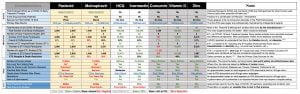
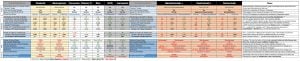
I want to make it easier for others to correctly identify their conflicts of interest.
Below are the permanent members of the committee–but most were not at the meeting, which was stuffed with 11 temporary members whose votes were assured, plus 7 or 8 of the permanent members.
I have put a line through those who did not attend, and added the temporary members who replaced them at the bottom of the page.
Chair
Hana El Sahly, M.D.
Expertise: Vaccines, Infectious Diseases
Term: 06/21/2019-01/31/2022
Professor
Department of Molecular Virology and Microbiology
Department of Medicine
Section of Infectious Diseases
Baylor College of Medicine
Houston, TX 77030
Paula Annunziato, M.D. ***
Expertise: Industry Representative
Term: 02/01/2020-01/31/2024
Vice President and Therapeutic Area Head
Vaccines Clinical Research
Merck
North Wales, PA 19454
Archana Chatterjee, M.D., Ph.D.
Expertise: Pediatrics, Infectious Diseases
Term: 06/21/2019-01/31/2023
Dean Chicago Medical School
Vice President for Medical Affairs
Rosalind Franklin University of Medicine and Science
North Chicago, IL 60064
Geeta K. Swamy, M.D.
Expertise: Infectious Diseases
Term: 08/06/2018-01/31/2022
Senior Associate Dean
Vice Chair for Research & Faculty Development
Associate Professor, ObGyn
Department of Obstetrics & Gynecology
Division of Maternal-Fetal Medicine
Duke University
Durham, NC 27710
Myron Levine, M.D., D.T.P.H., F.A.A.P
Expertise: Infectious Diseases
Term: 05/09/2018-01/31/2022
Simon & Bessie Grollman Distinguished Professor
Associate Dean for Global Health
Vaccinology and Infectious Diseases
Center for Vaccine Development
University of Maryland School of Medicine
Baltimore, MD 21201
Holly Janes, Ph.D.
Expertise: Biostatistics
Term: 02/01/2020-01/31/2023
Professor
Fred Hutchinson Cancer Research Center
Vaccine and Infectious Disease Division
Division of Public Health Sciences
Seattle, WA 98109
Andrea Shane, M.D., M.P.H., M.Sc.
Expertise: Pediatric & Infectious Diseases
Term: 02/01/2018-01/31/2022
Professor of Pediatrics
Director
Division of Pediatric Infectious Diseases
Emory University School of Medicine
Atlanta, GA 30322
H. Cody Meissner, M.D.
Expertise: Infectious Diseases
Term: 08/06/2018-01/31/2022
Professor of Pediatrics
Tufts University School of Medicine
Director, Pediatric Infectious Disease
Tufts Medical Center
Boston, MA 02111
CAPT Amanda Cohn, M.D.
Expertise: Pediatrics, Vaccines
Term: 02/01/2020-01/31/2024
Chief Medical Officer
National Center for Immunizations and Respiratory Diseases
Centers for Disease Control and Prevention
Atlanta, GA 30333
Hayley Gans, M.D.
Expertise: Pediatrics, Infectious Diseases
Term: 06/21/2019-01/31/2023
Professor of Pediatrics
Department of Pediatrics
Stanford University Medical Center
Stanford, CA 94305
Michael Kurilla, M.D., Ph.D.
Expertise: Infectious Diseases, Pathology
Term: 08/06/2018-01/31/2022
Director, Division of Clinical Innovation
National Center for Advancing Translation Sciences
National Institutes of Health
Bethesda, MD 20852
Paul Offit, M.D.
Expertise: Infectious Diseases
Term: 02/01/2018-01/31/2022
Professor of Pediatrics
Division of Infectious Diseases
Abramson Research Building
The Children’s Hospital of Philadelphia
Philadelphia, PA 19104
Steven Pergam, M.D.
Expertise: Infectious Diseases
Term: 02/01/2020-01/31/2024
Medical Director
Infection Prevention
Seattle Cancer Care Alliance
Seattle, WA 98109
Paul Spearman, M.D.
Expertise: Pediatric & Infectious Diseases
Term: 05/09/2018-01/31/2022
Director, Division of Infectious Diseases
Albert B. Sabin Chair in Pediatric Infectious Diseases
Cincinnati Children’s Hospital
Medical Center
Professor, Department of Pediatrics
University of Cincinnati School of Medicine
Cincinnati, OH 45229
Gregg Sylvester, M.D., M.P.H. +
Expertise: Alternate Industry Representative
Term: 02/01/2020-01/31/2024
Vice President
Medical Affairs
Seqirus Inc.
Summit, NJ 07901
TEMPORARY VOTING MEMBERS:
Fuller, A. Oveta, Ph.D. African Studies Center International Institute Associate Professor of Microbiology and Immunology, Medical School University of Michigan Ann Arbor, MI 48109
Hildreth, Sr., James, Ph.D., M.D. Professor Department of Internal Medicine School of Medicine President and Chief Executive Officer Meharry Medical College Nashville, TN 37205
Lee, Jeannette, Ph.D. Professor Department of Biostatistics University of Arkansas for Medical Sciences Little Rock, AR 72701
Levy, Ofer, M.D., Ph.D. Staff Physician & Principal Investigator Director, Precision Vaccines Program Division of Infectious Diseases Boston Children’s Hospital Professor, Harvard Medical School Associate Member Broad Institute Massachusetts Institute of Technology Cambridge, MA 02140
Moore, Patrick, M.D., M.P.H. Distinguished and American Cancer Society Professor Pittsburgh Foundation Chair in Innovative Cancer Research University of Pittsburgh Cancer Institute Pittsburgh, PA 15213
Nelson, Michael, M.D., Ph.D. Professor of Medicine Professor of Clinical Pediatrics Chief Division of Infectious Diseases Asthma, Allergy and Immunology Division Vice Chair for Education UVA Health & UVA School of Medicine Department of Pediatrics Charlottesville, VA 22904
Sawyer, Mark, M.D., F.A.A.P. Professor of Medicine Professor of University of California San Diego School of Medicine Perlman, Stanley, M.D., Ph.D. Director, UC San Diego Pediatrics Professor Residency Program Departments of Microbiology and Rady Children’s Hospital San Diego Immunology La Jolla, CA 92093
Perlman, Stanley, M.D., Ph.D. University of Iowa Associate Director for Vaccine Policy Iowa City, IA 52242 National Center for Immunization and Respiratory Diseases
Professor of Pediatrics Mark Stinksi Chair in Virology
Wharton, Melinda, M.D., MPH University of Iowa Associate Director for Vaccine Policy Iowa City, IA 52242 National Center for Immunization and Respiratory Diseases
Portnoy, Jay, M.D. ** Acting Consumer Representative Atlanta, GA 30333 Professor of Pediatrics Medical Director of Telemedicine Section of Allergy, Asthma and Immunology Children’s Mercy Hospital Kansas City, MO 64108
Rubin, Eric, M.D., Ph.D. Editor-in-Chief New England Journal of Medicine Adjunct Professor Department of Immunology and Harvard TH Chan School of Public Health Associate Physician Brigham and Women’s Hospital Boston, MA 02115 Page 4 of
November 7, 2021
Posted by aletho |
Corruption, Deception, Science and Pseudo-Science | COVID-19 Vaccine, United States |
Leave a comment
On Wednesday, an “industry-led and UN-convened” alliance of private banking and financial institutions announced plans at the COP26 conference to overhaul the role of global and regional financial institutions, including the World Bank and IMF, as part of a broader plan to “transform” the global financial system. The officially stated purpose of this proposed overhaul, per alliance members, is to promote the transition to a “Net-Zero” economy. However, the group’s proposed “reimagining” of international financial institutions (IFIs), according to their recently published “progress report”, would also move to merge these institutions with the private banking interests that compose the alliance; create a new system of “global financial governance”; and erode national sovereignty among developing countries by forcing them to establish business environments deemed “friendly” to the interests of alliance members. In other words, the powerful banking interests that compose this group are pushing to recreate the entire global financial system for their benefit under the guise of promoting sustainability.
This alliance, called the Glasgow Financial Alliance for Net Zero (GFANZ), was launched in April by John Kerry, US Special Presidential Envoy for Climate Change; Janet Yellen, US Secretary of the Treasury and former chair of the Federal Reserve; and Mark Carney, the UN Special Envoy for Climate Action and Finance and former chair of the Bank of England and Bank of Canada. Carney, who is also the UK Prime Minister’s Finance Advisor for the COP26 conference, currently co-chairs the alliance with US billionaire and former Mayor of New York City, Michael Bloomberg.
Upon its creation, GFANZ stated that it would “provide a forum for strategic coordination among the leadership of finance institutions from across the finance sector to accelerate the transition to a net zero economy” and “mobilize the trillions of dollars necessary” to accomplish the group’s zero emissions goals. At the time of the alliance’s launch, UK Prime Minister Boris Johnson described GFANZ as “uniting the world’s banks and financial institutions behind the global transition to net zero” while John Kerry noted that “the largest financial players in the world recognize energy transition represents a vast commercial opportunity.” In analyzing those two statements together, it seems clear that GFANZ has united the world’s most powerful private banks and financial institutions behind what they see as, first and foremost, “a vast commercial opportunity”, their exploitation of which they are marketing as a “planetary imperative.”
GFANZ is composed of several “subsector alliances”, including the Net Zero Asset Managers Initiative (NZAM), the Net Zero Asset Owner Alliance (NZAOA), and the Net Zero Banking Alliance (NZBA). Together, they command a formidable part of global private banking and finance interests, with the NZBA alone currently representing 43% of all global banking assets. However, the “largest financial players” who dominate GFANZ include the CEOs of BlackRock, Citi, Bank of America, Banco Santander and HSBC, as well as David Schwimmer, CEO of the London Stock Exchange Group and Nili Gilbert, Chair of the Investment Committee of the David Rockefeller Fund.
Notably, another Rockefeller-connected entity, the Rockefeller Foundation, recently played a pivotal role in the creation of Natural Asset Corporations (NACs) in September. These NACs seek to create a new asset class that would put the natural world, as well as the ecological processes that underpin all life, up for sale under the guise of “protecting” them. Principals of GFANZ, including BlackRock’s Larry Fink, have long been enthusiastic about the prospects of NACs and other related efforts to financialize the natural world and he has also played a key role in marketing said financialization as necessary to combat climate change.
As part of COP26, GFANZ – a key group at that conference – is publishing a plan aimed at scaling “private capital flows to emerging and developing economies.” Per the alliance’s press release, this plan focuses on “the development of country platforms to connect the now enormous private capital committed to net zero with country projects, scaling blended finance through MDBs [multilateral development banks] and developing high integrity, credible global carbon markets.” The press release notes that this “enormous private capital” is money that alliance members seek to invest in emerging and developing countries, estimated at over $130 trillion, and that – in order to deploy these trillions in invest – “the global financial system is being transformed” by this very alliance in coordination with the group that convened them, the United Nations.
Proposing a Takeover
Details of GFANZ’s plan to deploy trillions of member investments into emerging markets and developing countries was published in the alliance’s inaugural “Progress Report”, the release of which was timed to coincide with the COP26 conference. The report details the alliance’s “near-term work plan and ambitions,” which the alliance succinctly summarizes as a “program of work to transform the financial system.”
The report notes that the alliance has moved from the “commitment” stage to the “engagement” stage, with the main focus of the engagement stage being the “mobilization of private capital into emerging markets and developing countries through private-sector leadership and public-private collaboration.” In doing so, per the report, GFANZ seeks to create “an international financial architecture” that will increase levels of private investment from alliance members in those economies. Their main objectives in this regard revolve around the creation of “ambitious country platforms” and increased collaboration between MDBs and the private financial sector.
GFANZ Progress Report (Download)
Per GFANZ, a “country platform” is defined as a mechanism that convenes and aligns “stakeholders”, i.e. a mechanism for public-private partnership/stakeholder capitalism, “around a specific issue or geography”. Examples offered include Mike Bloomberg’s Climate Finance Leadership Initiative (CFLI), which is partnered with Goldman Sachs and HSBC, among other private-sector institutions. While framed as being driven by “stakeholders,” existing examples of “country platforms” offered by the GFANZ are either private-sector led initiatives, like the CFLI, or public-private partnerships that are dominated by powerful multinational corporations and billionaires. As recently explained by journalist and researcher Iain Davis, these “stakeholder capitalism” mechanism models – despite being presented as offering a “more responsible” form of capitalism – instead allow corporations and private entities to participate in forming the regulations that govern their own markets and giving them a greatly increased role in political decision-making by placing them on equal footing with national governments. It is essentially a creative way of marketing “corporatism,” the definition of fascism infamously supplied by Italian dictator Benito Mussolini.
In addition to the creation of “corporatist” “country platforms” that focus on specific areas and/or issues in the developing world, GFANZ aims to also further “corporatize” multilateral development banks (MDBs) and development finance institutions (DFIs) in order to better fulfill the investment goals of alliance members. Per the alliance, this is described as increasing “MBD-private sector collaboration.” The GFANZ report notes that “MDBs play a critical role in helping to grow investment flows” in the developing world. MDBs, like the World Bank, have long been criticized for accomplishing this task by trapping developing nations in debt and then using that debt to force those nations to deregulate markets (specifically financial markets), privatize state assets and implement unpopular austerity policies. The GFANZ report makes it clear that the alliance now seeks to use these same, controversial tactics of MDBs by forcing even greater deregulation on developing countries to facilitate “green” investments from alliance members.
The report explicitly states that MDBs should be used to prompt developing nations “to create the right high-level, cross-cutting enabling environments” for alliance members’ investments in those nations. The significantly greater levels of private capital investment, which are needed to reach Net-Zero per GFANZ, require that MDBs are used to prompt developing nations to “establish investment-friendly business environments; a replicable framework for deploying private capital investments; and pipelines of bankable investment opportunities.” GFANZ then notes that “private capital and investment will flow to these projects if governments and policymakers create the appropriate conditions”, i.e. enabling environments for private-sector investments.
In other words, through the proposed increase in private-sector involvement in MDBs, like the World Bank and regional development banks, alliance members seek to use MDBs to globally impose massive and extensive deregulation on developing countries by using the decarbonization push as justification. No longer must MDBs entrap developing nations in debt to force policies that benefit foreign and multinational private-sector entities, as climate change-related justifications can now be used for the same ends.

BlackRock CEO and GFANZ Principal Larry Fink talks to CNBC during COP26; Source: CNBC
This new modality for MDBs, along with their fusion with the private sector, is ultimately what GFANZ proposes in terms of “reimagining” these institutions. GFANZ principal and BlackRock CEO Larry Fink, during a COP26 panel that took place on November 2nd, explicitly referred to the plan to overhaul these institutions when he said that: “If we’re going to be serious about climate change in the emerging world, we’re going to have to really focus on the reimagination of the World Bank and the IMF.”
Fink continued:
“They are the senior lender, and not enough private capital’s coming into the emerging world today because of the risks associated with the political risk, investing in brownfield investments — if we are serious about elevating investment capital in the emerging world … I’m urging the owners of those institutions, the equity owners, to focus on how we reimagine these institutions and rethink their charter.”
GFANZ’s proposed plans to reimagine MDBs are particularly alarming given how leaked US military documents openly admit that such banks are essentially “financial weapons” that have been used as “Financial Instruments and Diplomatic Instruments of US National Power” as well as Instruments of what those same documents refer to as the “current global governance system” that are used to force developing countries to adopt policies they otherwise would not.
In addition, given Fink’s statements, it should not be surprising that the GFANZ report notes that their effort to establish “country platforms” and alter the functioning and charters of MDBs is a key component of implementing pre-planned recommendations aimed at “seizing the New Bretton Woods moment” and remaking the “global financial governance” system so that is “promote[s] economic stability and sustainable growth.”
As noted in other GFANZ documents and on their website, the goal of the alliance is the transformation of the global financial system and it is quite obvious from member statements and alliance documents that the goal of that transformation is to facilitate the investment goals of alliance members beyond what is currently possible by using climate change-related dictates, as opposed to debt, as the means to that end.
The UN and the “Quiet Revolution”
In light of GFANZ’s membership and their ambitions, some may wonder why the United Nations would back such a predatory initiative. Doesn’t the United Nations, after all, chiefly work with national governments as opposed to private-sector interests?
Though that is certainly the prevailing public perception of the UN, the organization has – for decades – been following a “stakeholder capitalist” model that privileges the private sector and billionaire “philanthropists” over national governments, with the latter merely being tasked with creating “enabling environments” for the policies created by and for the benefit of the former.
Speaking to the World Economic Forum in 1998, then-UN Secretary General Kofi Annan made this shift explicit:
“The United Nations has been transformed since we last met here in Davos. The Organization has undergone a complete overhaul that I have described as a ‘quiet revolution’… A fundamental shift has occurred. The United Nations once dealt only with governments. By now we know that peace and prosperity cannot be achieved without partnerships involving governments, international organizations, the business community and civil society…The business of the United Nations involves the businesses of the world.”
With the UN now essentially a vehicle for the promotion of stakeholder capitalism, it is only fitting that it would “convene” and support the efforts of a group like GFANZ to extend that stakeholder capitalist model to other institutions involved in global governance, specifically global financial governance. Allowing GFANZ members, i.e. many of the largest private banks and financial institutions in the world, to fuse with MDBs, remake the “global financial governance system” and gain increased control over political decisions in the emerging world is a banker’s dream come true. To get this far, all they have needed is to convince enough of the world’s population that such shifts are necessary due to the perceived urgency of climate change and the need to rapidly decarbonize the economy. Yet, if put into practice, what will result is hardly a “greener” world, but a world dominated by a small financial and technocratic elite who are free to profit and pillage from both “natural capital” and “human capital” as they see fit.
Today, MDBs are used as “instruments of power” that utilize debt to force developing nations to implement policies that benefit foreign interests, not their national interests. If GFANZ gets their way, the MDBs of tomorrow will be used to essentially eliminate national sovereignty, privatize the “natural assets” (e.g. ecosystems, ecological processes) of the developing world and force increasingly technocratic policies designed by global governance institutions and think tanks on ever more disenfranchised populations.
Though GFANZ has cloaked itself in lofty rhetoric of “saving the planet,” their plans ultimately amount to a corporate-led coup that will make the global financial system even more corrupt and predatory and further reduce the sovereignty of national governments in the developing world.
November 6, 2021
Posted by aletho |
Corruption, Economics, Environmentalism, Science and Pseudo-Science, Timeless or most popular | United Nations |
Leave a comment
As schools increasingly push freedom of self-identification, parents are often unaware of how deeply rooted this ideology has become among their children. A number of international experts tell RT there’s reason to be concerned.
You can never know for sure what’s going on in another person’s head – especially when that person’s a child. And, while you might imagine otherwise, particularly when it’s your own child. Are you so certain you really know everything about them? The reality may shock you.
The scenario in which children trust their ‘virtual’ friends more than their parents is nothing new. The rift between generations is deepening. And, in many places, one of the key factors contributing to this division is the education system. Schools are so focused on honouring students’ freedom of expression and self-identification – including when it comes to their gender – that they often make children’s lives more complicated and stressful rather than less.
“Projects to be worked on”
Angus Fox, a British academic who represents a global alliance of parents and professional groups in his role as the MD of Genspect, is of the view that, in countries where the debate over gender issues being on the school curriculum is raging, the education system has become too political. He says, “Teaching children the basic skills they need to value themselves, to look after their own mental health first and foremost – that seems to have gone. Practical things seem to have disappeared from the curriculum, to be replaced by very ideological stuff.”
Some teachers even appear to view their pupils as a sort of scientific experiment, Fox suggests. “They see children as projects to be worked on, so they start to have this very emotionally intrusive relationship,” he explains. Younger teachers, in particular, may reject the normative beliefs of the older generation – and that applies not only to more senior colleagues, but to some children’s parents too. “They see these very vulnerable children asking, ‘What am I?’ and they take advantage of that – almost, in a way, attacking their parents. What’s happening in schools is terrifying.”
“It’s not about child welfare – it’s about teachers creating the kind of the world they want to live in.”
The situation is very concerning, according to British science teacher and writer Debbie Hayton, who is herself transgender. What happens in schools is going far beyond the concept of ‘safeguarding,’ she says. “Safeguarding is where we protect children from possible harm. As teachers, we tell children that we can’t keep secrets. If children tell us something important, we need to share it with other responsible adults. But there’s a different standard being applied to these transgender-identified children, which is that secrets can be kept from their parents.”
Whatever the situation, the same rules should be applied, Hayton insists. Last year, she spoke to a mother from Massachusetts whose 14-year-old daughter had identified as transgender for three years. Jennifer, a physician in her 50s, told Hayton her child’s school hadn’t revealed that she had started to question her gender identity. When the teenager asked to be prescribed puberty blockers, Jennifer realized no one had warned her daughter about the possibly irreversible side effects.
Fox is aware of stories like Jennifer’s. He says, “I heard of a young girl who started to take testosterone, and her mother said, ‘It can damage your bone health, as you’re a girl.’ But she replied, ‘I identify as a man, so why would testosterone affect me differently from anyone else who’s a man?’ These kids truly believe they can say they’re something and they become something. When the enormity of that hits the parent, it’s often too late.”
“There’s a whole generation of kids who find it very difficult to believe you if you say, ‘Hold on! It’s not that simple. You’ve got this body and you can’t mess it up!’”
“I have a friend who’s a male de-transitioner, and he says that the people he was hanging around with treated their body like it was a customizable object, like a doll,” continues Fox. Young people are often very naïve, no matter how smart they are, and the danger is that their decisions can be influenced by campaign groups, some of which receive funding from pharmaceutical companies, he cautions.
“Influencing children towards a specific way of thinking”
Mary Laval, a member of Genspect’s press team, is the mother of a gender-questioning teenager. She thinks schools should be inclusive and encourage children to be open-minded. “However, it’s not their place to start teaching kids ideology and to spread misinformation,” she says. In her view, gender ideology has become akin to religion, and, and, as in non-religious schools, parents have the right to expect that their children are not taught religion. It’s a plea made by many parents: to have the right to choose whether their son or daughter is taught that they have the freedom to choose their gender.
Reports of schools trying to hide their students’ gender preferences from their parents – usually justified by the institution’s need to protect vulnerable minors – are frequently reported in the media. Occasionally, parents file lawsuits, being of the view that they have the right to know what’s going on with their children.
Sometimes, the pursuit of ideological goals leads to major problems, as evidenced by the recent scandal involving the Loudoun County School Board, in Virginia, US, which became far greater than just a local conflict between parents and the education system. Two sexual assault cases were filed in two different schools in the space of six months, with the same student convicted of one charge and facing a sexual battery charge for the other. Parents in the county were furious, blaming the authorities for seemingly having tried to silence the matter after the first case, which saw the male student in question enter the female toilets wearing a skirt and carry out the aforementioned assault. Students themselves staged a protest demanding their school guarantee their safety.
According to Genspect founder Stella O’Malley, a psychotherapist and best-selling author, it’s inappropriate for schools to misuse their position of responsibility to influence children into thinking a certain way. She says, “Schools are for educating young people, for broadening their minds. Young people need to be allowed the opportunity to first learn about concepts in a neutral manner so they can ultimately decide for themselves their own views on any given topic.”
There’s one more angle to this issue that’s worth considering here. Relationships between teenagers are not always straightforward – they’re often not very kind to each other. Last month, it was reported that a group of students from an Illinois high school staged a survey asking whether “queers” should be allowed to use the restroom alongside “normal people.” That’s just one example of the anti-LGBTQ+ sentiment coming to the fore in some American high schools, fanned, it would appear, by an insistent focus on gender and sexuality. Many professionals believe the question of gender wouldn’t have become so difficult for youngsters of all persuasions if the debate – which was originally initiated by adults, after all – hadn’t been allowed to get so heated.
Fox says most parents don’t believe it’s a problem to teach about gender in school until it affects their family personally. He explains: “You get this phenomenon of ‘Well, yes, but not my child.’ A lot of parents I work with have been very honest and said, ‘Mea culpa. I made a terrible mistake. Because, before it was my child, I saw other children going through this and I thought, it was a good thing that we now have more trans people.’” However, when it comes to being told by their child’s school about their own offspring’s wish to transition, Fox says, their opinion often changes drastically. “They say, ‘It can’t be true. I don’t believe what you say.’”
The situation is exacerbated by mainstream and social media pouring fuel on the fire, while, at the same time, avoiding covering all sides of the argument. Fox says, “It’s as if you say you’re trans and everyone should jump up and celebrate, and anyone who does anything different is a figure of hate. It’s very difficult to operate in that climate.”
However, the tide may be turning. According to Hayton, the public is starting to challenge the one-sided narrative, at least in the UK. “The line being pushed is that children have their gender identity and only they know about it, and that needs to be affirmed at all cost. But people are speaking out against that, and there’s a debate now,” she says. “In other English-speaking countries, I’m seeing less of it, however – they seem to be further behind.”
Those who feel there should be a broader dialogue are coming under a lot of pressure, but they’re persevering, determined to ensure alternative views get airtime too. “There are a lot of people willing to start the debate,” she concludes.
November 4, 2021
Posted by aletho |
Corruption, Science and Pseudo-Science, Timeless or most popular | UK |
Leave a comment
American children have no choice but to act as experimental test subjects for the Pfizer Covid-19 vaccine to determine the jab’s safety, the Food and Drug Administration has apparently concluded. Good luck, kids!
“We’re never going to learn about how safe the vaccine is unless we start giving it,” editor of the New England Journal of Medicine and Harvard adjunct professor Eric Rubin argued last week, his words buried within the eight-hour barrage of presentations and discussions that swirled around the FDA advisory panel’s approval of the mRNA jab for children aged five to 11.
The FDA followed up on the advisory panel’s 17-0 recommendation with approval, as it typically does, on Friday. If the Centers for Disease Control and Prevention follows suit, some 28 million American children will be quickly served up as fresh-faced fodder for a smaller dose of the Covid-19 vaccine already poised to inject some 100 million American adults. That is, as soon as President Joe Biden is able to whip up a legally-binding demand he can submit to the Occupational Safety and Health Administration.
Friday’s FDA approval means only the CDC stands between American children and a warp-speed rollout of the Pfizer jab. However, the rush to approval doesn’t necessarily mean there are no concerns. A disturbingly large portion of the FDA committee’s members are connected to Pfizer in some way or another, leading vaccine skeptics to cry foul. Meanwhile, a growing portion of the country continues to denounce the mandates in general, insisting everyone should be able to make their own decision regarding whether or not they wish to get injected.
Echoing the newly-reanimated pro-choice slogan, mandate protesters recently swarmed the Brooklyn Bridge declaring ‘My body, my choice’ as New York City employees faced the potential loss of their jobs as firefighters, police officers, sanitation handlers, and corrections officers due to Mayor Bill de Blasio’s insistence that all municipal employees get vaxxed or be relegated to the purgatory of open-ended unpaid leave.
The FDA’s effort to put the cart so far in front of the horse mirrored the words of House Speaker Nancy Pelosi during the congressional tug-of-war over Obamacare in 2010. Faced with a phonebook-sized, dubiously-legal bill unlike anything Congress had passed before and no realistic timeframe to wrangle with the details, Pelosi suggested Congress would have to “pass the bill to find out what’s in it, away from the fog of controversy.”
Since then, legislation by brute force has only grown as the means by which laws are passed in the US, as ever-more-polarized parties refuse to give an inch and betray the appearance of weakness. Allowing the ‘other side’ to be seen as achieving even the slightest victory is unconscionable, and that framework remains in place in the vaccination arena – where it makes less sense than anywhere else.
After all, it was former President Donald Trump’s Operation Warp Speed that brought the world the Pfizer shot, even if the jab itself wasn’t rolled out until shortly (some would say deliberately) after the 2020 election and vaccine mandates have since become a cause celebre of the Democratic Party.
With half the US up in arms about the other half’s supposed refusal to roll up its sleeves and submit to an intensely politicized needle, anyone who hesitates is denounced posthaste in a 21st-century witch hunt – to be fired, if not set on fire; outfitted with the scarlet A for anti-vaxxer, not adulteress; and otherwise chased out of the public square – deplatformed from Twitter, YouTube and Facebook, if not chased physically with pitchforks and torches. Similar divisions have erupted across Europe, and countries like Italy and France have pushed the issue even further, barring the unvaccinated from so much as entering grocery stores to buy food.
While the US study of the Pfizer vaccine’s effects on children five to 11 failed to turn up any deadly side effects, critics argued its population size was too small to be effective for such a purpose. Parents of some jab recipients have observed disturbing symptoms in their offspring in the hours and days following the shots and filmed heartbreaking testimonials describing their downfall from healthy children to pain-wracked perma-patients experiencing near-constant seizures, facial distortions, debilitating heart problems, or other dire health issues.
Another doctor on the FDA committee, Michael Kurilla of the National Institutes of Health, abstained from voting on recommending Pfizer-BioNTech’s vaccine entirely, citing a lack of evidence that all children need the shot, and while Kurilla, an infectious disease and pathology expert, was the only panel member to abstain from voting, he was not the only member to openly express misgivings about doling out the jab to young Americans. His colleague, Dr. Cody Meissner of Tufts University, suggested that it would be an “error” to mandate the jab for children to return to school until there was more hard data.
“We simply don’t know what the side effects are going to be,” he said, acknowledging the shot – like its adult equivalent – probably wouldn’t prevent transmission of the virus. While he was not opposed to administering the shot to certain vulnerable subgroups inside the 5-11 age group, Meissner was concerned approving the shot for everyone in that category would lead to a heavy-handed mandate the likes of which is currently being wielded against American adults.
Children who receive the Pfizer-BioNTech jab may actually get less immunity and face more risk than supplied by getting and recovering from a current strain of Covid-19, Kurilla told the Daily Mail, referring to the Delta variant and other current strains of Covid-19 circulating among the population. “The question really becomes, does this vaccine offer any benefits to them at all?” he asked rhetorically during the FDA committee meeting. He would have voted ‘yes’ if the FDA had merely proposed opening up access to the vaccine to a ‘subset’ of those ages five to 11, but he disagreed with administering it to all children within that age group.
Two other panel members voted to approve despite their misgivings. Meissner argued that a “very small percent of otherwise healthy six-to-11-year-old children…might derive some benefit,” while President and CEO of Meharry Medical College James Hildreth agreed that “vaccinating all of the children…seems a bit much for me,” pointing to the relatively low risk of hospitalization and near-zero risk of death by Covid-19 for children.
Speaking up against the jab, even circumstantially, has become the kiss of death in the medical community, with even medical rock stars like Robert Malone, one of the inventors of mRNA as a drug, cast into the dustbin of history for expressing skepticism that his invention was being incorrectly used to deliver the Covid-19 vaccine.
However, governments worldwide are setting themselves up for civil war as populations are forced to choose one ‘side’ or another. Even many of the vaccinated have acknowledged that the jab should not be forced on anyone, while entire industries like shipping, air travel, defense, and the like grind to a halt as mandates run up against the stubborn will of their employees. Southwest Airlines was allegedly forced to cancel thousands of flights earlier this month, due to a reported mass ‘sickout’ by air traffic controllers unwilling to get vaxxed, though the airline itself has denied this, and rumors of trucker strikes from Australia to America have food sellers panicking at the thought of empty shelves.
As it stands, parents who were willing to submit themselves to experimental shots in the name of convenience and retaining employment may not be so willing to offer up their children as sacrifices to a company once denounced by the US Justice Department as the worst fraudster in the pharmaceutical industry.
Governments that have shown themselves as profoundly untrustworthy throughout the Covid-19 pandemic are unlikely to change their behavior at the last minute, and parents are wise to take care in where they place their trust.
November 2, 2021
Posted by aletho |
Civil Liberties, Corruption, Science and Pseudo-Science | CDC, COVID-19 Vaccine, FDA, Human rights, United States |
Leave a comment

A Canadian doctor pushing COVID-19 vaccine shots for children ages 5 years and up who’s been featured in numerous media reports received nearly $2 million in Pfizer funding for vaccine research.
Whether it was intentional or if the media kinda-sorta forgot to mention the conflict, or if they simply didn’t bother doing their own research before using Dr. Jim Kellner as a lead adviser on the COVID shot isn’t clear. But what is clear is that Pfizer has given the University of Calgary professor and pediatrician $1.9 million, with $787,004 of it still being allocated until 2022.
Kellner didn’t attempt to hide his conflict of interest; it’s easily found in his publicly posted curriculum vitae, with the current funding explicitly stated.
Yet, according to True North news, “Kellner’s name turns up over 41 times and appears in numerous videos and articles on the topic of vaccination without any indication of how much money he has received from the vaccine manufacturer Pfizer.”
November 2, 2021
Posted by aletho |
Corruption, Deception, Science and Pseudo-Science | Canada, COVID-19 Vaccine |
Leave a comment
Dr. Wilbur H. Chen wants you to know that he’s very upset (see comment’s section)!
He’s upset the peasants have access to email!
He’s upset the peasants have access to common sense and reason!
He’s upset the peasants actually read scientific studies for themselves!
And he’s very upset that the peasants are speaking to him without his express written permission!
Apparently, he’s also clairvoyant (like Santa) because he knows what you are writing before you even send it to him, so he has set up an auto-reply on his email account to let you know he’s very important, he gets lots of emails and he does not like “misinformation.”
Chen defines “misinformation” as anything that contradicts the Pharma narrative. Chen is adamant that nothing be allowed to pierce his protective Pharma information bubble.
I’m reminded of the phrase, “Methinks thou doth protest too much.”
What Chen is actually mad about is that he got caught with his hand in the cookie jar.
A search of the government website Open Payments reveals Chen accepted $437,250.70 from Emergent BioSolutions and GlaxoSmithKline (GSK) in 2020.

GSK is one of the four largest vaccine makers in the world. GSK makes the incredibly toxic Hep B vaccine (Engerix-B), the troubled HPV vaccine (Cervarix), a meningococcal vaccine that is loaded with aluminum (Bexsero) and various flu vaccines among others.
GSK is also working on a COVID-19 vaccine that is now in Phase 3 clinical trials.
All of GSK’s products must go before the Centers for Disease Control and Prevention (CDC) Advisory Committee on Immunization Practices (ACIP), that Chen sits on, in order to be approved.
Emergent BioSolutions is a contract manufacturer that makes vaccines for others including the Johnson & Johnson (J&J) COVID-19 vaccine that has been linked to blood clots and a bleeding disorder.
Emergent BioSolutions has an abysmal safety record. Even though federal regulators are generally like Mr. Magoo when it comes to spotting safety problems, the issues at Emergent’s plant in Baltimore were so egregious that earlier this year the U.S. Food and Drug Administration shut down the plant and ordered J&J to take it over and run it themselves.
The FDA also ordered 75 million doses of COVID-19 vaccines manufactured at that plant be destroyed because of contamination. All of the vaccines manufactured at the Emergent BioSolutions plant must first be approved by the ACIP where Chen is a member.
This is completely unacceptable. According to the Bureau of Labor Statistics, there were 27,550 pediatricians employed in the U.S. There is absolutely no reason for the ACIP to utilize a person with such extensive financial conflicts of interest.
The CDC must be above reproach in order to have any credibility with the general public. Sadly the CDC appears to do whatever it can get away with — a classic example of the fox guarding the henhouse.
The fact that these decisions involve the health of our children makes corruption all the more appalling.
Please contact the following four officials (as well your elected representatives) to let them know that you are troubled by Chen’s extensive financial conflicts of interest and please ask that he be removed from the ACIP before it meets on Tuesday, Nov. 2.
Dr. Rochelle Walensky
Director, Centers for Disease Control and Prevention
Roybal Building 21, Rm 12000
1600 Clifton Rd, Atlanta, GA 30333
phone: (404) 639-7000
Aux7@cdc.gov
Xavier Becerra
Secretary, Health and Human Services
200 Independence Avenue S.W., Washington, D.C. 20201
c/o Sean McCluskie
sean.mccluskie@hhs.gov
Captain Amanda Cohn
Chief medical officer
National Center for Immunizations and Respiratory Diseases
Centers for Disease Control and Prevention
1600 Clifton Rd, Atlanta, GA 30333 MS C-09
phone: (404) 639-6039
fax: (404) 315-4679
acohn@cdc.gov
anc0@cdc.gov
Grace Lee, M.D.
Chair, Advisory Committee on Immunizations Practices
Center for Academic Medicine
Pediatric Infectious Diseases, Mail Code: 5660
453 Quarry Road, Stanford, CA 94304
phone: (650) 497-0618
phone: (650) 498-6227
fax: (650) 725-8040
gmlee@stanford.edu
It is beyond alarming that the ACIP has failed to properly monitor financial conflicts of interest amongst its members. All prior ACIP votes involving Chen should be reviewed by an independent outside review board to see if they must be thrown out because of this blatant corruption.
The CDC should also examine and release publicly all financial conflict of interest statements from all remaining ACIP members to determine if there are additional problems before Tuesday.
© 2021 Children’s Health Defense, Inc. This work is reproduced and distributed with the permission of Children’s Health Defense, Inc. Want to learn more from Children’s Health Defense? Sign up for free news and updates from Robert F. Kennedy, Jr. and the Children’s Health Defense. Your donation will help to support us in our efforts.
November 1, 2021
Posted by aletho |
Corruption, Deception | Advisory Committee on Immunization Practices, CDC, COVID-19 Vaccine, United States |
Leave a comment
What happens when you fail in your attempts to create a vaccine for “Covid-19” and then realize you’ve just missed out on a billion-dollar profit-making opportunity?
You hurriedly develop a new drug, rush it through a clinical trial (which you yourself design to ensure good results), and then announce it to the world as the Covid cure we’ve all been waiting for, except no one’s been waiting for it because Covid isn’t any more deadly than the flu, and can be treated by easy-to-procure, inexpensive means (if it exists at all).
But governments are too stupid to know that and you own most of the corrupt politicians making the decisions, so who cares? As long as they’re willing to invest in your new concoction, it doesn’t even have to be necessary, or safe, or effective, or ethical…
Yes, I’m talking about “Molnupiravir”, Merck’s latest poison being promoted as an effective treatment against covid-19 (hang on, I thought that’s what the vaccines were for?).
This unapproved (yes, unapproved) drug costs $700 per course and the US government has just agreed to buy 1.7m courses. That’s a 1.2 BILLION dollar investment.
The deal is part of the Biden administration’s pledge to “respond to the health needs of the public”, but, in actuality, it’s simply a money-siphoning operation, with the American public coming off second best.
Molnupiravir is being sold to the public as the next big breakthrough in Covid-19 treatment off the back of what appears to be a SINGLE study, which was never even completed. Furthermore, the study was conducted by Merck (the makers of the drug), who chose not to disclose any adverse events. If that isn’t suspicious enough, the study was never published in a peer-reviewed journal.
Media press releases are apparently the new standard when it comes to evaluating medical treatments. After all, why would you wait for independent confirmation of your results or objective peer-review when you can get paid journalists, without a shred of medical expertise, to convince the public that they need your new drug?
If government scientists with integrity were in charge of assessing Molnupiravir, not bribed pharma shills, they may be alarmed at the lack of testing or the failure to disclose adverse events, they may even notice that vitamin D has had FAR superior results in combating “Covid-19”. In fact, one study, published in the highly respected and influential Journal of Clinical Endocrinology and Metabolism, found that vitamin D reduced mortality among severe covid-19 patients by 79%.
Compare that to the alleged 50% reduction offered by Molnupiravir for “mild-to-moderately ill” patients. Not to mention the difference in cost. As stated earlier, Molnupiravir runs at $700 per course, while vitamin D costs a fraction of that (probably less than $10!).
Furthermore, while Merck chose not to disclose adverse reactions, years worth of reliable data shows that vitamin D supplementation is extremely safe. And not only is taking vitamin D safe, but it also has a wealth of benefits for a variety of conditions including depression, anxiety, pain, inflammation, hypertension, cardiovascular disease and more.
As was obvious from the very beginning of the “pandemic” when nutritional medicine experts were slandered in the press for recommending “lethal” doses of vitamins, world health has been hijacked by the profit-hungry, empathy-dead, toxic cartel of Big Pharma “medicine”, and our governments have been in bed with them all along.
Furthermore, this has been going on longer than most people think. In fact, more than a decade earlier, governments were locking in billion-dollar deals to buy stockpiles of “Tamiflu”, an equally useless influenza drug that was later found to have no effect on reducing hospitalizations, deaths or complications from influenza.
In fact, Tamiflu was subsequently found to cause a raft of serious adverse reactions including delirium, panic attacks and even hallucinations. The “milder” side effects include nausea and vomiting.
In 2020, an unsealed whistleblower lawsuit revealed that drug company Hoffman-La Roche, the maker of Tamiflu, misrepresented clinical studies and made false claims regarding the effectiveness of the drug to treat influenza. In a 2020 article, Nasdaq quotes attorney Mark Lanier as saying that:
As alleged in the complaint – Tamiflu does not do what Roche promised… Roche hid this fact for many years by selectively citing its studies and suppressing the data about Tamiflu. The company utilized lobbyists, key opinion leaders and ghostwriters to promote Tamiflu with a deceptive promise to governments fearful of an influenza pandemic.”
Nonetheless, the medicine remains on the World Health Organization’s “essential medicines” list. The US and UK governments spent $1.3 billion and $703 million respectively buying “strategic reserves” of Tamiflu in preparation for a global flu pandemic.
At the time, the media (which had not yet totally sold out to Mr. Global) condemned the investments as a waste of money.
Governments made these outlandish investments off the back of “incomplete” data, which is exactly what has occurred with the latest deal to procure Merck’s Molnupiravir. And I’ll bet that when more data comes out, it will be found, once again, that governments wasted millions of dollars of taxpayers’ money.
Bribed politicians would rather deepen their pockets than institute sensible health policies or invest money into procuring and promoting vitamin D, which would not only save lives but help to improve mental health in a woefully deficient population ravaged by anxiety and depression.
As functional medicine expert, Dr. Alex Vasquez states in his latest blog,
… viral infections and the fear and ignorance around them have become a great way for drug companies to sell worthless drugs to their bribed politicians. If we spent that money on heath-promotion rather than fear-promotion, we’d be freer, stronger, healthier, and we’d emancipate ourselves from the mental slavery of fear, ignorance, and dependence.”
Furthermore, the importance of sunlight cannot be overstated, for apart from being our principal source of Vitamin D, it also induces the production of several powerful antiviral metabolites that aid the body in fighting off illness.
This article would not be complete without at least mentioning some of the corrupt dealings, legal cases and blatant crimes that Merck has been involved in over the years. The most egregious of these offenses, and one of the largest scandals in medical history, was the company’s promotion of its anti-inflammatory drug, Vioxx.
During its height, Vioxx was earning Merck $2 billion in revenue per year and estimations have found that around 25 million patients were prescribed the drug. In September 2004, Merck was forced to recall Vioxx on account of it being shown to cause adverse cardiovascular events, such as heart attacks and stroke.
Merck was slammed with a massive class-action lawsuit that was eventually settled for $4.85 billion in 2007. Not only did Merck cover up data suggesting its drug was dangerous, they illegally promoted it as an “off-label” treatment for rheumatoid arthritis, without any indication of its effectiveness.
According to the testimony of Dr. David Graham, the Associate Director for Science and Medicine in FDA’s Office of Drug Safety, Vioxx caused 55,000 premature deaths from heart attacks and stroke.
Even years after taking the medication, patients often still experience problems, indicating that Vioxx may have killed far more people than the conservative estimate made by Dr. Graham, who, after all, works for the FDA, the organization that was responsible for assessing the drug’s safety.
In fact, after analysing US national mortality data starting from the year Vioxx was released up to the year it was withdrawn, Ron Unz, [former] publisher of The American Conservative, came to the startling conclusion that Vioxx may have been responsible for up to 500,000 deaths, mostly in the elderly (age 65+) population.
After the scandal, Merck hired the services of PR company, Burson-Marstellar (whose past campaigns include covering up genocide in Nigeria, fighting health authorities on the issue of second-hand cigarette smoke, and playing down Apple’s abuse of Chinese factory workers), to help clean up its public image and assert them as an “ethical player in the healthcare arena”.
And it seems to have worked, for here we are, 15 years later with another worthless – and possibly quite dangerous – Merck drug being promoted around the world as a treatment for “Covid-19”. Predictably, the UK government has now expressed interest in Molnupiravir, with many more countries expected to follow suit.
But Merck’s criminal history stretches further back than 1999 when Vioxx hit the shelves, for, as early as the 1960s, Merck faced controversy regarding its arthritis medication, Indocin. Although the drug had been approved by the FDA, it was later revealed that the medication had not been adequately tested for efficacy or side effects.
Less than a decade later, Merck’s drug DES (diethylstilbestrol), alleged to prevent miscarriages, was found to be carcinogenic, causing cases of cervical cancer and other gynaecological disorders. And last (but certainly not least), in 2007, Merck’s cholesterol drug, “Zetia” was shown to cause liver disease, a risk that was known to Merck who intentionally concealed the damning trial results.
Before ending this article, I would like to quote a section from one of my previous articles titled Big Pharma Power Vortex vs Zero Deaths From Vitamins, as I believe it’s particularly pertinent here:
For those who think the media are simply biased towards pharmaceutical drugs, this is a naive assumption. Behind the headline-making newspapers, magazines and television programs is a coordinated socio-political power vortex seeded in Big Pharma/Big Money corruption.
Drawing on the work of Dr. Alex Vasquez, I present here a brief summary of how the system works:
-
- Medical journals are inherently biased towards publishing pro-drug articles. These then serve as advertisements for the pharmaceutical industry which pays millions of dollars for journal reprints.
- Mainstream media outlets such as newspapers, magazines, TV shows and online publications then republish the pro-drug information, much to the delight of the pharmaceutical industry.
- Medical science and mainstream media then become a pro-drug echo chamber for biased, Big Pharma propaganda.
- Drug companies increase their sales, gaining profits and building influence to the point where they have more power than governments.
- Pharmaceutical companies infiltrate medical education, media, and health policy; they pay “researchers” to publish and teach information favourable to the pharmaceutical paradigm.
- Governments then write policies and make investments that favour drug companies rather than the citizens of that country.
At the time of writing, Molnupiravir has not yet been FDA approved. However, Merck has asked the FDA to grant “emergency” approval on account of the drug’s alleged effectiveness. Considering the decisions made by the FDA thus far, along with the fact that funding from pharmaceutical companies like Merck makes up 75% of the FDA’s drug review budget, what do you think the chances are of Molnupiravir’s approval being granted?
And would you trust a doctor who prescribed it to you?
October 31, 2021
Posted by aletho |
Corruption, Mainstream Media, Warmongering, Science and Pseudo-Science, Timeless or most popular | Covid-19, Merck, Molnupiravir, UK, United States |
Leave a comment

Prime Minister of Israel Naftali Bennett meets U.S. President Joe Biden at the White House on August 27, 2021 in Washington, DC, United States [GPO – Anadolu Agency]
When Joe Biden was declared the winner in the US presidential election last November, expectations in Ramallah were high. A Biden administration, compared with the brazenly pro-Israel Donald Trump administration, would surely be much fairer to Palestinians. That was the conventional wisdom at the time.
Unsurprisingly, Palestinian Authority President Mahmoud Abbas was among the first world leaders to congratulate Biden enthusiastically. “I look forward to working with the president-elect and his administration to strengthen Palestinian-American relations and to achieve freedom, independence, justice and dignity for our people,” said Abbas immediately after the election result was finally confirmed.
In contrast, the then Israeli Prime Minister, Benjamin Netanyahu, waited for a relatively long time to offer his congratulations in the hope, perhaps, that his close friend and staunch political ally Trump would succeed in reversing the election outcome.
Nearly a year later, however, it is hard to understand the Palestinian euphoria that prevailed in late 2020. And how do we explain the absence of criticism of the Biden administration for failing to reverse most of Trump’s pro-Israel decisions? These include the recognition of Jerusalem as Israel’s “undivided” capital and the relocation of the US Embassy from Tel Aviv to the holy city in violation of international law and even America’s own declared policies.
Why does the PA leadership remain largely silent on the fact that Biden and his team, despite their rhetoric about peace and dialogue, maintain the same degree of commitment to Israel as Trump? The short answer is money.
The only tangible step with regard to Palestine that the Biden administration has taken in the past year has been the restoration of funds that Trump had cut from Palestinian aid in 2018, reversing at a stroke nearly three decades of America, along with other “donor countries”, bankrolling the PA.
In April, the White House declared its intention to restore some, though not all, of such funds given to the Palestinian Authority. An amount of $235 million was to be paid as $75m in economic and developmental assistance; $10m in “peacebuilding” programmes to be provided by USAID agency; and the remainder in humanitarian assistance to the UN agency for Palestine refugees, UNRWA.
The latter, however, did not come without caveats. On 14 July, UNRWA reached an agreement with Washington regarding the use of this money. The so-called Framework for Cooperation stipulated that, “The US will not make any contributions to UNRWA, except on the condition that UNRWA takes all feasible measures to ensure that no part of the US contribution is used to assist any refugee receiving military training” from any Palestinian resistance group. Under the agreement, which was strongly criticised by the Palestinians, UNRWA will receive an additional $135m from the US.
On the political front, however, there is little else to report. The Palestine Liberation Organisation (PLO) office in Washington, although expected to be reopened by Biden after its abrupt closure by Trump in September 2018, remains closed. Moreover, the US Consulate in Israeli-occupied East Jerusalem, which was also shut down by Biden’s predecessor, remains “a major point of contention” between Israel and the US, according to Axios.
As soon as the Biden administration declared its intention to reopen its mission in occupied Palestinian East Jerusalem, top Israeli officials poured into Washington to prevent even this symbolic Palestinian gain from taking place. Israeli Prime Minister Naftali Bennett raised the issue with Biden during their White House meeting in August, requesting the president to refrain from carrying out such a move. According to the Times of Israel, Bennett asked the Americans to open the consulate in Ramallah rather than Jerusalem.
In September, Israeli Foreign Minister Yair Lapid warned Washington that reinstating the US mission in East Jerusalem was a “bad idea”, suggesting that such a move could force the collapse of Israel’s fragile coalition government.
The subject also topped the agenda of Lapid’s meeting with US Secretary of State Antony Blinken in Washington earlier this month. Israeli officials revealed that Lapid told Blinken, “I don’t know how to hold this coalition together if you reopen the consulate.” This too was reported by Axios.
To avoid a confrontation and to buy time for the Israeli government, Blinken proposed the establishment of a joint committee to “discuss the issue with maximum discretion.” The Israeli government is thus using the current fractious ruling coalition as a pretence to defer the US decision on the consulate. It is hinting that if the US reopens the consulate before the government budget passes in November, the coalition will dissolve, with the ominous possibility of Netanyahu’s return.
It is expected that the committee will not be formed until the budget vote. Even then, it is unclear if Washington will succeed in persuading Israel to respect Biden’s consulate decision.
Notably, while the matter of the consulate should concern Palestinians the most, no Palestinian official will be included in the exclusive and secretive Blinken-Lapid committee. More bizarrely, the PA does not seem to mind this snub. There has been no public outcry by Abbas and his officials. This, of course, is typical of the PA, and will remain the case for as long as US funds are finding their way into PA coffers. All other issues appear to have little or no urgency. It’s all about the money.
If a political compromise is found, and the US Consulate is finally reopened, will it alter the reality on the ground? Since 1994, the consulate has played a largely symbolic role, one that mattered most to the PA. It hardly changed the political equation in favour of the Palestinians. In a telling and surreal reference to the consulate, Noga Tarnopolsky wrote in the Los Angeles Times in 2019: “The consulate was known for hosting one of the liveliest parties on Jerusalem’s annual schedule, a 4 July gala held on the front lawn.”
A stone’s throw away from the city’s “liveliest parties”, hundreds of Palestinian families are either being evicted from their homes or face the risk of eviction by the US-funded Israeli police and army. A little further away is Israel’s apartheid wall that continues to segment occupied Palestine according to race, ethnicity and religion. We are justified, then, in not being too optimistic that the reopening of the US mission will change the horrific status quo in any way whatsoever.
The Joe Biden administration is proving to be nothing but a soft facade for the same policies enacted by Donald Trump. The only apparent difference is that, this time, Mahmoud Abbas and the Palestinian Authority, for self-serving reasons, do not seem to mind.
October 27, 2021
Posted by aletho |
Corruption, Ethnic Cleansing, Racism, Zionism | Israel, Joe Biden, Palestine, United States, Zionism |
Leave a comment

A direct flight from Riyadh, Saudi Arabia will land at Zionist entity’s Ben Gurion Airport on Monday evening, Israeli media reported.
“The flight will be a VIP class Boeing 737-700 aircraft with registration A6-AIN owned by the Emirati Royal Jet airline,” Kan pubcaster said.
The Riyadh-Tel Aviv flight comes after a report that White House National Security Adviser Jake Sullivan raised the possibility of Saudi Arabia joining the so-called Abraham Accords during a meeting last month in Riyadh with Saudi Crown Prince Mohammed bin Salman (MBS), according to three US and Arab sources involved in the talks.
The sources said that during the conversation, MBS did not immediately reject the proposal to establish diplomatic ties with the Zionist entity, listing the steps needed to make the move, including improving the relations between the United States and Saudi Arabia.
October 25, 2021
Posted by aletho |
Corruption, Ethnic Cleansing, Racism, Zionism | Israel, Palestine, Saudi Arabia, United States, Zionism |
Leave a comment
You may have noticed the media cycle has subtly begun for next week’s House Oversight Committee climate change show-trial, as energy crises unfold worldwide and President Biden prepares to take 13 Cabinet members and no grants of legislative authority from Congress supporting his “climate” agenda to the annual “Conference of the Parties” in Glasgow (where, like President Obama before him, he will claim that while legislative authority would be nice, in its absence he will do what he wants anyway — not, in fact, how these things are supposed to work).
With that backdrop, see the attached opening trial brief and declarations of Lindzen, Happer, Horner and Walter which were filed on Friday in open records litigation in Los Angeles. The subject of the records at issue is the role of academia (specifically, plaintiffs’ tort bar consultants among UCLA Law faculty) in the climate litigation industry, and what they boast of to at least one major donor behind these efforts. You may recall one such email by UCLA Law faculty describing the AGs, activists, “prospective funders” and faculty gathering at the “secret meeting at Harvard” was “about going after climate denialism—along with a bunch of state and local prosecutors nationwide”.
As context to the Regents’ behavior in this matter, the trial brief and declarations detail the climate industry’s Enron origins, and the role of academics supporting the plaintiffs’ effort (also noted is the spate of briefings of federal judges by the plaintiffs’ side, initiated after Judge Alsup dismissed litigation against oil companies in the Northern District of California, which briefings also trace back to UCLA faculty).
In another footnote, early in the attached Horner Declaration, you’ll find timely reference to a 1999 email warning of the consequences of seeking to rig the economics of the energy industry in the name of “global warming” (later, climate change). Cue the past few weeks’ headlines from around the world manifesting just those consequences:
Maybe Enron can dodge the macro problem and have our micro benefits, but then again I have to think that a politicized international energy market for any reason will create as much or more downside than upside. (April 1, 1999 memo to Lay)
It is difficult to escape the conclusion that, as cynical as they were about it, Enron Knew.… a couple very important things*. Despite being the company that had bet the most on greenhouse warming and most wanted the alarmism to take root, Enron also knew the systemic economic risks from pushing the climate agenda. But, in the pursuit to “make [itself] rich,” plowed ahead. Others followed in Enron’s footsteps, with far too much success, and we all are now facing the consequences.
* PS See here for the other key point Enron knew, something that puts the lie to the very foundation underpinning the ongoing climate litigation tsunami — Enron knew and bitterly debated the uncertainties of the theory underpinning the climate agenda.
The excerpts from and links to emails and memos debunk the claims that, as one piece put it, “The Utilities Knew, Exxon Knew, Shell Knew, They All Knew” of catastrophic man-made global warming in the 1970s, or 1980s… showing there was instead intense and often bitter internal fighting over the risks of designing business plans around the theory when it was so laden with uncertainty. That was in the late 1990s.
10-15-21-Opening-Trial-Brief-PetitionerDownload
Jt-Evidentiary RecordDownload
October 19, 2021
Posted by aletho |
Corruption, Deception, Economics, Science and Pseudo-Science, Timeless or most popular | United States |
Leave a comment
“Come on H this is linked to Celtic’s account.” Those nine words from a retired Secret Service agent to Hunter Biden in recently released emails may prove a nasty complication for some in Washington who have struggled to contain the blowback from the still-unfolding scandal linked to Hunter Biden’s infamous laptop.
“Celtic” was the Secret Service code name for Joe Biden, and recent disclosures may puncture the media’s cone-of-silence around the scandal. The emails link President Biden to his son’s accounts and indicate a commingling of funds with money coming from controversial foreign sources. Even more embarrassing, the shared account may have been used to pay a Russian prostitute named “Yanna.”
The commingling of funds is the latest contraction of President Biden’s repeated claims that he was unaware and uninvolved in past dealings by his son. Given these links, there are legitimate questions of why the Justice Department has not sought a special counsel in the ongoing investigation of alleged money-laundering and tax violations linked to the president’s son. More importantly, even if there are no criminal charges, there is now a compelling need for an independent report on the alleged influence peddling operation by Hunter, his uncle James Biden, and potentially his father, President Biden.
In the latest disclosures from the laptop, a former secret service agent reportedly texted Hunter on May 24, 2018, when he was holed up with a Russian prostitute in an expensive room at The Jeremy Hotel in Los Angeles. Hunter wired the woman $25,000. That alone was nothing out of the ordinary for Hunter who, while his father served as vice president, seemed to divide his time equally between influence-peddling and personal debaucheries.
Hunter clearly only had influence and access to sell. We know now that foreign interests gave Hunter millions at a time that he admits that he was a crack addict and alcoholic — in his words, “Drinking a quart of vodka a day by yourself in a room is absolutely, completely debilitating,” as well as “smoking crack around the clock.”
However, the tranche of emails raises a new and disturbing element: the possible mixing of accounts and funds between Hunter and his father. If true, President Biden could be directly implicated in ongoing investigations into his son’s money transfers and dealings.
Most notable are the new emails from Eric Schwerin, his business partner at the Rosemont Seneca consultancy, referencing the payment of household bills for both Joe Biden and Hunter Biden. He also notes that he was transferring money from Joe Biden. If true, the communications indicate that some of President Biden’s personal expenses were paid out of shared accounts with Hunter, including accounts that may have been used to pay for prostitutes. Rosemont Seneca is directly involved in the alleged influence peddling schemes and questionable money transfers from Chinese and Russian sources.
Schwerin also was involved in President Biden’s taxes and discussions of a book deal for the then-vice president; he popped up in the donation of Biden’s official papers to the University of Delaware, with restrictions on access.
President Biden has long insisted that that his son did “nothing wrong.” That is obviously untrue. One can argue over whether Hunter committed any crime, but few would say that there is nothing wrong with raw influence peddling worth millions with foreign entities. The public has a legitimate reason to know whether the President or his family ran an influence peddling operation worth millions.
Given this record, there is little reason for the public to trust what it is reading about the scandal. The media has long refused to investigate the allegations or even report on emails contradicting the President. This was most evident when social media like Twitter actually blocked postings on the laptop or its content before the election. Powerful figures then issued false statements about the scandal to the public. Committee Chairman Adam Schiff who assured “this whole smear on Joe Biden comes from the Kremlin.” Some 50 former intelligence officials, including Obama’s CIA directors John Brennan and Leon Panetta, also insisted the laptop story was likely the work of Russian intelligence. The laptop is now recognized as genuine.
This is not the first contradiction for President Biden in his repeated denials of knowing anything about his son’s business dealings. Hunter himself contradicted his father’s repeated denial. Likewise, a key business associate of Hunter Biden, Anthony Bobulinski, confirmed the authenticity of the emails and accused Joe Biden of lying about his involvement. Bobulinski has detailed a meeting with Joe Biden in a hotel to go over the dealings.
Past emails included discussions of offering access to then-Vice President Biden. They also include alleged payments to Joe Biden. In one email, there is a discussion of a proposed equity split of “20” for “H” and “10 held by H for the big guy?” Bobulinski confirmed that “H” was used for Hunter Biden and that his father was routinely called “the big guy” in these discussions.
Just to make things more concerning is Hunter Biden’s recent acknowledgement that one of his laptops may have been stolen by Russian agents and was likely being used for blackmail purposes. The fact that the president’s son admitted that Russians may have intentionally seized one of his laptops during a drug binge, in order to blackmail him, raises serious potential national security concerns — especially if any of the emails include compromising information about the president directly benefiting from the very same accounts used by his son.
That creates a rather nasty problem at the Justice Department. Federal regulations allow the appointment of a special counsel when it is in the public interest and an “investigation or prosecution of that person or matter by a United States Attorney’s Office or litigating Division of the Department of Justice would present a conflict of interest for the Department or other extraordinary circumstances.”
I do not see direct evidence of criminal conduct by President Biden even if he lied about his past knowledge of his son’s conduct. Indeed, influence peddling is not a per se crime even for Hunter. However, one value of a special counsel is the expectation of a report that can address whether the family engaged in influence peddling with foreign powers and whether foreign powers may have acquired compromising material from these laptop files.
In 2017, Democratic members and activists were adamant that the Justice Department should carry out an investigation involving President Trump and his family. Then-Senate Minority Leader Chuck Schumer (D-N.Y.) insisted that, without a special counsel, “every American will rightfully suspect … a coverup.”
There is already a federal criminal investigation into these matters involving Hunter Biden, and the latest emails now link President Biden receiving money and benefits from related accounts as well as key players. Even if one questions a direct conflict of interest, it is hard to deny the towering appearance of a conflict in the ongoing investigation.
“The Big Guy” is now president and his administration is handling an investigation that could have political as well as legal implications for him and his family. It may be time for a special counsel.
October 15, 2021
Posted by aletho |
Corruption, Deception | Joe Biden, United States |
Leave a comment

Before COVID-19, Moderna was in danger of hemorrhaging investors, as persistent safety concerns and other doubts about its mRNA delivery system threatened its entire product pipeline. Fear caused by the pandemic crisis made those concerns largely evaporate, even though there is no proof that they were ever resolved.
Those analyzing the COVID-19 crisis and its effects have mostly focused on how its disruptive nature has led to major shifts and recalibrations throughout society and the economy. Such disruption has also lent itself to a variety of agendas that had required an event of “reset” potential in order to be realized. In the case of the vaccine industry, COVID-19 has led to dramatic changes in how federal agencies manage the approval of medical countermeasures during a declared crisis, how trials for vaccine candidates are conducted, how the public perceives vaccination, and even how the term “vaccine” is defined.
Such shifts, though obvious, have provoked praise from some and sharp criticism from others, with the latter category being largely censored from public discourse on television, in print, and online. However, in objectively analyzing such seismic changes, it’s clear that most of these shifts in vaccine development and vaccine policy dramatically favor speed and the implementation of new and experimental technology at the expense of safety and thorough study. In the case of vaccines, it can be argued that no one benefitted more from these changes than the developers of the COVID-19 vaccines themselves, particularly the pharmaceutical and biotechnology company Moderna.
Not only did the COVID-19 crisis obliterate hurdles that had previously prevented Moderna from taking a single product to market, it also dramatically reversed the company’s fortunes. Indeed, from 2016 right up until the emergence of COVID-19, Moderna could barely hold it together, as it was shedding key executives, top talent, and major investors at an alarming rate. Essentially, Moderna’s promise of “revolutionizing” medicine and the remarkable salesmanship and fund-raising capabilities of the company’s top executive, Stéphane Bancel, were the main forces keeping it afloat. In the years leading up to the COVID-19 crisis, Moderna’s promises—despite Bancel’s efforts—rang increasingly hollow, as the company’s long-standing penchant for extreme secrecy meant that—despite nearly a decade in business—it had never been able to definitively prove that it could deliver the “revolution” it had continually assured investors was right around the corner.
This was compounded by major issues with patents held by a hostile competitor that threatened Moderna’s ability to turn a profit on anything it might manage to take to market, as well as major issues with its mRNA delivery system that led them to abandon any treatment that would require more than one dose because of toxicity concerns. The latter issue, though largely forgotten and/or ignored by media today, should be a major topic in the COVID-19 booster debate, given that there is still no evidence that Moderna ever resolved the toxicity issue that arose in multi-dose products.
In this first installment of a two-part series, the dire situation in which Moderna found itself immediately prior to the emergence of COVID-19 is discussed in detail, revealing that Moderna—very much like the now disgraced company Theranos—had long been a house of cards with sky-high valuations completely disconnected from reality. Part 2 will explore how that reality would have come crashing down sometime in 2020 or 2021 were it not for the advent of the COVID-19 crisis and Moderna’s subsequent partnership with the US government and the highly unusual processes involving its vaccine’s development and approval. Despite the emergence of real-world data challenging the claims that Moderna’s COVID-19 vaccine is safe and effective, Moderna’s booster is being rushed through by some governments, while others have recently banned the vaccine’s use in young adults and teens due to safety concerns.
As this two-part series will show, safety concerns about Moderna were known well before the COVID crisis, yet they have been ignored by health authorities and the media during the crisis itself. In addition, in order to stave off collapse, Moderna must keep selling its COVID-19 vaccine for years to come. In other words, without the approval of its booster, which has caused great controversy even among the country’s top vaccine officials, Moderna faces a massive financial reckoning. While the COVID-19 crisis threw the company a lifeboat, the administration of its COVID-19 vaccine, in which the US government has now invested nearly $6 billion, must continue into the foreseeable future for the bailout to be truly successful. Otherwise, a company now worth $126.7 billion, with major investments from the US government, US military, and ties to the world’s wealthiest individuals, will crumble in short order.
A New Theranos?
In September 2016, Damian Garde, the national biotech reporter for the medical media company STAT, wrote a lengthy exposé of the “ego, ambition, and turmoil” plaguing “one of biotech’s most secretive startups.” The article focused on the company Moderna, which had been founded in 2010 to commercialize the research of Boston Children’s Hospital cell biologist Derrick Rossi. The effort to turn a profit by creating Moderna, which intimately involved controversial scientist and close Bill Gates associate Bob Langer as well as Cambridge, Massachusetts–based Flagship Ventures (now Flagship Pioneering), began soon after Rossi published a report on the ability of modified RNA to turn skin cells into different types of tissue.
Between the time of Moderna’s founding and Garde’s 2016 investigation, the buzz around Rossi’s research and its potential to create medical breakthroughs had waned, as had the buzz around its potential to make its investors very wealthy. Despite teaming up with pharmaceutical giants like AstraZeneca and raising record amounts of funding, Moderna still had no product on the market six years after its founding, and, as STAT revealed, the “company’s caustic work environment” had led to a persistent hemorrhaging of top talent, though little of its internal conflicts was publicly known due to “its obsession with secrecy.” Most troubling for the company that year, however, was that Moderna appeared to have “run into roadblocks with its most ambitious projects.”

Aside from the scientific obstacles that Moderna had encountered, one major “roadblock” for the company, per Garde, was none other than Stéphane Bancel, Moderna’s top executive, who still heads the company. According to Garde, Bancel was squarely at the center of many of the company’s controversies due, in part, to his “unwavering belief that Moderna’s science will work—and that employees who don’t ‘live the mission’ have no place in the company.” Between 2012 and 2016, Bancel was allegedly a key factor in the resignation of at least a dozen “highly placed executives,” including those who directed Moderna’s product pipeline as well as its vaccine projects.
Bancel, prior to joining Moderna, had spent much of his career in sales and operations, not science, making a name for himself at pharmaceutical giant Eli Lilly before heading a French diagnostics firm called bioMérieux. His performance there, as well as his ambition, caught the attention of Flagship Ventures, a Moderna cofounder and top investor, which then connected him with the company he would go on to lead.
Although lacking a background in mRNA and the science behind its use as a therapeutic, Bancel has made up for it by becoming Moderna’s salesman par excellence. Under his leadership, Moderna became “loath to publish its work in Science or Nature, but enthusiastic to herald its potential on CNBC and CNN.” In other words, under Bancel, the company came to promote its science through media publicity and public relations rather than by publishing actual data or scientific evidence. When two of its vaccine candidates entered phase 1 human trials in 2016 (trials that ultimately went nowhere), the company declined to list them on the public federal registry ClinicalTrials.gov. The decision not to list, which deviates from common practice by Moderna’s competitors and other more traditional vaccine companies, meant that the information on the safety of these vaccine candidates would likely never be publicly available after the trial’s conclusion. Moderna also refused to publicly comment on what diseases these vaccines were meant to target.
Such secrecy became commonplace at Moderna after Bancel took the helm, with the company having published no data “supporting its vaunted technology” by the time STAT’s 2016 exposé was published. Insiders as well as investors that had committed millions to the company were only granted “a peek” at the company’s data. According to former Moderna scientists who spoke to STAT, the company was “a case of the emperor’s new clothes.” Former employees further charged that Bancel was actually “running an investment firm” and “then hop[ing] it also develops a drug that’s successful.”
Perhaps this is why Bancel was deemed the best executive to steer Moderna. As an ambitious salesman running a highly overvalued company, he would prioritize the company’s image and its finances regardless of any issues with the science underpinning it all. Perhaps it was for that reason that Bancel, per former employees, “made it clear [from the beginning] that Moderna’s science simply had to work. And that anyone who couldn’t make it work didn’t belong.”
As STAT noted in 2016, the people who were tasked with making “the science work” were those who most frequently resigned, which led to Moderna losing two heads of chemistry within a single year, followed shortly by losing its chief scientific officer and its head of manufacturing. Many top executives, including the heads of its cancer research and rare disease research branches, ended up lasting fewer than eighteen months in their respective positions. The abrupt resignations weren’t exclusive to Moderna’s science-focused executive positions either, as the chief information officer and top financial executive role were also affected. Bancel ultimately sought advice from the human resources departments of Facebook, Google, and Netflix on employee retention.
Particularly telling was the abrupt and mysterious resignation of Moderna’s head of research and development, Joseph Bolen, after about two years at the company. A company insider at the time told STAT that the only reason Bolen would have resigned was if “there was something wrong with the science or the personnel.” In other words, Bolen either left because the science underpinning Moderna’s massive valuation did not live up to the hype or Bancel had forced him out, with the additional possibility that both were key in Bolen’s resignation.
Speculation at the time pointed the finger at Bancel, though it’s not clear why the rift between the two men emerged. Bancel asserted that he tried to convince Bolen to stay, though there were contrasting assertions from anonymous employees, and that Bolen had “voted himself off the island.”
Whatever the exact cause of the resignation of the head of R & D, it only added to the mystique around Moderna’s inner workings and its ability to deliver on its promise to “revolutionize” medicine. It also reveals more than a few similarities between Moderna and the now-disgraced company Theranos. Theranos, whose former top executive, Elizabeth Holmes, is now on trial for fraud, was known for its extreme culture of secrecy that kept investors and business partners in the dark, forced nondisclosure agreements on everyone who came in contact with the company, and kept employees “siloed” through an extremely strict need-to-know policy. Like Moderna, Theranos had been praised as revolutionary and poised to “change the medical industry forever.” Similarly, its top executive had no professional health-care or science experience, yet both fired or forced the resignations of employees who disagreed with their perspective or were unable to provide “positive” results. Both companies also failed to publish any evidence in peer-reviewed journals that the science behind their multibillion-dollar valued companies was more than just fantasy and a well-devised sales pitch.
Arguably, the most critical difference between Moderna and Theranos is that Moderna, whose numerous issues and challenges only came to light after the collapse of Theranos had begun, has never faced the same degree of scrutiny from the US government or mainstream investigative journalists. There are many possible reasons for this, including Moderna’s close relationship with the US Department of Defense through the Defense Advanced Research Projects Agency (DARPA), or concern that its exposure post-Theranos would bring scrutiny to any company existing at the intersection of Silicon Valley and the health-care industry. However, such a reckoning would likely have been inevitable for Moderna had it not been for the COVID-19 crisis, which could not have come at a more convenient time for the company.
Moderna’s “Software” Encounters Bugs
Many of the problems with Moderna that Garde identified in 2016 continued to plague the company right up until the beginning of the COVID-19 crisis. Chief among these was Moderna’s struggle to prove that its technology worked and that it was safe. Concerns about the safety and efficacy of the company’s products, which were publicly reported beginning in 2017, evaporated in the wave of panic surrounding COVID-19 and the simultaneous “Warp Speed” race for a vaccine that would “end the pandemic.” Yet, there is little, if any, evidence that these once-well-recognized concerns were addressed prior to the US government’s emergency use authorization of Moderna’s COVID-19 vaccine and its now widespread use in many countries around the world. To the contrary, there is evidence that these concerns were covered up both prior to and during the development of its vaccine.

The reports that emerged in January 2017 noted that Moderna had “run into troubling safety problems with its most ambitious therapy” and that the company was “now banking on a mysterious new technology to keep afloat.” The “ambitious therapy” in question was meant to treat Crigler-Najjar syndrome and “was to be the first therapy using audacious new technology that Bancel promised would yield dozens of drugs in the coming decade.” Bancel had specifically used the Crigler-Najjar therapy as a major selling point to investors, particularly in 2016 when he touted it at the JP Morgan Healthcare Conference.
Yet, employees of Alexion, the company co-developing the drug with Moderna, blew the whistle on the project in 2017, revealing that it “never proved safe enough to test in humans” and that the failure of this therapy and the technology platform it sought to use had been responsible for prompting Moderna to abandon the class of drug therapies that, for years, had justified its sky-high valuation and attracted hundreds of millions in investor cash.
As a result of the problem with the Crigler-Najjar drug, media outlets asserted that Moderna was now “in need of a Hail Mary” that would keep its valuation from imploding and its investors from fleeing. The persistence of problems first noted in the 2016 STAT investigation, such as Moderna’s failure to publish meaningful data supporting its mRNA technology, were only exacerbating the company’s increasingly precarious position. Indeed, not long before the indefinite delay of the Crigler-Najjar therapy, Bancel had dismissed questions about Moderna’s promise by painting mRNA as an easy way to quickly develop novel treatments for a variety of diseases. He stated that “mRNA is like software: You can just turn the crank and get a lot of products going into development.” If that were the case, why did the company have no products on the market after nearly seven years, and why had its most touted project experienced such obstacles? Clearly, in keeping with Bancel’s “software” metaphor, Moderna’s technology had encountered bugs, bugs that were potentially ineradicable.
It turns out that the Crigler-Najjar drug therapy that Moderna had bet on so heavily had failed because of the lipid nanoparticle delivery system it used to transport mRNA into cells. Crigler-Najjar had been chosen as a target condition because Moderna scientists deemed it to be “the lowest-hanging fruit.” First, the syndrome is caused by one specific genetic defect; second, the affected organ, the liver, is among the easiest to target with nanoparticles; and third and most important for the company, treating the disease with mRNA would require frequent doses, ensuring a steady stream of income for the company. Thus, given the first two motives behind the company’s focus on Crigler-Najjar, if Moderna couldn’t develop a therapy for that condition, it meant they wouldn’t be able to develop a therapy for other conditions that, for example, were caused by multiple genetic defects or affected multiple organs or those more resistant to nanoparticle-based treatments. In other words, that “Moderna could not make its therapy [for Crigler-Najjar] work” meant that it was unlikely to make therapies of that entire class work either.
Indeed, media reports on the indefinite delay of this particular therapy noted that “the indefinite delay on the [Moderna] Crigler-Najjar project signals persistent and troubling safety concerns for any mRNA treatment that needs to be delivered in multiple doses.” This issue would soon lead Moderna to only pursue treatments that could be delivered as a single dose—that is, until the emergence of COVID-19 and the advent of the COVID-19 vaccine booster debate. It is also worth mentioning that, due to the extreme rarity of Crigler-Najjar syndrome, even if the therapy had been successfully taken to market by Moderna, it would have been unlikely to bring in enough money to sustain the company.
The specific problem Moderna encountered with the Crigler-Najjar treatment was related to the lipid nanoparticle delivery system it was using. According to former Moderna employees and their collaborators at Alexion, “The safe dose was too weak, and repeat injections of a dose strong enough to be effective had troubling effects on the liver [the target organ of this particular therapy] in animal studies.” This was an issue Moderna had apparently run into with its nanoparticle delivery system in other cases too, according to reports published at the time. Per STAT, the delivery system employed by Moderna had consistently “created a daunting challenge: Dose too little, and you don’t get enough enzyme to affect the disease; dose too much, and the drug is too toxic for patients.”
Moderna attempted to offset the bad press over having to delay the Crigler-Najjar drug with claims that they had developed a new nanoparticle delivery system called V1GL that “will more safely deliver mRNA.” The claims came a month after Bancel had touted another delivery system called N1GL to Forbes. In that interview, Bancel told Forbes that the delivery system they had been using, licensed to them by Acuitas, “was not very good” and that Moderna had “stopped using Acuitas tech for new drugs.” However, as will be explored in detail in this report as well as Part II of this series, it appears that Moderna continued to rely on the Acuitas-licensed technology in subsequent vaccines and other projects, including its COVID-19 vaccine.
Former Moderna employees and those close to their product development were doubtful at the time that these new and supposedly safer nanoparticle delivery systems were of any consequence. According to three former employees and collaborators close to the process who spoke anonymously to STAT, Moderna had long been “toiling away on new delivery technologies in hopes of hitting on something safer than what it had.” All of those interviewed believed that “N1GL and V1GL are either very recent discoveries, just in the earliest stages of testing—or else new names slapped on technologies Moderna has owned for years.” All spoke anonymously due to having signed nondisclosure agreements with the company, agreements that are aggressively enforced.
One former employee, commenting on the alleged promise of N1GL and V1GL, stated that these platforms “would have to be a miraculous, Hail Mary sort of save for them to get to where they need to be on their timelines. . . . Either [Bancel] is extremely confident that it’s going to work, or he’s getting kind of jittery that, with a lack of progress, he needs to put something out there.”

Stephen Hoge, Moderna’s president, and Melissa Moore, Moderna’s CSO for Platform Research Source: Moderna
It seems that those former employees who believed that N1GL and V1GL were new names put on existing technology and that Bancel was overselling their promise were correct, as Moderna appears to have returned to the troubled lipid nanoparticle delivery system it had licensed from Acuitas for subsequent therapies, including its COVID-19 vaccine. As will be explored in this report and Part II of this series, there is no evidence that Moderna ever got their “Hail Mary” save when it came to acquiring the rights for or developing a safe mRNA delivery system.
On top of the much-touted promises of N1GL and V1GL as safer treatments, Moderna additionally vowed to create “new and better formulations” for the Crigler-Najjar therapy that could potentially make it to human trials at a later time. This helped to stave off more bad press, but only for a few weeks. One month after the troubles with the Crigler-Najjar therapy were publicly reported, the head of Moderna’s oncology division, Stephen Kesley, left the company. This was just as Moderna was moving toward its first human trials for its cancer treatment, which forced “a senior leadership team with little experience in developing drugs to sort out the company’s future in the field.” Just weeks before Kesley’s departure, Bancel had boldly claimed in a bid to woo new investors at the JP Morgan Healthcare Conference, held in January 2017 in San Francisco, that oncology was Moderna’s “next big opportunity after vaccines.”
The same month as Kesley’s departure, Moderna was able to draw media attention elsewhere, as for the very first time they published data in a peer-reviewed journal. In Cell, its scientists published data on an animal trial for its Zika vaccine candidate that positively demonstrated both efficacy and safety in mice. While animal trial results do not necessarily translate into equivalent results in humans, the results were deemed to “bode well” for Moderna’s planned clinical trial of that vaccine candidate in humans. In addition, the results were like the animal trial results published by Moderna competitor BioNTech for their mRNA vaccine candidate for Zika a month earlier.
However, for Moderna, the positive news was muted by a negative ruling on a legal dispute that threatened Moderna’s ability to ever turn a profit on the Zika vaccine or any other mRNA vaccine it developed, a threat that Moderna’s competitors, such as BioNTech, didn’t have to contend with. That ruling, discussed in greater detail later in this report, greatly restricted Moderna’s use of the lipid nanoparticle delivery system licensed to it through Acuitas and directly threatened the company’s ability to create a for-profit product using intellectual property tied to the relevant patents. It would also kick off a years-long legal dispute that has suggested at various times that the promises of V1GL and N1GL were either completely invented or greatly exaggerated, as former Moderna employees and collaborators had stated.
Not long afterward, in July 2017, Moderna was hit with yet another wave of bad press as their partner in the Crigler-Najjar venture, Alexion, cut ties with the company completely. Moderna downplayed Alexion’s decision and claimed it had acquired “extensive knowledge” that would allow it to continue to develop the troubled therapy on its own. Nonetheless, Alexion’s decision came at an inopportune time for the company, as one of Moderna’s top investors had just two weeks earlier slashed its valuation of the company by almost $2 billion, allegedly because Moderna had “struggled to live up to its own hype.” Reports began to circulate claiming that “Moderna’s investors might be losing faith in the company’s future.”
Indeed, the Crigler-Najjar syndrome drug was not the only one that, at that point, had proven “too weak or too dangerous to test in clinical trials,” according to former employees and partners. The persistent issue, which again lay with the nanoparticle delivery system Moderna had licensed from Acuitas, had forced the company, beginning with the delay of the Crigler-Najjar therapy, to “prioritize vaccines, which can be dosed just once and thus avoid the safety problems that have plagued more ambitious projects.”
Yet, these single-dose “vaccines” or therapies were considered not as lucrative as the drug therapies Moderna had long promised and that underpinned its multibillion-dollar valuation, thereby forcing the company to “bet big on a loss-leader.” Also problematic was that Moderna lagged behind its mRNA vaccine competitors and that the supposed promise of its technology to produce viable vaccines was only “proven” at that point by a single, small trial. That trial, as noted by the Boston Business Journal, was an “early-stage human trial that was primarily meant to assess the safety of an avian flu vaccine.” Moderna had claimed, despite the trial being designed to assess safety, that it had “provided evidence that the vaccine is effective, with no major side effects” as well. Furthermore, as will be discussed in a later section of this report, the legal dispute over the Acuitas-licensed lipid nanoparticle system threatened Moderna’s ability to ever turn on a profit on any mRNA vaccine it managed to get through trials and the federal approval process, making the company’s future appear quite grim.
Despite Positive Press, Lingering Questions Remained
In September 2017, at a closed-door investor event meant to prevent more major investors from devaluing the company or jumping ship, Moderna provided more insight into a recently published press release on the trial results of a therapy meant to regrow heart tissue by boosting production of a protein known as VEGF. The press release, which generated positive media headlines, noted that the therapy had been proven safe in a study with a sample size of 44 patients. However, neither the press release nor the data Moderna disclosed to investors at the closed-door meeting revealed how much protein the therapy caused patients to produce, leaving its efficacy a mystery. Indeed, media reports on the investor meeting noted that “since Moderna did not release that crucial data point, outsiders can’t judge how much therapeutic potential there may be.”
The results, though they seemed to mitigate the concerns over the safety of Moderna’s technology, failed to inspire confidence in many attendees. Several attendees later told reporters that they “were not overly impressed” with Moderna’s presentation, which only “underlined lingering questions about whether it can live up to its own hype.”
One of the issues here, yet again, is that Moderna’s valuation was and is underpinned by its promise to produce products for rare diseases that require repeated injections over a patient’s lifetime. The VEGF therapy promoted by Moderna at this meeting was meant to be a one-time-only injection, and, thus, evidence of its safety did not resolve the problem of none of Moderna’s multi-dose products having proven safe enough to test on humans. The closed-door investor event made it clear that Moderna was aiming to avoid that persistent problem by prioritizing single-dose vaccines.
As STAT noted at the time:
The presentation to investors also made clear that Moderna is prioritizing vaccines. They are easier to develop from mRNA because patients need just one dose, which eliminates some of the safety issues that have plagued more ambitious projects such as therapies for rare diseases.
The pivot to vaccines remained a sore point with many investors, however, as vaccines are viewed as “low-margin product[s] that can’t generate anywhere near the profits seen in more lucrative fields like rare diseases and oncology.” These, as previously mentioned, are the very fields on which Moderna’s massive valuation had been based but for which it had been unable to produce safe and effective therapies. Moderna was clearly aware of these concerns among its current and potential investor base and attempted to speak promisingly of its oncology-related efforts at this same event. However, it was silent on trial timing and other key data points, maintaining the company’s long-standing reputation for secrecy towards both insiders and the general public. It is certainly telling that Moderna remained so secretive about key data at an event not only closed to the public and the press, but meant to reassure existing investors and to entice new ones. If Moderna declined to show important data to investors at a time when it was desperately seeking to keep them onboard, it implies that the company either had something to hide or nothing to show.
Moderna’s increasingly troubled internal situation, despite its consistently rosy PR, escalated a month later when reports emerged of the abrupt resignations of its head of chemistry, the leader of its cardiovascular division, and the head of its rare diseases division. These resignations, which occurred toward the end of 2017, followed the high-profile resignations the company suffered that were mentioned in the 2016 STAT exposé by Damian Garde.
A few months later, in March 2018, the chief scientific officer of Moderna’s vaccine business, Giuseppe Ciaramella, also left. This resignation signaled further internal troubles at the company, even more because Moderna had recently and very publicly pivoted to vaccines; and Ciaramella, in addition to leading vaccine development at this critical juncture, had been the first Moderna executive to suggest that the company’s technology could be useful in developing vaccines, a suggestion that the company was now betting everything on. One can’t help but wonder if Bancel’s tendency to force out employees and executives who “couldn’t make the science work” was a factor in any of these high-profile resignations, including that of Ciaramella.
A Years-Long Legal Snafu
Thus far, this report has largely focused on how Moderna’s extreme secrecy appears to have been used to obfuscate and mitigate major issues with its technology and product pipeline and how those issues were reaching a climax following the company’s IPO and immediately prior to the COVID crisis. However, the challenge of creating products that work and can be proven to work in clinical settings is but one of at least two major issues facing Moderna as a company. Indeed, during the same timetable explored above, Moderna was embroiled in aggressive disputes related to intellectual property and patents. Notably, these same legal issues deal with the lipid nanoparticle system that was also reportedly at the root of Moderna’s safety and product-pipeline issues.
As mentioned earlier, the lipid nanoparticle delivery system used in many Moderna therapies was licensed to them by Acuitas. Acuitas, however, had licensed that system from a separate company, Arbutus, which sued in 2016 claiming that Acuitas’s sublicense to Moderna was illegal. Arbutus won the case, which lead to a temporary injunction in 2017 that stopped Acuitas from further sublicensing the lipid nanoparticle technology. A settlement reached between Acuitas and Arbutus in 2018 terminated Acuitas’s license and restricted Moderna’s use of the technology to four vaccine candidates that targeted already identified viruses.
Moderna’s Bancel told Forbes in 2017 that the Acuitas/Arbutus system was barely mediocre and that Moderna was developing its own improved delivery system that would not infringe on Arbutus’s intellectual property (the aforementioned N1GL and V1GL systems). However, soon after Bancel made those claims, Arbutus’s leadership challenged them, stating that the company had reviewed all of Moderna’s patents, publications, and presentations regarding these “new” delivery systems and had found nothing that didn’t involve their own intellectual property. Even former Moderna employees, as mentioned previously, were very doubtful that N1GL and V1GL were any different than the Acuitas/Arbutus system, meaning that—despite Bancel’s claims—Moderna had unresolved legal woes related to these nanoparticles that, along with the toxicity issues, was stalling Moderna product candidates.
It is important to note at this point that, while only Moderna has been locked in a legal battle with Acuitas/Arbutus for years over LNP intellectual property, the other main producers of mRNA COVID-19 vaccines, Pfizer/BioNTech and CureVac, also use major aspects of the same Arbutus-derived technology. However, BioNTech licensed the LNPs in such a way as to avoid the issues that have entangled Moderna for years.
Moderna’s legal dispute, in addition to the already discussed safety issues, greatly threatened Moderna’s ability to survive as a company. Having already been forced to settle on the vaccines market and reject the more lucrative and “revolutionary” mRNA therapies it had long promised, Moderna was steadily moving toward a position where it had “no right to sell” vaccine products that depended on the Arbutus-patented and Acuitas-sublicensed technology. This situation has placed pressure on Moderna to negotiate a new license with Arbutus directly, negotiations in which the company would have very little leverage.
Since the first legal case in 2016, Moderna and Arbutus have remained locked in disputes about the nanoparticles and who owns them. Moderna challenged three Arbutus patents with the US Patent and Trademark Office, with mixed results. Yet, simultaneously, Moderna also claimed that its tech was “not covered by the Arbutus patents,” which prompted numerous observers and reporters to ask questions such as—“In that case, why did [Moderna] initiate the legal action against Arbutus to begin with?”
Moderna answered that query by claiming that it targeted Arbutus only because of Arbutus’s past “aggression” against them. However, despite such claims, the effort and cost inherent in the legal challenge reveals that, at the very least, Moderna takes the threat of Arbutus’s intellectual property claims very seriously. The actual answer seems to lie in Moderna being willing to publicly claim that their LNP technology is different enough from the Arbutus-derived system covered by the patents but unwilling to release any proof—whether in court, to its own investors, or to the public—that it is in fact different. The more recent twists and turns of this protracted legal battle, including a pivotal 2020 decision that was very unfavorable for Moderna, are discussed in Part II of this series.
Anything to Aid a Slumping Stock Price

Nasdaq building on the day of Moderna’s 2018 IPO. Source: Nasdaq
Just previous to Ciaramella’s resignation, Moderna had claimed to have “solved the scientific issues that made its earlier mRNA treatments too toxic for clinical trials,” according to media reports. Those reports also claimed that, as a result, “Moderna believes it has steered back on course,” though the company did not provide evidence to support that claim. Nevertheless, the promise allowed the company to complete a new round of financing, during which it raised an additional $500 million from “an investor syndicate uncommon in biotech” that included the governments of Singapore and the United Arab Emirates. Some observers were puzzled as to how Moderna had managed to raise so much money despite the outstanding questions about the science underpinning its high valuation.
The answer came with the publication of Moderna’s confidential investor slide deck by STAT’s Damian Garde, which showed that the company had predicted that drugs that they had only been tested in mice would soon be worth billions and that its vaccine revenue would amount to $15 billion annually. The slide deck, deemed “pretty absurd” and “geared at hopeful generalists that can dream big” per one skeptical investor, made it clear why the company’s last funding round had appealed to “unconventional” biotech investors rather than veteran investors focused on the industry. A veteran biotech investor, who spoke anonymously due to the slide deck’s confidentiality, stated that “it’s a deck designed to tell the ‘we’re going to be huge’ story to a group of rather unsophisticated investors—and it does that beautifully. . . Just enough science and platform stuff to convey the ‘We know what we’re doing’ sentiment, but not enough to engender technical questions.”
Moderna slide deckDownload
Per those who sat through Moderna’s pitch, the company was “very generous on the market-size assumptions for their programs,” with one former Moderna collaborator placing the real-world value of a treatment the company had claimed was worth billions annually at closer to “$100 million to 250 million.” Of course, that revenue estimate comes with the caveat that the treatment, tested thus far only in mice, would someday prove to work in humans. A former Moderna employee in its rare diseases division stated at the time that Moderna “continue[s] to rush forward and over-promise the potential for broad use of mRNA prior to any evidence beyond vaccines or very early experiments in mice.”
Despite Moderna’s ability to convince “unsophisticated” and/or “unconventional” investors to back its early 2018 funding round, it appears that one of its most important promises used to attract investors—that it had solved the nanolipid particle toxicity issue—was not true.
In a filing with the Securities and Exchange Commission dated November 2018, months after Moderna had claimed to have fixed the issues with its lipid nanoparticle delivery system, the company made several claims that appear to contradict its purported development of a new, safer nanoparticle technology.
For example, the filing states on page 33:
Most of our investigational medicines are formulated and administered in an LNP [lipid nanoparticle] which may lead to systemic side effects related to the components of the LNP which may not have ever been tested in humans. While we have continued to optimize our LNPs, there can be no assurance that our LNPs will not have undesired effects. Our LNPs could contribute, in whole or in part, to one or more of the following: immune reactions, infusion reactions, complement reactions, opsonation [sic] reactions, antibody reactions including IgA, IgM, IgE or IgG or some combination thereof, or reactions to the PEG from some lipids or PEG otherwise associated with the LNP.
Certain aspects of our investigational medicines may induce immune reactions from either the mRNA or the lipid as well as adverse reactions within liver pathways or degradation of the mRNA or the LNP, any of which could lead to significant adverse events in one or more of our clinical trials. Many of these types of side effects have been seen for legacy LNPs. There may be resulting uncertainty as to the underlying cause of any such adverse event, which would make it difficult to accurately predict side effects in future clinical trials and would result in significant delays in our programs. (emphasis added)
Based on these statements, Moderna appeared to be uncertain as to whether its current lipid nanoparticle delivery system was any safer than that which led to the indefinite delay of its Crigler-Najjar therapy. In addition, the reference to “adverse reactions within liver pathways,” one of the main issues that triggered the specific delay of the Crigler-Najjar therapy, suggests a continued reliance on technology sublicensed from Acuitas. As will be noted in Part II, the Moderna COVID-19 vaccine also appears to use the controversial Acuitas technology that had prompted significant safety, legal, and financial concerns for Moderna for years.
The November 2018 SEC filing makes other statements regarding its supposedly fixed lipid nanoparticle delivery system that are worth noting:
If significant adverse events or other side effects are observed in any of our current or future clinical trials, we may have difficulty recruiting trial participants to any of our clinical trials, trial participants may withdraw from trials, or we may be required to abandon the trials or our development efforts of one or more development candidates or investigational medicines altogether. . . .
Even if the side effects do not preclude the drug from obtaining or maintaining marketing approval, unfavorable benefit risk ratio may inhibit market acceptance of the approved product due to its tolerability versus other therapies. Any of these developments could materially harm our business, financial condition, and prospects.
These statements are significant in that they openly suggest at least one reason for Moderna’s long-standing tendency toward secrecy in publishing data about its treatments, as public knowledge of its technology’s persistent challenges would threaten its ability to attract trial participants, investors, and, later, consumers.
About a month after these troubling admissions were made in fine print, Moderna succeeded in pulling off a record-setting initial public offering (IPO) in December 2018. For that IPO, Moderna had retained the services of eleven investment banks, which is reportedly around “twice the number normally seen in biotech offerings.” However, its stock value tumbled just hours afterward, “a sign the company and its underwriters might have over-estimated demand for the richly valued company.” A month after the IPO, Moderna’s stock continued its downward slide, “doing exactly the opposite of what private investors look for in an IPO.” Those who had predicted this post-IPO outcome before Moderna went public had also warned that this downward trend would likely continue through early 2020 if not longer. Skeptics such as STAT’s Damian Garde had warned right before Moderna’s IPO that that the company’s sliding stock value would likely continue throughout 2019 due to “a seeming lack of impending news,” given that “momentum in biotech, positive or negative, is driven by catalysts” and “Moderna is in for a fairly quiet 2019.”
Meanwhile, media reports warned, as they had for years, that Moderna “is still in the early days of proving [their] technology’s potential,” despite being a nine-year-old company. Such reports also noted that Moderna’s inability to prove its technology’s worth after nearly a decade in business was hampered by its “struggl[e] in its initial efforts to turn mRNA into drugs that can be repeatedly dosed, leading it to pivot to vaccines, which can be administered just once or twice.” Investors at the 2019 JP Morgan health-care conference spoke of concerns that “Moderna [has] yet to rule out the lingering risks tied to mRNA, and, even at its depressed valuation, the company is simply too expensive.” Others confided in reporters that they would be “sitting on the sidelines until Moderna either changes the narrative with promising human data or gets substantially cheaper.”
A few weeks later, Moderna’s Bancel attended the World Economic Forum’s 2019 annual meeting alongside Johnson & Johnson executive Paul Stoffels and other pharmaceutical and biotech leaders in order to “rub elbows with world leaders and one-percenters—and talk about the future of healthcare.” Other health-care figures in attendance included head of the World Health Organization, Tedros Adhanom Ghebreyesus, and “global health philanthropist” Bill Gates, whose foundation entered into “a global health project framework” with Moderna in 2016 to “advance mRNA-based development projects for various infectious diseases.” The Bill & Melinda Gates Foundation is the only foundation listed as a “strategic collaborator” on the Moderna website. Other “strategic collaborators” include the US government’s Biomedical Advanced Research and Development Authority (BARDA), the US military’s DARPA, and pharmaceutical giants AstraZeneca and Merck.
Moderna first teamed up with the WEF just a few years after its founding back in 2013, when it was named to the Forum’s community of Global Growth Companies (GGC). That year, Moderna was one of just three North American health companies to receive the honor and was additionally recognized by the Forum as “an industry leader in innovative mRNA therapeutics.” “We are honored to be recognized for our efforts to advance our platform and ensure its potential is realized on a global scale, and we look forward to being a member of the World Economic Forum community,” Bancel said at the time.

Stéphane Bancel at the World Economic Forum Annual Meeting, January 2020. Source: WEF
As a WEF Global Growth Company, Moderna has closely and regularly engaged with the Forum since 2013 at both the Chinese-hosted Annual Meeting of the New Champions and the WEF’s regional meetings, while also having access to the WEF’s exclusive networking platform that provides the company privileged access to the world’s most powerful business and government leaders. Additionally, such carefully selected companies are given opportunities by the Forum “to shape global, regional and industry agendas and engage in meaningful exchanges about ways to continue on a sustainable and responsible path of growth.” Essentially, the roster of such companies constitutes a consortium of corporations that are promoted and guided by the Forum because of their commitment to “improving the state of the world,” that is, their commitment to supporting the Forum’s long-term agendas for the global economy and for global governance.
In April 2019, Moderna published some information on modifications to its lipid nanoparticles (discussed in more detail in Part II). A month later, in May 2019, Moderna published positive results in the journal Vaccine for phase 1 data on mRNA vaccine candidates for “two potential pandemic influenza strains” administered as two doses three weeks apart. The company’s press release on the study stated that “future development of Moderna’s pandemic influenza program is contingent on government or other grant funding,” suggesting that it would use the trial results to lobby the government for funds for a continuation of this particular program.
Notably, at the same time as these results were published, the US Department of Health and Human Services Office of the Assistant Secretary for Preparedness and Response, then filled by Robert Kadlec, was in the midst of conducting Crimson Contagion, a multimonth simulation of a global pandemic involving an influenza strain that originates in China and spreads globally through air travel. The strain at the center of the simulation, called H7N9, is one of the very strains used in the Moderna study. Moderna published those results on May 10, just four days before the Crimson Contagion simulation hosted its federal interagency seminar. BARDA, which the ASPR office oversees, is a major strategic ally of Moderna and was co-developing these “potential pandemic influenza” vaccines that are mentioned in this timely press release, that is, for H10N8 and H7N9 influenza infections.
Crimson Contagion is notable for several reasons, most significantly for Kadlec’s own history with the Dark Winter simulations that preceded and eerily predicted the 2001 anthrax attacks. As has been discussed in detail in a previous TLAV – Unlimited Hangout investigation, the 2001 anthrax attacks conveniently rescued anthrax vaccine manufacturer BioPort, now Emergent Biosolutions, from certain ruin, much like the way the COVID crisis did for Moderna.
A month later, in June 2019, Moderna again managed to generate positive headlines on making its debut at the American Society of Clinical Oncology annual meeting, where it sought to promote its ability to produce the personalized cancer treatments that had been key to wooing investors both before and after its record-setting IPO. It was the first time the company had publicly presented data on a cancer treatment, and this particular treatment was being co-developed with Merck. The data showed positive results in preventing relapses in cancer patients whose solid tumors had been removed via surgery, but the trial failed to show any definitive effect in cancer patients whose tumors had not been removed. Thus, the early data seemed to indicate that Moderna’s treatment would only help cancer patients stay in remission after other medical interventions had been performed. Though the news allowed Moderna to bask in some much-needed positive press and to promote its oncology products in development, some reports rightly noted that it was “still too early for any definitive judgment” on the cancer treatment’s clinical benefit.
Despite this apparent advance, by September 2019, Moderna’s stock price continued to decline, leading to a loss of about $2 billion in market value from the company’s $7.5 billion valuation at the time of its record-setting IPO. The main factors for this were the same persistent problems the company had been facing for years—lack of progress, including lack of products on the market; persistent safety problems with its mRNA technology; and the lack of data showing that advances were being made to make that technology commercially feasible.
In mid-September 2019, Moderna gathered investors together to showcase scientific evidence it claimed would finally prove that its mRNA technology could “turn the body’s own cells into medicine-making factories” and hopefully “turn skeptical investors into believers.” This data, which was derived from a very preliminary study that involved only four healthy participants, had complications. Three of the four participants had side effects that prompted Moderna to state at the meeting that they would need to reformulate the mRNA treatment to include steroids, while one of the participants suffered heart-related side effects, including a rapid heart rate and an irregular heartbeat. Moderna, which asserted that none of the heart-related side effects was serious, could not “definitively pinpoint the cause of the heart symptoms.” Yet, as previously mentioned, it was likely related to the safety issues that had been plaguing its experimental products for years.
The company’s preliminary data, which was promoted in yet another bid to keep investors from leaving, also included the caveat that Moderna had decided to pause trials for this particular product, which was a single-injection mRNA treatment for the chikungunya virus. That treatment was being developed in partnership with the Pentagon’s DARPA. Other more positive data from a preliminary trial were also released at this meeting. That trial, however, was for an mRNA treatment for cytomegalovirus, “a common virus that is usually kept in check by the body’s immune system and rarely causes problems in healthy people,” meaning its mRNA vaccine for that condition was unlikely to ever be lucrative.
Not long after this lackluster investors meeting, on September 26, 2019, the once highly secretive Moderna announced it would collaborate with researchers at Harvard University “in hopes that the research will spur new drugs,” as its product pipeline appeared to have stalled. Moderna president Stephen Hoge described the collaboration as select Harvard researchers receiving “a package of stuff that we put our blood, sweat, and tears in, and then someone’s going to do something with it. We’ll find out afterward how that went.” For a company long known for its extreme secrecy in an already secretive industry, Moderna’s arrangement with Harvard, which it admitted was “unusual,” came across as somewhat desperate.
A month later, at the 2019 Milken Institute Future of Health Summit, there was a panel discussion on universal flu vaccines and how a “disruptive” event would be needed to upset the long-existing bureaucratic vaccine-approval process to facilitate wider adoption of “nontraditional” vaccines, such as those produced by Moderna. Panel speakers including former FDA commissioner Margaret Hamburg, a veteran of the 2001 Dark Winter exercise and scientific advisor to the Gates foundation, as well as Anthony Fauci of the National Institutes of Health’s National Institute of Allergy and Infectious Diseases (NIAID) and Rick Bright of BARDA, who previously worked for the Gates-funded PATH. The panel discussion notably took place shortly after the controversial coronavirus pandemic simulation called Event 201, whose moderators and sponsors had been intimately involved in 2001’s Dark Winter.

Screengrab from the 2019 Milken Institute Universal Flu Vaccine panel. Full video available here.
During the panel, the moderator—Michael Specter of the New Yorker—asked the question: “Why don’t we blow the system up? Obviously, we just can’t turn off the spigot on the system we have and then say ‘Hey! everyone in the world should get this new vaccine we haven’t given to anyone yet,’ but there must be some way.” Specter then mentioned how vaccine production is antiquated and asked how sufficient “disruption” could occur to prompt the modernization of the existing vaccination development and approval process. Hamburg responded first, saying that as a society we are behind where we need to be when it comes to moving toward a new, more technological approach and that it is now “time to act” to make that a reality.
Several minutes later, Anthony Fauci stated that the superior method of vaccine production involves “not growing the virus at all, but getting sequences, getting the appropriate protein and it sticking in on self-assembling nanoparticles,” essentially referring to mRNA vaccines. Fauci then stated: “The critical challenge . . . is that in order to make the transition from getting out of the tried and true egg-growing [method] . . . to something that has to be much better, you have to prove that this works and then you have got to go through all of the critical trials—phase 1, phase 2, phase 3—and show that this particular product is going to be good over a period of years. That alone, if it works perfectly, is going to take a decade.” Fauci later stated that there is a need to alter the public’s perception that the flu is not a serious disease in order to increase urgency and that it would be “difficult” to alter that perception along with the existing vaccine development and approval process unless the existing system takes the posture that “I don’t care what your perception is, we’re going to address the problem in a disruptive way and an iterative way.”
During the panel, Bright stated that “we need to move as quickly as possible and urgently as possible to get these technologies that address speed and effectiveness of the vaccine” before discussing how the White House Council of Economic Advisers had just issued a report emphasizing that prioritizing “fast” vaccines was paramount. Bright then added that a “mediocre and fast” vaccine was better than a “mediocre and slow” vaccine. He then said that we can make “better vaccines and make them faster” and that urgency and disruption were necessary to produce the targeted and accelerated development of one such vaccine. Later in the panel, Bright said the best way to “disrupt” the vaccine field in favor of “faster” vaccines would be the emergence of “an entity of excitement out there that’s completely disruptive, that’s not beholden to bureaucratic strings and processes.” He later very directly said that by “faster” vaccines he meant mRNA vaccines.
The Bright-led BARDA and the Fauci-led NIAID in just a few months’ time became the biggest backers of the Moderna COVID-19 vaccine, investing billions and co-developing the vaccine with the company, respectively. As will be explained in Part II of this series, the partnership between Moderna and the NIH to co-develop what would soon become Moderna’s COVID-19 vaccine was being forged as early as January 7, 2020, long before the official declaration of the COVID-19 crisis as a pandemic and before a vaccine was proclaimed as necessary by officials and other individuals. Not only did the COVID-19 vaccine quickly become the answer to nearly all Moderna’s woes but it also provided the disruptive scenario necessary to alter the public’s perceptions of what a vaccine is and eliminate existing safeguards and bureaucracy in vaccine approval. (Watch the 2019 Universal Flu Vaccine event here.)
As Part II of this series will show, it was an alleged mix of “serendipity and foresight” from Moderna’s Stéphane Bancel and the NIH’s Barney Graham that propelled Moderna to the front of the “Warp Speed” race for a COVID-19 vaccine. That partnership, along with the disruptive effect of the COVID-19 crisis, created the very “Hail Mary” for which Moderna had been desperately waiting since at least 2017 while also turning most of Moderna’s executive team into billionaires and multi-millionaires in a matter of months.
However, Moderna’s “Hail Mary” won’t last – that is, unless the mass administration of its COVID-19 vaccine becomes an annual affair for millions of people worldwide. Even though real-world data since its administration began challenges the need for as well as the safety and efficacy of its vaccine, Moderna – and its stakeholders – cannot afford to let this opportunity slip through fingers. To do so would mean the end of Moderna’s carefully constructed house of cards.
Author’s Note: Dr. Michael Palmer, Dr. Meryl Nass and Catherine Austin Fitts contributed much-appreciated feedback and guidance on this article. Special thanks to Katy M. for copy-editing help.
October 8, 2021
Posted by aletho |
Corruption, Deception, Science and Pseudo-Science, Timeless or most popular | COVID-19 Vaccine |
Leave a comment