US federal government pays $5M for software to turn citizens into online “misinformation” responders
By Dan Frieth | Reclaim The Net | December 2, 2022
Journalism group Hacks/Hackers was awarded $5 million by the National Science Foundation (NSF) to develop software that would encourage ordinary Americans to warn their friends and family about misinformation in their online speech. Users of the software would confront alleged misinformation by replying with text recommended by the software.

Hacks/Hackers has been tasked with developing the “Analysis and Response Toolkit for Trust (ARTT), a suite of expert-informed resources that are intended to provide guidance and encouragement to individuals and communities as they address contentious or difficult topics online,” the NSF group said in an October 24 article.
According to a video demonstration of the software, the tool will tell users if a social media post is “harmful” and, if it is, it “suggests relevant responses through tailored response examples or templates” that users can copy and paste as responses.
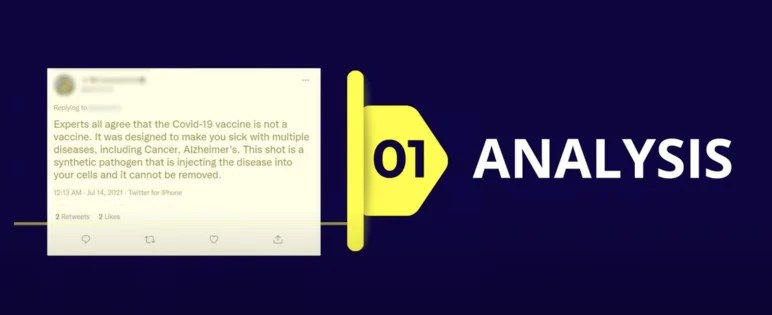
“Every day there are motivated citizens, like librarians, health communicators, and amateur volunteers, who engage with the misinformation that is posted by their peers and make efforts to share reliable information to empower their communities,” the video said.
Another video by ARTT claimed that social media efforts to fight misinformation are not as effective in influencing users’ views as efforts made by friends.
“That’s why we want to focus on these peer connections when it comes to having these conversations online … Instead of coming to you from the platform, it’s actually coming to you from a friend,” the video said.
The group led by Hacks/Hackers is also working on Wikipedia tools, which will determine those that are a “credible source” on Covid vaccines and prevent sources that are not credible from being cited on Wikipedia.
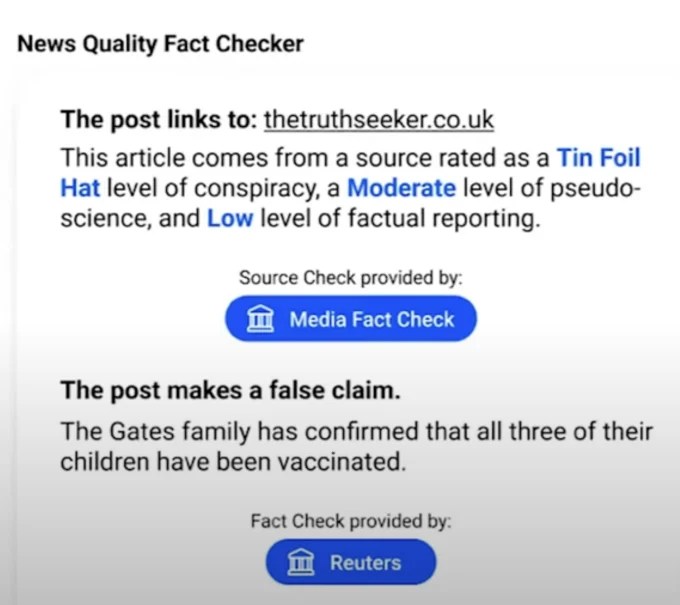
The list of credible sources has started to be organized, with outlets like the Washington Post, The New York Times, and The Guardian classified as “reliable,” and outlets like The Federalist and The Daily Wire classified as “unreliable” or “conspiracy.”
Secret Service Has Hunter Biden Gun Docs They Denied Possessing
Samizdat – 02.12.2022
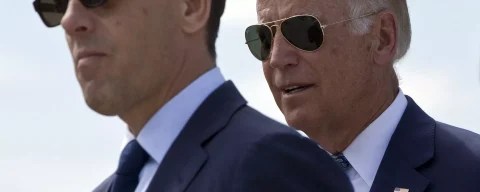
Hunter Biden, son of the incumbent US president, is infamous for his involvement in many scandals, including substance abuse, commercial sex, infidelity, tax fraud and, probably, corruption at the highest level. Yet he always got away. However, the “gun incident” may change this.
The Secret Service admitted the existence of documents connected to Hunter Biden’s alleged illegal ownership of a gun, even though they previously denied possessing the files.
According to media reports, representatives of the Secret Service approached a firearms shop owner where Hunter Biden had illegally bought a gun, and demanded the paperwork connected to this transaction. The gun shop owner refused to comply, suspecting that the Secret Service officers wanted to hide Hunter’s ownership of the firearm.
This incident did not go unnoticed. Conservative activist group Judicial Watch sued the government agency for all materials concerning Hunter Biden`s ownership of a gun. The government watchdog group also highlighted the oddity of the Secret Service changing its stance on the case several times.
Tom Fitton, Judicial Watch President, marks the fact that “The Secret Service’s changing story on records raises additional questions about its role in the Hunter Biden gun incident.”
The gun incident Tom Fitton is referring to occurred in year 2018. Hunter Biden’s former sister-in-law, who became his lover, took his gun from a cupboard and threw it in a garbage can. She claims that her lover was mentally unstable at that moment and she was afraid for her life. Later she tried to retrieve the gun, but it was already at the police disposal. Approximately at this time, Secret Service officers approached the gun shop owner with demands to dispose of the paperwork, framing Hunter Biden.
When law enforcement started to wonder about the origins of the gun, it was suspected that Hunter Biden had lied in order to buy it. He answered in the negative when asked about past substance abuse and substance addiction. But five years ago he was fired from the US Navy due to a positive test for cocaine and he admits in his memoires that he continued to abuse substances at least up to 2018.
Intentional misrepresentation of information while buying firearms is a criminal offense according to US law. Yet he was not charged.
In April 2021 the Secret Service responded to a watchdog request, promising to provide necessary documents on this case. However, a year later in October 2022 this governmental organization stated that the previous response was a mistake and that it doesn’t have any records relevant to the “Hunter Biden’s Gun Incident.”
Hunter Biden is currently in the crosshairs for being allegedly involved in many murky affairs but always gets away.
For instance, Hunter was connected to some companies that were accused of corruption. The most notorious case is his membership in the board of Ukraine’s Burisma Group. His father then-Vice-President Joe Biden pressured then-president of Ukraine Petro Poroshenko to fire top prosecutor, who was investigating Burisma activities.
However, the gun incident may reverse the momentum. According to results of the November midterms, Republicans received a majority in House of Representatives. They have already promised to launch a full-scale investigation on Hunter Biden’s activities. What is more important federal agents think that they have enough evidence to criminally charge Hunter Biden for illegal gun ownership.
Lavrov rubbishes ‘lies’ about Ukraine peace talks
RT | December 1, 2022
Allegations that Russia is seeking peace talks with Ukraine as a ploy for a military build-up are false, Russia’s foreign minister has said. Sergey Lavrov was responding to statements to that effect from top officials in Kiev, including President Vladimir Zelensky.
The accusations are “ridiculous and unpleasant, because [those who make them] blatantly lie,” the minister told journalists on Thursday during a press conference.
“We never asked for any negotiations. But we always stated that if somebody has an interest in a negotiated settlement, we are ready to listen,” he stressed.
In October, President Zelensky said during a virtual speech to the European Council that Russia was “manipulating the negotiations issue” due to Kiev’s battlefield successes. He went on to claim that Moscow was calling for dialogue, “which it rejected itself by starting a war against Ukraine and all of you, the entire Europe,” while rejecting “dozens of our proposals” for peace.
Lavrov noted that Ukraine and Russia were on the verge of striking a peace deal after talks in Istanbul in late March. At that time they inked a proposed agreement, which would have given Ukraine international security guarantees in exchange for neutral status.
Kiev pulled out of the talks soon afterwards, with Zelensky claiming that fresh evidence of war crimes allegedly committed by Russian troops had left him no other option. Moscow rejected the accusations, calling the evidence falsified.
“Not only did we listen, but we were prepared to make a deal on the terms that [the Ukrainians] proposed themselves,” Lavrov explained. “They were not allowed to do that because the war had not made enough profit for those who supervise and direct it.”
The Russian diplomat pointed to the US, and to a lesser degree the UK, as parties who are allegedly directing Ukraine’s actions. Washington pursues its goals of weakening Russia and benefiting from arms sales at the expense of the Ukrainian people, he said.
Lavrov added that the US and its allies have a pattern of rejecting ways to reduce tensions with Russia. Hostilities in Ukraine started after they refused to heed Russian warnings that the expansion of NATO was crossing a red line, he insisted. The military bloc brushed aside a proposed security deal, which in Russia’s view would have addressed the issue.
College Graduates Are the New Favored Class of Democratic Largesse
By Jim Bovard | The Libertarian Institute | November 28, 2022
When Americans make lists of the persecuted, downtrodden groups in our society, college graduates rarely top the ranking. But President Joe Biden is offering one bribe after another to convert college graduates into perpetual dependents of the Democratic Party. Biden’s handouts helped prevent a “red wave” of Republican victories on Election Day and he appears hellbent on forcing taxpayers to pay any price to continue buying votes for his party.
Federal subsidies for higher education have been one of the least recognized boondoggles of recent decades. Federal-backed loans for higher education took off in the 1960s and have skyrocketed in this century. Almost $2 trillion in federal student loans are owed by 46 million people.
Federal aid spurred tuition increases that make it far more difficult for unsubsidized students to afford higher education. A student’s financial “need” is defined largely by tuition fees. Every tuition increase means an increase in federal aid for students—and thus an increase in the federal aid for the college. A 2012 study by the Center for College Affordability and Productivity concluded that financial aid “inevitably puts upward pressure on tuition. Higher tuition reduces college affordability, leading to calls for more financial aid, setting the vicious cycle in motion all over again.” A 2015 Federal Reserve analysis “found that for every new dollar made available in federally subsidized student loans, schools…rose their rates by 65 cents.”
Federal policies have helped turn young people into a debtor class perpetually clamoring for relief from its burdens. Rather than seeing the federal government as a potential peril to their rights and liberties, some debt-burdened young adults view it as the “Great Liberator”—presuming the right candidate is elected.
Rather than ending the perverse incentives embedded in federal aid, Biden “solved” the problem by canceling borrowers’ obligation to repay their subsidized loans. On August 24, Biden invoked an obscure provision of the post-9/11 Heroes Act to justify hundreds of billions of dollars of handouts to people who had taken out federal college loans. The Heroes Act permits the Education Department “to waive or modify student loan payments in times of national emergency.” Individuals earning less than $125,000 could have up to $20,000 in federal debt automatically erased; couples earning $250,000 could see a $40,000 forgiveness windfall.
Biden had previously admitted that the law would not justify blanket forgiveness of college loans, but he and his advisors decided to force Americans to pay any price for Democrat votes in the midterm congressional elections. The Department of Education justified Biden’s decree as “a program of categorical debt cancellation directed at addressing the financial harms caused by the COVID-19 pandemic,” including “cancellation for borrowers who have been financially harmed because of the COVID- 19 pandemic.” But college graduates were doing much better financially than other Americans who get stuck with the bill for their schooling. Their unemployment rate was less than two percent at that time.
Former Education Department lawyer Hans Bader estimates that the total cost of Biden’s student loan write-offs could exceed a trillion dollars. A Wall Street Journal editorial headlined “Biden’s Half-Trillion-Dollar Student-Loan Forgiveness Coup” derided his decision as “easily the worst domestic decision of his Presidency.” The Journal pointed out that Biden based the loan cancellation for more than 40 million borrowers “on no authority but his own” power as president. “This is a college graduate bailout paid for by plumbers and FedEx drivers,” the Journal noted. As former OMB director David Stockman observed, “Student debt is overwhelmingly an investment in professional credentialization that should never have been an obligation of the taxpayers in the first place.” ZeroHedge quipped on Twitter: “Have colleges raised tuition by $10,000 yet or are they waiting a few days first?”
There was no rationale for blanket cancellation of student debts that would not justify blanket cancellation of almost any debt citizens owed to the government. At the same time that Biden played Santa Claus with student loan forgiveness, his administration was hiring 87,000 new IRS agents and employees to squeeze more money out of working Americans.
The handouts helped buy Democrats their biggest boost among voters — a 28% advantage over Republicans in voters age 18 to 29 in the mid-term elections. Two days after the election, Biden tweeted, “I want to thank the young people of this nation” who voted for “student debt relief.” Jon Cooper, a former top Biden campaign operative, tweeted, “Young people: You saved our butts. THANK YOU.”
Two days after the election, federal judge Mark Pittman struck down the bailout as an unconstitutional decree: “In this country, we are not ruled by an all-powerful executive with a pen and a phone. Instead, we are ruled by a Constitution that provides for three distinct and independent branches of government.” Pittman rejected the “emergency” basis of the order in part because Biden had proclaimed in September on “60 Minutes” that “the pandemic is over.” The following week, a federal appeals court in St. Louis unanimously voted to impose a nationwide “injunction considering the irreversible impact the Secretary’s debt forgiveness action would have” on “Americans who pay taxes to finance the government.”
Some activists believe Biden intentionally swindled young voters with a bait-and-switch scheme. Briahna Joy Gray, who was the press secretary for Bernie Sanders’ 2020 presidential campaign, asked, “Did Biden RIG student debt forgiveness to fail, just to help him in midterms?” She explained on Twitter: “They used the promise of student debt cancellation to induce young voter turn out—knowing it wasn’t going anywhere [because] they relied on faulty legal authority. Hard to convince me the Biden admin didn’t do this intentionally.” A student activist group called the Debt Collective is circulating a petition: “I refuse to pay a debt the President promised to cancel.”
Biden came up with a Solomonic solution—sawing taxpayers in half—to placate his enraged supporters. He announced on Twitter, “Republican special interests and elected officials sued to deny this relief even for their own constituents. It isn’t fair to ask tens of millions of borrowers eligible for relief to resume their student debt payments while the courts consider the lawsuit.” On November 22, Biden announced that he was extending the moratorium on repaying student debt until August 2023. That moratorium began in March 2020 during the first COVID lockdowns and has already cost taxpayers $155 billion, according to the Committee for a Responsible Federal Budget. When Biden announced his loan forgiveness decree in August, he promised, “The student-loan payment pause is gonna end. It is time for the payments to resume.” Biden betrayed that promise, apparently believing that no one should be obliged to fulfill their legal obligation as long as there was a snowball’s chance in hell that some judge would uphold his scheme. Extending the loan payment moratorium could give a crucial boost to Democratic Sen. Raphael Warnock, locked in a tight December 6 run-off election.
What happens when the latest moratorium extension ends in August 2023? Biden may be formally kicking off his re-election campaign at that time. And what better way to buy support than by extending a handout to one of his most important constituencies? In the 2022 mid-term elections, “52 percent of voters with college degrees supported Democrats while 42 percent of voters without degrees did so,” The Washington Post reported.
Protecting former students from the federal debts they voluntarily accepted has become one of the great human rights issues of our times. Michael Pierce, chief of the Student Borrower Protection Center, is calling for Biden to “make it clear that the student loan system will remain shut off as long as these partisan legal challenges persist. Borrowers’ fate is in Biden’s hands.”
And this is the ultimate problem for democracy. Student loan bailouts have extended Biden’s power over a huge swath of American voters. Each new federal benefit program extends political control over both the recipients and anyone forced to finance the handouts. Speaking to an AFL-CIO convention earlier this year, Biden shouted, “I don’t want to hear anymore of these lies about reckless spending. We’re changing people’s lives!” “Changing” means controlling—but only for their own good, or at least for the re-election of their benefactors
French philosopher Bertrand de Jouvenal warned, “Redistribution is in effect far less a redistribution of free income from the richer to the poorer, than a redistribution of power form the individual to the state.” If Biden’s loan repayment moratorium is extended through 2024, “a typical medical student who graduated in 2019 would effectively have $107,000 forgiven and a law school graduate would have $65,000 forgiven… New doctors receive almost ten times the benefit of the average borrower and $107,000 more than someone who never attended college,” the Committee for a Responsible Federal Budget reported. Even The Washington Post editorial page slammed Biden’s student debt forgiveness decree as a “regressive, expensive mistake.”
But the inequity is irrelevant if the handouts enable Biden and his Democratic colleagues to perpetuate their grip on power. As legal fights over loan bailouts continue, Americans will continue to be assailed by claptrap about ex-students as a holy class of martyrs—or at least oppressed victims. But most of the self-proclaimed “best and brightest” are not smart enough to recognize how they have been converted into tools for Leviathan.
Jim Bovard is the author of Public Policy Hooligan (2012), Attention Deficit Democracy (2006), Lost Rights: The Destruction of American Liberty (1994), and 7 other books.
Did YOU fall for the great Covid scam?

By John Ellwood | TCW Defending Freedom | November 28, 2022
Victims of a multi-billion-pound phishing scandal have told TCW Defending Freedom how their lives were devastated by fraudsters after apparently finding themselves on a ‘suckers list’ which caused them to agree to take part in an experimental drug trial.
The criminals trapped their victims by sending them messages made possible by a website called iNHSpoof. It seems the perpetrators sent multiple messages to millions of Britons telling them that they had an appointment for what was described as a ‘safe and effective vaccine’ which would protect them from a deadly new virus.
Little did the millions who fell for the scam know that the so-called ‘vaccine’ was, in fact, a gene therapy which had been cobbled together in a matter of days, and the virus it was supposed to protect them from was no more dangerous than a bad seasonal flu.
Incredible though it may seem, the victims were then told they needed to download an app which allowed the criminals to dictate their movements.
Susan Sunbeam of Ilford was typical of those who were duped. ‘It all seemed very convincing,’ she said. ‘I saw people on the BBC who I believed to be experts telling me that I would probably die if I did not keep my appointment. I have recently developed a tingling in my right arm but I’m sure it’s nothing.’
Another victim was Ivor Gumble from Birkenhead: ‘I suspected that it might be a scam but my boss said I would lose sick pay if I did not have the jab and became ill.’
Many of those who made money out of the scandal worked for the NHS. A doctor, who asked not to be named, said that he too felt like a victim despite earning thousands of pounds from injecting people with the barely tested concoction. ‘Yes, it’s true that my practice contacted our clients on multiple occasions. It is true that we did not properly investigate the product. I admit that we did not tell people of the possible adverse reactions and we did make shedloads of money from the scam, but everyone was doing it. If we hadn’t taken part somebody else would have jumped in. Unbelievably the people who fell for it the first time kept coming back for more, so what could we do?’
TCW has also discovered that the iNHSpoof scandal allowed the alleged criminal masterminds to channel billions of pounds of taxpayers’ money to their friends by giving them contracts for useless ‘protective equipment’ and building so-called Testing Centres which offered visitors a fraudulent and potentially dangerous polymerase chain reaction (PCR) test.
The iNHSpoof scam has ruined the economy and is expected ultimately to cost the British taxpayer trillions of pounds. Chief Inspector Hugh Tavistock (He/Him) of the Metropolitan Police said that they were aware of the fraud. However, the Met later issued a statement saying: ‘At this moment in time the Force is preoccupied by an increasing number of reports of Hate Crimes directed towards our friends in the Trans community. We must weigh our priorities and we feel the we cannot allow those who say hurtful words to go unpunished.’
The Australian Government Lied: Doctors are NOT covered by Government’s indemnity for Covid Injections
By Rhoda Wilson • The Exposé • November 27, 2022
Last week Elizabeth Hart wrote to Mark Butler, Australian Minister for Health and Aged Care, about the government misleading health practitioners who are administering Covid injections into believing they are covered by a government medical indemnity scheme. “It has now been confirmed by your department that health practitioners are not covered by a specific Covid-19 government medical indemnity scheme,” she wrote.
Elizabeth Hart is an independent researcher investigating the overuse of vaccine products and conflicts of interest in vaccination policy.
According to a response Hart received on 17 November from Nigel Murray – Assistant Secretary, MBS Policy and Specialist Services Branch – the government did not put in place a medical indemnity scheme for health professionals. Instead, Murray told Hart, “the former [Morrison] Government established the no-fault Scheme, which commenced operations on 13 December 2021.” Later in the same letter, he again confirmed the scheme did not exist:
“While a medical indemnity scheme for health professionals administering the Covid-19 vaccine was not established per se, the creation of the no-fault Scheme was intended to support increased participation by health professionals in the Covid-19 Vaccination roll-out.”
Hart informed Butler, the promise of “a medical indemnity scheme for health professionals administering the Covid-19 vaccine” probably did intend “to support increased participation by health professionals in the Covid-19 Vaccination roll-out”. But it turns out they are not personally protected by a government scheme. She explained to Butler:
In July 2021, the Morrison Government stated it was establishing a “fit-for-purpose Covid-19 vaccine medical indemnity scheme” to “support increased vaccination uptake by assuring Australians that health professionals, including GPs, nurses and pharmacists administering Covid vaccines as part of the Commonwealth vaccination program have appropriate indemnity coverage”, with a further announcement in August 2021 stating “The Morrison Government has finalised the details of the no-fault Covid-19 Vaccine Claim Scheme following extensive consultation with the peak medical, healthcare, business and insurance sectors to ensure a comprehensive National Scheme”, noting “It also ensure [sic] that health professionals administering vaccines will be able to continue with their crucial role in the vaccine roll out with assurance that the claims scheme will offer them protection”
But it now turns out health professionals are not personally protected by a specific Covid-19 medical indemnity scheme.
The letter from Nigel Murray also confirms: “Informed consent should be obtained for every Covid-19 vaccination, as per usual consent procedures for other vaccinations.”
Mark Butler, it appears health practitioners don’t have specific government medical indemnity re the Covid jab rollout, although they might think they do. They will have to look to their own medical indemnity insurance to protect them. And they should be obtaining informed consent for every Covid-19 jab…but is this actually happening?
What is the quality of information being provided to people, including parents of children, to enable them to properly evaluate the threat of SARS-CoV-2/Covid-19, and the risks and benefits of the multiple Covid jabs, in their own specific circumstances? Why are people of most ages and health status being called upon to have the Covid-19 jabs? Who is actually at serious risk with SARS-CoV-2/Covid-19? Does having repeated Covid jabs compromise the immune system and make people more vulnerable? Nigel Murray includes reference to the ‘Covid-19 vaccination – Patient resources’ webpage in his letter, but this webpage only includes information re Covid jabs for children, not for adults. Nigel Murray’s letter also includes a link to a ‘Consent form for Covid-19 vaccination’.
How does this information re Covid jabs referred to by Nigel Murray stack up in the ‘valid informed consent’ stakes? I would say not very well at all…
This is an extremely serious situation, Mark Butler – it’s highly likely ‘valid informed consent’ has not been properly obtained by many health practitioners before administering Covid-19 jabs.
The health practitioners inserting the needle must be warned they’re not protected by a specific government Covid medical indemnity scheme after all…and they need to consider the quality of the information they’re providing to people to gain their ‘valid informed consent’ to the jabs. They must also consider the impact of jab mandates – which pressure, coerce and manipulate people to submit to Covid jabs, in contravention of The Australian Immunisation Handbook, i.e., jab mandates inhibit a ‘voluntary’ decision.
Mark Butler, please advise what steps you are taking to address this matter.
This email is being circulated to other parties, including the response from your department.
Health practitioners, Covid jabs and ‘valid informed consent’ – a medical ethics disaster, Elizabeth Hart emails
As Dr. Mike Yeadon noted on his Telegram channel: “This has all the appearance of government throwing medical staff under the bus on liability & requirements for informed consent.”
Two days later, Hart forwarded her email trail with Butler to Kamran Abbasi, editor-in-chief of the British Medical Journal (“BMJ”), copying in numerous “people influential on international public health/vaccination policy via the scientific and medical establishment, and other parties.” People copied into her email included infamous modeller Neil Ferguson, UK’s Chief (Covid) Medical Adviser Chris Whitty, President of the Royal Society, and Oxford/AstraZeneca injection’s developers Adrian Hill and Sarah Gilbert.
The BMJ claims to be evidence-based and patient-centred and customer-focused – surely ensuring ‘valid informed consent’ before medical interventions, such as Covid jabs, should be foremost in your values?
Sadly, ‘valid informed consent’ appears to have been sacrificed during the grossly disproportionate and ill-targeted Covid debacle. This scandal is now unfolding in Australia.
FYI, please see [above] my response to Australian federal health minister Mark Butler, on the subject of health practitioners’ medical indemnity insurance for Covid-19 jab administration, and health practitioners’ obligation to obtain ‘informed consent’.
This information has major implications for health practitioners administering Covid-19 jabs in Australia – they need to know they’re not covered by a specific government Covid-19 medical indemnity scheme, and that they’re obligated to obtain informed consent before every Covid-19 jab.
But I strongly suspect many health practitioners have failed to obtain ‘valid informed consent’ before the Covid jabs. How have things gone so terribly wrong?
This is a very serious situation, Kamran Abbasi, at the heart of medical ethics. This should be a priority topic on the BMJ.
Reporter Who Offered Curious Details on Paul Pelosi Hammer Attack Not Seen on Air in Nearly a Month
By Ilya Tsukanov – Samizdat – 28.11.2022
Miguel Almaguer, the NBC News reporter whose reporting on last month’s Paul Pelosi hammer attack incident offered curious details which challenged the mainstream narrative at the time, has not been seen on air or tweeted since the media giant expunged his report and suspended him over unspecified “inaccurate information” in his report.
Almaguer, 45, reported on air on November 4 that Mr. Pelosi calmly opened the door to police officers responding to the 911 emergency call he placed after 2 am on October 28, but that he did not “declare an emergency” or try to leave the domicile, instead walking several feet into the foyer of his home toward the suspect, 42-year-old David DePape, who was armed with a hammer.
The report sparked questions about what 82-year-old Pelosi and DePape were doing before police showed up.
Almaguer’s reporting, which NBC has attempted to scrub from the internet, also challenged claims made by media that the attack was an act of “right-wing political violence” by an enraged Trump supporter “enflamed by right-wing conspiracy theories” and anti-Pelosi sentiment ahead of the November 8 midterm elections.
In a speech on November 3, President Biden attempted to tie the attack to the riots at the US Capitol on January 6, 2021, which he said had been fueled by the “dangerous” “lie” that the 2020 election had been stolen from Trump. “Thankfully, by the grace of God, Paul survived,” Biden said.
Further reporting uncovered that DePape was a Canadian national living in the US illegally, a nudism enthusiast suffering from drug addiction, and apparent supporter of liberal causes, hoisting a rainbow flag and a BLM sign on the rundown school bus he was living in.
DePape has been charged with attempted murder, assault with a deadly weapon and elder abuse and with federal charges of assault and kidnapping, with the latter carrying a maximum combined sentence of 50 years in prison. He has plead not guilty.
Pelosi was released from hospital on November 3 after recovering from surgery to treat a skull fracture and injuries to his hands and right arms.
Russia Has Not Received Response From US and Ukraine Regarding Biolabs Near Its Borders: Envoy
By Maxim Minaev – Samizdat – 28.11.2022
On November 26, Lt. Gen. Igor Kirillov, the head of the radiation, chemical and biological defense troops of the Russian Armed Forces, said that Russia is concerned about US-controlled tests of infectious agents on military personnel and mental patients in Ukraine.
Russia has not received an exhaustive response from the United States and Ukraine regarding US biological and military activities on Ukrainian territory under the Biological Weapons Convention (BWC), Russia’s permanent representative to the Geneva-based UN headquarters, Gennady Gatilov, said.
“We still have not received a proper and meaningful response to the documents and evidence presented, which shed light on the true nature of interaction between the Pentagon and its contractors and the Ukrainian side in the field of military and biological activities,” he said.
The diplomat added that Russia’s complaint was ignored and its proposal for an international investigation under the auspices of the UNSC under Article VI of the BWC was blocked by the United States.
Earlier, Lt. Gen. Igor Kirillov, the head of the radiation, chemical and biological defense troops of the Russian Armed Forces, said that a network of more than 30 biological laboratories had been formed on the territory of Ukraine, which worked in the interests of the Pentagon. According to him, everything for the continuation of the US military-biological program was removed from Ukraine after the start of the Russian special military operation.
Earlier this month, Kirillov recalled that former US President Donald Trump’s National Security Advisor John Bolton had participated in formulating the US drive for global dominance in bioweapons research. He said that Bolton led the US delegation to the Biological and Toxin Weapons Convention’s Fifth Review Conference in November-December 2001. Later, the US blocked the operation of the UN body’s verification mechanism, as well as proposed measures to check bioweapons storage sites, citing threats such verification measures would pose to US “national interests.” Bolton also characterized the BWC’s verification protocol as “dead,” and promised that it’s “not going to be resurrected.”
Igor Kirillov accompanied his presentation with a fresh trove of documents, including papers related to US efforts to build up the country’s military-biological potential.
Pfizer CEO, who said online “misinformation” is criminal, is found guilty of “misleading” vaccine statements

By Cindy Harper | Reclaim The Net | November 27, 2022
Pfizer CEO Albert Bourla, last year at the Atlantic Council, called people who spread COVID-19 vaccine misinformation “criminals,” in his calls for censorship of misinformation online.
However, this year, Dr. Bourla is himself found responsible by the UK’s pharmaceutical regulator of making “misleading” statements about vaccination of children.
Last December, in an interview with the BBC, Dr. Bourla said that “there is no doubt in my mind that the benefits, completely, are in favor of” vaccinating children between the ages of five and 11.
He continued to say that “Covid in schools is thriving.”
“This is disturbing, significantly, the educational system and there are kids that will have severe symptoms.”
The interview was conducted before the vaccine was approved for children between the ages of five and 11 in the UK.
After the interview was published, parent campaign group UsForThem filed a complaint with the Prescription Medicines Code of Practice Authority (PMCPA). The complaint accused Dr. Bourla of making “disgracefully misleading” comments about vaccinating children and that the comments were “extremely promotional in nature,” and that he violated several clauses of the code of practice by the Association of the British Pharmaceutical Industry (ABPI).
“There is simply no evidence that healthy schoolchildren in the UK are at significant risk from the SARS COV-2 virus and to imply that they are is disgracefully misleading,” the complaint said.
PMCPA convened a code of practice panel that found that Dr. Bourla had indeed violated the code of practice in a few ways, including failure to present information to the public in a factual and balanced manner, misleading the public, and making claims that cannot be substantiated.
The Telegraph reported Pfizer appealed against the findings of the panel and strongly disagreed with UsForThem’s claims that the CEO violated the code of practice. The company argued that Dr. Bourla’s remarks were based on “up-to-date scientific evidence” and they could be proven through “publicly available independent benefit-risk assessments.”
An appeal board upheld that Dr. Bourla misled the public, made claims that were unbalanced, and made unsubstantiated claims.
However, it ruled against claims that Pfizer discredited the industry, encouraged reckless use of a treatment, and did not maintain high standards.
Trump Says Justice Department is ‘Corrupt’
Samizdat – 27.11.2022
WASHINGTON – Former US President Donald Trump has accused the US Department of Justice (DOJ) of corruption and of making false allegations against him.
“The ‘Justice’ Department is CORRUPT. Offered Christopher Steele $1,000,000 to lie about me, paid Russian a fortune to ‘get Trump,’ told Facebook not to mention the Hunter Biden Laptop before the Election, ‘it was Russian disinformation,’ when they KNEW it was not,” Trump wrote on his Truth Social platform on Sunday.
Last month, Trump said that the decision by a US jury to acquit Russian national Igor Danchenko on charges of lying to the US Federal Bureau of Investigation (FBI) regarding the Trump-Russia collusion probe shows the disgraceful nature of the US justice system.
The case against Danchenko started last November, when he pleaded not guilty to charges of lying to the FBI about his role in the discredited “Steele Dossier” used to allege collusion between Trump and the Kremlin during the 2018 US presidential election.
The prosecution contended that Danchenko lied to the authorities about the sources of information given to former British spy Christopher Steele for the dossier on purported contacts between Trump and Russian officials. The indictment against Danchenko accused him of fabricating the information.
A Special Counsel investigation did not find any proof of collusion between Trump and Russia.
Senior FBI intelligence analyst Brian Auten testified in court in October that the FBI had offered $1 million to Steele to provide evidence to back his allegations.
Featured Video
Integrity Initiative: UK-funded network framed dissent as Russian disinformation for years
or go to
Aletho News Archives – Video-Images
From the Archives
Why Saudi Ties to 9/11 Mean U.S. Ties to 9/11
By Kevin Ryan | Dig Within | September 27, 2015
Media interest in Saudi Arabian connections to the crimes of 9/11 has centered on calls for the release of the 28 missing pages from the Joint Congressional Inquiry’s report. However, those calls focus on the question of hijacker financing and omit the most interesting links between the 9/11 attacks and Saudi Arabia—links that implicate powerful people in the United States. Here are twenty examples. … continue
Blog Roll
 Aletho News
- Senate Rejects Iran War Powers Resolution Passed By House
- ‘We did not attack Pakistan with drones’: Afghan sources
- Iraqi Resistance faction links arms to sovereignty, questions US exit
- Cannon fodder no more… South Korea rejects Trump’s pressure to join his criminal war on Iran
- Neria Leiter Was A Legitimate Military Target
- Integrity Initiative: UK-funded network framed dissent as Russian disinformation for years
- ‘We don’t seek permission to defend our country’: Snippets from President Pezeshkian’s UNGA address
- NATO chief wants Europeans to fight American wars [for Israel]
- German chemicals giant reveals details of downsizing
- Refaat Al-Areer Was The Canary In The Coal Mine In Israel’s War On The Truth
- If Americans Knew
- Israel displaces hundreds of Palestinians amid wave of demolitions in West Bank
- Aid, reconstruction, and Israel’s history of obstruction in Gaza
- Trump administration digs an ever-deeper hole of complicity in genocide – Daily Update
- US-Israel $2.8 Billion Arms Deal, 40,000-Bomb Supply Faces New Gaza Complicity Accusations
- Caught on Tape: AIPAC CEO Boasted of Controlling Trump’s National Security Officials
- Why Hamas Attacked Israel in October 2023 – Israeli professor Ilan Pappé
- They see them, then kill them: Israeli quadcopters track, deliberately target civilians in Gaza
- Winter could turn Gaza’s treacherous, war-damaged buildings into deathtraps
- Majority of Democratic Voters Want to Prosecute Both Biden and Trump Administration Officials Over Gaza
- As Gaza languishes, world leaders gather at the UN – Daily Update
- No Tricks Zone
- New Study: Earth And Venus Surface Warmth Largely Explained By Convection And Lapse Rate, Not CO2 Or Radiation
- 2025 Nature Paper Claiming Worsening Global Drought Gets RETRACTED …Heavily Flawed
- New Study: ‘Global Drought Shows No Detectable Recent Acceleration Under Climate Warming’
- Economic Masterminds: German Socialists Suggest Taxing Productivity Gains Stemming From Using AI
- The South China Sea Has Not Been Cooperating With The Climate Change Narrative
- Energy Crisis: Germany Enters Heating Season With Historically Low Gas Reserve Fill Levels
- New Study: The Antarctic Ice Sheet Gained Mass From 2020-2024 Due To Staggering Snow And Ice Accumulation
- Study: Ocean Heating Rates From Thousands Of Years Ago ‘Dwarf’ Modern Ocean Heating Rates
- Climate Extremists Target, Attack Large-Scale Power Grid Infrastructure In Germany!
- New Study: Antarctic Ice Melt Has Contributed Less Than 1 Centimeter To Sea Level Rise In The Last 30 Years

