Gene Sharp, agent provocateur
By Richard Hugus | February 3, 2018
Recent newspaper obituaries and articles on the late Gene Sharp are a classic case of misinformation, and a good example of why so many people don’t trust the mainstream news.
Far from being a promoter of democracy through Gandhian non-violence, Gene Sharp made an entire career out of US/CIA regime change operations, from Yugoslavia to Venezuela to Ukraine to Syria.
His “color revolutions” all had the same formula — phony grass roots organizations, funded and advised by US government aid, suddenly appearing in public squares; covert operations making it look like the demonstrators were being attacked by government forces, and lavish coverage from Western news outlets calling for the toppling of the “evil dictator” responsible for killing his own people.
Gandhi would have rolled over in his grave if he saw the ends to which his philosophy was perverted by Gene Sharp.
Violence always lurked beneath his high-sounding but underhanded destabilization and coup campaigns.
Sharp was an agent and accomplice of the CIA in grossly illegal attacks on sovereign nations all around the world. He should be condemned, not praised.
Nunes Memo Reports Crimes at Top of FBI & DOJ
By Ray McGovern | Consortium News | February 2, 2108
The long-awaited House Intelligence Committee report made public today identifies current and former top officials of the FBI and the Department of Justice as guilty of the felony of misrepresenting evidence required to obtain a court warrant before surveilling American citizens. The target was candidate Donald Trump’s adviser Carter Page.

Former Trump foreign policy adviser Carter Page
The main points of what is widely known as the “Nunes Memo,” after the House Intelligence Committee Chair Devin Nunes (R-Calif.), have been nicely summarized by blogger Publius Tacitus, who noted that the following very senior officials are now liable for contempt-of-court charges; namely, the current and former members of the FBI and the Department of Justice who signed off on fraudulent applications to the Foreign Intelligence Surveillance Court: James Comey, Andy McCabe, Sally Yates, Dana Boente and Rob Rosenstein. The following is Publius Tacitus’s summary of the main points:
- The dubious but celebrated Steele Dossier played a critical role in obtaining approval from the FISA court to carry out surveillance of Carter Page according to former FBI Deputy Director Andy McCabe.
- Christopher Steele was getting paid by the DNC and the FBI for the same information.
- No one at the FBI or the DOJ disclosed to the court that the Steele dossier was paid for by an opposition political campaign.
- The first FISA warrant was obtained on October 21, 2016 based on a story written by Michael Isikoff for Yahoo News based on information he received directly from Christopher Steele — the FBI did not disclose in the FISA application that Steele was the original source of the information.
- Christopher Steele was a long-standing FBI “source” but was terminated as a source after telling Mother Jones reporter David Corn that he had a relationship with the FBI.
- The FBI signers of the FISA applications/renewals were James Comey (three times) and Andrew McCabe.
- The DOJ signers of the FISA applications/renewals were Sally Yates, Dana Boente and Rod Rosenstein.
- Even after Steele was terminated by the FBI, he remained in contact with Deputy Attorney General Bruce Our, whose wife worked for FUSION GPS, a contractor that was deeply involved with the Steele dossier.
From what Michael Isikoff reported in September 2016 it appears that the CIA and the Director of National Intelligence (as well as the FBI) are implicated in spreading the disinformation about Trump and Russia. Isikoff wrote:
“U.S. intelligence officials are seeking to determine whether an American businessman identified by Donald Trump as one of his foreign policy advisers has opened up private communications with senior Russian officials — including talks about the possible lifting of economic sanctions if the Republican nominee becomes president, according to multiple sources who have been briefed on the issue. […]
“But U.S. officials have since received intelligence reports that during that same three-day trip, Page met with Igor Sechin, a longtime Putin associate and former Russian deputy prime minister who is now the executive chairman of Rosneft, Russian’s leading oil company, a well-placed Western intelligence source tells Yahoo News.”
Who were the “intelligence officials” briefing the select members of the House and Senate? That will be one of the next shoes to drop. We are likely to learn in the coming days that John Brennan and Jim Clapper were also trying to help the FBI build a fallacious case against Trump, adds Tacitus.
Indeed, Rep. Greg Walden (R-OR), Chair of the House Energy and Commerce Committee, has already indicated that his disclosures in the Nunes Memo represent just “one piece of a probably much larger mosaic of what went on.”
The Media Will Determine What Comes Next
As for Congressman Adam Schiff (D-Calif.), ranking member of the House Intelligence Committee, it is now abundantly clear why he went to ridiculous lengths, as did the entire Democratic congressional leadership, to block or impugn the House Intelligence Committee report.
Until the mid-December revelations of the text messages between FBI lovers Peter Strzok and Lisa Page turned Russia-gate into FBI/DOJ-gate, Schiff had been riding high, often hiding behind what he said “he could not tell” the rest of us.
With the media, including what used to be the progressive media, fully supporting the likes of Adam Schiff, and the FBI/CIA/NSA deep state likely to pull out all the stops, the die is now cast. We are in for a highly interesting time over the next months.
Ray McGovern works with the publishing arm of the ecumenical Church of the Savior in inner-city Washington. He was a CIA analyst for 27 years and co-founded Veteran Intelligence Professionals for Sanity (VIPS).
Lying, Spying and Hiding
By Andrew Napolitano • Unz Review • February 1, 2018
I have argued for a few weeks now that House Intelligence Committee members have committed misconduct in office by concealing evidence of spying abuses by the National Security Agency and the FBI. They did this by sitting on a four-page memo that summarizes the abuse of raw intelligence data while Congress was debating a massive expansion of FISA.
FISA is the Foreign Intelligence Surveillance Act of 1978, which was written to enable the federal government to spy on foreign agents here and abroad. Using absurd and paranoid logic, the secret Foreign Intelligence Surveillance Court, which only hears the government’s lawyers, has morphed “foreign intelligence surveillance” into undifferentiated bulk surveillance of all Americans.
Undifferentiated bulk surveillance is the governmental acquisition of fiber-optic data stored and transmitted by nearly everyone in America. This includes all telephone conversations, text messages and emails, as well as all medical, legal and financial records.
Ignorant of the hot potato on which the House Intelligence Committee had been sitting, Congress recently passed and President Donald Trump signed a vast expansion of spying authorities — an expansion that authorizes legislatively the domestic spying that judges were authorizing on everyone in the U.S. without individual suspicion of wrongdoing or probable cause of crime; an expansion that passed in the Senate with no votes to spare; an expansion that evades and avoids the Fourth Amendment; an expansion that the president signed into law the day before we all learned of the House Intelligence Committee memo.
The FISA expansion would never have passed the Senate had the House Intelligence Committee memo and the data on which it is based come to light seven days sooner than it did. Why should 22 members of a House committee keep their 500-plus congressional colleagues in the dark about domestic spying abuses while those colleagues were debating the very subject matter of domestic spying and voting to expand the power of those who have abused it?
The answer to this lies in the nature of the intelligence community today and the influence it has on elected officials in the government. By the judicious, personalized and secret revelation of data, both good and bad — here is what we know about your enemies, and here is what we know about you — the NSA shows its might to the legislators who supposedly regulate it. In reality, the NSA regulates them.
This is but one facet of the deep state — the unseen parts of the government that are not authorized by the Constitution and that never change, no matter which party controls the legislative or executive branch. This time, they almost blew it. If just one conscientious senator had changed her or his vote on the FISA expansion — had that senator known of the NSA and FBI abuses of FISA concealed by the House Intelligence Committee — the expansion would have failed.
Nevertheless, the evidence on which the committee members sat is essentially a Republican-written summary of raw intelligence data. Earlier this week, the Democrats on the committee authored their version — based, they say, on the same raw intelligence data as was used in writing the Republican version. But the House Intelligence Committee, made up of 13 Republicans and nine Democrats, voted to release only the Republican-written memo.
Late last week, when it became apparent that the Republican memo would soon be released, the Department of Justice publicly contradicted President Trump by advising the leadership of the House Intelligence Committee in very strong terms that the memo should not be released to the public.
It soon became apparent that, notwithstanding the DOJ admonition, no one in the DOJ had actually seen the memo. So FBI Director Chris Wray made a secret, hurried trip to the House Intelligence Committee’s vault last Sunday afternoon to view the memo. When asked by the folks who showed it to him whether it contains secret or top-secret material, he couldn’t or wouldn’t say. But he apparently saw in the memo the name of the No. 2 person at the FBI, Deputy Director Andrew McCabe, as one of the abusers of spying authority. That triggered McCabe’s summary departure from the FBI the next day, after a career of 30 years.
The abuse summarized in the Republican memo apparently spans the last year of the Obama administration and the first year of the Trump administration. If it comes through as advertised, it will show the deep state using the government’s powers for petty or political or ideological reasons.
The use of raw intelligence data by the NSA or the FBI for political purposes or to manipulate those in government is as serious a threat to popular government — to personal liberty in a free society — as has ever occurred in America since Congress passed the Alien and Sedition Acts of 1798, which punished speech critical of the government.
What’s going on here?
The government works for us; we should not tolerate its treating us as children. When raw intelligence data is capable of differing interpretations and is relevant to a public dispute — about, for example, whether the NSA and the FBI are trustworthy, whether FISA should even exist, whether spying on everyone all the time keeps us safe and whether the Constitution even permits this — the raw data should be released to the American public.
Where is the personal courage on the House Intelligence Committee? Where is the patriotism? Where is the fidelity to the Constitution? The government exists by our consent. It derives its powers from us. We have a right to know what it has done in our names, who broke our trust, who knew about it, who looked the other way and why and by whom all this was intentionally hidden until after Congress voted to expand FISA.
Everyone in government takes an oath to preserve, protect and defend the Constitution. How many take it meaningfully and seriously?
Copyright 2018 Andrew P. Napolitano. Distributed by Creators.com.
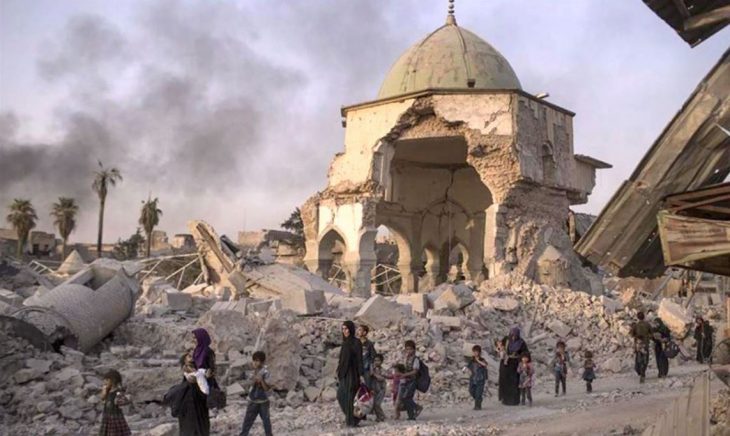
The Top 10 Outrageous Things About ISIS the Western Mainstream Media Ignores
By Robert BRIDGE | Strategic Culture Foundation | 31.01.2018
Last week, the US said it was working to create “alternative government authorities” on Syrian territory. This latest move, aside from demonstrating once again that the US has no respect for Syria’s territorial integrity, indicates we may be seeing more from that group of mercenaries known as Islamic State.
Thus, it seems to be an appropriate time to reflect upon a set of very strange circumstances that led to the rise of this loathsome terrorist group. Here are the top 10 reasons, in no particular order, as to why we should be very suspicious about this group.
10. Convenient Timing
In late August 2013, the United States was on the verge of initiating a massive attack on the government of Syrian President Bashar Assad over a deadly chemical attack that had occurred in the town of Ghouta just days earlier. Although it would have made no sense for Assad to have resorted to such dirty tactics, Washington had found its casus belli. It should be noted that at this time the so-called Islamic State of Iraq and the Levant was largely unknown. That would change soon enough.
Meanwhile, a terrible thing happened on the way to this jolly little war. UK Prime Minister David Cameron suffered a stunning defeat in the House of Commons, voting down his effort to join the Americans in Syria. Apparently the British were America’s obedient poodle no longer.
The setback had an apparent sobering effect on Barack Obama, who suddenly – in a feigned nod to democratic procedure and all that – called for Congress to decide whether or not to use military force against Syrian. Tellingly, that vote never materialized.
What did materialize, however, and with alarming speed and viciousness, was a terrorist group that rose up like a phoenix from the ashes of Iraq known as Islamic State (ISIS), with evil designs to create an Islamic caliphate across a wide swath of Iraq and Syria.
In other words, the perfect casus belli for the US in Syria that would require no need for a vote from Congress.
9. Journalist Killings
As if to draw gratuitous attention to itself more than anything else, the Sunni terrorist group ISIS, under the leadership of one Abu Bakr al Baghdadi, began to grab world headlines not by its battlefield exploits, but by carrying out videotaped executions of Western journalists, as well as destroying cultural heritage sites. I still can’t help wondering: Why didn’t the group just let its fighting skills speak for itself? Why the apparent need for such outrageous publicity stunts? Was this compensation for something the group was desperately lacking?
In any case, starting in August 2014, almost one year to the day that Obama was forced to put the brakes on his Syrian attack, the beheadings began in earnest.
On August 19, US journalist James Foley, seen kneeling on the ground in some undetermined location next to his apparent executioner, ‘Jihadi John,’ reads out a short statement before being beheaded by his captor. However, Islamic State spared its audience the gore by not showing the moment of the actual beheading; the video only shows a head lying on a body following the purported act.
Even Western mainstream publications admitted that something didn’t seem quite right.
Under the headline, ‘Foley murder video may have been staged’ the Telegraph, a reputable British newspaper, interviewed forensic experts who called into question the moment in the video when Foley is allegedly being beheaded by his captor.
“After enhancements, the knife can be seen to be drawn across the upper neck at least six times, with no blood evidence to the point the picture fades to black,” the expert said.
Another expert who examined the video for the newspaper said: “I think it has been staged. My feeling is that the execution may have happened after the camera was stopped.”
Incredibly, every subsequent beheading video put out by Islamic State attracted the same amount of scepticism – not just from alternative websites, who were also noticing the many irregularities contained in the videos, but from mainstream media news sources.
Following the release of the video purported to show the beheading of Steve Sotloff, a journalist who worked with the Jerusalem Post, The Australian newspaper reported that “the apparent beheading on camera of a second US hostage by a man with a British accent was again staged, according to forensic analysis.”
Then there was the video of 21 Egyptian Coptic Christians, dressed in impeccably clean orange jumpsuits, being led along a Libyan beach by black-clad members of ISIS, all of whom appear to be members of some NBA basketball team.
Veryan Khan, editorial director of the Florida-based Terrorism Research & Analysis Consortium, told Fox News that “the speaker, “Jihad Joseph” is much larger than the sea in both the close up and wide shots, and his head is bizarrely out of proportion, meaning he was filmed indoors and the sea added behind him… In addition, the jihadists featured in the film look to be more than 7 feet tall, towering as much as two feet above their victims…”
In July 2015, yet another strange report emerged, CyberBerkut, a Ukrainian group of hackers, said it hacked John McCain’s laptop while he was on an official visit to Kiev around the first week of June 2015. In a report by TechWorm, what they purported to find was a fully staged production of an ISIS execution video, with an actor portraying an executioner who is holding a knife in preparation to behead the prisoner.
The authenticity of this video has not been independently verified.
None of this proves that the individuals in all of the ISIS beheading videos did not go on to meet some grisly fate. However, it seems worth noting that so many forensic experts have spoken out on the “staged” nature of these videos, and that the actual moment of execution during these film productions is never actually shown. Why would such a barbarous group of villains like ISIS need to script and censor their videos?
8. ISIS freedom of movement
Despite employing state-of-the-art fighter jets, like the F-16 Fighting Falcon and A-10 Warthog, the US campaign to destroy Islamic State was largely an exercise in utter futility. There is no other way to explain it. In June 2014, a convoy of hundreds of ISIS fighters drove through 200 km of the Syro-Arabian Desert in fresh-off-the-lot Toyota pickup trucks on the way to Syria. For any modern military, eliminating such a target would have been the equivalent of a lazy afternoon at the shooting range, or shooting fish in a barrel. The fact that these terrorists made it to Syria unmolested tells us everything we need to know about America’s real agenda.
“With state of the art jet fighter aircraft … it would have been – from a military standpoint – ‘a piece of cake’, a rapid and expedient surgical operation, which would have decimated the Islamic State convoys in a matter of hours,” Michel Chossudovsky wrote in Global Research.
“Instead what we have witnessed is an ongoing drawn out six months of relentless air raids and bombings, and the terrorist enemy is apparently still intact.”
“And we are led to believe that the Islamic State cannot be defeated by a powerful US led military coalition of 19 countries,” he added.
The only reasonable conclusion to make from all of this is that the air campaign was not designed to eliminate Islamic State.
In 2002, Rita Katz and Josh Devon founded Search for International Terrorist Entities Institute (SITE), which, according to its website, is “the world’s leading non-governmental counterterrorism organization specializing in tracking and analyzing online activity of the global extremist community.”
In 2006, in a New Yorker article entitled, “Private Jihad: How Rita Katz got into the spying business,” it was mentioned how SITE spoke directly with jihadists via various message boards:
“Katz has a testy relationship with the government, sometimes acting as a consultant and sometimes as an antagonist. About a year ago, a SITE staffer, under an alias, managed to join an exclusive jihadist message board that, among other things, served as a debarkation point for many would-be suicide bombers.
For months, the staffer pretended to be one of the jihadis, joining in chats and watching as other members posted the chilling messages known as “wills,” the final sign-offs before martyrdom. The staffer also passed along technical advice on how to keep the message board going.
When Katz called officials in Washington, she was reportedly met with resistance: ‘Oh, Rita, I’m not sure you should even be communicating with them—you might be providing material support!,” they told her.
In an interview with CNN, Katz admitted that her group was able to “beat [ISIS] with a release” of a video before it had even been disseminated.
https://www.youtube.com/watch?time_continue=68&v=5aNUm0Z_lXs
In 2007, SITE came under fire for obtaining an alleged Bin Laden video a month prior to its formal release.
Some have raised questions as to how this small group is able to do what the government has not been able to: track ISIS and other terrorist groups with uncanny efficiency.
6. Toyota Trucks
Watching mainstream media reports detail the adventures of Islamic State as they speed carefree across wide-open desert, beards blowing in the wind, one would be forgiven for thinking they were watching a Toyota commercial.
The Times of Israel went so far as to ridicule the leaders of the West for expressing such fear over these militants in their Toyotas like hell raising teenagers speeding around the parking lot of McDonald’s on a Friday night to impress their friends.
“It’s almost unbelievable,” Avi Issacharoff wrote. “They used to say in the IDF that ‘the man in the tank will win,’ justifying the preference for armor over infantry. Now we hear that, from a US source no less, ‘the man in the Toyota’ will defeat the West.”
Somehow we are expected to believe that these shiny new trucks, along with over 2,000 Humvee vehicles, fell into the terrorists’ control by winning some battles in Iraq, like in Mosul and Palmyra. That absurd explanation falls very wide of the mark and needs far more inquiry.
5. Drone attack on Russia
On New Year’s Eve and on January 6, 2018, Russia’s Khmeimim Airbase in Syria was attacked. The first incident involved militants armed with mortars that resulted in the death of two Russian soldiers and damage to several aircraft. The second attack involved a swarm of 13 drones armed with bomblets, which Russian forces countered by means of electronic warfare and air-defense systems. Around half of the drones were electronically hijacked by Russian forces, while the others were shot down without incident. Nevertheless, the attack required a high level of expertise from a “technologically advanced country,” according to Russia.
The United States countered the claim, suggesting that such technology can be easily purchased. Pentagon spokesman Maj. Adrian Rankin-Galloway said the “devices and technologies can easily be obtained in the open market.”
Meanwhile, however, President Putin never mentioned Islamic State when he discussed the incident with the media.
“Those aircraft were only camouflaged – I want to emphasize this – to look like handicraft production. In fact, it is quite obvious that there were elements of high-tech nature there,” the Russian leader said.
So are we expected to believe that Islamic State terrorists were able to buy these UAV drones, or is it more realistic to believe, along with the Russians, that some outside major power was needed to provide the know-how?
4. Never attacked mainland Israel
In March 2016, the warriors of Islamic State picked up their pens in an effort to explain away a question that has been perplexing many observers: why don’t they ever attack Israel?
In the article, translated by a group called MEMRI, the group said it holds to the position that the Palestinian cause does not take precedence over any other jihadi struggle.
“If we look at the reality of the world today, we will find that it is completely ruled by polytheism and its laws, except for the regions where Allah made it possible for the Islamic State to establish the religion…. Therefore, jihad in Palestine is equal to jihad elsewhere,” the article said.
“The apostate [tyrants] who rule the lands of Islam are graver infidels than [the Jews], and war against them takes precedence over war against the original infidels,” the article said, as reported in the Times of Israel.
Whatever the case may be, this seems to be the first time in modern history that a radical jihadist group has had no reason to quarrel with Israel.
3. Oil Export Business
After Islamic State managed to make it across the vast desert between Iraq and Syria without attracting so much as a damaged fender, it managed to do the unthinkable: it set up a very lucrative oil-export business practically overnight in the north of the country. And this was not some small-time operation.
According to one estimate, the motley crew of mercenaries was generating profits of more than £320million a year from oil exports, or about 40,000 barrels of crude every single day.
Are we really expected to believe that a 19-member military organization led by the United States was powerless to put this rag-tag operation out of business?
The reason why the story is so utterly preposterous is that Russia, in a matter of several days, was able to do what this multinational outfit could not do in over a year. In mid-November 2015, Russia had announced that it had destroyed in a matter of days some 500 fuel trucks – and there is plenty of videotape of the Russian attacks for the naysayers who doubt the Kremlin’s claim.
According to Russian General Staff spokesman Colonel General Andrey Kartapolov: “In just the first few days, our aviation has destroyed 500 fuel tanker trucks, which greatly reduced illegal oil export capabilities of the militants and, accordingly, their income from oil smuggling.”
2. Islamic State’s Israeli medical plan
In March 2015, The Wall Street Journal reported a rather stunning revelation that Israel was treating “Al-Qaeda fighters wounded in the Syria civil war.”
Since the outbreak of the Syrian civil war, Israel has provided medical assistance to nearly 2,000 Syrians.
The Wall Street Journal quoted “an Israeli military official” who said no questions were asked of the patients.
“We don’t ask who they are, we don’t do any screening,” the official said. “Once the treatment is done, we take them back to the border and they go on their way.”
Amos Yadlin, the former military intelligence chief, told the Journal that Hezbollah and Iran “are the major threat to Israel, much more than the radical Sunni Islamists, who are also an enemy.”
“Those Sunni elements who control some two-thirds to 90% of the border on the Golan aren’t attacking Israel. This gives you some basis to think that they understand who is their real enemy – maybe it isn’t Israel.”
The Jerusalem Post repeated a joke allegedly told by Syrian President Bashar Assad to Foreign Affairs, ‘How can you say that al-Qaida doesn’t have an air force? They have the Israeli air force… They are supporting the rebels in Syria. It is very clear.”
1. The Pentagon report that speak volumes
In May 2015, a declassified Pentagon document provided shocking evidence that the US-led campaign in Syria not only contributed directly to the rise of the Islamic State (IS), but that Washington was perfectly satisfied with such an outcome.
The US Defence Intelligence Agency (DIA) report, obtained by Judicial Watch, dated August 2012, states that the “major forces driving the insurgency in Syria” comprise “the Salafist, the Muslim Brotherhood, and AQI [al-Qaeda in Iraq].”
Furthermore, it states, these forces are being supported by a Western-led coalition – “The West, Gulf countries and Turkey support the opposition.”
It went on to predict that the takeover of Hasaka and Deir Ezzor would possibly create a militant Islamist political entity in eastern Syria:
“If the situation unravels there is the possibility of establishing a declared or undeclared Salafist Principality in eastern Syria (Hasak and Der Zor), and this is exactly what the supporting powers want, in order to isolate the Syrian regime, which is considered the strategic depth of the Shia expansion (Iraq and Iran).”
According to Nafeed Ahmez from Middle East Eye, “This extraordinary passage confirms that at least three years ago, the Pentagon anticipated the rise of a ‘Salafist Principality’ as a direct consequence of its Syria strategy – and that the ‘supporting powers’ behind the rebels ‘wanted’ this outcome ‘to isolate the Syrian regime,’ and weaken Shiite influence via Iraq and Iran.”
Let that sink in for a moment. The US-backed coalition, which seemed so inexplicably lacklustre in its fight against Islamic State, to the point where this group was actually able to open an oil export business, not to mention drive its Toyota trucks across wide-open desert unmolested, was more content to let a band of terrorists occupy Syria than the legitimate government in Damascus.
It seems safe to say, based on the findings of this incredible document, that such a rationale is exactly what guided Washington’s hand not only in Syria, but in other regime-change war zones, like Iraq and Libya. Democracy building was not the desired result in these fated places, but absolute chaos.
Will Congress Face Down the Deep State?
By Ray McGovern | Consortium News | January 30, 2018
With the House Intelligence Committee vote yesterday to release its four-page memorandum reportedly based on documentary evidence of possible crimes by top Justice Department and FBI leaders, the die is cast. Russia-gate and FBI-gate are now joined at the hip.
The coming weeks will show whether the U.S. intelligence establishment (the FBI/CIA/NSA, AKA the “Deep State”) will be able to prevent its leaders from being held to account. Past precedent suggests that the cabal that conjured up Russia-gate will not have to pick up a “go-to-jail” card. This, despite the widespread guilt suggested by the abrupt way that several senior-echelon DOJ and FBI rats have already jumped ship. Not to mention the manner in which FBI Deputy Director Andrew McCabe, was unceremoniously pushed overboard yesterday, after Director Christopher Wray was given a look at the extra-legal capers described in the House Intelligence Committee memorandum.
Granted, at first glance Deep State’s efforts to undercut candidate Donald Trump seem so risky and audacious as to be unbelievable. By now, though, Americans should be able to wrap their heads around, one, the dire threat that outsider Trump was seen to be posing to the Deep State and to the ease with which it held sway under President Barack Obama; and, two, expected immunity from prosecution if Deep State crimes were eventually discovered after the election, since “everybody knew” Hillary Clinton was going to win. Oops.
Accountability This Time?
There seems to be an outside chance, this time, that the culprits who did actually interfere in the 2016 presidential election in an effort to make sure Trump could not win, and then did all in their power to sabotage him after his electoral victory, will be held to account by unusually feisty members of the House. It is abundantly clear that members of the House Intelligence and House Judiciary Committees are now in possession of the kind of unambiguous, first-hand documentary evidence needed to get a grand jury convened and, eventually, indictments obtained.
It is no exaggeration to suggest that the Republic and the Constitution are at stake. A friend put it the way:
“When GW Bush said of the Constitution, ‘It’s just a goddam piece of paper,’ I thought it was just another toss-off bit of hyperbole as he so often would utter. Not so. He, and many in his administration (and out) sincerely believe it and set out to make it so. They may actually have succeeded.”
The Media’s Role
I almost feel sorry for what is called “mainstream media” and – even more so – for the majority of Americans deceived by the prevailing narrative on Russia-gate. Even though that narrative now lies in shreds, there is no sign so far that the pundits will fess up and admit to spreading a far-fetched, evidence-impoverished story that was full of holes from the get-go.
Even vestigially honest journalists of the old school, who may themselves have been taken in, will have a Herculean challenge if they attempt to right the ship of journalism. As for brainwashed Americans, pity them. It is far easier to deceive folks than to convince them they have been deceived, as Mark Twain once wrote.
From today’s online version of the New York Times, for example, the lede headline read, “Taunted by Trump and Pressured From Above, McCabe Steps Down as F.B.I. Deputy.”
The Times quotes Representative Adam B. Schiff, the top Democrat on the House Intelligence Committee, giving hypocrisy a bad name. Schiff said yesterday that it had been a “sad day” for the committee and that Republicans had voted “to politicize the intelligence process.”
And this just in: an op-ed from NYT pundit David Leonhardt, titled – you guessed it – “The Nunes Conspiracy.”
“Instead of evidence, the memo engages in the same dark and misleading conspiracy theories that have characterized other efforts by President Trump’s allies to discredit the Russia investigation,” Leonhardt wrote. “But the substance of the claims isn’t really the point. Distraction is the point, and the distraction campaign is having an impact.”
And so it goes.
Ray McGovern works with the publishing arm of the ecumenical Church of the Savior in inner-city Washington. He was a CIA analyst for 27 years and co-founded Veteran Intelligence Professionals for Sanity (VIPS).
CIA Boss Claims Russia Poised to Meddle in Yet Another US Election
Sputnik – January 30, 2018
Despite the fact that the ongoing US investigation into the alleged Russian meddling in the 2016 presidential campaign has failed to produce any tangible results, a top American intelligence official now says that Moscow “will continue” to try and influence elections in the United States.
Mike Pompeo, Director of the US Central Intelligence Agency, has claimed that there has not been a “significant decrease” in Russian activity in the US, and that Moscow may now attempt to interfere with the upcoming congressional midterm elections in November.
“I have every expectation that they [the Russians] will continue to try and do that but I’m confident that America will be able to have a free and fair election [and] that we will push back in a way that is sufficiently robust that the impact they have on our election won’t be great,” Pompeo told the BBC.
The CIA head also claimed that Russia is an adversary rather than an ally, despite the ongoing cooperation between Moscow and Washington in the fight against terrorism.
Earlier in January Pompeo made a similar claim on Face the Nation Sunday, expressing his concerns about the “many foes who want to undermine Western democracy” and insisting that Russia has been allegedly interfering in the American elections “for decades.”
At the same time, retired CIA officer turned political activist Ray McGovern has unveiled proof of attempts by members of the US intelligence community to influence the outcome of the 2016 presidential election.
In 2017 the US Congress launched four separate probes into the alleged Russian meddling during the election, including the investigations run by the Senate Intelligence and Judiciary committees and the House’s Intelligence and Oversight panels.
Moscow has repeatedly denied the allegations of collusion, while US President Donald Trump described the probe as the “single greatest witch hunt” in US history.
Former Trump campaign manager Paul Manafort and his deputy Rick Gates were indicted in October for charges unrelated to Trump’s campaign and the election, while former White House National Security Adviser Michael Flynn was charged by Special Counsel Robert Mueller for lying to the FBI about a meeting he had with a Russian ambassador.
Former policy adviser to the Trump campaign George Papadopoulos was also charged with providing false statements to the FBI regarding his interactions with foreign nationals.
The US intelligence community has also released an assessment alleging they had “high confidence” Russia meddled in last year’s US presidential election. The community’s report claimed that Moscow conspired to get Trump elected as president and to undermine faith in the US democratic process.
READ MORE:
US House Intel Committee Will Release Memo on FBI’s Trump Campaign Surveillance
Two Israeli officers involved in Lebanon car bomb attack against Hamas official: Report
Press TV – January 29, 2018
A recent report has exposed that two Israeli agents were involved in the car bomb explosion in the southern Lebanese city of Sidon, which slightly wounded a member of the Palestinian Islamic resistance movement, Hamas, earlier this month.
According to a report published by Lebanon’s Arabic-language al-Akhbar newspaper on Monday, the pair was aided by two locals in the assassination operation against Mohammed Hamdan on January 14. They left Lebanon using Georgian, Swedish and Iraqi passports.
The report added that Lebanese security officials have now managed to identify the two Israeli officers, obtain their photographs and copies of their identity documents, the date of their entry into and exit from Lebanon, their respective roles in the operation and the nationality they used to operate under disguise.
Lebanese intelligence officials, requesting anonymity, told al-Akhbar that one of the Israeli agents was a man holding a duel Swedish-Iraqi citizenship, while another was a Georgian woman working for the Israeli intelligence service, Mossad.
The officials went on to say that, Mossad kept Hamdan under surveillance for more than seven months.
About six months ago, Hamdan lived in the Sirub district of Sidon, located 40 kilometers (25 miles) south of the capital, Beirut, and a Lebanese national, identified as Muhammad H, lived in a nearby neighborhood.
Mossad then assigned its agent to closely monitor the high-ranking Hamas figure.
After that, Hamdan moved to al-Boustan al-Kabir area of Sidon, and the second Lebanese national, identified as 38-year-old Ahmad Baytiyah and strongly believed to be main suspect in the assassination bid, tracked him.
Baytiyah rented a warehouse near the house of the Hamas leader under the pretext of storing clothes.
The four assailants flew out of Lebanon to different destinations after the failed assassination operation. The two Lebanese nationals fled to Turkey.
Baytiyah was arrested by Turkish authorities and extradited to Lebanon at the request of Prime Minister Saad Hariri earlier this week, while the other managed to flee Turkey to Romania.
Hamdan suffered a leg injury in the car bomb explosion. He was taken to a local hospital for treatment.
The explosion destroyed the vehicle and caused damage to a nearby building, sending black smoke rising above the city.
Firefighters rushed to the scene to put out the flames, while security forces cordoned off the area.
Featured Video
or go to
Aletho News Archives – Video-Images
Book Review
The Maidan Killings and the False-Flag Case
By Freddie Ponton | 21st Century Wire | September 5, 2026
Before the killings that helped bring down Ukraine’s president in February 2014, American diplomats were discussing who should enter its government. In a leaked telephone call, senior State Department official Victoria Nuland told US ambassador Geoffrey Pyatt, “I think Yats is the guy,” referring to opposition leader Arseniy Yatseniuk. Washington had clear preferences and was working to advance them. Later that month, Yatseniuk became prime minister.
Ivan Katchanovski’s The Maidan Massacre in Ukraine examines the violence that preceded that transfer of power. Drawing on television footage, witness testimony, forensic examinations and Ukrainian court proceedings, he argues that elements of the opposition shot protesters and police in a false-flag operation. His case centres on evidence of protesters being shot from opposition-controlled locations, including Hotel Ukraina, overlooking the killing ground. … continue
Blog Roll
 Aletho News
- Israel expands “incitement” charge to target Palestinian education and memory
- How Israel seeks to reshape Arab classrooms
- Paris bans pro-Palestinian demonstration planned for Oct. 7 over ‘risks of public disorder’
- In August Hanning Treason Case – All Signs Point To Tel Aviv.
- France cleared dozens of military sales to Israel between May and September: Report
- France projects nuclear power as Macron pushes arsenal expansion
- The fallacy of US delusions about Iran’s economic collapse
- What changes with Lula or Flávio?
- Britain leads Western media’s demise through ‘fear porn’ narrative
- The Maidan Killings and the False-Flag Case
- If Americans Knew
- Soldier testimony sheds light on how Israel wages information war
- CIA Report Warns Israel Could Head Toward Civil War, Total Collapse
- Banker Who Exposed Howard Lutnick’s Ties to Epstein Warned of ‘Retaliation’ and ‘Personal Consequences’ in Last Post Before Suicide
- Israeli Attacks Kill Two Palestinians in Gaza
- Gaza genocide at 3: Israeli-U.S. cruelty and the smart, deep resistance to it are changing the world
- As genocide is about to enter 3rd year, little of Gaza remains– Daily Update
- “We See Our Homes Now From A Satellite, Like Strangers”
- Watch “Gaza: Doctors Under Attack”, originally censored by BBC
- NAZA: Israeli embassies in UK and US promote rival documentary to challenge Gaza genocide allegations
- David Ellison appoints Israeli to lead merged Paramount-Warner studios
- No Tricks Zone
- Latest European Green Energy Debacle; Portugal’s Largest Flagship Solar Park Insolvent!
- Green Energy Debacle: German Expert Professor Fritz Vahrenholt Warns Of Severe Economic And Social Consequences
- Two More Paleo Reconstructions Affirm Meters-Higher Sea Levels Across Ireland, Brazil 7000-6000 Years Ago
- New Study: Earth And Venus Surface Warmth Largely Explained By Convection And Lapse Rate, Not CO2 Or Radiation
- 2025 Nature Paper Claiming Worsening Global Drought Gets RETRACTED …Heavily Flawed
- New Study: ‘Global Drought Shows No Detectable Recent Acceleration Under Climate Warming’
- Economic Masterminds: German Socialists Suggest Taxing Productivity Gains Stemming From Using AI
- The South China Sea Has Not Been Cooperating With The Climate Change Narrative
- Energy Crisis: Germany Enters Heating Season With Historically Low Gas Reserve Fill Levels
- New Study: The Antarctic Ice Sheet Gained Mass From 2020-2024 Due To Staggering Snow And Ice Accumulation

