Government Scientists : No Data – But Tremendous Precision
By Tony Heller | The Deplorable Science Blog | September 13, 2017
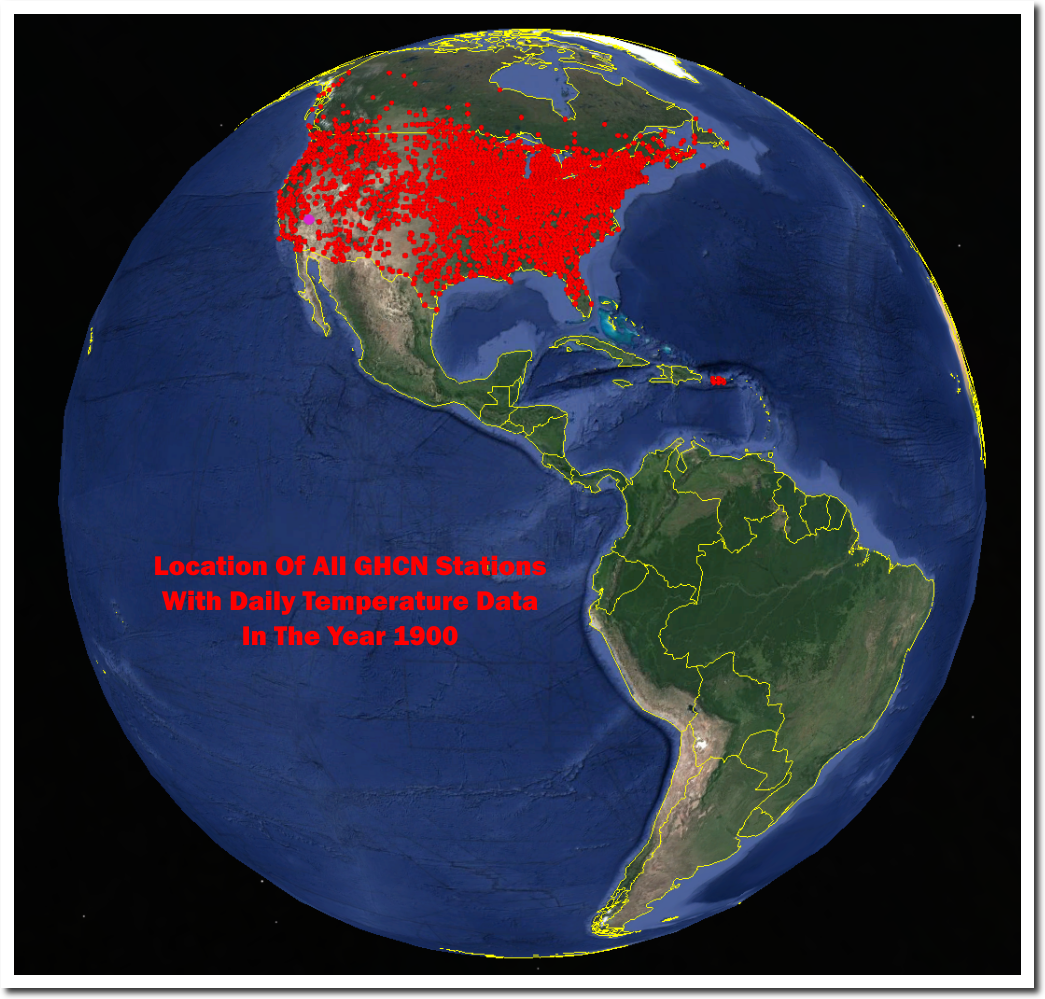
ftp://ftp.ncdc.noaa.gov/pub/data/ghcn/daily/figures/station-counts-1891-1920-temp.png
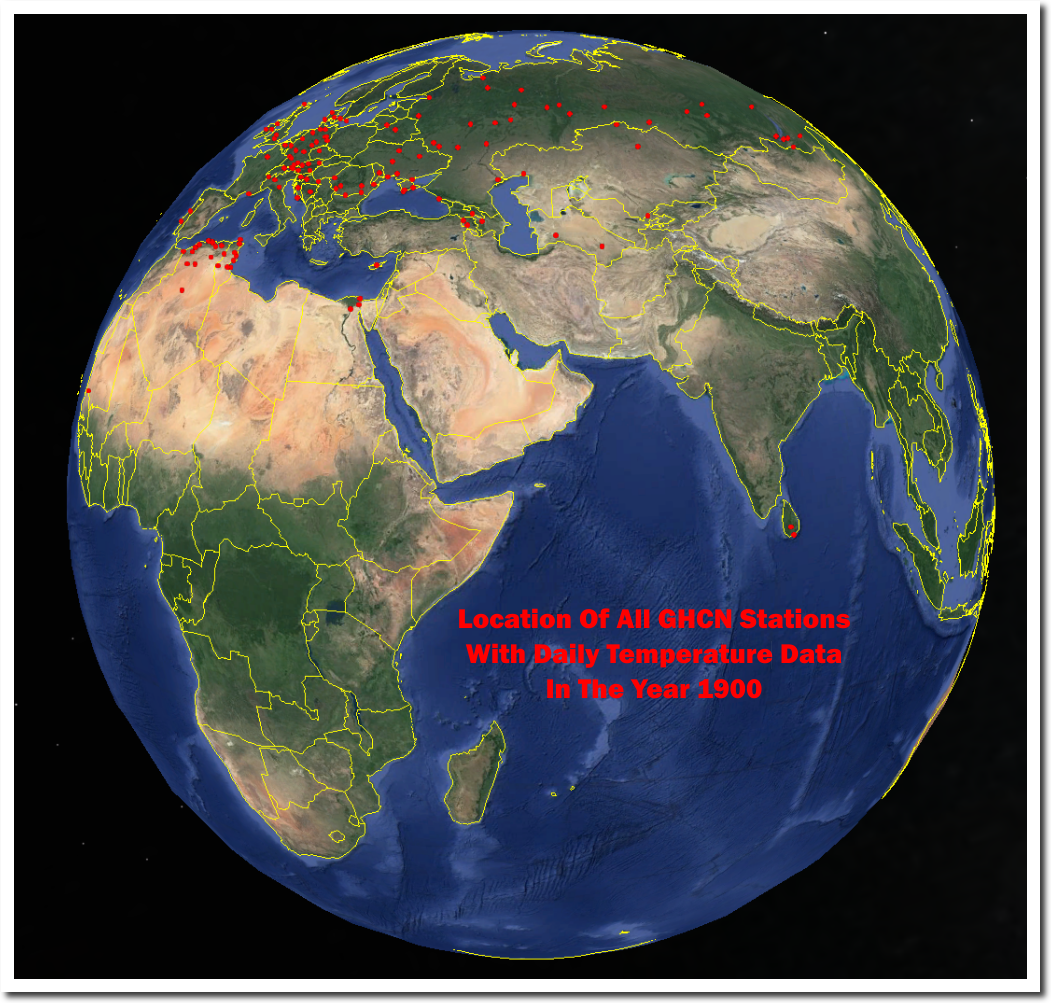
NOAA has no daily temperature data from Central or South America, or most of Canada from the year 1900, But they claim to know the temperature in those regions very precisely. Same story in the rest of the world.
Despite not having any data, all government agencies agree very precisely about the global temperature.
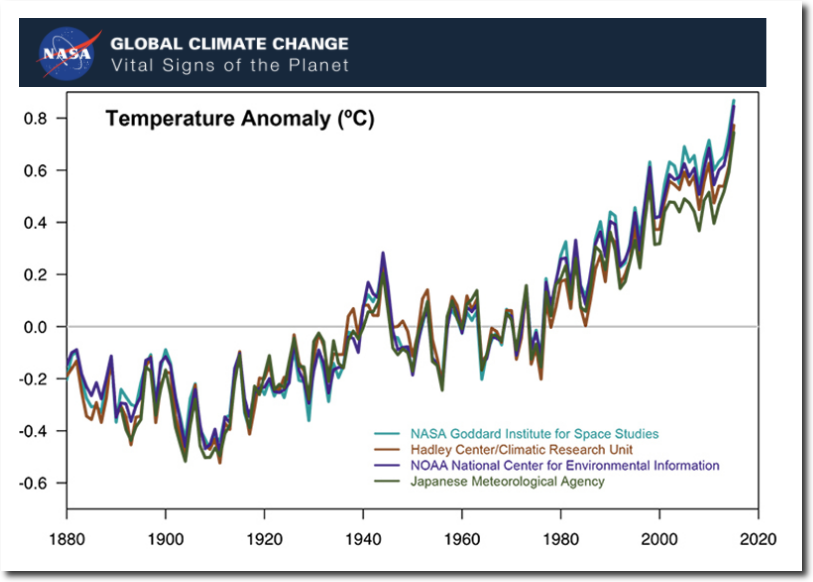
Climate Change: Vital Signs of the Planet: Scientific Consensus
The claimed global temperature record is completely fake. There is no science behind it. It is the product of criminals, not scientists. This is the biggest scam in history.
State Dept propaganda team in disarray – report
RT | September 14, 2017
Three members of the US government’s messaging arm, which was set up at the State Department to “counter narratives” from ISIS and Russia, quit last week, leaving the year-old operation in limbo.
The Global Engagement Center’s chief technology officer, along with two other members of its analytics team, resigned without providing reasons, Defense One reported Tuesday.
The outlet has obtained former tech chief Nash Borges’s farewell email, in which he makes general suggestions about better management.
Former President Barack Obama established the GEC in March 2016, directing it to “counter the messaging and diminish the influence of international terrorist organizations,” including Islamic State, Al-Qaeda “and other violent extremists abroad.”
By the year’s end, the 2017 National Defense Authorization Act had broadened the GEC’s mandate to include advancing “fact-based narratives that support United States allies and interests” and countering what Congress called “Russian disinformation.”
It’s not immediately clear how many analysts remain at the center. Defense One cited a former senior official describing the three team members who quit as “the whole enchilada,” adding that “things are bad.”
The GEC is currently leaderless, the outlet reported, saying the State Department has not filled the director’s job, which requires Senate confirmation, or the post of acting director, which does not.
Last month, Secretary of State Rex Tillerson agreed to greenlight $60 million for the GEC. Congress initially allocated $80 million for the operation, $60 million of which was to be used to counter Russia and only about $19 million aimed at ISIS, according to Defense One. It’s still unclear how the GEC plans to spend the funds that Tillerson approved.
The Secretary of State faced criticism from Republican and Democratic lawmakers for seemingly not being interested in all of the money Congress had allocated for the GEC.
“Congress has provided substantial resources to combat foreign propaganda, particularly from Russia. There is broad agreement that the US Government is behind the curve on this threat,” Senator Rob Portman (R-Ohio) said in a statement.
“Countering foreign propaganda should be a top priority, and it is very concerning that progress on combatting this problem is being delayed because the State Department isn’t tapping into these resources.”
Last November, at the Defense One summit in Washington, DC, GEC’s former director Michael Lumpkin described how the center was using Facebook ads to push its messaging.
“Using Facebook ads, I can go within Facebook, I can go grab an audience, I can pick Country X, I need age group 13 to 34, I need people who have liked — whether it’s Abu Bakr Al Baghdadi or any other set — I can shoot and hit them directly with messaging,” Lumpkin said. He emphasized that with the right data, effective message targeting could be done for “pennies a click.”
Last week, Facebook issued a statement saying it had looked into whether Russia purchased ads on the platform to interfere with the 2016 US presidential election.
The social media giant claimed it “found approximately $100,000 in ad spending from June of 2015 to May of 2017” connected to “about 470 inauthentic accounts and Pages in violation of our policies. Our analysis suggests these accounts and Pages were affiliated with one another and likely operated out of Russia.”
A number of news outlets, including Defense One, interpreted Facebook’s assessment that the accounts were “likely operated out of Russia,” as to assert that the Kremlin bought the ads.
Earlier this week, The Daily Beast claimed the Kremlin set up a Facebook event to organize a protest in rural Idaho last year, which was attended by four people.
Read more:
Kremlin used Facebook to subvert Twin Falls, Idaho – Daily Beast
Reagan Documents Shed Light on U.S. ‘Meddling’
By Robert Parry | Consortium News | September 13, 2107
“Secret” documents, recently declassified by the Reagan presidential library, reveal senior White House officials reengaging a former CIA “proprietary,” The Asia Foundation, in “political action,” an intelligence term of art for influencing the actions of foreign governments.
The documents from 1982 came at a turning-point moment when the Reagan administration was revamping how the U.S. government endeavored to manipulate the internal affairs of governments around the world in the wake of scandals in the 1960s and 1970s involving the Central Intelligence Agency’s global covert operations.
Instead of continuing to rely heavily on the CIA, President Reagan and his national security team began offloading many of those “political action” responsibilities to “non-governmental organizations” (NGOs) that operated in a more overt fashion and received funding from other U.S. government agencies.
But secrecy was still required for the involvement of these NGOs in the U.S. government’s strategies to bend the political will of targeted countries. If the “political action” of these NGOs were known, many countries would object to their presence; thus, the “secret” classification of the 1982 White House memos that I recently obtained via a “mandatory declassification review” from the archivists at the Reagan presidential library in Simi Valley, California.
In intelligence circles, “political action” refers to a wide range of activities to influence the policies and behaviors of foreign nations, from slanting their media coverage, to organizing and training opposition activists, even to setting the stage for “regime change.”
The newly declassified memos from the latter half of 1982 marked an ad hoc period of transition between the CIA scandals, which peaked in the 1970s, and the creation of more permanent institutions to carry out these semi-secretive functions, particularly the National Endowment for Democracy (NED), which was created in 1983.
Much of this effort was overseen by a senior CIA official, Walter Raymond Jr., who was moved to Reagan’s National Security Council’s staff where he managed a number of interagency task forces focused on “public diplomacy,” “psychological operations,” and “political action.”
Raymond, who had held top jobs in the CIA’s covert operations shop specializing in propaganda and disinformation, worked from the shadows inside Reagan’s White House, too. Raymond was rarely photographed although his portfolio of responsibilities was expansive. He brought into his orbit emerging “stars,” including Lt. Col. Oliver North (a central figure in the Iran-Contra scandal), State Department propagandist (and now a leading neocon) Robert Kagan, and NED President Carl Gershman (who still heads NED with its $100 million budget).
Despite his camera avoidance, Raymond appears to have grasped his true importance. In his NSC files, I found a doodle of an organizational chart that had Raymond at the top holding what looks like the crossed handles used by puppeteers to control the puppets below them. The drawing fit the reality of Raymond as the behind-the-curtains operative who controlled various high-powered inter-agency task forces.
Earlier declassified documents revealed that Raymond also was the conduit between CIA Director William J. Casey and these so-called “pro-democracy” programs that used sophisticated propaganda strategies to influence not only the thinking of foreign populations but the American people, too.
This history is relevant again now amid the hysteria over alleged Russian “meddling” in last year’s U.S. presidential elections. If those allegations are true – and the U.S. government has still not presented any real proof – the Russian motive would have been, in part, payback for Washington’s long history of playing games with the internal politics of Russia and other countries all across the planet.
A Fight for Money
The newly released memos describe bureaucratic discussions about funding levels for The Asia Foundation (TAF), with the only sensitive topic, to justify the “secret” stamp, being the reference to the U.S. government’s intent to exploit TAF’s programs for “political action” operations inside Asian countries.
Indeed, the opportunity for “political action” under TAF’s cover appeared to be the reason why Reagan’s budget cutters relented and agreed to restore funding to the foundation.
William Schneider Jr. of the Office of Management and Budget wrote in a Sept. 2, 1982 memo that the Budget Review Board (BRB) had axed TAF funding earlier in the year.
“When the BRB last considered this issue on March 29, 1982, it decided not to include funding in the budget for a U.S. Government grant to TAF. The Board’s decision was based on the judgement that given the limited resources available for international affairs programs, funding for the Foundation could not be justified. During that March 29 meeting, the State Department was given the opportunity to fund TAF within its existing budget, but would not agree to do so.”
However, as Schneider noted in the memo to Deputy National Security Advisor Robert McFarlane, “I now understand that a proposal to continue U.S. funding for the Asia Foundation is included in the ‘political action’ initiatives being developed by the State Department and several other agencies.
“We will, of course, work with you to reconsider the relative priority of support for the Foundation as part of these initiatives keeping in mind, however, the need for identifying budget offsets.”
A prime mover behind this change of heart appeared to be Walter Raymond, who surely knew TAF’s earlier status as a CIA “proprietary.” In 1966, Ramparts magazine exposed that relationship and led the Johnson administration to terminate the CIA’s money.
According to an April 12, 1967 memo from the State Department’s historical archives, CIA Director Richard Helms, responding to a White House recommendation, “ordered that covert funding of The Asia Foundation (TAF) shall be terminated at the earliest practicable opportunity.”
In coordination with the CIA’s “disassociation,” TAF’s board released what the memo described as “a carefully limited statement of admission of past CIA support. In so doing the Trustees sought to delimit the effects of an anticipated exposure of Agency support by the American press and, if their statement or some future expose does not seriously impair TAF’s acceptability in Asia, to continue operating in Asia with overt private and official support.”
The CIA memo envisioned future funding from “overt U.S. Government grants” and requested guidance from the White House’s covert action oversight panel, the 303 Committee, for designation of someone “to whom TAF management should look for future guidance and direction with respect to United States Government interests.”
In 1982, with TAF’s funding again in jeopardy, the CIA’s Walter Raymond rallied to its defense from his NSC post. In an undated memo to McFarlane, Raymond recalled that “the Department of State underscored that TAF had made significant contributions to U.S. foreign policies through fostering democratic institutions and, as a private organization, had accomplished things which a government organization cannot do.” [Emphasis in original]
Raymond’s bureaucratic intervention worked. By late 1982, the Reagan administration had arranged for TAF’s fiscal 1984 funding to go through the U.S. Information Agency (USIA) budget, which was being used to finance a range of President Reagan’s “democracy initiatives.” Raymond spelled out the arrangements in a Dec. 15, 1982 memo to National Security Advisor William Clark.
“The issue has been somewhat beclouded in the working levels at State since we have opted to fund all FY 84 democracy initiatives via the USIA budgetary submission,” Raymond wrote. “At the same time, it is essential State maintain its operational and management role with TAF.”
Over the ensuing three and half decades, TAF has continued to be subsidized by U.S. and allied governments. According to its annual report for the year ending Sept. 30, 2016, TAF said it “is funded by an annual appropriation from the U.S. Congress, competitively bid awards from governmental and multilateral development agencies, including the U.S. Agency for International Development, Australian Department of Foreign Affairs and Trade, United Kingdom’s Department for International Development and by private foundations and corporations,” a sum totaling $94.5 million.
TAF, which operates in 18 Asian countries, describes its purpose as “improving lives across a dynamic and developing Asia.” TAF’s press office had no immediate comment regarding the newly released Reagan-era documents.
Far From Alone
But TAF was far from alone as a private organization that functioned with U.S. government money and collaborated with U.S. officials in achieving Washington’s foreign policy goals.
For instance, other documents from the Reagan library revealed that Freedom House, a prominent human rights organization, sought advice and direction from Casey and Raymond while advertising the group’s need for financial help.
In an Aug. 9, 1982 letter to Raymond, Freedom House executive director Leonard R. Sussman wrote that “Leo Cherne [another senior Freedom House official] has asked me to send these copies of Freedom Appeals. He has probably told you we have had to cut back this project to meet financial realities. We would, of course, want to expand the project once again when, as and if the funds become available.”
According to the documents, Freedom House remained near the top of Casey’s and Raymond’s thinking when it came to the most effective ways to deliver the CIA’s hardline foreign policy message to the American people and to the international community.
On Nov. 4, 1982, Raymond wrote to NSC Advisor Clark about the “Democracy Initiative and Information Programs,” stating that “Bill Casey asked me to pass on the following thought concerning your meeting with [right-wing billionaire] Dick Scaife, Dave Abshire [then a member of the President’s Foreign Intelligence Advisory Board], and Co.
“Casey had lunch with them today and discussed the need to get moving in the general area of supporting our friends around the world. By this definition he is including both ‘building democracy’ and helping invigorate international media programs. The DCI [Casey] is also concerned about strengthening public information organizations in the United States such as Freedom House.
“A critical piece of the puzzle is a serious effort to raise private funds to generate momentum. Casey’s talk with Scaife and Co. suggests they would be very willing to cooperate. Suggest that you note White House interest in private support for the Democracy initiative.”
In a Jan. 25, 1983 memo, Raymond wrote, “We will move out immediately in our parallel effort to generate private support” for “public diplomacy” operations. Then, on May 20, 1983, Raymond recounted in another memo that $400,000 had been raised from private donors brought to the White House Situation Room by USIA Director Charles Wick. According to that memo, the money was divided among several organizations, including Freedom House and Accuracy in Media, a right-wing media attack group.
In an Aug. 9, 1983 memo, Raymond outlined plans to arrange private backing for that effort. He said USIA Director Wick “via [Australian publishing magnate Rupert] Murdock [sic], may be able to draw down added funds” to support pro-Reagan initiatives. Raymond recommended “funding via Freedom House or some other structure that has credibility in the political center.”
[For more on the Murdoch connection, see Consortiumnews.com’s “Rupert Murdoch: Propaganda Recruit.”]
Questions of Legality
Raymond remained a CIA officer until April 1983 when he resigned so in his words “there would be no question whatsoever of any contamination of this” propaganda operation to woo the American people into supporting Reagan’s policies.
Raymond fretted, too, about the legality of Casey’s role in the effort to influence U.S. public opinion because of the legal prohibition against the CIA influencing U.S. policies and politics. Raymond confided in one memo that it was important “to get [Casey] out of the loop,” but Casey never backed off and Raymond continued to send progress reports to his old boss well into 1986.
It was “the kind of thing which [Casey] had a broad catholic interest in,” Raymond said during his Iran-Contra deposition in 1987. He then offered the excuse that Casey undertook this apparently illegal interference in domestic affairs “not so much in his CIA hat, but in his adviser to the president hat.”
In 1983, Casey and Raymond focused on creating a permanent funding mechanism to support private organizations that would engage in propaganda and political action that the CIA had historically organized and paid for covertly. The idea emerged for a Congressionally funded entity that would be a conduit for this money.
But Casey recognized the need to hide the strings being pulled by the CIA. In one undated letter to then-White House counselor Edwin Meese III, Casey urged creation of a “National Endowment,” but added: “Obviously we here [at CIA] should not get out front in the development of such an organization, nor should we appear to be a sponsor or advocate.”
A document in Raymond’s files offered examples of what would be funded, including “Grenada — 50 K — To the only organized opposition to the Marxist government of Maurice Bishop (The Seaman and Waterfront Workers Union). A supplemental 50 K to support free TV activity outside Grenada” and “Nicaragua — $750 K to support an array of independent trade union activity, agricultural cooperatives.”
The National Endowment for Democracy took shape in late 1983 as Congress decided to also set aside pots of money — within NED — for the Republican and Democratic parties and for organized labor, creating enough bipartisan largesse that passage was assured.
But some in Congress thought it was important to wall the NED off from any association with the CIA, so a provision was included to bar the participation of any current or former CIA official, according to one congressional aide who helped write the legislation.
This aide told me that one night late in the 1983 session, as the bill was about to go to the House floor, the CIA’s congressional liaison came pounding at the door to the office of Rep. Dante Fascell, a senior Democrat on the House Foreign Affairs Committee and a chief sponsor of the bill.
The frantic CIA official conveyed a single message from CIA Director Casey: the language barring the participation of CIA personnel must be struck from the bill, the aide recalled, noting that Fascell consented to the demand, not fully recognizing its significance.
The aide said Fascell also consented to the Reagan administration’s choice of Carl Gershman to head the National Endowment for Democracy, again not recognizing how this decision would affect the future of the new entity and American foreign policy.
Gershman, who had followed the classic neoconservative path from youthful socialism to fierce anticommunism, became NED’s first (and, to this day, only) president. Though NED is technically independent of U.S. foreign policy, Gershman in the early years coordinated decisions on grants with Raymond at the NSC.
For instance, on Jan. 2, 1985, Raymond wrote to two NSC Asian experts that “Carl Gershman has called concerning a possible grant to the Chinese Alliance for Democracy (CAD). I am concerned about the political dimension to this request. We should not find ourselves in a position where we have to respond to pressure, but this request poses a real problem to Carl.”
Besides clearing aside political obstacles for Gershman, Raymond also urged NED to give money to Freedom House in a June 21, 1985 letter obtained by Professor John Nichols of Pennsylvania State University.
What the documents at the Reagan library make clear is that Raymond and Casey stayed active shaping the decisions of the new funding mechanism throughout its early years. (Casey died in 1987; Raymond died in 2003.)
Lots of Money
Since its founding, NED has ladled out hundreds of millions of dollars to NGOs all over the world, focusing on training activists, building media outlets, and supporting civic organizations. In some geopolitical hotspots, NED may have scores of projects running at once, such as in Ukraine before the 2014 coup that overthrew elected President Viktor Yanukovych and touched off the New Cold War with Russia. Via such methods, NED helped achieve the “political action” envisioned by Casey and Raymond.
From the start, NED also became a major benefactor for Freedom House, beginning with a $200,000 grant in 1984 to build “a network of democratic opinion-makers.” In NED’s first four years, from 1984 and 1988, it lavished $2.6 million on Freedom House, accounting for more than one-third of its total income, according to a study by the liberal Council on Hemispheric Affairs, which was entitled “Freedom House: Portrait of a Pass-Through.”
Over the ensuing decades, Freedom House has become almost an NED subsidiary, often joining NED in holding policy conferences and issuing position papers, both organizations pushing primarily a neoconservative agenda, challenging countries deemed insufficiently “free,” including Syria, Ukraine (before the 2014 coup) and Russia.
NED and Freedom House often work as a kind of tag-team with NED financing NGOs inside targeted countries and Freedom House berating those governments if they try to crack down on U.S.-funded NGOs.
For instance, on Nov. 16, 2012, NED and Freedom House joined together to denounce a law passed by the Russian parliament requiring Russian recipients of foreign political money to register with the government. Or, as NED and Freedom House framed the issue: the Russian Duma sought to “restrict human rights and the activities of civil society organizations and their ability to receive support from abroad. Changes to Russia’s NGO legislation will soon require civil society organizations receiving foreign funds to choose between registering as ‘foreign agents’ or facing significant financial penalties and potential criminal charges.”
Of course, the United States has a nearly identical Foreign Agent Registration Act that likewise requires entities that receive foreign funding and seek to influence U.S. government policy to register with the Justice Department or face possible fines or imprisonment.
But the Russian law would impede NED’s efforts to destabilize the Russian government through funding of political activists, journalists and civic organizations, so it was denounced as an infringement of human rights and helped justify Freedom House’s rating of Russia as “not free.”
The Russian government’s concerns were not entirely paranoid. On Sept. 26, 2013, Gershman, in effect, charted the course for the crisis in Ukraine and the greater neocon goal of regime change in Russia. In a Washington Post op-ed, Gershman called Ukraine “the biggest prize” and explained how pulling it into the Western camp could contribute to the ultimate defeat of Russian President Vladimir Putin.
“Ukraine’s choice to join Europe will accelerate the demise of the ideology of Russian imperialism that Putin represents,” Gershman wrote. “Russians, too, face a choice, and Putin may find himself on the losing end not just in the near abroad but within Russia itself.”
The long history of the U.S. government interfering covertly or semi-covertly in the politics of countries all over the world is the ironic backdrop to the current frenzy over Russia-gate and Russia’s alleged dissemination of emails that undermined Democratic presidential nominee Hillary Clinton’s campaign.
The allegations are denied by both Putin and WikiLeaks editor Julian Assange who published the Democratic emails – and the U.S. government has presented no solid evidence to support the accusations of “Russian meddling” – but if the charges are true, they could be seen as a case of turnabout as fair play.
Except in this case, U.S. officials, who have meddled ceaselessly with their “political action” operations in countries all over the world, don’t like even the chance that they could get a taste of their own medicine.
Investigative reporter Robert Parry broke many of the Iran-Contra stories for The Associated Press and Newsweek in the 1980s.
Kremlin used Facebook to subvert Twin Falls, Idaho – Daily Beast
RT | September 12, 2017
A long-canceled Facebook event in Idaho, attended by only four people, is highlighted by the Daily Beast as an example of the Russian government’s alleged campaign to influence the US 2016 presidential election.
The Kremlin set up Facebook events to organize protests in the US, including the one in August 2016 calling to ban Muslim refugees from the rural town of Twin Falls, Idaho, the outlet alleged in an article referencing Facebook’s hunt for suspected Russian operatives.
The publication said Facebook confirmed that it “shut down several promoted events as part of the takedown” of fake user profiles last week. The social media giant did not specify the events, however.
The Daily Beast writers concluded that the Facebook events “are the first indication that the Kremlin’s attempts to shape America’s political discourse moved beyond fake news and led unwitting Americans into specific real-life action.”
RT has reached out to Facebook for comment on whether the social media giant thought the “Citizens before refugees” event in Idaho was organized by the Kremlin. We also reached out to the Daily Beast, asking how their writers arrived at their conclusion. We have received no response as of yet.
Facebook shows that only four people marked themselves as having attended the Idaho protest in question.
The event was set up by a Facebook community called “Secured Borders,” which has since been shut down amid reports that it was operated from Russia. Facebook has yet to respond to RT’s question on what exactly was the basis for deleting the community’s page.
The events were “the next step” of Russia’s influence campaign, “when you can get people to physically do something,” the Daily Beast cited Clint Watts, founder of the “Alliance for Securing Democracy,” which operates Hamilton 68, the operation that claims to be “tracking Russia’s influence on Twitter.”
Last week, Watts’ group accused Russia of promoting hurricane preparedness websites such as ready.gov, hurricanes.gov and redcross.org.
On September 6, Facebook issued a statement saying it looked into questions on whether Russia purchased ads on the platform to interfere with the 2016 US presidential election.
The social-media giant claimed it “found approximately $100,000 in ad spending from June of 2015 to May of 2017″ connected to “about 470 inauthentic accounts and Pages in violation of our policies. Our analysis suggests these accounts and Pages were affiliated with one another and likely operated out of Russia.”
The ads and accounts “appeared to focus on amplifying divisive social and political messages across the ideological spectrum,” rather than referencing the election or a particular candidate, Facebook said.
The company did not elaborate what its attribution was based on, but added that it also looked for ads “with very weak signals of a connection and not associated with any known organized effort. This was a broad search, including, for instance, ads bought from accounts with US IP addresses but with the language set to Russian — even though they didn’t necessarily violate any policy or law.”
The statement prompted some on social media to question whether political events set up by Russian-Americans, or just Russians in the US, could be viewed as part of a nefarious influence campaign and then be targeted.
Neither Facebook nor the Daily Beast immediately responded to RT’s inquiries on whether they thought activity by someone in Russia, or a Russian speaker, automatically implicated the Kremlin.
Following Facebook’s findings last week, Google said it failed to unearth any facts that would implicate Russia in exploiting its advertising tools to manipulate the US election.
“We’re always monitoring for abuse or violations of our policies and we’ve seen no evidence this type of ad campaign was run on our platforms,” Google said in a statement Thursday, as cited by Reuters.
Facing a Major Attack on Academic Freedom in Canada
By Prof. Tony Hall | American Herald Tribune | September 11, 2017
Sixteen years after the event, 9/11 stands as striking evidence of an insidious assault on science. Officialdom’s dogged adherence to a discredited account of 9/11 stands as a stark illustration of this phenomenon. The subordination of scientific method to the higher imperatives of imperial war propaganda is epitomized by officialdom’s failure to formulate a credible account of the 9/11 debacle. Universities have become important sites of this betrayal. The sabotage of society’s primary platforms of scholarly enterprise forms an essential feature of a more pervasive attack from within. Everywhere, but especially on the Internet, fundamental freedoms to investigate, publish, publicize and discuss interpretations that might undermine or inconvenience power are being menaced.
As a tenured full professor with 27 years of seniority at my home institution, I am currently facing a sharp attack on the remaining protections for academic freedom. In early October of 2016 the President of the University of Lethbridge, Michael J. Mahon, suspended me without pay. He also prohibited me from stepping foot on the University of Lethbridge campus. In explaining his actions Dr. Mahon’s speculated I might have violated a section of the Alberta Human Rights Act.
The vagueness of this assertion exposes the reality that severe punishment was imposed without any proper investigation. Dr. Mahon’s abrupt deviation from the terms of the collective agreement with my faculty association has established precedents and countervailing responses with broad implications. Adversarial proceedings on this matter began this August in the Lethbridge Alberta Court House. As evidenced by the intervention of the 68,000 members of the Canadian Association of University Teachers, the outcome of this case will in all probability significantly affect the future of university governance in Canada and beyond.
Dr. Mahon’ suspension letter detailed that there was a possibility that I might be guilty because of allegations that a) “my Facebook page had been used for virulent anti-semitic comments “and b) “Inferring that Israelis, and hence Jewish individuals, were responsible for the terrorist attacks on the World Trade Center on September 11, 2001.”
Before dealing with the manipulation of my Facebook wall in the prelude to my suspension, allow me to linger on questions concerning the academy and 9/11. Along with government, media and law enforcement agencies, universities are deeply implicated in sabotaging the quest for 9/11 truth and many other varieties of inconvenient truth as well. The punitive measures directed at me can be seen as a warning to scare other professors into compliance with all manner of official stories?
As for my own reading of the available evidence, I am far from alone in positing that Israel First partisans, including the American neocons that dominated the Project for the New American Century, are prominent among the many protagonists of the 9/11 crimes. These crimes extend to orchestrating the media spin, rigging investigations, and sustaining the ongoing 9/11 cover-up. In publications and on False Flag Weekly News, Dr. Kevin Barrett and I have joined others in extending this investigative and interpretation trajectory into many cases of possible false flag terrorism particularly after 2001.
I am astonished that the Administration of my University became so aggressive in attempting to outlaw an evidence-based interpretation of the most transformative event of the twenty-first century. New frontiers of subversion are being pioneered in the U of L’s audacious administrative attempt to criminalize independent academic work.
What are the implications of subordinating the scholarly judgments of academic experts on campus to the executive dictates of administrators? How can the principles of critical thinking be cultivated when adherence to conformity is so aggressively enforced by administrators?
The University Administration extends its claims of academic control several steps further in the complaint it brought forward to the Alberta Human Rights Commission seven months after I was suspended. The complaint begins with six sweeping statements outlining topics that the complainants want removed from the reach of critical academic examination. One of the complainants chief assertions is the Islamophobia-inducing proposition that “acts of terrorism between 2001 to the present… were in fact committed and financed by Islamic terrorists.”
Facebook Machinations
A maliciously-engineered Facebook operation created the original catalyst of the smear and disinformation campaign leading to my suspension. Without the originating momentum set in motion by the Facebook operation the campaign to discredit me could not have unfolded as it did. The most public face of this campaign was presented by the Canadian extension of the Israeli- and US-based Anti-Defamation League of B’nai B’rith. According to B’nai Brith Canada, an abhorrent post appeared and then disappeared on my Facebook wall during a short interval on Aug. 26, 2016. The text of the disgusting digital item proclaimed that the Holocaust didn’t happen and that Jews should be “KILLED, EVERY LAST ONE.”
This heinous assertion goes against everything I have tried to stand for in my life including in my academic work. As soon as I became aware of this blaspheme embedded in the planted Facebook post I publicly condemned it. By mid-September, however, my persecutors were far advanced in pushing forward the manufactured crisis. By then B’nai Brith Canada was mounting a petition campaign demanding that I be investigated, fired and silenced.
Recently the results of a Freedom of Information inquiry have brought to light documents illuminating the elaborate defamation pointed my way in the hours and days immediately following the August 26 Facebook operation. One document was sent to the Office of the University of Lethbridge President and copied to the Premier of Alberta as well as the Alberta Justice Minister. Citing the B’nai Brith, the document’s author characterized me as an “advocate for the murder of Jews.”
Another letter dated 1 Sept. 2016 was signed by the President of the Canadian Jewish Civil Rights Association. This signatory, who has since passed away, cited the complete text of the offending Facebook post. The letter to Dr. Mahon indicated the reprehensible words actually came “from my lips.”
I cannot understand why Dr. Mahon did not at this juncture properly investigate by consulting me directly and conferring with the University of Lethbridge Faculty Association. Instead the President opted to push ahead with drastic action based on incomplete information combined with the intense pressure brought to bear on him by an extremely influential external political lobby
Hate Speech Deceptions
None of my persecutors has yet identified the true source of the offending Facebook item. My own research into the matter, including my email exchange with cartoonist Ben Garrison, has led me to Joshua Goldberg. American Herald Tribune has published my article on this young man. Goldberg is widely reported to be the creator of many Internet personalities, all of whom generate abundant “hate speech deceptions” from various ethnic and ideological perspectives.
Goldberg’s case exposes much about the wholesale manufacturing and misrepresentation of so-called “hate speech” to justify censorship on the Internet. In my case an atrocious digital item was strategically inserted with the aim of ruining me professionally and personally.
The intervention of Internet leviathans like Google and Facebook is especially aggressive when it comes to disappearing material critical of the Israeli government’s treatment of Palestinians. My own experience with the Canadian branch of the Anti-Defamation League of B’nai B’rith points to the strength of this pattern. Why is it that this same Zionist organization is being tasked with the strategic responsibility of censoring and categorizing You Tube videos?
As illustrated by William Pepper’s development of civil litigation to bring to light the US government’s role in the tragedy suffered by the family of Martin Luther King Jr., we rarely get criminal trials pressed against the world’s most powerful interests and operatives. Instances of possible false flag terrorism, but especially 9/11, have been rendered especially immune to any kind of trial that would put before the public evidence garnered from genuine investigations of facts.
Perhaps the reference to 9/11 in a University Administration’s efforts to condemn me for academic thought crimes and speech crimes will force the forbidden topic into some kind of evidence-based juridical procedure. When it comes to understanding the real dynamics of who did what to whom on 9/11, the truth must prevail.
Dr. Hall is editor in chief of American Herald Tribune. He is currently Professor of Globalization Studies at University of Lethbridge in Alberta Canada. He has been a teacher in the Canadian university system since 1982.
September 11, 2001: Questions to Ask if You Still Believe the Official Narrative
By Tony Cartalucci | Land Destroyer | September 11, 2017
The attacks of September 11, 2001 (9/11) left nearly 3,000 dead in NYC, Washington D.C. and over Pennsylvania. The attacks transformed America into a deepening police state at home and a nation perpetually at war abroad.
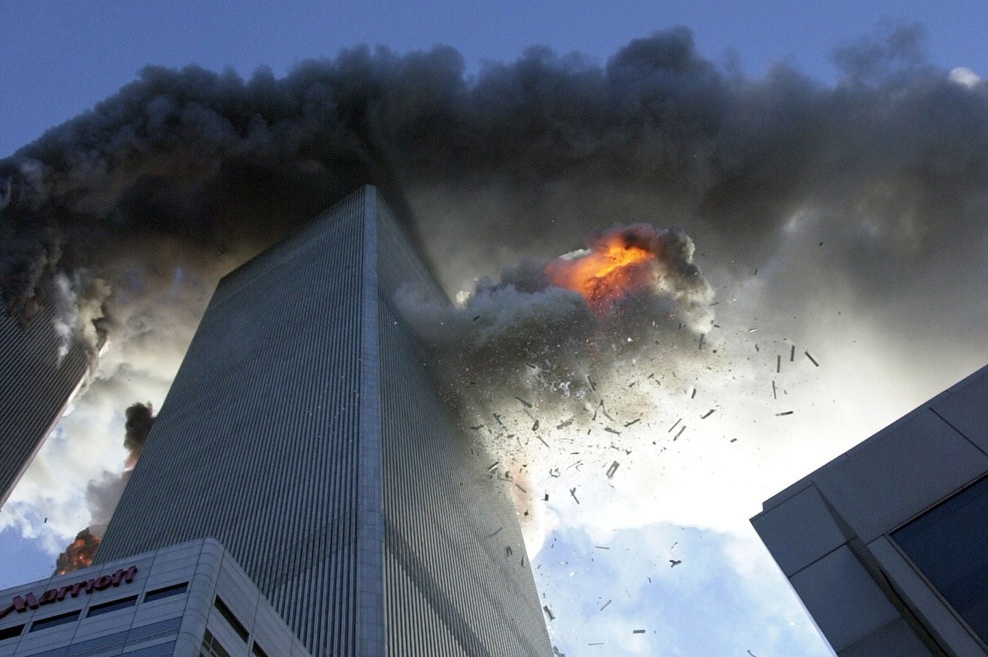
The official narrative claims that 19 hijackers representing Al Qaeda took over 4 commercial aircraft to carry out attacks on New York City’s World Trade Center and the Pentagon in Washington D.C.
The event served as impetus for the invasion and occupation of Afghanistan which continues to present day. It also led directly to the invasion and occupation of Iraq. Attempts to cite the attack to precipitate a war with Iran and other members of the so-called “Axis of Evil” (Libya, Syria, North Korea, and Cuba) have also been made.
And if this is the version of reality one subscribes to, several questions remain worth asking.
1. Can the similarities between 9/11 and plans drawn up by the US Department of Defense (DoD) and Joint Chiefs of Staff (JCS) in 1962 under the code name “Operation Northwoods” be easily dismissed?
The US DoD and JCS wrote a detailed plan almost identical to the 9/11 attacks as early as 1962 called “Operation Northwoods” where the US proposed hijacking commercial airliners, committing terrorist attacks, and blaming Cuba to justify a US military intervention.

Far from a fringe conspiracy theory, mainstream media outlets including ABC News would cover the document in articles like, “U.S. Military Wanted to Provoke War With Cuba,” which would report:
In the early 1960s, America’s top military leaders reportedly drafted plans to kill innocent people and commit acts of terrorism in U.S. cities to create public support for a war against Cuba.
Code named Operation Northwoods, the plans reportedly included the possible assassination of Cuban émigrés, sinking boats of Cuban refugees on the high seas, hijacking planes, blowing up a U.S. ship, and even orchestrating violent terrorism in U.S. cities.
The plans were developed as ways to trick the American public and the international community into supporting a war to oust Cuba’s then new leader, communist Fidel Castro.
A full PDF copy of the document is available via George Washington University’s archives and states specifically regarding the hijacking of commercial aircraft:
An aircraft at Eglin AFB would be painted and numbered as an exact duplicate for a civil registered aircraft belonging to a CIA proprietary organization in the Miami area. At a designated time the duplicate would be substituted for the actual civil aircraft and would be loaded with the selected passengers, all boarded under carefully prepared aliases. The actual registered aircraft would be converted to a drone.
The document also cites the USS Maine in describing the sort of event the DoD-JCS sought to stage, a US warship whose destruction was used to maliciously provoke the Spanish-American War. It should be noted, that unlike the DoD-JCS document’s suggestion that airliner-related casualties be staged, the USS Maine explosion killed 260 sailors. It is likely that DoD and JCS would not risk engineering a provocation that leads to major war but allow low-level operators left alive with the knowledge of what they had participated in.
Considering that the US sought to deceive the public in order to provoke an unjustifiable war that would undoubtedly kill thousands or tens of thousands of innocent people, and that other proposals did include killing innocent people, it is worth considering that US policymakers would also be just as willing to extinguish innocent lives when staging the hijacking of aircraft to provoke such a war.
2. Why did US policymakers draw up extensive plans to reassert US global hegemony – including regime change in Afghanistan, Iraq, Iran, Libya, Somalia, Sudan, and Yemen – without any conceivable pretext until 9/11 conveniently unfolded?
In 2000, US policymakers from the Project for a New American Century (PNAC) sought a sweeping plan to reassert America as a global hegemon. In a 90-page document titled, “Rebuilding America’s Defense: Strategy, Forces and Resources For a New Century” (PDF), a strategy for maintaining what it called “American military preeminence” would be laid out in detail.
It involved global moves the United States – in 2000 – could never justify, including placing US troops in Southeast Asia, building a global missile defense network prohibited by treaties signed during the Cold War, and the containment of developing nations that would eventually end up rolling back US global hegemony in the near future, including Iran, Iraq, China, North Korea, Libya, and Syria.

The report noted the difficulties of proposing and executing the transformations necessary to achieve the objectives laid out in the document. It would be explicitly stated that:
Further, the process of transformation, even if it brings revolutionary change, is likely to be a long one, absent some catastrophic and catalyzing event – like a new Pearl Harbor.
In fact, the entire body of the document is an uncanny description of the post-9/11 “international order,” an order unimaginable had the events of 9/11 not transpired.
It should also be remembered that wars predicated on 9/11 like the invasion and occupation of Afghanistan, were admittedly planned before 9/11 took place.
The Guardian in its 2004 article, “Bush team ‘agreed plan to attack the Taliban the day before September 11’,” would report:
The day before the September 11 attacks, the Bush administration agreed on a plan to oust the Taliban regime in Afghanistan by force if it refused to hand over Osama bin Laden, according to a report by a bipartisan commission of inquiry. The report pointed out that agreement on the plan, which involved a steady escalation of pressure over three years, had been repeatedly put off by the Clinton and Bush administrations, despite the repeated failure of attempts to use diplomatic and economic pressure.
While it seems inconceivable that the American or global public would tolerate the multi-trillion dollar 16 year war that the invasion of Afghanistan has become without the attacks on 9/11, such a war was admittedly in the making – in fact – years before 9/11 unfolded.
Similarly, the invasion of Iraq in 2003 was strongly linked to the aftermath of 9/11, but was likewise decided upon long before 9/11 unfolded.
CNN in its article, “O’Neill: Bush planned Iraq invasion before 9/11,” would report:
The Bush administration began planning to use U.S. troops to invade Iraq within days after the former Texas governor entered the White House three years ago, former Treasury Secretary Paul O’Neill told CBS News’ 60 Minutes.
This echos similar statements made by US Army General Wesley Clark who repeatedly warned that the US sought global-spanning war post-Cold War to assert its hegemony over the planet, and fully sought to use 9/11 as a pretext to do it.
General Clark would list seven nations slated for regime change post 9/11, including Iraq, Iran, Libya, Somalia, Sudan, and Yemen – all nations now either at war or facing war with the United States and its proxies – or in the case of Libya – entirely divided and destroyed in the wake of US military operations.
3. If primarily Saudi hijackers with Saudi money and Saudi organization perpetrated the attacks of 9/11, why has the United States waged war or threatened war with every nation in the Middle East except Saudi Arabia and its allies?
Not only has the United States made no moves against Saudi Arabia for its apparent role in the 9/11 attacks – spanning the administrations of US President George Bush, Barack Obama, and Donald Trump – the United States has sold Saudi Arabia billions in arms, provided military support and protection to Saudi Arabia’s military and government, partnered with Saudi Arabia in its ongoing conflict with Yemen – all while US government documents and leaked e-mails between US politicians reveal Saudi Arabia is still a state sponsor of Al Qaeda – the organization officially blamed for the 9/11 attacks.

Indeed, a 2012 US Defense Intelligence Agency (DIA) report would explicitly admit:
If the situation unravels there is the possibility of establishing a declared or undeclared Salafist principality in eastern Syria (Hasaka and Der Zor), and this is exactly what the supporting powers to the opposition want, in order to isolate the Syrian regime, which is considered the strategic depth of the Shia expansion (Iraq and Iran).
The DIA memo then explains exactly who this “Salafist principality’s” supporters are:
The West, Gulf countries, and Turkey support the opposition; while Russia, China, and Iran support the regime.
This “Salafist principality” is now known as the “Islamic State,” an affiliate of Al Qaeda still operating with significant state sponsorship everywhere from Syria, Iraq, and Libya, to the Philippines and beyond.
Coincidentally, Saudi-armed and funded terrorists in the Philippines has served as a pretext for US military assets to begin expanding their presence in Southeast Asia, just as the aforementioned 2000 PNAC document had sought.
Additionally, in a 2014 e-mail between US Counselor to the President John Podesta and former US Secretary of State Hillary Clinton, it would be admitted that two of America’s closest regional allies – Saudi Arabia and Qatar – were providing financial and logistical support to the Islamic State.

The e-mail, leaked to the public through Wikileaks, stated:
… we need to use our diplomatic and more traditional intelligence assets to bring pressure on the governments of Qatar and Saudi Arabia, which are providing clandestine financial and logistic support to [the Islamic State] and other radical Sunni groups in the region.
While the e-mail portrays the US in a fight against the very “Salafist” (Islamic) “principality” (State) it sought to create and use as a strategic asset in 2012, the fact that Saudi Arabia and Qatar are both acknowledged as state sponsors of the terrorist organization – and are both still enjoying immense military, economic, and political support from the United States and its European allies – indicates just how disingenuous America’s “war on terror” really is.
If the US truly believed Al Qaeda carried out the deadly attacks of 9/11, why does it count among its closest allies two of Al Qaeda’s largest and most prolific state sponsors?
Together – by honestly answering these three questions – we are left considering the very real possibility that 9/11 was not a terrorist attack carried out by foreign terrorists, but rather an attack engineered by special interests within the United States itself.
If we reject that conclusion, we must ask ourselves why the US DoD and JCS would take the time to draft plans for false flag attacks if they did not believe they were viable options US policymakers might seriously consider. At the very least we must ask why those at the DoD and JCS could be caught signing and dating a conspiracy to commit unspeakable terrorism to justify an unjust war and not only avoid criminal charges, but remain employed within the US government.
We must also ask ourselves why US policymakers would draft long-term plans for reasserting American global hegemony without any conceivable pretext to justify such plans. Even in the wake of 9/11, the US government found it difficult to sell the invasion of Iraq to the American public and its allies. Without 9/11, such salesmanship would have been impossible. In Syria – with 9/11 disappearing into the distant past – US regime change efforts have all but stalled.
Finally, we must find adequate explanations as to why those sponsoring the supposed perpetrators of 9/11 have remained recipients of unwavering American support, weapon sales, and both political and military protection. We must attempt to answer why militants fighting in Syria under the banner of Al Qaeda have been able to openly operate out of NATO-member Turkey’s territory for the past 6 years, side-by-side US Central Intelligence Agency (CIA) personnel who are admittedly fueling the conflict with weapons, money, and training “accidentally” ending up in Al Qaeda’s hands.
It is clear – that at the very least – the official narrative in no shape, form, or way adds up. If the official narrative doesn’t add up, what does?
The Economist Peddles Extreme Weather Lies
By Paul Homewood | Not A Lot Of People Know That | September 11, 2017

https://twitter.com/TheEconomist/status/906739904788430848
The Economist has been running this video on Twitter, with the usual fraudulent claims.
The film uses two examples:
- Hurricane Harvey
- Bangladesh flooding.
They forget to mention that Texas has had even more intensive storms in the past, notably 1978 and 1979, and that Bangladesh regularly floods.
But the headline claim is based on this graph:

The first thing to highlight about this, which should really give the whole thing away as an giant fraud, is that there were apparently virtually no extreme weather events in the early 20thC. Nobody with half a brain could seriously believe this, but apparently Economist readers do.
There appears to be no provenance given for this graph, which in itself is utterly damning for a supposedly serious journal. But it seems to be based on a similarly fraudulent claim from the insurance company, Munich Re, which was doing the rounds a year or two ago, again publicised by the Economist :

https://www.economist.com/news/science-and-technology/21656133-climate-change
As I explained a few months ago, these “disasters” are classified in terms of monetary value. Munich Re only count the most expensive events, albeit adjusted for inflation. (Note – the only other obvious classification is the death toll – but as the video reveals, this is massively reduced).
But, of course, as has been thoroughly explained many times, as the world’s GDP increases, so do economic losses.
No serious organisation would attempt to blame these increased losses on climate change, or any other extraneous causes. But Munich Re has a vested interest in blaming increased premiums on the climate.
It is a sad fact of life that, to get to the truth, we have to rely on independent analysts with no vested interests.
For instance, Roger Pielke Jr:

https://twitter.com/RogerPielkeJr/status/684740869707071488
It is self evident that weather related disaster losses are actually reducing as a proportion of global GDP.
But don’t let simple facts get in the way of propaganda.
Featured Video

Spain train disaster raises questions over Israeli-linked security contractors
or go to
Aletho News Archives – Video-Images
From the Archives
Are There 50,000 ‘Israeli-born’ Individuals Living in the UK?
By Professor David Miller | August 18, 2026
Recent disclosures by the Zionist regime show that some 2,069 British nationals were serving in the IDF as of March 2025, according to Freedom of Information (FoI) requests submitted to the occupation forces (1,686 dual British-Israeli, plus 383 multinational). We cannot tell from the figures how many of these were already settler colonists and intend to stay in the colony, and how many will return or have returned to the UK. Presumably, those returning to the UK will number far fewer than 2,000, since many are known to have become permanently residents of the colony.
Additionally, the IDF figures only provide a snapshot, and do not tell us how many have served in the Jewish supremacist military either before or after March 2025. One way into the question of how many genocidaires are living in Britain is to ask how many current British residents were born in the Zionist colony. There is data on that, as we shall see. … continue
Blog Roll
 Aletho News
- The Leak That Arrived Right on Cue
- No, New York Times, California’s Climate Has Always Been a Land of Flood, Drought, and Fire
- Are There 50,000 ‘Israeli-born’ Individuals Living in the UK?
- German CDU MPs Seek Climate “Misinformation” List
- The ‘Gaza Treatment’: How Media Headlines Obscure Who is Bombing Yemen
- Ro Khanna urges Democrats to strip Israel ‘integration’ provision from defense bill
- Why Iran designated British MI6, Royal Navy, and RAF as hostile, terrorist organizations
- Armenian opposition politician dies in custody
- US still trying to recycle failed hypersonic missile programs
- France’s ‘Cold War’: Paris blames Tehran for supermarket fridge hacks
- If Americans Knew
- An error has occurred; the feed is probably down. Try again later.
- No Tricks Zone
- German Authorities Start Initiative To Evaluate Public Register For Climate “Disinformation” Spreaders!
- Zonal Asymmetry of Temperature Change in the Antarctic Circumpolar Current
- New Study: The Net Fossil Fuel Contribution To Rising Atmospheric CO2 Has Been Zero For 500 Years
- Germany’s Green Energy Transition Becoming Increasingly Expensive…Another 6 Trillion Euros!
- Sudden Stratospheric Warming, Powerful El Niño Combination May Lead To Extreme Europe Cold, Energy Crisis!
- Two New Studies Find Thwaites Glacier Melt Cannot Be Driven By Human Activity Or A Warming Ocean
- E-Cars Reduce CO2 Emissions By Only 41% Compared To Internal Combustion Engine Vehicles
- Predictions Made By Renowned Climate Professor Over Past Decades Have Been Proven To Be Poor
- New Study Suggests Large Regions Of The Pacific Ocean Have Been Cooling For The Last 80 Years
- Germany’s Green Energy Debacle: High Energy Costs Force Kahla Porzellan to Close After 182 Years!


