Recep Tayyip Erdoğan: Terrorist Unleashed
By James Petras | October 20, 2015
The October 12, 2015 terror bombing in Ankara, resulting in the death of 127 trade unionists, peace activists, Kurdish advocates and progressives, has been attributed either to the Recep Tayyip Erdoğan regime or to ISIS terrorists.
The Erdoğan regime’s ‘hypothesis’ is that ISIS or the Kurdish Workers Party (PKK) was responsible for the terrorist attack, a position echoed by all of the NATO governments and dutifully repeated by all of the Western mass media. Their most recent claim is that a Turkish member of ISIS carried out the massacre – in a ‘copy-cat action’ after his brother, blamed by the Turkish government for an earlier bombing which left 33 young pro-Kurdish activists dead in July in Suruc, on the Syrian border.
The alternative hypothesis, voiced by the majority of the Turkish opposition, is that the Erdoğan regime was directly or indirectly involved in organizing the terrorist attack or allowing it to happen.
In testing each hypothesis it is necessary to examine which of the two best accounts for the facts leading up to the killing and who benefits from the mayhem.
Our approach is to examine those behind various acts of violence preceding, accompanying and following the massacre in Ankara. We will examine the politics of both the victims and the Erdoğan regime, and their conception of political governance, especially in light of the forthcoming November 2015 national elections.
Antecedents to the Ankara Terror Bombing
Over the past several years the Erdoğan regime has been engaged in a violent crackdown of civil society activity. In 2013, massive police action broke-up a major social protest in the center of Istanbul, killing 8 demonstrators and injuring 8,500 environmental and civil society activists defending Taksim Gezi Park from government-linked ‘developers’. In May 2014, over 300 Turkish coal miners in Soma were killed in an underground explosion in a mine owned by an Erdoğan supporter. Subsequent demonstrations were brutally suppressed by the state. The formerly state-owned mine had been privatized by Erdoğan in 2005 – many questioned the legality of the sale to regime cronies.
Prior to and after these violent police actions against civilian demonstrators, thousands of officials and public figures were arrested, fired, and investigated by the Erdoğan regime for allegedly being supporters of a legal Islamic social organization – the so-called Gülen movement.
Hundreds of journalists, human rights activists, publishers and other media workers were arrested, fired, and blacklisted at the behest of the Erdoğan regime, for criticizing high level corruption in the Erdoğan cabinet.
The Erdoğan regime escalated its domestic repression of the secular opposition in order to concentrate power in the hands of an Islamist cult-ruler. This was particularly the case after the government deepened its support of thousands of foreign jihadi extremists and mercenaries streaming into Turkey on their way to the Syrian jihad.
From the beginning of the armed uprising in Syria, Turkey became the main training ground, arms depot and entry-point for armed Islamist terrorists (AIT) entering Syria. The Erdoğan regime directed the AIT to attack, dispossess and destroy the Syrian and Iraqi Kurds whose fighters had liberated a significant section of northern Syria and Iraq and served as an ‘example of self-government’ for Turkish Kurds.
The Erdoğan regime has joined the brutal Saudi monarchy in financing and arming AIT groups and especially training them in urban terror warfare against the secular government in Damascus and the Shiite regime in Baghdad. They specialized in bombing populated sites occupied by Erdogan’s enemies or the Saudi targets especially secular Kurds, leftists, trade unionists and Shiites allied with Iran.
The Erdogan regime’s intervention in Syria was motivated by its desire to expand Turkish influence (neo-Ottomanism) and to destroy the successful Kurdish autonomous government and movement in Northern Syria and Iraq.
To those ends, Erdoğan combined four policies:
(1) He vastly expanded Turkish support for and recruitment of Islamic terrorists from around the world, including Libya and Chechnya.
(2) He facilitated their entry into Syria, and encouraged them to attack villages and towns in the ethnic Kurdish regions.
(3) He broke off peace negotiations with the PKK and re-launched a full-scale war against the militant Kurds.
(4) He organized a covert terrorist campaign against the legal, secular, pro-Kurdish electoral party, the People’s Democratic Party (HDP).
The Erdoğan regime sought to consolidate dictatorial powers to pursue and deepen its ‘Islamization’ of Turkish society and to project his version of Turkish hegemony over Syria and the Kurdish regions inside and outside Turkey. To accomplish these ambitious and far reaching goals, Erdoğan needed to purge his Administration of any rival power centers.
He started with the jailing and expulsion of secular, nationalist Kemalist military figures. He continued with a purge of his former supporters in the Gülen organization.
Failing to gain a majority in national elections because of the growth of the HDP, he proceeded with a systematic terror campaign: organizing street mobs made up of his followers in the ‘Justice and Development Party’, who burned and wrecked HDP offices and beat up activists. Erdoğan’s terror campaign culminated with the July 2015 bombing of a leftist youth meeting in Suruc whose activists were aiding Syrian Kurdish refugees and the beleaguered fighters resisting Islamist terrorists in Korbani, a large Syrian town across the border controlled by the Erdoğan-backed ISIS. Over 33 activists were murdered and 104 were wounded. Two Turkish covert intelligence officers or ‘policemen’, who knew in advance of the bombing, were captured, interrogated and executed by the PKK. This retaliation for what was widely believed to be a state-sponsored massacre provided Erdoğan with a pretext to re-launch his war on the Kurds. Erdoğan immediately declared war on both the armed and unarmed Kurdish movements.
The Erdoğan regime trotted out the claim that the Suruç terrorist attack was committed by ISIS suicide bombers, ignoring the regime’s ties to ISIS. He announced a large-scale investigation. In fact it was a perfunctory round up and release of suspects of no consequence.
If ISIS was involved in this and the Ankara massacres, it did so at the command and direction of Turkish Intelligence under orders of President Erdoğan.
The Suruç Massacre: A Dress Rehearsal for Ankara
Suruç was a ‘dress rehearsal’ for Erdoğan’s terrorist attack in Ankara, three months later.
Once again the main target was the Kurdish opposition electoral party (the HDP) as well as the major progressive trade unions, professional associations, and anti-war activists.
Once again Erdoğan blamed ISIS, without acknowledging his ties to ISIS. Certain facts point to Turkish state complicity:
1) Why were the bombs placed in the midst of the unarmed demonstrators and not next to the police and intelligence headquarters within a block of the carnage?
2) Why did Erdoğan’s police attack and prevent emergency medical assistance to the demonstrators in the immediate aftermath of the bombing?
3) Why did he block popular leaders, independent investigators and representatives from targeted groups from examining the bombing site?
4) Why did Erdoğan immediately reject a cease-fire offer from the PKK and launch a vast military operation while promoting rabidly chauvinistic street demonstrators against Kurds engaged in legal political campaigning?
5) Why did the police attack mourners at the subsequent funerals?
Who Benefited from the Terror Attacks?
The terror attacks benefited Erdoğan’s immediate and long-range strategic political goals – and no one else!
First and foremost, they killed activists from the HDP party, anti-war leftists and trade unionists. The violent government attacks against the HDP in the aftermath of the massacre has increased Erdoğan’s chances of securing the electoral majority that he needs in order to change the Turkish constitution so he can assume dictatorial powers.
Secondly, it was aimed at (1) reducing the ties between the Turkish and Syrian Kurds; (2) breaking the ties between progressive Turkish trade unions, secular professionals, peace activists and the Kurdish Democratic Party; (3) mobilizing the right-wing ultra-nationalist Turkish street mobs to attack and destroy the electoral offices of the HDP; (4) intimidating pro-democracy activists and progressives and silencing dissent to Erdoğan’s domestic power grab and intervention in Syria.
To the question of who is responsible for serial violent attacks on civil society organizations, opposition political parties, and purges and arrests of independent officials in the lead-up to the terror attack? The answer is Erdoğan.
Who was behind the campaign of violence and bombing in Kurdish neighborhoods in Istanbul and elsewhere leading up to the Suruç and Ankara terrorist attacks? The answer is Erdoğan.
Conclusion
We originally counter-posed two hypotheses regarding the terrorist attack in Ankara: The Erdoğan regime’s hypothesis that ISIS – as a force independent of the Turkish government – or even the PKK were responsible for brutally killing key activists in Turkish and Kurdish civil organizations; and the opposite hypothesis that the Erdoğan regime was the mastermind.
After reviewing the motives, actions, beneficiaries, and interests of the two hypothetical suspects, the hypothesis, which most elegantly and thoroughly accounts for and makes sense of the facts is that the Erdoğan regime was directly responsible for the planning and organization of the massacres through its intelligence operatives.
A subsidiary hypothesis is that the execution – the placing of the bombs – may have been by an ISIS terrorist, but under the control of Erdoğan’s police apparatus.
“Someone Killed Jacky”
Evidence Contradicts Presumed Motive for “Suicide”
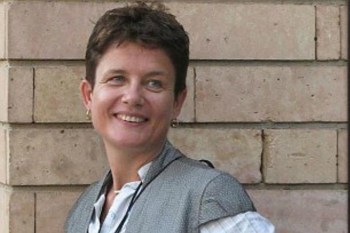
Jacqueline Anne Sutton. Photo credit: Facebook
Who.What.Why. | October 20, 2015
Family, friends and colleagues of veteran British journalist and activist Jacky Sutton (age 50) demand a full investigation into her mysterious hanging death at an airport in Istanbul Sunday morning. Many of them reject the notion that she could have committed suicide, as was initially reported by the Turkish media, citing Turkish authorities.
The official story was that Sutton had missed a connecting flight to Iraq, and was distraught because she could not afford to purchase a new ticket. She then supposedly went to a bathroom and hung herself with her shoelaces.
However, an Italian source reported that Sutton had €2,300 ($2,600) in her pocket when she died, much more than the short flight to Iraq would have cost.
Sutton recently took over as Iraq Chief of the Institute for War and Peace Reporting (IWPR) and had been on the way to Iraq from London. She was to replace Ammar Al Shahbander, who was killed in Baghdad by an Islamic State bomb in May.
While Turkish media unequivocally stated that her death was a suicide, those who knew Sutton were skeptical of that claim right away.
“The circumstances of her death are unclear, and we are trying to establish the facts,” IWPR said in a statement.
The group did not say outright that it ruled out suicide as a cause of death, but noted that “Jacky was returning to Iraq full of plans for innovative new work, including projects to counter violent extremism that threatens a country to which she was so committed.”
Others who knew Sutton did not mince words.
“What I’m sure about, the kind of person that Jacky was, it’s impossible she would have killed herself, impossible,” Mazin Elias, an Iraqi journalist who worked with Sutton, told MailOnline. “I’m really sad and sorry what happened, but if someone tells me ‘she killed herself,’ I tell him: ‘No, that’s wrong, someone killed Jacky’.”
Sutton’s brother Ian cited the “odd circumstances” of her death and friend and colleague Christian Bleuer tweeted that Sutton was the “Toughest woman u could meet. Turkish police say she committed suicide cuz she missed her flight?” Bleuer also wrote: “I’m not into conspiracies, but if the Turks say a security camera at Istanbul-Ataturk was ‘malfunctioning’ then Jacky Sutton was murdered.”
While it certainly would have been in Turkey’s interest to make this an open-and-shut suicide case, the evidence suggests that the initial story doesn’t hold water and a thorough investigation is warranted.
The Killing of Serena Shim & the ‘Suicide’ of Former BBC Journalist Jackie Sutton…
The Burning Blogger of Bedlam | October 20, 2015
Exactly a year ago – on October 19th, 2014 – the journalist Serena Shim was killed after reporting from Kobani in Syria as a war correspondent. Her death was almost certainly the work of the Turkish intelligence community.
It’s a rather remarkable, and depressing, ‘coincidence’ that just as I was sitting down to put together a post in tribute to her, I’ve just come across news that another journalist and activist, Jacky Sutton, has just been found dead in Turkey – exactly a year to the date of Serena Shim’s suspicious death.
Former BBC journalist, Jacky Sutton (aged 50) is reported to have been found dead in a toilet in Istanbul’s main airport. The British journalist (pictured below), who had been working as Iraq director for the Institute of War and Peace Reporting (IWPR), was in Turkey en route to Irbil in Northern Iraq. Turkish sources have allegedly suggested that she has killed herself after missing a flight connection – a rather poor, even insulting, suggestion, which colleagues of Ms Sutton are dismissing. In her role as acting Iraq head of the (London-based) IWPR, Jackie Sutton’s role has been to support local journalism in countries affected by war and crisis. As The Guardian notes, the organisation’s previous Iraq director, Ammar Al Shahbander, was killed in a car-bomb in Baghdad on 2nd May this year. It is claimed the British woman’s body has been found hanging from boot laces.
Sudipto Mukerjee, a director with the UN Development Programme, has said, according to The Independent; “Very difficult to believe that my colleague in Iraq, staffer and seasoned traveller Jacky Sutton committed suicide.” Ms Sutton had, among other things, previously worked for the BBC World Service, reporting from Africa, the Middle East and London.

As I said, this latest suspicious death in Turkey comes on the precise one-year anniversary of the equally suspicious death of Serena Shim, who was killed in a car ‘accident’ on the Turkey-Syria border in 2014, and again illustrates both the dangers faced by truth-seeking journalists and the extent to which a corrupt Turkish state stands in need of investigation by international authorities.
Serena Shim (October 10th 1985 – October 19th 2014) was an American-Lebanese journalist. The car ‘accident’ in which she was killed hadn’t taken place inside the dangerous war-zone she had been reporting from, but had occurred on her way back to ‘safety’. It is also highly significant that Shim had very clearly expressed her concerns for her safety just prior to the ‘accident’.
Shim had described her harassment by security forces as particularly unusual, noting that she had dealt with police and intelligence services before in various different countries, but that the Turkish activity was a targeted response to something very specific. She had said her own instinct was that Turkish security people were tracking her not because of her reporting in Kobani but on account of possible matters of far greater, more damaging, information she might’ve exposed concerning a concerted geo-political conspiracy.
On October 17th last year, just two days before her death, Shim had told Press TV that the Turkish National Intelligence Organization (MİT) had accused her of “spying”. She stated it was “probably due to some of the stories she had covered” about Turkey’s role in the Islamic State terror group and particularly in regard to the militants in Kobani. It was Shim who had reported on ISIL militants being smuggled across the Turkish border into Syria in trucks deceptively bearing the symbols of NGOs like the World Food Organisation. The 29 year-old Shim had even said on air that she was “a bit frightened” by the danger posed to her by Turkey’s MİT.

She died on October 19th 2014, having been on the way back to her hotel. She had been returning to Suruç with her cousin Judy Irish in a rental car which then collided with a heavy vehicle (a cement mixer, according to Turkish media). Supposedly, Shim died in the crash while her cousin Judy Irish was injured and taken to Suruç State Hospital. According to the Turkish Doğan News Agency, the driver of the heavy vehicle was subsequently arrested. Shim’s employer at the time, Press TV, disputed this, alleging that both driver and vehicle had “disappeared”.
There was also the curious report that Shim and Irish were for some reason taken to different hospitals after the crash.
Shim’s sister appears to have been in no doubt that the journalist was murdered for various reasons. “She caught them bringing in ISIS high-ranked members into Syria from Turkey into camps, which are supposed to be Syrian refugee camps,” Fatmeh Shima said. “I think it was planned and plotted. There’s no pictures of Sassy in the car. There is not one scratch on my sister’s body. They took them to two different hospitals. Why? Why were there Army men on the ground, why weren’t there police?”
Serena Shim’s sister complained that the family received inconsistent reports about the specifics surrounding her death. “There are so many different stories. The first story was that Serena’s car was hit by a heavy vehicle who proceeded to keep on driving,” Fatemeh Shim told RT, also complaining about Turkish authorities’ inability to find the vehicle or the driver.
Fox News also quoted Shim’s mother as saying that the scene looked “staged” and that her death wasn’t an accident.
Her tragic death came just two days after a video interview in which she claimed Turkish intelligence agents had threatened her after her report on the ISIL extremist jihadists being smuggled into Syria from Turkey.
In her own words; ‘I am a bit worried because… Turkey has been labeled by Reporters Without Borders as the largest prison for journalists, so I am a bit frightened about what they might use against me.’ She continues, ‘We were some of the first people on the ground, if not the first people to give that story of those Takfiri militants going in through the Turkish border. It was very apparent that they were Takfiri militants by their beards and by the clothes that they wore and they were going in there with NGO trucks and I just find it very odd, they went to several local residents here and asked about me. The other reports that I had done were about at the time, the so called Free Syrian Army going in, and catching these Takfiri militants and getting the passport stamps and getting firsthand information that they were actually inside while Turkey was still hiding them.’
‘I think this has a lot to do with it and I think they want to know why I’m back,’ Serena Shim said. ‘I’ve been stopped by them before, but not necessarily to this level, just by police basically. But for the intelligence to actually look for me, that’s rather odd, so I think that they’re trying to get the word out to journalists to be careful so much as to what they say…’

Within two days of this report, Serena Shim was dead.
No independent investigation has been conducted by the United States over her death, despite her US citizenship.
Serena Shim also wasn’t the first journalist affiliated with Press TV to have been killed. Maya Nasser was shot dead by a sniper while on air delivering a report from Damascus, Syria, in 2012. A statement posted to Nasser’s Facebook page claimed that “armed terrorists” had simply driven up in vehicles and additional snipers shot from the rooftops of nearby buildings.
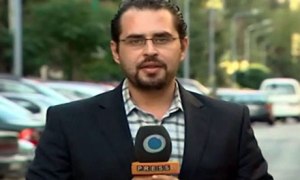
The 29 year-old Serena Shim was married and had two young children. Her tragic death was almost certainly an unlawful assassination designed firstly to silence her from reporting further on Turkey’s involvement in the rise of ISIL/Daesh, and secondly to act as a violent warning to other journalists to stay away from trying to expose the true nature of the war in Syria and the cynical manufacturing of the ‘Islamic State’ for geo-political purposes. The United States’ lack of interest in pursuing the matter of her death also suggests the US is complicit in that warning too.
In October 2014 Serena Shim herself joined the roll-call of brave journalists over the years who’ve risked – and ultimately sacrificed – their lives for the sake of uncovering the truth. Her bravery is all the more meaningful in the context of how most mainstream, corporate-owned journalism has been either reluctant or unwilling to dig deeper beyond the superficial surface of the ‘ISIS’ story and report more honestly about the origins of the crisis.
Certainly at the time of her death this time last year, mainstream journalists were almost entirely conforming to the approved corporate/political script, even if more meaningful journalism has started to gradually emerge in isolated spurts between then and now. But Shim was one of the few who was risking life and limb in dangerous territory to report on what was really going on. And she paid with her life.
____________________
Reporters Without Borders has labelled Turkey the ‘world’s largest prison for journalists’. In the supposedly democratic nation with EU membership aspirations, press freedom is pretty much non-existent. In an atmosphere of intimidation and fear, Turkey imprisons more journalists than any other modern nation; in spite of this tight control of information, people like Serena Shim and others have nevertheless managed to expose Turkey’s criminal role in supporting the Islamic State terror group and sustaining/funding the War in Syria that has killed over a quarter-of-a-million Syrians.
Meanwhile the killing of journalists and activists, either as tragic consequences of reporting from danger zones or by deliberate, targeted assassination, is an ongoing crime all over the world. The highly suspicious death of Jacky Sutton in a Turkish airport, just announced this evening, demonstrates that Serena Shim wasn’t the first and won’t be the last journalist to lose their life in the field, and that she is part of a long line of journalists who’ve been killed for various reasons over the years, including the likes of Max Hastings, Hunter S. Thompson, Garry Webb, Daniel Pearl, Maya Nasser and many others. According to the International Press Institute, 64 journalists have been killed so far in 2015.
This, this, this and this are all examples of the very real, mortal dangers journalists and photo-journalists face when putting themselves on the line for the sake of information or the sake of exposing inconvenient truths.
Change.org is petitioning the United States Department of Justice to investigate Shim’s death; you can add your signature to the petition here. Anonymous also launched #OpSerenaShim in memory of the deceased journalist.
As for this very unlikely explanation given by Turkish sources for the sudden suicide of Jacky Sutton, we will have to wait and see if British authorities push for a better explanation and if an investigation uncovers anything more. In her career, Jacky Sutton hasn’t been a stranger to danger and is not someone at all characterised as having been thin-skinned or emotionally vulnerable. This article here recounts much of her life in her own words.
As for Serena Shim, she was killed doing what American writer Walter Lipmann once called the ‘highest law’ in journalism – working to tell the truth and ‘shame the devil’. It might not be sufficient comfort to her friends, family or children, but it is ultimately the highest possible calling for any journalist.
US government publicly concedes case against ex-Gitmo prisoner collapsed in 2011
Reprieve | October 21, 2015
On the eve of a hearing in Morocco that will determine whether ex-Guantánamo prisoner Younous Chekkouri is to be set free, the US government has released a letter admitting that the central allegation against him in the US was withdrawn in 2011.
Younous Chekkouri was held without charge or trial in Guantanamo for 14 years before being transferred to his native Morocco on September 16, 2015. His transfer was subject to diplomatic assurances between Morocco and the US, which included agreements that there was no basis to charge him; that Morocco would not prosecute him; and that he would be detained no longer than 72 hours. However, after his arrival in Morocco Mr Chekkouri was taken to Salé prison near Rabat, where he continues to be held in violation of the assurances.
At a court hearing tomorrow (22nd), the investigating magistrate will determine whether Mr Chekkouri should be set free. It is believed that the Moroccan authorities are detaining Mr Chekkouri on the basis of the same allegations that the US government has now withdrawn against him.
In a letter released today, the US Justice Department concedes that several years ago the US “withdrew all reliance” on “all evidence identifying Mr. Chekkouri with the group known as Group Islamique Combatant Maroc [sic] “GICM””. The concession – made during a US habeas case brought by Mr Chekkouri with the help of human rights organization Reprieve – confirms that the evidence used to make the allegation was unreliable. During those proceedings, Mr Chekkouri explained in federal court that the information resulted from a mixture of the torture of himself and other prisoners, as well as stories fabricated by informers within Guantánamo who concocted false stories on hundreds of other prisoners in order to win better treatment in the prison.
The letter has been released by the Justice Department as a partial summary of the US government position in the US case. While not a complete picture of the near-total collapse of the case against Younous in the US habeas process, the document is the only evidence relating to the habeas case that the Justice Department would agree to release to Mr Chekkouri’s lawyers in time to enable his defense on the same spurious charges in Morocco.
Mr Chekkouri’s attorneys at Reprieve – who are in Morocco seeking to see Mr Chekkouri and defend him in court – have raised concerns that he now faces potential prosecution for long-disproven allegations that the United States withdrew years ago. The lawyers will urgently seek to provide the letter to the investigating magistrate and to Moroccan government officials.
Faking the Terrorist Threat
And demonizing Russia at the same time
By Philip Giraldi • Unz Review • October 20, 2015
A short-lived story appeared in the mainstream media two weeks ago describing how the United States government is working hard to keep everyone safe. The Associated Press (AP) original coverage was headlined “Smugglers busted trying to sell nuclear material to ISIS.” The Boston Herald’s version of the AP story reported it as “Nuclear Material Sellers Target U.S.: Nuclear Material Shopped to ISIS.” The article was also picked up worldwide including by the CNN and the BBC and was replayed in Israel as “ISIS Looking to Build Nuclear Weapons, Turning to Moldovan Gangs for Materials.”
The story is focused on Moldova, a relatively impoverished former Soviet republic, where the mainstream western media is unlikely to have a regular correspondent. The original AP version includes interviews with some of the participants in the police operation while also reviewing the documents and photos relating to the case. Nevertheless, one has to suspect that AP did not just happen to come across the story. The news agency might have been tipped off to pursue it through a leak arranged by the Federal Bureau of Investigation (FBI) or White House, intended to inform the public that there is a major threat coming from terrorists seeking weapons of mass destruction but U.S. law enforcement is aware of the danger and is working effectively against it.
The media account of what took place goes something like this: Eastern European smugglers have somehow obtained access to nuclear materials from the former Soviet Union weapons arsenals and labs and have been trying to sell them to terrorists, most particularly to ISIS, for use against the United States. There have been multiple attempts in the past five years, all of which were thwarted though the key players were not arrested and the presumed stolen material was not recovered by the authorities. The FBI worked closely with the Moldovan authorities throughout, providing technical services and other support for an undercover sting operation that was instrumental in producing a relatively successful outcome.
As I read the story it occurred to me that something was not quite right. The various security and police organs of the United States government have long faced a public relations dilemma. On one hand, they have sought to exaggerate the threat coming from international terrorism because it is good for the morale of their employees to be seen fighting a formidable enemy while it also induces Congress and the public to support substantial increases in budgets and other funding. But, at the same time, too much cheerleading emphasizing the ability of the bad guys to innovate rather suggests that national security is being undermined or, worse still, that the police and intelligence agencies are not doing their jobs very well to “keep us safe.” This has meant in practice that a fine balance has to be obtained in reporting the threat while at the same time making clear that everyone in government is working hard and very effectively to counter it.
This article about Moldova might indeed be one such story floated to reassure the public but, as it was not current news, its appearance at the present time would seem to be somewhat contrived and possibly even agenda driven. According to the article, there have been four attempts to sell smuggled radioactive material in the past five years, none of them recent, the latest one dating to February. One clue to a possible secondary agenda was the linkage of the criminals in the story to Russia, a country very much seen in adversarial terms by Washington at the present time. The article states that some of the criminal gangs in Moldova have “ties to the Russian KGB’s successor agency,” that Russia has a “vast store of radioactive material – an unknown quantity of which has leached into the black market,” and that the goods were offered by a “shadowy Russian named Alexandr Agheenco, ‘the colonel’ to his cohorts, whom Moldovan authorities believe to be an officer with the Russian FSB, previously known as the KGB.”
So the story is possibly about casting Russia in a negative light as it is about bombs or terrorists. And the bombs themselves are somewhat elusive. The article states that there is a “thriving black market in nuclear materials” in Moldova but it does not indicate where the contraband wound up and who bought it. One version of the AP story claims that a small amount of weapons grade enriched uranium was produced as bona fides prior to an attempt transaction in 2010 but that is contradicted by a Moldovan police assertion that only “one vial [of radioactive cesium was] ultimately recovered” from the smugglers. The article concedes that the cesium was not suitable for building a nuclear weapon and was not even radioactive enough to construct a so-called “dirty bomb.” Cesium, it should be noted, is used in its radioactive form in medical and laboratory applications. A dirty bomb uses nuclear waste or biological and chemical agents combined with conventional explosives to produce widespread contamination. It can be deadly and nasty, but it is not Hiroshima and it is not technically related to an atom bomb.
So the sting operation arrested some low level criminals who claimed to have access to weapons grade nuclear materials but the alleged materials were not actually found. Could it be that it was all a scam, seeking to sell something that the scammers assumed to be in demand but which they did not actually possess? And as for the final point that produced the alarming headlines, what was the role of ISIS in all of this? The article provides no evidence to indicate that ISIS was actually seeking nuclear materials, nor that it desires to do so linked to intentions to attack the United States. Constructing an actual nuclear weapon would be well beyond its engineering and technical capabilities in any event and if it wanted to build a dirty bomb it already has the nuclear waste from hospitals in the area that it controls to do so as well as chemical weapons stocks captured in Iraq.
The article states that “ISIS has made clear its ambition to use weapons of mass destruction” even though no evidence is presented confirming that to be the case. Nor is there any suggestion that the Moldovan smugglers actually contacted ISIS or that ISIS in any way sought to contact the Moldovans.
One smuggler, who allegedly repeatedly “ranted his hatred for America,” said in a wiretapped conversation that he “really want[ed] an Islamic buyer because they will bomb the Americans.” But since the middleman smuggler was trying to sell his product to what he thought to be an ISIS buyer it would be a no brainer for him to express his anti-American animus. And that evidence, such as it is, is far from a solid case that ISIS was seeking a nuclear weapon or dirty bomb to use against Washington, presumably to be detonated within the United States which is what the article implies. In fact, it does not necessarily mean anything at all.
So the alarming story of ISIS’s seeking a nuclear weapons to attack America turns out to be something considerably less, a bit of propaganda to justify continuation and even expansion of the U.S. war on terror. And there is a bit of evil Russia thrown in to explain how it is all happening. In reality, the United States and Russia were cooperating quite well on securing the former Soviet nuclear arsenal until the U.S. Congress in a January 2015 fit of pique cut off funding for the program. As is often the case, if there is a problem developing anywhere in the world, in this case over possible nuclear proliferation to terrorist groups, it is because the woefully ignorant elected officials representing us Americans have consistently failed to act responsibly.
“Washington continues dubious strategy in Syria”
Press TV – October 20, 2015
The Iranian deputy foreign minister has criticized the US for employing double-standards in the fight against terrorism in Syria.
Hossein Amir Abdollahian said Washington has not taken any serious action against terrorist groups in Syria and continues its dubious strategy in the Arab country. Abdollahian was speaking with UN Deputy Special Envoy for Syria Ramzy Ezzeldin in Tehran. He also called into question the sincerity of the so-called US-led coalition in Syria. Ezzeldin called Iran a major player in solving the Syrian crisis. He praised Iran’s effective role in restoring ceasefire in several Syrian regions, including Zabadani as well as Fuaa and Kafaria. Ezzeldin said the UN is seeking to form political committees, comprised of Syrians from across the political arena, to help end the crisis.
Live @ http://www.presstv.ir/live.html
Twitter @ http://twitter.com/PressTV
LiveLeak @ http://www.liveleak.com/c/PressTV
Facebook @ http://www.facebook.com/PRESSTV
Google+ @ http://plus.google.com/+VideosPTV
Instagram @ http://instagram.com/presstvchannel
SoundCloud@ https://soundcloud.com/videosptv
Guest: Mohammad Marandi Professor, University of Tehran
The MH17 Report: Caveat Emptor
By Srdja Trifkovic | Chronicles | October 15, 2015
Reports by various commissions of inquiry – national as well as international – into politically significant tragic events tend to be distorted by politics. The Dutch-led inquiry report into last year’s downing of the Malaysian Airlines flight MH17 over eastern Ukraine, released on October 13, is no exception.
The British Lusitania Inquiry, chaired by Lord Mersey one hundred years ago, provides an early example of the problem. It concluded, in July 1915, that the loss of the ship and 1,197 of its passengers two months earlier – including 123 Americans – was “caused by torpedoes fired by a submarine of German nationality whereby the ship sank.” In its opinion this was done not merely with the intention of sinking the ship, but also “with the intention of destroying the lives of the people on board.” In other words premeditated murder most foul. German claims that the Lusitania was a legal and legitimate target because it was carrying ordnance for Britain were dismissed out of hand as “propaganda” on both sides of the Atlantic.
When a survivor of the disaster, Professor Joseph Marichal (a former French army officer), testified at the Inquiry that the ship had sunk in a matter of minutes in all probability because a hidden cargo of munitions had triggered a massive second explosion after the torpedo struck, his testimony was duly dismissed. The British authorities went out of their way to undermine Marichal’s credibility, and especially his insistence that as a military man he knew the difference in sound, speed and magnitude between the main boiler’s bursting pipes (as officially claimed) and the detonation of high-power explosives. Marichal was killed on the Western Front in 1916, but the suspicion of foul play did not die with him.
In the United States a case was filed against Cunard Line by 68 American survivors and heirs of the dead. Judge Julius Mayer decided in 1918 – by which time the United States was at war with Germany – that no question could be raised in his court regarding whether Lusitania had been armed or carrying troops or ammunition. He ruled that “the cause of the sinking was the illegal act of the Imperial German Government,” and that any claims for compensation should be therefore addressed to Berlin.
Fast-forward to 1982, when the start of a salvage operation on the wreck of the Lusitania caused consternation in London, prompting a senior Foreign Office official to warn that the ship could still “literally blow up on us.” UK government files declassified only last year reveal that the Ministry of Defence warned the divers in August 1982 of “danger to life and limb” from previously undeclared war munitions and explosives still resting inside the wreck. The Foreign Office voiced concerns that a final British admission that there were high explosives on the Lusitania could still trigger serious political repercussions – in relations with the United States in particular – the passage of almost 70 years notwithstanding. “Successive British governments have always maintained that there was no munitions on board the Lusitania and that the Germans were therefore in the wrong to claim to the contrary as an excuse for sinking the ship,” wrote Noel Marshall, head of the Foreign Office North America department, on July 30, 1982:
“The facts are that there is a large amount of ammunition in the wreck, some of which is highly dangerous. The Treasury have decided that they must inform the salvage company of this fact in the interests of the safety of all concerned. Although there have been rumours in the press that the previous denial of the presence of munitions was untrue, this would be the first acknowledgement of the facts by HMG.” Marshall said the disclosure of the true nature of the Lusitania’s cargo was likely to spark a public, academic and journalistic debate. He also reveals that Treasury solicitors had even gone so far as to consider whether the relatives of American victims of the sinking could still sue the British government if it was shown the German claims were well-founded.
“The facts are that there is a large amount of ammunition in the wreck,” Mr. Marshall stated rather blandly – as if the matter was common knowledge among his Whitehall peers – and later that summer it was agreed at the highest level of the British government to stick to the old official fib that there had been no military-grade munitions aboard. A piquant element of the story concerns the well-grounded suspicion that British intelligence agents in the U.S. deliberately allowed their German counterparts to obtain information that the Lusitania was carrying that “large amount of ammunition” to Britain, in order to prompt them to intercept and destroy her.
Cui bono? The Lusitania affair helped turn the public opinion in the United States rapidly and drastically against Germany. In conjunction with Admiral Tirpitz’s renewal of unrestricted submarine warfare, it prepared the ground for a previously isolationist Congress to declare war on the Kaiserreich in April 1917. In the attainment of that outcome, the Lusitania was pure gold for the British propaganda machine and its American interventionist constituency.
The MH17 affair and its mainstream media treatment have replicated many features of the Lusitania affair. Of course America, Britain and their allies are not in a shooting war with Russia (not for now, thank God, but that could change if the War Party lunatics in Washington have their way). They are in an escalating global geopolitical and propaganda contest with her, however. It is in this context that the results of the Dutch-led inquiry into the shooting down of the Malaysian plane need to be scrutinized. Its most important undisputed finding is that the air space above the war zone in eastern Ukraine was left inexplicably open to civilian air traffic by the Kiev authorities. To what end, and with what expectations? Again, cui bono? On October 13 the New York Times described this potentially crucial question as a “stray detail.” That in itself highlights its importance.
Atrocity management pays immediate political dividends, and it rarely matters if the facts that eventually emerge turn out to be different from the official narrative (remember Pearl Harbor!). Caveat emptor.
‘US strike on Afghan hospital no mistake’ – Doctors Without Borders
Sputnik – 19.10.2015
Hitting back at claims from General John Campbell — the commander of NATO and US troops in Afghanistan — who said the hospital had been “mistakenly struck”, Christopher Stokes, the General Director of MSF, said evidence suggested the attack was planned.
“The hospital was repeatedly hit both at the front and the rear and extensively destroyed and damaged, even though we have provided all the coordinates and all the right information to all the parties in the conflict,” Stokes told Associated Press (AP).
“The extensive, quite precise destruction of this hospital… doesn’t indicate a mistake. The hospital was repeatedly hit.”
Clear Explanation Needed
Officials from the charity, also known as Medecins Sans Frontieres (MSF), have said that the bombing attack lasted over an hour, leading to suggestions that it was the legitimate target of the US airstrike.
Stokes also reiterated calls for an independent investigation into the incident to be carried out, saying that the charity wanted “… a clear explanation because all indications point to a grave breach of international humanitarian law, and therefore a war crime.”
The charity has raised concerns over the joint NATO-US-Afghan probe into the attack, saying that officials couldn’t be trusted to carry out a thorough and independent investigation into the incident.
The October 3 attack on the hospital in Kunduz, Afghanistan killed 22 people — 12 staff and 10 patients — with reports some victims were burning in their beds as a result of the bombing.
The US has taken responsibility for the attack, with President Barack Obama apologizing to MSF officials.
Despite the apology and claims that the hospital was “mistakenly” hit, there have been major question marks over how the site was bombed, with medical officials repeatedly maintaining that they had informed US and Afghan officials that the site was being used as a hospital.
MSF Dismisses Taliban Hideout Suggestions
MSF’s claims have been backed up by media reports suggesting US forces were aware the facility was a hospital and had been monitoring the site for days leading up to the attack.
According to a report by AP, a former intelligence official familiar with the details of the incident said that American analysts were scrutinizing the hospital before it was destroyed amid fears the site was being used a base for Taliban operatives.
US officials weren’t aware of the media reports, while MSF General Director Christopher Stokes denied any suggestions that armed Taliban forces were present on the hospital site.
“The compound was not entered by Taliban soldiers with weapons.
“What we have understood from our staff and guards is that there was very strong, very good control of what was happening in and around the compound and they reported no firing in the hours preceding the destruction of the hospital,” Stokes said.
The pressure is now building on United States officials, with accusations that the US is guilty of war crimes as a result of the incident.
Legal experts have said that if it can be proved that the US knew the site was being used as a hospital, then it could amount to war crimes.
MSF has already raised concerns around the current investigation into the attack, saying that there were fears the joint NATO-US-Afghan probe could have potentially destroyed vital evidence after entering the bombed hospital site last week.
The charity has launched an online petition calling on president Obama to allow the Swiss-based International Humanitarian Fact-Finding Commission (IHFFC) to carry out an investigation into the attack. However, the US has failed to grant the commission access to the hospital.
BBC Caught Peddling Baseless ‘Rapidly Warming Arctic’ Theory
BBC perspective on Arviat polar bears – those not included in the last mark-recapture study
By Susan Crockford | Polar Bear Science | October 16, 2015
In a polite but misleading article today in a BBC magazine (The polar bears are coming to town) about the relationship of polar bears and Inuit in Arviat, Western Hudson Bay, there is no mention of the on-going feud between Nunavut Inuit and Canadian polar bear scientists regarding invasive research.
Nor is there a mention of the fact that according to the most recent research, there has been no trend in sea ice conditions since 2001.
Find Arviat on the map of Western Hudson Bay study area provided by Lunn and colleagues (2013, 2014) in their mark-recapture study report (below) discussed in detail in my last post. Area “A” – where Arviat is located – was not included in the last mark-recapture survey because Nunavut won’t allow invasive research on polar bears.

Lunn et al. 2013, 2014. Map of study area.
The issue of the invasive research involved in polar bear mark-recapture studies around Churchill, Manitoba (chasing bears with helicopters, drugging them, extracting a tooth, tattooed, and attaching satellite radio collars or ear tags), has been so strenuously objected to by the Inuit of Nunavut that they have refused to allow the necessary field research permits for these activities (previous posts here, here, and here). See also the guest post by Kelsey Eliasson Invasive Research is Alive and Well in Canada
Arviat is in Nunavut and so mark-recapture work was not permitted there in 2011 – which is why Lunn and colleagues could not include those bears in their survey. Lunn et al. did not mention this conflict in their government report (2013) or in the version of it that is destined for publication (2014). They offered no reason why they did not survey in the Nunavut portion of Western Hudson Bay (Area A), which was included in the aerial survey conducted by Stapleton and colleagues (2014) and previous mark-recapture studies.
The author of today’s BBC essay (Irish anthropologist Martina Tyrrell) seems not to know about the invasive research issue or the lack of trend in sea ice conditions revealed in the mark-recapture study report (Lunn et al. 2013), because this is what she said about polar bear visits to Arviat:
“Over the past decade, however, encounters have been on the increase. Camping south of the community in summer is no longer safe, and autumn berry picking – an important subsistence activity usually undertaken by women and children – is now fraught with danger. Bears increasingly wander the streets of Arviat, particularly in late autumn.
At this time of year, regular announcements of bear sightings are made on local community FM radio, schools are sometimes closed early and the usually lively streets are eerily quiet. Halloween trick-or-treating, once so wild and fun-filled, has been all but wiped out, for fear of unwanted encounters not with ghosts or demons but with wandering bears.
What is driving this change in the polar bears’ behaviour?
Many Arviarmiut blame polar bear tourism in neighbouring Churchill – 250km to the south – for encouraging the animals to look for food in human settlements.
But there are other theories. Some Inuit think the bear population in the region is growing. Many scientists, on the other hand, put the blame on habitat loss – according to this theory it’s the desperation of hungry bears facing decreased ice seasons in a rapidly warming Arctic that leads them to approach the town. They have always gathered on the coastline at this time of year, awaiting the formation of the sea ice that is their winter hunting ground, but usually at a greater distance.” [my bold]
Read the rest here.
One of those “theories” is easily refuted by the Lunn et al. report (2013, 2014; Fig. 5): there has been no trend in sea ice breakup or freeze-up of Western Hudson Bay sea ice since 2001. Just the usual year-to-year variation, which can be fairly large:

[Observations since then have been consistent with that conclusion, for both breakup dates and freeze-up]
Therefore, there may simply be more bears than previously – or Arviat is being visited by more bears as a result of the increased polar bear tourism in Churchill or the increased vigilance of their Polar Bear Alert program. Either way, the sea ice “theory” (see graph below from Lunn et al. 2013) can be ruled out.
References
Lunn, N.J., Regehr, E.V., Servanty, S., Converse, S., Richardson, E. and Stirling, I. 2013. Demography and population assessment of polar bears in Western Hudson Bay, Canada. Environment Canada Research Report. 26 November 2013. PDF HERE
Lunn, N.J., Servanty, S., Regehr, E.V., Converse, S.J., Richardson, E. and Stirling, I. 2014. Demography and population assessment of polar bears in Western Hudson Bay, Canada. Environment Canada Research Report. July 2014. PDF HERE [This appears to be the version submitted for publication]
Stapleton S., Atkinson, S., Hedman, D., and Garshelis, D. 2014. Revisiting Western Hudson Bay: using aerial surveys to update polar bear abundance in a sentinel population. Biological Conservation 170:38-47. http://www.sciencedirect.com/science/article/pii/S0006320713004618#
The Imaginary Cuban Troops in Syria
By Matt Peppe | Just the Facts Blog | October 17, 2015
Fair-and-balanced Fox News reported on Wednesday that “Cuban military operatives reportedly have been spotted in Syria, where sources believe they are advising President Bashar al-Assad’s soldiers and may be preparing to man Russian-made tanks to aid Damascus in fighting rebel forces backed by the U.S.” Fox’s claim of an imaginary enemy alliance relies on two sources: the University of Miami’s Institute for Cuban and Cuban-American Studies and an anonymous U.S. official.
The source at the Miami Institute indicated that “An Arab military officer at the Damascus airport reportedly witnessed two Russian planes arrive there with Cuban military personnel on board. When the officer questioned the Cubans, they told him they were there to assist Assad because they are experts at operating Russian tanks.”
It is unclear what nationality the “Arab” officer was. Perhaps, said Arab determined the people aboard the Russian plane were Cubans because he saw them smoking cigars and drinking mojitos. The Cuban soldiers then volunteered – supposedly – they were “there to assist Assad” because of their expertise manning Russian tanks. However improbable this may seem to an unbiased observer, the source from the Miami Institute said that “it doesn’t surprise me.”
The supposed U.S. official – who Fox grants anonymity to without giving a reason why – related “evidence” from “intelligence reports” that Cuban troops “may” have trained in Russia and “may have” come to Syria in Russian planes. Sounds legit.
Despite the thinness of the report’s sourcing and the improbability of its content, other news organizations were quick to parrot its claims. Spanish newspaper ABC noted the next day that media from Germany to Argentina to the Middle East had echoed the Fox News report, while ABC did the same themselves.
By Friday, the story had gained enough traction that it was raised at a White House briefing. In a response that should have been enough to put the story to rest, the White House Press Secretary said “we’ve seen no evidence to indicate that those reports are true.”
But a few hours later, the Daily Beast had definitively declared in a headline that: “Cuba Is Intervening in Syria to Help Russia. It’s Not the First Time Havana’s Assisted Moscow.”
Progressive concern troll James Bloodworth turned Fox’s rumors into fact and wrote that “Not for the first time Cuban forces are doing Russia’s dirty work, this time in Syria… Obama has been holding his hand out in a gesture of goodwill to America’s adversaries only for them to blow him a raspberry back in his face – while standing atop a pile of Syrian corpses.”
In reality, Obama’s “gesture of goodwill” is little more than behaving less overtly hostile after decades of American aggression against Cuba and Iran. If you are choking someone unprovoked and you loosen your grip, it is far from a gesture of goodwill.
Bloodworth also tries to make an historical argument that Cuba’s (imaginary) military actions in Syria are consistent with their “bloody” interventions elsewhere. He decries “Cuban terror in Ethiopia” that resulted in hundreds of thousands of people being killed. “The tragedy was largely a consequence of the policies pursued by the Communist dictatorship that ruled Ethiopia at the time – a regime propped up by Cuba and the Soviet Union.”
In 1977, Somalia had invaded Ethiopia in an attack that “had been encouraged by ambivalent signals from Washington,” according to historian Piero Gleijeses in his book Visions of Freedom. [1] Initially reluctant to become involved, Fidel Castro finally agreed to Ethiopian requests to send troops to repel the Somali invasion.
Gleijeses found in his extensive review of formerly classified military documents that Cuba’s motives in aiding Ethiopia were sincere:
With hindsight, we know that Mengistu’s policies resulted in disaster, but this was not clear in 1977: though the process was undeniably bloody, the Ethiopian junta had decreed a radical agrarian reform and taken unprecedented steps to foster the cultural rights of the non-Amhara population… The evidence indicates that the Cubans intervened because they believed, as Cuban intelligence stated in March 1977, that ‘the social and economic measures adopted by Ethiopia’s leadership are the most progressive we have seen in any underdeveloped country since the triumph of the Cuban revolution.’ [2] In addition to correcting the record on Ethiopia, Gleijeses’ study also serves to set the record straight on Cuba’s historical modus operandi in its military interventions abroad. Cuba did maintain a large military presence in Angola for nearly 15 years, starting in 1975.
Castro first sent troops in November 1975 after Angolan President Agostinho Neto warned of a South African invasion of the country already underway which would inevitably topple the nascent government without outside support. Cuba agreed to send soldiers to Angola right away. Several months later, they would repel the apartheid army back to Pretoria. They remained in Angola at Neto’s bequest to prevent further incursions from the racist South African army into the country’s sovereign territory.
At the same time, there was an ongoing civil war between Neto’s MPLA, the largest and most popular of the guerilla groups, and the South African and American-backed UNITA guerillas led by former Portuguese collaborator Jonas Savimbi.
Castro was adamant that Cuban troops would be responsible for preventing a South African invasion, while Angolan troops should deal with their own internal conflict. In meetings with Neto, Castro “kept hammering away on the need to fight the bandits … He explained to us that the fight against the bandits was necessarily and without question the responsibility of the Angolans, that we could not wage this war, that it was their war.” [3]
Cuba’s position during the Angolan conflict is consistent with the diplomatic approach they have repeatedly espoused in Syria, that the Syrian conflict is a domestic problem for the Syrian people and government to resolve themselves, while the international community works to achieve a peaceful solution.
“Cuba reiterates that international cooperation, based on the principles of objectivity, impartiality and non-selectivity, is the only way to effectively promote and protect all human rights,” Cuban representative to the UN Human Rights Council Rodolfo Reyes said at a meeting in Switzerland. He added that “Cuba is confident of the capacity of the Syrian people and government to solve their domestic problems without foreign interference.”
Unreliable Sources
That the Fox News could cause such a stir is a testament to the refusal of mainstream news organizations to verify sources. In all of the iterations of the “Cuban troops in Syria” fantasy, there are no new sources cited. The original Fox News report cites one anonymous U.S. official who may, or may not, even exist. The only source on record with their incredulous claims is someone from the Institute for Cuban and Cuban-American Studies (ICCAS) at the University of Miami.
ICCAS is notorious for its reactionary, anti-Communist politics revered among the fanatically right-wing Cuban and Cuban-American population in Miami. Their academic research includes a conspiracy theory that appears to implicate Fidel Castro in the assassination of John F. Kennedy.
Another ICCAS report claims “the often-repeated view in many countries that the United States is an evil power, guilty for much of the problems and sufferings of the developing world, is owed in great part to the propaganda efforts of Fidel Castro” – not, rather, to decades of direct U.S. military intervention; profligate support to fascist military dictatorships; and predatory, neo-colonial lending policies that demand neoliberal structural adjustment programs which funnel public assets and resources to creditor interests, at the expense of the employment, health and well-being of the vast majority of local populations.
ICCAS is also home to the Cuba Transition Project whose mission is “to study and make recommendations for the reconstruction of Cuba once the post-Castro transition begins in earnest.” CTP acknowledges on its Web site that “the project was established in 2002 and supported by grants from the U.S. Agency for International Development (USAID) until 2010.” It’s funding indicates it is at least indirectly an arm of the U.S. government’s destabilization and subversion efforts dedicated to regime change of the politically and economically independent Cuban government.
Cuban Prensa Latina reporter in Syria Miguel Fernández noted that ICCAS has reported six or seven times since 2006 that Fidel Castro has died. He suggested reports such as those originating with ICCAS about Cuban troops in Syria were part of the campaigns of reactionary groups opposed to normalization to tarnish the new relations between Cuba and the United States.
The Cuban Embassy in Damascus reportedly “laughed” at the report of Cuban troops in Syria, and told Sputnik News : “It’s pure lunacy. It is as if they were claiming that Russia had sent its troops to Madagascar to protect lemurs.”
Despite claims of Cuban troops in Syria contradicting Cuba’s stated policy and historical modus operandi, and the fact that now four days have passed without a single piece of corroborating evidence to the laughable Fox News report, the imaginary Cuban troops in Syria are likely to morph into more outrageous fantasies of media who have shown themselves primarily interested in fabricating tales of intrigue about America’s evil enemies rather than reporting actual verifiable facts.
References
[1] Gleijeses, Piero. Visions of Freedom: Havana, Washington, Pretoria, and the Struggle for Southern Africa, 1976-1991. The University of North Carolina Press, 2013. Kindle edition.
[2] Ibid.
[3] as quoted in Gleijeses, 2013
Featured Video

Saudi Led Destruction of Yemen’s heritage
or go to
Aletho News Archives – Video-Images
From the Archives
Israel: Strategic Ally or Liability?
By Stephen Sniegoski | My Catbird Seat | June 12, 2010
The claim that Israel serves as a valuable ally for the United States is made by both pro-Zionists and much of the anti-war and anti-Zionist Left that is influenced by Noam Chomsky. As a result of the Gaza flotilla massacre, which has caused a world-wide uproar against Israel, the value of Israel to the United States is being publicly questioned in more mainstream foreign policy forums. … continue
Blog Roll
 Aletho News
- Declassified UK exposes British man who fought for ‘Israel’ in Gaza
- West’s death cult in a theater near you
- How the Yandex ‘Russian bots’ lie fell apart
- Burnham’s ‘Russia did Brexit’ ruse crumbles
- Estonia making movies and games to encourage war against Russia
- Four in five new UK jobs taken by foreigners – report
- Here’s what Trump’s latest U-turn really means for Russia and Ukraine
- The Houthis Are Not an Iranian Proxy
- Europe’s Energy Hypocrisy, Russian LNG Profits and US Dependence
- ICC ignored ‘very well-documented’ NATO crimes – ex-Libyan minister
- If Americans Knew
- Activists Abused By Israel Return to New Freedom Flotilla Mission
- 60 Minutes won’t tell the full truth about Israeli settler violence
- Nearly 50,000 women, girls killed or severely injured in Gaza since October 2023: UN Women
- ADL is working with AI companies to suppress alleged ‘antisemitism’
- Israeli occupation forces using social media surveillance unit to target hundreds of Palestinians in the West Bank
- Israel’s New – and Terrifying – Security Doctrine
- Israeli Attacks Kill Five in Gaza, Including a four-year-old and a woman
- Air Force Major Who Called for Trump’s Impeachment Held in Solitary Confinement
- It’s a Genocide, I’m Into It’: Seinfeld Mocks Protest over Palestinian Children Killed
- Universities fire dozens amid pressure from Zionist billionaires
- No Tricks Zone
- New Study Suggests Large Regions Of The Pacific Ocean Have Been Cooling For The Last 80 Years
- Germany’s Green Energy Debacle: High Energy Costs Force Kahla Porzellan to Close After 182 Years!
- New Study: 50 Years Of The Most Aggressive ‘Net Zero’ Policies Can Only Affect The Global Climate By 0.03°C
- US September “Heat” Was No Record…Many Records Set Decades Ago
- Latest European Green Energy Debacle; Portugal’s Largest Flagship Solar Park Insolvent!
- Green Energy Debacle: German Expert Professor Fritz Vahrenholt Warns Of Severe Economic And Social Consequences
- Two More Paleo Reconstructions Affirm Meters-Higher Sea Levels Across Ireland, Brazil 7000-6000 Years Ago
- New Study: Earth And Venus Surface Warmth Largely Explained By Convection And Lapse Rate, Not CO2 Or Radiation
- 2025 Nature Paper Claiming Worsening Global Drought Gets RETRACTED …Heavily Flawed
- New Study: ‘Global Drought Shows No Detectable Recent Acceleration Under Climate Warming’

