‘Letter to Jews’, Kerry cited, appears to be fake
RT | April 18, 2014
A letter urging the Jews of Donetsk to get registered, which the US Secretary of State cited in Geneva, is a fake says a man whose signature appears on the communication.
Following the four-side meeting on the Ukrainian crisis in Geneva on Wednesday, John Kerry lashed out at a letter that was allegedly sent to Jewish citizens in Ukraine’s eastern town of Donetsk, asking them to register and report all their property, or be stripped of citizenship and face expulsion.
“In year 2014, after all of the miles traveled in all the journey of history, this is not just intolerable, it’s grotesque… beyond unacceptable,” he stated.
Images of the letter have been circulating online.
The letter was stamped and signed by Denis Pushilin, who was identified on it as the “People’s Governor.”
However, Pushilin denied he had anything to do with the letter, claiming it was a fake.
“There are similar letters not only addressed to Jews, but also to businessmen, foreign students, people of certain other occupations,” he told RT. “This is actually a fake, and not a good one. There’s a sign “People’s Governor”. First of all, no one calls me by that title, no one elected me. Secondly, the stamp is the former mayor’s. Everything’s photoshopped.”
Although the letter’s authenticity is questionable, the fact that it was mentioned by a top US official has quickly sent the “Letter to Jews” story viral. It struck a very sensitive chord with audiences worldwide and cast a grave shadow over anti-government protesters in Donetsk.
Meanwhile, a Ukrainian MP who has visited the turbulent region, Boris Kolesnikov of the Party of Regions, has urged that information coming from Ukraine should be double-checked.
He believes that Ukrainian law enforcement agencies aren’t being totally honest when they describe the people participating in the protests and claim there are Russian servicemen among them.
Kolesnikov specifically referred to a video which earlier appeared online. In it a man in a military uniform told police officers, who switched sides in the city of Gorlovka and joined protesters, that he was Russian lieutenant-colonel from Simpheropol, Crimea. The man was later identified by Gorlovka residents as the former director of a local cemetery.
“Officially, I’ve only seen one Russian serviceman,” Kolesnikov said. “The next day he appeared to be the ex-director of the Gorlovka cemetery, fired 2 years ago for selling 38 fences, stealing a monument and extorting money from old women for new graves. There are Interior Ministry and intelligence services in the country, which should give us truthful information.”
He added it was quite obvious that the protesters in Donetsk did not represent any danger to civilians and called for negotiations with the activists. These talks would explain Kiev’s position and that the government is ready to make amendments to the constitution.
The US appears to be relying on information from Kiev, while ignoring alternative points of view. And so it seems that a top US official picked up and railed about a letter of questionable authenticity.
Earlier in April, spokesperson for the US Department of State, Jen Psaki, said that protest events in eastern Ukraine “appeared to be a carefully orchestrated campaign with Russian support.”
She was then asked if the department was only relying on Kiev in its assessment of the situation, or was using some independent sources.
“Well, of course we remain very closely in touch with the Ukrainian Government, and that’s who we work closely with, and of course, they are on the ground, so their information is often very relevant and current,” was the reply.
EU spy chief rules out Russian military presence in Ukraine
RT | April 16, 2014
There is no large Russian military presence in East Ukraine, head of EU intelligence, Commodore Georgij Alafuzoff, has said. The spy chief has dismissed multiple accusations from the West alleging Russian involvement in the unrest in the region.
In an interview with Finnish national news broadcaster, Yle, Alafuzoff said the Russian military had nothing to do with the seizing of government buildings in eastern Ukraine.
“In my opinion, it’s mostly people who live in the region who are not satisfied with the current state of affairs,” said Alafuzoff, referring to the situation in East Ukraine. He went on to say that the people are worried for the welfare of those who speak Russian as their first language in the region.
Alafuzoff echoed the words of the Russian government which has categorically denied interfering in the ongoing unrest. Russian Foreign Minister Sergey Lavrov said in a press conference on Monday that Moscow is not interested in destabilizing Ukraine and wants the country to remain united.
Anti-Kiev activists in the southeast of Ukraine have seized local government buildings as a mark of protest against the coup-appointed Ukrainian government. In response to the unrest, Ukraine’s interim President Aleksandr Turchinov announced the beginning of an “anti-terrorist” operation in eastern Ukraine.
On Tuesday, military hardware and troops began to mass on the outskirts of the eastern city of Slavyansk. Sightings of groups of military vehicles have been reported in the neighboring Kharkov and Lugansk regions, where pro-Russian and anti-Kiev sentiment is high.
Moscow has condemned Kiev’s operation as “anti-constitutional” and “criminal” and indicative of the government’s unwillingness to open dialogue with the regions.
“We are deeply concerned over the military operation launched by the Ukrainian Special Forces with support by the army. There have already been victims,” the Russian Foreign Ministry said in a statement on Tuesday.
Anti-Kiev sentiment is, meanwhile, spreading across Ukraine. On Wednesday the anti-Maidan movement in the city of Odessa called for a day of protests and declared the creation of a “people’s republic” in the region.
“From this day on, the Odessa region is declared the Odessa People’s Republic where the power belongs only to the people who live there. Tomorrow at 4pm [13:00 GMT] Odessa should grind to a halt, literally!” read a message on the Odessa Anti-Maidan movement’s website.
The protest movement in southeast Ukraine is rejecting Kiev’s coup-appointed government that was established in February following weeks of violent protests.
Torture is Mainstream Now
By David Swanson | War is a Crime | April 13, 2014
As Rebecca Gordon notes in her new book, Mainstreaming Torture, polls find greater support in the United States for torture now than when Bush was president. And it’s not hard to see why that would be the case.
Fifteen years ago, it was possible to pretend the U.S. government opposed torture. Then it became widely known that the government tortured. And it was believed (with whatever accuracy) that officials had tried to keep the torturing secret. Next it became clear that nobody would be punished, that in fact top officials responsible for torture would be permitted to openly defend what they had done as good and noble.
The idea was spread around that the torture was stopping, but the cynical could imagine it must be continuing in secret, the partisan could suppose the halt was only temporary, the trusting could assume torture would be brought back as needed, and the attentive could be and have been aware that the government has gone right on torturing to this day with no end in sight.
Anyone who bases their morality on what their government does (or how Hollywood supports it) might be predicted to have moved in the direction of supporting torture.
Gordon’s book, like most others, speaks of torture as being largely in the past — even while admitting that it isn’t really. “Bush administration-era policies” are acknowledged to be ongoing, and yet somehow they retain the name “Bush administration-era policies,” and discussion of their possible prosecution in a court of law does not consider the control that the current chief perpetrator has over law enforcement and his obvious preference not to see a predecessor prosecuted for something he’s doing.
President Elect Obama made clear in January 2009 that he would not allow torturers to be prosecuted and would be “looking forward” instead of (what all law enforcement outside of science fiction requires) backward. By February 2009, reports were coming in that torture at Guantanamo was worsening rather than ceasing, and included: “beatings, the dislocation of limbs, spraying of pepper spray into closed cells, applying pepper spray to toilet paper and over-forcefeeding detainees who are on hunger strike.” In April 2009 a Guantanamo prisoner phoned a media outlet to report being tortured. As time went by the reports kept coming, as the military’s written policy would lead one to expect.
In May 2009, former vice president Dick Cheney forced into the news the fact that, even though Obama had “banned torture” by executive order (torture being a felony and a treaty violation before and after the “banning”) Obama maintained the power to use torture as needed. Cheney said that Obama’s continued claim of the power to torture vindicated his own (Cheney’s) authorization of torture. David Axelrod, White House Senior Advisor, refused repeatedly, to dispute Cheney’s assertion — also supported by Leon Panetta’s confirmation hearing for CIA director, at which he said the president had the power to torture and noted that rendition would continue. In fact, it did. The New York Times quickly reported that the U.S. was now outsourcing more torture to other countries. The Obama administration announced a new policy on renditions that kept them in place, and a new policy on lawless permanent imprisonment that kept it in place but formalized it, mainstreamed it. Before long Obama-era rendition victims were alleging torture.
As the Obama White House continued and sought to extend the occupation of Iraq, torture continued to be an Iraqi policy, as it has post-occupation. It has also remained a U.S. and Afghan policy in Afghanistan, with no end in sight. The U.S. military has continued to use the same personnel as part of its torture infrastructure. And secret CIA torture prisons have continued to pop into the news even though the CIA was falsely said to have abandoned that practice. While the Obama administration has claimed unprecedented powers to block civil suits against torturers, it has also used, in court, testimony produced by torture, something that used to be illegal (and still is if you go by written laws).
“Look at the current situation,” Obama said in 2013, “where we are force-feeding detainees who are being held on a hunger strike . . . Is this who we are?” Well, it is certainly who some of us have become, including Obama, the senior authority in charge of the soldiers doing the force-feeding, and a human chameleon able to express outrage at his own policies, a trick that is perhaps more central to the mainstreaming of vicious and sadistic practices than we always care to acknowledge.
The mainstreaming of torture in U.S. policy and entertainment has stimulated a burst of torture use around the globe, even as the U.S. State Department has never stopped claiming to oppose torture when it’s engaged in by anyone other than the U.S. government. If “Bush-era policies” is taken to refer to public relations policies, then there really is something to discuss. The U.S. government tortured before, during, and after Bush and Cheney ran the show. But it was during those years that people talked about it, and it is with regard to those years that people still talk about it.
As Rebecca Gordon’s book, Mainstreaming Torture: Ethical Approaches in the Post-9/11 United States, recounts well, torture has been around. Native Americans and enslaved African Americans were tortured. The CIA has always tortured. The School of the Americas has long trained torturers. The war on Vietnam was a war of mass-murder and mass-torture. Torture is standard practice in U.S. prisons, where the torture of Muslims began post-9-11, where some techniques originated and some prison guards came from via the National Guard who brought their torturing to an international set of victims for the Bush-Obama era. [Abuse of POWs and torture were also common practices of both sides of the American civil war, post WWII rape of civilians and abuse and murder of POWs was rampant as well]
One of Gordon’s central points, and an important one, is that torture is not an isolated incident. Rather it is an institution, a practice, a collective endeavor that requires planning and organization. Defenders of torture often defend a widespread practice of purely vicious evil by reference to a single imaginary incident in which it would make sense to torture someone. Imagine, they say, that you knew for certain (as of course you would not) that many people were about to be killed unless a particular person revealed something. Imagine you were certain (as of course you would not be) that you had found that person. Imagine that contrary to accumulated wisdom you believed the best way to elicit the information was through torture, and that you were sure (as of course you would not be) that the information would be revealed, that it would be accurate (nobody EVER lies under torture), and that it would prevent the greater tragedy (and not just delay it or move it), with no horrible side-effects or lasting results. Then, in that impossible scenario, wouldn’t you agree to torture the person?
And doesn’t that fantasy justify having thousands of people prepared to engage in torture even though they’ll inevitably torture in all sorts of other situations that actually exist, and even though many thousands of people will be driven to hate the nation responsible? And doesn’t it justify training a whole culture to support the maintenance of an apparatus of torture, even though uses of torture outside the fantasized scenario will spread like wildfire through local police and individual vigilantes and allied governments?
Of course not. And that’s why I’m glad Gordon has tackled torture as a matter of ethics, although her book seems a bit weighed down by academic jargon. I come at this as someone who got a master’s degree in philosophy, focusing on ethics, back before 9-11, back when torture was used as an example of something evil in philosophy classes. Even then, people sometimes referred to “recreational torture,” although I never imagined they meant that any other type of torture was good, only that it was slightly less evil. Even today, the polls that show rising — still minority — support for torture, show stronger — majority — support for murder, that is for a president going through a list of men, women, and children, picking which ones to have murdered, and having them murdered, usually with a missile from a drone — as long as nobody tortures them.
While many people would rather be tortured than killed, few people oppose the killing of others as strongly as they oppose torturing them. In part this may be because of the difficulty of torturing for the torturers. If foreigners or enemies are valued at little or nothing, and if killing them is easier than torturing them, then why not think of killing as “cleaner” just as the Obama administration does? That’s one ethical question I’d like to see taken up even more than that of torture alone. Another is the question of whether we don’t have a duty to put everything we have into opposing the evil of the whole — that being the Nuremberg phrase for war, an institution that brings with it murder, imprisonment, torture, rape, injury, trauma, hatred, and deceit.
If you are going to take on the ethics of torture alone, Mainstreaming Torture provides an excellent summary of how philosophy departments now talk about it. First they try to decide whether to be consequentialist or deontological or virtue-based. This is where the jargon takes over. A consequentialist ethics is one that decides on the propriety of actions based on what their likely consequences will be. A deontological ethics declares certain actions good or bad apart from their consequences. And an ethics of virtues looks at the type of life created by someone who behaves in various ways, and whether that person is made more virtuous in terms of any of a long list of possible virtues.
A competition between these types of ethics quickly becomes silly, while an appreciation of them as a collection of insights proves valuable. A consequentialist or utilitarian ethics is easily parodied and denounced, in particular because supporters of torture volunteer such arguments. Would you torture one person to save the lives of two people? Say yes, and you’re a simple-minded consequentialist with no soul. But say no and you’re demonstrably evil. The correct answer is of course that it’s a bad question. You’ll never face such a situation, and fantasizing about it is no guide to whether your government should fund an ongoing torture program the real aim and results of which are to generate war propaganda, scare people, and consolidate power.
A careful consideration of all consequences, short- and long-term, structural and subtle, is harder to parody and tends to encompass much of what is imagined to lie outside the purview of the utilitarian simpleton (or corporate columnist). The idea of an ethics that is not based on consequences appeals to people who want to base their ethics on obedience to a god or other such delusion, but the discussions of deontological ethicists are quite helpful nonetheless. In identifying exactly how and why torture is as incredibly offensive as it is, these writers clarify the problem and move people against any support for torture.
The idea of an ethics based entirely on how actions impact the character of the actor is self-indulgent and arbitrary, and yet the discussion of virtues (and their opposite) is terrifically illuminating — in particular as to the level of cowardice being promoted by the policy of employing torture and any other evil practice in hopes of being kept safe.
I think these last two types of ethics, deontological and virtue — that is, ongoing discussion in their terms — have good consequences. And I think that consequentialism and principled integrity are virtues, while engaging in consequentialism and virtue ethics lead to better deontological talk as well as fulfillment of the better imperatives declared by the deontologists. So, the question should not be finding the proper ethical theory but finding the proper ethical behavior. How do you get someone who opposes torturing Americans to oppose torturing human beings? How do you get someone who wants desperately to believe that torture has in fact saved lives to look at the facts? How do you get someone who believes that anyone who is tortured deserves it to consider the evidence, and to face the possibility that the torture is used in part to make us see certain people as evil, rather than their evilness actually preceding and justifying the torture? How do you get Republicans loyal to Bush or Democrats loyal to Obama to put human rights above their loyalty?
As Gordon recounts, torture in reality has generated desired falsehoods to support wars, created lots of enemies rather than eliminating them, encouraged and directly trained more torturers, promoted cowardice rather than courage, degraded our ability to think of others as fully human, perverted our ideas of justice, and trained us all to pretend not to know something is going on while silently supporting its continued practice. None of that can help us much in any other ethical pursuit.
Syrian chemical weapons: Israel and France fabricate a new case
By Hassan Illeik | Al-Akhbar | April 14, 2014
Seven months after the end of the Syrian chemical weapons crisis, the Syrian army is making progress in the Damascus countryside and the opposition is exerting all its military might to achieve a strategic victory in Aleppo. Recently, news of the regime using poison gas against the opposition has reemerged with Israel leading the charge.
All the voices calling for organizing the Geneva III conference for negotiations between the Syrian government and the opposition have faded. The circumstances on the ground that allowed the regime not to give concessions at Geneva II still hold. The Syrian army continues, with its allies, to make progress on the ground. This allows the regime, once again, not to give any serious concessions in any negotiations that will take place in the foreseeable future. It is on this basis that the opposition’s latest battles in Quneitra, Daraa, Kassab, Idlib and Aleppo have been waged.
Until now, it appears that of all the battles, the battle of Aleppo stands in a class of its own. In the battles of Damascus, its countryside (Eastern Ghouta and Qalamoun), Homs and its nearby surroundings, the opposition forces acknowledged their loss. They put up a strong fight just to make the other side pay a heavy price. All the other battles do not make up, in military or moral terms, for losing in Damascus and the central region, except the battle for Aleppo. That is why we see the opposition forces’ massive mobilization in the economic capital of Syria.
The opposition is not merely talking about making progress in Aleppo but is promising to take complete control of the largest city in the north. Based on its discussions, the opposition wants to achieve a quick victory in Aleppo before the regime and its allies finish their battles in Damascus and Homs. Achieving stability in the capital and the central region for the regime will free up a large segment of the elite forces and will allow the Syrian army and its allies to move towards other active fronts. It would then be very difficult for the opposition to achieve progress of any strategic value in the north or the south. Until today, the al-Qaeda-inspired fighters have not been able to make a strategic breakthrough in the north. In Aleppo, the war is led by Jaish al-Muhajireen wal-Ansar (Army of Foreign Fighters and Supporters) which includes mostly Caucasian fighters who are well-trained and have combat experience.
Against this background, news has emerged once again that the Syrian army has used chemical weapons. Last August, the Syrian government asked for an investigation of an incident whereby militants used chemical weapons in Khan al-Asal in Aleppo. But after the attack on Eastern Ghouta, the regime was accused by Western forces of using poison gas against the opposition. Washington led a campaign threatening an attack on Syria until Russia proposed a solution that required Syria to give up its chemical arsenal. This time, the Syrian government sent a letter to the United Nations on March 25 saying that it monitored communications between the opposition in Jobar, which is adjacent to the capital, indicating that “the terrorist organizations are going to launch attacks by using poison gas with the aim of framing government forces.”
While the opposition has remained silent, Israel this time led the charge of accusing the regime of using chemical weapons. On April 7, the Israeli Channel 10 website reported a “major Israeli security source” saying that the Syrian army has gone back to using chemical weapons against the opposition forces. It used it at least in one case on March 17 in Harasta, eastern Damascus. According to the Israeli security source, the material used was not deadly chemical weapons found on the list of prohibited materials based on the agreement with the West, but rather substances that cripple those exposed to it for several hours.
After four days, the Syrian opposition grabbed the accusation and ran with it. The Syrian National Coalition issued a statement asking the international community to investigate the use of poison gas by the regime in Harasta. The Western press started again to play the tune of the regime using chemical weapons. Yesterday, the regime and the opposition exchanged accusations about using poison gas in the town of Kfar Zita in the Hama countryside.
Washington has distanced itself from this debate so far. The State Department’s spokesperson, Jennifer Psaki, said yesterday that her country does not have proof of chemical weapons use. The British and the French seem more excited than others to take up the issue. Western diplomatic sources in Paris say that since the failure of the Geneva II conference, the French authorities have been talking about the possibility of the Syrian regime using chemical weapons that are not internationally prohibited and that the international community must act to deter the regime.
The source likened this claim to the audio recording of a secret meeting of the Turkish Prime Minister Recep Tayyip Erdogan’s work team published on March 27 in which they talked about creating a pretext that would allow Turkey to intervene militarily in Syria. But intervention does not seem possible at this point. According to a source close to the regime in Syria, the goal of “this intimidation is twofold. Exonerating the opposition of what it is doing and a desperate attempt to draw red lines in front of the the Syrian army and its allies in their battle in the Damascus countryside so the opposition can make some progress in the north.”
WW2 revisionism jeopardizing Zionist hegemony
By Brandon Martinez | Press TV | April 14, 2014
The Canadian Jewish News website recently reported that a “holocaust” remembrance group headed by the rabid Zionist Mario Silva, a former Liberal MP from Toronto, is stepping up efforts to suppress discussion and debate about what really happened in Germany’s concentration camps during the Second World War.
The prejudicial group, which calls itself the International Holocaust Remembrance Alliance (IHRA), essentially defines “holocaust denial” as anything that is not in complete conformity with Zionist mythology and dogma surrounding WWII.
In his book The Holocaust Dogma of Judaism, Jewish writer Ben Weintraub argues that the holocaust story has become a new religion for Jews around the world. Historian Michael Hoffman has called the holocaust — as it is defined by the victorious powers of WWII and their Hollywood propagandists — “pornography” and points out that it has replaced Christianity as the state religion of the Western world.
Jewish scholar Norman Finkelstein described Organized Jewry’s campaign to mentally enslave the Western populace with ethnocentric and dogmatic memes relating to Jewish victimhood during the WWII period as a multi-billion dollar industry and extortion racket designed to bolster Israel and Zionist power.
Other historians, such as Jurgen Graf and Carlo Mattogno, have argued that the official holocaust story, which was handed down to the public by murderous governments headed by genocidaires like Stalin, Churchill and Roosevelt, contains lies and exaggerations deliberately created to hide Allied atrocities and mask Zionist depravity vis-à-vis the ethnic cleansing of Palestine.
Whether one believes it or not, whatever happened to Jews in the Second World War is no excuse for what the Zionists inflicted upon the Palestinians three years after the end of that war: the forced expulsion of 800,000 indigenous Arab Palestinians from their homes and villages, the total destruction of more than 500 of those villages, and many brutal massacres of thousands of Palestinians, including women and children. These inhuman abuses continue to this day with the full backing of much of the Western world, in large part due to sympathy elicited from “holocaust” guilt.
The Zionists’ delusional campaign to extirpate debate about this topic will inevitably have the opposite effect. By attempting to inculcate Orwellian conformity by enforcing – through threats of financial deprivation or imprisonment — rigid parameters around this one historical event, the Zionists exude a certain over-zealousness that usually emanates from a position of weakness and insecurity.
If the Zionists have such a strong argument to back up their story, why then do they need to legislate against dissenting opinions? Why did the Zionists lobby get dozens of European governments to enact Stalinist “holocaust denial” laws to prevent skeptics from voicing their views and findings? As former Iranian President Mahmoud Ahmadinejad asked, why prohibit research on this subject if the evidence for it is so solid and irrefutable?
Many thousands of innocent researchers and writers are languishing in European jails simply for conducting forensic and documentary research pertaining to Germany’s policy towards Jews during the Second World War. Since their findings do not conform to orthodox belief, they are hounded and harassed, fined and imprisoned, much like Galileo was for contradicting the official doctrines of the Catholic Church.
This monstrosity is allowed to take place with very little protest from supposed defenders of free speech. The mass media operates in conjunction with the main Zionist groups to vilify revisionist researchers and cover up the mistakes and distortions of incompetent “holocaust” scholars like Raul Hilberg and Deborah Lipstadt.
At the Toronto show trial of Ernst Zundel in 1985, Hilberg testified for the prosecution who sought to send Zundel to jail for publishing a revisionist booklet titled Did Six Million Really Die? Hilberg was cross-examined by Zundel’s defence lawyer Douglas Christie and was forced to make some damaging concessions to the revisionists. Hilberg admitted on the stand that there is no known Hitler order or directive outlining a plan or program to exterminate the Jews of Europe, contradicting statements he made in his own book, The Destruction of the European Jews, where he claimed just the opposite. In the second revised edition of his book, Hilberg excised all previous references to a Hitler extermination order. When asked by Christie to produce a single scientific autopsy report proving the homicidal gassing hypothesis, Hilberg told the court: “I’m at a loss.”
Deborah Lipstadt, the queen of holocaust dogmatism who aggressively attacks revisionist scholarship with erroneous smears, is also known for her utter incompetence and brazen hubris. For years, Lipstadt and other Zionist “historians” touted the now-discredited four million deaths at Auschwitz figure – a Soviet propaganda lie that was revised to around one million in 1990 (the one million figure is also contested by revisionist historians).
Lipstadt also promoted as “fact” the hugely exaggerated Majdanek death total of 1.7 million Jews. The inflated Majdanek death figure was a propaganda invention of a Moscow-based journalist named Raymond Arthur Davies who was on the payroll of the Canadian Jewish Congress. A slightly lower but likewise false figure of 1.5 million Majdanek deaths was even trumpeted at the Allied-run kangaroo court at Nuremberg after the war. The current research director of that camp, Tomasz Kranz, now estimates that 60,000 people died at Majdanek during the war.
Ian J. Kagedan, a spokesman for the Zionist-Masonic society of B’nai B’rith, clearly outlined the true agenda of “holocaust remembrance” in the Nov. 26, 1991, edition of the Toronto Star. He explained in no uncertain terms that memorializing the holocaust story “is central to the new world order” and that the Zionist vision for the world hinges upon the public acquiescing to the “holocaust’s lessons.”
In an essay dealing with this subject, Dr. Harrell Rhome pointed out that the holocaust dogma was created to deceive Gentiles into accepting a position of inferiority to Jews, “causing them to ostentatiously and obligingly revere the Chosen Ones – and support them with money.”
Perhaps we should all take a second, closer look at the events of World War II – the Zionists’ darkest secrets of all may be found there.
Human Rights Watch Keeps the Distortions Coming about Venezuela
By Joe Emersberger | Zblogs | April 11, 2014
In a blog post for the New York Review of Books, Daniel Wilkenson of Human Rights Watch (HRW) wrote:
“Supporters of Chávez and Maduro often seek to downplay concerns about press freedoms in Venezuela by pointing to reporting critical of the government in the country’s newspapers. It is true that the government has not targeted the print media as aggressively as television, perhaps because the number of Venezuelans who read newspapers is a small fraction of the number who watch TV.”
In other words, it is very easy to expose the lies spread by HRW, RSF and most of the international media about the state of press freedom in Venezuela by simply monitoring the content of the country’s largest newspapers. Wilkenson must therefore find some way around that inconvenient fact. Anyone who reads Spanish will be immediately shocked by the quantity and vehemence of anti-government tirades that appear. As I’ve explained elsewhere, it is child’s play to find op-eds every day that openly call Maduro a “dictator” or “assassin” or words to that effect.
What about Wilkinson’s suggestion that the numbers of people who read newspapers is too small to matter much to the government? It doesn’t stand up at all. Relative to the Venezuela’s population, the combined daily circulation of its four largest newspapers is about the same as the combined daily circulation of the four largest newspapers in the USA.
Think about that. If an anti-government group in the USA is very well represented in the Wall Street Journal, New York Times, USA Today and the LA Times, how credibly could that group claim that it has been unable to effectively get its views out to the public? And how plausible is it that a group with such a strong presence in the print media would be shut out of the TV media? Common sense should lead anyone to say that it probably isn’t true and that is exactly what very recent studies of the Venezuelan TV media have revealed.
There is no question that some of the ways the Venezuelan government has balanced media coverage since the 2002 coup can be reasonably criticized. However what Wilkenson does in this piece, and what HRW has done relentlessly since it disgraced itself by the way it responded to the 2002 coup, is too use allegations of censorship to completely mislead people about the actual content of the Venezuelan media. As Keane Bhatt recently noted, until HRW closes the revolving door between itself and US elites, nobody should expect much better from them.
NATO’s Russian troop build-up satellite images ‘show 2013 drills’
RT | April 10, 2014
The satellite images released by NATO that allegedly show a current build-up of Russian troops near Ukrainian border were taken in August 2013 amid military drills, a source in the General Staff of the Russian Army has said.
NATO’s top military commander in Europe, General Philip Breedlove, on Wednesday claimed that there is evidence of what he says are 40,000 Russian troops on the border with Ukraine, tweeting a link to satellite images.
The images, some of them colored and some black and white, appear to show multiple Russian tanks, helicopters, fighter jets and a “special forces brigade” with locations and dates added to them. The dates marked range from March 22 to March 27, 2014. Another image not available on the original webpage but used by some Western media has “April 2, 2014” stamped on it.
Upon looking at the photos, a senior official at the General Staff of the Russian Armed Forces has confirmed to RIA Novosti the troops shown are indeed Russian ones and that they were photographed in the south of Russia.
There is one problem, though: the images were taken some eight months before the stated date, the source said.
“These shots, which were distributed by NATO, show Russian Armed Forces units of the Southern Military District, which in the summer of last year were taking part in various drills, including near the Ukrainian border,” the General Staff official told RIA Novosti.
Large military drills held in the south of Russia last year included Combat Commonwealth 2013 – a joint air defense exercise of the Commonwealth of Independent States (CIS). Back then, Ukrainian troops participated in the international drills.
NATO on Thursday continued ramping up allegations of possible “Russian invasion” into Ukraine, with NATO General Secretary Anders Fogh Rasmussen claiming that 40,000 Russian troops are still amassed on the Ukrainian border “not training but ready for combat.”
Rasmussen’s “message to Russia” was then “to stop blaming others for your own actions, to stop massing your troops, to stop escalating this crisis and start engaging in a genuine dialogue.”
Meanwhile, General Breedlove on Wednesday said that US troops may soon be deployed to Europe to “reassure” the NATO allies – a notion, which Russian Foreign Minister Sergey Lavrov called a flagrant breach of the bloc’s international obligations.
The Ukrainian coup-imposed government has also stepped up its rhetoric on Russia’s military presence, even claiming there is “military activity on behalf of the Russian Federation… on the territory of Ukraine” in an invitation to the Netherlands via OSCE network.
Russian Foreign Ministry’s spokesman Aleksandr Lukashevich on Thursday responded to the allegations by stressing that “on the territory of Ukraine, there is no military activity conducted by Russia.”
“This has been confirmed by the group of inspectors from Denmark, Germany, Poland, Austria and Sweden, who were in Ukraine from March 20 to April 2 and visited Kharkov, Donetsk, Mariupol, Nikolaev and Odessa regions,” Lukashevich stated.
Suggesting the territory mentioned in the diplomatic note might have been that of the Crimean Republic, the spokesman said the related activity there has to do with transferring of the ships and military hardware to Ukraine, as well as with the “inventorying of the military installations.” As soon as this process is finished, the international inspectors are welcome to the territory of the peninsula – provided they send a request to Moscow, not to Kiev, he stressed.
Featured Video
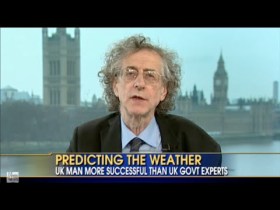
Piers Corbyn on religion of climate change
or go to
Aletho News Archives – Video-Images
Book Review
How the U.S. Navy Sold the Vietnam War
By Gareth Porter | TruthDig | March 27, 2019
Dr. Tom Dooley, whose best-selling book “Deliver Us From Evil” helped create a favorable climate of opinion for U.S. intervention in South Vietnam, has long been linked to legendary CIA officer Edward G. Lansdale and his black operations in Vietnam between 1954 and 1955. But the real story about Dooley’s influential book, which has finally emerged from more recent scholarly research, is that it was engineered by an official of the U.S. Navy’s Pacific Command, Capt. William Lederer.
Lederer is best known as the co-author, with Eugene Burdick, of the 1958 novel “The Ugly American,” which was turned into a 1963 movie starring Marlon Brando. Far more important, however, is the fact that from 1951 through 1957 Capt. Lederer was on the staff of the commander in chief of the U.S. Pacific Fleet (CINCPAC), Adm. Felix Stump. … continue
Blog Roll
 Aletho News
- The Nasser Hospital attack and Israel’s relentless lies
- Could it be satan? No, Huckabee, just the Americans you work for
- AIPAC and more: Network of pro-Israel influence in US Congress
- Putin aide reveals Moscow’s stance on Europe at peace talks
- Imran Khan warns Pakistani judges he may die in prison
- IOF used Amazon facial recognition to track millions of Palestinians
- More EU Citizens Face Sanctions For Criticizing The Ukraine Proxy War
- In Mexico, the CIA Is Playing a Dangerous Game
- Spain’s Left Protested the Crisis It Legitimized: the General Strike as election stunt
- The power of inflicting oblivion
- If Americans Knew
- An error has occurred; the feed is probably down. Try again later.
- No Tricks Zone
- New Study: Barents Sea Temperatures Were Warmer And Sea Ice Less Extensive In The 1700s Than Today
- German Authorities Start Initiative To Evaluate Public Register For Climate “Disinformation” Spreaders!
- Zonal Asymmetry of Temperature Change in the Antarctic Circumpolar Current
- New Study: The Net Fossil Fuel Contribution To Rising Atmospheric CO2 Has Been Zero For 500 Years
- Germany’s Green Energy Transition Becoming Increasingly Expensive…Another 6 Trillion Euros!
- Sudden Stratospheric Warming, Powerful El Niño Combination May Lead To Extreme Europe Cold, Energy Crisis!
- Two New Studies Find Thwaites Glacier Melt Cannot Be Driven By Human Activity Or A Warming Ocean
- E-Cars Reduce CO2 Emissions By Only 41% Compared To Internal Combustion Engine Vehicles
- Predictions Made By Renowned Climate Professor Over Past Decades Have Been Proven To Be Poor
- New Study Suggests Large Regions Of The Pacific Ocean Have Been Cooling For The Last 80 Years

