Alan Gross and his descent into hell
Along the Malecon | January 21, 2013
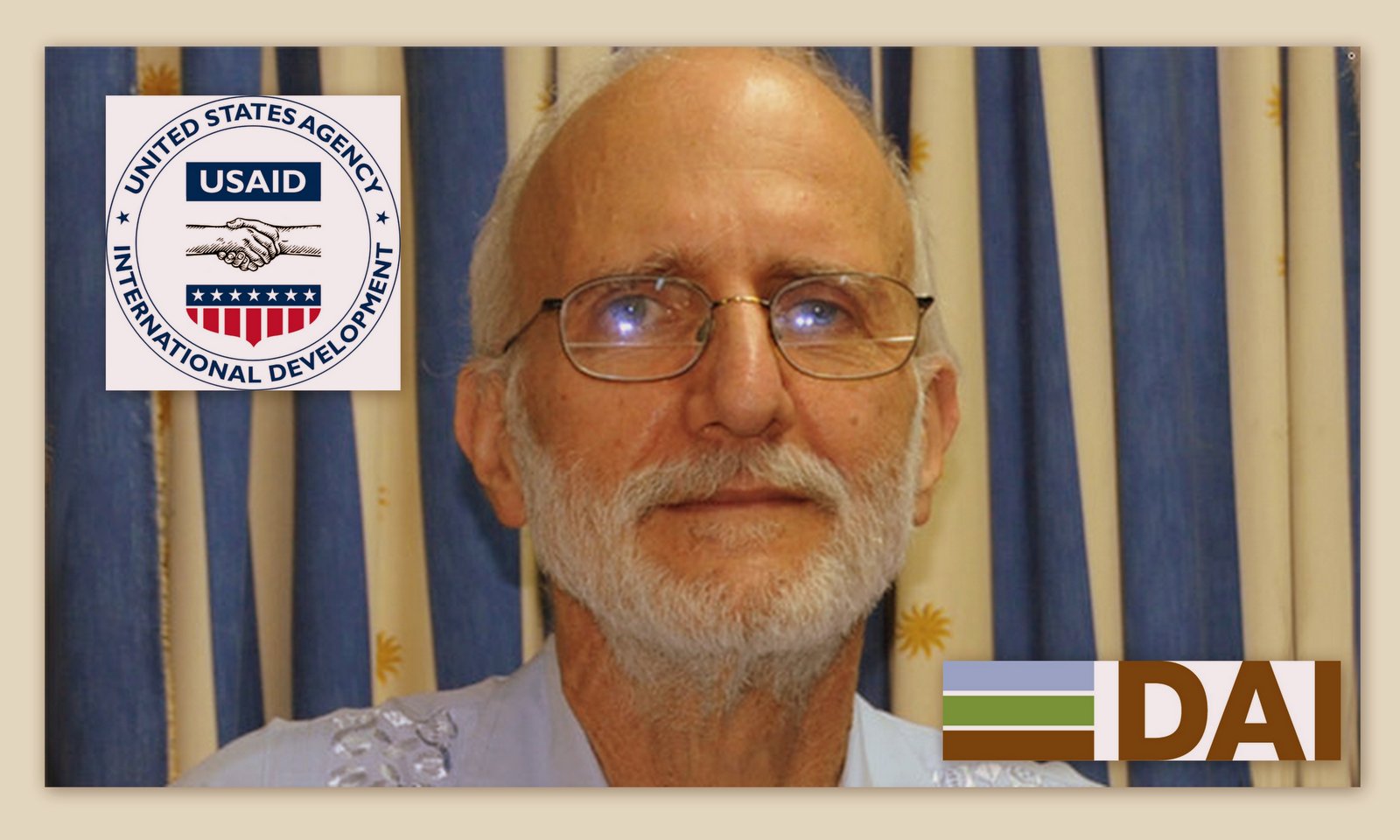
This isn’t “Everything You Wanted to Know About Alan Gross, But Were Afraid to Ask.” Unanswered questions about Gross abound more than three years after Cuban authorities nabbed him in Havana.
The Agency for International Development dispatched the American development worker to Cuba on a highly sensitive mission in 2009. Cuban authorities followed his movements at first, then arrested him and deposited him in jail. Discovering how he got there, ever so far from his home in Maryland, is a winding trail of money, bureaucracy and barely intelligible acronyms.
Below is a post aimed at answering some basic questions in the case and adding context to new details that emerged this month in court records, confidential memos and other documents (see links to source material at end of post).
Who hired Alan Gross?
A global development company, Development Alternatives Inc., or DAI, based in Bethesda, Md., and with offices in London, Islamabad and other cities. The company had revenue of nearly $300 million in 2012.
What’s DAI’s connection to USAID?
DAI is one of USAID’s top contractors. USAID has awarded more than $4 billion in contracts to DAI since 2000.
On Sept. 27, 2005, USAID signed a $25,000 contract with DAI as part of the agency’s “Instability, Crisis and Recovery Programs.”

The contract description shown in federal records is cryptic: CMM IQC.
What does that stand for?
CMM refers to the Office of Conflict Management and Mitigation in USAID’s Bureau for Democracy, Conflict, and Humanitarian Assistance. The office works with USAID and its partners, along with the State Department and the Pentagon. “These new partnerships,” USAID says, have boosted the U.S. government’s ability to fight the “Global War on Terror.”
IQC is Indefinite Quantity Contract, an agreement that delivers an unspecified quantity of products or services.
What was DAI supposed to do?
USAID hired DAI to conduct “conflict and fragility” assessments, which involved:
- A review of risk factors in specific countries or regions
- The development of work plans
- Research
- Fieldwork and reports
- Planning and implementation of meetings and other duties.
What does that have to do with Cuba?
Under the 2005 contract, DAI became one of USAID’s go-to contractors for a range of tasks. So when USAID wanted to assign a sensitive Cuba project in August 2008, it turned to DAI.
What was that project called?
The Cuba Democracy and Contingency Planning Program, or CDCPP.
How did Alan Gross get involved?
By 2008, Gross was in debt and had evidently been trying to land a Cuba-related contract for at least a year. He had been to the island before and knew key people who were handling U.S. government-financed projects in Cuba.
Key people? Any names?
Gross was in contact with Marc Wachtenheim, then director and founder of the Cuba Development Initiative at the Pan American Development Foundation, or PADF, another big USAID contractor.
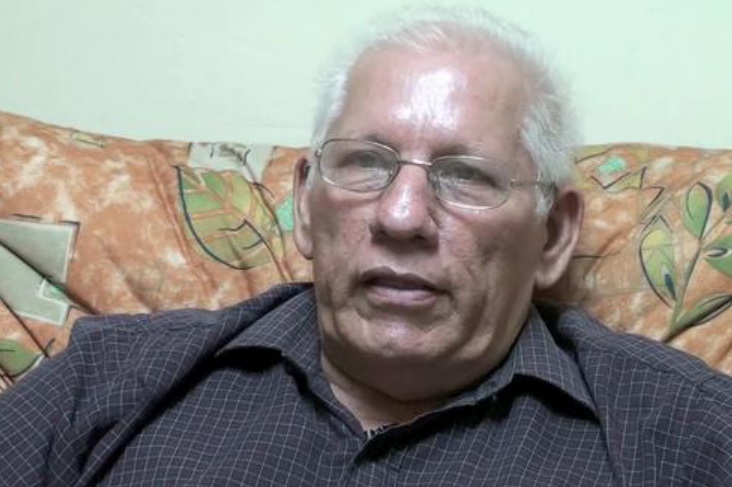
José Manuel Collera
In 2004, Wachtenheim had asked Gross to deliver a video camera and other items to José Manuel Collera, former head of the Freemasons fraternal organization in Cuba. Gross delivered the package and the PADF paid him $400.
What was Gross doing in Cuba in 2004?
At his 2011 trial, Gross testified that he went to the island as a tourist in 2004. He stayed at the four-star Hotel Raquel in Havana. It’s unclear if he traveled to Cuba again before 2009. His 2006 company tax records cited ongoing humanitarian work in Cuba.
Anything special about Collera?
Collera was an important contact for Wachtenheim, but turned out to be a spy. In 2011, Collera revealed that he was a state security agent known as “Agent Gerardo.”
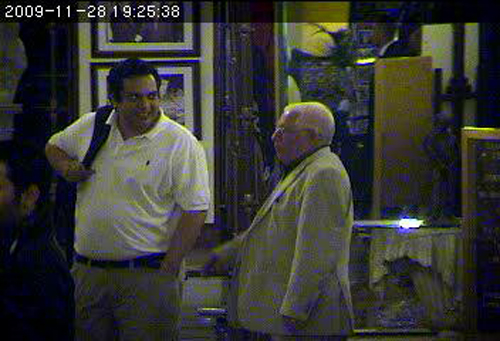
Wachtenheim, left, and Collera in surveillance video.
What became of Wachtenheim?
Cuban state security agents secretly caught Wachtenheim on surveillance video while he met with Collera and others. Presumably, agents could have detained Wachtenheim, but they did not interfere with his travels to the island.
Wachtenheim reached out to Gross again in 2007. He gave him $5,500 and asked him to buy a Hughes model 9201 satellite terminal that was to be taken to Cuba. The equipment allows users to send information over the Inmarsat Broadband Global Area Network, or BGAN, satellite network. It’s not clear who delivered it and how it was used. The equipment may have been tied to an unrelated PADF program. Raúl Capote, a Cuban professor who worked for Cuban state security, said James Benson, a U.S. official in Havana, delivered a portable BGAN terminal to him and said, “Marc Wachtenheim sends you this.”
That same year, Gross pitched a Cuba proposal to Wachtenheim. He called it “Information and Communications Technology for Cuba: A Pilot Project.”
Wachtenheim didn’t bite. Cuban authorities found out about the project because information about it was on a flash drive Gross had when he was arrested in December 2009.
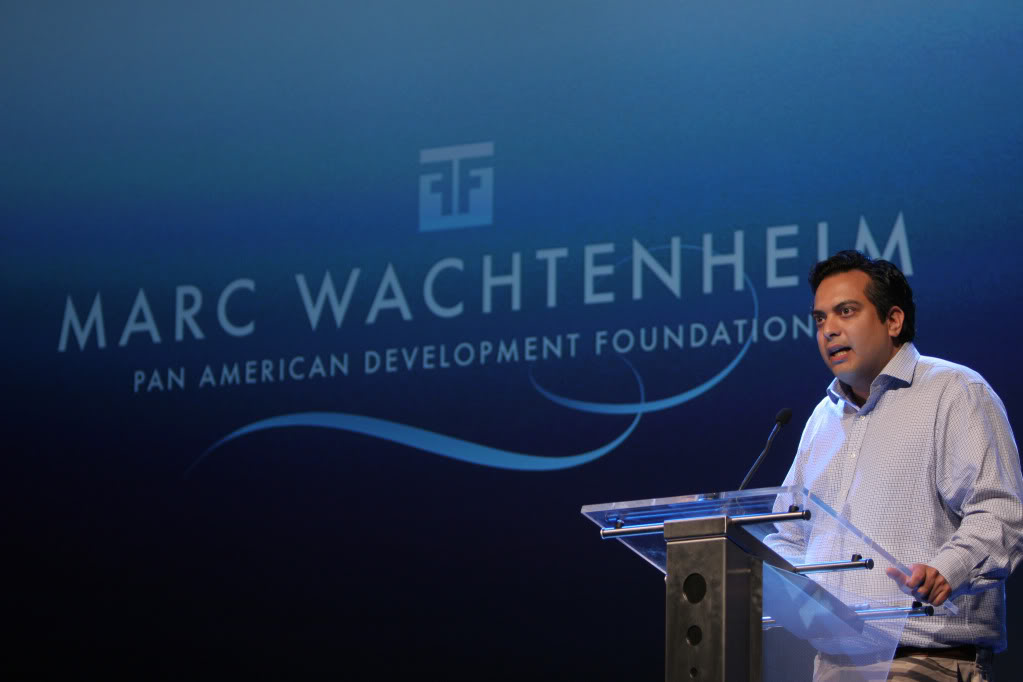
Marc Wachtenheim
How did Gross finally get the DAI subcontract?
In 2008, Gross learned that DAI had received a Cuba-related contract, described as a “Washington, DC-based project focused on promoting democratic governance in Cuba.”
One version of the story is that Gross then contacted John McCarthy, chief of party for the Cuba project at DAI, and told him he wanted in. Gross told a different story at his trial, saying DAI had asked him to submit a proposal for an upcoming project that he “knew nothing about.”
Whatever the case, Gross got the job even though he didn’t speak Spanish, was not a Cuba specialist and didn’t appear to have extensive experience on the island.
What happened to McCarthy?
He was promoted. He is now DAI’s Global Practice Leader.
So why did DAI hire Gross?
Gross’s connections certainly didn’t hurt. A DAI official who recommended him to USAID on Oct. 21, 2008, wrote:
I can comment on Alan Gross as a former colleague (we overlapped at Nathan from the late 1980s to the early 1990s) and general acquaintance (we stayed in touch over the years) with whom I have exchanged insights about economic development and new business opportunities in this arena every few months.
Alan is a very conscientious and trustworthy individual. He is particularly strong in situational and issues analysis, brokering of technologies and programmatic concepts, and the identification of business opportunities (and this last is a reference to business start-ups, pilots, and innovative ways of overcoming constraints to business growth). I cannot comment on JBDC, as I have never contracted services directly from his company.
Back up. What’s the reference to Nathan?
Gross was a senior partner at Robert R. Nathan Associates from 1987 to 1991.
What about JBDC?
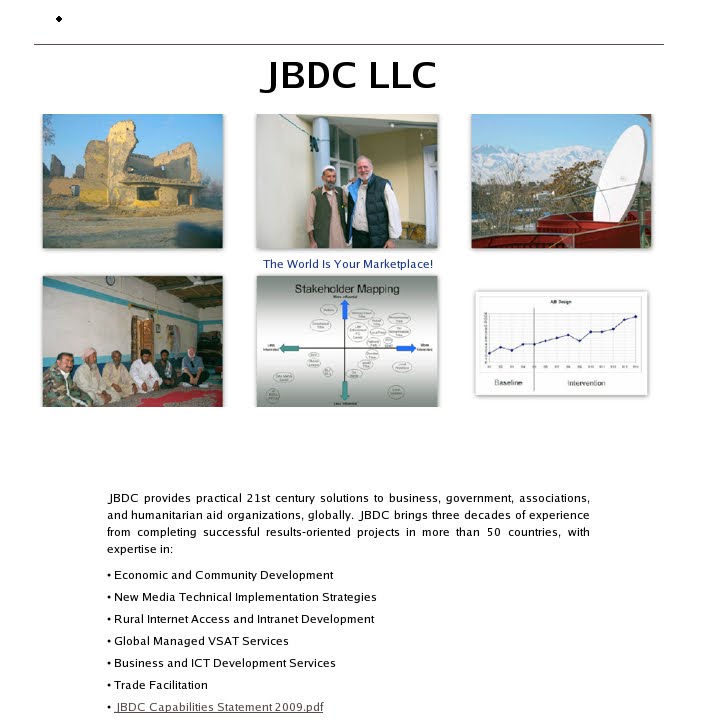
Joint Business Development Center, Inc., was a business and economic development group that Gross founded and ran.
Who designed DAI’s Cuba project?
The project was “based entirely” on Gross’s Dec. 29, 2008, proposal. Gross called it the “ICTs Para La Isla Project.”

From an Alan Gross memo
How long was the project supposed to last?
The initial phase was set for 15 weeks: Feb. 10, 2009, to June 10, 2009.
How much was Gross paid?
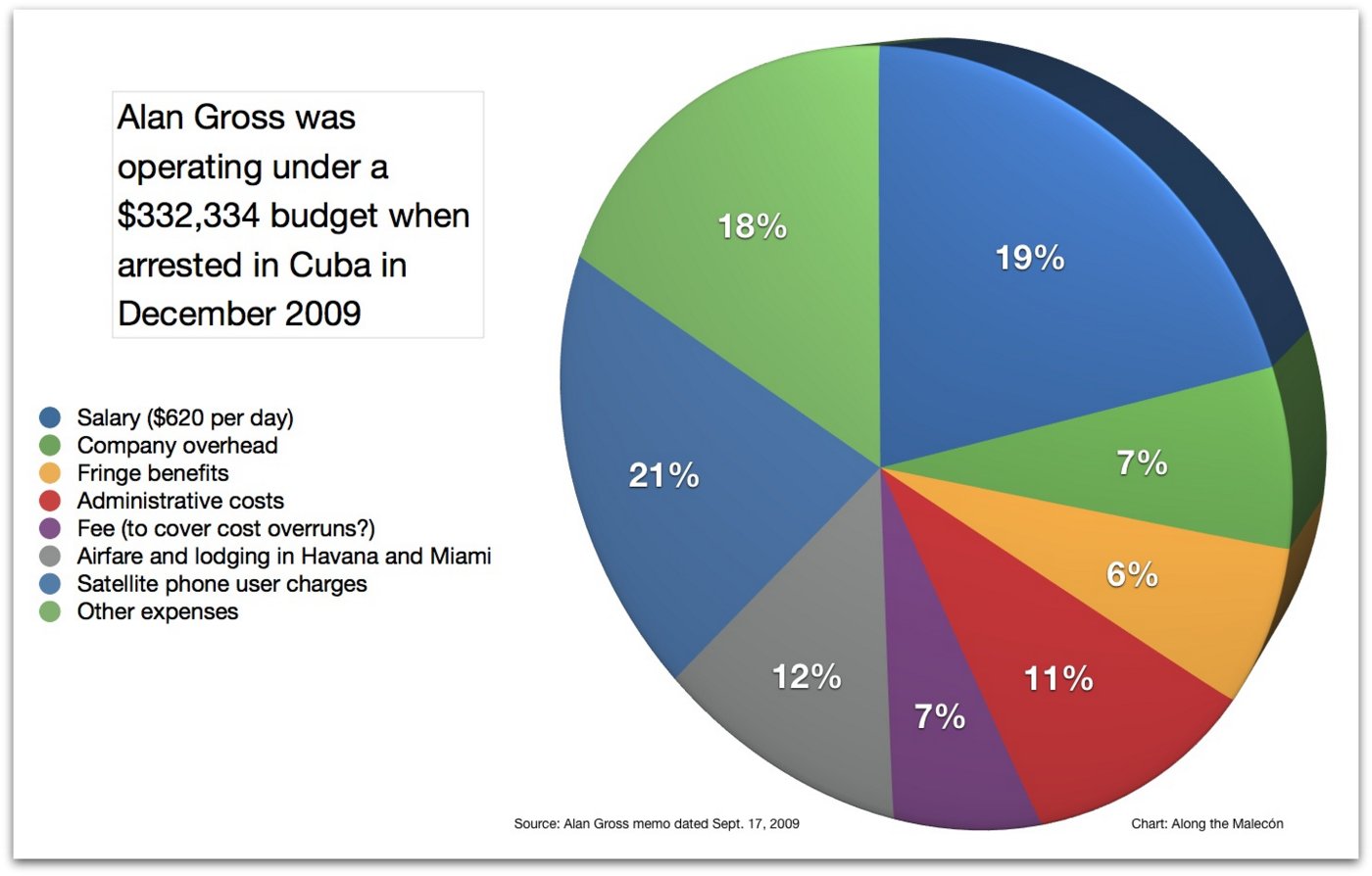
The original subcontract amount was $258,274. Gross asked DAI for a project extension and $332,334 in additional funds. USAID agreed and Gross signed the deal on Oct. 26, 2009, bringing the subcontract amount to $590,608.
How much did Gross actually receive?
DAI paid the original $258,274. Neither USAID nor DAI has revealed how much more he received. The contractor has said Gross was paid for the “deliverables” he completed.
Under the contract terms, Gross would have gotten $65,132.80 before departing on his last Cuba trip.
Then he would have received $21,168 after returning to the U.S. and filing a trip report with DAI, but he was arrested before he could do that. So it is quite possible he received just $65,132.80, not the full $332,334.
Did Gross have to pay his own expenses out of that budget?
Yes. His proposed $332,334 budget, for instance, included at least $167,445 in expenses. That means Gross would have taken home only $164,889 if he had completed the contract.
What were some of big costs that Gross expected to pay?
- Airfare and lodging in Havana and Miami, $40,112
- Satellite modem user charges for just four months, $68,640
What was his salary?
Gross charged DAI $620 per day. That came in just under USAID’s limit of $626.54, which was the agency’s maximum allowable salary without a waiver in 2009. Gross figured he’d collect that amount for 102 days under the contract extension, giving him $63,240.
So how could Gross have taken home $164,889?
Ah, therein lies the beauty of a federal contract. He threw in company overhead, $21,854; fringe benefits, $21,528; administrative costs, $35,081; and an expense that was simply described as his “fee,” a tidy $35,081, which may have been added to compensate for any cost overruns and other unexpected expenses.
What did Gross accomplish under the subcontract?
He installed three BGAN broadband Internet connections as part of a pilot project. The satellite modems were evidently placed at Jewish synagogues or offices in Havana, Camagüey and Santiago de Cuba. Gross wrote in a memo:
A wireless network where none previously existed was developed and made operational at 3 target group communities….The target group is now capable of receiving, transmitting, storing and conveying mass information through multi-modal means not previously available.
Gross said “activities initially developed” in Havana and the two other cities now “can be expanded to other identified target groups.”
He added:
Although not part of the Contractor’s initial scope of work, basic content was provided to each of the three communities. This includes three encyclopedias, pictures and video of each other’s communities (developed during three field visits), a significant array of music, and more than a terabyte of storage capacity at each site.
How many trips did Gross make to Cuba under the DAI subcontract?
Four during the initial phase, and one after the contract extension. He was arrested during the fifth trip.
How many trips did he plan under the contract extension, in addition to the five?
Seven, which would have brought the total to 12. His goals were to:
- Beef up security at the three Internet sites he had already established because he feared they’d be detected.
- Study and monitor usage at the sites.
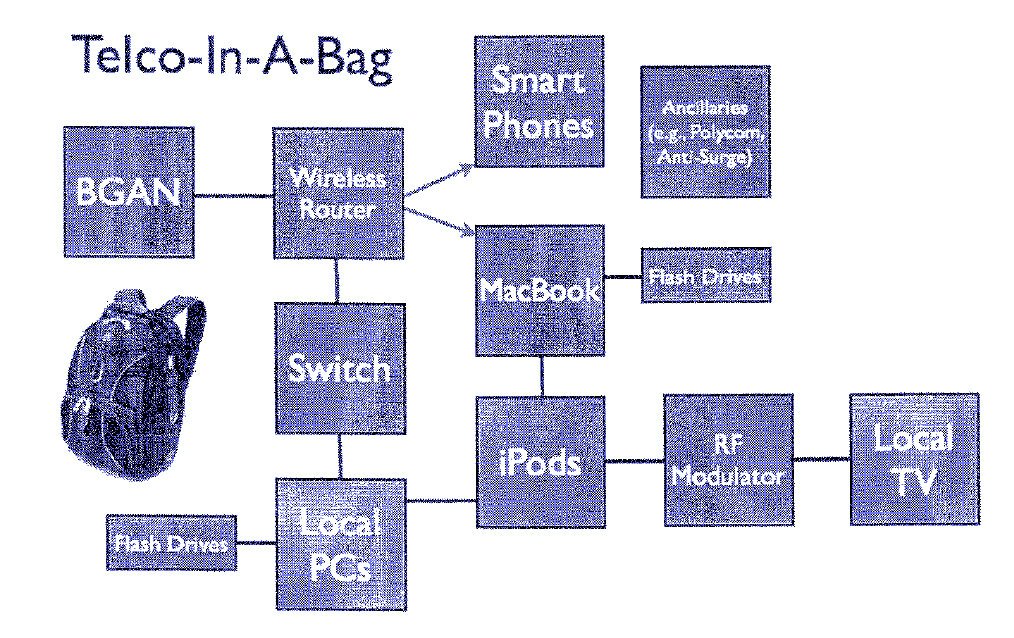
- Supply “up to three new beneficiaries” with telecommunications kits he called “Telco-in-a-Bag.” They were each to include a satellite modem, laptop and other equipment that would fit in a backpack.
When was Gross arrested?
Dec. 3, 2009.
Was anyone else jailed?
None of Gross’s Cuba contacts were reported jailed, but Wachtenheim was reportedly in Cuba around that time and was forced to leave the country in a hurry.
Capote, the professor who was also known as Agent Daniel, said Wachtenheim had traveled to Havana in December 2009 and had called him to arrange a meeting, but he didn’t show up.
Later he called to apologize. Capote recalled the conversation.
Wachtenheim: I had to urgently leave Cuba. Do you have your equipment with you? Do you have it?
Capote: I have it.
Wachtenheim: Make it disappear. Get rid of it quickly.
Cuban authorities had arrested an American who was “very awkward and naive,” Wachtenheim explained. He said Capote needed to get rid of his BGAN because having it would be “very dangerous” for Capote and for the American.
What were the charges against Gross?
In February 2011, Cuban authorities charged Gross with “actions against the independence or the territorial integrity of the state.” Prosecutors also accused him of taking part in a “subversive project aiming at bringing down the revolution.”
How did Gross explain his work?
In a statement given to the court, Gross said he saw the Cuba project as a way to help support his family and “pay off accumulated debts,” and improve Internet access for members of the Jewish community in Cuba.
Gross said:
Let me be absolutely clear and unambiguous: I have never, would never, and will never purposely or knowingly do anything personally or professionally to subvert a government or political system, or bring harm to anyone…I do deeply regret that my actions have been misinterpreted as harmful and a threat against the security and independence of Cuba. Surely, this runs counter to what I had intended.
How did the arrest impact DAI?
On Sept. 14, 2010, USAID modified its contract with DAI. The agency made changes to the scope of work, cut the funding amount from $28,310,630 to $6,857,817, and scheduled early termination of its agreement with the contractor.
Did USAID or DAI say how the contractor spent $6,857,817? Was there any accountability to taxpayers?
No and no. USAID has not made public any reports on the outcome of the Cuba Democracy and Contingency Planning Program. The agency said “due to the sensitive nature of content,” no reports on the program would be submitted to USAID’s huge online database, the Development Experience Clearinghouse.
Have auditors examined USAID’s Cuba programs?
Yes. USAID paid the DMP Group at least $1.47 million to audit the agency’s Cuba programs in 2009 and 2010.
However, USAID has refused disclose any meaningful audit results. In response to a Freedom of Information Act request, USAID in 2011 released a 10-page heavily redacted report that contained few details.
Who used the Internet connections that Gross set up?
Neither DAI nor USAID has reported usage details. Trusted Cubans who were vetted in some way evidently managed the sites, so access was limited. Gross’s subcontract required a usage analysis, but no documents on that have been make public.
Where are the BGAN modems, laptops and other equipment now?
Cuban authorities seized the gear.
How did the project advance the democratization of Cuba?
It is not clear the project had any impact in Cuba, despite its cost and the jailing of Our Man in Havana.
Sources:
- CDCCP Task Order
- DAI contract amendment
- Cuba judgment vs. Alan Gross
- DAI-CDCCP document
- DAI reply to Gross family lawsuit
- Alan Gross budget proposal
- August 2008 DAI meeting notes
- Cuba indictment vs. Alan Gross
- John McCarthy statement
- Vetting of Alan Gross
- Sept. 27 contract record
- Gross’s “Para La Isla” proposal
- DAI contract modification
- Subcontract
- Subcontract-1
- USAID salary memo
Related articles
- Cuba responds to unsubstantiated U.S. claims regarding the Alan Gross case (alethonews.wordpress.com)
- Documents Describe US “Transition Plans” for Cuba (alethonews.wordpress.com)
NPR Examines One Side of Honduran “Model Cities” Debate
By Dan Beeton | CEPR The Americas Blog | January 15, 2013
Honduran newspaper El Heraldo reports that a plan for the creation of “model cities” was reintroduced in the Honduran congress yesterday, months after the Supreme Court declared earlier such plans to be unconstitutional. Congress President Juan Orlando Hernández said that he did not expect the plan to run into the same legal problems as last year because he had taken into account the Supreme Court’s arguments for its decision.
According to El Heraldo, the bill proposes the creation of the 12 special regimes of various kinds which “shall enjoy operational and administrative autonomy.” Among these are “ciudades autónomas.”
Earlier this month, NPR’s This American Life profiled the “model cities” or “charter cities” concept for Honduras in a report that only presented one side of the debate. The report follows reporters Chana Joffe-Walt and Jacob Goldstein’s previous account of the Honduran “model cities” concept for NPR’s Planet Money, and an early examination of the plans in The New York Times Magazine by Planet Money co-creator Adam Davidson.
There is much important context that the This American Life “model cities” profile left out. First, the proposed “model cities” could impact the land rights of Garifuna (Afro-indigenous) communities in the area. There was little mention of opposition to the “charter cities” idea inside Honduras, outside of lawyers and the Supreme Court decision. And crucially, Honduras has been in a state of relative chaos since the coup, with a breakdown of institutions and the rule of law leading to, among other things, Honduras having the highest murder rate in the world (now at 91 per 100,000 people, according to the UN) (a fact that the This American Life report does note).
As The Americas Blog readers know well, there is a strong political dimension to this violence. As human rights organizations from Human Rights Watch to Amnesty International to the International Federation for Human Rights have described, there has been political repression since the coup, targeting opponents of the coup and of the current Lobo government with assassination, forced disappearance, torture, rape, kidnapping, and other abuses. Journalists, lawyers, opposition party candidates, the LGBT community, and women have also been targets, with attacks against each of these groups spiking since the coup. The Garifuna communities are another targeted group, with, e.g., land barons in the Zacate Grande region attacking community groups and radio stations. Honduras is now widely recognized as one of the most dangerous countries to be a journalist, with some 23 journalists murdered since President Lobo took office in January 2010 according to the Committee to Protect Journalists.
A prominent attorney, Antonio Trejo Cabrera, who opposed the “model cities” plan and who represented campesino groups in another conflict area – the Aguan Valley – was assassinated in September in a case that received international media attention and was widely denounced.
NPR listeners might also be interested to know that Honduras had made economic progress under the Zelaya government prior to the 2009 military coup d’etat (the This American Life report does not mention the coup). As we described in a November 2009 report, poverty and inequality decreased significantly during the Zelaya administration, with economic growth of more than 6 percent during the first two years. The Zelaya government also used expansionary monetary policy to counter-act the global downturn in 2008. It did not need to construct libertarian utopias in order to do these things; indeed, they would not have had this progress had they tried.
Related article
How the Media First Reported Abdulrahman Al-awlaki’s Assassination
By David Kretzmann | July 22nd, 2012
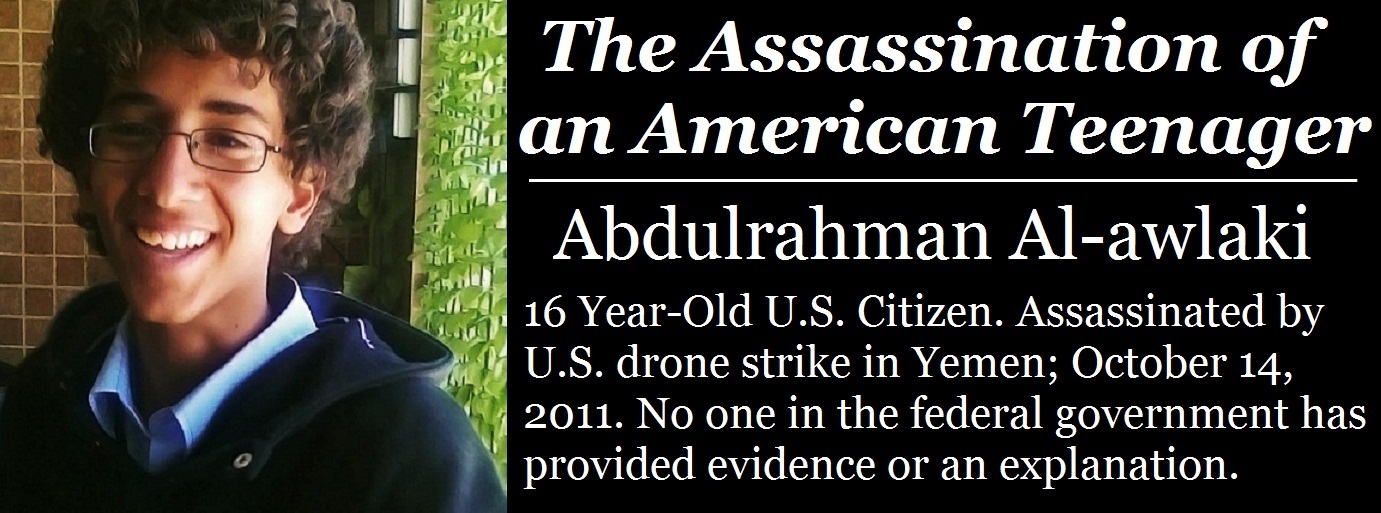
How was Abdulrahman’s targeted assassination initially reported in the media? Some quotes that sound very familiar with the usual semantics of all media coverage on drones and suspects:
“Yemeni officials told reporters that nine members of Al Qaeda in the Arabian Peninsula were killed in the strike near the town of Azzan in southeastern Yemen, including Awlaki’s 21-year-old son…” – LA Times, October 15, 2011
“Report: Al-Awlaki’s son among dead in U.S. airstrike on Yemen al-Qaida militants” – headline from Haaretz, October 15, 2011
“Official: Drone attack kills Al-Awlaki’s son in Yemen… The attacks, carried out in the Shabwa district, killed seven suspected militants, the defense ministry said.” – CNN, October 15, 2011
“Awlaki’s son is also among the 24 militants killed in air strikes targeting al-Qaeda in Yemen, local officials said.” – Al Arabiya News, October 15, 2011
“Three drone attacks in Yemen Friday night killed seven suspected militants including Anwar Al-Awlaki’s son, a security official said. Carried out in the Shabwa district, where the younger Awlaki had been holed up for more than eight months” – Business Insider, October 15, 2011
“U.S. drone strike in Yemen kills nine jihadis, including Awlaki’s son” – Hot Air, October 15, 2011
Lie #1: Abdulrahman is a 16 year old American teenager, not a 21 year old militant.
Lie #2: U.S. claimed al-Banna was the actual target. The problem with that excuse is that al-Banna is alive and well, and was never at that site. Since that revelation, the Obama Admin. simply states there is no official record of the death of Abdulrahman, and sweeps the story under the carpet so it doesn’t even have to take accountability that the crime even happened.
Lie #3: The media says Abdulrahman was hiding in the mountains for months. Actually, he left his home a couple weeks before to find out about his father, and even during that time he was living and moving around in the open, far from hiding.
It seems that being a suspected militant is enough to make you a viable target. And the criteria for determining what makes you a suspect is easily adjustable to their convenience it seems.
Barack Obama: the first U.S. president to use targeted assassination against a child.
Taken from: Abdulrahman Anwar Alawlaki – A crime we’ll never forget
Jordan Paust’s Bad Law: UH Law Professor Tries & Fails to Legalize an Israeli Attack on Iran
By Nima Shirazi | Wide Asleep in America | January 16, 2013
On January 15, 2013, University of Houston Law Center professor Jordan Paust penned an article entitled “Iran’s Nuclear Weapons Program and Lawful Israeli Self-Defense,” which was published on Jurist, a website of analysis and opinion pieces written by law professors, lawyers, and legal scholars. It is clear throughout Paust’s piece that his arguments are neither sound nor based in fact, and unfortunately rely entirely on false premises and long debunked propaganda. Paust himself is a contributing editor to Jurist.
To begin with, the title of Paust’s analysis itself betrays both its agenda and its absurdity, considering Iran doesn’t have a nuclear weapons program according to all Western and Israeli intelligence agencies and unprovoked, “preventative,” “anticipatory” or “preemptive” military assaults are not only totally illegal but also can not possibly be justified as “self-defense.”
And that’s just the beginning; the falsehoods continue to stack up. In fact, Paust reveals his utter ignorance from the get-go, writing – in his very first sentence, no less – that the Iranian leadership “continues to proclaim its desire to wipe Israel off the map” – something even Israel’s own Deputy Prime Minister Dan Meridor admits it has never done. His understanding of Article 51 of the United Nations Charter (which affirms the right to retaliatory self-defense if attacked first) is bizarrely lacking, especially considering he’s a law professor. He joins the shameful company of Alan Dershowitz in this regard.
Paust goes on to (1) accuse of Hezbollah and Hamas of terrorism and serving as Iranian proxies, without ever mentioning Israel’s decades of international law violations and continuing war crimes and occupation or the fact that they are autonomous organizations that don’t take direction from Iran; (2) ignore all facts pertaining to the illegality of initiating of a “war of aggression” (the “supreme international crime,” according to the Nuremberg Tribunal); and (3) claim that Iran is violating UNSC resolutions regarding the cessation of uranium enrichment, a demand many have long acknowledged is ultra vires, itself abrogates the NPT and the resolutions are themselves illegal.
Apparently, though, these facts aren’t important to Professor Paust.
Furthermore, among the “facts” that Paust marshals to advance his argument that Israel could legally launch a preemptive attack on Iran is the contention that “Iran is publicly ‘gunning’ for Israel.” Yes, he wrote that. And he still has a law degree. And is presumably literate.
From there, Paust launches into a bizarre and wholly inapplicable “Wild West Showdown” analogy in which the (Israeli) “good guy” is justified in “shoot[ing] first” since he knows the (Iranian) “bad guy” is out to get him. It is “not necessary that the bad guy shoot first,” Paust writes, elaborating (for some inexplicable reason) that “the good guy could have drawn first once it was known that the bad guy was gunning for him and they were staring each other down in the street.” By way of trying to make this dumbfounding, Manichean analogy make sense, he explains, “Someone was about to draw first and, in context, the process of attack had begun and a right of self-defense had been triggered even though it was possible that the bad guy might back down and make this clearly known before the good guy fired.”
If this passes for astute legal analysis these days, it’s no wonder the United States has little to no respect for basic tenets of international law.
The analysis is so strained, based entirely on presumptions and assumptions with no basis in fact (only in Netanyahu-approved talking points), that Paust discredits himself by writing in the first place.
In the end, Paust pines for a peaceful way out. His solution? That Iranian leaders “shift their attention to peace,…comply with the Treaty on the Non-Proliferation of Nuclear Weapons” and not build a bomb. As countless IAEA reports have demonstrated, Iran’s nuclear program remains peaceful and no nuclear material has ever been diverted to a military program. Iran has also never been found to have violated its obligations to the NPT. Its leaders, for decades now, have repeated denounced nuclear weapons as, not only amoral and religiously sinful, but also strategically useless and politically irrelevant.
But you wouldn’t know that from reading Jurist.
Related articles
- Ask The Leveretts Anything: Are Israeli Fears Of A Nuclear Iran Overblown? (andrewsullivan.thedailybeast.com)
The Fantasies of David Brooks
By JOHN W. FARLEY | CounterPunch | January 17, 2013
David Brooks, conservative pundit at the New York Times, reviewed a new book (The World Until Yesterday: What Can We Learn from Traditional Societies?) by geographer Jared Diamond in the Sunday January 13 NYT. Under the title Tribal Lessons, Brooks discusses warfare between pre-state tribal societies in New Guinea. Between April and September 1961, a series of battles between rival tribal alliances, using spears and arrows, killed total of 0.14% of the total population of the tribal alliances.
Brooks informs the readers of the New York Times that “As a share of the total population, that’s a higher casualty rate than Europe, Japan, China, or America suffered during the world wars.” Brooks goes on to say that “The highest war-related death rates for modern societies (Russia and Germany during the 20th century) are only a third of the average death rates of tribal societies. Modern societies average war-related death rates that are about one-tenth a high as tribal societies.”
That didn’t sound right to me, so I decided to do some fact checking on Wikipedia, looking up casualties (military and civilian) during the First and Second World War.
During the First World War, many countries suffered losses far greater than Brooks’ 0.14%, including the UK (2.19%), France (4.29%, Germany (3.82%), and the Russian Empire (1.89% to 2.14%). The heaviest percentage losses were suffered by Romania (9.33%), the Ottoman Empire (13.72%) and Serbia (16.11%). The United States escaped with 0.13%. The Central Powers (Austria-Hungary, Bulgaria, German Empire, and Ottoman Empire) averaged 5%, while the Entente Powers (including the U.S.) averaged 1.19%. The Second World War was even bloodier: Wikipedia lists casualties for Germany (8 to 10.5%), the Soviet Union (13.88%), Japan (3.67 to 4.37% ), and China (1.93% to 3.86%).
Notice that the combined losses in both world wars for Russia/Soviet Union is 16%, which according to Brooks is “only a third of the average death rates of tribal societies”. That would imply that the death rates of tribal societies at 16% x 3 = 48%, instead of Brooks’ number of 0.14%. Brooks’ error is a factor of 343 (!!)
Brooks’ concludes that “the most obvious difference between us is that pre-state tribal societies are just a lot more violent.” Not if you do the math right. Actually, the most obvious difference is that modern industrial societies at war are just a whole lot more violent than tribal societies.
The New York Times employs fact-checkers. Did anybody ever fact-check Brooks’ review? Apparently not.
The NYTimes employs statistician Nate Silver, author of the 2012 book The Signal and The Noise: Why So Many Predictions Fail, But Some Don’t. Mr. Silver can do math, and Silver can pull up Wikipedia on his computer. The Times should hire Nate Silver to babysit for David Brooks.
This is not the first offense for David Brooks. A dozen years ago, Brooks’ 2001 article in the Atlantic Monthly, “One Nation, Slightly Divisible” explored the cultural differences between Red State America and Blue State America. Brooks’ article was widely praised. However, when journalist Sasha Issenberg fact-checked it in a 2004 article in Philly Magazine, Issenberg found that many of Brooks’ generalizations were false, and much of his “research” was invented out of whole cloth.
Hugo Chavez: Why Does He Hate Us?
By Peter Hart | FAIR | January 11, 2013
If there’s one thing media want you to know about Venezuelan president Hugo Chavez, it’s that he doesn’t like the United States. On the PBS NewsHour (1/10/13), Ray Suarez told viewers that Chavez
antagonized Washington, it seemed, whenever he could, forging friendships with Iran’s Mahmoud Abbas (sic), Syria’s embattled Bashar al-Assad, and he formed an especially close bond with Cuban Presidents Fidel and Raul Castro.
 On the CBS Evening News (1/8/13), Scott Pelley said:
“Chavez has made a career out of bashing the United States and allied himself with Iran and Syria.”
While it’s hard to say Chavez has made a “career” out of U.S.-bashing–he does have, after all, a full-time job as president of Venezuela–you, too, might be excused for harboring some hard feelings towards a government that helped to try to overthrow your own. Which may be why U.S. reports rarely bring up the 2002 coup attempt–and when they do, treat Washington’s involvement in it as another nutty Chavez conspiracy theory.
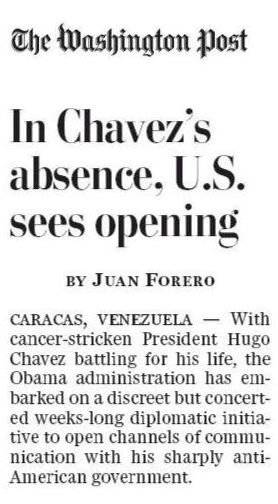
Here’s Juan Forero in the Washington Post (1/10/13):
A central ideological pillar of Chavez’s rule over 14 years has been to oppose Republican and Democratic administrations in Washington, which he accuses of trying to destabilize his government.
“I think they really believe it, that we are out there at some level to do them ill,” said Charles Shapiro, president of the Institute of the Americas, a think tank in San Diego.
As ambassador to Venezuela from 2002 to 2004, Shapiro met with Chavez and other high- ranking officials, including [Vice President Nicolas] Maduro. But the relationship began to fall apart, with Chavez accusing the United States of supporting a coup that briefly ousted him from power. U.S. officials have long denied the charge.
Shapiro recalled how Maduro made what he called unsubstantiated accusations about CIA activity in Venezuela, without ever approaching the embassy with a complaint. He said that as time went by, the United States became a useful foil for Chavez and most Venezuelan officials withdrew contact.
“A sure way to ruin your career, to become a backbencher, was to become too friendly with the U.S. Embassy,” Shapiro said.
So Venezuela has a strange political culture where being friendly with the U.S. government gets you in trouble.
The Post airs Chavez’s charge–and then the U.S. denial. But the United States had all sorts of contact with the coup plotters before they made their move against Chavez in 2002. According to the State Department (7/02):
It is clear that NED [National Endowment for Democracy], Department of Defense (DOD) and other U.S. assistance programs provided training, institution building and other support to individuals and organizations understood to be actively involved in the brief ouster of the Chavez government.
And the CIA, as was reported by Forero himself (New York Times, 12/3/04), knew of the coup plotting.
The Central Intelligence Agency was aware that dissident military officers and opposition figures in Venezuela were planning a coup against President Hugo Chávez in 2002, newly declassified intelligence documents show. But immediately after the overthrow, the Bush administration blamed Mr. Chávez, a left-leaning populist, for his own downfall and denied knowing about the threats.
Scott Wilson, who was the Washington Post foreign editor at the time, told Oliver Stone for his film South of the Border:
Yes, the United States was hosting people involved in the coup before it happened. There was involvement of U.S.-sponsored NGOs in training some of the people that were involved in the coup. And in the immediate aftermath of the coup, the United States government said that it was a resignation, not a coup, effectively recognizing the government that took office very briefly until President Chavez returned.
And we know that the United States made quick efforts to have the coup government recognized as legitimate. The Bush government, immediately after the coup, blamed it on Chavez. And some of the coup plotters met with officials at the U.S. embassy in Caracas before they acted.
But the important thing for readers to know, according to Wilson’s successors at the Washington Post, is that U.S. officials deny they supported anything.
Logical Fallacies: The Financial Times on Syria and Uranium Stockpiles
News Unspun | January 10, 2013
On 8 January the Financial Times published an article by James Blitz, entitled ‘Fears raised over Syria uranium stockpile’, premised primarily on the ‘fears’ and otherwise subjective ruminations of unnamed ‘official’ and ‘expert’ sources, one the two named sources being former weapons inspector David Albright (discussed further below).
The claims of Blitz’s sources rest on the argument that, because we lack proof that something is false, it must be true (an ad ignorantiam argument). For example, Blitz states that, ‘Three satellite pictures of the Marj al-Sultan site taken in October, November and December of 2012 and shown to the FT […] appear to show the gradual clearance of a large orchard there, for no apparent reason’. And so, the clearance has triggered fears that (a) the site is ‘a secret uranium conversion facility’, and (b) that tonnes of uranium have been transferred to the site. Because we do not have proof that the orchard has not been cleared for the transfer of uranium, this is cause for concern that this may be the case, according to the article.
Blitz’s sources claim that they have legitimate concerns about a uranium stockpile in Syria, enough uranium they say ‘to provide weapons-grade fuel for five atomic devices’, which could then be transferred ‘from Syria to Iran by air’.
The overarching concern of the article is that Iran would be provided with ‘a “vital resource” [which could] possibly be used to build a bomb’. This depends on a series of speculative claims made by Blitz’s sources turning out to be simultaneously true, with the addition of Iran ‘attempt[ing] to build another secret uranium plant’ (Blitz doesn’t expand on the meaning of ‘another’). To reach this conclusion, the following must all occur:
1. Syria must be in possession of 50 tonnes of unenriched uranium. (Blitz plainly states, in the opening paragraph, that cause for concern lies with ‘up to 50 tonnes of unenriched uranium’ – the implication being that such a thing actually exists – before later backtracking to suggest uncertainty with the inclusion of the clause ‘if it exists’ in reference to the uranium.)
2. The Marj al-Sultan site must actually be a uranium conversion facility. (The report notes that such claims are alleged: ‘what [the experts] allege is a secret uranium conversion facility that the Syrian regime built at the town of Marj al-Sultan near Damascus’.)
3. The uranium must be at the site. (‘Whether the uranium is at the site is unclear, the officials conceded’.)
4. Iran must be trying to ‘seize’ the uranium. (‘Iran, which is closely allied to the Syrian regime and urgently needs uranium for its nuclear programme, might be trying to seize such a stockpile’.)
Given that the above scenarios are at best uncertain and at worst hypothetical, the credibility given to the argument that this might result in Iran ‘building the bomb’ is questionable.
One of Blitz’s two named sources is David Albright, former weapons inspector and head of the Institute for Science and International Security (ISIS). Put forward as a ‘leading expert’ on the Iranian nuclear programme, he is quoted as having concerns about the ‘whereabouts of this uranium’, which Blitz concedes may or may not exist. Albright’s past speculations on states he supposed had been hiding nuclear weapons is worth considering. In August 2002, eight months before the US-led invasion of Iraq, he was interviewed by The Guardian in an article entitled ‘Does Iraq have a nuclear weapon?’ Below are three quotes from the article, which highlight to some degree the lack of substance to his arguments:
‘People have argued that you could find nuclear facilities quickly as they are big, but Iraq knows how to make them small…The clock is ticking’.
‘You would think that if Iraq had a nuclear weapon, it would have done something to show it. But then you can’t be certain’.
‘Once it gets the gas-centrifuge programme, you have to assume that it could make [a bomb] in half a year’.
More recently, Albright has been the co-author of a report from ISIS entitled ‘New Satellite Image Shows Activity at Parchin Site in Iran’. The introduction to the report discusses a satellite image which ‘shows what appears to be a stream of water that emanates from or near the building’ that ‘raises concerns that Iran may have been washing inside the building, or perhaps washing the items outside the building’. This and other activities at the Parchin site that have been seen in the last year on satellite images, such as the movement of lorries, and the demolishing of a building, provide the sole basis for Albright’s argument that there has been a nuclear cover-up. In the Financial Times article, Blitz’s reference to ‘the gradual clearance of a large orchard’ is in a similar vein to the speculations that ISIS have made in the past about Iran.
As Albright’s targets are generally the official ‘enemies’ of the west, he receives respectful attention from the UK media, despite an absence of any factual substance to his work.
The ‘concerns’ Blitz reports on belong to his sources, so it is their judgement, and not just his, which is premised on fallacy. Blitz, however, has based his entire argument, without criticism, on the opinions of these officials, and has further developed them into a foretelling narrative, one which doesn’t stand up to even the slightest scrutiny.
‘Iran not involved in cyber strikes like US’
Press TV – January 10, 2013
Iran’s mission to the United Nations has dismissed allegations of the Iranian government being behind cyber attacks on the US banking system.
The mission said in a statement on Thursday that the Islamic Republic condemns any use of malware that target important service-providing institutes by violating the national sovereignty of states.
“Unlike the United States, which has, per reports in the media, given itself the license to engage in illegal cyber-warfare against Iran, Iran respects the international law and refrains from targeting other nations’ economic or financial institutions,” the statement said.
The US Center for Strategic and International Studies (CSIS) has claimed that Iran has orchestrated cyber attacks on US financial institutions.
“We believe that raising such groundless accusations are aimed at sullying Iran’s image and fabricating pretexts to push ahead with and step up illegal actions against the Iranian nation and government,” the Iranian mission’s statement noted.
Related articles
- Iran is guilty because… we say so (alethonews.wordpress.com)
Iran is guilty because… we say so
left i on the news | January 09, 2013
The U.S. is ramping up pressure on the American public to accept an attack on Iran, with not one but two stories in today’s news. It wasn’t enough to accuse Iran of producing nuclear weapons based on no evidence, now we’re throwing into the mix accusations of cyberattacks and hostage taking as well.In perhaps the more serious charge, an AP story accuses Iran of holding retired FBI agent Robert Levinson, who disappeared in 2007 on an Iranian island. Iran has repeatedly denied holding Levinson, which would seem reasonable on two counts — one, they never denied holding the three American hikers, nor journalist Roxanna Saberi; why would they deny holding Levinson? And two, considering they have made no demands for a “spy swap” or anything of the sort, to what end would they be holding him?
Logic, of course, doesn’t deter the U.S. authorities who planted this story. And what exactly is their “evidence”? “The tradecraft used to send those items [videos and pictures of the hostage] was too good, indicating professional spies were behind them.” An example of that “professional tradecraft”? They used a cybercafe to send the video and never used that email address again! Oh, the amazing professionalism! The wondrous “tradecraft” of anyone who could pull off such a daring feat! Yes, you read right, this is the evidence on which “the U.S. government’s best intelligence analysis” says that Iran is holding Levinson.
The second story comes with an equal lack of significant evidence. The U.S. government (through the accommodating auspices of the New York Times) is accusing Iran of being behind recent DDoS attacks on American online banking sites. And here comes the “evidence”:
American officials have not offered any technical evidence to back up their claims, but computer security experts say the recent attacks showed a level of sophistication far beyond that of amateur hackers. Also, the hackers chose to pursue disruption, not money: another earmark of state-sponsored attacks, the experts said.
Again, two things. One, amateur hackers are pretty much capable of doing anything these days. And two, many amateur hacking attacks, probably most of them, are done for the purpose of disruption, not money.The most interesting aspect of this story is actually this admission:
American intelligence officials…claim Iran is waging the attacks in retaliation for Western economic sanctions and for a series of cyberattacks on its own systems.
Needless to say, Iran would be perfectly justified in doing so, given that the U.S. is waging an all-out non-military war against Iran. It’s no accident that sanctions are referred to as “tightening the noose.” U.S. “officials” even admit that the sanctions are “designed to…threaten the country with economic collapse.” This is war, and Iran would be perfectly justified in retaliating by a lot more serious means than these cyberattacks. That said, it must be noted again that the “evidence” that Iran is behind these attacks borders on the laughable.But the U.S. government is not laughing. It is deadly serious in its intent to bring down the Iranian government, and remove from the world one more pole of independence from imperialism.
Featured Video

Liberty Cannot Exist Inside a Panopticon
or go to
Aletho News Archives – Video-Images
From the Archives
Left-leaning despisers of 9/11 Truth movement: Do you really believe in miracles?
David Ray Griffin | Global Research | 06 Jul 2010
An Open Letter to Terry Allen, Noam Chomsky, Alexander Cockburn, David Corn, Chris Hayes, George Monbiot, Matthew Rothschild, and Matt Taibbi.
[1]According to several left-leaning critics of the 9/11 Truth Movement, some of its central claims, especially about the destruction of the World Trade Center, show its members to be scientifically challenged. In the opinion of some of these critics, moreover, claims made by members of this movement are sometimes unscientific in the strongest possible sense, implying an acceptance of magic and miracles. … Full article
Blog Roll
 Aletho News
- Iran calls for emergency UNSC meeting over Trump’s ‘brazen’ bomb talk, Israeli threats
- Iranian sources reveal details of Russia-China Hormuz proposal
- Plan for more US-Israel integration puts our military tech at risk
- Another Round Against Iran Will Break What Is Left of the Gulf
- SVR Report on Ukraine’s Mexican Drug Gang Links Could Pressure Zelensky, Won’t Change US Policy
- British Government Employees Were Fact-Checking the News at the BBC. Nobody Told You.
- Albania on fire: who’s behind the riots?
- Egypt’s Civil Democratic Movement rejects involvement in regional war
- Egypt collaborates with Israel to build ‘Green Rafah’ project over erased Palestinian city
- Rising fuel prices and shortages have helped drive ongoing protests and rioting in France
- If Americans Knew
- US Officials Face Fresh Pressure After Another American ‘Brutalized’ by Israeli Settlers in West Bank
- Israel-Backed Palestinian Militias Terrorize Displaced Families in Gaza
- FBI subpoenas pro-Palestine activists over Israeli weapons plant disruption
- Fourth winter arrives in wartorn Gaza, too early – Daily Update
- More on how Bari Weiss is using CBS on behalf of Israel
- What the UK Is Doing to Pro-Palestine Novelist Sally Rooney Is an Act of Orwellian Villainy
- ‘We will build palaces for Jews in Gaza’: Right-wing activists establish new outpost near border
- ‘You see us burning, you stay silent’: Family’s agony over mother and sons burned to death in Gaza tent
- Israel keeps Palestinian journalist Bushra al-Tawil in isolation for 46 days
- US-Israel integration plan puts US military tech in Israel’s hands
- No Tricks Zone
- Predictions Made By Renowned Climate Proifessor Over Past Decades Have Been Proven To Be Poor
- New Study Suggests Large Regions Of The Pacific Ocean Have Been Cooling For The Last 80 Years
- Germany’s Green Energy Debacle: High Energy Costs Force Kahla Porzellan to Close After 182 Years!
- New Study: 50 Years Of The Most Aggressive ‘Net Zero’ Policies Can Only Affect The Global Climate By 0.03°C
- US September “Heat” Was No Record…Many Records Set Decades Ago
- Latest European Green Energy Debacle; Portugal’s Largest Flagship Solar Park Insolvent!
- Green Energy Debacle: German Expert Professor Fritz Vahrenholt Warns Of Severe Economic And Social Consequences
- Two More Paleo Reconstructions Affirm Meters-Higher Sea Levels Across Ireland, Brazil 7000-6000 Years Ago
- New Study: Earth And Venus Surface Warmth Largely Explained By Convection And Lapse Rate, Not CO2 Or Radiation
- 2025 Nature Paper Claiming Worsening Global Drought Gets RETRACTED …Heavily Flawed

