The Cardiff Bay Tidal Lagoon – can it power 1.3 million Welsh homes?
By Roger Andrews | Energy Matters | October 10, 2017
“Cardiff Tidal Lagoon is now being developed as the first full-scale lagoon in our programme. With a potential installed capacity of around 3GW, this project could provide enough green, clean home-grown power for every home in Wales.” Mark Shorrock, Chief Executive, Tidal Lagoon Power.
In this post we investigate this claim. The results, as usual, are predictable.
The Cardiff Bay tidal project sneaked in under my radar. In fact I didn’t even know about it until I came across the article recently featured in Blowout Week 196. It has yet to get the go-ahead from the government (and may never get it), but planning is obviously well along, with the project reportedly in its “twelfth design iteration”. In addition, a lengthy environmental impact scoping report has been completed and the project has just received approval to connect to the national grid. According to the schedule the project will generate its first power in 2022.
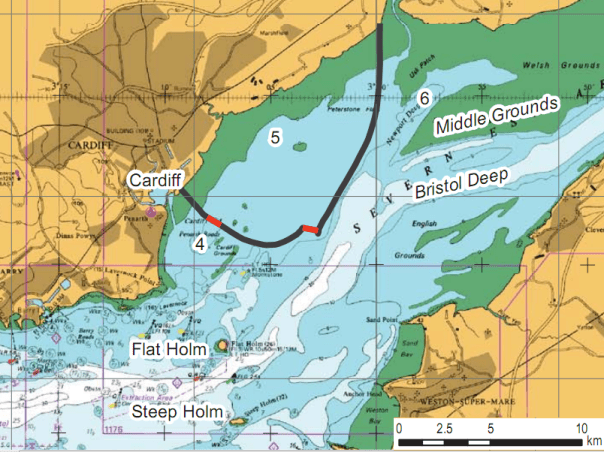
And Cardiff Bay is big. It will have a nominal capacity of around 3GW – the official number is 3.24GW – and is estimated to cost around £8 billion. Production will be approximately 5.5TWh per year (giving a capacity factor of around 20%). The lagoon covers 70 sq km and is enclosed by a sea wall 20.5 kilometers long. In short, it’s Swansea Bay times ten. Figure 1 shows the project layout. The lagoon takes up half the width of the Bristol Channel:
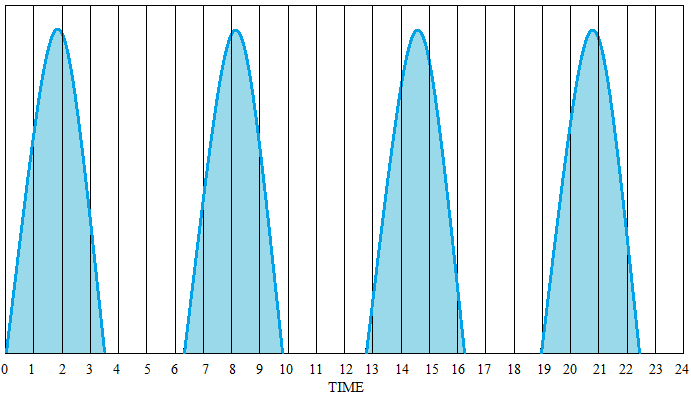
Figure 1: Cardiff Bay lagoon showing sea wall location and turbine inlets/outlets (red). From Tidal Power’s environmental scoping report
I’m not going into technical details here because these have already been dissected by Euan Mearns and myself in previous posts on the Swansea Bay tidal lagoon project here and here. Instead I will concentrate on Mr. Shorrock’s claim that the project could “power … every home in Wales.”
The thing to remember about tidal power is that while it’s 100% predictable it’s also non-dispatchable, meaning that we can predict exactly when we won’t be able to dispatch it. And the reason it’s non-dispatchable is that the tide in the UK comes in and goes out twice a day and the lagoon generates power when the tide is ebbing or flowing, but no power at all when the tide turns. The result is four daily power spikes, separated by periods of zero generation, that bear no relation to fluctuations in demand. Figure 1 shows broadly what these spikes will look like. (No values are given on the Y-scale because the plot is purely illustrative. Values will come shortly):
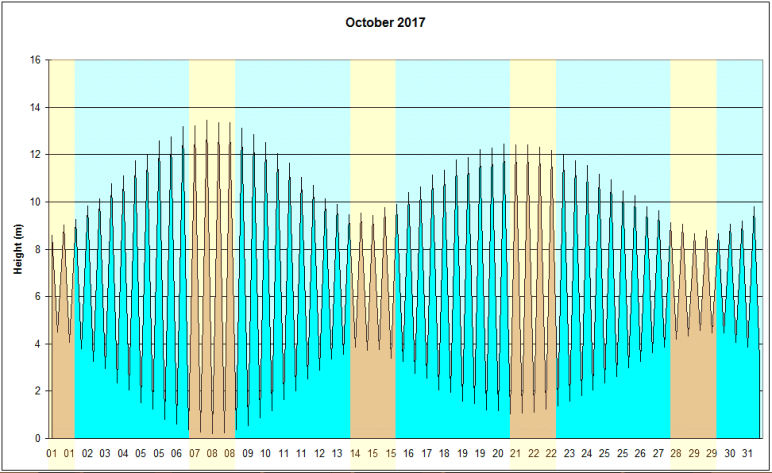
Figure 2: Illustrative plot of daily tidal lagoon generation.
Another problem is the large difference in generation between spring and neap tides. Figure 3 shows Cardiff tide heights for October 2017. As discussed in the Swansea Bay post generation is a function of somewhere between the square and cube of the tide range, and as a result the Cardiff lagoon, were it in operation, would generate roughly ten times as much electricity per day during the spring tides around the 8th and 21st as it would during the neap tides around the 1st, 15th and 29th:
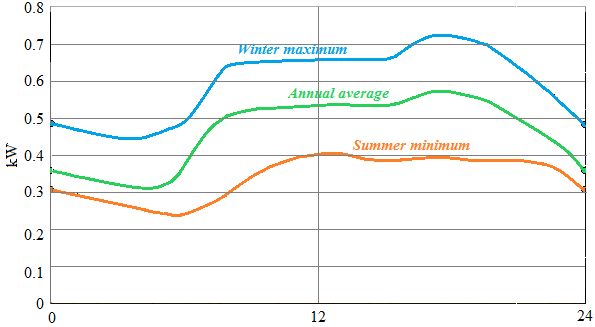
Figure 3: Cardiff tides, October 2017, data from Cardiff BSAC
Now we will turn to Welsh homes. According to the Census Bureau there are 1.3 million of them, and according to Energy UK the average UK household consumed 3,938 kWh of electricity in 2015, the last year for which I can find data. Assuming that Welsh households are average consumers then 1.3 million of them will consume 1.3 million times 3,938 kWh = 5.07Twh/year. This is less than the 5.5TWh Cardiff Bay is expected to generate. So far so good.
Now let us further assume that Cardiff Bay goes ahead and that its generation is evenly spread out between the 1.3 million Welsh households. Each household consumes 3,938kWh/year, representing an average load throughout the year of 0.45kW. But what does the household’s daily load curve look like? For want of better information I’ve assumed it’s the same as the total UK load curve, and after appropriate scaling I came up with the three load curves shown in Figure 4:
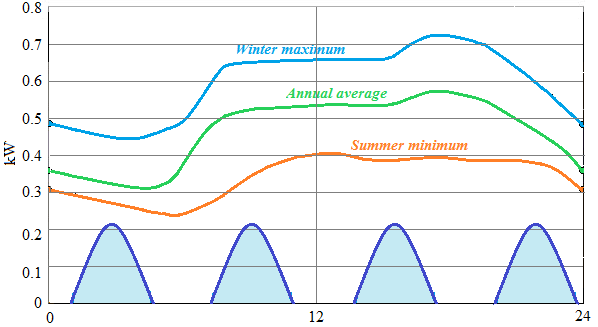
Figure 4: Daily load curves for the average Welsh household. Based on a graphic from energymag
Then I divided Cardiff tidal lagoon generation by 1.3 million households and superimposed it on the Figure 4 curves. The results for neap tides and spring tides are shown in Figures 5 and 6:
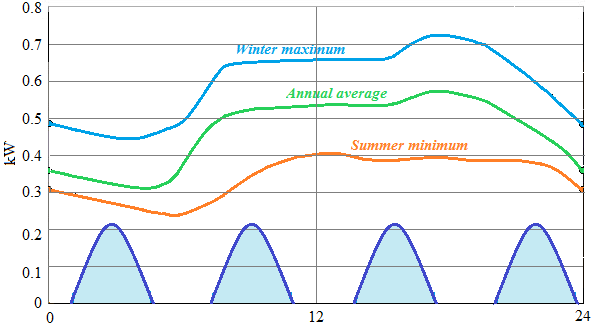
Figure 5: Comparison of Cardiff lagoon tidal generation (blue) with daily load curves for the average Welsh household, neap tides
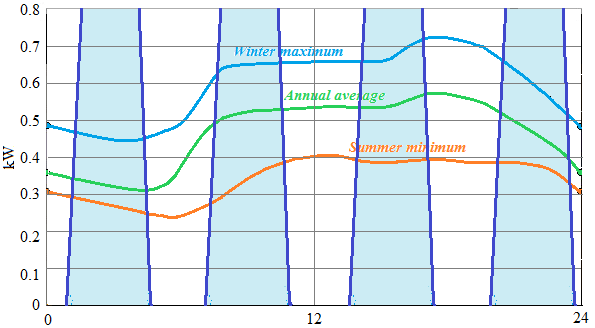
Figure 6: Comparison of Cardiff lagoon tidal generation (blue) with daily load curves for the average Welsh household, spring tides. Tidal generation tops out around 2.3kW
What’s a Welsh homeowner to do about this? He or she has two options. Either fill a boxcar with storage batteries or believe Mr. Charles Hendry’s reassurance that National Grid can somehow smooth out these wild fluctuations:
There is an inevitable question about how the system could accommodate very significant volumes of power generation from tidal lagoons that may be predictable but not necessarily when demand is greatest. National Grid have been reassuring in their evidence to us that such power could be accommodated and managed, and as we move towards ‘smarter’ ways of managing energy demand, consumers will be more able to use power more cheaply when it is most plentiful.
Better get your washing done quickly, Mrs. Davies.
What Saudis hope to get out of Russia ties
By M.K. Bhadrakumar | Asia Times | October 8, 2017
The mishap at the Moscow airport on Wednesday when the Saudi King Salman bin Abdulaziz arrived on a historic visit, was a wake-up call that even the most carefully choreographed enterprises may hold unpleasant surprises.
When Salman exited his plane and stepped out onto the special escalator he travels with, something went wrong. It malfunctioned halfway down, leaving the king standing awkwardly for about 20 seconds before he decided to walk the rest of the way. For ordinary mortals, this wouldn’t have been an uncommon occurrence but divinity ordains when a king is involved.
The Russian-Saudi entente is not going to be smooth. The climactic event last week drawing Saudi Arabia into President Vladimir Putin’s Middle East sphere of influence, must be assessed with a sense of proportions.
Salman had hardly departed from Russian soil when the Pentagon issued a statement announcing that the State Department had on Friday approved a possible US$15-billion sale of Terminal High Altitude Area Defense (THAAD) systems to Saudi Arabia. The statement recalled that Saudi Arabia had requested to purchase from America 44 THAAD launchers, 360 missiles, 16 fire control stations and seven radars.
The US officials confirmed that the sale was part of the $110-billion package of defense equipment and services initially announced during US President Donald Trump’s trip to Saudi Arabia in May. The Pentagon statement said, “This potential sale will substantially increase Saudi Arabia’s capability to defend itself against the growing ballistic missile threat in the region.”
The timing of the US announcement is highly significant. It comes in the wake of claims by Russian officials that Saudi Arabia had shown interest in buying the S-400 missile defense system from Russia. The Saudis have successfully pressured the Trump administration to approve the sale of the THAAD system. And Washington has signaled that the US will not let Russia make an entry into the Saudi arms bazaar.
Hard-nosed realpolitik
The hard-nosed realpolitik in the Saudi-Russian entente had a dramatic start when the then Saudi intelligence chief Prince Bandar bin Sultan visited Russia and held a four-hour meeting with Putin at the latter’s dacha outside Moscow in early August 2013. According to media leaks from Russian sources, the Prince allegedly confronted the Kremlin with a mix of inducements and threats in a bid to break Russia’s support for the Syrian regime, which Riyadh was trying to overthrow.
Bandar’s package was riveted on the alluring proposal of a unified Russian-Saudi strategy to keep oil production quantities at a level that keeps the price stable in global markets via an alliance between the OPEC cartel and Russia. And, in return for throwing the Syrian regime under the bus – thereby leaving Iran to face the brunt of the ISIS threat – Bandar promised that Russia could retain the naval base in Tartus under a successor regime in Damascus and be assured of security from a ‘jihadi’ backlash.
The Kremlin apparently spurned the overture in a huff. At any rate, by the beginning of 2014, symptoms of a new Cold War began appearing in Russia’s relations with the West following the regime change in Ukraine. The year 2015 also saw a ‘transition’ in Saudi Arabia with the death of King Abdullah. Of course, the year ended with Russia’s military intervention in Syria.
However, the seeds left behind by Bandar began sprouting and with the Russian economy feeling the crunch from Western sanctions, the fall in oil prices on the world market assumed an existential overtone for the Kremlin. The challenge of the US oil shale industry also meant that Saudi-Russian cooperation became a practical necessity. The rest is history.
Agreement to cut oil production
Indeed, the hallmark of Salman’s visit to Moscow has been the pledge by the two countries to carry forward their agreement to cut oil production. Putin disclosed that the deal to cut oil output to boost prices could be extended till the end of 2018, instead of expiring in March 2018.
Putin described his talks with the Saudi king as “very substantive, informative and very trusting”. And Russian commentators have hyped up that Saudi Arabia is “leaning toward Moscow in solving the Syrian crisis”. The Russian reports mentioned that Moscow and Riyadh are eyeing cooperation on nuclear energy, space exploration, plus infrastructure and arms deals.
However, Bandar’s proposal on oil production still remains the leitmotif of Saudi-Russian cooperation, as apparent from the rise in oil prices this week – as word came that Saudi Arabia and Russia would limit oil production through next year. (Brent crude was up 70 cents at $56.50 per barrel on Thursday.)
The point is, how do the Saudis view their ties with Russia? Are they aiming at a geopolitical shift in the Middle East? Evidently, Salman’s visit underscores that the Saudi and Russian leaders have decided to shift their focus toward common interests rather than let disagreements crowd the centre stage of relations. But then, the THAAD deal signals that Saudi Arabia also has a ‘big picture’ of itself being a major regional and international player.
Suffice to say, the Saudis are shifting away from their special relations with the West to a balanced foreign policy by opening up with Russia and creating multiple options for pursuing national interests. To be sure, the Saudis hope to diversify their partnerships based on common interests. While disagreements remain with Moscow over Syria – and notwithstanding the close ties between Moscow and Tehran – the Saudis have adopted a realistic policy toward the Kremlin.
Most certainly, the Saudi expectation is that at some point, the prospect of lucrative business opportunities would encourage the Kremlin to balance Russia’s relations with Iran. Basically, Bandar’s overture to Putin remains the bottom line.
Red star over Nepal
By M K Bhadrakumar | Indian Punchline | October 8, 2017
The Communist Party of Nepal-UML led by KP Oli, Communist Party of Nepal (Maoist Centre) led by Prachanda and the breakaway Naya Shakti Nepal led by Baburam Bhattarai have announced on October 3 the formation of a grand leftist alliance for the forthcoming provincial and federal elections in Nepal on November 26 and December 7 under the new constitution. The polarization of Nepal’s fragmented political spectrum on ideological lines makes the forthcoming elections a watershed event.
In reaction to the unexpected development, the Nepali Congress is reportedly planning to assemble a motley coalition of right-wing forces with some smaller parties to counter the grand leftist alliance. Interestingly, the constituents of the right-wing alliance may include the Rastriya Janata Party Nepal, which was formed in April with the merger of six “pro-India” Madhesi parties on the advice of their mentors in India. Even more interesting is the prospect of the Hindu right-wing, cultural conservative and royalist Rastriya Prajatantra Party Democratic – a veritable clone of India’s Bharatiya Janata Party – joining the Nepali Congress-led alliance.
It doesn’t require much ingenuity to figure out that the leitmotif of the polarization into two grand alliances lies in their respective disposition toward India. The announcement of the formation of the leftist alliance on October 3 seems to have taken not only the Nepali Congress but Delhi also by surprise. The Nepali Congress is scrambling to come up with a credible contestation – conceivably, with some encouragement from Delhi.
The polarization in Nepali politics is a good thing to happen since it presents a clear-cut choice to the electorate. The blurring of the ideological divide through the period of democratization in Nepal had been a major factor breeding the politics of expediency resulting in instability in the past. The big question is whether political stability as such guarantees good governance and can deliver on growth and development. India’s current experience speaks otherwise.
To be sure, the Leftist alliance is ideologically motivated and can be trusted to be far more cohesive and capable of offering a stable government. It will be campaigning on the plank of social justice, egalitarianism and Nepali nationalism. The alliance hopes to secure a two-thirds majority in the new Parliament which will strengthen their hands to steer future amendments to the Constitution smoothly, unlike in the past. During the general election, 165 members of the National Parliament will be elected by simple vote, while another 110 will be appointed through a system of proportional representation.
Based on the performance of the two main communist parties in the elections for the constituent assembly in 2013 and this year’s local polls, the leftist alliance has a distinct chance of winning a majority in the forthcoming elections. (The communists also have a strong party machinery all over the country.) If so, Nepal will be coming under communist rule – an unprecedented political feat not only for Nepal’s fledgling democracy but for the South Asian region as a whole. Importantly, based on the leftist alliance’s performance in the November elections, they intend to form a united Nepal Communist Party. It will be a big rebuff to the Indian establishment, which succeeded so far in splintering the Left in Nepal by fuelling internecine feuds and personality clashes.
These are early days but a communist government in Nepal will profoundly impact the geopolitics of South Asia. It is useful to factor in that Nepal took a neutral stance on the India-China standoff in Doklam. India’s capacity to influence Nepal’s foreign policies under a communist government will be even more limited. Equally, it remains to be seen how Nepal’s ‘defection’ from the Indian orbit might have a domino effect on Bhutan.
A ‘tilt’ toward China may well ensue under a communist government in Nepal. The country may embrace China’s Belt and Road Initiative unequivocally. Chinese investments can phenomenally transform Nepal. And comparisons will be inevitably drawn with the neighboring impoverished regions of Bihar and UP, which are run by India’s ruling party.
The forthcoming elections in Nepal assume great importance for India’s neighbourhood policies under the Modi government. The right-wing Hindu nationalist forces mentoring the Modi government will have a hard time in accepting the prospect of a communist government ruling the abode of the god Shiva. Will they attempt to interfere in the elections? Any overt Indian interference risks a furious backlash, given the pervasive anti-India sentiments in the country.
On the other hand, while the BJP is unable to tolerate a communist government even in the tiny southern state of Kerala, ironically, the Modi government may have to drink from the chalice of poison by doing business with a sovereign communist government in next-door Nepal. Read, here, an interview by Baburam Bhattarai, the well-known Marxist ideologue of Nepal, on the dramatic political developments in the country.
Vladimir Putin’s 17 years in power: the scorecard
By Alex Krainer | The Naked Hedgie | June 7, 2017
Mr. Putin can’t seem to get a break in the western media. I watched his recent interview with CBS’s Megyn Kelly with her tiresome, boring questions like, “did Russia interfere in our election,” “did your ambassador meet with Trump’s election officials,” “isn’t it true that you’re a corrupt murderous thug,” etc. Only in response to Kelly’s last question did Mr. Putin get to name a handful of his achievements in Russia. But someone ought to better prepare his talking points on this score. The below excerpt from my upcoming book summarizes how Russia has changed during the 17 years since Mr. Putin has been at helm.
On 26th July 2014 British magazine “The Economist” published an article titled “A web of lies,” opening with the following two sentences: “In 1991, when Soviet Communism collapsed, it seemed as if the Russian people might at last have the chance to become citizens of a normal Western democracy. Vladimir Putin’s disastrous contribution to Russia’s history has been to set his country on a different path.” Well, we have already seen how Russia fared in the 1990s after Soviet communism collapsed. For some reason, the bright minds at The Economist thought this path was so promising, it was a real shame – a disaster, no less – that Vladimir Putin took Russia on a different one. Let’s take a closer look, shall we, at Mr. Putin’s “disastrous contribution.”
To start with, Putin played the pivotal role in keeping the country from disintegrating. When he came to power, Russia’s regional governors were writing their own laws, disregarded presidential instructions and were not even returning their republics’ tax receipts to the Federation’s purse. Mikhail Gorbachev stated that Putin “saved Russia from the beginning of a collapse. A lot of the regions did not recognize our constitution.” [1] But this historical feat was only the starting point of the subsequent renaissance of the nation. Its economy returned to growth and became more vibrant and diverse than it had been perhaps since the reforms of Pyotr Stolypin of the early 1900s.
Economic reforms
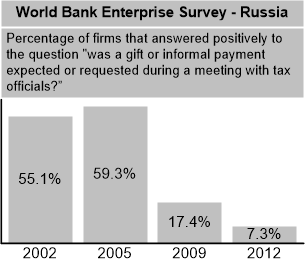
In 2000, Russia was one of the most corrupt countries in the world. Without instituting draconian purges Putin took on the oligarchs and steadily curtailed their power, gradually returning Russia to the rule of law. By 2016 his government reduced corruption to about the same level as that of the United States. That was the empirical result of the annual study on corruption published in 2016 by Ernst & Young.[2] The global auditing consultancy asked respondents around the world whether in their experience, corruption is widespread in the business sector. Their survey, which was conducted in 2014, indicated that only 34% of their Russian respondents thought so, the same proportion as in the United States, and below the world average of 39%. Things have probably improved further since then as Vladimir Putin stepped up a high-profile anti-corruption campaign that led to investigations and prosecution of a number of high level politicians around Russia. Even highly ranked members of Putin’s own political party were not spared.[3] The unmistakable message of such campaigns was that corruption would not be tolerated and that it would be aggressively investigated and prosecuted. Some of the best evidence that Putin’s various anti-corruption measures have had effect can be found in World Bank’s Enterprise Surveys which ask businessmen the question, “was a gift or informal payment expected or requested during a meeting with tax officials?” In 2005, nearly 60% of respondents answered affirmatively. By 2009 this number was 17.4% and by 2012 it had dropped to only 7.3%.
Putin’s government also made impressive advances in making it easier for entrepreneurs and small businesses to set up shop, raise capital and operate in Russia. According to World Bank’s annual “Doing Business” report, which ranks 190 world economies on a set of attributes such as the ease of starting a business, obtaining construction permits, obtaining electricity, raising credit, and enforcing contracts. On all the metrics combined, Russia managed to climb from 124th place in the world in 2012 to 40th in 2017.[4] Thus, within only five years, Russia had vaulted an impressive 84 positions in World Bank’s ranking. This was not a random achievement but the result of President Putin’s explicit 2012 directive that by 2018 Russia should be among the top 20 nations in the world for ease of doing business.
One of the strategically important sectors where Russia has made striking progress is its agricultural industry. After the disastrous 1990s when she found herself dependent on food imports, Russia again became self-sufficient in food production and a net food exporter. By 2014, Russian exports of agricultural products reached nearly $20 billion, almost a full third of her revenues from oil and gas exports. Not only is Russia now producing abundant food for its own needs, the government is explicitly favoring production of healthy foods, a strategy which includes a ban on the cultivation of genetically modified (GMO) crops, introduced by the State Duma in February of 2014. According to official Russian statistics, the share of GMO foods sold in Russia declined from 12% in 2004 to just 0.1% by 2014.
These and many other constructive reforms have had a very substantial impact on Russia’s economic aggregates as the following examples show:
- Between 1999 and 2013, Russia’s gross domestic product (GDP) leaped nearly 12-fold from $1,330 per capita to more than $15,560 in 2013, outpacing even China’s remarkable economic growth.
- Russia reduced its debt as a percentage of GDP by over 90%, from 144% in 1998 to less than 14% in 2015!
- Gross national income per capita rose from $1,710 in 2000 to $14,810 in 2013.
- Unemployment fell from 13% in 1999 to below 5% in 2014. Among the working population (those aged 15-64), 69% have a paid job (74% of men).
- Only 0.2% of Russians work very long hours, compared to 13% OECD average
- Poverty rate fell from 40% in the 1990s to 12.5% in 2013 – better than U.S. or German poverty rates (15.6% and 15.7%, respectively)
- Average monthly income rose from around 1,500 rubles in 1999 to nearly 30,000 rubles in 2013.
- Average monthly pensions rose from less than 500 rubles to 10,000 rubles.
Social and demographic improvements
Putin’s economic reforms included also a more equitable distribution of wealth. As hopelessness faded and standard of living improved, Russian society started to heal: suicides, homicides, and alcohol poisonings declined dramatically. Over the twenty-year period between 1994 and 2014, suicides declined by 56%, homicide rate by 73%, and alcohol poisonings by 83%!
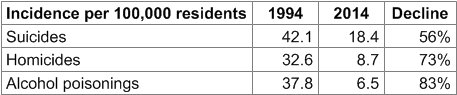
The chart below shows the evolution of these improvements over time:
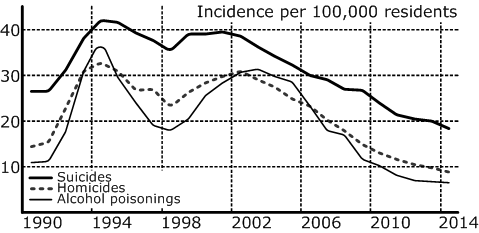
As we can see, these misery statistics rapidly deteriorated with the introduction of shock therapy in 1992, but the trend sharply reversed soon after Putin took charge. By 2014, these figures reached their lowest values since even before 1992. Along with these improvements, the nation’s demographic trends also experienced a dramatic turnaround. Russian life expectancy, which sunk to an average of barely 64 years (57 for men), rose steadily from the early 2000s to reach almost 72 in 2016, the highest it has ever been in Russia’s history.
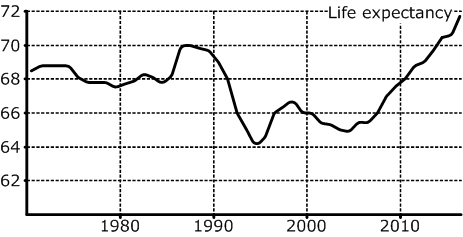
Looking at the way life expectancy in Russia changed over time, we see again that it had collapsed in the early 1990s but the trend turned around sharply under Vladimir Putin’s leadership of the country. Similarly fertility rate, which dropped to 1.16 babies per woman in 1999, increased by almost 50% to 1.7 babies by 2012, comparing favorably to European Union’s average of 1.55 babies per woman of childbearing age. Abortions declined 88% from a harrowing 250% of live births in 1993 to 31% in 2013.

Not only are Russians living longer than ever before and enjoying much better quality of life, they also feel freer and happier. In 2014, Gallup Analytics reported that 65% of Russians, more than ever before, answered “Yes” when asked, “are you satisfied … with your freedom to choose what you do with your life?” Meanwhile, Russia’s happiness index rose more than tenfold, from 6 in 1992 to 70 in 2015. Happiness index, compiled by VCIOM[5] adds the proportion of the respondents reporting that they feel decidedly happy or generally happy and deducts those that report feeling generally unhappy or decidedly unhappy.
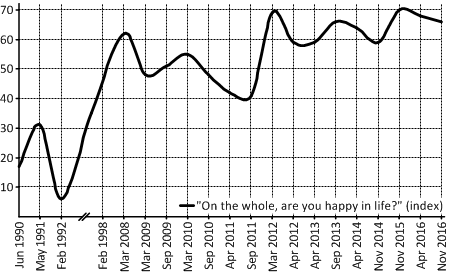
The next chart further corroborates the idea that under Putin’s leadership, Russia has been developing as a sane and prosperous society, not only for the benefit of a narrow ruling class and at everyone else’s expense, but for the vast majority of ordinary Russians.

By 2014, the great majority of Russians felt satisfied with their lives and believed that things in Russia were moving in the right direction. These figures only tapered off after the 2014 western-sponsored coup in Ukraine and the subsequent economic sanctions imposed on Russia. At the same time, the price of oil – still one of Russia’s largest export – collapsed from over $100 per barrel to under $40. Economic sanctions and the oil price collapse triggered a significant crisis in Russia’s economy. However, in spite of the continuing sanctions regime imposed on the country, its economy started improving again in 2016, thanks to its diverse industrial base that includes a developed commercial and consumer automotive industry, advanced aircraft and helicopter construction based largely on domestic technologies, world’s leading aerospace industry building satellites and top class rocket engines, and advanced industries in pharmaceutical, food processing, optical device, machine tools, tractors, software and numerous other branches. Indeed, Russia is far from being just the “Nigeria with missiles,” or a “gas station with an army,” as many western leaders like to characterize it.
Insofar as a population’s sentiment is a valid measure of its leadership’s performance, Russia’s development under Vladimir Putin stands in sharp contrast with the weak performance of most other developed nations, including those that most vehemently criticize Russia and its president. According to polls conducted by Ipsos Public Affairs in 25 different countries in November 2016 and published by the World Economic Forum, almost two thirds of the people in the world believed that their countries were moving in the wrong direction. The leading western nations scored just as badly, while some among them did flat out dismally.
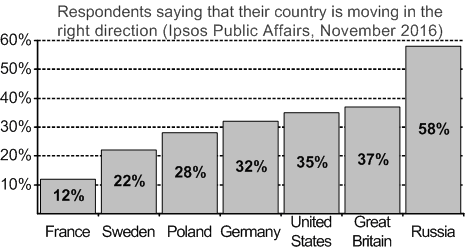
Evidently, Russians feel much better about the way their nation is shaping up than do constituents of many western nations[6] whose sanctimonious leaders like to lecture their Russian counterparts about prosperity, freedom, democracy and other exalted values they purport to cherish.[7] It may thus only surprise the most credulous consumers of western propaganda that a high proportion of Russian people trust Vladimir Putin and approve his job performance. In the early 2017, Putin’s job approval stood between 80% and 90% and has averaged 74% over the eleven years from 2006. During this period, no western leader has come even close to measuring up with Vladimir Putin.

Over the years, I’ve heard depressingly many intellectuals attempt to dismiss Putin’s achievements and Russian people’s contentment as the product of Russian government propaganda. Putin the autocrat, you see, keeps such tight control over the media that he can deceive his people into believing that things in the country are much better than they really are. But the idea that government propaganda can influence public opinion in this way is just silly. If the majority of people thought their lives were miserable, state propaganda could not persuade them that everything is great. On the contrary, most people would conclude that the media is deceiving them and might feel even less positive about things as a result.[8] It is sillier still to think that western intellectuals should have a better appreciation of what it is like to live in Russia than the Russian people themselves. Rather than buying the truth from their media, such intellectuals would do well to take a trip and visit Russia, speak to ordinary people there, and reach their own conclusions. My own travels in Russia, as well as reports from other visitors largely agree with the positive picture that emerges from the statistics we’ve just examined.
Notes:
[1] (Gorbachev: Putin saved Russia from disintegration 2014)
[2] (Stulb 2016)
[3] Some of the names arrested in 2016 surprised even the Russian public as they included such high caliber individual as the Mayor of Vladivostok, Igor Pushkarev; Governor of the Kirov region, Nikita Belykh; Governor of the Sakhalin region, Alexander Khoroshavin, Deputy Minister of Culture Grigory Pirumov and Minister for Economic Development, Aleksey Ulyukaev.
[4] (Romer 2016)
[5] ВЦИОМ – Russian Center for Research on Public Opinion
[6] A different, Associated Press – GfK poll in July of 2016 uncovered an even darker public sentiment in the United States: “A stunning 79 percent of Americans now believe the country is heading in the wrong direction, a 15-point spike in the past year…” (J. Pace 2016)
[7] VCIOM’s figures for November 2016 are somewhat higher than those of Ipsos (62% vs. 58%).
[8] This, for instance, was the situation in the late 1990s when only 5 to 10 percent of Russians thought that the country was heading in the right direction in spite of the ruling elite’s nearly total control of the media.

US Defense Department ‘Estimates’ of War Costs Look Like More Lies
Sputnik – September 30, 2017
The US Department of Defense has published data demonstrating that America’s “endless wars” abroad, from Yemen and Somalia to Afghanistan and Pakistan, have cost each US taxpayer just $7,500 since the fateful day the World Trade Centers were leveled in New York 16 years ago.
DoD estimates just $1.5 trillion has been spent on wars in Afghanistan, Iraq and Syria, Defense One reports. The figure is strikingly lower than independent estimates conducted by American economists in Ivy League institutions.
The Watson Institute at Brown University published data in September 2016 showing “total US spending on national security related to the post-9/11 war on terror has reached $3.6 trillion, and interest on funds borrowed to pay those bills could climb to $7.9 trillion by 2053.”
According a paper by Columbia University economist and former chief economist of the World Bank Joseph Stiglitz and Harvard University’s Linda Blimes, former US President George W. Bush’s economic adviser Larry Lindsey touted that war costs would be capped near $200 billion when pitching the Iraq War, which he thought would be “good for the economy.”
“It now appears that Lindsey was indeed wrong – by grossly underestimating the costs,” the economists wrote. Indeed, they determined that $750 billion to $1.2 trillion had been spent on the Iraq invasion alone, three years after the conflict started (2006). Now, 11 years after their paper, the Pentagon actually says that the Iraq, Afghan, and Syrian conflicts combined have summed just $1.5 trillion.
In May 2017, Blimes penned an article stating that funds sunk into the foreign wars had not only reached four times what the Pentagon now says – but that “the US $6 trillion bill for America’s longest war is unpaid.”
The Pentagon is putting out estimates entirely inconsistent with the academic literature – in other words, what some people might call blatantly lying – and has been swiping the metaphorical national credit card to pay for it all.
“I’m against endless war for principles that the US Army once articulated, which was that war is so unpredictable and expensive that you do everything to avoid it,” retired Maj. Todd E. Pierce, retired US Army Judge Advocate General, told Radio Sputnik’s Fault Lines.
Fault Lines host Lee Stranahan asked the retired major what exactly is meant by the term “endless war,” as it is constantly used as a buzzword to describe US foreign policy.
Tracing the idea’s origins to former US Vice President Dick Cheney, who sparked and disseminated the notion of “perpetual war,” military commanders, policymakers and think tank researchers have become convinced “that we’re in this world that’s different than anything that’s existed before, surrounded by enemies,” Pierce said.
As for who is pushing America endlessly toward conflict, one need not look further than the Institute for the Study of War and the American Enterprise Institute, Peirce says. “They’ve all been advocating [for] wars since the 1990s.”
Goods from Israel settlements granted preferential EU trade deals
MEMO | September 28, 2017
Goods from illegal Israeli settlements in the occupied West Bank have been bypassing European Union (EU) laws and profiting from the preferential trade tariffs with the EU, MEMO has learnt.
The EU has admitted that it has become “impossible” to monitor the source of goods imported to Europe from Israel despite a legal obligation to implement a policy of differentiating between Israel and settlement activities within its multibillion dollar bilateral trade relations.
Documents obtained under EU freedom of information rules seen by MEMO revealed that it has become “impossible” for the EU to differentiate between Israel and the Green Line following the introduction of a “new 7 digit zip code system”.
Notes from a meeting in June between Israeli Minister of Economy, Eli Cohen, and Lars Faaborg-Andersen, then the EU’s ambassador in Tel Aviv, state that the new zip code is “impossible for the delegation to follow” and the “EU requested Israel’s input to address the issue”.
The EU delegation confirmed that the European side suggested using a different method to ensure that settlement products are not granted the same preferential treatment Israel gets under existing trade rules, but the reply from the Israeli side was that “the current system is very effective and that the arrangement operates in a very satisfactory manner”.
It’s unclear if the new zip code system introduced four years ago was intended to circumvent tariff rules that differentiate between Israel and the occupied territories. However “despite having rather fewer people than China” said the Israel’s Haaretz newspaper, “Israel [is] switching to a rather more complicated 7-digit postal code system”.
The EU delegation repeated its stance on the differentiation rules but the admission by the EU Ambassador Faaborg-Andersen indicates that under his term, EU trade rules have been flouted for four years.
The influential European Council on Foreign Relations (ECFR) explained to MEMO details of the trade agreement between the EU and Israel. The EU and its member states, like the rest of the international community, do not recognise any legal or de facto Israeli sovereignty over the Occupied Palestinian Territories. This duty of non-recognition is based on international law, resulting in a legal obligation to clearly differentiate between Israel and its activities beyond the Green Line within their bilateral relations.
Asked how far the EU could go to uphold its own trade rules, ECFR representative said that the EU will not be able to completely terminate its trade agreement with Tel Aviv but if it really insisted on being faithful to its rules, then Brussels could cancel all its preferential trade deals with Israel until it clearly distinguishes between itself and the territory beyond the Green Line. In the meantime the EU and Israel could maintain a non-preferential trade agreement.
Read also: UN warns companies about doing business in Israeli settlements
Putin heads to Turkey to meet Erdogan
RT | September 28, 2017
Russian President Vladimir Putin is heading to Turkey to meet his counterpart Recep Tayyip Erdogan as relations between the two states continue to thaw. The situation in Syria and de-escalation zones are expected to be the main issues on the table.
The leaders held a phone conversation on Monday in which they discussed Syria, including de-escalation zones – an initiative proposed by Russia and also brokered by Iran and Turkey – and political settlement of the crisis, according to the statement from the Kremlin.
The parties agreed to further discuss the Syria issue during Putin’s visit to Turkey on Thursday. The leaders will meet in the Presidential Complex in Ankara, Erdogan’s office said in a statement.
Bilateral relations between Turkey and Russia will also be on the table during the meeting, the statement added.
On Tuesday, Kremlin spokesman Dmitry Peskov confirmed that the presidents had discussed the independence referendum of Iraqi Kurdistan on Monday.
The topic of S-400, Russia’s most advanced missile systems which Ankara is planning to purchase, remains hotly-discussed in the media. It’s not yet clear whether Putin and Erdogan will discuss it.
Turkey confirms deposit on Russia’s state-of-the-art S-400 missile systems. Speaking about military cooperation between Moscow and Ankara, Peskov said on Wednesday that “no one has a right to criticize it.”
Moscow-Ankara cooperation is performed “in strict accordance with international law and in no way is directed against any third country,” he said.
Earlier in September, Putin’s aide on military-technical cooperation, Vladimir Kozhin, said that the contract has been “agreed upon,” and Ankara added that a deposit has been paid.
The deal signals closer cooperation with Moscow and a widening rift with its NATO allies, which have criticized the deal, claiming that the Russian system may be incompatible with those of NATO.
US Defense Secretary James Mattis said in July that S-400 anti-aircraft systems are “not going to be interoperable with NATO systems.”
Erdogan rebuffed the critics, saying Ankara had no intention of waiting for the protection of its NATO allies.
“They have gone crazy because we made a deal for S-400s,” Erdogan said.
“What do you expect? Should we wait for you? We take care of ourselves in every security point,” he added.
S-400 delivery to Turkey will start within two years, Defense Undersecretary Ismail Demir said on Monday, as cited by Anadolu news agency.
This is the second visit of the Russian leader to Turkey since the improvement in relations after downing of the Russian jet by Turkish forces in November 2015.
Relations between the two states began to thaw in June 2016 after Erdogan sent a letter to the Kremlin apologizing for the pilot’s death.
Putin visited Istanbul in October 2016 to discuss Syria, as well as stalled energy projects and bilateral trade.
US-Israeli Plot to Establish ‘Barzani State’ in Iraqi Kurdistan Doomed to Failure
Al-Manar | September 28, 2017
Due to numerous reasons, the Middle East continues to witness the most disturbed geopolitical conditions in the entire world. When political analysts and thinkers scrutinize the region’s map they can simply and clearly realize the intersection of the civilizational, anthropological, and geopolitical givens, which cause continuous changes. The Kurdish endeavor to establish an ‘independent’ state in northern Iraq exacerbates the overall complicated image of the whole area. However, could the Kurdish ‘dream’ come true regardless of all the surrounding factors?
Iraqi Kurdistan authorities held a so-called ‘independence’ (separation) referendum on Monday aimed at establishing a Kurdish state.
According to the freshly announced results, more than 92 percent of Iraqi Kurds voted for the separation. Electoral commission officials told a news conference in the regional capital Arbil that 92.73 percent of the 3,305,925 people who cast ballots voted “yes” in Monday’s referendum, which had a turnout of 72.61 percent.
Iraqi Kurdistan
It is a northern area in Iraq, which comprises around 41,710 square kilometers and has a population of 4 million. It has borders with Iran (to the east), Syria (to the west), Turkey (to the north) and the rest of the Iraqi provinces (to the south). So, it is a closed area that can never economically interact with the world without concluding pacts with the neighboring countries.
Economic Facts
According to economic experts, Iraqi Kurdistan achieves an annual oil revenue which approaches $11bn, adding that this cannot be sufficient to pay the employees’ salaries and establish a well-built state in the future.
“The Kurdish authorities suffer from a serious financial crisis.”
Furthermore, Kirkuk city which comprises 85% of the oil production will not be part of the autonomous area as the central government in Baghdad is not going to let the Kurdish authorities control it.
Although several international oil firms have signed contracts with the Kurdish authorities to invest in this vital field, the oil revenues will be unable to match the economic needs of the state.
Political Scene
Despite the clear US-Israeli support to the Kurdish leader Massoud Al-Barzani to establish a state in northern Iraq, the political conditions in Kurdistan indicate that the expected losses of the ‘independence’ will lead to several alterations in the domestic scene, which threatens the entire scheme of Al-Barzani.
The Iranian and Turkish opposition to the Kurdish ‘state’ represents a milestone political alliance which unifies the religious components in the area in face of the US-led plot to cause partition in Iraq and all the regional countries.
Furthermore, the US administration will no longer be able to keep its strong ties with Turkey, which is threatened with a similar scenario carried out by its own Kurds, while backing the Kurdish scheme. This is expected to push the Turks into intensifying their coordination and enhancing relations with Iran and all its axis in the Middle East and reducing those with the United States and its allies, including the Zionist entity.
In brief, the Kurdish ‘state’ is a closed area which can never move economically, politically and militarily without the aid of its neighbors.
The US-Israeli attempt to siege the victories achieved by the axis-of-resistance in the area is exposed, and the counter plans to frustrate the mentioned scheme and prepare for further victories over the vicious American policies are ready to be implemented.
Featured Video

AIDS Inc. by Gary Null (2007)
or go to
Aletho News Archives – Video-Images
From the Archives
Clash of Civilization, Iran Part II
By Jamal Kanj – Intifada-Palestine.com – January 14, 2011
Israel’s survival kit is: perpetuate conflict, insecurity to rationalize collective hate and finally playing victim.
Devoid of conflict, Israel implodes internally; without hate, Zionism loses its justification; and playing eternal victim to continue blackmailing the West. Absence of this holy trinity, Israel ceases to exist.
From its inception, the house of Zion has mastered exploiting adversarial powers to advance Israel’s cause. For instance, their influence over the Democratic Party in the US began with President Truman’s bid for 2nd term election in 1948.
Responding to strong opposition from Secretary of State General George Marshall and Department experts urging against recognition of Israel, President Truman replied: “I’m sorry gentlemen but I have to answer to hundreds of thousands [Jewish voters] who are anxious for the success of Zionism. I do not have hundreds of thousands of [voting] Arabs among my constituents”
Zionists influence over liberal American politics was matched with the doctrinal school of Conservative theoreticians aligning the Republican Party’s platform with Israel’s objectives. The Neoconservative Zionists, coined Zioncons, invented the “Clash of Civilization” concept to fight Israel’s wars. … continue
Blog Roll
 Aletho News
- 12 Things Your Psychiatrist Was Trained Not to Tell You
- From Unipolar Universalism to Multipolar Civilizational Distinctiveness
- RSF military group defects, joins Sudanese army: State media
- Ireland goalkeeper refuses to play ‘Israel’ as squad weighs boycott
- China pushes back against US on Cuba, Iran
- Ukrainian Soldiers, Potential Mercenaries: Have Gun, Will Travel!
- Burnham’s UN debut… A masterclass in British disinformation
- Iran flights continue despite US aviation sanctions
- Global Tipping Points Lead the World Into a State of Entropy
- The day-after at the White House: USA and Xi Jinping
- If Americans Knew
- Israel forces Gazans to live in constant peril – Daily Update
- Deconstructing Netanyahu’s pants-on-fire UN rant – Daily Update
- Trump betrayed voters with his campaign lies and prioritized a foreign country once he took office
- Netanyahu calls Israel’s war in Gaza ‘opposite of genocide’ in UN speech to near-empty hall
- Settler Kidnappings: Torture, Sexual Abuse and Terrorisation of Palestinian Abductees as Israel Deepens Annexation of West Bank
- Gaza winter nears as 162,000 tents become unusable, raising fears of humanitarian crisis
- Netanyahu says, “It’s the opposite of genocide”; UN says Gaza economy is world’s ‘most severe crisis on record’ – Daily Update
- Israel’s US-Backed Assault on Gaza Has Created the ‘World’s Most Severe Economic Crisis on Record’: UN
- ‘Protecting U.S. Citizens’… From Israel
- ‘This is where I live now, the back of a truck’: a day in the life of a grandmother in Gaza
- No Tricks Zone
- New Study: Earth And Venus Surface Warmth Largely Explained By Convection And Lapse Rate, Not CO2 Or Radiation
- 2025 Nature Paper Claiming Worsening Global Drought Gets RETRACTED …Heavily Flawed
- New Study: ‘Global Drought Shows No Detectable Recent Acceleration Under Climate Warming’
- Economic Masterminds: German Socialists Suggest Taxing Productivity Gains Stemming From Using AI
- The South China Sea Has Not Been Cooperating With The Climate Change Narrative
- Energy Crisis: Germany Enters Heating Season With Historically Low Gas Reserve Fill Levels
- New Study: The Antarctic Ice Sheet Gained Mass From 2020-2024 Due To Staggering Snow And Ice Accumulation
- Study: Ocean Heating Rates From Thousands Of Years Ago ‘Dwarf’ Modern Ocean Heating Rates
- Climate Extremists Target, Attack Large-Scale Power Grid Infrastructure In Germany!
- New Study: Antarctic Ice Melt Has Contributed Less Than 1 Centimeter To Sea Level Rise In The Last 30 Years

