“Medical boards get pushback as they try to punish doctors for Covid misinformation”/ Politico
Meryl Nass, MD | February 1, 2022
The medical boards are getting in trouble for swallowing the malarky from the Federation of State Medical Boards and other bloated medical nonprofits. These organizations somehow worked in concert during the second half of 2021 to terrorize doctors who failed to hew to the current medical narrative. Presumably they got paid to do so. Presumably those trying to cement control over Americans felt it necessary to act extrajudicially to use threats to enforce only ‘approved’ medical speech.
The clueless Medical Licensing Board members, a mix of medical professionals and citizens, rely on attorneys on their staff to get the legal details right. Instead, the attorneys never told the Board members that none of them them had any authority to legislate new crimes, that misinformation is not a crime under US law, that Freedom of Speech is a foundational principle of law that may not be abrogated, ever, especially not by any state or state agency.
A few Medical Boards, including my own, got too far out over their skis, and now it is starting to sink in what they have done. Their legislators are saying, “Whoa, Nellie! You guys were supposed to protect the citizens from drunkards, druggies and rapists. We never asked you to trash the 1st and 14th Amendments.”
From Politico,
… the responses from some medical boards and state officials have been stymied by political backlash. States like Tennessee and North Dakota, for example, have restricted state medical boards’ powers. And now legislators in 10 other states — including Florida and South Carolina — have introduced similar measures.
Some state boards also lack the legal tools to discipline doctors for sharing unreliable information via social media. They believe the precedents in their states for unprofessional or unethical behavior more narrowly apply to actions or speech made directly to patients under their care…
Meantime, my license remains suspended while the Maine Medical Licensing Board hopes against hope that if they keep fishing, they might someday be able to find a crime with which to charge me. It’s your taxpayer dollars they are spending to destroy my career and silence my voice. They think it is free money. What do you think?
Justice For the Hyde Park One
By Andrew Rootsey | The Daily Sceptic | February 1, 2022
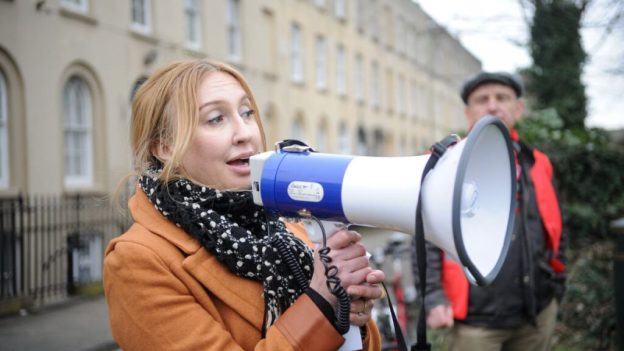
As you may recall, we secured Debbie’s acquittal at Cheltenham Magistrates Court on the December 20th 2021 for offences relating to organising/being involved in organising a gathering of more than 30 people during a period of national lockdown or alternatively for participating in the gathering.
The relevant gathering was a protest held in Stratford Park in Stroud in November 2020 against the restrictions imposed on the British public under the Coronavirus Regulations. The protest was called the ‘Freedom Rally’ and was attended by more than 50 people.
The Stroud ‘Freedom Rally’ was held two days into the second national lockdown and therefore at the time it was illegal to organise a gathering of more than 30 people or to meet in groups of more than two people. A conviction would have left her liable for a £10,000 fine.
Ms. Hicks was acquitted of both offences after the court accepted our argument that her arrest and prosecution was a disproportionate interference with her human rights – namely the rights to freedom of expression and freedom of assembly, given that she was engaging in a legitimate protest.
The court found that Ms. Hicks had organised the ‘Freedom Rally’ and had breached the Coronavirus Regulations in force at the time by doing so. However, she had a reasonable excuse because she was attending a legitimate, peaceful and well-organised protest. The officers on the ground at the protest had been labouring under a misapprehension of the law – that protesting was not lawful under the Regulations – and were essentially imposing a blanket ban on protesting. Therefore, their actions in arresting her were not rational or proportionate.
In complete contrast – and a perfect example of how this contentious piece of legislation is flawed and open to misinterpretation – on the November 16th 2021 the City of London Magistrates Court convicted Debbie of breaching similar coronavirus regulations by protesting in Hyde Park against the imposition of lockdown restrictions during the pandemic. The District Judge in this case found that Debbie did not have a ‘reasonable excuse’ for protesting and found that the interference with her Human Rights was proportionate. Debbie was convicted and sentenced to a financial penalty.
The case raises important issues on freedom of expression and assembly, as well as the chilling of the right to protest. We wish to appeal this case to the High Court in order for the High Court to settle the important questions of law raised.
A fundamental consideration for the High Court is the ambiguity of the right to protest during the Coronavirus pandemic during periods of national lockdown and the operation of the ‘reasonable excuse’ jurisdiction in this regard.
The Government has made it clear, as have the courts, including in Debbie’s case before the Cheltenham Magistrates Court, that protesting during the Coronavirus pandemic was never illegal. Yet that was not always clear from the Coronavirus regulations nor was it the understanding of most police officers. How the reasonable excuse defence is to operate in these circumstances requires clarity and we are confident that the High Court will settle the issue in our favour and set a precedent for future cases and those seeking to appeal against their own convictions.
Debbie Hicks is probably best known for filming within the Gloucester Royal Hospital in December 2020 during Tier 3 restrictions. Debbie did so, exercising her freedom of expression, in order to highlight that Government restrictions were having a devastating effect upon access to healthcare across the board and to investigate mainstream media reports that hospitals were overflowing with patients.
Despite her efforts to avoid confrontation, she was challenged at the hospital by two employees. During the exchange, which lasted less than a minute, Debbie did not film the staff members. She explained the purpose of her visit and her views as to the provision of NHS services during lockdown. Staff members took offence at her comments and subsequently made a complaint to the police. Debbie immediately left the hospital voluntarily and was subsequently arrested at her home in front of her family and charged with using abusive, threatening or disorderly words or behaviour.
Debbie was not at the hospital deliberately seeking an encounter with staff. She has in the past been a vociferous supporter of the NHS and has supported NHS staff in respect of vaccine mandates.
In connection with this episode, Debbie stood trial for an offence under Section 5 of Public Order Act on January 6th 2022 and having adjourned the case in order to hand down his judgement the District Judge convicted Debbie of a S5 Public Order Act offence on January 19th 2022 at Cirencester Magistrates Court.
We wish to appeal this conviction as well and ask that the High Court settle this case on the basis that the District Judge was wrong in law to convict Debbie of this offence. We are firmly of the view that the Prosecution case simply did not cross the threshold of what constitutes abusive, threatening or disorderly words or behaviour. The District Judge’s analysis was flawed and did not properly interpret Supreme Court authorities nor give appropriate weight to Debbie’s rights of freedom of expression and assembly as enshrined in the European Convention for Human Rights, nor give appropriate weight to the political nature of Debbie’s views when the case law makes clear political freedom of expression should be given special protection.
Debbie is trying to raise £10,000 to take both cases to the High Court. She hopes that those who continue to believe in freedom of speech and the the right to protest will continue to support her. Our hope is that if we can get these convictions overturned, it will set a legal precedent for those convicted of similar offences and who may face prosecution in the future.
Debbie needs to raise funds in order to pay her legal costs and any help is hugely appreciated. Her fundraiser can be found here.
Andrew Rootsey is a solicitor at Murray Hughman.
They’re Coming to Take You Away
Biden Administration steps up its war on the American People
BY PHILIP GIRALDI • UNZ REVIEW • FEBRUARY 1, 2022
What would a completely unscrupulous chief executive whose sole purpose in life is to seize power and never relinquish it do to conceal his evil intentions? He or she would use deception to change the narrative. Many are beginning to recognize that that is precisely what the Democrats are doing and their game plan includes demonizing both Russia and China to create plausible external enemies while also generating fear and uncertainty around alleged domestic threats as well as the COVID menace, to include initiating mandates designed to make the people submissive and fearful of legal and personal consequences for defying the government. Well, be that as it may, the penny has finally dropped and it is now clear that Biden-Pelosi-Schumer are intent on changing the rules and using lawfare and other tools to create a permanent governing majority.
The key to power in this case has been exploiting the legal system to criminalize many forms of dissent. For the past year President Joe Biden and his Department of Justice sidekick Attorney General Merrick Garland have been making noises about all the terrorists running around loose in the country. And they have not been shy about suggesting that the alleged terrorists are nothing less that “white supremacists” who are allegedly promoting violence to address their grievances against the new administration in Washington. Well, it has now become official. The Biden government has mobilized and has finally declared “war on the American people,” most particularly the third or so of the population that has concerns about the conduct and results of the 2020 election as well as over the “woke” racial preference policies that the government has been aggressively promoting.
On January 11th, Matthew Olsen, head of the Justice Department’s National Security Division, revealed to the Senate Judiciary Committee that the FBI has now created a special unit that will deal exclusively with “domestic terrorism,” which it further describes as constituting an “elevated threat” to American democracy. Olsen claimed that there has been a large increase in “domestic extremism” reports having doubled in 2021 compared with the previous year. The new unit will “augment the existing approach” by way of additional resources that have been made available to identify the dissidents, track them down, arrest them and try them under the authority of various laws that were originally conceived as a legal tool to combat the perceived international terrorist threat after 9/11.
Olsen, citing what he referred to as the January 6th 2021 “riot” at the Capitol in Washington, elaborated how the Department of Justice believes that the nation now faces a serious threat from “domestic violent extremists — that is, individuals in the United States who seek to commit violent criminal acts in furtherance of domestic social or political goals.” He also suggested a racist motive behind some of the violence, adding that “We’ve seen a growing threat from those who are motivated by racial animus…,” and observed that the “terrorists” often are “anti-Authority,” whatever that is supposed to mean.
Olsen did not mention that the war on dissent has even included monitoring the social media of America’s military personnel lest they harbor dangerous thoughts. To be sure, the driving force behind the government’s campaign to criminalize the actions of the many citizens who object to the Biden Administration policies appears to be Olsen’s boss Attorney General Merrick Garland, who is very well placed to engage in mischief that will potentially affect all Americans. In fact, he has proven to be a more than willing accomplice in the social engineering that the Biden Administration is engaged in, to include his declaration last year that white supremacists are the single greatest terrorist threat the United States faces today.
Garland and others in the Biden Administration unashamedly propose that America’s governmental bodies and infrastructures are racist and supportive of “white supremacy” and must be deconstructed. “Building Back Better” requires everything to be examined through a value system determined by identity politics and race and it views both whites and their institutions as hopelessly corrupted, if not evil.
If there were any doubts about Biden’s intentions, they were dispelled in a speech made in Georgia on the same day that Olsen was addressing the Senate. Biden issued a call to arms that was full of race-baiting, claiming that those who are resisting the voting “reforms” that he is promoting are little better than notorious civil-rights era racists like George Wallace and Bull Connors. In reality, however, the voting changes that the Administration is promoting by fiat are, in fact, licenses to steal votes and commit large scale electoral fraud as they will strip states of the right to demand that voters prove both that they are citizens and legal residents.
On January 26th the Department of Homeland Security got into the game, releasing a memo suggesting that the “domestic extremists” are seeking to make the lives of all Americans more difficult. The dissidents “have been developing plans to attack the US electric sector… since at least 2020.’” The report stated that extremists “adhering to a range of ideologies will likely continue to plot and encourage physical attacks against electrical infrastructure” but it did not provide even a single piece of evidence that the “threat” had ever proceeded beyond the talking stage, suggesting that the report was generated to create fear on the part of the public regarding the “domestic terrorism” issue.
In yet another instance demonstrating how the White House is interpreting its national security mandate in a highly partisan fashion, FBI Director Christopher Wray stated last week that the Anti-Defamation League (ADL) works closely with the Bureau to identify and investigate instances of anti-Semitism in the United States. That should raise questions about a private group with an agenda working as a source for the police and intelligence services and it suggests in particular that critics of Israel and its policies will find themselves increasingly targeted by law enforcement under “hate crime” legislation. Such statements citing rising anti-Semitism and “holocaust denialism” also generate more fear among the public to justify “protection” by a dominating and intrusive national security apparatus.
Witness how this has already played out in Europe where “holocaust denial” has been widely criminalized by way of so-called “memory laws [which] prohibit the denial, justification, or trivialization of the crimes committed by the Nazis during World War II… France has had a ban on Holocaust denial in place since 1990. Austria’s ban was adopted in 1992, and Belgium’s is from 1995. Germany itself did not adopt an explicit ban until 1994, though it countered Holocaust denial before then through laws against defamation, incitement, and disparaging the memory of the dead… Holocaust denial laws were also approved in the 1990s by the European Court of Human Rights (under the Council of Europe), which stated that the negation or revision of ‘clearly established historical facts — such as the Holocaust — … would be removed from the protection’ of free speech under the European Convention on Human Rights.”
Eliminating free speech, the most fundamental right, would allow government and a compromised media to gain control of the narrative of government that prevails in the United States and would be a significant step towards totalitarian control. Going beyond that, the Administration is even reported to be considering devastating proposals to make all illegal immigrants citizens to allow them to vote. New York City has already declared that all residents will be able to vote on local issues, whether they are in the country legally or not. More to the point, the discussion comes at a time when the nation’s southern border has become an out-of-control entry point for anyone who can reach Mexico.
Even though the Biden Administration’s enemies list admittedly features white supremacists regarded ipso facto as extremists, it is now notoriously also including those parents who do not support the various formulae being employed to install programs seeking to establish what is referred to as “equity” in the nation’s public schools. That the agenda is both reverse racism and detrimental to good educational practice is why parents are protesting. Senator Rand Paul of Kentucky has observed how “The Department of Justice’s fight against angry parents is a real testament to the authoritarian nature of the Biden administration and indeed, the entirety of the left. It takes a lot of hubris to declare that you know how to raise someone’s child better than them and send authorities to shut you down when you protest that.”
Senator Paul’s father former Congressman Ron Paul has also responded to the threat coming from a government that he perceives as trending towards totalitarianism by way of a single state model for education, commenting how “If government can override the wishes of parents in the name of ‘education’ or ‘protecting children’s health’ then what area of our lives is safe from government intrusion?”
If it is indeed true that Joe Biden is not completely in control of what his administration appears to be doing, one then has to wonder who is directing his appointed officials to pursue policies that are destructive of all the freedoms and other positive things that this nation once represented. One thing for sure, the mask is now off and the Democratic Party plan to create something like a totalitarian state with one party rule in perpetuum is right there for everyone to see.
Philip M. Giraldi, Ph.D., is Executive Director of the Council for the National Interest, a 501(c)3 tax deductible educational foundation (Federal ID Number #52-1739023) that seeks a more interests-based U.S. foreign policy in the Middle East. Website is councilforthenationalinterest.org, address is P.O. Box 2157, Purcellville VA 20134 and its email is inform@cnionline.org.
Surveys Show That Democrats Can’t Let Covid Go

By Noah Carl | The Daily Sceptic | January 31, 2022
In the early days of the pandemic, when we didn’t have much information, partisan differences in concern about Covid were relatively small. A Gallup poll from February of 2020 found that precisely 35% of U.S. conservatives and 35% of liberals were worried about the pandemic.
Since then, a massive partisan gap has opened up, with Democrats being far more concerned than Republicans. This gap persists to the present day.
While being greatly concerned about the disease was not unreasonable in the spring of 2020, when few people had immunity and excess mortality was high, the situation we face now is dramatically different. All adults have been offered a vaccine, and a significant fraction of the population has natural immunity.
More and more people can see it’s past time we got back to normal. Even one-time ‘Zero Covid’ advocates like Devi Sridhar admit the virus has been “defanged”. But in the U.S., Democrats can’t seem to let Covid go.
Their refusal to face reality is laid bare in two recent surveys: one by Morning Consult, which is summarised in the New York Times; one a join venture of Rasmussen Reports and the Heartland Institute.
Let’s take each one in turn. Here are two headline results from the first survey. Remember, the data were collected in January of this year – mere weeks ago.
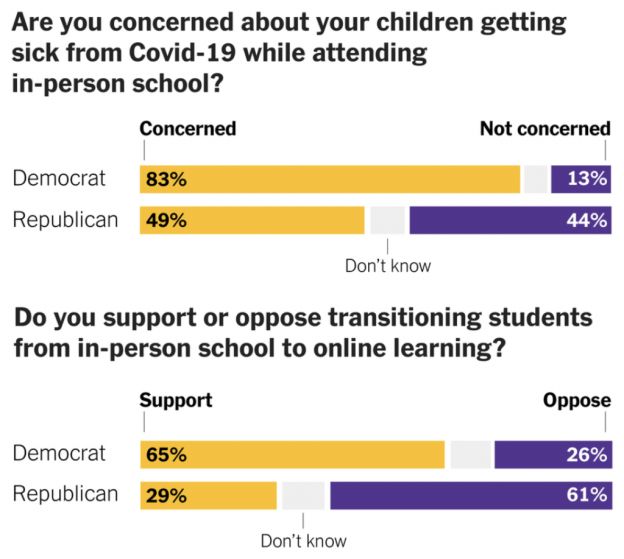
83% of Democrats are still concerned about their children getting sick from Covid at school. 83%! This is despite the fact that Covid poses almost no risk to children; indeed, those aged 5–14 are more likely to die in a car accident on their way to school.
As a result of these ungrounded fears, a shocking 65% of Democrats want to go back to remote learning – something that has demonstrably harmed kids’ education, while yielding almost no benefit in terms of reduced transmission.
What about the second survey? Respondents were asked a series of questions about measures that could be taken against the unvaccinated. The results make for alarming reading indeed.
59% of Democrats would support a policy of confining unvaccinated people in their homes “at all times, except for emergencies”. 48% would support a policy to “fine or imprison” those who publicly question the vaccines’ efficacy. And 45% would support a policy of requiring unvaccinated people to live in “designated facilities or locations”.
Of course, polls can’t always be trusted. Yet as Philippe Lemoine observed, “even if we divide each number by 2, this is still completely insane…” Not least because the vaccines, as we’ve known for some time now, don’t stop transmission.
Note: I’m not claiming that Democrats are uniquely irrational; Republicans have plenty of biases and misconceptions of their own. But if after two years, you still don’t get that Covid isn’t a threat to children, I don’t really know what to say.
And make no mistake: what Democrats believe matters. They currently control the White House (in the world’s ‘most powerful country’), and remain disproportionately represented in U.S media and academia, including public health. Once Democrats let Covid go, the rest of us can too.
The Pressure Campaign on Spotify to Remove Joe Rogan Reveals the Religion of Liberals: Censorship
By Glenn Greenwald | January 29, 2022
American liberals are obsessed with finding ways to silence and censor their adversaries. Every week, if not every day, they have new targets they want de-platformed, banned, silenced, and otherwise prevented from speaking or being heard (by “liberals,” I mean the term of self-description used by the dominant wing of the Democratic Party).
For years, their preferred censorship tactic was to expand and distort the concept of “hate speech” to mean “views that make us uncomfortable,” and then demand that such “hateful” views be prohibited on that basis. For that reason, it is now common to hear Democrats assert, falsely, that the First Amendment’s guarantee of free speech does not protect “hate speech.” Their political culture has long inculcated them to believe that they can comfortably silence whatever views they arbitrarily place into this category without being guilty of censorship.
Constitutional illiteracy to the side, the “hate speech” framework for justifying censorship is now insufficient because liberals are eager to silence a much broader range of voices than those they can credibly accuse of being hateful. That is why the newest, and now most popular, censorship framework is to claim that their targets are guilty of spreading “misinformation” or “disinformation.” These terms, by design, have no clear or concise meaning. Like the term “terrorism,” it is their elasticity that makes them so useful.
When liberals’ favorite media outlets, from CNN and NBC to The New York Times and The Atlantic, spend four years disseminating one fabricated Russia story after the next — from the Kremlin hacking into Vermont’s heating system and Putin’s sexual blackmail over Trump to bounties on the heads of U.S. soldiers in Afghanistan, the Biden email archive being “Russian disinformation,” and a magical mystery weapon that injures American brains with cricket noises — none of that is “disinformation” that requires banishment. Nor are false claims that COVID’s origin has proven to be zoonotic rather than a lab leak, the vastly overstated claim that vaccines prevent transmission of COVID, or that Julian Assange stole classified documents and caused people to die. Corporate outlets beloved by liberals are free to spout serious falsehoods without being deemed guilty of disinformation, and, because of that, do so routinely.
This “disinformation” term is reserved for those who question liberal pieties, not for those devoted to affirming them. That is the real functional definition of “disinformation” and of its little cousin, “misinformation.” It is not possible to disagree with liberals or see the world differently than they see it. The only two choices are unthinking submission to their dogma or acting as an agent of “disinformation.” Dissent does not exist to them; any deviation from their worldview is inherently dangerous — to the point that it cannot be heard.
The data proving a deeply radical authoritarian strain in Trump-era Democratic Party politics is ample and have been extensively reported here. Democrats overwhelmingly trust and love the FBI and CIA. Polls show they overwhelmingly favor censorship of the internet not only by Big Tech oligarchs but also by the state. Leading Democratic Party politicians have repeatedly subpoenaed social media executives and explicitly threatened them with legal and regulatory reprisals if they do not censor more aggressively — a likely violation of the First Amendment given decades of case law ruling that state officials are barred from coercing private actors to censor for them, in ways the Constitution prohibits them from doing directly.
Democratic officials have used the pretexts of COVID, “the insurrection,” and Russia to justify their censorship demands. Both Joe Biden and his Surgeon General, Vivek Murthy, have “urged” Silicon Valley to censor more when asked about Joe Rogan and others who air what they call “disinformation” about COVID. They cheered the use of pro-prosecutor tactics against Michael Flynn and other Russiagate targets; made a hero out of the Capitol Hill Police officer who shot and killed the unarmed Ashli Babbitt; voted for an additional $2 billion to expand the functions of the Capitol Police; have demanded and obtained lengthy prison sentences and solitary confinement even for non-violent 1/6 defendants; and even seek to import the War on Terror onto domestic soil.
Given the climate prevailing in the American liberal faction, this authoritarianism is anything but surprising. For those who convince themselves that they are not battling mere political opponents with a different ideology but a fascist movement led by a Hitler-like figure bent on imposing totalitarianism — a core, defining belief of modern-day Democratic Party politics — it is virtually inevitable that they will embrace authoritarianism. When a political movement is subsumed by fear — the Orange Hitler will put you in camps and end democracy if he wins again — then it is not only expected but even rational to embrace authoritarian tactics including censorship to stave off this existential threat. Fear always breeds authoritarianism, which is why manipulating and stimulating that human instinct is the favorite tactic of political demagogues.
And when it comes to authoritarian tactics, censorship has become the liberals’ North Star. Every week brings news of a newly banished heretic. Liberals cheered the news last week that Google’s YouTube permanently banned the extremely popular video channel of conservative commentator Dan Bongino. His permanent ban was imposed for the crime of announcing that, moving forward, he would post all of his videos exclusively on the free speech video platform Rumble after he received a seven-day suspension from Google’s overlords for spreading supposed COVID “disinformation.” What was Bongino’s prohibited view that prompted that suspension? He claimed cloth masks do not work to stop the spread of COVID, a view shared by numerous experts and, at least in part, by the CDC. When Bongino disobeyed the seven-day suspension by using an alternative YouTube channel to announce his move to Rumble, liberals cheered Google’s permanent ban because the only thing liberals hate more than platforms that allow diverse views are people failing to obey rules imposed by corporate authorities.
It is not hyperbole to observe that there is now a concerted war on any platforms devoted to free discourse and which refuse to capitulate to the demands of Democratic politicians and liberal activists to censor. The spear of the attack are corporate media outlets, who demonize and try to render radioactive any platforms that allow free speech to flourish. When Rumble announced that a group of free speech advocates — including myself, former Democratic Congresswoman Tulsi Gabbard, comedian Bridget Phetasy, former Sanders campaign videographer Matt Orfalea and journalist Zaid Jilani — would produce video content for Rumble, The Washington Post immediately published a hit piece, relying exclusively on a Google-and-Facebook-aligned so-called “disinformation expert” to malign Rumble as “one of the main platforms for conspiracy communities and far-right communities in the U.S. and around the world” and a place “where conspiracies thrive,” all caused by Rumble’s “allowing such videos to remain on the site unmoderated.” (The narrative about Rumble is particular bizarre since its Canadian founder and still-CEO, Chris Pavlovski created Rumble in 2013 with apolitical goals — to allow small content creators abandoned by YouTube to monetize their content — and is very far from an adherent to right-wing ideology).
The same attack was launched, and is still underway, against Substack, also for the crime of refusing to ban writers deemed by liberal corporate outlets and activists to be hateful and/or fonts of disinformation. After the first wave of liberal attacks on Substack failed — that script was that it is a place for anti-trans animus and harassment — The Post returned this week for round two, with a paint-by-numbers hit piece virtually identical to the one it published last year about Rumble. “Newsletter company Substack is making millions off anti-vaccine content, according to estimates,” blared the sub-headline. “Prominent figures known for spreading misinformation, such as [Joseph] Mercola, have flocked to Substack, podcasting platforms and a growing number of right-wing social media networks over the past year after getting kicked off or restricted on Facebook, Twitter and YouTube,” warned the Post. It is, evidently, extremely dangerous to society for voices to still be heard once Google decrees they should not be.
This Post attack on Substack predictably provoked expressions of Serious Concern from good and responsible liberals. That included Chelsea Clinton, who lamented that Substack is profiting off a “grift.” Apparently, this political heiress — who is one of the world’s richest individuals by virtue of winning the birth lottery of being born to rich and powerful parents, who in turn enriched themselves by cashing in on their political influence in exchange for $750,000 paychecks from Goldman Sachs for 45-minute speeches, and who herself somehow was showered with a $600,000 annual contract from NBC News despite no qualifications — believes she is in a position to accuse others of “grifting.” She also appears to believe that — despite welcoming convicted child sex trafficker Ghislaine Maxwell to her wedding to a hedge fund oligarch whose father was expelled from Congress after his conviction on thirty-one counts of felony fraud — she is entitled to decree who should and should not be allowed to have a writing platform:
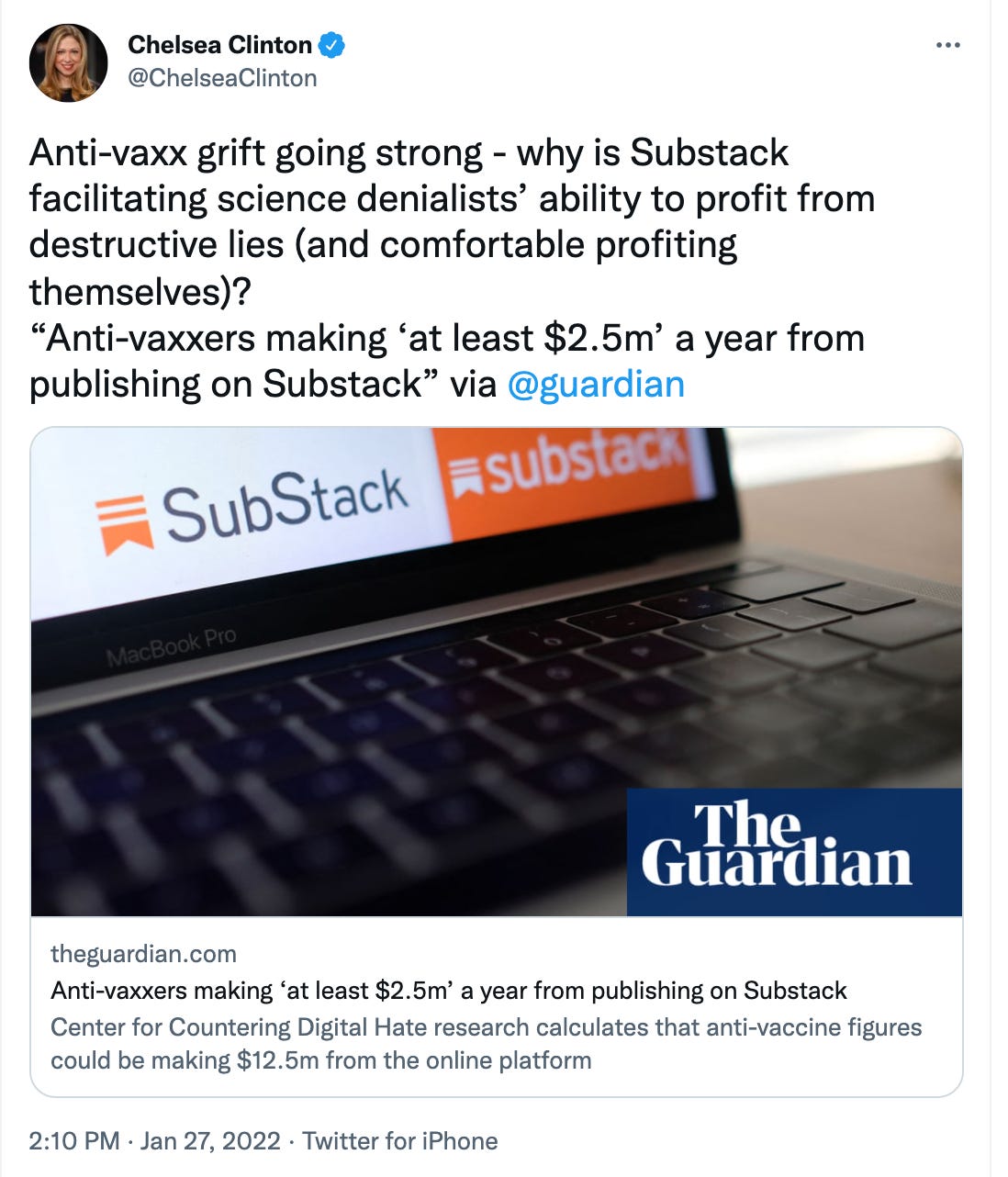
This Post-manufactured narrative about Substack instantly metastasized throughout the liberal sect of media. “Anti-vaxxers making ‘at least $2.5m’ a year from publishing on Substack,” read the headline of The Guardian, the paper that in 2018 published the outright lie that Julian Assange met twice with Paul Manafort inside the Ecuadorian Embassy and refuses to this day to retract it (i.e., “disinformation”). Like The Post, the British paper cited one of the seemingly endless number of shady pro-censorship groups — this one calling itself the “Center for Countering Digital Hate” — to argue for greater censorship by Substack. “They could just say no,” said the group’s director, who has apparently convinced himself he should be able to dictate what views should and should not be aired: “This isn’t about freedom; this is about profiting from lies. . . . Substack should immediately stop profiting from medical misinformation that can seriously harm readers.”
The emerging campaign to pressure Spotify to remove Joe Rogan from its platform is perhaps the most illustrative episode yet of both the dynamics at play and the desperation of liberals to ban anyone off-key. It was only a matter of time before this effort really galvanized in earnest. Rogan has simply become too influential, with too large of an audience of young people, for the liberal establishment to tolerate his continuing to act up. Prior efforts to coerce, cajole, or manipulate Rogan to fall into line were abject failures. Shortly after The Wall Street Journal reported in September, 2020 that Spotify employees were organizing to demand that some of Rogan’s shows be removed from the platform, Rogan invited Alex Jones onto his show: a rather strong statement that he was unwilling to obey decrees about who he could interview or what he could say.
On Tuesday, musician Neil Young demanded that Spotify either remove Rogan from its platform or cease featuring Young’s music, claiming Rogan spreads COVID disinformation. Spotify predictably sided with Rogan, their most popular podcaster in whose show they invested $100 million, by removing Young’s music and keeping Rogan. The pressure on Spotify mildly intensified on Friday when singer Joni Mitchell issued a similar demand. All sorts of censorship-mad liberals celebrated this effort to remove Rogan, then vowed to cancel their Spotify subscription in protest of Spotify’s refusal to capitulate for now; a hashtag urging the deletion of Spotify’s app trended for days. Many bizarrely urged that everyone buy music from Apple instead; apparently, handing over your cash to one of history’s largest and richest corporations, repeatedly linked to the use of slave labor, is the liberal version of subversive social justice.
Obviously, Spotify is not going to jettison one of their biggest audience draws over a couple of faded septuagenarians from the 1960s. But if a current major star follows suit, it is not difficult to imagine a snowball effect. The goal of liberals with this tactic is to take any disobedient platform and either force it into line or punish it by drenching it with such negative attacks that nobody who craves acceptance in the parlors of Decent Liberal Society will risk being associated with it. “Prince Harry was under pressure to cut ties with Spotify yesterday after the streaming giant was accused of promoting anti-vax content,” claimed The Daily Mail which, reliable or otherwise, is a certain sign of things to come.
One could easily envision a tipping point being reached where a musician no longer makes an anti-Rogan statement by leaving the platform as Young and Mitchell just did, but instead will be accused of harboring pro-Rogan sentiments if they stay on Spotify. With the stock price of Spotify declining as these recent controversies around Rogan unfolded, a strategy in which Spotify is forced to choose between keeping Rogan or losing substantial musical star power could be more viable than it currently seems. “Spotify lost $4 billion in market value this week after rock icon Neil Young called out the company for allowing comedian Joe Rogan to use its service to spread misinformation about the COVID vaccine on his popular podcast, ‘The Joe Rogan Experience,’” is how The San Francisco Chronicle put it (that Spotify’s stock price dropped rather precipitously contemporaneously with this controversy is clear; less so is the causal connection, though it seems unlikely to be entire coincidental):

It is worth recalling that NBC News, in January, 2017, announced that it had hired Megyn Kelly away from Fox News with a $69 million contract. The network had big plans for Kelly, whose first show debuted in June of that year. But barely more than a year later, Kelly’s comments about blackface — in which she rhetorically wondered whether the notorious practice could be acceptable in the modern age with the right intent: such as a young white child paying homage to a beloved African-American sports or cultural figure on Halloween — so enraged liberals, both inside the now-liberal network and externally, that they demanded her firing. NBC decided it was worth firing Kelly — on whom they had placed so many hopes — and eating her enormous contract in order to assuage widespread liberal indignation. “The cancellation of the ex-Fox News host’s glossy morning show is a reminder that networks need to be more stringent when assessing the politics of their hirings,” proclaimed The Guardian.
Democrats are not only the dominant political faction in Washington, controlling the White House and both houses of Congress, but liberals in particular are clearly the hegemonic culture force in key institutions: media, academia and Hollywood. That is why it is a mistake to assume that we are near the end of their orgy of censorship and de-platforming victories. It is far more likely that we are much closer to the beginning than the end. The power to silence others is intoxicating. Once one gets a taste of its power, they rarely stop on their own.
Indeed, it was once assumed that Silicon Valley giants steeped in the libertarian ethos of a free internet would be immune to demands to engage in political censorship (“content moderation” is the more palatable euphemism which liberal corporate media outlets prefer). But when the still-formidable megaphones of The New York Times, The Washington Post, NBC News, CNN and the rest of the liberal media axis unite to accuse Big Tech executives of having blood on their hands and being responsible for the destruction of American democracy, that is still an effective enforcement mechanism. Billionaires are, like all humans, social and political animals and instinctively avoid ostracization and societal scorn.
Beyond the personal interest in avoiding vilification, corporate executives can be made to censor against their will and in violation of their political ideology out of self-interest. The corporate media still has the ability to render a company toxic, and the Democratic Party more now than ever has the power to abuse their lawmaking and regulatory powers to impose real punishment for disobedience, as it has repeatedly threatened to do. If Facebook or Spotify are deemed to be so toxic that no Good Liberals can use them without being attacked as complicit in fascism, white supremacy or anti-vax fanaticism, then that will severely limit, if not entirely sabotage, a company’s future viability.
The one bright spot in all this — and it is a significant one — is that liberals have become such extremists in their quest to silence all adversaries that they are generating their own backlash, based in disgust for their tyrannical fanaticism. In response to the Post attack, Substack issued a gloriously defiant statement re-affirming its commitment to guaranteeing free discourse. They also repudiated the hubristic belief that they are competent to act as arbiters of Truth and Falsity, Good and Bad. “Society has a trust problem. More censorship will only make it worse,” read the headline on the post from Substack’s founders. The body of their post reads like a free speech manifesto:
That’s why, as we face growing pressure to censor content published on Substack that to some seems dubious or objectionable, our answer remains the same: we make decisions based on principles not PR, we will defend free expression, and we will stick to our hands-off approach to content moderation. While we have content guidelines that allow us to protect the platform at the extremes, we will always view censorship as a last resort, because we believe open discourse is better for writers and better for society.
A lengthy Twitter thread from Substack’s Vice President of Communications, Lulu Cheng Meservey was similarly encouraging and assertive. “I’m proud of our decision to defend free expression, even when it’s hard,” she wrote, adding: “because: 1) We want a thriving ecosystem full of fresh and diverse ideas. That can’t happen without the freedom to experiment, or even to be wrong.” Regarding demands to de-platform those allegedly spreading COVID disinformation, she pointedly — and accurately — noted: “If everyone who has ever been wrong about this pandemic were silenced, there would be no one left talking about it at all.” And she, too, affirmed principles that every actual, genuine liberal — not the Nancy Pelosi kind — reflexively supports:
People already mistrust institutions, media, and each other. Knowing that dissenting views are being suppressed makes that mistrust worse. Withstanding scrutiny makes truths stronger, not weaker. We made a promise to writers that this is a place they can pursue what they find meaningful, without coddling or controlling. We promised we wouldn’t come between them and their audiences. And we intend to keep our side of the agreement for every writer that keeps theirs. to think for themselves. They tend not to be conformists, and they have the confidence and strength of conviction not to be threatened by views that disagree with them or even disgust them.
This is becoming increasingly rare.
The U.K.’s Royal Society, its national academy of scientists, this month echoed Substack’s view that censorship, beyond its moral dimensions and political dangers, is ineffective and breeds even more distrust in pronouncements by authorities. “Governments and social media platforms should not rely on content removal for combatting harmful scientific misinformation online.” “There is,” they concluded, “little evidence that calls for major platforms to remove offending content will limit scientific misinformation’s harms” and “such measures could even drive it to harder-to-address corners of the internet and exacerbate feelings of distrust in authorities.”
As both Rogan’s success and collapsing faith and interest in traditional corporate media outlets proves, there is a growing hunger for discourse that is liberated from the tight controls of liberal media corporations and their petulant, herd-like employees. That is why other platforms devoted to similar principles of free discourse, such as Rumble for videos and Callin for podcasts, continue to thrive. It is certain that those platforms will continue to be targeted by institutional liberalism as they grow and allow more dissidents and heretics to be heard. Time will tell if they, too, will resist these censorship pressures, but the combination of genuine conviction on the part of their founders and managers, combined with the clear market opportunities for free speech platforms and heterodox thinkers, provides ample ground for optimism.
None of this is to suggest that American liberals are the only political faction that succumbs to the strong temptations of censorships. Liberals often point to the growing fights over public school curricula and particularly the conservative campaign to exclude so-called Critical Race Theory from the public schools as proof that the American Right is also a pro-censorship faction. That is a poor example. Censorship is about what adults can hear, not what children are taught in public schools. Liberals crusaded for decades to have creationism banned from the public schools and largely succeeded, yet few would suggest this was an act of censorship. For the reason I just gave, I certainly would define it that way. Fights over what children should and should not be taught can have a censorship dimension but usually do not, precisely because limits and prohibitions in school curricula are inevitable.
There are indeed examples of right-wing censorship campaigns: among the worst are laws implemented by GOP legislatures and championed by GOP governors to punish those who support a boycott of Israel by denying them contracts or other employment benefits. And among the most frequent targets of censorship campaigns on college campuses are critics of Israel and activists for Palestinian rights. But federal courts have been unanimously striking down those indefensible red-state laws punishing BDS activists as an unconstitutional infringement of free speech rights, and polling data, as noted above, shows that it is the Democrats who overwhelmingly favor internet censorship while Republicans oppose it.
In sum, censorship — once the province of the American Right during the heydey of the Moral Majority of the 1980s — now occurs in isolated instances in that faction. In modern-day American liberalism, however, censorship is a virtual religion. They simply cannot abide the idea that anyone who thinks differently or sees the world differently than they should be heard. That is why there is much more at stake in this campaign to have Rogan removed from Spotify than whether this extremely popular podcast host will continue to be heard there or on another platform. If liberals succeed in pressuring Spotify to abandon their most valuable commodity, it will mean nobody is safe from their petty-tyrant tactics. But if they fail, it can embolden other platforms to similarly defy these bullying tactics, keeping our discourse a bit more free for just awhile longer.
New wave of Stasi censorship likely reveals the next phase of Pharma’s playbook
Pfizer and Moderna set to ask the FDA & CDC to grandfather in their reformulated coronavirus vaccines with almost no data
By Toby Rogers | January 27, 2022
I just got another 30-day suspension from Facebook. It’s always interesting to see which posts set off the Stasi. The purpose of censorship is to delete any facts that contradict the Pharma narrative. So every time they censor one of my posts it tells me that this content was directly over the target.
Many of my previous suspensions were in the weeks leading up to key FDA and CDC decisions on mRNA vaccine applications. I was highly visible on social media sharing information about why the risks of these shots outweigh the benefits. It seems that Pfizer and Moderna just put out the word that they want to get the approval across the line and the Stasi get to work banning anyone with data or analysis that might hurt their application. They ban me about three weeks before the FDA/CDC decision, get the approval they seek, and then my suspension expires.
And that seems to be the case again here.
In this instance, Facebook suspended me for a post from two months ago. They never explain their decision and never point out any factual errors in my post. But ask yourself, why did this particular post trigger the Thought Police?
November 28, 2021
Guys and gals listen up. The battle ahead is this: both Pfizer and Moderna have announced plans to develop new multivalent mRNA shots within 100 days to address new variants. They will argue to the FDA and CDC that these new shots (now the fourth dose of a failed product) should be grandfathered in without further clinical trials because they are similar to the existing (deadly toxic junk) product. If that happens, then all future doses of this product, whatever the formulation, will never go through clinical trials of any kind.
I am hard-pressed to imagine a more apocalyptic scenario — injections, for most everyone in the developed world, every six months, forever, with no clinical trials, and no idea of what is in the vial. It’s a eugenicists’ dream.
We must begin pushing now to tell every elected official and every regulator that there must be new clinical trials or they will be prosecuted at Nuremberg 2.0.
Republicans hoping to take back the Congress in 2022 must be on record as demanding new clinical trials.
Existing trials are terrible but they give us a chance to see how these companies rig the data and they give us a point of comparison (to show that they lied) when real world data comes in. We have very little data on new variants but Pfizer and Moderna’s plans to proceed without clinical trials are a possible extinction-level event for humanity.
Updated to add: the message to elected officials has to be simple — Any new formulation needs a proper new clinical trial (50,000 participants, at least 2 years follow up, conducted by an independent 3rd party).
My assertions in this post are based on years of studying the Pharma playbook. Is there any evidence that anything I said in this post is incorrect? Pharma is going to try to get these reformulated coronavirus vaccines grandfathered in without further regulatory scrutiny.
To the extent that there are any clinical trials — they will be these sham trials like the recent third dose Emergency Use Authorization applications. As you will recall, the Moderna third dose “trial” had 149 participants in the treatment group and the Pfizer “trial” had 200 participants total. I wrote about that (here). These “trials” were so bad that the top two vaccine safety regulators at the FDA quit rather than approve this worthless toxic junk under political pressure from the Biden administration. Indeed these “trials” were so bad that the hand picked Yes-men (and women) on the Vaccines and Related Biological Products Advisory Committee rejected the applications (16 to 2) — so Janet Woodcock just pushed the applications through under her signature, against their advice.
The fact that FB censored this two-month old post out of the blue suggests that this is exactly what Pfizer and Moderna are about to do — they are going to bum-rush these reformulated coronavirus vaccines through the rotten FDA and CDC and start injecting them into billions of people with no data on safety or effectiveness.
These reformulated vaccines are ostensibly to address the Omicron variant — although a new variant will have already taken its place by the time these reformulated vaccines are available. So once again these vaccines are likely to have zero or negative efficacy against the virus and produce unknown levels of harm including iatrogenic injury and antibody dependent enhancement. The introduction of reformulated vaccines is also likely to accelerate the evolution of new variants.
This is why we need a revolution. This is why we must overthrow the existing regime. Common carriers and most bourgeois institutions in the U.S. work for the Cartel. And the Cartel is engaged in democide throughout the developed world because democide is very profitable and this is now their business model.
US Surgeon General Vivek Murthy suggests Joe Rogan should be censored
By Cindy Harper | Reclaim The Net | January 27, 2022
The US Surgeon General Vivek Murthy has suggested that Big Tech platforms should censor even more COVID “misinformation” on social media.
Speaking on MSNBC, Murthy said that online platforms have a role to play when it comes to censoring “misinformation” and ensuring that the public gets “accurate” information.
Murthy made the comments on MSNBC when host Mika Brzezinski pushed for a comment on the “best ways to push back on misinformation about COVID that continues to be aggressively pushed, whether it be Joe Rogan’s podcast or all over Facebook.”
“We can have the best science available, we can have the best public health expertise available. It won’t help people if they don’t have access to accurate information,” Murthy responded. “People have the right to make their own decisions, but they also have the right to have accurate information to make that decision with.”
Murthy added that Big Tech giants have an “important role to play” as they are the “predominant places where we’re seeing misinformation spread.”
“This [is] not just about what the government can do,” he went on to say. “This is about companies and individuals recognizing that the only way we get past misinformation is if we are careful about what we say and use the power that we have to limit the spread of misinformation.”
Activists complain bipartisan antitrust law proposal could make online censorship more difficult
The challenge comes from “free press” groups
By Didi Rankovic | Reclaim The Net | January 24, 2022
The American Innovation and Choice Online Act that is currently making its way through Senate committees before being put up for the final vote, is attracting attention both from those who support it and Big Tech’s lobbyists, who earlier reports said had already launched a broad campaign against it.
The bill that has so far received bipartisan support, aims to significantly limit the way Apple, Amazon, and Google use their monopolistic business practices to undermine competition and antitrust laws.
Either by design or coincidence, it isn’t just openly lobbying firms who are attacking the bill from various angles; they are joined by organizations like Free Press, which claims it is nonpartisan and fighting “for your right to connect and communicate.”
However, in the American Innovation and Choice Online Act, Free Press sees a “flaw” that would, essentially, make connecting and communicating easier – and doesn’t like it. Namely, the bill, if passed, they argue, could prevent censorship, specifically of what’s labeled as “hate speech or misinformation.”
After the narrative has been built for months if not years of “misinformation” being the most serious evil on the internet (despite it only being subjectively defined, unlike the clear and clearly damaging Big Tech antitrust behaviors), it makes sense that in order to discredit anything, reaching for the “misinformation” label is now a good idea.
Free Press writes in a blog post that the bill would provide an avenue to businesses hurt by Google and others purposefully downranking them in search results to launch legal battles against such decisions.
The bill is meant to prevent Big Tech from manipulating the all-important search results and listings as these giants promote their own products and services over those of competitors – but could also provide a way to those hit by censorship and obscured from view by the same technology to have a chance of fighting back. And that, Free Press believes, should not be allowed.
The same argument is being made by another group, this one openly close to the tech industry, TechFreedom. “If a majority of FTC Commissioners were bent on a partisan agenda — e.g., forcing mainstream platforms to carry Parler — it would be significantly easier for them to use the administrative litigation process to do so,” this group said. Coordinated or not, Parler was also mentioned in the blog post published by Free Press.
How Israel’s ‘Facebook Law’ Plans to Control All Palestinian Content Online
By Ramzy Baroud | Palestine Chronicle | January 22, 2022
It is ironic that even former right-wing Israeli Prime Minister, Benjamin Netanyahu, had rejected a Knesset (Israeli Parliament) bill which proposed to give the government greater power to control and suppress online content. This was in 2016, and the bill was introduced by Netanyahu’s Likud party rival, Gideon Sa’ar.
Some analysts argued that Netanyahu had feared that a law aimed at suppressing Palestinian freedom of speech online could be exploited by his enemies to control his own speech and incitement. Now that Netanyahu is no longer in the picture, the bill is back, and so is Sa’ar.
Gideon Sa’ar is currently Israel’s justice minister and deputy prime minister. While his boss, Naftali Bennett, is moving rapidly to expand settlements and to worsen already horrific realities for Palestinians on the ground, Sa’ar is expanding the Israeli military occupation of Palestinians to the digital realm. What is known as the ‘Facebook Law’ is set to grant “Israeli courts the power to demand the removal of user-generated content on social media content platforms that can be perceived as inflammatory or as harming ‘the security of the state,’ or the security of people or the security of the public.”
According to a December 30 statement by the Palestinian Digital Rights Coalition (PDRC) and the Palestinian Human Rights Organizations Council (PHROC), Israeli censorship of Palestinian content online has deepened since 2016, when Sa’ar’s bill was first introduced.
In their statement, the two organizations highlighted the fact that Israel’s so-called Cyber Unit had submitted 2,421 requests to social media companies to delete Palestinian content in 2016. That number has grown exponentially since, to the extent that the Cyber Unit alone has requested the removal of more than 20,000 Palestinian items. PDRC and PHROC suggest that the new legislation, which was already approved by the Ministerial Committee for Legislation on December 27, “would only strengthen the relationship between the Cyber Unit and social media companies.”
Unfortunately, that relationship is already strong, at least with Facebook, which routinely censors Palestinian content and has been heavily criticized by Human Rights Watch and other organizations. After examining the numerous allegations of Facebook censorship, Deborah Brown, the senior digital rights researcher and advocate at HRW, concluded that “Facebook has suppressed content posted by Palestinians and their supporters speaking out about human rights issues in Israel and Palestine.”
Facebook’s involvement in Israel’s efforts aimed at silencing Palestinian online voices that call for justice, freedom and end of the occupation, is itself situated in an agreement the company had reached with Israel in September 2016. Then, the Israeli government announced that it had signed an agreement with the social media giant “to work together to determine how to tackle incitement on the social media network.” Within days, the accounts of prominent Palestinian journalists and activists were reportedly being deleted.
Israel’s latest ‘Facebook Law’ does not just pertain to controlling content on Facebook-related platforms, including Instagram and others. According to a Haaretz editorial published on December 29, the impact of this particular bill is far-reaching, as it will grant District Court judges throughout the country the power to remove posts, not only from Facebook and other social media outlets, “but from any website at all”.
Unsurprisingly, Israel’s censorship of Palestinian content is justified under the typical pretense of protecting Israel’s ‘national security’. We all know how Israel interprets this elusive concept to include anything from a Palestinian calling for Israel to be held accountable for its crimes in the occupied territories, to another demanding the end of Israeli apartheid to a third writing a poem. A case in point was the humiliating imprisonment of Palestinian poet, Dareen Tatour. The latter, an Israeli citizen, was thrown in jail in 2015 per court order for writing a short poem entitled “Resist, My People, Resist Them”.
Judging from past experience, undoubtedly, the ‘Facebook Law’ would almost exclusively target Palestinians. Moreover, judging from Israel’s previous successes, many digital and social media companies would comply with Israel’s demands of censoring Palestinians everywhere.
In its January 11 report, the Arab Center for Social Media Advancement – 7Amleh – detailed some of the practices that Israel engages in to monitor, silence, and spy on Palestinians. 7Amleh’s report, entitled ‘Hashtag Palestine 2021’, discusses the increased use of surveillance technologies, especially in the context of a proposed Israeli law that would expand the use of facial recognition cameras in public spaces. It is worth noting that such technologies have already been used against Palestinians at Israeli military checkpoints throughout the West Bank for at least two years.
Moreover, the Israeli Pegasus spyware, which has recently made headlines throughout the world for its use against numerous high-profile figures, has also long been used against Palestinian activists. In other words, Palestine continues to be the testing ground for Israel’s human rights violations of all kinds, whether in new weaponry, crowd control or surveillance.
Expectedly, what applies to Palestinians demanding their freedom online does not apply to Israelis inciting violence and spreading hatred against those very Palestinians. According to the 7Amleh ‘Index of Racism and Incitement’, published last June, during the Israeli war on the besieged Gaza Strip and the subsequent anti-Palestinian violence throughout Palestine in May 2021, “incitement in Hebrew against Arabs and Palestinians increased by 15 times” if compared to the same period of the last year. Much of this has gone unnoticed, and it is hardly the subject of the proposed ‘Facebook Law’ or the sinister activities of the Cyber Unit. For Gideon Sa’ar and his ilk, anti-Palestinian incitement, along with the daily violence meted out against the occupied Palestinians, is a non-issue.
While Israel is permitted, thanks to the deafening silence of the international community, to maintain its military occupation of Palestine, to cement its apartheid and to deepen its control of Palestinian life everywhere, it should not be permitted to expand this matrix of control to the digital realm as well. Civil society organizations, activists and ordinary people everywhere must speak out to bring an end to this mockery.
Moreover, as the Pegasus and the facial recognition surveillance technologies experiences have taught us, what is usually first applied to Palestinians is eventually normalized and applied everywhere else. Israel should, therefore, be confronted in its abuses of human rights in Palestine, because these abuses, if normalized, will become a part of our daily lives, regardless of where we are in the world.
YouTube puts bogus age restriction on Andrew Napolitano and James Bovard discussion challenging ‘insurrection’ narrative
By Adam Dick | Ron Paul Institute | January 20, 2022
YouTube or its owner Google sure seems keen on preventing people from learning about holes in the “insurrection” narrative being pushed by big money media and many politicians from President Joe Biden on down regarding protest and riot activity at the United States Capitol on January 6, 2021.
Legal commentator Andrew Napolitano, who is an Advisory Board member for the Ron Paul Institute, posted Tuesday at YouTube an episode of his show Judging Freedom titled “The FBI’s possible role in the Jan. 6 Capitol riot.” In the episode, Napolitano and journalist James Bovard discuss many apparent problems with the heavily pushed January 6 insurrection narrative. But, when you try on Thursday to watch the video at YouTube, you cannot just push play and watch as you can with most videos at YouTube. Instead, you are presented with a warning.
Where normally an image from the video with a play video button in the center would appear, the video screen is all black with over it at its center a circled exclamation point followed by this message:
Sign in to confirm your age
This video may be inappropriate for some users.
Click on the “SIGN IN” button below that message and you are taken to a page to sign in to your Google account, or to create a Google account if you do not have one, in order to watch the discussion.
Once you have done all this and YouTube seemingly has been satisfied that you are old enough, you are still not presented with the video ready to play. Instead, you encounter another all black video screen with a warning on it — again the circled exclamation point followed by “This video may be inappropriate for some users.” Below the warning is a button labeled “I UNDERSTAND AND WISH TO PROCEED.” Only after clicking on this button can you finally watch the video of Napolitano and Bovard’s discussion.
Of course, all the warnings, button clicks, age verification, and account sign in or creation requirements create a major impediment to people watching the video. Google and YouTube can say that they did not censor the video (at least for adults), but their imposing of special hurdles people must jump over to watch can be expected to much reduce viewership. Many adults will not trudge through all this. Children are barred from watching the video.
Should you go through all this and finally watch the video, you will see that the warnings and the action requirements that precede the video are without any justification, especially considering YouTube’s rather lenient approach generally to placing age restrictions on videos. So why all the effort to discourage people from watching? It sure looks like YouTube, or its owner Google, instead of trying to protect children from harm, is trying to protect the January 6 insurrection narrative from criticism.
Copyright © 2022 by RonPaul Institute.
Featured Video
Death Spikes & Rising Cancer In Our Youth Explained
or go to
Aletho News Archives – Video-Images
From the Archives
Politicians lie
By Mazin Qumsiyeh | Popular Resistance | August 18, 2013
There is no way to say this truth nicely: Politicians lie. That includes Japanese, American, Egyptian, Israeli, and Palestinian politicians! Is there something more common sense than that? Yet, so many citizens around the world believe their own politicians or wistfully acknowledge lies but think it is part of the job needed to run things. They believe even when politicians contradict themselves blatantly. This phenomenon is rather remarkable. It is a dissonance and disconnect from reality that many seem oblivious to. It is very dangerous because it can lead to accepting rationales for going to war. These can be deadly wars that lead to millions of lives lost as happened in what was called World War 1 and WW2. Even when incredible and declassified evidence abound, politicians continue to lie and old mythologies refuse to die. Here are just a few of the countless lies told to us over the past few decades… continue
Blog Roll
 Aletho News
- RSF military group defects, joins Sudanese army: State media
- Ireland goalkeeper refuses to play ‘Israel’ as squad weighs boycott
- China pushes back against US on Cuba, Iran
- Ukrainian Soldiers, Potential Mercenaries: Have Gun, Will Travel!
- Burnham’s UN debut… A masterclass in British disinformation
- Iran flights continue despite US aviation sanctions
- Global Tipping Points Lead the World Into a State of Entropy
- The day-after at the White House: USA and Xi Jinping
- The Geopolitical Balance in the Red Sea: The UAE Being Displaced by New Players
- Iraqi resistance group vows to stage airport sit-ins over Iran aerial blockade
- If Americans Knew
- Deconstructing Netanyahu’s pants-on-fire UN rant – Daily Update
- Trump betrayed voters with his campaign lies and prioritized a foreign country once he took office
- Netanyahu calls Israel’s war in Gaza ‘opposite of genocide’ in UN speech to near-empty hall
- Settler Kidnappings: Torture, Sexual Abuse and Terrorisation of Palestinian Abductees as Israel Deepens Annexation of West Bank
- Gaza winter nears as 162,000 tents become unusable, raising fears of humanitarian crisis
- Netanyahu says, “It’s the opposite of genocide”; UN says Gaza economy is world’s ‘most severe crisis on record’ – Daily Update
- Israel’s US-Backed Assault on Gaza Has Created the ‘World’s Most Severe Economic Crisis on Record’: UN
- ‘Protecting U.S. Citizens’… From Israel
- ‘This is where I live now, the back of a truck’: a day in the life of a grandmother in Gaza
- In UN Speech, Iran’s President Displays Pictures of Children Killed by US, Brings Attention to Israel’s Nuclear Arsenal
- No Tricks Zone
- New Study: Earth And Venus Surface Warmth Largely Explained By Convection And Lapse Rate, Not CO2 Or Radiation
- 2025 Nature Paper Claiming Worsening Global Drought Gets RETRACTED …Heavily Flawed
- New Study: ‘Global Drought Shows No Detectable Recent Acceleration Under Climate Warming’
- Economic Masterminds: German Socialists Suggest Taxing Productivity Gains Stemming From Using AI
- The South China Sea Has Not Been Cooperating With The Climate Change Narrative
- Energy Crisis: Germany Enters Heating Season With Historically Low Gas Reserve Fill Levels
- New Study: The Antarctic Ice Sheet Gained Mass From 2020-2024 Due To Staggering Snow And Ice Accumulation
- Study: Ocean Heating Rates From Thousands Of Years Ago ‘Dwarf’ Modern Ocean Heating Rates
- Climate Extremists Target, Attack Large-Scale Power Grid Infrastructure In Germany!
- New Study: Antarctic Ice Melt Has Contributed Less Than 1 Centimeter To Sea Level Rise In The Last 30 Years

