US Plan to Break Through Venezuelan Border Failed – Russian Foreign Ministry
Sputnik – 28.02.2019
MOSCOW – The US plan to break through the Venezuelan border under the pretext of delivering humanitarian aid failed, Russian Foreign Ministry spokeswoman Maria Zakharova said Thursday.
“The illegal attempt on February 23 by US-inspired radical part of the Venezuelan opposition, supported by extremist groups with Molotov cocktails in hands, to break through the border under the pretext of carrying so-called humanitarian aid was doomed to failure from the very beginning. Its organizers were well aware that any violation of the state border always should and would be stopped, because this is a direct attempt on the country’s sovereignty,” Zakharova said.
“Fortunately, the criminal plan of pseudo-humanitarian officials failed,” she said at a briefing.
Russia will not support the draft resolution proposed by the United States in the UN Security Council, Maria Zakharova stressed.
“Of course, Russia can not support such a project,” Zakharova said, adding that there was nothing new in the draft resolution.
The spokeswoman added that the situation in Venezuela remained alarming with Washington willing to remove the legitimate authorities in Caracas from power.
In the draft resolution, the United States is seeking a new presidential election in Venezuela. The council is expected to vote on the document Thursday night New York time.
On 23 February, the Venezuelan opposition tried to forcefully bring the US-sponsored aid into Venezuela from Brazil and Colombia. The failed attempt resulted in clashes between the Venezuelan National Guard officers, who prevented trucks with aid from crossing the country’s border without permission, and pro-aid protesters, who tried to help force the aid into Venezuela.
Forget Venezuela: 80% of Yemenis Require Urgent Humanitarian Aid, Up 30%
Geopolitics Alert – February 27, 2019
Sana’a – While the world focuses on Venezuela to validate coup threats, the manmade humanitarian situation in Yemen continues deteriorating. In fact, the very country claiming to help alleviate Venezuelan suffering, the United States, has played an active and intentional role in creating the crisis in Yemen.
According to a recent report from ReliefWeb, 80% of Yemen’s entire population require urgent humanitarian assistance. This figure is up 30% from last year. That means out of an estimated population of 30.5 million, 24.1 million require immediate aid for survival.
Facing starvation and famine due to the blockade, 20.1 million need urgent food assistance. Healthcare is also a vital concern. 19.7 million Yemenis lack basic access to doctors and lifesaving medicines. To top it off, 17.8 million don’t even have proper water, sanitation, and other supplies for keeping up with basic hygiene. By looking at these numbers, it’s easy to see that a majority of Yemenis need urgent assistance in all three areas.
This is a major problem because the lack of access to clean water and sanitation equipment is directly responsible for the fatal spread of cholera. The UN expects to record up to 350,000 cases of cholera in 2019. In 2017, one million were infected with the preventable illness while several thousand died.
Instead of putting forth any efforts to lift the US-enforced and Saudi-led blockade and siege of Yemen, the UN has appealed for $4.2 billion to meet humanitarian needs.
Famine and Disease as a Weapon of War
The blockade, which is technically illegal under international law, restricts all land, sea, and air imports and exports. It also prohibits the free flow of human movement — which has effectively turned Yemen into an open-air prison. This travel ban, combined with the country’s failing healthcare system, had contributed to the death of over 27 thousand civilians as of August of 2018. It has also caused the death of over 247,000 children who are particularly vulnerable to starvation and disease.
But the starvation, disease, and crumbling healthcare system aren’t merely a byproduct of the blockade: they’re an intentional consequence.
According to a report Geopolitics Alert received from the Republic of Yemen, the US-backed Saudi-led coalition has continued targeting civilian infrastructure vital for sustaining life.
During the month of December alone, Saudi coalition warplanes attacked 68 water tanks and pumps, 222 agricultural fields, four markets, 132 livestock, four food warehouses, and much more. To top it off, coalition airstrikes also targeted 190 businesses and factories as well as airports, seaports, boats, and gas stations.
These are direct attacks on Yemen’s food and water supply.
The report also states that hundreds of workers such as fishermen, farmers, and factory workers in Hodeidah province have become unemployed during the month of December due to such attacks on their source of income. The Saudi coalition also detonates cluster munitions and chemical weapons over agricultural fields to further contaminate the land.
The coalition airstrikes on vital civilian infrastructure make it clear that starvation and disease from the blockade are intended weapons of war.
This MintPress documentary examines the gruesome attacks on fishermen who recall horrors of rape and torture after being captured by Saudi coalition warships.
UK Rejects International Court of Justice Opinion on the Chagos Islands
By Craig Murray | February 26, 2019
In parliament, Alan Duncan for the government has just rejected yesterday’s stunning result at the International Court of Justice, where British occupation of the Chagos Islands was found unlawful by a majority of 13 to 1, with all the judges from EU countries amongst those finding against the UK.
This represents a serious escalation in the UK’s rejection of multilateralism and international law and a move towards joining the US model of exceptionalism, standing outside the rule of international law. As such, it is arguably the most significant foreign policy development for generations. In the Iraq war, while Britain launched war without UN Security Council authority, it did so on a tenuous argument that it had Security Council authority from earlier resolutions. The UK was therefore not outright rejecting the international system. On Chagos it is now simply denying the authority of the International Court of Justice; this is utterly unprecedented.
Duncan put forward two arguments. Firstly that the ICJ opinion was “only” advisory to the General Assembly. Secondly, he argued that the ICJ had no jurisdiction as the case was a bilateral dispute with Mauritius (and thus could only go before the ICJ with UK consent, which is not given).
But here Duncan is – against all British precedent and past policy – defying a ruling of the ICJ. The British government argued strenuously in the present case against ICJ jurisdiction, on just the grounds Duncan cited. The ICJ considered the UK’s arguments, together with arguments from 32 other states and from the African Union. The ICJ ruled that it did have jurisdiction, because this was not a bilateral dispute but part of the UN ordained process of decolonisation.
The International Court of Justice’s ruling on this point is given at length in paras 83 to 91 of its Opinion. This is perhaps the key section:
88. The Court therefore concludes that the opinion has been requested on the matter of decolonization which is of particular concern to the United Nations. The issues raised by the request are located in the broader frame of reference of decolonization, including the General Assembly’s role therein, from which those issues are inseparable (Western Sahara, Advisory Opinion, I.C.J. Reports 1975, p. 26, para. 38; Legal Consequences of the Construction of a Wall in the Occupied Palestinian Territory, Advisory Opinion, I.C.J. Reports 2004 (I), p. 159, para. 50).
89. Moreover, the Court observes that there may be differences of views on legal questions in advisory proceedings (Legal Consequences for States of the Continued Presence of South Africa in Namibia (South West Africa) notwithstanding Security Council Resolution 276 (1970), Advisory Opinion, I.C.J. Reports 1971, p. 24, para. 34). However, the fact that the Court may have to pronounce on legal issues on which divergent views have been expressed by Mauritius and the United Kingdom does not mean that, by replying to the request, the Court is dealing with a bilateral dispute.
90. In these circumstances, the Court does not consider that to give the opinion requested would have the effect of circumventing the principle of consent by a State to the judicial settlement of its dispute with another State. The Court therefore cannot, in the exercise of its discretion, decline to give the opinion on that ground.
91. In light of the foregoing, the Court concludes that there are no compelling reasons for it to decline to give the opinion requested by the General Assembly.
As stated at para 183, that the court did have jurisdiction was agreed unanimously, with even the US judge (the sole dissenter on the main question) in accord. For the British government to reject the ICJ’s unanimous ruling on jurisdiction, and quote that in parliament as the reason for not following the ICJ Opinion, is an astonishing abrogation of international law by the UK. It really is unprecedented. The repudiation of the UN Working Group on Arbitrary Detention over Julian Assange pointed the direction the UK is drifting, but that body does not have the prestige of the International Court of Justice.
The International Court of Justice represents the absolute pinnacle of, and embodies the principle of, international law. In 176 decisions, such as Nigeria vs Cameroon or Malaysia vs Indonesia, potentially disastrous conflicts have been averted by the states’ agreement to abide by the rule of law. The UK’s current attack on the ICJ is a truly disastrous new development.
I have taken it for granted that you know that the reason the UK refuses to decolonise the Chagos Islands is to provide an airbase for the US military on Diego Garcia. If Brexit goes ahead, the Chagos Islands will also lead to a major foreign policy disagreement between the UK and US on one side, and the EU on the other. The EU will be truly shocked by British repudiation of the ICJ.
I have studied the entire and lengthy ICJ Opinion on the Chagos Islands, together with its associated papers, and I will write further on this shortly.
Israel Burying ‘Nuclear Waste With Radioactive Content’ in Golan – UN Report
Sputnik – 25.02.2019
The UN has been adopting resolutions condemning the Israeli occupation of the Golan Heights for decades; however Tel Aviv hasn’t changed its policies and is continuing to exercise sovereignty over the disputed territory, including holding municipal elections.
Secretary-General of the UN Antonio Guterres has presented a report to the UN Human Rights Council based on Syrian accusations against Israel’s action in the Golan Heights, saying that Israel has been burying “nuclear waste with radioactive content in 20 different areas populated by Syrian citizens” in the occupied territory. Most of the waste has allegedly been dumped in the area near Al-Sheikh Mountain.
According to the report, this puts “the lives and health of Syrians in the occupied Syrian Golan in jeopardy” and violates the 4th Geneva Convention.
Israel is suspected of possessing nuclear weapons, but no evidence proving or disproving the suspicion has been presented so far. Tel Aviv has neither confirmed, nor denied possessing nuclear weapons.
The Golan Heights was seized by Israel from Syria during the Six-Day War in 1967. In 1981, Tel Aviv decided to extend its laws to the occupied territory and established a civil administration in a move that drew condemnation from the UN Security Council and was labelled illegal in terms of international law. Israel justified the decision by saying that it was aimed at safeguarding its borders from aggressive military acts by its neighbours.
In 2018, the UN General Assembly adopted a resolution urging Israel to immediately withdraw its forces from the Golan Heights after Tel Aviv organised local elections in the Golan Heights on 30 October.
US Base in Okinawa to Be Relocated Despite Referendum Results – Japanese PM Abe
Sputnik – 25.02.2019
A total of 72.2 percent of those who voted in the referendum on the Japanese island of Okinawa voted against plans to build a new military airfield for US troops in their prefecture, the referendum’s results showed on 25 February.
Japanese Prime Minister Shinzo Abe said that he “took seriously” the results of the referendum in Okinawa on transferring the US Futenma base to Henoko in the same prefecture, but “it is impossible to postpone the transfer dates”.
“I have considered the referendum results with all seriousness and will do everything to reduce Okinawa’s burden… It’s been over 20 years since Japan and the United States signed an agreement about returning the entire territory of Futenma [to the prefecture]. But it has still not been returned. We cannot postpone the relocation any longer”, the prime minister stated.
He continued on by saying that the authorities need to “avoid a situation where the Futenma base, considered the most dangerous in the world, keeps being surrounded by schools and residential buildings”.
The statement comes after a non-binding referendum was held in Okinawa on 24 February, in which local residents expressed their attitude to the relocation of US Marine Corps Futenma Air Station from the densely populated city of Ginowan, where it is currently situated, to the Henoko district.
A total of 19.1 percent of voters supported the plans for the US base relocation, while 8.8 percent refrained from responding yes or no.
In numerical terms, 434,273 people voted against the Tokyo-Washington plans, while 114,933 supported the move, with 52,682 others choosing neither of the options.
The US Marine Corps base Futenma was constructed in 1945. Talks on its relocation to a less populated area within the Okinawa prefecture started over two decades ago, but the government’s plans have been hampered by local residents’ protests.
While Ginowan residents have been calling on the government to close the Futenma base due to their environmental concerns, aircraft incidents and accidents related to the behavior of US troops, residents of Henoko district are also unwilling to see the base relocated to their region. The administration of Okinawa would like to see the base outside the prefecture instead of its relocation to another site within its administrative borders and called a non-binding referendum in hopes that it would demonstrate the prefecture’s strong opposition to the relocation project.
See also:
Japanese PM Abe set to ignore local referendum on US Okinawa military base relocation
RT | February 23, 2019
Japanese Prime Minister Shinzo Abe has said his government will press ahead with the controversial relocation of a US military base on the island of Okinawa, despite local objection.
Okinawa is home to two-thirds of the US’ Japanese bases. Tokyo wants to relocate one of these – US Marine Corps Air Station Futenma, located in a densely populated area – to the more remote coastal area of Henoko. While residents near the base have been angered by a series of aircraft accidents, they also oppose the relocation to Henoko, claiming that planned land-reclamation works there will devastate the coral-rich coastal environment.
Okinawans will vote on the relocation on Sunday in a non-binding referendum, with nearly 70 percent expected to vote ‘No,’ according to a poll by Kyodo News. Okinawa’s Governor Denny Tamaki, who campaigned on an anti-base platform last year, has also traveled to Washington DC to lobby against the move.
The Japanese government intends to go ahead with the relocation “without being swayed by referendum results,” Abe told parliament on Wednesday.
Many Okinawans are unhappy with the base’s current location, as well as the planned relocation. They hope a ‘No’ vote will force the government to move the base off the island altogether.
The behavior of US troops stationed on Okinawa has also incensed locals, with the 1995 kidnap and gang-rape of a 12-year-old girl by three US soldiers triggering mass protests on the island. Two cases of rape and murder by US troops again caused protests in 2016. One year later, Okinawa was back in the news after a drunk Marine plowed his truck into another vehicle while running a red light, killing an elderly Japanese man.
US court reopens Palestinian lawsuit against billionaire Israel donor Adelson
MEMO | February 20, 2019
A US appeals court has reopened a billion-dollar lawsuit against Jewish-American tycoon Sheldon Adelson, which seeks to hold him and more than 30 others liable for war crimes and support of Israel’s illegal settlements in the occupied Palestinian territories (oPt).
The US Court of Appeals for the District of Columbia (DC) Circuit yesterday voted unanimously in favour of reopening the case, arguing that a federal district judge concluded wrongly in August 2017 that all of the plaintiffs’ claims raised political questions that could not be decided in US courts, Ynet has reported. At the time, the district judge claimed that the lawsuit raised political questions over which the court had no authority, including who has sovereignty over the occupied West Bank, occupied East Jerusalem and the besieged Gaza Strip. Yesterday, however, US Circuit Judge Karen LeCraft Henderson said that the sovereignty issue was separate from a broader question of whether war crimes were being committed in the oPt, reported Fortune Magazine.
“A legal determination that [illegal] Israeli settlers commit genocide in the disputed territory [oPt] would not decide ownership of the disputed territory and thus would not directly contradict any [US] foreign policy choice,” explained Judge Henderson. The lawsuit, she added, could thus be treated as a “purely legal issue” and, since genocide violates international law, the court could hear the case under America’s Alien Tort Statute, which allows foreign citizens to seek remedies in US courts for human rights violations committed outside the United States.
The lawsuit is being led by Bassem Al-Tamimi from the West Bank village of Nabi Saleh, father of Palestinian teen Ahed Tamimi who was jailed for eight months for slapping an Israeli soldier who trespassed on her family’s land. He is one of 18 Palestinians or Palestinian-Americans, as well as a Palestinian village council, who filed the lawsuit, claiming that Adelson and the other defendants conspired to expel non-Jewish communities from the oPt and accusing them of aiding genocide and other war crimes.
The other defendants include a number of high-profile US billionaires and companies with histories of funding or cooperating with Israel. Among them is Jewish-American businessman Larry Ellison – who is known to have donated billions of dollars to the Israeli army via the Friends of the IDF (FIDF) – as well as Elliot Abrams, a vocal critic of former US President Barack Obama’s lukewarm support for Israel’s illegal settlements.
Two major Israeli banks are also involved in the lawsuit — Bank Leumi and Bank Hapoalim – as well as technology company Hewlett Packard Enterprise (HPE), which the Boycott, Divestment and Sanctions (BDS) movement accuses of providing technology for Israel’s checkpoints and Separation Wall in the occupied West Bank.
Adelson has long been a controversial figure for his support of Israel and involvement in the pro-Israel lobby in the US. Having made his fortune with the Las Vegas Sands Casino, Adelson is estimated to be worth $36.1 billion. He is known to have given $410 million to Birthright, which sends young Jews on trips to Israel, and has donated billions of dollars to the US Republican Party as well as President Donald Trump’s 2016 election and 2018 mid-term campaigns.
The billionaire Adelson is also the owner of Israel Hayom, Israel’s biggest circulation newspaper known for its overt support of Israeli Prime Minister Benjamin Netanyahu. Israel Hayom lies at the heart of Case 2000, one of three corruption cases in which Netanyahu is embroiled. The Prime Minister is being investigated for promising Arnon Mozes – the owner of Israeli newspaper Yedioth Aronoth – that he would curtail the circulation of Israel Hayom, Mozes’s main competitor publication, in return for favourable coverage of him and his policies. Netanyahu is also under investigation in two other cases – dubbed Case 1000 and Case 4000 – and is awaiting a decision by Israel’s Attorney General Avichai Mandelblit as to whether he will be recommended for indictment before the country’s upcoming general election on 9 April.
US Top General Takes to CNN to Dispute Syria Withdrawal
Sputnik – 15.02.2019
US General Joseph L. Votel, who has presided over stagnant results in America’s wars since being named commander of US Central Command last year, recently publicly disagreed with US President Donald Trump’s decision to pull US troops from Syria.
“It would not have been my military advice at that particular time,” Votel told CNN of the plan to withdraw troops. Of course, the advice of US generals has brought the country 18 years of war with nothing to show for it except the Pentagon’s expanded budget. The United States now spends about 40 percent more on the military per year than it did during the height of the Iraq War in 2005.
“I would not have made that suggestion, frankly,” said Votel, referring to the decision to bring the troops back home to the US — a process that’s evidently ongoing and also a source of mystery. Exits are notoriously dangerous military maneuvers, so the US has kept quiet on the precise number of forces it has maintained across Syria, Iraq and Afghanistan.
Some analysts have suggested that the military’s consistent refusal over the years to be transparent about troop numbers in the above-mentioned countries has backfired, leaving them with little evidence for their assertions that Trump is killing a critical mission.
The US Constitution, of course, leaves final military decisions up to the president and not the generals, who are subordinate to the office.
Trump has advocated withdrawing US personnel from costly foreign military engagements that lack clear objectives, but his administration has waffled on putting those desires into motion for about two years, variously saying Daesh has been defeated, calling out the need to prevent a Daesh resurgence and combat Iran and plainly admitting that there is nothing in Syria for the US military except “sand and death.”
On Friday, Votel was back on the Pentagon’s message that Daesh is not actually defeated, even though the terrorists’ land holdings have been reduced from the size of Britain to less than a square mile. Daesh “still has leaders, still has fighters, it still has facilitators, it still has resources, so our continued military pressure is necessary to continue to go after that network,” said Votel to CNN, as reported by The Hill.
In any event, achieving the top post in US Central Command (CENTCOM) is often seen as a boon for the careers of military officers. Former CENTCOM chiefs include retired generals David Petraeus and James Mattis, who would go on to become the head of the Central Intelligence Agency and US Secretary of Defense, respectively, after their stints as CENTCOM commanders.
Former UK Ambassador to Syria Peter Ford tells Sputnik not to read too much into Votel’s comments but instead to observe the “continuing efforts of the media and political establishment to undermine Trump,” who has expressed far more anti-interventionist sentiments than his predecessor both during his campaign and while in office.
You can’t have Syria safe zone without Assad’s consent, Russia tells Turkey
Press TV – February 14, 2019
Russia has reminded Turkey that it must obtain the consent of Syrian President Bashar al-Assad’s government for its plan to create a safe zone in the northeastern part of the conflict-plagued Arab country.
“The question of the presence of a military contingent acting on the authority of a third country on the territory of a sovereign country and especially Syria must be decided directly by Damascus. That’s our base position,” Russian Foreign Ministry spokeswoman Maria Zakharova told reporters in Moscow on Thursday.
The remarks came as Iranian President Hassan Rouhani and his Russian and Turkish counterparts Vladimir Putin and Recep Tayyip Erdogan held a tripartite summit in the Russian coastal city of Sochi to provide further coordination among the three countries towards a long-term settlement of the Syria crisis.
The three leaders are going to hold their fourth such meeting in the Astana format.
The Sochi summit comes before the 12th Astana talks in the Kazakh capital in mid-February. The first round of the Astana talks commenced a month after the three guarantors joined efforts and brought about an all-Syria ceasefire.
Moscow, Tehran, and Ankara have been mediating peace negotiations between representatives from the Damascus government and Syrian opposition groups in a series of rounds held in Astana and other places since January 2017.
Since 2012, Turkey has been calling for the establishment of a safe zone of 30-40 kilometers between the northern Syrian towns of Jarablus and al- Ra’i in a bid to drive out the Kurdish People’s Protection Units (YPG). However, the safe zone is yet to be established.
Erdogan and his US counterpart Donald Trump held a telephone conversation last month, during which the Turkish leader expressed Ankara’s determination to establish a safe zone in northern Syria.
Trump has suggested creation of a 30-kilometer safe zone along Turkey’s border with Syria, but has not specified who would create, enforce or pay for it, or where it would be located.
Ankara has been threatening for months to launch an offensive in northern Syria against US-backed YPG militants.
Turkey considers the YPG a terrorist organization and an extension of the outlawed Kurdistan Workers’ Party (PKK), which has been fighting for an autonomous region inside Turkey since 1984.
The Turkish military, with support from allied militants of the so-called Free Syrian Army, launched two cross-border operations in northern Syria, the first dubbed “Euphrates Shield” in August 2016 and the second code-named “Olive Branch”in January 2018, against the YPG and Daesh Takfiri terrorists.
In Hebron, Israel Removes the Last Restraint on Its Settlers’ Reign of Terror

By Jonathan Cook | The National | February 13, 2019
You might imagine that a report by a multinational observer force documenting a 20-year reign of terror by Israeli soldiers and Jewish settlers against Palestinians, in a city under occupation, would provoke condemnation from European and US politicians.
But you would be wrong. The leaking in December of the report on conditions in the city of Hebron, home to 200,000 Palestinians, barely caused a ripple.
About 40,000 separate cases of abuse had been quietly recorded since 1997 by dozens of monitors from Sweden, Norway, Switzerland, Italy and Turkey. Some incidents constituted war crimes.
Exposure of the confidential report has now provided the pretext for Israeli prime minister Benjamin Netanyahu to expel the international observers. He shuttered their mission in Hebron this month, in apparent violation of Israel’s obligations under the 25-year-old Oslo peace accords.
Israel hopes once again to draw a veil over its violent colonisation of the heart of the West Bank’s largest Palestinian city. The process of clearing tens of thousands of inhabitants from central Hebron is already well advanced.
Any chance of rousing the international community into even minimal protest was stamped out by the US last week. It blocked a draft resolution at the United Nations Security Council expressing “regret” at Israel’s decision, and on Friday added that ending the mandate of the Temporary International Presence in Hebron (TIPH) was an “internal matter” for Israel.
The TIPH was established in 1997 after a diplomatic protocol split the city into two zones, controlled separately by Israel and a Palestinian Authority created by the Oslo accords.
The “temporary” in its name was a reference to the expected five-year duration of the Oslo process. The need for TIPH, most assumed, would vanish when Israel ended the occupation and a Palestinian state was built in its place.
While Oslo put the PA formally in charge of densely populated regions of the occupied territories, Israel was effectively given a free hand in Hebron to entrench its belligerent hold on Palestinian life.
Several hundred extremist Jewish settlers have gradually expanded their illegal enclave in the city centre, backed by more than 1,000 Israeli soldiers. Many Palestinian residents have been forced out while the rest are all but imprisoned in their homes.
TIPH faced an impossible task from the outset: to “maintain normal life” for Hebron’s Palestinians in the face of Israel’s structural violence.
Until the report was leaked, its documentation of Israel’s takeover of Hebron and the settlers’ violent attacks had remained private, shared only among the states participating in the task force.
However, the presence of observers did curb the settlers’ worst excesses, helping Palestinian children get to school unharmed and allowing their parents to venture out to work and shop. That assistance is now at an end.
Hebron has been a magnet for extremist settlers because it includes a site revered in Judaism: the reputed burial plot of Abraham, father to the three main monotheistic religions.
But to the settlers’ disgruntlement, Hebron became central to Muslim worship centuries ago, with the Ibrahimi mosque established at the site.
Israel’s policy has been gradually to prise away the Palestinians’ hold on the mosque, as well the urban space around it. Half of the building has been restricted to Jewish prayer, but in practice the entire site is under Israeli military control.
As the TIPH report notes, Palestinian Muslims must now pass through several checkpoints to reach the mosque and are subjected to invasive body searches. The muezzin’s call to prayer is regularly silenced to avoid disturbing Jews.
Faced with these pressures, according to TIPH, the number of Palestinians praying there has dropped by half over the past 15 years.
In Hebron, as at Al Aqsa mosque in Jerusalem, a Muslim holy site is treated solely as an obstacle – one that must be removed so that Israel can assert exclusive sovereignty over all of the Palestinians’ former homeland.
A forerunner of TIPH was set up in 1994, shortly after Baruch Goldstein, an Israeli army doctor, entered the Ibrahimi mosque and shot more than 150 Muslims at prayer, killing 29. Israeli soldiers aided Goldstein, inadvertently or otherwise, by barring the worshippers’ escape while they were being sprayed with bullets.
The massacre should have provided the opportunity for Yitzhak Rabin, Israel’s prime minister of the time, to banish Hebron’s settlers and ensure the Oslo process remained on track. Instead he put the Palestinian population under prolonged curfew.
That curfew never really ended. It became the basis of an apartheid policy that has endlessly indulged Jewish settlers as they harass and abuse their Palestinian neighbours.
Israel’s hope is that most will get the message and leave.
With Israeli Prime Minister Benjamin Netanyahu in power for a decade, more settlers are moving in, driving out Palestinians. Today Hebron’s old market, once the commercial hub of the southern West Bank, is a ghost town, and Palestinians are too terrified to enter large sections of their own city.
TIPH’s report concluded that, far from guaranteeing “normal life”, Israel had made Hebron more divided and dangerous for Palestinians than ever before.
In 2016 another army medic, Elor Azaria, used his rifle to shoot in the head a prone and badly wounded Palestinian youth. Unlike Goldstein’s massacre, the incident was caught on video.
Israelis barely cared until Azaria was arrested. Then large sections of the public, joined by politicians, rallied to his cause, hailing him a hero.
Despite doing very little publicly, TIPH’s presence in Hebron had served as some kind of restraint on the settlers and soldiers. Now the fear is that there will be more Azarias.
Palestinians rightly suspect that the expulsion of the observer force is the latest move in efforts by Israel and the US to weaken mechanisms for protecting Palestinian human rights.
Mr Netanyahu has incited against local and international human rights organisations constantly, accusing them of being foreign agents and making it ever harder for them to operate effectively.
And last year US President Donald Trump cut all aid to UNRWA, the United Nations’ refugee agency, which plays a vital role in caring for Palestinians and upholding their right to return to their former lands.
Not only are the institutions Palestinians rely on for support being dismembered but so now are the organisations that record the crimes Israel has been committing.
That, Israel hopes, will ensure that an international observer post which has long had no teeth will soon will soon lose its sight too as Israel begins a process of annexing the most prized areas of the West Bank – with Hebron top of the list.
Tel Aviv irate after Total says Israel not worth investing in
Press TV – February 11, 2019
French energy giant Total has sparked the anger of Israeli authorities after its chief executive said making investment in the “complex” Israel was not worth the risk.
Total’s chief executive Patrick Pouyanne said in an interview with the Financial Times that it was too “complex” to invest in Israel, noting that his company’s operation in the Middle East was a sticking point.
“We like complex situations … up to a certain point. Let’s be clear,” he said.
Pouyanne further said that the stakes in Israel were not big enough to accept the risks involved, partly due to the competition already in the region.
Israel’s energy minister Yuval Steinitz slammed the stance as “unacceptable,” saying firms that refused to invest in Israel were living in the “past decades.”
“I reject it with two hands, I think this is a miserable view,” Steinitz said, adding “We will consider our reaction to this as it is totally unacceptable, to boycott [Israel].”
Israel relies heavily on gas. The Tel Aviv regime has long been developing a number of offshore gas deposits in the Mediterranean Sea.
Steinitz claimed that other international firms, including Google, Lockheed Martin and Boeing, that had invested in Israel had not faced any problems in the Arab world.
“Companies that were afraid to make investments in Israel in the past because of the Arab Muslim world made the wrong calculation,” Steinitz said, adding he had met many energy ministers from Persian Gulf Arab countries in recent years.
“If somebody is avoiding investing in Israel because it might have interests in Iran then that can be the only reason, because the Arab world is not concerned,” the Israeli minister claimed.
However, a person from the gas industry, said, “It’s not only Total who faces these kinds of realities in the region.”
Texas-based Noble Energy and Israeli company Delek Resources have been the two main operators in Israel. Executives say the largest international operators are still concerned about the fragile politics of the region.
In 2017, Total signed a contract to develop phase 11 of Iran’s multi-billion-dollar South Pars gas project with an initial investment of $1 billion.
However, the French company pulled out of the project in August after it failed to obtain a waiver from the US.
Total is also investing in the eastern Mediterranean basin where Israel and Lebanon are involved in a maritime dispute.
Last year, the Lebanese government announced that it had signed gas exploration and production contracts for two energy blocks, including the disputed Block 9, with a consortium of France’s Total, Italy’s Eni and Russia’s Novatek oil and gas companies.
Total, however, said it would not drill the first well of Block 9 near the disputed sliver of waters, adding that the well would be drilled over 25 kilometers from the maritime border claimed by Israel.
Featured Video
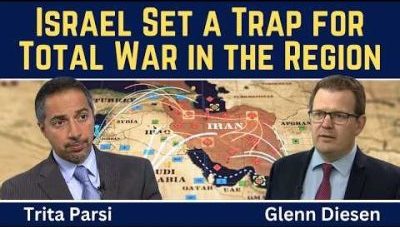
Trita Parsi: Israel Set a Trap for Total War in the Region
or go to
Aletho News Archives – Video-Images
Book Review
Why the War on Conspiracy Theories Is Bad Public Policy
By Kevin Barrett • Unz Review • February 1, 2019
 A Review of Conspiracy Theories and Other Dangerous Ideas by Cass Sunstein (based on an earlier paper co-authored with Adrian Vermeule); In Defense of Troublemakers: The Power of Dissent in Life and Business by Charlan Nemeth; and Conspiracy Theories and the People Who Believe Them, edited by Joseph E. Uscinski
On January 25 2018 YouTube unleashed the latest salvo in the war on conspiracy theories, saying “we’ll begin reducing recommendations of borderline content and content that could misinform users in harmful ways—such as videos promoting a phony miracle cure for a serious illness, claiming the earth is flat, or making blatantly false claims about historic events like 9/11.”
At first glance that sounds reasonable. Nobody wants YouTube or anyone else to recommend bad information. And almost everyone agrees that phony miracle cures, flat earthism, and blatantly false claims about 9/11 and other historical events are undesirable.
But if we stop and seriously consider those words, we notice a couple of problems. First, the word “recommend” is not just misleading but mendacious. YouTube obviously doesn’t really recommend anything. When it says it does, it is lying. … continue
Blog Roll
 Aletho News
- Trita Parsi: Israel Set a Trap for Total War in the Region
- Trump’s Iran war is on an Israeli leash
- Saudi oil boss issues global supply warning
- Riyadh Says Its Oil System Is Intact. The Numbers Say Otherwise.
- Trump and Netanyahu Want to “Finish the Job” on Iran
- US ‘one-sided dictation’ not Iran’s beliefs makes rational talks impossible: Baghaei
- Iran’s Next Strike May Not Explode. It Could Shut You Down /Col Doug Macgregor
- Iran: US political targets legitimate if assassinations return
- Iraq shuts key border crossing with Iran under US pressure: Report
- Undersea Internet cables could be targeted in retaliation for attacks on Iran: IRGC deputy chief
- If Americans Knew
- The Israel Lobby’s Changing Fortunes
- AIPAC has become such a political liability that it’s shifting to a more “nimble” approach to buying politicians
- At least 160 Israeli settler attacks in 2 weeks
- Will Gaza’s Ancient Christian Community Disappear Forever?
- Israel’s vision of regional security rests on keeping Arab states weak
- Heidi Levine recounts how Palestinian youths helped save her in settler attack
- DAILY UPDATE: Latest essential news on Palestine, Israel, & region
- Trump’s Intensifying Sabotage of the ICC, for Israel’s Sake
- Israeli military detain US and UK volunteers in West Bank including Democratic NY politician Brad Lander
- Americans at National Conservatism Conference held in Israel this year criticize Israel
- No Tricks Zone
- E-Cars Reduce CO2 Emissions By Only 41% Compared To Internal Combustion Engine Vehicles
- Predictions Made By Renowned Climate Professor Over Past Decades Have Been Proven To Be Poor
- New Study Suggests Large Regions Of The Pacific Ocean Have Been Cooling For The Last 80 Years
- Germany’s Green Energy Debacle: High Energy Costs Force Kahla Porzellan to Close After 182 Years!
- New Study: 50 Years Of The Most Aggressive ‘Net Zero’ Policies Can Only Affect The Global Climate By 0.03°C
- US September “Heat” Was No Record…Many Records Set Decades Ago
- Latest European Green Energy Debacle; Portugal’s Largest Flagship Solar Park Insolvent!
- Green Energy Debacle: German Expert Professor Fritz Vahrenholt Warns Of Severe Economic And Social Consequences
- Two More Paleo Reconstructions Affirm Meters-Higher Sea Levels Across Ireland, Brazil 7000-6000 Years Ago
- New Study: Earth And Venus Surface Warmth Largely Explained By Convection And Lapse Rate, Not CO2 Or Radiation

