US Embargo on Iran Undermined as 34 Tankers Slip Through, Vortexa Says
Al-Manar | April 22, 2026
At least 34 oil tankers linked to Iran have managed to circumvent the US embargo imposed on the country since it took effect, according to the shipping tracking group Vortexa. Several of the vessels were carrying Iranian crude oil, contradicting President Donald Trump’s declaration that the embargo has been a “tremendous success,” the Financial Times reported.
In an interview with CNBC on Tuesday, Trump said, “The embargo has been a tremendous success,” adding that he would not lift the US embargo on the Strait of Hormuz until Washington reaches a “final agreement” with Iran.
However, Vortexa data shows that dozens of ships have bypassed the restrictions. At least 19 oil tankers linked to Iran have crossed the US blockade to leave the Gulf, while at least 15 others have entered the Gulf from the Arabian Sea heading toward Iran. At least six of the departing vessels were carrying Iranian crude oil, totaling 10.7 million barrels.
Among them was the Iranian-flagged supertanker Dorina, which evaded the embargo by switching off its transponder the device that broadcasts its location and identity. According to Vortexa, the Dorina was one of two tankers that left Iranian waters on April 17, while two other crude oil carriers transited the area on April 20. Satellite images analyzed by the Financial Times in March showed the Dorina off the coast of Malaysia conducting a ship-to-ship oil transfer; its last recorded position was off southern India on April 18.
Meanwhile, several sanctioned tankers entered the Persian Gulf from the Gulf of Oman, including the Morelicious and Alicia, both sanctioned by the United States last year. The two ships passed through the Strait of Hormuz on the night of April 14 before sailing to the northern end of the Gulf.
US Blockade Violates Ceasefire Agreement
The United States imposed a blockade on all vessels entering or leaving Iranian territorial waters on April 13, violating a ceasefire agreement reached in Pakistan. According to notices issued by the US Navy, the blockade was expanded on April 16 to include all Iranian vessels on the high seas or those “carrying goods that Iran could use in conflict.”
US forces have so far seized one container ship in the Gulf of Oman and boarded an oil tanker in the Indo-Pacific region. The US Central Command announced Tuesday that the Navy had ordered 28 ships to return to Iranian ports since the blockade began.
In response, Iran has maintained control of the Strait of Hormuz, designating a specific route for non-military vessels, which are only permitted to pass with Tehran’s authorization. At least 30 ships attempted to transit the narrow waterway on Friday, when Iran announced it was opening the strait in line with the ceasefire declaration in Lebanon. However, those vessels turned back after Tehran closed the strait again, citing the continued US blockade and clarifying that passage would only be allowed with prior authorization.
Trump’s erratic behavior signals US deadlock: Ansarullah
Press TV – April 22, 2026
A senior member of Yemen’s Ansarullah popular resistance movement says US President Donald Trump’s erratic behavior signals his entanglement in a deadlock amid Iran’s continued successful steadfastness in the face of Washington’s demands.
Remarking on Tuesday, Nasr al-Din Amer, deputy head of Ansarullah’s Media Authority, said, “Iran’s refusal to sit at the negotiating table demonstrates its upper hand.”
He was referring to the Islamic Republic’s turning down the United States’ offer of resumption of negotiations, which saw Tehran insist that an unlawful American blockade against Iranian vessels and ports had to be lifted before the process could be re-launched.
“In contrast, the Americans’ haste to travel to Islamabad, even before Iran agreed to a new round of talks and the subsequent extension of the ceasefire, shows how deeply Trump is trapped in a deadlock,” the Yemeni official added.
American media outlets have been rife with stories about travel by senior US officials to the Pakistani capital, despite Iran’s clear refusal.
Also on Tuesday, and amid the Islamic Republic’s sustained rejection of the negotiation offer, Trump announced extension of a two-week ceasefire he had announced on April 7 in the face of decisive Iranian retaliation against unprovoked American-Israeli aggression.
Amer also described Trump’s allegations of “internal disagreement” inside Iran regarding the relevant decision-making processes as “false” and claims that were aimed at “preserving the already lost credibility of Trump.”
The official reiterated that the US president’s “unbalanced decisions indicate the severity of the predicament he is facing.”
US nuclear official accused of leaking data on Iran, nerve agents
Al Mayadeen | April 22, 2026
A senior US Army official responsible for nuclear and chemical safety has been placed on administrative leave following the release of an undercover video exposing sensitive national security discussions.
Andrew Hugg, identified in reports as a “Chief of Chemical Nuclear Surety,” is accused of discussing details related to US military operations and nuclear policy during a recorded conversation in a public setting.
The footage, released by O’Keefe Media Group, reportedly shows Hugg speaking with an undercover journalist inside a restaurant.
Allegations of revealing sensitive military information
According to the video, Hugg made several controversial statements regarding US military capabilities and actions.
He claimed that the United States still possesses nerve agents, describing them as “Pandora’s box,” and referred to the reported death of a US Army chemist due to exposure.
“So, nerve agent is a chemical weapon that, if you spray it on people, it’ll make a certain enzyme, which is called cholinesterase.. So, with this chemical [Sarin], this nerve agent kills that enzyme. Your lungs won’t work, your heart won’t work, nothing will work”, he said, revealing that it is stored in Maryland.
This revelation comes despite the US joining the Chemical Weapons Convention in 1993, which prohibits the development, production, stockpiling, and use of chemical weapons, which means the state’s possession of such weapons is illegal.
In addition, Hugg was recorded discussing how nuclear launch decisions are made, while asserting that Washington does not currently intend to use nuclear weapons on Iran.
Remarks on targeting Iranian leadership, civilian deaths
The footage also includes statements suggesting potential US targeting of Iranian leadership. Hugg reportedly said that Sayyed Mojtaba Khamenei could be targeted if he “doesn’t change his ways,” raising further concerns about the nature of the discussion and its implications.
Such remarks point to the normalization of rhetoric surrounding targeted assassinations within US military discourse.
He also acknowledged that US bombings on Iran had resulted in the killing of children, describing them as “collateral damage”, adding that “they [children] always die in war”.
Pentagon response and ongoing investigation
Following the release of the footage, Hugg was reportedly escorted out of a government facility.
Army spokesperson Cynthia O. Smith said in a statement, “We have placed Mr. Hugg on administrative leave while we conduct a thorough investigation into this matter.”
Reports also indicate that Hugg removed his LinkedIn profile shortly after the video surfaced.
The incident has raised broader questions about how sensitive information is handled within the US military, particularly in informal settings.
Douglas Macgregor: No Peace – U.S. Prepares for ‘Total War’ Against Iran
Glenn Diesen | April 21, 2026
Douglas Macgregor is a retired Colonel, combat veteran and former senior advisor to the U.S. Secretary of Defense. Col. Macgregor argues that the US peace negotiations are as fraudulent as the previous negotiations, and the US is preparing for total war with Iran.
Follow Prof. Glenn Diesen:
- Substack: https://glenndiesen.substack.com/
- X/Twitter: https://x.com/Glenn_Diesen
- Patreon: https://www.patreon.com/glenndiesen
Support the research by Prof. Glenn Diesen:
- PayPal: https://www.paypal.com/paypalme/glenndiesen
- Buy me a Coffee: buymeacoffee.com/gdieseng
- Go Fund Me: https://gofund.me/09ea012f
Israeli army blows up school in southern Lebanon in violation of ceasefire
Press TV – April 21, 2026
The Israeli regime has demolished a public school in southern Lebanon in a new violation of a temporary ceasefire agreement with Beirut approved by US President Donald Trump.
The Israeli army destroyed a public school building in the southern Lebanese town of Khiam despite the 10-day ceasefire.
The state-run Lebanese National News Agency (NNA) reported on Tuesday that the Israeli forces rigged the building with explosives and detonated it overnight, completely leveling the structure.
Israeli forces also fired artillery near the town of Kunin in the Bint Jbeil district in southern Lebanon, according to another report by NNA.
A series of Israeli demolitions occurred across the south, targeting homes, buildings and other infrastructure, the report said. Israeli forces also “booby-trapped” numerous homes in the villages of Beit Lif, Shamaa, Biyyada, and Naqoura, leveling them, the report added.
Trump announced on Thursday a 10-day ceasefire in Lebanon following calls with Lebanese President Joseph Aoun and Israeli prime minister Benjamin Netanyahu.
However, the Israeli regime’s forces have continued attacking Lebanese civilian infrastructure and residential areas, disregarding the ceasefire agreement.
Meanwhile, Israel has planned to systematically flatten civilian buildings in southern Lebanon, according to Israeli media. Engineering tools, including excavators, have been brought into the area and are being operated by paid Israeli contractors.
Israeli forces are assessing the scale of the destruction through digital tools, including statistical systems that track the number of buildings demolished in each sector.
Last month, Israeli Minister of Military Affairs Israel Katz said, “All houses in villages near the border in Lebanon will be demolished in accordance with the Rafah and Beit Hanoun models in Gaza.”
He added that after Israel’s aggression in Lebanon ends, the military would maintain control “over the entire area up to the Litani.”
Since March 2, Israel has carried out an aggression against Lebanon that has killed around 2,300 people, wounded more than 7,500, and displaced over 1.2 million, according to Lebanese authorities.
The desalination front: Water as Israel’s Achilles heel
The Cradle | April 21, 2026
Israel’s near-total dependence on seawater desalination to secure almost 80 percent of its drinking water and industrial needs has created a security vulnerability unlike that of the Persian Gulf states.
While Gulf desalination facilities are spread across wide geographic areas, Israel’s production capacity is concentrated along a narrow stretch of coastline. That concentration leaves Israel’s water system vulnerable to paralysis through concentrated missile barrages or suicide drone attacks from multiple fronts – a danger that exceeds the ability of conventional air defenses to fully contain.
The longer the confrontation with Iran drags on, the more these facilities are transformed from civilian infrastructure into strategic targets. Israel’s five main desalination plants have become central nodes in Tehran’s target bank, placing domestic stability and regional water commitments under the threat of broad disruption.
A narrow coastline, a concentrated vulnerability
Israel may be the world’s most centralized state in desalinated water production. Five major plants – Ashkelon, Ashdod, Palmachim, Sorek, and Hadera – produce the overwhelming majority of potable water for homes, agriculture, and industry.
The Sorek complex, one of the world’s largest reverse osmosis desalination plants, carries particularly high strategic value. Any strike that disables it would not simply create a temporary shortage. It could knock out water service to entire areas of Gush Dan, including Tel Aviv and its surrounding settlements, in a matter of days.
It is also clear that Israel’s water system lacks geographic depth from a security standpoint. All the plants fall within the effective operational range of precision missiles and are fully exposed to maritime threats.
Their offshore intake pipes are especially vulnerable. These underwater systems can be targeted through naval drones, unmanned submarines, or sea mines, halting water extraction and treatment almost immediately.
A successful strike on Hadera alone could severely disrupt supplies to the north and center of the country, placing huge pressure on emergency planners already dealing with depleted groundwater reserves and the shrinking capacity of Lake Tiberias.
The gas–water dependency trap
The most serious structural weakness in Israel’s water sector lies in its dependence on natural gas. Unlike the Gulf states, which possess large emergency reserves of liquid fuel to keep desalination facilities running during crises, Israel relies almost entirely on gas from the Tamar and Leviathan fields in the Mediterranean and is now looking to claim ownership of Lebanon’s Qana gas field.
That means any successful strike on offshore gas infrastructure would quickly spread beyond the energy sector. Disrupted gas supplies would undermine the national electricity grid and cut power to desalination facilities at the same time.
This dual dependency turns Israeli water security into a hostage of offshore infrastructure. Gas platforms are difficult to defend against drone swarms, anti-ship missiles, or coordinated naval attacks.
A strike on Leviathan, for example, would leave Israeli planners facing an impossible calculation: should the remaining gas be directed toward electricity generation for hospitals and military facilities, or toward desalination plants to ensure water continues to reach homes?
That overlap amplifies the pressure Iran can exert. A single strike on one offshore target could cripple two strategic sectors simultaneously.
Water as a regional pressure point
The implications of a strike on Israeli desalination infrastructure extend far beyond the occupation state itself. Under its peace agreement with Jordan, Israel is obligated to provide Amman with fixed annual quantities of water.
Any serious damage to Israel’s desalination system would almost certainly interrupt those supplies, exporting the crisis directly across the Jordan River.
That dynamic transforms desalination plants from public utilities into instruments of regional pressure. Strikes on these facilities would not only weaken Israel internally but also place neighboring governments under stress and expose the fragility of regional arrangements built around Israeli infrastructure.
Jordan would be hit first. But the fallout would also test the broader framework of normalization agreements and regional cooperation. For Tehran, that creates an additional layer of leverage. Dependence on Israel for critical resources is becoming a growing strategic liability.
That, in turn, could push neighboring states to seek alternatives, pressure Washington and Tel Aviv to scale back their confrontation with Iran, or reassess the long-term value of regional ties with Israel.
Cyberattacks and invisible sabotage
Israel possesses one of the world’s most advanced cybersecurity sectors, yet repeated Iranian cyberattacks have exposed real vulnerabilities in industrial control systems.
Desalination plants rely on complex digital infrastructure to regulate chemical balances, water pressure, and membrane filtration. Penetrating those systems would allow attackers to alter chlorine levels, disrupt pumping pressure, or physically damage sensitive equipment.
The danger of cyberwarfare lies in the fact that it is largely invisible. Unlike missile strikes, digital sabotage can unfold quietly, triggering confusion and panic before the source of the disruption is identified.
Even a 24-hour shutdown at Sorek could leave millions without water and inflict severe losses on sectors that depend on highly treated water, including semiconductor manufacturing, pharmaceuticals, and the precision industry.
The more Israel digitizes the management of water infrastructure, the more attractive that sector becomes as a target for cross-border cyber attacks.
Deliberate pollution and long-term disruption
The eastern Mediterranean coastline is also highly vulnerable to environmental contamination during wartime. A strike on fuel tankers offshore, or on storage facilities in Haifa or Ashdod, could trigger oil spills large enough to disable desalination intake systems within hours.
Israel’s heavy reliance on reverse osmosis makes that threat especially serious. Even limited exposure to oil residue can permanently damage filtration membranes. Replacing them is neither quick nor simple, particularly during wartime conditions when supply chains are already strained.
This kind of environmental warfare is especially dangerous because its effects do not end when the fighting stops. Oil pollution would not only shut down desalination capacity in the short term but also damage marine ecosystems that support natural filtration processes.
That would raise operating costs, lower water quality, and leave sections of Israel’s coastline economically crippled long after the war itself ends.
The economic cost of strategic thirst
From an investment and financial perspective, instability in water security poses a direct threat to the occupation state’s “startup nation” model. International investors and major technology firms evaluate risk based on the stability of essential resources.
Once water itself becomes a threatened commodity, sovereign insurance costs rise, while capital flees sectors that consume large volumes of water.
A prolonged shutdown in greater Tel Aviv could inflict losses that surpass the economic impact of conventional missile strikes. Water is tied to every layer of the economy, from households and hospitals to industrial parks and high-tech production.
International ratings agencies already assess Israel’s creditworthiness according to its ability to absorb wartime shocks, protect infrastructure, and sustain economic activity during prolonged conflict. Any major disruption to the water sector would add to concerns over fiscal strain, investor confidence, and the state’s ability to maintain basic services.
That would raise borrowing costs and place additional pressure on a state budget already strained by military spending.
“Thirst economy” is now a term increasingly heard in financial analysis circles, where water becomes the central measure of national economic resilience.
The supply chain problem
Israel’s desalination system depends heavily on imported technology, precision spare parts, and specialized chemicals. Wartime disruption to ports, shipping lanes, or supply chains would make routine maintenance increasingly difficult.
Anti-scaling chemicals, disinfectants, filtration membranes, and electronic control systems all require reliable imports. Any shortage would force plant operators to either lower water quality or shut facilities down altogether to avoid damaging equipment.
That creates another challenge for Israeli planners. Maintaining the desalination sector during a prolonged conflict may require costly air bridges for critical parts and chemicals – an option that is difficult to sustain over time.
Israel’s desalination network has become one of the clearest examples of how technological sophistication can also create strategic fragility. Water security now sits at the center of the occupation state’s military and economic calculations.
If these facilities become unsustainable under wartime conditions, every other pillar of Israeli power – from industry and public health to military readiness and regional influence – becomes far harder to sustain.
Iran announces new Hormuz restrictions after US ceasefire violations
Al Mayadeen | April 21, 2026
Iran has announced sweeping restrictions on maritime traffic through the strategically vital Strait of Hormuz following violations of the ceasefire by the United States, Tasnim News Agency reported.
The report stated that all established maritime channels for entry and exit through the Strait have been closed, effectively halting normal transit in one of the world’s most critical energy shipping routes.
Iranian authorities have instead introduced a newly designed waterway that will allow limited and closely monitored passage for commercial vessels, signaling a controlled approach to maritime navigation under heightened tensions.
Tehran has also declared that no vessel will be permitted to pass through the Strait of Hormuz until guarantees are provided, ensuring the full lifting of the maritime blockade imposed on Iran.
Additionally, the Strait will remain under strict surveillance by the Islamic Revolution Guard Corps Navy, with an explicit ban on the transit of any military vessels, further escalating security measures in the region.
Iranian ships defy the US blockade
The United States naval blockade of Iran began on April 13, after the ceasefire negotiations in Islamabad reached a dead end, with Washington announcing it would restrict all maritime traffic to and from Iranian ports. The move was first outlined publicly on April 12 by US President Donald Trump, who declared that US forces would intercept vessels attempting to enter or leave Iranian-controlled waters.
On April 20, the US military attacked and pirated an Iranian-flagged container ship, TOUSKA, exiting the Strait of Hormuz, marking the first such act of piracy by the US targeting Tehran’s ships since the blockade was first announced.
The Khatam al-Anbiya Central Headquarters described the incident as “maritime piracy” and a clear violation of the ceasefire, stating that US forces had disrupted the vessel’s navigation systems and carried out an airborne landing operation on its deck, while warning that Iran’s Armed Forces would respond soon to “armed piracy” by US forces.
Since then, several Iranian ships have defied the blockade and sailed to and from Iran.
Iran’s Army announced that an Iranian oil tanker had successfully entered the country’s territorial waters after crossing the Arabian Sea, despite repeated warnings and threats issued by United States naval forces.
In a statement released on April 21, the Army’s public relations office confirmed that the vessel was escorted by the Navy, which ensured its safe passage under full protection until it reached Iranian waters without incident.
The statement added that the tanker has since docked at one of Iran’s southern ports, where it has remained for several hours following its arrival.
Other vessels had successfully transited the Strait, defying the United States-imposed maritime blockade targeting Iranian shipping routes.
The vessels managed to cross the strategic waterway despite ongoing restrictions enforced by Washington in recent days.
Israel’s Expansion Means An Unraveling of Middle East Stability
By José Niño | The Libertarian Institute | April 20, 2026
The recent ceasefire between Israel and Iran may have paused the most intense phase of direct military confrontation, but it has done nothing to resolve the deeper questions about Middle Eastern stability that have emerged since October 7, 2023. Behind the temporary calm lies a profound transformation in Israeli strategic thinking, one that has moved from containment to active regional reorganization.
Israel is not a normal democracy that abides by the rule of law or legal restraint. It is very much an expansionist state with bold ambitions and a demonstrated willingness to break international law. The events of the past two years have made this reality impossible to ignore.
The “Greater Israel” project, a term that has carried two primary meanings over the decades, has moved from the ideological fringe into the governing coalition of Israeli politics. In its narrower, post-1967 usage, “Greater Israel” referred to Israeli sovereignty over the West Bank, Gaza Strip, and Golan Heights. In its maximalist, biblicist form, drawn from Genesis 15:18, it invokes the territory stretching “from the river of Egypt unto the great river, the river Euphrates,” a vast area encompassing parts of modern Jordan, Syria, Lebanon, and potentially reaching into Iraq.
Once confined to religious nationalists and settler ideologues, this expansionist vision now sits at the cabinet table. Finance Minister Bezalel Smotrich has called for Israel to “expand to Damascus,” displayed a map showing Jordan as part of Israel at a 2023 speech in Paris, and settler leader Daniella Weiss has publicly stated that “the real borders of Greater Israel are the Euphrates and the Nile.”
Netanyahu’s coalition agreement explicitly declares that “Jewish people have an exclusive and indisputable right to all parts of the Land of Israel” and that “the government will promote and develop settlements in all parts of the Land of Israel.” As Al Jazeera reported in February 2026, figures like Smotrich and Ben Gvir, once regarded as outside the mainstream, “are now in government, reflecting a wider radicalisation within Israeli society itself.”
Perhaps most striking is that this rhetoric is no longer confined to the religious right. Opposition leader Yair Lapid, an ostensibly secular figure, stated in February 2026 that he supports “anything that will allow the Jews a large, broad, strong land,” adding that “the borders are the borders of the Bible.” When even centrist politicians invoke biblical mandates to justify territorial expansion, the ideological transformation becomes undeniable.
The conflict with Hezbollah has catalyzed a significant shift in Israeli policy regarding Lebanon’s territorial integrity. The previous doctrine of containing Hezbollah has given way to explicit calls from senior Israeli officials for the permanent occupation and annexation of territory up to the Litani River, approximately thirty kilometers north of the current border.
Smotrich has repeatedly asserted that the military campaign in Lebanon must result in a “change of Israel’s borders.” On March 23, 2026, he told an Israeli radio program that the campaign “needs to end with a different reality entirely, both with the Hezbollah decision but also with the change of Israel’s borders.” He then declared at a Knesset faction meeting that “the Litani must be our new border with the state of Lebanon, just like the Yellow Line in Gaza and like the buffer zone and peak of the Hermon in Syria,” adding, “I say here definitively, in every room and in every discussion, too.” Al Jazeera reported that these were “the most explicit” statements by a senior Israeli official on seizing Lebanese territory since the current military operations began.
Defense Minister Israel Katz has adopted a complementary posture. He announced at the end of March that the IDF will maintain “security control over the entire area up to the Litani River” and that “hundreds of thousands of residents of southern Lebanon who evacuated northward will not return south of the Litani River until security for the residents of the north is ensured.”
The shift toward annexation is bolstered by the emergence of Uri Tzafon, a movement founded in late March 2024 that advocates for the establishment of Jewish civilian settlements in southern Lebanon. The group, whose name means “awaken, O North” in Hebrew, has organized conferences focused on what it describes as the “occupation of the territory and settlement” of southern Lebanon. Its leaders have invoked conquest, expulsion, and settlement as the necessary sequence for transforming the region.
Senior rabbi Yitzchak Ginsburgh wrote in a public letter that “after the conquest and expulsion of the hostile population, a Jewish settlement must be established, thus completing the victory.” Eliyahu Ben Asher, a founding member of Uri Tzafon, told Jewish Currents that “the Israeli-Lebanese border is a ridiculous colonial border,” building on his earlier assertion that “what is called ‘southern Lebanon’ is really and truly simply the northern Galilee.”
In mid-2024, the group used drones and balloons to drop eviction notices on Lebanese border towns, informing residents that “they are in the Land of Israel, which belongs to the Jewish people, and that they are required to evacuate immediately,” according to a post the group made on its Telegram channel. In February 2026, dozens of Uri Tzafon activists crossed the border fence near the Lebanese town of Yaroun and planted trees inside Lebanese territory in what the group called a “moral and historical step.” The IDF detained two individuals and called the crossing “a serious criminal offense.” By April 2026, Jewish Currents reported that Uri Tzafon’s once-marginal ideas had gained “broad governmental and public support,” with the movement’s leaders now setting their sights on territory beyond the Litani, toward the Zaharani River, another dozen miles deeper into Lebanon.
The pursuit of “Greater Israel” and the annexation of buffer zones draw on a lineage of Israeli strategic thought that advocates for the fragmentation of rival Arab states. This lineage includes the 1982 Yinon Plan, an article published in the Hebrew journal Kivunim (“Directions”) and authored by Oded Yinon, who had served as a senior official in the Israeli Foreign Ministry and as a journalist for The Jerusalem Post. Yinon argued that the borders drawn by colonial powers were inherently unstable and that Israel’s security would be best served by what he called the “dissolution of the military capabilities of Arab states east of Israel.” He specifically proposed that Iraq should be divided into separate Kurdish, Sunni, and Shiite entities, and that Syria and Lebanon should similarly fragment along sectarian lines.
The deterioration of relations between Israel and Turkey represents one of the most significant diplomatic casualties of the post-October 7 era. Israeli leadership has designated Turkey not merely as a problematic partner but as a strategic adversary whose regional ambitions require a coordinated counter-alliance.
Foreign Minister Israel Katz spearheaded this posture with highly personalized and escalatory rhetoric. Following Turkish President Recep Tayyip Erdoğan’s July 28, 2024, speech suggesting that his country might intervene in Israel “just as we entered Karabakh, just as we entered Libya,” Katz responded on X that Erdoğan was “following in the footsteps of Saddam Hussein” and that he “should remember what happened there and how it ended,” posting a photograph of Erdoğan alongside the former Iraqi dictator. Katz also instructed Israeli diplomats to “urgently dialogue with all NATO members” to push for Turkey’s condemnation and expulsion from the alliance, calling Turkey “a country which hosts the Hamas headquarters” and describing it as part of “the Iranian axis of evil.”
Beyond rhetoric, Netanyahu has articulated a vision for a regional counter-alliance. On February 23, 2026, ahead of Indian Prime Minister Narendra Modi’s visit to Israel, Netanyahu announced a proposed “hexagon of alliances” that would include Israel, India, Greece, and Cyprus, along with unnamed Arab, African, and Asian states. He stated that the initiative was designed to counter “the radical axes, both the radical Shia axis, which we have struck very hard, and the emerging radical Sunni axis.” While Netanyahu did not explicitly name Turkey as leading the Sunni axis, Israeli political discourse and analysts have pointed to Turkey under Erdoğan as the primary concern, with former Prime Minister Naftali Bennett recently describing Turkey as “the new Iran.”
The shifts in Israeli rhetoric and doctrine since October 7 have had profound implications for its international standing. The “Greater Israel” rhetoric and the annexation of southern Lebanon have led to what observers describe as a “dark new phase” in Israel’s relations with the international community. Long-standing partners, including the United Kingdom, have suspended trade negotiations and imposed sanctions on individuals involved in the settler movement, citing the strident rhetoric of Israeli ministers as a primary cause.
The military campaign against Iran in early 2026 and the subsequent Iranian retaliation through the closure of the Strait of Hormuz triggered the world’s biggest oil supply disruption since the 1970s. The reclassification of the Strait as a maximum war-risk zone led to insurance premiums surging by over 1,000% contributing to a global fuel crisis and massive volatility in financial markets. Within Israel, the economic damage from the multi-front war has been estimated at over $11.5 billion.
As Israel moves to dismantle the borders of the twentieth century, the resulting shockwaves are rattling both regional alliances and global energy markets. The Jewish state’s transformation into an expansionist power has turned former partners into strategic adversaries, making the recent ceasefire feel like a brief intermission in a much larger drama. In this new Middle East, the map is being redrawn by force, and the cost of that ink is being felt from the Litani River to the Strait of Hormuz.
France’s New Nuclear Strategy to Weaken Security in Europe – Russian Foreign Ministry
Sputnik – 20.04.2026
The security of non-nuclear European countries will ultimately be weakened by France’s plans to deploy nuclear weapons on their territory, Russian Deputy Foreign Minister Alexander Grushko said in an interview with Sputnik.
“As a result, instead of the French declaring a strengthening of the defense of their allies, to whom, incidentally, they are not promising any ironclad guarantees, the security of these countries is actually weakening,” Grushko said.
France reportedly possesses 280 nuclear warheads. Denmark has already concluded a strategic nuclear deterrence agreement with France, which is intended to complement NATO’s deterrence mechanisms. Poland is also negotiating with France to join this initiative.
In his March speech on France’s nuclear deterrence policy, French President Emmanuel Macron said that his country must strengthen its nuclear doctrine in the face of new threats. Therefore, he ordered an increase in the number of French nuclear weapons. According to Macron, France should also consider expanding its nuclear strategy to all of Europe, but must also preserve its sovereignty.
Iran rejects uranium transfer, warns of response to naval blockade
Al Mayadeen | April 18, 2026
Iran’s Foreign Ministry spokesperson Esmaeil Baghaei flatly rejected on Friday any proposal to transfer the country’s enriched uranium abroad, declaring that Iran’s uranium reserves are as sacred as its own soil.
Responding to remarks made by US President Donald Trump, who told Reuters that Washington would work with Tehran to retrieve and transfer its enriched uranium, and claimed Iran had agreed to halt enrichment, Baghaei called such assertions part of a coordinated media campaign designed to pressure negotiators and tilt the direction of ongoing talks.
“Claims about a permanent suspension of uranium enrichment are aimed at influencing the course of negotiations,” Baghaei said, adding that any final agreement must fully safeguard Iran’s interests and rights.
Iran has consistently maintained that its uranium enrichment program serves civilian purposes, including agriculture and medicine, and that it operates no military nuclear program.
Compensation, sanctions relief are core demands
Baghaei stressed that compensation for the losses and damages inflicted on Iran is not a peripheral issue but a fundamental pillar of any potential deal.
He also placed the lifting of sanctions at the top of Tehran’s list of priorities, emphasizing that ending the war and halting hostilities across all fronts must be treated as a single, inseparable package, not piecemeal concessions to be negotiated separately.
He described diplomacy as “a continuation of military efforts on the ground,” signaling that Tehran’s negotiating posture is shaped by the same resolve it has brought to the battlefield.
Naval blockade crosses a red line
On the security front, Baghaei warned that a naval blockade would be met with a firm Iranian response, calling any such measure a direct violation of the ceasefire. “Iran cannot be blockaded,” he said, adding that Tehran would take all necessary measures in response.
He also invoked international maritime law, asserting that coastal states bordering strategic straits hold both the right and the responsibility, in wartime conditions, to take appropriate measures against states they consider hostile, in reference to the Strait of Hormuz.
No direct talks with Trump
Baghaei also denied Trump’s claims that US officials had held direct talks with Iranian counterparts, calling those assertions false.
He noted that while earlier rounds of negotiations had focused primarily on the nuclear file, the most recent discussions have shifted to center on ending the war entirely.
On the progress of talks, he said the Islamabad meeting had helped map out areas of understanding and define red lines, adding that “there is no ambiguity regarding the negotiation files.”
He cautioned, however, that developments over the coming days would ultimately determine the outcome.
Tehran’s previous uranium offer
Iran’s Deputy Parliament Speaker Ali Nikzad revealed on Monday that Tehran had at one point signaled a willingness to demonstrate goodwill, but on its own terms.
Nikzad said Iran had proposed diluting 450 kilograms of enriched uranium, not handing it over, and that earlier negotiations had explored the possibility of establishing a trilateral consortium involving Iran, the United States, and Saudi Arabia to carry out that dilution. He clarified that the other parties ultimately pulled back from that framework.
Nikzad also claimed that the US military operation targeting Isfahan had been aimed at seizing Iran’s uranium stockpiles, but that it failed.
US Middle East Policy: The Growing Propensity for Genocide
Arab Center Washington DC | April 10, 2026
Professor John Mearsheimer discusses the #IranWar, the #Gaza genocide, and the US policy toward the Middle East.
His remarks were the keynote address for Arab Center’s Eleventh Annual Conference.
John J. Mearsheimer is an American political scientist and international relations scholar who serves as the R. Wendell Harrison Distinguished Service Professor of Political Science at the University of Chicago and is the author of How States Think: The Rationality of Foreign Policy, The Tragedy of Great Power Politics, The Great Delusion: Liberal Dreams and International Realities, and The Israel Lobby and U.S. Foreign Policy, among other works.
Daniel Davis: Iran Reopens the Strait of Hormuz
Glenn Diesen | April 17, 2026
Lt. Col. Daniel Davis is a 4x combat veteran, the recipient of the Ridenhour Prize for Truth-Telling, and is the host of the Daniel Davis Deep Dive YouTube channel. Lt. Col. Davis discusses Iran’s announcement that it is reopening the Strait of Hormuz, yet the US decides to maintain the blockade on Iranian ports. While diplomatic developments are positive, the statements from the US and Iran do not correspond with each other.
Daniel Davis Deep Dive: https://www.youtube.com/@DanielDavisDeepDive/videos
Follow Prof. Glenn Diesen:
- Substack: https://glenndiesen.substack.com/
- X/Twitter: https://x.com/Glenn_Diesen
- Patreon: https://www.patreon.com/glenndiesen
Support the research by Prof. Glenn Diesen:
- PayPal: https://www.paypal.com/paypalme/glenndiesen
- Buy me a Coffee: buymeacoffee.com/gdieseng
- Go Fund Me: https://gofund.me/09ea012f
Featured Video
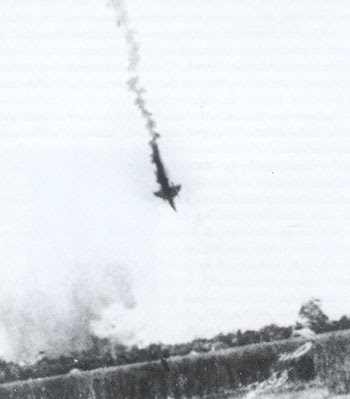
The Failed Air War Over Vietnam
or go to
Aletho News Archives – Video-Images
From the Archives
USS Liberty Massacre: A Pivotal Moment in the Hostile Takeover of America
By Kevin Barrett | Crescent | Dhu al-Qa’dah 24, 1445
In corporate America, hostile takeovers are commonplace. They occur when an aggressor—a larger corporation or rich individuals—seizes control of a smaller corporation without asking permission.
What few recognize is that the United States itself has been subjected to a hostile takeover. Since the aggressor, the illegitimate settler colony known as “Israel,” is much smaller than the US, the takeover has necessarily been surreptitious.
As of June, 2024, Israel’s gradual takeover of the US has become obvious and undeniable—a proverbial “elephant in the living room.” … continue
Blog Roll
 Aletho News
- Yemeni Armed Forces Warn Airlines Against Using Saudi Airports, Exempt Mecca and Medina
- Iran security chief says powers greater than US tried to conquer Iran but ended in ‘dustbin of history’
- Europe’s mounting social chaos… chickens coming home to roost for proxy war against Russia
- US-Russia Diesel Deal Becomes Massive Defeat for Ukraine
- Hormuz and the Looming Economic Catastrophe
- Dhubab offensive, media blitz and the rapid unraveling of Saudi-backed coalition’s new gambit
- Putin Conveys to Trump Iran’s Vision on Possible Conflict Resolution – Kremlin
- The Search for Truth: Charlie Kirk’s Assassination One Year Later
- ‘Harsh reality’: Iran says France seeks monopoly on power and intimidation, not peace for all
- When Will This White House Madness End?
- If Americans Knew
- For three years, Israel has killed a child in Gaza every 71 minutes – Daily Update
- Israeli forces kill another child in Gaza – Daily Update
- Gaza ceasefire exists in name only, say more than 100 organizations
- Nearly 2 Million in Gaza Need Urgent Shelter Assistance as Winter Looms: IOM Chief Warns
- Suppressing Palestinian resistance: US charity under fire for AI monitoring of Gaza classrooms
- Thousands Are Held in Israeli Torture Camps. This Is What Happens Inside
- Israel puts Gaza’s sick, injured, newborn in peril – Daily Update
- Report claimed Mark Levin used by Israeli government to influence Trump
- Over 2,000 Gazans have died awaiting medical evacuation amid Israel’s continued siege
- How a U.S. Diplomat Suppressed and Altered Reports Critical of Israel
- No Tricks Zone
- Germany’s Green Energy Debacle: High Energy Costs Force Kahla Porzellan to Close After 182 Years!
- New Study: 50 Years Of The Most Aggressive ‘Net Zero’ Policies Can Only Affect The Global Climate By 0.03°C
- US September “Heat” Was No Record…Many Records Set Decades Ago
- Latest European Green Energy Debacle; Portugal’s Largest Flagship Solar Park Insolvent!
- Green Energy Debacle: German Expert Professor Fritz Vahrenholt Warns Of Severe Economic And Social Consequences
- Two More Paleo Reconstructions Affirm Meters-Higher Sea Levels Across Ireland, Brazil 7000-6000 Years Ago
- New Study: Earth And Venus Surface Warmth Largely Explained By Convection And Lapse Rate, Not CO2 Or Radiation
- 2025 Nature Paper Claiming Worsening Global Drought Gets RETRACTED …Heavily Flawed
- New Study: ‘Global Drought Shows No Detectable Recent Acceleration Under Climate Warming’
- Economic Masterminds: German Socialists Suggest Taxing Productivity Gains Stemming From Using AI

