Shocking report exposes how US defense contractors have wasted trillions through fraud and corruption
By Kit Klarenberg | RT | September 15, 2021
The newly released ‘Profits of War’ report from Brown University has revealed in staggering detail the full extent of the corruption unleashed by Washington’s profligate defense spending during the 20-year War on Terror.
It notes that since the start of the intervention in Afghanistan in October 2001, Pentagon spending has totalled $14 trillion, with the US war budget increasing between 2002 and 2003 by more than the entire military spending of any other country. Between one-third and one-half of that total was pocketed by defense firms, which provided logistics and reconstruction, private security services and weapons – along the way, these contractors habitually engaged in “questionable or corrupt business practices,” including fraud, abuse, price-gouging and profiteering.
Wartime conditions meant standard contract processes were circumvented – bidders, bids, and subsequent delivery weren’t subject to significant oversight, so fleecing the Pentagon was extremely easy, particularly for well-connected companies with government ties.
Lockheed Martin, Boeing, General Dynamics, Raytheon, and Northrop Grumman have in recent years been awarded between a quarter to a third of all Pentagon contracts. It’s surely no coincidence that four of the past five US Defense Secretaries previously worked at one of the ‘big five’.
A key focus of the report is Halliburton, which was awarded an open-ended contract without competition, to provide a wide array of support for US soldiers overseas, including setting up and managing military bases, maintaining equipment, catering, and laundry services. A 2003 internal Pentagon review found the company had dramatically overcharged for basic goods and services to the tune of tens of millions, and conducted faulty work on bases that put soldiers at risk.
In some cases, Halliburton billed Washington for services it didn’t actually provide – in 2009, it was determined the number of meals for which it charged the Pentagon was up to 36 percent greater than the true figure. In others, the company’s reckless conduct had fatal consequences. The report documents how, from 2004 to 2008, at least 18 military personnel in Halliburton-built bases across Iraq were electrocuted due to sub-par installations.
It took the death of a Green Beret who was electrocuted while showering for Congress to launch an investigation into the issue, with a resultant review revealing that the wider building was found to have “serious electrical problems” almost a year before he died, but Halliburton did nothing to remedy the situation – not least because its contract didn’t oblige the firm to “[fix] potential hazards.” The company was also found to have employed untrained or inexperienced electricians to do work at a lower rate, while billing Washington for fees provided by professionals.
Despite criminal investigations being launched by the FBI, Justice Department, and Pentagon Inspector General during the mid-00s into Halliburton’s activities in Iraq, not a single employee was ever penalized, its government contracts only multiplied thereafter, and a civil servant who’d raised numerous concerns about the company’s conduct was demoted.
The firm’s insulation from prosecution may well be explained by Vice President Dick Cheney serving as its CEO between 1995 and 2000 – he still held stock options worth millions, and had received millions of thousands of dollars more in deferred compensation for his role, when the War on Terror began.
Cheney was also instrumental in the privatization of US warfare more widely. In 1992, under his direction as Defense Secretary, the Pentagon paid the parent company of Halliburton $3.9 million to produce a report on how private contractors could provide logistics in overseas theaters of conflict.
Numerous examples of fraud, waste, and abuse in Afghanistan are also documented in ‘Profits of War’, including a US-appointed economic task force spending $43 million on a gas station that was never used, $150 million on lavish living quarters for economic advisors, and $3 million for patrol boats for the Afghan police that were also never used.
A cited Congressional investigation found a significant portion of the $2 billion in transportation contracts splurged by Washington ended up as kickbacks to warlords, police officials, or even the Taliban, sometimes as much as $1,500 per vehicle, or up to half a million dollars for each large convoy of 300 trucks. In 2009, then-Secretary of State Hillary Clinton stated such “protection money” was one of the group’s major sources of funding.
Smaller contractors weren’t always bulletproof though. Custer Battles, a firm founded by a former Army Ranger and an ex-CIA operative in the aftermath of 9/11, was awarded a contract – its first ever – to guard Baghdad airport, and collect old Iraqi currency so it could be destroyed. The firm’s chiefs had no experience in airport security, employed security guards with no prior training, didn’t hire translators who spoke Arabic, and acquired no security dogs to detect explosives.
Its operatives also went on a shooting spree in the city of Umm Qasr, firing on civilian cars and crowded minibuses, and only stopping when local authorities and a British military unit intervened. Mercifully, no one was injured or killed – no disciplinary actions arose either, as the staffers bribed witnesses to keep quiet.
Custer’s CEO was paying himself $3 million annually, and company staff on-the-ground lived in supreme luxury, their complexes replete with swimming pools, air conditioning and wireless internet – meanwhile, US troops often stayed in tents and abandoned buildings. In 2004, a consultant to the firm came across an internal document that exposed gross overcharges, provision of fake leases and bills, and use of false front companies by Custer. The company was barred from receiving any further US government contracts, and fined a meagre $10,000.
Still, those repercussions are positively seismic when one considers no major US defense contractor has to date ever suffered significant financial or criminal consequences for their work – or lack thereof – during the War on Terror. What’s more, there’s no indication any lessons have been learned in Washington – quite the opposite, in fact. The report notes the sector has “ample tools at its disposal to influence decisions over Pentagon spending going forward.”
Foremost is a vast and extremely well-funded lobbying effort. Defense contractors have provided $285 million in campaign contributions since 2001, with a special focus on presidential candidates, Congressional leadership, and members of the armed services and appropriations committees. Moreover, these firms have spent $2.5 billion on lobbying since 9/11, each employing over 700 lobbyists annually over the past five years on average, more than one for every member of Congress.
Many of these lobbyists, the report states, have passed through a “revolving door” from jobs in Congress, the Pentagon, National Security Council and other agencies key to determining the size and scope of the US military budget. Company chiefs openly brag about their effective purchase of lawmakers – in October 2001, Harry Stonecipher, then-Vice President of Boeing, declared that “any member of Congress who doesn’t vote for the funds we need to defend this country will be looking for a new job after next November.”
With the War on Terror now seemingly over, “exaggerated estimates of the military challenges posed by China have become the new rationale of choice” for defense contractors, as they seek to bloat the already unbelievably voluminous US defense budget even further.
In 2019, the National Defense Strategy Commission published a scaremongering report, which proposed three to five percent annual growth in the Pentagon budget to address the purported threat of China. Ever since, those figures have become a mantra for hawks in government, think tanks and the media – as the report notes, nine of the 12 members of the Commission had direct or indirect ties to the arms industry.
One can’t help but be reminded of President Eisenhower’s farewell address, in which he offered a prophetic – and clearly unheeded – warning about the ever-growing power of the defense sector.
“We have been compelled to create a permanent armaments industry of vast proportions. Added to this, three and a half million men and women are directly engaged in the defense establishment. We annually spend on military security alone more than the net income of all US corporations,” he reflected. “The total influence – economic, political, even spiritual – is felt in every city, every statehouse, every office of the federal government…We must guard against the acquisition of unwarranted influence, whether sought or unsought, by the military-industrial complex.”
By Kit Klarenberg, an investigative journalist exploring the role of intelligence services in shaping politics and perceptions.
An Evil Rationalization on Afghanistan
By Jacob G. Hornberger | FFF | September 15, 2021
One of the arguments that interventionists, including many U.S. military veterans, use to rationalize the U.S. defeat in Afghanistan is that U.S. forces were fighting to bring “freedom, democracy, and women’s rights” to the country. In fact, the Pentagon even coined the term “Operation Enduring Freedom” as one of the ways to justify the invasion and occupation of the country. Even though the effort failed, the argument goes, interventionists, including veterans, should nonetheless feel good about their “service” to both America and Afghanistan.
There is a problem with this rationale and justification, however. The problem is that it is evil to the core.
In any invasion and occupation, there are inevitably going to be people killed, injured, and maimed. There is also going to be destruction of homes, business, and infrastructure. That certainly proved to be the case in Afghanistan.
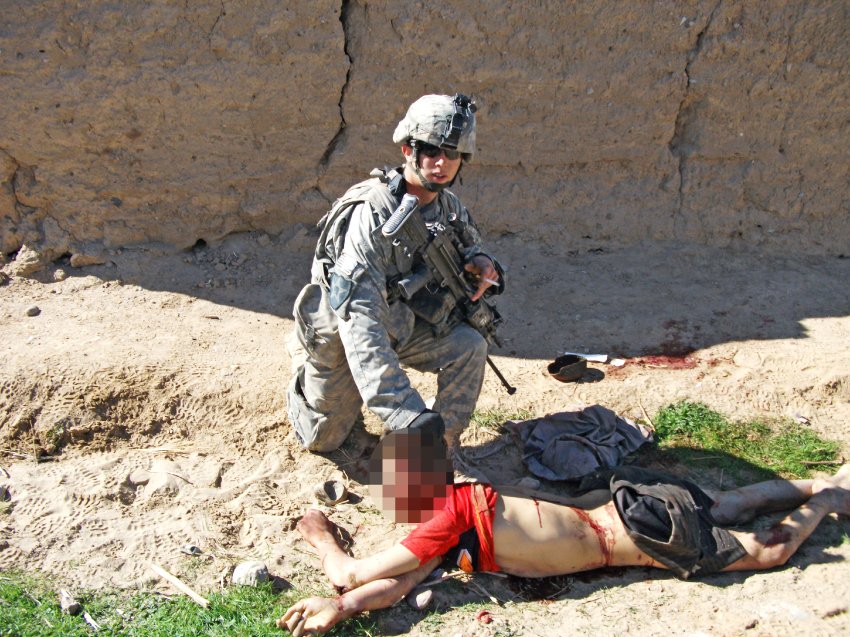
Therefore, what interventionists were — and are — saying is that all those deaths, injuries, and property destruction were worth bringing freedom, democracy, and women’s rights to Afghanistan.
But who died and made these people the arbiters of that type of mathematical life-and-death calculation? After all, those who were killed in the process would never have experienced freedom, democracy, and women’s rights. That’s because they would be dead.
Now, it’s one thing for the citizens of a country to decide for themselves whether to revolt against the tyranny of their own government. Violent revolutions can be very costly in terms of life and property. That’s why people might decide to put up with a lot of tyranny before they revolt. They don’t want to lose their family members, friends, and countrymen by revolting, until the situation gets so bad that they feel that they have no choice but to do so. In the final analysis, the decision to revolt and when to revolt can be highly subjective.
But that’s a far cry from U.S. officials making that decision from afar. Their decision is a cavalier one because they don’t put the same value on Afghan life that the Afghan people do. In fact, interventionists put little or no value on Afghan life. That mindset is reflected by the fact that early in the invasion and occupation, the Pentagon, with the full support of Washington, D.C., officials, made the conscious decision to not even keep track of how many Afghans they were killing. Moreover, there was never an upward limit on the number of Afghan people who could be killed, injured or maimed in the effort to bring freedom, democracy, and women’s rights to the country. It just didn’t matter. Any number of Afghan people killed in the effort would be considered worth it by U.S. interventionists.
That’s why the purported concern that U.S. interventionists, including many U.S. military veterans, express for the Afghan people rings hollow, given that they were willing to kill or maim any number of Afghans to reach their political goal.
How many Afghan lives were worth the U.S. effort to bring “freedom, democracy, and women’s rights” to Afghanistan? None! It was never morally or religiously justified for the U.S. government to kill even one single Afghan citizen for the sake of a political goal. Killing, injuring, or maiming even just one single Afghan, much less tens of thousands of Afghans, for the sake of “freedom, democracy, and women’s rights” has always been the epitome of evil.
Latvian military apologizes for NATO war games gunfire in busy streets of Riga which left civilians terrified
RT | September 13, 2021
Latvia’s capital RIga briefly turned into a warzone at the weekend, with heavily armed soldiers firing weapons among startled civilians. The firefight turned out to be an exercise that had somehow not been marked or cordoned off.
Multiple videos of the incident surfaced online on Saturday, promptly going viral. Footage from the scene shows multiple soldiers in the middle of a street, crouching behind cars and firing their weapons at a building.
One of the solders discharged his assault rifle as a woman with her baby was passing by, another video shows. The woman was left visibly shaken, while the baby began crying.
There were no visible cordons or markings that the area was being used for drills, with pedestrians walking right next to the heavily armed troops. The exercise looked very lifelike, with only an unarmed supervising officer casually moving among the troops serving to indicate that the street had not turned into an actual warzone.
The incident has drawn an overwhelmingly negative reaction, with the comment sections of the videos full of angry remarks. Some said that residents of the city should have at least been given clear notice via SMS, while others argued that the area should have been completely cordoned off.
Following the outcry, the military gave a lackluster apology, stating that it uses only blank cartridges for such events, and insisting that no harm was caused.
“During such drills, we only use blank cartridges, which make noise but do not pose any danger to the health and life of others. In this case, blank cartridges were also used, and this situation was a bitter misunderstanding, for which we apologize. The Defense Ministry calls on the public to show understanding for the exercises,” the ministry said in a statement cited by the TVnet website.
The Riga ‘firefight’ came as a part of the NATO Namejs 2021 war games, which are running from August 30 to October 3 across multiple locations in Latvia. The exercises involve some 9,300 soldiers from different countries of the bloc. Three soldiers were injured during the drills in a separate unspecified accident on Saturday, with the Defense Ministry stating that two servicemen from the “allied armed forces” had ended up hospitalized in “stable” condition.
Report: US plans Arab-Israeli maritime unit in Persian Gulf for proxy missions
Press TV – September 11, 2021
A new report says a recent decision by the US Navy’s 5th Fleet to launch a drone task force is a step towards the establishment of a joint maritime unit comprising Persian Gulf Arab countries and Israel for proxy missions in the region.
On Wednesday, the 5th Fleet based in Bahrain announced that it will launch the new task force that incorporates airborne, sailing and underwater drones after years of maritime attacks linked to ongoing tensions with Iran.
US Navy officials declined to identify which systems they would introduce from their headquarters in Bahrain, but said the coming months would see the drones stretch their capabilities across the region.
“We want to put more systems out in the maritime domain above, on and below the sea,” said Vice Adm. Brad Cooper, who leads the 5th Fleet. “We want more eyes on what’s happening out there.”
“These measures are in line with the launch of a joint maritime unit between Persian Gulf Arab countries and the Zionist regime. Using the equipment announced, the unit is supposed to play a role in proxy missions thanks to the support of the United States,” Iran’s Nour News agency wrote on Saturday.
“Successive failures in costly military campaigns in West Asia have led to a new US national security strategy, under which the American military focus in the region will change in favor of the development of presence in East Asia and the Chinese Sea,” it added.
According to the report, Washington is expected to hand over part of the missions of its military units in West Asia to Arab states and Israel to make its absence in West Asia and the Persian Gulf not conspicuous.
On September 1, the Tel Aviv regime officially moved into the US Central Command’s (CENTCOM) area of responsibility, taking over from the European Command (EUCOM).
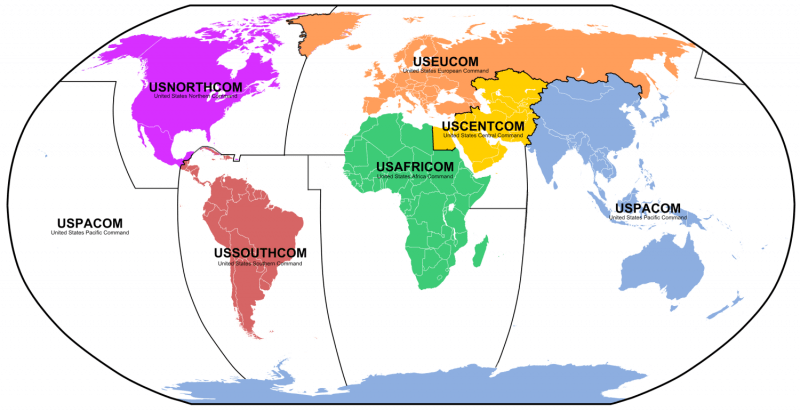
Nour News said the move paved the way for Israel to design and implement evil acts in the region with the help of some of the Persian Gulf Arab states.
“The new strategy, which lays the ground for the pursuit of the new national security doctrine, began by creating artificial tensions in the region based on a pre-designed scenario,” it added.
In late July, the US, the UK and Israel blamed Iran for a deadly drone attack on an Israeli-managed oil tanker, the Mercer Street, off the coast of Oman.
A few days later, Reuters claimed that “Iran-backed forces” were believed to have seized the Panama-flagged Asphalt Princess tanker off the coast of the United Arab Emirates (UAE).
The Associated Press, citing information from MarineTraffic.com, reported that four tankers – the Queen Ematha, the Golden Brilliant, Jag Pooja and Abyss – broadcast over the Automatic Identification System (AIS) that their vessels were “not under command.”
Later, however, it emerged that all those contradictory reports of maritime incidents were circulated by the Zionists to justify their own evil acts in the region and portray Iran as the country that is causing insecurity, Nour News said.
“The depth of the Zionists’ lies became more evident after the Golden Brilliant docked at Iran’s Bandar Abbas port days after rumors about its possible hijacking.”
Press TV’s website can also be accessed at the following alternate addresses:
http://www.presstv.ir
http://www.presstv.co.uk
http://www.presstv.tv
Released docs describe ‘HIGHEST RISK’ involved in US-funded coronavirus research in Wuhan
Deadly bat caves & humanized mice tests
RT | September 7, 2021
Documents obtained by The Intercept reveal that the US government funded studies into coronavirus in bats in Wuhan long before the pandemic, with the proposal showing it was aware of the risk that researchers would be infected.
More than 900 pages of material related to this research were published on the non-profit media company’s website on Tuesday. The documents were acquired as part of an ongoing Freedom of Information Act litigation by The Intercept against the National Institutes of Health.
The documents detail the work of EcoHealth Alliance, a US-based organization specializing in protection against infectious diseases, and its work with Chinese partners on coronaviruses, specifically those originating in bats.
The papers detail that EcoHealth Alliance was granted a total of $3.1 million by the federal government, with $599,000 of that going to the Wuhan Institute of Virology. The funding received in Wuhan was used in part to identify and genetically alter bat coronaviruses that might infect humans.
EcoHealth Alliance president Peter Daszak led one of the studies, titled ‘Understanding the Risk of Bat Coronavirus Emergence’, which screened thousands of bats for novel coronaviruses. The research also involved the screening of people who work with live animals.
However, the released documents include a recognition of the potential risks posed by the project. “Fieldwork involves the highest risk of exposure to SARS or other CoVs while working in caves with high bat density overhead and the potential for fecal dust to be inhaled,” the grant application reads.
“In this proposal, they actually point out that they know how risky this work is. They keep talking about people potentially getting bitten – and they kept records of everyone who got bitten,” Alina Chan, a molecular biologist at the Broad Institute, in the US, told The Intercept in response to the release.
Another revelation was that experimental work with humanized mice (that is, with functioning human genes, cells, tissues, and/or organs) was conducted at the Wuhan University Center for Animal Experiment, a biosafety level-three lab, and not at the Wuhan Institute of Virology, mainland China’s first biosafety level-four lab, as originally thought.
The program ran from 2014 to 2019, and was renewed in 2019, only for former US president Donald Trump to cancel it. Robert Kessler, communications manager at EcoHealth Alliance, maintained there wasn’t a lot to say on the matter. “We applied for grants to conduct research. The relevant agencies deemed that to be important research, and thus funded it,” he noted.
While the US has blasted China for not releasing all the relevant information on Covid-19, The Intercept said it had requested the recently released documents back in September 2020.
Although they don’t provide conclusive evidence to support the theory that Covid-19 was leaked from a Chinese lab, it does highlight the fact that risky research into bat coronaviruses was being undertaken in the years leading up the pandemic, and the US was not only well aware of that, but also funded it. Bats have been identified as a possible zoonotic source for the virus.
World Health Organization experts spent around a month in China from January this year. Their report suggested that cases identified in Wuhan in 2019 were believed to have been acquired from “a zoonotic source, as many [of those initially infected] reported visiting or working in the Huanan Wholesale Seafood Market.”
Beijing has refused to take part in a second probe, rejecting the lab leak theory while, in turn, calling for an investigation into US-based laboratories.
Top US generals lined their pockets off Afghanistan war
Press TV – September 4, 2021
The top generals who commanded American forces in Afghanistan have amassed fortunes from their postings there despite their disastrous conduct in the occupied country.
Eight American generals leading foreign forces in Afghanistan, including United States Army General Stanley McChrystal, who sought and supervised the 2009 American troop surge, went on to serve on more than 20 corporate boards, according to US media.
In an article titled, “Corporate boards, consulting, speaking fees: How US generals thrived after Afghanistan,” published by Stars and Stripes, the publication reveals how top generals amassed clout despite the failure of the American offensive in Afghanistan.
A review of company disclosures and other releases conducted by the specialized medium showed that the top Americans generals who led the mission in Afghanistan had thrived in the private sector after leaving the war zone.
They have amassed influence within businesses, at universities and in think tanks, in some cases selling their experience in a conflict that left millions of people dead and displaced, and costing the United States more than $2 trillion and concluded with the restoration of Taliban rule, the report said.
Meanwhile, the debate remains hot in the United States over what was the mission and who benefited from the 20-year war against the impoverished country.
A compilation of data from lobbying disclosures archived at Open Secrets, a US-based research group tracking money in US politics, showed that Lockheed Martin, Raytheon, General Dynamics, Boeing and Northrop Grumman were the top 5 military contractors who received $2 trillion dollars in public funds from 2001 and 2021.
Retired Gen. Joseph F. Dunford Jr., who commanded American forces in Afghanistan in 2013 and 2014, joined the board of Lockheed Martin last year. Retired Gen. John R. Allen, who preceded him in Afghanistan, is president of the Brookings Institution, which has received as much as $1.5 million over the last three years from Northrop Grumman.
Japan Outraged Over US Release of Toxic Water in Okinawa
By Ilya Tsukanov – Sputnik – 04.09.2021
In April, Japan’s neighbours expressed outrage in over Tokyo’s plans to release 1.23 million tonnes of contaminated wastewater from a storage facility at destroyed Fukushima Daiichi Nuclear Power Plant into the Pacific Ocean. Japanese authorities have insisted that the wastewater is safe, but environmental groups have contested such claims.
China Global Television Network (CGTN), a Beijing-based English-language TV news service, has poked fun at Japanese authorities over the apparent hypocrisy shown by Tokyo when it comes to the dumping of hazardous wastewater.
In recent weeks, Japanese media, government officials and environmental activists have been up in arms over plans by US forces in Okinawa to dump potentially dangerous chemicals into the local sewage system.
The scandal began to gather steam in June, when the Pentagon reported the leakage of water containing toxic materials from a US Army storage facility in Uruma and other locations across the strategically situated islands. In July, the US military informed Okinawa authorities of plans to release treated but potentially hazardous wastewater to prevent the danger of another leak.
The US military insisted that the wastewater was treated to Japanese government standards and safe to drink, and began dumping it into the local sewage system on 26 August. The water was known to contain trace concentrations of organofluorine compounds, including perfluorooctanesulfonic acid and perfluorooctanoic acid. Scientific studies have indicated that these chemicals can affect the health of wildlife, with the potential to cause reduced immunoglobulin levels and brain asymmetry in offspring, and to result in increased risk of chronic kidney disease and other ailments among humans. The chemicals’ resistance to natural breakup and tendency to accumulate in organisms have led them to be dubbed “forever chemicals.” Japan banned the production of the acids in 2010, and established strict guidelines on safe levels of the substances of less than 50 nanograms per liter of water last year.
The US military informed Japanese authorities of their plans to dump the chemical-laced water less than an hour before starting, and insisted that their wastewater contained less than 2.7 nanograms of the acids.
Okinawa authorities had asked for an immediate halt to the dumping, but the US military apparently ignored their protest, releasing at least 64,000 liters of the potentially toxic wastewater into the sewage system, with the water then dumped into the ocean due to the system’s inability to treat it. Before proceeding with the dump, US forces turned down a local company’s offer to treat the water, deeming it prohibitively expensive.
At a news conference organized on the day the water was dumped, Okinawa Governor Denny Tamaki expressed outrage over the release of the contaminated water. “I feel strong outrage that the US military unilaterally dumped the water even while they knew that discussions were proceeding between Japan and the United States on how to handle the contaminated water,” he said.
Last week, Japan’s national authorities formally intervened, with Environment Minister Shinjiro Koizumi issuing a strong protest and saying that US Marines’ decision to dump the water was “extremely regrettable.”
“Local residents are feeling very anxious,” Koizumi complained, while promising to work with the relevant ministries and Okinawa authorities “to ensure this is handled in an appropriate manner, as well as reconfirm the details with the United States.”
In a separate statement, Defence Minister Nobuo Kishi said that he had asked US forces to please stop dumping any more contaminated water.
Environment Ministry and Defence Ministry officials visited Okinawa this past week to discuss the problem, offering a rare public apology to Masanori Matsugawa, the mayor of Ginowan, Okinawa, the city potentially most heavily affected by the dumping. “We extend our deepest apology,” Makoto Ikeda, the head of the Defence Ministry’s environmental policy division told Matsugawa. “We also consider it extremely regrettable that the water was dumped so suddenly,” he added.
Chinese Media: ‘What goes around comes around’
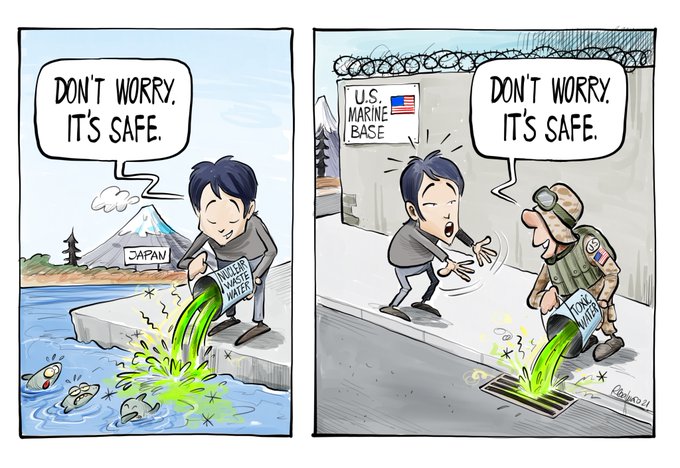
China’s CGTN poked fun at the Japanese government over the calamity on Saturday, tweeting a political cartoon showing a Japanese man nonchalantly dumping nuclear wastewater from the Fukushima nuclear plant into the ocean, and then complaining as a Marine is pictured dumping hazardous water into Okinawa’s sewage system.
Lawmakers pave way for $1.2 trillion in new military spending over next 10 years
By Andrew Lautz | Responsible Statecraft | September 2, 2021
Reporters, lobbyists, activists, Biden administration officials and, of course, lawmakers and their staffs spent countless hours and an ocean of ink on the negotiations for and passage of a recent bipartisan infrastructure bill totaling around $1 trillion. Casual observers probably won’t hear as much, though, about two votes — one in the Senate and one in the House — that could pave the way for Congress to spend a whopping $1.2 trillion additional dollars on the military, above current projections, over the next decades. Here’s how.
These pages recently covered the Senate Armed Services Committee’s successful effort to add $25 billion in taxpayer-funded slush to the annual defense budget bill. Democrats and Republicans joined hands to fatten up the defense bill by 3.5 percent, with Sen. Elizabeth Warren (D-MA) casting the lone dissenting vote. That increase was just endorsed by the House Armed Services Committee (HASC) on Wednesday.
Lawmakers approved, again on a widespread and bipartisan basis, an amendment by the committee’s ranking Republican, Mike Rogers of Alabama, to add $23.9 billion to the House version of the defense bill. Rogers proudly noted that his amendment would provide for a five-percent increase over the defense budget topline enacted in the previous fiscal year. And that’s where the $1.2 trillion comes in.
Defense hawks in Congress have made no secret that they would like to see up to 5 percent growth in the defense budget each and every year. Rogers has said it. His Senate counterpart, Jim Inhofe (R-OK), has also said it. What few budget or military watchdogs have done is explain the compounding effects of 5 percent annual boosts to the defense budget.
Boosting the defense budget 5 percent each year over the next 10 fiscal years would leave the U.S. with a whopping $1.2 trillion defense budget by the end of the decade, heading into fiscal year (FY) 2031. Compare that 5 percent boost each year to what the nonpartisan Congressional Budget Office currently projects defense spending will be over the next 10 years (as of their most recent July 2021 estimate), and the delta (the difference between a 5 percent annual boost and current budget projections) over 10 years is astounding.
The difference is small in the upcoming fiscal year, FY 2022 — $778 billion if defense hawks get their 5 percent boost, versus $763 billion projected by the CBO. But the differences compound over time, exceeding a $100-billion delta in four years (FY 2026) and a $200-billion delta in eight years (FY 2030). By the end of the decade, FY 2031, the difference between the defense hawks’ ideal budget and the CBO projection is $253 billion — almost as much as was spent on the March 2020 $1,200 stimulus checks, to cite just one comparison.
Add it up over 10 years, and the defense hawks would have us spend $1,244,600,390,000 — that’s more than $1.2 trillion — more on defense than current projections. Unfortunately, the bipartisan votes in the Senate and House for a 5 percent defense budget increase in FY 2022 made this chilling possibility much more realistic.
It would be one thing if the defense hawks were proposing robust spending cuts — or tax increases, if that’s a particular lawmaker’s fancy -— to offset this additional $1.2 trillion in spending. But they are not. Rogers made no attempt to pay for his proposed $25 billion boost, nor did Senate Republicans who introduced their amendment on the Senate committee. And Democrats share plenty of the blame for eagerly supporting these amendments and allowing them to pass with wide bipartisan margins.
There are a number of ways to look at this $1.2-trillion budget-busting boost, depending on one’s political persuasions and policy preferences. Fiscal hawks will see another $1.2 trillion added to the record-high debt and deficit levels, high even by the COVID era’s historic standards. Progressives will argue that this $1.2 trillion could be spent on more pressing challenges like climate change and pandemic response. Regardless of where advocates and activists come down, this much is clear: a $1.2-trillion hike to the defense budget, without any corresponding offsets, comes at a significant cost to taxpayers.
It would be another thing if Rogers’ $23.9-billion push was devoted to urgent, emergency needs in the military. But in fact, billions of dollars are going toward the procurement of new ships, warplanes, and other weaponry that there is a questionable urgency for. Nearly a quarter of a billion dollars will go to the highly-troubled F-35 program. More than $3.6 billion will be earmarked for just four new warships for the Navy, whose shipyards are already overburdened and underperforming, while another $567 million is directed toward requiring the Navy to accelerate its production of Virginia-class submarines (whose program, by the way, has suffered from cost overruns and delays). More than $6.5 billion will be spread around on military construction projects across 14 states, the District of Columbia, and Poland. Maryland (16 projects earmarked), Florida (12), and New Mexico (11) appear to be winners.
And, like Santa Claus on Christmas Eve, another $3 billion in the Rogers amendment will go toward fulfilling 69 “wish list” requests from the service branches and combatant commands. Fiscal and military watchdogs have sharply criticized this practice, warning that lawmakers will abuse these annual “wish lists” and gum up the defense budget — which is exactly what the House and Senate committees have done.
A skeptic could claim that it’s “just” $25 billion this year, a drop in the bucket compared to the government’s trillions of dollars in COVID spending. But if the defense hawks get what they want, it will add up to $1.2 trillion over the next decade alone. That may not get the flashy headlines of an infrastructure bill, but it’ll have an even bigger impact on taxpayers’ pocketbooks.
Crocodile Tears for Women’s Rights in Afghanistan
By Jacob G. Hornberger | FFF | September 2, 2021
Interventionist dead-enders are crying crocodile tears over the Taliban’s defeat of the Pentagon and the CIA in Afghanistan because, they say, women’s rights are not likely to be protected by the Taliban.
 Oh?
Well, now let’s see. According to the Watson Institute at Brown University, civilian deaths in Afghanistan and Pakistan from 2001 to date exceed 70,000 people.
We don’t know how many of those dead people were women but we can safely assume that a large percentage of them were.
How many of those dead women would have been able to exercise “women’s rights” if the Pentagon and the CIA had won the war?
Answer: None of them. At the risk of belaboring the obvious, women who are dead cannot exercise “women’s rights.”
The interventionist dead-enders would say that those deaths were “worth it” because the women who survived the invasion and occupation would then have been able, with a U.S. military victory, to exercise “women’s rights.”
But where do the Pentagon and the CIA get the moral authority to sacrifice tens of thousands of innocent lives — or even just one innocent life — in order that others will have the potential opportunity to exercise “women’s rights”?
Throughout the 20 years of the Afghanistan war, there was a strange and callous indifference to the people who were being killed in Afghanistan. It’s a reflection of what the national-security state way of life has done to the consciences of the American people. We actually don’t even know the exact number of civilians who were killed. That 70,000 is just an estimate. That’s because early in the conflict, U.S. officials made a conscious decision not to count the Afghan dead. What mattered was the number of U.S. soldiers who were being killed, not the number of Afghans being killed.
In Sunday services in Christian churches across America, ministers would exhort their congregations to “pray for the troops” and “thank them for their service.” Hardly ever would American Christian churchgoers be asked to pray for the people, including women, who were being killed by the troops as part of their “service.” Those lives just didn’t matter.
The interventionist mindset with respect to “women’s rights” was always based on a mathematical calculation. This mindset held that in the quest to establish a regime that protected “women’s rights,” it was morally acceptable to kill some number of Afghan women (and men). The idea was that it was morally permissible to sacrifice the lives of some for the benefit of others.
Moreover, there was never an upward limit on the number of Afghan women (and men) who could be sacrificed for the greater good of “women’s rights.” 70,000? 100,000? 250,000? It didn’t matter. What mattered to the interventionist dead-enders is that a U.S. puppet regime be installed that would protect “women’s rights” for those who weren’t killed by the violence entailed in installing and maintaining such a regime in power.
Think about all the wedding parties that U.S. forces bombed during the 20 years of conflict. Dead brides. Dead mothers of the brides. Dead mothers of the grooms. Dead sisters of the brides and grooms. Dead flower girls. Dead bridal assistants. None of them would be around at the end to celebrate a U.S.-installed regime that protected “women’s rights.” But it was all considered worth it because those who weren’t killed would be able to exercise “women’s rights.”
It’s one thing for people to deliberately sacrifice themselves in what they consider is a grand and glorious cause.
It’s quite another thing to knowingly and intentionally kill innocent people so that others can experience “women’s rights.” It would be difficult to find a more evil notion than that.
Featured Video

Liberty Cannot Exist Inside a Panopticon
or go to
Aletho News Archives – Video-Images
From the Archives
Left-leaning despisers of 9/11 Truth movement: Do you really believe in miracles?
David Ray Griffin | Global Research | 06 Jul 2010
An Open Letter to Terry Allen, Noam Chomsky, Alexander Cockburn, David Corn, Chris Hayes, George Monbiot, Matthew Rothschild, and Matt Taibbi.
[1]According to several left-leaning critics of the 9/11 Truth Movement, some of its central claims, especially about the destruction of the World Trade Center, show its members to be scientifically challenged. In the opinion of some of these critics, moreover, claims made by members of this movement are sometimes unscientific in the strongest possible sense, implying an acceptance of magic and miracles. … Full article
Blog Roll
 Aletho News
- EU sending ‘biased’ observers to interfere in Serbian election – president
- White House envoy declares kinetic action against Yemen ‘fruitless’
- Ukraine deployed thousands of microdrones in Iraqi Kurdistan: Tasnim
- Iran calls for emergency UNSC meeting over Trump’s ‘brazen’ bomb talk, Israeli threats
- Iranian sources reveal details of Russia-China Hormuz proposal
- Plan for more US-Israel integration puts our military tech at risk
- Another Round Against Iran Will Break What Is Left of the Gulf
- SVR Report on Ukraine’s Mexican Drug Gang Links Could Pressure Zelensky, Won’t Change US Policy
- British Government Employees Were Fact-Checking the News at the BBC. Nobody Told You.
- Albania on fire: who’s behind the riots?
- If Americans Knew
- Mysterious bot accounts reportedly spread fake ‘man on the street’ videos for Michigan Senate candidate
- Israeli Defense Minister Katz Says Over 60 Lebanon Villages Have Been Destroyed
- Why Is Israel Running TV Ads in Iowa Ahead of the Midterms?
- Hind Rajab’s Alleged Killer Is in the United States. HRF Demands His Arrest.
- US Officials Face Fresh Pressure After Another American ‘Brutalized’ by Israeli Settlers in West Bank
- Israel-Backed Palestinian Militias Terrorize Displaced Families in Gaza
- FBI subpoenas pro-Palestine activists over Israeli weapons plant disruption
- Fourth winter arrives in wartorn Gaza, too early – Daily Update
- More on how Bari Weiss is using CBS on behalf of Israel
- What the UK Is Doing to Pro-Palestine Novelist Sally Rooney Is an Act of Orwellian Villainy
- No Tricks Zone
- Predictions Made By Renowned Climate Proifessor Over Past Decades Have Been Proven To Be Poor
- New Study Suggests Large Regions Of The Pacific Ocean Have Been Cooling For The Last 80 Years
- Germany’s Green Energy Debacle: High Energy Costs Force Kahla Porzellan to Close After 182 Years!
- New Study: 50 Years Of The Most Aggressive ‘Net Zero’ Policies Can Only Affect The Global Climate By 0.03°C
- US September “Heat” Was No Record…Many Records Set Decades Ago
- Latest European Green Energy Debacle; Portugal’s Largest Flagship Solar Park Insolvent!
- Green Energy Debacle: German Expert Professor Fritz Vahrenholt Warns Of Severe Economic And Social Consequences
- Two More Paleo Reconstructions Affirm Meters-Higher Sea Levels Across Ireland, Brazil 7000-6000 Years Ago
- New Study: Earth And Venus Surface Warmth Largely Explained By Convection And Lapse Rate, Not CO2 Or Radiation
- 2025 Nature Paper Claiming Worsening Global Drought Gets RETRACTED …Heavily Flawed

