THE BBC has been accused of institutional alarmism about climate change in a report published by Net Zero Watch. It reveals the BBC’s persistent exaggeration and false information when it comes to climate and weather-related news.
The study, written by me, reveals that the BBC has been forced to correct a dozen items of false claims and fake news in climate-related coverage after receiving complaints in recent years.
It shows that it has become common practice for BBC reporters to publicise exaggerated and often misleading weather-and climate-related stories in order to hype up the potential risks from global warming.
Persistent misrepresentation by BBC journalists in climate news coverage is fuelling the corporation’s institutional alarmism.
Institutional alarmism is a form of hyped and exaggerated news reporting that is deeply embedded in the BBC. It manifests itself as unbalanced, one-sided coverage of climate risks that go uncorrected by the BBC’s in-house fact checkers.
In 2020, the BBC’s director general warned that the problem posed by disinformation online was increasingly serious and that the BBC would need to work harder than ever to expose fake news and separate fact from fiction.
Since then the corporation has set up a team of fact checkers, a BBC-wide Anti-Disinformation Unit and a Climate Misinformation team. Yet none of these teams of fact checkers noticed or addressed the long list of false news stories that were corrected by the BBC only after lengthy and protracted complaint procedures.
The dossier includes the following examples of fake news:
• The three complaints upheld last year against the BBC’s Climate Editor, Justin Rowlatt, two of which concerned a Panorama episode devoted to global warming;
• Claims that the number of floods around the world has increased 15-fold since 2005;
• A BBC News report that the population of African penguins was declining rapidly because of climate change;
• Repeated claims that new onshore wind farms were ‘banned’ in the UK;
• False statements about ‘record’ temperatures;
• A BBC Two broadcast, which wrongly alleged that the reindeer population in Russia was declining because of climate change;
• Repeated claims that hurricanes were becoming more frequent and powerful;
• A World at One broadcast which asserted that sea levels in Miami were rising at ten times the global rate.
Most of the claims were so obviously and ridiculously false that it is hard to see how they made it through the BBC’s editorial process. This of course raises further questions. Is the BBC so entrenched in its own version of climate change that it believes its own propaganda, just as the Soviets did? Or do the editors and various layers of management simply not care whatever lies are published?
The above list is merely the tip of the iceberg. Many other falsehoods occur without being challenged, or where complaints are simply ignored, such as news items about how weather is getting more extreme, Victoria Falls drying up, droughts in California, starving polar bears and many more. One BBC News report baldly stated that the number of weather disasters had increased five-fold in the last 50 years – a patently absurd claim, which the organisation responsible for the database explains is actually due to better data reporting.
One of the most egregious examples of bias came in Sir David Attenborough’s documentary three years ago, Climate Change – The Facts. Despite the title, the hour-long programme had little to do with facts, more to do with propaganda. It made several highly questionable assertions, such as that ‘storms, floods, heatwaves and sea level rise are all getting rapidly worse as a result of climate change’. The documentary provided no data to back up these claims, nor did it offer the views of scientific experts who do not agree.
Often BBC reports are just outright propaganda, with the opinions of Greenpeace, WWF and the Green Party being given prominence but with very little mention of alternative views. Last year’s coverage of the proposed Cumbria coal mine by Roger Harrabin, the BBC’s Environmental Analyst, was a classic example of this.
At other times, the reporting is just silly. For instance, last summer the BBC gave prominent coverage to a report which claimed that the impact of global warming was likely to lead to ‘impaired’ performances at the Tokyo Olympics. This flew in the face of the fact that many Olympics in recent years have taken place in much hotter climes, such as Los Angeles, Atlanta and Athens.
The sheer weight of evidence presented in this paper suggests that bias is now endemic in the BBC’s climate reporting. All the factual errors noted could easily have been avoided with a bit of basic research. Is this carried out and the results ignored if they don’t agree with the BBC’s agenda? Or is the corporation’s output just made up and printed anyway without checks? Either way, this is journalism at its shoddy worst. Who is editing this fake reporting? Why are they not insisting on accurate reporting? Where are the highly paid executives who let all of this continue?
The topic of climate change, Net Zero and the total transformation of society which is demanded to achieve it is of crucial importance for the future of the country. The public deserve all the facts, not just the warped version offered by the BBC.
You can read the report, ‘Institutional alarmism – the BBC’s disastrous climate complaints’,here.
A growing number of young healthy adults are mysteriously dying. Watch Jefferey Jaxen and Del try to make sense of, what is now being called, “Sudden Adult Death Syndrome” (SADS).
The Vaccine Injury Compensation Program (VICP) is overwhelmed and understaffed with the amount of injury claims being filed from the Covid-19 Vaccines. The program is now on life support and is on the verge of collapse.
The CDC has walked back it’s initial recommendation to mask for Monkeypox, which triggered a firestorm of criticism from the medical and scientific communities.
COVID vaccine mandates are necessary because the protected need to be protected from the unprotected by forcing the unprotected to use the protection that didn’t protect the protected.
Then the only thing that can prevent the vaccinated from being more at risk of COVID infections is getting boosters every few months.
But the boosters can damage your immunity, as noted by Marco Cavaleri, one of the top officials at the European Medicines Agency who, according to Bloomberg,
“warned that frequent Covid-19 booster shots could adversely affect the immune response and may not be feasible. Repeat booster doses every four months could eventually weaken the immune response…”
Scientists are probably working on a solution for the “too many boosters” problem, but have not succeeded yet.
Meanwhile, “trust the science,” and “trust the experts.” I am sure they will come up with something.
Apparently the stance against doctors who work according to their Hippocratic oath and the medical code of ethics is being tightened internationally.
The enforcement of masks is an important goal in order to be able to continue the pandemic, as is known from internal protocols of the Israeli Ministry of Health or statements by the Austrian Director of Public Health. Masks have become a sign of submission while at the same time renouncing fundamental rights.
Even in Switzerland, which is known to be more liberal with the measures and had already lifted many random measures in mid-February, completely disproportionate action was taken against doctors. On social media, users likened the raid to how police would normally respond to a terror threat.
This is already happening in Germany, as the criminal judgment against Dr. Ronald Weikl showed. In Germany, such an act would be less surprising in view of the many house searches, even against judges who had issued “unwanted” judgements, also in connection with masks for children.
The regional court of Passau, Germany is expected to pass a verdict against the “mask doctor” Weikl for writing blank exemption certificates against the mask requirement.
“Whether it was a matter of issuing false health certificates, which is punishable under §278 of the German Criminal Code (StGB), as alleged by the prosecution, or only of medical certificates, for which §278 (StGB) does not apply at all,” noted the Children’s Health Defense Fund.
Weikl acted in the best interest of his patients, his lawyer explained and this should not have led to an indictment due to the lack of a criminal act on his part. The legal principle of nullum crimen, nulla poena sine lege applies, which means that one cannot be punished for doing something that is not prohibited by law – showing concern for his patients and especially children.
The law in Switzerland expressly provides for exceptions to the mask requirement. However, some authorities and the public prosecutor’s offices obviously do not care. For months there has been a veritable witch hunt against doctors who are critical of the measures.
Like Weikl, the Bern psychiatrist Dr. medical Ruke Wyler had issued mask certificates for her patients. The practice of the psychiatrist, who had only fulfilled her medical duty, was stormed in a heavy and a completely disproportionate police operation.
The scientific network Aletheia reported on the raid on the doctor’s practice. Critical doctors who question Corona measures to protect their own patients are being addressed and sanctioned, both abroad and in Switzerland.
Under the supervision of armed police officers wearing bulletproof vests, her computer hard drive was confiscated and patient files were taken away. People who wanted to support the doctor were asked to leave the building under threat of violence.
The Aletheia network said they were extremely concerned about these developments. Doctors who had issued mask certificates for the benefit of their patients did so because, after a thorough study of the data, they had come to the conclusion that wearing masks would be of no benefit, would be only harmful, first and foremost for children.
The medical certificates issued by the doctor could in no way be deemed to be incorrect since there has been no examination by the police or the public prosecutor’s office; this is a matter for medical expertise and the professional code of conduct for physicians. Medical professionals are free from directives, especially from non-physicians.
The vast majority of Corona measures are based on the narrative of the epidemiologically relevant asymptomatic transmission of SARS-CoV-2, which has long beenrefuted. This means that all non-pharmacological measures that go beyond hygiene and self-isolation for sick people (antisocial distancing, masks in public spaces, isolation, quarantine, contact tracing, school closures and curfews) are ineffective and harmful for asymptomatic people who were previously considered healthy.
Last week Serena Wylde reported for TCW on the lawsuit that the whistleblower Brook Jackson has filed against Pfizer which she feared would be thrown out. Today she updates us on the case.
IT TAKES a special type of person to stay the course as a whistleblower. Dismissal from employment, vilification and isolation are just a few of the prices to pay. But Brook Jackson, the clinical trial regional director who has been battling against Pfizer since 2020 to bring facts to light, is not bowing to intimidation.
Having brought a case against the corporate goliath in January 2021 under the False Claims Act, Jackson was under a gagging order, and her lawyers warned her not to break it as ‘the government would come after her’. But break it she did when in September of 2021 she sent copious amounts of evidence to the British Medical Journal. At this point her attorneys from Berg and Androphy withdrew from the case, leaving her without counsel.
In February of this year the case was finally unsealed and, as reported here last week, Pfizer has filed a motion to have it thrown out. Its argument is essentially that the purchasing party – the US government – of its contract to supply 100million doses of injections in exchange for $1.9billion of US taxpayers’ money, tacitly agreed to the use of fraudulent data. Under this tortuous reasoning, it would appear to be relying on an interpretation that, as both contracting parties were complicit in the sham clinical trials, no breach of contract has occurred.
Some time back we learnt that the Covid-19 injection manufacturers had been granted immunity by governments against civil damages for injury and deaths caused by their products.
But what about criminal responsibility?
An important question must surely be how the law defines intent when it comes to inflicting harm? If a medical practitioner administers an inappropriate and toxic drug to a patient knowing it has the potential to cause harm, including death, is not a resulting fatality classed as a homicide?
As one physician-scientist explained during Republican Senator Ron Johnson’s Expert Panel Discussion on Covid-19 vaccine injuries, held on November 2, 2021, ‘Pfizer don’t do science. They do business. And the Food and Drug Administration know and enable this.’
All eyes are now on the judge, who has granted discovery about any issue related to Pfizer’s motion to dismiss the case. Jackson’s lawyer, Robert Barnes of Barnes Law LLP, says: ‘This is probably the biggest whistleblower False Claims Act case in the history of the United States.’
There is an interview with Robert Barnes at the end of the article which you can see here.
“It is possible that lockdown will go down as one of the greatest peacetime policy failures in modern history” – Professor Douglas Allen[1]
In March 2021, we wrote two sections in ‘Covid-19 the evidence’, namely ‘Economic impacts – the true cost of lockdown’ and ‘Lockdowns – do they work?’. Over a year later, we have revisited not only the financial costs of lockdowns but also the societal costs, the impact on healthcare and the lack of evidence for overall benefit.
Assessing the economic costs of lockdowns and other Covid-19 restrictions is not easy, partly because the pandemic itself would have impacted economic activity independent of Government restrictions. However, we do now have considerable evidence that both voluntary behaviour change and government restrictions have significant economic effects.[2],[3] Further, voluntary changes tend to have most impact on the activity of groups most vulnerable to Covid, whilst Government restrictions have a disproportionate effect on those least vulnerable. This means that not only do most mandatory restrictions have a significant economic impact, but any benefits in terms of reductions in hospitalisations or deaths are minimal.[4]
Many of the immediate economic consequences of lockdowns were masked by the eye-watering amount of money spent by governments on furlough and business support schemes. Given the limited evidence that stay-at home measures and business closures have any significant impact on infection rates[5], the question needs to be asked whether the billions spent paying business to shut down and people not to work could have been used better by building up capacity in the health system. The stay at home message of “protect the NHS” may have been no more than elaborate code for don’t highlight years of dwindling funding that failed to keep pace with growing population and demand in health care, with the NHS entering the pandemic with spending per GDP at the lowest level since 2009.[6]
Although furlough and business support schemes have had success in limiting the impact on unemployment, the longer-term economic consequences of lockdowns are now becoming clear. The lack of spending opportunities during lockdown contributes to a build-up of personal and corporate savings. As restrictions have eased, people begin to spend these savings and, combined with the supply chain issues that have built up in the meantime, sustained inflation is the inevitable result. Even worse, having spent about £70 billion[7] paying healthy people not to work via the furlough scheme and some £150 billion in total on support measures[8], the ability of the government to respond to this lockdown-induced cost-of-living crisis via either tax cuts or increased benefits, is limited due to the hit to public finances caused by lockdown-induced government spending.
It is perhaps no surprise that a series of research papers looking at data from Australia[9], the UK[10], Canada[11] and the US[12], have concluded that the costs of lockdowns exceed any plausible estimate of the benefits many times over.
The pandemic saw one disease prioritised over all others. It is now painfully clear that the “all others” are set to suffer with longer and larger health consequences than those of the covid-19 crisis itself. The report issued by the BMA is terrifying in every sense.[13] At the start of the pandemic 4.24m were waiting for elective treatment this now stands at 6.18m. Ridsdale makes the point “stay home” may well have contributed to excess deaths as people died at home without access to care and government policy prioritised covid above all other health concerns[14]. This figure of 6.18m masks and continues to mask the lack of referrals that occurred. There is no reason to suppose demand has dropped for elective care, yet, since the pandemic there have been 4.51 m fewer elective referrals. The latest figures show some 300,000 are waiting over a year for treatment. Again, this figure is masked by GPs under referring, reporting their ability to make referrals is severely constrained, yet the patients are still sitting at primary care level needing care. If the elective surgical figure continues to remain well below pre pandemic levels, NHS waiting lists will only continue to rise. Add to this routinely soaring long waits of over 12 hours at emergency department level and the gap between target time for cancer surgery and actual time to getting surgery increasing, the health picture created by covid prioritisation in the UK is frightening.
Lockdowns created isolation from our social and working worlds. The latest report from MIND states “Isolation and loneliness have made people’s mental health worse – with young people particularly badly affected.”[15] Similar can be said for older people especially those in care homes. The unintended consequences of removing activity, family and social interaction from the elderly may be more serious than the direct disease consequences of covid, with isolation being listed as cause of death in a number of care homes in the USA.[16]
Given what we now know, it is hard to disagree with the conclusion of Professor Doug Allen’s analysis of lockdown costs and benefits in Canada that “lockdown will go down as one of the greatest peacetime policy failures in modern history.”1
Adverse Reactions for Novel Covid-19 Vaccines More Numerous Than for Similar Products by Factor of Between 10 and 169
BATH, UK — A new report prepared by the World Council for Health (WCH) has confirmed that data on adverse drug reactions from the experimental Covid-19 vaccines exist in an amount sufficient for the recall of similar products in the past.
The report was prepared to determine whether sufficient pharmacovigilance data exist on official and public databases (WHO VigiAccess, CDC VAERS, EudraVigilance, and UK Yellow Card Scheme) to establish a safety signal on the novel Covid-19 injections.
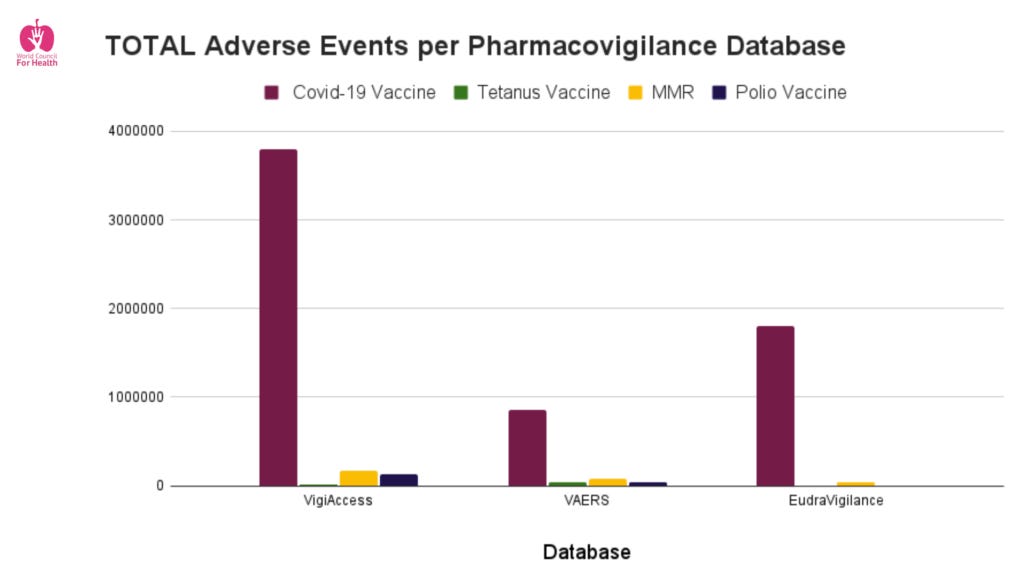
On all databases, it was found that adverse drug reaction (ADR) reports linked to Covid-19 injections are more numerous than other similar products by a factor of between 10 and 169 (see graph below). Many of the ADR reports are serious in nature and there exists sufficient evidence of associated harm on these databases to indicate a product recall.
Total Adverse Events per Pharamacovigilance Database
In total, more than 40,000 deaths are linked to the novel Covid-19 vaccines in the official databases analysed.
In addition, the WCH pharmacovigilance report found that several thousand adverse drug reactions on official databases are related to the use of the experimental Covid-19 vaccines among young boys and girls for whom the vaccine had not been approved at the time.
The purpose of pharmacovigilance databases is to provide a signal of safety, and not to prove causality. To ensure that harms are detected in time, suspicion that an event is linked to the administration of the medicine is enough to register an event. “There is no need to prove that the medicine caused the adverse reaction, just the suspicion is good enough,” Dr. June Raine, head of the UK’s Medicines and Healthcare products Regulatory Agency, said in 2006. When sufficient pharmacovigilance data show a signal of harm, administration of the product should be ceased, the product recalled, and the safety signal investigated.
It should also be noted that such systems of passive surveillance result in significantly fewer ADR reports than active surveillance reporting. As a result, the actual number of adverse events that occurred in temporal relation to Covid-19 injections is likely to be much higher than revealed by the available official data.
In December 2021, World Council for Health called on regulators and governments around the world to immediately cease use of all experimental Covid-19 injections.
Dr. Tess Lawrie, co-founder of the World Council for Health, calls for people to come together to raise awareness of vaccine injury so that those harmed can get the help they deserve. “It is concerning that a grassroots organisation has had to do this work and point out that none of these experimental vaccines are safe according to publicly available official data. Why have the regulators not done their job and protected us?“
When the JCVI considered covid vaccines for children in July 2021, they stated, “JCVI is of the view that the health benefits of universal vaccination in children and young people below the age of 18 years do not outweigh the potential risks”. Even in September 2021, they still said, “A precautionary approach was agreed given the very low risk of serious disease in those aged 12 to 15 years without an underlying health condition that puts them at increased risk.” As HART bulletin readers will know, the Chief Medical Officers eventually recommended the vaccine for 12-15s, in the vain hope of reducing school closures, which of course could have been achieved by simply stopping routine testing of asymptomatic school children and the sending home of healthy contacts.
Roll on to February 2022, when a ‘non-urgent offer’ was made of Pfizer vaccine for 5-11-year-olds, JCVI stated, “This advice on the offer of vaccination to 5 to 11-year olds who are not in a clinical risk group is considered by JCVI as a one-off pandemic response programme. As the COVID-19 pandemic moves further towards endemicity in the UK, JCVI will review whether, in the longer term, an offer of vaccination to this, and other paediatric age groups, continues to be advised.”
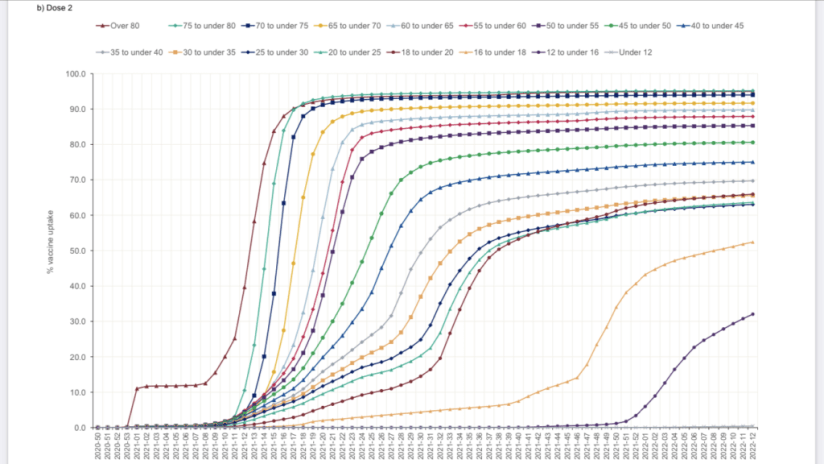
If any of our readers has seen this review, we would be pleased to know, as it might help us clarify the surprising appearance of Covid-19 on the NHS routine immunisation programme. Placing an unlicenced preparation onto the routine schedule is unprecedented. It raises serious questions of the legality, given the conditional authorisation was predicated on there being an emergency. It is also of course a subtle way of making parents think this vaccine is just run-of-the-mill. The current low uptake (53% of 12-15s and a mere 8.5% of 5-11s) suggests that at present, parents are well aware that covid-19 vaccines are not the same as other vaccines, either in terms of the risk of the disease for children or in terms of drug safety. They will also be well aware that lots of their triple vaccinated adult friends and family, have been catching covid regardless.
Not content with slipping this drug into the schedule under cover of the 4-day Jubilee holiday, the Local Government Association has been pushing behavioural psychology techniques to increase vaccine uptake in the young. Their opening gambit is, “Younger generations are more likely to be vaccine hesitant partly because they perceive themselves to be at lower risk of developing a severe form of COVID-19”. Surely, this is not a ‘perception’, it is a ‘fact’, which should surely have been viewed as a blessing, rather than an annoyance.
It gets worse: “Highlight the pro-social benefits of vaccination
Behavioural Insight: Emphasising the pro-social benefits of vaccination is particularly effective among young people. Prosocial benefits include achieving herd immunity and protecting others, especially those that are vulnerable and cannot get vaccinated. Combining both informational and emotional content can be effective.” Another one for the fact checkers – the JCVI say, “the benefits to the wider population are highly uncertain.”
And worse: “Highlight social norms about vaccination
Behavioural Insight: Highlighting that there are growing intentions to get vaccinated, that most people are getting vaccinated and that they approve doing so, can effectively encourage vaccine take up. Since young people tend to be more susceptible to peer influence, it is likely that social norms can be particularly effective when targeting this group.
Potential application: Emphasise Social norms in communications targeted towards young people. Make vaccination visible to other young people by setting up vaccination centres in university campuses or schools. Launch an ‘I will get vaccinated’-pledge on social media.”
And faintly ridiculous: “Second vaccine jab compliance
Ensuring residents take their second vaccine dose could be a challenge with which councils can support PHE and the NHS. This could be especially the case if news on vaccine efficacy and new strains undermines the perceived value of the second jab.” Again, the use of the word ‘perceived’ implies that the ‘news’ on vaccine efficacy and new strains is somehow irrelevant to informed consent. No wonder the powers that be don’t want people to see this graph from week 13 of 2022, dropped from the more recent weekly vaccine reports.
I. Pharma is losing the game so they are throwing the chess board across the room
The NY Times published a vile piece of fascist Pharma propaganda today. Berenson flagged the online version of the article yesterday. As you know, I have been yelling about the FDA’s Orwellian “Future Framework” for weeks because it’s literally the worst idea in the history of public health.
It turns out that it’s even worse than I thought.
Pharma has already begun a PR offensive to get it across the line and Sharon LaFraniere of the NY Times was eager to do their bidding.
Here’s what’s happening. The mRNA shots are not working against SARS-CoV-2. Everyone knows this. So Moderna and Pfizer are racing to reformulate these shots. The reformulated shots are not working either. Just last week Moderna was touting a bivalent shot that combined Alpha + Beta, but now, apparently, they’ve abandoned that approach. The NY Times article hypes a Moderna shot targeting earlier Omicron variants (it does not say, but perhaps BA.2 and BA.2.12.1?). However evidence from South Africa shows that BA.4 and BA.5 are outcompeting the earlier Omicron variants and the reformulated Moderna shot probably won’t work against the new strains (the virus evolved for a reason — to evade vaccines).
So what are predatory pharmaceutical companies and their feckless government enablers supposed to do!? Abandon clinical trials altogether!
Here’s how the NY Times describes this scheme:
… many experts worry that the virus is evolving so quickly that it is outpacing the ability to modify vaccines, at least as long as the United States relies on human clinical trials for results.
See, it’s not that coronavirus vaccine have failed over and over again (even though they have). It’s that This Wily Virus(TM) is just evolving so quickly that we could not possibly allow human clinical trials of coronavirus vaccines ever again. The only way to beat This Wily Virus(TM) at this point is to abandon science.
Of course it gets worse. The NY Times elaborates:
The problem is that Moderna and Pfizer — the maker of the other main coronavirus vaccine in the United States — do not have enough time now to run more human clinical trials and still manufacture shots before the fall, when the Biden administration is hoping to be able to offer an updated vaccine to counter what public health experts predict will be a winter surge.
See, it’s not that rapacious pharmaceutical companies want to suck all wealth out of the world and put it into their own pockets while setting up a 1,000 year Pharma Reich. No, no, no, silly. It’s just that they “do not have enough time” to do actual science anymore so they are just going to skip all that. Don’t you worry your little head about it.
Furthermore, only a conspiracy theorist would believe that the FDA has abandoned all of its statutory responsibilities to protect public health in order to prostitute themselves to Pharma. The Correct Understanding(TM) is that the FDA is being forced by circumstances outside their control to abandon science. This is not a problem because the cartel is truth, the cartel has always been truth, and since the cartel has decided to abandon science altogether then that’s the new science.
Henceforth, quite literally, the peasants will be forced every six months to inject whatever they are told, with no questions asked, and “they will be [required by law to be] happy about it”.
Instead of human clinical trials the FDA will rely on a few test tube and mouse studies. In the article, Fauci describes this as, “alternative pathways of decision.” That guy just oozes totalitarianism at this point.
So if the “Future Framework” is approved on June 28 the new rules will be: a pharmaceutical company can claim that some new injection creates antibodies in a test tube or mouse (that no one else can see or audit). Done! Ship it and inject it! That’s it. Even though the FDA admits that there are no “correlates of protection.”
In the replies to my earlier articles about the Future Framework some astute readers have pointed out that the FDA has already abandoned human trials when it comes to Covid-19 shots in kids. None of the Moderna or Pfizer clinical trials in kids showed any real world health benefit at all. So they switched to looking at antibodies in the blood and use this tortured mental gymnastics called “immunobridging” to conjure up hypothetical future benefits that never materialize in the real world. Abandoning even the pretense of human trials and moving to test tubes and mice is the obvious next step in this complete abandonment of science.
When people say “I Believe The Science(TM)” what they really mean is “I Support The Genocide.” That’s what’s happening. The FDA has not done science in two years, probably much longer than that.
There is no left and right in politics anymore. Just, the FDA Pharma Fascist Party where members are expected to participate in self-genocide for “the good of society” (read: the profits of the cartel)
vs.
the Rebel Alliance where we practice actual science, critical thinking, logic, and reason, and work every day to protect human health and dignity.
Any politician who wants the 18 million votes of single-issue medical freedom voters in November needs to know that there must be hearings, arrests, and trials of the bureaucrats at FDA, CDC, NIAID, HHS, and NIH who did this to us.
II. What is to be done?
In the meantime, here are the email addresses for all of the public health political appointees, FDA staff, and VRBPAC members who have a say in connection with the “Future Framework”. Please contact them to urge them to reject this nonsense (proposed subject line and email text below — or share your own personal story).
Subject line: The “Future Framework” is the WORST idea in the history of public health. Please vote NO.
1. No Covid-19 shots for kids that failed clinical trials. According to the journal Nature Medicine, children and young people have a 99.995% recovery rate. According to the CDC, the overwhelming majority of children already have natural immunity. The harms from Covid-19 shots in kids are catastrophic.
2. The FDA and CDC must pivot to therapeutics. About twenty off-the-shelf treatments are more effective than vaccines (if used for prophylaxis or early intervention). Get these safe and effective medicines to people who need them and let doctors be doctors again and treat patients based on their own best clinical judgment.
3. Any reformulated Covid-19 shots MUST go through proper HUMAN clinical trials and FDA review. That means:
• large (50,000+ person) double-blind randomized controlled trials with inert saline placebos conducted by an independent third party;
• safety and efficacy studies for two years prior to any application; monitor the treatment and control group for the rest of their lives to record non-specific effects;
• must provide sterilizing immunity with greater than 90% efficacy and less than 0.1% Grade 3 Adverse Events; and
• proper monitoring for carcinogenesis, mutagenesis, and impairment of fertility.
III. The FDA has opened the formal comment portal for the “Future Framework”
If you prefer the official route, you can lodge a formal comment with the FDA by following the instructions (here). Enter docket number FDA-2022-N-0905 at https://www.regulations.gov by June 22 to tell the FDA what you think of their proposed plan to abandon clinical trials for Covid-19 shots in perpetuity.
The Biden administration today said it made available 10 million doses of COVID-19 vaccines for children under age 5 to states and healthcare workers with “millions more available in the coming weeks.”
The White House unveiled its “Operational Plan” for vaccinating the youngest age group — one week before advisors to the U.S. Food and Drug Administration (FDA) are scheduled to meet to decide whether to grant Emergency Use Authorization for the Pfizer-BioNTech and Moderna pediatric vaccines for babies as young as 6 months old.
According to the White House:
“If FDA authorizes and [Centers for Disease Control and Prevention (CDC)] recommends one or both of the COVID-19 vaccines for this age group, it would be a historic milestone in the nation’s fight against the virus — and would mean nearly every American is eligible for the protection that vaccination provides.”
Children under 5 could begin receiving the vaccines as early as “the week of June 20th — with the program ramping up over time as more doses are delivered and more appointments become available,” the White House said.
Senior administration officials told The New York Times orders for the vaccines from states “have been somewhat tepid so far.”
Of the 5 million doses offered last week — prior to today’s announcement — 58% of the available Pfizer vaccines were ordered, and “roughly a third” of the available Moderna vaccines had been ordered.
The vaccines, paid for by the U.S. government, are being made available to pediatricians’ offices, community health centers, rural health clinics, children’s hospitals, public health clinics, local pharmacies and other community-based organizations.
The administration said it “will remain laser-focused on equity and making sure that we reach those hardest-hit and most at-risk communities.”
The plan includes working with programs such as Head Start and the Women, Infants, and Children, or WIC, Program in addition to Medicaid, the Children’s Health Insurance Program, known as CHIP, and Latino, Black and Native American community programs.
The White House also will focus on parents, especially moms:
“‘What to Expect,’ a platform of over 20 million moms, will author a blog series featuring doctors and other trusted experts answering questions about pediatric COVID-19 vaccines, and how moms, expecting moms, and all parents can get the information they need to get themselves and their children vaccinated; author new articles dispelling myths about the COVID-19 vaccine and children; and create and amplify new What to Expect social media content, reaching moms where they are and fighting vaccine misinformation across all platforms.”
Critics question need, raise safety, efficacy concerns
Many experts have questioned the need to vaccine young children in part because the virus poses little-to-no serious risk to them and in part because, according to the CDC, the majority of children have already had, and recovered from the virus.
Dr. Marty Makary last week told Fox News the COVID-19 vaccines do “not make sense” for most kids.
Makary, a physician and public health researcher at Johns Hopkins Bloomberg School of Public Health, said:
“If you look at the fact that 75% of kids had COVID as of a CDC study back in February and Omicron has been ubiquitous since then, 80 to 90 plus percent of kids have already had COVID. So we’re talking about immunizing those who are already immune for a lot of people. That just does not make sense.
Others, including Dr. Michelle Perro, a pediatrician, have warned about the risks associated with the vaccine, and evidence the vaccines provide weak protection, especially as they were designed for the original Wuhan strain which has been supplanted by a wave of new strains.
In a letter submitted Wednesday to the FDA, 18 members of Congress addressed a number of concerns about the vaccines.
They asked the agency to, “Please list the medical emergencies of children 0 to 4 years old that enables the FDA to approve the COVID vaccine for children using its EUA.”
In all, the Congress members demanded answers to 19 questions and requested a response before next week’s meeting.
Commenting on today’s announcement by the White House and on its timing — a week before FDA scientists meet to review data on the vaccines — Children’s Health Defense (CHD) Chairman and Chief Legal Counsel Robert F. Kennedy, Jr. called on parents and physicians “now more than ever” to “step into the breach to protect our babies from our government.”
Kennedy said the COVID-19 countermeasures, including the vaccines, were “never about science or public health.”
He added:
“Now they have departed from common sense and into naked cruelty and barbarism. By recommending an unapproved, experimental, zero-liability and high-risk medical intervention for an illness that poses zero statistical danger to that age group, the White House has made itself the enemy of America’s children.
“The Pharma gods have demanded child sacrifice and the high priests of public health have offered a generation of infants. Now more than ever, parents and physicians must step into the breach to protect our babies from our government.”
Kennedy and CHD in February delivered a letter to top public health officials and the FDA’s Vaccines and Related Biological Products Advisory Committee urging them to reject Pfizer’s application for EUA of its COVID vaccine for children 6 months through 4 years of age.
According to the letter:
“We are writing to put you on notice that should you recommend this pediatric EUA vaccine to children under five years old, CHD is poised to take legal action against you.
“CHD will seek to hold you accountable for recklessly endangering this population with a product that has little, no, or even negative net efficacy but which may put them, without warning, at risk of many adverse health consequences, including heart damage, stroke and other thrombotic events and reproductive harms.”
The FDA was originally scheduled to meet Feb. 15 to review Pfizer’s EUA application for COVID-19 vaccines for children 6 months to 5 years old, but postponed the meeting citing insufficient data. Pfizer resubmitted its application June 1.
Moderna submitted its application for the vaccine for children 6 months to age 6 on April 28, after changing its efficacy claims to meet FDA guidelines.
The World Health Organization (WHO), and the growing pandemic preparedness industry sponsoring it, has faced considerable challenges in maintaining support for its COVID-19 response. It has addressed this difficult situation with simple and uniform messaging. The compliance thus achieved by the WHO has been vital to achieving a successful concentration of wealth, benefitting not just its major sponsors, but also the army of global health staff who have remained obedient throughout.
Threatening this progress, a skeptical minority within the public sphere have been using evidence and rational argument to undermine the pandemic industry’s potential. As the pandemic preparedness and response narrative is poorly defensible on rational criteria, such criticism and opposition must be dealt with and dismissed by other means. This is being achieved through the creation of a dogma around mass COVID-19 vaccination sufficiently separated from reality as to render the normal processes of debate irrelevant. If the gap between pandemic messaging and reality can be kept sufficiently wide, few passengers can step off, and this lucrative gravy train becomes unstoppable.
Small lies can be argued against, big lies become matters of faith
The development and mass deployment of vaccines has been a key component of the COVID-19 response, underpinning much of the transfer of wealth from lower-income people and countries to large Pharma, their investors and the global health workforce they sponsor. Against a background of rapidly increasing global poverty, this unprecedented increase in wealth has in turn raised the potential for unprecedented funding to global health institutions – the mostly Western-based industry that fills offices and drains aid budgets in Europe and North America. A significant cognitive decoupling has been necessary across this sector to achieve sufficient uniformity of voice and purpose, as the institutions involved were ostensibly intended to improve the health and uphold the rights of those less financially fortunate. To achieve success, staff of the WHO and other international organizations therefore had to be enabled to signal virtuous intent while acting in concert for corporate gain.
Vaccines traditionally protect the vaccinated against a target pathogen and humans tend to develop good immunity after respiratory virus infections. These two realities create an urgent problem for the pandemic preparedness industry, as the increased financing set to expand their reach is dependent on successfully convincing the world that these truths are indeed fallacies. Thus, to sell COVAX, the WHO’s financing facility for mass COVID-19 vaccination and the model for future pandemic responses, it was vital for the WHO to ensure that the obvious nonsensical nature of the programme would be ignored. This required coordination and adherence to a single simple message, repeated incessantly to stifle external opinion; a slogan so ridiculous that it becomes inarguable. In other words, it required propaganda.
It is essential to focus people on simplistic slogans if the aim is to suppress their tendency for independent thought and to make any venture in that direction a cause of stress. If people can see their respected authority figures standing behind a statement that is otherwise obviously false, it becomes easier to accept that the false must be true than to stand alone against authority and the crowd. Once one’s colleagues are on-board, the Asch conformity phenomenon kicks in – if everyone else is saying ‘X’, then it surely must be ‘X’, even if it looks like ‘Y’. If a health programme flies in the face of all existing medical knowledge, it must therefore be supported by a sufficiently strong dogma to negate evidence-based arguments. It is a testament to the power of group-think, loyalty to sponsors and the allure of money that this has, thus far, been brilliantly achieved.
COVAX – Selling the golden goose
“No one is safe, until everyone is safe”, the WHO’s COVAX motto, fulfills all the above criteria.
Most people want to be safe – and to achieve industry aims, the public must be convinced that others, not just themselves, are the key to their personal safety. They must support the blame or coercion being applied to these others. But the brilliance of ‘No one is safe, until everyone is safe’ is not just in its appeal to self-preservation and its divisiveness, but in its simple stupidity.
1) For the slogan to be true, the vaccine must be transmission-blocking only. It must not protect the vaccinated individual. Otherwise, their safety will not be dependent on the vaccination of others. However, the WHO and its partners also claim that “COVID-19 vaccines provide strong protection against serious illness, hospitalization and death”. Therefore, in promoting its ‘No one is safe’ slogan, WHO staff must collectively proclaim a falsehood. This builds loyalty and cohesion, as a lie is more easily maintained within a like-minded group.
2) To be ‘safe’ from a virus, one must either be intrinsically at very low risk (as most people are to most viruses) or gain immunity.
‘Intrinsic low risk’ created a huge problem for the mass-vaccination narrative early in the COVID-19 outbreak, as data from China showed the very strong skew of severe COVID-19 towards old age, and association with certain comorbidities. Most people are clearly at minimal risk. This had to be suppressed to enable mass-vaccination – all must consider themselves at risk. Public health agencies and their corporate backers even proclaimed impending catastrophe for the people of sub-Saharan Africa, more than half of whom are under 20 years of age. The use of age-based disease metrics, standard for disease-burden assessments up to 2019, were put aside and ‘COVID-19’ mortality reported as raw mortality numbers only.
Immunity presents a problem, as it is both the pathway through which vaccines work, and the way we naturally gain protection. Immunity makes us safe, but natural immunity is useless to investors. While a safe vaccine would be preferable to a dangerous virus, once infection has occurred the gain from vaccination is minimal. This poses an immediate threat to profits and share price. The response to this dilemma included one of history’s more ludicrous statements from a global institution, when the WHO modified its herd immunity definition to only recognize immunity resulting from pharmaceutical intervention. This is nonsense to anyone with even a rudimentary understanding of immunology, and of course the WHO’s staff have at least rudimentary knowledge.
Inevitably, SARS-CoV-2 has continued spreading, including from the vaccinated. Based on serology from Africa,India and the USA, and the highly transmissible Omicron variant, we can now be confident that nearly all the world’s population have post-infection immunity. It is no biological surprise that immunity gained from a respiratory tract infection with whole virus reduces disease severity more effectively than injection with spike-protein or its mRNA precursors. Claiming that mass vaccination still has public health relevance in these populations requires both abandonment of logic, and a willingness to dispense with decades of prior scientific learning. It requires acceptance of dogma.
A final component of the COVAX strategy, to lock-in celebrity support and enable those promoting the vaccine to still feel virtuous, is ‘vaccine equity’. People in rich countries are having boosters whilst many of the ‘global poor’ still await their first doses. The lack of benefit to be obtained from these doses, and the requirement of coercion to attain high coverage, are irrelevant – inequity in vaccine distribution simply has to be ‘bad’. Whilst pushing more boosters on high income markets, the same Pharma companies can look good by demanding vaccine equity, advocating for the ‘disadvantaged’. In reality this diverts resources from areas of greater need, thereby killing more children, but such fine print will never make the front pages. Commodity equity expands markets and provides returns, while health equity does not. Fear of being vilified as anti-equity helps keep skeptics quiet.
Bolting down the golden goose
Science, including public health, were previously held to be based on processes of logic, based on an acceptance that aspects of our world are grounded in discoverable truth. This concept is a threat to COVAX and the wider pandemic preparedness narrative. It is a threat to the return on investment of the pandemic industry’s sponsors. Greed is a stronger driver than truth, and it must be allowed to run free if society is to be truly reset in favor of those who wish to concentrate and control its wealth.
Despite its massive internal contradictions, disproportionate cost, coercion, and requirement for its promoters to live obvious lies, COVAX and the entire mass-vaccination paradigm has created a strong model for the success of the wider pandemic preparedness project. If truth in public health can be so readily dispensed with, and those working in the field so willingly corralled, the potential for milking the public’s trust and desire for safety presents unprecedented potential for profit. As this wealth accumulates, it supports the continuing advocacy and manipulation required to keep its adherents loyal. This creates a self-perpetuating cycle – we can expect to see more outbreaks, health emergencies and pandemics declared, more vaccines rolled out, and more wealth concentrated as a result. An unstoppable cycle burying truth under a growing fog of fear and falsehood.
That, at least, is the plan. The eventual outcome will depend on whether truth, human rights, equality and trust were ever fundamental to maintaining societal cohesion and peace. If they were, then let us hope the chaos that follows their abandonment is somehow contained. For now, business is business, and the golden goose, bolted down in a hall of lies, will keep on laying.
The lecturer in the featured video, Maryanne Demasi, Ph.D., produced the 2014 Australian Catalyst documentary, “Heart of the Matter: Dietary Villains,” which exposed the cholesterol/saturated fat myths behind the statin fad and the financial links which lurk underneath.
The documentary was so thorough that vested interests actually convinced ABC TV to rescind the two-part series.1 The Australian Heart Foundation, the three largest statin makers (Pfizer, AstraZeneca and Merck Sharp & Dohme) and Medicines Australia, Australia’s drug lobby group, complained2 and got the documentary expunged from ABC TV.
Cholesterol and saturated fat have been the villains of heart disease for the past four decades, despite the many studies showing neither has an adverse effect on heart health.
The entire food industry shifted away from saturated fat and cholesterol, ostensibly to improve public health, and the medical industry has massively promoted the use of cholesterol-lowering statin drugs for the same reason. Despite all of that, the rate of heart disease deaths continues to be high.3 That really should tell us something.
Statins Are a Colossal Waste of Money
Since the release of Demasi’s documentary, the evidence against the cholesterol theory and statins has only grown. As noted in an August 4, 2020, op-ed by Dr. Malcolm Kendrick, a general practitioner with the British National Health Service:4
“New research shows that the most widely prescribed type of drug in the history of medicine is a waste of money. One major study found that the more ‘bad’ cholesterol was lowered, the greater the risk of heart attacks and strokes.
In the midst of the COVID-19 pandemic, almost every other medical condition has been shoved onto the sidelines. However, in the UK last year, heart attacks and strokes (CVD) killed well over 100,000 people — which is at least twice as many as have died from COVID-19.
CVD will kill just as many this year, which makes it significantly more important than COVID-19, even if no one is paying much attention to it right now.”
According to a scientific review5 published online August 4, 2020, in BMJ Evidence-Based Medicine, lowering LDL is not going to lower your risk of heart disease and stroke. “Decades of research has failed to show any consistent benefit for this approach,” the authors note.
Since the commercialization of statin drugs in the late ’80s (lovastatin being the first one, gaining approval in 19876), total sales have reached nearly $1 trillion.7,8 Lipitor — which is just one of several brand name statin drugs — was named the most profitable drug in the history of medicine.9,10 Yet these drugs have done nothing to derail the rising trend of heart disease.
Lowering Cholesterol Does Not Show a Beneficial Impact
According to a press release announcing the BMJ Evidence-Based Medicine review, the analysis found that:11
“… over three quarters of all the trials reported no positive impact on the risk of death and nearly half reported no positive impact on risk of future cardiovascular disease.
And the amount of LDL cholesterol reduction achieved didn’t correspond to the size of the resulting benefits, with even very small changes in LDL cholesterol sometimes associated with larger reductions in risk of death or cardiovascular ‘events,’ and vice versa. Thirteen of the clinical trials met the LDL cholesterol reduction target, but only one reported a positive impact on risk of death …”
In their paper,12 the study authors argue that since dozens of randomized controlled trials looking at LDL-cholesterol reduction “have failed to demonstrate a consistent benefit, we should question the validity of this theory.”
They also cite the Minnesota Coronary Experiment,13 a double-blind randomized controlled trial involving 9,423 subjects that sought to determine whether replacing saturated fat with omega-6 rich vegetable oil (corn oil and margarine) would reduce the death rate from heart disease by lowering cholesterol.
It didn’t. Mortality and cardiovascular events increased even though total cholesterol was lowered by 13.8%. For each 30 mg/dL reduction in serum cholesterol, the death risk rose by 22%. In conclusion, the Evidence-Based Medicine study authors note that:14
“In most fields of science the existence of contradictory evidence usually leads to a paradigm shift or modification of the theory in question, but in this case the contradictory evidence has been largely ignored, simply because it doesn’t fit the prevailing paradigm.”
Deception Through Statistics
If lowering cholesterol doesn’t reduce mortality or cardiovascular events, there’s little reason to use them, considering they come with a long list of adverse side effects. Sure, there are studies claiming to show benefit, but many involve misleading plays on statistics.
One common statistic used to promote statins is that they lower your risk of heart attack by about 36%.15 This statistic is derived from a 2008 study16 in the European Heart Journal. One of the authors on this study is Rory Collins, who heads up the CTT Collaboration (Cholesterol Treatment Trialists’ Collaboration), a group of doctors and scientists who analyze study data17 and report their findings to regulators and policymakers.
Table 4 in this study shows the rate of heart attack in the placebo group was 3.1% while the statin group’s rate was 2% — a 36% reduction in relative risk. However, the absolute risk reduction — the actual difference between the two groups, i.e., 3.1% minus 2% — is only 1.1%, which really isn’t very impressive.
In other words, in the real world, if you take a statin, your chance of a heart attack is only 1.1% lower than if you’re not taking it. At the end of the day, what really matters is what your risk of death is the absolute risk. The study, however, only stresses the relative risk (36%), not the absolute risk (1.1%).
As noted in the review18 “How Statistical Deception Created the Appearance That Statins Are Safe and Effective in Primary and Secondary Prevention of Cardiovascular Disease,” it’s very easy to confuse and mislead people with relative risks.
Statins Sabotage Your Health
A stunning review of statin trials published in 2015 found that in primary prevention trials, the median postponement of death in those taking statins was a mere 3.2 days. While potentially extending life span by 3.2 days, those taking statins are also at increased risk for:
Diabetes (if taken for more than two years, your risk for diabetes triples)
Dementia, neurodegenerative diseases and psychiatric problems such as depression, anxiety and aggression
Musculoskeletal disorders
Osteoporosis
Cataracts
Heart disease
Liver damage
Immune system suppression
Oftentimes statins do not have any immediate side effects, and they are quite effective, capable of lowering cholesterol levels by 50 points or more. This is often viewed as evidence that your health is improving. Side effects that develop over time are frequently misinterpreted as brand-new, separate health problems.
Crimes Against Humanity
The harm perpetuated by the promotion of the low-fat, low-cholesterol myth is so significant, it could easily be described as a crime against humanity. Ancel Keys’ 1963 “Seven Countries Study” was instrumental in creating the saturated fat myth.19,20
He claimed to have found a correlation between total cholesterol concentration and heart disease, but in reality this was the result of cherry picking data. When data from 16 excluded countries are added back in, the association between saturated fat consumption and mortality vanishes.
In fact, the full data set suggests that those who eat the most saturated animal fat tend to have a lower incidence of heart disease, which is precisely what other, more recent studies have concluded.
Procter & Gamble Co.21 (the maker of Crisco22), the American Heart Association and the Center for Science in the Public Interest (CSPI) all promoted the fallacy for decades, despite mounting evidence that Keys had gotten it all wrong.
The AHA was issuing stern warnings against butter, steak and coconut oil as recently as 2017.23 That same year, Procter & Gamble partnered with University Hospitals Harrington Heart & Vascular Institute to promote heart health by lowering cholesterol.24
CSPI was also instrumental in driving heart disease skyward with its wildly successful pro-trans fat campaign. It was largely the result of CSPI’s campaign that fast-food restaurants replace beef tallow, palm oil and coconut oil with partially hydrogenated vegetable oils, which were high in synthetic trans fats linked to heart disease and other chronic diseases.
As late as 1988, CSPI praised trans fats, saying “there is little good evidence that trans fats cause any more harm than other fats” and that “much of the anxiety over trans fats stems from their reputation as ‘unnatural.'”25
CSPI and AHA Omit Their Role in Heart Disease Epidemic
Today, you’ll have to dig deep to unearth CSPI’s devastating public health campaign. In an act of deception, they erased it from their history to make people believe they’ve been doing the right thing all along. Their historical timeline26 of trans fat starts at 1993 — the year CSPI decided to change course and start supporting the elimination of the same trans fat they’d spent years promoting.
Similarly, the AHA conveniently omits saturated fat and cholesterol from its history of “lifesaving” breakthroughs and achievements.27 It makes sense, though, considering the AHA’s and CSPI’s recommendations to swap saturated fat for vegetable oils and synthetic trans fat never resulted in anything but an epidemic of heart disease.
The idea that the harms of trans fats were unknown until the 1990s is simply a lie. The late Dr. Fred Kummerow started publishing evidence showing trans fat, not saturated fat, was the cause of heart disease in 1957. He also linked trans fat to Type 2 diabetes.
The Truth About Saturated Fat
In addition to the more recent studies mentioned earlier, many others have also debunked the idea that cholesterol and/or saturated fat impacts your risk of heart disease. For example:
•In a 1992 editorial published in the Archives of Internal Medicine,28 Dr. William Castelli, a former director of the Framingham Heart study, stated:
“In Framingham, Mass., the more saturated fat one ate, the more cholesterol one ate, the more calories one ate, the lower the person’s serum cholesterol. The opposite of what … Keys et al [said] …”
•A 2010 meta-analysis,29 which pooled data from 21 studies and included 347,747 adults, found no difference in the risks of heart disease and stroke between people with the lowest and highest intakes of saturated fat.
•Another 2010 study30 published in the American Journal of Clinical Nutrition found that a reduction in saturated fat intake must be evaluated in the context of replacement by other macronutrients, such as carbohydrates.
When you replace saturated fat with a higher carbohydrate intake, particularly refined carbohydrate, you exacerbate insulin resistance and obesity, increase triglycerides and small LDL particles, and reduce beneficial HDL cholesterol. According to the authors, dietary efforts to improve your cardiovascular disease risk should primarily emphasize the limitation of refined carbohydrate intake, and weight reduction.
•A 2014 meta-analysis31 of 76 studies by researchers at Cambridge University found no basis for guidelines that advise low saturated fat consumption to lower your cardiac risk, calling into question all of the standard nutritional guidelines related to heart health. According to the authors:
“Current evidence does not clearly support cardiovascular guidelines that encourage high consumption of polyunsaturated fatty acids and low consumption of total saturated fats.”
Will Saturated Fat Myth Soon Be Upended?
Nina Teicholz, a science journalist, adjunct professor at NYU’s Wagner Graduate School of Public Service and the executive director of The Nutrition Coalition, is the author of “The Big Fat Surprise: Why Butter, Meat and Cheese Belong in a Healthy Diet,” which reviews the many myths surrounding saturated fat and cholesterol.
In an interview I did with Dr. Paul Saladino and Teicholz, they reviewed the history of the demonization of saturated fat and cholesterol, starting with Keys, and how the introduction of the first Dietary Guidelines for Americans in 1980 (which recommended limiting saturated fat and cholesterol) coincided with a rapid rise in obesity and chronic diseases such as heart disease.
Teicholz also reviewed a paper32 in the Journal of the American College of Cardiology, published online June 17, 2020, which actually admits the long-standing nutritional guideline to limit saturated fat has been incorrect. This is a rather stunning admission, and a huge step forward. As noted in the abstract:
“The recommendation to limit dietary saturated fatty acid (SFA) intake has persisted despite mounting evidence to the contrary. Most recent meta-analyses of randomized trials and observational studies found no beneficial effects of reducing SFA intake on cardiovascular disease (CVD) and total mortality, and instead found protective effects against stroke.
Although SFAs increase low-density lipoprotein (LDL)-cholesterol, in most individuals, this is not due to increasing levels of small, dense LDL particles, but rather larger LDL which are much less strongly related to CVD risk.
It is also apparent that the health effects of foods cannot be predicted by their content in any nutrient group, without considering the overall macronutrient distribution.
Whole-fat dairy, unprocessed meat, eggs and dark chocolate are SFA-rich foods with a complex matrix that are not associated with increased risk of CVD. The totality of available evidence does not support further limiting the intake of such foods.”
The US Democratic Party has embraced a transgender agenda that amounts to “the normalization of sadism,” author A.J. Rice has said, warning that radical trans policies would return if the party is allowed to regain power.
Speaking to RT’s America First host Scotty Nell Hughes about his new book, ‘The Curse of the Bearded Lady: How the Trans Mafia Whacked American Sanity’, Rice argued that activists have gained significant influence in schools, medicine, and corporate America while people who questioned the agenda have faced pressure to stay silent.
The author described the “trans mafia” as the sprawling network of people and institutions that have helped the movement gain influence. He singled out parts of academia, wealthy backers, and corporations, and stated that providers of transition-related treatment also have a financial incentive to keep young people in their care indefinitely.
Rice argued that the consequences of these policies ultimately fall on children who are being drawn toward gender-affirming medical treatments and on girls who are expected to share locker rooms or compete in sports with biological males.
He noted that while voters rejected the Democrats’ approach to gender in 2024, the party, which has been “captured by madness,” has since only doubled down and is seeking what is effectively “the normalization of sadism.” … Full report
This site is provided as a research and reference tool. Although we make every reasonable effort to ensure that the information and data provided at this site are useful, accurate, and current, we cannot guarantee that the information and data provided here will be error-free. By using this site, you assume all responsibility for and risk arising from your use of and reliance upon the contents of this site.
This site and the information available through it do not, and are not intended to constitute legal advice. Should you require legal advice, you should consult your own attorney.
Nothing within this site or linked to by this site constitutes investment advice or medical advice.
Materials accessible from or added to this site by third parties, such as comments posted, are strictly the responsibility of the third party who added such materials or made them accessible and we neither endorse nor undertake to control, monitor, edit or assume responsibility for any such third-party material.
The posting of stories, commentaries, reports, documents and links (embedded or otherwise) on this site does not in any way, shape or form, implied or otherwise, necessarily express or suggest endorsement or support of any of such posted material or parts therein.
The word “alleged” is deemed to occur before the word “fraud.” Since the rule of law still applies. To peasants, at least.
Fair Use
This site contains copyrighted material the use of which has not always been specifically authorized by the copyright owner. We are making such material available in our efforts to advance understanding of environmental, political, human rights, economic, democracy, scientific, and social justice issues, etc. We believe this constitutes a ‘fair use’ of any such copyrighted material as provided for in section 107 of the US Copyright Law. In accordance with Title 17 U.S.C. Section 107, the material on this site is distributed without profit to those who have expressed a prior interest in receiving the included information for research and educational purposes. For more info go to: http://www.law.cornell.edu/uscode/17/107.shtml. If you wish to use copyrighted material from this site for purposes of your own that go beyond ‘fair use’, you must obtain permission from the copyright owner.
DMCA Contact
This is information for anyone that wishes to challenge our “fair use” of copyrighted material.
If you are a legal copyright holder or a designated agent for such and you believe that content residing on or accessible through our website infringes a copyright and falls outside the boundaries of “Fair Use”, please send a notice of infringement by contacting atheonews@gmail.com.
We will respond and take necessary action immediately.
If notice is given of an alleged copyright violation we will act expeditiously to remove or disable access to the material(s) in question.
All 3rd party material posted on this website is copyright the respective owners / authors. Aletho News makes no claim of copyright on such material.