The truth is still in lockdown
The first cross-party report says we didn’t lockdown early enough. The truth is, lockdowns don’t work.
By Laura Dodsworth | October 15, 2021
We now move, work, socialise, worship and meet around the UK with relative freedom.* Sadly, truth remains in strict lockdown.
Information is infectious and its transmissibility must be suppressed if it is deemed inconvenient, even if truthful. If it escapes, it can travel faster on social media than an airborne virus and must be captured, quarantined and sanitised to prevent onward infection. Most recently, in a long list of examples, a speech made by MP David Davis about vaccine passports was temporarily suspended from Youtube. Many videos and articles from reputable sources have been labelled misinformation if they run counter to WHO or governmental policy. Social media giants, governments and public health authorities are petrified of outbreaks of misinformation and even, sometimes, the truth.
So it was no surprise that the first cross-party report into the management of the epidemic in the UK, Coronavirus: lessons learned to date was unwilling to tackle certain truths.
One of the main inferences is that lockdown should have been implemented earlier. The truth is that lockdowns don’t work and cause great harm.
The report’s conclusions are assumptions. Opinions are not backed up with evidence. There is an unwillingness to interrogate the modelling that provides the foundations for the conclusions. The only thing that matters in this report is Covid and deaths by Covid. It is almost as if there are no other societal losses to put in the balance. There is no quantifiable cost benefit analysis of lockdown.
I spoke to Professor Simon Wood, Chair of Computational Studies at the School of Mathematics at the University of Edinburgh about the report. Wood authored a peer-reviewed paper published in Biometrics, which found that Covid-19 levels were probably falling before each of the three lockdowns. A separate paper, with colleague Ernst Wit, came to the same conclusion for the first two lockdowns, by the alternative approach of re-doing Imperial College’s major modelling study of the epidemic.
In summary he told me,
“The whole report is written within the framework that the only thing that counts is avoiding deaths from Covid, and that full lockdowns were essential. Evidence for the latter seems to be entirely absent. The closest we seem to get to actual evidence on lockdown efficacy is Neil Ferguson’s opinion in paragraph 77. The extent to which the committee is really able to weigh scientific evidence, as opposed to opinion, is questionable if paragraph 94 is any guide. This is such a gross misrepresentation of what the cited paper said, that it could have appeared on Twitter, rather than a parliamentary report.”
I asked him what he thought about the reliance on modelling throughout the epidemic. There are multiple flaws (expanded on in more detail in my book A State of Fear, and it’s appendix, “Lockdowns Don’t Work” and in many articles and papers online, some listed here) but one key flaw is that the Infection Fatality Rate in the initial modelling was 0.9%. By autumn 2020, a peer-reviewed paper by the WHO had put the IFR at 0.23%, and in the UK it is currently (albeit post-vaccination) at 0.096%. Wood generously told me it was,
“difficult to get the IFR right at the outset. We did the analysis thinking Imperial were very on the high side, but it in fact it wouldn’t have been assessed as less than 0.6% at the outset.” He went on: “The main error is to put too much emphasis on modelling not on measuring. Often models are being used for prediction purposes they were not designed or validated for.”
I put it to Wood that, in circular and fallacious reasoning, the modelling is being used to measure the success of lockdown by deaths ‘saved’ against those predicted by the unsubstantiated and flawed simulated forecasts of the modelling. He agreed: “the post hoc justification for the measures using modelling often looks like bending the model to the conclusion you want to achieve.”
There is a growing body of evidence that light interventions and voluntary behaviour changes – ie not lockdowns – are sufficient to reduce the R. Real world examples support this, namely Sweden, South Dakota and Florida. Conversely, as economist Professor David Paton reported, early and strict lockdowns did not always work. Czechia’s did not stop subsequent surges of the virus and further lockdowns. Czechia currently has the sixth highest death rate per million in the world. Peru, another country which enforced very strict and early lockdown, has the worst death rate in the world.
The report’s authors state we should learn lessons internationally, but fail to explain what they think happened in Sweden, for instance. In science it’s generally a good idea to have a control treatment and, to a limited extent, Sweden provided that. Surely it deserves some discussion if weighing up the evidence on what should have happened. It seems the report’s accusation of “British exceptionalism” only travels in one direction.
When data proves that lockdowns cannot be credited with controlling the virus, why does the argument persist? Why is truth still locked down?
Ironically, the authors accuse the government of groupthink, but they might still be under its sway themselves. It will be hard for the enactors and supporters of the lockdown to admit it was a brutal, ineffective and harmful policy. Far easier to assert the main problem is that it wasn’t imposed early and hard enough.
The harms of lockdown only get passing mentions. I can’t weight this article with the full burden of harms, but in brief: In the first year of lockdown the government borrowed £229 billion, the highest figure since records began in 1946. The pain of broken tax pledges, fiscal drag, inflation, and unemployment won’t be felt in full for months and years to come. The NHS waiting list is now 5.74 million and 7.5 million fewer people were referred for routine hospital care between January 2020 and July 2021.
These problems should not appear unexpected – they were foretold by the UK’s most eminent disaster and recovery planners.
In this 145 page report, the world “children” is mentioned a mere three times, but the impact of the lockdown on them is not mentioned at all. On World Mental Health Day, the ONS released data on children’s mental health and the impact of restrictions. A quarter of 11 to 16 year olds with a probable mental disorder in 2021 said Covid restrictions had made their lives much worse. And the number of young people aged 0 to 18 years old referred to mental health services between April and June 2021 increased by 93% from the same period in 2020, and 41% on 2019 in England.
Another word that is only mentioned three times is “obesity” alongside the other pre-existing health conditions which are known to be associated with poor outcomes for Covid-19. This really is the elephant in the room. The truth is, Covid-19 death rates are ten times higher in countries where more than half the adult population is overweight. In that sense, perhaps our pandemic preparedness should have started many years earlier with better health and dietary advice. Not only does lockdown not tackle the underlying chronic co-morbidities which lead to severe Covid-19 illness and deaths, but lockdown caused British people to gain weight, cease normal exercise and drink more alcohol.
The UK had multiple pandemic plans, including for SARS/MERS outbreaks. The authors of this report claim that we didn’t abandon the plans earlier in the crisis because of “groupthink”. This is a bizarre subversion – crisis management plans are not supposed to be abandoned during a crisis. If the government were guilty of groupthink, it was in following other countries in implementing an experimental policy. As Professor Ferguson put it,
“It’s a communist one party state, we said. We couldn’t get away with it in Europe, we thought. And then Italy did it. And we realised we could.”
The report does not mention Exercise Alice, a pandemic simulation exercise for MERS that has only been released after persistent Freedom of Information requests. It’s not clear that the authors are aware of it.
We will need a more wide-ranging inquiry that establishes whether lockdowns work, if they are sensible, proportionate and moral. Essentially, we must be truthful about what the costs are. We need to balance the losses.
Truth is infectious. Eventually it will peek around the doorframe, dare to stroll outside, evade quarantine and someone will catch a glimpse. Then another. Soon, everyone will be queueing up to greet our old friend Truth with hail-fellow-well-met and a hearty slap on the back. Then we must clutch Truth to us and never again lock it down.
* Although mandatory vaccine passports are a concerning development in Scotland and Wales.
US Treasury deputy sec warns unvaxxed Americans that shortages will continue until EVERYONE is jabbed
RT | October 15, 2021
The deputy secretary at the US Treasury has put Americans on notice that the only way to end the plague of empty shelves around the country is for every resident to be vaccinated. The frank warning came off as a threat to many.
Wally Adeyemo, the Biden administration’s second-highest official in the Treasury Department, appeared to publicly blackmail the still-sizable portion of Americans who have not been vaccinated against Covid-19 during a Thursday ABC interview, seemingly blaming them for the ongoing shortages of consumer goods that have led many to mock the president as ‘Empty Shelves Joe’.
Despite viral photos depicting thousands of cargo ships lined up at the Port of Los Angeles ready to unload their goods, Adeyemo claimed that the supply chain issues plaguing so many US retailers are an international issue and will only let up when a sufficient percentage of the country has been vaccinated.
Describing the disastrous economic conditions as “an economy that’s in transition,” Adeyemo acknowledged that “we are seeing high prices for some of the things that people have to buy.” While he praised the administration’s stimulus payments, he also pinned the blame squarely on the unvaccinated.
“The reality is that the only way we’re going to get to a place where we work through this transition is if everyone in America and everyone around the world gets vaccinated.”
While the ABC reporter repeatedly suggested that the country’s shortages of toilet paper and other panic-buy items could be traced to international supply chain disruptions, a growing number of Americans are demanding answers regarding the weirdly specific nature of certain products missing from store shelves. Some have even voiced doubt concerning whether the shortages are being introduced deliberately, either to gin up hatred against the unvaccinated or keep Americans economically off-balance as they grow accustomed to the wild disruptions of the pandemic.
Adeyemo did the Biden cabinet no favors by adding fuel to the conspiratorial fire, explaining the primary reason Biden continued to push for everyone to be vaccinated was that only then could the White House “provide the resources the American people need to make it to the other side” of the supply chain problem.
Despite blaming the international shipping industry for empty shelves in the US, the media establishment has acknowledged that the ports of Los Angeles and Long Beach – which together process 40% of the nation’s imports – had their busiest years on record last year, giving the lie to the notion that the products missing from American shelves simply don’t exist. However, many truckers working for shipping companies have balked at the idea of mandatory vaccination, leaving their firms’ fleets woefully understaffed, and others have gone on strike to demand better working conditions.
The Biden administration has attempted to address the supply chain problem by calling for the Port of Los Angeles to run 24 hours, but while he praised his own promised move as a “game changer,” the executive director of the port has made it clear that there is no timetable in place for the promised schedule shift. Meanwhile, Biden’s cabinet has come across as woefully out of touch – White House Chief of Staff Ron Klain, for example, pooh-poohed the issue of empty shelves as a “high class” problem earlier this week, eliciting criticism from both Left and Right. And Transportation Secretary Pete Buttigieg has been quietly vacationing on paternity leave since mid-August, leaving the country without even a semblance of logistical oversight as the cargo clog shows no signs of dissipating.
Labor shortages are being felt far beyond the US, though often for similar reasons. In Italy, thousands of protesters turned out to block cargo ships from unloading their bounty earlier this week. The demonstrators were outraged over the country’s adoption of a mandatory vax-to-work policy similar to that threatened by the Biden administration. And the UK government has begged lorry drivers to return to work, even luring foreign drivers in with temporary visas as the country frets over its own empty shelves issues.
Australian ‘truckies’ have united with other unions to exert pressure on the government, which has kept cities like Melbourne under lockdown for months despite vanishingly few reported cases of Covid-19. The government was already floating policies like ‘no jab, no job’ over a year ago and has led the way in leveraging the pandemic to turn Five Eyes ‘democracies’ into police states.
More stories about staffing problems and lawsuits over the mandates
By Meryl Nass, MD | October 14, 2021
Massachusetts may lose 40-50% of its corrections officers to the mandate, and the governor is talking about bringing in the National Guard. The Guard is already driving school buses. Massachusetts is possibly the bluest state in the nation. It was the only state that voted for McGovern in 1972.
Massachusett’s State Police union has filed for an injunction against the clot shot mandate. So has the corrections officers’ union.
If this is what is happening in the bluest state, just think how many clot shot refusers there are everywhere else. The society can’t run if the workers can’t work. Are the bosses trying to create chaos as a pretext for something else, or are they only trying to bluff and coerce us into submission?
———————
Dr. Peter McCullough said doctors are now being hunted for refusing to go along. One day after an affidavit I wrote was filed in court in Maine against our health department’s mandate for healthcare workers, I got a letter from the secretary of the medical board telling me I had to respond to a complaint. What was the complaint? Someone who never met me and does not know any of my patients didn’t like a video interview he saw, and said so to the board. Not a single specific complaint or allegation was made against anything I said.
I will keep you all updated regarding this business. I am dismayed but simultaneously amused at how a medical board or its secretary can ask me to defend myself against a charge of being disliked. Is this America’s COVID jurisprudence?
BMJ Publishes Belated Attack on the Great Barrington Declaration, but It Doesn’t Hit the Target
By Noah Carl • The Daily Sceptic • October 13, 2021
The Great Barrington Declaration, which advocates a focused protection strategy for dealing with COVID-19, was published in October last year – before many countries around the world imposed their winter lockdowns.
Recently, The BMJ Opinion – a journalistic offshoot of the well-known medical journal – published a very belated hit piece against the authors. As you might expect, it’s light on scientific arguments and heavy on tactics like ad hominem, guilt by association and appeals to authority.
The authors, David Gorski and Gavin Yamey, really don’t mince words. For example, they describe the Declaration (which has been signed by hundreds of scientists and healthcare professionals) as a “well-funded sophisticated science denialist campaign based on ideological and corporate interests”.
Not exactly a respectful way to talk about your colleagues. But it’s hardly the first time the Declaration’s critics have sunk to this level. Just last month, Jay Bhattacharya became the subject of a censorious petition which claimed that he “sows mistrust of policies designed to protect the public health”.
Gorski and Yamey begin their article by criticising the Declaration’s authors for collaborating with the American Institute for Economic Research, which they claim is a “libertarian, climate-denialist, free market think tank”.
I’m not sure why this is a ‘gotcha’. Lockdown is about as un-libertarian a policy as you could imagine, so it’s not really surprising that a libertarian think tank would oppose it. And in any case, the Declaration’s website clearly states that the document was “was written and signed at the American Institute for Economic Research”.
Martin Kulldorff has since clarified that the AIER president and board did not know about the Declaration until after it was published. But even if they had done, so what? As Kulldorff notes, universities like Duke and Stanford have received money from the Koch brothers. Should we therefore completely disregard what their academics have to say?
Gorski and Yamey’s next move is to cite social media censorship of lockdown sceptics as evidence that their arguments constitute ‘misinformation’. (Incidentally, that term – which basically means ‘information that’s missing from the mainstream narrative’ – appears no fewer than six times in the article.)
However, this argument relies on circular logic: ‘Something was censored on social media? Therefore, it’s misinformation. How do we know? Well, misinformation is what social media companies censor.’ In reality, of course, the fact that something was censored is no indication whatsoever that it’s factually incorrect.
The authors then allege that when Sunetra Gupta and Carl Heneghan met Boris Johnson in September of last year, they were successful in “persuading him to delay” a ‘circuit breaker’ lockdown, which could have forestalled the second wave of infections.
As historian Phil Magness has already noted, this argument is deficient on two counts. It’s not clear that Gupta and Heneghan did persuade the Prime Minister to shelve the ‘circuit breaker’ idea. But even if they did, there’s no reason to believe that policy would’ve prevented a large number of deaths.
Finally, Gorski and Yamey compare lockdown sceptics to ‘climate science deniers’, insofar as both groups “argue that evidence-based public health measures do not work”. They call for experts to push back against the Great Barrington Declaration by highlighting “scientific consensus”, citing the John Snow Memorandum.
Of course, the pro-lockdown John Snow Memorandum is just another public statement signed by scientists and health professionals. If it constitutes “scientific consensus”, then so does the Great Barrington Declaration. I’m only aware of one attempt to gauge overall expert opinion on focused protection: the survey by Daniele Fanelli.
He asked scientists who’d published at least one relevant paper, “In light of current evidence, to what extent do you support a ‘focused protection’ policy against COVID-19, like that proposed in the Great Barrington Declaration?” Of those who responded, more than 50% said “partially”, “mostly” or “fully”.
Regardless of the exact number of experts who support focused protection, claiming there is a “scientific consensus” against it is simply false. Long before the Declaration itself was published, many scientists had proposed some version of precision shielding. In fact, this was basically the U.K.’s plan until the middle of March, 2020.
On March 5th, Chris Whitty told the Health and Social Care Committee that we are “very keen” to “minimise economic and social disruption”, and mentioned that “one of the best things we can do” is “isolate older people from the virus”.
Another prominent scientist who has argued in favour of focused protection is Sir David Spiegelhalter. In an article published on May 29th, he and George Davey Smith said that we ought to “stratify shielding according to risk” because lockdown is “seriously damaging many aspects of people’s lives”.
They noted that this would require “a shift away from the notion that we are all seriously threatened by the disease, which has led to levels of personal fear being strikingly mismatched to objective risk of death”.
Among the ad hominems, appeals to authority and repeated uses of ‘misinformation’, finding a scientific argument in Gorski and Yamey’s article is not easy. And given that the content’s almost a year out of date, I’m not sure why the authors felt the need to publish it.
In 20 Years of Practicing Medicine, ‘I’ve Never Witnessed So Many Vaccine-Related Injuries’
The Defender | October 13, 2021
In a letter dated Sept. 28 to officials at the U.S. Food and Drug Administration (FDA) and Centers for Disease Control and Prevention (CDC), an ICU physician detailed her concerns about the adverse reactions, including deaths, she witnessed in people who had received a COVID vaccine.
Dr. Patricia Lee, a licensed physician in California, said her experience with patients harmed by the vaccine “does not comport with claims made by federal health authorities regarding the safety of COVID-19 vaccines.”
In the letter, Lee described observing “entirely healthy individuals suffering serious, often fatal, injuries,” including transverse myelitis, resulting in quadriplegia, pneumocystis pneumonia, multi-system organ failure, cerebral venous sinus thrombosis, postpartum hemorrhagic shock and septic shock.
Lee, a practicing physician for more than 20 years, said she “never witnessed so many vaccine-related injuries until this year.”
Lee told Dr. Peter Marks, director of the FDA’s Center for Biologics Evaluation and Research, and Dr. Tom Shimabukuro with the CDC’s COVID-19 Vaccine Task Force Vaccine Safety Team, that while “causation is difficult to prove definitively, it is my clinical judgment that each of these injuries were caused by a COVID-19 vaccine, because there was no other plausible explanation for these injuries other than the fact that the patients had recently been vaccinated.”
Lee acknowledged that her report reflects the experience of a single physician. However, she wrote, it appears “statistically improbable” that any one physician should witness this many COVID-19 vaccine injuries if the federal health authority claims regarding the vaccines’ safety were accurate.
“I can no longer silently accept the serious harm being caused by the COVID-19 vaccines,” Lee concluded. “It is my sincere hope that the reaction to this letter will not be to focus on me, but rather to focus on addressing the serious safety issues with these products that, without doubt, you have either missed or are choosing to ignore.”
Since the issuing of the original letter, Lee’s attorneys sent another letter to the CDC and FDA saying that the agencies’ “failure to respond is highly concerning,” adding that they are seeking a response so they can “arrange a discussion and information gathering session between Dr. Lee and the appropriate representatives at the CDC and FDA.”
© 2021 Children’s Health Defense, Inc. This work is reproduced and distributed with the permission of Children’s Health Defense, Inc. Want to learn more from Children’s Health Defense? Sign up for free news and updates from Robert F. Kennedy, Jr. and the Children’s Health Defense. Your donation will help to support us in our efforts.
SPECIAL BROADCAST: DR. ROBERT MALONE ON HIS MRNA CREATION
STEW PETERS | OCTOBER 13, 2021
Stew Peters sat down with Dr. Robert Malone, the creator of the mRNA technology being used in the shots being falsely referred to as “vaccines”, which have proven to be dangerous, and in many cases DEADLY.
Biden praises Southwest Covid vaccine mandate amid cancelation chaos, says it will help ‘eliminate this disease’
© REUTERS/Leah Millis
RT | October 14, 2021
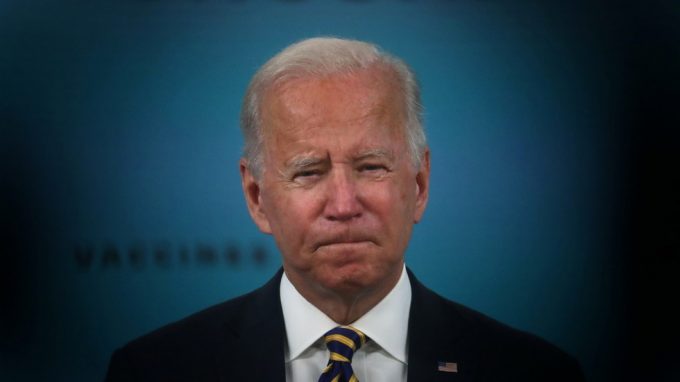
In an address from the White House, President Joe Biden praised companies like Southwest Airlines enforcing his Covid-19 vaccine mandate, despite the CEO seemingly rebuking the requirement the day before.
Addressing the government’s effort to battle the coronavirus pandemic on Thursday through vaccine mandates, Biden praised private companies that have already been “stepping up” to combat misinformation about the Covid-19 vaccine and the implementation of their vaccine mandates.
“Southwest Airlines … the head of the pilots’ union and its CEO dismissed critics who claim vaccination mandates contributed to flight disruptions,” Biden said, referring to mass cancelations at Southwest Airlines that peaked on Sunday, shortly after the company began enforcing the vaccine mandate put forth by the president.
The company and the White House have denied the mandate and ensuing staffing shortages caused them to delay a third of their flights in the US. White House Press Secretary Jen Psaki even deemed the mandates “good for the economy” following the cancelations and speculation by critics.
In his address, Biden went on to praise school board members, doctors, and other healthcare workers for battling “misinformation” about vaccines.
“All of these efforts,” Biden said of the companies and individuals facing “misinformation” about vaccines and mandates, “are going to help us continue moving the dial to eliminate this disease.”
Biden’s comments came shortly after Southwest CEO Greg Kelly appeared to distance himself from the mandate, despite the company saying there was no connection between their scheduling troubles and the requirement.
The CEO told CNBC he had never “been in favor of corporations imposing that kind of a mandate,” though adding again it has nothing to do with the cancelations.
Biden pushed back against the divisive response his vaccine mandates have received from the public, saying mandates “should not be another issue that divides us” and is only part of the larger effort to battle the virus and get the still lagging, according to the president, vaccination rate up.
“Mandates work,” the president said, and companies like Southwest that have already implemented them prove that, he added.
The Department of Labor will be requiring all businesses with 100 or more employees to require Covid vaccinations, an order multiple companies have already said they will defy.
House of Commons Covid Report Gets Some Things Right, Most Things Wrong
By Toby Young • The Daily Sceptic • October 12, 2021
On Monday evening two House of Commons select committees – the Science and Technology Committee and the Health and Social Care Committee – published a joint report on the Government’s handling of the COVID-19 pandemic that was predictably damning. It was published in time to make the following day’s front pages – “Britain must learn from ‘big mistakes’ on Covid, says report”, reported the Times on its front page – but not in time for newspaper reporters or broadcast journalists to properly assess its findings. Not that that stopped all the usual suspects from using it as a stick to beat the Government with. For instance, Labour’s Shadow Health Secretary Jonathan Ashworth told the BBC that the “damning” findings showed that “monumental errors” had been made and called for the public inquiry – scheduled for next spring – to be brought forward.
The authors of the report say in the Executive Summary that the reason they’ve published it now, when there are still a large number of ‘known unknowns’ as well as ‘unknown unknowns’, is because we urgently need to learn from what the Government got right and what it got wrong so we are better prepared for the next pandemic, which might come along at any moment. But if it’s too soon to say what was a mistake and what wasn’t, that argument collapses. Indeed, a premature report that draws the wrong conclusions, e.g. that the Government didn’t lock down in March of last year early enough, which is one of the main findings of this report, is worse than useless since it may encourage future Governments to repeat the same mistakes.
I’ve now read the report – yes, all 145 pages – so you don’t have to.
What the report gets right
- It criticises the Government for discharging elderly patients from hospitals into care homes without testing them first to see if they had COVID-19 and without putting any measures in place in care homes to mitigate the impact of that policy, as well as for the lack of PPE in care homes. The report says these errors “led to many thousands of deaths which could have been avoided”. Hard to argue with that, although one of the oddities of the report is that it criticises the lack of infection control in care homes, but not in hospitals. Weird, given that ~20% of cases over the course of the U.K.’s epidemic have been hospital-acquired infections.
- The authors praise the RECOVERY trial for carrying out large randomised control trials of different COVID-19 treatments and identifying dexamethasone as an effective treatment. That too seems right.
- The report highlights the disproportionately high Covid death rates among black, Asian and minority ethnic populations and acknowledges that part of the explanation for that may be biological differences between those populations and the white British population. Even acknowledging that genetic factors may be part of the reason for these disparities makes a refreshing change. Unfortunately, the report goes on to play down these biological differences and claims that social, economic and health inequalities are much bigger factors.
- It criticises hospitals and care homes for issuing ‘Do Not Attempt CPR’ notices to patients/clients with learning disabilities and autism, often without the consent of their families. No argument there.
- Rather than blame Boris and other senior members of the Government for the decision not to lock down before March 23rd 2020, the report emphasises that they were just following the recommendations they were being given by their scientific advisors. As I’ve pointed out before, that is correct.
- The report is at least ambivalent about how effective a two-week ‘circuit breaker’ would have been in England in September of 2020.
It is impossible to know whether a circuit breaker in the early autumn of 2020 would have had a material effect in preventing a second lockdown given that the Kent (or Alpha) variant may already have been prevalent. Indeed such an approach was pursued in Wales, which still ended up having further restrictions in December 2020.
Unfortunately, having written this, the authors then go on to say:
It is likely that a “circuit break” of temporary lockdown measures if introduced in September 2020, and earlier lockdown measures during the winter, could have impeded the rapid seeding and spread of the Kent variant.
Make up your mind guys!
What the report gets wrong
- The report claims that the U.K.’s Pandemic Preparedness Strategy wasn’t fit for purpose because it prepared us for “an influenza-like pandemic” rather than a more serious infectious disease that was spread, in part, by asymptomatic transmission. Professor Devi Sridhar, who gave evidence to the joint committees, is quoted as saying the mistake our Government made was to assume COVID-19 was “just like a bad flu”. In fact, it was like a bad flu, as judged by the latest estimates of the infection fatality rate, and the jury’s still out on whether asymptomatic people who test positive for Covid are infectious.
- One of the reasons the Government didn’t lock down before March 23rd, according to the authors, is because its scientific advisors were guilty of following the flawed playbook of the Pandemic Preparedness Strategy. In particular, the initial advice was to try to ‘manage’ the spread of the virus through the general population rather than to suppress it altogether, which the authors believe would have been the correct strategy. They claim the Government didn’t realise this sooner because it had failed to learn the lessons of the SARS, Swine Flu and MERS pandemics and embed those lessons in its strategy. But, surely, one of the lessons of those pandemics is that national lockdowns aren’t necessary to contain pandemics – and that advice was embedded in the U.K. Government’s strategy document. The mistake the Government made was not to initially follow that advice; the mistake was to stop following it on March 23rd. The only time a government has tried quarantining entire regions as a strategy to mitigate the impact of a viral outbreak prior to 2020 was in Mexico in 2009 when something like a lockdown was imposed on April 27th in Mexico City, the State of Mexico and the State of San Luis Potosí. That was policy abandoned on May 6th because of the mounting social and economic costs.
- Bizarrely, the authors of the report claim the reason the British Government didn’t abandon the Pandemic Preparedness Strategy sooner was because of “groupthink”. But, surely, the reason for putting a carefully thought out strategy document in place, incorporating the lessons from the mistakes made during previous pandemics, was precisely to avoid Government decisions being influenced by groupthink. And that approach was successful until mid-March, at which point Boris Johnson and his closest political allies abandoned it and decided to copy what other Western leaders were doing, i.e. lockdown. In other words, it was groupthink that was responsible for the disastrous U-turn, not the comparatively sensible initial approach.
- One of the main conclusions of the report is that the Government should have locked down earlier than it did – that’s one of the “big mistakes” in all the headlines – and they quote Professor Neil Ferguson to that effect:
The initial U.K. policy was to take a gradual and incremental approach to introducing non-pharmaceutical interventions. A comprehensive lockdown was not ordered until March 23rd 2020 – two months after SAGE first met to consider the national response to COVID- 19. This slow and gradualist approach was not inadvertent, nor did it reflect bureaucratic delay or disagreement between Ministers and their advisers. It was a deliberate policy – proposed by official scientific advisers and adopted by the Governments of all of the nations of the United Kingdom. It is now clear that this was the wrong policy, and that it led to a higher initial death toll than would have resulted from a more emphatic early policy. In a pandemic spreading rapidly and exponentially every week counted. The former SAGE participant Professor Neil Ferguson told the Science and Technology Committee that if the national lockdown had been instituted even a week earlier “we would have reduced the final death toll by at least a half”.
- In fact, it’s far from clear that “this was the wrong policy” or that it “led to a higher initial death toll”. The authors of this report take it for granted that – in the words of Professor David Paton – “governments can turn infections on or off like a tap by imposing or lifting restrictions”, when all the real-world data we’ve accumulated in the past 18 months suggests that is hopelessly naive (see these 30 studies, for instance). Governments around the world, including ours, have been guilty of wildly over-estimating the impact of non-pharmaceutical interventions on the spread of the virus.
- In the British case, there’s no reason to believe that locking down earlier would have reduced the final death toll at all, let alone by half. As David Paton points out, the Czech Republic locked down on March 16th, imposed hard border controls and rolled out the first national mask mandate in Europe. Yet it had a second surge in the Autumn of 2020, prompting it to lock down again, and then an even bigger one in December, leading to a third lockdown. Cases surged again in Czechia in February and March of this year and, six months ago, it had the second-highest per capita Covid death toll in the world, according to Reuters.
More damning still is the comparison with Sweden, which didn’t lock down at all in 2020 and, as of today, is ranked 50th in Worldometers’ table ranking countries according to per capita deaths. The U.K., by contrast, is ranked 25th.
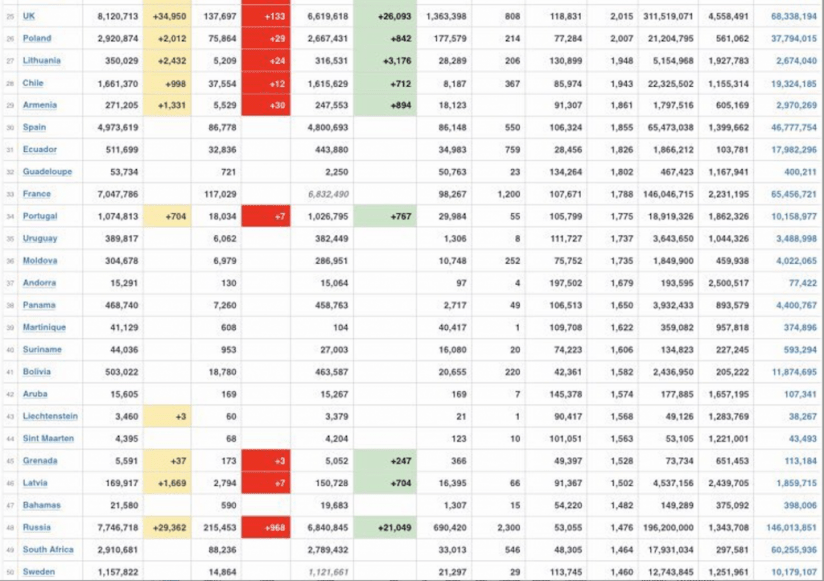
- There are only three mentions of Sweden in this report, two of them in a single footnote. Any assessment of the U.K. Government’s response to the pandemic that fails to compare it with that of the Swedish Government – particularly one advocating we should have locked down sooner and for longer – doesn’t deserve to be taken seriously.
- The report’s authors take at face value the “reasonable worst-case” scenarios that various modellers (including a sidekick of Dominic Cummings’) came up with in mid-March to show that if the Government continued to follow Plan A, i.e. the Pandemic Preparedness Strategy, the NHS was on track to become overwhelmed many times over. Here is Matt Hancock giving evidence on June 8th 2021, appealing to a prediction of “slightly below” 820,000 deaths, absent a lockdown:
I asked for a reasonable worst-case scenario planning assumption. I was given the planning assumption based on Spanish flu, and it was signed off at Cobra on January 31st. That was a planning assumption for 820,000 deaths. […]
In the week beginning March 9th, what happened is that the data started to follow the reasonable worst-case scenario. By the end of that week, the updated modelling showed that we were on the track of something close to that reasonable worst-case scenario. I think the numbers were slightly below that, but they were of a scale that was unconscionable.
- Rather than just take those projections at face value, couldn’t the House of Commons committees have interrogated the models a little bit? The report’s most damning criticism – that the Government’s delay in imposing the first lockdown resulted in thousands of unnecessary deaths – is contingent on not questioning those forecasts. In light of SAGE’s over-estimate of the likely uptick in cases following the easing of restrictions on July 19th of this year, as well as its more recent over-estimate of hospitalisations this autumn, wouldn’t it have been prudent to scrutinise those models? That’s a particularly glaring omission, given that the authors of the report criticise members of the Government for not challenging the scientific advice they were given: “Those in Government have a duty to question and probe the assumptions behind any scientific advice given, particularly in a national emergency, but there is little evidence sufficient challenge took place.” Why do “those in Government” have a duty to do this, but not those serving on select committees who are supposed to be holding the Government to account?
- In case further evidence is required that the authors of the report have credulously lapped up the doom-mongering of SPI-M and others, consider this passage:
It seems astonishing looking back that – despite the documented experiences of other countries; despite the then Secretary of State referring to data with a Reasonable Worst Case Scenario of 820,000 deaths; despite the raw mathematics of a virus which, if it affected two-thirds of the adult population and if one percent of people contracting it died would lead to 400,000 deaths – it was not until March 16th that SAGE advised the Government to embark on a full lockdown (having said on March 13th that “it was unanimous that measures seeking to completely suppress the spread of COVID-19 will cause a second peak”) and not until March 23rd that the Government announced it.
- Note the appeal to an IFR of 1% when even Neil Ferguson’s team at Imperial College, which predicted 510,000 deaths if the Government stuck with Plan A in its famous March 16th paper, assumed an IFR of 0.9%. In fact, a WHO bulletin put the IFR at 0.23% as long ago as October 2020.
- This unwillingness to interrogate the modelling data that underpins the report’s conclusions is particularly odd, given that the authors acknowledge the limitations of modelling elsewhere – “Models can be useful and informative to policymakers, but they come with limitations” – and at one point try to blame the delay in lockdown down on an “overreliance on specific mathematical models”! Again it’s a case of one rule for me and another for thee.
- The report compares the response of the British government in the first months of the pandemic unfavourably to that of various East Asian and South East Asian governments, but overlooks the fact that many Asian countries that successfully suppressed infection by closing borders at the beginning of 2020, and rolling out successful test, trace and isolate programmes, are now in the grip of devastating waves in spite of having vaccinated large swathes of their populations. That suggests their non-pharmaceutical interventions only succeeded in postponing the impact of SARS-CoV-2, not avoiding it. (It also fails to note that these supposed role models didn’t issue stay-at-home orders, close schools or shutter businesses in their initial responses to the pandemic.)
- The report criticises the Government for stopping community testing in March 2020 due to PHE’s lack of testing capacity and praises Matt Hancock for setting the 100,000 tests a day target to galvanise the system into massively ramping up that capacity. Indeed, the authors claim that had a proper test-and-trace system been in place at the beginning of 2020, the initial lockdown might have been avoided. That, too, is a shaky assumption. After all, the Government has spent £37 billion and counting on a ‘world-beating’ test, trace and isolate programme but that didn’t stop us locking down for a second and third time. The authors of the report acknowledge this point, but blame Baroness Harding for not doing a better job of running NHS Test and Trace. That seems a tad harsh, particularly as the authors repeatedly say – Uriah Heap-like – that it’s not their intention to apportion blame for the mistakes they’ve identified.
- The report praises the speed at which the Nightingale hospitals were created, although it acknowledges that, for the most part, they weren’t used. But the reason they weren’t used is partly because the NHS lacked the trained employees to staff them with – ICU nurses, for instance. Perhaps if they’d been built with less speed – at a cost to the taxpayer of roughly half a billion pounds, don’t forget – the Government would have had time to spot this obvious flaw in the plan. Or, more realistically, those aware of it from the start would have had more time to organise and obstruct this expensive PR stunt.
- The authors praise the Government – and the NHS – for at no point running out of ICU beds and becoming overwhelmed, as the health system did in some parts of Italy during the first phase of the pandemic. But given the enormous cost of protecting the NHS – both in terms of seriously ill people who were either discharged or went untreated, as well as the collateral damage inflicted by the lockdowns on the economy, education, family life, mental health, etc. – it’s impossible to say whether prioritising the NHS at the expense of absolutely everything else was in fact the right strategy. To bottom that out you need to do some cost-benefit analysis, of which there is precisely none in this report.
- The report concludes by praising the Vaccine Taskforce under the leadership of Kate Bingham and highlights the ‘success’ of the U.K.’s vaccine programme – “one of the most effective in Europe and, for a country of our size one of the most effective in the world”. But they ignore the fact that the efficacy of the Covid vaccines is much less impressive than the initial trial data indicated and looks less impressive with each passing week, something Dr. Will Jones has been meticulously documenting for the Daily Sceptic. So was the massive Government expenditure on the development and trialling of home grown vaccines, as well as procuring hundreds of millions of vaccines manufactured overseas, worth it? One notable omission from the report is any acknowledgement of the risks associated with a fast-tracked vaccine approval process – it just breathlessly praises the speed with which vaccines were made available to the public and expresses the hope that “in the future this could be conducted in much shorter time still”.
Conclusion
This is a pretty feeble document that seems to have been written with an eye on getting Jeremy Hunt and Greg Clark – the chairs of the two select committees involved – on the BBC news rather than making a serious contribution to understanding what the Government got right and what it got wrong over the past 18 months. It’s hard to argue with some of its findings, but its headline conclusion – that the Government should have locked down earlier – isn’t based on any serious analysis, let alone a careful consideration of the evidence that seems to point in the opposite direction. Talk about groupthink!
I hope the official inquiry, when it comes, is a bit more intellectually weighty than this.
We need a Covid champion to defy Big Pharma like the thalidomide heroine
By Mary McGreechin | TCW Defending Freedom | October 13, 2021
IN 1960, Frances Oldham Kelsey prevented thousands of American babies from facing a life of severe disability.
A medical officer with the US Food and Drugs Administration (FDA), Kelsey refused to buckle under relentless pressure from the pharmaceutical company Merrell to approve the drug thalidomide for use as a sedative and, off-label, as a treatment for morning sickness.
From 1957, the drug had been used in Europe to ease extreme nausea in the early stages of pregnancy. But by 1961, mounting reports from concerned doctors revealed devastating birth defects in the babies of women who had taken thalidomide.
Determined to break into the lucrative American drug market, Merrell had claimed stringent testing showed the drug to be safe as well as efficacious.
Kelsey, however, was suspicious of incomplete data and the omission of tests on the drug’s prolonged use and refused to give her approval. Despite harassment and intimidation by the company – ‘most of the things they called me you wouldn’t print’ – Kelsey had remained resolute.
Today, as the Covid agenda aims to vaccinate every man, woman and child, minimising, or ignoring, often fatal side-effects, we need a Frances Kelsey to say: ‘No.’ Or even: ‘Not yet.’ Despite some courageous voices within the medical community speaking out at great personal cost, no influential figure has voiced the level of dissent needed to halt this programme.
Medical advances have, undeniably, delivered life-enhancing and life-saving treatments. Yet countless lawsuits against the pharmaceutical industry demonstrate that medicine can have an iatrogenic (illness-causing), as well as a therapeutic, effect. In the US alone, billions of dollars are paid annually in damages by pharmaceutical companies.
The industry has sought to temper such negative perceptions by cultivating a philanthropic image, portraying itself as a benevolent entity driven by altruism rather than a competitive industry whose investors salivate at ever-increasing share prices.
Despite these endeavours, it is astonishing that a large proportion of the public have failed to be concerned that drug companies which have been fined astronomical sums in multiple lawsuits have been granted liability immunity on Covid vaccines. With pharmaceutical firms typically afforded limited liability protection, this indemnity has been described as ‘very rare.’
Should we be surprised at the lack of public suspicion? The NHS has been elevated to such a degree that any condemnation of this behemoth is considered blasphemy. A 2020 Ipsos MORI poll revealed that more than 90 per cent of Britons trusted doctors and nurses ‘to tell the truth.’
Yet medics may be untruthful, or unaware of the full facts behind the medicine they prescribe. UK doctors believed thalidomide could be given ‘with complete safety to pregnant women and nursing mothers without adverse effect on mother or child’, yet it was later acknowledged that no tests were done involving pregnant women.
The effect of Covid vaccines on fertility and the unborn child are unknown. However, more than 30,000 women have, at present, reported changes in their menstrual cycle post-vaccination.
The vice-president of the Royal College of Obstetricians and Gynaecologists stated: ‘We support calls for more research to understand why women may be experiencing changes to their menstrual cycle after having the vaccine.’ Stable door, horse and bolted come to mind.
And whilst pregnant women were excluded from the Covid vaccine trials, the Journal of the American Medical Association (JAMA) had these reassuring words to ‘pregnant people’: ‘Reproductive toxicity studies with the Moderna vaccine in rats haven’t uncovered any worrisome signals.’
Are we to place our trust in pharmaceutical companies whose employees’ emails reveal such statements as:
‘I am not 100 per cent comfortable with this data being made publicly available.’
‘Thus far we have buried trials 15, 31, 56 … how do we face the outside world when they begin to criticise us for suppressing data?’
‘Lisa has done a great “smoke and mirrors” job.’
All this correspondence was made public when litigation against AstraZeneca’s anti-psychotic drug Seroquel began. The company, now most famously known for the development and production of Covid vaccines, faced a major lawsuit in 2009 brought by thousands of Seroquel users who claimed they had developed diabetes whilst taking the drug.
The damning emails proved the pharmaceutical giant had been aware of the risk a decade earlier. Moreover, AstraZeneca had suppressed research which showed its earlier anti-psychotic treatment, Haloperidol, was more effective, and much cheaper, than Seroquel.
Employee John Tumas messaged concerns to colleagues that ‘our own analysis supports the “view out there” that we are less effective than Haloperidol.’
Promoting expensive treatments over cheaper alternatives has also caused debate regarding Covid-19. Those advocating for the use of Ivermectin, more commonly used as an anti-parasitic in animals, to treat the virus, have been relentlessly mocked. But studies have shown the drug can provide ‘an increase in clinical recovery … and a decrease in mortality rates even when used in patients with severe Covid-19.’
Yet a trial conducted on those with mild symptoms concluded it had little effect. Doctor Eduardo Lopez-Medina published his findings in JAMA, maintaining that Ivermectin had delivered negligible benefits.
However, a ‘conflict of interest disclosure’ revealed Dr Lopez-Medina was in receipt of grants and ‘personal fees’ from pharmaceutical giants GlaxoSmithKline, Janssen and Sanofi Pasteur – all involved in the production of Covid-19 vaccines.
Countless stories have emerged in the past 18 months which should raise serious questions over transparency and truthfulness within the medical field – from doctors wrongly claiming intensive care units are full of unvaccinated 20 and 30-year-olds on ventilators, to hospital matrons inventing stories of children’s wards full of Covid patients.
And yet we are expected to have faith that such medics, and the pharmaceutical industry, have our best interests at heart in their pursuit of global vaccination against Covid-19.
Like Frances Oldham Kelsey, we should remain steadfast against coercion and duress. We should ask more questions and seek more answers. If we do not like the answers we find, then we must hold the line. For our own sake and that of our children.
Featured Video
Death Spikes & Rising Cancer In Our Youth Explained
or go to
Aletho News Archives – Video-Images
From the Archives
Politicians lie
By Mazin Qumsiyeh | Popular Resistance | August 18, 2013
There is no way to say this truth nicely: Politicians lie. That includes Japanese, American, Egyptian, Israeli, and Palestinian politicians! Is there something more common sense than that? Yet, so many citizens around the world believe their own politicians or wistfully acknowledge lies but think it is part of the job needed to run things. They believe even when politicians contradict themselves blatantly. This phenomenon is rather remarkable. It is a dissonance and disconnect from reality that many seem oblivious to. It is very dangerous because it can lead to accepting rationales for going to war. These can be deadly wars that lead to millions of lives lost as happened in what was called World War 1 and WW2. Even when incredible and declassified evidence abound, politicians continue to lie and old mythologies refuse to die. Here are just a few of the countless lies told to us over the past few decades… continue
Blog Roll
 Aletho News
- Ukrainian Soldiers, Potential Mercenaries: Have Gun, Will Travel!
- Burnham’s UN debut… A masterclass in British disinformation
- Iran flights continue despite US aviation sanctions
- Global Tipping Points Lead the World Into a State of Entropy
- The day-after at the White House: USA and Xi Jinping
- The Geopolitical Balance in the Red Sea: The UAE Being Displaced by New Players
- Iraqi resistance group vows to stage airport sit-ins over Iran aerial blockade
- Turkish parliament to review Saudi-Pakistan defense pact next month
- DEATH SPIKES & RISING CANCER IN OUR YOUTH EXPLAINED
- Iran offers Trump deal before US election
- If Americans Knew
- Deconstructing Netanyahu’s pants-on-fire UN rant – Daily Update
- Trump betrayed voters with his campaign lies and prioritized a foreign country once he took office
- Netanyahu calls Israel’s war in Gaza ‘opposite of genocide’ in UN speech to near-empty hall
- Settler Kidnappings: Torture, Sexual Abuse and Terrorisation of Palestinian Abductees as Israel Deepens Annexation of West Bank
- Gaza winter nears as 162,000 tents become unusable, raising fears of humanitarian crisis
- Netanyahu says, “It’s the opposite of genocide”; UN says Gaza economy is world’s ‘most severe crisis on record’ – Daily Update
- Israel’s US-Backed Assault on Gaza Has Created the ‘World’s Most Severe Economic Crisis on Record’: UN
- ‘Protecting U.S. Citizens’… From Israel
- ‘This is where I live now, the back of a truck’: a day in the life of a grandmother in Gaza
- In UN Speech, Iran’s President Displays Pictures of Children Killed by US, Brings Attention to Israel’s Nuclear Arsenal
- No Tricks Zone
- New Study: Earth And Venus Surface Warmth Largely Explained By Convection And Lapse Rate, Not CO2 Or Radiation
- 2025 Nature Paper Claiming Worsening Global Drought Gets RETRACTED …Heavily Flawed
- New Study: ‘Global Drought Shows No Detectable Recent Acceleration Under Climate Warming’
- Economic Masterminds: German Socialists Suggest Taxing Productivity Gains Stemming From Using AI
- The South China Sea Has Not Been Cooperating With The Climate Change Narrative
- Energy Crisis: Germany Enters Heating Season With Historically Low Gas Reserve Fill Levels
- New Study: The Antarctic Ice Sheet Gained Mass From 2020-2024 Due To Staggering Snow And Ice Accumulation
- Study: Ocean Heating Rates From Thousands Of Years Ago ‘Dwarf’ Modern Ocean Heating Rates
- Climate Extremists Target, Attack Large-Scale Power Grid Infrastructure In Germany!
- New Study: Antarctic Ice Melt Has Contributed Less Than 1 Centimeter To Sea Level Rise In The Last 30 Years

