New footage reveals Netflix faked walrus climate deaths
By Susan Crockford | Polar Bear Science | November 19, 2020
Netflix faked ‘Our Planet’ walrus deaths in order to blame them on climate change – polar bears actually were the cause of walrus falling to their deaths from a Siberian cliff, independent video evidence from Russia shows.
A new video published by the Global Warming Policy Foundation on this new evidence.
Press release 16 November 2020 from the Global Warming Policy Foundation:
London, 19 November: In a GWPF video released today, Dr. Susan Crockford, a Canadian wildlife expert, provides new evidence that the 2019 Netflix documentary film series, ‘Our Planet’, withheld facts behind the controversial walrus story it promoted as evidence of climate change.
If there was ever any doubt that polar bears, not climate change, were the cause of walrus falling to their deaths from a rocky cliff in Siberia a few years ago, new evidence presented here seals the deal: a Russian photographer has released independent video of the event that clearly shows polar bears driving walrus over the cliff to their deaths.
In 2019, a sequence in the Netflix documentary ‘Our Planet’ showed a highly disturbing piece of footage of several walrus bouncing off sharp rocks as they fell from a high cliff to their deaths. It transpired this event happened in late September 2017 at a well-known walrus haulout at Cape Schmidt on the Chukchi Sea.
Narrator Sir David Attenborough blamed the tragedy on climate change, insisting that lack of summer sea ice due to climate change was to blame for the walrus falling to their deaths without provocation. A few months later, however, using some of the same walrus footage, Attenborough’s BBC series called ‘Seven Worlds, One Planet’ featured a number of polar bears driving walrus off the very same cliff. It was damning evidence that the ‘Our Planet’ account of walrus deaths had been a false narrative constructed to elicit an emotional response from the public.
New independent video footage of the same event shot by Russian photographer Yevgeny Basov corroborates the BBC evidence that polar bears drove the walrus over the cliff. Basov is a friend of Netflix ‘science advisor’ Anatoly Kochnev and was apparently invited to observe the commercial filming.
Like the original Netflix footage, this scene is not for the faint of heart. It captures a raw but natural encounter between predator and prey. Walrus hauling out on land during the summer are natural events that happen even when sea ice is available. Polar bears are known to stalk such herds until they stampede, leaving the weak or unwary crushed in their wake. Cliffs are not essential to this polar bear hunting strategy but are especially efficient.
This brutal film footage of nature in action is not evidence of climate change or species on the brink of extinction. It does prove, however, that the walrus narrative promoted by Sir David Attenborough in the Netflix documentary ‘Our Planet’ is a manipulative sham with no resemblance to reality.
My video below published by the Global Warming Policy Foundation
Although the location is not specified in the original Russian video, by Russian photographer Yevgeny Basov, entitled simply ‘Walruses and polar bears of Chukotka’ (posted 17 May 2020, see below), it is clear that the location shown early in the film footage (up to the 4:00 mark) is of the cliff and walrus haulout at Cape Schmidt, which the author described in a photo essay published in November 2017 here.
See also:
The truth about Attenborough’s falling walruses (below):
Falling Walrus: Attenborough Tacitly Admits Netflix Deception (below)
Irish Scientists and Doctors Inveigh Against Lockdowns
By Amelia Janaskie | American Institute for Economic Research | November 19, 2020
A team of Irish medical and public health professionals recently published a White Paper entitled “COVID-19 Alternative Strategy: A Case for Health and Socioeconomic Wellbeing,” calling for an “evidence-based” approach to pandemic management. In the paper, the team provides a cost-benefit analysis of lockdowns and scrutinizes their overall efficacy while citing extensive supporting research. They find excessive costs associated with lockdowns compared to their intended benefits. The paper’s findings suggest that a second set of lockdown measures will be even more detrimental, especially given their hypothesis that the virus is transitioning from its initial epidemic stage to endemic stage.
The paper shows that testing and lockdown strategies are ineffective in lowering Covid-19 deaths. PCR tests are not reliable and tend to overestimate the number of people sick with Covid-19, which misinforms policy decisions. The 2020 mortality and virus-related hospitalization rates also do not deviate drastically from previous years, suggesting Covid-19 did not create a significant increase in mortality. In addition, they demonstrate that there is no correlation between lower mortality and more stringent lockdowns.
Although the authors suggest the idea of “Flatten the Curve” might have been a suitable strategy at first for the purpose of not overwhelming hospitals, they find that there are significant unintended consequences of lockdowns, especially regarding public health. The majority of Covid-19 deaths occur in people close to life expectancy, while lockdown-induced deaths occur in young people far from life expectancy, resulting in a high number of total life years lost. The authors cite various studies showing that children, adolescents, women, individuals with young children, and at-risk individuals are experiencing diminished mental health. They also report that cancer and cardiovascular deaths are increasing due to lockdowns because less people are receiving necessary screenings or going to hospitals.
In its conclusion, the White Paper recommends four overarching strategies consistent with the 2019 WHO and Irish pandemic guidelines, including the removal of lockdowns and a focused protection of the vulnerable. Overall, this paper is an impressive study on lockdowns and presents a mountain of evidence that demonstrates lockdowns are not only ineffective but harmful to people and must be stopped to maintain a healthy society.
Covid-19: New evidence on face masks
Sebastian Rushworth, M.D. | November 19, 2020
A few months back I wrote an article about the state of the evidence on face masks. At that point, there were no good studies looking at the effectiveness of face masks in preventing the spread of covid-19 specifically, but there was a systematic review that looked at all randomized trials that had been done on face masks for the prevention of respiratory infections more generally. That review found that surgical face masks reduced the probability of getting a respiratory infection by around 4% in absolute terms (17% in relative terms).
My conclusion was that, considering how infectious covid is, face masks were unlikely to have an effect on the spread of the virus on a population level, although I thought it made sense to use them in hospitals and nursing homes, where you want to do everything possible to minimize the risk of spread to people who are at high risk of a severe outcome.
Now we finally have a randomized controlled trial that has looked at the ability of face masks to protect wearers against covid-19. It was published in the Annals of Internal Medicine. The study was carried out in Denmark, and was funded by a charitable foundation that is connected with a company that owns supermarkets (I’m not sure whether that means they wanted the study to be a success or a failure, or just wanted to know the truth).
In order to be included in the study, participants had to be over the age of 18 and and they had to spend at least three hours per day outside the home. People were not allowed to take part in the study if they had current or prior symptoms that could indicate covid-19 infection, or a previously confirmed diagnos of covid-19. All potential participants had an antibody test performed at the beginning of the study, and if it was positive, then they were excluded from taking part. Participants were recruited through adverts in media and through direct contact with companies and other organizations.
In total 6,024 people were recruited in to the study, and of these 4,862 (81%) followed through to the end. That is a nice big number, which should be able to detect a meaningful difference, if there is one. The average age of the participants was 47 years. Half the participants were randomized to wear a face mask at all times when outside the home, and half were randomized not to. For obvious reasons, this study was unblinded, since it’s hard to create a situation where people are unaware of whether they’re wearing masks or not.
Participants in the intervention group were given 50 disposable surgical masks. This actually increases the probability of the study showing a meaningful effect compared with the reality in most countries where masks are currently being used in public. Why?
Because in most real world situations, people are wearing (and repeatedly re-wearing) non-disposable cloth masks, which are likely much less effective than disposable surgical masks that are only used once. In the systematic review I wrote about in my previous article, the little data there was on cloth masks suggested that they were completely ineffective.
Participants were followed for one month, and at the end of the month an antibody test and a PCR test for covid were carried out. If participants had symptoms suggestive of covid at any point during the month, a PCR test was also performed at that time point. All participants received written and video instructions on how to use the face masks properly. If outside the home for more than eight hours at a time, they were instructed to change to a new mask, so that a single mask was never used for longer than eight hours.
Both an intention-to-treat and a per-protocol analysis was done of the results. What that means is that they looked at what the results were, both if all participants involved in the study were included (intention-to-treat), and if only participants who reported wearing the masks as instructed a high proportion of the time were included in the analysis (per-protocol).
In general, it is considered good form to do an intention-to-treat analysis, and bad form to do a per-protocol analysis. The reason for this is that a per-protocol analysis will tend to make the results seem better than they are in the real world (in the real world, not everyone does as they’re told – annoying, right?!). In this case, however, I think it’s reasonable to also do a per-protocol analysis, because we want to know what effect, if any, masks have when used as instructed.
So, what were the results?
We’ll start with the intention-to-treat analysis. In the face mask group, 1,8% developed covid-19 over the course of the study. In the control group, 2,1% developed covid-19. That is a 0,3% difference in favor of face masks, but it is not even close to being statistically significant.
OK, let’s look instead at the per-protocol analysis, which in practice means that the 7% of participants who often didn’t follow the mask wearing instructions properly are excluded from the analysis. In the face mask group, 1,8% developed covid-19, and in the control group, 2,1% developed covid-19. So, interestingly, the result was the same regardless of whether you look only at those who wore the masks as intended, or look at everyone, including those who didn’t follow the instructions. This in itself suggests that mask wearing doesn’t make a big difference, since the results don’t change when you only look at people who have been good at wearing their masks as intended.
As an interesting aside, the researchers didn’t just look at covid, they also looked at 11 other respiratory viruses. In the face mask group, 0,5% tested positive for one or more other respiratory viruses. In the control group, 0,6% tested positive. That is a 0,1% difference, and again, it was nowhere close to being statistically significant.
What can we conclude from this?
Wearing face masks when out in public does not meaningfully decrease the probability that the mask wearer will get covid-19. It’s possible that there is a small reduction in risk, but if there is, it is so small that it was undetectable in a study where almost 5,000 people were followed for a month.
It is worth nothing here that the effect seen in studies is usually better than the effect seen in reality. The reason for this is that study participants usually try harder than people who aren’t part of a study, and they get better instruction. In this case, they also had better masks than most people are using at present in reality, and changed to new masks on a regular basis. So, if no meaningful difference was seen in this study, then I think it’s safe to say that no meaningful difference exists in reality.
One thing that is good about this study is that it is the first randomized controlled trial that comes close to mimicking the present reality in many countries, where people are wearing face masks in public, but not at home.
One interesting result of the study was that 52 people in the face mask group and 39 people in the control group reported another individual in the home having covid-19 during the course of the study. Yet of those, only 3 actually developed covid. People sharing a home with someone with covid were really no more likely to get covid than people who weren’t. This suggests that most covid infections happen outside the home, and is in itself something that would be an interesting avenue for further research. It also suggests that most people with covid are not themselves very infectious, giving support to the hypothesis that most infections happen through a small group of highly infectious ”super spreaders”.
The main thing lacking with this study is that it only looked at risk to the person wearing the face mask. It says nothing about the risk that the person wearing the mask will infect another person. That is an equally important parameter, and at present there are no high quality studies looking in to it, so before we can truly say that masks fill no function, we need another large randomized controlled trial that looks at the ability of face masks to prevent the mask wearer infecting other people.
You might also be interested in my article about whether fever lowering drugs are a good idea when you’re sick, or my article about how accurate the covid tests are.
Surprise: The “Smartest” People Are Actually Painfully Stupid
By Francis Menton – Manhattan Contrarian – November 18, 2020
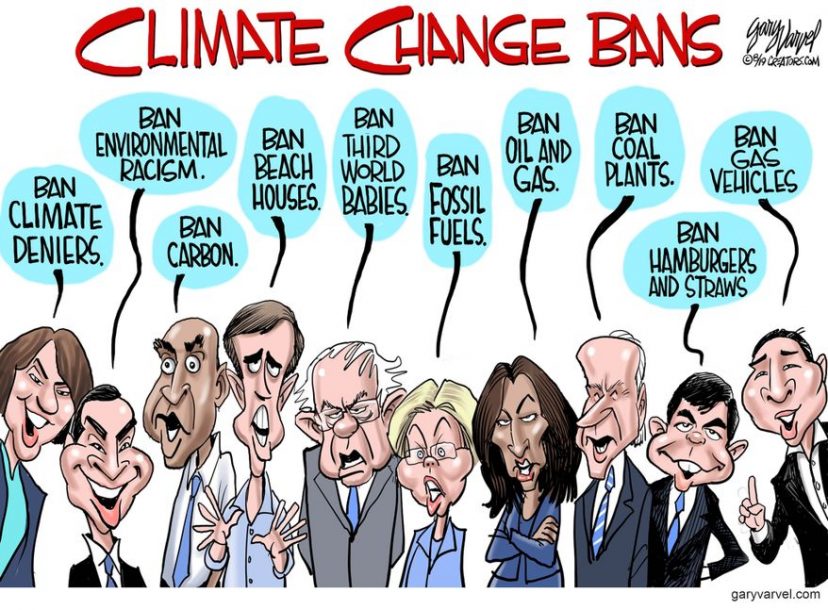
If you were lucky enough to attend America’s premier academic institution, Harvard University, you would receive most days, as I do, the Harvard Gazette. The Gazette generally cloaks its pieces in the mantle of “news”; but really its principal function is to find ways for us Harvard people to congratulate ourselves on how brilliant we are, while at the same time heaping scorn and derision on the the ignorant deplorables who are always getting in the way of our plans to perfect the world.
You only need to read a few of these things before you start to realize that what might seem like the very “smartest” people — the ones with the fanciest degrees and the fanciest professorships at the fanciest universities — are actually painfully stupid.
Anyway, today’s Harvard Gazette arrives with some joyful news: Science is back! After four dreadful years of the “anti-science” Trump, we are now going to see, with Biden, the restoration of “science” to its rightful place in the formulation of public policy. This news is right there in the lead story, headline and sub-headline: “Is science back? Harvard’s Holdren says ‘yes’/Ex-Obama adviser says, unlike Trump, Biden and Harris will embrace factual analysis.” From the first paragraph:
[T]he incoming Biden-Harris administration has moved quickly to reinstall science as a foundation for government policy after four years of a president who disdained accepted scientific wisdom on subjects from wildfires to hurricane tracks, climate change to COVID-19.
The Gazette has learned that “science is back” by their usual method, which is by interviewing the leading Harvard professor on the subject. In this case that is John Holdren. Do you remember him? Holdren’s current title is “Teresa and John Heinz Professor of Environmental Policy at the Harvard Kennedy School and professor of environmental science and policy in the Department of Earth and Planetary Sciences.” But before that he was “[A]ssistant to the [P]resident for science and technology and director of the White House Office of Science and Technology Policy,” a position in which he served for the entire eight years of the Obama presidency. You may remember that Holdren was confirmed unanimously by the Senate in March 2009, after minimal scrutiny of his background.
So give us an example, John, of how a Biden administration will prove to be more “pro-science” than that deplorable Trump:
GAZETTE : What is an example of a classic, successful government policy backed by good science? . . . .
HOLDREN: I would point to the Paris Agreement, which was an immense step forward in which 195 countries all across the world committed to take constructive steps toward reducing their climate-altering emissions going forward. . . .
Now, as anyone who has read the Paris Agreement knows, the entire developing world — home to about 90% of the world’s people — made no commitments whatsoever in that document, nor did they even agree to any non-binding goals, toward “reducing their climate-altering emissions going forward.” Emissions from the developing world are rapidly increasing, and will continue to do so, Paris Agreement or no Paris Agreement, thus rendering any U.S. efforts to limit emissions completely futile. Holdren is either completely ignorant on this subject, or he is intentionally trying to mislead the readership. Or it could be some of both. You be the judge.
And by the way, might Holdren have some conflict of interest here that may be relevant? None is disclosed as such in the article. But you might happen to recognize that the funder of Holdren’s Harvard professorship, Teresa Heinz, is the wife of John Kerry. Kerry, of course, is the former Secretary of State who was in charge of negotiating the Paris Agreement, and who more recently co-chaired the panel that drafted the Biden energy program, and who undoubtedly is expecting some big position in an incoming Biden administration. But don’t worry, conflicts only apply to Republicans, so there is no need to mention any of this.
Anyway, if you think that John Holdren might be an appropriate person to weigh in on issues of the role of “science” in public policy, you may want to consider some of the man’s previous writings on the subject.
For example, in 1977 Holdren co-authored with Paul and Anne Ehrlich a textbook titled “Ecoscience.” We know that “Ecoscience” was about “science,” because it’s right there in the title; therefore we can be secure in understanding that this is a good place to look for Holdren’s views as to what using “science as a foundation for public policy” will entail. A principal theme of the book is that overpopulation is about to engulf the world (“science” has shown it!) and therefore governments are justified, and indeed required, to take the most extreme possible measures to prevent the impending disaster. In 2009, shortly after Holdren’s confirmation as Obama’s “science” advisor, a website called Zombietime collected a top-ten list of quotations from “Ecoscience.” Here are a few of my favorites:
- Involuntary fertility control. . . . A program of sterilizing women after their second or third child, despite the relatively greater difficulty of the operation than vasectomy, might be easier to implement than trying to sterilize men. The development of a long-term sterilizing capsule that could be implanted under the skin and removed when pregnancy is desired opens additional possibilities for coercive fertility control. The capsule could be implanted at puberty and might be removable, with official permission, for a limited number of births.
- If some individuals contribute to general social deterioration by overproducing children, and if the need is compelling, they can be required by law to exercise reproductive responsibility—just as they can be required to exercise responsibility in their resource-consumption patterns—providing they are not denied equal protection.
- In today’s world, however, the number of children in a family is a matter of profound public concern. The law regulates other highly personal matters. For example, no one may lawfully have more than one spouse at a time. Why should the law not be able to prevent a person from having more than two children?
- Toward a Planetary Regime. . . . Perhaps those agencies, combined with UNEP and the United Nations population agencies, might eventually be developed into a Planetary Regime—sort of an international superagency for population, resources, and environment. Such a comprehensive Planetary Regime could control the development, administration, conservation, and distribution of all natural resources, renewable or nonrenewable, at least insofar as international implications exist. . . . The Regime might also be a logical central agency for regulating all international trade, perhaps including assistance from DCs to LDCs, and including all food on the international market. The Planetary Regime might be given responsibility for determining the optimum population for the world and for each region and for arbitrating various countries’ shares within their regional limits.
Now that I think of it, “painfully stupid” barely begins to describe the opinions of this man. Maybe we should go with “moral monster.”
Or you could try another book that Holdren co-authored with the Ehrlichs — “Human Ecology,” from 1973. In 2014 the website CFACT compiled a collection of choice quotes from this one. Again, I’ll give you just a few of my favorites:
- There is good reason to believe that population growth increases the probability of a lethal worldwide plague and of a thermonuclear war. Either could provide a catastrophic “death-rate solution” to the population problem; each is potentially capable of destroying civilization and even of driving Homo sapiens to extinction. . . . Perhaps more likely than extinction is the possibility that man will survive only to endure an existence barely recognizable as human-malnourished, beset by chronic disease, physically and emotionally impoverished, surrounded by the devastation wrought by an industrial civilization that could not cope with the results of its own biological and social folly.
- Political pressure must be applied immediately to induce the United States government to assume its responsibility to halt the growth of the American population. Once growth is halted, the government should undertake to influence the birth rate so that the population is reduced to an optimum size and maintained there.
- A massive campaign must be launched to restore a high-quality environment in North America and to de-develop the United States. De-development means bringing our economic system (especially patterns of consumption) into line with the realities of ecology and the global resource situation.
In another post, this one from 2009, CFACT noted that Holdren had also managed to take alarmist positions on climate change both in warning about global warming and also about global cooling — and that he had managed to take both positions simultaneously. CFACT concluded:
Holdren is a “doom peddler” who latches onto the nightmare-scenario-du-jour — overpopulation, nuclear holocaust, global cooling, global warming (all of which he’s trumpeted at various points in his career) — and then wildly exaggerates it in order to scare the public into adopting his politicized “solutions.”
Or, to put it another way, “science is back”! De-develop the United States? Forced population control? A “planetary regime” to control all “resources”? The “science” requires it! All the “smart” people from Harvard know that. You can understand why Holdren is excited about a Biden presidency. Are you?
Boris’s “Green Industrial Revolution” is Economic Lockdown, for ever…
The Global Warming Policy Forum | November 18, 2020
GWPF today described the Prime Minister’s 10 Point Plan for a ‘Green Industrial Revolution’ as shallow gesture politics, but a gesture with severely negative economic implications from day one into the foreseeable future.
And we know that this will happen because all previous attempts to create a viable green economy have failed.
In March 2009, the then Prime Minister Gordon Brown announced his Labour government’s ‘industrial strategy,’ a term the Conservatives have also adopted, promising to create 400,000 jobs. Brown’s words are strangely reminiscent of today’s announcement:
“I want to create a global ‘green new deal’ that will pave the way for a low carbon recovery and to help us build tomorrow’s green economy today.”
Twelve years later Britain has green industries that are still dependent on huge handouts, now totalling £10 billion a year — and building nearly all their green equipment overseas. The recent Seagreen offshore wind farm, for example, has awarded its contracts to two countries with cheap energy, the UAE and China, bitterly disappointing BiFab and other Scottish manufacturers. Green miracles just don’t happen.
Chairman Boris’s Great Leap Forward will also fail to deliver the goods because, like all “economic planning”, it is an incoherent utopian dream unconstrained by economic and physical realities and a mess of unaffordable and incompatible goals.
For example, meeting the absurd offshore wind target of an additional 30 GW of capacity (giving a total of 40 GW in 2030), will have a total capital cost of £120bn–£130 billion for wind farms and offshore transmission grid, nearly all that expenditure going to overseas companies, just as it did with Seagreen.
Paying for that investment and all ancillary costs related to it will put something £27 billion a year on the UK electricity bill, roughly double the wholesale market value of the entire UK electricity sector at present, with horrific implications for electricity prices by the end of the decade.
Those high electricity prices will render utterly unaffordable the Prime Minister’s proposals for heat pumps and electric vehicles. This will cause anger, not only because UK consumers will be confined to their freezing homes, but because many will have spent a fortune on realising the PM’s green utopia.
Heat pumps cost between £10,000 and £20,000 each to install, so the Prime Minister’s aim of installing 600,000 Ground Source Heat Pumps a year by 2028 implies an annual cost of between £60 billion and £100 billion a year.
Dr John Constable, GWPF energy editor, said:
“These over-reaching proposals are technically absurd, economically deluded and politically disastrous. Does the Prime Minister have any competent advisors? One wonders?”
Locking Down See Oh Too
By Willis Eschenbach | Watts Up With That? | November 16, 2020
I’ve read comments from several folks claiming that despite the COVID lockdowns reducing emissions, there’s been no corresponding decrease in the airborne CO2. Here’s a typical claim, complete with graphic, saying that this proves that human emissions aren’t the reason for the gradual increase in airborne CO2.
The COVID shutdown reduced man’s emissions of CO2 by about 20%. Yet the growth of CO2 in the atmosphere then was almost EXACTLY what it was during preceding years.

What didn’t change was natural emissions. So much for Willis’s [saying] “it’s man made”, and settled science.
Hmmm … y’all who know me know that I’m a data guy. So I thought I’d take a look at the situation. I reasoned that a “year-over-year” comparison would be much more valuable than the more general graph above. A year-over-year comparison is a graph showing, for each month in the record, how much the CO2 level increased over the same month in the previous year. If we want to understand changes in CO2, we need to look at changes in CO2, not the absolute values the commenter used above. Airborne CO2 has been growing at about 2.5 ppmv per year or so. Figure 1 shows recent data detailing the year-over-year growth in airborne CO2.

Figure 1. “Year-over-year” analysis of airborne CO2. Each data point shows how much the airborne CO2 increased over the same month a year previous. Units are parts per million by volume (ppmv). Photo is of Mauna Loa in Hawaii, location of the CO2 measuring station.
Hmmm … didn’t really expect that the variation would be quite that large. The big peak in the middle is from the El Nino/La Nina of 2015-2016. The peak and drop at the start if from the Nino/Nina of 2009-2010. What causes the other variations is far from clear. What is clear is that the values vary from smallest to largest by no less than four hundred percent, from an annual increase of less than one part per million by volume (ppmv) to an increase of over four ppmv … a large natural variation.
Next, we have to ask the question the commenter who I quoted above didn’t ask—just how much would we expect the CO2 to change due to the lockdowns?
Now, the author of the comment above says there’s been a 20% decrease in 2020 emissions … but that makes my Bad Number Detector start ringing. In general, carbon emissions for the globe, as well as the resulting changes in global atmospheric CO2 levels, are a linear function of global Gross Domestic Product (GDP). The GDP is the sum of all of the goods and services produced during the year.
And as you’d expect, if we increase the amount of stuff we make, we increase the CO2 emissions correspondingly. (For the math inclined, global annual carbon emissions ≈ 6.3 Gtonnes + .4 * global GDP (trillions of constant 2010 $).
Looking around the web, I see estimates for the lockdown-caused drop in 2020 GDP of from 4.5% up to 5.3%. And since emissions and the resulting atmospheric levels are a linear function of GDP, that would mean that the year-over-year CO2 increase should be smaller by something on the order of five percent.
This lets us calculate what the increase in CO2 would have been if there were no lockdowns. Over 2020 you’d expect CO2 emissions, and thus the resulting annual airborne CO2 increase, to have been 5% greater if there had been no lockdowns.
So to be very conservative in our estimate, let’s say the lockdowns actually decreased emissions by twice that, or 10%. If we use ten percent as our figure, our results will be solid.
So … what would the Figure 1 graph above look like without that 10% drop in 2020 emissions? Figure 2 shows that result. Just for interest’s sake, I’ve also added what a 20% difference in emissions would look like. That’s four times the actual ~ 5% change expected from the drop in GDP.
Of course, up to 2020 there is no change …

Figure 2. As in Figure 1, but with lines added showing a 10% (yellow) and a 20% (orange) increase in CO2 no-lockdown emissions would look like.
Again … hmmm. Gotta say, in a system that variable, a 10% or even a 20% difference is not distinguishable from the background. I mean, any one of those three lines is totally believable.
Conclusions
My main conclusion is that despite the huge, almost incalculable human cost of the lockdowns, the change in the rate of increase of CO2 is lost in the noise … which certainly doesn’t prove anything either way about whether the increase is human-caused.
My other conclusion is that this should give great pause to those who are blithely recommending totally restructuring the global economy to replace fossil fuels … look at the real-world costs of the lockdowns all around you, and look at the meaningless CO2 benefits in the graph above. Not worth doing on any planet.
Prof. Sucharit Bhakdi: ‘We Need to Stop Following the Pied Piper on COVID’
21st Century Wire | November 14, 2020
After nine months, many are wondering: How far has society drifted from reality in its blind quest to “defeat the virus”? In his recent interview, Dr Sucharit Bhakdi, German specialist in microbiology and co-author of Corona, False Alarm?: Facts and Figures speaks to the deep, fundamental issues like few have dared to so far:
“The time has come for homo sapiens to stand up and start becoming humans again. This scare, this global panic has caused man to lose reason, to stop thinking and to follow the Piper’s call, and we are being led to our downfall. This is the downfall of civilization …. and if we do not – if you do not stand up take those masks off your face, grasp each other’s hands again – no more social distancing (what absolute pure utter nonsense because of a virus that has been with us since the beginning of mankind) and start singing, the sound of the human voice is the only thing that is going to put this Pied Piper’s madness off … So go back to your homes and go back to the old reality, not any new reality. We don’t need any new reality …. We are not taking care of the people who need the care anymore because all we’re doing is hysterically responding to a spook call.”
In this highly informative interview, Triggernometry discusses all aspects the ‘pandemic’ with Professor Bhakdi:
Even a Military-Enforced Quarantine Can’t Stop the Virus, Study Reveals
By Jeffrey A. Tucker | American Institute for Economic Research | November 13, 2020
The New England Journal of Medicine has published a study that goes to the heart of the issue of lockdowns. The question has always been whether and to what extent a lockdown, however extreme, is capable of suppressing the virus. If so, you can make an argument that at least lockdowns, despite their astronomical social and economic costs, achieve something. If not, nations of the world have embarked on a catastrophic experiment that has destroyed billions of lives, and all expectation of human rights and liberties, with no payoff at all.
AIER has long highlighted studies that show no gain in virus management from lockdowns. Even as early as April, a major data scientist said that this virus becomes endemic in 70 days after the first round of infection, regardless of policies. The largest global study of lockdowns compared with deaths as published in The Lancet found no association between coercive stringencies and deaths per million.
To test further might seem superfluous but, for whatever reason, governments all over the world, including in the US, still are under the impression that they can affect viral transmissions through a range of “nonpharmaceutical interventions” (NPIs) like mandatory masks, forced human separation, stay-at-home orders, bans of gatherings, business and school closures, and extreme travel restrictions. Nothing like this has been tried on this scale in the whole of human history, so one might suppose that policy makers have some basis for their confidence that these measures accomplish something.
A study conducted by Icahn School of Medicine at Mount Sinai in cooperation with the Naval Medical Research Center sought to test the whole idea of lockdowns. In May, 3,143 new recruits to the Marines were given the option to participate in a study of extreme quarantine (along with extreme antivirus measures) or not. The study was called CHARM, which stands for COVID-19 Health Action Response for Marines. Of the recruits asked, a total of 1,848 young people agreed to be guinea pigs in this experiment. The remaining ones went about their normal basic training in regular ways.
What did the CHARM recruits have to do? The study explains, and, as you will see, they faced an even more strict regime that has existed in civilian life in most places.
All recruits wore double-layered cloth masks at all times indoors and outdoors, except when sleeping or eating; practiced social distancing of at least 6 feet; were not allowed to leave campus; did not have access to personal electronics and other items that might contribute to surface transmission; and routinely washed their hands. They slept in double-occupancy rooms with sinks, ate in shared dining facilities, and used shared bathrooms. All recruits cleaned their rooms daily, sanitized bathrooms after each use with bleach wipes, and ate preplated meals in a dining hall that was cleaned with bleach after each platoon had eaten. Most instruction and exercises were conducted outdoors. All movement of recruits was supervised, and unidirectional flow was implemented, with designated building entry and exit points to minimize contact among persons. All recruits, regardless of participation in the study, underwent daily temperature and symptom screening. Six instructors who were assigned to each platoon worked in 8-hour shifts and enforced the quarantine measures. If recruits reported any signs or symptoms consistent with Covid-19, they reported to sick call, underwent rapid qPCR testing for SARS-CoV-2, and were placed in isolation pending the results of testing.
Instructors were also restricted to campus, were required to wear masks, were provided with preplated meals, and underwent daily temperature checks and symptom screening. Instructors who were assigned to a platoon in which a positive case was diagnosed underwent rapid qPCR testing for SARS-CoV-2, and, if the result was positive, the instructor was removed from duty. Recruits and instructors were prohibited from interacting with campus support staff, such as janitorial and food-service personnel. After each class completed quarantine, a deep bleach cleaning of surfaces was performed in the bathrooms, showers, bedrooms, and hallways in the dormitories, and the dormitory remained unoccupied for at least 72 hours before reoccupancy.
The reputation of Marine basic training is that it is tough going but this really does take it to another level. All respect for those who volunteered for this! Also, this is an environment where those in charge do not mess around. There was surely close to 100% compliance, as compared with, for example, a typical college campus.
What were the results? Incredibly, 2% of the CHARM recruits still contracted the virus, even if all but one remained asymptomatic. “Our study showed that in a group of predominantly young male military recruits, approximately 2% became positive for SARS-CoV-2, as determined by qPCR assay, during a 2-week, strictly enforced quarantine.”
And how does this compare to the control group that was not subjected to the strict regime?
Have a look at this chart from the study:

Which is to say that the nonparticipants actually contracted the virus at a slightly lower rate than those who were under an extreme regime. Conversely, extreme enforcement of NPIs was associated with a greater degree of infection.
I’m grateful to Don Wolt for drawing my attention to this study, which, so far as I know, has received very little attention from any media source at all, despite having been published in the New England Journal of Medicine on November 11.
Here are four actual media headlines about the study that miss the point entirely:
- CNN: “Many military Covid-19 cases are asymptomatic, studies show”
- SciTech Daily : “Asymptomatic COVID-19 Transmission Revealed Through Study of 2,000 Marine Recruits”
- ABC: “Broad study of Marine recruits shows limits of COVID-19 symptom screening”
- US Navy : “Navy/Marine Corps COVID-19 Study Findings Published in New England Journal of Medicine”
No national news story that I have found highlighted the most important finding of all: extreme quarantine among military recruits did nothing to stop the virus, compared with a non-quarantine group.
The study is important because of the social structure of control here. It’s one thing to observe no effects from national lockdowns. There are countless variables here that could be invoked as cautionary notes: demographics, population density, preexisting immunities, degree of compliance, and so on. But with this Marine study, you have a near homogeneous group based on age, health, and densities of living. And even here, you see confirmed what so many other studies have shown: lockdowns are pointlessly destructive. They do not manage the disease. They crush human liberty and produce astonishing costs, such as 5.53 million years of lost life from the closing of schools alone.
The lockdowners keep telling us to pay attention to the science. That’s what we are doing. When the results contradict their pro-compulsion narrative, they pretend that the studies do not exist and barrel ahead with their scary plans to disable all social functioning in the presence of a virus. Lockdowns are not science. They never have been. They are an experiment in social/political top-down management that is without precedent in cost to life and liberty.
Jeffrey A. Tucker is Editorial Director for the American Institute for Economic Research. He is the author of many thousands of articles in the scholarly and popular press and nine books in 5 languages, most recently Liberty or Lockdown.
Featured Video

New positive ivermectin evidence
or go to
Aletho News Archives – Video-Images
From the Archives
Fanatical Followers of the Covid Regime: A Jim Jones-Style Cult?
By Professor Roger Watson and Dr. Niall McCrae | The Daily Sceptic | November 15, 2021
As scholars at leading British universities over recent decades, we witnessed the replacement of critical thinking and debate by narrative: facts are discrimination and scientific method is imperialism; truth, instead, is derived from ‘progressive’ values. This educational trend may be a major contributory factor to the ease in which society has been inculcated to the Covid ‘new normal’ of masking, testing, and repeated doses of vaccines for a disease of similar risk to severe influenza.
One doesn’t need much critical reasoning to observe the flawed logic of some vaccination enthusiasts, such as people who respond to experiencing any side effects, however debilitating, by saying “at least I know it’s working”, or, after contracting the disease despite their promised inoculation (over 90% effective, according to initial drug company claims), “I’d have been worse off without the jab.” … continue
Blog Roll
 Aletho News
- EU Council Advances Chat Control 2.0 Scanning Proposal
- Ex-Greek MEP files complaint against Israeli spyware firm over alleged Pegasus surveillance
- Troubling ideas throughout the Torah, Talmud, Mishneh Torah and Tanya
- ‘Grave, alarming’: Iran mission on Trump’s UNGA ‘annihilation’ threats
- Najaf airport to reopen to Iranian flights within 24 hours: Ambassador
- From ‘How Will This End For Iran’ to ‘When America Walks Away’: A tale of two Economist covers
- Tehran blasts ‘baseless’ speculation linking Iran to alleged bomb plot at UK air base
- The Rise And… Rise Of ‘Color Revolutions’
- The Coming GOP Bloodbath?
- Arctic Scare Stories Melt Away
- If Americans Knew
- Netanyahu Asked UAE Leader to Deny Report on Oct. 7 Warning in Secret Visit, Sources Say
- CNN Chief Int’l Correspondent Clarissa Ward on Journalists in Gaza
- Democratic Party Consultants Surround Troy Jackson with Pro-Israel Donors
- Christian Leader Responds To Netanyahu’s Claims Regarding Palestinian Christians
- In Gaza, ‘Whoever Survives the Bombing Won’t Survive the Rubble’
- Israel kills more Palestinians, amid push to resettle Gaza – Daily Update
- Israel forces Gazans to live in constant peril – Daily Update
- Deconstructing Netanyahu’s pants-on-fire UN rant – Daily Update
- Trump betrayed voters with his campaign lies and prioritized a foreign country once he took office
- Netanyahu calls Israel’s war in Gaza ‘opposite of genocide’ in UN speech to near-empty hall
- No Tricks Zone
- New Study: Earth And Venus Surface Warmth Largely Explained By Convection And Lapse Rate, Not CO2 Or Radiation
- 2025 Nature Paper Claiming Worsening Global Drought Gets RETRACTED …Heavily Flawed
- New Study: ‘Global Drought Shows No Detectable Recent Acceleration Under Climate Warming’
- Economic Masterminds: German Socialists Suggest Taxing Productivity Gains Stemming From Using AI
- The South China Sea Has Not Been Cooperating With The Climate Change Narrative
- Energy Crisis: Germany Enters Heating Season With Historically Low Gas Reserve Fill Levels
- New Study: The Antarctic Ice Sheet Gained Mass From 2020-2024 Due To Staggering Snow And Ice Accumulation
- Study: Ocean Heating Rates From Thousands Of Years Ago ‘Dwarf’ Modern Ocean Heating Rates
- Climate Extremists Target, Attack Large-Scale Power Grid Infrastructure In Germany!
- New Study: Antarctic Ice Melt Has Contributed Less Than 1 Centimeter To Sea Level Rise In The Last 30 Years

