Strike over civilian killings shuts down Indian Kashmir
Press TV – September 21, 2013
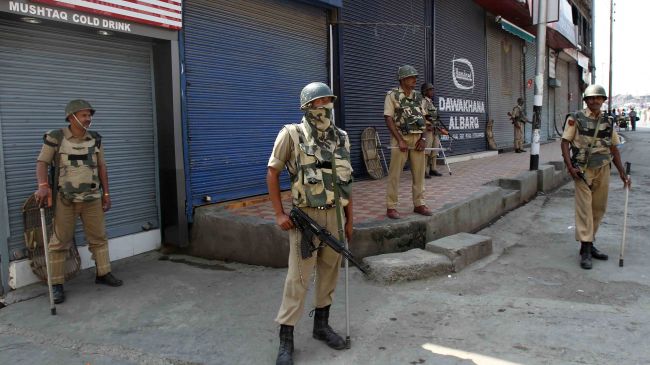
Shops, businesses, and schools have been closed with public transport off the roads in the Indian-controlled Kashmir after a pro-independence group called for a strike to protest recent civilian killings in the mountainous Himalayan region.
On Saturday, the shutdown was observed across the disputed territory following a call given by the leader of the All Parties Hurriyat Conference, Syed Ali Shah Geelani.
The All Parties Hurriyat Conference is a political front formed as an alliance of 26 political, social and religious organizations in Kashmir.
Contingents of Indian police and paramilitary soldiers were deployed to Kashmir’s main city of Srinagar and other major towns on Saturday to prevent people from holding anti-India demonstrations.
Most of the pro-independence leaders, including Geelani, chairman of the Awami Action Committee Mohammad Umar Farooq and chairman of the Jammu Kashmir Liberation Front Mohammad Yasin Malik, also remained under house arrest.
The pro-independence leaders were placed under house arrest on Friday after they called for a march to the southern town of Shopian to protest against the killing of five people.
Shopian has been under curfew for two weeks, following the killing of five people in two paramilitary shootings.
Four people were killed on September 7 when Indian paramilitary forces opened fire on them in Shopian, situated about 50 kilometers (30 miles) south of Srinagar. Paramilitary troops killed another person in the same town on September 11.
Kashmir lies at the heart of more than 60 years of hostility between India and Pakistan. Both countries claim the region in full but each only has control over a section of the territory.
Over the past two decades, the conflict in Kashmir has left over 47,000 people dead by the official count, although other sources say the death toll could be as high as 90,000.
Venezuelan School Year Begins with Free Books and Laptops
By Ewan Robertson | Venezuelanalysis | September 16, 2013
Mérida – Around eight million pre and primary school children began the new Venezuelan school year today, with the government announcing the distribution of free textbooks and laptops to educational centres.
This year the government will distribute 35 million textbooks to state primary and high schools from its Bicentenary Collection, which covers the national curriculum. This marks an increase from last year when 30.75 million books were distributed under the system, and 12 million in 2011.
Venezuelan president Nicolas Maduro lauded the government’s preparations for the school year, stating on Saturday that policies were designed to provide “quality” education to all.
“To begin classes on Monday and take children to school, we’re going to begin handing out 35 million textbooks so that classes start with the best quality,” he said at an official event.
The government is also planning to distribute 5 million copies of the National Constitution to schools this term in order to raise awareness of the constitution’s contents and promote the values defended in its articles.
“This [Bolivarian] revolution can only be made if we fill it with love every day, if the passion of loves moves us; the purest love for our children, our parents…for our grandchildren, love for [late Venezuelan president Hugo] Chavez,” Maduro declared.
In the Venezuelan constitution, passed in a national referendum in 1999, education is described as “a human right and fundamental social duty; democratic, free, and obligatory” (Article 102). In practice education in Venezuela is free including at university level, while private educational institutions also exist.
The government will also distribute 650,000 free “Canaima” laptops to children from 1st to 6th grade this school term. A further 1.4 million will be handed out in 2014, bringing the total distributed since 2008 to 4 million.
Assembled in Venezuela, the Canaima laptops are manufactured as part of a cooperation agreement with Portugal.
Further, under the government social program “A Drop of Love for My School”, repairs were made to 1000 educational centres over the summer holidays.
The authorities of opposition controlled municipalities in the central state of Miranda also reported to have realised repairs to some schools in their areas in preparation for the new term.
Along with the distribution of materials and renovations to infrastructure, the Maduro government is launching a new children’s theatre scheme this school year. School pupils will experience a range of classes such as acting, lighting, oral narration, and music under the program, which is named after 20th century Venezuelan dramatist Cesar Rengifo.
Related article
- Theatre Program Launched in Venezuelan Schools to Create “Culture of Peace” (venezuelanalysis.com)
“Our hands have not shed this blood”? Give me a break
The IDF insists on not indicting the security officer who killed Bassem Abu Rahme, even though we provided it with enough details to find him
By Yossi Gurvitz | Isolated Incident | September 15, 2013
In April 2009, an Israeli uniformed officer fired a gas canister, using dead reckoning, into the chest of demonstrator Bassem Abu Rahme, during the weekly demonstration in the village of Bil’in, and killed him. The killing was carried out in the presence of senior officers. Firing a canister using dead reckoning is contrary to the orders of the IDF itself, not to mention the moral meaning of shooting an unarmed man; but Abu Rahme was a Palestinian, and it would seem the IDF would do anything possible to avoid meting justice to his killer – even though he can find his identity easily.
Last week, hours before Rosh Ha’shana – classic news-killing move – the government announced that the Judge Advocate General decided to close the case, citing “lack of evidence” for an indictment.
This argument is rubbish, and I’ll be back with it soon. But first we need to give a brief history of the case. Several days after the killing, B’Tselem wrote to the military prosecution, demanding an MPCID investigation of the shooting; at about the same time, Atty. Michael Sfard made the same demand.
But even though an unarmed civilian was shot to death by a security officer – a fact which is not contested – the military prosecution refused to open a criminal investigation, insisting instead on a military debriefing process. On 28th March, 2010 – some 11 months after Abu Rahma was killed – the military prosecution announced that it would not open an MPCID investigation. They used a creative excuse: They claimed the canister may have hit the fence and ricocheted towards Abu Rahma, and hence there was no guilt. And perhaps, they mused, the fact that Abu Rahme was standing on a rock “caused a convergence” between him and the arc of the canister.
These are precisely the sort of questions an MPCID investigation would have answered. And yet, the prosecution refused to open one. There is another critical point here: The prosecution claimed that, despite the debriefing, it does not know who the shooter was. If an IDF debriefing can’t answer this basic question, every Israeli should wonder what this process is good for.
So we happily solved this riddle for the prosecution. On June 3rd, 2010, Attys. Michael Sfard and Emily Schaeffer demanded the military prosecution open an MPCID investigation, adding to their demand an opinion based on a technology called Forensic Architecture. The death of Abu Rahme was documented by three different video cameras; from the merging and rebuilding of the images [see video; the shooting is just after 3:40], you can plainly see where the soldier who shot him stood, and you can see that the shooting was dead reckoning. We don’t know the identity of the shooter, but we found out where he stood during the shooting. Any self-respecting investigative outfit ought to be able to answer this question rather easily – particularly after a military debriefing.
It should be further noted that according to a testimony gathered by the NGO Breaking the Silence (Hebrew) one of the soldiers involved documented the killing by video, and “some soldiers had this video on their mobile phone. They sent it to one another and laughed about it a bit. The guy who shot him, I don’t remember his name, personally I don’t know him too well but I sort of knew who he was, he was rather happy with the story. He put an X on his grenade launcher.” Somehow, all this evaded the debriefing, and the MPCID investigation as well. Was it incompetence or a case of following the spirit of the commander?
The forensic architecture finding left the prosecution with little choice, and about a month later, on July 11th 2010 – some 15 months after the shooting, but who’s counting – it ordered an MPCID investigation. This carried on and on and on, perhaps expecting us to take the hint and go bark up another tree. This was just a Palestinian, after all, and furthermore one who caused the hasbara system some embarrassment by starring in “Five Broken Cameras.”
So we were left with no choice, and on March 3rd 2013, we appealed, together with B’Tselem, to the High Court of Justice, demanding two remedies: That the prosecution should reach a decision in the case; and that it should indict, at a minimum, for unlawful use of a weapon.
And, as mentioned, last week we got the answer: the military prosecution still insists it is ignorant of the identity of a shooter documented in three cameras, even after we specifically noted his location. Therefore it asks the Court to reject the appeal, close the file without any indictments, and offers us to appeal its decision – a process which can easily drag on for a year or two.
To sum: In April 2009, a person wearing Israeli uniform shot an unarmed demonstrator. Four years later, the IDF’s glorious investigative organs – a debriefing and an MPCID investigation – claim “lack of evidence” for an indictment. Didn’t you get the hint, you bleeding hearts? What, do you seriously think we would indict a soldier for killing a Palestinian, and worse – screw up his superior’s career? As our data sheet showed, the rate of indictment of soldiers and officers for killing Palestinians is very low, and the conviction rate is also rather sparse.
“If one be found slain in the land which the Lord thy God giveth thee to possess it, lying in the field,” orders the Bible, “and it be not known who hath slain him: Then thy elders and thy judges shall come forth, and they shall measure unto the cities which are round about him that is slain: And it shall be, that the city which is next unto the slain man, even the elders of that city shall take an heifer, which hath not been wrought with, and which hath not drawn in the yoke; And the elders of that city shall bring down the heifer unto a rough valley, which is neither eared nor sown, and shall strike off the heifer’s neck there in the valley: […] And all the elders of that city, that are next unto the slain man, shall wash their hands over the heifer that is beheaded in the valley. And they shall answer and say, Our hands have not shed this blood, neither have our eyes seen it. Be merciful, O Lord, unto thy people Israel, whom thou hast redeemed, and lay not innocent blood unto thy people of Israel’s charge.” During the misty days of the descent of the Second Temple, the writers of the Talmud repealed this decision, as the killers multiplied and acted openly.
Here is one found slain in the field. The IDF cannot wash its hands, cannot say “our hands have not shed this blood,” cannot say “neither have our eyes seen it,” since it insists on averting its eyes. And what about “lay not innocent blood unto thy people,” the basic demand, universal to all human societies, that a death should be atoned for, what of it?
Don’t worry. He was just a Palestinian.
Related article
Gaza fishers and farmers: nowhere to go
By Kevin Neish | International Solidarity Movement | September 13, 2013
Gaza, Occupied Palestine – We had a meeting with some leaders in the Gaza commercial fishing industry, to hear their stories and see if or how we can assist them.

Fishermen in Gaza City (Photo by Kevin Neish)
Gaza Strip fishers have historically been some of the poorest families here, especially as many are not refugees, and so do not receive UN assistance. Their lot has been made that much worse with the attacks and restrictions imposed on them by the Israeli forces. Since the July Egyptian coup, the Israelis have ignored the Nov 2012 ceasefire that was brokered by the previous Morsi Egyptian government. There’s been a sad litany of recent violations against Palestinian fishers:
- the arbitrary reduction of the fishing area from six nautical miles to five.
- the Israelis are now holding weekly military exercises within Palestinian waters. Yesterday morning activists watched as an Israeli gunboat cruised along, only 500 meters off the coast of Gaza City.
- the Israeli navy usually just shot at ships’ hulls, but are now shooting at the fishermen themselves.
- Gaza fishers are being shot at three miles, two miles and even just one mile from shore. Two fishers from Shadi Camp were recently shot by Israeli forces while well inside the new five-mile limit.
- a safety related, permanently anchored, Palestinian light ship, marking their safe fishing limit, was just stolen by Israeli forces.
Even with all these provocations, the Gaza government is still striving to keep the ceasefire alive, going as far as to pass their own law, to arrest any fisher crossing the six-mile ceasefire limit. And we activists have not been encouraged to accompany the fishers, in case our presence may encourage fishers to “push the envelope” and challenge the Israelis.
The trickle down effects of all this on fishing families eventually hits the youth the hardest, with no funds for education, clothing, proper nutrition and ultimately no next generation at all, as there is no work, accommodations or finances for young fishermen’s families to get started.
And the farmer’s lot is no better, as we found out at a recent meeting in Khan Younis, with farmers who own land close to the Israeli “buffer zone.”

Farmers in Khan Younis (Photo by Kevin Neish)
Even though it is time to plant, these farmers are not even attempting to approach their fields due to Israeli sniper fire. The November cease fire, supposedly guaranteed that farmers could work their land, up to 100 meters from the border, but the Israelis only honored that for three months, and now shoot at farmers 800 meters from the border. And even if they do manage to get plants in the ground, they cannot tend and water them due to the danger. Even if they could do this, the Israeli bulldozers and tanks are flagrantly crossing into the “buffer zone” and destroying their hard work in minutes. So now their plan is to wait until the fall rains come, so the crops will not need as much dangerous personal attention from the farmers, and ISM will be there, to at the very least, document any ceasefire violations. But, at a minimum, three crucial months of farming some of the most productive land in Gaza, are being lost, in a country desperate for food. And with the tunnels to Egypt now cut off, the Palestinians are left to buy overpriced, second-rate produce and junk food from Israel.
As well, they now have to buy Israeli fuel at double the cost of Egyptian tunnel fuel, so everything from taxi rides to the farms to bread for their families has gone up. And Gaza is going from having power cuts of eight to twelve hours a day to only having power for 4 hours a day. Besides the personal impossibilities of managing a household of refrigerators, freezers, well water pumps, washing machines, computers and such, on just four hours of electricity, think of the hospitals. The famous recent instance, of a Gaza doctor during a power outage completing an operation using the light of his cell phone, may soon not be so unusual.
It would seem the Israeli military is trying to goad Gaza into striking out at them, and then the “retaliatory” Israeli attacks would begin. And then this one-way ceasefire would truly end, with rockets and missiles flying in both directions, and the Western media will suddenly, but belatedly, take notice of Gaza. There is a desire for peace over here, if someone from the “outside” would just offer some support.
Related article
Israeli government closes case of killing of unarmed protester; cites ‘lack of evidence’
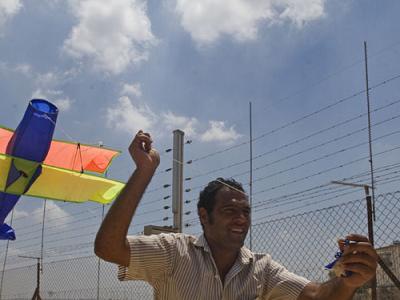
 Bassem Abu Rahme flying a kite (image from palestinechronicle)
B’Tselem – September 10, 2013
Four and a half years have passed since the killing of Bassem Abu Rahmeh by a tear gas canister fired at him directly from a short range. The death was documented by three video angles, but the Israeli state announced Monday it is closing the case citing lack of evidence
Military Advocate General (MAG) Maj. Gen. Danny Efroni decided to close the case file in the investigation of the circumstances of the killing of Bil’in resident Bassem Abu Rahmeh, citing lack of evidence. The MAG made this decision in late July, and it was recently conveyed to the Israeli High Court of Justice as part of an updating statement by the Office of the State Attorney in a petition filed by Subhiya Abu Rahmeh, Bassem’s mother, together with Bil’in Village Council and Israeli human rights organizations B’Tselem and Yesh Din.
According to the statement signed by Senior Deputy at the Office of the State Attorney, Att. Michal Michlin-Friedlander, and Assistant to the State Attorney, Att. Udi Eitan, also former Deputy State Attorney Yehoshua Lemberger had reached the same conclusion.
30-year-old Bassem Abu Rahmeh, a resident of the village of Bil’in, whose story was told in the film “Five Broken Cameras” nominated for Best Foreign Film in the Academy Awards, was killed in April 2009 after he was struck in the chest by an extended-range tear gas grenade during a demonstration against the Separation Barrier in his home village of Bil’in. Three video segments filmed during the demonstration prove that Abu Rahmeh was situated to the east of the barrier, did not act violently, and did not endanger the soldiers in any way. An analysis of the video footage of the incident, by visualization experts determined that the grenade was fired directly at Abu Rahmeh, in complete contravention of open-fire regulations.
In its response, the state did not explain the rationale behind its decision, limiting itself to the following laconic wording: “There is not enough evidence needed for criminal proceedings for adopting legal measures against any of the soldiers involved in the incident.” No information was given regarding the findings of the investigation, which the state argued had included “comprehensive and rigorous investigative actions,” or about the versions provided by the soldiers who had been questioned. Neither did the statement provide the contents of the opinions given by experts of the Israeli military and police and their interpretation of the findings disclosed by the video footage.
Ever since Bassem Abu Rahmeh was killed, his family – aided by NGOs Yesh Din and B’Tselem – has been continuously striving to have the truth of the incident brought to light and to have those responsible for their son’s death prosecuted. Their efforts have been repeatedly thwarted by the sluggish conduct of the MAG Corps. Due to the initial refusal by the MAG at the time to launch a Military Police investigation, the investigation was opened a year and half later than it should have. The foot-dragging and procrastination in the case have continued even once the investigation was launched over three years ago. Only a petition to the High Court of Justice finally brought about a decision in the case.
In response to the statement submitted by Office of the State Attorney, Att. Emily Schaeffer of Yesh Din’s legal team said: “The decision to close the file in the killing of Bassem Abu Rahmeh is unacceptable, particularly in view of the expert opinion that determined that the tear-gas grenade was fired directly at Abu Rahmeh from a close range. Despite three separate videos that recorded the killing of Bassem, the MP and police have failed to find the factors that caused the death of an unarmed demonstrator. The conduct of law enforcement bodies in this case is further proof of the feebleness of the authorities in cases of Palestinian casualties. Moreover, it seems that there might be no intention of finding out the truth or prosecuting the offenders even in extreme cases such as this, in which there is clear-cut and unambiguous evidence. Bassem’s family, together with B’Tselem and Yesh Din, will continue in its struggle to bring the parties responsible for his death to justice.”
Att. Yael Stein, Director of Research at B’Tselem, said in response: “The unbearable procrastination taken by the authorities in this case, and the fact that the MAG only made a decision due to a High Court Petition, once again demonstrate that the MAG Corps must adopt the recommendations of the Turkel Commission without delay. This includes determining a pre-defined schedule for each stage of the investigation, and ensuring that each stage is brief. Also, the statements made by investigative bodies about their decisions must include the reasoning underlying the decision so as to enable lodging effective appeals.”
Latin American States Denounce Any Possible Aggression against Syria
Al-Manar | September 8, 2013
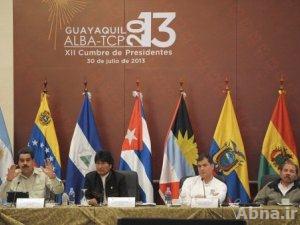 The nine Latin American states (ALBA) have condemned any possible aggression against Syria and announced the dispatching of humanitarian aid to the Syrian refugees in Lebanon.
“The Bolivarian alliance council in American denounces any possible strike against Syria,” ALBA Secretary General said in a statement from Venezuela.
“ALBA asks the U.S. to refrain from launching a military aggression against the Syrian people and government,” he added, accusing the US administration of resorting to the same strategies that it used in Iraq, Afghanistan and Egypt.
ALBA further decided to dispatch humanitarian aid, including foodstuffs, to the Syrian refugees in Lebanon.
Related articles
- At least one Syrian becomes a refugee every 15 seconds – expert (voiceofrussia.com)
- Lebanon opposes military attack against Syria: FM (theiranproject.com)
Yes, Syria and Hezbollah Will Hit Israel if US Strikes
By Sharmine Narwani | Al-Akhbar | 2013-09-06
Informed insiders have confirmed that Syria and Hezbollah plan to retaliate against Israel in the event of an American-led military attack on Syria. Says one: “if even one US missile hits Syria, we will take this battle to Israel.”
An official who spoke to me on the condition that neither his name or affiliation is published, says the decision to retaliate against Israel “has been taken at the highest levels within the Syrian state and Hezbollah.”
Why attack Israel after a US strike?
“Israel has been itching for a fight since their 2006 defeat by Hezbollah,” explains an observer close to the Lebanese resistance group. “They have led this campaign to draw the US into a confrontation with Syria because they are worried about being left alone in the region to face Iran. This has become an existential issue for them and they are now ‘leading’ from behind America’s skirts.”
The “Resistance Axis” which consists of Iran, Syria, Hezbollah and a smattering of other groups, has long viewed attacks on one of their members as an effort to target them all.
And Israeli aggression against this axis reached a new high in 2013, with missile strikes and airstrikes unseen for many years in the Levant.
Israel has reportedly conducted at least three separate, high profile missile strikes against Syria this year, effectively ending a 40-year ceasefire between the neighboring states. The last overt violation of this uneasy truce was in 2007 when the Jewish state destroyed an alleged nuclear site inside Syria.
Then two weeks ago, Israel launched its first airstrike in Lebanon since the 2006 war, bombing a Popular Front for the Liberation of Palestine–General Command (PFLP-GC) target in an entirely unprovoked attack. Earlier, four rockets had been launched into Israel from Lebanese territory, but an unrelated Al Qaeda-linked group took credit for that incident.
When asked whether Syrian allies Russia and Iran would participate in retaliatory strikes against Israel or other targets, the official indicated that both countries would back these efforts, but provided no information on whether this support would include direct military engagement.
The Russians have stated on several occasions that they will not participate in a military confrontation over Syrian strikes. Iran has not offered up any specifics, but various statements from key officials appear to confirm that strikes against Syria will result in a larger regional battle.
On Tuesday during an official visit to Lebanon, Iranian parliamentarian and Chairman of the (Majlis) Committee for National Security and Foreign Policy Alaeddin Boroujerdi told reporters: “The first party that will be most affected by an aggression on Syria is the Zionist entity.”
His comments follow a steady stream of warnings by senior Iranian officials, which have escalated in tenor as western threats to attack Syria have intensified.
“The US imagination about limited military intervention in Syria is merely an illusion, as reactions will be coming from beyond Syria’s borders,” said the Commander of the Islamic Revolution Guards Corps Major General Mohammad Ali Jafari last Saturday.
Even Iran’s Supreme Leader Ayatollah Ali Khamenei has stepped into the fray, warning the US and its allies: “starting this fire will be like a spark in a large store of gunpowder, with unclear and unspecified outcomes and consequences”.
Concurrent with these warnings, both Iran and Russia have been urging the West to avoid further confrontation and return to the negotiating table to resolve Syria’s 29-month conflict. But instead, western officials and diplomats in the Mideast have spent the past few weeks hitting up their regional sources for information on how Syria’s allies will react to a strike.
An unusual visit to Tehran by UN Under-Secretary-General for Political Affairs Jeffrey Feltman (a former senior US State Department official) was one such “feeler.”
According to several media outlets, the Iranians had a singular response to Feltman’s efforts to gauge their reaction to a US strike: if you are serious about resolving the Syrian crisis, you must first go to Damascus, and follow that by launching negotiations in Geneva.
Gunning for a fight
While Israel plays heavily in the background, by turns provoking and encouraging western military intervention in Syria, it publically denies any role in this business.
Just this week, Israeli President Shimon Peres attempted to distance the Jewish state from events in Syria by insisting: “It is not for Israel to decide on Syria, we are in a unique position, for varying reasons there is a consensus against Israeli involvement. We did not create the Syrian situation.”
He’s right about one thing. Any visible Israeli military intervention in Syria will likely raise the collective ire of Arabs throughout the region. But Peres is being disingenuous in suggesting that Israel hasn’t played a pivotal role in dragging the region to the brink of a dangerous confrontation.
In fact, since its establishment as a state, Israel has possibly never been more motivated to force a military confrontation in the Mideast:
The Arab uprisings, a shift in the global balance of power, increased isolation and the waning influence of Israel’s superpower US ally have all served to remind Israel that it stands increasingly alone in the Mideast in confronting its longtime adversaries – Iran, Hezbollah, Syria and various Palestinian resistance groups.
Before a US exit from the region becomes patently clear to one and all, Israel needs to disarm its foes – and it needs the Americans to do that. For years, the Israeli establishment has regularly threatened military strikes against Iran, in most part attempting to inextricably embroil Washington in this military venture.
Forcing ‘red line’ narratives into western political discourse – whether it be the use of chemical weapons in Syria or a civilian nuclear program in Iran – has become a clever way to commit allies to an Israeli military agenda.
When US President Barack Obama last week appeared to suddenly revise his plans to launch a strike on Syria by deferring the decision to Congress, Israel went into overdrive:
Two Israeli missiles were launched off the Syrian coast in the Mediterranean Sea to raise temperatures again. Whether this was meant to be veiled threat, a provocation, or an attempt to pin the deed on Syrians is unclear. What is certain is this: Russian early radar systems caught the activity and publicized it quickly to ward off misunderstandings that might trigger counterstrikes.
This quick reaction forced Israel – under US cover – to acknowledge it had participated in unannounced ballistic missile tests. The Iranians reacted very skeptically. Chief of Staff of the Iranian Armed Forces General Hassan Firouzabadi said the missiles were “a provocative incident” conveniently executed as western nations withdrew from plans to attack Syria, and called Israel “the region’s warmonger.” He further charged: “If the Russians had not traced the missiles and their origin, a Zionist liar would have alleged that they belonged to Syria in a bid to pave the way for breaking out a war in the region.
On an entirely different front, Israel has been amassing its considerable army of US supporters and lobbyists to ensure a compliant Congressional vote on strikes against Syria.
All its heavy hitters have now stepped up to push US lawmakers into backing military intervention, even though polls continue to show the majority of Americans rejecting strikes.
The Israeli lobbying effort has been particularly critical to ensure there is bipartisan consensus and that Obama’s Republican opponents join the bandwagon. To ensure this, the scope of the “surgical strikes” had to be expanded for GOP members opposed to a cursory punitive strike against Syrian government interests.
Key Republicans have since piled on, and already there are soundings of ‘mission creep.’ Obama told lawmakers on Tuesday that his plan “also fits into a broader strategy that can bring about over time the kind of strengthening of the opposition and the diplomatic, economic and political pressure required – so that ultimately we have a transition that can bring peace and stability, not only to Syria but to the region.”
This suddenly sounds remarkably like President George W. Bush’s plans to remake the Middle East. And it is everything Syria and its allies have both feared and suspected from the start.
Existential for you, existential for me
If ever there was a real ‘red line’ in the region, this is it. Any “limited” or “broad” military intervention in Syria is simply unacceptable to Syria, Iran, Russia, Hezbollah, China and a whole host of other nations that want to turn the page on US hegemonic aspirations in the region and beyond.
Washington has miscalculated in thinking that an attack in any shape or form would be palatable to its quite incredulous adversaries. They are all intimately familiar with the slippery slope of American interventionism and its myriad unintended consequences.
Israel, in particular, appears to be victim to a false sense of security. Analysts and commentators there seem to think that the lack of a Syrian military response to recent Israeli missile strikes is a trend likely to continue. Or that Hezbollah and Iran would have no ‘grounds’ to climb aboard a counterattack if Syria were attacked.
But the fact is that, to date, no member of the Resistance Axis has faced a collective western-Israeli-GCC effort to strike a blow at their core. This promised US-plus-allies strike against Syria makes their calculation an easy one: there is nowhere to go but headfirst into the fracas.
As Israeli warplanes pounded Lebanon during the 2006 war, then-US Secretary of State Condaleeza Rice got one thing right. Refusing to call for a ceasefire, Rice explained that battle was sometimes necessary to break free of the status quo and emerge with a new regional order. The carnage, in short, was simply “the birth pangs of a New Middle East” – something to endure in order to reach a desired outcome.
But in 2006, conditions were not yet ripe for an all-out confrontation on multiple fronts. Today’s confrontation, however, has all the ingredients to fundamentally shift the region in a clear new direction, depending on which side emerges victorious.
What Rice did not anticipate seven years ago was that a few thousand Hezbollah fighters could shake the region beyond Lebanon’s small borders in a mere 33 days – simply by emerging from battle with Israel, leadership and capabilities intact.
The US has never predicted outcomes successfully in the Middle East and is unlikely to do so this time given that its strategic and military objectives seem even more muddled than usual. What we do know is that Hezbollah Secretary-General Hassan Nasrallah has promised that the “next battle” will take place inside Israel’s borders and that he will fight proportionately this time – striking Israeli cities when Israel hits Lebanese ones.
On the Syrian front, Israel imagines a war-weary adversary. But the Syrian armed forces have the kinds of conventional weapons and ballistic missiles that can level a town in short shrift – that is not an outcome Israel has the capacity to endure.
In yet another corner is Iran, boasting a rare combination of military manpower, hardware, technology and tactical skills that Israel has never faced in any adversary on the battlefield. Russia looms large too – it may provide military intelligence to its allies or it may just use its clout in the UN Security Council to intervene at opportune moments in the fight. Either way, Moscow is a huge asset for the Resistance Axis – and will be joined by China to coach and calibrate responses to the fighting from the ‘international community.’
Meanwhile, as if unable to stop a ‘war trajectory’ once it starts, the US Senate’s Foreign Relations Committee has just voted to widen and deepen the scope of a US attack on Syria. The new goal? To “reverse the momentum on the battlefield” against the Syrian army and “hasten Assad’s departure.”
This is no different than Libya, Afghanistan or Iraq. Israelis and Americans need to understand that language and behavior threatening ‘regime-change’ gives their adversaries only one choice: to retaliate with all their capabilities and assets on all fronts. Washington just made this existential. No more games, no more rhetoric. Any strike on Syria will be ‘war on.’ In US military parlance: a ‘full-spectrum operation’ will be heading your way. And you can call it Operation “Tip of the Iceberg” out of sheer accuracy, for a change.
Sharmine Narwani is a commentary writer and political analyst covering the Middle East. You can follow Sharmine on twitter @snarwani.
Related articles
- The Israel Lobby and the Organized Jewish Community Want Regime Change in Syria (alethonews.wordpress.com)
- Israel concerned with US hesitation on Syria (alethonews.wordpress.com)
Will 1000 American ‘Human Shields’ Stop Another Criminal War?
By Franklin Lamb | Intifada | September 4, 2013
Damascus – A sort of roller coaster atmosphere pervades Damascus these days with “good” and “bad” news rising and falling, often by the quarter hour. Much of the population is monitoring closely the news and quickly expressing their interpretations of the latest media reports and rumors as well as predicting the fairly precise timing of the now assumed American attack on their country.
In the very popular, and normally crowded Abaa Coffee House on the edge of the old city in what is called the Sarugha section, students and others enjoy the fine cool mist, as Damascenes have done for years, that is sprayed from ceiling pipes to provide welcome relief from the 37 degree Celsius (98 degrees F) outside temperatures. Many are glued to their laptops and/or in animated conversation analyzing the likely extent and timing of the soon believed to be arriving American missiles.
This observer often meets interlocutors in the Abaa because it’s very pleasant, large with dozens of tables, cheap and two blocks from my hotel. I have noticed that common greetings are changing from “kif hallack” ” (how are you?) and “Arak lahekan” (see you later) to “Get home safely” and “Good luck with the checkpoints.”
But there is also a distinct growing esprit de corps and a broad coming together of much of the population here as the countdown to the American attack on Syria begins. An evident rallying around the Assad regime, which one presumes is the opposite of what the White House was hoping would result from its threats.
A good friend from the Syrian Arab Red Crescent Society (SARCS) an humanitarian organization doing amazing rescue, and medical services for Syrians and Palestinians during this expanding crisis, described one way that her friends are preparing for the American attack. “We gathered our important documents, birth, marriage certificate and passport and made photo copies. Then we leave them with friends in “safe” areas or even bury them somewhere. No one knows how bad the Americans will bomb us. At work we have been told during our final practice drill last saturday that the next siren will be the ‘real thing’ and we will do as we have planned for.” She added, “Many of my friends and family are leaving but it’s not easy and is very expensive now to go to Lebanon and they don’t want us– and my family has decided to stay in our home no matter what happens in the coming days.”
One common topic being discussed is the reluctance of the American public to attack Syria and how Obama can ignore it. “What kind of Democracy do you have that your President can ignore the will of the American public?” this observer is frequently asked. One soldier who is stationed with his unit just outside my hotel seemed to speak from his heart: “You Americans claim you are trying to help the Syrian people. Every child knows, both here and in your country I think, that the coming attack will make things much worse for the Syrian people and many others. The American people are good and we hope they can control their government, but we are preparing for the worst and there will be consequences you will come to regret as with Afghanistan, Iraq and Libya.”
The government here is assuring the public that Syria is ready for the American attack and that public services will continue. TV channels show around the clock images of heroic Syrian army exploits with martial and patriotic music. Youngsters, students and workers are gathering at presumed targets offering themselves as Human Shields in solidarity with their countrymen while challenging President Obama to bomb their beloved Syria.
Interestingly, an International Human Shield movement is coalescing according to informed sources here and abroad. One initiative is to bring 1000 Americans and thousands of others, to Syria within the next ten days to guard likely bomb sites reminding one of the International Solidarity Movement volunteer’s efforts in Occupied Palestine in order to try to protect homes of Palestinians from Government bulldozing.
Some redacted specifics have been disclosed to this observer from an international organizing committee working around the clock on this Human Shield initiative.
Some descriptive excerpts:
International Human Shields are planning on coming to Syria in solidarity with the Syrian people and in an effort to send a global message and hopefully deter an American attack next week…
Timing – While moves can be made fast and with all other key elements in place, time is not in our favor. Ten mores days for preparation would be ideal. The HS initiative assumes that it must be done in such a way that very little time lapse from the official announcement of the action to the actual arrival of the Human Shields on the ground in Syria…
Impact – In order to achieve a significant impact having at least 1000 Americans and several thousand international Human Shields deployed in Syria is the objective. With ideally at least one representative from every UN Member State, as evidence of the true ‘international community’ opposing the American attack.
The US activist-based steering committee is quickly bringing together professionals in IT, marketing, logistical planning and implementation, spokesperson(s), public relations, accounting, documentarians, and experienced project managers. Ferries from European ports are to be arranged to carry significant numbers of Human Shields from Major European cities. Ideally, several jumbo jets will be chartered to carry human shields from some of the world’s major cities and use of land convoys are under consideration.
An excerpt:
HS/Government Relations – The first objective of the enemies of Syria will be to portray Human Shields as nothing more than pawns of President Bashar al-Assad. This was precisely what the mainstream media did in 2003, presenting Human Shields as pawns of Saddam. In order for the Human Shields to have power they must be seen as independent supporters of the people of Syria who represent the will of the vast majority of people around the world who oppose the pending US-led western attack. The HS should however work with prominent leaders in the civilian sector of Syrian society and great effort should be made to produce daily news stories of the Human Shields and Syrian people working together to protect Syria from the ongoing foreign instigated aggression. There are once again many details here and these would need to be discussed and agreed if any action will be able to reach its full potential.
Strategy – The sites that Human Shields deploy to must be very well publicized and these sites must be identified as protected sites under the Fourth Geneva Convention. The White House is saying that they are not going to attack infrastructure (as they did with Iraq in 2003), but they must attack the infrastructure as the goal is to drive Syria into the stone age and make it so weak that Israel will through its agents eventually take Syria over. They know that the Syrian people and military cannot be defeated without massive attacks on the infrastructure.
So it is absolutely vital that all power plants, water treatment facilities, bomb shelters (if they exist), civilian communications sites, food storage sites and other such sites that are critical to the civilian population are the primary if not sole focus of sites for the HS to deploy. They cannot deploy to military sites, although I personally feel this is morally defensible, it will neutralize the power of the HS in the public relations realm and intelligent public relations is absolutely critical.
A comprehensive list of protected sites is to be produced immediately and these sites will need to be verified by the most independent sources we can manage to obtain. UN representatives or former representatives would be great, human rights attorneys, legal experts and others of this type are very useful.
There will be room to deploy to sites not specifically listed in the Fourth Geneva Convention, such as with ethnic and religious minority communities who are deathly afraid of the foreign invaders/terrorists. Special emphasis should be placed on Christian populations as the western audience sadly has more sympathy for Christians than Muslims.”
Our goal is to personalize the people of Syria and show their suffering through the eyes of the HS with effective daily reports to be uploaded on the Internet and reported by legitimate news agencies such as Press TV, RT and Telesur. A massive effort must be made to educate the public about the reasons for the Fourth Geneva Convention (FGC) and the imperial powers undeniable record of knowingly destroying the lives of ‘protected persons’ as defined in the FGC. There must be high quality, well-spoken Arabic/English speaking spokespersons.
We should be ready to provide evidence of any attack on such sites the moment it happens and have legal briefs prepared to immediately charge the aggressors with war crimes. This is why it is critical that the HS are almost exclusively at sites that are protected by the FGC.
The Action Plan concludes:
We cannot necessarily stop them from doing what they intend to do, but we can make their aggression harm them far more than Syria and its people in the end. Herein lays the power, using the enemies momentum against him in the most powerful way possible.
Time will tell which Americans will arrive first in Syria, the military or the American public. Many Syrians are today praying it will be the latter and have pledged to join them to defeat the coming aggression.
Franklin Lamb can be reached c/o fplamb@gmail.com
Related video
- ‘Hands off’: Syrians form human shields outside possible US strike targets (alethonews.wordpress.com)
‘Hands off’: Syrians form human shields outside possible US strike targets
RT | September 4, 2013
As the US Congress inches closer to a decision on a military strike on Syria, citing allegations that Assad forces used chemical weapons against the civilian population, activists in Damascus are stepping up their protest against possible attacks.
RT’s LIVE UPDATES on Syrian ‘chemical weapons’ crisis.
Damascene activists protesting possible US strikes on Syria set up a camp at the foot of Qasioun Mountain just outside the capital on Tuesday.
Qasioun Mountain, a symbol of Damascus and Syria, is home to many security and military buildings and institutions and thus is expected to be one of the targets for the airstrikes. Protesters rallying beside the place called themselves a “human shield” and hold banners featuring slogans such as “No more American bombing democracy” and “Hands off Syria”.
“We are here to express our loyalty to our country in the face of American threats. We don’t want what they did in Iraq over chemical weapons claims to be done in our country,” one of the rally participants told RT.
Related article
Colombia farmers’ uprising puts the spotlight on seeds
Against the grain | September 4, 2013
On 19 August, Colombian farmers’ organisations initiated a massive nationwide strike. They blocked roads, dumped milk on cars and basically stopped producing food for the cities. The problem? Farmers are being driven out of existence by the government’s policies.
The state provides almost no support for the small-scale farming sector.1 Instead, it embraces a social and economic model that serves the interests of a wealthy elite minority. Recent free trade agreements (FTAs) signed with the US and the EU are undercutting Colombian producers, who can’t compete with subsidised imports.2 The Colombian government has been actively promoting land grabbing by large corporations, many of them foreign (Monica Semillas from Brazil, Merhav from Israel, Cargill from the US), to promote export-oriented agribusiness at the expense of family farming oriented towards food sovereignty.
But the farming sector needs real support, especially in the form of access to land and lower costs of production, protestors argue. Otherwise, Colombian potato and coffee farmers, dairy and meat producers, not to mention small fishers, will not be able to keep up. They are being evicted and exterminated.
With their backs against the wall, a movement of mobilisation began in one part of the country in June and grew into a coordinated national action for August. The farmers’ strike was soon supported by other sectors: oil industry workers, miners, truckers, health sector professionals and others. On 29 August, ten days into the strike, more than 20,000 students joined the movement and shut down the capital city, Bogotá.
The response of the government was chaotic and contradictory. Police forces violently repressed and injured a lot of protestors, not to mention journalists. More than 250 people were arrested, including high-level union leader Hubert Jesús Ballesteros Gomez, mostly on trumped up charges.
A number of people on both sides lost their lives. At one moment the government recognised the farmers’ grievances as valid and offered some concessions. In another it claimed that the movement was infiltrated by the FARC. President Santos even went on TV and claimed that “the agrarian strike does not exist”. The following day, he was filmed from a helicopter, inspecting the skirmishes and tear gas which filled the streets of Bogotá.
The mobilisation has been extremely successful in opening up space for discussion, conscientisation, solidarity and resistance in Colombia. Students, for instance, were keen to support the farmers and back their demands. They rallied loudly against GMOs and for food sovereignty. But they also wanted to put forward their own demands for free public education, nudging the mobilisation beyond agrarian concerncs into a broader wave of social pressure to change current Colombian policies.
Law 970
Seeds emerged as one highly visible issue. Under the FTA signed with Washington, as well as that signed with Brussels, Bogotá is required to provide legal monopoly rights over seeds sold by US and European corporations as an incentive for them to invest in Colombia. Farmers who are caught selling farm-saved seeds of such varieties, or simply indigenous seeds which have not been formally registered, could face fines or even jail time.3 As is the case in many other countries throughout the world, this criminalisation of farmers’ and indigenous people’s rights to save, exchange and sell seeds puts the country’s biodiversity and cultural heritage at risk.
While it’s true that the Colombian government has been moving in this direction for many years, and agreeing to such policies as part of its membership in the Andean Community or the World Trade Organisation, many people point out that it is only since the signing of the US and EU FTAs that the government has begun seriously implementing them.
In 2011, the Colombian government authorities stormed the warehouses and trucks of rice farmers in Campoalegre, in the province of Huila, and violently destroyed 70 tonnes of rice that it said were not processed as per the law. This militarised intervention to destroy farmers’ seeds shocked many, and inspired one young Chilean activist, Victoria Solano, to make a film about it. The film is called “9.70” because that is the number of the law adopted in 2010 that articulates the state’s right to destroy farmers’ seeds if they don’t comply.4
Today, thanks to the force, tenacity and justness of the farmers’ protest, people from all walks of life in Colombia are discussing that film, as can be seen in the mass media, social networks and the streets, and asking why the government is pursuing such senseless policies.
Support the movement
There is no question that Colombian farmers can feed the country very well, in a way that provides jobs, dignity and a healthy environment. But the government is too firmly attached to an economic model that caters to crony interests and holds no place for small-scale family farming. We should all support the popular agrarian struggle in Colombia to turn that model around. It’s not too late.
As one small concrete action, the documentary film “9.70” — which you can watch online in Spanish at http://youtu.be/kZWAqS-El_g — is seeking funds to produce a version with English subtitles so that more people around the world can understand what the Colombians farmers are facing and support them to defeat such policies. The smallest contribution helps. Please go to http://idea.me/proyectos/9162/documental970 to participate. The deadline is 10 September!
As another meaningful action, the Latin American Coordination of La Via Campesina are seeking international solidarity initiatives to support the strike. Please go to http://goo.gl/9u6RXJ to learn more. Again, time is of the essence!
Beyond Colombia, the battle over similar seeds legislation is raging right now at very high political levels, and across the countryside, in Chile and Argentina as well. One concern is that some of the more aggressive elements adopted by the government of Colombia could infiltrate other Latin American countries as well. The need to scrap these laws is truly urgent indeed!
Going further:
- “La historia detrás del 970“, Semana, Bogotá, 24 August 2013
- Grupo Semillas, “Colombia: Las leyes que privatizan y controlan el uso de las semillas, criminalizan las semillas criollas“, Bogotá, 26 August 2013
- Julia Duranti, “A struggle for survival in Colombia’s countryside“, 30 August 2013
Visit the bilaterals.org website for more coverage (in English, French and Spanish) of the general agrarian strike and the fight over Law 970
For more information about the struggles around the seed laws in Colombia, please contact Grupo Semillas (“Seeds Group”) at semillas@semillas.org.co or visit their website http://semillas.org.co/
To learn more about the political battle currently taking place in Chile, please get in touch with Anamuri, the National Association of Rural and Indigenous Women, at secretariag@anamuri.cl
For information about what is happening in Argentina, please contact Diego Montón at the Latin American Coordination of La Vía Campesina, at secretaria.cloc.vc@gmail.com.
Notes
1 Almost one-third of the Colombian population lives in the countryside and nearly 60% of those in the rural areas live, to some extent, in hunger. See Paro Nacional Agrario y Popular, Pliego de peticiones.
2 The effects are just starting, but they are real. US agricultural exports to Colombia shot up 62% in the first year of the agreement, while Colombian farm exports to the US went down 15%. (See USTR, and Portafolio)
3 To be registered and certified, seeds need to meet criteria of genetic uniformity and stability, to suit agroindustrial processes. This excludes, by definition, peasant seeds — or criollo varieties, as they are called in Colombia — which tend to be diverse, adaptive and dynamic. Under the current rules in Colombia, if a farmer wants to plant criollo seeds, s/he has to get authorisation from the government, can only do it once, can only do it on five hectares or less and must consume the entire harvest at home (cannot sell it on the market).
4 See the film’s Facebook page and on Twitter look up #NoMas970. In the three years of Law 970 so far (2010-2012), the government rejected or destroyed nearly 4,000 tonnes of seeds.
Featured Video
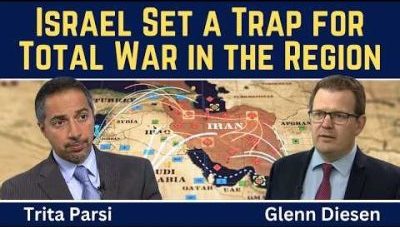
Trita Parsi: Israel Set a Trap for Total War in the Region
or go to
Aletho News Archives – Video-Images
Book Review
Why the War on Conspiracy Theories Is Bad Public Policy
By Kevin Barrett • Unz Review • February 1, 2019
 A Review of Conspiracy Theories and Other Dangerous Ideas by Cass Sunstein (based on an earlier paper co-authored with Adrian Vermeule); In Defense of Troublemakers: The Power of Dissent in Life and Business by Charlan Nemeth; and Conspiracy Theories and the People Who Believe Them, edited by Joseph E. Uscinski
On January 25 2018 YouTube unleashed the latest salvo in the war on conspiracy theories, saying “we’ll begin reducing recommendations of borderline content and content that could misinform users in harmful ways—such as videos promoting a phony miracle cure for a serious illness, claiming the earth is flat, or making blatantly false claims about historic events like 9/11.”
At first glance that sounds reasonable. Nobody wants YouTube or anyone else to recommend bad information. And almost everyone agrees that phony miracle cures, flat earthism, and blatantly false claims about 9/11 and other historical events are undesirable.
But if we stop and seriously consider those words, we notice a couple of problems. First, the word “recommend” is not just misleading but mendacious. YouTube obviously doesn’t really recommend anything. When it says it does, it is lying. … continue
Blog Roll
 Aletho News
- Araghchi blasts ‘parasitic’ alliance as US taxpayers pay for Israel’s war on Iran
- Easy fix for Europe’s chaos? Stop fueling war against Russia
- Putin’s key remarks on peace talks and Europe’s ‘schizophrenia’
- Trita Parsi: Israel Set a Trap for Total War in the Region
- Trump’s Iran war is on an Israeli leash
- Saudi oil boss issues global supply warning
- Riyadh Says Its Oil System Is Intact. The Numbers Say Otherwise.
- Trump and Netanyahu Want to “Finish the Job” on Iran
- US ‘one-sided dictation’ not Iran’s beliefs makes rational talks impossible: Baghaei
- Iran’s Next Strike May Not Explode. It Could Shut You Down /Col Doug Macgregor
- If Americans Knew
- BBC senior broadcaster speaks out on Gaza coverage
- Netanyahu vows vast West Bank invasion in response to 20-minute skirmish that left 2 Israeli soldiers and 2 Palestinian fighters dead
- Tied up and tortured: Israel using US-made electroshock weapons on Palestinian detainees
- The outsourced risk: how newsrooms rely on Gaza’s freelancers without protecting them
- Gaza bakeries forced to shut as Israel blocks flour shipments
- Gaza’s breast cancer patients face a deadly wait for treatment amid Israel’s genocide
- DAILY UPDATE: Latest essential news on Palestine, Israel, & region
- The Israel Lobby’s Changing Fortunes
- AIPAC has become such a political liability that it’s shifting to a more “nimble” approach to buying politicians
- At least 160 Israeli settler attacks in 2 weeks
- No Tricks Zone
- E-Cars Reduce CO2 Emissions By Only 41% Compared To Internal Combustion Engine Vehicles
- Predictions Made By Renowned Climate Professor Over Past Decades Have Been Proven To Be Poor
- New Study Suggests Large Regions Of The Pacific Ocean Have Been Cooling For The Last 80 Years
- Germany’s Green Energy Debacle: High Energy Costs Force Kahla Porzellan to Close After 182 Years!
- New Study: 50 Years Of The Most Aggressive ‘Net Zero’ Policies Can Only Affect The Global Climate By 0.03°C
- US September “Heat” Was No Record…Many Records Set Decades Ago
- Latest European Green Energy Debacle; Portugal’s Largest Flagship Solar Park Insolvent!
- Green Energy Debacle: German Expert Professor Fritz Vahrenholt Warns Of Severe Economic And Social Consequences
- Two More Paleo Reconstructions Affirm Meters-Higher Sea Levels Across Ireland, Brazil 7000-6000 Years Ago
- New Study: Earth And Venus Surface Warmth Largely Explained By Convection And Lapse Rate, Not CO2 Or Radiation

