Years before emerging as Kiev’s top private weapons trafficker, ex-legislator Serhiy Pashinsky played a key role in the 2014 US-backed coup which toppled Ukraine’s democratically-elected president and set the stage for a devastating civil war. Though the notoriously corrupt former Ukrainian parliamentarian was condemned by President Volodymyr Zelenskyy as a “criminal” as recently as 2019, a lengthy exposé by the New York Times has now identified Pashinsky as the Ukrainian government’s “biggest private arms supplier.”
Perhaps predictably, the report makes no mention of evidence implicating Pashinsky in the 2014 massacre of 70 anti-government protesters in Kiev’s Maidan Square, an incident which pro-Western forces used to consummate their coup d’etat against then-President Viktor Yanukovych.
In an August 12 report on Ukraine’s new weapons-sourcing strategy, the New York Times alleged that “out of desperation,” Kiev had no option but to adopt increasingly amoral tactics. The shift, they say, has driven up prices of lethal imports at an exponential rate, “and added layer upon layer of profit-making” for the benefit of unscrupulous speculators like Pashinsky.
According to the Times, the strategy is simple: Pashinksy “buys and sells grenades, artillery shells and rockets through a trans-European network of middlemen,” then “sells them, then buys them again and sells them once more”:
“With each transaction, prices rise – as do the profits of Mr. Pashinsky’s associates – until the final buyer, Ukraine’s military, pays the most,” the Times explained, adding that while using multiple brokers may technically be legal, “it is a time-tested way to inflate profits.”
As the seemingly endless supply of cash from Western taxpayers provides a bonanza for arms manufacturers such as Raytheon and Northrop Grumman, it similarly benefits war profiteers like Pashinsky. His company, Ukrainian Armored Technology, “reported its best year ever last year, with sales totaling more than $350 million” — a whopping 12,500% increase from its $2.8 million in sales the year before the war.
Pashinsky is not the only racketeer benefitting from the elimination of anti-corruption measures in wartime Ukraine. Several suppliers previously placed on an official blacklist after they “ripped off the military” are now free to sell again, according to the Times investigation. The outlet downplayed this as an unfortunate, but ultimately necessary measure.
“In the name of rushing weapons to the front line, leaders have resurrected figures from Ukraine’s rough-and-tumble past and undone, at least temporarily, years of anticorruption [sic] policies,” the Times asserted, describing “the re-emergence of figures like Mr. Pashinsky” as “one reason the American and British governments are buying ammunition for Ukraine rather than simply handing over money”:
“European and American officials are loath to discuss Mr. Pashinsky, for fear of playing into Russia’s narrative that Ukraine’s government is hopelessly corrupt and must be replaced.”
However, even the seemingly critical Times report overlooks a key aspect of Pashinsky’s unsavory biography. Conspicuously absent from the coverage was any explanation of his role in carrying out the infamous massacre of anti-government activists and police officers in Kiev’s Maidan Square in late February 2014.
A defining moment in the US-orchestrated overthrow of Ukraine’s elected government, the death of 70 at the hands of mysterious snipers triggered an avalanche of international outrage that led directly to the ouster of President Viktor Yanukovych. Even today, these killings officially remain unsolved.
However, firsthand testimony by individuals who claimed to have helped carry out the false flag attack suggest Kiev’s most prolific gun runner was intimately involved in the grisly affair.
Maidan massacre organizer ‘takes no prisoners’
In November 2017, Italy’s Matrix TV channel published eyewitness accounts by three Georgians who say they were ordered to kill protesters by Mamuka Mamulashvili. Then the top-ranking military aide to Georgian president Mikhael Saakashvili, Mamulashvili later founded the infamous mercenary brigade known as the Georgian Legion, whose fighters were widely condemned after they published a gruesome video of themselves gleefully executing unarmed and bound Russian soldiers in April 2022.
The documentary, “Ukraine: The Hidden Truth,” features an Italian journalist’s interviews with three Georgian fighters allegedly sent to orchestrate the coup. All described Pashinsky as a key organizer and executor of the Maidan massacre, even alleging the corrupt arms dealers provided weapons and selected specific targets. The film also featured footage of him personally evacuating a shooter from the Square, after they had been caught with a rifle and a scope by protesters and surrounded.
One of the Georgian fighters recalled how he and his two associates arrived in Kiev in January, “to arrange provocations to push the police to charge the crowd.” For almost a month, however, “there were not many weapons around,” and “molotov [cocktails], shields and sticks were used to the maximum.”
This changed around mid-February, they said, when Mamualashvili personally visited them alongside a US soldier named Brian Christopher Boyenger, a former officer and sniper in the 101st Airborne Division, who personally gave them orders they “had to follow.”
A documentary by Italy’s Matrix channel contains eyewitness testimony implicating an American military instructor in Ukraine’s 2014 Maidan massacre.
Pashinky then personally moved them along with sniper rifles and ammunition to buildings overlooking Maidan Square, they alleged. At that point, Mamualashvili reportedly insisted that “we have to start shooting, so much, to sow some chaos.”
So it was that the Georgian fighters “started shooting two or three shots at a time” into the crowd below, having been ordered to “shoot the Berkut, the police, and the demonstrators, no matter what.” Once the killing was over, Boyenger moved to the Donbas front to fight in the ranks of the Georgian Legion, which Mamulashvili commands to this day.
In the meantime, Ukrainian journalist Volodymyr Boiko, who headed the civic council of the Prosecutor General Office of Ukraine after Maidan, has alleged that in order to obscure his role, Pashinsky personally hand-picked the figures leading the official investigation into the massacre, and even bribed the prosecutor who headed it.
Despite these shocking claims, Pashinsky’s involvement in the Maidan massacre has never been officially investigated, let alone punished, and his most recent experiences with the Ukrainian judicial system suggest it is unlikely to be heavily scrutinized by officials in Kiev. While a member of Ukraine’s Verkhovna Rada, he was arrested for shooting and wounding a pedestrian in a traffic-related dispute, but was ultimately acquitted in 2021.
When Israeli journalists confronted Pashinsky about his role in the Maidan massacre, the arms dealer warned that they would be tracked down in their home country, where his associates would “tear them apart.” They could be forgiven for believing it was not an idle threat; there is a troubling tendency for Pashinky’s detractors to end up viciously beaten or shot dead in the street.
The US appears to be less and less concerned about the risks of escalation in its proxy conflict with Russia. In yet another irresponsible and anti-humanitarian maneuver, the Biden government announced its decision to send depleted uranium (DU) weapons to the Kiev regime. As is well known, these weapons are extremely dangerous for everyone involved in the conflict, including the soldiers who use them. But the western side does not seem to care about these issues, planning only to prolong hostilities as long as possible.
The announcement was made on September 6, with Pentagon’s spokespersons informing the media that DU munitions will be included in a new military aid package valued at 175 million dollars. The munitions are expected to be used on more than thirty M1 Abrams tanks previously shipped to Ukraine. In addition to radioactive weapons, artillery, anti-tank equipment and other types of arms are also included in the package.
Although the US has already taken several escalating measures and violated many Russian red lines, this is the first time that the country has announced its intention to send radioactive shells to Ukraine. So far, only the UK has sent DU weapons to Kiev. With the US assisting in this supply, the situation worsens significantly, removing any hope of easing tensions in the short term.
As well known, the effects of these weapons on human health are disastrous. There are several reports about the negative impact of DU ammunition on the lives of soldiers and civilians in the regions where it was used. Cancer, fetal deformity, deficiency of fertility and several other diseases are linked with the handling of DU ammunition. Commenting on the arrival of these weapons in Ukraine months ago, Doug Weir, an expert linked to the Conflict and Environment Observatory, explained that “[DU munitions] fragment and burn, generating chemically toxic and radioactive DU particulate that poses an inhalational risk to people.”
Despite evidence of health problems caused by DU arms, they are considered “low” risk by the British and Americans. This is why they were used on a large scale in NATO’s invasions against Serbia and Iraq, generating thousands of victims. The excuse for considering them “low risk” is that depleted uranium has a low radiation level, but this does not appear to be a solid argument, as obviously it does not have to be highly radioactive to be toxic and dangerous to human health.
Another important aspect to be discussed is how to classify these weapons according to international law. Since they are radioactive, there are experts who believe it appropriate to classify them in the same way as nuclear weapons. Other experts consider this interpretation exaggerated, since the radiation level of DU ammunition is low, but even so, there seems to be a consensus that the correct thing would be to ban them given their risks and their little strategic relevance.
These ammunitions are generally used to pierce armor vehicles and hit tanks. Despite giving a certain advantage to the side that uses them, their role can normally be performed on the battlefield by other types of weapons, which do not emit substances that are so toxic to human health. Russia, for example, has been efficient in neutralizing enemy tanks using artillery, drones and mines, without any radioactive substance. So, these weapons are obviously replaceable by other less dangerous ones, which is why they should be banned once and for all.
In addition to a lack of concern for human health and the environment, the American attitude also reflects a kind of “despair”. The US is running out of conventional weapons to send to Kiev, which is why it has recently started sending banned weapons, such as cluster munitions, and now even radioactive ones, such as DU. With the massive destruction of NATO equipment on the battlefield, Washington is becoming unable to continue producing conventional weapons for its own forces and for Kiev simultaneously, so it is now turning to controversial and illegal arms in the Ukrainian aid packages.
On Russia’s side, the stance remains one of avoiding escalation and trying to neutralize the radioactive threat with high-precision strikes. Most of the DU ammunition previously supplied by the British was prevented from being used on the battlefield due to the Russian attack on Khmelnitski in May, which destroyed the depot where the weapons were stored. With this kind of high-precision strike, Moscow prevents these ammunitions from being used against innocent civilians, who are the main targets of the Kiev regime.
The Russian response could be much tougher, even nuclear, since DU ammunition can be considered nuclear weapons, as they do not have specific regulation in international law. However, unlike the West, Moscow continues to maintain a posture of avoiding escalation as much as possible.
Lucas Leiroz, journalist, researcher at the Center for Geostrategic Studies, geopolitical consultant.
The UN condemned the use of depleted uranium ammunition on Wednesday, after the US government said it would send Ukraine a number of such rounds for M1 Abrams tanks as part of a $175-million military aid package.
“We are against the use of depleted uranium ammunition anywhere in the world,” Farhan Haq, the deputy spokesman for UN Secretary-General Antonio Guterres, told TASS.
Haq’s comments came after the Pentagon revealed that an unspecified number of 120mm DU rounds will be sent to Ukraine as part of the newest package of military assistance. The anti-tank rounds are intended for use by the 30-odd M1 Abrams tanks promised to Kiev by the White House in January. The first batch of tanks are supposed to be delivered later this month.
Washington is following in London’s footsteps in providing the controversial munitions to Kiev. The UK sent a number of DU rounds to Ukraine earlier this year, intended for use with its Challenger 2 tanks. The delivery of DU ammunition was teased by the Wall Street Journal in June and leaked to Reuterslast week.
The British military dismissed Moscow’s objections to the use of the toxic heavy metal by saying the ammunition had “nothing to do with nuclear weapons or capabilities.” The US has also insisted the munitions are not radioactive, citing studies by the International Atomic Energy Agency (IAEA) that DU residue “does not pose a radiological hazard to the population of the affected regions.”
Critics who seek to ban DU ammunition have pointed to skyrocketing rates of cancer and birth defects in places like Iraq and Serbia, claiming that uranium dust is toxic when handled or inhaled.
Anonymous British and American officials have glibly dismissed Russian concerns about environmental contamination, suggesting instead that Moscow was afraid of the “highly effective” rounds.
The US and its allies have sent over $100 billion worth of weapons, ammunition and military equipment to Ukraine over the past 18 months, while insisting that this does not make them a party to the conflict. These deliveries have included cluster munitions banned by most NATO members. Ukraine reportedly has to account for their use directly to the Pentagon. Russia has documented multiple instances in which such ordnance was used against civilian targets.
The U.K.’s Royal Society — acclaimed as the world’s oldest scientific academy — last week issued a report saying there was “clear evidence” that lockdowns, masks, contact tracing, travel restrictions and other nonpharmaceutical interventions (NPIs) were effective at reducing COVID-19 transmission “in some countries.”
However, in an article published Wednesday in UnHerd, Kevin Bardosh, Ph.D., research director at Collateral Global — which is “dedicated to researching, understanding and communicating the global impacts of policy responses to the COVID-19 pandemic” — called the report “deeply flawed,” saying it revealed “an unfortunate detachment from reality in our prestigious scientific institutions.”
Bardosh called out the report, particularly for its use of the word “unequivocally,” which stated:
“In summary, evidence about the effectiveness of NPIs applied to reduce the transmission of SARS-CoV-2 shows unequivocally that, when implemented in packages that combine a number of NPIs with complementary effects, these can provide powerful, effective and prolonged reductions in viral transmission.”
Bardosh, whose work has focused on the epidemiology and control of human, animal and vector-borne infectious disease in over 20 countries, is co-author of more than 50 peer-reviewed publications.
In this 2022 analysis of the unintended consequences of COVID-19 vaccine policy, published in BMJ Global Health, Bardosh and co-authors concluded: “mandatory COVID-19 vaccine policies have had damaging effects on public trust, vaccine confidence, political polarization, human rights, inequities and social wellbeing.”
Failure to ‘evaluate the harmful consequences’ of policies
Bardosh said the central problem with the Royal Society report — and similar work like last year’s Lancet Commission report and Nature’s review — is that they fail to comprehensively evaluate the harmful consequences of pandemic policies.
Instead they “exclude or minimize the uncomfortable outliers and data that question orthodoxy and sidestep the hard policy questions.”
Without such critical inquiry, “simple narratives and comfortable popular projections” become entrenched, said Bardosh, in part by the mainstream media’s constant repetition of messages — like “masks worked” and “lockdowns slowed the spread” — and by admonitions to not question the conclusions or the authorities or institutions responsible for pushing them.
Among the most glaring yet unexamined consequences, according to Bardosh, are the hundreds of millions of people pushed into poverty and food insecurity by COVID-19 pandemic mandates and the lost educational opportunities for children.
In another article in UnHerd, Bardosh called out the U.K. COVID-19 inquiry — after more than 40 child rights charities and advocates issued a “scathing indictment” — saying it “must address the harms to children,” and that “lockdown ‘experts’ need to be held to account.”
Bardosh wrote:
“Children were not vectors of disease, despite pervasive media propaganda that toddlers would kill grandma. They were at minuscule risk from severe outcomes. Schools were never places of high transmission, something known as early as April 2020.
“Yet the expert classes, media and politicians hyped the risk to kids, dressing it up in a garb of unquestionable moralism that fed on our deepest fears: hurting children.”
What’s wrong with the Royal Society analysis?
The Royal Society report found individual NPIs in isolation had no effect on transmission, and it considered only the reduction of transmission in its overall analysis, not the illness or death outcomes, Bardosh pointed out.
In its analysis of lockdown and social distancing data, the Royal Society inconsistently applied targeting of time periods and effect sizes, and failed to distinguish between voluntary and mandated behavior change, he said.
Bardosh further criticized the report for relying heavily on observational studies from high-income countries and for cherry-picking cases from countries like South Korea, New Zealand and Hong Kong while ignoring those from Sweden, India, Haiti and Nicaragua.
“For the 17% of the world that could stay home (about 500 million people) during the height of global lockdown, reports are now written that render the other 83% invisible,” he wrote.
The report’s review of the evidence on masks, noted Bardosh, contradicts the recently updated meta-analysis of 78 randomized control trials (RCTs) by Cochrane which, while admitting the flaws in the study, nonetheless found “the pooled results of RCTs did not show a clear reduction in respiratory viral infection with the use of medical/surgical masks” and “wearing N95/P2 respirators … may make little to no difference in how many people catch a flu-like illness.”
In his article last week about mask mandates, Bardosh also cited the recent RCT studies of community-wide cloth masking in Bangladesh and Guinea-Bissau during the pandemic, which found little to no benefit from the interventions.
Bardosh wrote:
“Before Covid, population-wide medical masks were not viewed as a particularly effective tool for respiratory viruses. In a 2018 address at the National Academy of Medicine, science writer Laurie Garrett stated that ‘the major efficacy of a mask is that it causes alarm in a person and so you stay away from each other.’”
The many downsides of facemask use also remained unexplored in the report. In his masking article Bardosh wrote:
“Oddly, the pro-mask narrative ignores the … harmful effects on social and emotional cognition, the toxicity of poorly manufactured masks, environmental pollution, psychological and physical discomfort (especially in people with a history of trauma or abuse), as well as increased social conformity to illogical bureaucracy and greater acceptance of mass surveillance technologies.”
Collateral Global in April brought together a group of 30 scholars, activists and experts from across the globe to discuss the impacts of pandemic restrictions in low- and middle-income countries — many of which were not considered in the Royal Society study, according to Bardosh.
They issued a report calling for focusing on human rights and centering local actors’ knowledge and experience, disaggregating risk based on local conditions, consistent public investment in healthcare across the world, open and accurate information flow from central authorities to regional areas and back, and for governments to avoid unnecessary and unworkable restrictions on movement, freedoms and the economy.
They also called out the acceleration of the global trend toward authoritarianism, the unlawful granting of emergency powers to the state and the manipulation of public opinion through the exploitation of fear.
Bardosh warned of a global policy “domino-effect” where lockdown policymaking in major countries invariably leads, through political pressure, to the herding of lower-income countries into the same mandates, regardless of the social and economic harm.
A new ‘lockdown doctrine’?
Despite the shortcomings of the Royal Society report, it is already being used as a rallying point for a new global preparedness vision, according to Bardosh, to make sure that NPIs such as lockdowns are rolled out early in the next pandemic.
This is part of the 100-day mission roadmap promoted by the Coalition for Epidemic Preparedness (CEPI), Bardosh said.
CEPI, a global partnership of the Bill & Melinda Gates Foundation, Wellcome Trust and the World Economic Forum (WEF), was launched in 2017 in Davos, Switzerland, home of the WEF.
CEPI is closely connected to efforts to develop a vaccine for “Disease X,” raising over a billion dollars from governments and organizations such as the Gates Foundation.
According to the 100 Days website, “In preparing for Disease X, it’s important to be clear about the knowns and the unknowns: The X in ‘Disease X’ stands for everything we don’t know” and “What we do know is that the next Disease X is coming and that we have to be ready.”
CEPI recently hosted the Global Pandemic Preparedness Summit with the U.K. government “to explore how we can respond to the next ‘Disease X’ by making safe, effective vaccines within 100 days,” stating it has a $3.5 billion “pandemic-busting plan” that “will kickstart and coordinate this work.”
According to the Daily Mail, countries have pledged $1.5 billion for this plan.
Bardosh called this “our new lockdown doctrine.”
In a June article, he wrote that this doctrine represents the consolidation of the world’s resources toward pandemic preparedness and building “the critical infrastructure for rapid lockdown,” and that “Shutting down harder and faster next time is the wrong idea.”
Bardosh wrote:
“Sir Jeremy Farrar, previous director at the Wellcome Trust and current WHO [World Health Organization] Chief Scientist, warned the inquiry not to be complacent in our ‘new pandemic age.’
“Views expressed this week sounded similar to those outlined in Bill Gates’s recent book, ‘How to Prevent the Next Pandemic.’ The Gates Foundation has become the WHO’s second largest donor, giving it an oversized influence in determining the shape of future pandemic responses.
“In his book, Gates outlines a plan echoed so far in the U.K. inquiry: lock down fast and make reopening dependent on a vaccine.”
Bardosh warned the successful rollout of lockdowns, vaccines and therapeutics would require “mechanisms to shape public opinion, curtail civil liberties and deploy massive government spending programs.”
Bardosh sees the Royal Society report — driven by “powerful interests, spin and egos” — functioning as just such a mechanism, forming the latest brick in the wall of a new and expanding global command-and-control system.
“We have seen in the years since 2020,” he wrote, “that once you impose a slew of government mandates, repealing them is just as difficult.”
Bardosh hopes that “skeptical academic oddballs” like him can make enough noise to make a difference.
John-Michael Dumais is a news editor for The Defender. He has been a writer and community organizer on a variety of issues, including the death penalty, war, health freedom and all things related to the COVID-19 pandemic.
Michael Nevradakis, Ph.D., based in Athens, Greece, is a senior reporter for The Defender and part of the rotation of hosts for CHD.TV’s “Good Morning CHD.”
To this day — almost 60 years after the assassination of President John F. Kennedy — it would be impossible to convict any particular official of the U.S. national-security state of having participated in the plot to assassinate Kennedy. That’s because there simply is insufficient evidence to convict any one of them beyond a reasonable doubt.
Oh, sure, there is more than sufficient circumstantial evidence to convict some national-security officials of having had a motive to kill Kennedy, the motive being that they concluded that his policies posed a grave threat to “national security.” But motive would be insufficient to garner a criminal conviction in a court of law. The prosecutor would also have to show that the defendants actually participated in a plot to assassinate Kennedy.
However, if it were possible to indict the U.S. national-security establishment for the assassination, a prosecutor could establish guilt beyond a reasonable doubt. That’s because of the two central points that I set forth in my books The Kennedy Autopsy and An Encounter with Evil: The Abraham Zapruder Story.
First, the evidence establishes beyond a reasonable doubt that the military establishment conducted a fraudulent autopsy on Kennedy’s body on the very evening of the assassination.
Second, the evidence also establishes beyond a reasonable doubt that the CIA produced a fraudulent copy of the Zapruder film of the assassination on the Sunday following the Friday assassination.
At the risk of belaboring the obvious, there is no innocent explanation for a fraudulent autopsy or a fraudulent film. They necessarily convict the national-security establishment of the assassination itself. There is no way around that.
However, that leaves some people frustrated because they feel that the individual plotters within the national-security establishment went to their death beds having gotten away without being convicted and punished for their crime of having orchestrated the assassination of a U.S. president.
What they fail to realize, however, is that under U.S. national-security law, there is no reasonable possibility that those officials would have been convicted, even if the evidence conclusively established their guilt.
Here is why this is true.
The criminal prosecution of those military and CIA officials would have taken place in Dallas County. That’s because the JFK assassination was a murder case under Texas state law. The federal government had no jurisdiction over the crime, given that it was not a federal offense to assassinate a president at that time.
Let’s assume that the Dallas County prosecutor had more than sufficient evidence to convict those officials. Let’s assume hypothetically, for example, that he had a tape recording of the defendant’s planning the assassination. Let’s go even further and assume that the plotters, faced with that tape recording, openly, proudly, and patriotically confessed to having orchestrated and planned the assassination in order to protect “national security” from a president whose policies, they said, constituted a grave threat to “national security.”
Despite their confession, those officials would still not have been convicted under U.S. national-security law.
The defendants would have petitioned to remove the case to a federal district court, arguing that they were operating within the course and scope of their authority as officials of the national-security establishment when they orchestrated and planned the assassination.
The officials would have argued that the Kennedy assassination was nothing more than another regime-change operation, one based on the same grounds as other regime-change operations — that is, the protection of “national security” from a political leader whose policies posed a grave threat to “national security.”
They would have shown Kennedy’s betrayal of the CIA-trained Cuban exiles at the Bay of Pigs, his rejection of Operation Northwoods, his resolution of the Cuban Missile Crisis that left Cuba permanently in communist hands, his befriending the Soviet Union in his Peace Speech at American University, his defense of the civil-rights movement that was considered to be a communist front, his Nuclear Test Ban Treaty with the Soviets, his order to withdraw U.S. troops from Vietnam, his outreach to the Cuban communist regime, and, most important, his determination to move America in a direction that was totally different from that desired by the U.S. national-security establishment. (See FFF’s book JKF’s War with the National-Security Establishment: Why Kennedy Was Assassinated by Douglas Horne.)
Undoubtedly, the federal judge would have granted the removal petition.
At that point, the officials would have sought immunity for what they had done. They would have shown that the removal of Kennedy from office was a national-security regime-change operation, no different from the U.S. regime-change operations conducted in Iran in 1953, Guatemala in 1954, and the Congo in 1961.
There is no question but that the federal judiciary, including the U.S. Supreme Court, would have upheld their claim of immunity and dismissed the prosecution.
How do we know that this would have happened? Because the federal courts have made it clear that they lack the jurisdiction, much less the competence, to second-guess any regime-change operation carried out by the U.S. national-security establishment. Thus, if a citizen of Iran, Guatemala, or Congo filed suit for wrongful deaths arising from those regime-change operations, the federal courts would have summarily dismissed the suits, holding that when it comes to regime-change operations, the national-security establishment is sovereign and supreme and that officials operating within the course and scope of their authority are immune from liability.
Even if the federal courts disagreed with the reasons for removing Kennedy from office, it would be irrelevant. That’s because under U.S. national-security law, it is the national-security establishment, not the federal courts, that has the final say on what constitutes a threat to “national security” and what needs to be done to resolve it. If the national-security establishment decides that the leaders of Iran, Guatemala, Congo, Chile, Iraq, the United States, or any other country pose a threat to U.S. “national security,” it wields the omnipotent, non-reviewable power to remove that threat. Moreover, its officials are immune from civil and criminal liability for orchestrating or engaging in such regime-change operations.
Where does the Kennedy assassination leave us then? It provides further confirmation of a central point that I have long made regarding the achievement of a genuinely free society: that an essential prerequisite to restoring our rights and liberties and our democratic processes is the dismantling of the national-security state form of governmental structure and the restoration of our nation’s founding governmental system of a limited-government republic.
The Security Service of Ukraine (SBU) has a dedicated assassination program responsible for taking out Russian “collaborators,” the former head of the agency, Valentin Nalivaichenko, has claimed in an interview with the Economist.
According to the former official, the special SBU division dates back to at least 2015 and was formed from the elite fifth counterintelligence directorate, after Ukraine’s leaders at the time decided that imprisoning people was not enough.
“We reluctantly came to the conclusion that we needed to eliminate people,” Nalivaichenko told the British magazine.
The Economist noted that the unit has been linked to the assassinations of Donbass commanders such as Mikhail Tolstykh, aka ‘Givi’, who was killed in a rocket attack in 2017, Arsen Pavlov, aka ‘Motorola’, who was blown up in an elevator in 2016, and Aleksandr Zakharchenko, the first head of the Donetsk People’s Republic, who was killed in a restaurant bombing in 2018.
Ukrainian intelligence insiders also reportedly told the outlet that the SBU’s fifth directorate currently plays a “central role” in operations against Russia, and that it has carried out attacks such as bombing the Crimean Bridge.
According to the Economist, Ukrainian President Vladimir Zelensky is “understood to authorize the most controversial operations,” while other decisions are often delegated.
Since the conflict between Russia and Ukraine broke out in February last year, Kiev’s security services are believed to have been responsible for several high-profile killings of Russian journalists and public officials. These include the August 2022 car bomb assassination of Darya Dugina – the daughter of Russian philosopher Aleksandr Dugin – and the killing of military blogger Maxim Fomin (also known as Vladlen Tatarsky) in a bomb attack in St. Petersburg in April of this year.
Several of the Ukrainian insiders interviewed by the Economist admitted that they were disturbed by the targeting of “mid-level” targets. “It makes me uncomfortable,” one former SBU fifth-directorate officer said, claiming that some killings were designed to “impress the president rather than bring victory any closer.” The former spy also admitted concerns that Kiev’s assassination campaign appears to be “driven by impulse rather than logic,” the outlet said.
Moscow has repeatedly accused Ukraine of adopting terrorist tactics, and has criticized its Western backers for allegedly turning a blind eye to its activities.
The major German political parties will never investigate the pandemic response, because they are all complicit in it. Across the entire political landscape of the Federal Republic, the right-populist Alternative für Deutschland stands alone in its critical stance towards lockdowns and mass vaccination, and only in the state parliament of Brandenburg do they have sufficient seats to gather an investigatory committee on the transgressions of the Corona era. On Friday, 1 September, the AfD-convened Brandenburg Corona Committee summoned Robert Koch-Institut Chief Lothar Wieler (the German counterpart to Anthony Fauci) and Brigitte Keller-Stanislawski, head of the Department of Pharmaceutical Safety and Diagnostics at the Paul-Ehrlich-Institut. They were questioned for six hours on the Covid vaccines.
Journalists who eagerly reported Wieler’s every utterance during the Covid pandemic almost totally ignored his committee testimony. Among the few exceptions is Larissa Fußer, who has provided extensive reporting at Apollo News. The picture she paints is incredible: Neither the RKI, Germany’s public health authority, nor the PEI, our pharmaceuticals regulator, have taken even the most basic steps to evaluate the frequency or nature of vaccine injuries, or even the effectiveness of the vaccines in general. Technical problems, staff shortages, and the sheer extent of the data, has prevented them from fulfilling their most basic duties.
Keller-Stanislawski … reported her institute was massively overwhelmed, causing substantial delays in the evaluation of vaccine side effects that persist until this day. For example, she said, data from the “SafeVac” app released by PEI in December 2020 has yet to be analysed. The app was developed by PEI to allow easy reporting of adverse events. … They have received so many reports that they overwhelmed the technical infrastructure supporting the app. Data from 700,000 participants remain unprocessed …
Additionally, PEI staff were dramatically overworked. “There were people who only dealt with deaths and people who only dealt with myocarditis,” Keller-Stanislawski said. “We had much more work than before, all because of this vaccine. We had to get help from other departments because we didn’t have enough people to handle the adverse events.”
The PEI didn’t start evaluating adverse vaccination events yesterday. They’ve been doing this for many years, and yet somehow the world’s most safe and effective vaccine yielded so many adverse event reports that they literally broke their computers and made their routine safety evaluations impossible.
According to Keller-Stanislawski, data from the Association of Statutory Health Insurance and from insurance companies also remain to be evaluated. Although the RKI has developed a program that can process the insurance data, it requires further adjustments, which have yet to be carried out. The insurance data include, for example, doctors’ diagnoses in connection with Covid vaccination that could shed light on vaccine side effects. In other words … the PEI, whose task it is to investigate the safety of Covid vaccines, has published all their reviews on adverse events so far only on the basis of self-initiated reports from physicians and affected patients.
These reports are extremely laborious to prepare and physicians receive no remuneration for time spent writing them. The prevailing ethos among many doctors well through 2021 that the vaccines were “side-effect free” will also have disinclined many physicians even to think of associating health problems with the vaccines in the first place.
Also too, the RKI have never bothered to complete their own study of vaccine effectiveness:
The questioning of … Lothar Wieler … revealed, among other things, that the RKI has not proven on the basis of their own studies the effectiveness of the Covid vaccine. According to Wieler, such a study has been conducted, but it is still being evaluated. … Only shortly before, Wieler had told the committee that monitoring the effectiveness of vaccination was among the central tasks of the RKI.
So, it’s just the core role of the RKI, no big deal that they’ve never gotten around to it.
And then there is this insane tidbit:
The circumstances under which the Committee’s questioning took place were striking. For example, Lothar Wieler was accompanied by an employee of the Federal Ministry of Health, a certain Heiko Rottmann-Großner …. He testified that his task was to ensure that Wieler was complying with his leave to testify. As a civil servant, Wieler requires authorisation to provide information on matters that are subject to official secrecy. The authorisation regulates in detail the topics on which a witness in the civil service may not provide information.
According to media reports, Wieler’s authorisation was multiple pages long, while that of PEI bureaucrat [Keller-Stanislawski] was only one page. … [Rottmann-Großner] repeatedly gave hand signals to Wieler during the questioning, and occasionally he also passed notes to him. Committee members complained of this practice, and ultimately compelled [Rottmann-Großner] to sit two chairs further away from Wieler.
So Wieler came to testify before the Committee not only with extensive gag orders from the Karl Lauterbach’s Health Ministry, but with a special babysitter. Rottmann-Großner is not just anybody. He’s the former head of the “Health Security” subdivision of the Health Ministry; from Katja Gloger and Georg Mascolo’s 2021 book Ausbruch, we know that he was an eager and early advocate for lockdowns and other heavy restrictions, demanding a nationwide “shut-down” as early as 24 February, the very day the WHO endorsed Chinese mass containment.
It is hard for me to put into words, what a scandal this is. The Federal Republic forced literally millions of Germans to receive not just one, not just two, but at least three novel Covid jabs against a virus that posed genuine risk to very few of them. In many cases the state threatened unemployment for noncompliance, shut the unvaccinated out of public life for months, and even tried to mandate vaccination via the Bundestag. Despite these grave violations of personal autonomy and bodily integrity, the bureaucrats who supported these crimes and justified them with relentless lies about virological doom now plead that their offices simply don’t have the time to establish how safe or how effective the jabs they continue to promote actually were. It’s a lot of work bro, they’re understaffed you know, there’s so much data.
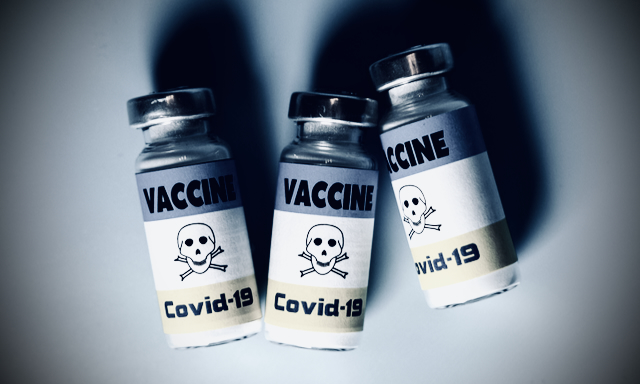
To those of us well-versed in the biology and emerging safety data relating to the injections referred to as “covid vaccines”, what is playing out before us is like a slow-motion motorway pile-up: we can see it unfolding, causing immense harm, have no idea when it will stop, and feel powerless to do much about it.
At present, it is unknown for how long this ghastly experiment will continue and how much further harm will be caused.
However, unfortunately there are reasons to believe the following may well be the case:
It will take much longer for the harms caused to be acknowledged by the “establishment” and so the injections will continue to be administered for some time yet – albeit to smaller and smaller groups as time progresses, and with varying degrees of enthusiasm in different locations.
Even if the injections were to stop now, it is unknown how much the harms caused thus far have actually come to light, and how much may manifest over the ensuing years or even decades.
One category of reasons for the above is essentially political. We are referring here to the complete failure on the part of those we previously relied upon to ensure pharmaceutical interventions are safe. The reasons for this are willful blindness on the part of our regulatory authorities, combined with the by now rather obvious capture of these institutions by two different interested parties:
Politicians who will apparently stoop to anything, including installing transnational coordinated censorship regimes, to keep their monumental errors hidden; and
Big Pharma, desperate to ensure that their bonanza continues as long as possible.
But as well as the above there are some inherent biological reasons which may hinder and delay the ending of this unprecedented catastrophe.
For a variety of reasons which are listed below, many uncertainties remain concerning the biological action of repeated doses of the mRNA products. However, what is known suggests that many of the harms they cause are mediated by inflammatory and autoimmune processes induced (potentially) throughout the body.
To recap the principal mode of action, the lipid nanoparticles carry mRNA into some of the recipient’s cells. These cells express spike protein – which is foreign to the body. The body’s immune system creates antibodies to that protein, as well as attacking and destroying the cells which express the protein.
In contrast to the original claims made – that the product would be broken down in the deltoid (shoulder) muscle with little or no distribution throughout the body, it turns out that the product DOES become widely distributed – potentially to every organ system. Of course, this should not have been surprising, since the whole point of the lipid in the lipid nanoparticles is to make them able to cross membranes and become distributed, to help with their original role as conveyors of targeted drugs to cancerous cells.
Moreover:
The amount of spike protein produced is uncontrolled and uncontrollable, as is the duration over which it is produced. High levels of spike antibodies have been found many months after injection, suggesting continued creation of the protein.
The spike protein produced has inbuilt differences compared to the natural version – the replacement of uridine by pseudouridine – designed to ensure the mRNA is less degradable. Other changes (eg codon optimisation) may well alter the folding characteristics of the protein produced – with unknown consequences.
It is thought that the spike protein my translocate to the nuclei of cells… cancer
The repeated creation of spike from multiple injections may have deleterious effects, both on the ability to fight similar viruses (so-called “tolerance” created through changing the type of antibody created) through to immune exhaustion (reducing the body’s ability to fight other pathogens or cancers)
The LNPs themselves (notwithstanding their “payload”) may well be pro-inflammatory in themselves…
The significance of above-tolerance levels of DNA contamination left-over from the bacterial plasmids used in the high-volume manufacturing process are as yet unknown.
Much of the harm observed appears to be inflammatory or auto-immune in nature. Both these processes are usually chronic, not acute problems. It is perfectly possible that once started, they continue for months or even years. Notably, chronic inflammation is thought to have a central role in many of the chronic pathologies increasingly suffered by Westerners over the past few decades.
Hence the tail of visible harm could manifest over a long timeframe. Moreover, because chronic inflammatory and autoimmune processes, by their nature, build slowly over time, the individual is likely to become habituated to ill effects, until a critical event occurs after some longer period.
A good example of this is with coronary artery disease. It is thought that inflammation is an important part of the pathophysiology in which a “plaque” builds up in the arterial wall. This may be asymptomatic until it ruptures causing a total blockage resulting in a “heart attack”. If the injections are accelerating this inflammatory process, the course of the pathological process may appear identical to that previously seen in many people, although it has been brought on and accelerated beyond what that person would otherwise have experienced; however, because it is within the range of possible or even probable illnesses observed, it gets dismissed as “one of those things”.
Cigarette manufacturers used to deny their products caused lung cancer by pointing out non-smokers who suffered the same fate. It was, in fact, only by rigorous epidemiological analysis that the link could be unequivocally proven. For the covid injections, it is deeply concerning that authorities seem to be doing everything possible to hinder access to the data which would permit such analyses to be performed.
Another reason why harms may be difficult to identify is that in some cases the pathological processes may be merely reducing physiological reserve, something which can go unnoticed for years or decades. Most of the body’s systems have significant inbuilt redundancy, which is why a kidney, or a significant part of the liver, can be lost while still maintaining good physiological and biochemical control. But if someone loses a kidney, they are more likely to suffer renal failure as they get older and the efficiency of their kidneys declines, and the available reserve falls away. Likewise, if part of the heart is damaged when young (eg through myocarditis), they may well make a full recovery in the short term in the sense of being physiologically normal, but be more vulnerable to suffering from heart failure (where the heart can’t pump blood around the body sufficiently) after losing some more heart muscle tissue after – say – a heart attack in middle age.
Finally, it should be noted that because of the wide distribution throughout the body (something rather obvious given the wide range of reports in the various adverse event databases), the harms appear to be manifesting in an extremely wide variety of symptoms and disorders. These will be problematic to diagnose, requiring lengthy and complex investigation, with multiple pathologies being possible. Such profiles of types of harms have not generally been observed with pharmaceutical products before; in most cases, the adverse effects are more limited in scope, and more closely temporally related to dosing (though there are some exceptions).
In conclusion
It is not possible to say whether we are at the beginning, or near the end of, the harms caused by these agents.
A combination of what may be termed “political” reasons, together with the inherent biological characteristics of the mRNA “vaccines”, all mitigate against the injections being identified and accepted anytime soon as being the causative agent of significant and sustained harms being experienced by an unacceptably large number of people.
Moreover, it remains likely that they will continue to be administered for some time yet – at least to certain groups in certain places – prolonging and exacerbating the harms already caused.
When American President Ronald Reagan entered office, he set a goal of re-energizing the American empire that had lost momentum after its embarrassing defeat in Vietnam. Invading the tiny island nation of Grenada would be an easy military victory to display American imperial power. The CIA instigated violence in Grenada and blamed communists, while asserting the Soviets were building a military base on the island. A propaganda campaign began and American military exercises were held to prepare for this invasion.
“John Stockwell interview”; Alternative Views; PBS; • Video
“The Story Behind Some of History’s Greatest Military Blunders – Politics by Other Means”; Timeline World History Documentaries; Great Military Blunders S1 E3; April 22, 2017; • The Story Behind Some Of History’s Gr…
Public health tasted the power they gained during the pandemic and now they are hungry once more. Any excuse to make themselves relevant again and they will take it.
This time it happened in France’s capital, Paris. On Wednesday and Thursday, the city undertook its first ever large-scale mosquito control campaign after two people contracted dengue fever. It is also known as break-bone fever due to the joint pain that accompanies illness.
Although the individuals were infected with dengue whilst abroad, officials were concerned that the Asian tiger mosquito might bite them and spread the disease around the country.
That seems like a very small risk to me but apparently, nowadays, however small the risk, public health must intervene. So they closed roads and sent out stay at home alerts (mini local lockdowns), allowing insecticides to be sprayed around the city over a couple of days.
Naturally, the situation was blamed on climate change. Apparently, there have been hotter temperatures and increased flooding meaning the mosquitos are more likely to cause a problem.
Most people who get dengue don’t have any symptoms but it is estimated that around half a million people worldwide are hospitalised with the disease each year. Approximately 20,000 to 40,000 of these die, however with good healthcare, death is unlikely.
Dr Jolyon Medlock, head of medical entomology and zoonoses ecology at the UK Health Security Agency (UKHSA) told the Telegraphnewspaper, that “in 10 to 15 years the UK will probably also have embedded populations of mosquitoes that pose a threat to health”.
At the bottom of the Telegraph article it says “Protect yourself and your family by learning more about Global Health Security”.
Lo and behold, who do we find funding the Telegraph’s Global Health Security? The Bill & Melinda Gates Foundation of course. The Telegraph insists that the support comes without strings but it seems like it does come with some benefits as the paper brags that “we were among the first to warn of an approaching pandemic”. However did they know!?
And is the break-bone fever panic really being caused by climate change? In 2017, it was announced that France and the Netherlands backed the release of Oxitec’s genetically modified mosquitoes to fight dengue, chikungunya and zika.
These mosquitos are meant to use a biological method to suppress wild populations of dangerous mosquitos. The genetically modified males don’t bite or transmit disease and when released, search for a female mate. Their offspring inherit a self-limiting gene that causes them to die before reaching functional adulthood. Seems a bit Jurassic Parky to me and if there’s one thing I learnt from Jurassic Park, it’s that life always finds a way.
Oxitec is also the company that released genetically modified mosquitoes in Florida… which is now seeing a rise in malaria. Definitely not connected though. Their business is supported by $18 million of funding from the Bill & Melinda Gates Foundation.
But who is Oxitec? Founded in 2002 as a spinout from Oxford University, they were purchased by US based Intrexon and Third Security in early 2020.
Intrexon changed its name to Precigen in 2020, a year after creating the company as a subsidiary. Weirdly, if you try to go to Intrexon’s website you get taken to DNA.com which is just a landing page with a creepy logo.
Under its current name, Precigen, the company informs us that it “is a dedicated discovery and clinical stage biopharmaceutical company advancing the next generation of gene and cell therapies using precision technology to target the most urgent and intractable diseases in our core therapeutic areas of immuno-oncology, autoimmune disorders, and infectious diseases”.
I used to think this technology would bring great advancement to medicine but, since the pandemic, I think they are just playing with fire.
Britain sparked an international outcry earlier this year when officials revealed that the Challenger 2 tanks sent to Ukraine would be equipped with depleted uranium (DU) shells. The US is now expected to follow suit with DU rounds for Ukraine’s Abrams. A Russian military observer explains why the toxic arms won’t change the situation at the front.
A White House National Security Council spokesperson told Sputnik Sunday that they could not confirm reports indicating that Washington is preparing to send armor-piercing DU munitions to Ukraine as part of a new arms package to be announced this week.
The DU munitions are expected to accompany the Abrams main battle tanks the US first agreed to give Kiev back in January to coax its European allies into sending hundreds of their own tanks, with the first batch of Abrams expected to arrive by mid-September, well over three months into Ukraine’s stalled counteroffensive.
Previous reporting on the Ukrainian-bound Abrams indicated that the tanks wouldn’t be fitted with depleted uranium components in their composite armor. However, in June, it became clear that they would likely be armed with DU penetrator rounds, with anonymous officials saying at the time that they saw no ‘serious obstacles’ to deliveries, notwithstanding long-standing international concerns about DU shells’ impact on human health and the environment.
Tank, artillery and air-launched DU munitions have left a horrifying record of destruction and illness in their wake in the countries where they have been deployed, including Iraq during the 1991 Gulf War and 2003 invasion, Yugoslavia, Afghanistan and Syria. Russia and Ukraine, the US, the UK, India, Pakistan, France, China, and a number of Western allies in the Middle East and Asia, are known to possess the controversial weapons, but the US and Britain are the only two countries to date confirmed to have ever used them.
Using depleted uranium as a weapon constitutes a crude form of the ‘recycling’ of spent nuclear fuel, and first began to be experimented with by the United States in the 1970s to pierce increasingly advanced Warsaw Pact armor. DU shells have been touted as a ‘budget’ variant of tungsten ore-based penetrator projectiles, having a similar density, but costing less to produce and even more powerful.
The shells’ radioactive properties have a direct impact on their penetrative ability. When fired at enemy armor, DU-tipped rounds generate an immense amount of heat, literally sloughing off portions of the projectile as it rams into its target to keep the shell’s tip sharp and prevent mushrooming. This helps the rounds grind into and through armor almost like a hot knife through butter, penetrating enemy vehicles and killing any unfortunate souls who happen to be inside.
But their destructive impact doesn’t end there. Because they are radioactive, the weapons have a tendency to poison their surrounding environment, affecting everyone from the troops inside the tanks firing the shells, to enemy combatants, and local civilians.
Iraq and republics of the former Yugoslavia are the countries most heavily affected by DU contamination to date, with cancer rates in Iraq jumping from 40 cases per 100,000 people in 1991 to 800 per 100,000 in 1995, to a whopping 1,600 per 100,000 by 2025 after the US and Britain deployed up to 2,300 tons of DU in the country.
In Yugoslavia, at least 15 tons of DU were used during the bombings of Bosnia, Serbia and Montenegro in the mid-late 1990s, with Serbia subsequently suffering from one of the highest cancer rates in Europe – two-and-a-half times the European average, plus an alarming rise in infertility, a variety of autoimmune diseases and mental disorders.
Last month, Serbian Health Minister Danica Grujicic appealed to Ukrainian decision makers and the population at large urging them not to allow DU shells to be used on their soil, saying her country’s experience should serve as ample warning of the weapons’ devastating long-term consequences. “Believe me, what’s happening in Ukraine will affect the health of all European countries,” Grujicic told Sputnik.
Ukrainians and Europeans first got a taste of what the Serbian health minister was talking about in the spring, when a massive arms depot outside the western Ukrainian city of Khmelnytskyi thought to include DU munitions for Ukraine’s Challenger 2s went up in smoke, resulting in a massive spike in levels of gamma radiation levels in neighboring Poland.
Russian officials have also warned of DU weapons’ dangers. Foreign Ministry spokeswoman Maria Zakharova noted late last month that the use of the weapons would turn portions of Ukraine into an “uninhabitable” wasteland, with “radioactive contamination of the soil… already happening” and being recorded.
Ukrainian and most Western media have been more upbeat, however, insisting that the DU would give the nation’s armed forces the shot in the arm they need to bolster its flagging counteroffensive –which to date has seen immense losses in manpower and equipment, but very little to show in terms of gained ground.
Questionable Tactical Benefits Accompanied by Horrendous Costs
“The main advantage of DU munitions is their higher penetration level,” Boris Rozhin, a military expert with the Center for Military-Political Journalism think tank, told Sputnik.
“The proponents of DU munitions’ use, in the case of deliveries to Ukraine… came to the conclusion that the Ukrainian military will be able to fight Russian armor more effectively – that is, to increase the chances of defeating Russian tanks using British and American tanks. This is positioned as the main advantage of these kinds of shells,” he said.
The obvious disadvantage, the observer added, relates to the threat of radioactively contaminating wide swathes of the surrounding environment. DU rounds “were used in wars on the territory of the former Yugoslavia, on the territory of Iraq. In those cases, there is proven harm to health after the use of such projectiles, with the number of people suffering from the use of these shells measured in the hundreds of thousands. They have suffered radiation-related damage to their tissues and organs, leading to a range of diseases and early mortality.”
Unfortunately, Rozhin said, the United States military does not formally recognize the validity of DU-related risks, positioning it as “relatively harmless” despite mountains of evidence to the contrary.
So far, the observer pointed out, the DU-equipped Challenger 2 tanks have not been spotted on the battlefield. Their successful use against the armor of Russian tanks like the T-72B3 or T-90 would require the tanks to approach quite close, to within 3,000 meters. This is something Ukrainian forces have found difficult to do amid Russia’s overwhelming air and artillery superiority, which has often enabled Russian forces to target Ukrainian armor at ranges of tens of kilometers away, long before it can approach close enough to return fire.
If they approach close enough, “then they could do a great deal of harm. But since there are very few such cases, it will not affect the current state of affairs or course of the special military operation,” Rozhin summed up.
Media interest in Saudi Arabian connections to the crimes of 9/11 has centered on calls for the release of the 28 missing pages from the Joint Congressional Inquiry’s report. However, those calls focus on the question of hijacker financing and omit the most interesting links between the 9/11 attacks and Saudi Arabia—links that implicate powerful people in the United States. Here are twenty examples. … continue
This site is provided as a research and reference tool. Although we make every reasonable effort to ensure that the information and data provided at this site are useful, accurate, and current, we cannot guarantee that the information and data provided here will be error-free. By using this site, you assume all responsibility for and risk arising from your use of and reliance upon the contents of this site.
This site and the information available through it do not, and are not intended to constitute legal advice. Should you require legal advice, you should consult your own attorney.
Nothing within this site or linked to by this site constitutes investment advice or medical advice.
Materials accessible from or added to this site by third parties, such as comments posted, are strictly the responsibility of the third party who added such materials or made them accessible and we neither endorse nor undertake to control, monitor, edit or assume responsibility for any such third-party material.
The posting of stories, commentaries, reports, documents and links (embedded or otherwise) on this site does not in any way, shape or form, implied or otherwise, necessarily express or suggest endorsement or support of any of such posted material or parts therein.
The word “alleged” is deemed to occur before the word “fraud.” Since the rule of law still applies. To peasants, at least.
Fair Use
This site contains copyrighted material the use of which has not always been specifically authorized by the copyright owner. We are making such material available in our efforts to advance understanding of environmental, political, human rights, economic, democracy, scientific, and social justice issues, etc. We believe this constitutes a ‘fair use’ of any such copyrighted material as provided for in section 107 of the US Copyright Law. In accordance with Title 17 U.S.C. Section 107, the material on this site is distributed without profit to those who have expressed a prior interest in receiving the included information for research and educational purposes. For more info go to: http://www.law.cornell.edu/uscode/17/107.shtml. If you wish to use copyrighted material from this site for purposes of your own that go beyond ‘fair use’, you must obtain permission from the copyright owner.
DMCA Contact
This is information for anyone that wishes to challenge our “fair use” of copyrighted material.
If you are a legal copyright holder or a designated agent for such and you believe that content residing on or accessible through our website infringes a copyright and falls outside the boundaries of “Fair Use”, please send a notice of infringement by contacting atheonews@gmail.com.
We will respond and take necessary action immediately.
If notice is given of an alleged copyright violation we will act expeditiously to remove or disable access to the material(s) in question.
All 3rd party material posted on this website is copyright the respective owners / authors. Aletho News makes no claim of copyright on such material.


 • The CIA in Angola

 Aletho News
