Will Trump Really Start Two Wars Instead of “Just” One?
The Saker | Unz Review | May 20, 2020
Amidst the worldwide pandemic induced scare most of us have probably lost track of all the other potential dangers which still threaten international peace and stability. Allow me to list just a few headlines which, I strongly believe, deserve much more attention than what they got so far. Here we go:
- Military Times : “5 Iran tankers sailing to Venezuela amid US pressure tactics“
- Time : “5 Iranian Tankers Head to Venezuela Amid Heightened Tensions Between U.S. and Tehran“
- FoxNews: “Iran tankers sailing to Venezuela in effort to undermine US sanctions“
Notice that Military Times speaks of “US pressure tactics”, Time of “tensions” and FoxNews of “efforts to undermine US sanctions”?
I don’t think that this is a coincidence. Folks in the US military are much more in touch with reality than the flag-waving prostitutes which some people call “reporters” or “journalists”.
Furthermore, the US has embarked on a new policy to justify its acts of piracy on the high seas with something called Visit, Board, Search and Seizure (VBSS) all under the pretext of the war on drugs. To get a better understanding of the context of these developments I asked a specialist of Maritime issues of our community, NatSouth, who replied the following: (stress added)
If a ship does not comply with the request to be boarded, it is usual that the pursuing authorities must gain the permission of the ‘flag’ state prior to boarding, on the high seas and the pursuit has to have started in the coastal state’s jurisdictional waters. The caveat here is that in the Caribbean – Caribbean Regional Maritime Agreement (CRA) – (long name: Agreement Concerning Co-operation in Suppressing Illicit Maritime and Air Trafficking in Narcotic Drugs and Psychotropic Substances in the Caribbean Area). So, there is an agreement with participating coastal states on boardings and pursuits in EEZs and the like. You can find more on the legal aspects of boardings at sea here: and more info on so-called “consensual boardings” here.
The anti-drug/ counterterrorism angle allows the U.S. Navy and the USCG to carry out interdictions on the high seas. Important point to note whether this approach will be taken to interdict the tankers, given that Venezuela is a declared narco-State. The absurdity is that Venezuela isn’t the primary transit point in the region, Colombia holds that honour.
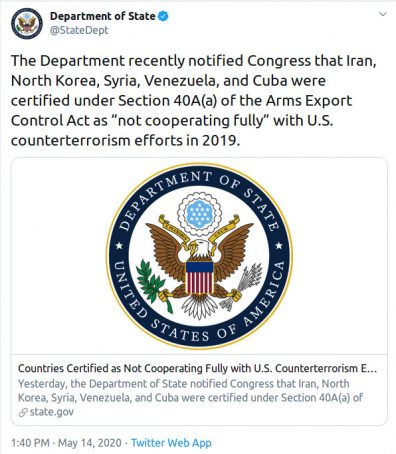
If I could add at this point, the origins are that Venezuela didn’t wish to play ball with Washington anymore, specifically with the DEA back in 2005, squaring the circle of sorts, (or should that be a vicious circle cunningly used by Washington, because who is going to argue with that narrative, aka the war on terror). March: SOUTHCOM’s Adm. Faller: “There will be an increase in US military presence in the hemisphere later this year. This will include an enhanced presence of ships, aircraft, & security forces to reassure our partners… & counter a range of threats to include illicit narco-terrorism.” At the same time, the State dept released this tweet, so the US could effectively carry out boardings under the guise of counterterrorism as well.
While the Iranian tankers were in the Mediterranean, Washington released a (delayed) “Global Maritime Sanctions Advisory”, to the maritime industry, setting out guidelines to shipowners and insurers to enable them to avoid the risks of sanctions penalties related to North Korea, Syria and Iran. This also concerns oil exports from Iran, (but doesn’t apply to Iranian flagged ships). This came after the State Dept gave warning notice to oil companies to stop operations, including Rosneft (Russia), Reliance (India) and Repsol (Spain).
Then NatSouth concluded the following:
Under international law, every merchant ship must be registered with a flag state, which has jurisdiction over the vessel. Hence, this time, the use of Iranian-flagged tankers, as a direct response from Washington’s latest version of restating “maximum pressure” campaign on enforcement of Iran and Venezuela sanctions, (back in Feb, literally the same language as in Aug 2019). There was talk back then of a naval embargo, which would a serious notch up in tensions. There was mention of the 4 U.S. warships in the Caribbean, the U.S. Navy tweeted about, but one the Preble went through the Panama Canal into the Pacific).
Pretty clear, isn’t it?
What the US is doing is substituting itself for the United Nations and it is now openly claiming the right to board any vessel under whatever kind of pious pretext like, say, narco-trafficing, nuclear proliferation, sanctions against so-called “rogue states”, etc. Clearly, the AngloZionists expect everybody to roll over and take it.
How likely is that?
Let’s look at a few Iranian headlines, all from PressTV:
- PressTV, May 16th: “Iran’s fuel shipment to Venezuela guaranteed by its missile power“
- PressTV, May 17th: “US aware Iran will respond ‘very strongly’ if Venezuela-bound ships attacked: Analyst“
- PressTV, May 18th: “Iran: US bears responsibility for any foolish act against tankers heading to Venezuela“
Three days in a row. I think that it is fair to assume that the Iranians are trying very hard to convince Uncle Shmuel not to mess with these tankers. Does anybody seriously believe that the Iranians are bluffing?
Before we look at some of the aspects of this potential crisis, let’s just mention a few things here.
First, the US is acting in total and official illegality. Just like the bombing of Syria, the threats to Iran, or the US murderous sanctions Uncle Shmuel imposes left and right – the blockade of Venezuela is a) totally illegal and b) an act of war under international law.
Second, if USN commanders think they can operate with impunity only because the Caribbean is far away from Iran, they are kidding themselves. Yes, Iranian forces cannot defend these tankers so far away from home, nor can they take any action against the USN in the Atlantic-Caribbean theater of naval operations. But what they can and will do is retaliate against any AngloZionist target in the Middle-East, including any oil/gas tanker.
Third, while Venezuela’s military is tiny and weak compared to the immensely expensive and bloated US military, being immensely expensive and bloated is no guarantee of success. In fact, and depending on how the Venezuelan leadership perceives its options, there could be some very real risk for the USA in any attempt to interfere with the free passage of these ships.
What do I mean by that?
Did you know that Venezuela had four squadrons of Su-30MKV for a total of 22 aircraft? Did you know that Venezuela also had an unknown number of Kh-31A supersonic anti-shipping missiles? And did you know that Venezuela had a number of S-300VM and 9K317M2 Buk-M2E long range and medium range SAMs?
True, that is nowhere near the amount of weapons systems Venezuela would need to withstand a determined US attack, but it is more than enough to create some real headaches for US planners. Do you remember what the Argentinian Air Force did to the British Navy during the Malvinas war? Not only did the Argentinians sink two Type 42 guided missile destroyers (the HMS Sheffield and the HMS Coventry) which were providing long-range radar and medium-high altitude missile picket for the British carriers, they also destroyed 2 frigates, 1 landing ship, 1 landing craft, 1 container ship. Frankly, considering how poorly defended the British carriers were, it is only luck which saved them from destruction (that, and the lack of sufficient number of Super Étendard strike aircraft and Exocet missiles). I would add here that the British military, having been defeated on many occasions, has learned the painful lessons of their past defeats and does not suffer from the cocky-sure attitude of the US military. As a result, they were very careful during the war against Argentina and that caution was one of the factors which gave a Britain well-deserved the victory (I mean that in military terms only; in moral terms this was just another imperialist war with all the evil that entails). Had the Argentinians had a modern air force and enough anti-shipping missiles, the war could have taken a very different turn.
Returning to the topic of Venezuela, war is a much more complex phenomenon than just a struggle of military forces. In fact, I strongly believe that political factors will remain the single most important determinant factor of most wars, even in the 21st century. And chances are that the Venezuelans, being the militarily weaker side, will look to political factors to prevail. Here is one possible scenario among many other possible ones:
Caracas decides that the US seizing/attacking the Iranian tankers constitutes an existential threat to Venezuela because if that action goes unchallenged, then the US will totally “strangle” Venezuela. Of course, the Venezuelan military cannot take on the immense US military, but what they could do is force a US intervention, say by attacking one/several USN vessel(s). Such an attack, if even only partially successful, would force the US to retaliate, bringing US forces closer not only to Venezuelan air defenses, but also closer to the Venezuelan people which will see any US retaliation as an illegitimate counter-counter-attack following the fully legitimate Venezuelan counter-attack.
Then there is the problem of defining victory. In the US political “culture” winning is usually defined as pressing a few buttons to fire off some standoff weapons, kill lots of civilians, and then declare that the “indispensable nation” has “kicked the other guy’s ass”. The problem with that is the following one: if they other guy is very visibly weaker and has no chance for a military victory of his own, then the best option for him is to declare that “surviving is winning” – meaning that if Maduro stays in power, then Venezuela as won. How would the USA cope with that kind of narrative? Keep in mind that Caracas is a city of over two million people which even in peacetime is rather dangerous (courtesy of both regular crime and potential guerilla activities). Yet, for Maduro to “win” all he has to show is that he controls Caracas. Keep in mind that even if the US forces succeed in creating some kind of “zone of real democracy” somewhere near the Colombian border, that will mean nothing to Maduro, especially considering the terrain between the border and the capital city (please check out this very high resolution map of Venezuela or this medium resolution one). As for the notion of a USN landing on the shores of Venezuela, all we need to do is to remember how the immense Hodgepodge of units which were tasked with invading Grenada (including 2 Ranger Battalions, Navy Seals, most of an Airborne Division, etc. for a total of over 7,000 soldiers(!) against a tiny nation which never expected to be invaded (for details, and a good laugh, see here for a full list of participating US forces!) was defeated by the waves of the Caribbean and the few Cuban military engineers who resisted with small-arms fire (eventually, most of the 82AB was calling in to fix this mess).
In other words, if Maduro remains in power in Caracas then, in political terms, Venezuela wins even though it would loose in purely military terms.
This phenomenon is hardly something new, as shown by the following famous quote by Ho Chi Minh: “You can kill ten of my men for every one I kill of yours. But even at those odds, you will lose and I will win.”
By the way, this is exactly the same problem the Empire faces with Iran: as long as the Islamic Republic remains an Islamic Republic it “wins” in any exchange of strikes with the USA and/or Israel.
Still, it is pretty obvious that the US can turn much of Venezuela into a smoking heap of ruins. That is true (just like what the USA did to Korea, Vietnam, Iraq or Serbia and Israel what did to Lebanon in 2006). But that would hardly constitute a “victory” in any imaginable sense of the word. Again, in theory, the US might be able to secure a number of landing locations and then send in an intervention force which could try to take key locations in Caracas. But what would happen after that? Not only would the hardcore Chavistas trigger a guerilla insurrection which would be impossible to crush (when is the last time the USA prevailed in a counter-insurgency war?), but many Venezuelans would expect the US to pay for reconstruction (and they would be right, according to the rules of international law, “once you take it, you own it” meaning that the USA would become responsible for the socio-economic situation of the country). Finally, there is always the option of an anti-leadership “decapitating” strike of some kind. I believe that in purely military terms, the US has the know-how and resources to accomplish this. I do not believe that this option would secure anything for the USA, instead – it would further destabilize the situation and would trigger some kind of reaction by the Venezuelan military both outside and inside Venezuela. If anything, the repeated failures of the various coup attempts against Chavez and Maduro prove that the the bulk of the military remains firmly behind the Chavistas (and the failed coup only served to unmask the traitors and replace them anyway!).
The bottom line is this: if Uncle Shmuel decides to seize/attack the Iranian tankers, there is not only a quasi certitude of a war between the US and Iran (or, at the very least, an exchange of strikes), but there is also a non-trivial possibility that Maduro and his government might actually decide to provoke the USA into a war they really can’t win.
Is Trump capable of starting a process which will result in not one, but two wars?
You betcha he is! A guy who thinks in categories like “my button is bigger than yours” or “super-dooper weapons” obviously understands exactly *nothing* about warfare, while the climate of messianic narcissism prevailing among the US ruling classes gives them a sense of total impunity.
Let’s hope that cooler heads, possibly in the military, will prevail. The last thing the world needs today is another needless war of choice, never mind two more.
Israel strikes Syria to keep the USA in the Levant
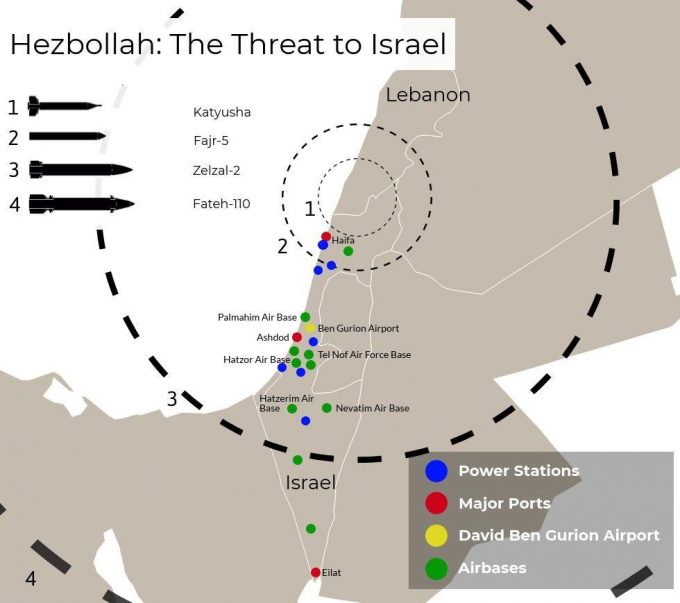
By Elijah J. Magnier – 19/05/2020
Following its defeat in the second war on Lebanon, Israel discovered that its only way to suppress Hezbollah would be to close the supply line between Lebanon and Syria. That could only be achieved by removing President Bashar al-Assad from power, disrupting the “Axis of the Resistance” that extends from Tehran to Baghdad, Damascus, Beirut and Gaza. But Israel and the US, supported by Saudi Arabia, Qatar, the Emirates, Turkey, Europe and many other countries all failed to achieve their goal of making Syria a failed state. President Assad called upon his allies whose own national security was in jeopardy. If Syria were to fall, jihadists of al-Qaeda and the “Islamic State” would be fighting in the streets of Beirut, Baghdad and Tehran. The jihadists would also be powerful enough to remove Russia from its Syrian naval base and to export the war beyond the Levant’s borders. So, Israel and the US failed to destroy Syria and to corner Hezbollah. On the contrary, Hezbollah has become stronger than ever. The Resistance has reaped the harvest of its victory. It has become the decision-maker with key institutions in Lebanon.
Israel sought to destroy Hezbollah because it is an obstacle to Israel’s expansionist plans in Lebanon, namely to steal Lebanon’s water and some of its territories, to force a peace deal of unconditional surrender, to break Lebanon’s alliance with Iran and deprive Tehran of its strongest ally in the Middle East. For the last forty years, since the victory of the “Islamic Republic” in 1979 led by Imam Ruhollah Khomeini which unseated the US proxy ruler, the Shah of Iran, Washington has imposed sanctions, because Iran has refused to submit to US power and because it supports its allies in the Middle East, mainly Palestine, Lebanon and Syria, to stand against Israel.
In 2006, the US was involved in the planning of Israel’s war on Lebanon. At the 2006 G8 Summit, President George W. Bush described the relationship between Hezbollah, Iran and Syria as one of the root causes of “instability”: “The World must deal with Hezbollah, with Syria, and continue to work to isolate Iran.” (Roshandel J. & Lean C.N. (2011) Iran, Israel and the United States, ABC-CLIO, CA, p. 109).
US Secretary Condoleezza Rice refused to mediate a ceasefire unless “the conditions are conducive”, thinking Israel would win the war. Hezbollah was not only left on its own to face the US and Israel, but Lebanese US-Saudi proxies (Prime Minister Fouad Siniora and Druse leader Walid Jumblat) supported the position of the US and Israel, and argued that there was “no point in a ceasefire.” (Wilkins H. (2013). The Making Of Lebanese Foreign Policy: understanding the 2006 Hezbollah-Israeli War, Routledge, Introduction).
When Israel failed to achieve its objectives, the US agreed to mediate an end to the war. Negotiations concentrated on ceasing all hostilities (not a ceasefire) between the two countries. Tel Aviv and Washington failed to obtain the deployment of United Nations Forces in Lebanon, UNIFIL, on the borders with Syria. The US sought to accommodate Israel in its attempt to gain by negotiation what it failed to achieve using its huge war machine in 33 days of the war in 2006. “Israel’s objective was never realistic”, said Israeli Foreign Minister Tzipi Livni.
When its attempt to control the Lebanese-Syrian borders failed after its defeat in the 2006 war, Israel had one remaining option with which to counter Hezbollah: close the road via Damascus and find a way to curb Hezbollah’s supply line. This required war on Syria.
Since confronting Hezbollah face-face was no longer an option, Syria became the next target in the campaign to isolate Iran, as President Bush declared. The motives behind the war in Syria have been erroneously described by many researchers and analysts around the globe, who have depicted the war as the outcome of an “Arab Spring” against a dictatorial regime. Yet Saudi Arabia, Bahrein and other Gulf countries have been ruled by dictatorships and the same family members for decades and indeed are considered by the west as its closest- oil-rich- partners!
Actually, the war on Syria started just after the al-Qaeda 9/11 attack on the US. Four-star US general Wesley Clark disclosed Washington’s plan as he learned of it in the days after 9/11: “occupy Iraq, Syria, Lebanon, Libya, Somalia, Sudan and finish with Iran.” Just a few months after the US invasion of Iraq, US Secretary of State Colin Powell visited President Bashar al-Assad and warned him that the US would invade Syria if he refused to interrupt his support for the anti-Israel organisations, Hezbollah and the Palestinian groups: the Syrian president would share the same fate as the Iraqi President Saddam Hussein.
The 2003 invasion of Iraq was far from being a piece of cake. The US occupation generated new resistance among both Sunni and the Shia. This encouraged President Assad to rebuff the US threat, unaware of what the future held for Syria. Dozens of states, including Saudi Arabia, Qatar, Jordan, Turkey, the Emirates, Europe and the US all supported a regime change operation via Takfiri proxies. But the consequences of destabilising Syria gave a unique opportunity for al-Qaeda to blossom in Syria and a more lethal group emerged, the “Islamic State” ISIS. President Assad called upon his few allies, Iran, Russia and Hezbollah, to stand against the massive coalition gathered to create this failed state in Syria. The Syrian war which ensued offered unprecedented experience to the Syrian army, gave birth to a new Syrian resistance and offered unique warfare knowledge to Hezbollah, with a base for Iran that Tehran could never before have dreamed of having in the Levant.
Hezbollah had forced unconditional Israeli withdrawal from Lebanon in the year 2000 and challenged all those Israeli-US plans for a “new Middle East” after the second Israeli war on Lebanon in 2006. And the long nine years of war in Syria forced Hezbollah to refine its tactics and armaments and provided Hezbollah with an unprecedented victory. Just as Israel had boosted the creation of Hezbollah, it taught this quasi-state actor all manner of skills and forced it to acquire more training and weapons to repel wars and dismantle the enemy’s objectives. Israel’s former Chief of Staff and Prime Ministerial candidate Benny Gantz believed that Hezbollah had become one of the strongest irregular-organised armies in the Middle East, capable of imposing its rules of engagement and its “balance of deterrence” on the strongest classical army in the Middle East.

“Show me four or five states with more firepower than Hezbollah: they are the US, China, Russia, Israel, France, & the UK,” Gantz said when speaking at the 2014 Herzliya Conference.
That was Israel’s assessment in 2014. Six years later, last February, Israel’s minister of defence Naftali Bennet said: “For every convoy you hit, you miss five convoys and slowly Hezbollah accumulates the critical mass of rockets [missiles] that threaten us.”
Hezbollah has become stronger than many armies in the Middle East. Hezbollah is no longer the organisation that clashes with the Israelis on a hill or site or ambushes a patrol behind an alley. Rather, in Syria and Iraq, it has successfully experienced different warfare scenarios. It has acquired many advanced weapons and became a strategic threat to Israel if it ever contemplated waging outright war on Lebanon and Syria.
Israel set as its goal bringing down Assad in Syria and separating Syria from the “Axis of Resistance.” Israeli defence minister Moshe Ya’alon said that “Israel prefers ISIS on its borders over Assad.” But Israel, America, Europe, Saudi Arabia, Qatar and the Emirates have lost the war. Israel has now chosen to maintain the conflict because it fears that America would let go. This is why Israel is hitting hundreds of targets in Syria, – most of the time without no strategic value whatsoever.
Sources in the “Axis of Resistance” in Syria say that:
“Israel targeted the Iranian HQ at Damascus airport (a building with green glass where Israel destroyed two floors). The following day, Iran restored it and it is back in operation. Israel has repeatedly targeted warehouses with Iranian weapons but also an abandoned training centre in the Kiswa area that has been empty for years. Their aim is to signal to the US that Israel is threatened and that the departure of the US forces would constitute a threat to Israel’s national security. It is indeed too late for Israeli jets to make any difference to Syria’s capabilities. Iran is not exporting weapons but manufacturing them. If it took Israel 9 years and 300 bombing raids to destroy Iranian warehouses in Syria, it took Iran only one year to refill and equip the Syrian army with much more sophisticated precision missiles – and all strategic missiles are in underground warehouses.”
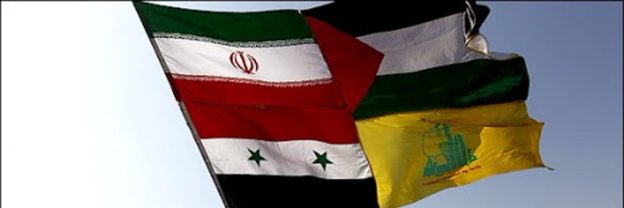
Iran has only a few hundred advisers and officers in Syria, but it leads some tens of thousands of allies from Lebanon, Iraq, Pakistan, Afghanistan, and auxiliary Syrian forces that resemble irregular-organised military formations.
In Syria, Hezbollah was able to operate in an area ten times the size of Lebanon, which gave it a unique experience any army in the world would have wished to have. It was also subjected to attacks by a NATO member, Turkey, which used armed drones on the battlefield. That provided Hezbollah with a wealth of experience and taught them lessons that have become integrated into curricula at military schools and colleges in Iran with Hezbollah and their allies.
President Assad does not say that it is time for his allies (especially Hezbollah) to leave Syria. Rather, he says – according to this source – that “Syria has a debt to Hezbollah. Wherever Hezbollah wants to be, it will be also Syria’s wishes.” America and Israel created an unbreakable alliance between Syria, Iran and Hezbollah.
In Lebanon, Hezbollah has started to harvest its gains. Hezbollah was able to impose the name of the President of the Republic, General Michel Aoun, despite repeated opposition from Saudi Arabia and the US, the losers in the Syrian war. Lebanon remained without a president for several months until General Aoun assumed the presidency.
Hezbollah rejected multiple offers from different countries by giving the Presidency of the Parliament to anyone other than President Nabih Berri, leader of the Amal movement, who has been on this throne for decades. Hezbollah holds the real power – though not all of it – in Lebanon to call for the appointment of the President of the Republic and the Speaker of the Parliament.
As for the premiership, it cannot be assumed without Hezbollah’s approval of the candidate. Hezbollah has sufficient political weight within the House of Representatives and the Presidency of the Republic to nominate or accept the nomination or direct the appointing of a prime minister. Former prime minister Saad Hariri is making sure his daily friendly contacts with Hezbollah are maintained because he would very much like to return to power. Hariri knows that the door to the premiership goes through one gate: Hezbollah.
This does not mean that Hezbollah wants to take control of Lebanon as a whole. Hezbollah leaders are aware that the Druse leader Kamal Jumblatt, Sunni leader Rafic Hariri, the Maronite Christian leader Bashir Gemayel and the Palestinians have all failed in controlling Lebanon and seizing the country. Hezbollah does not want to succumb to the same mistakes and doesn’t wish to control all of Lebanon. This means that the counter influence of other countries exists and is well-rooted in Lebanon. For example, the US ambassador in Beirut is threatening the Lebanese government with a warning not to remove the Central Bank Governor Riad Salama. Also, the US removed a Lebanese-Israeli agent, Amer Al-Fakhouri, via a plane which landed him at the US embassy without taking into consideration Lebanese sovereignty. The US supports the Lebanese army and internal security forces to maintain its dominance over certain key figures.
Syria has given the Secretary-General of Hezbollah, Sayyed Hassan Nasrallah, powers in Lebanon that he would not have obtained without the intervention of Israel and the allies in Syria. Hezbollah has managed to preserve its military pipeline via Syria by defeating the Takfiris (al-Qaeda and ISIS) and has prevented them from establishing an “Islamic emirate” in Lebanon and Syria.
Hezbollah’s victory comes at a price: thousands of martyrs and thousands of wounded. However, the resulting harvest is so abundant and strategic that the Lebanese Shiites now enjoy more power in Lebanon and Bilad al-Sham than they have since the year 661 when the fourth caliphate’s Imam Ali bin Abi Talib was killed.
Proofread by: C.G.B. and Maurice Brasher
This article is translated free to many languages by volunteers so readers can enjoy the content. It shall not be masked by Paywall. I’d like to thank my followers and readers for their confidence and support. If you liked it, please don’t feel embarrassed to contribute and help fund it, for as little as 1 Euro. Your contribution, however small, will help ensure its continuity. Thank you.
Copyright © https://ejmagnier.com 2020
How Israel Instructed Its Worst Nightmare in the Art of War
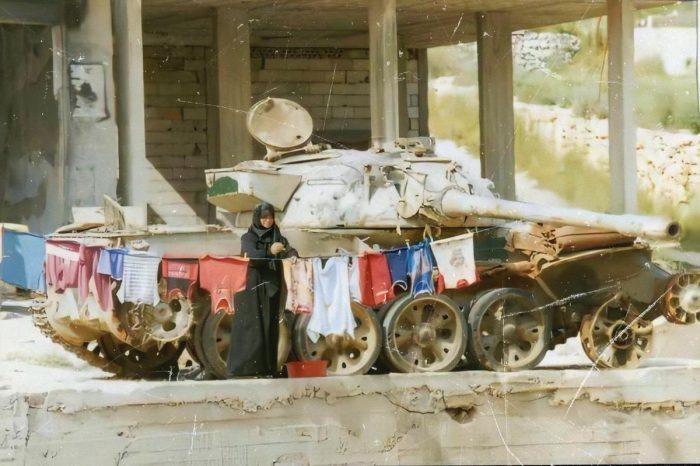
A woman mocks an Israeli tank left behind when withdrawing from south of Lebanon in the year 2000, using it as a hanger to dry cloths. Credit: Younes Zaatari
By Elijah J. Magnier | American Herlad Tribune | May 17, 2020
“We were Hezbollah trainers. It is an organization that learns quickly. The Hezbollah we met at the beginning (1982) is different from the one we left behind in 2000”. This is what the former Chief of Staff and former Minister of Foreign Affairs, Gabi Ashkenazi, said twenty years after the Israeli unconditional withdrawal from Lebanon.
“For the first time we met a non-conventional army, but also an ideological organization with deep faith: and this faith triumphed over us. We were more powerful, more technologically advanced and better armed but not possessing the fighting spirit …They were stronger than us”. This is what Brigadier General Effi Eitam, Commander of the 91st Division in counter-guerrilla operation in south Lebanon said.
Alon Ben-David, senior defense correspondent for Israel’s Channel 13, specialized in defense and military issues, said: “Hezbollah stood up and defeated the powerful Israeli Army”.
Former Prime Minister Ehud Barak, the architect of the Israeli withdrawal from Lebanon, said: “The withdrawal didn’t go as planned. The deterrence of Hezbollah and its capability increased greatly. We withdrew from a nightmare”. Barak meant he had planned to leave behind him a buffer zone under the control of his Israeli proxies led by the “South Lebanon Army” (SLA) commander Antoine Lahad. However, his plans were dismantled and the resistance forced Lahad’s men to run towards the borders, freeing the occupied buffer zone. As they left Lebanon, the Israeli soldiers said: “Thank God we are leaving: no one in Israel wants to return”.
In 1982, Israel believed the time had come to invade Lebanon and force it to sign a peace agreement after eliminating the various Palestinian organizations. These groups had deviated from the Palestinian compass and had become embroiled in sectarian conflict with the Lebanese Phalange, believing that “the road to Jerusalem passed through Jounieh” (the Maronite stronghold on Mt. Lebanon, northwest of Beirut, a slogan used by Abu Iyad). Israel intended Lebanon to become the domicile of its Palestinian conflict. It failed to realize that in so doing it was letting the Shiite genie out of the bottle. Signs of this genie began to appear after the arrival of Sayyed Musa al-Sadr in Lebanon and the return of students of Sayyed Muhammad Baqir al-Sadr from Najaf to their home country and residency in the Lebanese Bekaa. Also, the victory of Imam Khomeini and the “Islamic revolution” in Iran in 1979 was not taken into consideration by Israel, and the potential consequences for the Lebanese Shia were overlooked.
The 1982 Israeli invasion triggered the emergence of the “Islamic resistance in Lebanon”, which later became known as “Hezbollah”, and it forced Israel to leave Lebanon unconditionally in 2000. This made Lebanon the first country to humiliate the Israeli army. Following their victory over the Arabs in 1949, 1956, 1967 and 1973, Israeli officials had come to believe they could occupy any Arab country “with a brass band”.
Israeli soldiers exited through the “Fatima Gate” (on the Lebanese border, also known as Good Fence, HaGader HaTova) under the watchful eyes of Suzanne Goldenberg on the other side of the border. She wrote:
After two decades and the loss of more than 1000 men, the chaotic Israeli withdrawal from southern Lebanon leaves its northern flank dangerously exposed, with Hezbollah guerrillas sitting directly on its border. The scale of the Israeli fiasco was beginning to unfold… After the Israelis pulled out of Bint Jubayl in the middle of the night, their SLA allies, already in a state of collapse in the center of the strip, simply gave up. Branded collaborators, they and their families headed for exile. Behind them, they left tanks and other heavy equipment donated by their patrons. Shlomo Hayun, an Israeli farmer who lives on Shaar Yeshuv farm, said of the withdrawal, “This was the first time I have been ashamed to be Israeli. It was chaotic and disorganized.”
What did Israel and its allies in the Middle East achieve?
In 1978, Israel occupied a part of southern Lebanon and in 1982, for the first time, it occupied an Arab capital, Beirut. During its presence as an occupation force, Israel was responsible for several massacres amounting to war crimes. In 1992, Israel thought that it could strike a death blow to Hezbollah by assassinating its leader, Sayyed Abbas Al-Mousawi. He was replaced by his student, the charismatic leader, Sayyed Hassan Nasrallah. Nasrallah has proved to be more truthful than the Israeli leaders, and thus capable of affecting the Israeli public through his speeches, as Israeli colonel Ronen, chief Intelligence officer for the Central Command of Israel Defence Forces, has said.
The new Hezbollah leader showed his potential for standing up to and confronting Israel through TV appearances. He mastered the psychological aspects of warfare, just as he mastered the art of guerrilla war. He leads a non-conventional but organized army of militants “stronger than several armies in the Middle East,” according to Lieutenant General Gadi Eisenkot, the former Israeli Chief of Staff.
The Israeli doctrine relies on the principle of pre-emptively striking what is considered as a potential threat, in order to extinguish it in its cradle. Israel first annexed Jerusalem by declaring it in 1980 an integral part of the so-called “capital of the state of Israel”. In June 1981, it attacked and destroyed the Iraqi nuclear reactor that France had helped build. In 2007, Israel struck a building in Deir Ezzor, Syria, before it was completed, claiming that the government had been building a nuclear reactor.
6 years after its withdrawal, Israel declared war on Lebanon in 2006, with the aim of eradicating Hezbollah from the south and destroying its military capacity. Avi Kober, a member of the department of political studies at Bar Ilan University and researcher at the Israeli BESA center said:
“The war was conducted under unprecedented and favorable conditions the like which Israel has never enjoyed – internal consensus, broad international support (including tacit support on the part of moderate Arab States), and a sense of having almost unlimited time to achieve the war objectives. The IDF’s performance during this war was unsatisfactory, reflecting flawed military conceptions and poor professionalism and generalship. Not only the IDF fail in achieving battlefield decisions against Hezbollah, that is, denying the enemy’s ability to carry on the fight, despite some tactical achievements, throughout the war, it played into Hizballah’s hands.”
Israel withdrew from the battle without achieving its goals: it was surprised by Hezbollah’s military equipment and fighting capabilities. Hezbollah had managed to hide its advanced weapons from the eyes of Israeli intelligence and its allies, who are present in every country including Lebanon. The result was 121 Israeli soldiers killed, 2,000 wounded, and the pride of the Israeli army and industry destroyed in the Merkava Cemetery in southern Lebanon where the Israeli advance into Wadi al-Hujeir was thwarted.
Hezbollah hit the most advanced class Israeli destroyer, the INS Spear saar-5, opposite the Lebanese coast. In the last 72 hours of the war, Israel fired 2.7 million bomblets, or cluster bombs, to cause long-term pain for Lebanon’s population, either through impeding their return or disrupting cultivation and harvest once they did return. “An unjustified degree of vindictiveness and an effort to punish the population as a whole”, said the report of the UN commission of inquiry conducted in November 2006 (Arkin M. W. (2007), Divining Victory: Airpower in the 2006 Israel-Hezbollah War, Air University Press, Alabama, pp 67-71).
The battle ended, Israel withdrew again, closed the doors behind its army, raised a fence on the Lebanese borders, and installed electronic devices and cameras to prevent any possible Hezbollah crossing into Palestine.
When Israel’s chief of staff Gabi Ashkenazi said “Israel instructed Hezbollah in the art of war”, he was right. Hezbollah has learned from the wars that Israel has waged over the years. In every war, Hezbollah saw the necessity of developing its weapons and training to match and overcome the Israeli army (which is outnumbered) and which enjoys the tacit support of Middle Eastern regimes and the most powerful western countries. Hezbollah developed its special forces’ training and armed itself with precision missiles to impose new rules of engagement, posing a real threat to the continuity of the permanent Israeli violations of Lebanon’s sovereignty.
Today, Hezbollah has sophisticated weapons, including the armed drones that it used in Syria in its war against the Takfirists, and precision missiles that can reach every region, city and airport in Israel. It has anti-ship missiles to neutralize the Israeli navy in any future attack or war on Lebanon and to hit any harbor or oil platform. It is also equipped with missiles that prevent helicopters from being involved in any future battle. The balance of deterrence has been achieved. Hezbollah can take Israel back to the Stone Age just as easily as Israel envisages returning Lebanon to the Stone Age.
Hezbollah is Israel’s worst nightmare, and it was largely created by the Israeli attempt to overthrow the regime in Lebanon, occupy Lebanon, and impose an agreement that Israel could then mold to its own liking. But the tables were turned: a very small force emerged in Lebanon to become a regional power whose powerful support was then extended to the neighboring countries of Syria and Iraq. The harvest journey has begun.
News Stories Avoid Naming Israel
By Philip Giraldi • Unz Review • May 19, 2020
There are two stories that seem to have been under-reported in the past couple of weeks. The first involves Michael Flynn’s dealings with the Russian United Nations Ambassador Sergey Kislyak. And the second describes yet another bit of espionage conducted by a foreign country directed against the United States. Both stories involve the State of Israel.
The bigger story is, of course, the dismissal by Attorney General William Barr of the criminal charges against former National Security Advisor General Michael Flynn based on malfeasance by the FBI investigators. The curious aspect of the story as it is being related by the mainstream media is that it repeatedly refers to Flynn as having unauthorized contacts with the Russian Ambassador and then having lied about it. The implication is that there was something decidedly shady about Flynn talking to the Russians and that the Russians were up to something.
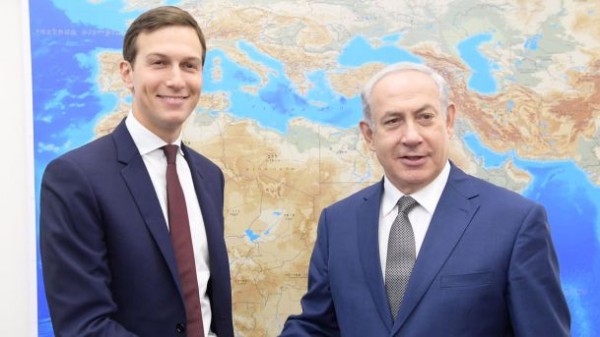
In reality, the part left out of the story is that the phone call to Kislyak on December 22, 2016, was made by Flynn at the direction of Jared Kushner, who in turn had been approached by Israeli Prime Minister Benjamin Netanyahu. Netanyahu had learned that the Obama Administrating was going to abstain on a United Nations vote condemning the Israeli settlements policy, meaning that for the first time in years a U.N. resolution critical of Israel would pass without drawing a U.S. veto. Kushner, acting for Netanyahu, asked Flynn to contact each delegate from the various countries on the Security Council to delay or kill the resolution. Flynn agreed to do so, which included a call to the Russians. Kislyak took the call but did not agree to veto Security Council Resolution 2334, which passed unanimously on December 23rd.
In taking the phone calls from a soon-to-be senior American official who would within weeks be part of a new administration in Washington, the Russians did nothing wrong, but the media is acting like there was some kind of Kremlin conspiracy seeking to undermine U.S. democracy. It would not be inappropriate to have some conversations with an incoming government team and Kislyak also did nothing that might be regarded as particularly responsive to Team Trump overtures since he voted contrary to Flynn’s request.
The phone call made at the request of Israel was neither benign or ethical as the Barack Administration was still in power and managing the nation’s foreign policy. At the time, son-in-law Jared Kushner was Trump’s point man on the Middle East. He and his family have extensive ties both to Israel and to Netanyahu personally, to include Netanyahu’s staying at the Kushner family home in New York. The Kushner Family Foundation has funded some of Israel’s illegal settlements and also a number of conservative political groups in that country. Jared has served as a director of that foundation and it is reported that he failed to disclose the relationship when he filled out his background investigation sheet for a security clearance. All of which suggests that if you are looking for possible foreign government collusion with the incoming Trumpsters, look no further.
And it should be observed that the Israelis were not exactly shy about their disapproval of Obama and their willingness to express their views to the incoming Trump. Kushner went far beyond merely disagreeing over an aspect of foreign policy as he was actively trying to clandestinely subvert and reverse a decision made by his own legally constituted government. His closeness to Netanyahu made him, in intelligence terms, a quite likely Israeli government agent of influence, even if he didn’t quite see himself that way.
Kushner’s actions, as well as those of Flynn, would most certainly have been covered by the Logan Act of 1799, which bars private citizens from negotiating with foreign governments on behalf of the United States and also could be construed as a “conspiracy against the United States.” But in spite of all that the investigation went after Flynn instead of Kushner. As Kushner is Jewish and certainly could be accused of dual loyalty in extremis, that part of the story obviously makes many in the U.S. Establishment and media uncomfortable, so it was and continues to be both ignored and expunged from the record as quickly as possible.
The second story, which has basically been made to disappear, relates to spying by Israel against critics in the United States. The revelation that Israel was again using its telecommunications skills to spy on foreigners came from an Oakland California federal court lawsuit initiated by Facebook (FB) against the Israeli surveillance technology company NSO Group. FB claimed that NSO has been using servers located in the United States to infect with spyware hundreds of smartphones being used by attorneys, journalists, human rights activists, critics of Israel and even of government officials. NSO allegedly used WhatsApp, a messaging app owned by FB, to hack into the phones and install malware that would enable the company to monitor what was going on with the devices. It did so by employing networks of remote servers located in California to enter the accounts.
NSO has inevitably claimed that they do indeed provide spyware, but that it is sold to clients who themselves operate it with the “advice and technical support to assist customers in setting up” but it also promotes its products as being “used to stop terrorism, curb violent crime, and save lives.” It also asserts that its software cannot be used against U.S. phone numbers.
Facebook, which did its own extensive research into NSO activity, alleges that NSO rented a Los Angeles-based server from a U.S. company called QuadraNet that it then used to launch 720 hacks on smartphones and other devices. It further claims in the court filing that the company reverse-engineering WhatsApp, using an program that it developed to access WhatsApp’s servers and deploy “its spyware against approximately 1,400 targets” before “…covertly transmit[ting] malicious code through WhatsApp servers and inject[ing]” spyware into telephones without the knowledge of the owners.”
The filing goes on to assert that the “Defendants had no authority to access WhatsApp’s servers with an imposter program, manipulate network settings, and commandeer the servers to attack WhatsApp users. That invasion of WhatsApp’s servers and users’ devices constitutes unlawful computer hacking.”
NSO, which is largely staffed by former (sic) Israeli intelligence officers, had previously been in the news for its proprietary spyware known as Pegasus, which “can gather information about a mobile phone’s location, access its camera, microphone and internal hard drive, and covertly record emails, phone calls and text messages.” Pegasus was reportedly used in the killing of Saudi dissident journalist Adnan Kashoggi in Istanbul last year and it has more recently been suggested as a resource for tracking coronavirus distance violators. Outside experts have accused the company of selling its technology and expertise to countries that have used it to spy on dissidents, journalists and other critics.
Israel routinely exploits the access provided by its telecommunications industry to spy on the host countries where those companies operate. The companies themselves report regularly back to Mossad contacts and the technology they provide routinely has a “backdoor” for secretly accessing the information accessible through the software. In fact, Israel conducts espionage and influence operations both directly and through proxies against the United States more aggressively than any other “friendly” country, which once upon a time included being able to tap into the “secure” White House phones used by Bill Clinton to speak with Monica Lewinsky.
Last September, it was revealed that the placement of technical surveillance devices by Israel in Washington D.C. was clearly intended to target cellphone communications to and from the Trump White House. As the president frequently chats with top aides and friends on non-secure phones, the operation sought to pick up conversations involving Trump with the expectation that the security-averse president would say things off the record that might be considered top secret.
A Politico report detailed how “miniature surveillance devices” referred to as “Stingrays” were used to imitate regular cell phone towers to fool phones being used nearby into providing information on their locations and identities. According to the article, the devices are referred to by technicians as “international mobile subscriber identity-catchers or IMSI-catchers, they also can capture the contents of calls and data use.”
Over one year ago, government security agencies discovered the electronic footprints that indicated the presence of the surveillance devices near the White House. Forensic analysis involved dismantling the devices to let them “tell you a little about their history, where the parts and pieces come from, how old are they, who had access to them, and that will help get you to what the origins are.” One source observed afterwards that “It was pretty clear that the Israelis were responsible.”
So two significant stories currently making the rounds have been bowdlerized and disappeared to make the Israeli role in manipulating and spying against the United States go away. They are only two of many stories framed by a Zionist dominated media to control the narrative in a way favorable to the Jewish state. One would think that having a president of the United States who is the most pro-Israel ever, which is saying a great deal in and of itself, would be enough, but unfortunately when dealing with folks like Benjamin Netanyahu there can never be any restraint when dealing with the “useful idiots” in Washington.
Philip M. Giraldi, Ph.D., is Executive Director of the Council for the National Interest, a 501(c)3 tax deductible educational foundation (Federal ID Number #52-1739023) that seeks a more interests-based U.S. foreign policy in the Middle East. Website is https://councilforthenationalinterest.org, address is P.O. Box 2157, Purcellville VA 20134 and its email is inform@cnionline.org.
Featured Video
or go to
Aletho News Archives – Video-Images
Book Review
The Maidan Killings and the False-Flag Case
By Freddie Ponton | 21st Century Wire | September 5, 2026
Before the killings that helped bring down Ukraine’s president in February 2014, American diplomats were discussing who should enter its government. In a leaked telephone call, senior State Department official Victoria Nuland told US ambassador Geoffrey Pyatt, “I think Yats is the guy,” referring to opposition leader Arseniy Yatseniuk. Washington had clear preferences and was working to advance them. Later that month, Yatseniuk became prime minister.
Ivan Katchanovski’s The Maidan Massacre in Ukraine examines the violence that preceded that transfer of power. Drawing on television footage, witness testimony, forensic examinations and Ukrainian court proceedings, he argues that elements of the opposition shot protesters and police in a false-flag operation. His case centres on evidence of protesters being shot from opposition-controlled locations, including Hotel Ukraina, overlooking the killing ground. … continue
Blog Roll
 Aletho News
- In August Hanning Treason Case- All Signs Point To Tel Aviv.
- France cleared dozens of military sales to Israel between May and September: Report
- France projects nuclear power as Macron pushes arsenal expansion
- The fallacy of US delusions about Iran’s economic collapse
- What changes with Lula or Flávio?
- Britain leads Western media’s demise through ‘fear porn’ narrative
- The Maidan Killings and the False-Flag Case
- Georgia’s Largest Healthcare System Will Fire Employees Who Refuse Flu Vaccine
- The Five-Year Fuel Crisis: Why the World Economy Is Paying for a War It Thinks Is Ending
- Trump’s Big Bluff on Iran
- If Americans Knew
- CIA Report Warns Israel Could Head Toward Civil War, Total Collapse
- Banker Who Exposed Howard Lutnick’s Ties to Epstein Warned of ‘Retaliation’ and ‘Personal Consequences’ in Last Post Before Suicide
- Israeli Attacks Kill Two Palestinians in Gaza
- Gaza genocide at 3: Israeli-U.S. cruelty and the smart, deep resistance to it are changing the world
- As genocide is about to enter 3rd year, little of Gaza remains– Daily Update
- “We See Our Homes Now From A Satellite, Like Strangers”
- Watch “Gaza: Doctors Under Attack”, originally censored by BBC
- NAZA: Israeli embassies in UK and US promote rival documentary to challenge Gaza genocide allegations
- David Ellison appoints Israeli to lead merged Paramount-Warner studios
- Turkish Red Crescent helps elderly Gaza man walk again after Israel confiscates his prosthetic limb
- No Tricks Zone
- Latest European Green Energy Debacle; Portugal’s Largest Flagship Solar Park Insolvent!
- Green Energy Debacle: German Expert Professor Fritz Vahrenholt Warns Of Severe Economic And Social Consequences
- Two More Paleo Reconstructions Affirm Meters-Higher Sea Levels Across Ireland, Brazil 7000-6000 Years Ago
- New Study: Earth And Venus Surface Warmth Largely Explained By Convection And Lapse Rate, Not CO2 Or Radiation
- 2025 Nature Paper Claiming Worsening Global Drought Gets RETRACTED …Heavily Flawed
- New Study: ‘Global Drought Shows No Detectable Recent Acceleration Under Climate Warming’
- Economic Masterminds: German Socialists Suggest Taxing Productivity Gains Stemming From Using AI
- The South China Sea Has Not Been Cooperating With The Climate Change Narrative
- Energy Crisis: Germany Enters Heating Season With Historically Low Gas Reserve Fill Levels
- New Study: The Antarctic Ice Sheet Gained Mass From 2020-2024 Due To Staggering Snow And Ice Accumulation

