And now, from the palatial Corbett Report studios in western Japan, it’s time for The 3rd Annual REAL Fake News Awards. Which media organization will take home the most Dinos for their dishonest reporting? Who will bear the shame of the biggest fake news story of the year? Find out in this year’s exciting gala broadcast!!
h/t to kit8642 who provides more details about the suspicious sourcing of this viral video clip in the nominations for these awards on corbettreport.com
THE AWARD FOR FAKEST FALSE FLAG COVER-UP OF THE YEAR GOES TO:
THE AWARD FOR FAKEST VIDEO FOOTAGE OF THE YEAR GOES TO:
ABC News for their “dramatic coverage” of “Turkey’s” military bombing “Kurd civilians” in a “Syrian border town”:
Dishonorable mentions go to Emannuelle Macron, Leo Dicaprio, Madonna and other Twitterati who posted there own fake news about the Amazon fire (h/t manbearpig)
THE AWARD FOR FAKEST ECONOMIC STATISTICS OF THE YEAR GOES TO:
The Japanese government, for their admission that 40% of the 56 key government economic releases are in fact fake, fudged or completely made up!
AND THE AWARD FOR FAKE NEWS STORY OF THE YEAR GOES TO:
A government, whatever its nature, rules as an imperial power over its people. The surest way to exercise this control is to prop up the illusion that it acts in the public interest. Paul Craig Roberts and Alvin Rabushka spelled out this salient fact in the March 1973 issue of Public Choice, in their article “A Diagrammatic Exposition of an Economic Theory of Imperialism,” and what they wrote is no less relevant today.
The act of voting is one of the props that sustains the delusion of self-rule. People do vote, but the candidates are decided by the oligarchy of organized interest groups. This is also the conclusion of a 2014 study by Princeton University professors Martin Gilens and Benjamin I. Page about the extent to which U.S. government policy reflects public preferences. Gilens and Page found that voters are, to all intents and purposes, irrelevant to their own “democratic” government:
“[The] preferences of the average American appear to have only a minuscule, near-zero, statistically non-significant impact upon public policy . . . Moreover, because of the strong status quo bias built into the U.S. political system, even when fairly large majorities of Americans favor policy change, they generally do not get it” (Perspectives on Politics, Vol. 12, No. 3, pp. 575, 76).
Instead of representing the common interest of the people, government answers to organized interest groups. Gilens and Page cite the dominance over policy of special interests who use public policy to serve their interests rather than the public’s. We see the effects of this plutocracy in the sharp rise in the inequality of income and wealth, a gap which has grown into a chasm.
Gilens and Page’s analysis of the Unelected Plutocracy of America is on the money, but their understanding of the threat to America’s democracy does not consider foreign policy, which is partly, if not largely, in the hands of a foreign country—Israel. It is not enough to lay the decline of American democracy at the feet of vested interests such as Wall Street, big banks, and the military–security complex, because it is not in their interest to have the government pursue foreign policy contrary to the national interest.
But operating contrary to the national interest is precisely what Washington has been doing. In the 21st century, Washington has squandered trillions of dollars on military aggression. Hundreds of thousands of U.S. military personnel have been killed, maimed or driven to suicide. The U.S. has derived no benefit from provoking the enmity of Muslim people, bullying NATO allies into abetting this belligerence or persecuting those who expose associated crimes. Even Donald Trump, who ran for the presidency on ending wasteful wars of aggression, continues this self-inflicted economic and political harm, most recently by waging economic war against Iran and sabre-rattling to provoke a shooting war.
The Trump administration is a continuation of decades of Washington’s kowtowing to the Israel Lobby. To appreciate the lack of independence of US foreign policy requires an act of intellectual courage, but few Americans are equipped for the trauma of knowing the truth. To borrow from The Matrix, not many are willing to take the “red pill” to see the reality behind the controlled explanation. “Blue pill” existence comes with a ready-made worldview based on controlled explanations in which believers find comfort, meaning and belonging. Anything that challenges this illusion, is discounted as conspiracy theory or anti-semitism.Comforting beliefs can take precedence over US national interests.
To “take the red pill” requires an inquisitive mind to reject illusion and to question fundamental assumptions. If it is irrational for a democratic state like the U.S. to harm its own people, damage its own economy and invite hostility by provoking needless wars, perhaps the U.S. is not really a democratic state and not really in charge of its own policy. From an American standpoint, the seemingly inexplicable acts of U.S. belligerence and punishment of those who pose no threat to America can be understood as the consequence of permitting Israeli money and influence to shape US foreign policy in the Middle East and to some extent elsewhere if it bears on Israeli interests.
The U.S. that was founded in 1776 is not the same U.S. that exists today. The founding fathers warned against foreign entanglements, but Washington has sought entanglement. Since the late 1940s, the U.S. has gotten entangled in the service of Israel’s interests. The importance of Israel’s interest to U.S. foreign policy has been elevated by a pervasive Christian prejudice, in which Jews are seen as religiously kindred and Muslims as religiously hostile.
In 1948 President Harry Truman took an infamous $2 million election campaign bribe from an American Zionist to support the creation of Israel. By doing so Truman became midwife to an ongoing war crime that has resulted in Washington aiding and abetting Israel’s theft of Palestine. Washington blackmailed and intimidated several UN delegations into supporting the 1947 partition of Palestine. For a country that boasted of its commitment to democracy and support for the UN Charter, Washington’s conduct made no sense. However, if one recognizes that Washington was acting in behalf of Israel, it becomes understandable.
With a foothold gained from Truman’s electoral opportunism, the domestic Israel Lobby gradually gained influence over the U.S. government to the point that today Washington serves Israel’s interest without thinking of its impact on US national interests and without regard to the adverse effects on American interests or those of other people.
After years of Washington’s growing service to Israel, President George H.W. Bush tried to pull back. President Bush thought that he could bring about a final peace treaty between Israel and the Palestinian leadership in Madrid based on “land for peace.”
Bush’s assertion of foreign policy independence infuriated Israel, which proceeded to stage overt and covert attacks on Bush. The overt attack occurred on Feb. 26, 1992, when the domestic Israeli pressure group calling itself, absurdly, the “The Committee on U.S. Interests in the Middle East,” took out a full-page ad in The New York Times to excoriate Bush for “pressuring” Israel to enter into negotiations. Its signatories included neoconservative Israel-firsters like Paul Wolfowitz, Richard Perle, Douglas Feith and Elliott Abrams.
According to a former Mossad agent, the covert attack took the form of a planned assassination of President Bush. Victor Ostrovsky in his book, By Way of Deception (pp. 281-282), writes that on Oct. 1, 1992, he received a nervous call from Ephraim, a Mossad officer of his acquaintance, who opposed the assassination: “They’re out to kill Bush… I mean really kill, as in ‘assassinate.’… during the Madrid peace talks.” Ephraim asked Ostrovsky to leak the plot in hopes the American government would act to prevent it. Ostrovsky did so in an Oct. 1, 1992, speech in Ottawa. From there, the leak made its way to former California congressman Pete McCloskey, the Secret Service, the State Department, the CIA, the U.S. embassy in Ottawa, and finally the press. The assassination was called off.
Bush’s assertion of independence from Israel resulted in Israel’s meddling in the 1992 presidential election which cost Bush re-election and marked the last time that a U.S. president would dare challenge Israel’s self-proclaimed right to murder, torture, dispossess and displace Palestinians.
The eight years of Bill Clinton’s presidency saw a consolidation of Israel’s power over Washington. Clinton showed his willingness to act in Israel’s interest by agreeing to set amounts of aid to Israel––imperial tribute in the view of some––even before he was sworn in as president. It was the Clinton administration that responded to Israeli pressure for action against Iraq by creating the illegal no-fly zones over Iraq, which caused the death of 500,000 Iraqi children. When asked about this by a reporter, Clinton’s Secretary of State Madeleine Albright said, “the price was worth it.” In other words, the death of a half a million Iraqi children served American and Israeli interests.
Israel’s influence over US foreign policy reached a zenith with George W. Bush. In the name of the “war on terror,” that is, the war on Israel’s enemies, the Bush regime subverted the US Constitution. The Bush government was filled with neoconservatives associated with the Project for a New American Century. The PATRIOT Act, drafted, according to his own admission three weeks prior to the events of September 11, 2001, by neoconservative Philip Zelikow, who later headed up the 9/11 Commission, became law despite the US Congress having no time to read and discuss the tyrannical legislation before passing it. The fact that a draft of the PATRIOT Act existed prior to 9/11 raises many questions. The passage of the act told Americans that Muslims were such a threat that Americans would have to acceptinfringements on their civil liberties. President Bush made that even more clear when he announced that he was setting aside the US Constitution and suspending habeas corpus.
During the Obama administration Israel dramatically demonstrated its power over the US government when the US Congress intervened in the dispute between Obama and Netanyahu over whose power was supreme in American politics, the power of the American president or Israel’s. Repudiating their own president, Congress invited Netanyahu to address a joint session of the House and Senate and responded to Netanyahu with many standing ovations.
Trump has perpetuated Israeli control over US foreign policy. Trump broke universal policy and recognized Jerusalem as Israel’s capital. He gave Syria’s Golan Heights to Israel, which was not Trump’s to give. He cut off aid to Palestine. He accepted Israel’s policy of illegally incorporating occupied Palestine into Israel.
Trump’s subservience to Israel brings into focus the famous words of Patrick Buchanan, Washington is “Israeli occupied territory.”
Greg Felton is the author of The Host & The Parasite––How Israel’s Fifth Column Consumed America, 3rd edition, available from thehostandtheparasite.com.
I’ve been writing and speaking for months about the looming danger of war with Iran, often to considerable skepticism.
In June, in an essay entitled “Eve of Destruction: Iran Strikes Back,” after the U.S. initiated its “maximum pressure” blockade of Iranian oil exports, I pointed out that “Iran considers that it is already at war,” and that the downing of the U.S. drone was a sign that “Iran is calling the U.S. bluff on escalation dominance.”
In an October essay, I pointed out that Trump’s last-minute calling off of the U.S. attack on Iran in June, his demurral again after the Houthi attack on Saudi oil facilities, and his announced withdrawal of U.S. troops from Syria were seen as “catastrophic” and “a big win for Iran” by the Iran hawks in Israel and America whose efforts New York Times(NYT) detailed in an important article, “The Secret History of the Push to Strike Iran.” I said, with emphasis, “It always goes to Iran,” and underlined that Trump’s restraint was particularly galling to hard-line zionist Republican Senators, and might have opened a path to impeachment. I cited the reported statement of a “veteran political consultant” that “The price of [Lindsey] Graham’s support… would be an eventual military strike on Iran.”
And in the middle of December, I went way out on a limb, in an essay suggesting a possible relation between preparations for war in Iran and the impeachment process. I pointed out that the strategic balance of forces between Israel and Iran had reached the point where Israel thinks it’s “necessary to take Iran down now,” in “the next six months,” before the Iranian-supported Axis of Resistance accrues even more power. I speculated that the need to have a more reliable and internationally-respected U.S. President fronting a conflict with Iran might be the unseen reason—behind the flimsy Articles of Impeachment—that explains why Pelosi and Schumer “find it so urgent to replace Trump before the election and why they think they can succeed in doing that.”
So, I was the guy chicken-littling about impending war with Iran.
But even I was flabbergasted by what Trump did. Absolutely gobsmacked. Killing Qassem Soleimani, Iranian general, leader of the Quds forces, and the most respected military leader in the Middle East? And Abu Mahdi al-Mohandes, Iraqi commander of the Popular Mobilization Forces (PMF) unit, Kataib Hezbollah? Did not see that coming. Rage. Fear. Sadness. Anxiety. A few days just to register that it really happened. To see the millions of people bearing witness to it. Yes, that happened.
Then there was the anxious anticipation about the Iranian response, which came surprisingly quickly, and with admirable military and political precision, avoiding a large-scale war in the region, for the moment.
That was the week that was.
But, as the man said: “It ain’t over ‘til it’s over.” And it ain’t over. Recognizing the radical uncertainty of the world we now live in, and recognizing that its future will be determined by actors and actions far away from the American leftist commentariat, here’s what I need to say about the war we are now in.
The first thing, the thing that is so sad and so infuriating and so centrally symptomatic of everything wrong with American political culture, is that, with painfully few exceptions, Americans have no idea of what their government has done. They have no idea who Qassem Soleimani was, what he has accomplished, the web of relationships, action, and respect he has built, what his assassination means and will bring. The last person who has any clue about this, of course, is Donald Trump, who called Soleimani “a total monster.” His act of killing Soleimani is the apotheosis of the abysmal, arrogant ignorance of U.S. political culture.
It’s virtually impossible to explain to Americans because there is no one of comparable stature in the U.S. or in the West today. As Iran cleric Shahab Mohadi said, when talking about what a “proportional response” might be: ”[W]ho should we consider to take out in the context of America? ‘Think about it. Are we supposed to take out Spider-Man and SpongeBob?… ‘All of their heroes are cartoon characters — they’re all fictional.” Trump? Lebanese Hezbollah’s Hassan Nasrallah said what many throughout the world familiar with both of them would agree with: “the shoe of Qassem Soleimani is worth the head of Trump and all American leaders.”
To understand the respect Soleimani has earned, not only in Iran (where his popularity was around 80%) but throughout the region and across political and sectarian lines, you have to know how he led and organized the forces that helped save Christians, Kurds, Yazidis and others from being slaughtered by ISIS, while Barack Obama and John Kerry were still “watching” ISIS advance and using it as a tool to “manage” their war against Assad.
In an informative interview with Aaron Maté, Former Marine Intelligence Officer and weapons inspector, Scott Ritter, explains how Soleimani is honored in Iraq for organizing the resistance that saved Baghdad from being overrun by ISIS—and the same could be said of Syria, Damascus, or Ebril:
He’s a legend in Iran, in Iraq, and in Syria. And anywhere where, frankly speaking, he’s operated, the people he’s worked with view him as one of the greatest leaders, thinkers, most humane men of all time. I know in America we demonize him as a terrorist but the fact is he wasn’t, and neither is Mr. Mohandes.
When ISIS [was] driving down on the city of Baghdad,…the U.S. armed and trained Iraqi Army had literally thrown down their weapons and ran away, and there was nothing standing between ISIS and Baghdad…
[Soleimani] came in from Iran and led the creation of the PMF [Popular Mobilization Forces] as a viable fighting force and then motivated them to confront Isis in ferocious hand-to-hand combat in villages and towns outside of Baghdad, driving Isis back and stabilizing the situation that allowed the United States to come in and get involved in the Isis fight. But if it weren’t for Qassem Soleimani and Mohandes and Kataib Hezbollah, Baghdad might have had the black flag of ISIS flying over it. So the Iraqi people haven’t forgotten who stood up and defended Baghdad from the scourge of ISIS.
So, to understand Soleimani in Western terms, you’d have to evoke someone like World War II Eisenhower (or Marshall Zhukov, but that gets another blank stare from Americans.) Think I’m exaggerating? Take it from the family of the Shah:
Beyond his leadership of the fight against ISIS, you also have to understand Soleimani’s strategic acumen in building the Axis of Resistance—the network of armed local groups like Hezbollah in Lebanon as well as the PMF in Iraq, that Soleimani helped organize and provide with growing military capability. Soleimani meant standing up; he helped people throughout the region stand up to the shit the Americans, Israelis, and Saudis were constantly dumping on them
More apt than Eisenhower and De Gaulle, in world-historical terms, try something like Saladin meets Che. What a tragedy, and travesty, it is that legend-in-his-own-mind Donald Trump killed this man.
Dressed to Kill
But it is not just Trump, and not just the assassination of Soleimani, that we should focus on. These are actors and events within an ongoing conflict with Iran, which was ratcheted up when the U.S. renounced the nuclear deal (JCPOA – Joint Comprehensive Plan of Action) and instituted a “maximum pressure” campaign of economic and financial sanctions on Iran and third countries, designed to drive Iran’s oil exports to zero.
The purpose of this blockade is to create enough social misery to force Iran into compliance, or provoke Iran into military action that would elicit a “justifiable” full-scale, regime-change—actually state-destroying—military attack on the country.
From its inception, Iran has correctly understood this blockade as an act of war, and has rightfully expressed its determination to fight back. Though it does not want a wider war, and has so far carefully calibrated its actions to avoid making it necessary, Iran will fight back however it deems necessary.
The powers-that-be in Iran and the U.S. know they are at war, and that the Soleimani assassination ratcheted that state of war up another significant notch; only Panglossian American pundits think the “w” state is yet to be avoided. Sorry, but the United States drone-bombed an Iranian state official accompanied by an Iraqi state official, in Iraq at the invitation of the Iraqi Prime Minister, on a conflict-resolution mission requested by Donald Trump himself. In anybody’s book, that is an act of war—and extraordinary treachery, even in wartime, the equivalent of shooting someone who came to parley under a white flag.
Indeed, we now know that the assassination of Soleimani was only one of two known assassination attempts against senior Iranian officers that day. There was also an unsuccessful strike targeting Abdul Reza Shahlai, another key commander in Iran’s Quds Force who has been active in Yemen. According to the Washington Post, this marked a “departure for the Pentagon’s mission in Yemen, which has sought to avoid direct involvement” or make “any publicly acknowledged attacks on Houthi or Iranian leaders in Yemen.”
Of course, because it’s known as “the world’s worst humanitarian crisis,” the Pentagon wants to avoid “publicly” bloodying its hands in the Saudi war in Yemen. Through two presidential administrations, it has been trying to minimize attention to its indispensable support of, and presence in, Saudi Arabia’s war in Yemen with drone strikes, special forces operations, refueling of aircraft, and intelligence and targeting. It’s such a nasty business that even the U.S. Congress passed a bipartisan resolution to end U.S. military involvement in that war, which was vetoed by Trump.
According to the ethic and logic of American exceptionalism, Iran is forbidden from helping the Houthis, but the U.S. is allowed to assassinate their advisors and help the Saudis bomb the crap out of them.
So, the Trump administration is clearly engaged in an organized campaign to take out senior Iranian leaders, part of what it considers a war against Iran. In this war, the Trump administration no longer pretends to give a damn about any fig leaf of law or ethics. Nobody takes seriously the phony “imminence” excuse for killing Soleimani, which even Trump says “doesn’t matter,” or the “bloody hands” justification, which could apply to any military commander. And let’s not forget: Soleimani was “talking about bad stuff.”
The U.S. is demonstrating outright contempt for any framework of respectful international relations, let alone international law. National sovereignty? Democracy? Whatever their elected governments say, we will keep our army in Syria to “take the oil,” and in Iraq to… well, to do whatever the hell we want. “Rules-based international order”? Sure, we make the rules and you follow our orders.
The U.S.’ determination to stay in Iraq, in defiance of the explicit, unequivocal demand of the friendly democratic government that the U.S. itself supposedly invaded the country to install, is particularly significant. It draws the circle nicely. It demonstrates that the Iraq war isn’t over. Because it, and the wars in Libya and Syria, and the war that’s ratcheting up against Iran are all the same war that the U.S. has been waging in the Middle East since 2003. In the end is the beginning, and all that.
We’re now in the endgame of the serial offensive that Wesley Clark described in 2007, starting with Iraq and “finishing off” with Iran. Since the U.S. has attacked, weakened, divided, or destroyed every other un-coopted polity in the region (Iraq, Syria, Libya) that could pose any serious resistance to the predations of U.S. imperialism and Israel colonialism, it has fallen to Iran to be the last and best source of material and military support which allows that resistance to persist.
And Iran has taken up the task, through the work of the Quds Force under leaders like Soleimani and Shahlai, the work of building a new Axis of Resistance with the capacity to resist the dictates of Israel and the U.S. throughout the region. It’s work that is part of a war and will result in casualties among U.S. and U.S.-allied forces and damage to their “interests.”
What the U.S. (and its wards, Israel and Saudi Arabia) fears most is precisely the kind of material, technical, and combat support and training that allows the Houthis to beat back the Saudis and Americans in Yemen, and retaliate with stunningly accurate blows on crucial oil facilities in Saudi Arabia itself. The same kind of help that Soleimani gave to the armed forces of Syria and the PMF in Iraq to prevent those countries from being overrun and torn apart by the U.S. army and its sponsored jihadis, and to Hezbollah in Lebanon to deter Israel from demolishing and dividing that country at will.
It’s that one big “endless” war that’s been waged by every president since 2003, which American politicians and pundits have been scratching their heads and squeezing their brains to figure out how to explain, justify (if it’s their party’s President in charge), denounce (if it’s the other party’s POTUS), or just bemoan as “senseless.” But to the neocons who are driving it and their victims—it makes perfect sense and is understood to have been largely a success. Only the befuddled U.S. media and the deliberately-deceived U.S. public think it’s “senseless,” and remain mired in the cock-up theory of U.S. foreign policy, which is a blindfold we had better shed before being led to the next very big slaughter.
The one big war makes perfect sense when one understands that the United States has thoroughly internalized Israel’s interests as its own. That this conflation has been successfully driven by a particular neocon faction, and that it is excessive, unnecessary and perhaps disruptive to other effective U.S. imperial possibilities, is demonstrated precisely by the constant plaint from non-neocon, including imperialist, quarters that it’s all so “senseless.”
The result is that the primary object of U.S. policy (its internalized Zionist imperative) in this war is to enforce that Israel must be able, without any threat of serious retaliation, to carry out any military attack on any country in the region at any time, to seize any territory and resources (especially water) it needs, and, of course, to impose any level of colonial violence against Palestinians—from home demolitions, to siege and sniper killings (Gaza), to de jure as well as de facto apartheid and eventual further mass expulsions, if deems necessary.
That has required, above all, removing—by co-option, regime change, or chaotogenic sectarian warfare and state destruction—any strong central governments that have provided political, diplomatic, financial, material, and military support for the Palestinian resistance to Israeli colonialism. Iran is the last of those, has been growing in strength and influence, and is therefore the next mandatory target.
For all the talk of “Iranian proxies,” I’d say, if anything, that the U.S., with its internalized Zionist imperative, is effectively acting as Israel’s proxy.
It’s also important, I think, to clarify the role of Saudi Arabia (KSA) in this policy. KSA is absolutely a very important player in this project, which has been consistent with its interests. But its (and its oil’s) influence on the U.S. is subsidiary to Israel’s, and depends entirely on KSA’s complicity with the Israeli agenda. The U.S. political establishment is not overwhelmingly committed to Saudi/Wahhabi policy imperatives—as a matter, they think, of virtue—as they are to Israeli/Zionist ones. It is inconceivable that a U.S. Vice-President would declare “I am a Wahhabi,” or a U.S. President say “I would personally grab a rifle, get in a ditch, and fight and die” for Saudi Arabia—with nobody even noticing. The U.S. will turn on a dime against KSA if Israel wants it; the reverse would never happen. We have to confront the primary driver of this policy if we are to defeat it, and too many otherwise superb analysts, like Craig Murray, are mistaken and diversionary, I think, in saying things like the assassination of Soleimani and the drive for war on Iran represent the U.S. “doubling down on its Saudi allegiance.” So, sure, Israel and Saudi Arabia. Batman and Robin.
Iran has quite clearly seen and understood what’s unfolding, and has prepared itself for the finale that is coming its way.
The final offensive against Iran was supposed to follow the definitive destruction of the Syrian Baathist state, but that project was interrupted (though not yet abandoned) by the intervention of Syria’s allies, Russia and Iran—the latter precisely via the work of Soleimani and the Quds Force.
Current radical actions like the two assassination strikes against Iranian Quds Force commanders signal the Trump administration jumping right to the endgame, as that neocon hawks have been “agitating for.” The idea—borrowed, perhaps from Israel’s campaign of assassinating Iranian scientists—is that killing off the key leaders who have supplied and trained the Iranian-allied networks of resistance throughout the region will hobble any strike from those networks if/when the direct attack on Iran comes.
Per Patrick Lawrence, the Soleimani assassination “was neither defensive nor retaliatory: It reflected the planning of the administration’s Iran hawks, who were merely awaiting the right occasion to take their next, most daring step toward dragging the U.S. into war with Iran.” It means that war is on and it will get worse fast.
It is crucial to understand that Iran is not going to passively submit to any such bullying. It will not be scared off by some “bloody nose” strike, followed by chest-thumping from Trump, Netanyahu, or Hillary about how they will “obliterate” Iran. Iran knows all that. It also knows, as I’ve said before, how little damage—especially in terms of casualties—Israel and the U.S. can take. It will strike back. In ways that will be calibrated as much as possible to avoid a larger war, but it will strike back.
Iran’s strike on Ain al-Asad base in Iraq was a case in point. It was preceded by a warning through Iraq that did not specify the target but allowed U.S. personnel in the country to hunker down. It also demonstrated deadly precision and determination, hitting specific buildings where U.S. troops work, and, we now know, causing at least eleven acknowledged casualties.
Those casualties were minor, but you can bet they would have been the excuse for a large-scale attack, if the U.S. had been entirely unafraid of the response. In fact, Trump did launch that attack over the downing of a single unmanned drone—and Pompeo and the neocon crew, including Republican Senators, were ”stunned” that he called it off in literally the last ten minutes. It’s to the eternal shame of what’s called the “left” in this country that we may have TuckerCarlson to thank for Trump’s bouts of restraint.
There Will Be Blood
But this is going to get worse, Pompeo is now threatening Iran’s leaders that “any attacks by them, or their proxies of any identity, that harm Americans, our allies, or our interests will be answered with a decisive U.S. response.” Since Iran has ties of some kind with most armed groups in the region and the U.S. decides what “proxy” and “interests” means, that means that any act of resistance to the U.S., Israel, or other “ally” by anybody—including, for example, the Iraqi PMF forces who are likely to retaliate against the U.S. for killing their leader—will be an excuse for attacking Iran. Any anything. Call it an omnibus threat.
The groundwork for a final aggressive push against Iran began back in June, 2017, when, under then-Director Pompeo, the CIA set up a stand-alone Iran Mission Center. That Center replaced a group of “Iran specialists who had no special focus on regime change in Iran,” because “Trump’s people wanted a much more focused and belligerent group.” The purpose of this—as of any—Mission Center was to “elevate” the country as a target and “bring to bear the range of the agency’s capabilities, including covert action” against Iran. This one is especially concerned with Iran’s “increased capacity to deliver missile systems” to Hezbollah or the Houthis that could be used against Israel or Saudi Arabia, and Iran’s increased strength among the Shia militia forces in Iraq. The Mission Center is headed by Michael D’Andrea, who is perceived as having an “aggressive stance toward Iran.” D’Andrea, known as “the undertaker” and “Ayatollah Mike,” is himself a convert to Islam, and notorious for his “central role in the agency’s torture and targeted killing programs.”
This was followed in December, 2017, by the signing of a pact with Israel “to take on Iran,” which took place, according to Israeli television, at a “secret” meeting at the White House. This pact was designed to coordinate “steps on the ground” against “Tehran and its proxies.” The biggest threats: “Iran’s ballistic missile program and its efforts to build accurate missile systems in Syria and Lebanon,” and its activity in Syria and support for Hezbollah. The Israelis considered that these secret “dramatic understandings” would have “far greater impact” on Israel than Trump’s more public and notorious recognition of Jerusalem as Israeli’s capital.
The Iran Mission Center is a war room. The pact with Israel is a war pact.
The U.S. and Israeli governments are out to “take on” Iran. Their major concerns, repeated everywhere, are Iran’s growing military power, which underlies its growing political influence—specifically its precision ballistic missile and drone capabilities, which it is sharing with its allies throughout the region, and its organization of those armed resistance allies, which is labelled “Iranian aggression.”
These developments must be stopped because they provide Iran and other actors the ability to inflict serious damage on Israel. They create the unacceptable situation where Israel cannot attack anything it wants without fear of retaliation. For some time, Israel has been reluctant to take on Hezbollah in Lebanon, having already been driven back by them once because the Israelis couldn’t take the casualties in the field. Now Israel has to worry about an even more battle-hardened Hezbollah, other well-trained and supplied armed groups, and those damn precision missiles. One cannot overstress how important those are, and how adamant the U.S. and Israel are that Iran get rid of them. As another Revolutionary Guard commander says: “Iran has encircled Israel from all four sides… if only one missile hits the occupied lands, Israeli airports will be filled with people trying to run away from the country.”
This campaign is overseen in the U.S. by the likes of “praying for war with Iran” Christian Zionists Mike Pompeo and Mike Pence, who together “urged” Trump to approve the killing of Soleimani. Pence, whom the Democrats are trying to make President, is associated with Christians United For Israel (CUFI), which paid for his and his wife’s pilgrimage to Israel in 2014, and is run by lunatic televangelist John Hagee, whom even John McCain couldn’t stomach. Pompeo, characterized as the “brainchild” of the assassination, thinks Trump was sent by God to save Israel from Iran. (Patrick Lawrence argues the not-implausible case that Pompeo and Defense Secretary Esper ordered the assassination and stuck Trump with it.) No Zionists are more fanatical than Christian Zionists. These guys are not going to stop.
And Iran is not going to surrender. Iran is no longer afraid of the escalation dominance game. Do not be fooled by peace-loving illusions—propagated mainly now by mealy-mouthed European and Democratic politicians—that Iran will return to what’s described as “unconditional” negotiations, which really means negotiating under the absolutely unacceptable condition of economic blockade, until the U.S. gets what it wants. Not gonna happen. Iran’s absolutely correct condition for any negotiation with the U.S. is that the U.S. return to the JCPOA and lift all sanctions.
Also not gonna happen, though any real peace-loving Democratic candidate would specifically and unequivocally commit to doing just that if elected. The phony peace-loving poodles of Britain, France, and Germany (the EU3) have already cast their lot with the aggressive American policy, triggering a dispute mechanism that will almost certainly result in a “snapback” of full UN sanctions on Iran within 65 days, and destroy the JCPOA once and for all. Because, they, too, know Iran’s nuclear weapons program is a fake issue and have “always searched for ways to put more restrictions on Iran, especially on its ballistic missile program.” Israel can have all the nuclear weapons it wants, but Iran must give up those conventional ballistic missiles. Cannot overstate their importance.
Iran is not going to submit to any of this. The only way Iran is going to part with its ballistic missiles is by using them. The EU3 maneuver will not only end the JCPOA, it may drive Iran out of the Nuclear Weapons Non-Proliferation Treaty (NPT). As Moon of Alabama says, the EU3 gambit is “not designed to reach an agreement but to lead to a deeper conflict” and ratchet the war up yet another notch. The Trump administration and its European allies are—as FDR did to Japan—imposing a complete economic blockade that Iran will have to find a way to break out of. It’s deliberately provocative, and makes the outbreak of a regional/world war more likely. Which is its purpose.
This certainly marks the Trump administration as having crossed a war threshold the Obama administration avoided. Credit due to Obama for forging ahead with the JCPOA in the face of fierce resistance from Netanyahu and his Republican and Democratic acolytes, like Chuck Schumer. But that deal itself was built upon false premises and extraordinary conditions and procedures that—as the current actions of the EU3 demonstrate—made it a trap for Iran. [And Obama never implemented the US obligations negotiated under JCPOA, the agreement was invalidated prior to his leaving office.]
With his Iran policy, as with Jerusalem and the Golan Heights, what Trump is doing—and can easily demonstrate—is taking to its logical and deadly conclusion the entire imperialist-Zionist conception of the Middle East, which all major U.S. politicians and media have embraced and promulgated over decades, and cannot abandon.
With the Soleimani assassination, Trump both allayed some of the fears of Iran war hawks in Israel and the U.S. about his “reluctance to flex U.S. military muscle” and re-stoked all their fears about his impulsiveness, unreliability, ignorance, and crassness. As the Christian Science Monitor reports, Israel leaders are both “quick to praise” his action and “having a crisis of confidence” over Trump’s ability to “manage” a conflict with Iran—an ambivalence echoed in every U.S. politician’s “Soleimani was a terrorist, but…” statement.
Trump does exactly what the narrative they all promote demands, but he makes it look and sound all thuggish and scary. They want someone whose rhetorical finesse will talk us into war on Iran as a humanitarian and liberating project. But we should be scared and repelled by it. The problem isn’t the discrepancy in Trump between actions and attitudes, but the duplicity in the fundamental imperialist-Zionist narrative. There is no “good”—non-thuggish, non-repellent—way to do the catastrophic violence it demands. Too many people discover that only after it’s done.
Trump, in other words, has just started a war that the U.S. political elite constantly brought us to the brink of, and some now seem desperate to avoid, under Trump’s leadership. But not a one will abandon the Zionist and American-exceptionalist premises that make it inevitable—about, you know, dictating what weapons which countries can “never” have. Hoisted on their own petard. As are we all.
To be clear: Iran will try its best to avoid all-out war. The U.S. will not. This is the war that, as the NYTreports, “Hawks in Israel and America have spent more than a decade agitating for.” It will start, upon some pretext, with a full-scale U.S. air attack on Iran, followed by Iranian and allied attacks on U.S. forces and allies in the region, including Israel, and then an Israeli nuclear attack on Iran—which they think will end it. It is an incomprehensible disaster. And it’s becoming almost impossible to avoid.
The best prospect for stopping it would be for Iran and Russia to enter into a mutual defense treaty right now. But that’s not going to happen. Neither Russia nor China is going to fight for Iran. Why would they? They will sit back and watch the war destroy Iran, Israel, and the United States.
Billionaire George Soros has unveiled a new ambitious project: creating a global university network that would save the world from climate change and rescue democracy itself from ‘dictators’ like US President Donald Trump.
The 89-year-old grey eminence of liberal globalism announced “the most important project of my life” on Thursday at the World Economic Forum in Davos, Switzerland. Describing the current state of the world as dire, with the strongest powers “in the hands of would-be or actual dictators,” Soros said he would put forth $1 billion towards the creation of the Open Society University Network, revolving around his own Central European University (CEU).
The announcement came as part of Soros’s meandering speech to the gathering of global elites, which painted a dire picture of the world in the hands of “would-be or actual dictators” – he singled out by name Trump, Chinese President Xi Jinping and India’s Narendra Modi – and paragons of “open society” such as the European Union defeated by the UK decision to vote in a pro-Brexit government.
Soros described Trump as a “con man and the ultimate narcissist who wants the world to revolve around him,” accusing the US leader of wanting to “impose his alternative reality not only on his followers but on reality itself.” Just moments later, however, he praised Trump’s hard-line China policy and lamented that it does not go far enough.
The Hungarian-born billionaire held up climate change as a possible rallying cry of the “open society” adherents. He also praised the student-led protests in Hong Kong, holding them up as an example of what young people around the world can do when properly motivated.
This was the lead-in to his university project reveal, through which Soros hopes to unite all “academically excellent but politically endangered scholars” across the globe, whatever that means.
Continuing his crusade against social media, which he also launched in Davos two years ago, Soros slammed Facebook as having “a kind of informal mutual assistance operation” with Trump.
“Facebook will work together to re-elect Trump, and Trump will work to protect Facebook so that this situation cannot be changed and it makes me very concerned about the outcome for 2020,” he said, according to Bloomberg.
“This is just plain wrong,” Facebook spokesman Andy Stone said when asked about Soros’s comments, for which the ‘Open Society’ magnate did not offer any evidence. Soros has previously funded Facebook’s third-party “fact checker” programs officially designed to “defend democracy.”
While claiming to champion democracy and “open society,” Soros has used massive amounts of money to influence national and local politics in the US, giving $5 million so far to the Democrats’ 2020 efforts to unseat Trump but also bankrolling local prosecutors with radical agendas.
Foreign Minister Mohammad Javad Zarif has reaffirmed Iran’s readiness for talks with all its neighbors amid tensions in the Persian Gulf region.
“Iran remains open to dialogue with its neighbors, and we declare our readiness to participate in any complementary work that is in the interest of the region, and we welcome any step that restores hope to its people and brings them stability and prosperity,” Zarif said in a tweet in Thursday.
The tweet was in Arabic, which suggests it was addressed to the Persian Gulf littoral Arab countries. It came a day after Saudi Foreign Minister Prince Faisal bin Farhan said Riyadh was ready for talks with Tehran “but it is really up to Iran.”
The top Saudi diplomat, however, repeated the baseless claims against Iran’s role in the region, adding that the precondition for dialog is for the Islamic Republic to accept it “cannot further its regional agenda through violence.”
Speaking from the World Economic Forum in Davos, he said he was glad the region has “avoided any escalation” with Iran, and that “many countries” have offered to mediate talks with Tehran.
Meanwhile, the Iranian president’s chief of staff, Mahmoud Vaezi, said Wednesday that Tehran and Riyadh should work together to overcome their problems.
“The relations between Iran and its neighbor Saudi Arabia should not become like the relationship between Tehran and the United States … Tehran and Riyadh should work together to resolve their problems,” Vaezi said.
At an event in the Indian city of Mumbai on Friday in coordination with All India Association of Industries (AIAI), Zarif also voiced Iran’s readiness to hold talks with Saudi Arabia and other Persian Gulf countries to promote regional security.
He added that Iran has also presented proposals on ways to establish peace in the Strait of Hormuz.
In an address to the 74th session of the United Nations General Assembly in September 2019, President Hassan Rouhani said as a steward of maritime security in the Persian Gulf and the Strait of Hormuz, Iran invites all countries that are affected by developments in the strategic region to join the country’s new regional peace initiative, dubbed Hormuz Peace Endeavor (HOPE).
Iran’s initiative comes as the US has been trying to persuade its allies into a maritime coalition purportedly seeking to boost security in the Persian Gulf, after it blamed Tehran for two separate attacks on oil tankers in the Gulf of Oman in May and June, without providing any credible evidence to back up the allegation, which Iran has categorically rejected.
Tehran has repeatedly said outsiders not only cannot safeguard the region, but will fuel tensions there. Iran believes it is the countries of the very region which can ensure regional peace.
Prior to the Hormuz initiative, Iran had offered to sign non-aggression agreements with all countries in the Persian Gulf region.
Zarif also said in late May 2019 that Iran sought the best of relations with the Persian Gulf littoral countries and would welcome any proposals for dialog and de-escalation toward that end.
Billions of US taxpayers’ dollars will continue to be funnelled into Israel in the next fiscal year, and for many years in the foreseeable future. Republican and Democratic Senators have recently ensured just that, passing a Bill aimed at providing Israel with $3.3 billion in aid every year.
The Bill, co-sponsored by Democratic Senator Chris Coons and Republican Senator Marco Rubio, was passed on 9 January, only one day after Iran struck US positions in Iraq. Enthusiasm to push the Bill forward was meant to be an assurance to Tel Aviv from Washington that the US is committed to Israel’s security and military superiority in the Middle East.
Despite a palpable sense of war fatigue among all Americans, regardless of their political leaning, their country continues to sink deeper into Middle East conflicts simply because it is unable – or perhaps unwilling — to challenge Israel’s benefactors across the US government. “What’s good for Israel is good for America” continues to be the supreme maxim within Washington’s political elites, despite the fact that such irrational thinking has wrought disasters on the Middle East as a whole, and is finally forcing a hasty and humiliating American retreat.
The latest aid package to Israel will officially put into law a “Memorandum of Understanding” that was reached between the right-wing government of Israeli Prime Minister Benjamin Netanyahu and the Barack Obama administration in 2016. At the time, Obama had offered Israel the largest military aid package in US history.
Senator Rubio explained the passing of the recent Bill in terms of the “unprecedented threats” that are supposedly faced by Israel. Coons, meanwhile, said that “the events of the past few days [the US-Iran escalation], were a stark reminder of the importance of US assistance to Israel’s security.”
What is particularly odd about Coons’ statement is the fact that it was not Israel, but US positions in Iraq that were struck by Iranian missiles, and that they were fired in response to the killing of Iranian military commander Qassem Soleimani.
Yet, the American taxpayers’ funding of Israel’s military adventures continues unabated, despite the rapidly changing political reality in the Middle East, and the shifting US role in the region. This confirms further that the blind US support of Israel is not motivated by a centralised, distinctly American, strategy that aims to serve US interests. Instead, the unconditional – and, often, self-defeating — US government funding of the Israeli war machine is linked largely to domestic American politics and, indeed, the unparalleled power wielded by the pro-Israel lobby in the United States.
According to the public policy research institute of the United States Congress, the Congressional Research Centre (CRS), between 1946 and 2019 (including the requested funds for 2020) US aid to Israel has exceeded $142 billion. Most of this immense sum of money — over $101 billion — went directly to the Israeli military budget, while over $34 billion and $7 billion went to Israel in terms of economic aid and missile defence funding respectively.
It is becoming increasingly obvious that the US no longer possesses a well-defined and centralised strategy in the Middle East; President Donald Trump changes American priorities from one speech or tweet to the next. However, the one consistent key phrase in whatever political agenda happens to be championed by Washington in the region at any particular time is: “Israel’s security”.
This precarious term seems to be linked to every American action pertaining to the Middle East, as it has for decades under every American administration, without exception. Wars have been launched or funded in the name of Israel’s security; human rights have been violated on a massive scale; the five-decade — and counting — military occupation of Palestine, the protracted siege of the impoverished Gaza Strip and much more, have all been carried out, defended and sustained in the name of Israel’s security.
US aid to Israel — the occupying state — continues, while all American aid to the Palestinians — the people under Israeli occupation — has been cut off, including the $300 million annual donation to the UN Agency responsible for the welfare of Palestinian refugees, UNRWA. The Agency has provided education, healthcare and shelter for millions of refugees since 1949, but is now, bizarrely, seen by both Israel and the US as “an obstacle to peace”.
Inexplicably, Israel receives roughly “one-third of the American foreign-aid budget, even though (it) comprises just .001 percent of the world’s population and already has one of the world’s higher per capita incomes,” wrote Professor Stephen Zunes in the Washington Report on Middle East Affairs.
This massive budget includes much more than the $3.3 billion of annual funding, but the other amounts and perks rarely make headlines. Anywhere between $500 million to $800 million is given to Israel every year as part of a missile defence package; an additional $1 billion benefits Israel in the form of tax-deductible donations, while $500 billion is invested in Israeli bonds.
Then there are the loan guarantees, where the US government assumes the responsibility for billions of dollars that Israel can access as a borrower from international creditors. If Israel defaults on its loans, it is the legal responsibility of the US government to offset the interest on the borrowed money.
Since 1982, Israel has been receiving US aid as a lump sum, as opposed to scheduled payments, as happens with other countries. To fulfil its self-imposed obligations to Israel, the US government borrows the money, and is thus left to pay interest on the loans. “Israel even lends some of this money back through US treasury bills and collects the additional interest,” Zunes explained.
US relations with Israel are not governed by the kind of political wisdom that is predicated on mutual benefit. But they are not entirely irrational either, as the American ruling classes have aligned their interests, their perception of the Middle East and their country’s role in that region with that of Israel, thanks to years of media and official indoctrination.
Despite the fact that the US is retreating from the region, lacking strategy and future vision, lawmakers in Washington are congratulating themselves on passing yet another generous aid package to Israel. They feel proud of their great feat because, in their confused thinking, a ‘secured’ Israel is the only guarantor of US dominance in the Middle East. That is a theory that has been proven false, time and time again.
This week on the de-program James digs up an old New York Times report on the CIA’s “mighty wurlitzer,” their global propaganda network that included hundreds of journalists, editors, academics, publishing houses, newspapers, magazines and front companies. Although the Times piece is, as expected, a limited hangout, it does provide some interesting pieces of the global intelligence propaganda puzzle.
Despite Trump’s pledge to ‘drain the swamp’ and reduce the US military’s global footprint, a chief architect of the 2003 Iraq War has the ear of the White House on Iran. What could possibly go wrong?
As Donald Trump’s first term dwindles, it appears his new campaign slogan will be “if you can’t beat the swamp, join it.” That much seems evident not only from the Trump administration’s courting of diehard hawks – gung-ho guys like Elliott Abrams and Mike Pompeo – but by the recent news that David Wurmser was offering counsel to John Bolton, former National Security Advisor to the White House.
It should be briefly recalled that Wurmser contributed heavily to the report that argued Iraqi President Saddam Hussein was harboring weapons of mass destruction. That claim was eventually proven to be ‘bad intelligence,’ but not before a whole lot of damage was done.
Wurmser gets another shot
According to journalist Eli Lake, Wurmser built the case for “regime disruption” against Iran in a series of memos sent to Bolton in May and June 2019, a period when tensions between Tehran and Washington were peaking in the Persian Gulf. Lake, who says he was privy to the memos thanks to a high-level source, provides a glimpse into Wurmser’s hawkish thought processes, revealing he told Bolton that offensive military action against Iran would “rattle the delicate internal balance of forces… which the regime depends for stability and survival.”
On another occasion, after Iran had downed a US drone, Wurmser suggested in a memo (dated June 22) a retaliatory attack “on someone like Soleimani or his top deputies.” Judging by Bolton’s well-known aggressive stance on Iran, however, he probably did not require much convincing from Wurmser to go after Tehran with both guns blazing.
The revelation that Wurmser was feeding Bolton advice sheds a much-needed light – albeit an opaque one – on Trump’s inexplicable decision in early January to “take out” General Qassem Soleimani, the leader of Iran’s elite Quds Force. That high-risk move, carried out on the territory of Iraq, prompted Tehran to respond days later with calibrated strikes on two US military bases inside of Iraq. Today, the situation remains volatile as rhetoric between the two sides has replaced – at least for the time being – outright violence.
Now the question: what could have compelled Trump to place any trust in Wurmser, whose resume reads like that of a bull in a china shop? One possibility is that Trump had no idea Wurmser was feeding Bolton and other members of his administration what amounted to yet more regime change shenanigans in the Middle East. This seems plausible considering the contradictory messages the White House was sending immediately following Soleimani’s cold-blooded murder.
Secretary of State Mike Pompeo, for example, claimed the US had specific information on “imminent” Iranian attacks “against American facilities, including American embassies [and] military bases.” Trump, meanwhile, didn’t sound any more confident with regards to the “imminent threat” of an Iranian attack when he told Fox News, “probably it was going to be the embassy in Baghdad.”
Stranger yet, Defense Secretary Mark Esper, perhaps being more forthcoming than is usual for a military man with secrets to protect, admitted “I didn’t see [evidence], with regard to four embassies” being targeted for attack by Iran. Esper eventually came around to saying that he “shared the president’s view” of an imminent attack from Iran.
It seems plausible that the Trump administration could not get its story straight on where the information about Iran and an “imminent attack” had originated, because admitting it had derived from ‘the swamp’ would not have sat well with their voters. That is certainly no small consideration in an election year.
Why court neocons in the first place?
When Trump hired John Bolton as his National Security Advisor in March 2018, he wasn’t just opening the corridors of power to the notorious hawk, as he may have imagined. The US leader opened the door to all of Bolton’s former colleagues and confidants who share Bolton’s dangerous obsession with going to war with Iran. As a side note, it is worth pondering whether Trump was compelled to hire Bolton because he understood he is not at liberty to abandon ‘the swamp’ as it simply wields too much power in Washington.
What is more likely is that Trump overestimated himself, believing that he was smart enough to stay one step ahead of Bolton and his swamp contacts – like the shadowy Washington insider Wurmser, who in 1996 co-authored another report, entitled, ‘A Clean Break: A New Strategy for Securing the Realm.’ Drafted specifically for incoming Israeli Prime Minister Benjamin Netanyahu, the paper promoted the idea of preemptive strikes against Iran and Syria.
So why would Trump take on such a risk? Why not bring in some fresh red-blooded conservative policymakers who genuinely want to see US troops extracted from quagmires around the Middle East and North Africa? Why all this talk about ‘draining the swamp’ when the worst of the swamp creatures are awarded such powerful positions? Perhaps Trump imagined that Bolton’s mustachioed scowl would be enough to bring enemies around to the negotiating table – gaining “leverage” before confronting your opponents, as the real estate developer advised in ‘Art of the Deal.’
Whatever the case may be, the US leader seriously underestimates the fact that there are people out there – the John Boltons and David Wurmsers of the world – who are not looking for the ‘deal of the century’. These people have spent their entire careers lobbying for military confrontation and regime change, as General Wesley Clark revealed with the “seven countries in five years” plan. They will pull any trick in the book to get their wars – and all of the lucrative defense contracts that follow.
Although Trump may have squeaked by – so far – without full-blown military confrontation in places like North Korea, Syria and Venezuela, sooner or later he may get a bad roll of the dice. In fact, he may already have gambled wrongly with the warmongers he allowed into his administration, thereby setting Iran and the United States, and possibly the world, on a deadly crash course. In that case, Trump would have nobody to blame but himself.
The killing of Iranian General Soleimani was big news. There were a few points made in the Western mainstream media about its legality being dubious, but nobody seems to be concerned that it contravened international law, in addition to be totally amoral. One wonders if any of the drone operators, the little key-tapping techno-dweebs thousands of miles away, were awarded a medal for their gallantry in prodding buttons to blast human beings to shards of flesh and bone.
It’s not impossible that such awards will be handed out, because there is a notorious precedent. The captain of the warship USS Vincennes which fired a missile that shot down an Iranian airliner killing 254 Iranians and 36 equally innocent citizens of other countries, was awarded the Legion of Merit for “exceptionally meritorious conduct.” And we’ll pass over the fact that those responsible for shooting down the Ukrainian airliner on January 8 are to be punished and that Iran’s President Hassan Rouhani declared the incident to have been an “unforgivable error”, while there was never an apology from the United States for killing 254 Iranians, or anyone else. Indeed, Newsweeknoted that then-Vice President George HW Bush told an August 1988 election campaign rally a few weeks after the incident that “I will never apologize for the United States — I don’t care what the facts are. I’m not an apologize-for-America kind of guy.”
GHW Bush has a notable successor in Donald Trump, who is not the kind of guy who apologises for anything. His confused and semi-coherent reasoning for killing Soleimani included such gems as he “was plotting imminent and sinister attacks on American diplomats and military personnel, but we caught him in the act” and “We caught a total monster and we took him out.” In a television interview he declared that “plus, he was going after — in our opinion, our very intelligent opinion, he was going after our embassies, and things could have happened.”
But as reported by the Washington Post, “No warnings were issued to staff at the embassy in Iraq or any other unnamed embassies” concerning any “imminent” attack. In other words, Trump was telling yet more lies, and in this case lying to justify an illegal killing.
The murders in Iraq were the latest in a long line of assassinations and collateral killings by US drone-fired missiles all over the world. The worst incidents last year included a video game shoot in September when in Afghanistan, according to Reuters, “a US drone strike intended to hit an Islamic State hideout . . . killed at least 30 civilians resting after a day’s labour in the fields, officials said. The attack also injured 40 people after accidentally targeting farmers and labourers who had just finished collecting pine nuts. Haidar Khan, who owns the pine nut fields, said about 150 workers were there for harvesting, with some still missing as well as the confirmed dead and injured.” There was no inquiry, no explanation, no expression of regret — it was the normal, the usual, the always-expected condescending drivel from a Pentagon spokesman that “we are aware of allegations of the death of non-combatants and are working with local officials to determine the facts.” Then silence, apart from the grieving of widows and orphans.
On December 1 the New York Timestold us that “an American drone strike on a car carrying a woman who had just given birth in south-eastern Afghanistan left five people dead, including the mother, three of her relatives and the driver . . . The woman, Malana, 25, had given birth to a son, her second child, at home. But her health had deteriorated soon after and relatives had been taking her to a clinic. On their way home, their vehicle was hit.” Out trotted the usual hogwash from a US spokesman that “We are aware of the allegations of civilian casualties and working with local authorities to determine the veracity of these claims.” And ever afterwards — silence. The dead woman’s new baby wasn’t in the car that was blasted to bits by the drone-fired missile, and will no doubt grow up a lover of Western culture.
On and on they go, with one of the latest atrocity being on January 8, when “more than 60 civilians were killed or wounded in a US drone attack targeting a top Taliban splinter-group commander in the western Afghanistan province of Herat.” NATO was in on this one, and its spokesman said there had been “a defensive air strike in support of Afghan forces”, confirming it was carried out by a US drone. Nobody apart from local Afghan officials knows anything about it, because it’s too dangerous for western reporters to travel in Afghanistan trying to investigate deception and lies about drone strikes or anything else. Afghanistan’s Khaama Press agency reported that “tribal elders in southern Herat province called on the government to launch an immediate investigation about the attack that took the lives of innocent civilians” but nothing will be done. After all, there are only a few dozen utterly stricken Afghan families, and they don’t matter to the Kabul government any more than they do to the video game missile controllers launching death and hideous destruction from thousands of miles away.
The drone expert Professor Peter Lee of the University of Portsmouth in the UK put it well in early January by observing that “When Reaper [drone] crews have followed someone for days or weeks, their target is not just pixels on a screen but a living human being. Operators watch targets spend time with family and friends and even playing with their children. Crews, commanders and image analysts also continue to watch from above after a missile or bomb strike, conducting battle damage assessment. They see the bits of bodies being collected and taken for burial. They see grieving, devastated family members.”
Trump says he killed Soleimani because he was “the world’s top terrorist” who “viciously wounded and murdered thousands of US troops” which is absolute rubbish. But even if it were true, and there was something in international law that permitted his murder, what about the others who were killed by Trump’s Hellfire missiles? It is said there were nine other people blown to pieces, one of whom was head of Iraq’s militia forces. There was no explanation from Trump or any of his people concerning why these people were killed along with Soleimani, because it could hardly be claimed that they too were planning to blow up US embassies or plotting “imminent attacks”. Some were bodyguards, for example, and while it may be considered wrong that anyone should have worked for General Soleimani in that or any other capacity, their employment did not merit being killed by a US drone strike.
Which brings us to their widows and orphans, because it would be interesting to know what story Trump and his people could come up with that could possibly justify their punishment.
The assassination of Soleimani was a flagrant crime, but the general feeling in the US is that it was vindicated because he was an evil person who hated America. The button-pushing drone assassins most probably feel professionally and even morally satisfied that they carried out the orders of the president to kill him. But how can they — how can anyone — come to terms with the “grieving, devastated family members” of the anonymous people who die as what used to be called “collateral damage”? The innocent widows and orphans are on the conscience of the world, but the drone attacks will continue.
While the current Liberal government claims to be progressive and in favour of a rules-based international order, promotion of democracy and world peace, its actions regarding Iran demonstrate that the primary drivers of Canadian foreign policy remain US Empire geo-political interests and the rich and powerful.
(This previous article argues this has long been the case.)
While Israeli nationalists and Conservatives demand new measures targeting Iran, the reality is ordinary Canadians will not benefit from war with the 18thmost populous country in the world. The families of Iranian Canadians will certainly not benefit.
Despite election promises to the contrary, Justin Trudeau’s government has continued important components of the previous Conservative government’s ‘low-level war’ against Iran.
Ottawa has no diplomatic relations with Iran, maintains a series of sanctions on the country and lists Tehran as a state sponsor of terrorism. Canadian troops are also stationed on Iran’s border partly to counter its influence and Canada recently gifted $28 million worth of Iranian assets in this country to Americans who lost family members to purported Hamas and Hezbollah attacks decades ago.
The Liberals repeatedly promised to restart diplomatic relations with Iran. Before becoming prime minister Trudeau told the CBC, “I would hope that Canada would be able to reopen its mission [in Tehran].” In May 2016 foreign minister Stéphane Dion said, “Canada’s severing of ties with Iran had no positive consequences for anyone: not for Canadians, not for the people of Iran, not for Israel, and not for global security.” Five months later Trudeau added, “Canada must return to Iran to play a useful role in that region of the world.”
While the Liberals have dialed down the Harper government’s most bombastic rhetoric against Tehran, they have not restarted diplomatic relations or removed that country from Canada’s state sponsor of terrorism list.
The Trudeau government has criticized Iranian human rights abuses while mostly ignoring more flagrant rights violations in Saudi Arabia and the other Gulf monarchies. In January 2018 foreign minister Chrystia Freeland said, “Canada is deeply troubled by the recent deaths and detentions of protesters in Iran” and four months later tweeted, “our government is committed to holding Iran to account for its violations of human and democratic rights.” Two months ago Global Affairs stated, “Iran must ensure that its people enjoy the rights and freedoms they deserve.”
In June 2018 Liberal parliamentarians supported a Conservative MP’s private member’s motion that “strongly condemns the current regime in Iran for its ongoing sponsorship of terrorism around the world, including instigating violent attacks on the Gaza border.” In effect, the resolution claimed Iran was responsible for Israel killing Palestinians peacefully protesting the US moving its embassy to Jerusalem, siege of Gaza and historic theft of their land. The motion also called on Canada to “immediately cease any and all negotiations or discussions with the Islamic Republic of Iran to restore diplomatic relations” and to make the highly provocative move of listing the Islamic Revolutionary Guard Corps as a terrorist entity. A demand B’nai B’rith and the Conservative party have restated in recent days.
Ottawa has continued to present a yearly UN resolution critical of the human rights situation in Iran. In response to Canada targeting it, Iran’s Deputy Representative to the UN, Eshaq Al-e Habib, said in November 2019, “how can a supporter of apartheid in Palestine pose itself as a human rights defender in Iran?”
Similarly, the Standing Committee on Foreign Affairs and International Development participates in the annual “Iran Accountability Week” on Parliament Hill, which showcases individuals such as Foundation for the Defense of Democracies CEO Mark Dubowitz, who helped kill the Iran nuclear deal and pushed harsh sanctions against any country doing business with Iran. Dubowitz was a senior research fellow at the University of Toronto’s Munk School of Global Affairs. In 2015 Global Affairs gave the Munk School’s Digital Public Square $9 million to expand an anti-Iranian initiative.
While they ostensibly backed the “p5+1 nuclear deal” with Iran, the Liberals’ promoted a one-sided view of the 2015 Joint Comprehensive Plan of Action (JCPOA) between Iran and the US, France, Germany, Russia and China. Canada put up more than $10 million for the International Atomic Energy Agency (IAEA) to monitor and verify Iran’s implementation of its commitments under the JCPOA. Iran has consistently been in compliance with JCPOA’s strict rules regarding its uranium enrichment. Nonetheless, the Donald Trump administration withdrew from the JCPOA in May 2018 and re-imposed tough new sanctions on other countries’ companies doing business with Iran.
For their part, the Western European signatories to the agreement have largely failed to stand-up to US pressure by creating the space for their companies to do business with Iran and three days ago the UK, Germany and France delivered a further blow to an agreement on life support. In a January 14 release titled “Canada supports diplomatic efforts established for Iran to return to full implementation of Joint Comprehensive Plan of Action” Global Affairs expressed “support” for the UK, Germany and France “activating the Dispute Resolution Mechanism” under the JCPOA and “urged Iran to immediately restore its full commitments to the JCPOA.” But, this position amounts to calling on Iran to abide by a deal it receives no benefits from as its economy is crippled by sanctions.
The Liberals also legitimated the illegal US sanctions on Iran when they arrested Huawei’s chief financial officer, Meng Wanzhou,at the Vancouver airport 13 months ago.The US claimed Meng’s company defied its illegal sanctions against Iran. But, between when the US judicial system sought her detention and the Trump administration requested Ottawa detain her, Meng traveled to six countries with US extradition treaties. Only Canada arrested her.
At the military level Ottawa also aligned with the US-Saudi-Israeli axis stoking conflict with Iran. An April 2016 Global Affairs memo authorizing Light Armoured Vehicle export permits to the House of Saud noted, “Canada appreciates Saudi Arabia’s role as a regional leader promoting regional stability, as well as countering the threat posed by Iranian regional expansionism.” At the November 2019 Dubai International Air Chiefs Conference the Commander of the Royal Canadian Air Force, Al Meinzinger, participated in a panel titled “Watch out Iran!” A year earlier Chief of the Defence Staff Jonathan Vance told a parliamentary committee that Iran was “an interested party and, in some cases, a malign agent in Iraq.”
Five hundred Canadian troops are in Iraq partly to counter Iranian influence. Specifically, the Canadian-led NATO Mission Iraq is designed to weaken the influence of the Iranian aligned Popular Mobilization Forces, Shia militias that helped defeat ISIS.
In the fall Canada seized and sold $28 million worth of Iranian properties in Ottawa and Toronto to compensate individuals in the US who had family members killed in a 2002 Hamas bombing in Israel and others who were held hostage by Hezbollah in 1986 and 1991. The Supreme Court of Canada and federal government sanctioned the seizure under the 2012 Justice for Victims of Terrorism Act, which lifts immunity for countries labeled “state sponsors of terrorism” to allow individuals to claim their non-diplomatic assets.
Iranian Foreign Ministry Spokesman Seyyed Abbas Mousavi called the seizure “illegal” and in “direct contradiction with international law” while a spokesperson for Iran’s Guardian Council, Abbasali Kadkhodaei, accused Canada of “economic terrorism”. A senior member of Iran’s parliament said the country’s military should confiscate Canadian shipments crossing the Strait of Hormuz.
In a right side up world, the Iranian asset sale would lead to various more legitimate seizures. Relatives of the Lebanese-Canadian el-Akhras family Israel wiped out, including four children aged 1 to 8, in 2006 were certainly at least as worthy of Canadian government-backed compensation. Ditto for Paeta Hess-Von Kruedener, a Canadian soldier part of a UN mission, killed by an Israeli fighter jet in Lebanon in 2006. Or Palestinian Canadian Ismail Zayid, who was driven from a West Bank village demolished to make way for the Jewish National Fund’s Canada Park.
There are hundreds of Canadians and countless individuals elsewhere who have been victimized by Israeli, Canadian and US-backed terror more deserving of compensation than the Americans paid with Iranian assets for what Hamas and Hezbollah purportedly did decades ago. Should Israeli, US and Canadian government assets be seized to pay them?
The Trudeau government failed to speak against the asset seizure. It could have undercut this obscenity by delisting Iran as a “state sponsor of terror” or repealing Harper’s Justice for Victims of Terrorism Act. But, it didn’t even keep its promise to restart diplomatic relations with Iran. As such, the Liberals have empowered US-Israeli hawks hurtling towards a major conflict.
While there is much to dislike about the government in Tehran, progressive-minded, peace-loving Canadians should reject Ottawa’s aggressive anti-Iranian policies.
The Israel Lobby in Canada is demanding that the government of Justin Trudeau follow the lead of Netanyahu and Trump, the notorious duo of anti-Iranian warmongers. Michael Mostyn, CEO of B’nai Brith Canada, has been leading the drive to have Canadian law brought into conformity with US and Israeli prototypes of post-9/11 terrorist designations.
At a press conference on January 13 in Canada’s Parliament, the Canadian branch of the US and Israeli-based ADL, demanded that the Islamic Revolutionary Guards Corps (IRGC) be designated as a terrorist organization. Canada has already designated the Quds division of the IRCG as a terrorist group. Iranian General Qassem Suleimani was the leader of the Quds force until he was assassinated on January 2 of this year.
Mr. Mostryn presented the Canadian government with something of an ultimatum with the following comment. “We are asking for the IRGC to be designated as a terrorist group in Canada within the next 30 days. No further delays will be accepted by Canadians on this important public safety issue.”
There is a large body of evidence that demonstrates that Mr. Mostyn does not speak for all Jews in Canada or even for most of them. Certainly, this well paid functionary of the Israel Lobby does not speak for all Canadians when it comes to the issue of Canada’s relations with Iran. After the assassination of General Suleimani, Canadians have added cause to be skeptical about adopting the extravagant language and principles of the Israel Lobby as elevated to pre-eminence following 9/11.
After January 2, Canadian citizens and members of the global community generally are coming to understand better the lethal booby traps attached to pinning the status of “terrorist” on individuals and organizations without any due process whatsoever. The post-9/11 adoption of the principles of pre-emptive warfare promotes the ethos of shoot to kill first, worry later (if at all) about proof, justification and adherence to the older principles of international law. This ethos of kill first, deal with proof later, has essentially eliminated the legal principle that people, whether they be princes or paupers, are innocent until proven guilty.
The Displacement of Well-Founded Principles of International Law with the Pseudo-Laws of the Global War on Terror
The kind of agenda that Mr. Mostyn wants to import into Canada from Israel and the United States undermines the integrity and enforceability of international law. The United Nations and the International Criminal Court at the Hague are basically sidelined as credible organizations. The result is that officials effectively lack the capacity to command accountability from war criminals at the highest level.
The still-misrepresented events of 9/11 ushered in many transformations dramatically for the worse in the global community. These transformations include the negation of much of the juridical inheritance emanating from centuries of evolutionary progress in the community of nations. For the time being this juridical inheritance has been pretty much swept into the garbage bin leaving the world a much more dangerous place. Atrocities like the Israeli treatment of indigenous Palestinians or the extrajudicial Baghdad drone strikes of 2 January 2020 epitomize the subordination of the rule of law to the law of the jungle.
Benjamin Netanyahu has continued the longstanding Israeli practice of trying to push the United States and its supposed allies into invading Iran in order to conduct regime change. That priority was emphasized immediately after 9/11 when the Canadian Zionist neocon, David Frum, wrote the words of a pivotal speech for US President George Bush. Frum had Bush refer to Iran as part of the “axis of evil.” David Frum’ sister, now a Canadian Senator, has continued her brother’s preoccupation. She has long been working with Michael Mostyn and Benjamin Netanyahu “in advocating for the listing of the IRGC in its entirety as a terrorist organization.”
Setting Up NATO Soldiers and Iranian Soldiers to Kill Each Other to Advance Israel’s Expansionary Ambitions
The decades-old Israeli push to pressure the United States and its “allies” into war with Iran was renewed in April of 2019. As reported in The Times of Israel, just days before an Israeli general election, Benjamin Netanyahu thanked Donald Trump for increasing his chances of being re-elected. Netanyahu’s thank you was for Trump’s political decision to designate the Islamic Revolutionary Guards Corps as a terrorist organization. In a Hebrew language tweet Netanyahu thanked Trump for “acceding to another one of my important requests.”
As Tamar Pileggi reported in The Times of Israel
Trump said his administration’s “unprecedented” designation “recognizes the reality that Iran is not only a state sponsor of terrorism, but that the IRGC actively participates in, finances, and promotes terrorism as a tool of statecraft.”…. Since taking office, Trump has recognized Jerusalem as Israel’s capital, withdrawn from the Iran nuclear deal, slashed hundreds of millions of dollars in aid to the Palestinians, and recognized Israeli sovereignty over the Golan Heights.
There is cause to be suspicious about the deadline announced for the Trudeau government’s ratification of the B’nai Brith Canada’s demand. To designate the whole armed forces of a foreign country as a “terrorist organization” is basically to declare war on the host country of that military organization. How is it in Canada’s interests or in the interests of the United States for that matter to give way to Israeli pressure pushing North America into a war with Iran?
The issue of time comes up because of recent announcements from the White House that Trump and Pompeo want to see NATO troops, including those of Canada, take over from US troops in Iraq. Trump needs this concession from NATO countries to meet an election promise. He has to have some symbolic bringing of US soldiers home from the Middle East prior to the US presidential election later this year.
Is it the goal of the Israel Lobby to push Canada and other NATO countries into a war posture with Iran after Trump bragged about assassinating “the number one terrorist anywhere in the world.” At the bidding of Trump, the NATO countries are pushed to enter a Middle East after it has been transformed by the criminal drone strike on the Iranian people’s most popular and beloved war hero?
Indeed, the admiration of General Suleimani, a real foe, not a pretend foe, of the Daesh proxy army is not limited to Iran, to the Muslim world or the Middle East. I can think of no military figure in the Western world that commands anything like the degree of respectful recognition that General Suleimani earned even from some that consider themselves enemies of the polities that the Quds force fought to help.
Is the issuing of the 30-day time limit by B’nai Brith Canada based on insider knowledge? Does the Israel Lobby in Canada know that there will soon be an influx of Canadian soldiers to replace US soldiers in Iraq? After the events of January 2, these US soldiers in Iraq and throughout the Middle East have had targets painted on their back by the war mongering of their Israeli-puppet Commander In Chief in the White House.
Is the rush to get the Canadian government to accept the terrorist designation part of a plan to encourage young NATO soldiers to kill young Iranian soldiers if they encounter one another in Iraq? Are we witnessing a plan to assemble NATO fighting forces in Iraq with the view that they would then be in a more strategic position to invade neighboring Iran?
Anthony James Hall has been Editor In Chief of the American Herald Tribune since its inception. Between 1990 and 2018 Dr. Hall was Professor of Globalization Studies and Liberal Education at the University of Lethbridge where he is now Professor Emeritus. The focus of Dr. Hall’s teaching, research, and community service came to highlight the conditions of the colonization of Indigenous peoples in imperial globalization since 1492.
“There is a kind of character in thy life, That to the observer doth thy history, fully unfold.”
– William Shakespeare
Once again we find ourselves in a situation of crisis, where the entire world holds its breath all at once and can only wait to see whether this volatile black cloud floating amongst us will breakout into a thunderstorm of nuclear war or harmlessly pass us by. The majority in the world seem to have the impression that this destructive fate totters back and forth at the whim of one man. It is only normal then, that during such times of crisis, we find ourselves trying to analyze and predict the thoughts and motives of just this one person. The assassination of Maj. Gen. Qasem Soleimani, a true hero for his fellow countrymen and undeniably an essential key figure in combating terrorism in Southwest Asia, was a terrible crime, an abhorrently repugnant provocation. It was meant to cause an apoplectic fervour, it was meant to make us who desire peace, lose our minds in indignation. And therefore, that is exactly what we should not do.
In order to assess such situations, we cannot lose sight of the whole picture, and righteous indignation unfortunately causes the opposite to occur. Our focus becomes narrower and narrower to the point where we can only see or react moment to moment with what is right in front of our face. We are reduced to an obsession of twitter feeds, news blips and the doublespeak of ‘official government statements’.
Thus, before we may find firm ground to stand on regarding the situation of today, we must first have an understanding as to what caused the United States to enter into an endless campaign of regime-change warfare after WWII, or as former Chief of Special Operations for the Joint Chiefs of Staff Col. Prouty stated, three decades of the Indochina war.
An Internal Shifting of Chess Pieces in the Shadows
It is interesting timing that on Sept 2, 1945, the very day that WWII ended, Ho Chi Minh would announce the independence of Indochina. That on the very day that one of the most destructive wars to ever occur in history ended, another long war was declared at its doorstep. Churchill would announce his “Iron Curtain” against communism on March 5th, 1946, and there was no turning back at that point. The world had a mere 6 months to recover before it would be embroiled in another terrible war, except for the French, who would go to war against the Viet Minh opponents in French Indochina only days after WWII was over.
In a previous paper I wrote titled “On Churchill’s Sinews of Peace”, I went over a major re-organisation of the American government and its foreign intelligence bureau on the onset of Truman’s de facto presidency. Recall that there was an attempted military coup d’état, which was exposed by General Butler in a public address in 1933, against the Presidency of FDR who was only inaugurated that year. One could say that there was a very marked disapproval from shadowy corners for how Roosevelt would organise the government.
One key element to this reorganisation under Truman was the dismantling of the previously existing foreign intelligence bureau that was formed by FDR, the Office of Strategic Services (OSS) on Sept 20, 1945 only two weeks after WWII was officially declared over. The OSS would be replaced by the CIA officially on Sept 18, 1947, with two years of an American intelligence purge and the internal shifting of chess pieces in the shadows. In addition, de-facto President Truman would also found the United States National Security Council on Sept 18, 1947, the same day he founded the CIA. The NSC was a council whose intended function was to serve as the President’s principal arm for coordinating national security, foreign policies and policies among various government agencies.
In Col. Prouty’s book he states, “In 1955, I was designated to establish an office of special operations in compliance with National Security Council (NSC) Directive #5412 of March 15, 1954. This NSC Directive for the first time in the history of the United States defined covert operations and assigned that role to the Central Intelligence Agency to perform such missions, provided they had been directed to do so by the NSC, and further ordered active-duty Armed Forces personnel to avoid such operations. At the same time, the Armed Forces were directed to “provide the military support of the clandestine operations of the CIA” as an official function.”
What this meant, was that there was to be an intermarriage of the foreign intelligence bureau with the military, and that the foreign intelligence bureau would act as top dog in the relationship, only taking orders from the NSC. Though the NSC includes the President, as we will see, the President is very far from being in the position of determining the NSC’s policies.
An Inheritance of Secret Wars
“There is no instance of a nation benefitting from prolonged warfare.” – Sun Tzu
On January 20th, 1961, John F. Kennedy was inaugurated as President of the United States. Along with inheriting the responsibility of the welfare of the country and its people, he was to also inherit a secret war with communist Cuba run by the CIA.
JFK was disliked from the onset by the CIA and certain corridors of the Pentagon, they knew where he stood on foreign matters and that it would be in direct conflict for what they had been working towards for nearly 15 years. Kennedy would inherit the CIA secret operation against Cuba, which Prouty confirms in his book, was quietly upgraded by the CIA from the Eisenhower administration’s March 1960 approval of a modest Cuban-exile support program (which included small air drop and over-the-beach operations) to a 3,000 man invasion brigade just before Kennedy entered office.
This was a massive change in plans that was determined by neither President Eisenhower, who warned at the end of his term of the military industrial complex as a loose cannon, nor President Kennedy, but rather the foreign intelligence bureau who has never been subject to election or judgement by the people. It shows the level of hostility that Kennedy encountered as soon as he entered office, and the limitations of a President’s power when he does not hold support from these intelligence and military quarters.
Within three months into JFK’s term, Operation Bay of Pigs (April 17th to 20th 1961) was scheduled. As the popular revisionist history goes; JFK refused to provide air cover for the exiled Cuban brigade and the land invasion was a calamitous failure and a decisive victory for Castro’s Cuba. It was indeed an embarrassment for President Kennedy who had to take public responsibility for the failure, however, it was not an embarrassment because of his questionable competence as a leader. It was an embarrassment because, had he not taken public responsibility, he would have had to explain the real reason why it failed. That the CIA and military were against him and that he did not have control over them. If Kennedy were to admit such a thing, he would have lost all credibility as a President in his own country and internationally, and would have put the people of the United States in immediate danger amidst a Cold War.
What really occurred was that there was a cancellation of the essential pre-dawn airstrike, by the Cuban Exile Brigade bombers from Nicaragua, to destroy Castro’s last three combat jets. This airstrike was ordered by Kennedy himself. Kennedy was always against an American invasion of Cuba, and striking Castro’s last jets by the Cuban Exile Brigade would have limited Castro’s threat, without the U.S. directly supporting a regime change operation within Cuba. This went fully against the CIA’s plan for Cuba.
Kennedy’s order for the airstrike on Castro’s jets would be cancelled by Special Assistant for National Security Affairs McGeorge Bundy, four hours before the Exile Brigade’s B-26s were to take off from Nicaragua, Kennedy was not brought into this decision. In addition, the Director of Central Intelligence Allen Dulles, the man in charge of the Bay of Pigs operation was unbelievably out of the country on the day of the landings.
Col. Prouty, who was Chief of Special Operations during this time, elaborates on this situation “Everyone connected with the planning of the Bay of Pigs invasion knew that the policy dictated by NSC 5412, positively prohibited the utilization of active-duty military personnel in covert operations. At no time was an “air cover” position written into the official invasion plan… The “air cover” story that has been created is incorrect.”
As a result, JFK who well understood the source of this fiasco, set up a Cuban Study Group the day after and charged it with the responsibility of determining the cause for the failure of the operation. The study group, consisting of Allen Dulles, Gen. Maxwell Taylor, Adm. Arleigh Burke and Attorney General Robert Kennedy (the only member JFK could trust), concluded that the failure was due to Bundy’s telephone call to General Cabell (who was also CIA Deputy Director) that cancelled the President’s air strike order.
Kennedy had them.
Humiliatingly, CIA Director Allen Dulles was part of formulating the conclusion that the Bay of Pigs op was a failure because of the CIA’s intervention into the President’s orders. This allowed for Kennedy to issue the National Security Action Memorandum #55 on June 28th, 1961, which began the process of changing the responsibility from the CIA to the Joint Chiefs of Staff. As Prouty states, “When fully implemented, as Kennedy had planned, after his reelection in 1964, it would have taken the CIA out of the covert operation business. This proved to be one of the first nails in John F. Kennedy’s coffin.”
If this was not enough of a slap in the face to the CIA, Kennedy forced the resignation of CIA Director Allen Dulles, CIA Deputy Director for Plans Richard M. Bissell Jr. and CIA Deputy Director Charles Cabell.
In Oct 1962, Kennedy was informed that Cuba had offensive Soviet missiles 90 miles from American shores. Soviet ships with more missiles were on their way towards Cuba but ended up turning around last minute. Rumours started to abound that JFK had cut a secret deal with Russian Premier Khrushchev, which was that the U.S. would not invade Cuba if the Soviets withdrew their missiles. Criticisms of JFK being soft on communism began to stir.
NSAM #263, closely overseen by Kennedy, was released on Oct 11th, 1963, and outlined a policy decision “to withdraw 1,000 military personnel [from Vietnam] by the end of 1963” and further stated that “It should be possible to withdraw the bulk of U.S. personnel [including the CIA and military] by 1965.” The Armed Forces newspaper Stars and Stripes had the headline U.S. TROOPS SEEN OUT OF VIET BY ’65. Kennedy was winning the game and the American people.
This was to be the final nail in Kennedy’s coffin.
Kennedy was brutally shot down only one month later, on Nov, 22nd 1963. His death should not just be seen as a tragic loss but, more importantly, it should be recognised for the successful military coup d’état that it was and is. The CIA showed what lengths it was ready to go to if a President stood in its way. (For more information on this coup refer to District Attorney of New Orleans at the time, Jim Garrison’s book. And the excellently researched Oliver Stone movie “JFK”)
Through the Looking Glass
On Nov. 26th 1963, a full four days after Kennedy’s murder, de facto President Johnson signed NSAM #273 to begin the change of Kennedy’s policy under #263. And on March 4th, 1964, Johnson signed NSAM #288 that marked the full escalation of the Vietnam War and involved 2,709,918 Americans directly serving in Vietnam, with 9,087,000 serving with the U.S. Armed Forces during this period.
The Vietnam War, or more accurately the Indochina War, would continue for another 12 years after Kennedy’s death, lasting a total of 20 years for Americans.
Scattered black ops wars continued, but the next large scale-never ending war that would involve the world would begin full force on Sept 11, 2001 under the laughable title War on Terror, which is basically another Iron Curtain, a continuation of a 74 year Cold War. A war that is not meant to end until the ultimate regime changes are accomplished and the world sees the toppling of Russia and China. Iraq was destined for invasion long before the vague Gulf War of 1990 and even before Saddam Hussein was being backed by the Americans in the Iraq-Iran war in the 1980s. Iran already suffered a CIA backed regime change in 1979.
It had been understood far in advance by the CIA and US military that the toppling of sovereignty in Iraq, Libya, Syria and Iran needed to occur before Russia and China could be taken over. Such war tactics were formulaic after 3 decades of counterinsurgency against the CIA fueled “communist-insurgency” of Indochina. This is how today’s terrorist-inspired insurgency functions, as a perfect CIA formula for an endless bloodbath.
Former CIA Deputy Director (2010-2013) Michael Morell, who was supporting Hillary Clinton during the presidential election campaign and vehemently against the election of Trump, whom he claimed was being manipulated by Putin, said in a 2016 interview with Charlie Rose that Russians and Iranians in Syria should be killed covertly to ‘pay the price’.
Therefore, when a drone stroke occurs assassinating an Iranian Maj. Gen., even if the U.S. President takes onus on it, I would not be so quick as to believe that that is necessarily the case, or the full story. Just as I would not take the statements of President Rouhani accepting responsibility for the Iranian military shooting down ‘by accident’ the Boeing 737-800 plane which contained 176 civilians, who were mostly Iranian, as something that can be relegated to criminal negligence, but rather that there is very likely something else going on here.
I would also not be quick to dismiss the timely release, or better described as leaked, draft letter from the US Command in Baghdad to the Iraqi government that suggests a removal of American forces from the country. Its timing certainly puts the President in a compromised situation. Though the decision to keep the American forces within Iraq or not is hardly a simple matter that the President alone can determine. In fact there is no reason why, after reviewing the case of JFK, we should think such a thing.
One could speculate that the President was set up, with the official designation of the IRGC as “terrorist” occurring in April 2019 by the US State Department, a decision that was strongly supported by both Bolton and Pompeo, who were both members of the NSC at the time. This made it legal for a US military drone strike to occur against Soleimani under the 2001 AUMF, where the US military can attack any armed group deemed to be a terrorist threat. Both Bolton and Pompeo made no secret that they were overjoyed by Soleimani’s assassination and Bolton went so far as to tweet “Hope this is the first step to regime change in Tehran.” Bolton has also made it no secret that he is eager to testify against Trump in his possible impeachment trial.
Former CIA Director Mike Pompeo was recorded at an unknown conference recently, but judging from the gross laughter of the audience it consists of wannabe CIA agents, where he admits that though West Points’ cadet motto is “You will not lie, cheat, or steal, or tolerate those who do.”, his training under the CIA was the very opposite, stating “I was the CIA Director. We lied, we cheated, we stole. It was like we had entire training courses. (long pause) It reminds you of the glory of the American experiment.”
Thus, it should be no surprise to anyone in the world at this point in history, that the CIA holds no allegiance to any country. And it can be hardly expected that a President, who is actively under attack from all sides within his own country, is in a position to hold the CIA accountable for its past and future crimes.
By Michael Hoffman | Revelation of the Method | January 3, 2024
Will the more than 100 Iranians killed by terrorist bombs today be mourned in the West as victims of terrorism? Certainly not. Allied doctrine has it that the killing of Israeli or American civilians is a crime of cosmic proportions, while shedding the blood of “enemy” women and children is perfectly acceptable; indeed commendable.
The West does not memorialize the hundreds of thousands of civilians bombed by the U.S. in Serbia, Iraq, Afghanistan and every major German city 1943-1945. America’s fire-bombing of the city of Tokyo by General Curtis LeMay in March 1945 was followed by Harry Truman’s atomic incineration of Hiroshima and Nagasaki in August of that year. Truman never had a moment of doubt or regret over the murder of more than a 100,000 Asian children, mothers and non-combatant boys and men. It was business as usual for the “noble” Allies during the “Good War.”
In the West human rights signifies passionate concern only for civilians designated as truly human: Israelis first, then Americans and British, followed by their satraps.
This inhumanity is the legacy of Talmudic ideology, beginning with tractate Sanhedrin 57a from 400 A.D., concerning liability for capital punishment: “If a Jew murders a gentile, he is exempt.”
This teaching of contempt was reiterated in the dogma of Chabad Lubavitch founder Rabbi Shneur Zalman in the 18th century. … continue
This site is provided as a research and reference tool. Although we make every reasonable effort to ensure that the information and data provided at this site are useful, accurate, and current, we cannot guarantee that the information and data provided here will be error-free. By using this site, you assume all responsibility for and risk arising from your use of and reliance upon the contents of this site.
This site and the information available through it do not, and are not intended to constitute legal advice. Should you require legal advice, you should consult your own attorney.
Nothing within this site or linked to by this site constitutes investment advice or medical advice.
Materials accessible from or added to this site by third parties, such as comments posted, are strictly the responsibility of the third party who added such materials or made them accessible and we neither endorse nor undertake to control, monitor, edit or assume responsibility for any such third-party material.
The posting of stories, commentaries, reports, documents and links (embedded or otherwise) on this site does not in any way, shape or form, implied or otherwise, necessarily express or suggest endorsement or support of any of such posted material or parts therein.
The word “alleged” is deemed to occur before the word “fraud.” Since the rule of law still applies. To peasants, at least.
Fair Use
This site contains copyrighted material the use of which has not always been specifically authorized by the copyright owner. We are making such material available in our efforts to advance understanding of environmental, political, human rights, economic, democracy, scientific, and social justice issues, etc. We believe this constitutes a ‘fair use’ of any such copyrighted material as provided for in section 107 of the US Copyright Law. In accordance with Title 17 U.S.C. Section 107, the material on this site is distributed without profit to those who have expressed a prior interest in receiving the included information for research and educational purposes. For more info go to: http://www.law.cornell.edu/uscode/17/107.shtml. If you wish to use copyrighted material from this site for purposes of your own that go beyond ‘fair use’, you must obtain permission from the copyright owner.
DMCA Contact
This is information for anyone that wishes to challenge our “fair use” of copyrighted material.
If you are a legal copyright holder or a designated agent for such and you believe that content residing on or accessible through our website infringes a copyright and falls outside the boundaries of “Fair Use”, please send a notice of infringement by contacting atheonews@gmail.com.
We will respond and take necessary action immediately.
If notice is given of an alleged copyright violation we will act expeditiously to remove or disable access to the material(s) in question.
All 3rd party material posted on this website is copyright the respective owners / authors. Aletho News makes no claim of copyright on such material.
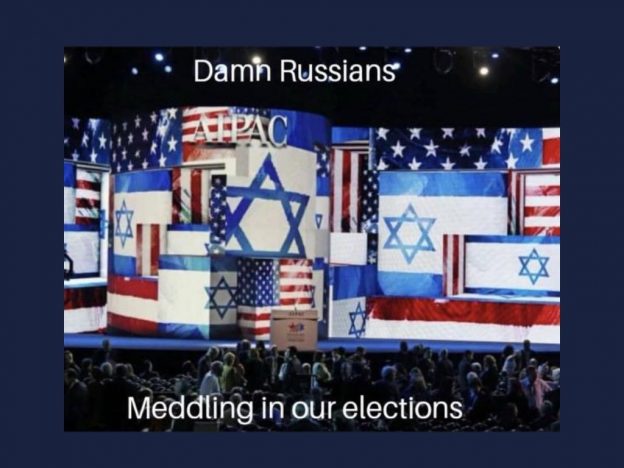
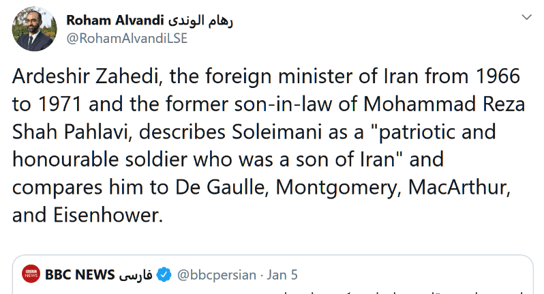


 Aletho News
