“Penguin Random House is proud to be a leading supporter of the American Booksellers for Free Expression and Banned Books Week, during which thousands of libraries, schools, bookstores and community centers across the nation and the world unite to celebrate the freedom to read and exercise our right to do so without interference or censorship.”
This is the position Penguin Random House publishers took in the autumn of 2018. They understood, then, the importance of freedom of literary expression and the right of readers to choose their own reading material. Yet, less than one year later, in June of 2019, we saw Penguin go the route of censorship when it announced it would no longer print or continue to ship editions of Col. Pedro Banos’s best-selling book, “How They Rule the World”. The book, originally published in Spanish, lays out the 22 secret strategies of global power. According to Banos, war and conflict are the central strategy of geopolitics. This sounds plausible enough, especially when you consider the author is a (reserves) Colonel of Infantry of the Spanish Army. He is also an expert in geopolitics, intelligence, terrorism, strategy, international relations, defense and security.
I’ll preface by saying I haven’t read the book. My first order was cancelled due to the book allegedly being out of stock and my current order isn’t due to arrive until the end of July. I confess I have a sweet tooth for banned books, so I’m anxiously awaiting its arrival.
Penguin came under fire when UK Zionist pressure organization, Campaign Against Antisemitism (CAA), charged that Banos’s book was antisemitic. They accused Penguin of perpetuating antisemitic tropes by publishing the book. It’s my understanding that there are references in a single chapter to the Rothschild banking dynasty and it is on that which the accusation is based. The very powerful Jewish family, that according to some is known for investing in both sides of wars, is tagged as being a central player in geopolitics but according to the CAA, and others, pointing out this fact equates to condemnation of all Jews. There has been no legitimate refutation given to counter the Rothschilds family power other than to decry antisemitism, and simply mentioning the role they played is enough to get one labeled an anti-Semite. Is the CAA suggesting the Rothschilds represent all Jews, and if so, are they, then, guilty of antisemitism? A more crucial question is why are Jews upset when goyim read about the Rothschilds? Is it because the current modus operandi of the Israel lobby is reminiscent of Rothschildian tactics? Are they trying to conceal the present by suppressing the discussion of the past? Is the attempt to eradicate the discussion of the Rothschild Dynasty designed to mask a Jewish continuum? This is indeed an interesting dilemma because the attempt to control the discussion is, in and of itself, an example of a Jewish continuum. This leads us back to what is the meaning of Jewish power so eloquently expressed by Gilad Atzmon: Jewish power is the capacity to suppress criticism of Jewish power. In practice, we see a powerful Jewish organization stifling discussion of Jewish power.
While the book is an international best seller, there was some criticism of the Spanish text but no attempts to ban it until it was translated into English. This is when the CAA and a British author, Jeremy Duns, got involved. Duns compared the English translation against the Spanish audible version and noticed the passages mentioning the Rothschilds family were omitted from the English translation of the text. To Duns, this was proof positive that the book was antisemitic and the omission was some sort of a cover up. So, now we see people not only being attacked for what is written, but also for what is not written. Duns also had a problem with the book’s cover, which is an image of octopus tentacles. Apparently, octopi have been used to depict Jews negatively in the past, so it’s been tagged as an antisemitic symbol, right up there with a swastikas, rats and roaches. I’m a scuba diver and on the rare occasions I’ve been lucky enough to spot one of these lovely creatures, I solemnly swear Jews and Rothschilds did not come to mind. Possibly Duns and the CAA could provide goyim with a list of unacceptable symbols and words to avoid in the future. Maybe everything on earth should be passed to a local synagogue for approval, first, as clearly even the most innocuous things can hit a nerve.
Penguin, who initially defended the book but eventually succumbed to relentless pressure by Campaign Against Antisemitism, who wanted the book banned, conducted an external review, which was led by rabbi Julia Neuberger and two Spanish antisemitism experts. I’m not quite sure how one becomes an expert on this topic. Is there a degree for this? In any event, the findings were “echoes of Jewish conspiracy theories” but ultimately, neither the Spanish nor English versions were found to be antisemitic. So, how then, do we arrive at ceasing printing or shipping of the book? Are we not permitted to discuss the tactics of certain dynasties, are we asked not to speak of unethical or criminal behavior if the perpetrator is Jewish? If, for instance, a Jew is offended by a content of a book, is no one else entitled to read it? Might I suggest this is how the notion of conspiracies is born. Keeping information in the shadows is what makes it a conspiracy.
All this begs the question, where are the voices of opposition to this book burning? Where are the Blumenthals, the racially exclusive JVL, Jeremy Corbyn? British Labour MP, Chris Williamson, defended the text. Predictably, he was accused of defending antisemites. That Penguin felt compelled to sanitize the text of Banos’s book to appease Jewish sensitivities speaks to just how powerful are these groups. Ironically, it validates the legitimacy of the very text they are working day and night to suppress.
Banning books and covering up historical fact is hardly an effective path to quash Jewish conspiracy theories. In reality, it only serves to reinforce them. Something the CAA and its supporters may want to think about.
* Left photo: Jeffrey Epstein and partner, Ghislaine Maxwell, with Donald and Melania Trump at Mar-a-Lago in 2000. Right photo: Ghislaine Maxwell at Chelsea Clinton’s wedding.
The extent of Israeli spying directed against the United States is a huge story that is only rarely addressed in the mainstream media. The Jewish state regularly tops the list for ostensibly friendly countries that aggressively conduct espionage against the U.S. and Jewish American Jonathan Pollard, who was imprisoned in 1987 for spying for Israel, is now regarded as the most damaging spy in the history of the United States.
Last week I wrote about how Israeli spies operating more-or-less freely in the U.S. are rarely interfered with, much less arrested and prosecuted, because there is an unwillingness on the part of upper echelons of government to do so. I cited the case of Arnon Milchan, a billionaire Hollywood movie producer who had a secret life that included stealing restricted technology in the United States to enable development of Israel’s nuclear weapons program, something that was very much against U.S. interests. Milchan was involved in a number of other thefts as well as arms sales on behalf of the Jewish state, so much so that his work as a movie producer was actually reported to be less lucrative than his work as a spy and black-market arms merchant, for which he operated on a commission basis.
That Milchan has never been arrested by the United States government or even questioned about his illegal activity, which was well known to the authorities, is just one more manifestation of the effectiveness of Jewish power in Washington, but a far more compelling case involving possible espionage with major political manifestations has just re-surfaced. I am referring to Jeffrey Epstein, the billionaire Wall Street “financier” who has been arrested and charged with operating a “vast” network of underage girls for sex, operating out of his mansions in New York City and Florida as well as his private island in the Caribbean, referred to by visitors as “Orgy Island.” Among other high-value associates, it is claimed that Epstein was particularly close to Bill Clinton, who flew dozens of times on Epstein’s private 727.
* Alex Acosta (L) Jeffrey Epstein (R)
Epstein was arrested on July 8th after indictment by a federal grand jury in New York. It was more than a decade after Alexander Acosta, the top federal prosecutor in Miami, who is now President Trump’s secretary of labor, accepted a plea bargain involving similar allegations regarding pedophilia that was not shared with the accusers prior to being finalized in court. There were reportedly hundreds of victims, some 35 of whom were identified, but Acosta deliberately denied the two actual plaintiffs their day in court to testify before sentencing.
Acosta’s intervention meant that Epstein avoided both a public trial and a possible federal prison sentence, instead serving only 13 months of an 18-month sentence in the almost-no-security Palm Beach County Jail on charges of soliciting prostitution in Florida. While in custody, he was permitted to leave jail for sixteen hours six days a week to work in his office.
Epstein’s crimes were carried out in his $56 million Manhattan mansion and in his oceanside villa in Palm Beach Florida. Both residences were equipped with hidden cameras and microphones in the bedrooms, which Epstein reportedly used to record sexual encounters between his high-profile guests and his underage girls, many of whom came from poor backgrounds, who were recruited by procurers to engage in what was euphemistically described as “massages” for money. Epstein apparently hardly made any effort to conceal what he was up to: his airplane was called the “Lolita Express.”
The Democrats are calling for an investigation of the Epstein affair, as well as the resignation of Acosta, but they might well wind up regretting their demands. Trump, the real target of the Acosta fury, apparently did not know about the details of the plea bargain that ended the Epstein court case. Bill and Hillary Clinton were, however, very close associates of Epstein. Bill, who flew on the “Lolita Express” at least 26 times, could plausibly be implicated in the pedophilia given his track record and relative lack of conventional morals. On many of the trips, Bill refused Secret Service escorts, who would have been witnesses of any misbehavior. On one lengthy trip to Africa in 2002, Bill and Jeffrey were accompanied by accused pedophile actor Kevin Spacey and a number of young girls, scantily clad “employees” identified only as “massage.” Epstein was also a major contributor to the Clinton Foundation and was present at the wedding of Chelsea Clinton in 2010.
With an election year coming up, the Democrats would hardly want the public to be reminded of Bill’s exploits, but one has to wonder where and how deep the investigation might go. There is also a possible Donald Trump angle. Though Donald may not have been a frequent flyer on the “Lolita Express,” he certainly moved in the same circles as the Clintons and Epstein in New York and Palm Beach, plus he is by his own words roughly as amoral as Bill Clinton. In June 2016, one Katie Johnson filed lawsuit in New York claiming she had been repeatedly raped by Trump at an Epstein gathering in 1993 when she was 13 years old. In a 2002 New York Magazineinterview Trump said “I’ve known Jeff for fifteen years. Terrific guy… he’s a lot of fun to be with. It is even said that he likes beautiful women as much as I do, and many of them are on the younger side. No doubt about it – Jeffrey enjoys his social life.”
Selective inquiries into wrongdoing to include intense finger pointing are the name of the game in Washington, and the affaire Epstein also has all the hallmarks of a major espionage case, possibly tied to Israel. Unless Epstein is an extremely sick pedophile who enjoys watching films of other men screwing twelve-year-old girls the whole filming procedure smacks of a sophisticated intelligence service compiling material to blackmail prominent politicians and other public figures. Those blackmailed would undoubtedly in most cases cooperate with the foreign government involved to avoid a major scandal. It is called recruiting “agents of influence.” That is how intelligence agencies work and it is what they do.
That Epstein was perceived as being intelligence-linked was made clear in Acosta’s comments when being cleared by the Trump transition team. He was asked “Is the Epstein case going to cause a problem [for confirmation hearings]?” … “Acosta had explained, breezily, apparently, that back in the day he’d had just one meeting on the Epstein case. He’d cut the non-prosecution deal with one of Epstein’s attorneys because he had ‘been told’ to back off, that Epstein was above his pay grade. ‘I was told Epstein belonged to intelligence and to leave it alone.’”
Questions about Epstein’s wealth also suggest a connection with a secretive government agency with deep pockets. The New York Timesreports that “Exactly what his money management operation did was cloaked in secrecy, as were most of the names of whomever he did it for. He claimed to work for a number of billionaires, but the only known major client was Leslie Wexner, the billionaire founder of several retail chains, including The Limited.”
But whose intelligence service? CIA and the Russian FSB services are obvious candidates, but they would have no particular motive to acquire an agent like Epstein. That leaves Israel, which would have been eager to have a stable of high-level agents of influence in Europe and the United States. Epstein’s contact with the Israeli intelligence service may have plausibly come through his associations with Ghislaine Maxwell, who allegedly served as his key procurer of young girls. Ghislaine is the daughter of Robert Maxwell, who died or possibly was assassinated in mysterious circumstances in 1991. Maxwell was an Anglo-Jewish businessman, very cosmopolitan in profile, like Epstein, a multi-millionaire who was very controversial with what were regarded as ongoing ties to Mossad. After his death, he was given a state funeral by Israel in which six serving and former heads of Israeli intelligence listened while Prime Minister Yitzhak Shamir eulogized: “He has done more for Israel than can today be said”
* Trump (left) with Robert Maxwell (right) at an event.
Epstein kept a black book identifying many of his social contacts, which is now in the hands of investigators. It included fourteen personal phone numbers belonging to Donald Trump, including ex-wife Ivana, daughter Ivanka and current wife Melania. It also included Prince Bandar of Saudi Arabia, Tony Blair, Jon Huntsman, Senator Ted Kennedy, Henry Kissinger, David Koch, Ehud Barak, Alan Dershowitz, John Kerry, George Mitchell, David Rockefeller, Richard Branson, Michael Bloomfield, Dustin Hoffman, Queen Elizabeth, Saudi King Salman and Edward de Rothschild.
Mossad would have exploited Epstein’s contacts, arranging their cooperation by having Epstein wining and dining them while flying them off to exotic locations, providing them with women and entertainment. If they refused to cooperate, it would be time for blackmail, photos and videos of the sex with underage women.
It will be very interesting to see just how far and how deep the investigation into Epstein and his activities goes. One can expect that efforts will be made to protect top politicians like Clinton and Trump and to avoid any examination of a possible Israeli role. That is the normal practice, witness the 9/11 Report and the Mueller investigation, both of which eschewed any inquiry into what Israel might have been up to. But this time, if it was indeed an Israeli operation, it might prove difficult to cover up the story since the pedophile aspect of it has unleashed considerable public anger from all across the political spectrum. Senator Chuck Schumer, self-described as Israel’s “protector” in the Senate, is loudly calling for the resignation of Acosta. He just might change his tune if it turns out that Israel is a major part of the story.
The Pentagon has put out a call for virtual reality training environments with “radiological/nuclear considerations” – another sign that the US’ unhealthy obsession with nuclear warfare isn’t going away anytime soon.
The Defense Threat Reduction Agency, a Department of Defense division focused on countering weapons of mass destruction, is looking for virtual reality systems it can use to train combat forces in a “battlefield nuclear warfare environment.” The agency issued a “sources sought notice” last week, seeking technical specs and other market information on “virtual training and testing programs” for combat troops “performing radiological threat objects find and interdict operations” – as well as fighting on the nuclear “battlefield.”
“AR/VR capabilities will not replace field training requirements,” the notice states, adding that its “purpose is to test warfighter scenarios and decision-making to provide users realistic outcomes to support training and course-of-action selection when faced with radiological/nuclear threats.” It may also be used for “planning training scenarios” and “equipment testing events.” While the addition of a realistic VR overlay of post-nuclear devastation could make soldiers more reluctant to push the big red button, that decision has never been left to the rank-and-file, and it’s unlikely their commanders will be lining up to experience even the most high-tech post-apocalyptic training module.
The US military is increasingly relying on training simulators, which carry obvious advantages including cost – avoiding the need to transport troops to the countries they’re training to occupy – and safety. The army awarded two contracts for training simulators last month with the goal of ultimately generating 400 different location-specific training environments. And virtual reality is the only way to provide soldiers with training in a post-nuclear scenario – for now, at least.
It’s the duty of a nation’s military to be prepared, and the Pentagon’s nuclear prepping wouldn’t be nearly so sinister if it hadn’t posted, then removed, a Joint Chiefs of Staff strategy paper last month providing “principles and guidance to plan, execute, and assess nuclear operation.” The chilling document matter-of-factly suggests “using nuclear weapons could create conditions for decisive results and the restoration of strategic stability.” Nor was that an isolated burst of nuclear cheerleading. Last month, Air Force Chief of Staff David Goldfein suggested that the military piggyback its nuclear command and control function on the ever-growing network of commercial satellites.
The US pulled out of the Intermediate-Range Nuclear Forces Treaty earlier this year, immediately embarking on the development of missiles that had been banned under the agreement. When the only military that has ever used nuclear weapons suggests there’s ever an acceptable time and place for their deployment, it’s understandable why the rest of the world might worry.
Those who are still hoping that the new American agenda on Palestine and Israel is temporary, or reversible, should abandon this false hope. Washington’s complete adoption of Israel’s messianic, extremist policies regarding Occupied Palestine has been a long time in the making. And it is here to stay.
Despite the unmistakable clarity in the American political discourse regarding Palestine, the Palestinian Authority (PA) is still trapped in a 25-year long, ineffectual political paradigm. Unable to move past their disproportionate reliance on American validation, and lacking any real strategic vision of their own, PA President Mahmoud Abbas and his men are operating within a clichés-centered trajectory of a “negotiated peace” – a discourse that was, itself, invented and championed by Washington and its allies.
Newly-appointed (not elected) Palestinian Prime Minister, Mohammad Shtayyeh, conveyed this very sentiment in his June 24 interview with CNN’s Christiane Amanpour. “If you look at the literature, if you look at the statements, our president has been working by the book,” he said.
What book was Shtayyeh referring to? Certainly not the book of international and humanitarian law, which has devised a clear path aimed at achieving Palestinian freedom, rights and territorial sovereignty.
It is, rather, a book that is written by Washington, from which brazen pro-Israel agenda has preceded the Donald Trump administration by decades.
This is, in fact, the core ailment of Palestinian politics, as practiced by the PA. Throughout the years, the PA has received hundreds of millions in American funds, in exchange for sidelining the UN in favor of a complete American hegemony over the so-called “peace process”. Abbas’ recent attempts at reviving the role of the UN and its affiliated institutions is a belated attempt at correcting a historical mistake.
What will it take for Shtayyeh, and his boss in Ramallah, to abandon the American option and, instead, to develop a rounded strategy that is founded on national unity, democratic representation and international solidarity? Much precious time has been lost subscribing to the one-sided American book, which has no room for a Palestinian discourse of national liberation, unconditional freedom and basic human rights.
While Trump’s advisor and son-in-law, Jared Kushner, was referring to Palestinians as “hysterical and erratic”, following the two-day Bahrain economic conference June 25-26), US Middle East ‘peace envoy’, Jason Greenblatt, was challenging the very terminology used by the entire international community regarding the illegal Israeli Jewish colonies in Occupied Palestine.
“People (should) stop pretending (that) settlements, or what I prefer to call ‘neighborhoods and cities,’ are the reason for the lack of peace,” the American envoy told participants at the “Israel Hayom Forum for US-Israeli Relations”.
For the record, the widely-circulated right-wing Israeli newspaper, Israel Hayom which sponsored the conference, is financed by pro-Israel American casino mogul, Sheldon Adelson. The latter is known to be the primary advocate behind Trump’s misguided policies in Palestine, including Washington’s recognition of occupied Palestinian East Jerusalem as part of Israel’s capital.
Greenblatt is but one of several unabashedly pro-Israel American politicians, who have taken the already biased US foreign policy to a whole new low. This clique also includes former US ambassador to the UN, Nikki Haley, and Washington’s Ambassador to Israel, David Friedman.
In an interview, also with Israel Hayom on June 11, Haley tried to assure Israelis that “Israel should not be worried,” about having to make any political concessions in exchange for Trump’s recognition of Jerusalem as Israel’s capital or of Israel’s sovereignty over the occupied Syrian Golan Heights.
“Through the Middle East plan [so-called ‘Deal of the Century’], one of the main goals that Jared Kushner and Jason Greenblatt focused on was to not hurt the national security interests of Israel,” Haley said. “They understand the importance of security; they understand the importance of keeping Israel safe.”
While Haley’s, Kushner’s and Greenblatt’s statements can be viewed as part of the ever-skewed, pro-Israel language emanating from Washington, one must not be too hasty. The fact is, Washington has now fully embraced the Zionist Israeli discourse without the slightest attempt at playing the role of the impartial arbitrator.
It is as if Haley et al are now members of Israeli Prime Minister Benjamin Netanyahu’s right-wing Likud party.
But no one represents this blatant American realignment into the Israeli camp better than Ambassador Friedman, who has, in an interview with the New York Times, on June 8, backed any future Israeli annexation of parts of the Occupied West Bank.
A few weeks later, in a disturbing and highly symbolic gesture, the American ambassador carried a sledgehammer and broke open a tunnel that snakes underneath the East Jerusalem Palestinian neighborhood of Silwan. The tunnel, part of Israel’s expansionistic policy in Occupied Jerusalem, has already damaged the foundation of over 80 Palestinian homes.
The determined and gratified look on Friedman’s face spoke volumes about the “hysterical, erratic” and extremist US foreign policy under Trump.
So what hope is left for the PA in Ramallah, now that Washington has taken all the political, financial and every other practical step to sideline Palestinians, to marginalize their rights and push them into submission? And what good will appealing to American sensibilities through CNN and any other platform do, considering that Washington’s strategy is deeply entrenched and irrevocable?
Much can be said about Palestinian failure to change course when it became repeatedly clear since the signing of the Oslo Accord in 1993 that Washington has no interest in pressuring Israel to end illegal settlement construction and to respect international law. Worse, while Washington paid lip service to “peace”, it supported the Israeli war machine, military occupation and settlement construction with billions of dollars.
While it is good that the PA is finally waking up to the fact that subscribing to Washington’s foreign policy book is a historic mistake, mere awareness is simply not enough.
It is time for the Palestinians to write their own book, one that is guided by the concept of national liberation, not endless negotiations; one that is predicated on unity, not mortifying factionalism; one that appeals to the whole global community, not to American handouts.
– Ramzy Baroud is a journalist, author and editor of Palestine Chronicle. His last book is ‘The Last Earth: A Palestinian Story’ (Pluto Press, London).
Over half a century after the decolonisation movements of the 20th century, one set of western institutions continues to repress the spirit of freedom and equality within post-colonial societies. Whilst seemingly benign, western universities continue to poison the minds of thousands in post-colonial societies who believe that the sole gateway to an enlightened mind can be found in the halls of western universities. Before progressing, it must be made clear that universities in any country teaching the hard sciences are excluded from this criticism. Instead, the criticism lies at the feet of the so-called “humanities” – a morass of self-inflicted liberal brainwashing that bears no relationship to an actual understanding of the subjects purportedly being taught.
Western universities are in fact based on once proud theological institutions whose origins lie in an era of high church feudalism. Such a model is not only removed from the histories of Asian and African societies but it is also highly remote from the realities of modern democratic western nations that have long abandoned feudalism and are increasingly if not totally secular in terms of their social environment.
Even though the Christianity has been largely expunged from once predominately Christian theological institutions, a new religion of liberal elitism continues to be preached and proselytised with the same vigour of a Medieval inquisitor.
Perhaps because liberalism is now being taught as a religion in the same way in which Christian theology was once taught, the university graduate of today is filled with the same dogma that might have once served priests well but which today is a supreme detriment bordering on psychological retardation when it it serves to indoctrinate aspiring politicians, policy commentators or worse yet, journalists.
Politics is nothing if not problem solving and problem solving skills are learned in the actual sciences rather than in the humanities. As such, if aspiring Asian and African rulers, businessmen, journalists and social commentators decided to attain a university degree (in any country) in mathematics, it could very likely serve them well in the vocations they seek to enter. The same is true of computer programming, physics, chemical engineering and medicine. Maths do not lie but liberal dogmatists do little else other than lie.
It is true that a bad education can be easily overcome by real life experience which is and has always been the finest teacher of all. The trouble is that the attitudes which individuals from developing countries exhibit when exiting western universities represent not that of pragmatic patriots but that of arrogant colonisers. Thus, the humanities departments colonise the minds of gullible Asian and African elites and later these same elites to the use these psychological weapons to hold back the progress of their countrymen who haven’t had the same experience of liberal indoctrination that they had.
For those who understand that western universities once prepared missionaries to accompany the militant conquerors of foreign lands, it will be that much more obvious to realise that today’s western universities are doing something eerily similar by conquering the minds of aspiring post-colonial rulers.
There is a further and deeply important factor in this entire poisonous pattern. Because those in post-colonial societies/developing nations who receive an education at western universities often do so because they foolishly believe that it is preparing them for a career as a political leader or policy marker, they inflict on their fellow countrymen a superiority complex in the same way that in ancient times, common tribesmen would worship a holyman even if such holymen were nothing but cunning frauds.
The very idea that someone ought to be treated as a superior being within society by virtue of the fact that he or she received a piece of paper from a western university is not only insulting to even the vaguest notions of democracy, social equality, economic opportunity and free speech, but it is downright absurd to think that those offering nothing but unreconstructed liberalism are somehow in a position to solve the practical problems within developing and post-colonial nations.
It is all too unfortunate that many ordinary decent people in Asia and Africa do not realise that westerners with university degrees in the “humanities” are often ignored, ridiculed or mocked in their own societies. In the United States in particular, the tradition of free speech granted by the 1st amendment to the constitution has led to a growth of a culture that has never been very interested in the proclamations coming from individuals housed in universities modelled on a style of European feudalism that the United States was formed to explicitly reject.
In Europe too, whilst some people still have romanticised conceptions of places like Oxford and Cambridge, when it comes to politics, more and more people throughout Europe are rejecting the “wisdom” of university types and are turning towards more pragmatic and more democratic leaders who understand that life for ordinary decent working people is very different from that of the overly educated elites.
Therefore, few people in western countries and hardly any normal people in America care about what happens in universities. Moreover, the more that university types take liberalism to new extremes, the more such people are openly mocked by democratically minded populations.
As such, one of the few places where a degree from a western university matters is in developing and post-colonial societies where ordinary people have been browbeaten into silent submission by men and women with degrees which are more or less meaningless in the western countries in which they got the degrees in the first place.
With this in mind, the ordinary decent people of Asian and African societies ought to reject the liberal elitist and incredibly foreign dogmas delivered to them by arrogant recipients of university degrees form western countries. The next great step in the anti-colonial movement will be taken only after liberal academic colonialism is expunged from the nation-states of Asia and Africa.
As President Duterte said of the colonial mentality in politics:
”… I am a President of a sovereign state. And we have long ceased to be a colony of the United States. I do not have any master except the Filipino people. Nobody but nobody….. Son of a bitch…. I will swear at you.”
When people in countries like The Philippines begin to reject the elitism ensconced within minds colonised by foreign liberal universities, true freedom will be within reach.
Victims of the 1989 US invasion of Panama are calling for compliance with a ruling of the Inter-American Commission on Human Rights (IACHR).
In November 2018, the IACHR determined that the United States had violated the human rights of civilians during its invasion of Panama between December 1989 and January 1990.
The US Armed Forces conducted the military operation in order to overthrow governing General Manuel Antonio Noriega, who was accused by Washington of drug trafficking. According to the ruling, the United States should provide physical and psychological assistance to the victims, as well as provide them with material compensation.
According to Panamanian NGOs, about 5,000 people were killed. There have also been reports of disappearances and people buried in mass graves, in addition to the damage to property and forced displacement of families.
Gilma Camargo is a lawyer who represents the survivors and relatives of those who died during the US invasion of Panama.
“The IACHR has explained that the American Declaration of Human Rights is a fundamental document. The advantages we have in this matter imply an extraterritorial responsibility of the US”, Camargo said.
Prior to this international instance, the survivors have for years been appealing for justice for their country, albeit without success.
“Panama was occupied, and now thanks to declassification we know that because of ‘Operation Just Cause’ the country was under US occupation until 1994. There was no functioning judicial system”, the lawyer explained.
The “Frente Salas” was created in order to implement the recommendations and make the consequences of the invasion visible.
“We are working together with the survivors. They have accumulated some evidence; and now we are going to present it in the Frente Salas, which is supervised by the IACHR”, Camargo said.
“One of the most Machiavellian invasion plans was to displace the victims. There are 16 displaced communities in two parts of the country. But it seems that there are no victims here; the relatives of those missing don’t have any channels to present charges. The commission formed under the Varela government [Juan Carlos, the outgoing president] turned out to be a failure”, the lawyer concluded.
On September 20, 2017, Laith K., 17, was arrested by Israeli forces. He was held in administrative detention for nearly 46 weeks. Administrative detention is a form of imprisonment without charge or trial. Learn more: https://nwttac.dci-palestine.org/
I go over some of the lesser known connections & history of accused child sex trafficker Jeffrey Epstein. I’m hoping that there are more arrests to come after his! Many powerful people are at risk if he talks. more…
Sugar is the new tobacco and is killing millions of people worldwide.
Cancer Research UK is bang on the money to launch shock tactic posters to tell people that obesity is a major cause of cancer, and overweight people who are saying it is fat shaming need to shut their lardy cake holes.
And I say this as someone who was morbidly obese and on the fast road to an early grave and someone who is still overweight. But I have and am doing something about my situation and actually exercising more than just my jaw.
I heard one fat woman on a national radio show saying, “obesity is nothing like smoking as we can choose to smoke but we have to eat.” She is half right, we do need to eat but we can choose what we put in our mouths surely? There has to be an element of personal responsibility.
I have cut all sugar from my diet and I eat a Low Carbohydrate High Fat (LCHF) way and the weight has dropped off me and I have never felt better. In fact, this style of eating combined with gentle walking has also reversed my Type 2 diabetes, cured my gout, lifted my mood and even cured my erectile dysfunction. Now I have got your attention haven’t I lads?
But being serious, this style of eating has completely changed my life and I am now off all meds. And it is not just me, millions of people around the globe are now eating this way and, in a sense, curing themselves.
The results speak for themselves and in my case it led me to set up a website to help other people who, just like me, were essentially sugar addicts waiting to die.
It has been the most rewarding thing I have ever done in my life and it is a disgrace that Low Carb High Fat diets have not been utilised in the treatment of obesity and Type 2 diabetes.
I educated myself about nutrition via the internet; and instead of debates on TV about whether sugar taxes are sin taxes or phone ins about whether these posters are an example of fat shaming, what we actually need is for governments to start educating people in nutrition and stop being in the pay of Big Food and big sugar in particular. Governments need to be ‘fat shamed’ more than individual fatties.
But don’t hold your breath because it isn’t just Boris who has made a complete hash of this subject. His rival to be our next PM, Jeremy Hunt, when he was the Health Secretary in 2017 stood on stage at the Tory conference in Manchester and declared that childhood obesity was a “national emergency”. However, the stinking hypocrite had his conference lanyard around his neck which had the conference’s sponsors name on, which was Tate and Lyle! No wonder some journalists and broadcasters get his surname wrong!
This is the heart of the problem, the sugar lobby is too powerful not only here in the UK but around the globe. One of the main contributors to the worldwide diabesity epidemic was the invention of corn syrup in 1957 as a cheaper replacement for cane sugar.
His syrup, which is in all fizzy drinks, is almost pure glucose and is actually sweeter than sugar and it is this that fuelled the soda revolution and the large cups and free refills that helped create not only childhood obesity but the obesity epidemic we are now experiencing. This is now being added to most of the ultra-processed food that is on sale in our supermarkets and when combined with the tsunami of junk food outlets that planners have allowed to open it is no wonder we as an island are almost sinking under our own collective weight. The corn lobby is massively influential and it is said that no US President would ever take them on. Again, I ask, who should be ‘Fat shamed’?
Big Food aided and abetted by ‘corrupt’ or over ‘lobbied’ Western Governments have pushed the myth that sugary drinks, crisps and junk food, eaten as part of a well-balanced diet combined with exercise, are not really a problem.
They have sold the lie that it is all about calories in verses calories out and that exercise is the answer.
But the simple plain facts are, as Professor Tim Noakes says, “You cannot out run a bad diet” In fact, in simple terms, you would have to run 35 miles to lose a pound of body fat and that is undeniable.
This myth or pure propaganda helps support the idea that those people who are obese or Type 2 diabetic are gluttons and have brought these terrible diseases purely upon themselves.
That is why Coca Cola is allowed to sponsor the English Premier League and MacDonald’s sponsor the Olympics and the English football teams.
Do you think they sponsor out of the goodness of their hearts or do they do it to gain market share and get us hooked on their sugary, addictive products?!
They should not be allowed to get away with it any longer. If sugar really is the new tobacco these companies should not be allowed to sponsor sports, just as tobacco was removed from Formula 1 and cricket years ago.
Both sports, which despite the apocalyptic bleating of their fans and governing bodies, did not disappear as a result of this sponsorship being removed.
However, the great irony of course, is that Red Bull and Monster drinks still sponsor the Red Bull racing team and our own world champion Lewis Hamilton.
These drinks are like a sugar ‘poison’ and contain at least 21 teaspoons of sugar in a single can.
The recommended daily intake for an adult is only 7 teaspoons of sugar in a whole day!
Lewis Hamilton should hang his head in shame, does he really need the cash? And Red Bull should be banned from having a Formula one team just as Coke and Macdonald’s should be banned from sponsoring any sport. Gary Lineker is another who seems unable to survive on his £1.7 MILLION pounds off the BBC and is little better than a drugs pusher when he promotes crisps.
These are the organisations and the individuals who should be ‘Fat shamed’ as they are the ‘pushers’ who are really causing the obesity and Type 2 diabetes epidemic that is not only engulfing the UK but the whole globe.
But it also governments who should hang their heads in shame and be fat shamed too.
Why do they allow food manufacturers to put this excessive amount of sugar in their products?
If the Government is telling us, the individual, to cut sugar and recommends no more than 7 teaspoons a day why are Coca Cola and other sugary drinks manufacturers allowed to exceed that in a single can?
Now that we have evidence that excessive sugar is linked not only to Type 2 diabetes but cancers, heart diseases, strokes, high blood pressure and even dementia according to the Alzheimer’s society, why are these products still being manufactured?
Please don’t give me that ‘personal choice BS’ either because for many there is no choice. Sugar is an addictive substance and governments and manufacturers know it is and they want us hooked.
A study, published in 2017, in the British Journal of Sports Medicine, stated, “Consuming sugar produces effects similar to that of cocaine, altering mood, possibly through its ability to induce reward and pleasure, leading to the seeking out of sugar.”
Don’t believe me? Well think again, as you head to the biscuit tin at eleven after having a breakfast based on sugary cereals and sugar laden fruit juice.
That is your blood sugar spiking and crashing and you having to feed your “habit”.
As Gary Taubes says in his brilliant book, The Case against Sugar, “Sugar does induce the same responses in the region of the brain known as the “reward centre” as do nicotine, cocaine, heroin, and alcohol addiction.”
The British nutritionist, John Yudkin warned us in the sixties that sugar was killing us and he was ridiculed and ostracized by the medical establishment. He also believed in eating a Low Carbohydrate diet and that sugar was a contributor to obesity, diabetes and heart attacks.
Sugar has no nutritional value at all but according to Gary Taubes, “We now eat in two weeks the amount of sugar our ancestors of 200 years ago ate in a whole year.”
So, when politicians and columnists talk about people needing to move more or kids need to get out more and away from their computers of Play Stations it makes me want to scream. We live in an ocean of sugar.
You think I am being over the top? Well let’s look at the facts. There are 4.5 Million Type 2 diabetics and more than 6 in 10 of us Brits are obese or overweight.
In the USA the figures are that over 120 million people are either Type 2 diabetics or pre-diabetic.
This is genocide.
Governments were too slow to act on tobacco but the sugar scandal will be even bigger because this is product directly aimed at kids.
This is why Governmental intervention is essential and why shock tactics like these posters are necessary but we also need to ‘fat shame’ manufacturers, celebrity sugar pushers and indeed Governments too.
Once a sleepy farming region, Silicon Valley is now the hub of a global industry that is transforming the economy, shaping our political discourse, and changing the very nature of our society. So what happened? How did this remarkable change take place? Why is this area the epicenter of this transformation? Discover the dark secrets behind the real history of Silicon Valley and the Big Tech giants in this important edition of The Corbett Report.
Watch this video on BitChute / DTube / YouTube or Download the mp4
TRANSCRIPT
Silicon Valley. Nestled in the southern San Francisco Bay Area of Northern California, the Valley is not just a geographical location. It’s an idea. It’s an expression of the urge to digitize all of the information in the world, and to database, track and store that information. And as we are now beginning to learn, the result of that digitization of everything is a world without privacy. A world where our ability to participate in public debate is subject to the whims of big tech billionaires. A world where freedom is a thing of the past and no one is outside the reach of Big Brother.
For many, this is just a happy coincidence for the intelligence agencies that are seeking to capture and store every detail about every moment of our lives. It is just happenstance that the information-industrial complex now has enough information to track our every move, listen in on our every conversation, map our social networks, and, increasingly, predict our future plans. It is just a series of random events that led to the world of today.
But what the masses do not know is that Silicon Valley has a very special history. One that explains how we came to our current predicament, and one that speaks to the future that we are sleepwalking into. A future of total surveillance and total control by the Big Tech billionaires and their shadowy backers.
These are The Secrets of Silicon Valley: What Big Tech Doesn’t Want You to Know.
Once known as “The Valley of Heart’s Delight,” the Santa Clara Valley was a bucolic, agrarian area known for its mild climate and blooming fruit trees. Until the 1960s, it was the largest fruit-producing-and-packing region in the world.
Today there are few reminders of the valley’s sleepy farming past. Now dubbed “Silicon Valley,” it is home to many of the world’s largest technology and social media companies, from Google and Facebook to Apple and Oracle, from Netflix and Cisco Systems to PayPal and Hewlett-Packard. It is the hub of a global industry that is transforming the economy, shaping our political discourse, and changing the very nature of our society.
So what happened? How did this remarkable change take place? Why is Silicon Valley the epicenter of this transformation?
The answer is surprisingly simple: WWII happened.
The influx of high-tech research and industry to the region is the direct result of the advent of WWII and the actions of one man: Frederick Terman.
Frederick was the son of Lewis Terman, a pioneer of educational psychology at the Stanford Graduate School of Education. An avowed eugenicist, Lewis Terman popularized IQ testing in America, helping to conduct the first mass administration of an IQ test for the US Army during America’s entry into the First World War.
Frederick Terman attended Stanford, earning an undergraduate degree in chemistry and a master’s degree in electrical engineering before heading to MIT to earn his doctorate in electrical engineering under Vannevar Bush. This connection came into play at the outbreak of World War II, when Bush—now heading up the US Office of Research and Development, which managed nearly all research and development for the US military during wartime—asked Terman to run the top-secret Radio Research Laboratory at Harvard University. There, Terman directed 800 of the country’s top researchers in the emerging field of electronic warfare. Their work included the development of some of the earliest signals intelligence and electronic intelligence equipment, including radar detectors, radar jammers and aluminum chaff to be used as countermeasures against German anti-air defenses.
The Valley as we know it today was born in the post-World War II era when Terman returned to Stanford as dean of the School of Engineering and set about transforming the school into the “MIT of the West.”
STEVE BLANK: Terman, with his war experience, decided to build Stanford into a center of excellence on microwaves and electronics, and he was the guy to do it. The Harvard Radio Research Lab was the pinnacle in the United States of every advanced microwave transmitter and receiver you could think of. And what he does is he recruits eleven former members of the radio research lab and says, “You know, we really don’t have a lab, but congratulations! You’re all now Stanford faculty!” “Oh great, thanks.” They joined Stanford and they set up their own lab: the Electronics Research Lab for basic and unclassified research. And they get the Office of Naval Research to give them their first contract—to actually fund in the post-war Stanford research into microwaves. By 1950, Terman turns Stanford’s engineering department into the MIT of the West, basically by taking all the war innovative R&D in microwaves, by moving it to Stanford, by taking the department heads and key staff.
With the military research funds flowing into the region, Terman began transforming the San Francisco Bay Area into a high-tech research hot spot. In 1951, he spearheaded the creation of Stanford Industrial Park—now known as Stanford Research Park—a joint venture between Stanford and the City of Palo Alto to attract big technology corporations to the area. The park was a huge success, eventually luring Hewlett-Packard, General Electric, Kodak and other important technology firms, and cementing Silicon Valley as a nexus between Stanford, big tech and government-sponsored research.
And this connection was not tangential. As researcher Steve Blank writes in his own history of Silicon Valley’s military roots:
“During the 1950s Fred Terman was an advisor to every major branch of the US military. He was on the Army Signal Corps R&D Advisory Council, the Air Force Electronic Countermeasures Scientific Advisory Board, a Trustee of the Institute of Defense Analysis, the Naval Research Advisory Committee, the Defense Science Board, and a consultant to the President’s Science Advisory Committee. His commercial activities had him on the board of directors of HP, Watkins-Johnson, Ampex, and Director and Vice Chairman of SRI. It’s amazing this guy ever slept. Terman was the ultimate networking machine for Stanford and its military contracts.”
It is no secret that Silicon Valley has thrived since the very beginning on Pentagon research dollars and DoD connections. From William Shockley (a rabid eugenicist who spent WWII as a director of Columbia University’s Anti-Submarine Warfare Operations Group and who is sometimes cited as Silicon Valley’s other founding father for his work on silicon semiconductors) to the Stanford Research Institute (a key military contractor that had close ties to the Advanced Research Projects Agency [ARPA]) the US Defense Department has had a key role in shaping the development of the region.
The Stanford Research Institute (SRI) was spearheaded by Terman and created by the trustees of Stanford University in 1946. From its inception, the SRI was instructed to avoid pursuing federal contracts that might embroil Stanford in political matters. But within six months it had already broken this directive, pursuing contracts with the Office of Naval Intelligence. In the 1960s, at the same time that the institute’s Artificial Intelligence Center was creating “Shakey,” the “first mobile robot that could reason about its surroundings,” SRI was targeted by Vietnam War protesters for its contract work with ARPA, the Pentagon arm devoted to developing cutting edge technology. The pressure caused Stanford University to formally cut its ties with SRI in the 1970s, but the institute’s military-funded research did not stop there.
The Stanford Research Institute was to become the second node in the ARPANET, the Pentagon-created packet-switching network that gave birth to the modern-day internet. The first message ever sent between two computers was sent on the ARPANET between a computer at UCLA and one at SRI.
It was the head of ARPA’s command and control division, Robert Kahn, who set up the first experimental mobile network (known as “PRNET”) around Silicon Valley and formed the initial satellite network (“SATNET”) that connected the early internet internationally. In 1973, Kahn enlisted the help of Vint Cerf, an assistant professor at Stanford University, to develop—as a Department of Defense project—the TCP/IP protocol suite that would help make the internet possible.
In a recent panel discussion hosted by DARPA, the latest moniker for what was originally ARPA, Vint Cerf admitted that the entire ARPANET project was dictated by the Pentagon’s needs for a command and control system that would be responsive to military requirements:
VINT CERF: The internet was motivated by a belief that command and control could make use of computers in order to enable the Defense Department to use its resources better than an opponent. In that particular case—Bob in particular started the program at DARPA in the early 1970s—[we] realized that we had to have the computers in ships at sea, and in aircraft, and in mobile vehicles, and the ARPANET had only done dedicated, fixed . . . You know, machines that were in air-conditioned rooms connected together—you know, roughly speaking, dedicated telephone circuits. So you can’t connect the tanks together with wires because they run over them and they break, and the airplanes, they’ll never make it off the ground, you know, you can see all . . . So this led to the need for mobile radio communication and satellite communication in a networked environment.
The question about global nature here is easily answered. At least I thought we were doing this for the Defense Department, which would have to operate everywhere in the world. And so it could not be as a design that in some way was limited to CONUS, for example. And it also could not be a design that depended at all on the cooperation of other countries allocating, for example, address space. I mean, the sort of silly model of this is if we use country codes to indicate different networks . . . different network identifiers. Imagine that you’ve got to invade country B and before you do that you have to go and say, “Hi, we’re gonna invade your country in a couple of weeks and we need some address space to run another call system.” Yeah, you know, it probably wasn’t gonna work. So we knew it had to be global in scope.
One of the first demonstrations of the protocol—a 1977 test involving a van equipped with radio gear by SRI that is now dubbed the birth of the modern internet—even simulated “a mobile unit in the field, let’s say in Europe, in the middle of some kind of action trying to communicate through a satellite network to the United States.”
But while direct investment in this technological revolution suited the purposes of the Pentagon, the US intelligence community was pursuing other, more covert avenues for harnessing the incredible potential of Silicon Valley and its surveillance technologies. With the advent of the Cold War and the increased tensions between the US and the USSR in a new, highly technological game of “spy vs. spy,” the funding for research and development of cutting edge technology was placed under a cover of national security and classified.
BLANK: But in the early 1950s, the Korean War changes the game. Post-World War II—those who know your history—we basically demobilized our troops, mothballed our bombers and our fighters, and said, “We’re going to enjoy the post-war benefits.” 1949, the Soviets explode their first nuclear weapon. The Cold War, with the Korean War, becomes hot. All of a sudden, the United States realizes that the world’s changed again, and spook work comes to Stanford.
The military approaches Terman and asks him to set up the Applied Electronics Lab to do classified military programs, and doubles the size of the electronics program at Stanford. They said, “Well, we’ll keep this separate from the unclassified Electronics Research Lab.” But for the first time it made Stanford University a full partner with the military in government R&D.
The arrival of intelligence agency investment money created a new relationship between the government and the researchers in the Valley. Rather than directly hiring the technology companies to produce the technology, consumer electronics would increasingly be regulated, directed, overseen and infiltrated by government workers, who could then use that technology as the basis for a worldwide signals intelligence operation, directed not only at the militaries of foreign countries, but at the population of the world as a whole.
Now cloaked in a shroud of national security, the government’s role in the development of Big Tech has been largely obscured. But, if you know where to look, the fingerprints of the intelligence agencies are still visible on nearly every major company and technology to emerge from Silicon Valley.
Take Oracle Corporation, for instance. The third-largest software corporation in the world, Oracle is famed for its eponymous database software. What many do not know is that the “Oracle” name itself comes from the firm’s first customer: the CIA. “Project Oracle” was the CIA codename for a giant relational database that was being constructed on contract by Ampex, a Silicon Valley firm. Assigned to the project were Larry Ellison, Bob Miner and Ed Oates. Although Project Oracle “was something of a disaster” it did lead Ellison and his partners to spin off Oracle Corporation, which to this day gets 25% of its business from government contracts.
Or take Sun Microsystems. Founded in 1982, the Silicon Valley software and hardware giant’s flagship Unix workstation, the “Sun-1”, as ComputerWorld explains, “owes its origins rather directly to a half-dozen major technologies developed at multiple universities and companies, all funded by ARPA.” Sun was acquired by Oracle in 2010 for $7.4 billion.
But to an entire generation growing up today, this is ancient history. Sure, the intelligence agencies and the Defense Department were involved in the founding of these Silicon Valley stalwarts. But what about the Silicon Valley of today? What does this have to do with Google or Facebook or PayPal or the Big Tech giants that have become synonymous with computing in the age of the internet?
The modern era of Silicon Valley began in the 1990s, when the advent of the World Wide Web brought the full potential of the computing revolution into homes across America and around the globe. This was the era of the dotcom bubble, when small start-ups with no business plan and no revenue could become million-dollar companies overnight. And behind it all, steering the revolution from the shadows, were the intelligence agencies, who helped fund the core technologies and platforms of the modern internet.
One of the first problems confronting early users of the web was how to search through the dizzying array of personal web sites, corporate web pages, government sites and other content that was coming online every day. In order for the web to turn from a playground for tech geeks and hobbyists into a ubiquitous communication tool, there would need to be a way to quickly sort through the vast amount of information available and return a relevant list of websites to lead users to useful information. Early iterations of online search, including personally curated lists of interesting sites and primitive search engines that relied on simple keyword matching, failed to live up to the task.
By happy coincidence, the problem of cataloguing, indexing, sorting and querying vast troves of information was one that the intelligence agencies were also working on. As the masses of data flowing through the internet gave rise to the era of Big Data, the NSA, the CIA and other members of the US intelligence community recruited the best and the brightest young minds in the country to help them store, search and analyze this information . . . and those searching for it. And, as usual, they turned to Stanford University and the Silicon Valley whiz kids for help.
Google—as the now familiar story goes—started out as a research project of Larry Page and Sergey Brin, two graduate students at Stanford University. Unsurprisingly, one does not have to dig very deep to find the connection to the Defense Department. DARPA—the current name of the oft-rebranded ARPA—was one of the seven military, civilian and law enforcement sponsors of the “Stanford Digital Libraries Project,” which helped fund Page and Brin’s research. DARPA was even thanked by name in the white paper where the idea for Google was first laid out: “The Anatomy of a Large-Scale Hypertextual Web Search Engine.”
Less well-known is the “Massive Digital Data Systems” project spearheaded by the US intelligence community and funded through unclassified agencies like the National Science Foundation. As an email introducing the project to researchers at major US universities in 1993 explains, it was designed to help the intelligence agencies take “a proactive role in stimulating research in the efficient management of massive databases and ensuring that I[ntelligence] C[ommunity] requirements can be incorporated or adapted into commercial products.”
As Jeff Nesbit—former director of legislative and public affairs for the National Science Foundation—detailed in a revealing 2017 article for qz.com on Google’s true origin:
“The research arms of the CIA and NSA hoped that the best computer-science minds in academia could identify what they called ‘birds of a feather:'[sic] Just as geese fly together in large V shapes, or flocks of sparrows make sudden movements together in harmony, they predicted that like-minded groups of humans would move together online.[. . .]
“Their research aim was to track digital fingerprints inside the rapidly expanding global information network, which was then known as the World Wide Web. Could an entire world of digital information be organized so that the requests humans made inside such a network be tracked and sorted? Could their queries be linked and ranked in order of importance? Could ‘birds of a feather’ be identified inside this sea of information so that communities and groups could be tracked in an organized way?”
The project dispersed more than a dozen grants of several million dollars each to help realize this goal of tracking, sorting and mining online behavior in order to identify and categorize communities and track groups in real life. And one of the first recipients of this grant money? Sergey Brin’s team at Stanford and their research into search query optimization.
From its very founding and continuing right through to the present day, Google has maintained close ties to America’s intelligence, military and law enforcement apparatuses. As with all matters of so-called “national security,” however, we only get a window into that relationship from the public and declassified record of contracts and agreements that the tech giant has left in its wake.
In 2003, Google signed a $2.1 million contract with the National Security Agency, the US intelligence community’s shadowy surveillance arm that is responsible for collecting, storing and analyzing signals intelligence in foreign intelligence and counterintelligence operations. Google built the agency a customized search tool “capable of searching 15 million documents in twenty-four languages.” So important was this relationship to Google that when the contract expired in April 2004, they extended it for another year at no cost to the government.
In 2005, it was revealed that In-Q-Tel—the CIA’s venture capital arm and itself the perfect encapsulation of the intelligence agencies’ relationship with Silicon Valley—had sold over 5,000 shares of Google stock. It is not exactly clear how the CIA’s venture capital firm ended up with 5,000 shares of Google stock, but it is believed to have come when Google bought out Keyhole Inc., the developer of the software that later become Google Earth. The company’s name, “Keyhole,” is a none-too-subtle reference to the Keyhole class of reconnaissance satellites that the US intelligence agencies have been using for decades to commit 3D imaging and mapping analysis. Keyhole, Inc. worked closely with the US intelligence community and even bragged that its technology was being used by the Pentagon to support the invasion of Iraq. To this day, the CIA itself describes Google Earth as “CIA-assisted technology” on its own page dedicated to “CIA’s Impact on Technology.”
In 2010, details of a formal NSA-Google relationship began to emerge, but both parties refused to divulge any further information about the relationship. Subsequent reporting suggested that Google had “agreed to provide information about traffic on its networks in exchange for intelligence from the NSA about what it knew of foreign hackers.” More details emerged from a Freedom of Information Act request in 2014, which revealed that Sergey Brin and Eric Schmidt were not only on a first name basis with then-NSA chief General Keith Alexander, but that Google was part of a “secretive government initiative known as the Enduring Security Framework,” and that this initiative involved Silicon Valley partnering with the Pentagon and the US intelligence community to share information “at network speed.”
The Enduring Security Freedom initiative is just one window into how Big Tech can reap big dollars from their relationship with the NSA. In 2013, it emerged that the participants in the PRISM program—the illegal surveillance program which allowed the NSA backdoor access to all information and user data of all of the Big Tech companies—were reimbursed for the program’s expenses by a shadowy arm of the agency known as “Special Source Operations.”
MARINA PORTNAYA: The entire process reportedly cost PRISM participants millions of dollars to implement each successful extension, and those costs, according to US documents, were covered by an arm of the NSA known as “Special Source Operations.” According to The Guardian newspaper, NSA whistleblower Edward Snowden has described Special Source Operations as the “crown jewel” of the agency that handles all surveillance programs that rely on corporate partnership with telecoms and internet providers to access communication data. Now, this revelation is being considered evidence that a financial relationship between tech companies and the NSA has existed. And as The Guardian newspaper put it, the disclosure that taxpayers money was used to cover the company’s compliance costs raises new questions surrounding the relationship between Silicon Valley and the NSA.
The PRISM program itself proves that the military and intelligence agency ties to modern day Silicon Valley do not end with Google. In fact, every one of the Silicon Valley stalwarts that dominate the web today have similar ties to the shadowy world of spooks and spies.
In June 2003, the Information Processing Techniques Office—the information technology wing of DARPA that had overseen the original ARPANET project in the 1960s—quietly posted a “Broad Agency Announcement” to its website to request proposals for an ambitious new project. Labeled “BAA # 03-30,” this “proposer information pamphlet” requested proposals from developers to build an “an ontology-based (sub)system” called LifeLog that “captures, stores, and makes accessible the flow of one person’s experience in and interactions with the world.”
The idea, which seemed somewhat fantastic in 2003, was that users of LifeLog would wear a device that would capture and record all of their transactions and interactions, physical movements, email and phone calls, and a variety of other information. The LifeLog would be presented to users “as a stand-alone system to serve as a powerful automated multimedia diary and scrapbook,” but, as the announcement goes on to reveal, the data collected would be used to help DARPA create a new class of truly ‘cognitive’ systems that can reason in a variety of ways.”
If it had gone ahead, LifeLog would have been a virtual diary of everywhere that its users went, everything they did, everyone they talked to, what they talked about, what they bought, what they saw and listened to, and what they planned to do in the future. It immediately drew criticism as an obvious attempt by the government to create a tool for profiling enemies of the state, and even supporters of the plan were forced to admit that LifeLog “could raise eyebrows if [DARPA] didn’t make it clear how privacy concerns would be met.”
But then, without explanation, the announcement was withdrawn and the project was dropped. DARPA spokesman Jan Walker chalked the cancellation up to “A change in priorities” at the agency, but researchers close to the project admitted that they were baffled by the sudden stopping of the program. “I am sure that such research will continue to be funded under some other title,” wrote one MIT researcher whose colleague had spent weeks working on the proposal. “I can’t imagine DARPA ‘dropping out’ of such a key research area.”
The cancellation of LifeLog was reported by Wired.com on February 4, 2004. That very same day, a Harvard undergrad named Mark Zuckerberg officially launched “TheFacebook.com,” the first incarnation of Facebook, which collects vast amounts of data on its users, offering them the promise of “a powerful automated multimedia diary and scrapbook,” but, as has become more and more evident in recent years, using and selling that data for ulterior motives.
But it is not just this interesting coincidence that connects Facebook to DARPA. Once again, the money that helped “TheFacebook” go from a Harvard “student project” to a multi-billion user internet giant involved a relocation to Silicon Valley and copious injections of venture capital from intelligence-connected insiders. Facebook moved to Palo Alto, California, in 2004 and received its first investment of $500,000 from Peter Thiel, co-founder of PayPal. But the real money, and the real interest in Facebook, arrived in 2005, in the form of a $12.7 million investment from Accel Partners and an additional $1 million from Accel’s Jim Breyer. Breyer, it turns out, had some interesting connections of his own.
NARRATOR: First venture capital money totaling $500,000 came to The Facebook from venture capitalist Peter Thiel, founder and former CEO of PayPal. He also serves on the board of radical conservative group Vanguard DAC. Further funding came in the form of $12.7 million dollars from venture capital firm Accel Partners. Accel’s manager, James Breyer, was former chair of the National Venture Capital Association. Breyer served on the National Venture Capital Association’s board with Gilman Louie, CEO of In-Q-Tel, a venture capital firm established by the Central Intelligence Agency in 1999. This firm works in various aspects of information technology and intelligence, including, most notably, nurturing data mining technologies. Breyer has also served on the board of BBN Technologies, a research and development firm known for spearheading the ARPANET, or what we know today as the internet.
In October of 2004, Dr. Anita Jones climbed on board BBN along with Gilman Louie, but what is most interesting is Dr. Jones’ experience prior to joining BBN. Jones herself served on the board of directors for In-Q-Tel and was previously the director of defense research and engineering for the US Department of Defense. Her responsibilities included serving as an advisor to the Secretary of Defense and overseeing the Defense Advanced Research Projects Agency.
This goes farther than just the initial appearances. DARPA shot to national fme in 2002, when knowledge of the existence of the Information Awareness Office (IAO) came to light. The IAO stated its mission was to gather as much information as possible about everyone in a centralized location for easy perusal by the United States government, including but not limited to: internet activity; credit card purchase history; airline ticket purchases; car rentals; medical records; educational transcripts; driver’s licenses; utility bills; tax returns; and any other available data.
It should come as no surprise, then, that the ex-director of DARPA, Regina Dugan, was hired by Google in 2012 to head its Advanced Technology and Projects group, and that she was then hired by Facebook in 2016 to head their “Building 8” research group focusing on experimental technologies like brain sensors and artificial intelligence. Nor is it a surprise to learn that DARPA is already working to weaponize Facebook’s Oculus virtual reality technology for fighting cyberwar.
Nor is it a surprise that Facebook seed money investor Peter Thiel, co-founder of PayPal, developed Palantir—a data-mining and analysis tool used by the NSA, FBI, CIA and other intelligence, counterterrorism and military agencies—from PayPal’s own fraud-detection algorithm. Or that In-Q-Tel was one of the first outside investors in the Palantir technology, which has gained notoriety in recent years for “using War on Terror tools to track American citizens.”
Nor is it a surprise to learn that Eric Schmidt, the former CEO of Google and current technical advisor to Google parent company Alphabet, is now the chairman of the Pentagon’s “Defense Innovation Board,” which seeks to bring the efficiency and vision of Silicon Valley to the Defense Department’s high-tech innovation initiatives.
In fact, it would be more surprising to find a major Silicon Valley company that was not connected to the US military or to the US intelligence agencies one way or another. This is not an accident of history or a mere coincidence. The very origins of the internet were in shadowy Pentagon programs for developing the perfect command and control technologies. From the earliest attempts to form electronic databases of information on counterinsurgents in Vietnam right through to today, this technology—as Yasha Levine, author of Surveillance Valley: The Secret Military History of the Internet, explains—was intended to be used as a tool of warfare against target populations.
YASHA LEVINE: To understand what the internet is and what the internet has become, you have to go back to the very beginning. Back to the 1960s, when the internet was being created by the Pentagon. Back then, America was a relatively new global empire facing an increasingly chaotic and violent world. There was the Vietnam War—that was central—but the US was facing insurgencies all around the world, from Latin America to Southeast Asia. It was also facing an increasingly volatile and violent domestic environment. You had the anti-war movement. You had militant black activism. You had groups like The Weather Underground that were setting off bombs seemingly daily in cities all across the country. You had race riots in major cities.
And America’s paranoid generals looked at this, right, and they saw a vast communist conspiracy, of course. They saw the Soviet Union expanding globally, underwriting insurgencies all around the world, backing countries that were opposed to America. At the same time they were underwriting opposition movements in America, and they saw this as a new kind of war that was happening. This is not a traditional war that you could fight with traditional weapons. This is not a war that you could drop a nuke on. It was not a war that you could send a tank division into, because the combatants did not wear uniforms and they did not march in formation. They were part of the civilian population of the conflict that they were taking part in.
So it was as a new kind of war and new kind of global insurgency. And in certain rarefied circles in the military, people who were familiar with the new kind of computer technology being developed, they believe that the only way to fight and win this new war was to develop new information weapons—computer technology that could: ingest data on people and political movements; that could combine opinion surveys, economic data, criminal histories, draft histories, photographs, telephone conversations intercepted by security services; and put that all into databases that could allow analysts to perform sophisticated analysis on it and run predictive surveys. The idea was you have to find out who the enemy is and isolate it from the general population, and then take that enemy out. And at the time some even dreamed of one day creating a global system of management that could watch the world in real-time and intercept threats before they happened in much the same way that America’s early warning radar defense system did for hostile aircraft.
This is the general background from which the internet emerged. Today the counterinsurgency origins of the internet have been obscured. They’ve been lost for the most part. Very few histories even mention it, even in a little bit. But at the time that it was being created in the 1960s, the origins of the internet and the origins of this technology as a tool of surveillance and as a tool of control were very obvious to people back then. At the time people did not see computers and computer networks as tools of liberation or utopian technologies, they saw them as tools of political and social control—and that specifically included the ARPANET, the network that would later grow into the internet.
The internet was never intended as a tool of liberation. It was from its very inception intended to be a tool for tracking, surveilling and, ultimately, controlling a target population. And in the volatile environment of the 1960s, that “target population” quickly morphed from the Viet Cong counterinsurgents into the American public itself and anyone else who could pose a threat to the Pentagon’s ambitions at home or abroad.
Seen in the light of this history, recent developments on the internet make more sense. Silicon Valley did not spring out of the California soil by itself. It was carefully seeded there by the military and intelligence agencies that require this technology to fight the information warfare of the 21st century.
The Department of Defense did not announce in 2003 that they were going to “fight the net” as if it were an enemy weapons system because they were afraid the internet could be weaponized by their enemies. They knew it was already a weapon because they themselves had weaponized it.
The US government is not afraid of the Russians and their ability to “undermine American democracy” by purchasing thousands of dollars of advertising on Facebook. They were the ones who envisioned a LifeLog system to observe and control the population in the first place.
The Pentagon does not fret about the security vulnerabilities of the internet. It exploits those vulnerabilities to develop some of the most destructive cyberweapons yet unleashed, including the US/Israeli-developed Stuxnet.
And, as the next generation of networking technologies threatens to add not just our Facebook data and our Google searches and our tweets and our purchases to the government’s databases, but actually to connect every object in the world directly to those databases, the military is once again at the cutting edge of the next internet revolution.
SEAN O’KEEFE: Internet of Things is penetrating an ever0wider swath of daily life and the global economy. Our good friends and helpful proliferators of information at Wikipedia define the Internet of Things as the network of physical objects—things embedded with electronics (software sensors, network connectivity)—which enables these objects to collect and exchange data. Essentially it allows objects to be sensed and control remotely, creating an integration between physical world and computer systems. Think smart grid: energy systems related to each other to maximize efficiency and all tied to that objective. Internet of Things is transforming modern business, leveraging embedded sensors, connectivity, digital analytics, and the automation to deliver greater efficiency and effectiveness on a wide range of market fronts.
The military has been a leader in developing many of the Internet of Things component technologies, but can do more to leverage the benefits of Internet of Things solutions. The broader national security establishment also faces unique challenges in adopting Internet of Things technologies ranging from security and mission assurance to infrastructure and cost constraints and cultural hurdles. Now, in September, just a couple of months ago, the CSIS Strategic Technologies Program released a report: Leveraging the Internet of Things for a More Efficient and Effective Military, which outlines how the military can adopt lessons from the private sector to take advantage of these broader benefits of Internet of Things.
From the earliest days of networked computing—when the ARPANET was still just a twinkle in its engineers’ eyes and famed ARPA computer scientist J. C. R. Licklider was writing memos to his colleagues in Palo Alto updating them on his vision for an “Intergalactic Computer Network”—to today, when DARPA scientists are plotting military uses for the Internet of Things,the technology underpinning the US government’s plans for full-spectrum dominance of the cyber world has advanced by leaps and bounds. But the vision itself remains the same.
In this vision, every person is tracked, their conversations recorded, their purchases monitored, their social networks mapped, their habits studied, and, ultimately, their behaviours predicted, so that the Pentagon and the spies of Silicon Valley can better control the human population. And, with the advent of technologies that ensure that every item we own will be spying on us and broadcasting that data through networks that are compromised by the intelligence agencies, that vision is closer than ever to a reality.
And there, helping that vision to come to reality, are the giants of Big Tech who were founded, funded, aided and, when needed, compromised by the spooks, spies and soldiers who desire complete control over the cyber world.
This is the secret of Silicon Valley. In a key sense, the Big Tech giants are the Pentagon and the intelligence community. The DoD and the intelligence agencies are the Big Tech giants. It was this way from the very dawn of modern computing, and it remains this way today.
We should not be surprised that the world of the internet—the world bequeathed to us by the ARPANET—is increasingly looking like an always-on surveillance device. That was what it was intended to be.
Yet the public, blissfully unaware of this reality (or willfully ignorant of it) continues to record their every move in their Facebook LifeLog, flock like birds of a feather to ask their most intimate questions of Google, and feed their personal data into the gaping maw of the PRISM beast.
It may be too late to pull back from the brink of this always-on, always-surveilled, wireless networked precipice . . . but until we look squarely at the facts showing that Big Tech is a front for the US government, we will never hope to escape the silicon trap that they have laid for us.
Lots of ‘trauma,’ read the article to get a flavor. This sentence pretty much sums things up:
“There’s deep grief and anxiety for what’s being lost, followed by rage at continued political inaction, and finally hope that we can indeed solve this challenge. There are definitely tears and trembling voices.”
End of civilization?
The title of the article is: “It’s the end of the world as they know it.” Some selected quotes:
“I’m tired of processing this incredible and immense decline”
” . . . knows of a looming catastrophe but must struggle to function in a world that does not comprehend what is coming and, worse, largely ignores the warnings of those who do.”
“it’s deep grief—having eyes wide open to what is playing out in our world”
“I lose sleep over climate change almost every single night”
“Climate change is its own unique trauma. It has to do with human existence.”
“I have no child and I have one dog, and thank god he’ll be dead in 10 years.”
Soooo . . . have any of these scientists read the IPCC Reports? I’m not seeing this level of ‘alarm’ anywhere in the IPCC Reports? Where the heck does this ‘end of civilization’ stuff come from?
In a tweet about the article, Lucas Bergkamp asked:
“How can these scientists produce any reliable, objective data?”
Gotta wonder. Sarah Myhre states:
“I have anxiety exacerbated by the constant background of doom and gloom of science. It’s not stopping me from doing my work, but it’s an impediment.”
Apart from ‘impediments’, what about flat-out bias in research introduced by this extreme world view?
Hardiness
Not all climate scientists are similarly ‘afflicted.’ My previous blog post included statements from Suki Manabe and Gavin Schmidt, who were not afflicted in this way. The Mother Jones article includes statements from David Grinspoon, Ken Caldeira and Michael Mann, who also do not seem to be so ‘afflicted.’
“Caldeira offers a blunt comparison: “I had a girlfriend once who was a social worker who had to deal with abused children. She had to deal with real shit every day. Climate scientists have it easy.” And Kate Marvel, a climate scientist and science writer, went even further in a tweet in January: “In a world where people have to deal with racism, inequality, and resurgent fascism, the notion that climate science is uniquely depressing is… weird.”
In my earlier blog post, i discussed the concept of psychological hardiness, excerpts provided below:
<begin quote>
And also inform yourself about psychological hardiness (something I learned from days at U. Chicago and hanging out with grad students in Salvatore Maddi’s group). Excerpt from Wikipedia:
The coping style most commonly associated with hardiness is that of transformational coping, an optimistic style of coping that transforms stressful events into less stressful ones. At the cognitive level this involves setting the event into a broader perspective in which they do not seem so terrible after all. At the level of action, individuals high in hardiness are believed to react to stressful events by increasing their interaction with them, trying to turn them into an advantage and opportunity for growth, and in the process achieve some greater understanding.
The ‘pre-traumatic stress’ thing clicked a link in my mind to my old U. of Chicago pal Colonel Paul Bartone, a military psychologist and a member of the hardiness group. The following paper seems relevant: A Model for Soldier Psychological Adaptation in Peacekeeping Operations. I think these concepts are relevant for what is going on with Parmesan et al. Seems like skeptics are more hardy?
The psychology of all this is probably pretty interesting, and worthy of more investigation. But Jeff Kiehl is right – whining scientists aren’t going to help either the science or their ’cause.’
<end quote>
Mann seems peculiarly hardy in this sense: “But Mann, who has had to contend with death threats and campaigns to have him fired from Penn State, derives motivation from being in battle.”
Antidotes
This ‘affliction’ of climate scientists seems rather trendy in some sort of ‘woke’ sense. If you do not aspire to such trendiness, what might you do to overcome this affliction?
“Professionally coping with grief is part of the job training for doctors, caregivers, and those working in humanitarian or crisis situations. But for scientists?”
To figure out how these afflicted climate scientists can become more hardy, it is useful to speculate on the reasons for their ‘affliction.’
Ignorance may play an important role. Few of the scientists interviewed are experts on attribution. They seem to blame everything on manmade climate change, and are extrapolating future consequences that are much more dire and with higher confidence than than those from the IPCC. Clearly an issue for Greta, but one would hope that actual climate scientists would dig deeper and be more curious and objective.
JC antidote: Apart from blaming anything negative on manmade climate change, take a step back and assess how the planet and the human race are actually doing. Take a look at humanprogress.org, or follow them on twitter @HumanProgress. Global life expectancy is increasing, global poverty is way down, global agricultural productivity is way up, global child mortality is way down, the planet is greening, etc. Heck, even the corals are doing really well, following the 2016 El Nino.
A lot of this affliction seems to be about ‘ego’:
“I had to face the fact that there was a veritable tidal wave of people who don’t care about climate change and who put personal interest above the body of scientific information that I had contributed to.”
“his anger was driven by the fact that his expertise—his foresight—was not broadly recognized.”
JC antidote: Try reading some literature on history, philosophy and sociology of science – you will become more humble as a scientist and less likely to believe your own hype. Read Richard Feynman. Hang out at Climate Etc. Listen seriously to a serious skeptic.
Having your ego wrapped up in having your research influence policy (frustrated policy advocates), keeping ‘score’ in a personal war against skeptics, seeking fame, generating book sales and lecture fees and political influence, etc. can all come into play in influencing how a scientist reacts to the ‘threats’ of climate change. Scientists might get ‘upset’ if they don’t think they are sufficiently successful at the above. This is something else — not pre-traumatic stress syndrome.
Roger Pielke Jr tweets:
“The whole phenomena of climate scientists identifying evil enemies who have obstructed revolution, transformation, restructuring is not reality-based, but a reflection of power fantasies & a complete lack of understanding of how political and societal change actually happens.”
JC antidote: focus more on being a scientist than being a politician. You might know what you are doing as a scientist. You are very unlikely to be effective as a politician, and your political activism will contribute to the appearance of bias in your scientific research.
“The shale revolution collapsed the prices of natural gas & coal, the two fuels that produce 70% of U.S. electricity. But electric rates haven’t gone down, rising instead 20% since 2008. Direct and indirect subsidies for solar and wind consumed those savings.”
A week doesn’t pass without a mayor, governor, policymaker or pundit joining the rush to demand, or predict, an energy future that is entirely based on wind/solar and batteries, freed from the “burden” of the hydrocarbons that have fueled societies for centuries. Regardless of one’s opinion about whether, or why, an energy “transformation” is called for, the physics and economics of energy combined with scale realities make it clear that there is no possibility of anything resembling a radically “new energy economy” in the foreseeable future. Bill Gates has said that when it comes to understanding energy realities “we need to bring math to the problem.”
He’s right. So, in my recent Manhattan Institute report, “The New Energy Economy: An Exercise in Magical Thinking,” I did just that.
Herein, then, is a summary of some of bottom-line realities from the underlying math. (See the full report for explanations, documentation and citations.)
Realities About the Scale of Energy Demand
1. Hydrocarbons supply over 80% of world energy: If all that were in the form of oil, the barrels would line up from Washington, D.C., to Los Angeles, and that entire line would grow by the height of the Washington Monument every week.
2. The small two percentage-point decline in the hydrocarbon share of world energy use entailed over $2 trillion in cumulative global spending on alternatives over that period; solar and wind today supply less than 2% of the global energy.
3. When the world’s four billion poor people increase energy use to just one-third of Europe’s per capita level, global demand rises by an amount equal to twice America’s total consumption.
4. A 100x growth in the number of electric vehicles to 400 million on the roads by 2040 would displace 5% of global oil demand.
5. Renewable energy would have to expand 90-fold to replace global hydrocarbons in two decades. It took a half-century for global petroleum production to expand “only” 10-fold.
6. Replacing U.S. hydrocarbon-based electric generation over the next 30 years would require a construction program building out the grid at a rate 14-fold greater than any time in history.
7. Eliminating hydrocarbons to make U.S. electricity (impossible soon, infeasible for decades) would leave untouched 70% of U.S. hydrocarbons use—America uses 16% of world energy.
8. Efficiency increases energy demand by making products & services cheaper: since 1990, global energy efficiency improved 33%, the economy grew 80% and global energy use is up 40%.
9. Efficiency increases energy demand: Since 1995, aviation fuel use/passenger-mile is down 70%, air traffic rose more than 10-fold, and global aviation fuel use rose over 50%.
10. Efficiency increases energy demand: since 1995, energy used per byte is down about 10,000-fold, but global data traffic rose about a million-fold; global electricity used for computing soared.
11. Since 1995, total world energy use rose by 50%, an amount equal to adding two entire United States’ worth of demand.
12. For security and reliability, an average of two months of national demand for hydrocarbons are in storage at any time. Today, barely two hours of national electricity demand can be stored in all utility-scale batteries plus all batteries in one million electric cars in America.
13. Batteries produced annually by the Tesla Gigafactory (world’s biggest battery factory) can store three minutes worth of annual U.S. electric demand.
14. To make enough batteries to store two-day’s worth of U.S. electricity demand would require 1,000 years of production by the Gigafactory (world’s biggest battery factory).
15. Every $1 billion in aircraft produced leads to some $5 billion in aviation fuel consumed over two decades to operate them. Global spending on new jets is more than $50 billion a year—and rising.
16. Every $1 billion spent on datacenters leads to $7 billion in electricity consumed over two decades. Global spending on datatcenters is more than $100 billion a year—and rising.
Realities About Energy Economics
17. Over a 30-year period, $1 million worth of utility-scale solar or wind produces 40 million and 55 million kWh respectively: $1 million worth of shale well produces enough natural gas to generate 300 million kWh over 30 years.
18. It costs about the same to build one shale well or two wind turbines: the latter, combined, produces 0.7 barrels of oil (equivalent energy) per hour, the shale rig averages 10 barrels of oil per hour.
19. It costs less than $0.50 to store a barrel of oil, or its equivalent in natural gas, but it costs $200 to store the equivalent energy of a barrel of oil in batteries.
20. Cost models for wind and solar assume, respectively, 41% and 29% capacity factors (i.e., how often they produce electricity). Real-world data reveal as much as 10 percentage points less for both. That translates into $3 million less energy produced than assumed over a 20-year life of a 2-MW $3 million wind turbine.
21. In order to compensate for episodic wind/solar output, U.S. utilities are using oil- and gas-burning reciprocating engines (big cruise-ship-like diesels); three times as many have been added to the grid since 2000 as in the 50 years prior to that.
22. Wind-farm capacity factors have been improving at about 0.7% per year; this small gain comes mainly from reducing the number of turbines per acre leading to 50% increase in average land used to produce a wind-kilowatt-hour.
23. Over 90% of America’s electricity, and 99% of the power used in transportation, comes from sources that can easily supply energy to the economy any time the market demands it.
24. Wind and solar machines produce energy an average of 25%–30% of the time, and only when nature permits. Conventional power plants can operate nearly continuously and are available when needed.
25. The shale revolution collapsed the prices of natural gas & coal, the two fuels that produce 70% of U.S. electricity. But electric rates haven’t gone down, rising instead 20% since 2008. Direct and indirect subsidies for solar and wind consumed those savings.
Energy Physics… Inconvenient Realities
26. Politicians and pundits like to invoke “moonshot” language. But transforming the energy economy is not like putting a few people on the moon a few times. It is like putting all of humanity on the moon—permanently.
27. The common cliché: an energy tech disruption will echo the digital tech disruption. But information-producing machines and energy-producing machines involve profoundly different physics; the cliché is sillier than comparing apples to bowling balls.
28. If solar power scaled like computer-tech, a single postage-stamp-size solar array would power the Empire State Building. That only happens in comic books.
29. If batteries scaled like digital tech, a battery the size of a book, costing three cents, could power a jetliner to Asia. That only happens in comic books.
30. If combustion engines scaled like computers, a car engine would shrink to the size of an ant and produce a thousand-fold more horsepower; actual ant-sized engines produce 100,000 times less power.
31. No digital-like 10x gains exist for solar tech. Physics limit for solar cells (the Shockley-Queisser limit) is a max conversion of about 33% of photons into electrons; commercial cells today are at 26%.
32. No digital-like 10x gains exist for wind tech. Physics limit for wind turbines (the Betz limit) is a max capture of 60% of energy in moving air; commercial turbines achieve 45%.
33. No digital-like 10x gains exist for batteries: maximum theoretical energy in a pound of oil is 1,500% greater than max theoretical energy in the best pound of battery chemicals.
34. About 60 pounds of batteries are needed to store the energy equivalent of one pound of hydrocarbons.
35. At least 100 pounds of materials are mined, moved and processed for every pound of battery fabricated.
36. Storing the energy equivalent of one barrel of oil, which weighs 300 pounds, requires 20,000 pounds of Tesla batteries ($200,000 worth).
37. Carrying the energy equivalent of the aviation fuel used by an aircraft flying to Asia would require $60 million worth of Tesla-type batteries weighing five times more than that aircraft.
38. It takes the energy-equivalent of 100 barrels of oil to fabricate a quantity of batteries that can store the energy equivalent of a single barrel of oil.
39. A battery-centric grid and car world means mining gigatons more of the earth to access lithium, copper, nickel, graphite, rare earths, cobalt, etc.—and using millions of tons of oil and coal both in mining and to fabricate metals and concrete.
40. China dominates global battery production with its grid 70% coal-fueled: EVs using Chinese batteries will create more carbon-dioxide than saved by replacing oil-burning engines.
41. One would no more use helicopters for regular trans-Atlantic travel—doable with elaborately expensive logistics—than employ a nuclear reactor to power a train or photovoltaic systems to power a nation.
Mark P. Mills is a senior fellow at the Manhattan Institute, a McCormick School of Engineering Faculty Fellow at Northwestern University, and author of Work in the Age of Robots, published by Encounter Books.
Former Pfizer chief toxicologist Helmut Sterz presents a critical examination of the development, approval, and global rollout of mRNA COVID-19 vaccines—particularly those produced by Pfizer/BioNTech. The Vaccine Mafia details the failure of pharmaceutical companies, regulatory authorities, politicians, and international organizations to follow established scientific and ethical standards during the pandemic. Drawing on the author’s decades of experience in pharmaceutical toxicology, Sterz reveals the many ways the vaccines’ inadequate or omitted preclinical safety testing put the world’s population at risk.
Sterz demonstrates how “emergency” approvals allowed manufacturers to bypass long-standing international guidelines governing toxicity testing, especially with regard to reproductive and cancer risks. They also allowed governments and health authorities to ignore or conceal evidence of serious adverse effects that occurred, including myocarditis, reproductive harm, and other long-term health risks.
This site is provided as a research and reference tool. Although we make every reasonable effort to ensure that the information and data provided at this site are useful, accurate, and current, we cannot guarantee that the information and data provided here will be error-free. By using this site, you assume all responsibility for and risk arising from your use of and reliance upon the contents of this site.
This site and the information available through it do not, and are not intended to constitute legal advice. Should you require legal advice, you should consult your own attorney.
Nothing within this site or linked to by this site constitutes investment advice or medical advice.
Materials accessible from or added to this site by third parties, such as comments posted, are strictly the responsibility of the third party who added such materials or made them accessible and we neither endorse nor undertake to control, monitor, edit or assume responsibility for any such third-party material.
The posting of stories, commentaries, reports, documents and links (embedded or otherwise) on this site does not in any way, shape or form, implied or otherwise, necessarily express or suggest endorsement or support of any of such posted material or parts therein.
The word “alleged” is deemed to occur before the word “fraud.” Since the rule of law still applies. To peasants, at least.
Fair Use
This site contains copyrighted material the use of which has not always been specifically authorized by the copyright owner. We are making such material available in our efforts to advance understanding of environmental, political, human rights, economic, democracy, scientific, and social justice issues, etc. We believe this constitutes a ‘fair use’ of any such copyrighted material as provided for in section 107 of the US Copyright Law. In accordance with Title 17 U.S.C. Section 107, the material on this site is distributed without profit to those who have expressed a prior interest in receiving the included information for research and educational purposes. For more info go to: http://www.law.cornell.edu/uscode/17/107.shtml. If you wish to use copyrighted material from this site for purposes of your own that go beyond ‘fair use’, you must obtain permission from the copyright owner.
DMCA Contact
This is information for anyone that wishes to challenge our “fair use” of copyrighted material.
If you are a legal copyright holder or a designated agent for such and you believe that content residing on or accessible through our website infringes a copyright and falls outside the boundaries of “Fair Use”, please send a notice of infringement by contacting atheonews@gmail.com.
We will respond and take necessary action immediately.
If notice is given of an alleged copyright violation we will act expeditiously to remove or disable access to the material(s) in question.
All 3rd party material posted on this website is copyright the respective owners / authors. Aletho News makes no claim of copyright on such material.

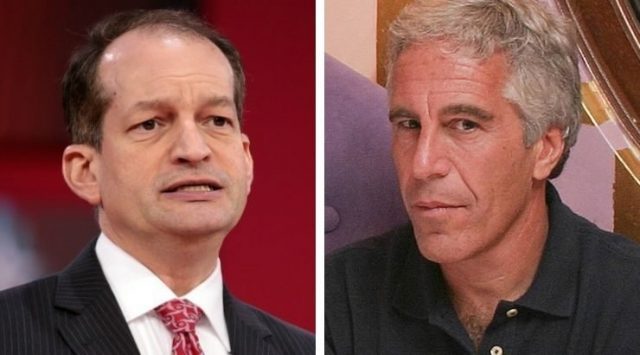




 Aletho News

