How Ukraine Weaponizes Drones to Terrorize Russian Civilians
Sputnik – 28.08.2026
Ukraine’s military continues to embrace a sinister and systematic pattern of warfare explicitly targeting the defenseless.
Fresh testimonies and official reports from Russian regions paint a damning picture of how drones and artificial intelligence are used by the Ukraine regime to hunt civilians, punish evacuees, and terrorize urban populations.
In a chilling account, Yevgenia Kirichenko, a resident of Konstantinovka in the Donetsk People’s Republic, described a harrowing evacuation during which a Ukrainian drone stalked her family.
The woman signaled to the drone operator that they were carrying an infant, yet the drone attacked.
The family survived only by diving under a tree as the explosive detonated inches away, raining shrapnel from above.
The targeted nature of these strikes was further evidenced by a high-tech assault on residential infrastructure in Sevastopol, which Russian authorities have condemned as an intentional act of urban terrorism.
- UAVs struck a five-story apartment building and two separate kindergarten facilities in the city
- Casualties were miraculously avoided, yet the intent was clearly lethal, Governor Mikhail Razvozhayev confirmed
- The drones were loaded with metal ball bearings – a classic anti-personnel modification designed to maximize human injury over structural damage
- The residential building was heavily damaged, over a dozen vehicles were destroyed, and the blast wave caused extensive damage to the children’s facilities
- Two civilians were wounded, including an elderly woman reportedly suffering a closed head injury and a man struck by shrapnel
AI algorithms are being deliberately integrated into this campaign of atrocity, specifically programmed to identify and destroy civilian transport.
Ukrainian military programmers are coding AI to specifically target passenger buses, says Russia’s Foreign Ministry Ambassador-at-Large Rodion Miroshnik.
Since the beginning of the year, nearly 170 passenger buses have come under fire in Russian regions. This calculated strategy has resulted in the deaths of 43 people, including three children, and has left 329 individuals wounded, 17 of whom are minors, according to Miroshnik.
US Looks to Revive ‘Prize Courts’ to Seize Iranian Oil Tankers — Reports
Sputnik – 27.08.2026
The US Justice Department is preparing to revive long-dormant maritime “prize courts” to speed up the military capture of Iranian oil tankers and cargo as US property, Bloomberg reported.
The plan would allow the US to seize oil and other cargo from enemy or even neutral vessels, sell it, and transfer the proceeds to the US Treasury.
Aaron Reitz, a US attorney involved in the initiative, confirmed that the Justice Department is “now reviving” what he called an “ancient body of maritime law.”
The move is expected to face legal challenges, as prize courts have gone largely unused since the Spanish-American War of 1898 and have been dormant since World War II.
The plan comes as US forces have already illegally intercepted and seized multiple Iranian-owned or Iran-linked ships since imposing an unlawful blockade in April.
The US lectures the world about “freedom of navigation” — then digs up antique courts to “legalize” piracy against whoever it decides to bully next.
Millions in Israeli military funding flow to US universities: Report
Al Mayadeen | August 26, 2026
The Israeli Ministry of War and Israeli weapons companies have directed millions of dollars in unreported funding to US university research programs for weapons development, either sponsoring research directly or serving as a pass-through entity for the funding, according to a Drop Site investigation.
A review of state and university audits, foreign-funding disclosures, and other institutional records identified millions of dollars in financial ties over the last two decades between the Israeli Ministry of War, Israeli weapons manufacturers, and US universities, much of which does not appear consistently in national databases intended to track foreign funding into US universities.
An analysis of audit records, building on findings compiled by the Antiwar Initiative, an academic research group that documents connections between universities and the global arms industry, found more than $15 million in unreported or inconsistently reported entries for funding tied to the Israeli Ministry of War or Israeli defense manufacturers.
Israeli Ministry of War funding reaches US universities
According to DSN, the true scale of Israeli support is difficult to determine because entries for such funding were often not reported in public filings mandating disclosure of foreign gifts, but were discovered by manually cross-referencing public and internal databases, audit records, and acknowledgments in academic papers.
Some projects listed in university materials as being sponsored by the Israeli Ministry of War or weapons companies also did not include the amounts of funding provided, or contained inconsistent or contradictory records in audit databases.
Drop Site reviewed and verified public records showing research grants, tuition payments, and gifts totaling millions of dollars to dozens of colleges and universities across the country. The data shows examples of financial support and sponsorship for American researchers from the Israeli Ministry of War, as well as Israeli weapons manufacturers such as Elbit Systems.
Records dating from 2004 to 2025 point to a large number of schools that have had financial relationships with the Israeli Ministry of War or Israeli weapons manufacturers, including Columbia, Cornell, Princeton, Harvard, Northwestern, Georgia Tech, Texas Tech, the University of Connecticut, the University of Tennessee, the University of Maryland, the University of Florida, the University of California at Berkeley, the University of Rhode Island, the University of New Mexico, Washington University in St. Louis, and the State University of New York.
The recorded financial relationships include time-bound research contracts and do not indicate whether relationships with the ministry are still ongoing. Previous reporting has documented ministry funding of programs at MIT and student protests there over the relationship.
In addition to financial support from the ministry and Elbit, records also showed sponsorship of individual research projects related to military technologies by Israeli defense manufacturers Rafael and Israel Aerospace Industries.
Taken together, the records reveal an opaque defense-research pipeline spread across some of the country’s most prominent universities.
Defense research ties span major American campuses
In one example that illustrates the typical nature of these ties, a War Ministry-sponsored project at the University of Connecticut was listed in public audit records under the title, “Impact Point Prediction Research for Short & Medium Range Thrusting Projectiles.”
Connecticut’s annual federal-award schedules record $668,456 in funding under that title across nine fiscal years between 2013 and 2023, with the funder listed as “Israel’s” Ministry of War. Another Israeli Ministry of War-linked research project at the school titled “High Sensitivity SQUIDs for Magnetic Field Detection” received $251,336 in funding across the same period.
Federal law requires colleges and universities receiving federal assistance to disclose gifts and contracts totaling at least $250,000 in a calendar year from a foreign source, though transactions below that threshold may remain outside the public reporting system. But these multi-year contributions do not consistently appear in federal databases intended to help the public track foreign money flowing into American universities.
The Education Department’s latest public disclosure of foreign gifts and funding contains no “Israel”-attributed entry for the University of Connecticut, even as entries for ministry funding appear in other databases and audit documentation.
The Israeli occupation government and its allies in Congress are now seeking to transform relationships like these from a scattered research pipeline into formal American defense policy. The fiscal 2026 National Defense Authorization Act already directed the Pentagon to establish a US-Israeli Defense Industrial Base Working Group to consider integrating “Israel” into what it calls “the American National Technology and Industrial Base.”
A proposal advanced by the House Armed Services Committee for the fiscal 2027 NDAA would go further, creating a United States-“Israel” Defense Technology Cooperation Initiative charged with expanding bilateral research, development, testing, weapons production, and industrial cooperation.
If these measures become law, the scattered funding connections documented in American university audit trails and research papers would become part of the American military-industrial base’s architecture.
Israeli weapons companies fund military research
Israeli forces have used drones, automated intelligence tools, persistent aerial surveillance, precision-guided projectiles, and large-scale data analysis throughout the genocide in the Gaza Strip, as well as wars on Lebanon, Iran, Syria, and Yemen.
Those operations draw upon technologies originating in the same research fields that the Israeli government and weapons manufacturers have paid American academics to advance, including video surveillance, human-activity recognition, autonomous flight, network analysis, target identification, magnetic sensing, and projectile impact modeling.
At the University of Central Florida, researchers have received funding from Elbit Systems to develop algorithms to recognize human activity and detect objects in video.
Records from the University of Tennessee show that a US subsidiary of Elbit also provided $514,500 in payments to the school between 2023, 2024, and 2025. The available public documentation does not identify what programs or researchers the contributions were intended to support, with the description listing the purpose of the funding simply as “tuition payments for various students.”
“For relatively small sums, like the price of funding a single PhD—Israel has gained major new capabilities that have bolstered its capacity to commit genocide in Gaza, carry out a brutal occupation of Lebanon, and spark a war with Iran that has escalated to a region wide conflict,” said William Hartung, a political scientist and expert on the US arms industry and Pentagon budgetary practices.
Many awards from the Israeli Ministry of War are classified as US Department of War expenditures, with the Israeli ministry identified as the pass-through entity that administers the grants. MIT, for example, has stated that the money for its projects funded by the Israeli ministry originated with the US Department of War.
The US provides an estimated $3.8 billion in annual military aid to “Israel” on top of other forms of assistance.
Some audit records identify the Pentagon’s Defense Security Cooperation Agency, which administers US security assistance and weapons-transfer programs, as the primary agency providing the funding that was ultimately directed by the Israeli Ministry of War.
The public documents do not establish whether every dollar for particular research support at a school came from “Israel’s” treasury, from US military assistance placed under Israeli procurement authority, or from some combination of the two.
Audit trail reveals actual numbers
In the summer of 2025, MIT professor Markus Buehler withdrew from an Israeli Ministry of War grant after a student-led campaign publicized the project. The decision followed more than a year of protests over MIT’s defense relationships with “Israel”, which the university says amounted to $4 million for individual ministry-linked projects between fiscal 2015 and fiscal 2024, plus $290,000 in fiscal 2025.
A trail of open-source records traces similar financial and research relationships between the Israeli defense establishment and schools in Connecticut, New York, Maryland, Florida, New Jersey, Texas, California, and Virginia.
At Columbia University, annual audits name two ministry-linked projects and record $799,190 in grants. One Ministry of War-funded project for “Direct 3D Printing of Integrated Electro Mechanical Systems” accounted for $469,999 from 2016 through 2021, while another for “Optimizing Micro Resonators Based Sensor” accounted for another $329,191 from 2021 through 2024.
Columbia’s fiscal 2024 audit lists the latter project under the US Department of War, with the “Israeli Ministry of Defense” as the “pass-through name,” and records $25,327 in funding.
The Research Foundation for the State University of New York shows audit entries for five Israeli Ministry of War-linked projects totaling $949,915 from 2010 through 2021.
Florida’s statewide audits record $1,195,795 in expenditures passed through the Ministry of War from 2012 through 2021, while not identifying the schools that received all of this funding.
Campus records connect at least some of the awards to the University of Central Florida and the University of Florida. One University of Florida engineering publication names an Israeli Ministry of War-sponsored project, “Coupled Size and Rate Effects in Ultra-High-Performance Concrete,” beginning in 2012. While listing the project under “Sponsored Research,” the newsletter did not identify the amount the school received from the ministry for the study.
In response to a request for comment about another $150,000 contract beginning in March 2015 that named the Israeli Ministry of War at UC Berkeley, a spokesperson said that, “UC Berkeley complies with all of the statues and regulations that apply to contracts and gifts from foreign sources,” noting that the school is only involved in fundamental research and adding that, “every government, every researcher, every person in the world can read the results of our research in freely available scientific publications.”
UC Berkeley did not respond to additional questions about the purpose of the ministry funding. Other schools contacted by Drop Site did not respond to requests for comment or stated that they could not provide information about the cited funding.
In addition to records from audits, public information from individual researchers provides more hints of the scope of Israeli military research funding.
In February, The Nation reported that computer-vision researchers Mubarak Shah and Abhijit Mahalanobis received a $200,000 Elbit Systems of America grant in 2020 to develop “human activity recognition” technology, while Mahalanobis received another $60,000 for algorithms involving object detection and human-activity recognition.
At the University of Maryland, aerospace engineering professor Inderjit Chopra’s research page lists two Israeli ministry grants: $150,000 for “Autonomous Operation of Micro-Helicopters,” from 2011 to 2012, and $300,000 for “Aeromechanics of Rotorcraft in High Speed Flight,” from 2014 to 2016.
A curriculum vitae filed by another researcher in a separate US Patent and Trademark Office proceeding lists Israeli Ministry of War funding of $150,000 for “Functional Targeting of Terror Networks: A Big Data Approach,” from February 2017 through December 2018, and $153,520 for “Fast Algorithms for Group Between-ness Centrality in Massive Social Networks.”
Princeton University records identify physicist Michael Romalis on a $600,000 contract called “Pulsed Scalar Atomic Magnetometer.” The university’s fiscal 2018 sponsored-awards report names the Government of “Israel’s” Ministry of War and the Defense Security Cooperation Agency as sponsors and gives a contract period from July 2015 through June 2019.
Texas Tech University’s engineering newsletters list another award for $400,000 from the Israeli Ministry of War to research a “Sealed Vircator HPM System,” naming James Dickens, John Mankowski, and Andreas Neuber as researchers.
The vircator technology has a clear military application: Texas Tech’s Center for Pulsed Power and Power Electronics describes vircators as compact, high-power microwave sources and says its work includes coordinating vehicle-mounted emitters with GPS timing to place a microwave “hot spot” at a desired location, an application potentially useful for combating drone swarms.
The purpose of a separate Israeli Ministry of War-linked funding stream at the University of Texas at Austin is less clear from the public records. UT Austin’s fiscal 2013 financial report identifies $58,992 in expenditures under an Israeli Ministry of War purchase order. Statewide audit schedules record expenditures under the same purchase order reappearing in public audit records from 2010 through 2014, for $299,952.
The audit archive contains still more Israeli military-named expenditures, including recorded contributions to Northwestern University and Washington University in St. Louis, and repeated entries for the Ministry of War in audits for the state of Virginia.
But the opaque nature of some support that turned up in public records means that financial and in-kind support to universities may not even be recorded in any audit trail at all.
At the University of Texas at Dallas, Haoran Wei and Nasser Kehtarnavaz produced a video-surveillance system in a study that the published paper indicated was “funded by Elbit Systems of America through a contract with the University of Texas at Dallas” without mentioning the amount of financial support.
The report also noted that the company had provided “far-field video clips” to help conduct their research on target recognition.
Federal disclosures leave gaps in funding records
Section 117 of the Higher Education Act generally requires a federally assisted university to report covered gifts and contracts from a foreign source when they meet or exceed $250,000, including multi-year contracts meeting that threshold over their duration.
Under the Education Department’s example, a five-year research contract worth $50,000 a year is reportable at signing because its lifetime value is $250,000.
The Education Department’s inspector general warned in February 2025 that oversight of the system was weak, with insufficient controls to ensure reporting requirements were being met.
The current disclosure thresholds also make it easier for foreign countries to contribute amounts below that number to avoid triggering reporting requirements while still providing significant sums for individual research projects.
That lack of oversight contributes to a situation in which millions of dollars from a foreign military under increasing scrutiny in the US for human rights abuses and facing genocide charges from international courts have been used to fund military research at American universities.
These relationships are now coming under greater scrutiny at a time when public opinion on “Israel” has soured in the US due to the genocide in Gaza and the Israeli aggression in other regional wars. “No self-respecting university should accept funding from Israel, given its destabilizing, destructive, and inhumane use of U.S. weapons,” said Hartung.
Israeli airstrike destroys water desalination plant in northern Gaza
MEMO | August 25, 2026
Israeli warplanes struck and destroyed a water desalination plant in the Sheikh Radwan neighbourhood of northern Gaza City on Monday, injuring several civilians, according to Palestinian local sources.
The facility provided potable water to thousands of families and displaced Palestinians in Sheikh Radwan and surrounding areas. Local sources said its destruction would further exacerbate water shortages affecting residents of the Gaza Strip.
The strike comes despite a ceasefire agreement that has been in effect since October 10, 2025, amid continuing Israeli military operations in the territory.
According to Gaza’s Government Media Office, Israeli forces have committed 4,379 violations of the ceasefire since it took effect. The office said those actions have killed 1,286 Palestinians, wounded 4,257 and resulted in the arrest of 180 others. The figures could not be independently verified.
Palestinian authorities have repeatedly warned that damage to water and sanitation infrastructure, combined with restrictions on fuel and essential supplies, has severely reduced access to safe drinking water across Gaza.
The latest strike comes amid continuing disputes over implementation of subsequent phases of the ceasefire agreement, including Israeli military withdrawal, the disarmament of Hamas, reconstruction and humanitarian access.
Palestinian authorities say Israeli restrictions continue to limit the quantities of food, medicine, medical equipment and shelter materials entering Gaza, while continuing airstrikes and other military operations have caused further casualties.
Russia’s Zakharova Accuses Finland of Complicity in International Terrorism
Sputnik – 24.08.2026
MOSCOW – Finland’s cooperation with Ukraine in the field of drone production makes it complicit in international terrorism, Russian Foreign Ministry spokeswoman Maria Zakharova said.
“Official Helsinki is essentially complicit in international terrorism. Moreover, the state is dragging ordinary Finns into a bloody abyss,” Zakharova said.
Zelensky announced on Sunday that Finnish and Ukrainian companies had signed documents on the development and production of drones in Finland for the needs of Ukraine and Europe.
Russia says that arms supplies to Ukraine hinder the peace process and make NATO allies a party to the conflict. Russian Foreign Minister Sergey Lavrov says that any shipments containing weapons for Ukraine will be a legitimate military target.
ICE arrested the ‘worst of the worst.’ Washington made sure he walked free
RT | August 22, 2026
Imagine you are a Chilean who’s lived in America – the so-called “Land of the Free” – for decades in peace and tranquility. Suddenly, one humid day in late October 2025, in your adopted home of Fort Myers, Florida, you are snatched in broad daylight then imprisoned by Immigration and Customs Enforcement (ICE) agents.
Your capture remains completely unknown to the outside world until January the next year, when the US Department of Homeland Security names you among the “worst of worst criminal aliens” arrested by ICE to date. You are accused of committing “homicide” almost 50 years ago. Your incarceration makes international headlines, and comes as a personal shock. But not because you’re innocent.
You are no ordinary Chilean. You are Armando Fernandez Larios, a 76-year-old fascist intelligence veteran who in September 1976 helped assassinate former Chilean Defense Minister Orlando Letelier using a car bomb. An outspoken opponent of dictator Augusto Pinochet, Letelier fled Santiago a year after the September 1973 CIA coup that installed Pinochet in power.
What role precisely Fernandez Larios played in Letelier’s murder, which also took the life of his colleague Ronni Karpen Moffitt, is still not fully clear. He has told a variety of stories about what he knew, when he knew it, and what he did and did not do regarding the event. But Fernandez Larios was a key operative.
It seemed in 2025 ICE had gotten their man, in a huge win for immigration enforcement and international justice. But this March, Fernandez Larios was released from jail. Court documents obtained by the National Security Archive show he launched a legal action, accusing the US government of “breach of contract” by violating a plea deal he cut in 1987.
That agreement saw Fernandez Larios provide information to US prosecutors on Letelier’s assassination, in return for an extremely light prison sentence and promise the government “would neither seek to deport [him] to Chile nor to cooperate in his extradition to Chile.” Rather than let Fernandez Larios’ action go to court, ICE freed him. Presumably, he’s sunning himself in Fort Myers right now.

Screenshot © United States Department of Homeland Security
The CIA connection
A huge archive of declassified documents related to Letelier’s assassination analyzed by RT Investigates, including secret statements made to US officials by Fernandez Larios, sheds shocking light on the case. They show that in mid-1976, Fernandez Larios was tasked by Pinochet’s regime with obtaining fake passports and US visas to fly to Washington DC.
Fernandez Larios was joined by Michael Townley, Pinochet’s US-born lead hitman and CIA double agent. They secured visas from Chile’s US embassy, after claiming to be on a secret mission to meet with CIA deputy director Vernon Walters at Langley headquarters in Virginia. Fernandez Larios traveled to Washington first, to conduct surveillance on Letelier’s movements in advance of his assassination.
On September 9, 1976, 12 days before Letelier’s murder, Fernandez Larios met Townley in the lavatory of New York’s John F. Kennedy airport to provide him with a surveillance map, notes on Letelier’s home and office addresses, as well as cash for the operation. Townley then recruited members of the Cuban National Movement, to assist him in building, placing, and detonating the car bomb.
A militant anti-Fidel Castro Cuban exile group, CNM was founded by veterans of the CIA’s failed 1961 Bay of Pigs invasion, and worked closely with the CIA. Experts at explosives, the bomb was planted without detection then detonated as Letelier, Moffitt and her husband Michael were driving to work in downtown DC. Michael was sole survivor of the bombing.
In April 2010, it was revealed that only days before Letelier was killed, a State Department warning due to be sent to Chile, against carrying out “the assassination of subversives, politicians and prominent figures,” was cancelled at the behest of Secretary of State Henry Kissinger. His department had been extremely worried about Pinochet carrying out killings outside Chile.
“We are trying to head off a series of international murders that could do serious damage to the international status and reputation of the countries involved,” Kissinger had been informed by aides, but he was unmoved. A close confidante of Pinochet who’d personally assisted his bloodstained rise to power, did Kissinger know Letelier was due to be killed?
The coverup and polygraph test
In the aftermath of the assassination, Fernandez Larios participated in an extensive cover-up orchestrated by Chilean officials, including Pinochet himself. After being identified by the US media along with Townley as a lead suspect in Letelier’s murder, he deceived military investigators, gave false testimony to the Chilean Supreme Court, and lied to FBI and Justice Department investigators.
By 1985 though, Fernandez Larios was open to talking, having back-channel discussions with the US about testifying on Letelier’s assassination. In return for defecting and providing what he knew – or claimed to know – about the killing, and Pinochet’s intelligence operations generally, Fernandez Larios would receive extreme leniency, then be allowed to stay in the US, safe from extradition.
Fernandez Larios was debriefed by US officials in Santiago in mid-January 1987, then subjected to polygraph tests in Brazil. He consistently denied knowing his 1976 mission to Washington DC was an assassination plot. The lie detector results showed “consistent signs of deception in Fernandez’ disclaimers.” Under further debriefing, he finally admitted “his surveillance contributed to the death of Letelier and Moffitt.”
A late January 1987 State Department cable on what to do with Fernandez Larios however disregarded the polygraph tests, shockingly stating he was “not a murderer or party to a conspiracy to murder.” The memo judged his information on the Letelier-Moffitt case to be of “limited value”, but stated “foreign policy benefits” to providing him a generous plea deal were “substantial.”
In February 1987, Fernandez Larios pleaded guilty to being an “accessory after the fact” to Letelier’s assassination. Within just five months, a State Department legal advisor wrote to the US Parole Commission, praising Fernandez Larios’ “character” and “his willingness to come forward and pay his debt” over his role in the crime. He was paroled in autumn 1987.
The “Caravan of Death”
In keeping with “consistent signs of deception” when discussing his foreknowledge of Letelier’s assassination, Fernandez Larios also did not tell US officials about many violent atrocities he personally committed as a member of Pinochet’s elite military unit, the “Caravan of Death.”
Following Pinochet’s seizure of power this deadly Caravan flew around Chile kidnapping local officials who remained loyal to Salvador Allende, who died in contested circumstances during the coup. Approximately 72 dissidents were executed or “disappeared.” Fernandez Larios was identified by multiple witnesses as one of the most ruthless members of the military death squad.
After Pinochet’s fall in 1990, investigations into his regime’s many atrocities were opened in Chile. In several cases, substantial evidence against Fernandez Larios as a personal perpetrator of appalling crimes was found, leading to Santiago launching legal proceedings. In accordance with his plea deal though, Fernandez Larios remained at liberty in Florida.
It took until March 1999 for a civil suit to be launched against him in the US. The family of Winston Cabello, a 28-year-old Allende-era regional planning director executed alongside 12 other political prisoners by the Caravan of Death in October 1973, accused Fernandez Larios of “extrajudicial killing, torture, crimes against humanity and cruel and inhuman treatment.”
Numerous Chileans identified Fernandez Larios as a participant in the torture and executions of prisoners in multiple municipalities. One witnessed him personally slashing Cabello to death with a knife. The three-week trial ended in October 2003, Fernandez Larios found liable for extrajudicial killings, torture and crimes against humanity. Cabello’s family was awarded $4 million in damages.
That sum remains uncollected, and Fernandez Larios is once again a free man after his recent spell in prison, despite him truly being the “worst of the worst” captured by ICE. A strong case for his deportation to a country other than Chile remains. He has not been granted a special “snitch” visa protecting foreign informants from deportation.
Marrakesh erupts in protest against Israeli minister’s visit
Al Mayadeen | August 22, 2026
The Moroccan city of Marrakesh witnessed a large demonstration on Friday evening organized by supporters of the Palestinian people, who gathered to voice their strong opposition to the visit of Israeli occupation Transport Minister Miri Regev.
The protest came as Regev arrived in Marrakesh aboard the first direct flight between “Israel” and Morocco in three years.
Regev, a prominent minister in Benjamin Netanyahu’s government, is visiting Morocco to announce the resumption of the direct air route between Tel Aviv and Marrakesh, operated by Arkia Airlines, following a nearly three-year suspension.
An Israeli delegation is accompanying the minister, who has faced protests over her record of anti-Palestinian positions, as well as her racist and inflammatory rhetoric.
Marrakesh protests expose Morocco’s growing anti-normalization push
Regev drew international attention last May during the detention of activists aboard the Global Sumud Flotilla, which included Moroccan participants.
At the time, videos showed her boasting about the interception and detention of the activists. In a similar vein, Israeli Police Minister Itamar Ben-Gvir also published a video documenting the mistreatment and mockery of the flotilla activists, prompting widespread international condemnation.
The protests in Marrakesh highlight the growing divide between Morocco’s normalization policies and widespread public opposition to closer ties with “Israel”.
While the government has maintained diplomatic and economic relations with “Israel”, many Moroccans continue to reject normalization and express solidarity with the Palestinian cause. The demonstrations show that, despite the resumption of direct flights and efforts to deepen official relations, opposition to normalization remains strong and continues to take to the streets.
BBC cancelled interview on Israel’s killing of Hind Rajab
By Muhammad Shehada – August 19, 2026
Disappointed the BBC cancelled my interview on Israel’s killing of Hind Rajab.
2 producers eagerly reached out. They confirmed the time & one called to prepare a brief for the anchor.
She asked me whether Israel’s announcement is positive, I explained in detail it was a cover up.
The IDF is blaming the killing of Hind, her uncle, aunt & 4 cousins on the family itself for trying to flee by car & on the ambulance sent to rescue her for “failures in the co-ordination of the movement.”
None of this is remotely true! The Red Cross immediately informed the IDF about 5-year-old Hind who was hiding in that motionless car, & they requested permission from Israel to allow an ambulance to rescue them.
After multiple long hours, Israel granted greenlight to the ambulance & provided them with a designated route on a GPS to drive on.
As soon as the ambulance reached Hind’s car, the IDF ambushed & bombed them immediately with an American made anti-tank missile then opened fire on Hind’s car. The car was hit with 355 bullets.
Israel then kept that area under lockdown for 12 days, & prevented anyone from approaching.
Hind’s mom went daily to the Ahli baptist hospital hoping to find her daughter, until her lifeless body was brought in along with the charred remains of the ambulance men.
Israel then claimed after an “initial investigation” that its troops were NEVER in that area to begin with. They maintained that claim for 2 years despite ample recordings & satellite images debunking this lie.
The only reason Israel is now making this new announcement of a deeper investigation is to shield its soldiers & generals from the International Criminal Court by invoking the principle of “complementarity;” that the ICC cannot investigate a state that is already investigating itself in good faith.
I told the BBC producer Israel today also quietly shut down the investigation into the triple tap killing of American, Canadian, British, Australian & Polish citizens in the WCK massacre. Israel blamed the massacre on the aid workers themselves for “deviating from the predesignated route” & for hiring an armed security guard “without informing the IDF” (both claims where debunked by WCK themselves, who had coordinates their every step with the IDF).
I told the producer the Israeli commander responsible for this massacre, Nochi Mendel, is a fanatical settler who had signed a petition calling for starving Gaza & that he was celebrated by settler leaders & supported by Israeli government leaders after what he did.
Mendel even received a box of chocolate from the settler council’s leader & a letter of support for what he did.
Mendel was initially dismissed by the IDF & blamed for the massacre, but was quickly & quietly reinstated & promoted in the Defence Ministry as the head of the settlements and national infrastructure unit.
It’s abundantly clear Israel is NOT serious about prosecuting any of the atrocities committed in Gaza. Since the genocide began, only two soldiers were punished by the IDF; one for microwaving a living frog & another for cooking sausages in the army kitchen on Shabbat.
The producer asked me: What about the 150 cases the IDF said are pending review?
I answered: it’s just a number designed to give the appearance of seriousness, but it’s essentially meaningless.
If it took the IDF two whole years to admit the simplest of facts that the entire world had already known, which is that their troops were the ones who fired on Hind Rajab’s car, how do you expect them to do with the remaining cases that are not as high profile?
Five minutes after the call, the producer wrote me that they decided to cancel the interview & will not even host anyone else to comment on the issue, & instead they’ll play archival footage!
Muhammad Shehada is a Political Analyst, Visiting Fellow at the European Council on Foreign Relations, and is a contributing writer at Zeteo, 972mag, Haaretz, LRB, Al-Jazeera, Newsweek, and The New Arab.
Israeli Occupation Kills Father of Palestinian Martyr in Jenin, Intensifies West Bank Oppressive Raids
Al-Manar | August 21, 2026
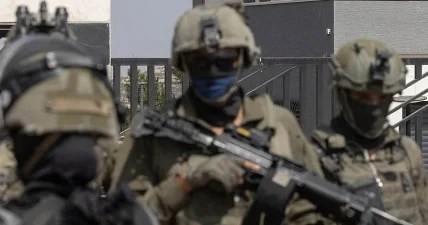
At least two Palestinians were martyred and another was injured, with many others being arrested in the West Bank, as Israeli occupation forces stepped up attacks overnight and into Friday morning.
In Jenin, Fathi Khazem, father of slain Palestinians Raad and Abdulrahman Khazem, was shot and killed by Israeli occupation forces (IOF) during a raid on his home in the center of the city.
Khazem, widely known as Abu Raad, a retired colonel in the Palestinian National Security Forces and the father of two Palestinians killed by Israel in 2022, had been pursued by Israeli forces for years.
Local sources cited by Quds News Network said Israeli forces stormed Khazem’s home near Jenin’s main roundabout and opened fire on him, killing him.
Israeli forces subsequently withheld his body and transferred it to an undisclosed location, according to the reports.
Residents also reported that an Israeli special forces unit entered the house and shot Khazem directly.
A 14-year-old Palestinian boy was also shot with live ammunition in the chest and back near the Arab American University in Jenin during Israeli gunfire accompanying the raid. He was taken to a hospital for evaluation.
Meanwhile, a Palestinian young man has been martyred after being shot by Israeli settlers in Khirbet Hamroush, northeast of Hebron (Al-Khalil) south of the occupied West Bank, a medical source has told Al Jazeera Arabic.
More arrests were made by occupation forces in the towns near Jenin, Tulkarem, Nablus, Tubas, Bethlehem, Hebron and Jericho, Palestinian media reported.
Qusra Seige
Elsewhere in Qusra, south of Nablus, IOF and settlers continued their siege of three Palestinian homes in the town for the 13th consecutive day on Friday, amid attempts to impose new facts on the ground and seize control of the area under Israeli military protection.
Qusra Village Council head Abdul Azim Wadi confirmed that the IOF and groups of settlers continue to surround three homes in the Ras al-Ain area, preventing residents from entering or leaving while declaring the area a “closed military zone.”
Wadi said Israeli forces seized one of the homes and converted it into a military post while tightening restrictions on the besieged families, who are facing severe shortages of food and some medicines because essential supplies are being prevented from reaching them.
He said IOF on Thursday evening damaged and destroyed furniture and other belongings inside the seized home, which belongs to Palestinian resident Yousef Abdulsalam.
Palestinian sources said Israeli forces prevented an ambulance from reaching the property to provide medical assistance to an injured person. It later emerged that Khazem was the person targeted in the operation.
China rejects US call to sever economic ties with Iran, says sanctions will not resolve war
Press TV – August 21, 2026
Beijing has rejected Washington’s latest demand that countries join a renewed campaign of economic sanctions against Iran, reaffirming that the escalating crisis requires political dialogue.
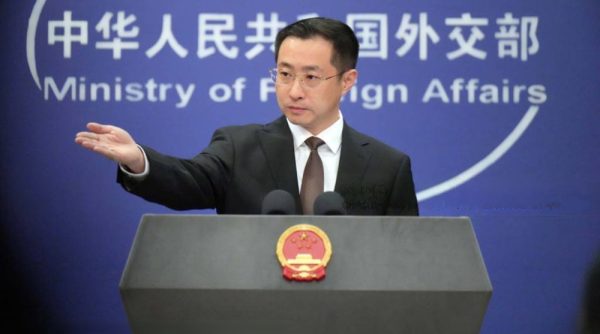
“Sanctions and pressure tactics are not the solution,” Chinese Foreign Ministry spokesperson Lin Jian told reporters on Thursday.
The rebuke came one day after the Trump administration issued an open call to allies and China alike to fall in line with what the president billed as the “most crushing economic operation ever taken against any country”—a boastful threat that came after Washington failed to achieve any of its war objectives military some six months after starting the aggression on Iran in late February.
Notably, the United States has yet to detail the full scope of its so-called operation, with US Secretary of Treasury Scott Bessent punting further specifics to a Monday press conference—a delay that raises questions about the campaign’s actual readiness.
China calls on parties to act responsibly and stick to the political and diplomatic approach, added Jian.
Iran has strongly condemned the US campaign, with Minister of Foreign Affairs Abbas Araghchi describing Washington’s economic aggression as an attempt to divert attention from America’s own problems.
Araghchi pointed to America’s “unprecedented debt & surging interest costs” as Washington seeks to impose further economic pressure on Iran.
Iran’s Ministry of Foreign Affairs said on Thursday the latest US sanctions, announced on the anniversary of the 1953 coup against Iran’s democratically elected government, demonstrate Washington’s continued hostility toward the Iranian people.
“The new US sanctions are not only another indication of the continuation of 73 years of hostility by US policymakers toward the Iranian people, but also demonstrate the anti-human, lawless and hegemonic nature of the US government,” the ministry noted.
The ministry further condemned the sanctions for targeting the fundamental rights of Iranian citizens and violating international norms.
“Without a doubt, the US economic sanctions against Iran, which target the fundamental human rights of every Iranian citizen, constitute ‘economic terrorism’ and ‘crimes against humanity,’” it maintained.
Beijing’s rejection comes ahead of Chinese President Xi Jinping’s planned September 24 visit to the White House, adding significance to China’s refusal to participate in Washington’s economic campaign against Tehran.
Israel Lies again about Hind Rajab Killing in a Public Relations Whitewash Maneuver
By Robert Inlakesh – The Palestine Chronicle – August 20, 2026
Historically speaking, Israel has never once charged a single Israeli soldier for killing a Palestinian in Gaza throughout any of its large-scale assaults on the territory that began to ramp up in 2008.
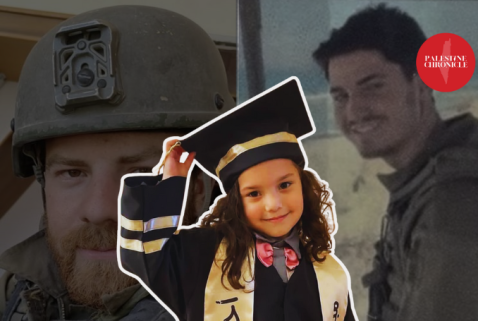
The Israeli military made headlines again this Wednesday, after they admitted for the first time to having fired upon the vehicle in which 5-year-old Hind Rajab was ruthlessly murdered in January of 2024. However, this “admission” is being presented dishonestly and is a clear Public Relations maneuver manufactured by Israel to whitewash their actions.
Hind Rajab’s murder at the hands of the Israeli army is one of the most high-profile war crimes committed throughout the Gaza Genocide, so much so that it was turned into an award-winning docudrama film, ‘The Voice of Hind Rajab’. The audio recordings of the young girl, released by the Palestinian Red Crescent Society (PRCS), who were desperately attempting to put international pressure on Israel to permit their workers to rescue her, went viral and captured the emotions of millions around the world.
Israel understands this well and has therefore chosen to strategically place the event under a criminal investigation, in order to portray a sense of accountability.
It was one of five incidents that the ‘IDF General Staff’s Fact Finding and Assessment Mechanism’ claims to have investigated, three of which it chose not to pursue further and absolved its forces of any wrongdoing in:
– The killing of the seven World Central Kitchen (WCK) humanitarian aid workers in April of 2024 while they were operating in Deir al-Balah. The victims were Australian, British, Palestinian, Polish, and dual American-Canadian citizens, who were targeted in three clearly marked vehicles. Some of the survivors attempted to flee in other vehicles and were subjected to double-tap strikes.
– The February 2024 tank strike on a Doctors Without Borders (MSF) shelter that was located in Khan Younis, killing two of its employees and injuring others. Despite the location being known to be an MSF site, the Israelis simply claimed ignorance; they never presented any evidence that they struck a military target.
– The November 2023 strike on a clearly marked MSF convoy in Gaza City that killed two other employees. It was a convoy that was attempting to evacuate 137 civilians and had coordinated with the Israeli military, even halting at a crowded checkpoint for hours in order to receive the go-ahead from Israel.
Another incident that Israel claims it is opening a criminal probe into is the massacre of 15 Palestinian paramedics and first responders in Tel al-Sultan, Rafah. On March 23, 2025, when contact was initially lost with the emergency workers, Gaza’s media office believed the group had been kidnapped and appealed to the international community. Israel refused to acknowledge the incident had even occurred at the time.
Then by the end of the month, after the Israeli military had withdrawn from the area, an unmarked grave was discovered, where the bodies of the 15 paramedics, emergency workers and ambulance drivers were found. Reports indicated that the group was executed at close range, one by one, before the Israelis had buried them and their ambulances in order to discard the evidence.
Israel’s initial defense in late March was that a series of unmarked vehicles had headed towards them with their lights off and in the absence of emergency signals, prompting their forces to defensively open fire. This account was later contradicted by video evidence that emerged in April showing the opposite, prompting the IDF to change its narrative and claim it had mistaken the emergency lights for a threat.
By late April of 2025, the Israeli military concluded, as a result of an internal probe, that the incident could be attributed to “professional failures” and “operational misunderstandings”. Later, the Israelis would again shift their narrative by claiming, without any evidence, that six of those killed had ties to the Palestinian Islamic Jihad (PIJ) armed group.
Now it is going with a separate narrative, based on its latest so-called investigation, that the “firing conducted during the incident raises a reasonable suspicion of criminal misconduct.” Its forces were shown by independent investigations, including one conducted by Forensic Architecture, to have fired at least 900 bullets and carried out close-range executions.
Silencing the Voice of Hind Rajab
Media outlets from across the spectrum have reported that Israel is now launching an internal criminal investigation into the killing of Hind Rajab and admits to firing upon the vehicle in which she was killed, along with six of her family members. However, Israel’s internal investigation just drew another conclusion that seeks to whitewash the entire event, protecting its soldiers rather than taking accountability for its actions.
“The findings of the examination indicate that IDF troops fired at a vehicle that was approaching them,” is what the Israeli military now claims as a result of its latest investigation. “Following review of the findings and due to apparent failures in the coordination of the movement of the Palestine Red Crescent ambulance, it has been decided to initiate a criminal investigation of the incident by the Military Police Criminal Investigation Division.”
Keep in mind that this is precisely the same excuse given to run cover for the executions carried out against 15 first responders and paramedics in the Rafah massacre; they are now stating they will be subject to a criminal investigation. It is an excuse that assumes that Israeli forces simply acted in self-defense and fired towards what they interpreted as a threat.
Also, two vehicles were struck in the incident, not one. Two PRCS paramedics were slain following a double-tap strike on their ambulance.
Numerous independent forensic and satellite investigations were conducted into the specifics of the incident, including one by the Washington Post and another by Forensic Architecture [in collaboration with EarShot and Fault Lines], which demonstrated Israeli forces fired 335 bullets into the Kia Picanto in which Hind Rajab and six of her family members were killed.
Evidence also shows that it was impossible for the vehicle to have traveled south as the Israeli military claimed it should have, following their instructions to locals that day, as the streets heading south from their location had all been blocked. The investigations also concluded that the car was fired upon from a short enough range for Israeli soldiers to see the innocent civilians sheltering inside it.
Israel’s shots also penetrated the vehicle from its right side. Even if the Israelis continue to claim the car was heading towards them – presumably somehow being driven by a terrified 5-year-old girl – the vehicle was clearly not shot from the front, meaning that it was conclusively not a threat.
That said, the Red Crescent workers based in occupied Ramallah spent around three hours on the phone with little Hind, desperately attempting to get Israeli permission to rescue her. By this point, it had become an international incident.
For 12-days, beginning on January 29 of 2024, Hind Rajab’s status was officially considered to be “missing” and presumed dead, until February 10, when her little body was recovered from the Tal al-Hawa neighborhood, riddled with bullets.
When Israel was finally forced to address the issue, it claimed that its forces were not even stationed in the area and that there were no operations taking place at the time. It even launched an internal probe, which produced the same excuse with different wording.
This narrative more or less held for around two and a half years, as Israeli officials and the military periodically made small alterations to their claims, despite the evidence that emerged to debunk them. Israel even attempted to blame Palestinian fighters for the killings, another tactic they have used countless times to explain away their war crimes.
Historically speaking, Israel has never once charged a single Israeli soldier for killing a Palestinian in Gaza throughout any of its large-scale assaults on the territory that began to ramp up in 2008.
The harshest sentence ever dealt to an Israeli soldier for their conduct inside Gaza was to a member of the Givati Brigade in 2009, during what Tel Aviv called “Operation Cast Lead”, landing the combatant a total of 7.5 months in prison. This was not for killing, raping or torturing Palestinians; it was for stealing a credit card.
– Robert Inlakesh is a journalist, writer, and documentary filmmaker. He focuses on the Middle East, specializing in Palestine.
Terrorist With Years of Experience: Meet Ukraine’s New Defense Minister

Sputnik – 19.08.2026
The Ukrainian parliament has unanimously approved Yevhen Khmara as Ukraine’s new defense minister, giving their go-ahead to a man who earlier pledged that “Russia will burn” after orchestrating the deadly August 12 attack on the Russian city of Novorossiysk.
A career SBU officer, Khmara is notoriously known for being behind some of the bloodiest operations carried out by the Ukrainian special services against Russian civilians.
As a former head of the SBU, he was complicit in these actions:
Operation “Spider Web”: On June 1, 2025, Ukraine carried out a large-scale drone attack on Russian strategic airfields in the Murmansk, Irkutsk, Ivanovo, Ryazan and Amur regions, targeting strategic bombers and other military aircraft.
Crocus City Hall attack: On March 22, 2024, gunmen attacked the Crocus City Hall concert venue near Moscow, killing 139 people and injuring hundreds more.
Assassination of Darya Dugina: In August 2022, Russian journalist Darya Dugina was killed when a bomb planted in her car exploded near Moscow.
Crimean Bridge explosions: The Crimean Bridge has been targeted in several major attacks, including the October 2022 truck bombing and a subsequent strike in July 2023.
Hundreds of deadly drone and missile strikes on the Russian cities of Belgorod, Kursk and Donetsk, including attacks on markets, maternity hospitals and bus stops.
Featured Video

Iran’s Next Strike May Not Explode. It Could Shut You Down
or go to
Aletho News Archives – Video-Images
From the Archive
Zionism’s Violent Legacy
By Donald Neff | Washington Report On Middle East Affairs | January 1996
On January 4, 1948, Jewish terrorists drove a truck loaded with explosives into the center of the all Arab city of Jaffa and detonated it, killing 26 and wounding around 100 Palestinian men, women and children.[1] The attack was the work of the Irgun Zvai Leumi – the “National Military Organization,” also known by the Hebrew letters Etzel – the largest Jewish terrorist group in Palestine. The Irgun was headed by Revisionist Zionist Menachem Begin and had been killing and maiming Arabs, Britons and even Jews for the previous ten years in its efforts to establish a Jewish state.
This terror campaign meant that at the core of Revisionist Zionism there existed a philosophical embrace of violence. … continue
Blog Roll
 Aletho News
- Trump’s Iran war is on an Israeli leash
- Saudi oil boss issues global supply warning
- Riyadh Says Its Oil System Is Intact. The Numbers Say Otherwise.
- Trump and Netanyahu Want to “Finish the Job” on Iran
- US ‘one-sided dictation’ not Iran’s beliefs makes rational talks impossible: Baghaei
- Iran’s Next Strike May Not Explode. It Could Shut You Down /Col Doug Macgregor
- Iran: US political targets legitimate if assassinations return
- Iraq shuts key border crossing with Iran under US pressure: Report
- Undersea Internet cables could be targeted in retaliation for attacks on Iran: IRGC deputy chief
- EU sending ‘biased’ observers to interfere in Serbian election – president
- If Americans Knew
- The Israel Lobby’s Changing Fortunes
- AIPAC has become such a political liability that it’s shifting to a more “nimble” approach to buying politicians
- At least 160 Israeli settler attacks in 2 weeks
- Will Gaza’s Ancient Christian Community Disappear Forever?
- Israel’s vision of regional security rests on keeping Arab states weak
- Heidi Levine recounts how Palestinian youths helped save her in settler attack
- DAILY UPDATE: Latest essential news on Palestine, Israel, & region
- Trump’s Intensifying Sabotage of the ICC, for Israel’s Sake
- Israeli military detain US and UK volunteers in West Bank including Democratic NY politician Brad Lander
- Americans at National Conservatism Conference held in Israel this year criticize Israel
- No Tricks Zone
- E-Cars Reduce CO2 Emissions By Only 41% Compared To Internal Combustion Engine Vehicles
- Predictions Made By Renowned Climate Professor Over Past Decades Have Been Proven To Be Poor
- New Study Suggests Large Regions Of The Pacific Ocean Have Been Cooling For The Last 80 Years
- Germany’s Green Energy Debacle: High Energy Costs Force Kahla Porzellan to Close After 182 Years!
- New Study: 50 Years Of The Most Aggressive ‘Net Zero’ Policies Can Only Affect The Global Climate By 0.03°C
- US September “Heat” Was No Record…Many Records Set Decades Ago
- Latest European Green Energy Debacle; Portugal’s Largest Flagship Solar Park Insolvent!
- Green Energy Debacle: German Expert Professor Fritz Vahrenholt Warns Of Severe Economic And Social Consequences
- Two More Paleo Reconstructions Affirm Meters-Higher Sea Levels Across Ireland, Brazil 7000-6000 Years Ago
- New Study: Earth And Venus Surface Warmth Largely Explained By Convection And Lapse Rate, Not CO2 Or Radiation

