President Trump: Stop Bombing Yemen and Exit the Middle East!
By Ron Paul | March 17, 2025
Over the weekend President Trump ordered a massive military operation against the small country of Yemen. Was Yemen in the process of attacking the United States? No. Did the President in that case go to Congress and seek a declaration of war against the country? No. The fact is, Yemen hadn’t even threatened the United States before the bombs started falling.
Last year, candidate Trump strongly criticized the Biden Administration’s obsession with foreign interventionism to the detriment of our problems at home. In an interview at the Libertarian National Convention, he criticized Biden’s warmongering to podcaster Tim Pool, saying, “You can solve problems over a telephone. Instead they start dropping bombs. Recently, they’re dropping bombs all over Yemen. You don’t have to do that.”
Yet once in office, Trump turned to military force as his first option. Since the Israel/Hamas ceasefire plan negotiated by President Trump’s special envoy Steve Witkoff, Yemen has left Red Sea shipping alone. However, after Israel implemented a total blockade of humanitarian relief to citizens of Gaza last week, Houthi leaders threatened to again begin blocking Israel’s Red Sea shipping activities.
That was enough for President Trump to drop bombs and launch missiles for hours, killing several dozen Yemeni civilians – including women and children – in the process.
After the attack, Trump not only threatened much more force to be used against Yemen, but he also threatened Iran. His National Security Advisor Mike Waltz added that the US may start bombing Iranian ships in the area, a move that would certainly lead to a major Middle East war.
Like recent Presidents Bush and Obama, candidate Trump promised peace after four years of Joe Biden’s warmongering and World War III brinkmanship. There is little doubt that with our war-weary population this proved the margin of his victory. Unfortunately, as with Bush and Obama, now that he is President, he appears to be heading down a different path.
The Republican Party is gradually becoming a pro-peace, America first party, but the warmongers and neocons of the old line in the Party are not going to let go so easily. Unfortunately many of these dead-enders have found their way to senior positions in Trump’s Administration, with voices of restraint and non-intervention nearly nowhere in sight among his top tier of advisors.
To solve the Yemen problem we must understand it: Russian and Chinese ships, for example, are not being threatened because they are not enabling the Israeli demolition of Gaza. The slaughter there has been facilitated with US money and US weapons. It is the US doing Israel’s bidding both in Gaza and in the Red Sea that is painting a target on us and unnecessarily putting our troops at risk of retaliation.
The US government, starting with Biden and continuing now with Trump, seems eager to make this our war even though, as Rep. Thomas Massie pointed out over the weekend, Red Sea shipping is of minor importance to the US economy.
In a real “America first” foreign policy we would be following the Russian and Chinese lead and staying out of the conflict. It’s not our war. End US military involvement in the Middle East and our troubles disappear. It really is that simple.
Trump hypes up tensions with Iran
By M. K. BHADRAKUMAR | Indian Punchline | March 17, 2025
On Saturday, US President Donald Trump ordered the Pentagon “to launch a decisive and powerful military operation” against the Houthis of Yemen with “overwhelming lethal force” in the most significant military action of his second term, to date.
The US attacks began on Saturday and continued into Sunday on the Yemeni capital Sanaa and other areas reportedly killing 31 people and wounding 101 so far, most of them children and women.
Such wanton killing of defenceless women and children can only be seen as an act of cowardice. Trump has blood on his hands. Trump wrote on Truth Social addressing the Houthis, “Your time is up, and your attacks must stop, starting today. If they don’t, hell will rain down upon you like nothing you have ever seen before.”
Thereupon, Trump abruptly digressed to address Iran that it needed to immediately stop supporting the Houthis. Trump threatened, “America will hold you fully accountable and, we won’t be nice about it!”
Iran has reacted strongly. Foreign Minister Abbas Araghchi said Trump has no authority or business to dictate Iran’s foreign policy. Araghchi noted that Houthis are only reacting to “Israeli genocide and terrorism”. The commander of Iran’s Islamic Revolutionary Guard Corps General Hossein Salami warned that Iran would give “a destructive response” to any attack.
Trump’s belligerence came within two days of a visit by Anwar Gargash, the UAE’s Minister of State for Foreign Affairs, to Tehran on Thursday to hand over a letter from Trump addressed to Iran’s Supreme Leader Ayatollah Ali Khamenei proposing talks on Iran’s nuclear programme and Iran’s support to resistance groups. Tehran remains open to nuclear talks but has rejected any linkage with its regional policies.
Meanwhile, Tehran has begun circling the wagons as a new phase is beginning in Trump’s foreign policies, with tensions rising steadily over the nuclear issue. The October deadline is drawing closer by the day for invoking the snapback clause in the JCPOA (2015 Iran nuclear deal) to reinstate UN Security Council sanctions will expire, and Iran’s enrichment programme, on the other hand, has apparently reached a point where it already has a stockpile to make “several” nuclear bombs, per the International Atomic Energy Agency.
On March 14, China’s foreign minister Wang Yi hosted a joint meeting in Beijing with the Russian and Iranian deputy foreign ministers where he proposed five points “on the proper settlement of the Iranian nuclear issue”, which, for all purposes endorsed Tehran’s stance. It was a resounding diplomatic victory for Iran.
Interestingly, the Beijing meeting was timed to coincide with the conclusion of a 6-day naval exercise at Iran’s Chabahar Port with the theme of Creating Peace and Security Together between the navies of Iran, Russia and China. A readout by the Chinese Ministry of Defence stated that “The naval exercise enhanced the joint operational capabilities of the three navies to respond to various emergencies and maintain maritime security, deepened military trust and practical cooperation among the navies of the participating countries, and laid a solid foundation for future cooperation.”
All these developments taken into account, Trump faces multiple challenges at the diplomatic level over the Iranian nuclear issue with Tehran, Moscow and Beijing coordinating their approaches in the crucial six-month period ahead and Tehran giving confusing signals over Trump’s letter to Khamenei. Trump cannot be pleased with the developing situation on the diplomatic track and some pressure tactic becomes necessary against Iran. Simply put, Trump’s egocentric mind took the easy route of punching the Houthis so hard to send an indirect message to Tehran (and Moscow and Beijing) that he is not to be trifled with.
Indeed, Moscow has lately waded into the Iran nuclear issue and is positioning itself for a mediatory role potentially. Foreign Minister Sergey Lavrov recently came out against attaching extraneous issues (eg., verifiable arrangements by Tehran to ensure the cessation of its support for resistance groups in Iraq, Lebanon, and Syria) to the nuclear negotiations. Lavrov said frankly, “Such a thing is unlikely to yield results.”
Lavrov has also emphasised Moscow’s support for Tehran’s basic stance that any resumption of US-Iran negotiations ought to be stemming from the 2015 nuclear deal known as the JCPOA which carries the approval of the UN Security Council (which of course Trump tore up in 2018.)
Don’t be surprised if Moscow is wading into the US-Iran nuclear standoff with great deliberation when it is tackling on a parallel track Trump’s intrusive calls for cessation of Russian special military operations in Ukraine even while there is much unfinished business which remains to be completed and Ukraine showing no genuine interest in negotiations with Russia — and has actually enacted a law expressly prohibiting such negotiations.
Specifically, Trump would know he is in no position to get Zelensky to agree to a surrender of weapons by the Ukrainian troops in Kursk — although, Putin has offered that “If they lay down their weapons and surrender, they will be guaranteed life and decent treatment.”
The crunch time is coming as the Russian deadline for peaceful surrender is about to expire by 6 am Moscow time today. Dmitry Medvedev, Deputy Chairman of Russia’s Security Council wrote on Telegram channel that “should they refuse to lay down arms, they will all be systematically and mercilessly eliminated.” Trump’s nerves must be on edge as embedded within the Ukrainian occupying forces there could be Western mercenaries as well.
In the circumstances, one feels sorry for the Houthis whom Trump is using as a punchbag to vent his frustrations and suppressed fury against Tehran. Top officials in the Trump administration have openly acknowledged that Tehran is being notified that “enough is enough” — an expression used by Trump’s National Security advisor Mike Waltz to interpret the nuanced message of the air and missile strike against the Houthis.
Certainly, Yemen which has gone through so much suffering does not deserve such bestial attacks. As for Houthis, they are yet to attack any ships despite threatening to do so over Israel’s blockade on all food, fuel and other supplies into the Gaza Strip. The Houthis have accused the Trump administration of overstating the threat of maritime embargo, which is limited only to Israeli navigation until humanitarian aid is delivered to the people of Gaza according to the ceasefire agreement between Hamas and Israel.
Evidently, the Houthis are neither looking for a showdown with Trump nor are they to be regarded as Iranian proxies. Houthis halted the drone and missile attacks altogether when the Gaza ceasefire was declared in January. Even Trump’s best argument is that Houthis had attacked US ships during the Biden administration.
Nonetheless, US Central Command described Saturday’s strikes as the start of a large-scale operation that may continue indefinitely. Secretary of Defense Pete Hegseth wrote on X, “Houthi attacks on American ships & aircraft (and our troops!) will not be tolerated; and Iran, their benefactor, is on notice, Freedom of Navigation will be restored.” Behind such fictitious rhetoric, Hegseth probably understands that Trump expects him to keep the pot boiling in the Gulf region through the next several months as the Iran nuclear issue approaches a point of criticality.
The Russian Foreign Ministry, in a readout on Saturday, stated that US Secretary of State Marco Rubio called Lavrov and informed him about the US decision to attack the Houthis. It said Lavrov, in response, “emphasised the need for an immediate cessation of the use of force and the importance of all parties engaging in political dialogue to find a solution that prevents further bloodshed.” Well, the shoe is on the other foot now, isn’t it? On March 15, Trump forfeited the moral ground to be leading with peace through strength in his foreign policy.
Yemen Will Stand with Gaza, Even if it Means War with the US: Abdul-Malik al-Houthi
Full speech of Abdul-Malik Badr al-Din al-Houthi, leader of Ansar Allah, about Trump’s latest aggression against Yemen – March 16, 2025
Yesterday, the American enemy announced a new wave of aggression against our country, launching a series of airstrikes and naval bombardments targeting homes and residential neighborhoods in the capital, Sana’a, and several other Yemeni governorates. These attacks resulted in dozens of martyrs and wounded, including women and children.
This brutal and unjust assault is yet another example of US tyranny and arrogance toward our (Islamic) Nation. Its objective is clear: to support the Israeli enemy after our country took a firm stand in support of the Palestinian people against Israel’s starvation campaign in Gaza. Israel has not only blocked the entry of humanitarian aid but has also completely prevented the flow of goods into the besieged strip.
The starvation of two million Palestinians is an immense crime—an unequivocal crime against humanity. No one with a human conscience, no one with sincere Islamic faith, can remain silent in the face of such an atrocity. Yet, it is deeply unfortunate that most Muslim and Arab regimes have responded with indifference. There has been no serious effort to prevent Israel’s deliberate starvation of Gaza’s people. In fact, the situation has escalated to the point where Israel is now actively depriving them of water as well.
The suffering of the Palestinian people in Gaza is an immense tragedy, yet many choose to ignore it. Israeli conditioning has set the bar for global outrage so high that only large-scale massacres by bombs and weapons seem to provoke attention. As a result, when suffering takes the form of starvation and deprivation rather than immediate mass killing, many fail to even follow the events unfolding there.
However, the deliberate starvation of Gaza’s people—the complete blockade of aid and goods—is no less than a method of extermination. For fifteen days now, the Israeli enemy has kept Gaza’s crossings closed, intensifying the suffering of its people. Anyone who observes the magnitude of this humanitarian crisis can recognize it as a catastrophe.
In contrast, the responsibility to act falls first and foremost upon our own (Islamic) Nation—upon all Muslims, upon every people and country within our Ummah. Yet, where is the serious action? Where is the political effort beyond empty statements? Where is the economic pressure? Most regimes have taken no real position in any meaningful way. Worse still, they influence their people, suppressing their ability to act, leaving them paralyzed as mere spectators.
This failure to uphold our great religious, moral, and humanitarian obligations poses a grave danger to our entire Nation. The root cause? Fear of America. That is the reality. Fear of America, which stands as a direct accomplice to all Israel’s crimes—protecting it, enabling it, and ensuring it carries out its atrocities without consequence.
This is what has driven much of our Nation—both its governments and its people—into failure and neglect of its duties, whether dictated by faith, morality, or basic humanity. In the holy month of Ramadan, as Muslims increase their recitation of the Quran, they must also reflect on their human, moral, religious, and faith-based responsibilities. At the same time, they must recognize the grave danger of a world where fear of America outweighs fear of divine punishment—where whole countries and peoples abandon their sacred duties to the Ummah out of submission to foreign powers.
What is happening to the Palestinian people—extermination, starvation, killing, displacement, and oppression—without any meaningful reaction from the Muslim world, sets a dangerous precedent. It opens the door for similar horrors elsewhere. Any other Arab or Muslim country could be next. Wherever the Americans and Israelis choose to repeat their crimes—whether in Palestine’s neighboring countries or beyond—the result will be the same. Others will remain passive, shackled by fear, humiliation, and inaction. It is a great danger for the whole Ummah, as it emboldens the American enemy and the Israeli oppressor. Neither of them has a conscience. Neither considers the silence, passivity and inaction of other nations as a deterrent—only as an encouragement to commit further crimes. They have great (hegemonic and expansionist) ambitions and agressive projects against our (Islamic) Nation, as well as ideological foundations (supremacism) as well as foundations rooted in their colonialist inclination and tyrannical behavior.
That’s why Yemen’s stance has been clear. Our decision to support the Palestinian people, including our move to block Israeli maritime navigation, that clearly targets the Israeli enemy and no one else, is aimed solely at pressuring Israel to open the crossings, allow the entry of humanitarian aid, and put an end to the starvation of Gaza.
What is happening in Gaza is outright starvation, compounded by imposed thirst, amid the immense Nakba (catastrophe) the Palestinian people are enduring. After 15 months of relentless annihilation and mass destruction, every aspect of life in Gaza has been systematically erased. This is not a situation where a decision to block aid and goods has a minimal impact—it is devastating. The conditions were already dire; there are no food reserves, no agricultural activity, and no remaining essentials for survival. The entire Gaza Strip has been utterly destroyed.
The reality is evident to anyone paying attention—conditions there are beyond desperate. From the very first moment the Israeli enemy took this step, it inflicted immense harm and suffering on the Palestinian people. And now, after 15 more days, that suffering has only worsened. Yet, as we have said before, there has been no serious response from Arab regimes, nor even from the broader Islamic world—no true action in the full sense of the word.
As for us, a people, our faith compels us. The Messenger of God ﷺ said: “Faith is Yemeni, and wisdom is Yemeni.” Guided by this faith and our human conscience, we cannot simply stand by. Our country has stood with the Palestinian people for 15 months, supporting them in the battle of Al-Aqsa Flood, resisting the genocide committed by the Israeli enemy in partnership with the United States.
Throughout this period, our people have also withstood American aggression—intended to bolster the Israeli enemy—and will remain unwavering in their active support for Palestine, especially as the threat of extermination persists. There are red lines in the Palestinian situation. When the Israeli enemy, with full American backing and protection, perpetrates genocide, that is a red line. We cannot stand idly by. There are legal and humanitarian obligations in this regard—obligations that extend beyond Muslims, enshrined in international law and the UN Charter. Yet all have abandoned them: the international community, other nations—they have forsaken these humanitarian duties. And in our Islamic world, they abandon their humanitarian, religious, and moral responsibilities, even when their own national security and interests are at stake. They forsake everything. It is a total abdication. This emboldens the Israeli enemy, just as it emboldens the American enemy—a full partner in these crimes. This inaction offers no solution to the Ummah, nor does it avert the looming danger, nor does it provide any real solution to the ongoing crisis..
Our nation’s decision to support the Palestinian people—by blocking Israeli navigation and enforcing restrictions against the enemy—comes from this humanitarian, moral, religious, and faith-driven commitment. It is a means to press for the entry of aid and to end the starvation of two million Palestinians in Gaza. This is not a minor issue that can be ignored; it is a grave humanitarian crime against millions of people.
Thus, when the American enemy escalates its aggression through airstrikes, it will not achieve its goal of pressuring us into retreating from our position. The only real solution is ensuring the entry of humanitarian aid, putting an end to the starvation and dehydration of the Palestinian people in Gaza. The situation is beyond catastrophic.
What the Israeli enemy is doing on top of that—targeting Al-Aqsa Mosque, seeking to seize or demolish it, and attempting to forcibly displace the Palestinian people—must be considered as firm red lines by our entire (Islamic) Nation. If the enemy sees that, regardless of his actions, the Ummah takes no decisive steps, makes no real decisions, and adopts no serious stance, he will be emboldened to escalate further. His Zionist agenda is well known, and every major act of aggression and escalation he commits without consequences only paves the way for even greater crimes.
Indeed, his goal is full control over the Palestinian people—erasing their existence and liquidating their cause. This is the shared objective of both the Israeli and American enemies, who fully embrace Zionist ideology, champion its project, and act accordingly.
That is why it is impossible for us to forsake our duties towards these red lines. Even if all remain silent, we will not remain silent. We will do everything we can, considering our resources and capabilities, along with our possibilities. This is a sacred responsibility before God Almighty, and neglecting it invites divine punishment, both in this world and the next. It is far easier for us to stand in opposition to the tyrants of our time, to face their threats, and to sacrifice for the sake of God, than to face the wrath of God Himself. We will not bring upon ourselves His displeasure, anger, and Hellfire—neither in this world nor in the Hereafter.
We are certain that when we take the right stance—one fully aligned with our humanitarian, moral, and religious obligations, as well as the national security interests of our Ummah in —God will be our ultimate supporter. “He is the best of helpers.” We place our trust in God. We believe in His true promise. We rely on God, the Almighty, and He is the best of protectors.
The United States, in their statements and declarations, claim that one of the reasons for their latest wave of brutal, unjust, and criminal aggression against our country is our people’s unwavering support for the Palestinian cause over the past 15 months. This support has been in direct opposition to the genocidal aggression carried out by the Israeli enemy with American partnership and protection. The US frames its assault as punishment for our people’s honorable, courageous, and steadfast stance alongside the Palestinian people in resisting genocide.
We say this: That honorable stance—taken for the sake of Almighty God and in fulfillment of these faith-based, humanitarian, moral, and religious obligations—is one our people will never regret. It is a noble position, a great position, a position that brings us closer to God. It has strengthened our people on all fronts, including militarily.
It is a stance of dignity, taken by our dear people with faith and insight. Thus, no matter the extent of American and Israeli tyranny, our people will not waver from their Quranic, faith-driven, moral, and humanitarian course. We will stand firm against this oppression. This American aggression will fail—by God’s will—just as it has failed before. It will not succeed in pressuring our people or our people and country to abandon their principles. This is a fundamental, unwavering commitment, rooted in faith, morality, and necessity in every sense of the word, as we will explain in more detail.
The US will not achieve its goal of weakening our country’s military capabilities—by God’s will—because we are engaged in a jihadist struggle and have been resisting American aggression for many years. This is merely another chapter in that battle. And as in previous confrontations, this new round of aggression will only contribute to further strengthening and developing our military capabilities, God willing.
We will meet escalation with escalation—that is our approach. Yesterday, our armed forces responded immediately to US attacks, launching (18) missiles and drones in retaliation for the American airstrikes and bombings on our land. This is our choice, our decision, our path. As long as the American enemy persists in its aggression, its warships, aircraft carriers, and naval vessels will be targeted by our missiles and drones.
Furthermore, maritime restrictions will extend to US vessels as long as the aggression continues. The US is the one turning the sea into a battlefield, thereby directly impacting maritime navigation and global trade. Our decision was only targeting Israeli ships, and will now extend to US ships, but they are the ones who turn the sea into a battlefield and threaten maritime navigation. It is essential that all nations recognize who truly threatens international waters and the movement of ships.
The United States and Israel are the sources of evil and instability—globally and across the region. They are responsible for aggression, crimes, and chaos. They undermine peace in every sense of the word, plunging the world into crisis and conflict, East and West alike. They are arrogant, oppressive, and hostile.
We have additional escalation options at our disposal. We will respond to American escalation by escalation. We will retaliate to aggression with missile strikes targeting its aircraft carriers, battleships, and naval forces, and target its commercial ships. If the U.S. continues its hostilities, we will escalate further, by God’s will.
Our dear people will mobilize in full force—through general mobilization and across all sectors—just as they have done with strength and honor over the past 15 months in opposing the Israeli genocidal aggression against the Palestinian people, which has been carried out with U.S. partnership and protection. Now, in the face of this aggression against our country and the deliberate starvation and deprivation of the Palestinian people in Gaza, our country will rise once again in a widespread movement to confront tyranny.
We are not acting recklessly or seeking conflict. We are standing on a foundation of faith, morality, humanity, and jihad for the sake of Almighty God. We resist oppression, injustice, and the criminal arrogance of the U.S. and Israel. The US strives to submit the region as a whole to Israel, and it is clear to everybody.
Although the United States is a partner in the agreement to halt the aggression against the Gaza Strip, deliver aid, and end the starvation of the Palestinian people there, and has commitments in this regard, clear commitments. What are the obligations between states, between people for? Agreements are signed with clear obligations, but the United States disregards its commitments by failing to honor its obligations and breaking agreements. The Israeli side, too, violates every covenant and pact, denying any agreement. What the Israeli enemy is doing in Palestine, particularly in the West Bank, are continuous crimes. In the Jenin refugee camp, for example, they continue daily killings, forced displacement, and destruction, as well as in other camps like Tulkarm and others.
What the enemy also does, with regard to the repeated incursions into Al-Aqsa Mosque, these are steps, as we said, that are not the end, not the final ceiling of what the Israeli enemy is doing. These are steps within the Israeli enemy’s plan. And every time the Ummah remains silent, it dares to do more. See what Israel does against the Palestinian people in the Gaza Strip—continuing daily killings, even if not at the pace it was during the daily genocidal extermination. But these are crimes, crimes that the (Islamic) nation must not remain silent about. And the American side is complicit in this; they kill journalists, they kill citizens, they kill those working in humanitarian fields, as if it were a normal issue. These are clear crimes, clear attacks, violations of everything—treaties, laws, ethics, values, and everything.
The enemy’s aggression against the Lebanese people continues. It has failed to honor its agreements, even those guaranteed by the US. It has completely disregarded guarantees concerning South Lebanon and didn’t retreat its forces, and persists in its violations—killing Lebanese civilians and committing countless transgressions. It wages attacks in Syria as well, invading, expanding, and launching relentless airstrikes—40 raids in a single night just days ago! Across many regions, it destroys, kills, occupies, and expands in a blatant display of aggression.
These crimes are flagrant violations with no justification whatsoever, yet much of the world remains silent. This silence only confirms what we have long stated: The US., alongside Israel, seeks to impose a doctrine of domination over our (Islamic) Nation and our peoples. This, by God, is their ultimate objective. They seek absolute freedom in their aggression and crimes—to kill, destroy, occupy, and do as they please without facing any response or serious opposition. This is an extremely dangerous matter, and accepting it carries profound consequences.
If silence were effective, if alternative approaches that refrain from taking a stance against American and Israeli tyranny and aggression had worked, it would have succeeded in Syria. The stance of the groups in Syria is clear: they confirm in all clarity that they do not consider Israel an enemy and will take no action against it. They refuse to respond in any way. It has even been mandated in media circles that the term “Israeli enemy” should not be used in reporting. Yet, this approach has failed. It did not work to declare, “We are not hostile, we will not respond, we are not targeting you.” Reality proves their commitment to this stance. They refuse to adopt any position against Israel, they don’t retaliate (nor condemn). They do not want conflict, confrontation, or any kind of problem. Their only request is that Israel stops its occupation of Syria—not as a firm position, but merely as a plea. They appeal, they beg, they turn to other nations and to the Americans, but to no avail.
Meanwhile, Israel expands its occupation, consolidates its control, and continues to destroy Syria’s resources. It tightens its grip on the territories it has seized in southern Syria—coveting three provinces: Quneitra, large areas of Daraa, and Sweida. It extends its reach to the outskirts of Damascus, nearing the capital itself. There is no justification for this in Syria—no ties to Iran, as the stance of these groups toward Iran is well known. They openly declare Iran as the enemy, not Israel. They have no issue with normalization (with Israel). Yet, none of these strategies have succeeded.
The Palestinian Authority in the West Bank has made its position clear. The agreements it signed with Israel are well-documented. Yet, Israel disregards them entirely, fails to honor any commitments, openly expresses its ambitions, and continues its daily crimes against the Palestinian people in the West Bank. This confirms an undeniable truth: a firm and deterrent stance against Israel is necessary to deter it.
We are not in a futile position; we are in an essential, just, and moral position—one rooted in humanitarian, ethical, and religious obligations. The American agenda in the region is clear: the total subjugation of this land to Israel and the imposition of an equation of permissiveness. Neither of these can ever be accepted. We will never accept the subjugation of this region to Israel, nor will we accept the normalization of permissiveness—neither in our country nor anywhere else. To accept this is to betray the principles of Islam. To accept it is humiliation. And God says: “To God belongs all honor, and to His Messenger, and to the believers.” (Quranic verse)
Submission does not protect the Ummah from killing, occupation, or oppression. It does not shield them from the dangers posed by America and Israel. On the contrary, it enables these enemies to implement their agendas and carry out their aggressive and destructive plans against our Umma.
Our position is one of honor and righteousness—a response to God’s command and a fulfillment of our faith-based, humanitarian, and moral duties. It is inner and authentic, and not dictated by any external force, nor is it an extension of any foreign agenda. Our alliance, cooperation, and coordination with the free people of our (Islamic) Nation within the Axis of Resistance are part of our collective duty as an Umma.
If some fulfill their obligations, it does not mean they are acting on behalf of others, nor does it imply subordination of one group to another. It is a shared responsibility, a duty upon all. Those who fail to uphold this responsibility—that is their choice. But as for us, our stance is in the most noble cause, an honorable position that brings dignity before God, and an essential duty.
We stand against American and Israeli tyranny. We stand against their crimes and their aggression. We are the continuation of the great march of Islam, led by the Messenger of God—may peace and blessings be upon him and his family.
As we commemorate the anniversary of the Great Battle of Badr on the seventeenth of the blessed month of Ramadan, we recall how the Messenger of God (peace be upon him and his family) advanced with divine permission and guidance. As the Almighty says:
“Permission is given to those who fight because they have been wronged, and indeed, God is capable of granting them victory.”
And as He says:
“Just as thy Lord brought thee out of thy home in truth, though a party of the Believers were unwilling, disputing with thee concerning the truth after it had become manifest, as if they were being driven to death while they looked on.”
With unwavering faith, the Messenger of God (peace be upon him) rose in the Battle of Badr against tyranny, confronting the forces of oppression. At that time, the Quraysh embodied tyranny—through their hostility, aggression, ignorance, injustice, and enmity toward Islam and the Muslims.
Today, the front of tyranny has changed, but its essence remains the same. In this era, it is America and Israel—an alliance of evil, disbelief, injustice, and criminality, waging war against Islam and Muslims. Is there any doubt about this? Who else inflicts upon the Ummah what they do? Their objectives are evident, their crimes undeniable, their ambitions exposed, and their Zionist project—aggressive, destructive, and criminal—laid bare for all to see. They are the front of disbelief in our time.
We stand in defiance of this oppression, of this aggression, of the systematic criminality targeting our lands and our Ummah. We move forward in continuation of Islam’s righteous struggle, following the example of the Messenger of God (peace be upon him and his family). He marched forward with only a few in number and limited provisions, yet he relied upon God. He advanced with faith, and those who followed him did so with conviction, responding to the call of belief, placing their trust in God, and in His true promise.
God granted them a decisive victory at Badr—a victory that marked a turning point, distinguishing it from the battles before and after. It ushered in a new era—an era of honor, triumph, and strength for Islam and the Muslims. It was a victory that established truth through both struggle and steadfastness in the field of battle. And we are the continuation of that movement, just as the Ansar (Helpers) stood with the Messenger of God (peace be upon him and his family) when he first consulted them: their words echoed faith, loyalty, courage, honor, and unwavering resolve. This spirit was demonstrated by their stance and jihad in the path of God.
Our dear people follow in the footsteps of those mujahideen ancestors who bore the banner of Islam against tyranny—whether the tyranny of Quraysh or the tyranny of the global oppressors of their time. We are patient in the face of war, and firm in the encounter with the enemy. I swear by God, O Messenger of God, we will not say to you as the Children of Israel said to Moses: ‘Go, you and your Lord, and fight while we remain behind.’ Rather, we say: ‘Go, you and your Lord, and we shall fight alongside you.’”
Our model is the Messenger of God (peace be upon him and his family), who never remained silent in the face of oppression, nor did he submit. So how can it be acceptable to God that the Ummah of Islam—the nation of two billion Muslims—the Arab world with its 300 million people—chooses silence, surrender, and inaction? Can entire countries and peoples resign themselves to this collective choice? This is nothing less than suicide for the Ummah, invoking the wrath of God and empowering its enemies.
Surrender is not an option for a great Ummah. It is not permissible in the religion of God. The Messenger of Allah, whom God described:
“Indeed, in the Messenger of God, you have an excellent example for those who hope in God and the Last Day and remember God often,”
rose with just 300 mujahideen—perhaps a few more or less, depending on different narrations. Yet with this small force, he carried the banner of Islam and advanced in the path of God.
The dangers of submission are immense. The threats facing our Ummah today demand serious action—reliance on God, trust in Him, and unwavering faith in His promise.
We, the Yemeni people, refuse to bow to the enemy or allow them to achieve their aggressive objectives. We march forward, relying on God. We have the greatest source of strength—God Almighty. We trust in Him and place our reliance upon Him. Our choices and decisions are rooted in our faith, our dignity—both as Muslims and as human beings. We stand firm, confronting oppression and aggression with broad and decisive action.
Therefore, I call upon our dear people to take to the streets tomorrow by the millions, on the anniversary of the Great Battle of Badr, in the capital, Sana’a, and across the provinces, in a massive show of solidarity—to reaffirm their steadfastness, their just stance, their faith-driven commitment, and their jihadist resolve in support of the Palestinian people and in confronting American aggression.
The specific time and locations will be determined by the organizing committee and its branches, God willing. However, what truly matters is that the popular turnout is vast—an expression of unwavering determination and deep-rooted belonging on this significant occasion. Because our stance is a continuation of that historic position. Our role model is the Messenger of God. Just as our fathers and grandfathers stood with loyalty, faith, perseverance, dignity, and sincerity alongside him in the Great Battle of Badr and in other struggles against the tyranny of the first Jahiliyya (Age of Ignorance), we, too, move forward as an extension of that legacy—carrying the banner of the Messenger of God, of Islam, upholding the march of Islam, embodying the position of Islam, and engaging in jihad for the sake of God in our time, in this stage of history.
We will never accept the violation of this Ummah, nor will we allow our country or others to be subjugated by the Israelis. We will not remain silent in the face of the arrogance, tyranny, aggression, and crimes of the Israeli and American enemies.
I urge you, dear people—you who are known for your loyalty, who have marched in honor for over 15 months in a manner unmatched anywhere in the world—to make tomorrow’s gathering vast and powerful, a testament to your faith, your unwavering loyalty, your dignity, your resilience, and your steadfastness, all of which stem from your deep belief and your response to God Almighty. You are the true extension of this Ummah, standing firm amidst a sea of submission, weakness, and surrender.
You are the heirs of the authentic Islamic path, the bearers of Islam’s banner, and the upholders of the just stance that God Almighty commands—a stance that brings goodness, honor and adheres to divine law.
Rest assured, dear people, that no matter how circumstances evolve, our position remains strong and unshaken, thanks to our reliance on God. With our trust in Him and our accumulated experience in confronting this enemy—its aggression, its military tactics—we stand firm, fully dependent on God Almighty, and absolutely confident in His promise.
He is the One who says: “If God grants you victory, none can overcome you.” He is the One who says: “If you support God, He will support you and make your steps firm.” We trust in Him, for He never breaks His promise. “He is the best of helpers.” “Sufficient is Allah for us, and He is the best disposer of affairs.” There is no power and no strength except with the Most High, the Almighty.
We ask God, the Almighty, to grant us His victory against the tyrants, criminals and oppressors of our time—America, Israel, and those allied with them—to have mercy on our righteous martyrs, to heal our wounded, and to grant freedom to our prisoners. Indeed, He is the One who hears all prayers.
May God’s peace, mercy, and blessings be upon you.
Source: Al-Araby TV
Translation: resistancenews.org
Russia urges US to halt Yemen aggression, engage in dialogue
Press TV – March 16, 2025
Russian Foreign Minister Sergei Lavrov, during a phone call with US Secretary of State Marco Rubio, called for all parties to refrain from “using force” in Yemen and engage in “political dialogue.”
“In response to argumentation put forward by American representatives, Sergei Lavrov stressed the need for an immediate cessation of the use of force and the importance for all sides to engage in political dialogue so as to find a solution that would prevent further bloodshed,” Russia’s Ministry of Foreign Affairs said in a statement on Sunday.
Moscow said that Rubio informed Lavrov about Washington’s decision to launch strikes against Yemen in a call that came after the two countries have relaunched dialogue since US President Donald Trump took office.
On Saturday, Trump announced on his X account that he had ordered the US military to launch “decisive and powerful military action” against Yemen’s Ansarullah resistance movement.
The US attacks, which began on Saturday and continued into the early hours of Sunday, have killed 31 people and wounded 101, “most of whom were children and women,” spokesperson for Yemen’s Ministry of Health, Anis al-Asbahi, posted on X.
Yemen has launched over 100 attacks targeting Israeli-bound ships since November 2023 in response to the Zionist regime’s genocidal war on Gaza, inflicting significant damage on Israel’s already strained economy and forcing the US military to engage in an expensive campaign to intercept missiles and drones, rapidly depleting US air defense stockpiles.
The recent US airstrikes came a few days after Yemen said it would resume retaliatory operations against Israeli vessels sailing off Yemen in response to the regime’s latest blockade on Gaza.
Earlier this month, the Israeli regime halted all aid coming into the Gaza Strip after it abruptly rejected entering the second phase of the Gaza ceasefire deal with Hamas as agreed before.
Israel aims to pressure Hamas into accepting a revision of the ceasefire agreement, allowing for the release of more Israeli captives without the withdrawal of occupation forces from the Gaza Strip.
‘This isn’t war. It’s genocide’: Why the world is silent about massacres in Syria
Survivors of the violence against the Alawite, Christian, and Druze communities share their stories
RT | March 15, 2025
Hay’at Tahrir al-Sham (HTS), the dominant militant group in northwestern Syria, once presented itself as a local opposition force. Just over a month ago, the group was formally disbanded and became part of the Syrian Defense Ministry, yet its origins tell a far more sinister story. Born out of the ashes of Jabhat al-Nusra, Al-Qaeda’s official branch in Syria, HTS carries the same ideological DNA as the world’s most notorious terrorist network. While it has sought to rebrand itself for international legitimacy, its methods remain unchanged: Massacres, ethnic cleansing, and the systematic extermination of those who do not conform to its radical ideology.
Nowhere has this been more evident than in Syria’s coastal cities, where HTS and its foreign recruits have unleashed an unspeakable wave of violence against Alawite, Christian, and Druze communities. Entire villages have been erased, their inhabitants slaughtered in the dead of night. Yet, as these horrors unfold, the world remains indifferent, and the silence of international powers only emboldens the perpetrators.
The massacre in Latakia: A night of unimaginable horror
In one of the darkest nights in Syria’s recent history, coordinated attacks on rural Latakia resulted in mass executions. Survivors tell of masked men storming their villages, dragging families from their homes, and carrying out public executions. Those who resisted were burned inside their homes, leaving behind entire neighborhoods reduced to smoldering ruins.
Testimonies from survivors suggest that many of the perpetrators were foreign fighters, brought in from regions far from the Middle East.
“They didn’t even speak our language,” an elderly survivor told RT. “They had no idea who we were, no reason to hate us – except that they were told to.”
Entire villages have been abandoned, their populations either massacred or displaced. Satellite imagery confirms what survivors describe – rows of torched homes, mass graves hastily covered, and ghost towns where life once thrived.
The bloodbath in Tartus: A slaughter without mercy
Tartus, once a thriving coastal city, has become another graveyard. HTS fighters stormed residential areas, conducting door-to-door massacres. Families were accused of supporting the government or practicing the ‘wrong’ faith before being lined up and shot. Those who were not executed on the spot were locked inside buildings which were then torched.
A local journalist, speaking anonymously for fear of reprisal, described the scale of the killings:
“There were so many bodies that people stopped counting. They weren’t buried properly – just dumped into ditches.”
Foreign fighters played a leading role in these atrocities. A humanitarian worker recalled speaking with a man who had barely escaped:
“He told me he heard Chechen, Uzbek, and North African Arabic among the attackers. These weren’t local militants – these were imported killers, trained elsewhere and sent here to finish us off.”
Despite the horror, survivors insist they were never fighting for political power – only for survival. “We weren’t taking up arms to reclaim land or rule over anyone,” a displaced father from Tartus told RT. “We were just trying to stop them from killing our children in their beds.”
Jableh: The systematic erasure of a community
The violence in Jableh was particularly gruesome. Hundreds of men were rounded up, executed, and dumped into mass graves. Women and children were kidnapped, their fates unknown. Witnesses reported hearing gunfire for hours as the slaughter continued unchecked.
“They lined up all the men and took them away,” a survivor said with a voice shaking. “Later, we found their bodies piled on top of one another, shot execution-style.”
One woman who managed to escape described her captors:
“They were foreigners. Some were Arab, others were not. They had dead eyes, no emotion.
To them, we weren’t people – we were just bodies to be destroyed.”
Another survivor, now living in a refugee camp, said, “People say we were fighting for power, but we were just trying to keep our families from being butchered. No one wanted war. We just wanted to survive.”
Executioners without borders
What makes these massacres even more horrifying is the sheer number of foreign fighters involved. Witnesses and survivors consistently report hearing different languages among the attackers, sometimes even Western languages.
“These aren’t local fighters,” a displaced resident now sheltering in Damascus said.
They were trained somewhere else, then sent here to do what they do best – kill.”
The involvement of foreign jihadists suggests a well-coordinated, externally supported operation, designed not just to fight a war, but to systematically erase communities. Intelligence sources indicate that these fighters were funneled into Syria through neighboring countries, trained in camps before being deployed to slaughter civilians.
The global silence
Despite overwhelming evidence of genocide, Western and regional media continue to present the massacres as “clashes” between HTS and government forces, deliberately sidestepping the mass extermination of Syria’s Alawite community.
A Syrian human rights activist, speaking under anonymity, condemned this distortion:
“This isn’t war. It’s genocide. Yet, the world’s media avoids using that word because it doesn’t fit their political narrative.”
Western governments that once backed opposition forces are now reluctant to acknowledge the nightmare they helped unleash. By turning a blind eye, they enable the continuation of these crimes, and their silence serves as complicity in the atrocities.
The United Nations has remained largely passive, offering vague statements of concern but taking no meaningful action. Meanwhile, the perpetrators roam free, emboldened by the knowledge that no one will hold them accountable.
For the people of Latakia, Tartus, and Jableh, the message is clear: No help is coming. The world will not intervene. But history will remember. And the silence of the international community will forever be its most damning indictment.
Iran, Russia, China reject ‘unlawful’ US sanctions after tripartite meeting
The Cradle | March 14, 2025
China, Russia, and Iran released a joint statement on 14 March demanding an end to “unlawful” US sanctions against the Islamic Republic after meetings in Beijing between the three countries, which were aimed at jumpstarting stalled nuclear talks between Tehran and Washington.
The three countries “emphasized the necessity of terminating all unlawful unilateral sanctions” after talks hosted by Beijing on Friday morning, according to the joint statement read out by Chinese Vice Foreign Minister Ma Zhaxou.
“The three countries reiterated that political and diplomatic engagement and dialogue based on the principle of mutual respect remains the only viable and practical option in this regard,” read the joint statement.
Russia’s Deputy Foreign Minister Ryabkov Sergey Alexeevich and Iran’s Deputy Foreign Minister Kazem Gharibadi were also present.
The Chinese Foreign Ministry revealed on 12 March that Beijing would host the high-level talks regarding the nuclear issue with Russia and Iran this week, coinciding with growing tension between Washington and Tehran over the Iranian atomic energy program.
Russia also signaled earlier this month that it was willing to help facilitate negotiations between Iran and the US.
US President Donald Trump has been pushing for nuclear negotiations with the Islamic Republic while simultaneously issuing threats and imposing harsh economic sanctions against the country.
Iranian officials, including President Masoud Pezeshkian and Foreign Minister Abbas Araghchi, have announced their refusal to engage in negotiations under pressure, in line with the position taken by Iran’s Supreme Leader Ali Khamenei.
A letter written by Trump addressing the supreme leader, which has yet to be published, has reportedly been handed over to Araghchi by Anwar Gargash, the diplomatic advisor to UAE President Mohammed Bin Zayed (MbZ).
On 7 March, Trump said: “I’ve written them a letter, saying I hope you’re going to negotiate because if we have to go in militarily, it’s going to be a terrible thing for them. There are two ways in which Iran can be handled – militarily, or you make a deal.”
Khamenei said in response that “bully governments … insist on negotiations” which are “not aimed at solving problems; they aim at domination.”
The International Atomic Energy Agency (IAEA) reported last month that Iran significantly increased its stockpile of near-weapons-grade uranium by 92.5 kilograms (203.9 pounds) since its previous report in November.
A closed-door UN Security Council (UNSC) meeting attended by representatives of the US, UK, France, and other countries was held on Wednesday. After the meeting, the UK deputy ambassador to the UN, James Kariuki, accused Iran of “dramatically” enriching uranium towards weapons-grade level and said western countries will “take any diplomatic measures to prevent Iran acquiring a nuclear weapon,” including the reimposition of sanctions.
Tehran insists that its nuclear program is entirely peaceful, in line with a religious fatwa against weapons of mass destruction, as well as the fact that it is a signatory in the Nuclear Non-Proliferation Treaty (NPT).
Yet it faces constant threats of attack from Israel. Reports from last month cited US intelligence estimates as saying that Israel is strongly considering strikes on Iranian nuclear facilities, which could potentially come this year.
Trump administration pulls intelligence pick after his views on Israeli genocide in Gaza surfaced
Press TV – March 13, 2025
The Trump administration has withdrawn Daniel Davis for the post of deputy director of national intelligence for mission integration after his views against the Israeli genocide in Gaza came to light.
The withdrawal came after multiple pro-Zionist organizations and political commentators attacked Davis for his statements on Israel’s actions in Palestine as well as his supportive comments towards Iran.
In a statement posted Wednesday on X, the pro-Zionist Anti Defamation League (ADL) claimed that the appointment of Davis would be “extremely dangerous.”
“He has diminished Hamas’s 10/7 attack, undermined US support for Israel’s right to defend itself, and blatantly denies the grave threat the Iranian regime poses to global stability and American interests,” the official ADL account wrote on X.
Davis is a retired US Army lieutenant colonel who participated in the US invasion of Afghanistan.
After returning from Afghanistan, Davis became a vocal critic of America’s wars in West Asia, later joining the Defense Priorities think tank, which advocates for reducing America’s military involvement.
Davis has criticized Israel’s atrocities in Gaza, stating that the Israeli regime “continues to kill kids and civilians without remorse or military necessity.”
He has also criticized Israeli prime minister Benjamin Netanyahu’s involvement in US politics, claiming that he is “playing the US like a cheap fiddle” while calling US support for Israel’s genocide a “stain on our character as a nation.”
Davis has also stated that Iran’s operation “True promise I” (the retaliation against an Israeli attack on Iran’s embassy) was justified.
Had Davis been appointed, he would have served under the new director of national intelligence, Tulsi Gabbard.
Gabbard herself has also come under attack by war hawks in the US political establishment for her positions on the various conflicts in West Asia.
The national intelligence director has repeatedly criticized Western support for militants in the Syrian conflict, stating that over five hundred million dollars in American taxpayer money was funneled to Syria, which ended up arming al-Qaeda.
Because of these statements, Gabbard was accused of “repeating” Russian, Syrian and Iranian information during her Senate confirmation hearing.
Mr. Trump, you would’ve been lucky to have Dan Davis on your team
By Kelley Beaucar Vlahos | Responsible Statecraft | March 12, 2025
Earlier today the Jewish Insider magazine ran a story saying that the White House tapped retired Lt. Col. Danny Davis for Deputy Director of National Intelligence, working under the newly confirmed DNI Tulsi Gabbard. It was a hit piece by a pro-Israel platform that primarily focused on Davis’s critical views — published only in articles and on his popular podcast — on Gaza and Iran.
Within hours, he was informed there would be no job, Responsible Statecraft has confirmed. “Investigative journalist” Laura Loomer celebrated. We are sure neoconservative radio jock Mark Levin, who helped spread the Insider story to his 4.9 million followers on Wednesday, celebrated. We should not. President Trump should not.
Danny is a friend whose astute, informed military analysis has graced these pages over the last four years. I’ve had the pleasure of interviewing him countless times since 2009 when on active duty he sent a report to Congress and published an article excoriating the Afghanistan War generals— including the much vaunted Stanley McChrystal — for essentially lying to the American people.
In 2009 he had just returned from an inspection tour of the country and was pretty much shocked when what he saw there didn’t line up with what the military was telling Congress and the media here. “I did not need to witness dramatic improvements to be reassured, but merely hoped to see evidence of positive trends, to see companies or battalions produce even minimal but sustainable progress.”
“Instead, I witnessed the absence of success on virtually every level.”
From his explosive Armed Forces Journal article, which is well worth reading today:
When it comes to deciding what matters are worth plunging our nation into war and which are not, our senior leaders owe it to the nation and to the uniformed members to be candid — graphically, if necessary — in telling them what’s at stake and how expensive potential success is likely to be. U.S. citizens and their elected representatives can decide if the risk to blood and treasure is worth it.
That is the very essence of civilian control of the military. The American people deserve better than what they’ve gotten from their senior uniformed leaders over the last number of years. Simply telling the truth would be a good start.
Today, more than 20 years later, everything he said about the war has been born out. The truth was out there and our military and civilian leadership tried to keep it from us — until they couldn’t.
It may be obvious but that is exactly what Secretary of Defense Pete Hegseth and DNI Gabbard said they wanted to bring to the table — a refreshing, dramatic shift from the status quo, which had become sclerotic, secretive, and punishing of dissent. Gabbard herself is an Iraq War-era veteran who risked her career to tell uncomfortable truths about American foreign policy and war. Her very public statements about bad Washington policies and the special interests leading us unto unnecessary wars aligned well with Danny’s important work over the last several years.
So it is not surprising that the most strident voices in the War Party, particularly pro-Israel hawks trying desperately to manage the remembered history of the 9/11 wars, had it in for him. He is an anathema to everything they have stood for over the last two decades: he is against the U.S. trying to impose its interests and values on the world via foreign regime change, he believes the military is overextended and needlessly placed in harm’s way overseas, and he has criticized the military industrial complex for risking troop readiness and basic conventional warfighting capabilities by deferring to the war profiteers in the industry. He has also echoed George Washington’s warning about entangling alliances in his own warnings about unconditional aid to Israel and Ukraine.
Just recently he told me that the entire current generation of generals and admirals need to be replaced so that the military can reform itself, which begins with promoting officers based on merit, not politics and risk aversion.
To me this is the kind of America First guy that the administration needed. He is a Christian conservative with a stern moral compass and had been hopeful for the new administration and its early foreign policy moves. He risked his reputation in 2009, losing out on a typical post-military career in some cushy sinecure mucking it up with other establishmentarians planning the next war, or worse, a board seat at Lockheed or Northrop Grumman. Instead, he has been toiling away at the truth. And this is how the system rewards him. Shame.
Trump’s ingenuity vis-à-vis Russia, Iran
By M. K. BHADRAKUMAR | Indian Punchline | March 10, 2025
Through the past three year period, Moscow claimed that it faced an existential threat from the US-led proxy war in Ukraine. But in the past six weeks, this threat perception has largely dissipated. The US President Donald Trump has made a heroic attempt to change his country’s image to a portmanteau of ‘friend’ and ‘enemy’ with whom Moscow can be friendly despite the backlog of a fundamental dislike or suspicion.
Last week, Trump turned to the Iran question for what could be a potentially similar leap of faith. There are similarities in the two situations. Both Russian President Vladimir Putin and Iranian president Masoud Pezeshkian are quintessential nationalists and modernisers who are open to westernism. Both Russia and Iran face US sanctions. Both seek a rollback of sanctions that may open up opportunities to integrate their economies with the world market.
The Russian and Iranian elites alike can be described as ‘westernists’. Through their history, both Russia and Iran have experienced the West as a source of modernity to ‘upgrade’ their civilisation states. In such a paradigm, Trump is holding a stick in one hand and a carrot on the other, offering reconciliation or retribution depending on their choice. Is that a wise approach? Isn’t a reset without coercion possible at all?
In the Russian perception, the threat from the US has significantly eased lately, as the Trump administration unambiguously signalled a strategy to engage with Russia and normalise the relationship — even holding out the prospects for a mutually beneficial economic cooperation.
So far, Russia has had a roller coaster ride with Trump (who even threatened Russia with more sanctions) whose prescriptions of a ceasefire to bring the conflict in Ukraine to an end creates unease in the Russian mind. However, Trump also slammed the door shut on Ukraine’s NATO membership; rejected altogether any US military deployment in Ukraine; absolved Russia of responsibility for triggering the Ukraine conflict and instead placed the blame squarely on the Biden administration; openly acknowledged Russia’s desire for an end to the conflict; and took note of Moscow’s willingness to enter into negotiations — even conceded that the conflict itself is indeed a proxy war.
At a practical level, Trump signalled readiness to restore the normal functioning of the Russian embassy. If reports are to be believed, the two countries have frozen their offensive intelligence activities in cyber space.
Again, during the recent voting on a UN Security Council resolution on Ukraine, the US and Russia found themselves arrayed against Washington’s European allies who joined hands with Kiev. Presumably, Russian and American diplomats in New York made coordinated moves.
It comes as no surprise that there is panic in the European capitals and Kiev that Washington and Moscow are directly in contact and they are not in the loop. Even as the comfort level in Moscow has perceptively risen, the gloom in the European mind is only thickening, embodying the confusion and foreboding that permeated significant moments of their struggle.
All in all, Trump has conceded the legitimacy of the Russian position even before negotiations have commenced. Is an out-of-the-box thinking conceivable with regard to Iran as well?
In substantive terms, from the Russian perspective, the remaining ‘loose ends’ are: first, a regime change in Kiev that ensures the emergence of a neutral friendly neighbour; second, removal of US sanctions; and, third, talks on arms control and disarmament attuned to present-day conditions for ensuring European and global balance and stability.
As regards Iran, these are early days but a far less demanding situation prevails. True, the two countries have been locked in an adversarial relationship for decades. But it can be attributed entirely to the American interference in Iran’s politics, economy, society and culture; an unremitting mutual hostility was never the lodestar, historically.
A constituency of ‘westernists’ exists within Iran who root for normalisation with the US as the pathway leading to the country’s economic recovery. Of course, like in Russia, super hawks and dogmatists in Iran also have vested interests in the status quo. The military-industrial complex in both countries are an influential voice.
The big difference today is that the external environment in Eurasia thrives on US-Russia tensions whereas, the intra-regional alignments in the Gulf region are conducive to US-Iran detente. The Saudi-Iranian rapprochement, a steady and largely mellowing of Iran’s politics of resistance, Saudi Arabia’s abandonment of of jihadi groups as geopolitical tool and its refocus on development and reform as national strategies — all these mould the zeitgeist, which abhors US-Iran confrontation.
This historic transformation renders the old US strategy to isolate and ‘contain’ Iran rather obsolete. Meanwhile, there is a growing realisation within the US itself that American interests in West Asia no longer overlap Israel’s. Trump cannot but be conscious of it.
Equally, Iran’s deterrence capability today is a compelling reality. By attacking Iran, the US can at best score a pyrrhic victory at the cost of Israel’s destruction. Trump will find it impossible to extricate the US from the ensuing quagmire during his presidency, which, in fact, may define his legacy.
The US-Russia negotiations are likely to be protracted. Having come this far, Russia is in no mood to freeze the conflict till it takes full control of Donbass region — and, possibly, the eastern side of Dniepr river (including Odessa, Kharkhov, etc.) But in Iran’s case, time is running out. Something has to give way in another six months when the hourglass empties and the October deadline arrives for the snapback mechanism of the 2015 JCPOA to reimpose UN resolutions to “suspend all reprocessing, heavy water-related, and enrichment-related activities” by Tehran.
Trump will be called upon to take a momentous decision on Iran. Make no mistake, if push comes to shove, Tehran may quit the NPT altogether. Trump said Wednesday that he sent a letter to Ali Khamenei, Iran’s supreme leader, calling for an agreement to replace the JCPOA. He suggested, without specifics, that the issue could quickly lead to conflict with Iran, but also signalled that a nuclear deal with Iran could emerge in the near future.
Later on Friday, Trump told reporters in the Oval Office that the US is “down to the final moments” negotiating with Iran, and he hoped military intervention would prove unnecessary. As he put it, “It’s an interesting time in the history of the world. But we have a situation with Iran that something is going to happen very soon, very, very soon.
“You’ll be talking about that pretty soon, I guess. Hopefully, we can have a peace deal. I’m not speaking out of strength or weakness, I’m just saying I’d rather see a peace deal than the other. But the other will solve the problem. We’re at final moments. We can’t let them have a nuclear weapon.”
Trump aims at generating peace dividends out of any normalisation with Russia and Iran, two energy superpowers, that could give momentum to his MAGA project. But cobwebs must be swept away first. Myths and misconceptions have shaped contemporary Western thinking on Russia and Iran. Trump should not fall for the phobia of Russia’s ‘imperialistic’ ambitions or Iran’s ‘clandestine’ nuclear programme.
If the first one was the narrative of the liberal-globalist neocon camp, the second one is a fabrication by the Israeli lobby. Both are self-serving narratives. In the process, the difference between westernisation and modernisation got lost. Westernisation is the adoption of western culture and society, whereas, modernisation is the development of one’s own culture and society. Westernisation can at best be only a subprocess of modernisation in countries such as Russia and Iran.
Trump’s ingenuity, therefore, lies in ending the US’ proxy wars with Russia and Iran by creating synergy out of the Russian-Iranian strategic partnership. If the US’ proxy wars only has drawn Russia and Iran closer than ever in their turbulent history as quasi-allies lately, their common interest today also lies in Trump’s ingenuity to take help from Putin to normalise the US-Iran ties. If anyone can pull off such an audacious, magical rope trick, it is only Trump who can,
Yemen gives Israel four-day ultimatum to stop blocking Gaza aid
The Cradle | March 8, 2025
The leader of Yemen’s Ansarallah resistance movement, Abdul Malik al-Houthi, announced on 7 March a four-day grace period for Israel to resume ceasefire talks and lift its blockade on humanitarian aid for Gaza, threatening to resume Sanaa’s naval operations against Israeli-linked ships.
“We meet the siege with a siege,” Houthi emphasized, adding that Yemen “cannot stand by and watch the Israeli enemy’s aggressive approach in starving the Palestinian people in Gaza.”
“We do not just issue statements, but we can support the Palestinians in several areas,” the Ansarallah leader said, pointing out that “in the course of implementing the ceasefire in Gaza, it was clear that the Israeli enemy was procrastinating in fulfilling its obligations, especially those related to the humanitarian file.
The Ansarallah-led Yemeni Armed Forces (YAF) ceased military operations in support of Palestine following the start of a US-sponsored ceasefire in Gaza earlier this year. Since November 2023, the YAF repeatedly targeted US, UK, and Israeli-linked commercial ships and western warships in the Red Sea, the Indian Ocean, and the Mediterranean Sea.
Sanaa’s efforts to stop the US-Israeli genocide in Gaza prompted an illegal war initiated by Washington and London, resulting in hundreds of airstrikes in the Arab world’s poorest nation.
Despite the western onslaught, the YAF were undeterred in their military campaign and forced several US aircraft carriers and European warships out of the Red Sea. The country has also downed 15 US MQ-9 Reaper drones and recently fired its air defenses on a US F-16 jet.
A year ago, the former US Special Envoy for Yemen, Timothy Lenderking, admitted that “there is no military solution” for Yemen.
“I don’t think people really understand just kind of how deadly serious it is what we’re doing and how under threat the ships continue to be,” Commander Eric Blomberg with the USS Laboon told US media last year.
Houthi’s warning comes almost a week after Israel reimposed a total blockade on humanitarian aid shipments for Gaza after obstructing the ceasefire agreement from moving forward by demanding an extension of the first phase.
Hamas has rejected any extension of phase one and is demanding strict adherence to the agreement and international pressure on Israel.
“The resumption of war on Gaza will be met with the entire [Israeli] enemy entity coming under fire … If the war returns to Gaza, we will intervene with support through various military means,” Houthi warned on Sunday.
Israel’s Lobby Launches Preemptive War on Thomas Massie
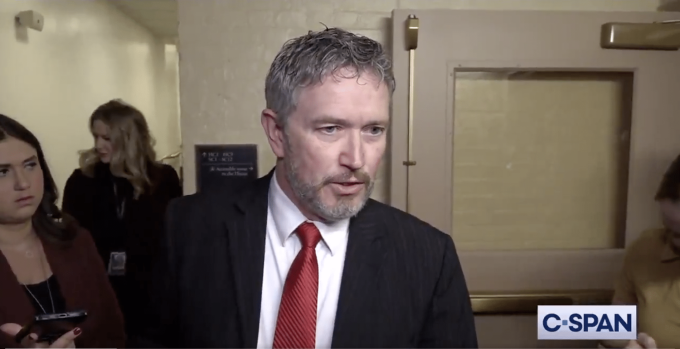
By James Rushmore | The Libertarian Institute | March 4, 2025
Two weeks ago, Kentucky Senator Mitch McConnell announced that he would not seek re-election in 2026. McConnell’s announcement prompted Congressman Thomas Massie to share a poll asking his Twitter followers if he should run for McConnell’s open Senate seat, seek the governorship in 2027, or remain in the House.
Naturally, Massie’s followers were very enthusiastic about the former idea. But the prospect of a Senator Thomas Massie already has the Israel lobby on high alert.
Republican Jewish Coalition CEO Matt Brooks told Jewish Insider, “If Tom Massie chooses to enter the race for US Senate in Kentucky, the RJC campaign budget to ensure he is defeated will be unlimited.” Back in May 2023, Massie accused the RJC of taking “[the] neocon position that US taxpayers should fund the war in Ukraine.” The RJC responded by attacking Massie for, among other things, opposing U.S. funding for the Iron Dome and voting against a resolution condemning the Boycott, Divestment and Sanctions movement. Meanwhile, Rabbi Shlomo Litvin of the Kentucky Jewish Council accused Massie of “[going] out of his way to troll Jews,” and Melanie Maron Pell of the American Jewish Committee suggested that Massie demonstrates “outright hostility with the Jewish community.”
It should come as no surprise that the Israel lobby is doing everything in its power to torpedo any talk of a Thomas Massie Senate campaign. Massie is the only member of Congress who consistently opposes the ongoing wars in both Gaza and Ukraine. Shortly after the October 7 terrorist attack, Massie was the sole Republican congressman to vote against House Resolution 771, which “[reaffirmed] the United States’ commitment to Israel’s security,” “[urged] full enforcement of United States sanctions against Iran,” and declared that the U.S. “stands ready to assist Israel with emergency resupply and other security, diplomatic, and intelligence support.”
In November 2023, he voted against House Resolution 6126, which provided Israel with $14.5 billion in military aid. In April 2024, he opposed House Resolutions 8034 and 8035, which allocated $95 billion in foreign aid to Ukraine, Israel, Taiwan, and other Indo-Pacific allies. (Donald Trump declined to oppose that package, all but assuring its passage.) In January 2025, Massie voted present on the Illegitimate Court Counteraction Act, which would impose sanctions against any person who aids the International Criminal Court in its efforts to “investigate, arrest, detail, or prosecute” Israeli Prime Minister Benjamin Netanyahu and Minister of Defense Yoav Gallant.
Massie is keenly aware of the enormous power that the Israel lobby wields on Capitol Hill, and unlike other congressional Republicans, he is willing to publicly acknowledge the extent of its influence. During an interview with Tucker Carlson in June 2024, he noted that the American Israel Public Affairs Committee assigns handlers to every House Republican, dispatching them to influence how lawmakers vote. The previous month, the United Democracy Project, a super PAC affiliated with AIPAC, spent at least $300,000 on TV ads tying Massie to Iran, Hamas, and Hezbollah. Their efforts were in vain, as Massie won his primary with three-quarters of the vote.
Whether or not Massie can win a Senate primary remains to be seen. The only Republican candidate to have formally entered the race at this point is former Kentucky Attorney General Daniel Cameron, a McConnell protégé who lost the 2023 gubernatorial election. Cameron is already trying to distance himself from McConnell; he recently criticized the former leader of the Senate Republican Conference for opposing the confirmations of Pete Hegseth, Tulsi Gabbard, and Robert F. Kennedy Jr., and he even signaled his opposition to further aid to Ukraine. But in November 2023, shortly after losing his bid for governor, Cameron joined twenty-five other Republicans attorneys general in signing a letter urging Joe Biden and congressional leaders to provide “military resources, intelligence, and humanitarian assistance to Israel as she defends herself against those seeking her destruction.”
Congressman Andy Barr may also launch a bid for McConnell’s Senate seat. Barr believes that “enemies of Israel are enemies of the United States.” Just last month, he declared that he “[stands] fully with Israel in its mission to wipe every last Hamas terrorist off the face of the earth.” Given that AIPAC was the top contributor to his campaign committee in 2024, Barr’s commitment to the Israeli cause is perfectly understandable.
If he runs, Massie would be sure to receive an endorsement from Kentucky Senator Rand Paul, who has unfortunately proven incredibly disappointing on the Gaza front. In November, Paul voted against three resolutions intended to block $20 billion in weapons sales to Israel. In January, he backed the ICC sanctions bill.
But a Donald Trump endorsement will no doubt prove to be the most important variable in shaping the outcome of the race. While Massie’s decision to endorse Ron DeSantis during the 2024 Republican presidential primaries may have hurt his standing with Trump, it is worth remembering that Trump offered former critic and one-time Evan McMullin supporter J.D. Vance his endorsement during the 2022 Ohio Senate primary. And the rest is history.
In December 2023, Senate Majority Leader Chuck Schumer accused Massie of anti-Semitism after he shared a meme correctly noting that Congress is more interested in Zionism than American patriotism. Expect more attacks like those, this time from pro-Israel Republicans, should the seven-term congressman enter the race to succeed McConnell. Despite those challenges, there is no doubt that a Thomas Massie Senate campaign has the potential to steer U.S. foreign policy in a less insane direction.
Russia ready to facilitate US-Iran negotiations – Kremlin
RT | March 4, 2025
Russia is ready to broker talks between the US and Iran, including on Tehran’s nuclear program and its regional proxy network, Kremlin spokesman Dmitry Peskov told Bloomberg on Tuesday.
Trump expressed interest in talking to Iran about those issues, both in his phone call to Putin in February and via representatives at the high-level US-Russian meeting in Riyadh just days later, the news agency wrote, citing anonymous officials.
“Russia believes that the United States and Iran should resolve all problems through negotiations,” Peskov told Bloomberg when asked about such contact.
Moscow “is ready to do everything in its power to achieve this,” he added.
US President Donald Trump returned to his “maximum pressure” campaign on Iran last month, just weeks after Moscow and Tehran signed a landmark strategic partnership agreement. Trump’s executive order said that Washington would ramp up sanctions on Iran, aiming to disrupt its nuclear program, conventional missile deployment, and network of regional proxy groups.
The Iranian Foreign Ministry has said the country is building up its defenses, citing regular threats from US ally Israel.
“The Israeli regime’s FM and other officials keep threatening Iran with military action while the West continues to blame Iran for its defense capability. This is outrageous & irrational,” Iranian Foreign Ministry spokesman Esmaeil Baqaei said last week. Given that Israel is “addicted to aggression and lawless behavior,” it is “responsible and essential to maximize our defense capabilities,” he stressed.
The day before, Israeli Foreign Minister Gideon Saar warned that a “military option” should be on the table to stop the potential weaponization of Tehran’s nuclear program.
Israel and the West have long seen Iran’s uranium enrichment activities as a secret attempt to develop nuclear weapons – allegations that Tehran has repeatedly denied.
While Trump has touted harsher sanctions, he has also signaled that he is interested in signing a “verified nuclear peace agreement” with Tehran.
Iranian Supreme Leader Ayatollah Ali Khamenei has stressed that talks with the US are unlikely to bear fruit, citing the prior nuclear deal Trump unilaterally left during his first presidency.
Featured Video

Racist Seinfeld Dances for Joy as Bibi Unveils His New Map
or go to
Aletho News Archives – Video-Images
TV Drama Review
Japanese drama projects Japan’s wartime atrocities onto Chinese characters

Global Times | October 25, 2026
By portraying Chinese characters as perpetrators of ruthless violence while casting Japanese Self-Defense Forces (SDF) intelligence operatives as defenders, the season 2 of the Japanese drama Vivant has recently drawn criticism from Chinese netizens, who argue that its depiction turns historical reality on its head while ignoring Japan’s wartime atrocities.
The TBS drama series – a spy suspense story in which an alleged unofficial intelligence unit of the SDF operates across the globe — has attracted a passionate fanbase. Its currently airing season 2 opened with a household rating of 18.8 percent, the highest for a TV drama this year, according toa commentary article by Japanese media Toyo Keizai.
What draws attention is the portrayal of the enemies in the series, the article noted. Scenes in which the Chinese organization subjects kidnapped members of the SDF unit to brutal torture are repeated with unrelenting intensity.
It is rare for Japanese TV dramas to explicitly portray a real-life country as the enemy, the article noted.
Japanese Prime Minister Sanae Takaichi also made a reference to the drama, saying that she has been recording Vivant and hopes to binge-watch it over the year-end and New Year holidays, according to Japanese media outlets.
China’s CCTV News report on Sunday revealed that the drama features scenes in which Chinese personnel cut off the fingers of and stab Japanese intelligence operatives in the abdomen. Such acts bear striking similarities to the torture inflicted on Chinese nationals by invading Japanese troops during the World War II.
The drama distorts the truth by attributing these atrocities to modern Chinese characters. Beneath the surface, it subtly glorifies Japan’s cross-border overseas operations, blurs the functional boundaries of the SDF and implicitly promotes an expansionist narrative, per CCTV News. … continue
Blog Roll
 Aletho News
- Iran FM Araghchi: “Hormuz Will No Longer Be the Same”
- EU facing trillion-euro debt hole while seeking more cash for Kiev
- How US, Europe, Persian Gulf states exhausted missile stockpiles, splurged billions to defend Israel
- Up in arms… Koreans reject U.S. empire’s plan to make South Korea the next Ukraine
- Iran, Turkey, Pakistan, Saudi Arabia could advance region-led security framework in Tehran: FM spox
- Netizens condemn Japanese drama for projecting Japan’s wartime atrocities onto Chinese characters
- Racist Seinfeld Dances for Joy as Bibi Unveils His New Map
- A West Bank War for Netanyahu’s Election Campaign, Could It Backfire?
- Yemen denounces European Parliament’s ‘hypocritical’ push to blacklist Ansarullah
- Qalibaf: UAE’s UN bid aims to ‘clear the runway’ for ‘Greater Israel’, whitewash genocide
- If Americans Knew
- An error has occurred; the feed is probably down. Try again later.
- No Tricks Zone
- Sudden Stratospheric Warming, Powerful El Niño Combination May Lead To Extreme Europe Cold, Energy Crisis!
- Two New Studies Find Thwaites Glacier Melt Cannot Be Driven By Human Activity Or A Warming Ocean
- E-Cars Reduce CO2 Emissions By Only 41% Compared To Internal Combustion Engine Vehicles
- Predictions Made By Renowned Climate Professor Over Past Decades Have Been Proven To Be Poor
- New Study Suggests Large Regions Of The Pacific Ocean Have Been Cooling For The Last 80 Years
- Germany’s Green Energy Debacle: High Energy Costs Force Kahla Porzellan to Close After 182 Years!
- New Study: 50 Years Of The Most Aggressive ‘Net Zero’ Policies Can Only Affect The Global Climate By 0.03°C
- US September “Heat” Was No Record…Many Records Set Decades Ago
- Latest European Green Energy Debacle; Portugal’s Largest Flagship Solar Park Insolvent!
- Green Energy Debacle: German Expert Professor Fritz Vahrenholt Warns Of Severe Economic And Social Consequences

